America Is Hard to See | Art & Artists

May 1–Sept 27, 2015


Exhibition works

23 total
Eight West Eighth
Read more

Eight West Eighth
Floor 1

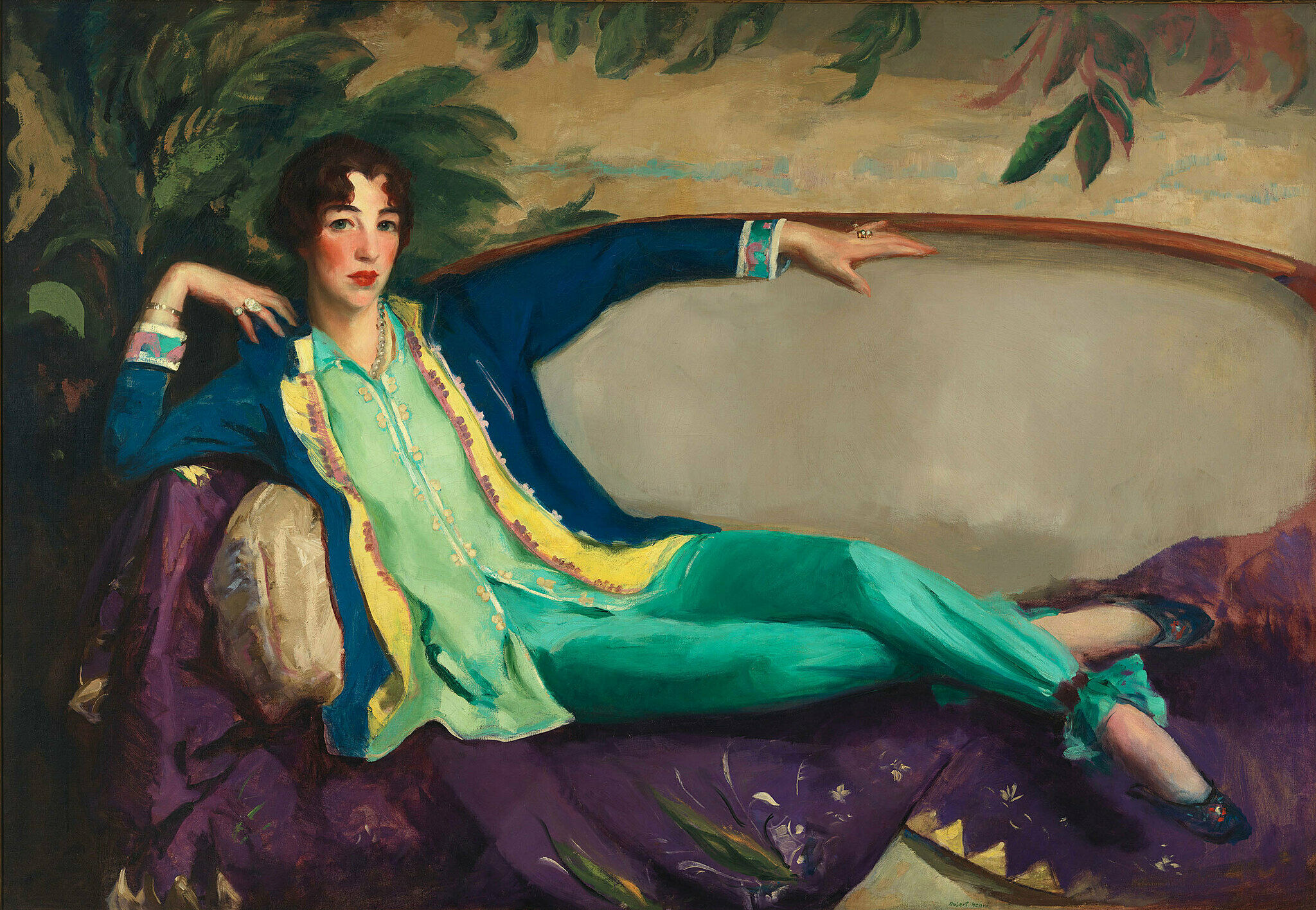
A portrait of Gertrude Vanderbilt Whitney lounging on a couch.

Robert Henri, Gertrude Vanderbilt Whitney, 1916. Oil on canvas, 49 15/16 × 72in. (126.8 × 182.9 cm). Whitney Museum of American Art, New York; gift of Flora Whitney Miller 86.70.3

Eight West Eighth
Floor 1

The Whitney Museum of American Art was established as a place for artists, a legacy it has cherished since its earliest incarnation as the Whitney Studio—an exhibition space opened by the artist and arts patron Gertrude Vanderbilt Whitney in 1914 in a townhouse at Eight West Eighth Street in Greenwich Village. With the energetic support of her assistant, Juliana Force, in 1918 she transformed the Studio into the Whitney Studio Club, which was a home for American artists then disdained by the conservative establishment. Over the next decade, the Studio Club expanded into the neighboring townhouses that together served as a social and creative hub for its artist-members. Force regularly organized exhibitions, lectures, and classes and provided American artists financial support (and food and drink) with the backing of Mrs. Whitney.

The works on view in this chapter evoke the diverse activities of the Studio Club, as well as the broad tastes of these two remarkable women. Paintings by Robert Henri, William Glackens, John Sloan, and George Luks are evidence of Mrs. Whitney’s adventurous early advocacy of a group of mavericks known as “The Eight,” proponents of the so-called Ashcan School who favored gritty urban realism. Photographs by Charles Sheeler and Berenice Abbott capture the townhouses’ interiors and the exhibitions held therein, while humorous drawings by Guy Pène du Bois chronicle the characters on the scene. A group of Edward Hopper’s figure studies from life-drawing class there affirm that the Studio Club was a site not just for exhibiting art but for making it. When the Whitney Museum of American Art was founded in 1931, with a collection donated by Mrs. Whitney and with Juliana Force as its first director, the institution’s identity and mission as the artist’s museum were already firmly in place.

Below is a selection of works from this chapter.

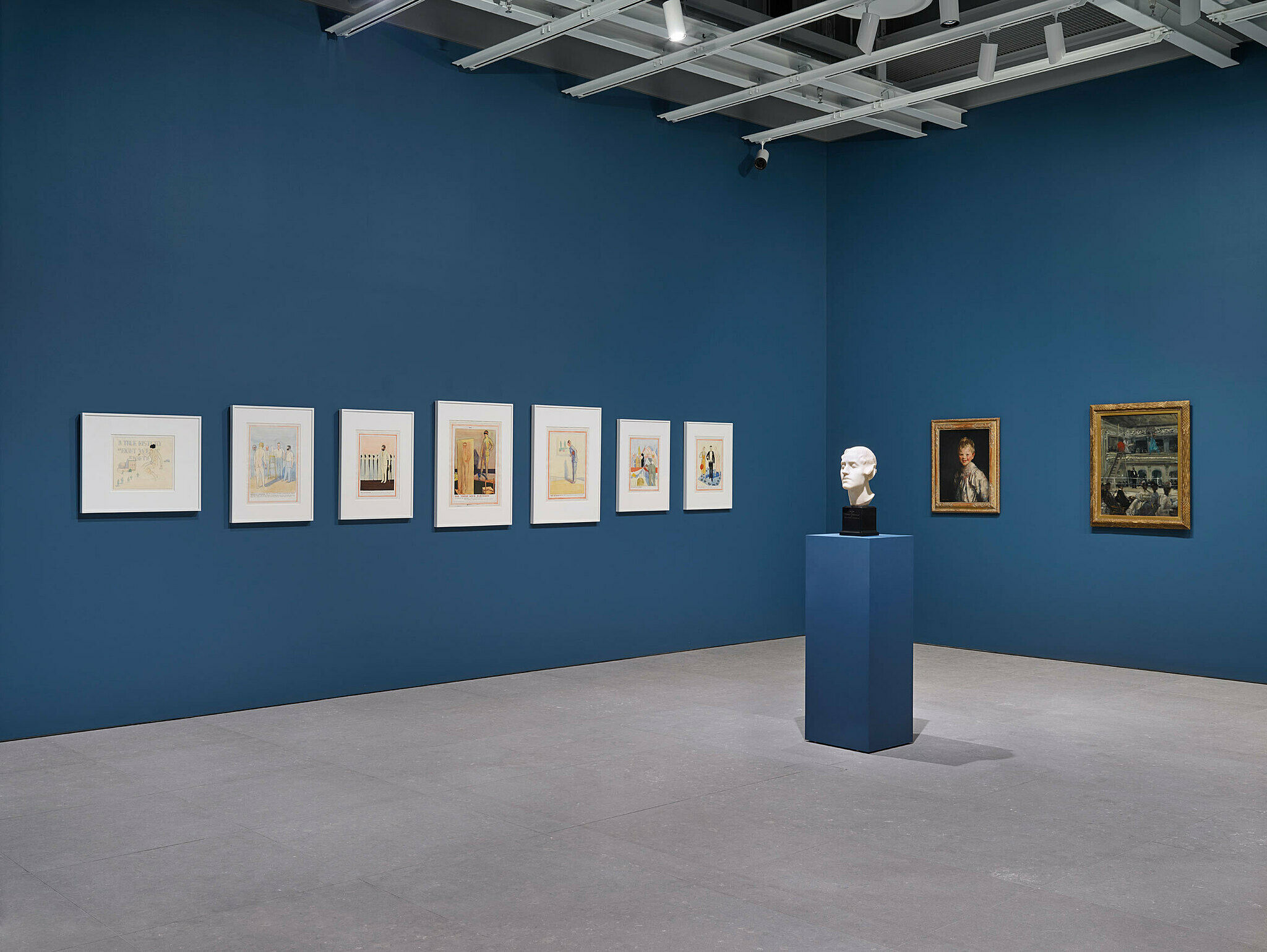
From left to right: Guy Pène Du Bois, (Title Page), 1921 (2014.74.1); Indigenous Workers, 1921 (2014.74.7); The Entertainer, 1921 (2014.74.14); The Three Hour Portrait, 1921 (2014.74.17); The Author, 1921 (2014.74.16); The Creation of a Veteran, 1921 (2014.74.6); The Social Lion, 1921 (2014.74.5); Gertrude Vanderbilt Whitney, Head for Titanic Memorial, 1922 (31.81); Robert Henri, Laughing Child, 1907 (31.240). Photography by Ronald Amstutz.

INSTALLATION VIEW

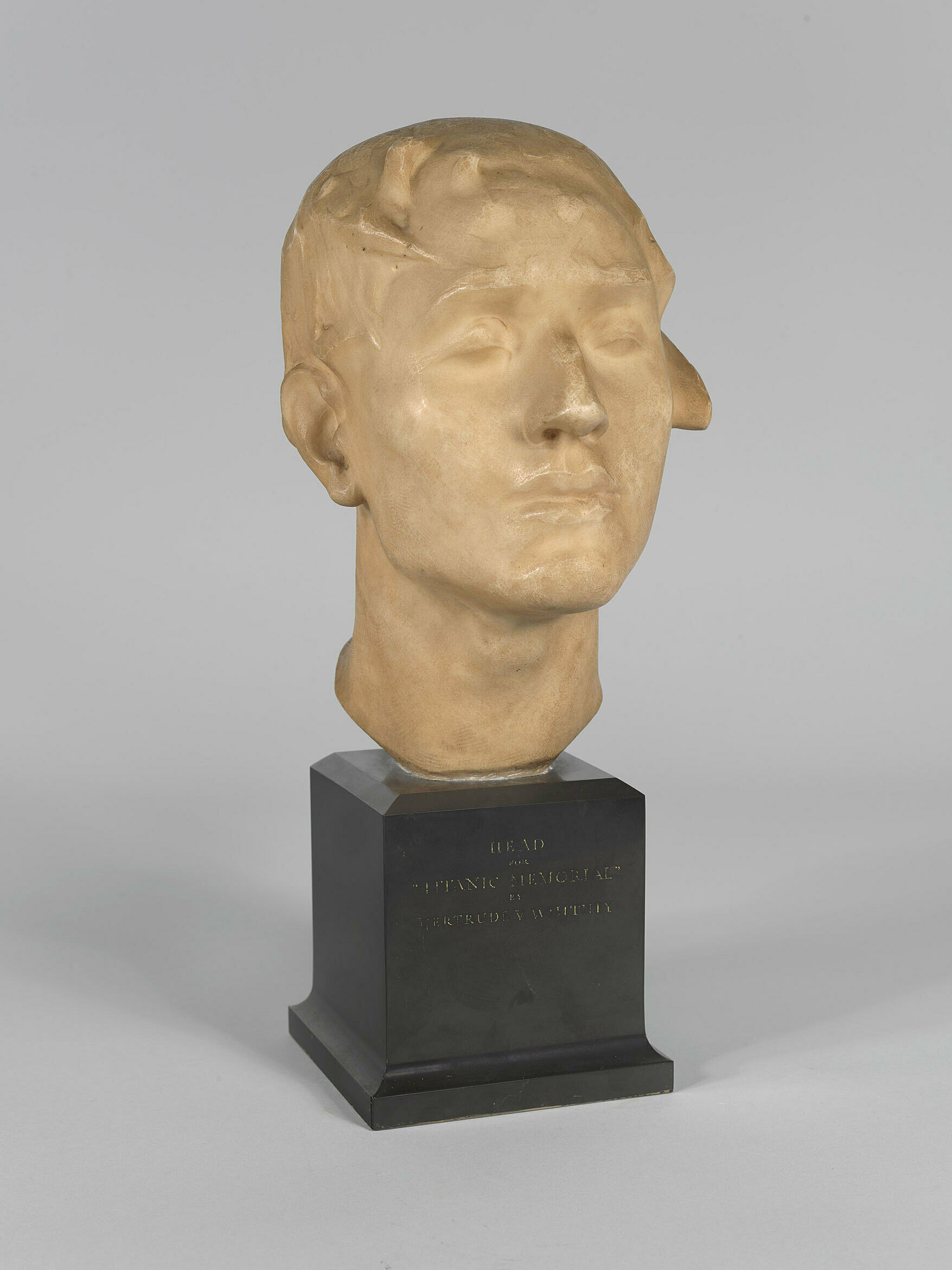
Gertrude Vanderbilt Whitney (1875–1942), Head for Titanic Memorial, 1922. Seravezza marble head; 12 3/4 × 8 1/8 × 9 5/8 in. (32.4 × 20.6 × 24.4 cm); with base: 19 × 8 1/8 × 9 5/8 in. (48.3 × 20.6 × 24.4 cm). Whitney Museum of American Art, New York; gift of the artist 31.81

Gertrude Vanderbilt Whitney (1875-1942), Head for Titanic Memorial, 1922

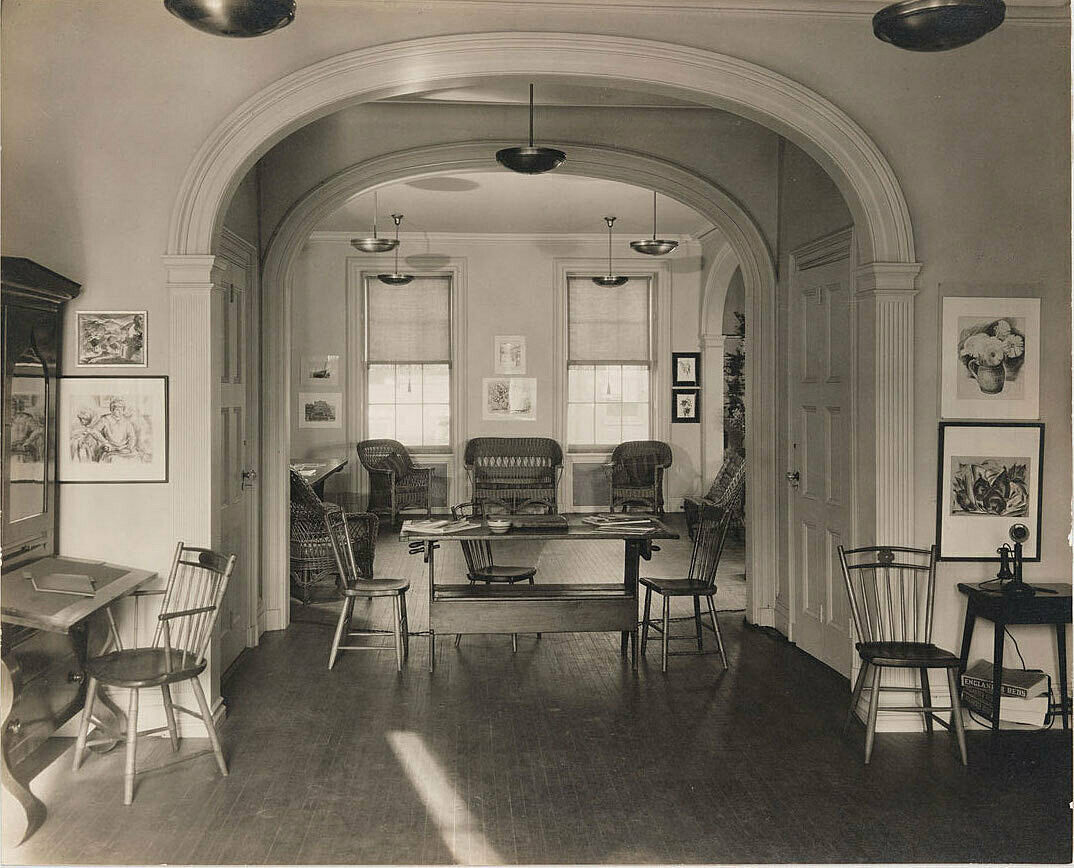
The Whitney Studio club. A homey interior with chairs and tables, and art on the walls

Charles Sheeler (1883–1965), Office Interior, Whitney Studio Club, 10 West 8 Street, c. 1928. Gelatin silver print, 7 1/2 x 9 1/4in. (19.1 x 23.5 cm). Whitney Museum of American Art, New York; gift of Gertrude Vanderbilt Whitney 93.24.2

Charles Sheeler (1883–1965), Off ice Interior, Whitney Studio Club, 10 West 8 Street, c. 1928

0:00

John Sloan, Backyards, Greenwich Village, 1914

0:00

Narrator: This painting by John Sloan is called Backyards, Greenwich Village

Adam Weinberg: I’m Adam Weinberg, the Alice Pratt Brown Director of the Whitney Museum of American Art. 

The painting is a wonderful view out of his studio window on Perry Street, just eight blocks from the current site of the Whitney Museum. And this is a view of a rather poor neighborhood, but he shows it with a sense of energy and glee. You have children who are building a snowman sketched in the background, a cat who has actually the most remarkable shadow painted next to it, that’s trudging lithely through the whiteness of the snow. But probably the highlights of this painting are the little girl in the window with this great smile and her ruby lips and her bright eyes, and the cat who is dead center in the foreground, who actually looks a lot like the little girl in the window, with an equally big smile. 

Narrator: To modern eyes, this painting may almost seem sentimental. But at the time, American artists typically painted more “elevated” subjects—like society portraits, landscapes, and classical scenes. Sloan’s focus on life in the tenements—laundry and all—was quite progressive for his time. Many of the artists that Gertrude Vanderbilt Whitney championed shared this focus on the realities of urban life. Their subject matter—as well as the dark, smoky palette they often favored—prompted critics to call them The Ashcan School.

John Sloan, Backyards, Greenwich Village, 1914

In America Is Hard to See

John Sloan (1871-1951), Backyards, Greenwich Village, 1914

John Sloan was devoted to creating art from what he observed in the streets of New York City, finding "beauty in commonplace things and people." In his paintings, he portrayed tenements, colorful neighborhood characters, and bustling crowds—all subjects deemed vulgar by the art establishment. He was, as he put it, "in the habit of watching every bit of human life I can see about my windows, but I do it so that I am not observed at all." Backyards, Greenwich Village, a work that Sloan developed from pencil sketches made from the window of his apartment on West 4th Street, evinces the artist’s keen powers of observation. Here, a private scene of two children building a snowman in a backyard, with a pair of cats and another child watching them from a window above, brings dignity and romance to lives that would otherwise go unnoticed. A depiction of children, cats, and laundry flapping in the breeze might seem nostalgic and even charming by today's standards, but in its time Sloan’s work signaled a forceful challenge to academic norms in its rejection of refined subject matter and its emphasis on aestheticizing the everyday.

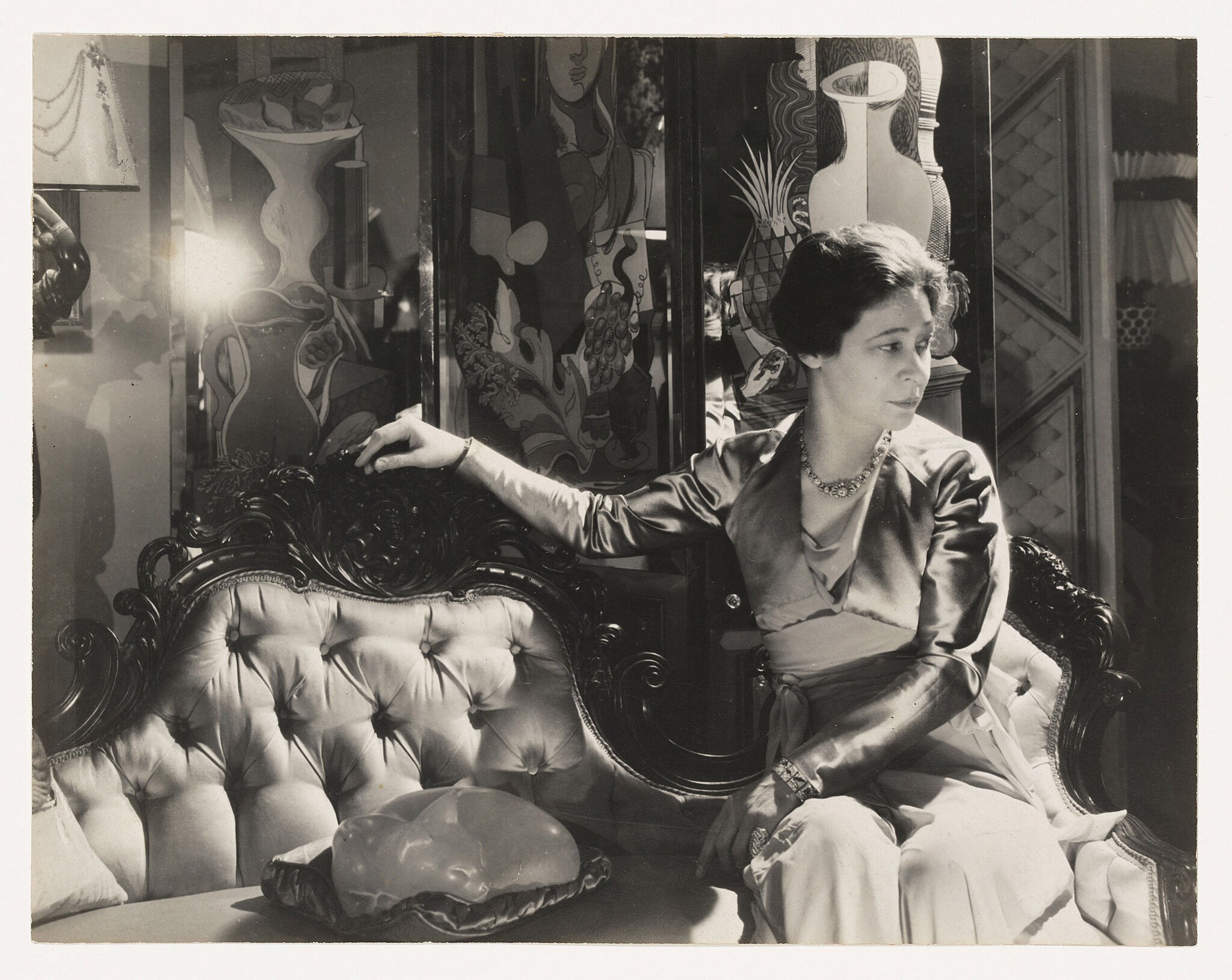
A photograph of a person sitting on a tufted sofa.

Cecil Beaton, Portrait of Juliana Force, c. 1931. Gelatin silver print, 7 1/4 × 9 1/4 in. (18.4 × 23.5 cm). Whitney Museum of American Art, New York; Gift of Gertrude Vanderbilt Whitney 93.25. © Permission from the Cecil Beaton Studio Archive at Sotheby's

Cecil Beaton (1904-1980), Portrait of Juliana Force, c. 1931

When Gertrude Vanderbilt Whitney founded the Whitney Museum of American Art in 1930, her close associate, Juliana Force, became the institution’s first director. Prior to the Museum’s official opening, Force had a publicity photograph taken by Cecil Beaton, a fashion and portrait photographer who worked for such publications as Vogue and Vanity Fair. Beaton pictured her fashionably dressed in the elegant surroundings of her apartment above the Whitney Museum; curled up next to her “sleeps” a sculpted cat, an animal she was widely known to fear.

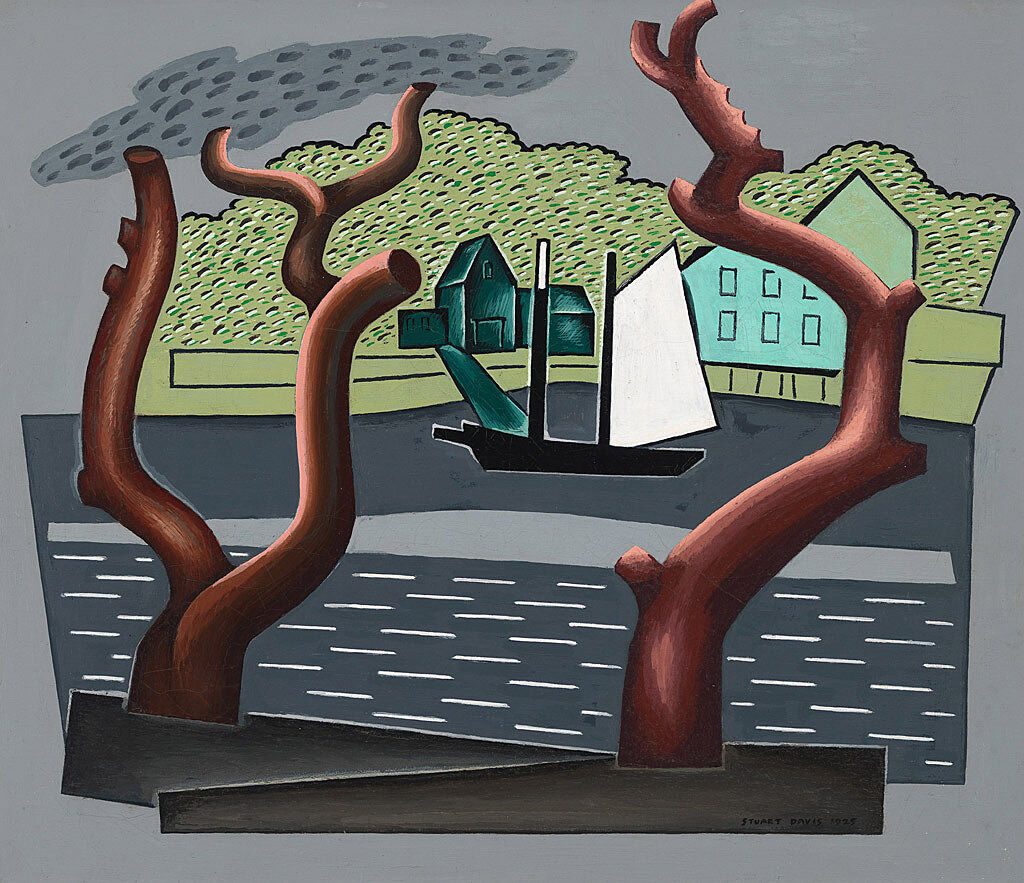
A painting of trees, a boat, and houses.

Stuart Davis, Early American Landscape, 1925. Oil on canvas, 19 3/16 × 22 3/16 in. (48.7 × 56.4 cm). Whitney Museum of American Art, New York; gift of Juliana Force 31.171 Art© Estate of Stuart Davis, Licensed by VAGA, New York, NY

Stuart Davis (1892-1964), Early American Landscape, 1925

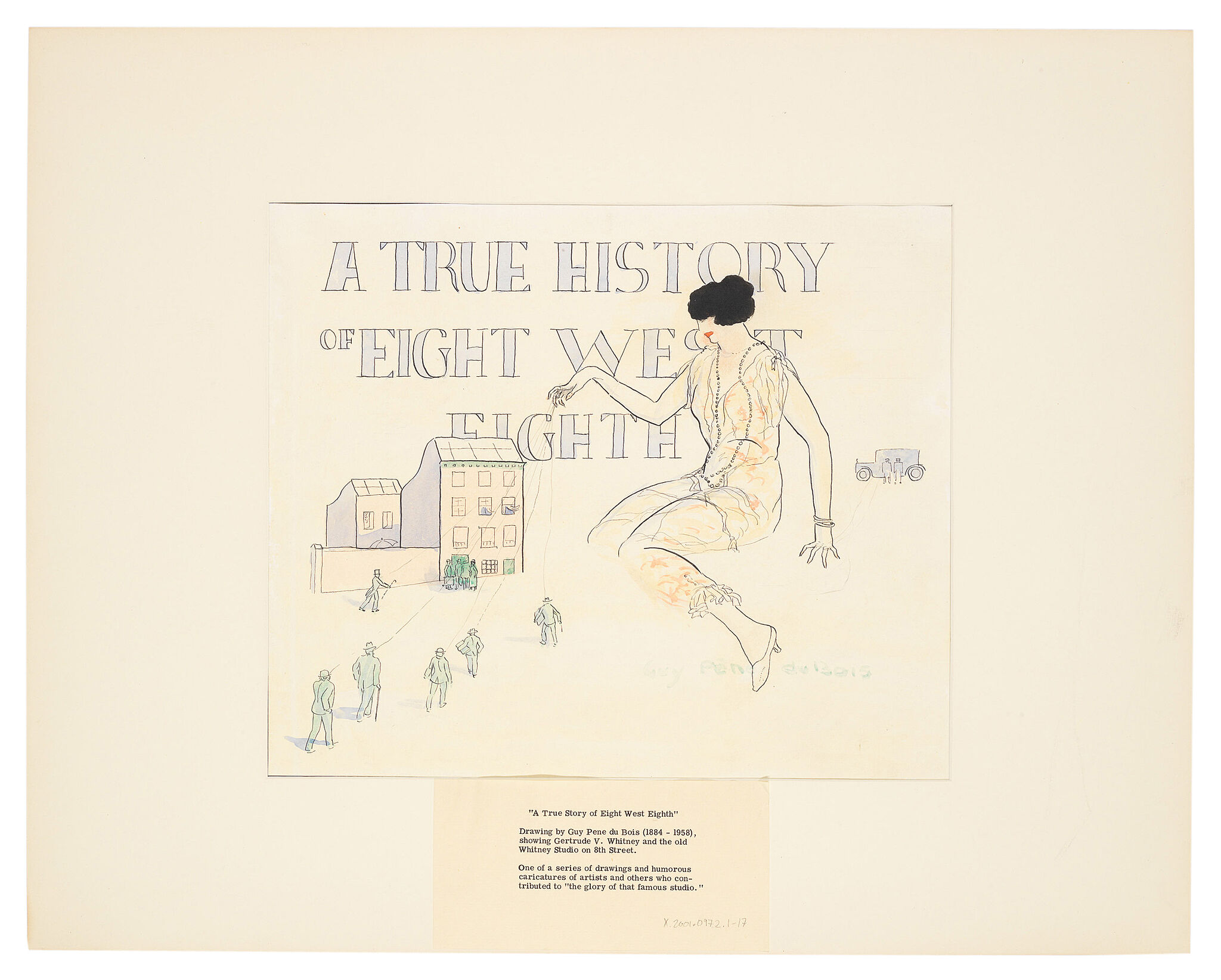
Guy Pène Du Bois (1884-1958), (Title page), 1921. Watercolor, pen and ink and graphite pencil on paper: image, 11 3/4 × 14 in. (29.8 × 35.6 cm); mat board, 19 × 24 in. (48.3 × 61 cm). Whitney Museum of American Art, New York; gift of Flora Miller Biddle 2014.74.1 © artist’s estate

Guy Pène Du Bois (1884-1958), (Title page), 1921

In 1921, Juliana Force commissioned Guy Pène du Bois—a sharp-witted painter and critic who maintained a consistent presence at the Whitney Studio and Studio Club—to create a pictorial history of Eight West Eighth Street. These watercolors, organized as a loose series, are satirical: the title page portrays Gertrude Vanderbilt Whitney as a puppeteer; she looms large over the Studio and the artists below her, pulling them into the building with her strings. Despite their ironic, playfully critical tone, these works emphasize the spirit of conviviality and experimentation that characterized the Whitney Studio.

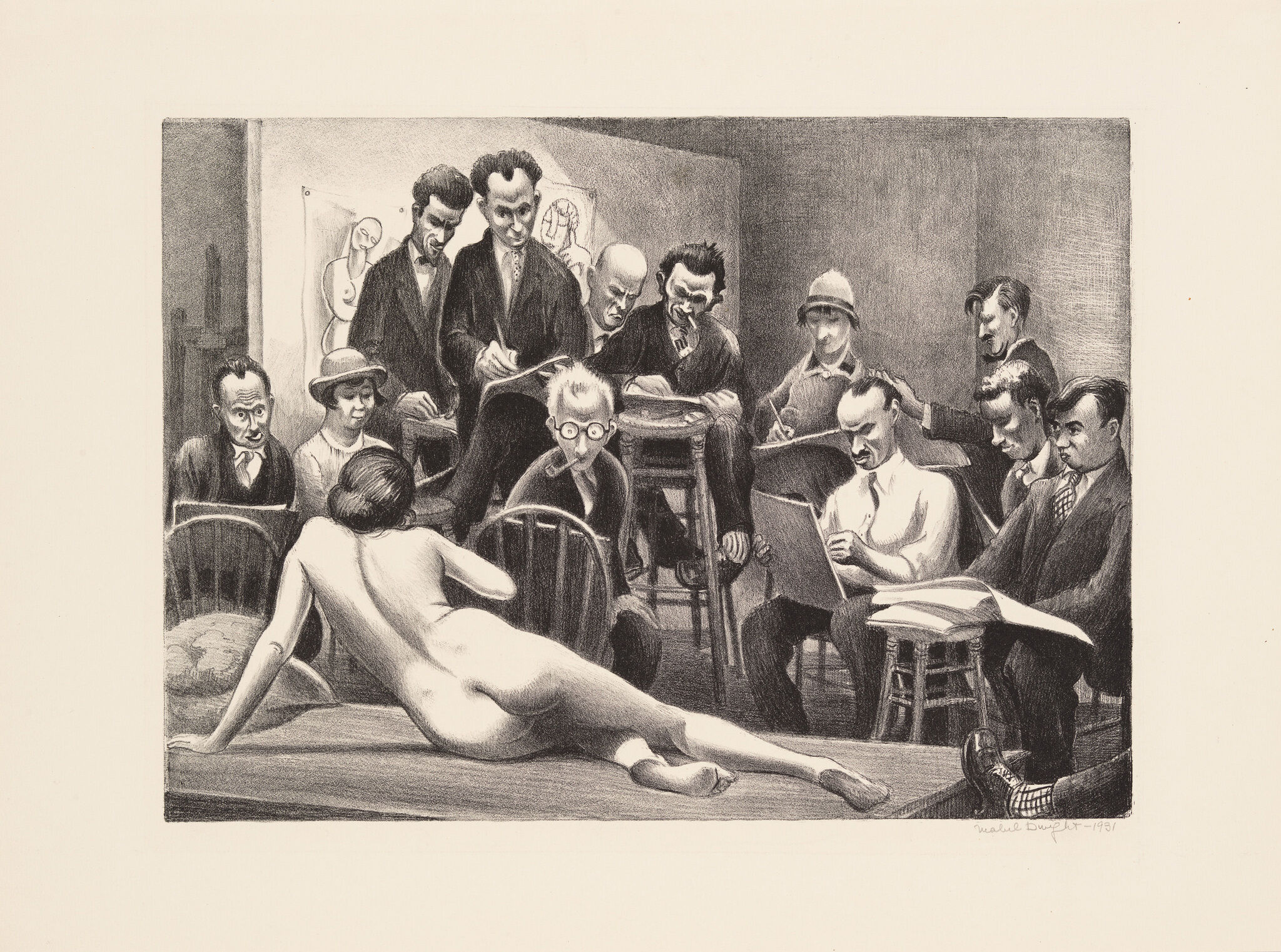
A lithograph of a room of men drawing a woman posing in the nude.

Mabel Dwight, Life Class, 1931. Lithograph: sheet, 13 11/16 × 18 1/16 in. (34.8 × 45.9 cm); image: 9 13/16 × 13 9/16 in. (24.9 × 34.4 cm). Whitney Museum of American Art, New York; purchase 33.90

Mabel Dwight (1876-1955), Life Class, 1931

When Gertrude Vanderbilt Whitney and Juliana Force opened the Whitney Studio Club on West Fourth Street in 1918, one of their primary goals was to host affordable life drawing classes. They charged artists twenty cents per session; since most members could not afford to pay the hourly rates for professional models, the low price had enormous appeal.

Mabel Dwight’s lithograph Life Class depicts a group of artists packed into the Whitney Studio Club sketching a nude woman in a reclined pose. Edward Hopper is among those in attendance: perched near the center of Dwight’s composition, he is easily identified by his bald head.

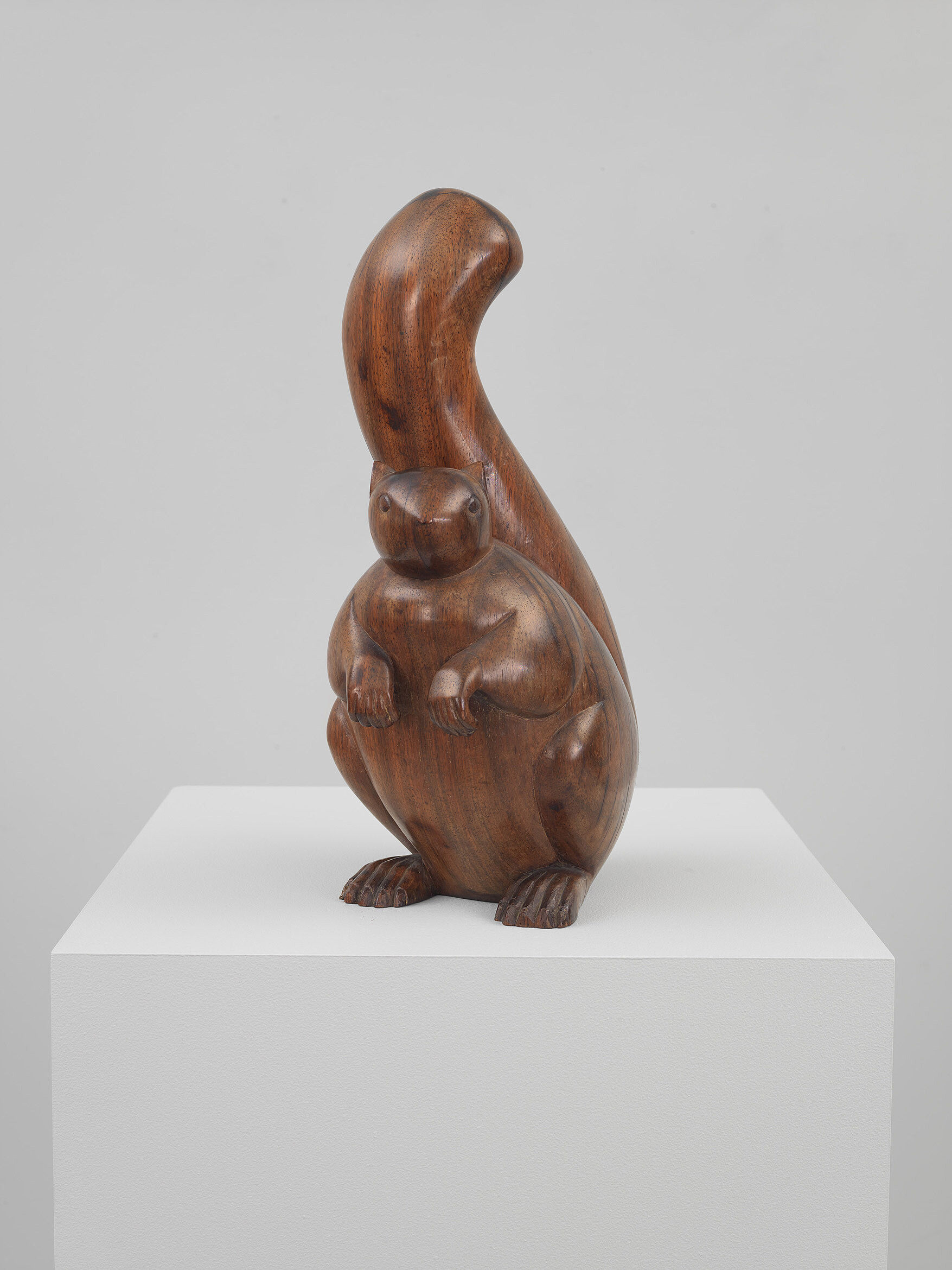
Duncan Ferguson (1901-1974), Squirrel, c. 1930. Mahogany, 16 3/4 × 8 3/4 × 7 7/8 in. (42.5 x 22.2 × 20 cm). Whitney Museum of American Art, New York; gift of Gertrude Vanderbilt Whitney 31.17 © artist’s estate

Duncan Ferguson (1901-1974), Squirrel, c. 1930

In the twentieth century’s opening decades, many American sculptors used animal subjects to hone their craft. The variety of species that could be modeled—from such wild native animals as goslings and squirrels to exotics like elephants and chimpanzees—appealed to artists interested in small-scale objects. Sculptures such as these were well suited for domestic display, and the expressive potential of animals encouraged artists to explore styles ranging from meticulous naturalism to more streamlined or whimsical approaches. The subject seems to have had a special attraction for Juliana Force, whose taste is wonderfully reflected in Duncan Ferguson’s Squirrel.

In contrast to dominant nineteenth-century methods of modeling in clay and then casting in another material, these artists embraced direct carving, a technique that provided an immediate engagement with the chosen medium.

0:00

Robert Henri, Gertrude Vanderbilt Whitney, 1916

0:00

Adam Weinberg: I’m Adam Weinberg, the Alice Pratt Brown Director of the Whitney Museum of American Art.

This is a painting by Robert Henri of the Whitney’s founder, Gertrude Vanderbilt Whitney, which was painted in 1916. We use it in such a way as to welcome you to this first gallery of the exhibition, which is devoted to the artists that Mrs. Whitney collected and championed in the years just before and just at the opening of the Whitney Museum. 

Narrator: You’ll see more images of Mrs. Whitney and the Studio Club—the precursor to the Whitney Museum—on the wall behind you to the right. 

Adam Weinberg: Mrs. Whitney was an accomplished sculptor who had her studio, actually just blocks from the current Whitney Museum, in MacDougal Alley, in Greenwich Village. And she never actually intended to create a museum for American art. Her great interest was in supporting and encouraging artists, American artists, who didn’t have opportunities to show their work in the United States, and to encourage a market for their works so that they could be self-sufficient. 

Narrator: As you explore this gallery, you’ll see the work of many of these artists—including a more typical painting by Mrs. Whitney’s portraitist, Robert Henri. It’s a beautiful painting of a small boy, called Laughing Child.  

Robert Henri, Gertrude Vanderbilt Whitney, 1916

In America Is Hard to See

Robert Henri (1865-1929), Gertrude Vanderbilt Whitney, 1916

Gertrude Vanderbilt Whitney commissioned this portrait in 1916 from Robert Henri, leader of the Ashcan School, the urban realist painters who had shocked the New York art world barely a decade earlier with their images of ordinary people and commonplace city life. In this painting Henri transformed the traditional genre of the recumbent female—usually a nude courtesan or the goddess Venus—into a portrait of the quintessential “modern” woman.

After the portrait was completed, Mrs. Whitney’s husband, Harry Payne Whitney, forbade her to hang it in their opulent Fifth Avenue townhouse. He did not want his friends to see a picture of his wife, as he put it, “in pants.” Mrs. Whitney’s bohemian attire and self-possessed demeanor were highly unusual for an upper-class woman of her day. Though the portrait was never displayed in the Whitneys’ house uptown, Mrs. Whitney hung it in her Greenwich Village studio, which was adjacent to the row of townhouses that would become the first home of the Whitney Museum.

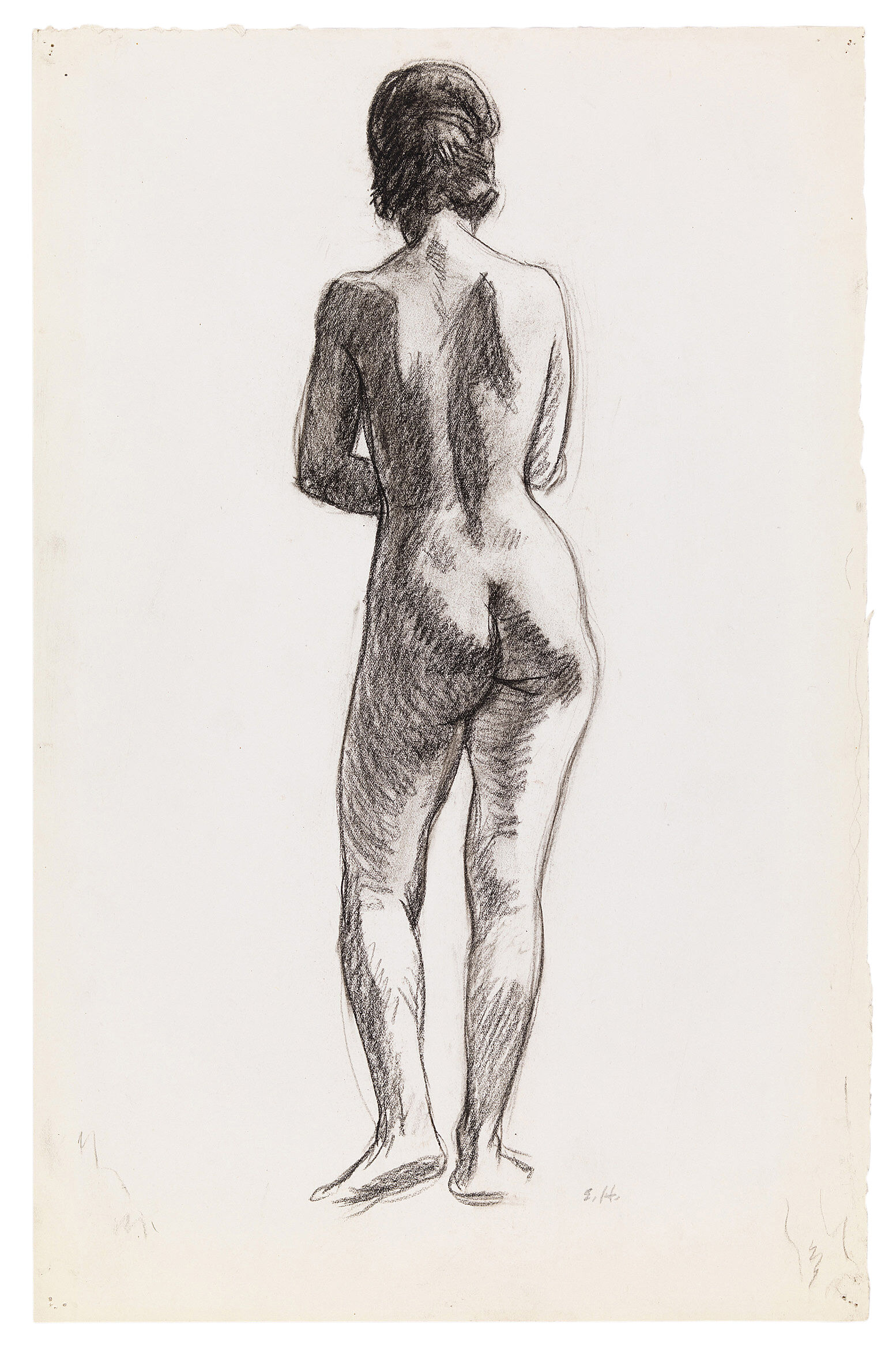
Edward Hopper (1882-1967), (Standing Female Nude, Rear View), 1920-25. Fabricated chalk on paper, 16 1/2 × 10 5/8 in. (41.9 × 27 cm). Whitney Museum of American Art, New York; Josephine N. Hopper bequest 70.414 © Heirs of Josephine N. Hopper/Licensed by VAGA, New York, NY

Edward Hopper (1882-1967), (Standing Female Nude, Rear View), 1920-25

When Gertrude Vanderbilt Whitney and Juliana Force opened the Whitney Studio Club on West Fourth Street in 1918, one of their primary goals was to host affordable life drawing classes. They charged artists twenty cents per session; since most members could not afford to pay the hourly rates for professional models, the low price had enormous appeal.

Edward Hopper attended the classes regularly between 1920 and 1925, during which time the Studio Club migrated to West Eighth Street. He made hundreds of drawings there. These studies in red and black chalk demonstrate both Hopper’s gift for capturing light and his deep interest in the human form.

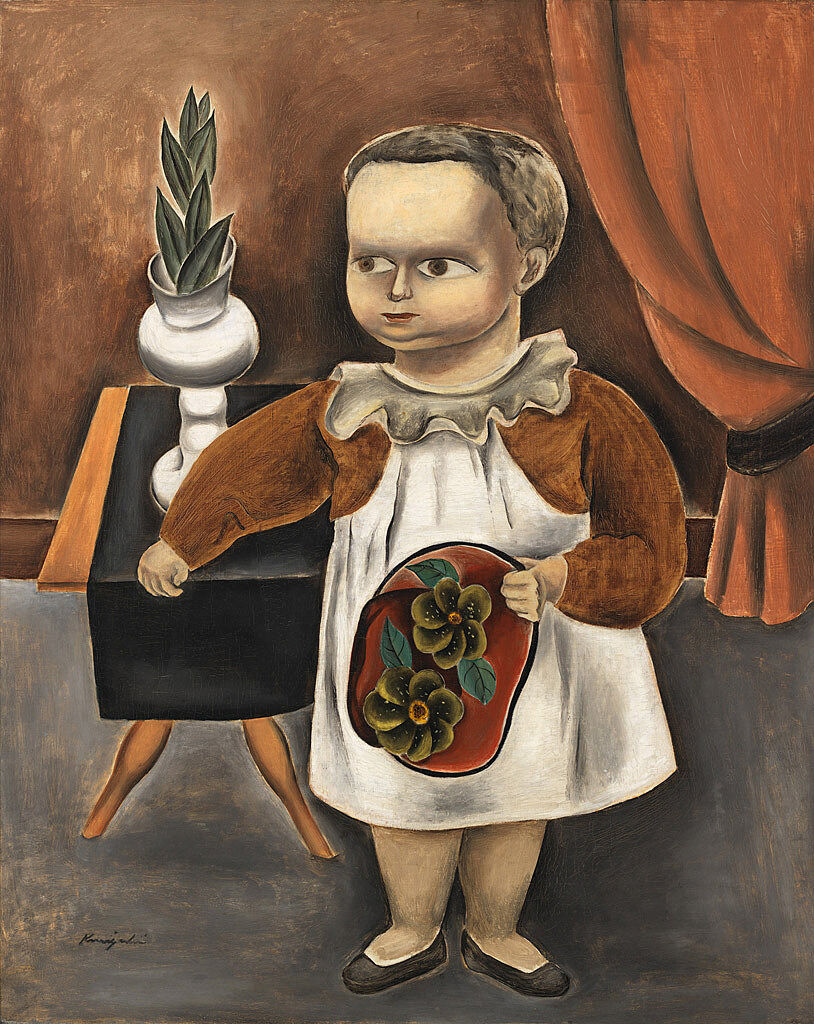
Yasuo Kuniyoshi (1889-1953), Child, 1923. Oil on linen, 30 1/8 × 24 3/16 in. (76.5 × 61.4 cm). Whitney Museum of American Art, New York; Gift of Mrs. Edith Gregor Halpert 55.1. © Estate of Yasuo Kuniyoshi, licensed by VAGA, New York, NY

Yasuo Kuniyoshi (1889-1953), Child, 1923

Yasuo Kuniyoshi, who immigrated to the United States from Japan in 1906, was fascinated by American folk art and adopted a faux-naïf style in many of his works of the 1920s. Child is representative of his painting from this period. The influence of Colonial American arts is evident in the clothes and furniture and in the wide-eyed, stiff pose of the child. At the same time, the flattened space and the tilted table reveal an awareness of both Cubism and Japanese printmaking. Drawing from his memory and imagination, Kuniyoshi often depicted women, children, and circus performers in tableaus with mysterious objects that suggest enigmatic narratives.

In 1948, Kuniyoshi was the subject of the Whitney Museum’s first retrospective of a living artist, despite having been legally barred from applying for citizenship until 1952 because of his national origins.

George Luks (1867–1933), Armistice Night, 1918. Oil on canvas, 37 x 68 3/8in. (94 x 173.7 cm). Whitney Museum of American Art, New York; gift of an anonymous donor 54.58

George Luks (1867–1933), Armistice Night, 1918

George Luks’s Armistice Night records one of the frenzied, flag-waving celebrations that marked the end of World War I. Luks’s skill at capturing the essence of an event in a few swift strokes was honed during his years as a newspaper illustrator in Philadelphia at the turn of the twentieth century, when he was often dispatched to sketch scenes of breaking news. In Armistice Night, as in his earlier illustrations, Luks does not deliberate over particulars: the painting is a blur of American and Allied flags, faces, and fireworks. Blue smoke obscures the buildings in the background, and few individuals stand out in the quickly-rendered crowd. Typically, Luks was more committed to capturing the spirit of the moment than to transcribing visual facts—in this case the action and human drama in a celebratory crowd.


Artists


Explore works from this exhibition
in the Whitney's collection

View 646 works

On the Hour

A 30-second online art project:
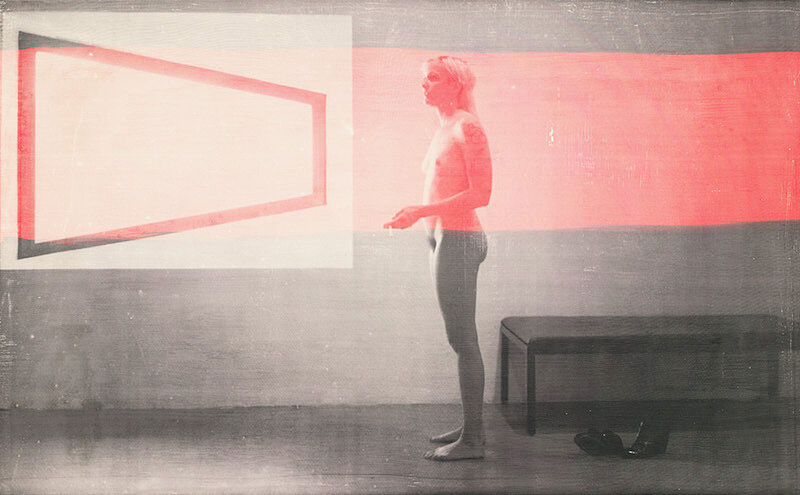
Frank WANG Yefeng, The Levitating Perils #2

Learn more about this project

Learn more at whitney.org/artport

On the Hour projects can contain motion and sound. To respect your accessibility settings autoplay is disabled.