Human Interest: Portraits from the Whitney’s Collection | Art & Artists

Apr 2, 2016–Apr 2, 2017


Exhibition works

15 total
Portraits Without People
Read more

Portraits Without People
Floor 7

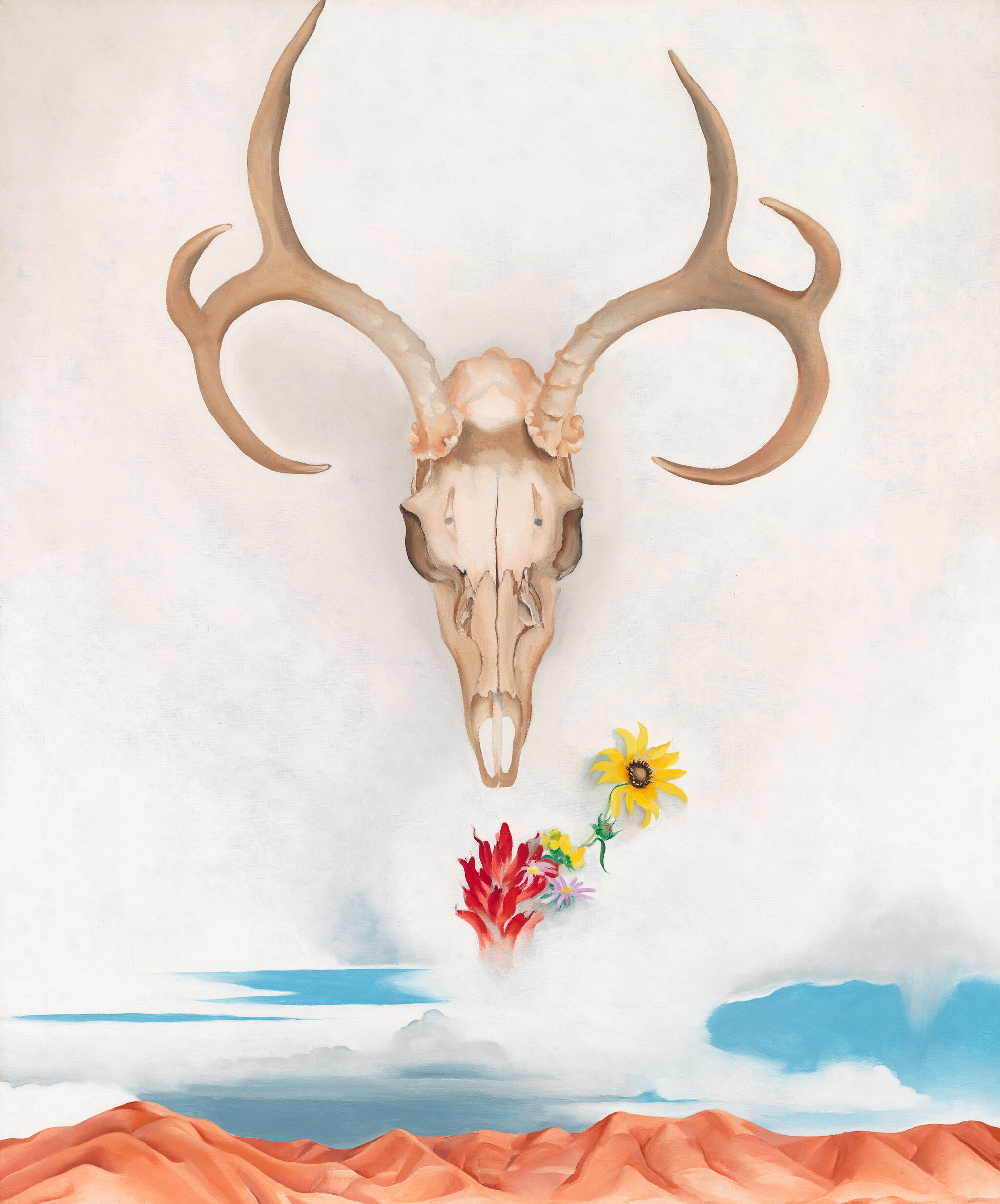
A painting of a bull skull and flowers floating over a desert landscape.

Georgia O'Keeffe, Summer Days, 1936. Oil on canvas, 36 1/8 × 30 1/8 in. (91.8 × 76.5 cm). Whitney Museum of American Art, New York; gift of Calvin Klein 94.171. © 2019 Georgia O'Keeffe Museum / Artists Rights Society (ARS), New York

Portraits Without People
Floor 7

Is likeness essential to portraiture? These works, spanning the past one hundred years, raise this question as they present alternate means for capturing an individual’s personality, values, and experiences. At the twentieth century’s outset, the rise of abstraction and advances in photography spurred many artists to devise new, non-figurative approaches to portraiture. In their paintings, American modernists such as Charles Demuth, Marsden Hartley, Georgia O’Keeffe, and Florine Stettheimer frequently adopted symbols—including abstract geometries, typographical characters, and natural forms—as surrogates for themselves and their closest companions.

Artists have continued to experiment with symbolic portraiture in the decades since World War II, whether hinting at private meanings by depicting intimate spaces and personal possessions or referencing themselves through the tools of their craft. When the face or the body does appear in the works featured here, it is shown at a remove, as a representation within a representation. Forgoing physical likeness in favor of allusion and enigma, all of these works expand the possibilities of what a portrait can be, while also acknowledging that the quest to depict others—and even ourselves—is elusive.

Below is a selection of works from Portraits Without People.

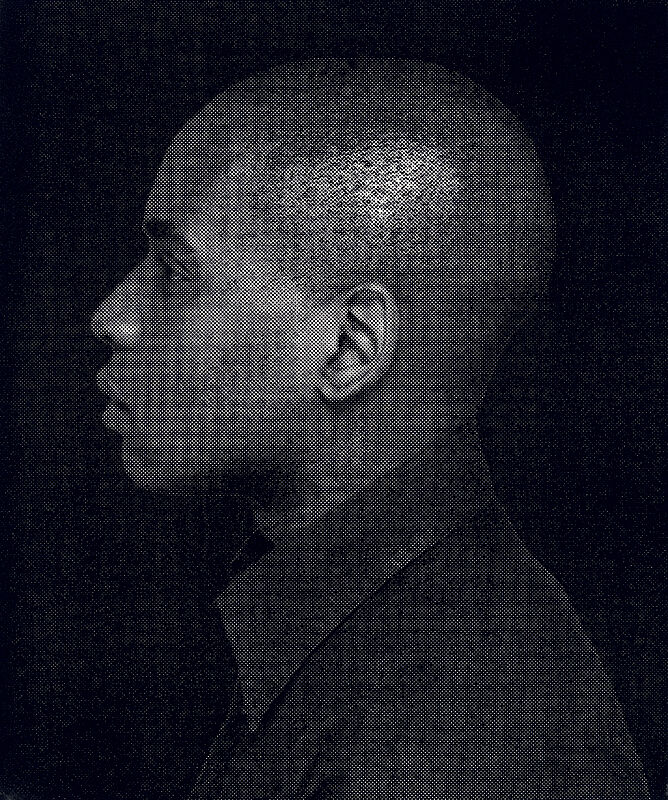
Louise Lawler (b. 1947), Marie + 90, 2010/2012. Silver dye bleach print face-mounted to plexi and mounted on aluminum and museum box. 59 1/8 × 45 9/16 × 1 13/16 in. (150.2 × 115.7 × 4.6 cm). Whitney Museum of American Art, New York; purchase with funds from the Photography Committee 2013.23 © Louise Lawler. Courtesy of the artist and Metro Pictures, New York

MARIE + 90, 2010

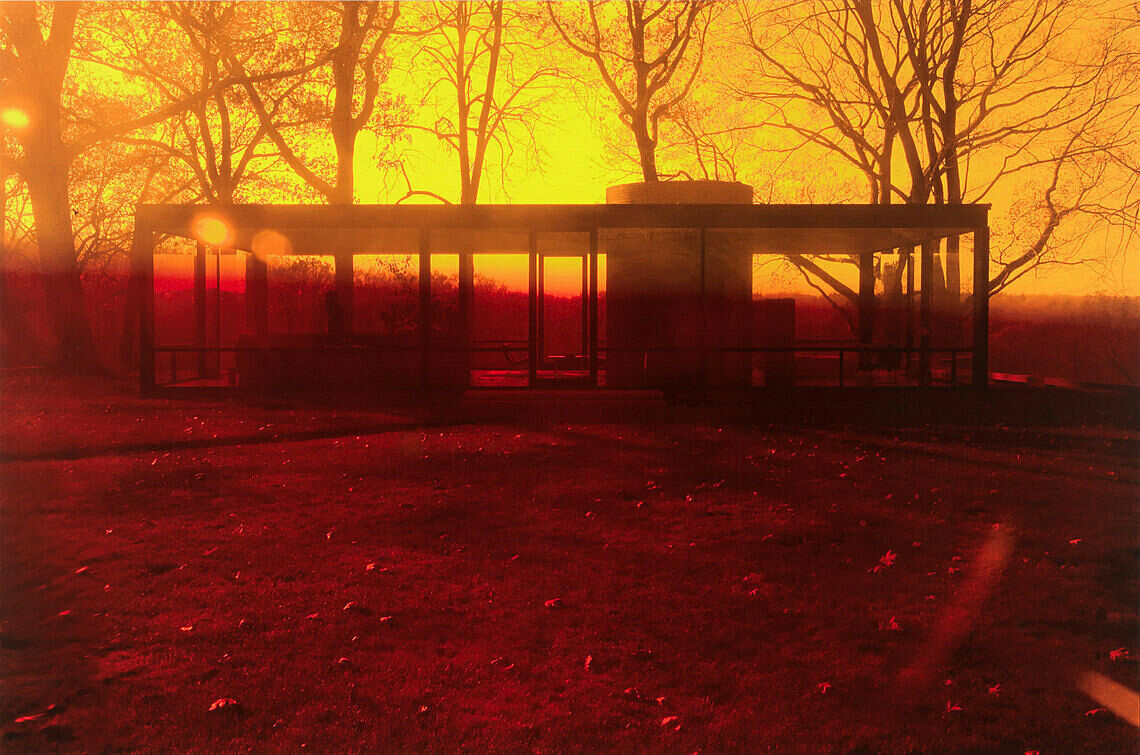
James Welling (b. 1951), 0806, 2006. Inkjet print, sheet: 33 3/16 × 50 in. (84.3 × 127 cm); image: 33 3/16 × 50 in. (84.3 × 127 cm). Whitney Museum of American Art, New York; purchase with funds from the Photography Committee 2010.71 © James Welling / Courtesy David Zwirner, New York

0806, 2006

0806 is part of a series of photographs that James Welling took of Philip Johnson’s iconic Glass House (1949) in New Canaan, Connecticut. Over the course of three years, Welling captured the estate, an emblem of the International Style of architecture and of Johnson himself, from different angles, tinting his photographs with a range of colored filters that he placed in front of the camera lens. The orange filter used for 0806 creates the impression of the summer sun setting through the glass pavilion, the suggestion of late-afternoon light emphasized by the long shadows and reflections off of the building’s glass panes. Welling explained, “When I realized I could make the grass red or make sun flares, splatters, and different types of visual activity in front of this supposedly transparent house, or box, the project became a laboratory for ideas about transparency, reflectivity, and color.”

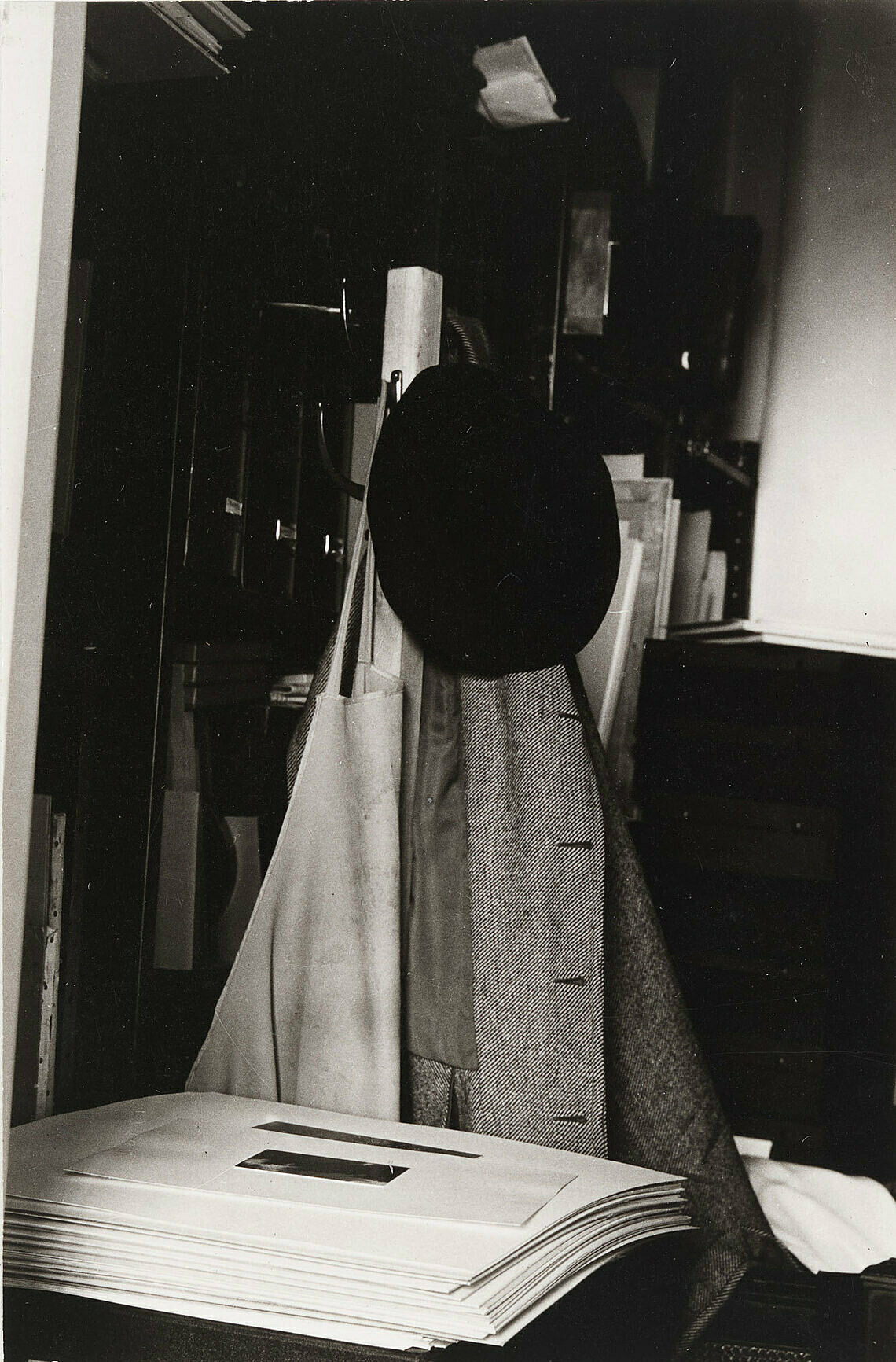
Dorothy Norman (1905–1997), An American Place–Alfred Stieglitz’s Hat and Coat–Stieglitz Vault, 1940s. Gelatin silver print mounted on paperboard, image: 14 × 11 in. (35.6 × 27.9 cm); 3 1/2 × 2 15/16 in. (8.9 × 7.5 cm). Whitney Museum of American Art, New York; gift of the artist 96.81 © 1998 Center for Creative Photography, The University of Arizona Foundation

AN AMERICAN PLACE–ALFRED STIEGLITZ’S HAT AND COAT–STIEGLITZ VAULT, 1940

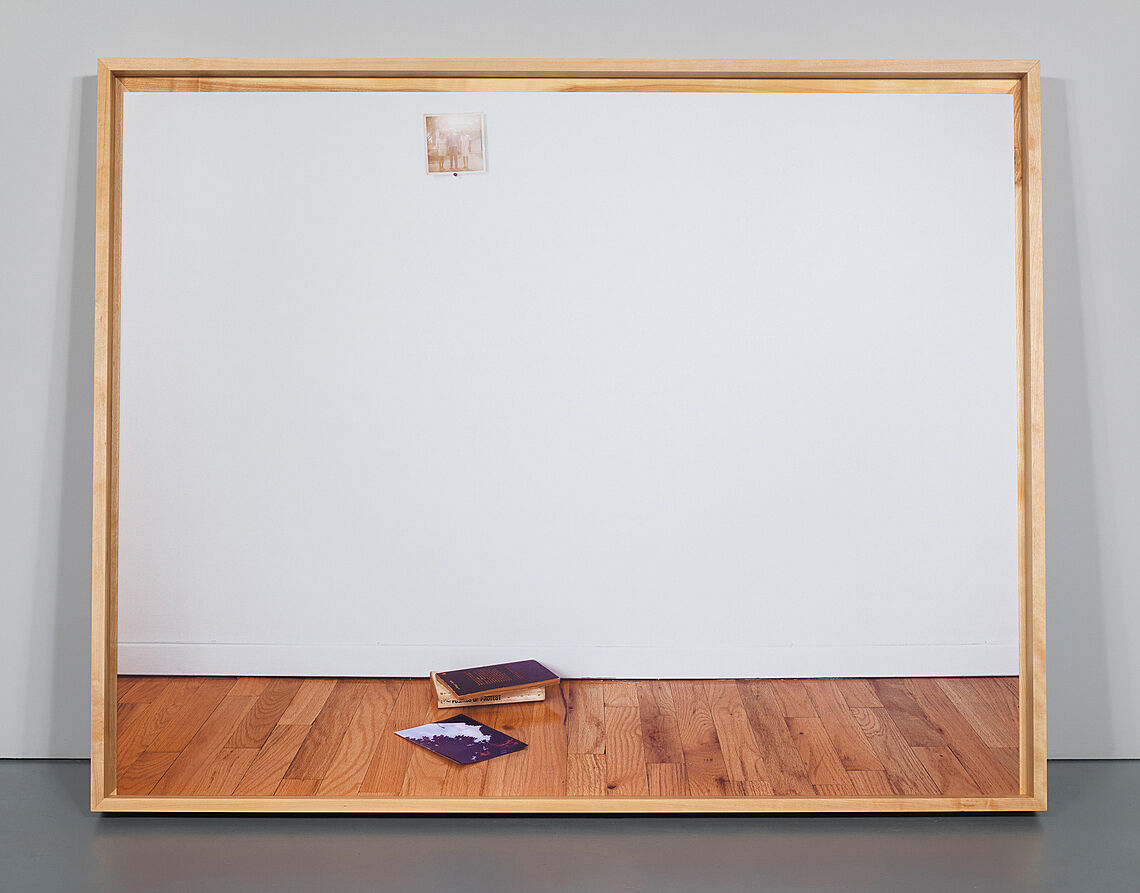
Leslie Hewitt, Untitled (Myriad), 2011, from the series Blue Skies, Warm Sunlight. Chromogenic print, with wood frame, 52 5/8 × 66 3/8 × 5 in. (133.7 × 168.6 × 12.7 cm). Whitney Museum of American Art, New York; purchase with funds from the Photography Committee and the Painting and Sculpture Committee 2013.1 a-b © Leslie Hewitt

UNTITLED (MYRIAD), 2011

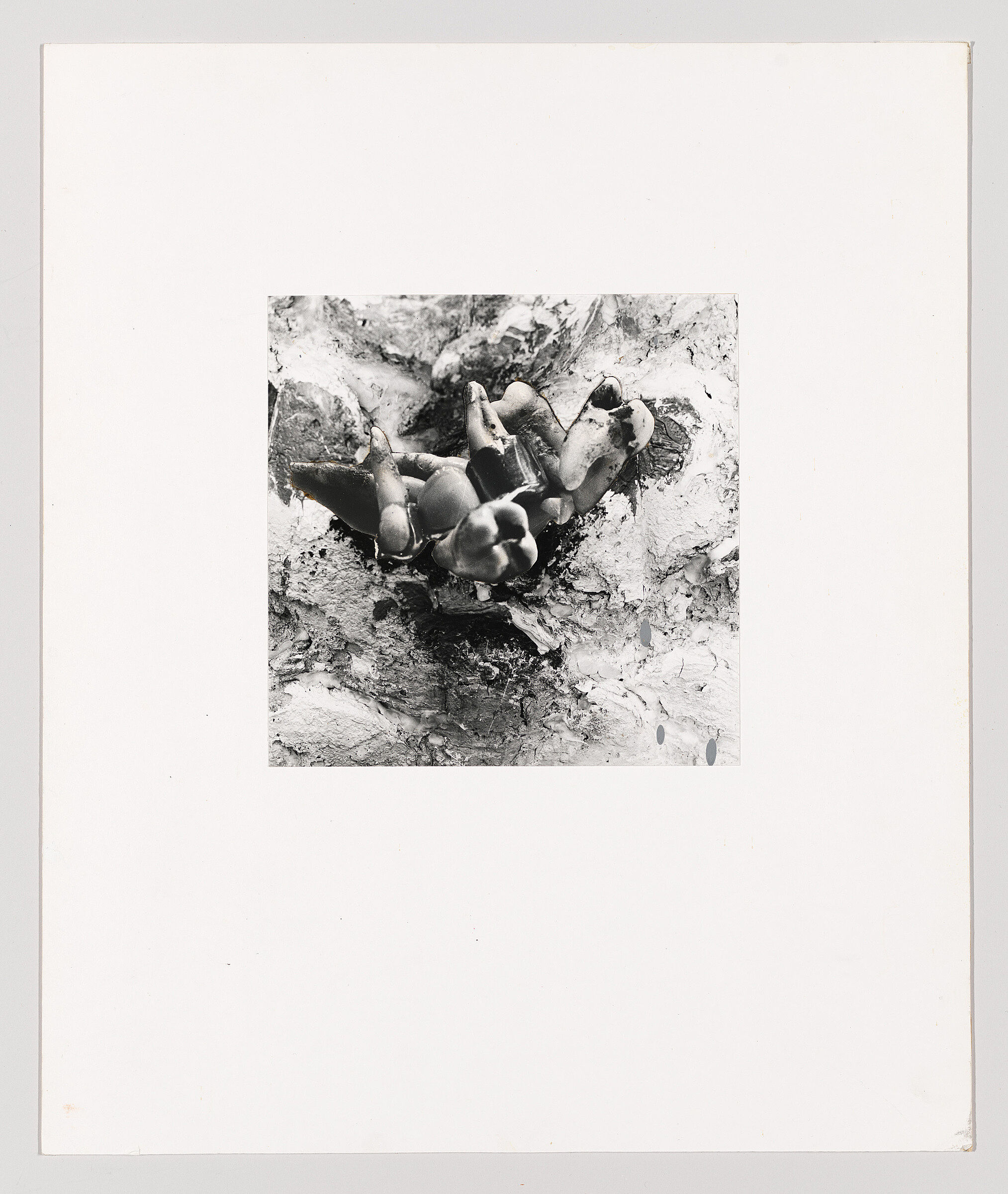
Jay DeFeo, _Study for September Blackberries_, c.1972-1973. Gelatin silver prints and paint mounted on paperboard, Image: 7 5/8 × 7 5/8 in. (19.4 × 19.4 cm). Whitney Museum of American Art, New York; Purchase, with funds from the Photography Committee 2004.18 © 2016 The Jay DeFeo Trust / Artists Rights Society (ARS), New York

STUDY FOR SEPTEMBER BLACKBERRIES, 1972

In Study for September Blackberries, Jay DeFeo superimposed a cutout photograph of her dental bridge and several individual molars onto a photographic detail of her monumental painting The Rose, (1958–66). DeFeo had acute periodontal disease, which she believed might have resulted from exposure to lead paint while working on The Rose. In works like this one, the dental bridge became a kind of surrogate for the artist; she explored its formal and psychological qualities, once describing it as “my subject . . . out of my own head!” Part of a group of works DeFeo made and entitled September Blackberries, after a compendium of poetry by her friend Michael McClure, this photocollage acknowledges a sense of loss—including that of her teeth and also of The Rose, which was at the time inaccessible to her—while representing a bridge, literally and figuratively, to a new stage of her life and career.

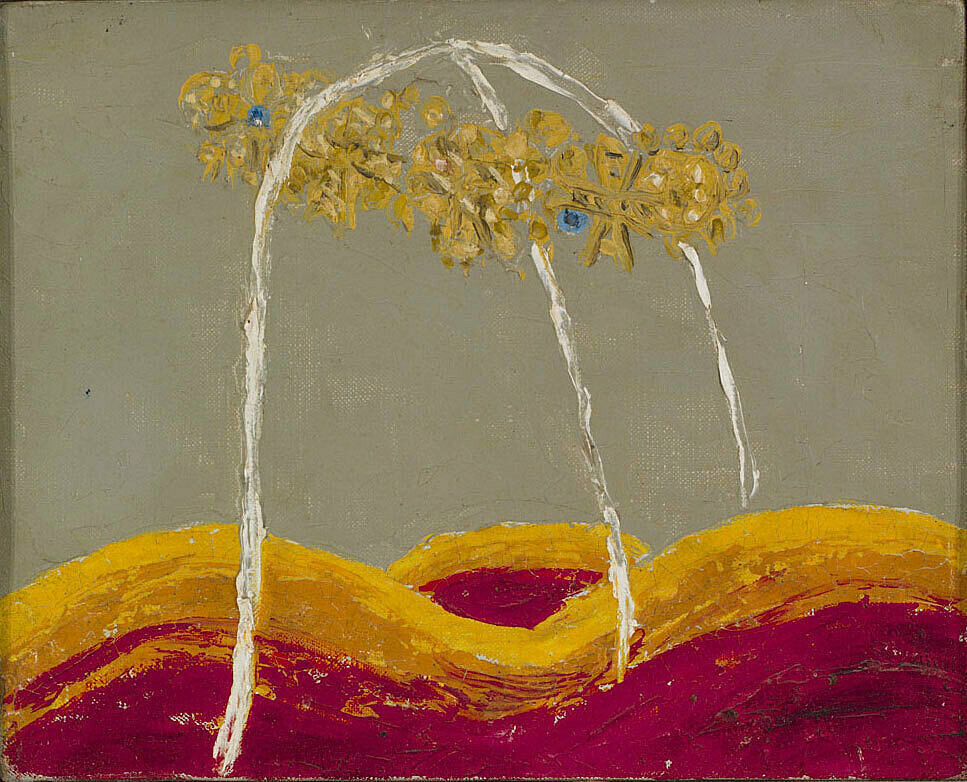
Forrest Bess (1911–1977), Untitled (The Crown), 1949. Oil on canvas, 8 × 10 in. (20.3 × 25.4 cm). Whitney Museum of American Art, New York; promised gift of Emily Fisher Landau P. 2010.35

UNTITLED (THE CROWN), 1949

Forrest Bess’s enigmatic, elemental, quasi-abstract paintings are filled with cryptic symbols that lead back to the artist himself. He described them as images of visions that came to him in the night. Here, the artist uses an arc of white lines to link a dappled bronze form (perhaps the “crown” of the work’s title) with undulating crimson curves that resemble hills or waves. Evoking both figure and landscape, the painting may be read as part of the artist’s longstanding quest to find his own place within the vast primordial forces that govern nature.

0:00

Charles Demuth, My Egypt, 1927

0:00

Narrator: Adam Weinberg is Alice Pratt Brown Director of the Whitney Museum.

Adam Weinberg: Enormous concrete grain elevators loom at the center of this painting by Charles Demuth. At the right, we see an almost elegant-looking smokestack—its plume of smoke barely discolors the clear blue sky. At the bottom left, a small chimney suggests rooftops of buildings dwarfed by the concrete structure behind them—as if the giant silos are actually pushing the older structures right off the edge of the canvas.   

What does the presentation of these grain elevators tell us about the ideology behind them? The image is oddly sterile—painted in a precise, machine-like way. The surface of this painting is so pristine, you can hardly find a single brushstroke. It almost looks like a photograph. Rays of light bifurcating the canvas spotlight the building, but the light is cold, almost harsh. The painting’s title provides another clue—it’s called My Egypt. The title and the monumentality of these grain elevators suggest that Demuth is placing the architecture of American industry on par with the great monuments of the past, like the pyramids of ancient Egypt. 

In this painting we can see both the optimism and the anxiety of the period. 

Charles Demuth, My Egypt, 1927

In America Is Hard to See

MY EGYPT, 1927

In the 1920s, Charles Demuth painted a remarkable series of “poster portraits” depicting friends and fellow artists. Rather than capturing a physical likeness, these works conveyed the subject’s character through arrangements of commonplace objects rendered in the crisp style of advertisements. While Demuth did not include a self-portrait in the series, My Egypt, produced during the same period, suggests a parallel effort to distill his personal and artistic concerns in symbolic terms. This depiction of a newly built grain elevator in the artist’s native Lancaster, Pennsylvania, was the apex of his quest to develop a dynamic geometric style that would herald America’s industrial prowess. By titling the painting My Egypt, Demuth equates the grain elevator with the ancient pyramids, but he also invites a more poignant, intimate reading. When he made this work, Demuth was confined by debilitating illness to his home in Lancaster. Calling the image his Egypt links his hometown to the Biblical narrative of Egypt as a site of involuntary bondage.

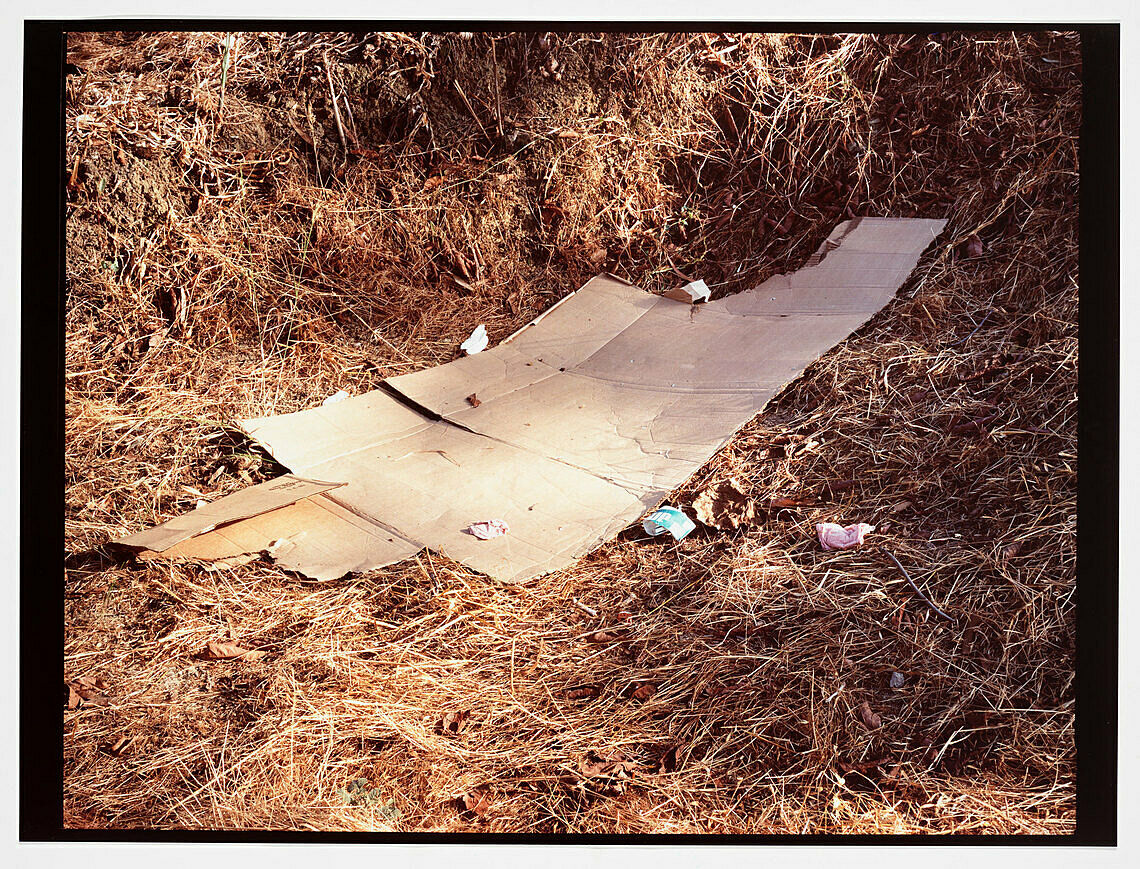
Anthony Hernandez (b. 1947), Landscapes for the Homeless, #17, 1989. Silver dye bleach print, Sheet: 30 × 39 15/16 in. (76.2 × 101.4 cm), Image: 29 × 36 13/16 in. (73.7 × 93.5 cm). Whitney Museum of American Art, New York; purchase with funds from the Photography Committee 94.21 © Anthony Hernandez

LANDSCAPES FOR THE HOMELESS, #17, 1989

Anthony Hernandez photographed Los Angeles homeless encampments, most near the city’s freeways, over a period of three years. This site betrays only the barest traces of human presence: a flattened cardboard box that was likely used as shelter or a bed and bits of refuse. The series’ images are generally devoid of people, an absence that highlights how the homeless are often invisible. “Nobody else waslooking,” Hernandez explained. “That’s what I forced them to do with these pictures.”

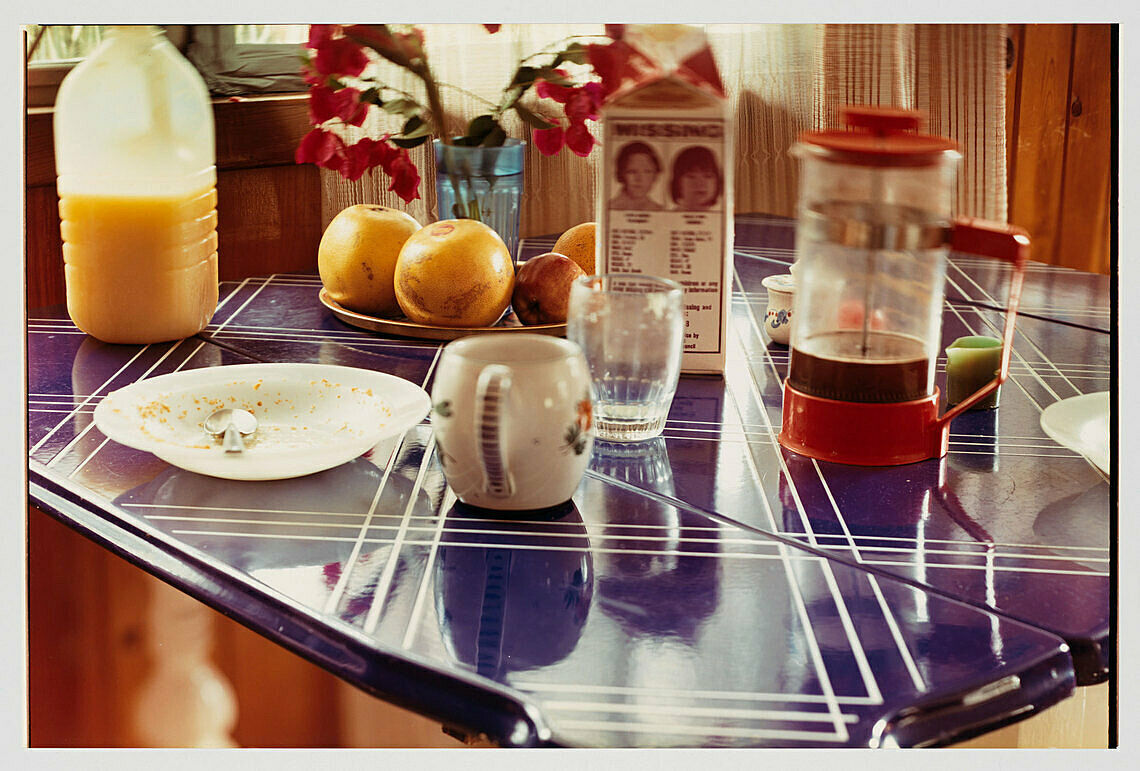
JoAnn Verburg (b. 1950), Missing Children (Captiva), 1988. Chromogenic print, 15 15/16 × 24 1/16 in. (40.5 × 61.1 cm). Whitney Museum of American Art, New York; gift of Alexandra R. Marshall 99.75.2 © JoAnn Verburg; courtesy Pace/MacGill Gallery, New York

MISSING CHILDREN (CAPTIVA), 1988

By photographing this interior scene at eye level and printing the image at life scale, JoAnn Verburg provides a point of entry for the viewer: one can easily imagine sitting at this table. At first glance, the work depicts a cheerful, everyday moment. Yet the milk carton’s images and descriptions of missing children inject the dangers of the world outside into the intimate setting. Verburg explains that the photograph involves “putting a lyrical, private moment together with difficulty–the political, public side of life.”

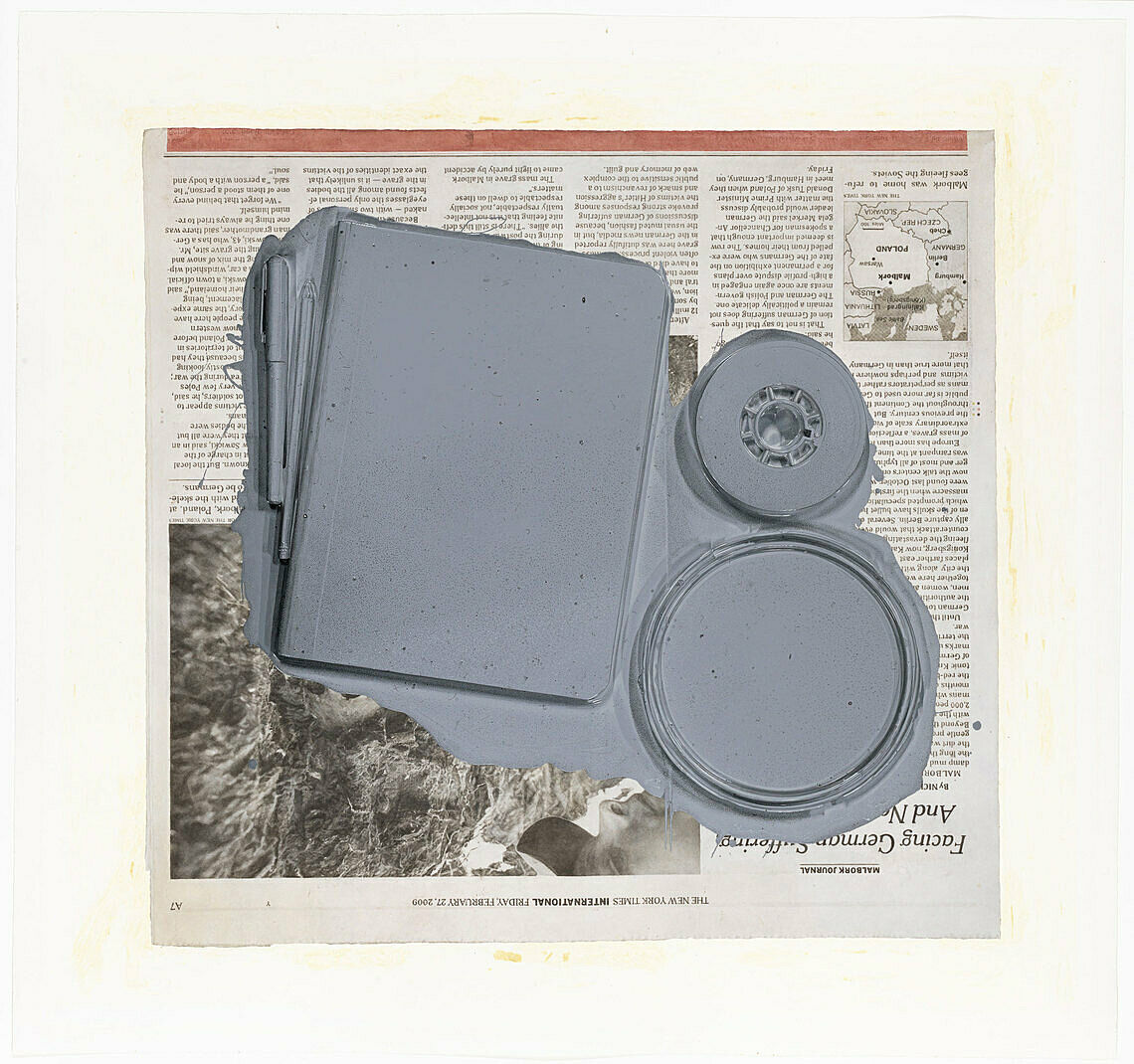
Paul Sietsema (b. 1968), Untitled figure ground study (facing German suffering), 2011. Brush and ink and enamel on paper, 34 7/8 × 37 × 1 7/16in. (88.6 × 94 × 3.7 cm). Whitney Museum of American Art, New York; purchase with funds from the Drawing Committee and the Painting and Sculpture Committee 2012.25a–b © Paul Sietsema

UNTITLED FIGURE GROUND STUDY (FACING GERMAN SUFFERING), 2011

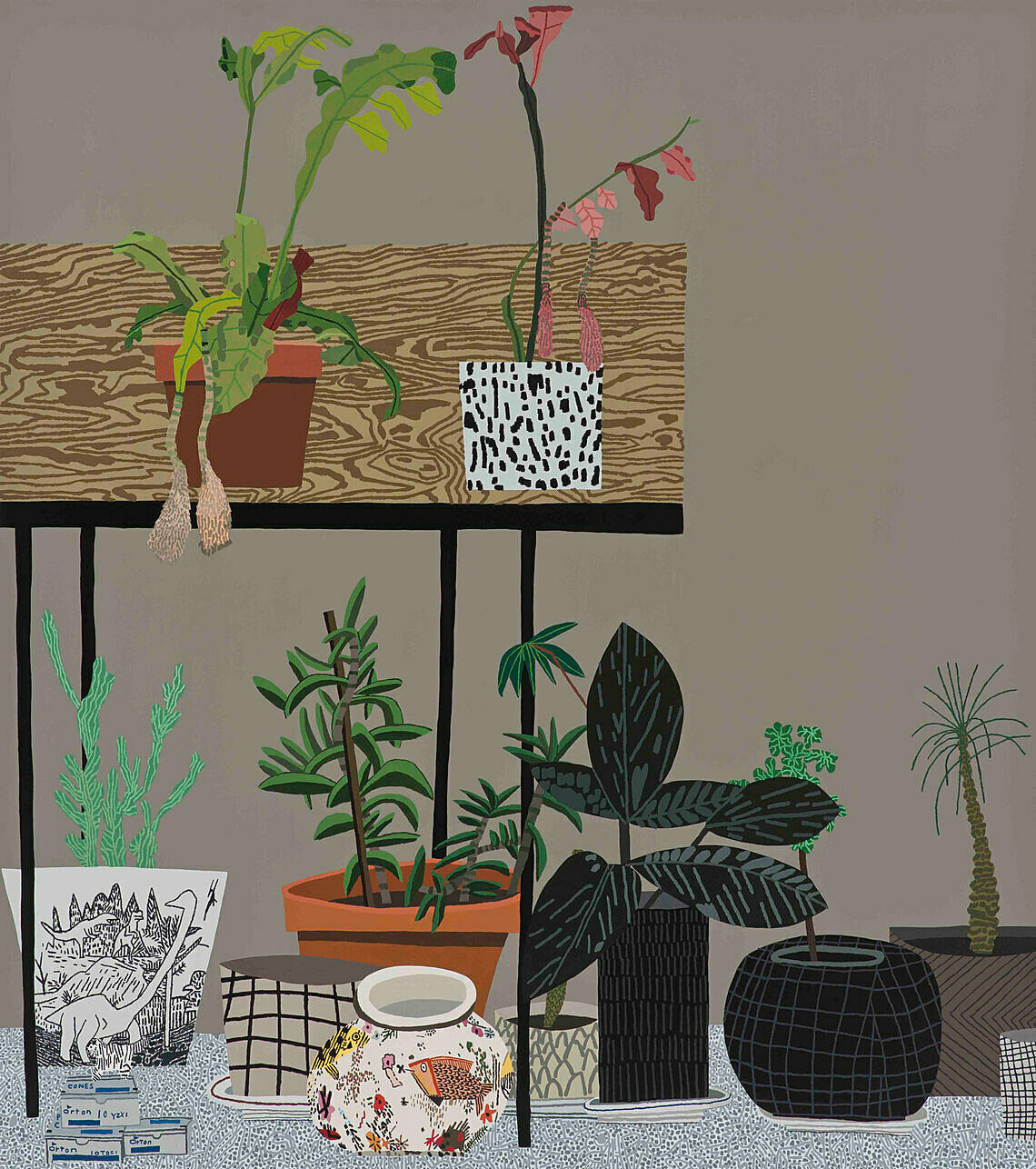
Painting of various potted plants on and below a wooden table, with a dinosaur drawing and a floral-patterned vase in the foreground.

Jonas Wood (b. 1977), Night Bloom Still Life, 2015. Oil and acrylic on canvas, 90 × 80in. (228.6 × 203.2 cm). Whitney Museum of American Art, New York; gift of Linda Macklowe 2016.124 © Jonas Wood

NIGHT BLOOM STILL LIFE, 2015

In Jonas Wood’s paintings, he often uses intricate decorative patterning to render ordinary objects that hold personal resonance for him. Some of the pots depicted here were made by Wood’s wife, artist Shio Kusaka. The painting thus is just as much a self or family portrait as it is a still life. “You could call it a visual diary or even a personal history,” the artist has said. This everyday quality, accentuated by flat planes of color and uniform detail, makes the spatial ambiguities in Wood’s work—such as the impossible perspective of the table—all the more disorienting.

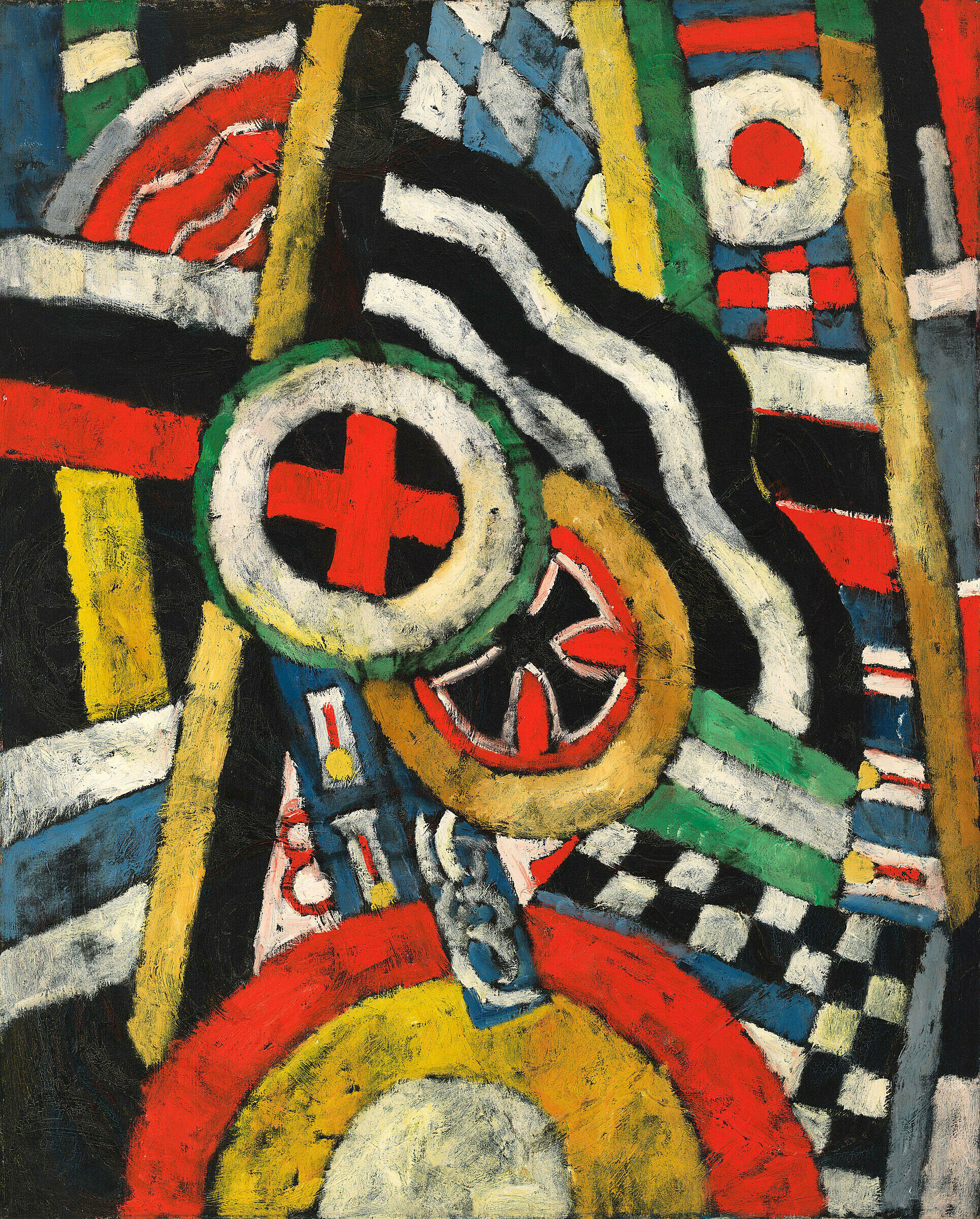
Marsden Hartley (1877–1943), Painting, Number 5, 1914–15. Oil on linen, 39 1/4 × 32 in. (99.7 × 81.3 cm). Whitney Museum of American Art, New York; gift of an anonymous donor 58.65

PAINTING, NUMBER 5, 1914

On an extended stay in Berlin before the First World War, Marsden Hartley fell in love with a young German cavalry officer named Karl von Freyburg. The freedom and optimism that Hartley experienced in imperial Berlin—where he was inspired by the lively military pageantry as well as a gay subculture that thrived despite laws against homosexuality—were rapidly cut short when von Freyburg was killed at the war’s outset. This painting evokes a physical and psychological portrait of Hartley’s lost companion. Combining Cubist fragmentation with German Expressionism’s dramatic palette, the image includes motifs from German flags, a chessboard recalling von Freyburg’s favorite game, the Iron Cross he was awarded for bravery, and regalia from his uniform. The result is both an energetic abstraction and a veiled memorial to the artist’s experience of love and tragic loss.

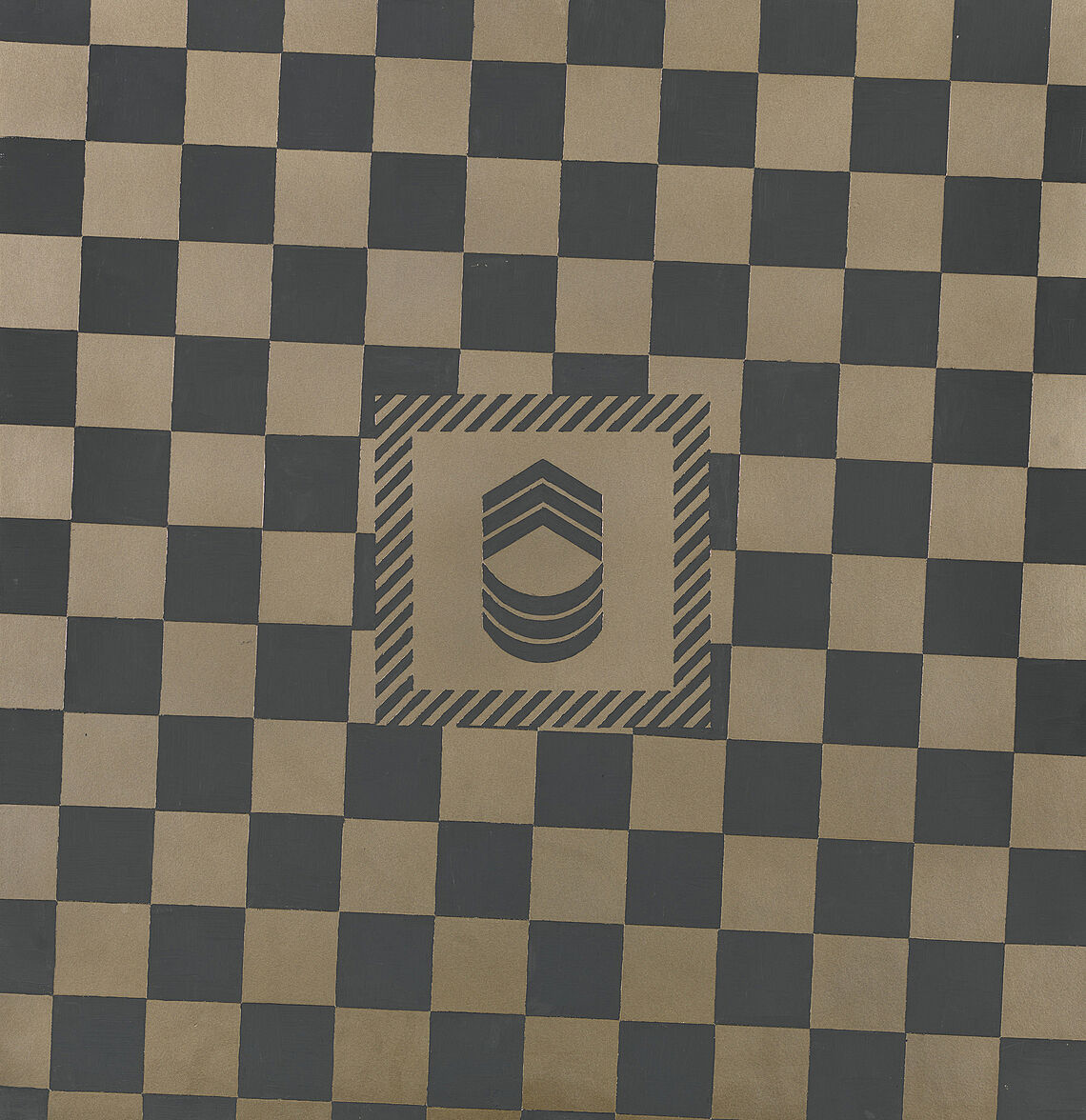
Billy Al Bengston (b. 1934), Kirk, 1961. Enamel and oil on composition board, with wood frame, 24 1/4 × 23 3/8 × 1 3/4 in. (61.6 × 59.4 × 4.4 cm). Whitney Museum of American Art, New York; gift of John Coplans 72.153 a–b © Billy Al Bengston

KIRK, 1961

In Billy Al Bengston’s Kirk, a sergeant’s chevron sits at the middle of a checkerboard field. Bengston liked the chevron’s rigid geometry and simple symmetry, repeating it in his paintings from this period until it became a sort of proxy for the artist’s signature. He painted this work on masonite, a material that Bengston felt was suited for the rigidity of the image, using a spray-paint technique that he discovered when he started riding motorcycles in 1960. The technique lent a metallic sheen and depth of color to the painting’s surface that he thought captured the effect of California light on cars and street signs. Bengston made a number of chevron paintings, each of which he named after a Hollywood film star—in this case, Kirk Douglas. Because the titles were assigned after a work was finished, there was rarely any correlation between the name and the initial concept for the painting.

0:00

August 3, 2015
Scott Rothkopf on Racing Thoughts by Jasper Johns

0:00

August 3, 2015
Scott Rothkopf on Racing Thoughts by Jasper Johns

In 99 Objects

RACING THOUGHTS, 1983

Lying in the bathtub one day, Jasper Johns contemplated what he described as a series of images that ran “through my head without any connectedness that I could see.” Racing Thoughts contains elements of this scene, such as the hanging khaki pants and running faucet. It also features the subjects of Johns’s musings, including a puzzle-portrait of his longtime dealer Leo Castelli, a pot by ceramicist George Ohr, a lithograph by Barnett Newman, and a reproduction of the Mona Lisa—all influences on Johns’s artistic development. By arranging these images in this way, seemingly affixed to the faux-wood-grain background with trompe l’oeil tape, thumbtacks, and a protruding nail, he links them to his career-long preoccupation with illusionism and perceptual ambiguity. Disparate though the composition’s elements may be, they are united by a complex web of art historical and personal associations that conjure an image of the artist himself.

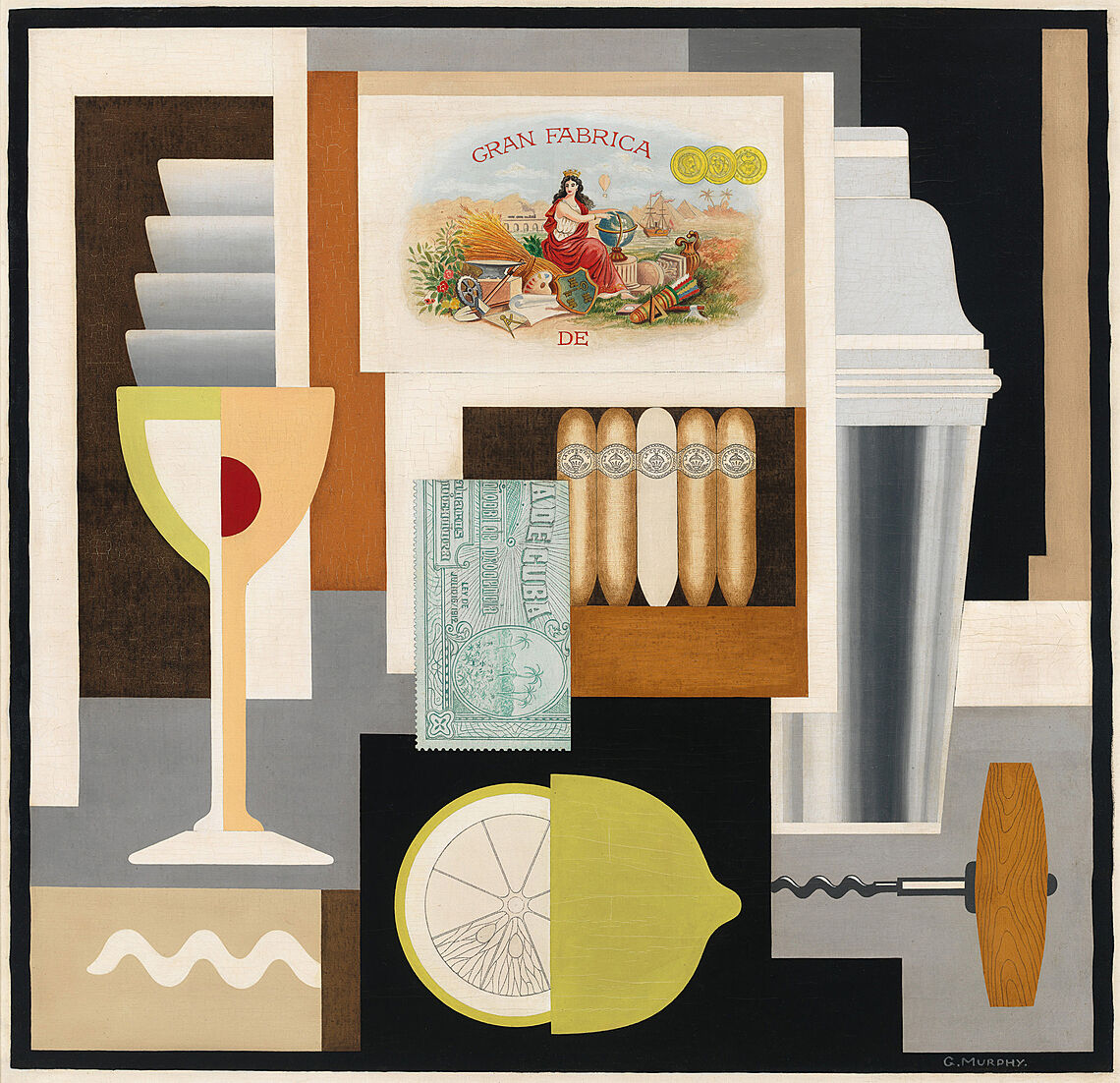
Gerald Murphy (1888–1964), Cocktail, 1927. Oil and pencil on linen, 29 1/16 × 29 15/16 in. (73.8 × 76 cm). Whitney Museum of American Art, New York; purchase with funds from Evelyn and Leonard A. Lauder, Thomas H. Lee, and the Modern Painting and Sculpture Committee 95.188 Art © Honoria Murphy Donnelly, Licensed by VAGA, New York, N.Y.

COCKTAIL, 1927

Gerald Murphy belonged to a circle of avant-garde American artists and writers who lived in France during the 1920s. He was renowned for his sophisticated entertaining, especially his inventive cocktails; playwright Philip Barry remarked that Murphy mixed drinks “like a priest preparing Mass.” By celebrating a ritual that was a hallmark of his glamorous European lifestyle but illegal in Prohibition-era America, the painting casts Murphy as a worldly expatriate. Compositional details allude to the artist’s personal life: the bar accessories are based on memories of his father’s set; the five cigars represent the artist, his wife, and their three children; and the illusionistic cigar box cover—which took Murphy four months to paint—contains symbols that allude to the artist himself, including a boat (he was an avid sailor) and an artist’s palette.

A painting of a bull skull and flowers floating over a desert landscape.

Georgia O'Keeffe, Summer Days, 1936. Oil on canvas, 36 1/8 × 30 1/8 in. (91.8 × 76.5 cm). Whitney Museum of American Art, New York; gift of Calvin Klein 94.171. © 2019 Georgia O'Keeffe Museum / Artists Rights Society (ARS), New York

SUMMER DAYS, 1936

Georgia O’Keeffe depicted natural forms with such persistence and intensity that these subjects often are understood as surrogates for the artist herself. Central to her personal iconography was the desert landscape of New Mexico, where she traveled each summer beginning in 1929. In painting the desiccated animal bones she collected there, O’Keeffe developed potent new icons of aesthetic austerity that challenged prevailing sexualized interpretations of her art, especially the vibrant flower paintings that had made her famous during the 1920s. In Summer Days, the juxtaposition of a sun-bleached skull with blooming wildflowers evokes cycles of life, death, and rebirth akin to the creative reawakening O’Keeffe herself experienced in the Southwest. Tellingly, she selected this image as the cover of her 1976 autobiography.

0:00

July 10, 2015
Nick Mauss on Sun by Florine Stettheimer

0:00

July 10, 2015
Nick Mauss on Sun by Florine Stettheimer

In 99 Objects

SUN, 1931

Florine Stettheimer often depicted herself, her mother and sisters, and the artists who frequented the vibrant gatherings in her family’s Manhattan apartment. Alongside likenesses of her sitters, she typically included emblems of the individual’s identity—clues to character that could only be deciphered by this privileged audience. At the center of Sun is a symbol deeply personal to the artist: a towering bouquet. Stettheimer picked a bouquet of seasonal flowers each year on her birthday, recording the event in her journal; this one celebrates her sixtieth birthday and, with Florine written on the ribbon that snakes around it like a vine, suggests a stand-in for the artist herself. A woman, perhaps Stettheimer, lounges under an arbor on the distant sun-drenched rooftop.


Artists


Explore works from this exhibition
in the Whitney's collection

View 382 works

On the Hour

A 30-second online art project:
Frank WANG Yefeng, The Levitating Perils #2

Learn more about this project

Learn more at whitney.org/artport

On the Hour projects can contain motion and sound. To respect your accessibility settings autoplay is disabled.