Human Interest: Portraits from the Whitney’s Collection | Art & Artists

Apr 2, 2016–Apr 2, 2017


Exhibition works

15 total
Self-Conscious
Read more

Self-Conscious

Floor 6

Self-Conscious
Floor 6

Since the 1970s, artists have increasingly used self-portraiture to explore multiple invented personas as well as darker psychological states. Searching for their own place in a society that prizes youth, fame, and self-exposure, many have adopted strategies from popular culture but often with a twist. Kalup Linzy stars in an imaginary soap opera about the art world, while Jean-Michel Basquiat places himself and his friends along the troubled continuum of African American performers in Hollywood. Other artists confound the air of heroism traditionally associated with the artist’s image, casting themselves as antiheroes shrouded in anxiety and self-doubt. Charles Ray turns himself into the diminutive prisoner of his own art, and Rudolf Stingel depicts himself on a grand scale overcome by melancholy and inertia. In a culture in which the fashion industry, cosmetic surgery, and digital editing have made physical appearance more malleable, the artists whose work is featured in this section testify to a widespread sense of uncertainty in the self and how it might be portrayed.


Below is a selection of works from Self-Conscious.

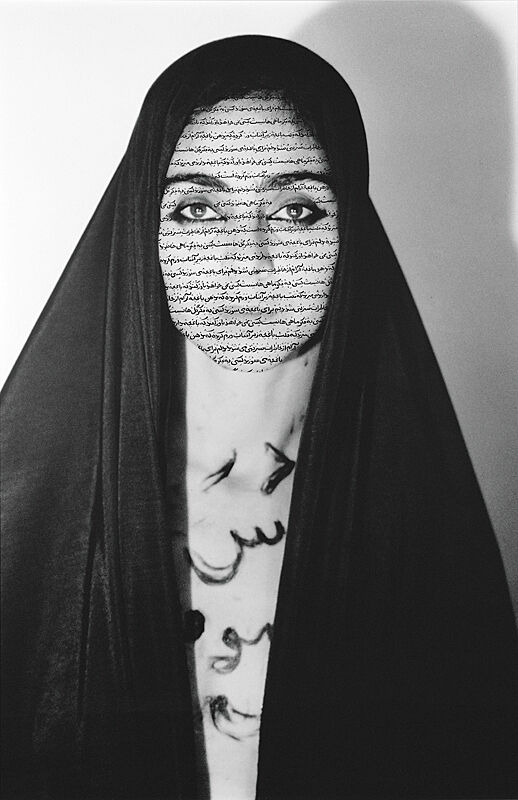
Woman in Hijab with arabic written on her face and body.

Shirin Neshat, Unveiling, 1993, from the series Women of Allah. Gelatin silver print and ink, 59 3/4 × 39 3/4 in. (151.8 × 101 cm). Whitney Museum of American Art, New York; purchase with funds from the Photography Committee  2000.267

© Shirin Neshat. Courtesy Gladstone Gallery, New York and Brussels

UNVEILING (WOMAN OF ALLAH SERIES), 1993

Shirin Neshat came to the United States in 1974 as a student but was unable to return to her native Iran until 1990 due to the 1979 Islamic Revolution and the subsequent war between Iraq and Iran. When she eventually did, Neshat was shocked and fascinated by the country’s radical transformation under the conservative religious government. In Unveiling, a self-portrait, the artist wears a chador—a type of veil worn by Iranian women while in a public space—and her face and chest are inscribed with lines of text by the feminist poet Forough Farrokhzad. With this work and others from this period, Neshat considers how “in Islam a woman’s body has been historically a . . . battleground for various kinds of rhetoric and political ideology.”

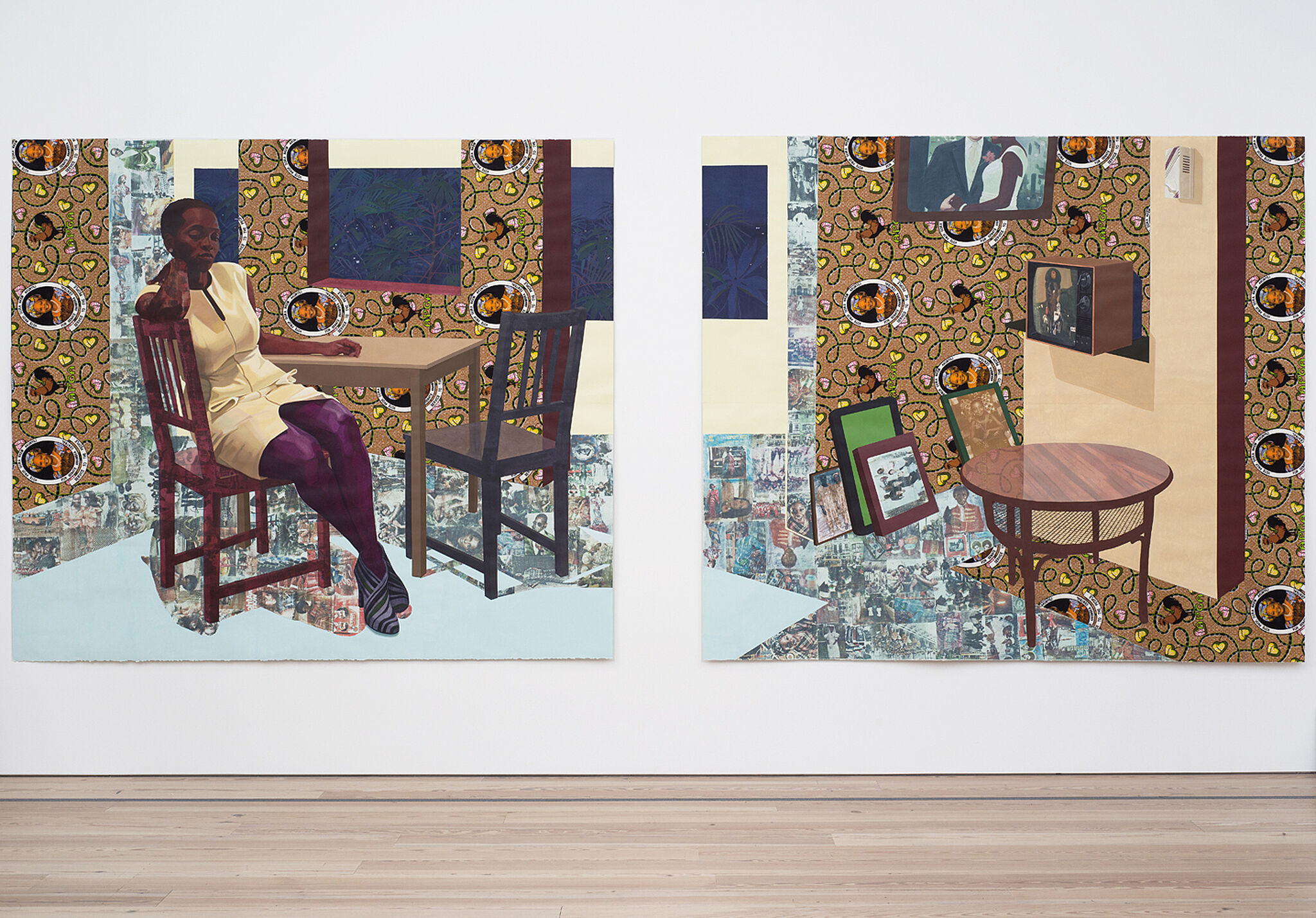
A collage of a woman sitting at a table next to a collage of an empty table with portraits on the wall in the background.

Njideka Akunyili Crosby, Portals, 2016. Acrylic, solvent transfer, collage of fabric and paper, and colored pencil on paper, 83 5/8 × 206 in (212.4 × 523.2 cm). Purchase with funds from the Jacques and Natasha Gelman Foundation T.2016.261a-b

PORTALS, 2016

Njideka Akunyili Crosby’s diptych is layered with portraits, most prominently the artist’s self-portrait at left. The scene is an invented domestic space that fuses details of Akunyili Crosby’s Nigerian upbringing with those from her life in the United States, where she has lived since 1999. On the right-hand side are framed pictures of multiple generations of her family—the artist’s parents, her in-laws, her grandmother, and her own wedding. Commemorative portrait fabric—a customized material often made for special events in Nigeria, in this case the artist’s mother’s senate campaign—functions as part of the architectural backdrop of the diptych. 


Akunyili Crosby’s work routinely combines elements drawn from postcolonial Nigeria and the United States, pop culture, and family life in this way. As she explains, “I want to put the viewer in this space of confluence, of multiple things. . . . It is this space where disparate elements come together, and the new space that comes out isn’t just this plus this—it’s like a whole new identity.”

0:00

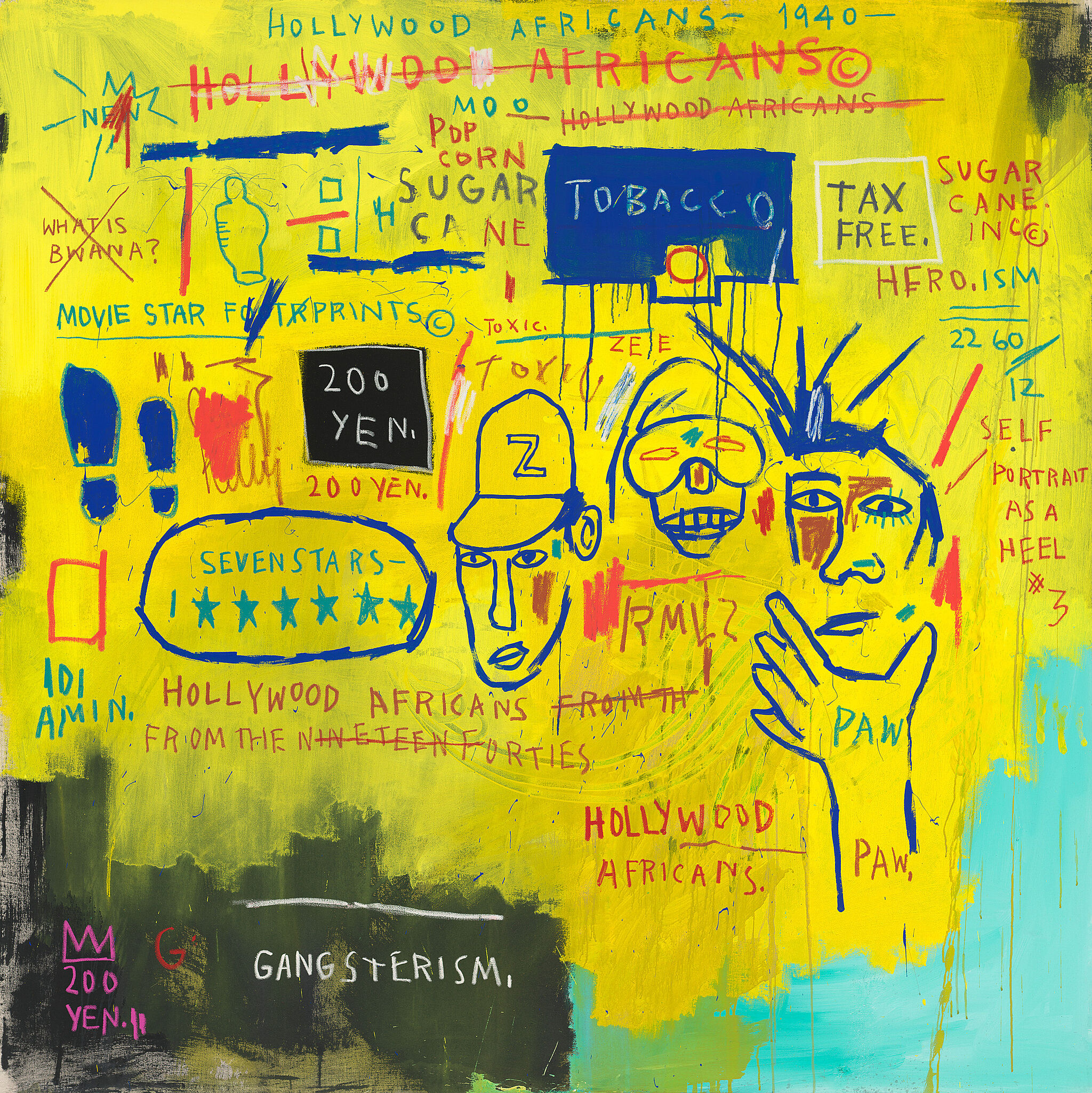
Jean-Michel Basquiat, Hollywood Africans, 1983

0:00

Thelma Golden: Hollywood Africans is somewhat of a typical Basquiat painting, because the first thing you see is that it’s covered with words. And the words have a hierarchy: some of them are circled, some of them are crossed out, some of them are highlighted in different colors, but really the most important thing is you see the words.

Adam Weinberg: Thelma Golden is director and chief curator of the Studio Museum in Harlem.

Thelma Golden: At the core of this painting is a self-portrait of Basquiat himself and his two friends, Toxic and Ramellzee, who were also artists of that era who had traveled with him to L.A., so in many ways, the painting is a document of this trip that they made out to California, encountering out there both the art world as well as the music world, that they were hanging out in. I think it’s obvious to look at Hollywood Africans as a critique of the way in which black people have been portrayed in Hollywood film.

But I think, given when this painting was made in 1983, Basquiat was making a more complicated comment about the ideas of freedom and ownership as it related to the Hollywood arena. I often think of this painting, Hollywood Africans, as referring not just to those portrayals of Africa, the stereotypes of Africa in films like Tarzan and the way in which Africans were portrayed, but more a contemporary comment about the role of black people in the film world, right? That they are stars, but yet still, culture defines the way in which they’re understood. So it, to me, seems often like he wasn’t just making a comment about the past, but he was really making—not a comment or a critique—but a statement about the present.

Jean-Michel Basquiat, Hollywood Africans, 1983

In Human Interest and America Is Hard to See

HOLLYWOOD AFRICANS, 1983

At the center of Hollywood Africans is a portrait of Jean-Michel Basquiat with the rap musician Rammellzee and the painter Toxic, friends who traveled with the artist to Los Angeles, where he made this painting. Near Basquiat’s image at the far right are other modes of self-representation: the digits of his birthdate (12, 22, and 60) and the descriptive title “SELF PORTRAIT AS A HEEL #3.” The artist combines these personal references with phrases alluding to mass media’s long history of stereotyping African Americans, including “Sugar Cane,” “Gangsterism,” and “What is Bwana?” By intermingling the autobiographical and the historical, Basquiat places his own reception in Los Angeles within the broader continuum of Hollywood’s exoticizing and often derogatory depictions of people of African descent.

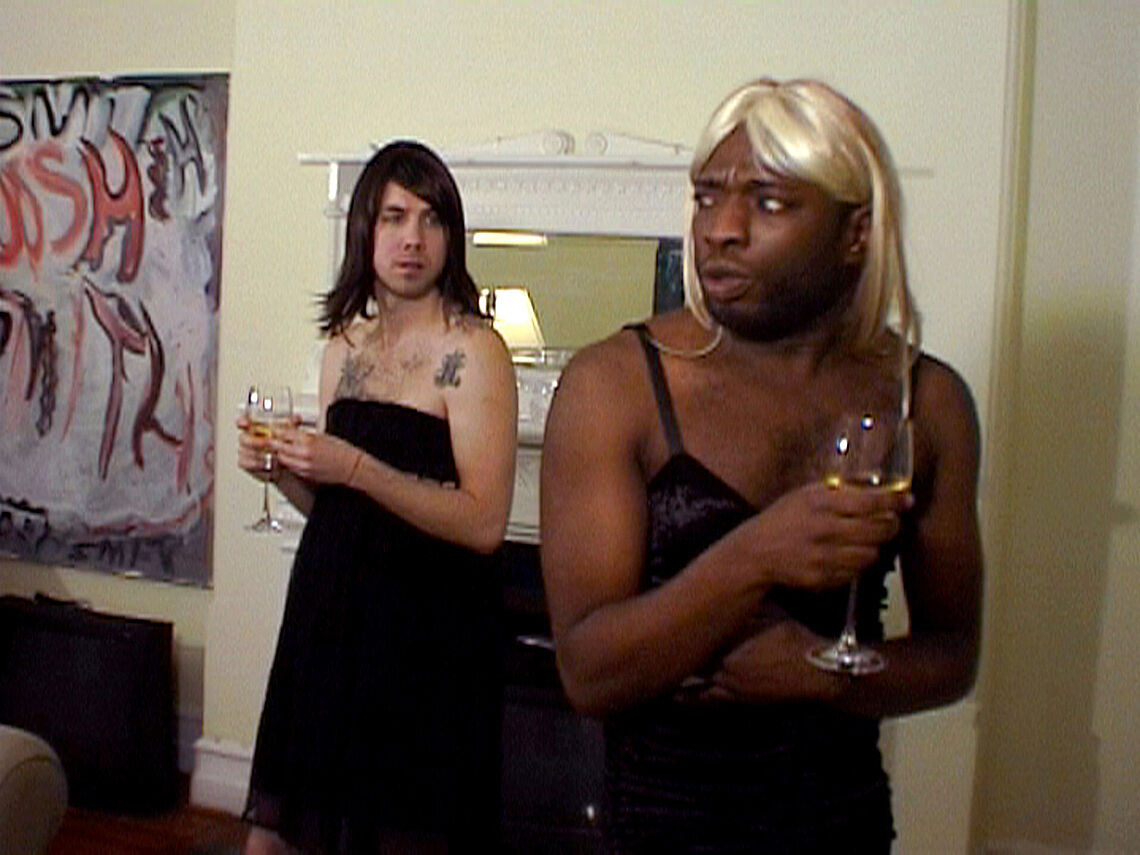
Kalup Linzy (b. 1977), Conversations Wit de Churen V: As da Art World Might Turn, 2006. Video, color, sound; 12:09 min. Whitney Museum of American Art, New York; purchase with funds from the Film, Video, and New Media Committee 2009.134. Courtesy of the artist and Taxter and Spengemann

CONVERSATIONS WIT DE CHUREN V: AS DA ART WORLD MIGHT TURN, 2006

This video’s subtitle riffs on the soap opera As the World Turns and is one of a series inspired in part by such daytime dramas. Kalup Linzy writes, directs, produces, scores, and stars in these narrative videos about the fictional Braswell family, here playing the role of Katonya, a fledgling New York artist. Using risqué caricature and kitschy melodrama, the work parodies stereotypes of race, class, and sexuality. It is not simply satire, though; Katonya emerges as a sincere and sympathetic character grappling with art-world rituals and pretensions—the same challenges Linzy faced as an emerging artist.

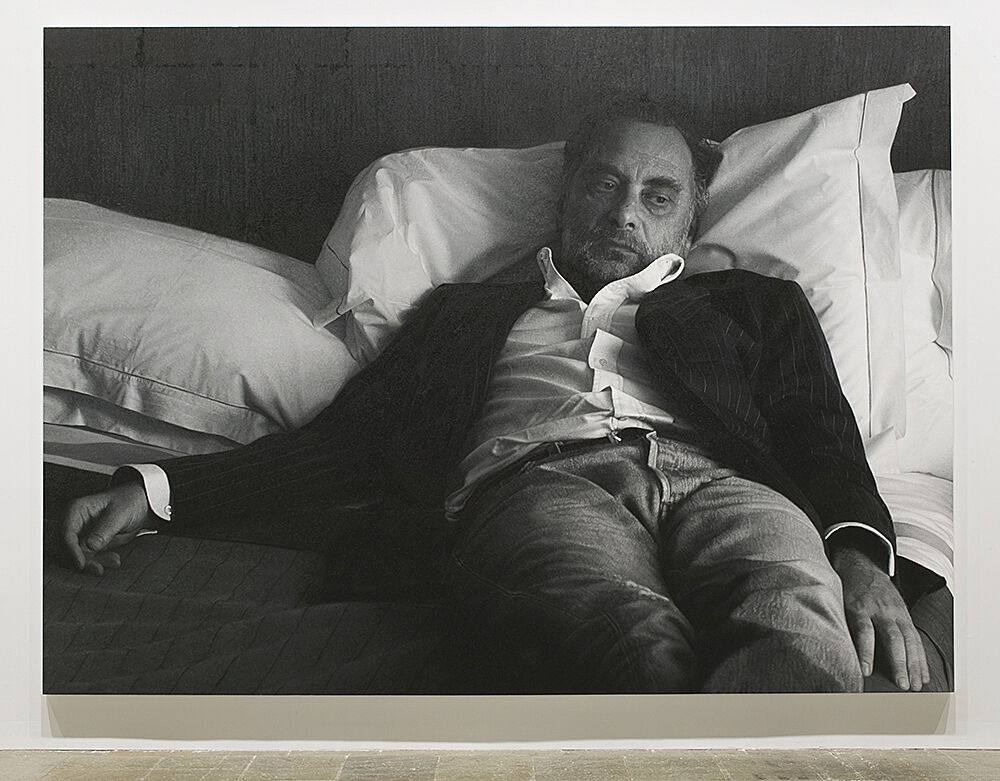
Rudolf Stingel (b. 1956), Untitled (After Sam), 2005–6. Oil on canvas, 139 1/2 × 188 in. (354.3 × 477.5 cm). Whitney Museum of American Art, New York; purchase with funds from the Painting and Sculpture Committee 2006.105 © Rudolf Stingel. Courtesy Paula Cooper Gallery, New York

UNTITLED (AFTER SAM), 2005

One of a series of Photorealist self-portraits from the mid-2000s that Rudolf Stingel based on photographs taken by his friend, the artist Sam Samore, Untitled (After Sam) depicts Stingel slumped on a hotel bed, fully dressed. The despondency of his body language and expression suggest a moment of melancholy, self-doubt, or perhaps total exhaustion. And yet, the moment conjured may not be as unpremeditated as it seems—Stingel has stated that the work is not a self-portrait but a depiction of him playing a role. The series is, he said, “paintings of photographs of me posing. Like movie stills.”

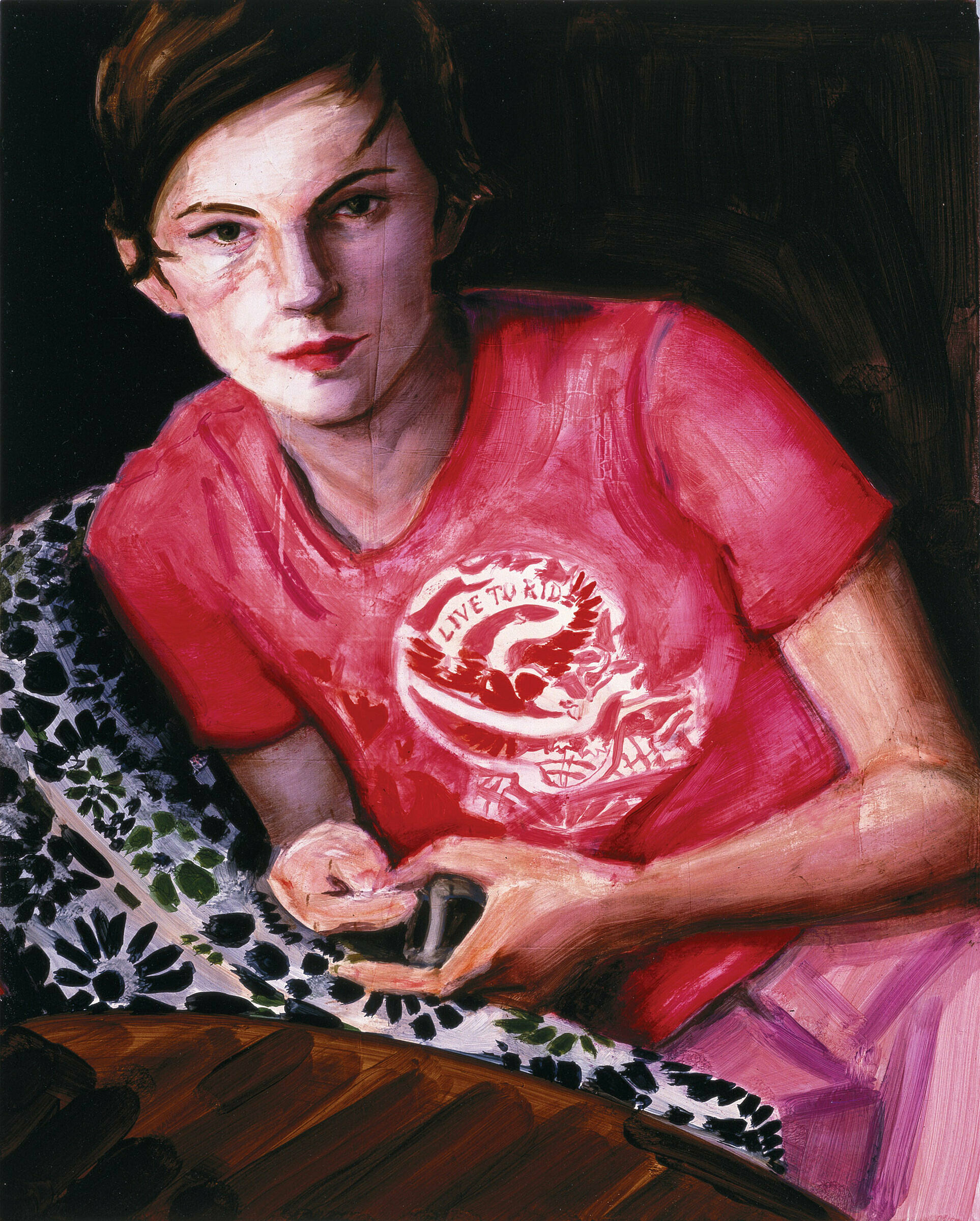
Elizabeth Peyton, Live to Ride (E.P.), 2003. Oil on board, 15 × 12 in. (38.1 × 30.5 cm). Whitney Museum of American Art, New York; partial and promised gift of David Teiger in honor of Chrissie Iles 2005.41 © 2003, Elizabeth Peyton

LIVE TO RIDE (E.P.), 2003

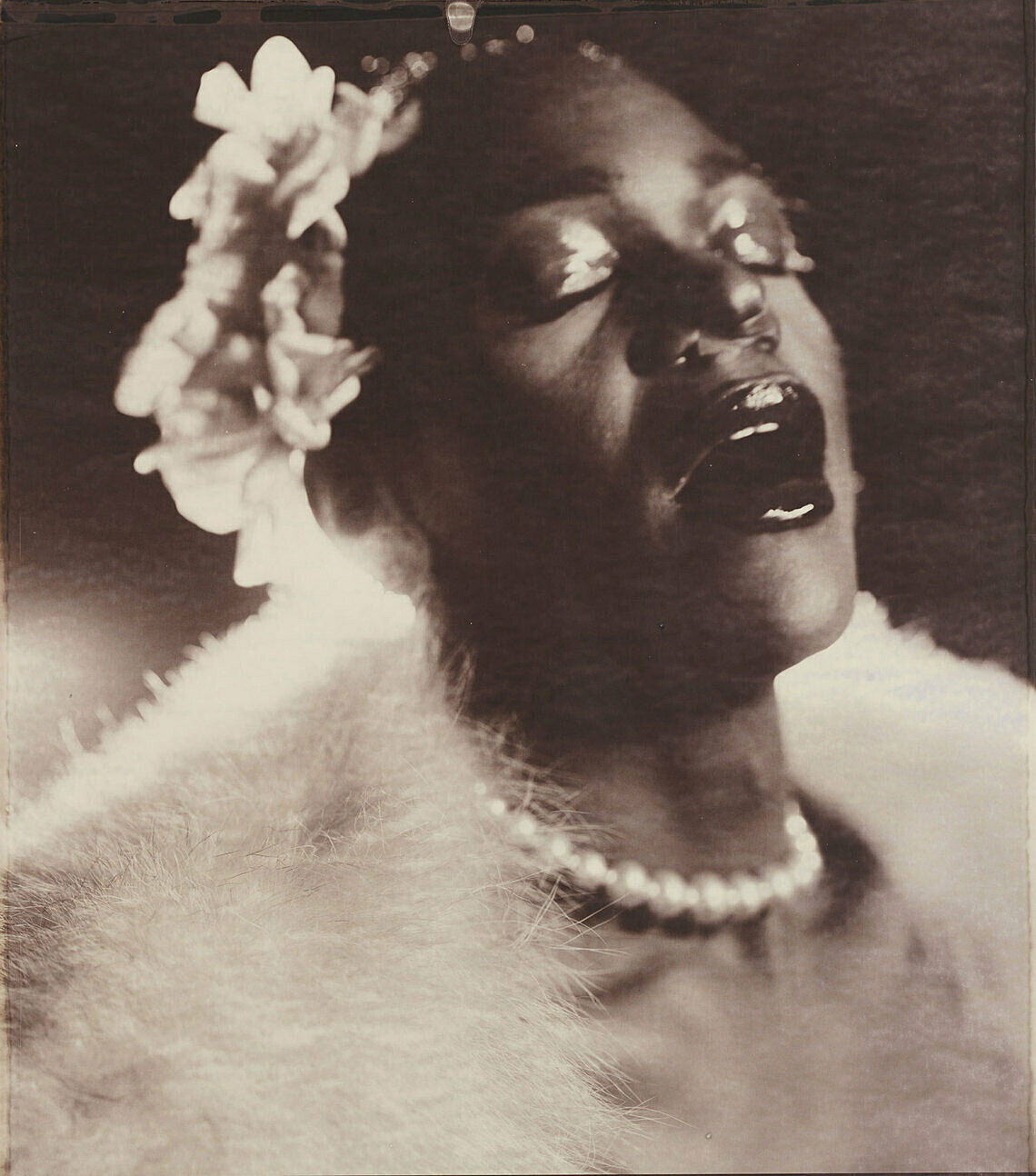
Lyle Ashton Harris (b. 1965), Billie #21, 2002. Dye diffusion transfer print, sheet: 33 3/4 × 22 1/16 in. (85.7 × 56 cm); image: 24 × 21 in. (61 × 53.3 cm). Whitney Museum of American Art, New York; purchase with funds from the Photography Committee 2002.563 © Lyle Ashton Harris

BILLIE #21, 2002

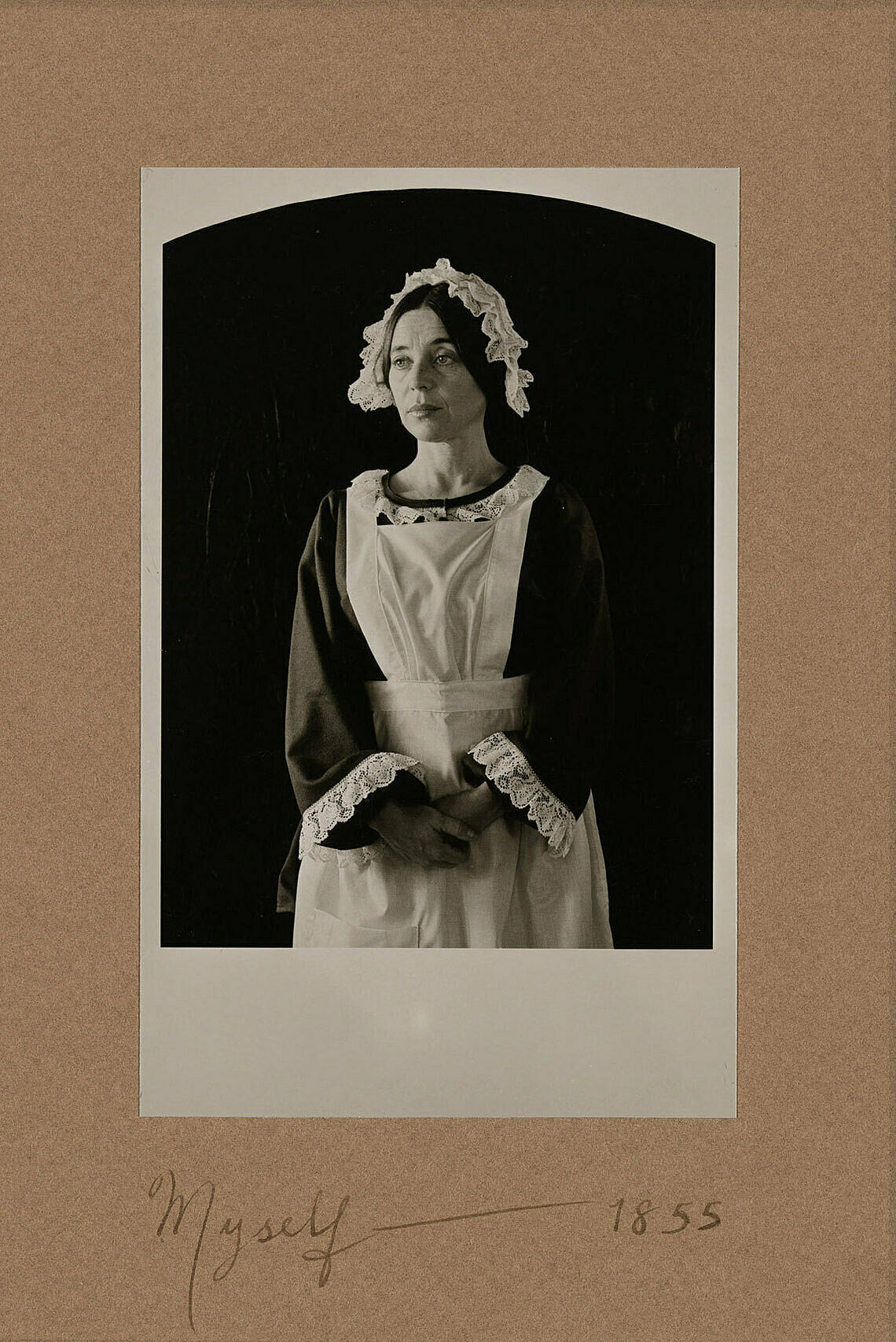
Eleanor Antin (b. 1935), Myself–1855, 1977, from the series The Angel of Mercy: The Nightingale Family Album. Toned gelatin silver print mounted on paper, with ink, sheet: 6 3/4 × 4 1/2 in. (17.1 × 11.4 cm); image: 5 3/8 × 3 15/16 in. (13.7 × 10 cm); mount: 18 × 13 in. (45.7 × 33 cm). Whitney Museum of American Art, New York; purchase with funds from Joanne Leonhardt Cassullo and the Photography Committee 95.67.25. Courtesy of Ronald Feldman Fine Arts, New York

MYSELF–1855, 1977

0:00

K8 Hardy, Position Series #20, 2009

0:00

Narrator: This work comes from a series of photographs that K8 Hardy made using herself as a model. Some of the images in the series are deliberately ordinary, even banal. But here, Hardy’s makeup and costume are fantastical. She’s also used a technique developed in the early twentieth century to manipulate the print, covering part of the photo paper during the exposure to make it look like she was wearing a cartoonish bow. The resulting type of print is known as a photogram.

K8 Hardy: In the darkroom I use the photogram to take you a little bit out of the photo.

Narrator: K8 Hardy.

K8 Hardy: Sometimes the photo is too slippery and too real, so I would just do something in the darkroom to pop the viewer out of the belief in the photo and into the construction.

In the beginning I was so resistant to calling them self-portraits, because that implies that my story's in there somewhere or that I'm describing myself. But I wasn't really thinking about myself when I was taking them. It's a feminist tactic to use your own body and also to approach this subject matter of the female body and of objectification. I just wanted to keep that simple and use myself.

K8 Hardy, Position Series #20, 2009

In Human Interest

POSITION SERIES #20, 2009


Artists


Explore works from this exhibition
in the Whitney's collection

View 382 works

On the Hour

A 30-second online art project:
Frank WANG Yefeng, The Levitating Perils #2

Learn more about this project

Learn more at whitney.org/artport

On the Hour projects can contain motion and sound. To respect your accessibility settings autoplay is disabled.