Human Interest: Portraits from the Whitney’s Collection | Art & Artists

Apr 2, 2016–Apr 2, 2017


Exhibition works

15 total
New York Portrait
Read more

New York Portrait
Floor 7

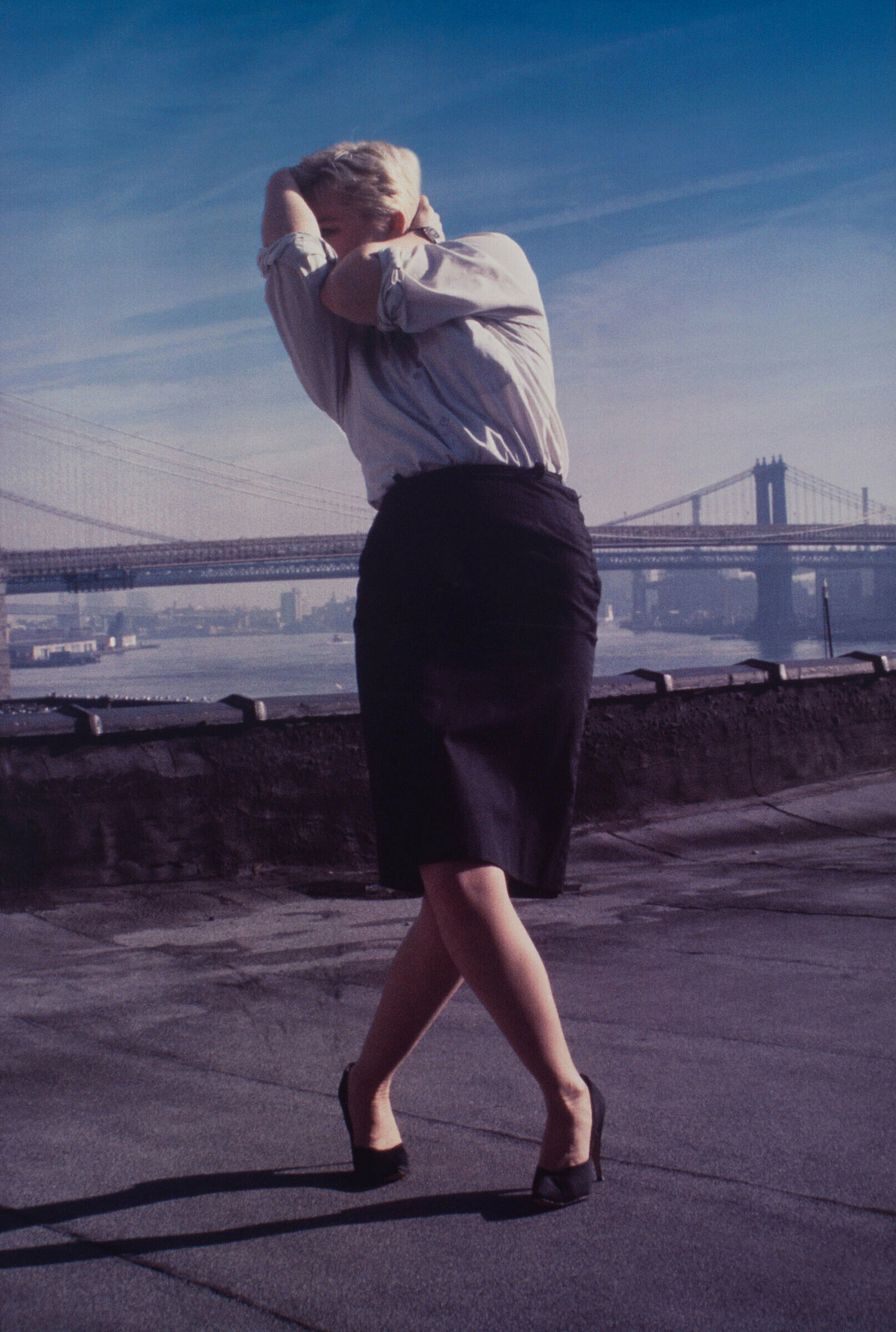
Robert Longo (b. 1953), Untitled (Cindy), 1980 (printed 1998), from the series Men in the Cities. Silver dye bleach print, sheet: 41 7/8 × 29 5/8in. (106.4 × 75.2 cm); image: 39 7/8 × 26 15/16 in. (101.3 × 68.4 cm), Whitney Museum of American Art, New York; promised gift of Emily Fisher Landau P.2010.195 © 2016 Robert Longo / Artists Rights Society (ARS), New York, N.Y.

New York Portrait
Floor 7

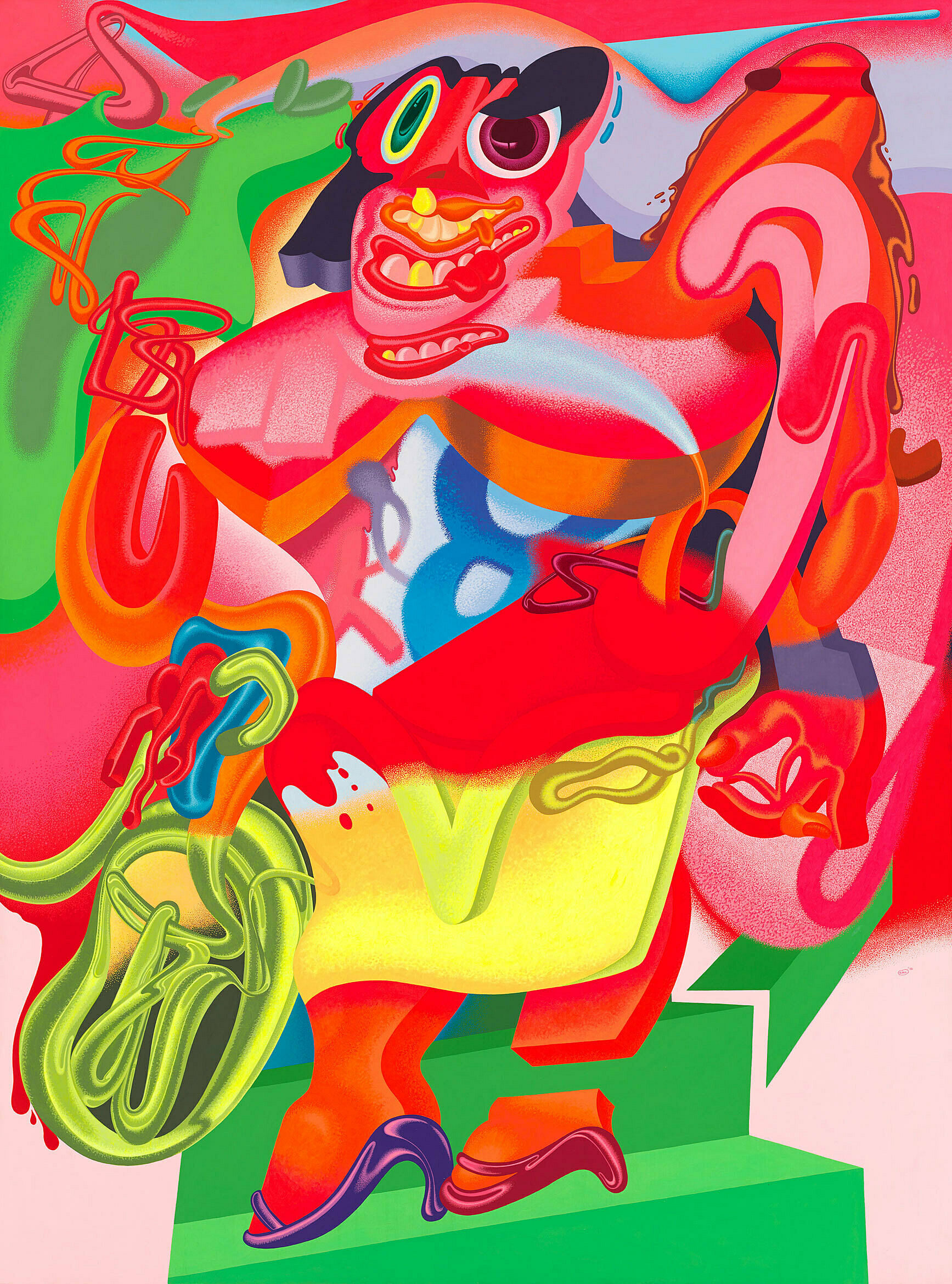
Throughout its history New York has inspired writers, musicians, and visual artists. As the portraits in this room demonstrate, the city may serve as a stage for intrepid self-invention or as a backdrop that shapes the dreams and fears of its inhabitants and visitors alike. Artists including Susan Hall and Howard Kanovitz use views of the city to impart their subjects with a nearly mythic sense of style and sophistication. Others, such as Nan Goldin and Ryan McGinley, depict tense and gritty realities. Many of these works capture quintessential New York types, from disillusioned commuters to the downtown artists who flocked to the city in search of freedom, community, or the promise of fame. Leidy Churchman's painting of the dazzling view from New York's tallest residential tower presents a portrait not of an individual but of the city itself.

Below is a selection of works from New York Portrait.

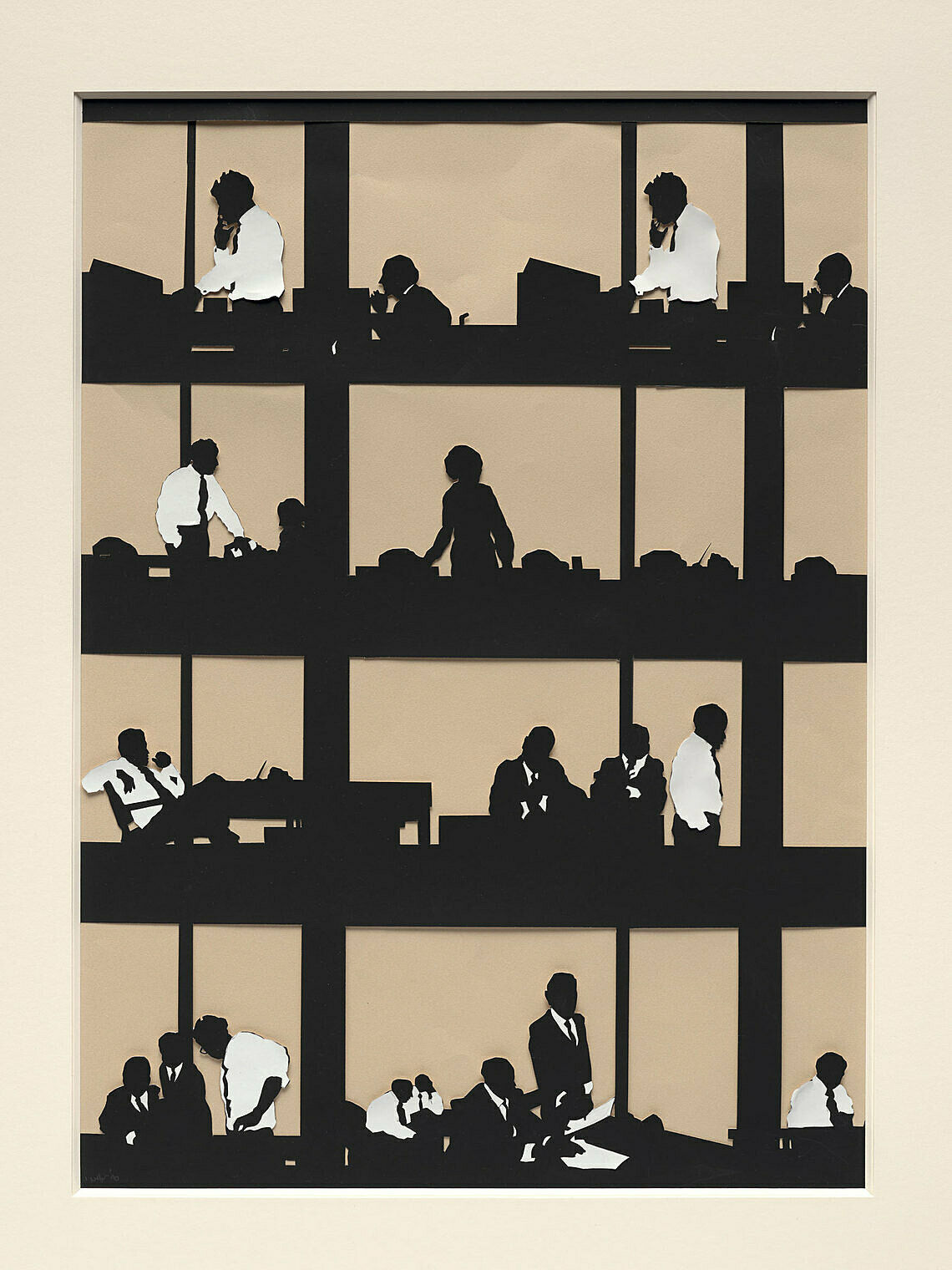
Idelle Weber (b. 1932), Lever Building II, 1970. Paper collage and graphite pencil on paper, 24 3/8 × 17 1/2in. (61.9 × 44.5 cm). Whitney Museum of American Art, New York; purchase with funds from the Director’s Discretionary Fund in honor of Dana Miller 2016.129 © Idelle Weber

LEVER BUILDING II, 1970

Idelle Weber’s graphic paintings and collages of businessmen from the 1960s and 1970s capture the cosmopolitan milieu of New York during that period. In Lever Building II, the anonymous silhouettes of white-collar workers are visible through the windows of the eponymous midtown skyscraper, where Weber’s husband worked as a corporate lawyer. An icon of the International Style of architecture, the building, with its gridlike metal frame and curtain wall of glass, presents an ideal setting for Weber’s voyeuristic scene, which unfolds simultaneously across four floors. Amid a crew of identically dressed men, a female figure stands alone, her hair, dress, and tentative posture distinct from that of her male counterparts. Through this isolation, Weber suggests the social alienation and discrimination that women faced at this time, an experience that she knew well as a female artist operating in a male-dominated art world.

Robert Longo (b. 1953), Untitled (Cindy), 1980 (printed 1998), from the series Men in the Cities. Silver dye bleach print, sheet: 41 7/8 × 29 5/8in. (106.4 × 75.2 cm); image: 39 7/8 × 26 15/16 in. (101.3 × 68.4 cm), Whitney Museum of American Art, New York; promised gift of Emily Fisher Landau P.2010.195 © 2016 Robert Longo / Artists Rights Society (ARS), New York, N.Y.

UNTITLED (CINDY), 1980 (PRINTED 1998)

To capture this image, Robert Longo and his friend, the artist Cindy Sherman, went to the roof of his downtown Manhattan loft. Sherman’s outfit, a close-fitting dark skirt and white shirt, was meant to signify the “downtown” garb of both Wall Street and the punk music club CBGB in 1980s New York. This and similarly staged photographs became the basis for Longo’s Men in the Cities seriesof drawings and lithographs. Longo recounted the prompt he used to get his models into the poses he was looking for: “I counted off one, two, three, and the models would have to jerk, fling, twist, fall. Sometimes I’d pick a specific place on the body to throw something at as if they were getting shot.”

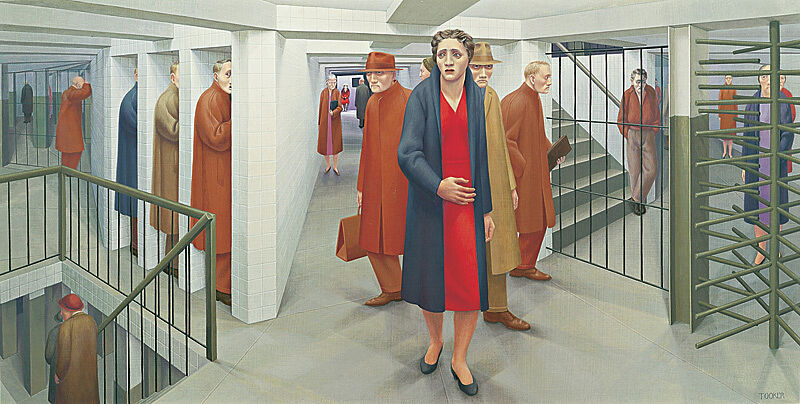
Painting of a subway station filled with people. At the center of the image stands a woman in a red dress with a fearful expression.

George Tooker, The Subway, 1950. Egg tempera on composition board, 18 1/8 × 36 1/8 in. (46 × 91.8 cm). Whitney Museum of American Art, New York; purchase with funds from the Juliana Force Purchase Award 50.23. © George Tooker

THE SUBWAY, 1950

George Tooker used a claustrophobic, labyrinthine subway station to portray the alienation and the isolation of contemporary urban life. The depicted commuters—all of whom seem to have the same face—seem frozen, trapped by the architecture of a New York subway station. Tooker rendered this distinctly modern subject in egg tempera, a medium associated almost exclusively with the Renaissance. The paint creates a smooth, matte surface and is ideal for making sharp lines, which together lend the anxious scene an eerie placidity. The artist said that he attempted to paint reality in a way that would impress it “on the mind so hard that it returns as a dream.”

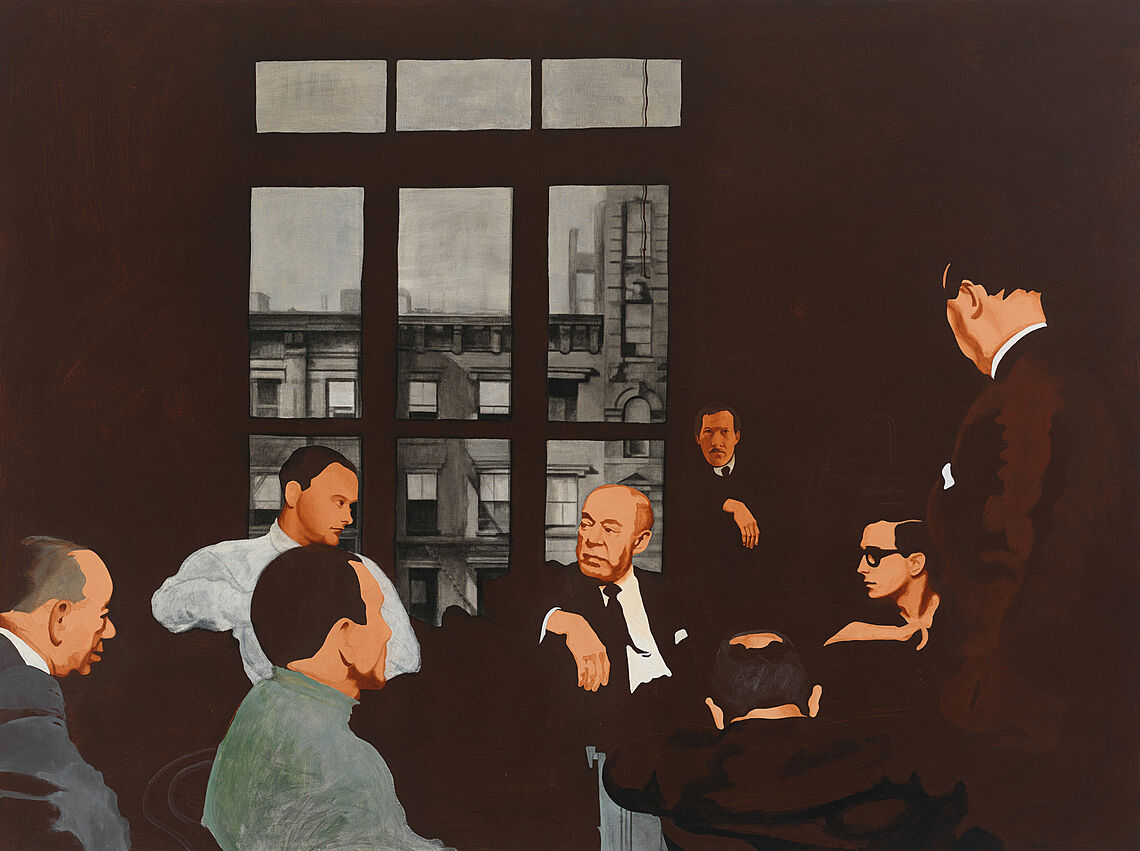
Howard Kanovitz (1929–2009), New Yorkers I, 1965. Acrylic, graphite pencil, and fabricated chalk on linen, 69 3/4 × 93 9/16 in. (177.2 × 237.6 cm). Whitney Museum of American Art, New York; gift of the artist 69.172 © 2016 Howard Kanovitz / Artists Rights Society (ARS), New York, NY

NEW YORKERS I, 1965

This painting captures the professional milieu of Richard Rodgers, the composer who co-wrote with Oscar Hammerstein a string of blockbuster Broadway musicals, including Oklahoma!South Pacific, and The Sound of Music. Howard Kanovitz based this painting on a newspaper photograph. He explained, “I was impressed by a certain quality of low definition which suggested an isolation of the figures from their environment.” The resulting painting—titled, simply, New Yorkers I—suggests that the creative class pictured here in their jackets and ties embody New York as surely as the cityscape in the background.

Susan Hall (b. 1943), New York Portrait, 1970. Acrylic and graphite pencil on canvas, 63 7/8 × 56 7/8 in. (162.2 × 144.5 cm). Whitney Museum of American Art, New York; purchase with funds from the Neysa McMein Purchase Award 71.50 © Susan Hall/Licensed by VAGA, New York, NY

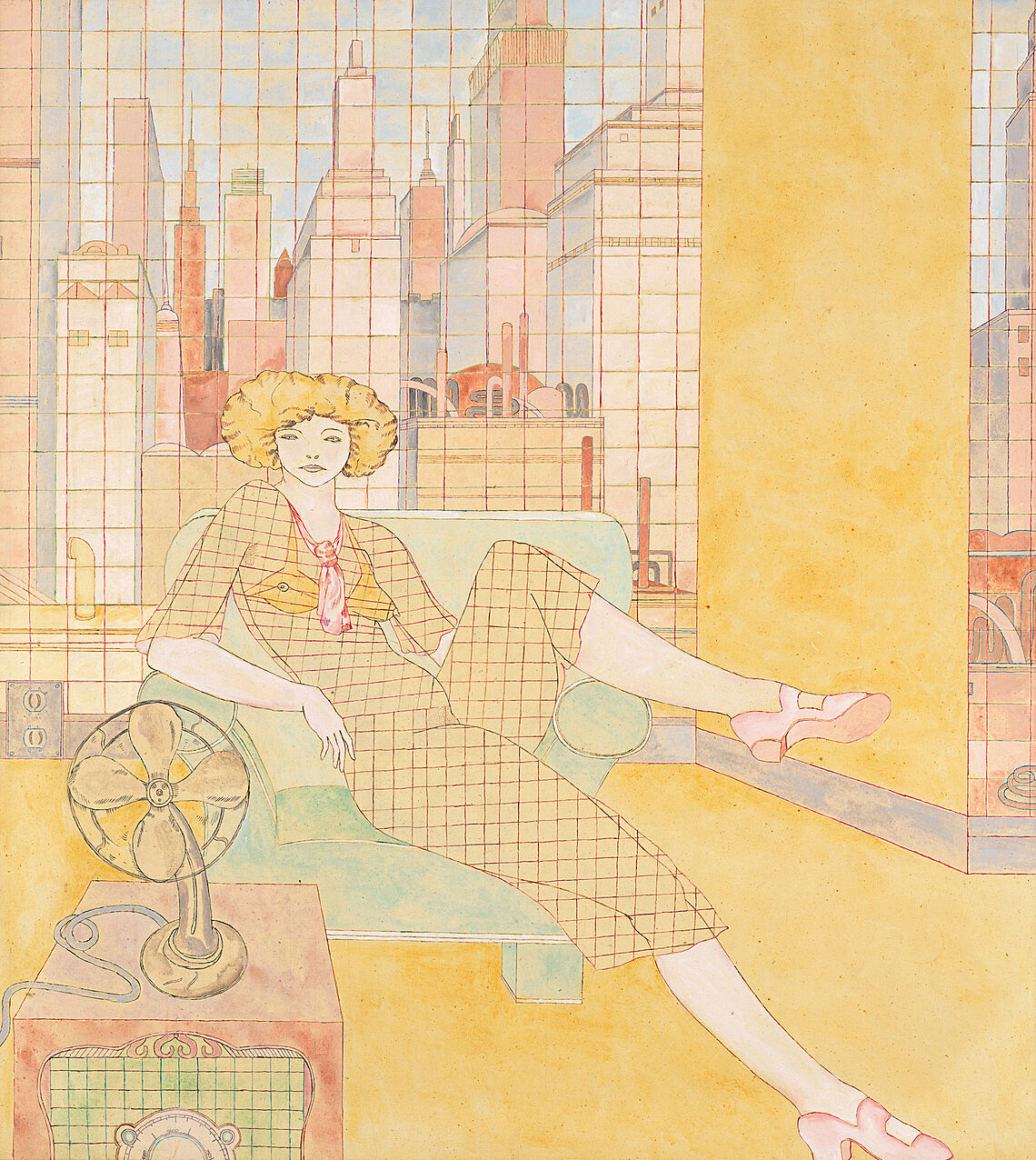
NEW YORK PORTRAIT, 1970

The woman in New York Portraitreclines on an armchair, her posture relaxed and sexually self-assured. The grid pattern appearing throughout the scene coupled with the transparency of her dress and the window create an ambiguous sense of space that makes it difficult to distinguish interior from exterior. Together the skyline prominently visible in the background and the title of the work present the possibility that Susan Hall meant this not as a portrait set in New York but as a portrait of the city itself, or perhaps the city as epitomized by one of its uninhibited, youthful denizens.

Raphael Soyer (1899–1987), Office Girls, 1936. Oil on canvas, 26 1/8 × 24 1/8 in. (66.4 × 61.3 cm). Whitney Museum of American Art, New York; purchase 36.149

OFFICE GIRLS, 1936

An astute observer of Depression-era New York, Raphael Soyer evoked the inner lives of anonymous city dwellers. His paintings frequently depict the new generation of female workers he encountered in his Union Square neighborhood. Leaving the home for secretarial and clerical jobs, these “office girls” achieved an independence that was unprecedented for women of the period, even while unemployment remained high among men. While his artist colleagues usually portrayed these young women in optimistic terms, Soyer’s composition strikes a more ambivalent tone. Squeezed between a throng of rushing female workers and a glowering man, the central woman looks out at the viewer with a gaze that is at once weary and unflinching.

Cindy Sherman (b. 1954), Secretary, 1978 (printed 1993). Gelatin silver print, sheet: 13 7/8 × 11 in. (35.2 × 27.9 cm); image: 11 7/8 × 8 15/16 in. (30.2 × 22.7 cm). Whitney Museum of American Art, New York; gift of Joanne Leonhardt Cassullo 96.42 © Cindy Sherman; courtesy Metro Pictures, NY

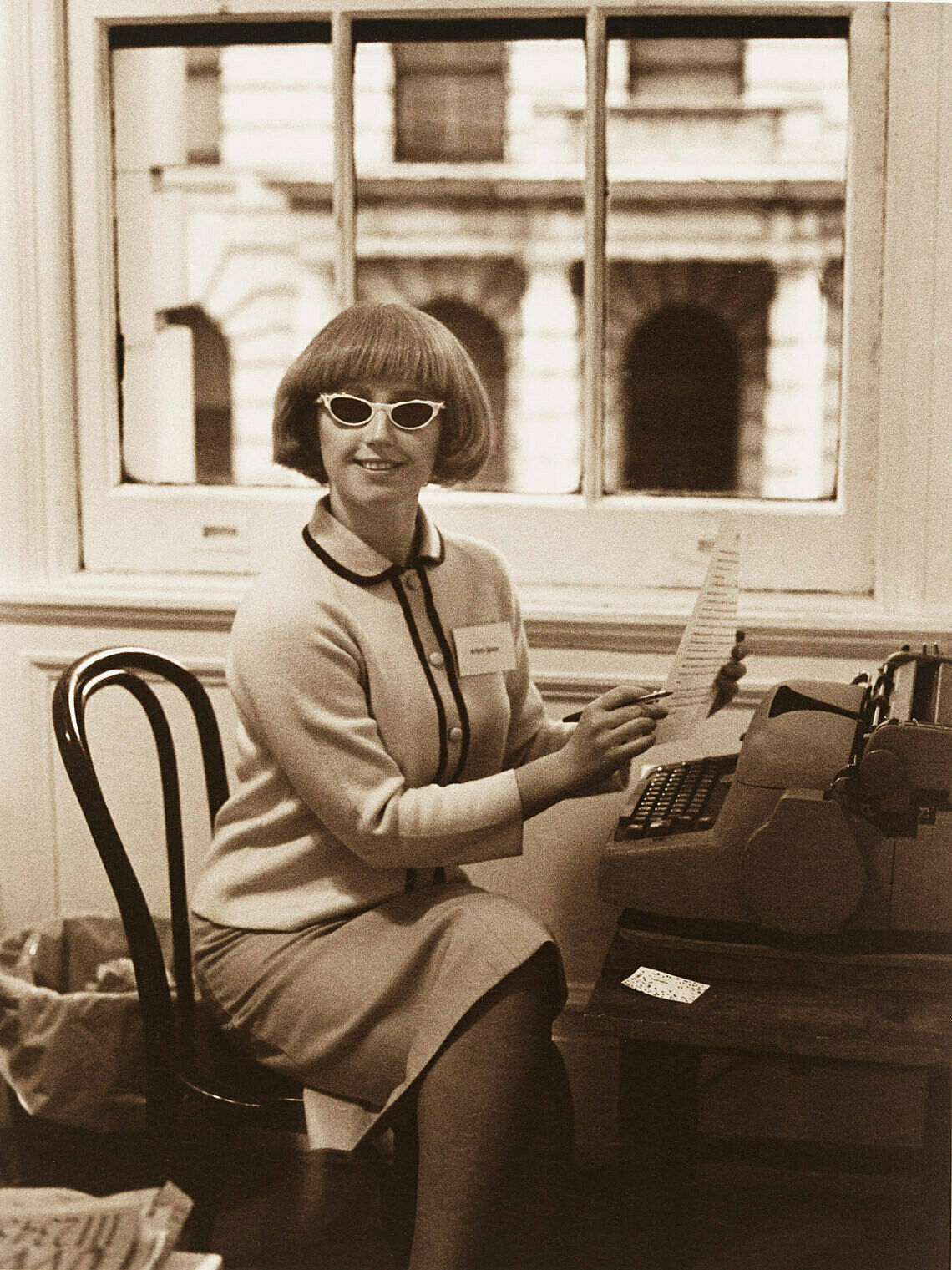
SECRETARY, 1978

Cindy Sherman arrived in Manhattan at the age of twenty three and worked briefly as a secretary at the downtown arts nonprofit Artists Space. At this time, she was also beginning production on her well-known Film Stills series—photographs featuring her posing as various archetypal female roles based on vintage Hollywood and European cinema publicity stills. For Secretary, an offshoot of the Film Stills, Sherman represents her own situation—a secretary aspiring to make it in the big city—as itself a type. The city also becomes a character in this drama, its imposing architecture conspicuously visible through the window behind the protagonist.

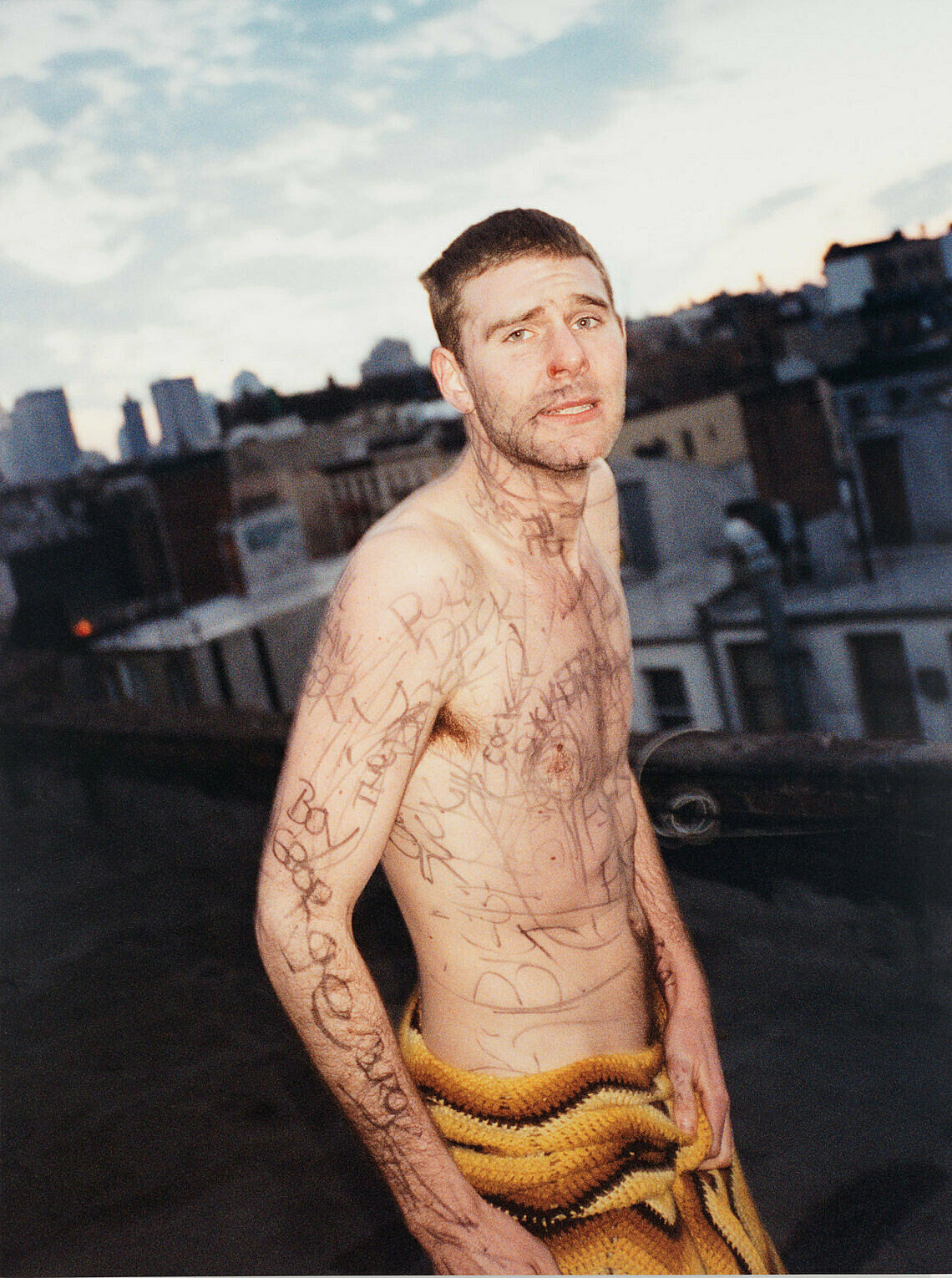
Ryan McGinley (b. 1977), Dan Dusted, 2002 (printed 2003). Chromogenic print, 39 3/4 × 29 3/4 in. (101 × 75.6 cm). Whitney Museum of American Art, New York; purchase with funds from the Photography Committee 2003.253 © 2003 Ryan McGinley

DAN DUSTED, 2002


Artists


Explore works from this exhibition
in the Whitney's collection

View 382 works

On the Hour

A 30-second online art project:
Frank WANG Yefeng, The Levitating Perils #2

Learn more about this project

Learn more at whitney.org/artport

On the Hour projects can contain motion and sound. To respect your accessibility settings autoplay is disabled.