Human Interest: Portraits from the Whitney’s Collection | Art & Artists

Apr 2, 2016–Apr 2, 2017


Exhibition works

15 total
Portrait of the Artist
Read more

Portrait of the Artist
Floor 7

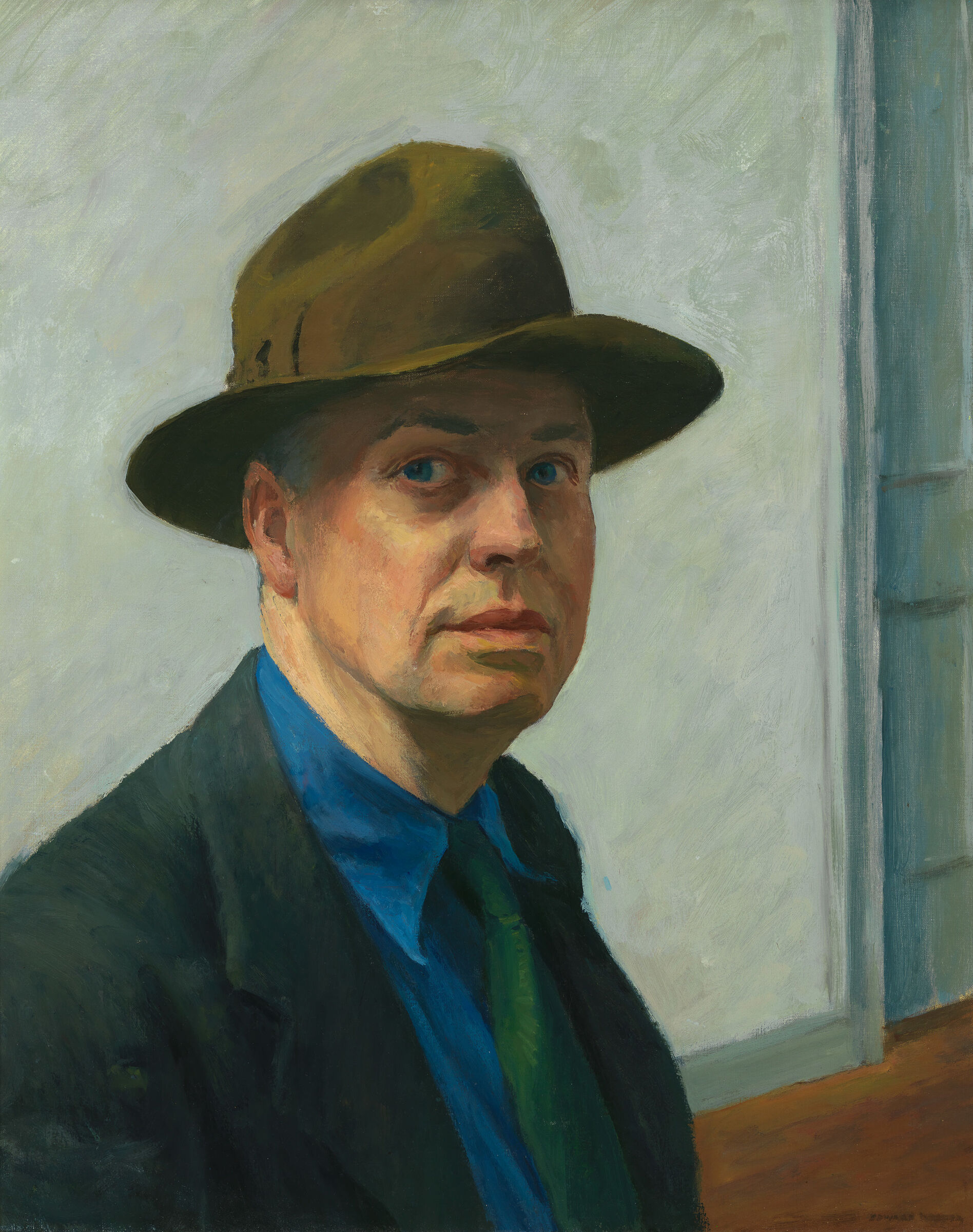
Man in a suit with a hat looks out.

Edward Hopper (1882-1967), Self-Portrait, 1925-30. Oil on canvas, 25 3/8 × 20 3/8 in. (64.5 × 51.8 cm). Whitney Museum of American Art, New York; Josephine N. Hopper Bequest 70.1165 © Heirs of Josephine N. Hopper/Licensed by VAGA, New York, NY

Portrait of the Artist
Floor 7

The American art world grew rapidly in the first half of the twentieth century, instilling artists with both confidence and uncertainty. Excited by new opportunities yet pressed to distinguish themselves from their renowned European counterparts, American artists became preoccupied with depicting themselves and their intimate circles of friends, lovers, and collaborators in other fields. One such community was the Whitney Museum itself, along with its precursor, the Whitney Studio Club. Many of the portraits on view here reflect its early history as a magnet for figures such as Edward Hopper at a time when few artists had found institutional support or even gathering places for likeminded colleagues. Other works capture the vital presence of émigrés, such as Marcel Duchamp and Joseph Stella, or point to the rising prominence of women artists, such as Isabel Bishop and Georgia O’Keeffe. Alternately styled as virtuoso, hero, technician, bohemian, or everyman, both the creators and subjects of these portraits staked a claim to their authority as artists, addressing themselves directly to an audience increasingly attuned to their endeavors.

Below is a selection of works from Portrait of the Artist.

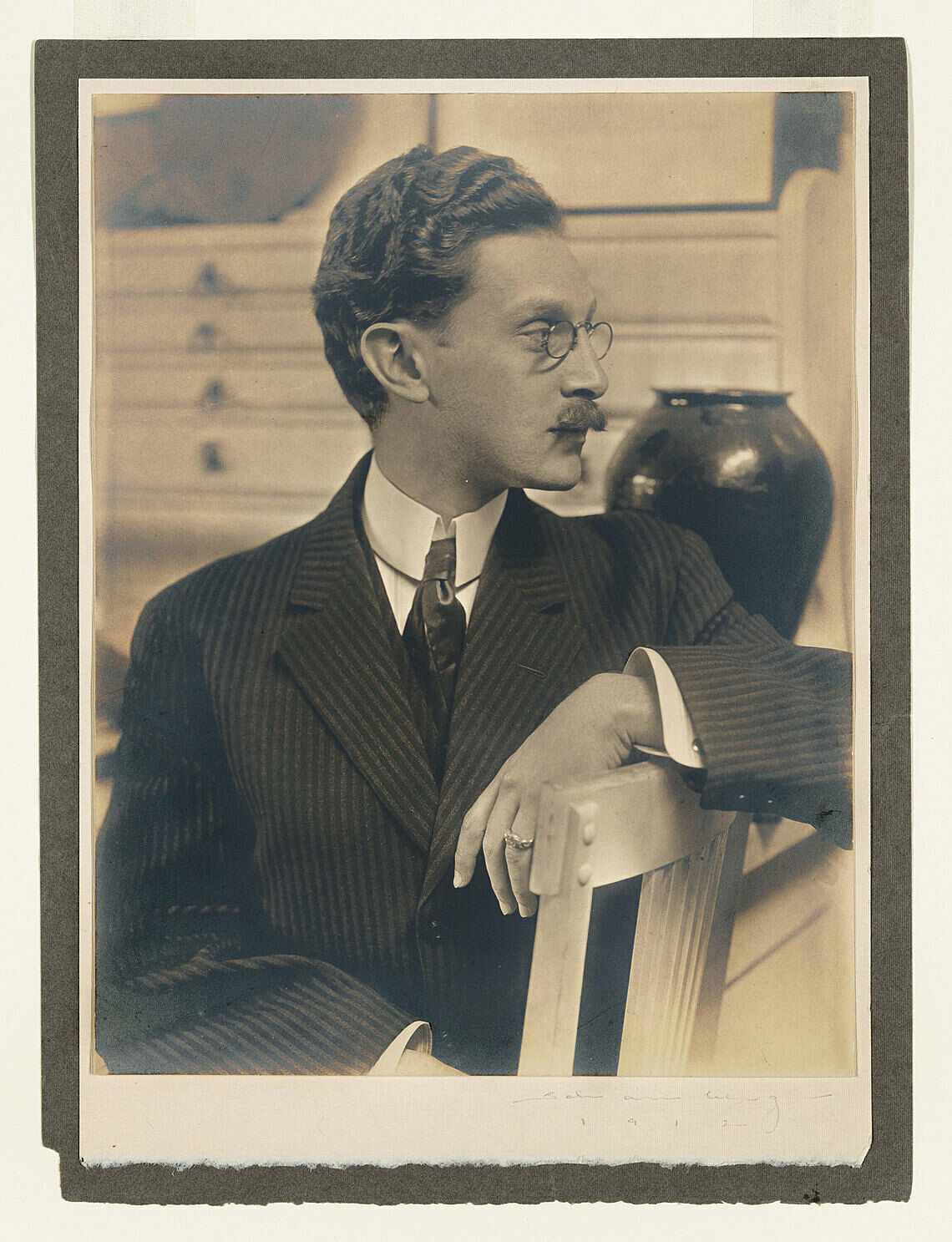
Morton Schamberg (1881-1918), Self-portrait, 1912. Platinum print, 8 1/8 × 6 5/16 in. (20.6 × 16 cm). Whitney Museum of American Art, New York; gift of Claire R. Reis 76.28

SELF-PORTRAIT, 1912

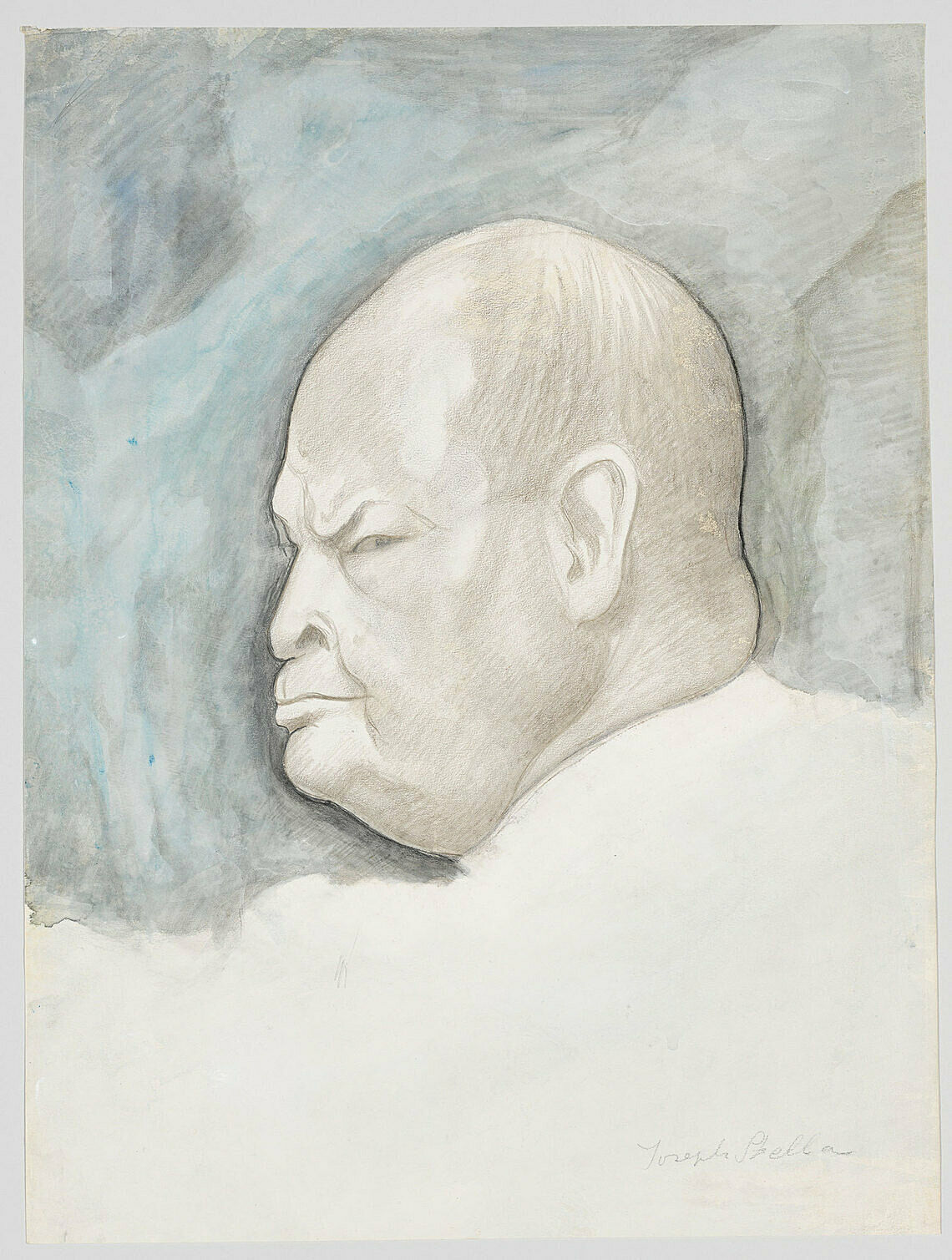
Joseph Stella (1877-1946), Self Portrait, c. 1940. Graphite pencil, metalpoint and transparent and opaque watercolor on paper, 22 × 16 ½ in. (55.9 × 41.9 cm). Whitney Museum of American Art, New York; gift of Theodore B. Donson 2007.212

SELF PORTRAIT, C. 1940

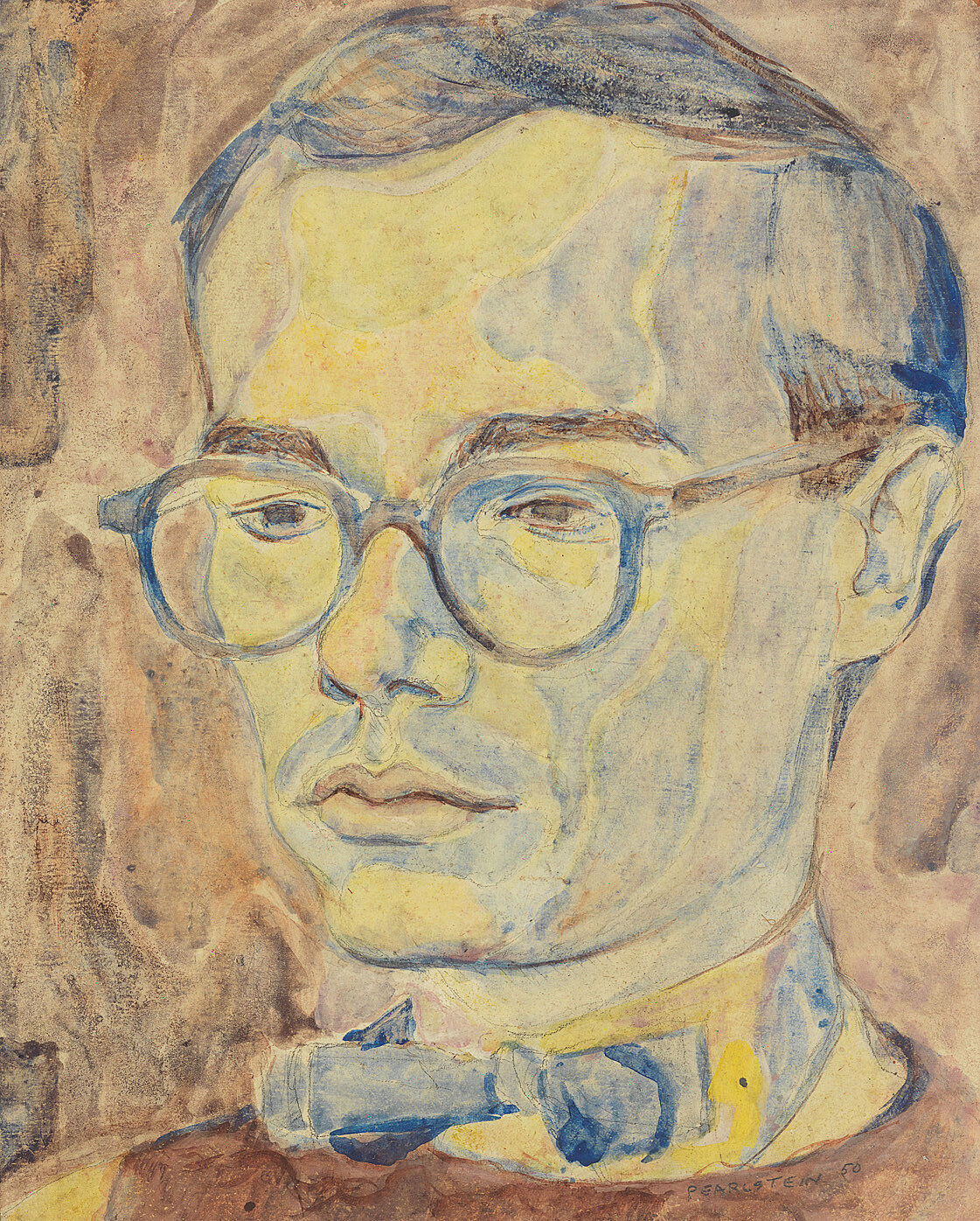
Philip Pearlstein, Portrait of Andy Warhola, c. 1948. Brush and ink and graphite pencil on composition board, 10 × 8 in. (25.4 × 20.3 cm). Whitney Museum of American Art, New York; gift of Andy Warhol 74.115 © Philip Pearlstein

PORTRAIT OF ANDY WARHOLA, C. 1948

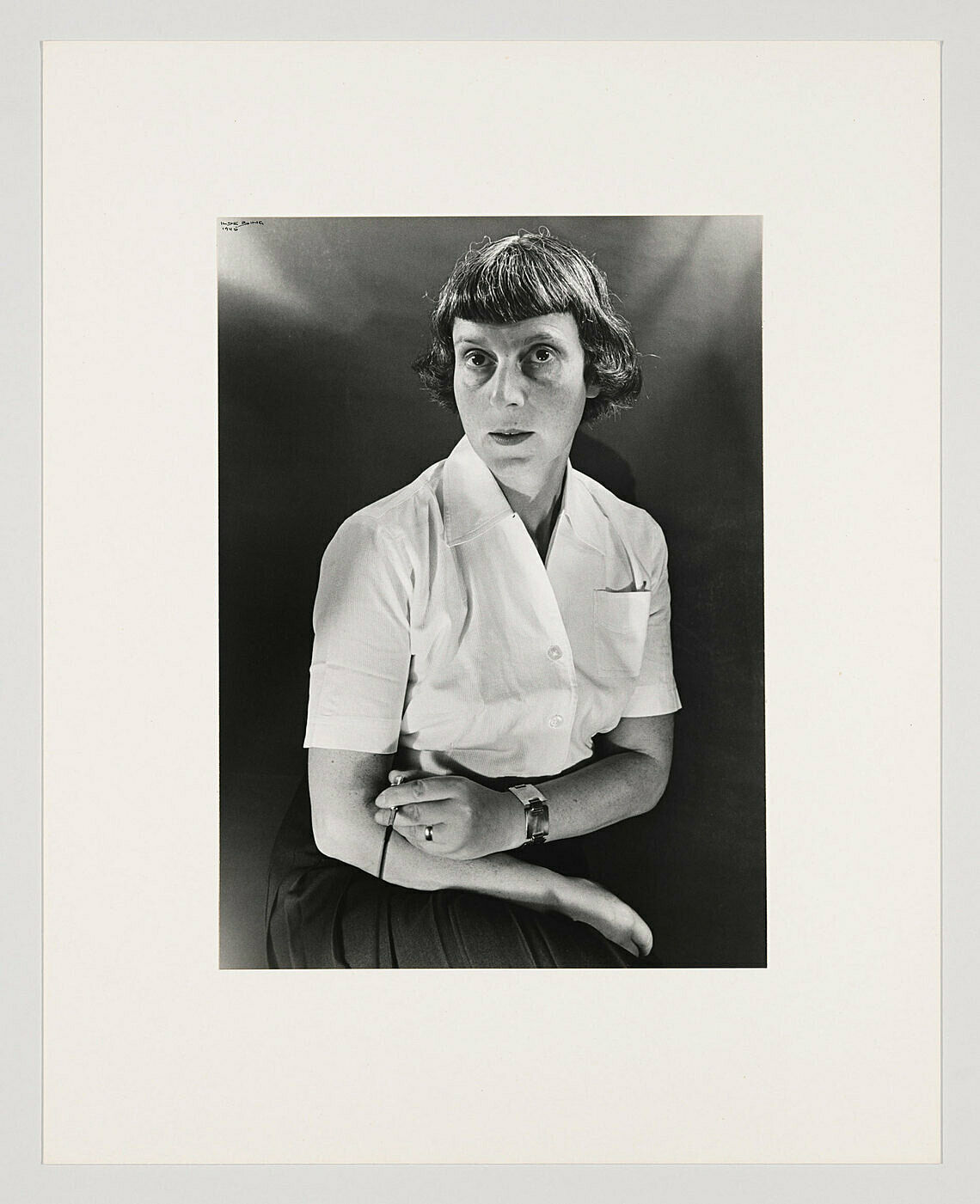
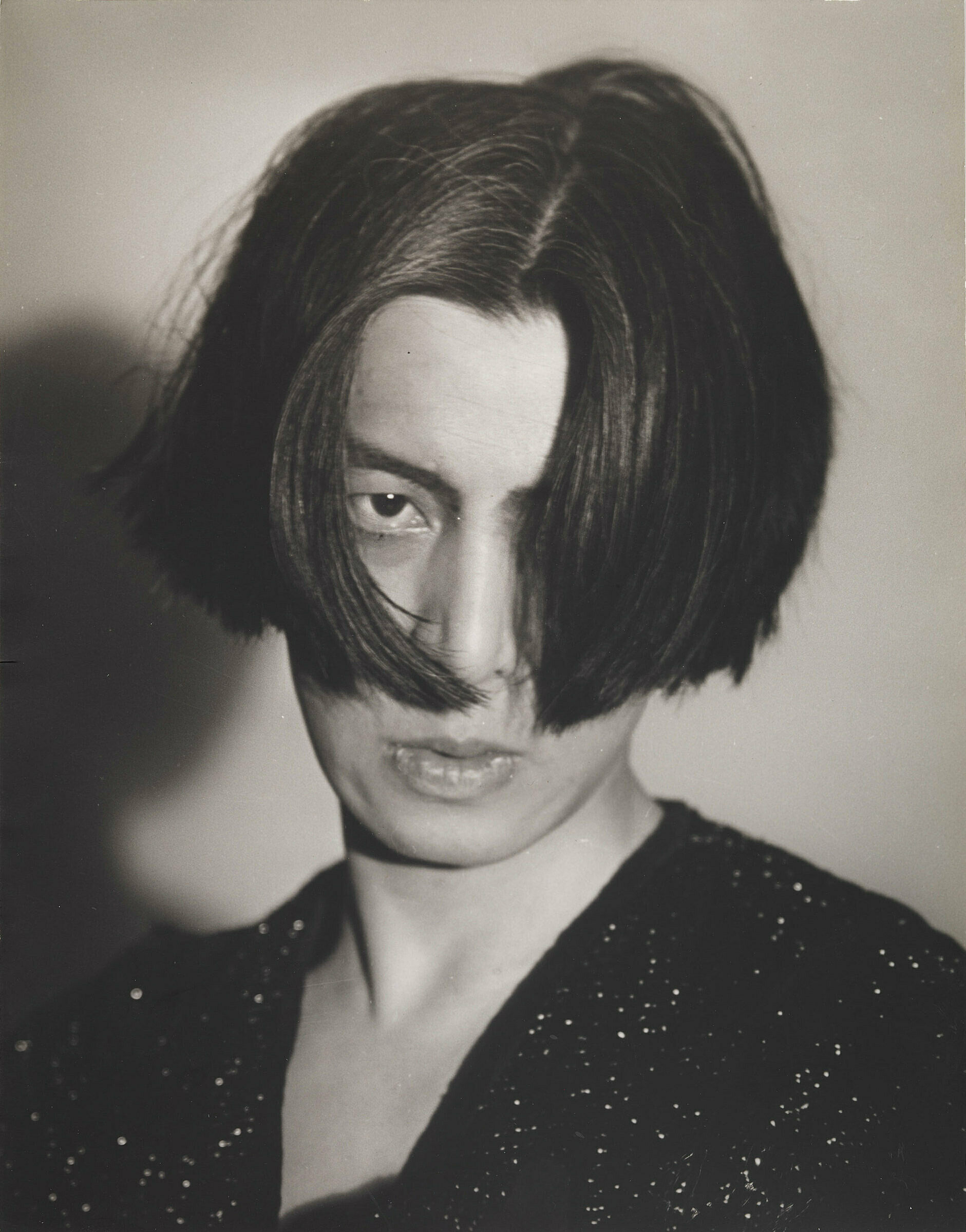
Ilse Bing (1899-1998), Untitled (Self-portrait), 1945. Gelatin silver print, image: 13 3/8 × 9 ¾ in. (34 × 24.8 cm), mount: 20 × 16 in. (50.8 × 40.6 cm). Whitney Museum of American Art, New York; bequest of Ilse Bing Wolff 2001.398 © Wichita State University

UNTITLED (SELF-PORTRAIT), 1945

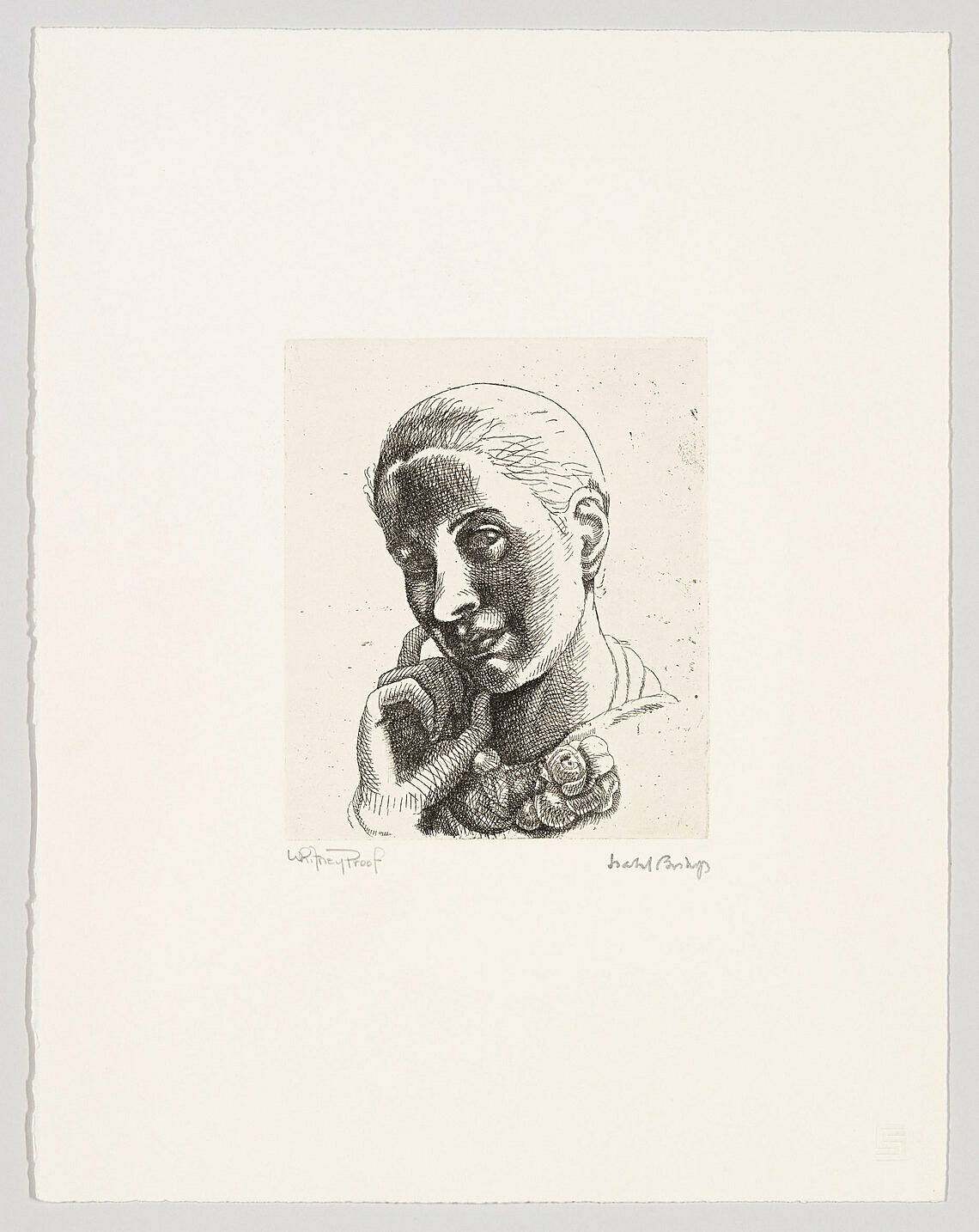
Isabel Bishop (1902-1988), Self Portrait, 1929 (printed 1988). Etching, 15 1/2 × 12 in. (39.4 × 30.5 cm). Whitney Museum of American Art, New York © Estate of Isabel Bishop

SELF PORTRAIT, 1929 (PRINTED 1988)

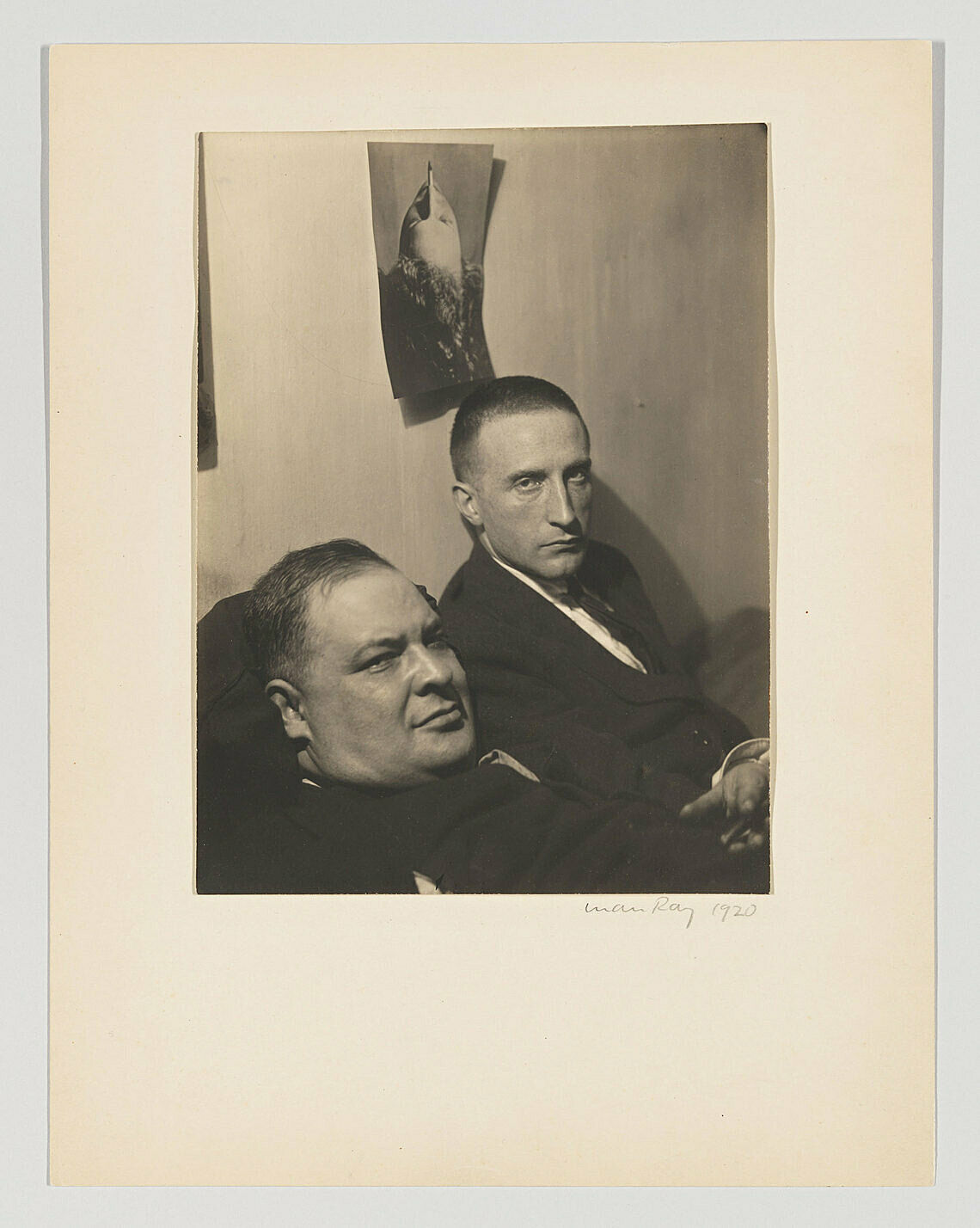
Man Ray (1890-1976), Joseph Stella and Marcel Duchamp, 1920. Gelatin silver print, 8 1/4 × 6 3/16 in. (21 × 15.7 cm). Whitney Museum of American Art, New York; gift of John Steffens 97.140.1 © 2016 Man Ray Trust / Artists Rights Society (ARS), N.Y./ ADAGP, Paris

JOSEPH STELLA AND MARCEL DUCHAMP, 1920

Toyo Miyatake (1895–1979), Michio Ito, 1929. Gelatin silver print, 14 × 10 7/8 in. (35.6 × 27.6 cm). Whitney Museum of American Art, New York; purchase, with funds from the Photography Committee 2014.241 © Toyo Miyatake Studio

A portrait of Michio Ito by Toyo Miyatake

MICHIO ITO, 1929

For two decades, Toyo Miyatake ran a successful photography studio in the Los Angeles neighborhood of Little Tokyo, where he documented the flourishing Japanese-American community and its contributions to the city’s cultural milieu. This vivid portrait of Michio Ito, a pioneering dancer and choreographer known for his distinctive fusion of Eastern and Western traditions, evinces Miyatake’s dual roles as Ito’s staff photographer and lighting designer. Just as Ito and other modern dancers prioritized the body’s raw expressive power over the narrative structures of traditional ballet, Miyatake stresses the artistic potential of photography rather than its technical veracity.

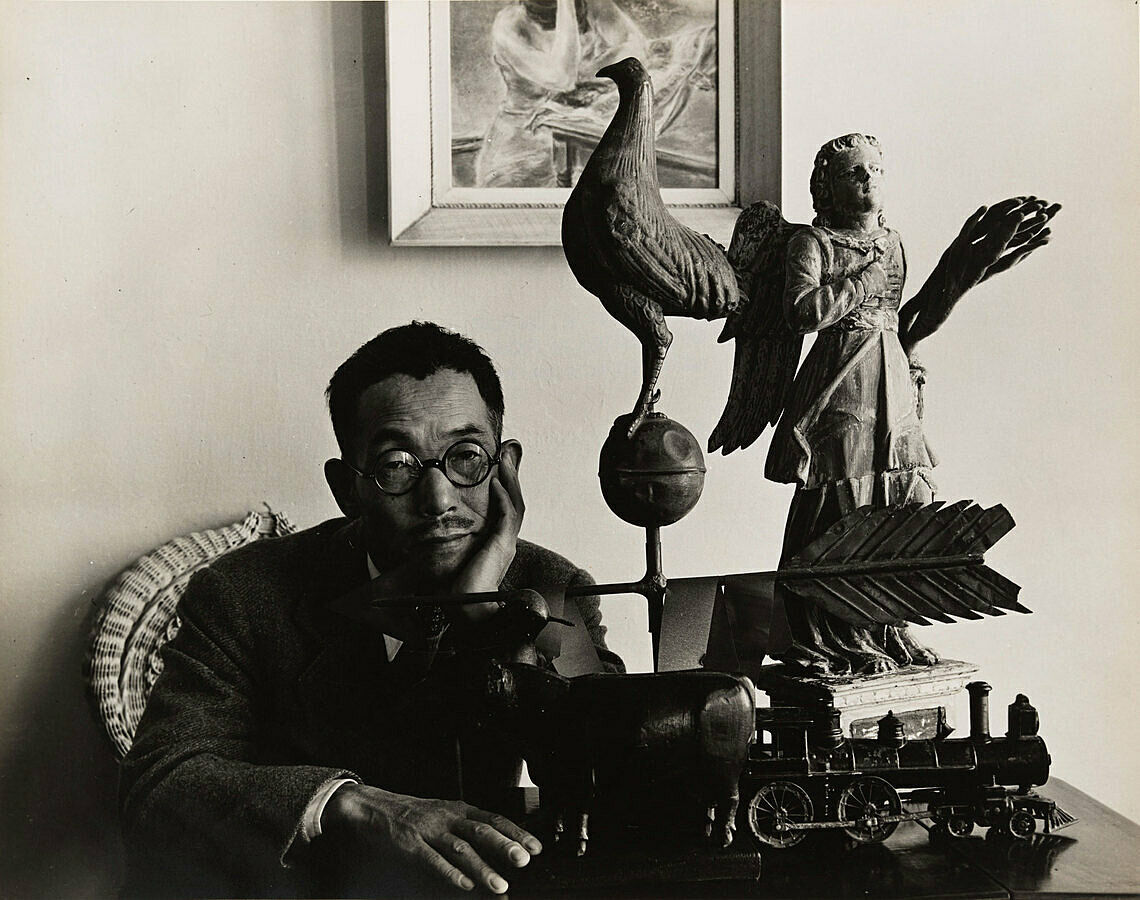
Arnold Newman (1918–2006), Yasuo Kuniyoshi, New York City, 1941. Gelatin silver print, sheet: 7 7/8 × 9 15/16 in. (20 × 25.2 cm); image: 7 3/4 × 9 7/8 in. (19.7 × 25.1 cm). Whitney Museum of American Art, New York; gift of Mr. and Mrs. Benjamin Weiss 91.50.5

YASUO KUNIYOSHI, NEW YORK CITY, 1941

Arnold Newman (1918–2006), Yasuo Kuniyoshi, New York City, 1941. Gelatin silver print, sheet: 7 7/8 × 9 15/16 in. (20 × 25.2 cm); image: 7 3/4 × 9 7/8 in. (19.7 × 25.1 cm). Whitney Museum of American Art, New York; gift of Mr. and Mrs. Benjamin Weiss 91.50.5

Photographer Arnold Newman began taking portraits of artists in 1941 because, as he said, he wanted to “work with positive personalities, people who did something with their lives, and with life.” Newman developed what he described as an “environmental” approach to portraiture: instead of posing his subjects in front of a false backdrop, he photographed them in their homes or places of work, often surrounded by their own art. Newman captured the artist Yasuo Kuniyoshi in his Fourteenth Street studio, seated next to several folk art objects. By the time Newman took this photograph, Kuniyoshi had amassed a large collection of Americana. “I picked up all kinds of materials,” the Japanese-born artist recounted, including “cigars and toys and weather vanes . . . I picked them for shapes, colors, textures.” Kuniyoshi incorporated these objects, which he imbued with symbolic meanings, into his still life paintings. Newman’s image offers the viewer insight into Kuniyoshi’s artistic process and his investment in the history of American culture.

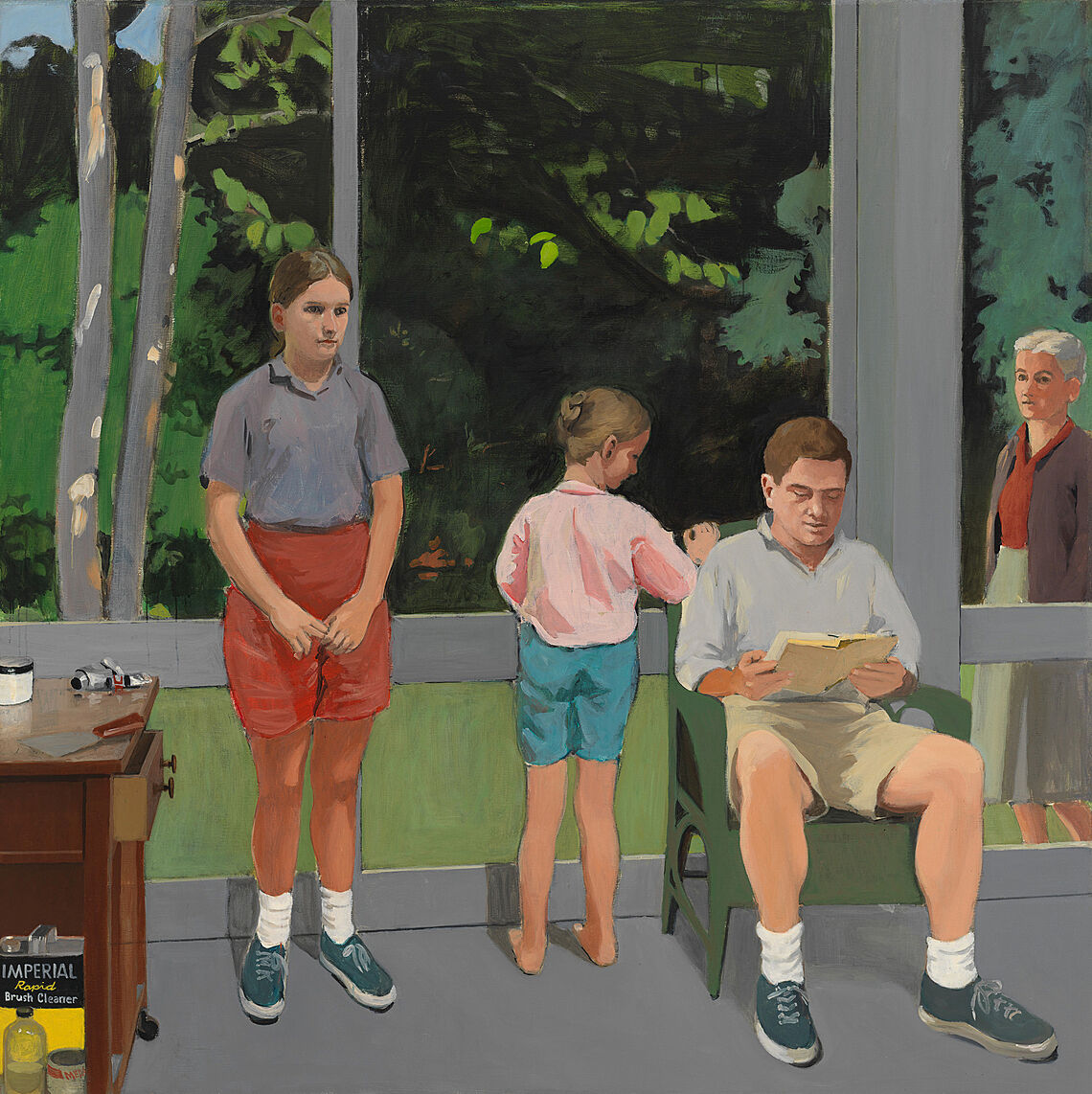
Fairfield Porter (1907–1975), The Screen Porch, 1964. Oil on canvas, 80 × 80 in. (203.2 × 203.2 cm). Whitney Museum of American Art, New York; Lawrence H. Bloedel Bequest 77.1.41 © 2016 The Estate of Fairfield Porter, Artists Rights Society (ARS), New York, NY

THE SCREEN PORCH, 1964

Fairfield Porter’s The Screen Porch is an unconventional family portrait. Painted at the artist’s Maine studio during a summer vacation, it portrays his two young daughters and the poet James Schuyler, with whom Porter was having an open affair. Porter’s wife, Anna, looks in from outside, while the viewer observes the foursome from the artist’s perspective. Although Porter’s broad, flat application of paint precludes clearly articulated facial expression, the figures’ divergent gazes imply a lack of engagement with one another. His family jokingly referred to this composition as “The Four Ugly People,” a characterization that may have reflected tension within a nontraditional familial arrangement.

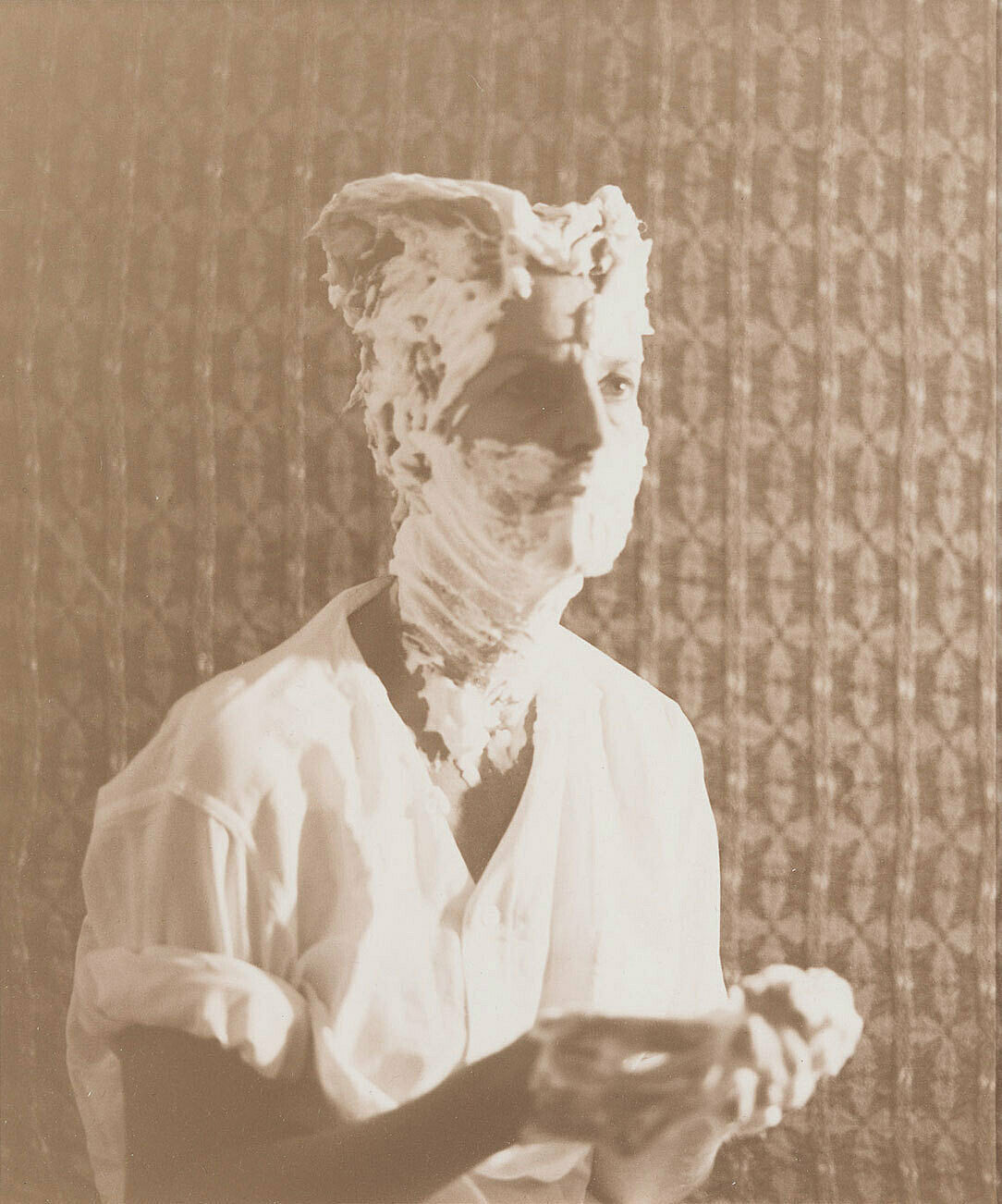
Sturtevant (1924–2014), Duchamp Man Ray Portrait, 1966. Gelatin silver print, sheet: 8 5/8 × 7 1/4 in. (21.9 × 18.4 cm); image: 8 5/8 × 7 1/4 in. (21.9 × 18.4 cm). Whitney Museum of American Art, New York; Gift of Sascha S. Bauer and Kristen Dickey 2013.102 © Estate Sturtevant, Paris

DUCHAMP MAN RAY PORTRAIT, 1966

In the mid-1960s, the artist Sturtevant began to make what she termed “repetitions” of artworks by contemporaries such as Jasper Johns, Claes Oldenburg, and Andy Warhol. She also reimagined numerous works by Marcel Duchamp, whose provocative creations questioned the notion of originality in art and set an important precedent for Conceptual art. Here she has restaged a theatrical 1924 portrait of Duchamp taken by his frequent collaborator, Man Ray. She has replicated the way that Duchamp coated his face and neck in soapsuds, lathering her hair—as he had—into two stiff spikes that resemble the winged helmet of Mercury, the Roman messenger god. Through this recreation, Sturtevant also echoes Duchamp’s ambiguously gendered self-representations, in which he frequently appeared in the guise of his female alter ego, Rrose Sélavy. None of Sturtevant’s works look exactly like the originals (in this instance, to begin with, she didn’t physically resemble Duchamp). They are not copies but interpretations, alternative versions of “masterworks” that undercut conventional ideas of originality and authenticity.

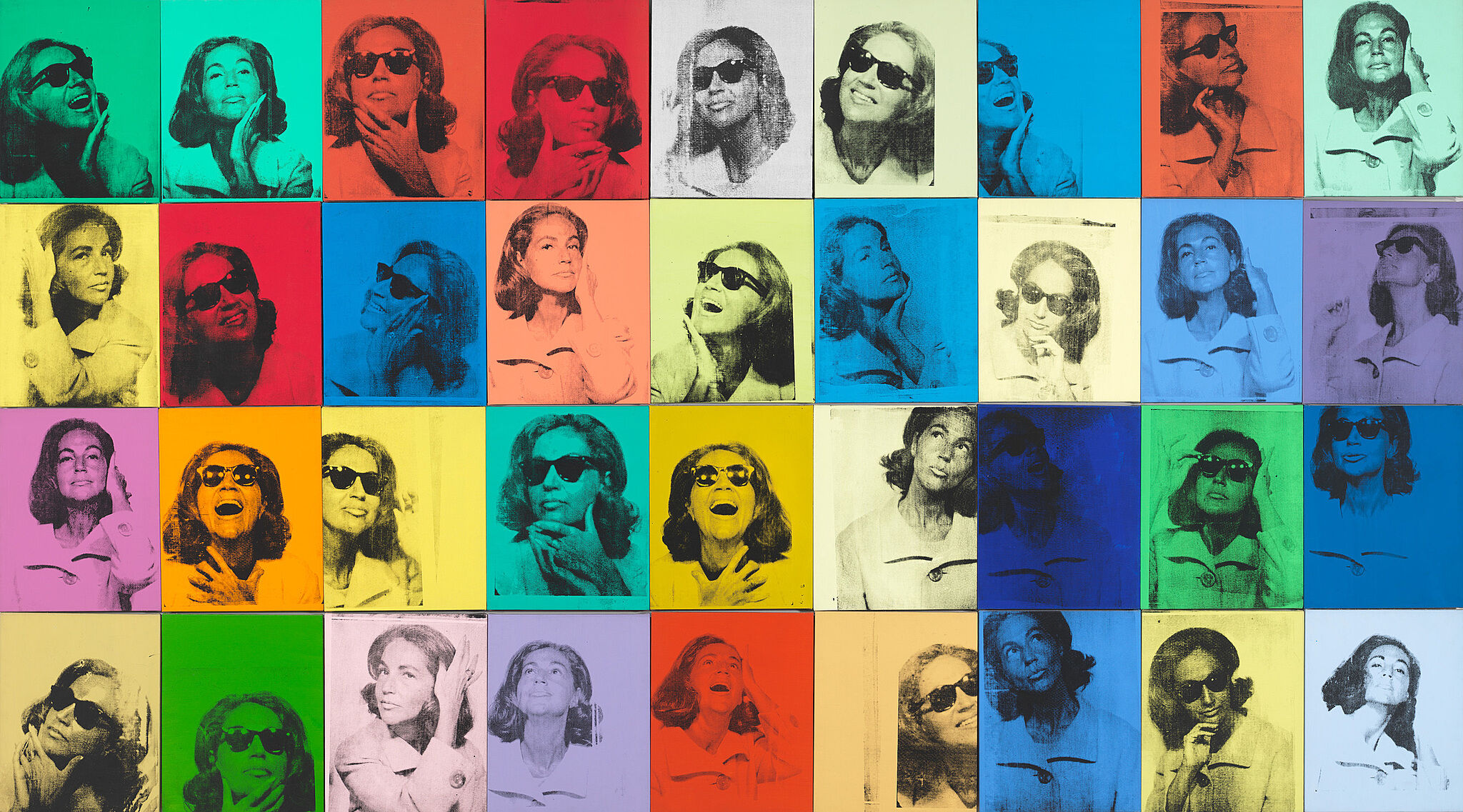
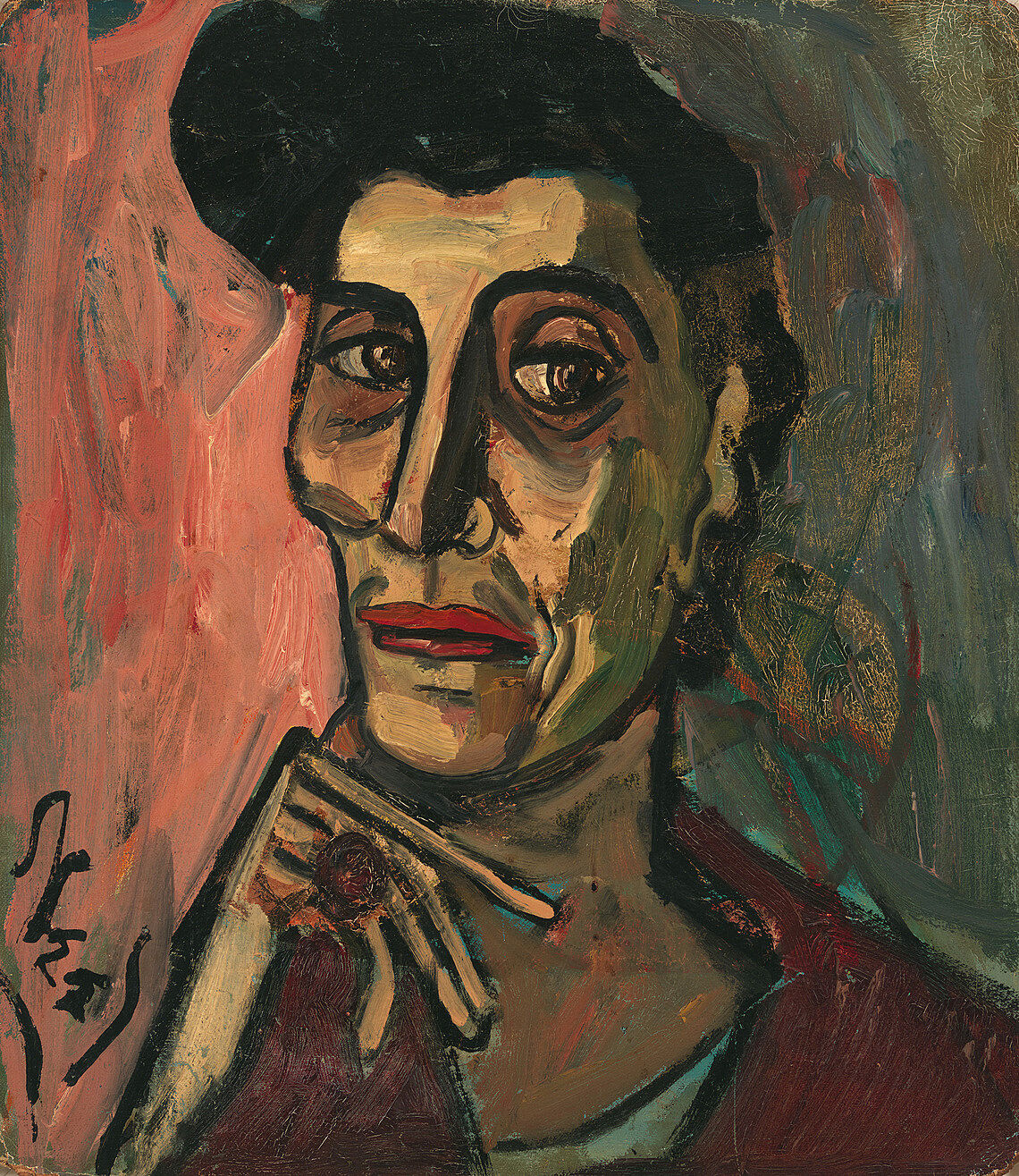
A portrait of Elsie Rubin.

Alice Neel, Elsie Rubin, c. 1958. Oil on canvas board, 15 15/16 × 13 15/16 in. (40.5 × 35.4 cm). Whitney Museum of American Art, New York; gift of Elaine Graham Weitzen 96.244 © Estate of Alice Neel

ELSIE RUBIN, 1958

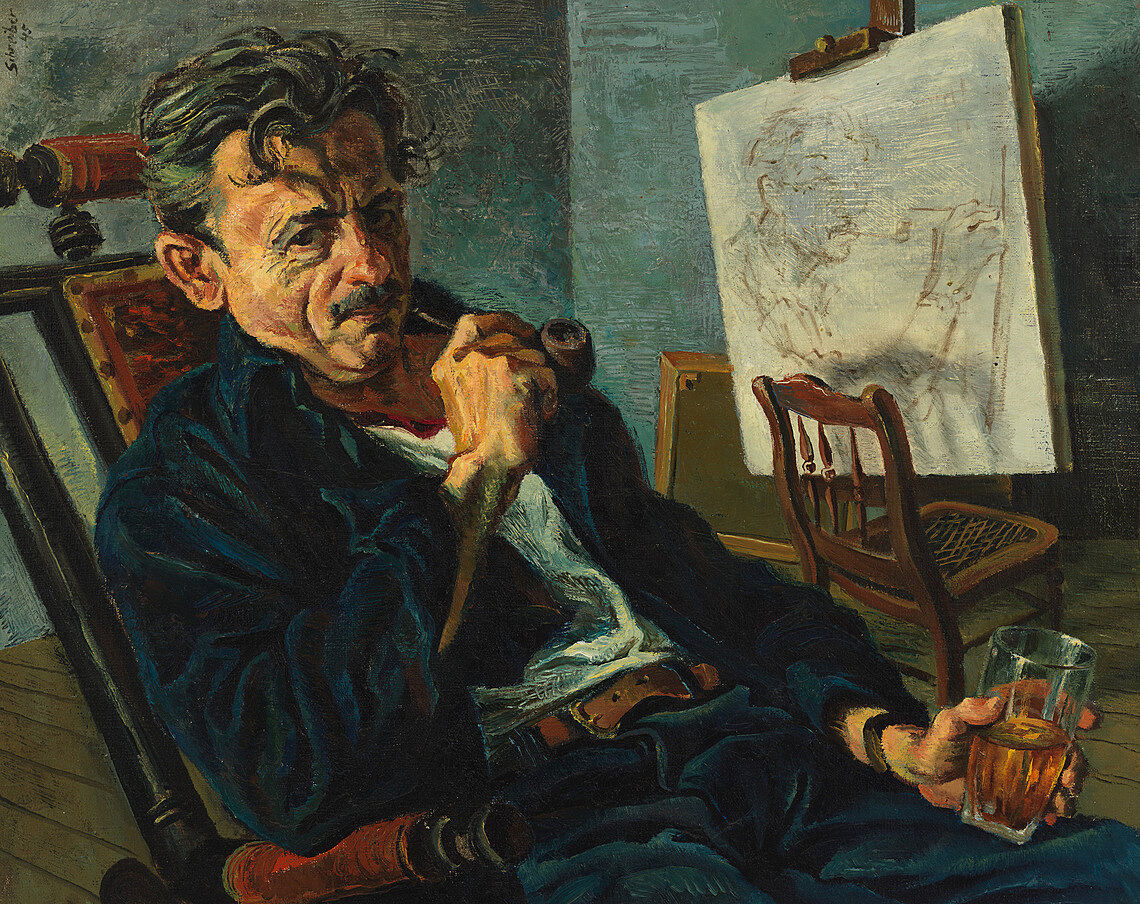
Georges Schreiber (1904–1977), Portrait of Thomas Hart Benton, 1945. Oil on burlap, 24 3/8 × 30 3/16 in. (61.9 × 76.7 cm). Whitney Museum of American Art, New York; gift of anonymous donors 2009.57. Estate of Georges Schreiber, Courtesy D. Wigmore Fine Art, Inc.

PORTRAIT OF THOMAS HART BENTON, 1945

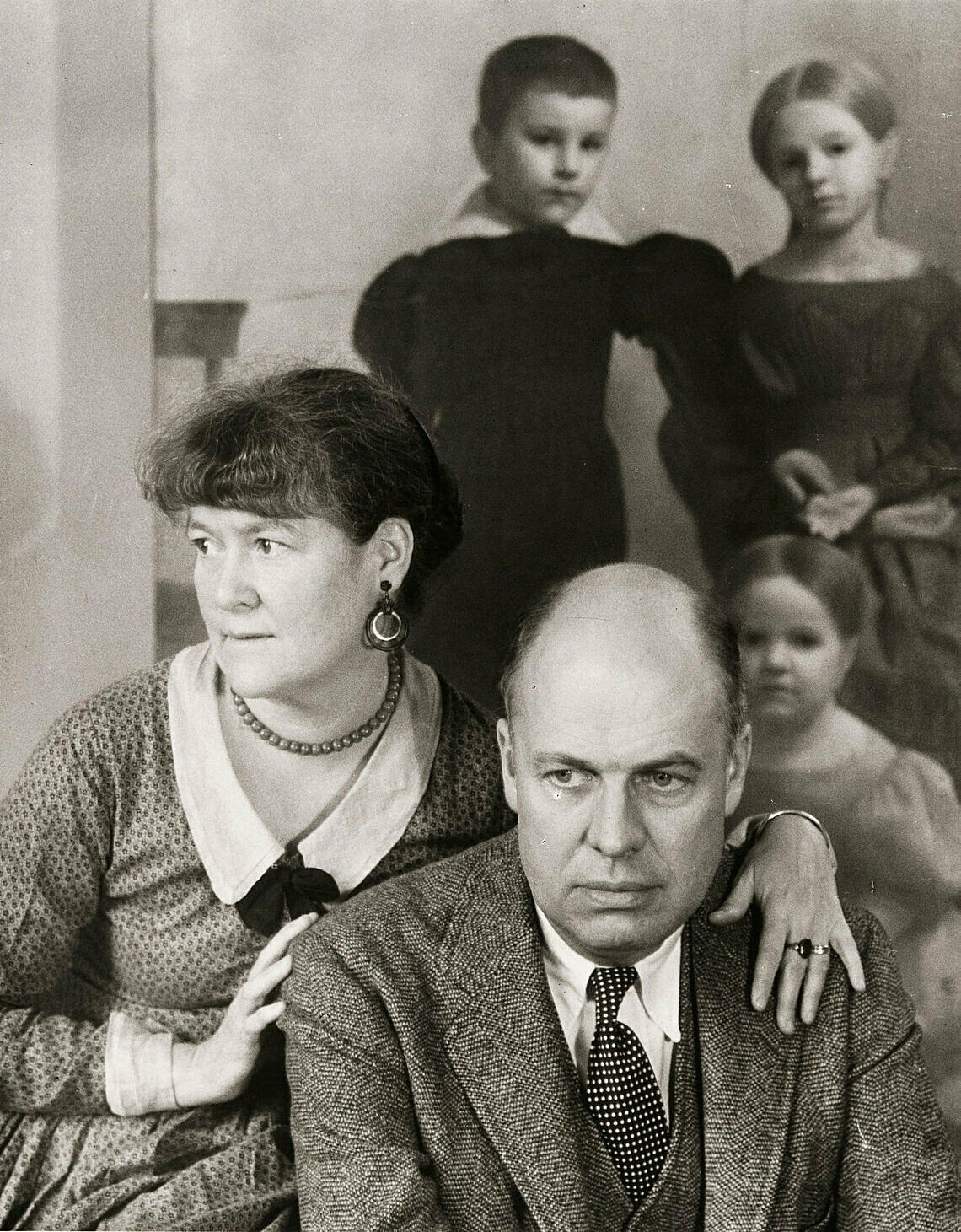
Louise Dahl-Wolfe (1895–1989), Edward and Jo Hopper, 1933 (printed later). Gelatin silver print, 14 × 10 7/8 in. (35.6 × 27.6 cm); 18 × 9 7/16 in. (45.7 × 24 cm). Whitney Museum of American Art, New York; Transfer from the Frances Mulhall Achilles Library, Special Collections, Whitney Museum of American Art 2000.269 © 1989 Center for Creative Photography, Arizona Board of Regents

EDWARD AND JO HOPPER, 1933

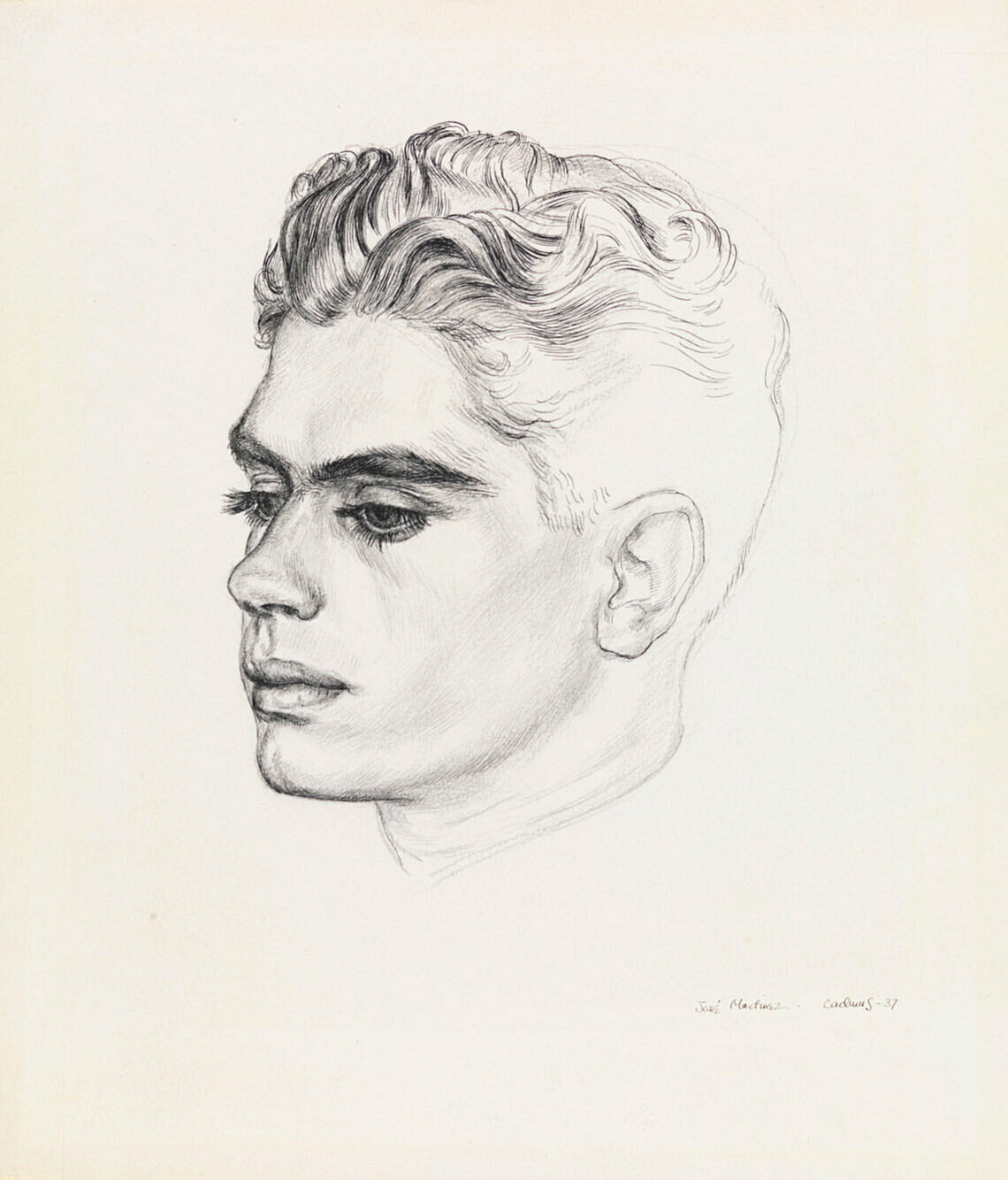
Paul Cadmus (1904–1999), José Martinez, 1937. Pen and ink and graphite pencil on paper, sheet: 12 7/16 × 10 3/4 in. (31.6 × 27.3 cm). Whitney Museum of American Art, New York; purchase with funds from the Drawing Committee 2005.176 Art © Jon F. Anderson, Estate of Paul Cadmus, licensed by VAGA, New York, NY

JOSÉ MARTINEZ, 1937

Paul Cadmus made this drawing of José Martinez, also known as Pete, as a study for a painting; both men were part of an intimate circle of artists, friends, and lovers. Born in Mexico, Martinez was a professional ballet dancer who was a member of the School of American Ballet and Ballet Caravan, a company organized by Lincoln Kirstein. Martinez and Kirstein were lovers; when Cadmus’s sister, Fidelma, married Kirstein in 1941, she moved in with her new husband and Martinez. The group also included photographer George Platt Lynes and fellow artists Jared and Margaret French, who along with Cadmus formed the photographic collective PaJaMa.

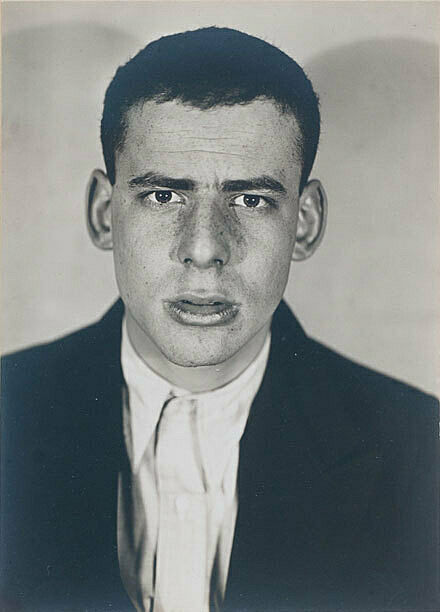
Walker Evans (1903–1975), Lincoln Kirstein, c. 1930. Gelatin silver print, 7 × 5 in. (12.7 × 17.8 cm). Whitney Museum of American Art, New York; promised gift of Sondra Gilman Gonzalez-Falla and Celso Gonzalez-Falla to the Whitney Museum of American Art, New York, and The Gilman and Gonzalez-Falla Arts Foundation P.2014.70 © Walker Evans Archive, The Metropolitan Museum of Art, NY

LINCOLN KIRSTEIN, 1930

Walker Evans is perhaps best known for his direct and unembellished photographs of Depression-era tenant farmers, but in the early 1930s he also made numerous photographs of his friend Lincoln Kirstein. Evans’s images of Kirstein are nearly all close-up shots. Some, such as this one, feature Kirstein posing as if for a mug shot, while in others he assumes the role of a gangster. Kirstein was not a criminal; rather, he was an influential force in twentieth-century American culture. In addition to cofounding the School of American Ballet and the New York City Ballet with choreographer George Balanchine, Kirstein also engaged with many notable literary and visual artists. He promoted Evans’s photography, and in 1938 he helped to organize the artist’s first major exhibition, Walker Evans: American Photographs, held at the Museum of Modern Art in New York.

Man in a suit with a hat looks out.

Edward Hopper (1882-1967), Self-Portrait, 1925-30. Oil on canvas, 25 3/8 × 20 3/8 in. (64.5 × 51.8 cm). Whitney Museum of American Art, New York; Josephine N. Hopper Bequest 70.1165 © Heirs of Josephine N. Hopper/Licensed by VAGA, New York, NY

SELF PORTRAIT, 1925

Although Edward Hopper drew and painted numerous self-portraits in his early years as an artist, this is one of the few he completed during the mature phase of his career. Around 1918, Hopper made an etching in which he portrayed himself wearing a hat. Self-Portrait preserves the pose of this earlier image, while his heavier features and laugh lines suggest the effects of time’s passage. Dressed in a suit and tie, Hopper gives no indication of his profession; indeed, he appears as the antithesis of the stereotypical bohemian artist. Though the interior space he occupies is nondescript, his hat suggests a moment of transition—that he is on his way somewhere else. Like so many of the people he portrayed on trains and in hotels and waiting rooms, Hopper looks as if he has been captured in a contemplative, in-between moment, engaged in a scene that hints at narrative possibilities but remains mysterious.


Artists


Explore works from this exhibition
in the Whitney's collection

View 382 works

On the Hour

A 30-second online art project:
Frank WANG Yefeng, The Levitating Perils #2

Learn more about this project

Learn more at whitney.org/artport

On the Hour projects can contain motion and sound. To respect your accessibility settings autoplay is disabled.