Human Interest: Portraits from the Whitney’s Collection | Art & Artists

Apr 2, 2016–Apr 2, 2017


Exhibition works

15 total
Cracked Mirror
Read more

Cracked Mirror

Floor 7

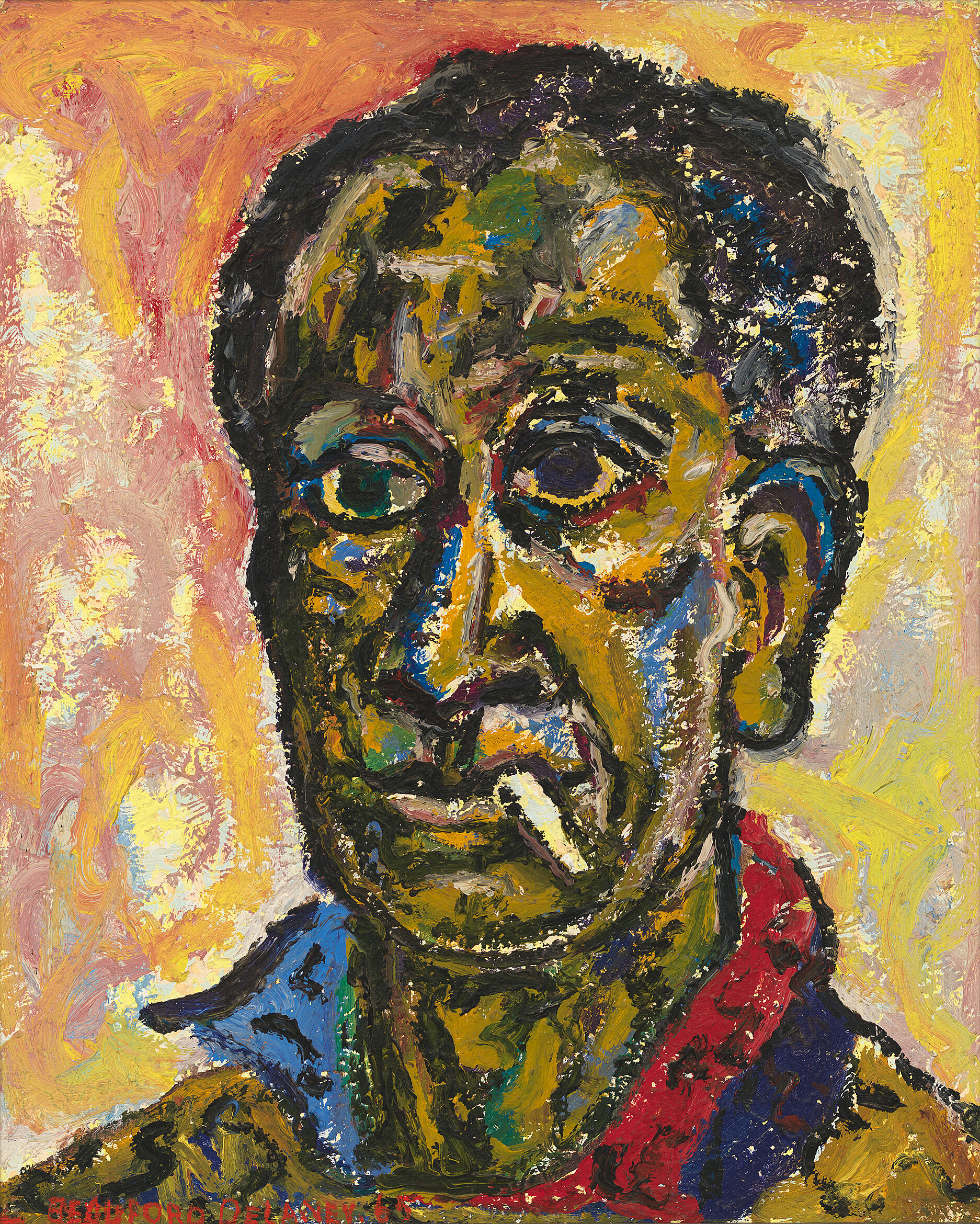
Beauford Delaney (1901–1979), Auto-Portrait, 1965. Oil on canvas, 24 × 19 3/4 in. (61 × 50.2 cm). Whitney Museum of American Art, New York; purchase with funds from the Wilfred P. and Rose J. Cohen Purchase Fund, the Richard and Dorothy Rodgers Fund, the Katherine Schmidt Shubert Purchase Fund, and the Mrs. Percy Uris Purchase Fund 95.2  © Estate of Beauford Delaney

Cracked Mirror
Floor 7

The years surrounding World War II in the United States witnessed the meteoric rise of abstract painting and a widespread abandonment of traditional figurative approaches. Portraiture seemed hopelessly outmoded to many artists, yet some could not relinquish their interest in representing themselves and others. The body, they maintained, was vital in an era marked by unprecedented human catastrophes, including the Holocaust and the atomic bomb. As artist Leonard Baskin proclaimed: “Our human frame, our gutted mansion, our enveloping sack of beef and ash is yet a glory. I hold the cracked mirror up to man.”

The works in this gallery bear witness to portraiture’s crucial role during this period. Combining figurative imagery with restless brushwork, distorted forms, and flattened color, they invoke the psychic impact of the era’s global conflicts and dislocations, exuding a sense of anxiety, foreboding, and raw intensity. Many of the artists whose work is featured here, including Beauford Delaney and Stephen Greene, sought refuge in enigmatic explorations of the self. Others such as Arshile Gorky and John Wilde instilled images of loved ones with meditations on mortality, while Grace Hartigan and Ben Shahn explored the human condition in portraits of archetypal figures.


Below is a selection of works from Cracked Mirror.

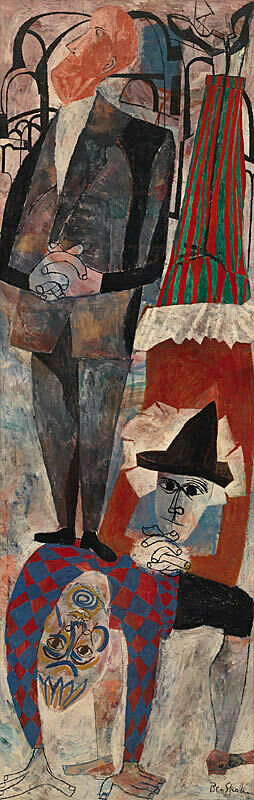
Ben Shahn (1898—1969), Everyman, 1954. Tempera and oil on canvas, 72 1/8 × 24 in. (183.2 × 61 cm). Whitney Museum of American Art, New York; purchase 56.5 © Estate of Ben Shahn, licensed by VAGA, New York

EVERYMAN, 1954

Ben Shahn’s searing depictions of political controversies and economic hardships during the 1930s made him a leading proponent of the style known as social realism. In the wake of World War II, however, he shifted to symbolism, using the figure to portray archetypes, such as the two circus performers and suit-wearing man who appear in Everyman. In Shahn’s congested composition, the bodies of these figures are stacked tightly within the narrow strip of canvas, evoking the anxious atmosphere of the postwar years. Precariously bound together and yet seemingly indifferent to one another’s plight, the men appear to symbolize a world hanging in the balance.

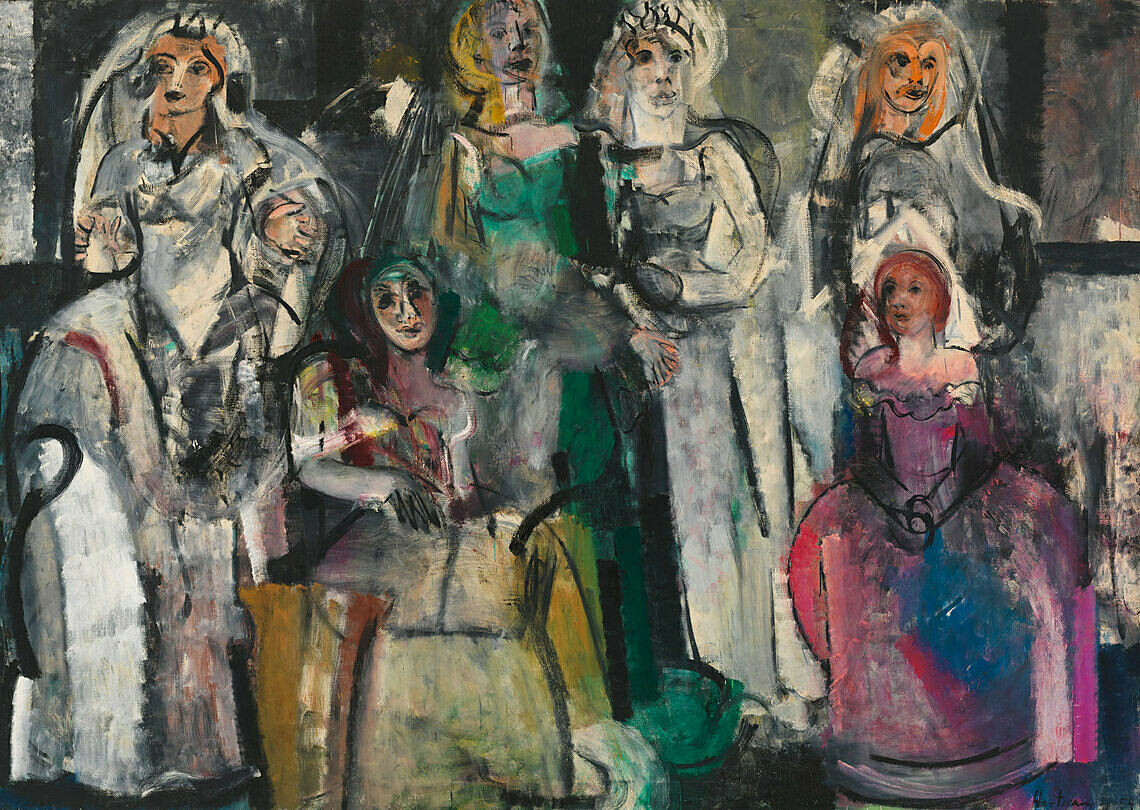
Grace Hartigan (1922—2008),Grand Street Brides, 1954. Oil on canvas, 72 9/16 × 102 3/8 in. (184.3 × 260 cm). Whitney Museum of American Art, New York; purchase with funds from an anonymous donor 55.27 © Rex R. Stevens

GRAND STREET BRIDES, 1954

In this painting, Grace Hartigan combined the slashing brushwork of Abstract Expressionism with imagery from contemporary life. She based the composition on the shop windows she encountered on Grand Street’s “Bride’s Row,” a cluster of stores located near her Lower East Side studio. For Hartigan, the lavishly costumed mannequins displayed in the windows embodied empty social rituals. Their eerily lifeless, alienated gazes offer a subtle critique of the stifling gender roles and complacent attitudes of the 1950s. The poet Frank O’Hara, a friend of the artist, described them as women who “face without bitterness the glassy shallowness of American life as their showcase.”

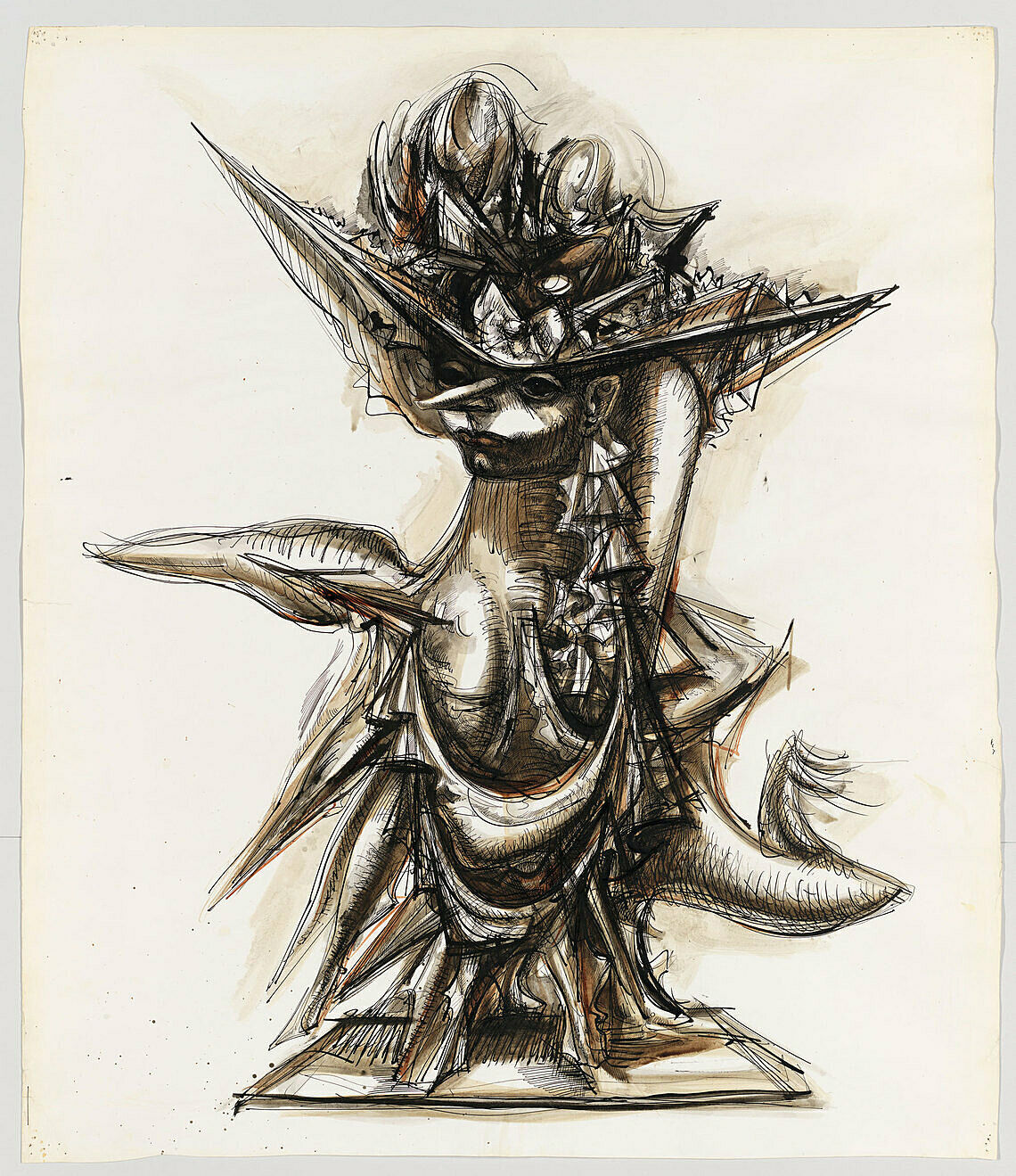
Theodore Roszak (1907—1981), Portrait (the artist’s wife), 1951. Pen and ink and brush and ink on paper, 33 5/8 × 29 in. (85.4 × 73.7 cm). Whitney Museum of American Art, New York; gift of Sara Jane Roszak 83.33.7 © Estate of Theodore Roszak, Licensed by VAGA, New York, N.Y.

PORTRAIT (THE ARTIST’S WIFE), 1951

Beauford Delaney (1901–1979), Auto-Portrait, 1965. Oil on canvas, 24 × 19 3/4 in. (61 × 50.2 cm). Whitney Museum of American Art, New York; purchase with funds from the Wilfred P. and Rose J. Cohen Purchase Fund, the Richard and Dorothy Rodgers Fund, the Katherine Schmidt Shubert Purchase Fund, and the Mrs. Percy Uris Purchase Fund 95.2  © Estate of Beauford Delaney

AUTO-PORTRAIT, 1965

For Beauford Delaney, color was a vehicle for emotion, and the dramatic tonal contrasts in this self-portrait animate its surface and invite speculation about the subject’s state of mind. Delaney’s vacant expression and the heavy lines on his face suggest uncertainty or anxiety, and indeed this work was painted in the wake of a nervous collapse. Made in Paris—where the artist lived for decades—during a fruitful period of his career, it is nonetheless an unflinching portrayal of the inner turmoil that characterized his life.

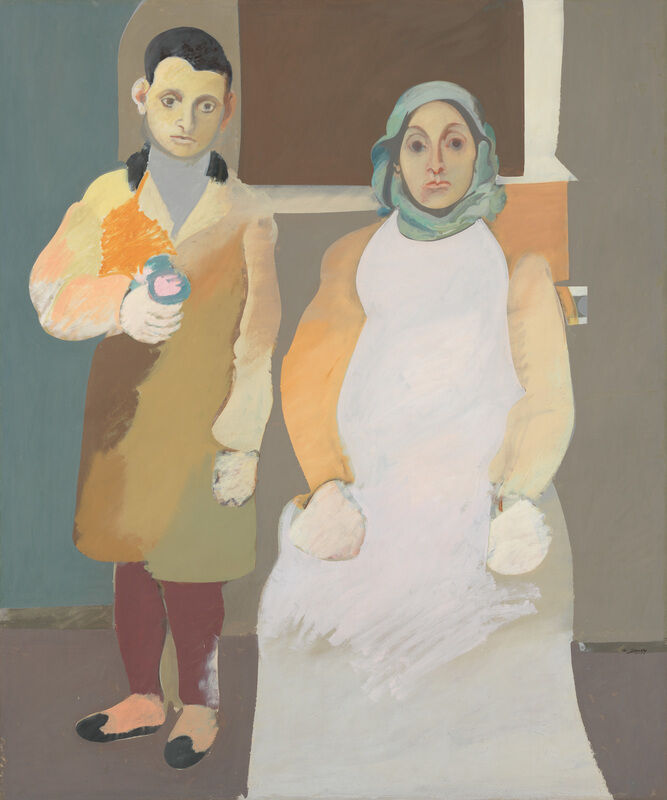
Young boy standing next to a seated woman

Arshile Gorky, The Artist and His Mother, 1926-c. 1936. Oil on canvas, 60 × 50 1/4 in. (152.4 × 127.6 cm). Whitney Museum of American Art; gift of Julien Levy for Maro and Natasha Gorky in memory of their father 50.17 © 2017 The Arshile Gorky Foundation/Artists Rights Society (ARS), New York, NY

THE ARTIST AND HIS MOTHER, 1926

Arshile Gorky based this portrait of himself and his mother on a photograph taken in his native Armenia in 1912, when he was eight years old. Three years later, during the Ottoman Turk campaign of ethnic cleansing against the Armenians, Gorky, his mother, and his sister all survived a death march. But his mother never recovered her health. She died in 1919 from starvation—a victim of what is now widely held to be the Armenian genocide. The following year, at the age of 15, Gorky emigrated to the United States with his sister. As he established his career as an artist in his new homeland, he became preoccupied with the photograph; it offered a haunting symbol of his roots in a tragedy that had killed between one million and one and a half million Armenians. This painting, made over a span of ten years, does not reproduce the camera’s image precisely, but instead reduces it to broad areas of muted, softly brushed color. The masklike faces and undefined hands of the figures at once suggest their loss of physical connection and the difficulty of accessing memories over time.

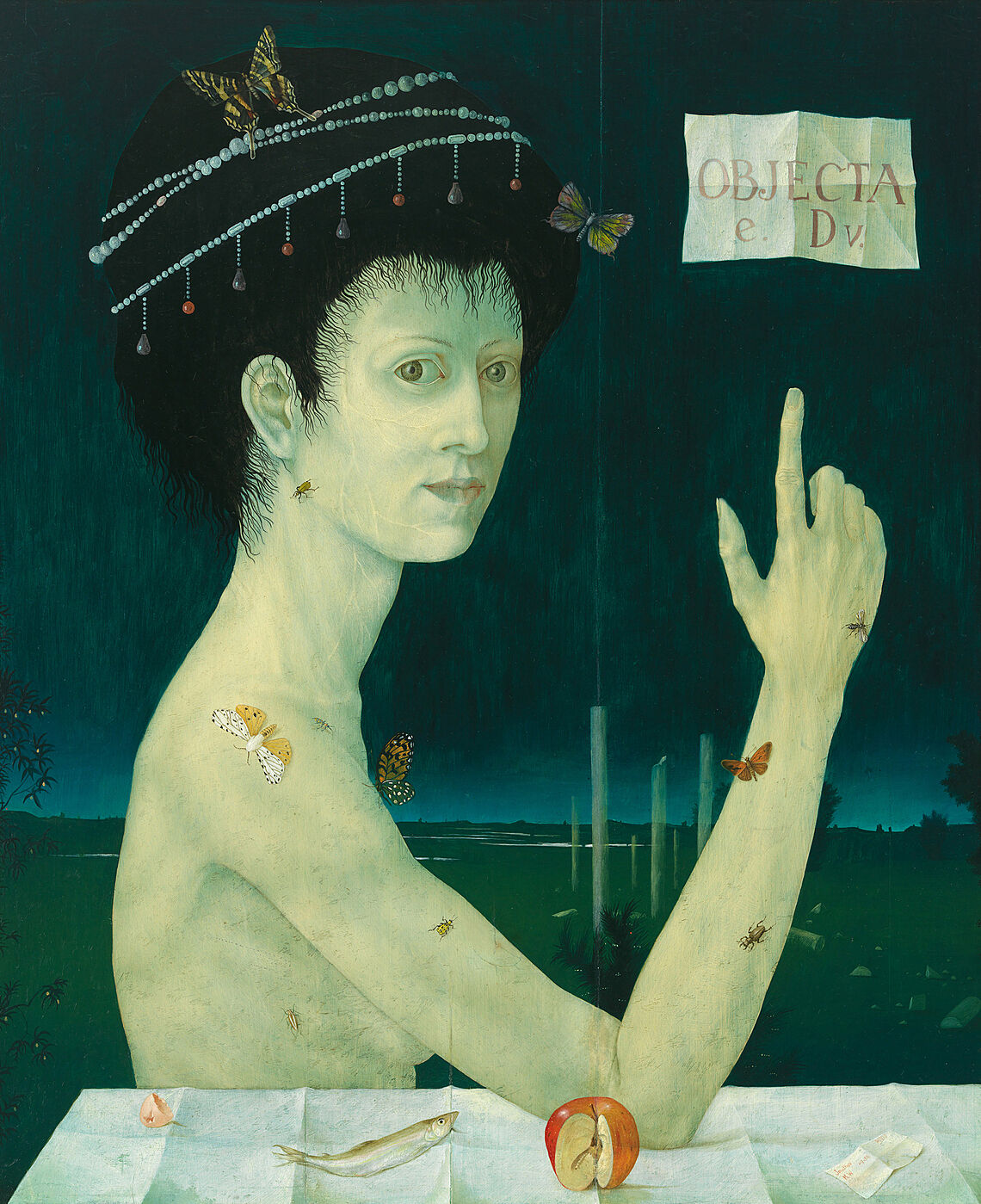
John Wilde (1919–2006), Work Reconsidered #1, 1950. Oil on wood, 30 1/8 × 25 in. (76.5 × 63.5 cm). Whitney Museum of American Art, New York; gift of Helga and Dr. Peter Gardetto 2006.83; with permission of The Shirley Wilde Trust

WORK RECONSIDERED #1, 1950

The “work reconsidered” in the title here is John Wilde’s own drawing; this painting is based on a “bridal” portrait Wilde had made of his wife, Helen, in 1943. Its exacting realism and compressed perspective, as well as the subject’s pose and inscrutable expression, recall the Northern and Italian Renaissance portraits that inspired Wilde. He added Surrealist details to these traditions: the butterflies on the woman’s body and head, the isolated food items on the table, and the moody landscape background create an otherworldly effect.

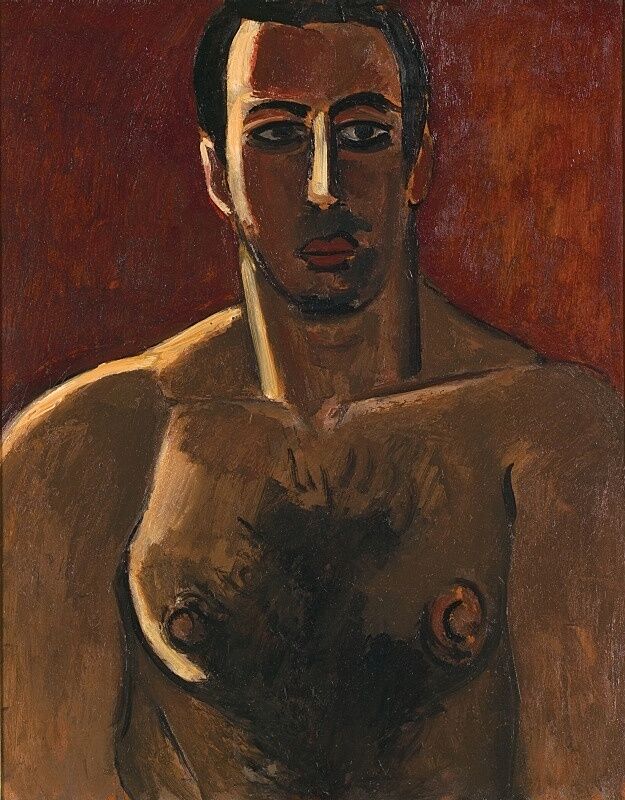
A shirtless man poses in painting with a red background.

Marsden Hartley, Madawaska, Acadian Light-Heavy, Third Arrangement, 1940. Oil on masonite, 27 7/8 × 21 1/2 in. (70.8 × 54.6 cm). Whitney Museum of American Art, New York; gift of Nina and Herman Schneider, Gertrude Vanderbilt Whitney, Dr. Meyer A. Pearlman and Purchase by exchange, and the Director’s Discretionary Acquisition Fund  2005.89

MADAWASKA, ACADIAN LIGHT-HEAVY, THIRD ARRANGEMENT, 1940

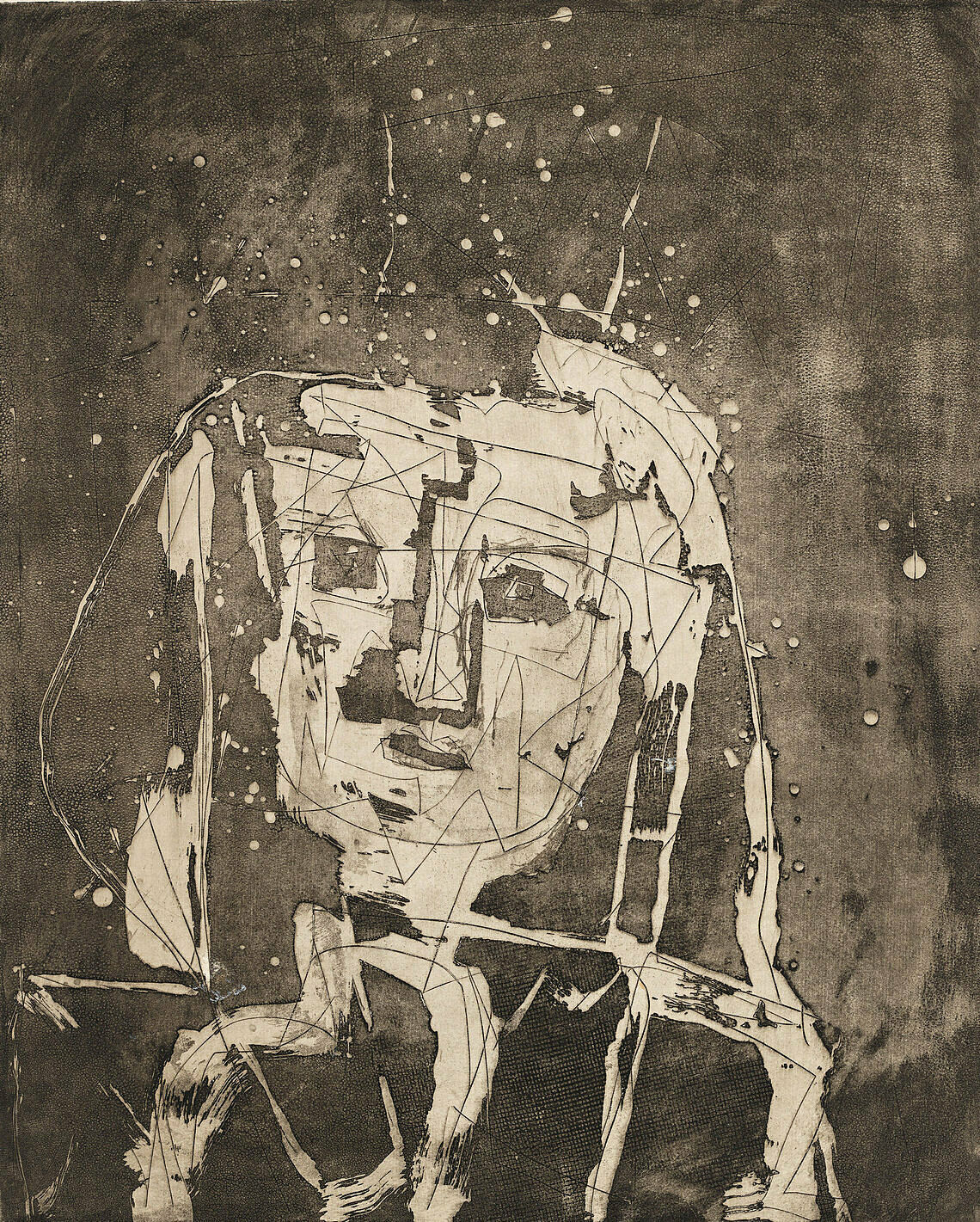
Louise Nevelson (1899—1988), Portrait, 1953–55. Aquatint and etching, image: 24 1/8 × 19 1/4 in. (61.3 × 48.9 cm); sheet: 19 5/8 × 15 7/8 in. (49.9 × 40.3 cm). Whitney Museum of American Art, New York; gift of the artist 69.242 © 2016 Estate of Louise Nevelson / Artists Rights Society (ARS), New York

PORTRAIT, 1953–55

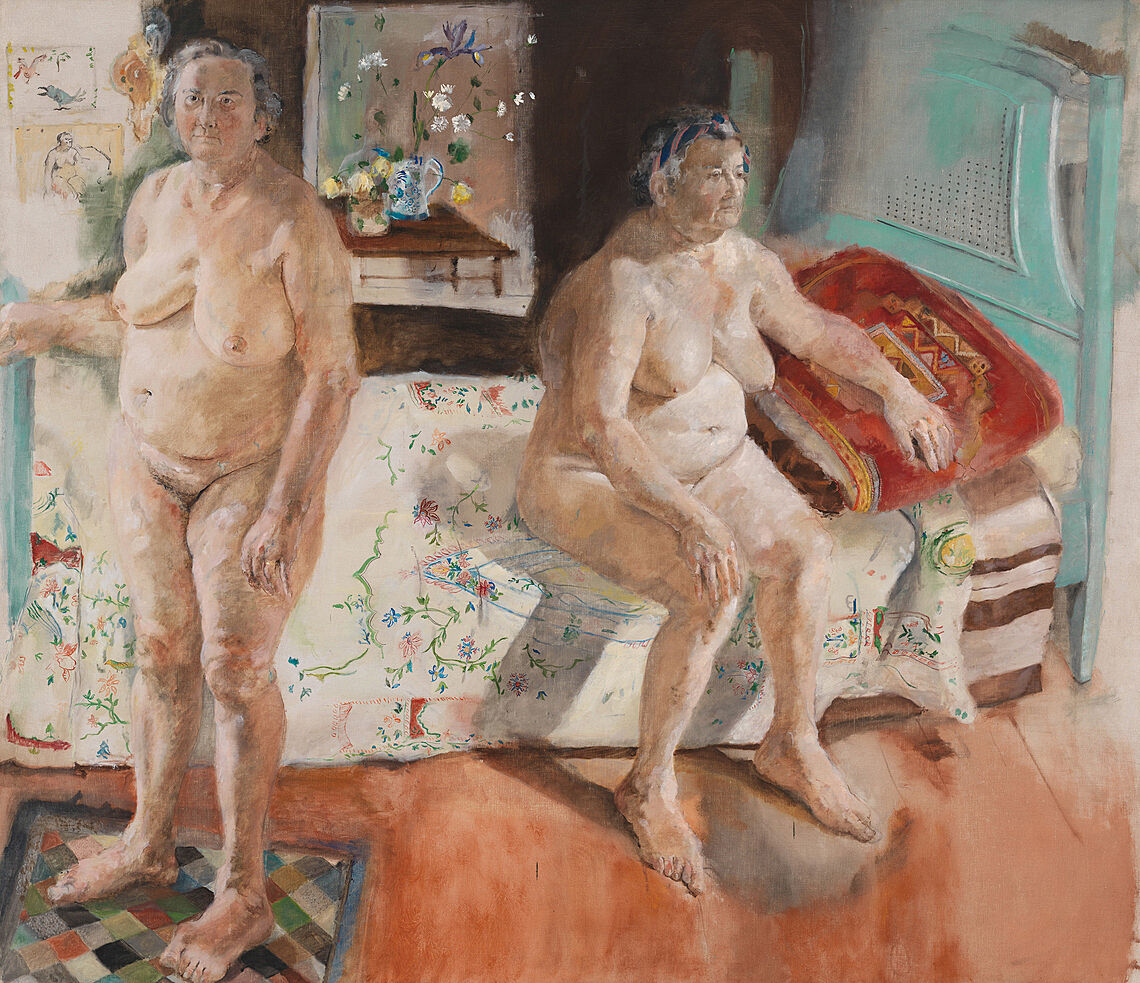
Larry Rivers (1925–2002), Double Portrait of Berdie, 1955. Oil, fabricated chalk, and charcoal on linen, 71 1/2 × 82 11/16 in. (181.6 × 210 cm). Whitney Museum of American Art, New York; gift of an anonymous donor 56.9. Art © Larry Rivers, licensed by VAGA, New York

DOUBLE PORTRAIT OF BERDIE, 1955

The woman depicted here is Larry Rivers’s mother-in-law, Berdie Burger, who was the artist’s primary model in the early 1950s, when she lived with Rivers and her daughter in Southampton, New York. Seen by critics as heralding Rivers’s mature style, the painting registers a range of influences, from the detailed interiors of Impressionism to the expressive brushwork and ambitious scale of the New York School. By depicting the figure simultaneously in two poses—suggesting a time lapse—Rivers emphasizes the process of creation and the active role of both artist and model in creating a fictive scene.

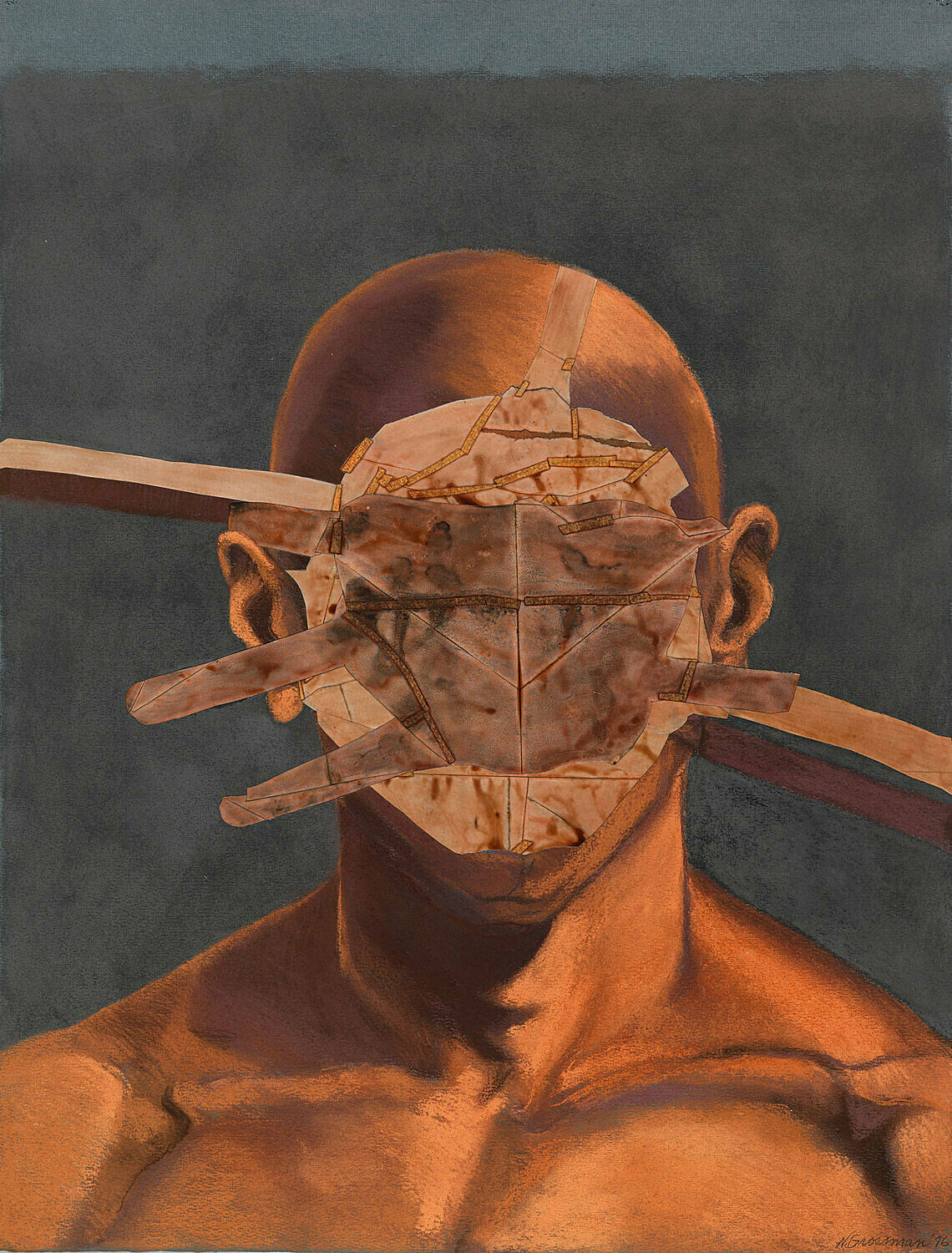
Nancy Grossman (b. 1940), Collage Pastel #3, 1976. Pastel, paper and tape collage, and watercolor on paper, 26 1/8 × 20 1/16 in. (66.4 × 51 cm). Whitney Museum of American Art, New York; gift of Kenneth Schweber 92.85. Image courtesy of Michael Rosenfeld Gallery LLC, New York, NY

COLLAGE PASTEL #3, 1976


Artists


Explore works from this exhibition
in the Whitney's collection

View 382 works

On the Hour

A 30-second online art project:
Frank WANG Yefeng, The Levitating Perils #2

Learn more about this project

Learn more at whitney.org/artport

On the Hour projects can contain motion and sound. To respect your accessibility settings autoplay is disabled.