Sixties Surreal | Art & Artists

Sept 24, 2025–Jan 19, 2026


Exhibition works

10 total
Mojo Secrets
Read more

Mojo Secrets


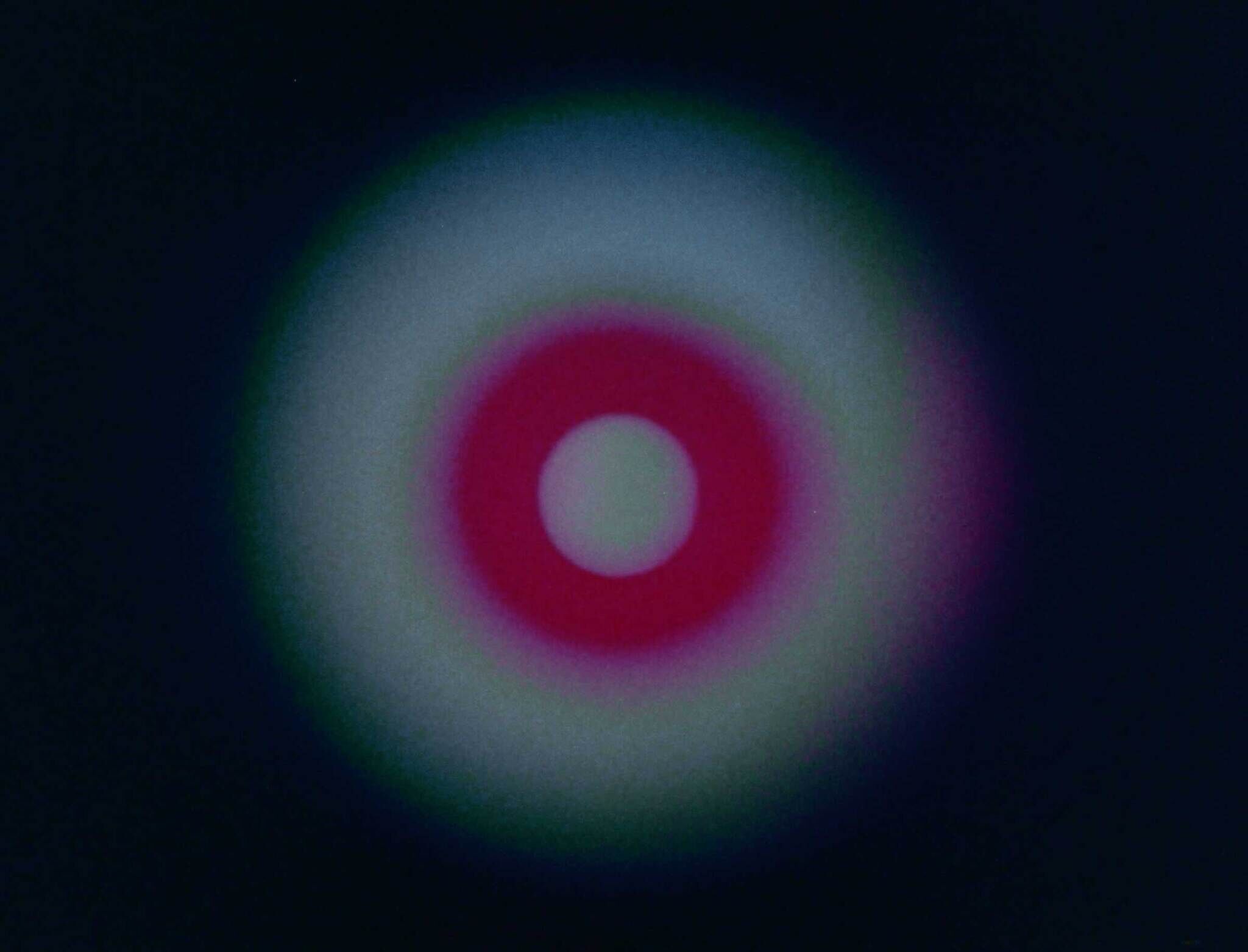
A glowing target shape with a red ring and white center on a dark background. No text present.

Jordan Belson, Samadhi, 1967. 16mm film transferred to video, color, sound; 6 min. Estate of Jordan Belson; Courtesy Matthew Marks Gallery, New York. © Estate of Jordan Belson, Courtesy Matthew Marks Gallery

Mojo Secrets

Organized religion was one of the many institutions that came under question in the 1960s. For many artists, the search for alternatives led to the exploration of expansive forms of spirituality, influenced by cultural roots, ancestral knowledge, and the occult. Many practitioners of historic Surrealism promoted esotericism and the magical sciences as tools for unlocking the subconscious mind and critiquing the dominant institutions—family, church, and state—of the period. The artists gathered here follow that line of thinking to various critical ends. Some, such as Jordan Belson and Ching Ho Cheng, sought spiritual knowledge by using meditation, psychedelic drugs, and divination as tools for elevating consciousness. Others, including Claes Oldenburg and Eduardo Carrillo, looked outward, questioning the dominance of religious institutions and reappropriating conventional iconography for new ends. Still others, such as Oscar Howe and Carlos Villa, evoked ritual practice in their work to assert claims to cultural identity and counter the destabilizing effects of colonization and Christianity upon Indigenous systems of belief.

In Samadhi Jordan Belson attempts to portray a visual phenomenon he perceived while in a meditative state. A follower of Mahayana and Vajrayana Buddhism, Belson lived and maitained a strict Yogic practice and a largely ascetic and solitary life in San Francisco in the two years leading up to the film's creation. He rendered his experience in a color palette inspired by natural elements and The Tibetan Book of the Dead, accompanied by an electronic score punctuated by sounds of his inhaling and exhaling.

A diagram with Latin words, a triangle, and circles showing elements, humanity, God, and Satan in a symbolic layout.

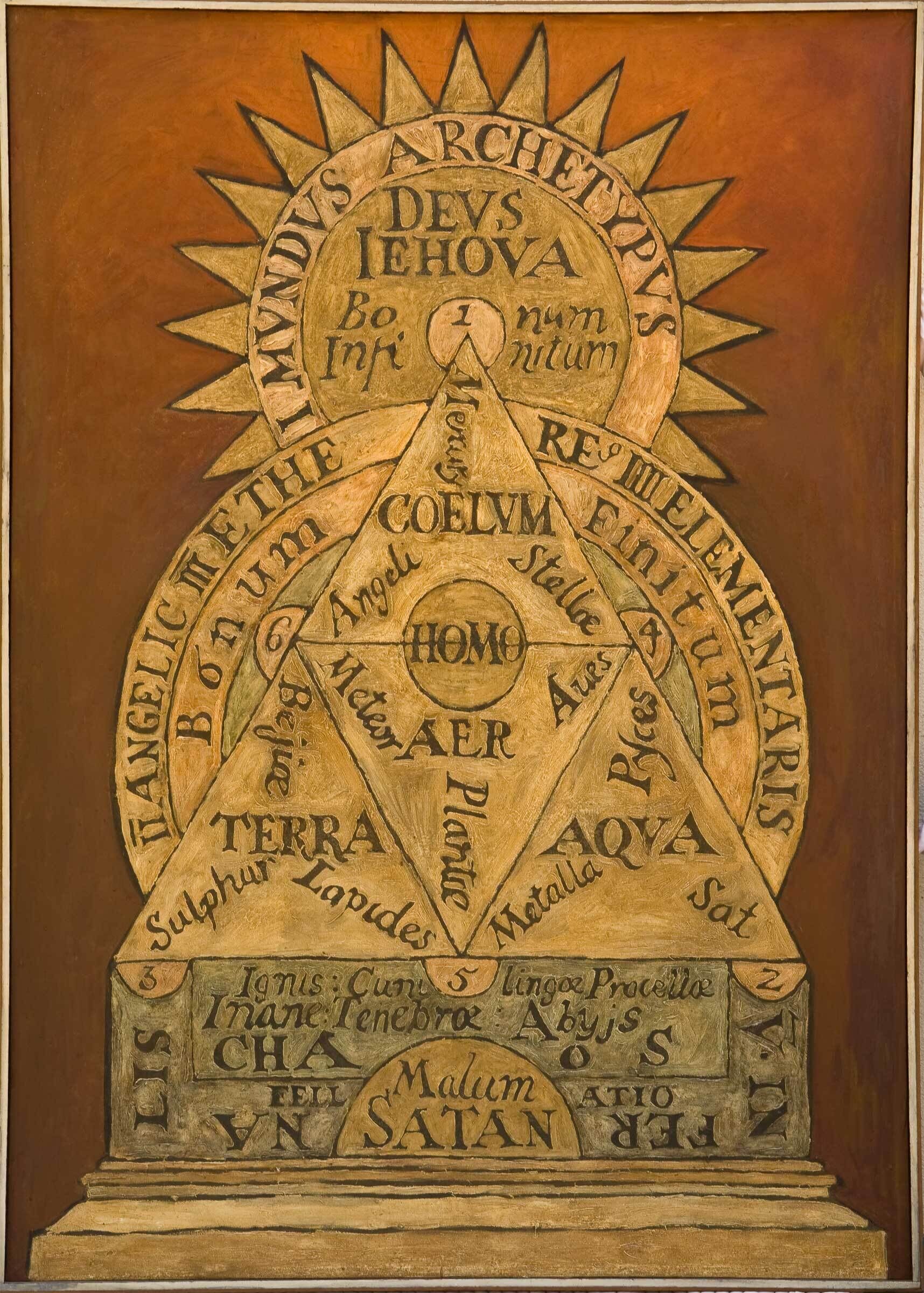
Wally Hedrick, HERMETIC IMAGE, 1961. Oil on canvas, 84 × 60 in. (213.36 × 152.4 cm). Collection of Mills College Art Museum, Northeastern University. © Wally Hedrick. Photograph by MCAM

Wally Hedrick, HERMETIC IMAGE, 1961

Although Wally Hedrick appropriated the central diagram of HERMETIC IMAGE from a sixteenth-century alchemical book, when asked about the painting's religious connotations, he asserted that there were none: "the image was what interested me." In divorcing the figure from its magical origins, he created an image that engages with a Pop Art sensibility, in which the schematic becomes a formal, graphic exercise. Hedrick's work exemplifies the San Francisco countercultural proclivity for using mystical themes and non-Western systems of belief to launch an assault on rational thought.

Abstract painting with sharp, overlapping shapes in blue, red, and black tones, forming a swirling circular pattern.

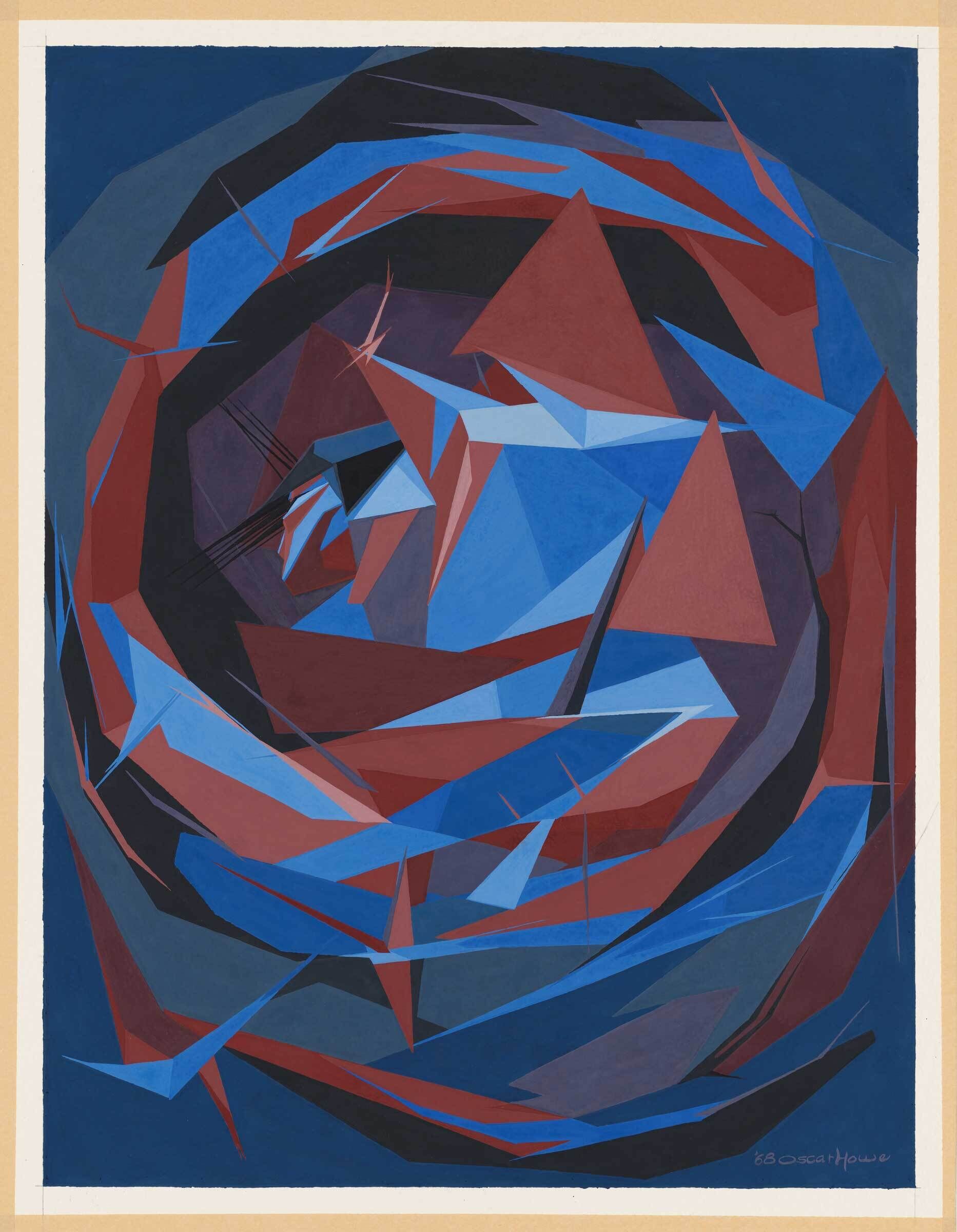
Oscar Howe, Retreat, 1968. Casein on paper: sheet, 26 1/8 × 20 1/4 in. (66.4 × 51.4 cm); image, 24 × 18 1/4 in. (60.96 × 46.3 cm). Whitney Museum of American Art, New York; purchase with funds from the Director’s Discretionary Fund 2023.86. © Oscar Howe Family

Oscar Howe, Retreat, 1968

In Retreat Oscar Howe pictured a swirling sky and a body in motion through geometric forms and quilt-like motifs, as if the viewer were caught directly within the action of a traditional Dakota ceremony. By offering a first-person point of view, Howe countered the more ethnographic approach favored in colonial depictions of indigenous life, as well as the market pressures Native American artists faced to represent stylized visions of Native experience. The combination of representation and abstraction in this work reflects Howe's staunch advocacy for artistic self-determination and his desire to expand the visual language of Native modernism.

Abstract artwork with swirling patterns and textured, feather-like elements on a blue and beige background.

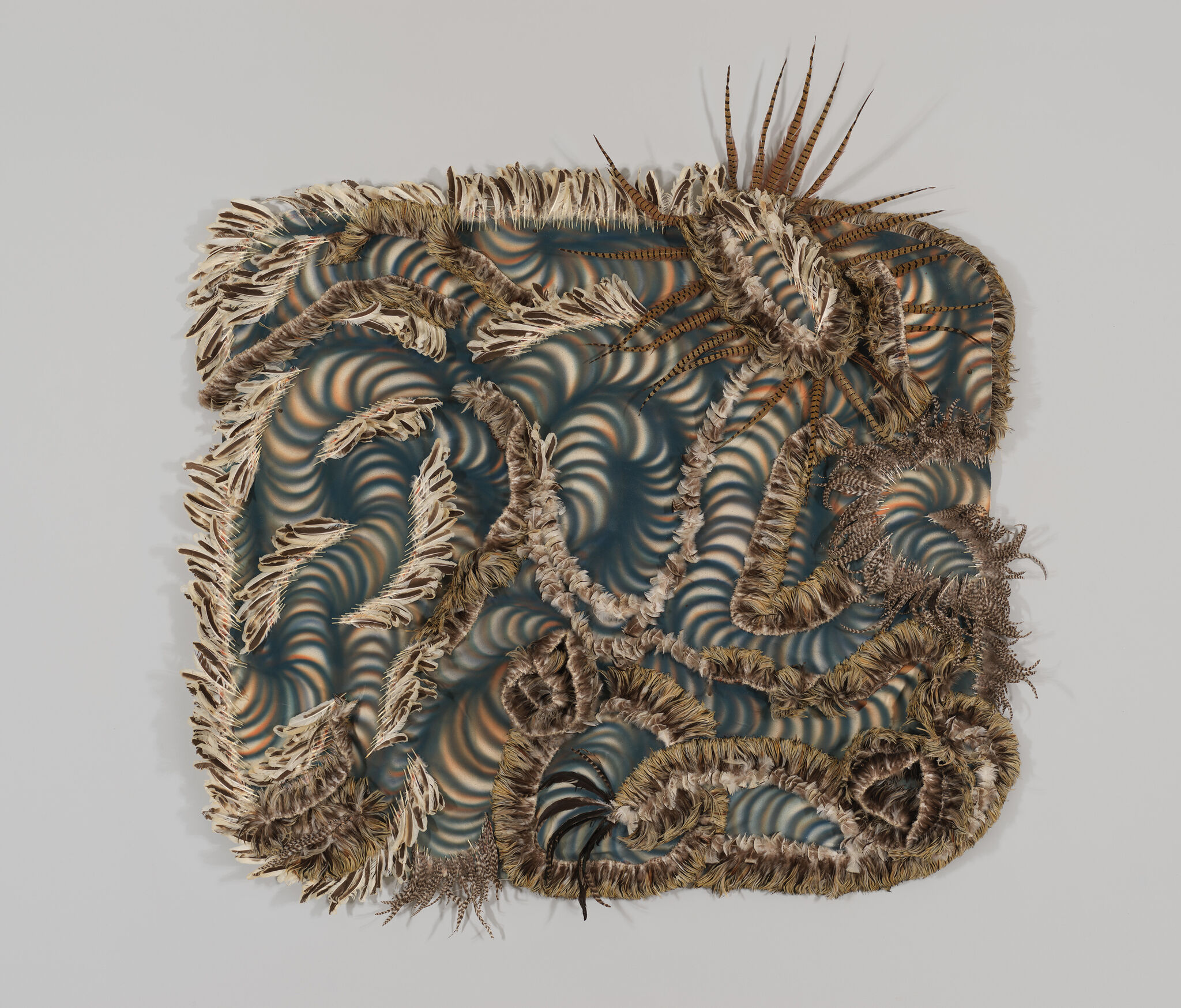
Carlos Villa, My Roots, 1970-71. Acrylic and feathers on canvas, 93 1/2 × 94 1/4 × 7 3/4 in. (237.5 × 239.4 × 19.7 cm). Whitney Museum of American Art, New York; purchase with funds from the Neysa McMein Purchase Award 72.21. © Carlos Villa Art Estate

Carlos Villa, My Roots, 1970–71

As he moved away from h is previous minimal and depersonalized practice, Carlos Villa conceived of a cross-culture art history, one based not on the Western canon but on his own Filipino ancesty, the functional and ceremonial objects of pan-Oceanic cultures, and contemporary art objects. This process served a ritualistic, healing purpose for Villa, as he would explain: "I felt I was connecting with art, not just the painting dialogue, not just the sculpture dialogue, not just the modernist dialogue. But a dialogue with my own universe, or, what I saw the universe to be."

Betye Saar, Ten Mojo Secrets, 1972

In Betye Saar's Ten Mojo Secrets, recognizable imagery, such as stars, moons, and suns, appears alongside abstracted photographs and scavenged bric-a-brac. The result is intentionally enigmatic: works from Saar's Mojo series contain "secret information," she has explained that "radiate[s] something that makes you uneasy." Combining found objects with symbols from astrology, palmistry, and tarot, the altar-like sculptures she created during this period evoke ideas of ritual, magic, and healing in both their accumulative forms and processes of making.

Barbara Rossi, Male of Sorros #5, 1970

A Catholic nun turned full-time artist, Barbar Rossi was intimately familiar with the visual language of religious iconography. In Male of Sorrows #5, she reinterprets the archetype of the Man of Sorrows—an iconic Christian devotional image that depicts the wounded body of Christ. Her graphic style took inspiration from both the bold linework of late medieval German woodcuts and the fantastical and, at times, humorous work of her artistic contemporaries in Chicago. Her absurd appropriation of this conventionally sobering icon of piety reflected larger culture shifts away from the dictates of the Catholic Church and organized religion more broadly.


Artists

On the Hour

A 30-second online art project:
Frank WANG Yefeng, The Levitating Perils #2

Learn more about this project

Learn more at whitney.org/artport

On the Hour projects can contain motion and sound. To respect your accessibility settings autoplay is disabled.