Sixties Surreal | Art & Artists

Sept 24, 2025–Jan 19, 2026


Exhibition works

10 total
An Other Pop
Read more

An Other Pop


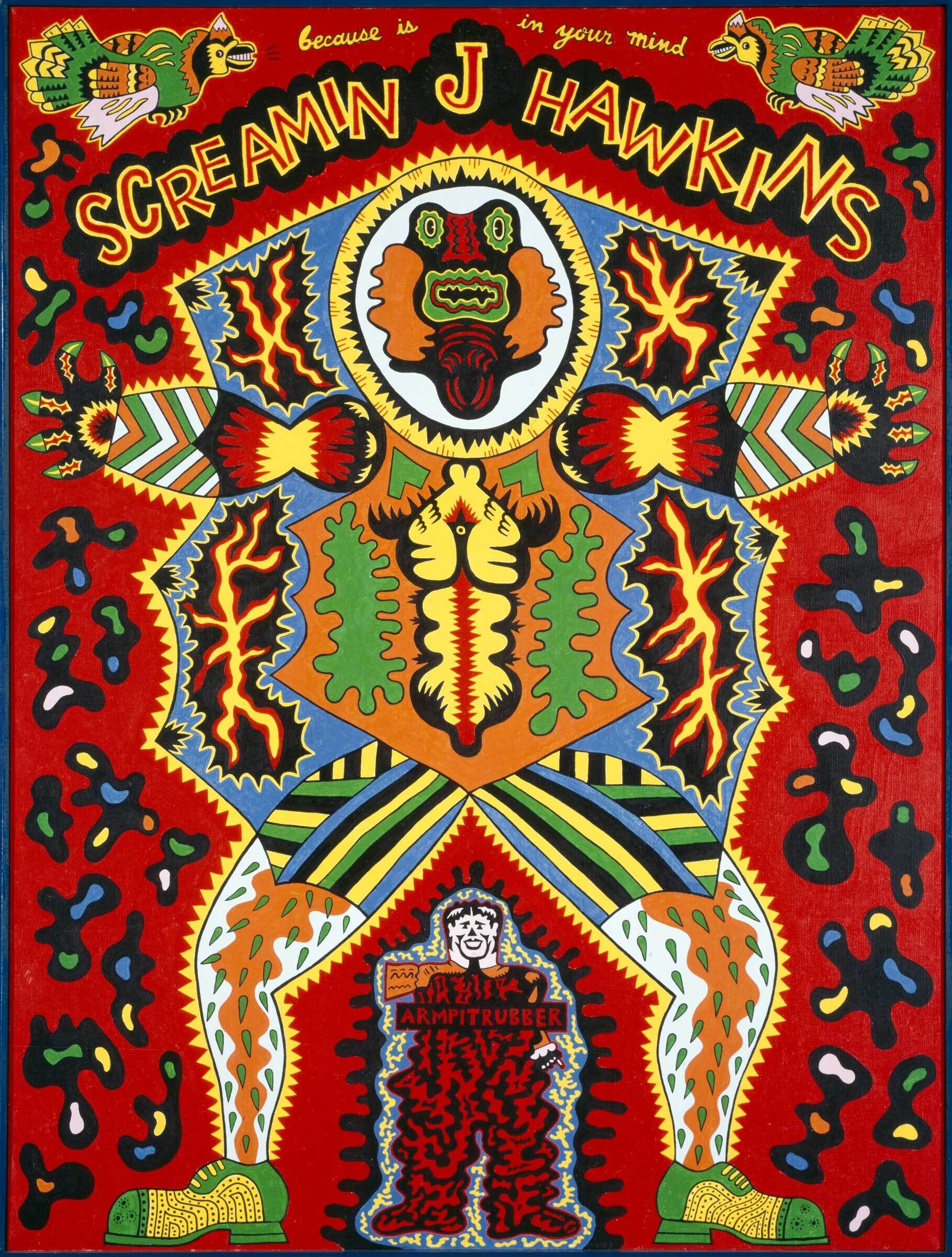
Bright red poster with green, black, and orange shapes evoking a dragon-like human figure with 'Screamin J Hawkins' written above.

Karl Wirsum, Screamin’ Jay Hawkins, 1968. Acrylic on canvas, 48 × 36 in. (121.9 × 91.4 cm). Art Institute of Chicago; Mr. and Mrs. Frank G. Logan Purchase Prize Fund, 1969.248. © The Estate of Karl Wirsum

An Other Pop

The artists in this gallery looked underneath the slick surfaces of consumer culture and Pop Art to expose the strange, alienating effect of the American Dream. A common object appears enormous, like Alex Hay’s paper bag. The warmth of a movie theater gives way to a sinister showing in Roger Brown’s painting. A body, as in Martha Rosler’s collages, merges with household technologies. The works on display here can be understood in terms of their destabilizing effect on the viewer. They question the reciprocal relationship between consumption and identity: a relationship that was increasingly fraught in the consumerist boom of the post-World War II era. In 1966 curator Gene Swenson organized The Other Tradition, an exhibition in Philadelphia that included many of the artists in this gallery alongside historic Surrealists such as Salvador Dalí and Max Ernst. The works presented in The Other Tradition, Swenson proposed, “might be said to objectify experience, to turn feelings into things so thatwe can deal with them.”

Karl Wirsum used the clean style of commercial graphics and the abstracted form of a dissected frog to paint the singer Screamin' Jay Hawkins, who used this painting as the cover for his album Because Is In Your Mind (1970). Best known for his 1956 song "I Put a Spell on You" and his sensational live performances, Hawkins appears here in full song, raining amoeba-shaped sweat down on a man wearing "armpit rubber," like old-fashioned galoshes, to keep the moisture at bay. Wirsum sought to visualize how he and his fellow audience members felt during Hawkins's performances. A member of the Chicago exhibition group the Hairy Who, Wirsum has a distinctive figurative style that combines visual motifs from across cultures in densely layered references.

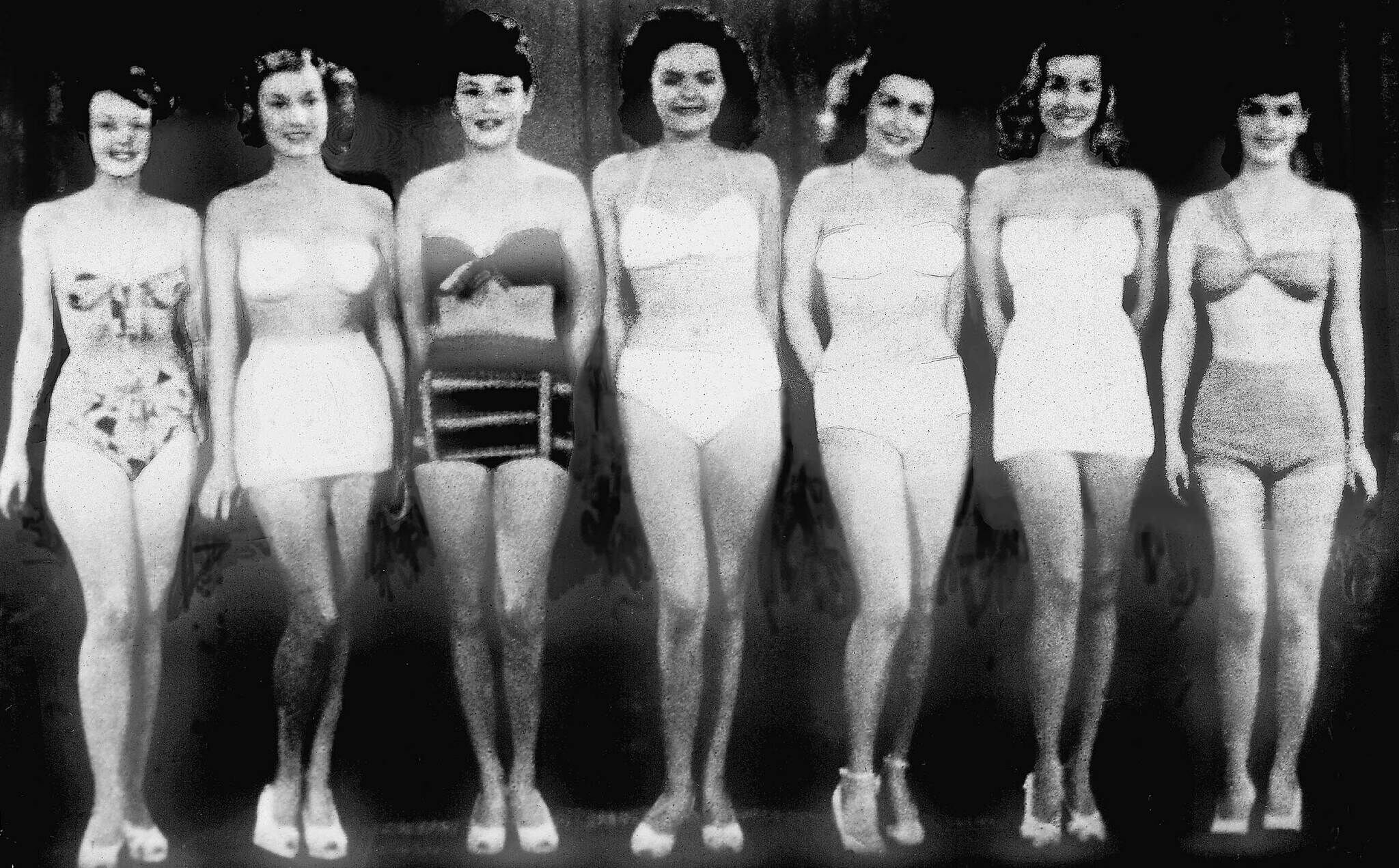
Seven women stand in a row wearing vintage swimsuits, smiling and facing forward against a plain background.

Gunvor Nelson and Dorothy Wiley, Schmeerguntz, 1966. 16mm film, black and white, sound; 15 min. Filmform, Stockholm, Sweden. Courtesy Filmform and the artists

Gunvor Nelson and Dorothy Wiley, SCHMEERGUNTZ, 1965

Gunvor Nelson and Dorothy Wiley juxtapose images of an idealized vision of femininity, pulled from 1960s advertisements, with unfiltered footage of their own domestic lives. This collage approach contrasts with the cool polish of Pop Art, which ignored the messy, insistent physicality of daily existence. The stacking of images in this film is echoed in the title, SCHMEERGUNTZ, which means "sandwich" in a nonsense language invented by Nelson's father. The proto-feminist vision presented here was important to Nelson and Wiley, both mothers married to fellow Northern California artists, who often felt overlooked by the art world and used their art to push against societal expectations.

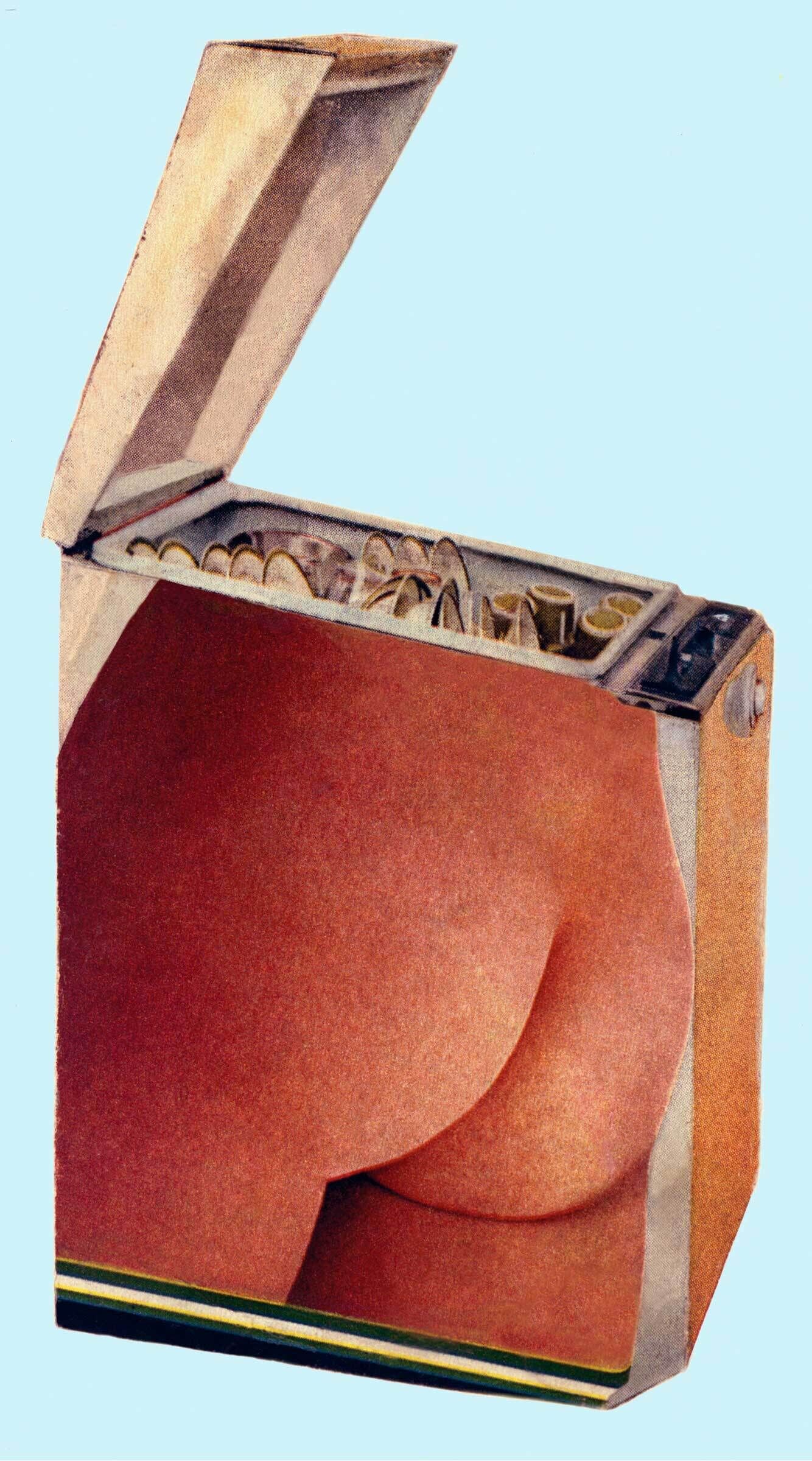
A surreal image shows a washing machine with a human body part replacing its front panel.

Martha Rosler, Damp Meat, from the series Body Beautiful, or Beauty Knows No Pain, c. 1966-72. Photomontage, Sheet: 20 × 16 in. (50.8 × 40.6 cm). Courtesy the artist; courtesy Galerie Lelong, New York. © Martha Rosler, courtesy Galerie Lelong, New York

Martha Rosler, from the series Body Beautiful, or Beauty Knows No Pain, 1966–72

Martha Rosler made these collages using imagery pulled from print advertisements and men's magazines. By merging images of women's bodies with household goods, she suggests that women's bodies are commodified, sold like appliances, and contorted to fit into the roles expected of them. Her photomontages contributed to the gathering momentum of the feminist movement throughout the late 1960s and early 1970s.

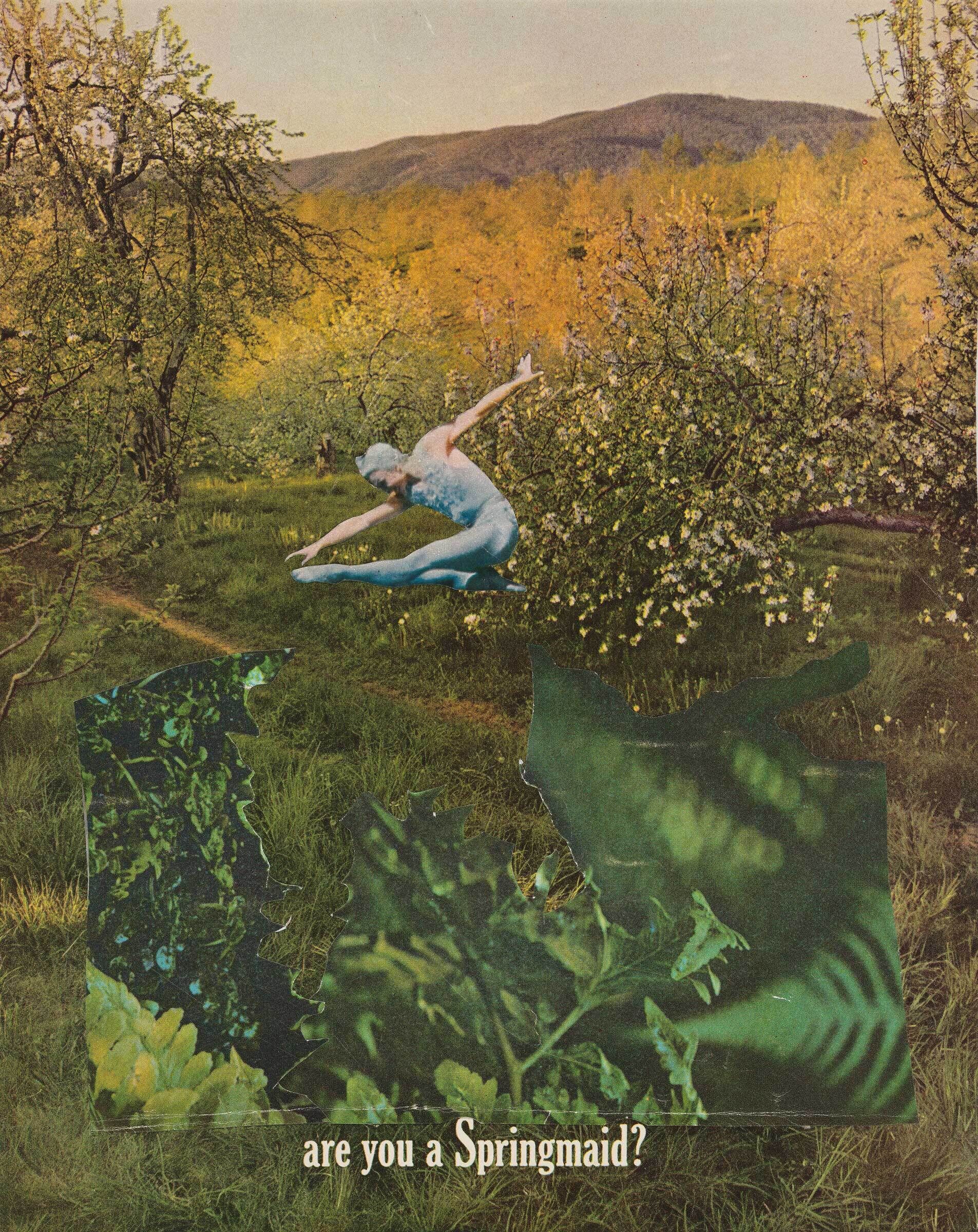
A person in a blue outfit leaps in a green orchard. Text at the bottom reads, "are you a Springmaid?"

Jean Conner, Are You a Springmaid?, 1960. Collage, 10 1/8 × 8 1/8 in. (25.7 × 20.6 cm). Whitney Museum of American Art, New York; purchase, with funds from Sheree and Jerry Friedman 2018.203. © Conner Family Trust and Artist Rights Society (ARS)

Jean Conner, Are You a Springmaid?, 1960

Lee Lozano, No title, 1964

Lee Lozano employs a fluid, gestural mode of painting to lend the wrench a flesh-like quality and play on the double meaning of the word "tool" as male genitalia. Her approach subverted and lampooned the male-dominated Pop Art scene of the time. This work's epic scale and largely grim palette imbue a household object with an ominous and even threatening intensity.

Jim Nutt, Running Wild, 1969–70

Jim Nutt used sign painting techniques to apply bold colors and lines to the back of this plexiglass work, creating a crisp, humorous composition that is at odds with the horror of the castration scene. This central image is framed by icons and words that reinforce the work's themes of violence, physical intimacy, and precarity. Nutt, who was part of the Chicago exhibition group the Hairy Who, often used the smooth curves, tightly drawn lines, and clean finishes of commercial art to render what was usually suppressed: fraught sexual encounters and Freudian ideas.


Artists

On the Hour

A 30-second online art project:
Frank WANG Yefeng, The Levitating Perils #2

Learn more about this project

Learn more at whitney.org/artport

On the Hour projects can contain motion and sound. To respect your accessibility settings autoplay is disabled.