An Incomplete History of Protest: Selections from the Whitney’s Collection, 1940–2017

Aug 18, 2017–Aug 27, 2018


Exhibition works

8 total
Mourning and Militancy
Read more

Mourning and Militancy


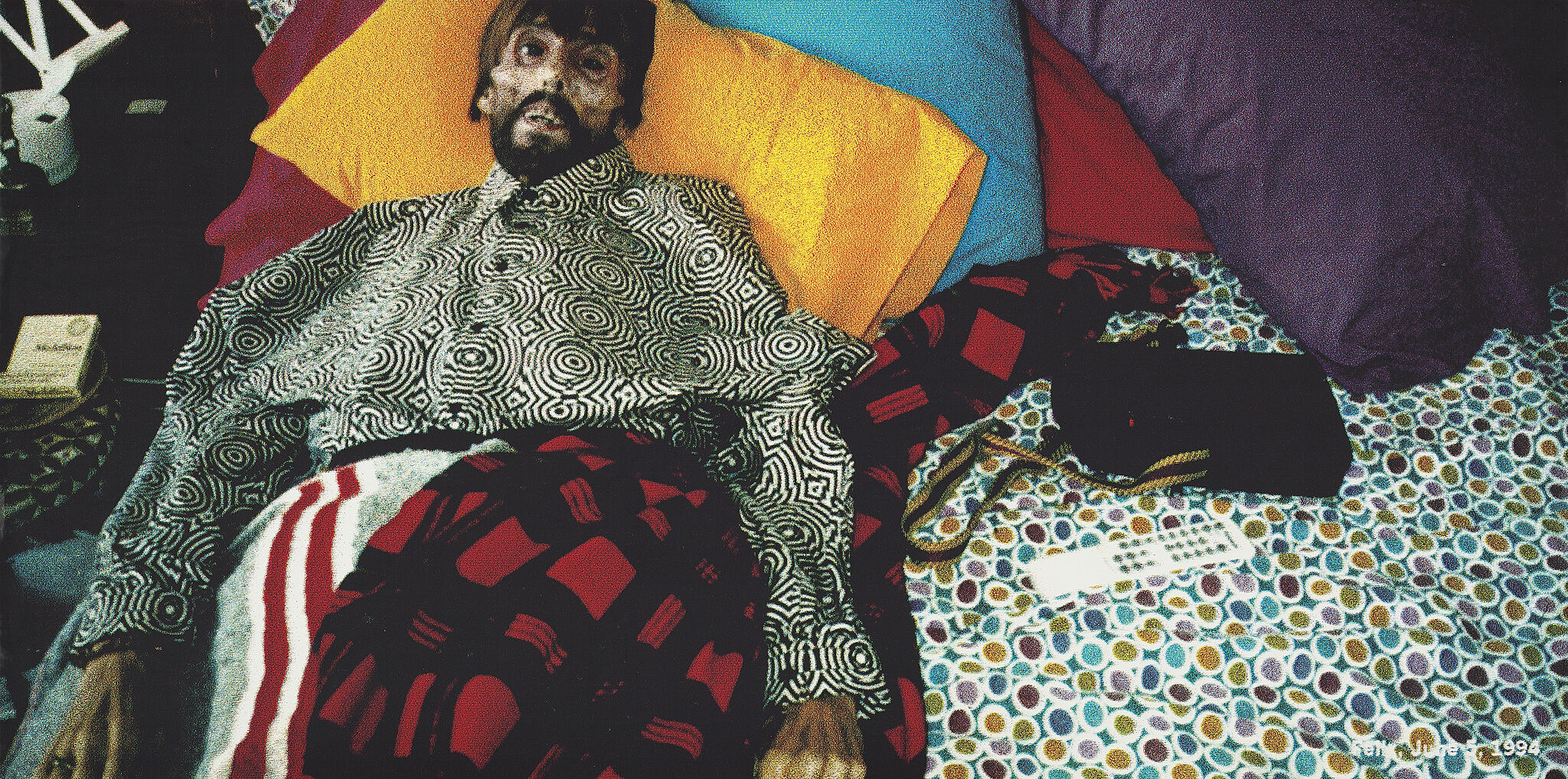
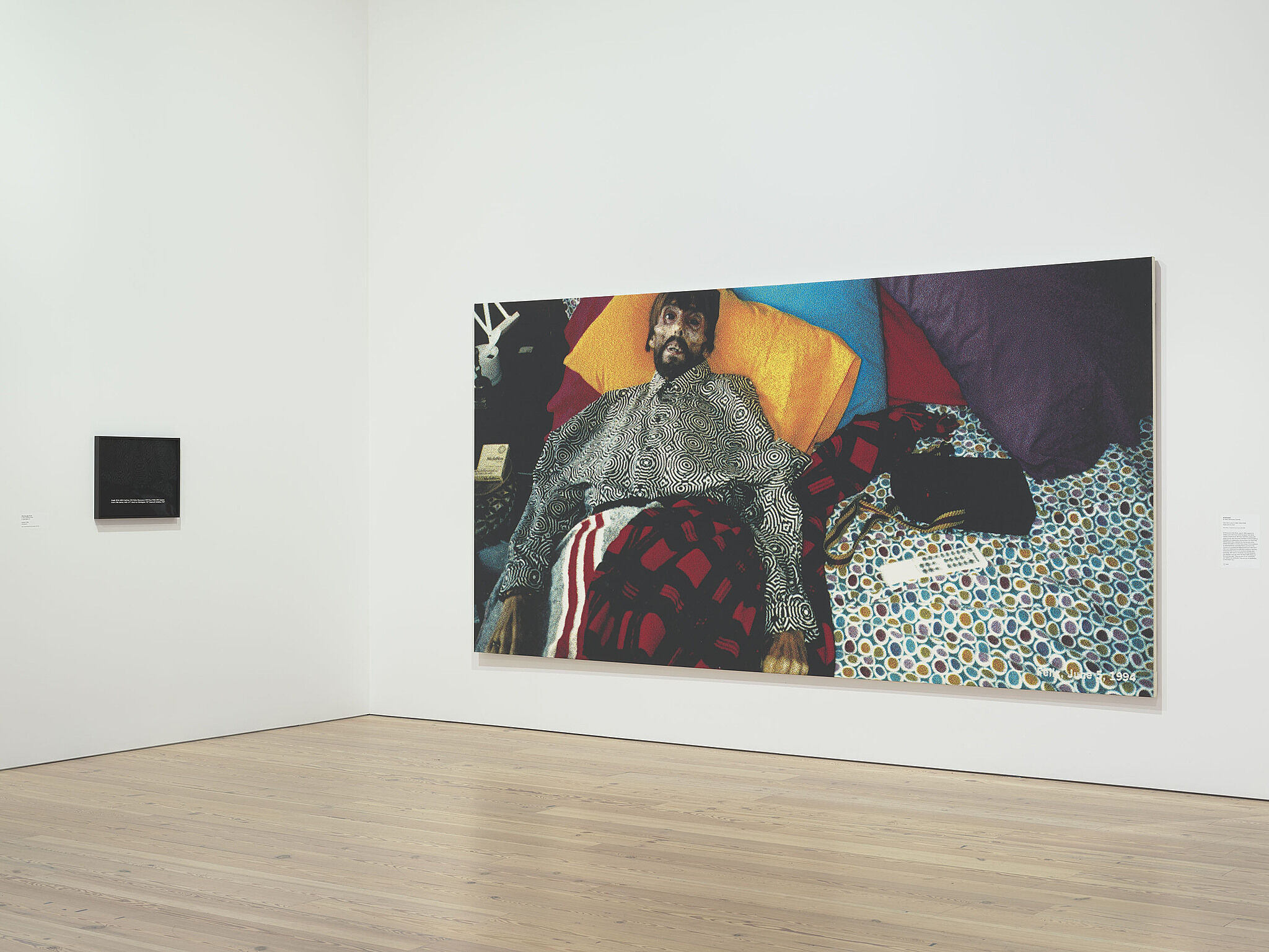
Photograoh of Felix Partz on his death bed.

AA Bronson, Felix Partz, June 5, 1994, 1994/1999. Inkjet print on vinyl, 84 x 168 in. (213.4 x 426.7 cm). Whitney Museum of American Art, New York; gift of Mark J. Krayenhoff van de Leur 2003.268. © 1999 AA Bronson

Mourning and Militancy

During the 1980s and 1990s, AIDS and complications from it killed nearly half a million people in the United States, a disproportionate number of them gay men and people of color. AIDS became one of the most searing issues in American life and politics. The artistic community lost thousands; still more friends, lovers, and family members faced lives transformed by grief, fear, indignation, and illness. The activist and critic Douglas Crimp argued that both “mourning and militancy” were required to address the AIDS crisis.

Many artists made activist work that criticized government inaction, promoted awareness and treatment, and expressed support for people fighting and living with the virus. Frequently adopting the visual strategies of previous protest movements, artists mobilized against AIDS by deploying a sophisticated understanding of media culture, advertising, and product branding. Their widely distributed posters, artworks, and graphics were often used at marches and rallies or were posted on the street.

In a different mode, AA Bronson’s billboard-size portrait of his friend and collaborator Felix Partz transforms a private image into a public statement. Partz is pictured just a few hours after his death from AIDS-related complications. By making viewers confront the image of someone who lived with AIDS and the rawness of his death, Bronson uses the memorial form to protest the magnitude of the crisis. As we continue to live with such loss, and AIDS still affects individuals and communities in the United States and globally, the rallying cry of ACT UP (AIDS Coalition to Unleash Power) resounds today: the AIDS crisis is not over.

Photograoh of Felix Partz on his death bed.

AA Bronson, Felix Partz, June 5, 1994, 1994/1999. Inkjet print on vinyl, 84 x 168 in. (213.4 x 426.7 cm). Whitney Museum of American Art, New York; gift of Mark J. Krayenhoff van de Leur 2003.268. © 1999 AA Bronson

AA Bronson (b. 1946), Felix Partz, June 5, 1994, 1994/1999

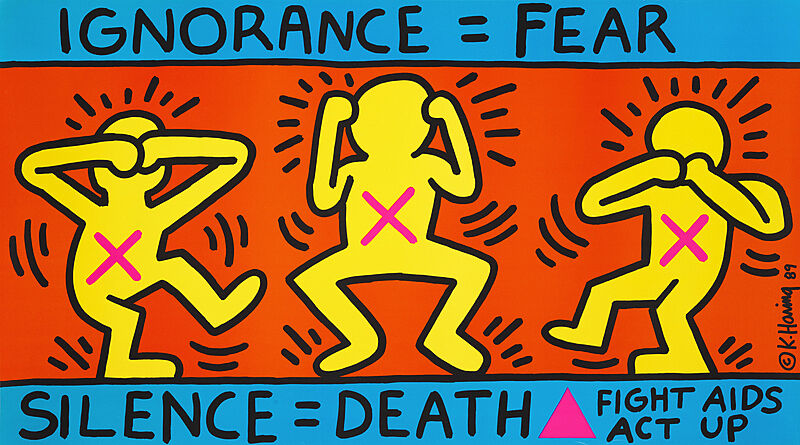
A painting of three figures in the see no evil, hear no evil, speak no evil poses with the text "Ignorace = Fear / Silence = Death = Fight AIDs Act Up"

Keith Haring, Ignorance = Fear / Silence = Death, 1989. Offset lithograph, 24 1/16 × 43 1/16 in. (61.1 × 109.4 cm). Gift of David W. Kiehl in honor of Patrick Moore 2014.265 Keith Haring artwork © Keith Haring Foundation

Keith Haring (1958-1990), Ignorance = Fear / Silence = Death, 1989

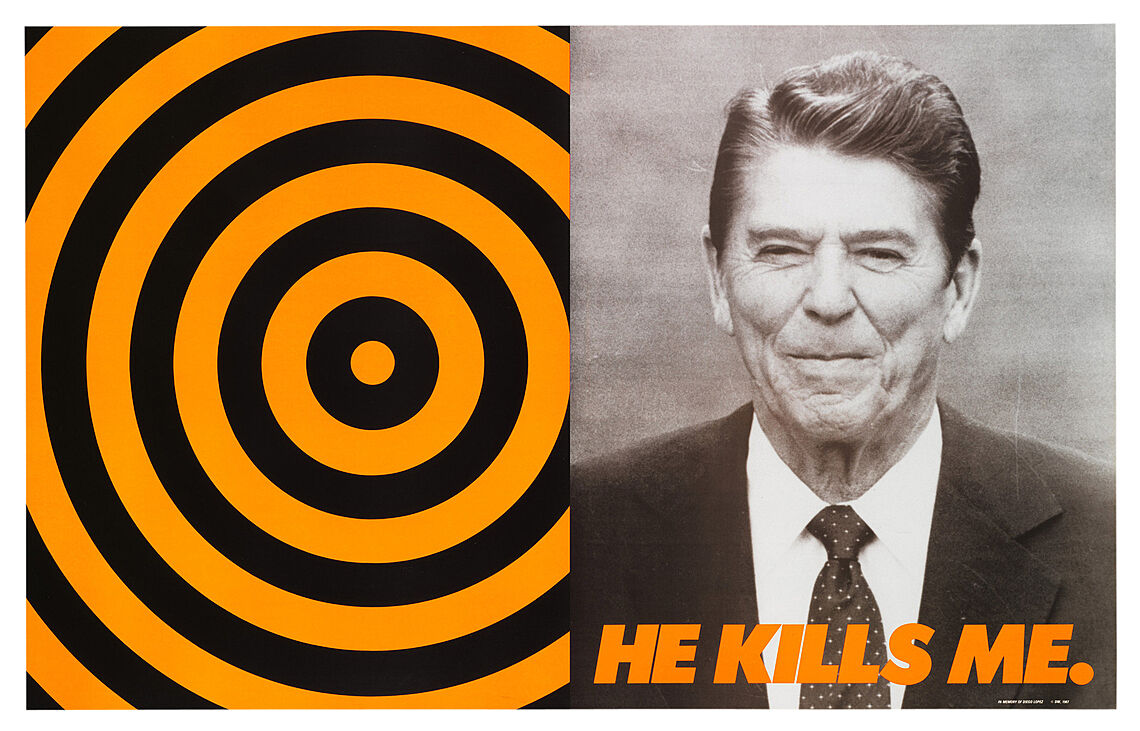
An orange and white target on the left and a picture of Reagan on the right with the text "He Kills Me."

Donald Moffett (b. 1955), He Kills Me, 1987. Offset lithograph, 23 1/2 × 37 1/2 in. (59.7 × 95.3 cm). Whitney Museum of American Art, New York; gift of David W. Kiehl in memory of artists and artworkers who died of AIDS 2012.160. © Donald Moffett

Donald Moffett (b. 1955), He Kills Me, 1987

Installed as part of an earlier version of the exhibition.

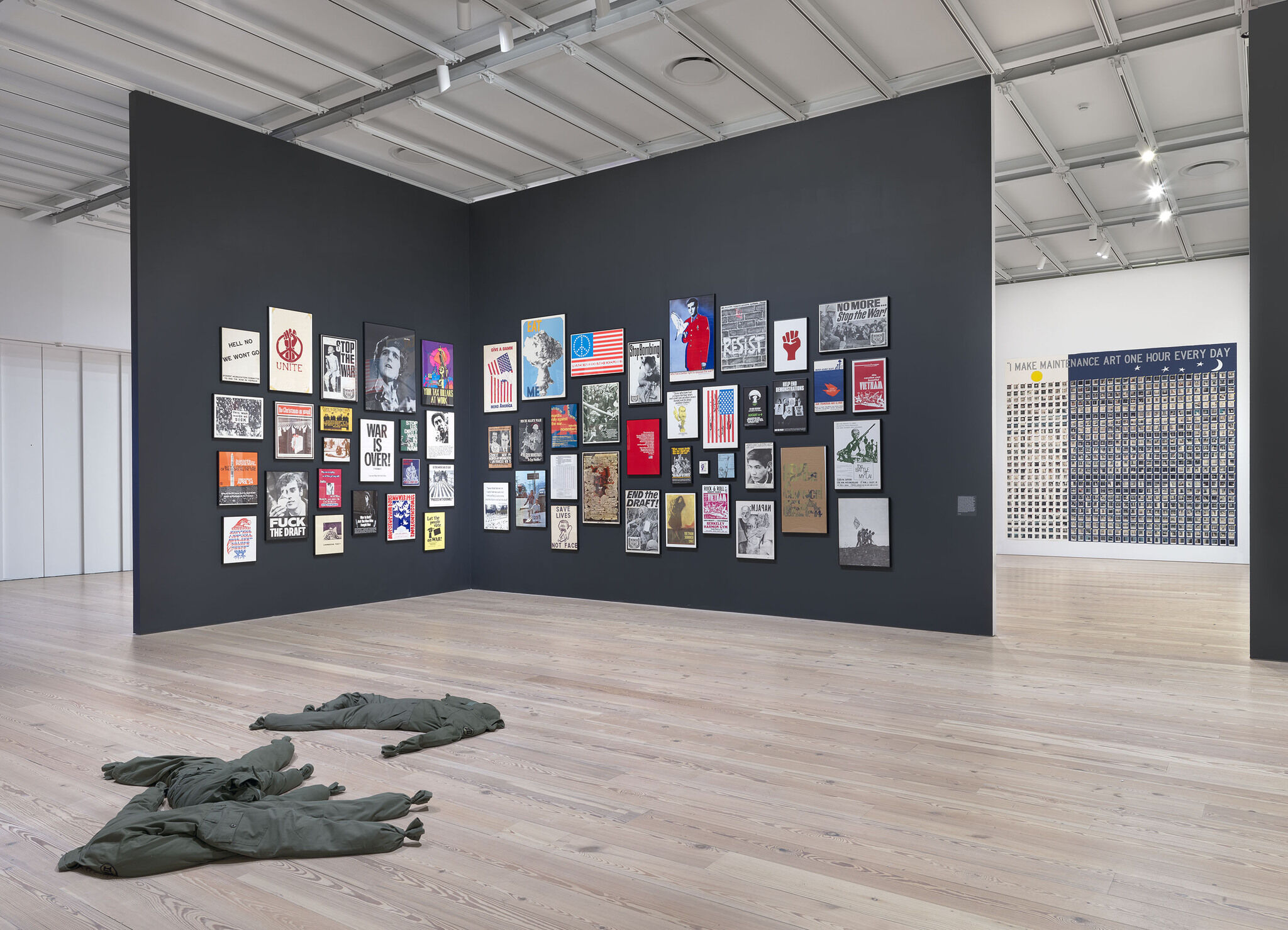
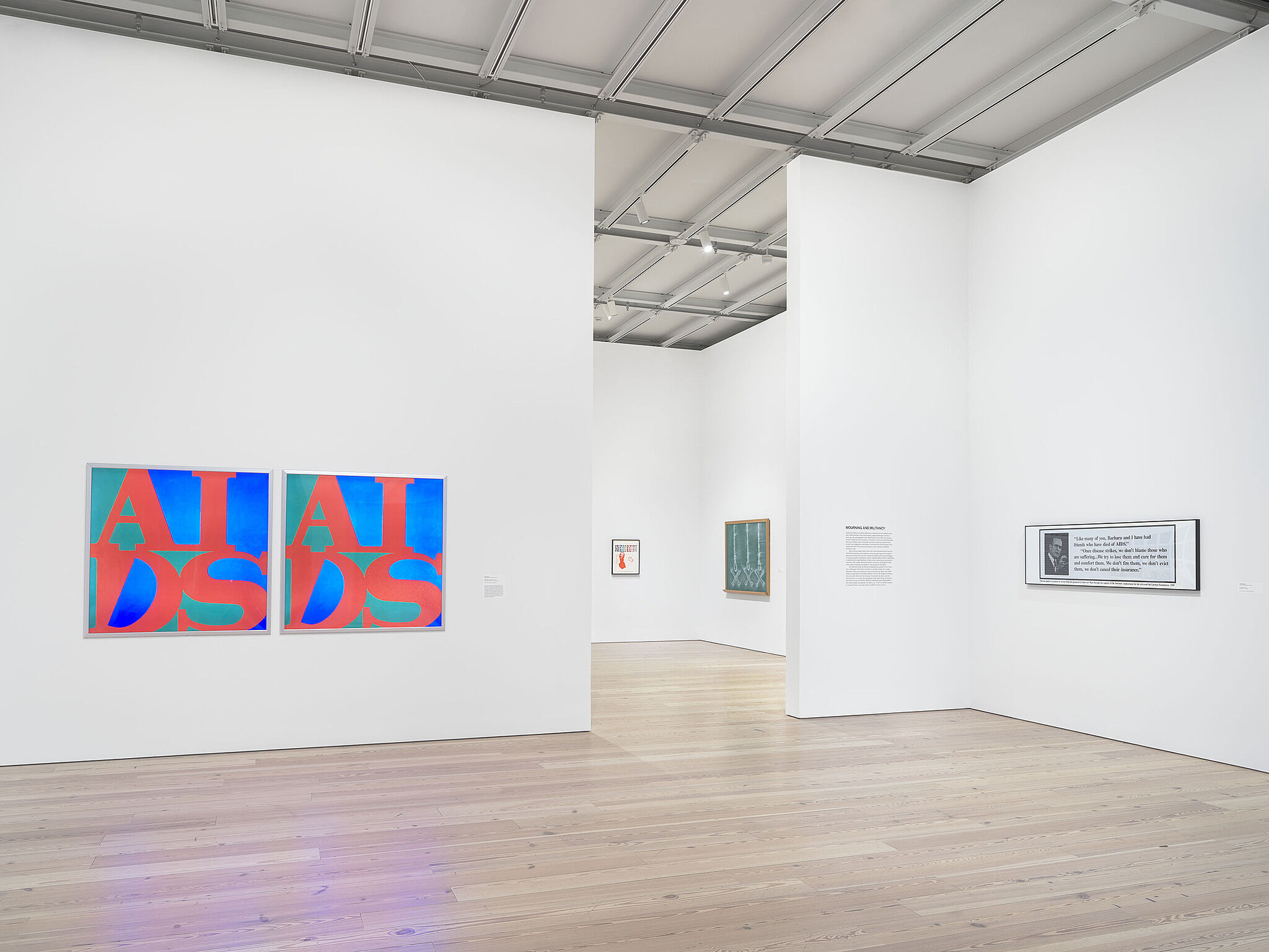
Installation view of An Incomplete History of Protest: Selections from the Whitney’s Collection, 1940–2017

Installation view of An Incomplete History of Protest: Selections from the Whitney’s Collection, 1940–2017 (Whitney Museum of American Art, New York, August 18, 2017–). From left to right: General Idea, AIDS, 1988 (refabricated 2017); Emma Amos, Coloring Lesson, 1995; Gary Simmons, Green Chalkboard (Triple X), 1993; Group Material, Bus Placard, 1990. Photograph by Ron Amstutz

Installation view

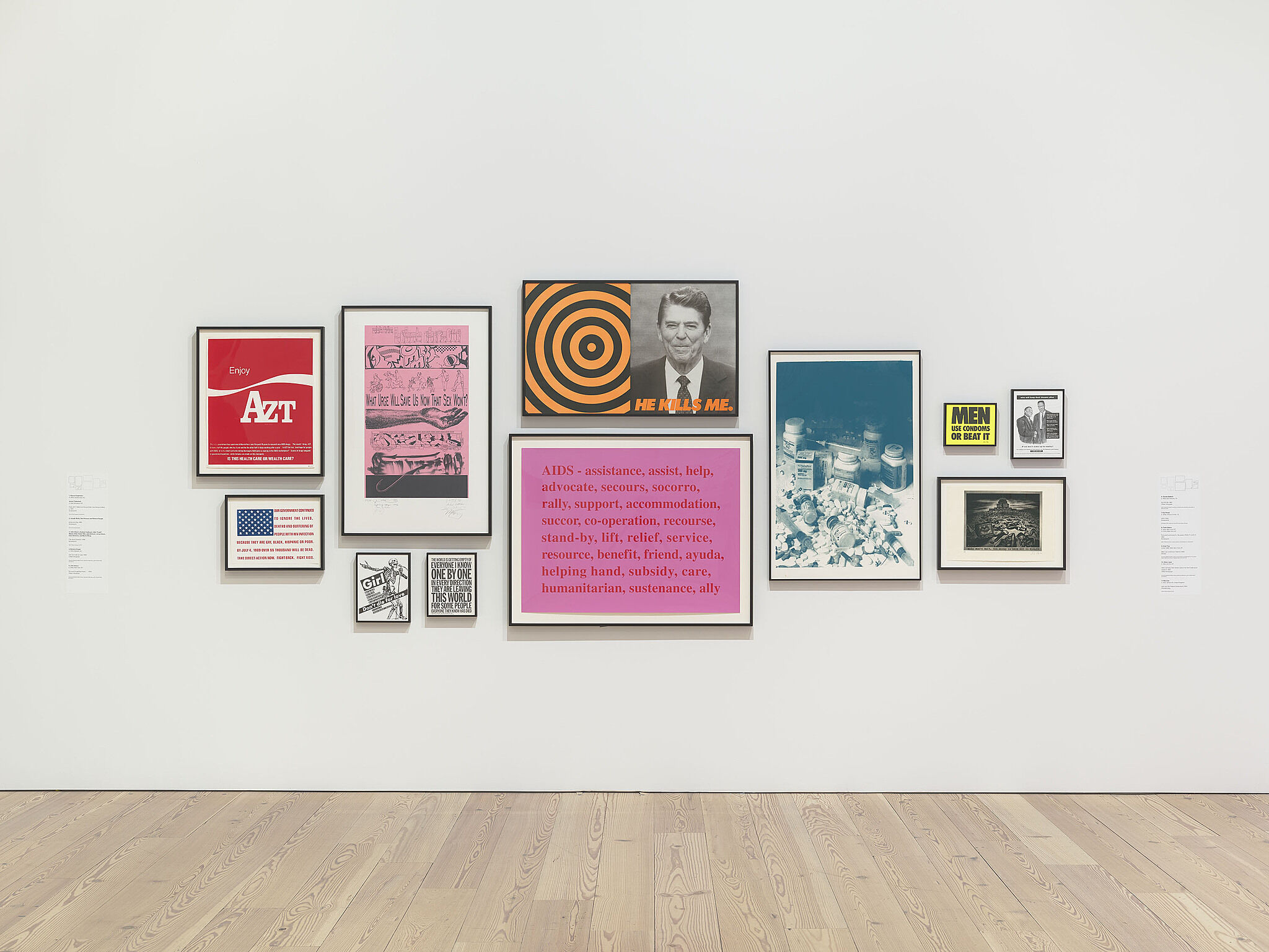
Installation view of An Incomplete History of Protest: Selections from the Whitney’s Collection, 1940–2017

Installation view of An Incomplete History of Protest: Selections from the Whitney’s Collection, 1940–2017 (Whitney Museum of American Art, New York, August 18, 2017–). From left to right, top to bottom: Vincent Gagliostro and Avram Finkelstein, Enjoy AZT, 1989; Joseph Wolin, Tom Starace, and Richard Deagle, American Flag, 1989; John Ahearn, Andrew Castrucci, John “Crash” Matos, Chris “Daze” Ellis, Jane Dickson, Jenny Holzer, Gary Simmons, and Martin Wong, The Usual Suspects, 1996; Barbara Kruger, (Girl don’t die for love), 1992; John Giorno, The world is getting empty…, 1993; Donald Moffett, He Kills Me, 1987; Kay Rosen, AIDS, 1994; Frank Moore, trial proof and study for the poster FACE IT—LICK IT, 1992; Gran Fury, (Men use condoms or beat it), 1988; Glenn Ligon, (Who will keep their dreams alive if we don’t wake up to reality?), 1992; Sue Coe, Aids and the Federal Government, 1990. Photograph by Ron Amstutz

Installation view

Installed as part of an earlier version of the exhibition.

Installation view of An Incomplete History of Protest: Selections from the Whitney’s Collection, 1940–2017

Installation view of An Incomplete History of Protest: Selections from the Whitney’s Collection, 1940–2017 (Whitney Museum of American Art, New York, August 18, 2017–). From left to right: Felix Gonzalez-Torres, “Untitled”, 1989; AA Bronson, Felix Partz, June 5, 1994, 1994/1999. Photograph by Ron Amstutz

Installation view


Artists


Explore works from this exhibition
in the Whitney's collection

View 213 works

On the Hour

A 30-second online art project:
Frank WANG Yefeng, The Levitating Perils #2

Learn more about this project

Learn more at whitney.org/artport

On the Hour projects can contain motion and sound. To respect your accessibility settings autoplay is disabled.