Edges of Ailey | Art & Artists

Sept 25, 2024–Feb 9, 2025


Exhibition works

10 total
Southern Imaginary
Read more

Southern Imaginary


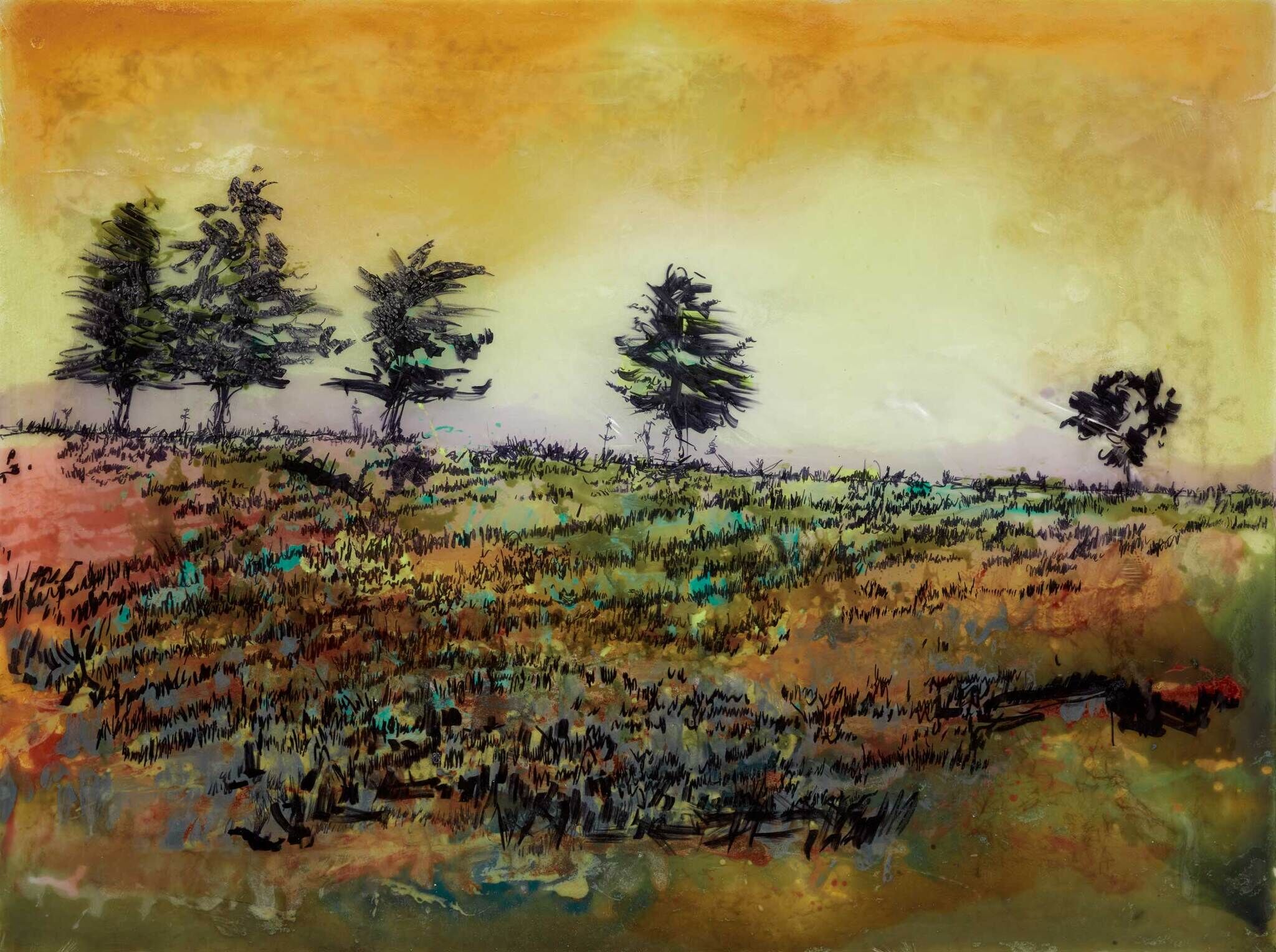
A colorful, abstract landscape painting with a few trees scattered across a grassy field under a yellow-orange sky.

Kevin Beasley, Haze, 2023. Polyurethane resin, raw Virginia cotton, Sharpie transfer, and fiberglass, 54 x 74 x 2.5 in. (141 x 188 x 6.3 cm). © Kevin Beasley. Courtesy the artist and Casey Kaplan, New York. Photograph by Jason Wyche

Southern Imaginary

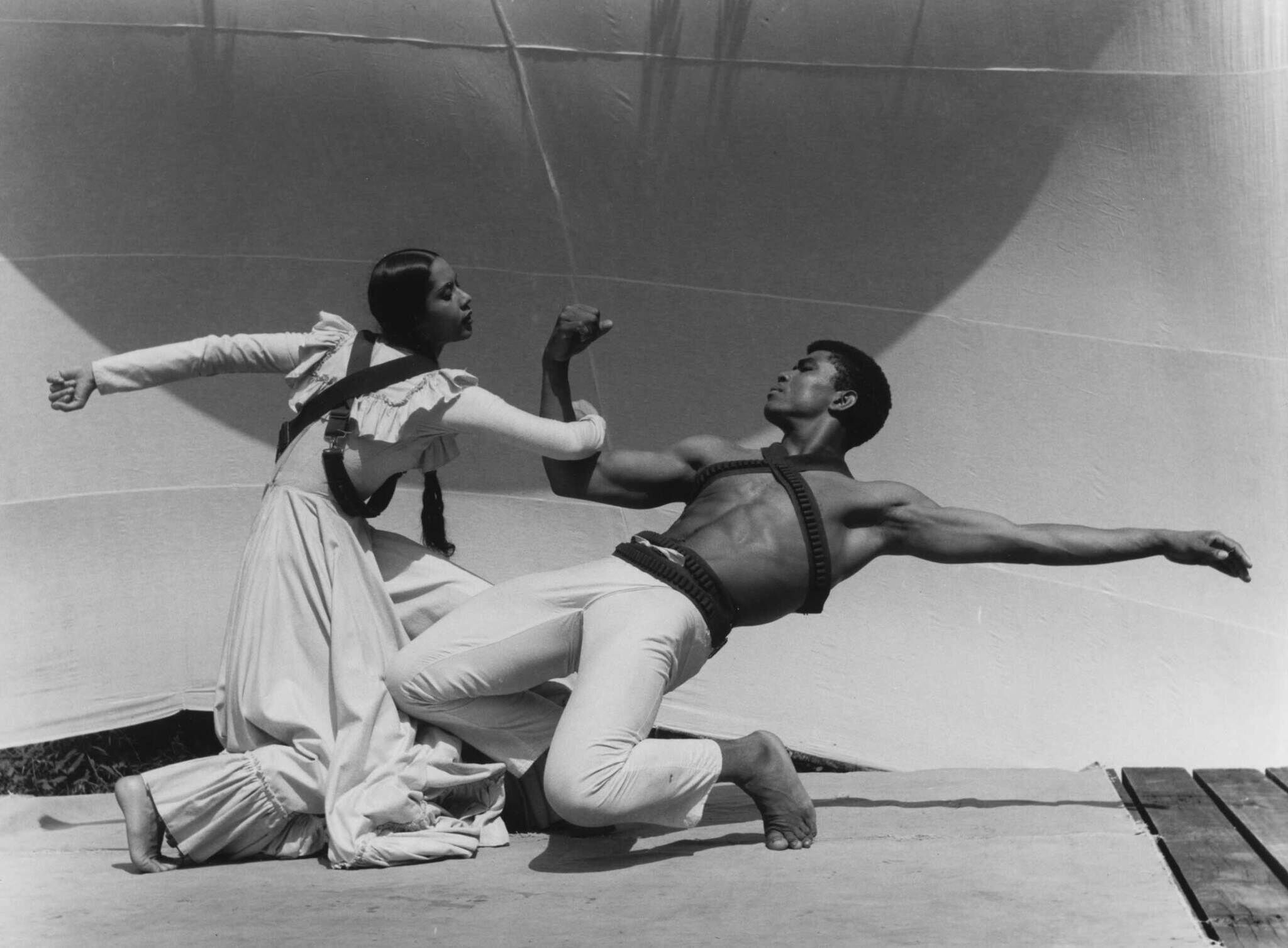
“I’m Alvin Ailey. I’m a choreographer. I’m a Black man whose roots are in the sun and the dirt of the South.”

Ailey’s “blood memories” sprang from his childhood experiences living and being raised by his mother, Lula Cooper, in rural Texas. Their reality of working in homes and the fields—which was in large part defined by itinerancy, poverty, and widespread racism shared by many Black Americans in the South—had grown out of enslavement, sharecropping, and Jim Crow–era legislation. Ailey’s recollections of these years would become the foundation of his choreography. He saw an enduring spirit, a source of pride and creativity, and a profound sense of humanity in the people and places he remembered.

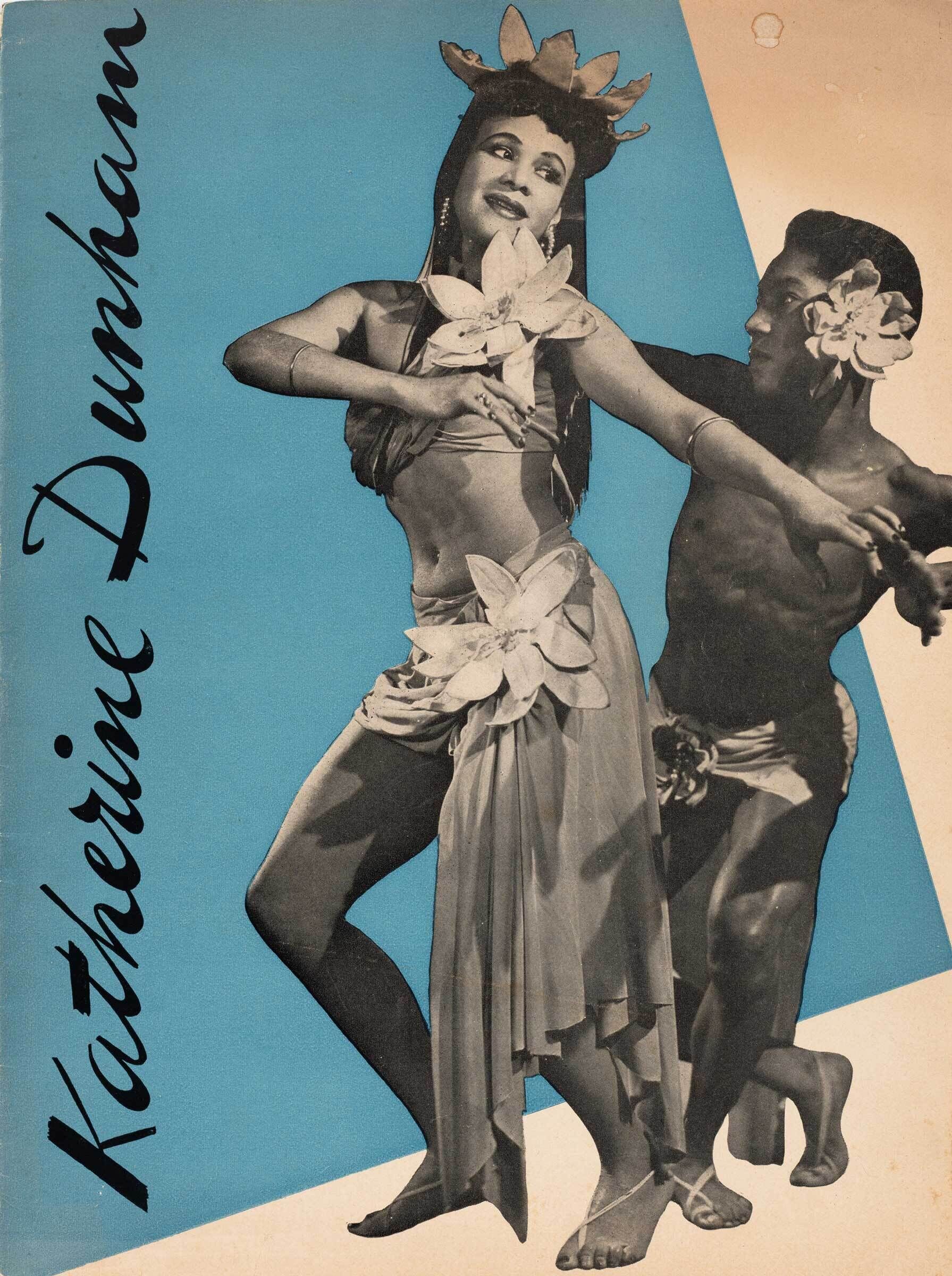
Through his extensive travels and touring, along with the imprints of Katherine Dunham and Pearl Primus, Ailey came to know the American South as inseparable from a larger southern imaginary, encompassing the Caribbean, Brazil, and West Africa. The mass marketing of calypso music and dance styles in the United States entertainment industry in the 1950s, like the flourishing of jazz in the 1920s, made a commodity of this rich culture while also providing Black performers with artistic opportunities and higher wages. He would enfold these diasporic entanglements into his dances through movement, ritual, culture, and mythology, all instigated by and imagined through the ingenuity and inventiveness of Black makers and communities.

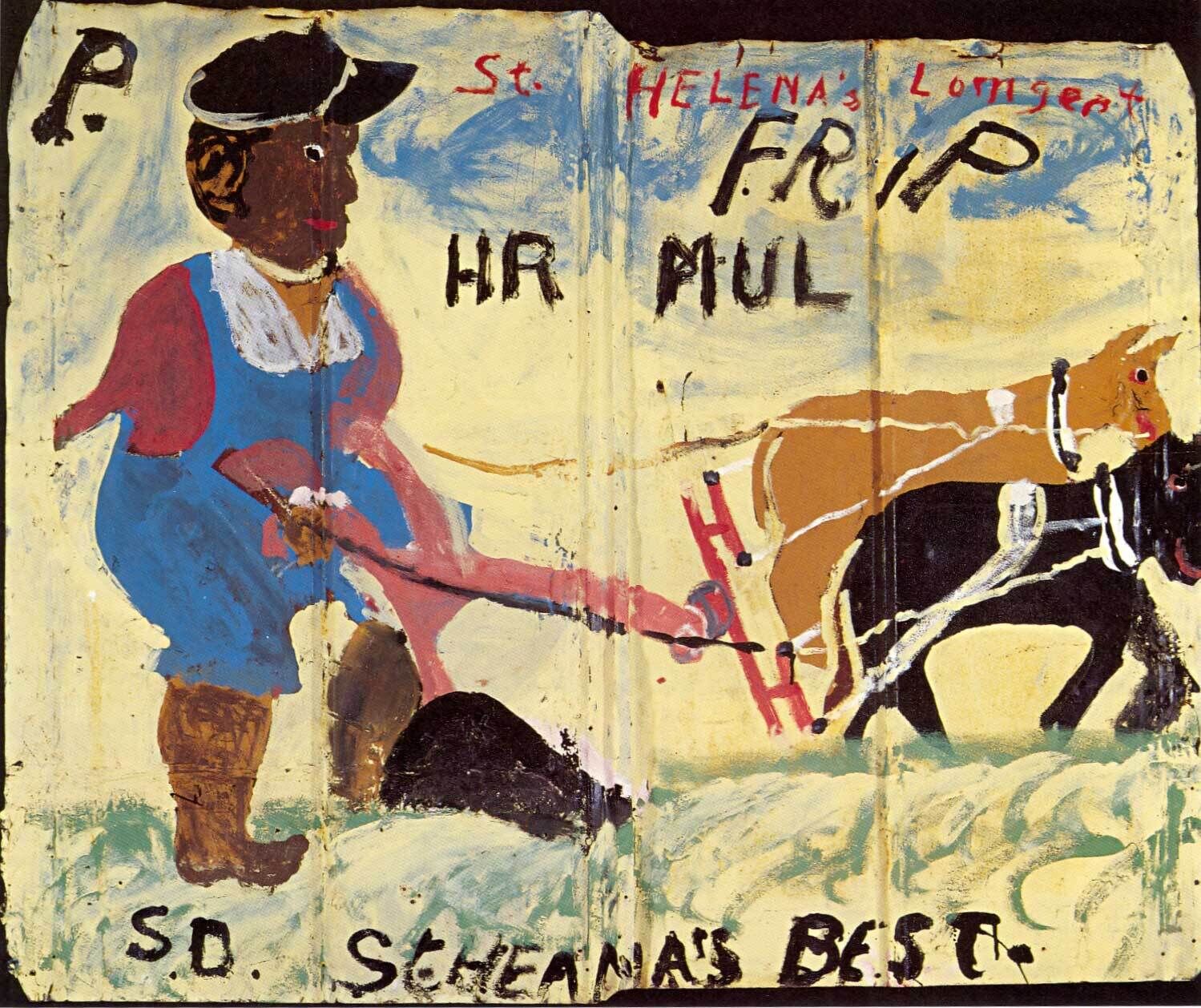
Colorful folk art painting of a person in blue overalls and a hat, plowing a field with two oxen. Text reads "St. Helena's Best."

Sam Doyle, Frip, St. Helena's Best, 1970s. Housepaint on roofing tin, 43 x 52 in. (109.2 x 132 cm). High Museum of Art, Atlanta; T. Marshall Hahn Collection. © Sam Doyle. Courtesy High Museum of Art

Sam Doyle, Frip, St. Helena's Best, 1970s

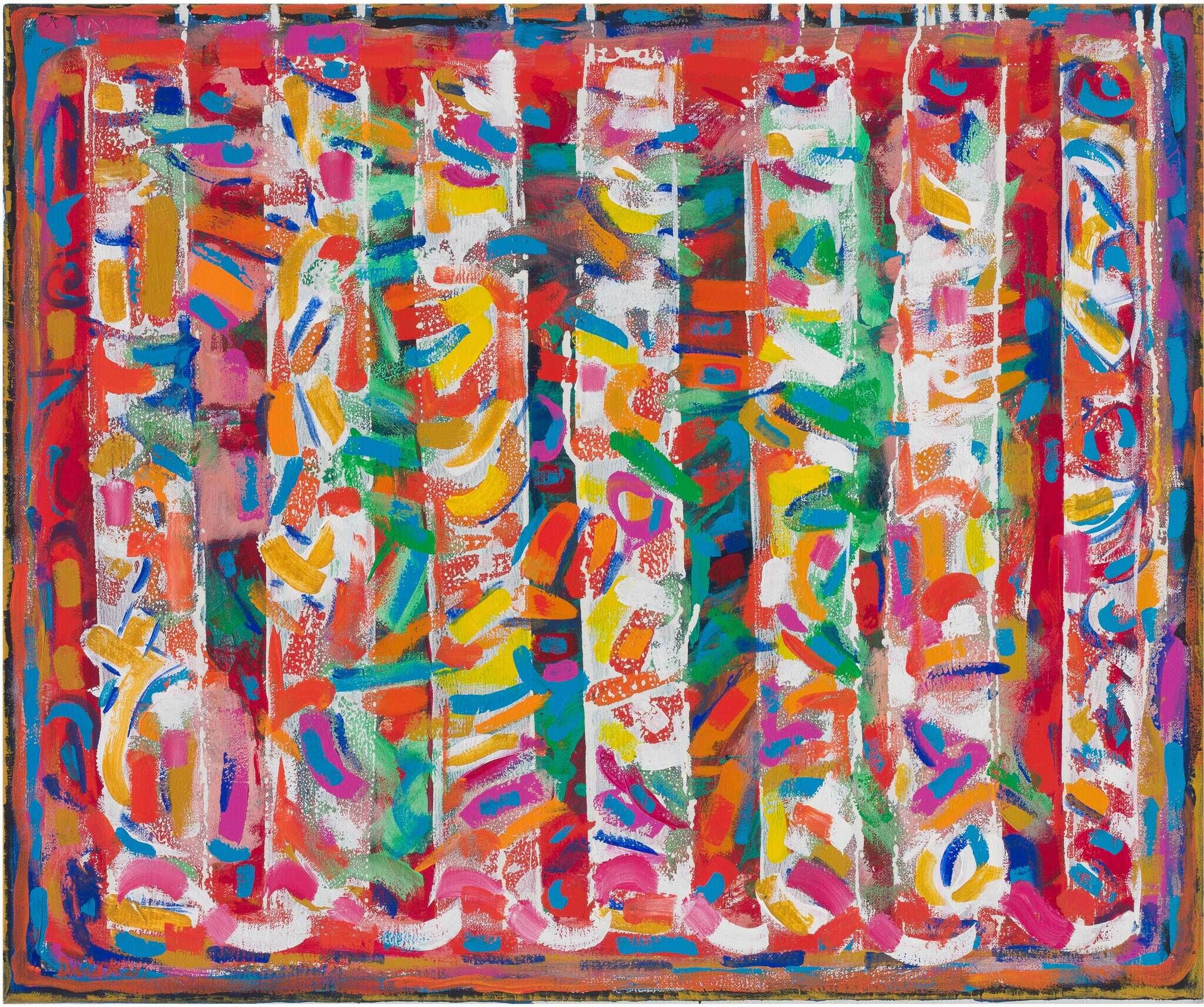
Abstract painting with vibrant colors, featuring vertical stripes and swirling patterns in red, orange, green, blue, and white.

David C. Driskell, Bahian Ribbons, 1987. Acrylic on canvas, 20 x 24 in. (50.8 x 60.9 cm). © The Estate of David C. Driskell. Courtesy DC Moore Gallery, New York

David C. Driskell, Bahian Ribbons, 1987

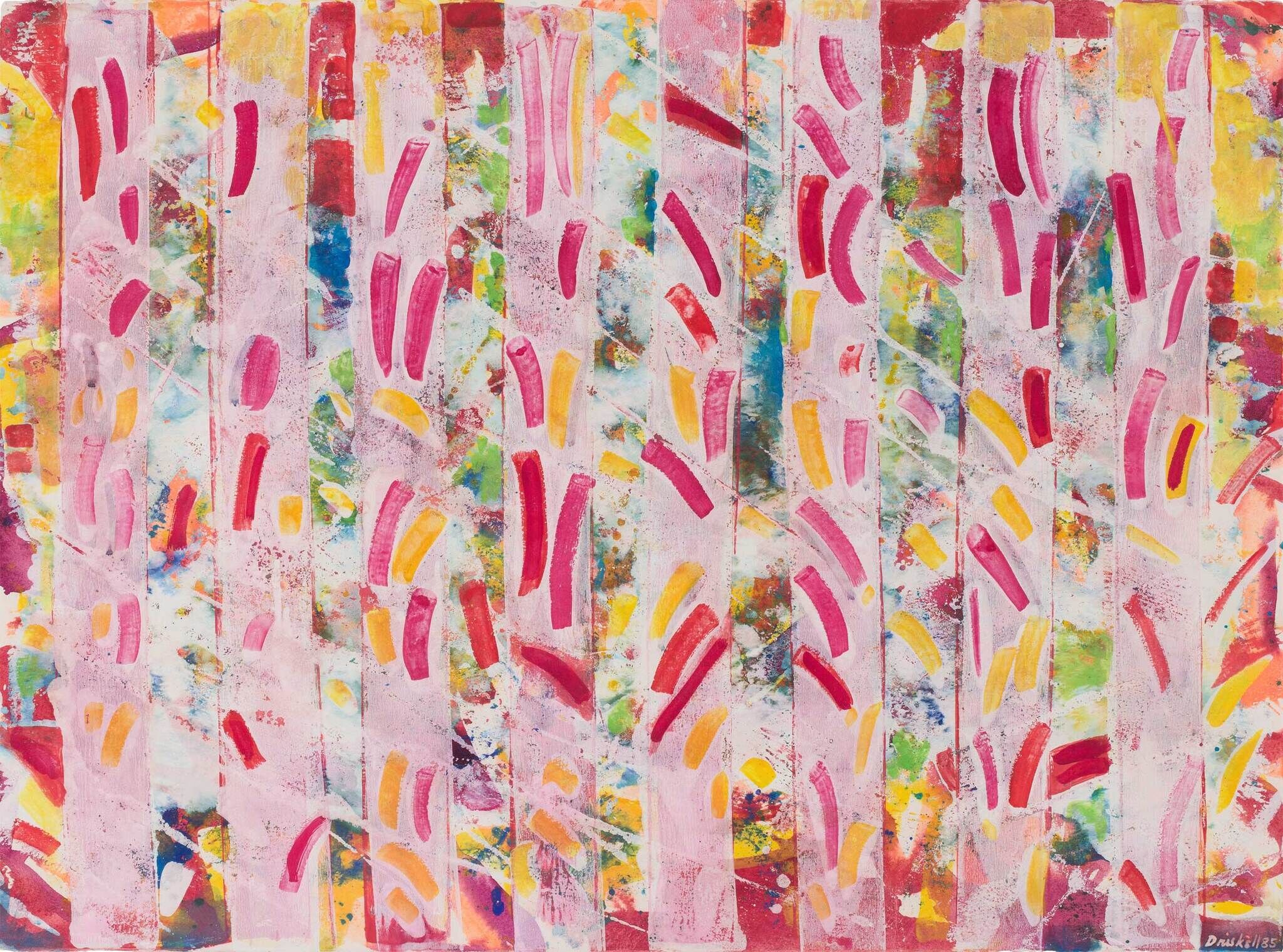
Abstract painting with vertical pink stripes and colorful brushstrokes in red, yellow, and blue. The background features a mix of vibrant colors.

David Driskell, Festival Bahia, 1985. Gouache and mixed media on paper, 22 1/4 x 30 in. Courtesy of Estate of David C. Driskell and DC Moore Gallery, New York. © Estate of David Driskell. Courtesy DC Moore Gallery

David Driskell, Festival Bahia, 1985

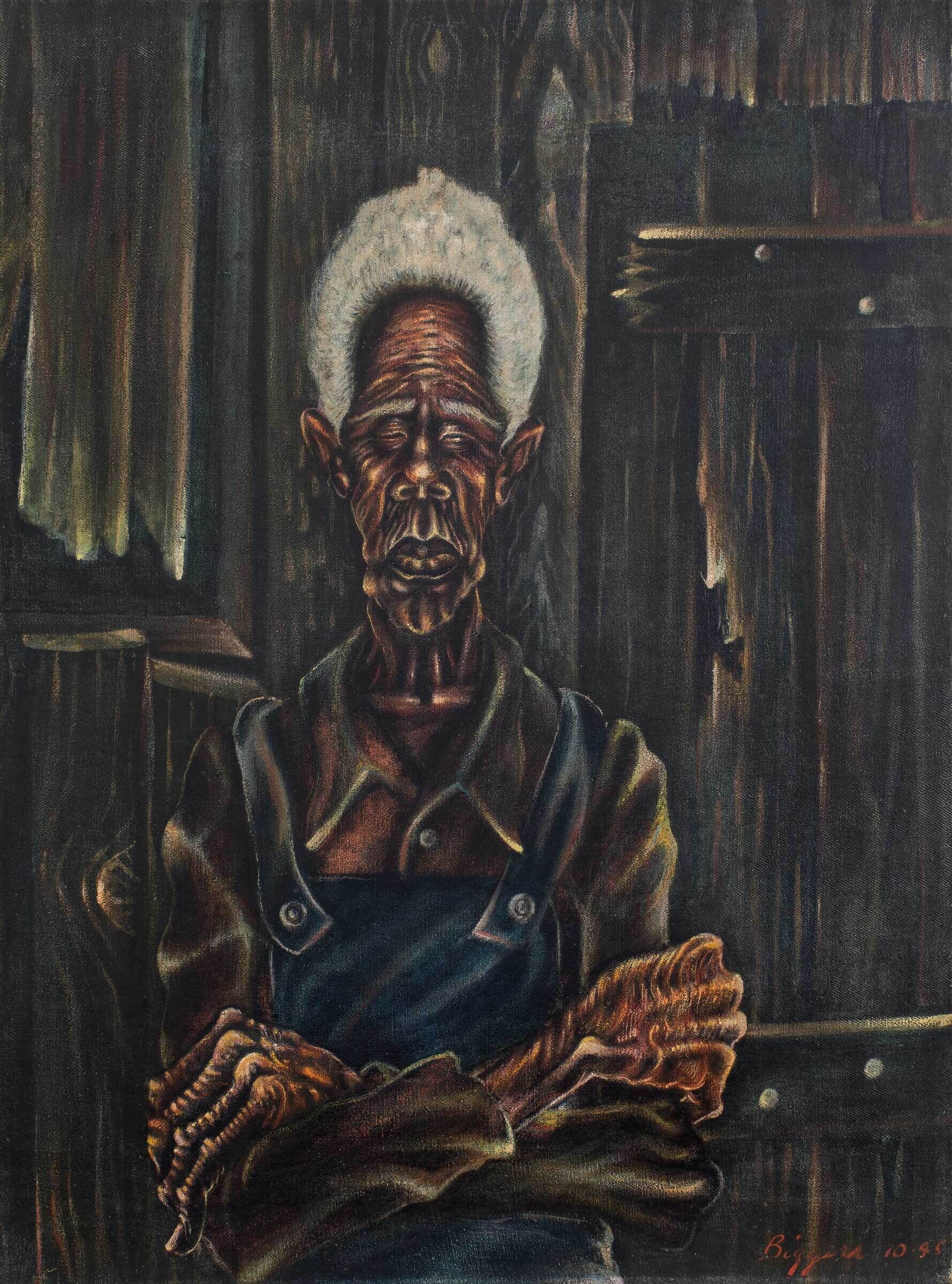
Painting of an elderly person with white hair, wearing a dark shirt and overalls, standing against a wooden background with arms crossed.

John Biggers, Sharecropper, 1945. Oil on canvas. 24 x 18 in. (60.96 x 45.72 cm). Los Angeles County Museum of Art, purchased with funds provided by the Ducommun and Gross Endowment and the Robert H. Halff Endowment. © Estate of John Biggers, courtesy of Michael Rosenfeld Gallery LLC, New York, NY

John Biggers, Sharecropper, 1945

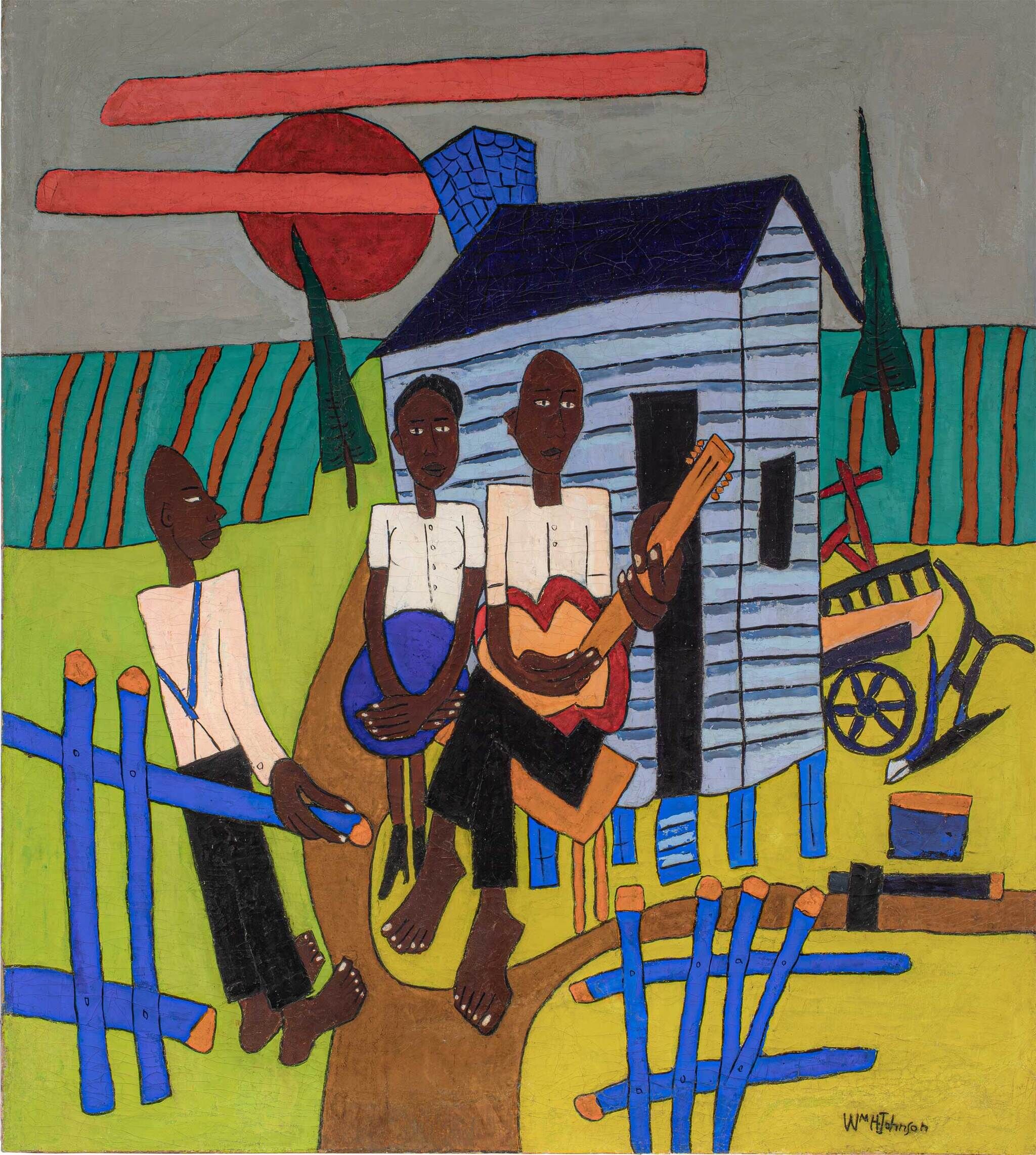
Three people sit outside a house, one playing a guitar. A fourth person leans on a blue fence. A red sun and trees are in the background.

William H. Johnson, At Home in the Evening, c.1940, oil on canvas, 52 3/4 x 47 in. (134 x 119.4 cm). Collection of Halley K. Harrisburg and Michael Rosenfeld, New York. Courtesy of Michael Rosenfeld Gallery LLC, New York, NY

William H. Johnson, At Home in the Evening, 1940

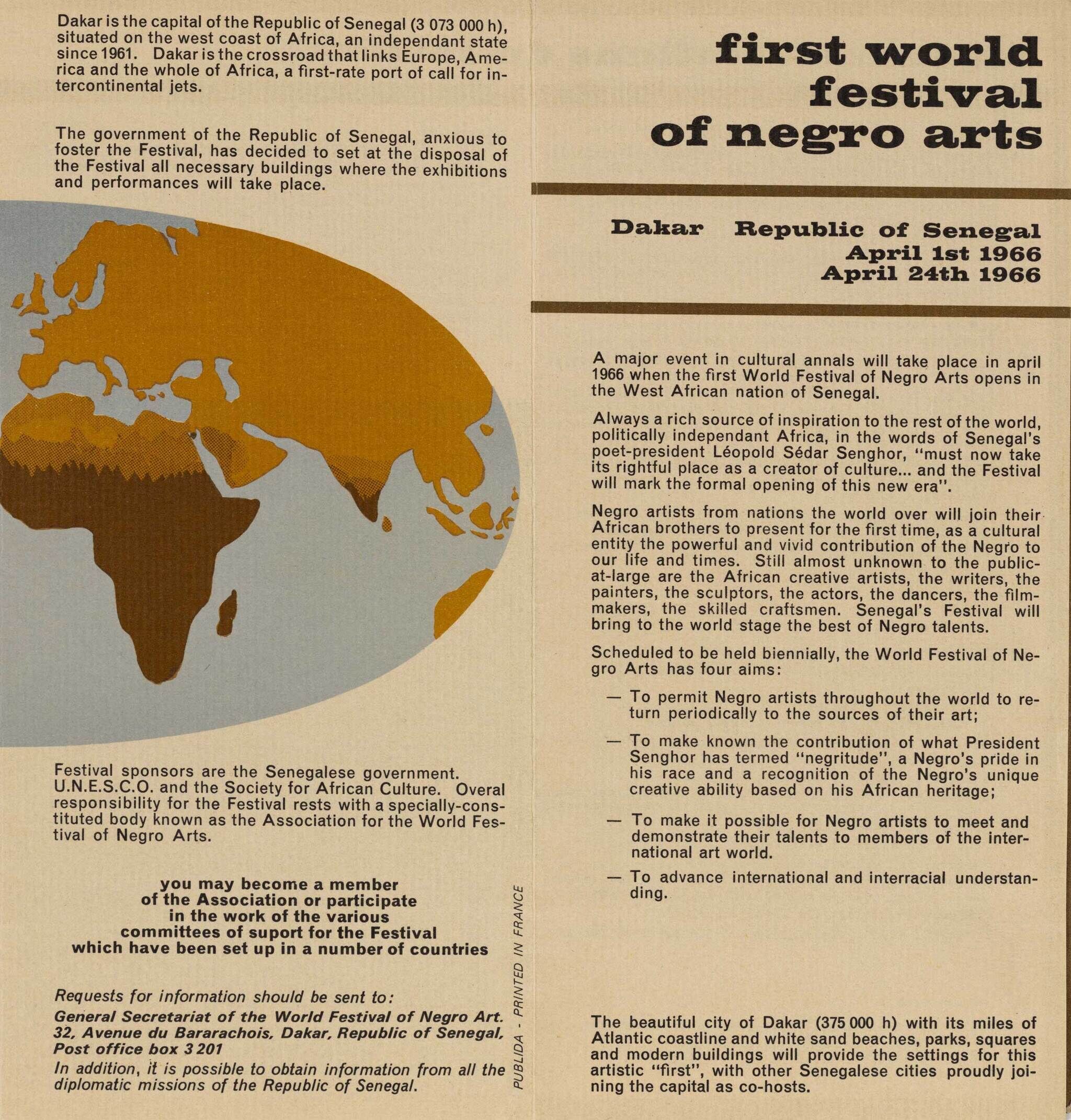
Flyer for the first World Festival of Negro Arts in Dakar, Senegal, April 1-24, 1966. Includes a map of Africa and event details.

Alvin Ailey Program: First World Festival of Negro Arts Dakar, 1966. Courtesy Alvin Ailey Dance Foundation, Inc.

Alvin Ailey Program: First World Festival of Negro Arts Dakar, 1966

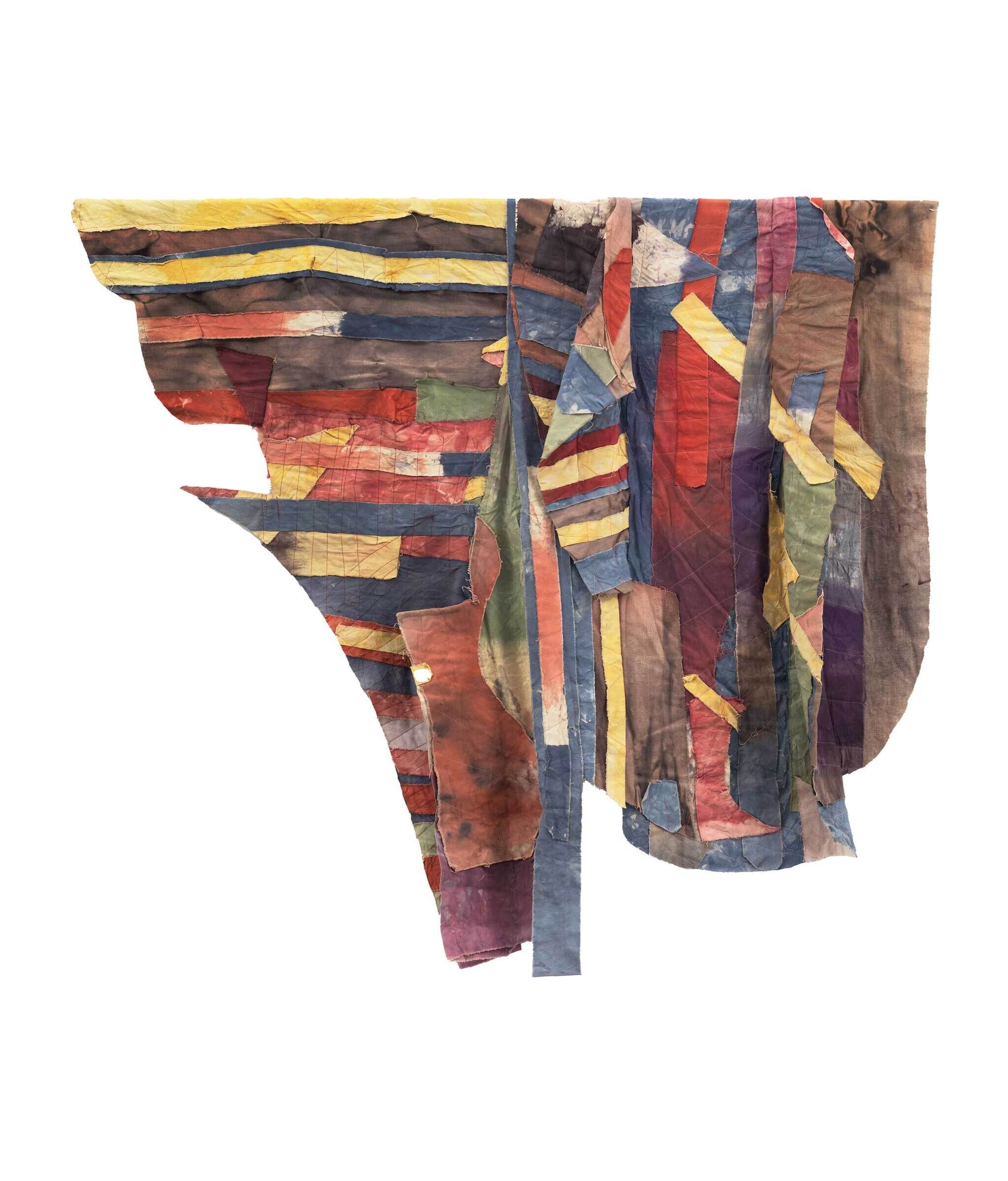
Abstract textile art with multicolored, irregularly shaped fabric pieces stitched together, featuring stripes and patches in various hues.

Al Loving, Untitled, c. 1975. Mixed media, 66 x 74 in. (167.64 x 187.96 cm). Collection of Beth Rudin DeWoody, New York. © Al Loving. Courtesy the Garth Greenan Gallery, New York

Al Loving, Untitled, c. 1975


Artists

On the Hour

A 30-second online art project:
Frank WANG Yefeng, The Levitating Perils #2

Learn more about this project

Learn more at whitney.org/artport

On the Hour projects can contain motion and sound. To respect your accessibility settings autoplay is disabled.