Programmed: Rules, Codes, and Choreographies in Art, 1965–2018

Sept 28, 2018–Apr 14, 2019


Exhibition works

7 total
Rule, Instruction, Algorithm: Collapsing Instruction and Form
Read more

Rule, Instruction, Algorithm: Collapsing Instruction and Form
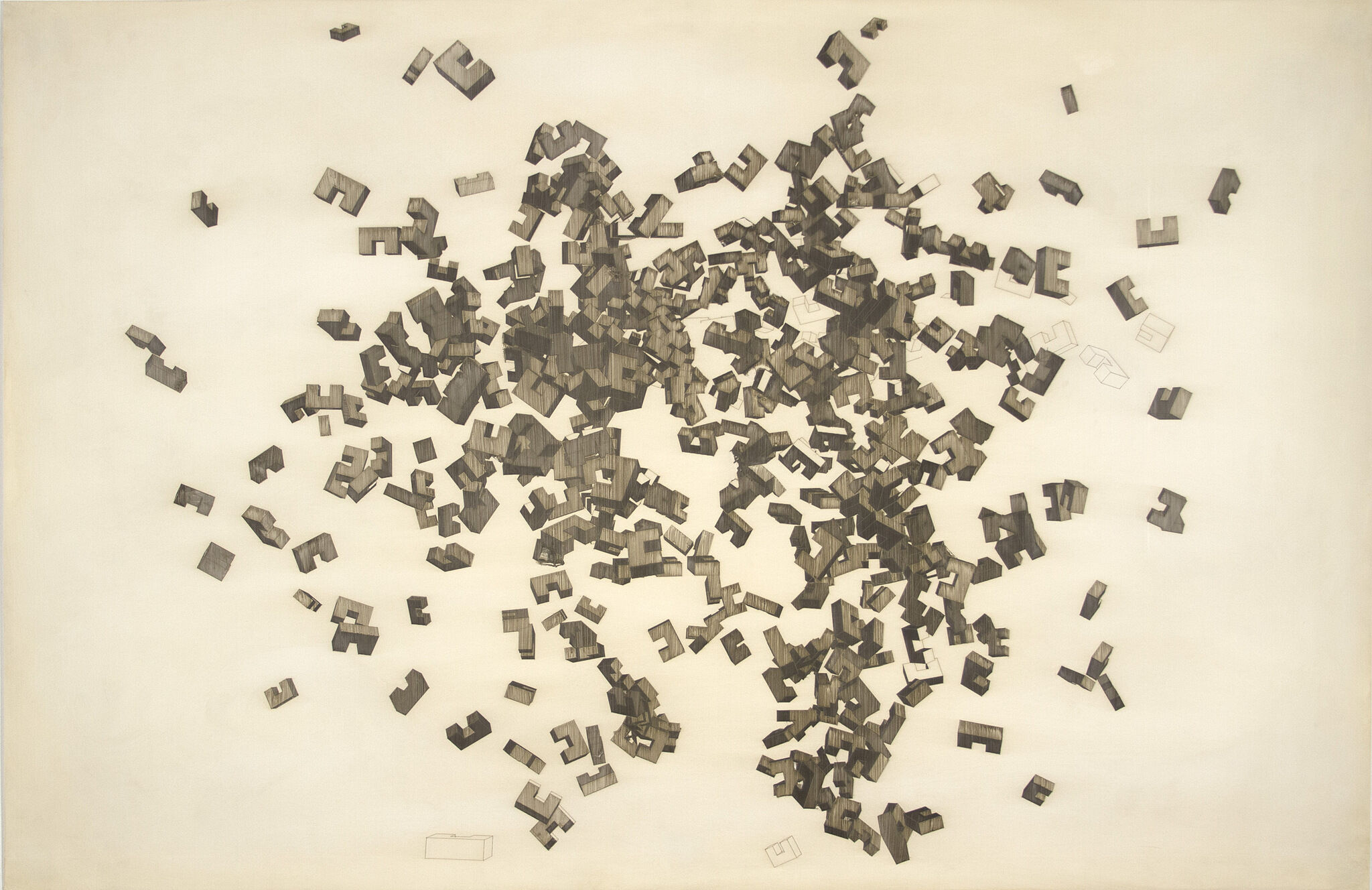

Blue texts and orange lines and parentheses on the wall.

Lawrence Weiner (b. 1942), HERE THERE & EVERYWHERE, 1989. Language + the materials referred to, dimensions variable. Whitney Museum of American Art, New York; purchase with funds from the Contemporary Painting and Sculpture Committee 94.136. © 2018 Lawrence Weiner/Artists Rights Society (ARS), New York

Rule, Instruction, Algorithm:
Collapsing Instruction and Form
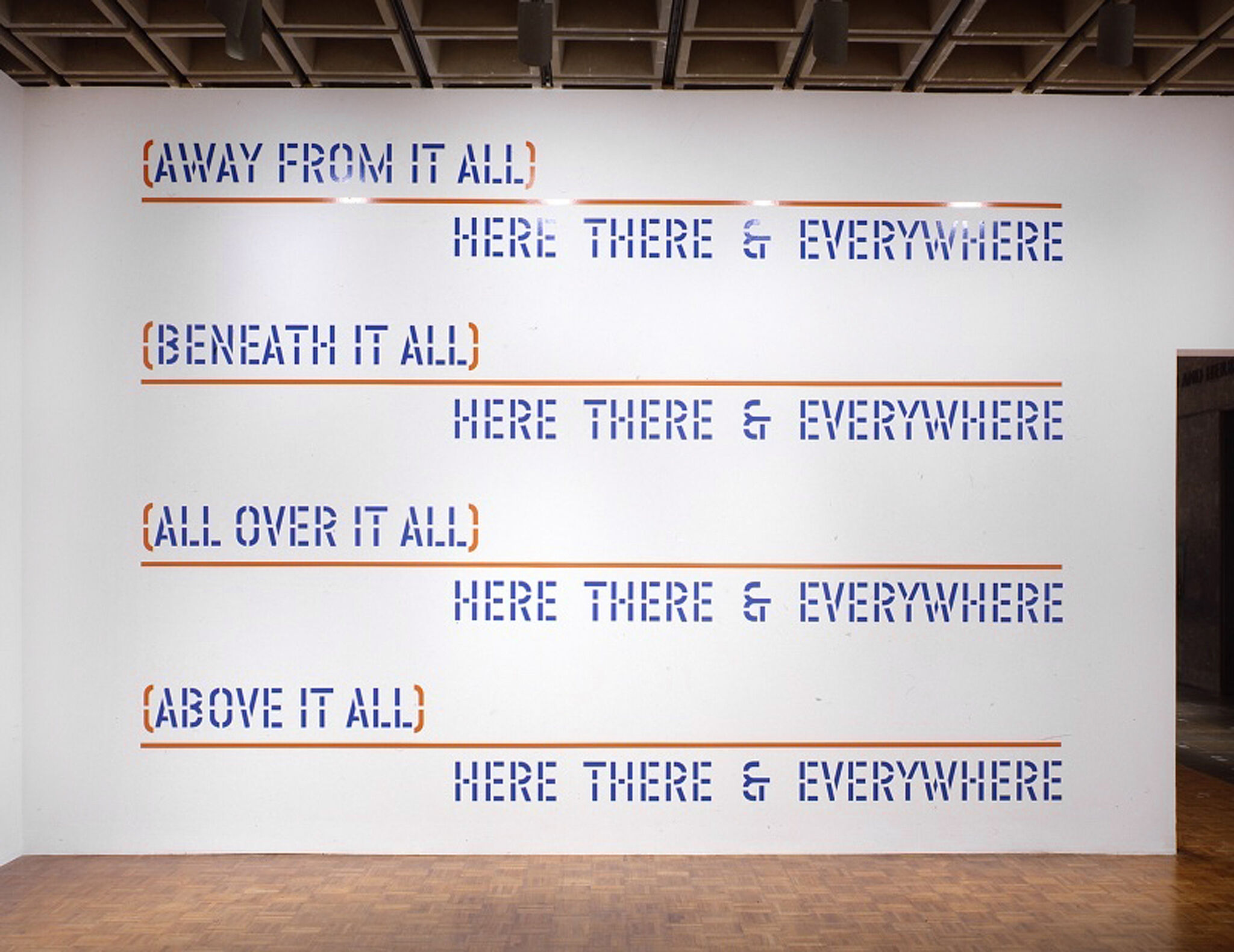
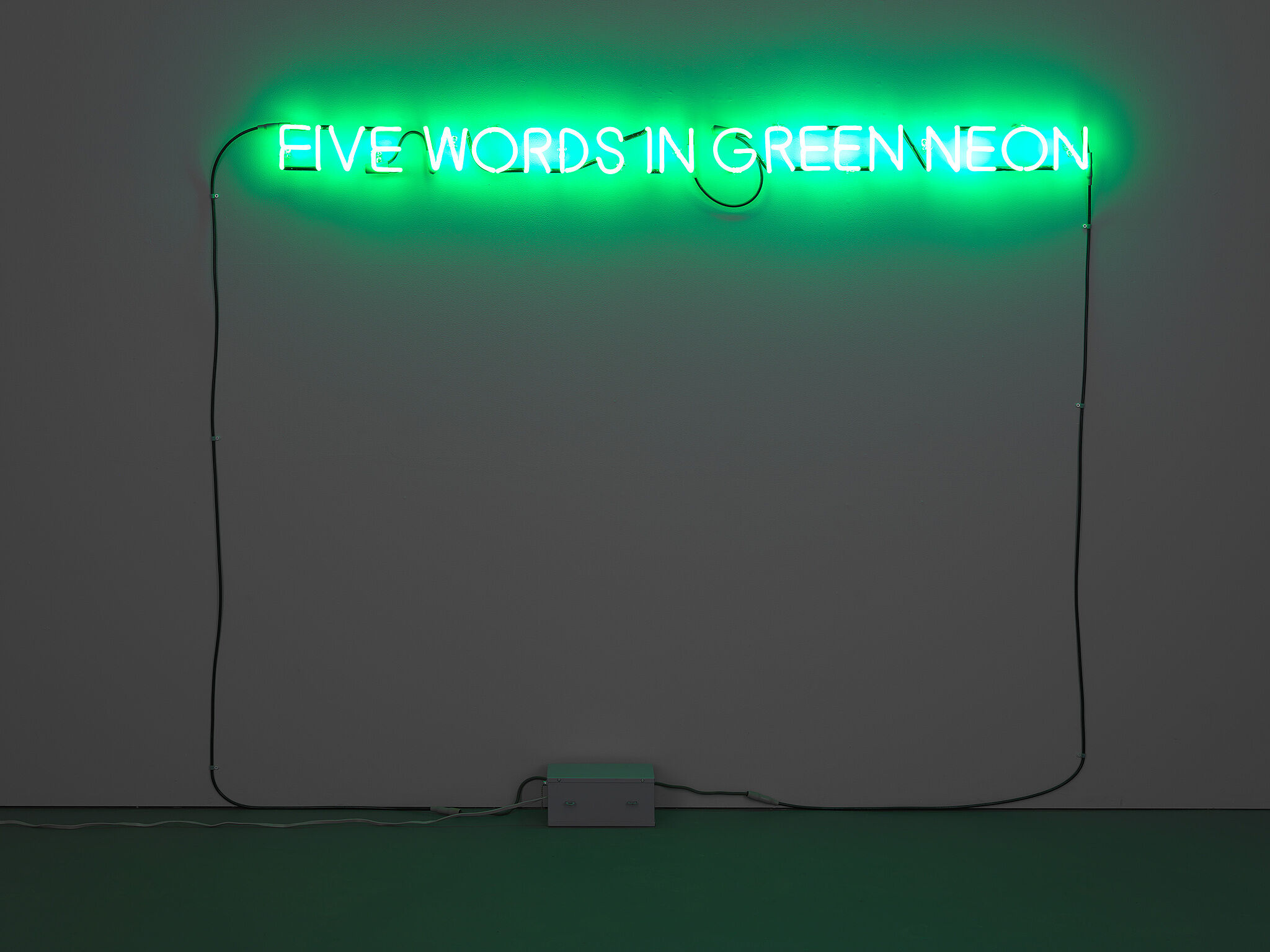
Lawrence Weiner and Joseph Kosuth, both leading figures of Conceptual art, use language as their material to highlight the linguistic nature of all art and to shift emphasis from the object to the idea behind it. W. Bradford Paley’s more recent digital work also makes language its material but by displaying the code that generates his work. The pieces by these three artists all consist of the very instructions through which they have been created, self-reflexively erasing oppositions between form and content and folding them into one. Paley’s work draws attention to the fact that digital art—regardless of its visual appearance—always has a layer of code and is produced by the software used to create or manipulate it.

Blue texts and orange lines and parentheses on the wall.

Lawrence Weiner (b. 1942), HERE THERE & EVERYWHERE, 1989. Language + the materials referred to, dimensions variable. Whitney Museum of American Art, New York; purchase with funds from the Contemporary Painting and Sculpture Committee 94.136. © 2018 Lawrence Weiner/Artists Rights Society (ARS), New York

Lawrence Weiner, HERE THERE & EVERYWHERE, 1989

Five words in green neon lights hanging on the wall.

Joseph Kosuth (b. 1945), Five Words in Green Neon, 1965. Neon, 62 1/8 × 80 5/8 × 6 in. (157.8 × 204.8 × 15.2 cm). Whitney Museum of American Art, New York; purchase with funds from Leonard A. Lauder 93.42a-b. © 2018 Joseph Kosuth/Artists Rights Society (ARS), New York

Joseph Kosuth, Five Words in Green Neon, 1965

W. Bradford Paley, CodeProfiles, 2002

CodeProfiles looks at the computer program as text and visually comments on how code is read by people, written by programmers, and executed by computers. Reflecting on its own construction, the work consists of the code that makes the code visible on the screen. Three points in code space are indicated: the amber line follows the fixation point, tracing how people might read the text, line by line; the white line follows the insertion point and flows like the programmer’s thoughts, calmly in one place then jumping around to make other parts of the code perform; and the green line moves along the execution point of the program, creating wide swaths where the code was executed thousands of times and appearing as a thin thread where the processor rarely visited. W. Bradford Paley thereby foregrounds the conceptual nature of all digital art, which is always driven by a language formulating instructions.


Artists


Explore works from this exhibition
in the Whitney's collection

View 67 works

On the Hour

A 30-second online art project:
Frank WANG Yefeng, The Levitating Perils #2

Learn more about this project

Learn more at whitney.org/artport

On the Hour projects can contain motion and sound. To respect your accessibility settings autoplay is disabled.