
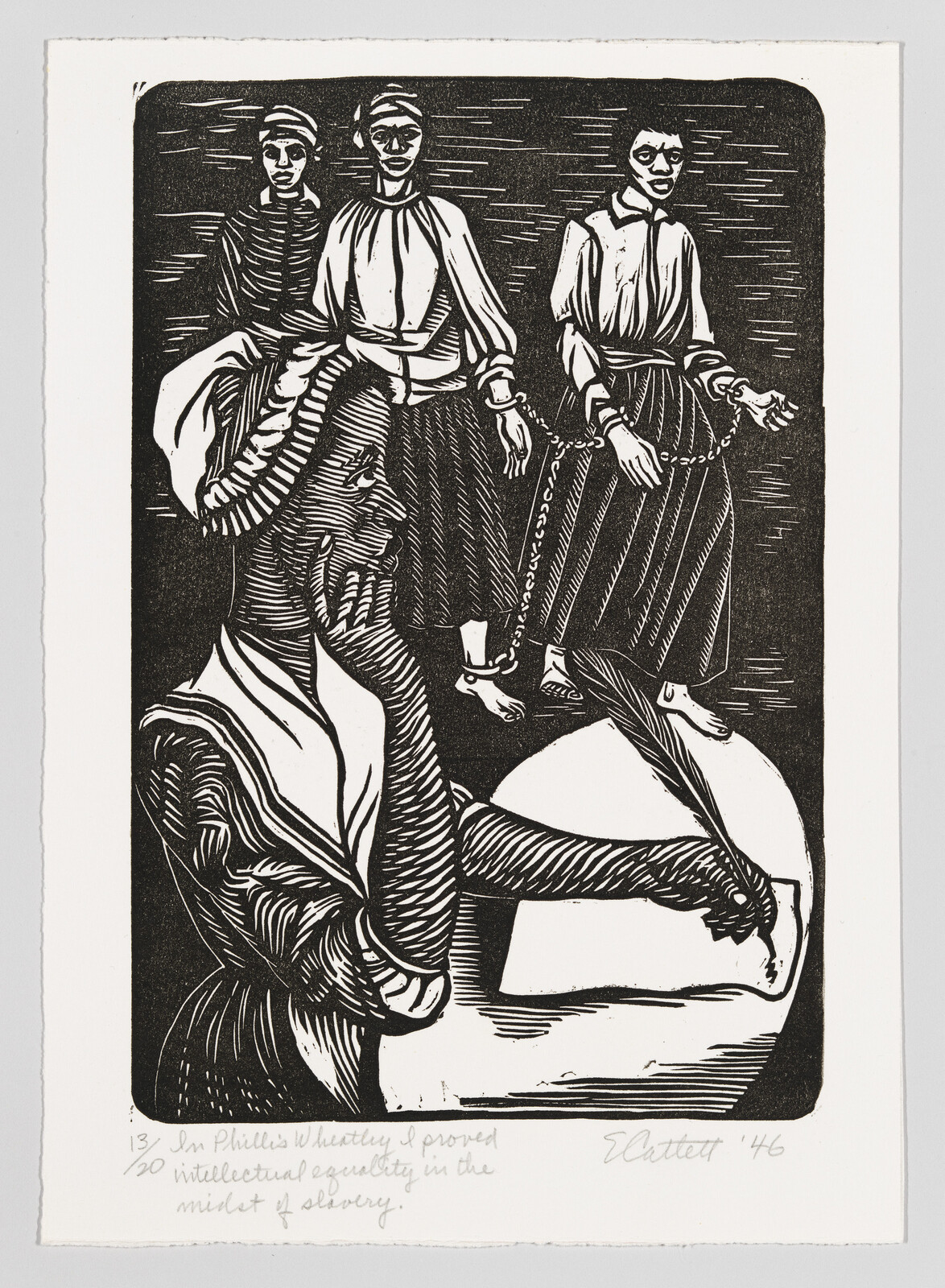
Elizabeth Catlett
In Phillis Wheatley I proved intellectual equality in the midst of slavery
1946, printed 1989
Not on view
Classification
Prints
Medium
Linoleum cut
Dimensions
Sheet: 10 9/16 × 7 9/16 in. (26.8 × 19.2 cm)
Image: 9 1/8 × 6 1/16 in. (23.2 × 15.4 cm)
Accession number
95.196
Series
The Negro Woman, 1946–47 (re-titled The Black Woman, 1989)
Edition
13/20 | Second print run
Publication
Printed by Robert Blackburn Printmaking Workshop
Credit line
Purchase, with funds from the Print Committee
Rights and reproductions
© Catlett Mora Family Trust / Licensed by VAGA at Artists Rights Society (ARS), New York
Exhibitions
Installation photography
-
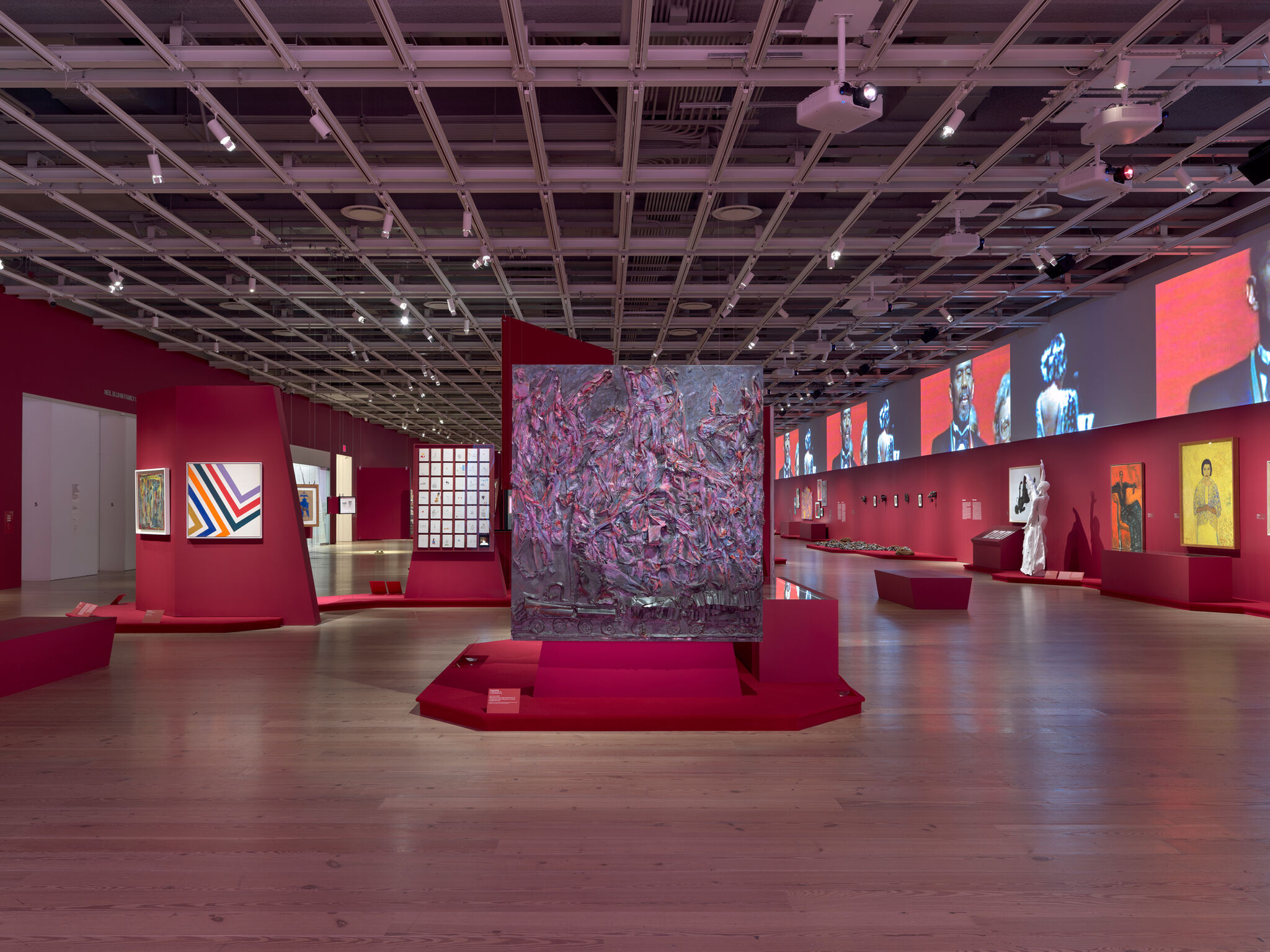
Installation view of Edges of Ailey (Whitney Museum of American Art, New York, September 25, 2024-February 9, 2025). From left to right: Norman Lewis, Phantasy II, 1946; Sam Gilliam, Swing 64, 1964; Bill Traylor, Untitled (Man in a Blue House), date unknown; Ralph Lemon, Bongos and Djembe, 1999; Ralph Lemon, Untitled (On Black music), 2001-07; Thornton Dial, Soul Train, 2004; Sam Doyle, Frank Capers, 2023; Sam Doyle, LeBe, 1970s; Wadsworth Jarrell, Together We Will Win, 1973; Faith Ringgold, United States of Attica, 1971; Wadsworth Jarrell, Revolutionary (Angela Davis), 1972; James Van Der Zee, Marcus Garvey Rally, 1924; Jeff Donaldson, Soweto/So We Too, 1979; Maren Hassinger, River, 1972/2012; Maren Hassinger, River, 1972/2012; Melvin Edwards, Utonga (Lynch Fragment), 1988; Aaron Douglas, Bravado, 1926; Melvin Edwards, Chitungwiza from the Lynch Fragment series, 1989; Aaron Douglas, Flight, 1926; Melvin Edwards, Katura from the Lynch Fragment series, 1986; Aaron Douglas, Surrender, 1970; Melvin Edwards, Cup of? From the Lynch Fragment series, 1988; In vitrine, from left to right: Elizabeth Catlett, I am the Negro Woman, 1947, printed 1989; Elizabeth Catlett, In Harriet Tubman I helped hundreds to freedom, 1946, printed 1989; Elizabeth Catlett, In Sojourner Truth I fought for the rights of women as well as Negroes, 1947, printed 1989; Elizabeth Catlett, In Phillis Wheatley I proved intellectual equality in the midst of slavery, 1946, printed 1989; From left to right: Kara Walker, African/American, 1998; Karon Davis, Dear Mama, 2024; Geoffrey Holder, Portrait of Carmen de Lavallade, 1976; Beauford Delaney, Marian Anderson, 1965; Loïs Mailou Jones, Jennie, 1943. Photograph by Ron Amstutz
From the exhibition Edges of Ailey
-
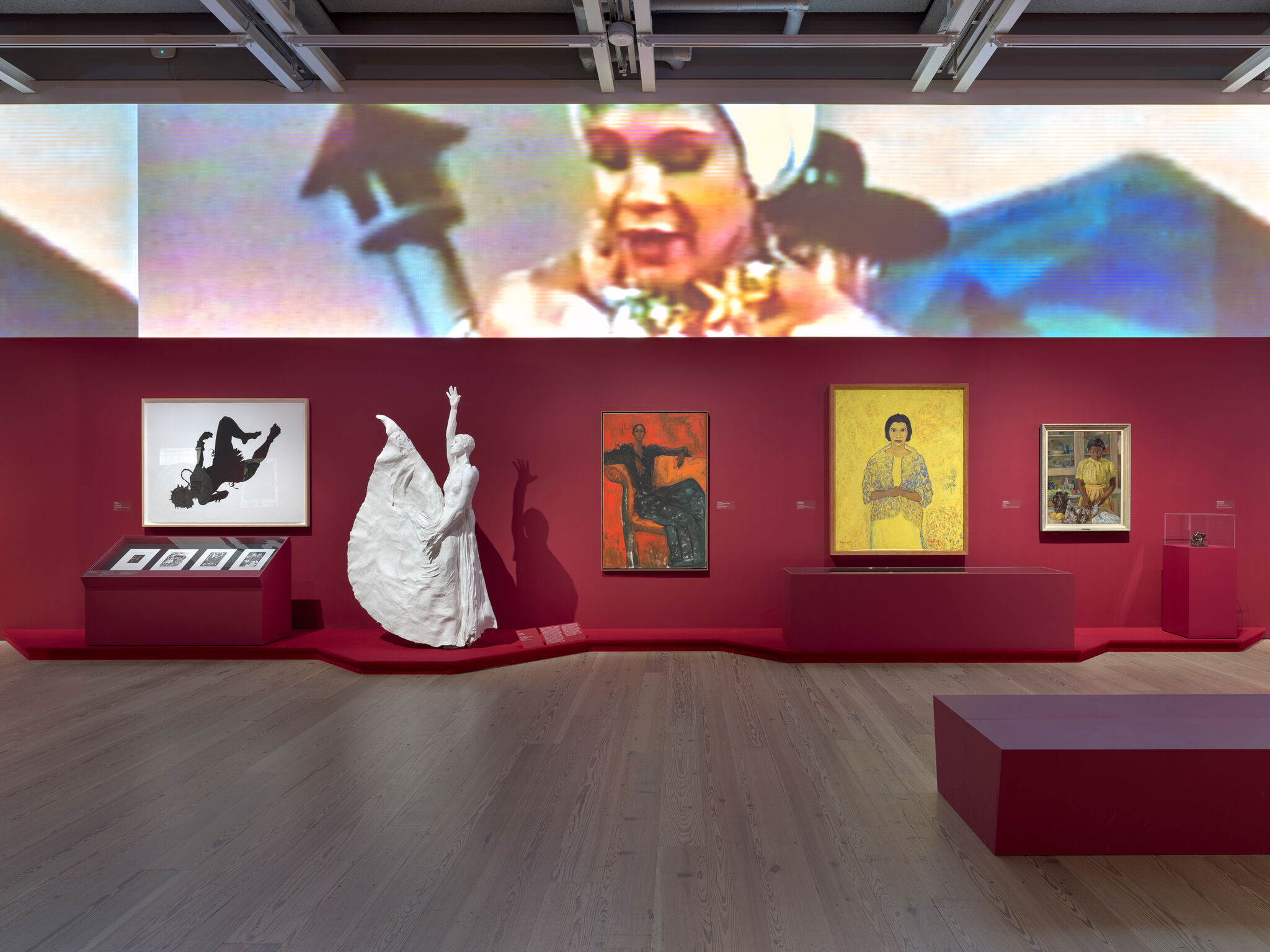
Installation view of Edges of Ailey (Whitney Museum of American Art, New York, September 25, 2024-February 9, 2025). In vitrine, from left to right: Elizabeth Catlett, I am the Negro Woman, 1947, printed 1989; Elizabeth Catlett, In Harriet Tubman I helped hundreds to freedom, 1946, printed 1989; Elizabeth Catlett, In Sojourner Truth I fought for the rights of women as well as Negroes, 1947, printed 1989; Elizabeth Catlett, In Phillis Wheatley I proved intellectual equality in the midst of slavery, 1946, printed 1989; From left to right: Kara Walker, African/American, 1998; Karon Davis, Dear Mama, 2024; Geoffrey Holder, Portrait of Carmen de Lavallade, 1976; Beauford Delaney, Marian Anderson, 1965; Loïs Mailou Jones, Jennie, 1943; Meta Vaux Warrick Fuller, Mother and Child (Secret Sorrow), c. 1914. Photograph by Ron Amstutz
From the exhibition Edges of Ailey
See also
-
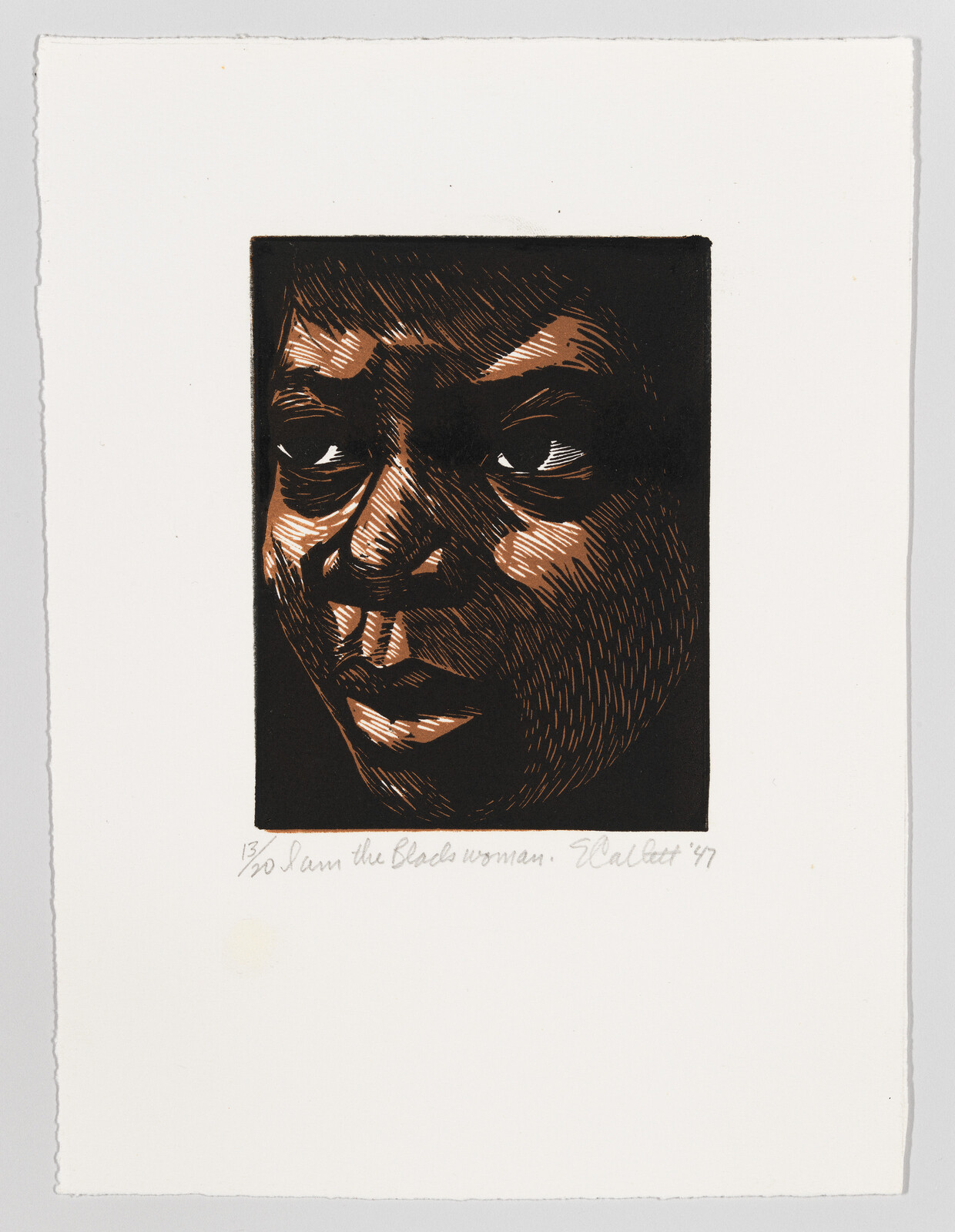
Elizabeth Catlett
I am the Negro woman
1947, printed 1989 -
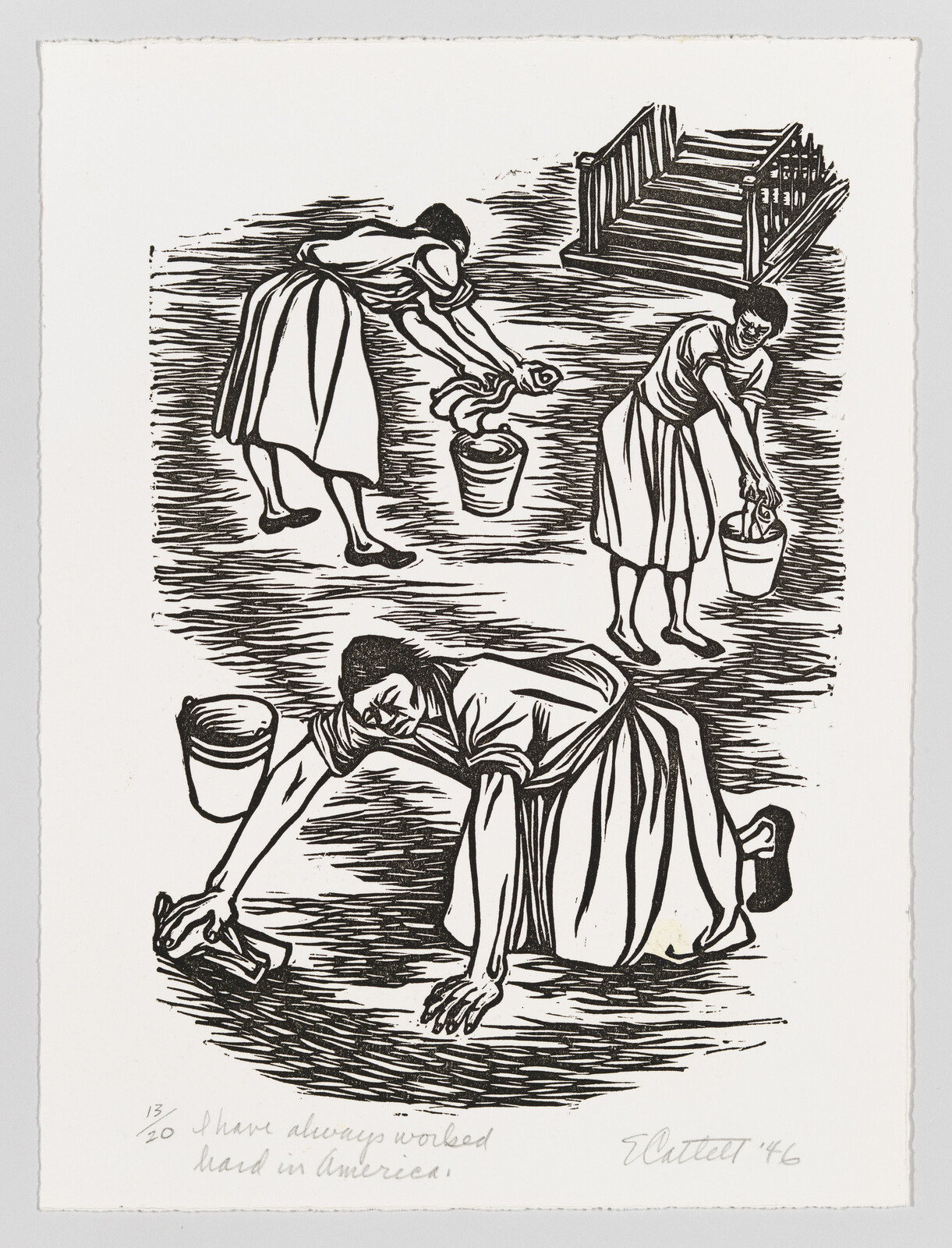
Elizabeth Catlett
I have always worked hard in America
1946, printed 1989 -
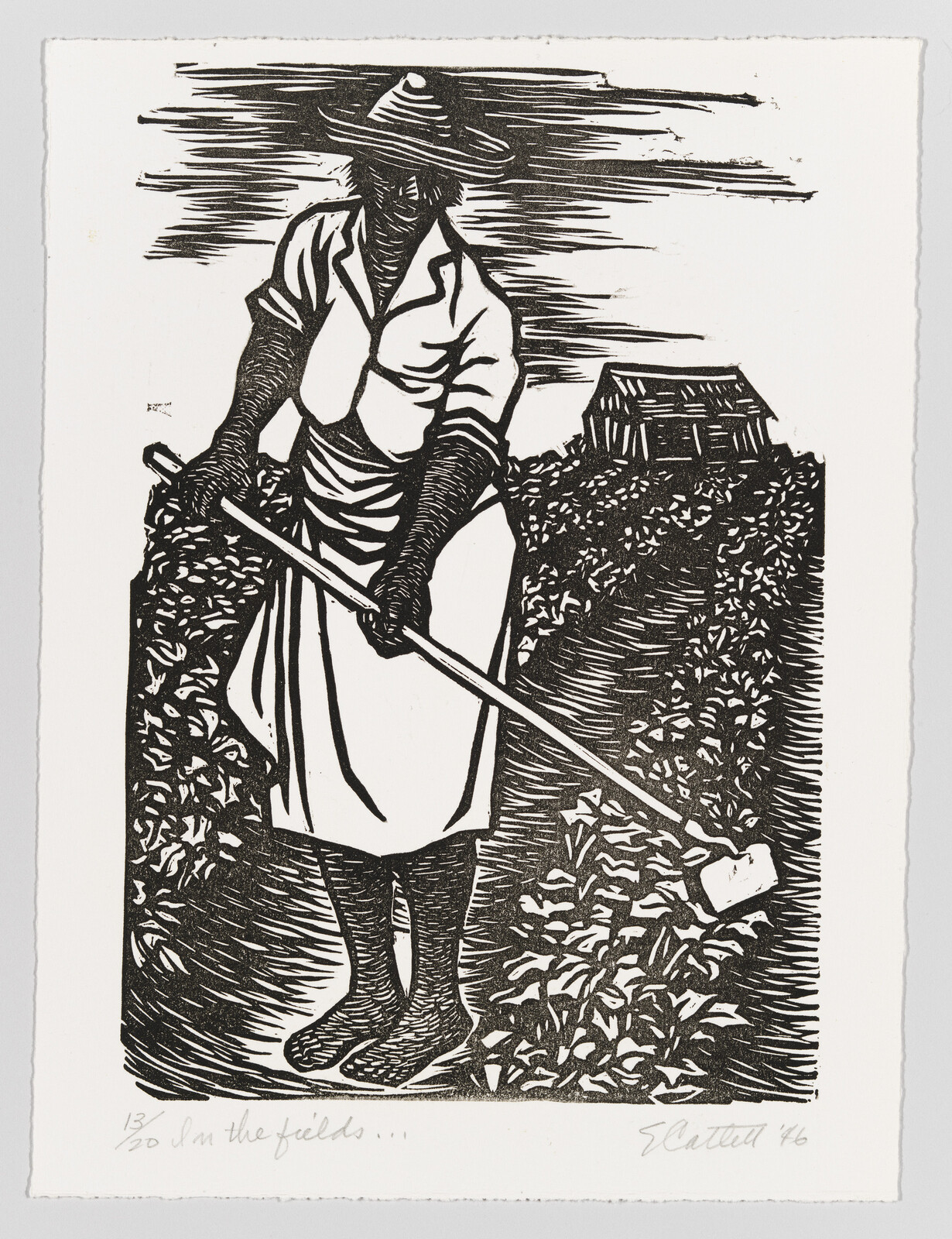
Elizabeth Catlett
In the fields...
1946, printed 1989 -
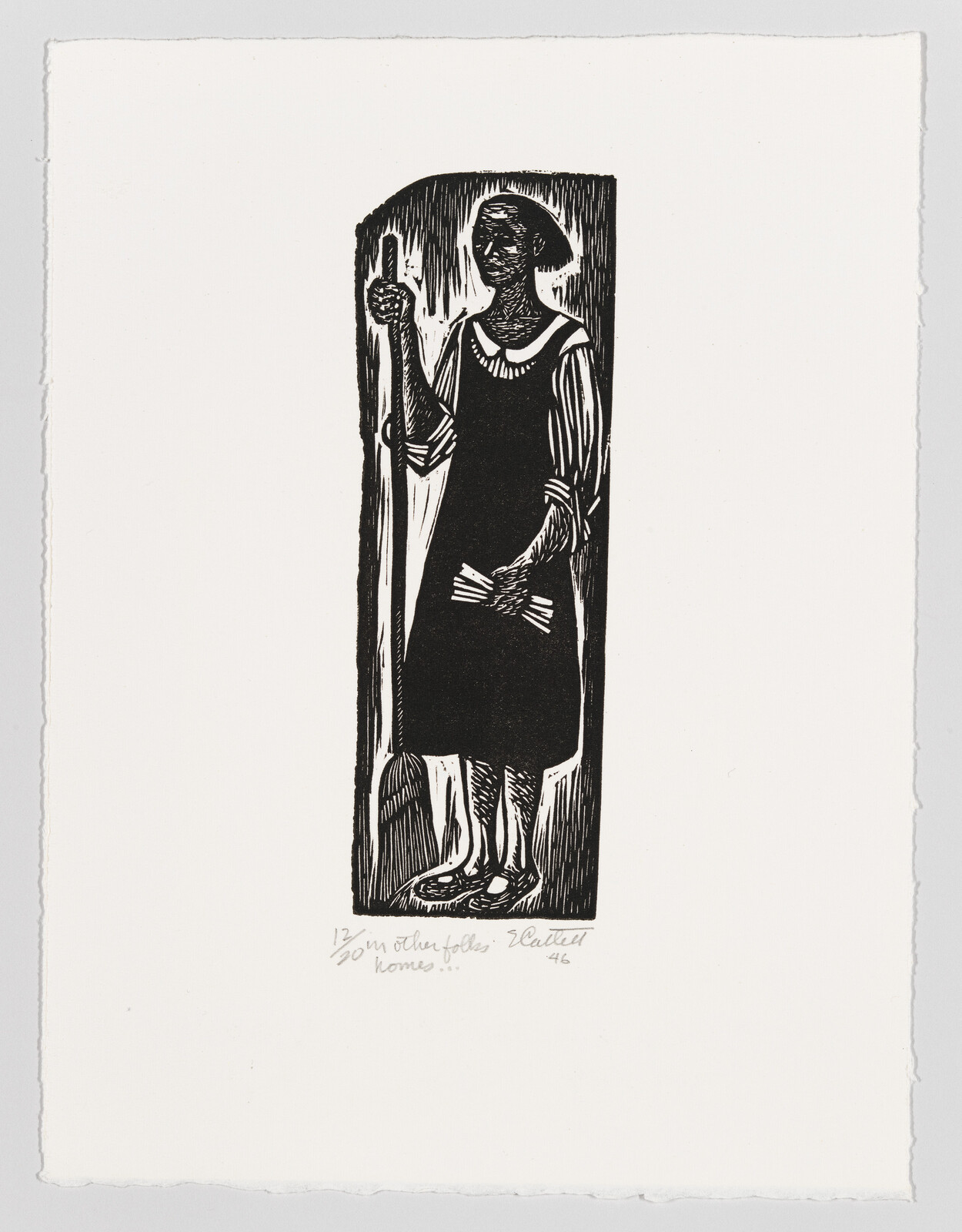
Elizabeth Catlett
In other folks' homes...
1946, printed 1989 -
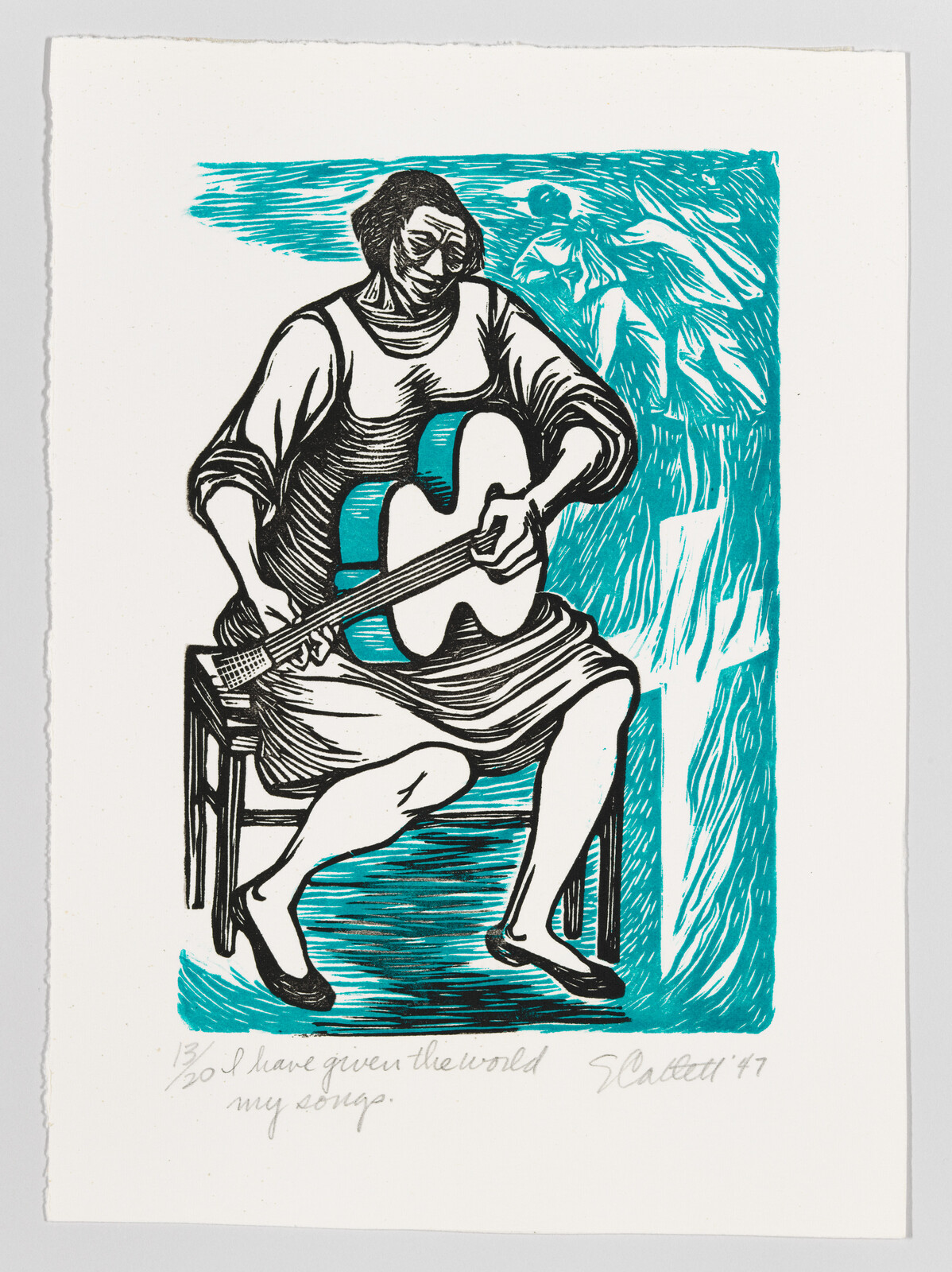
Elizabeth Catlett
I have given the world my songs
1947, printed 1989 -
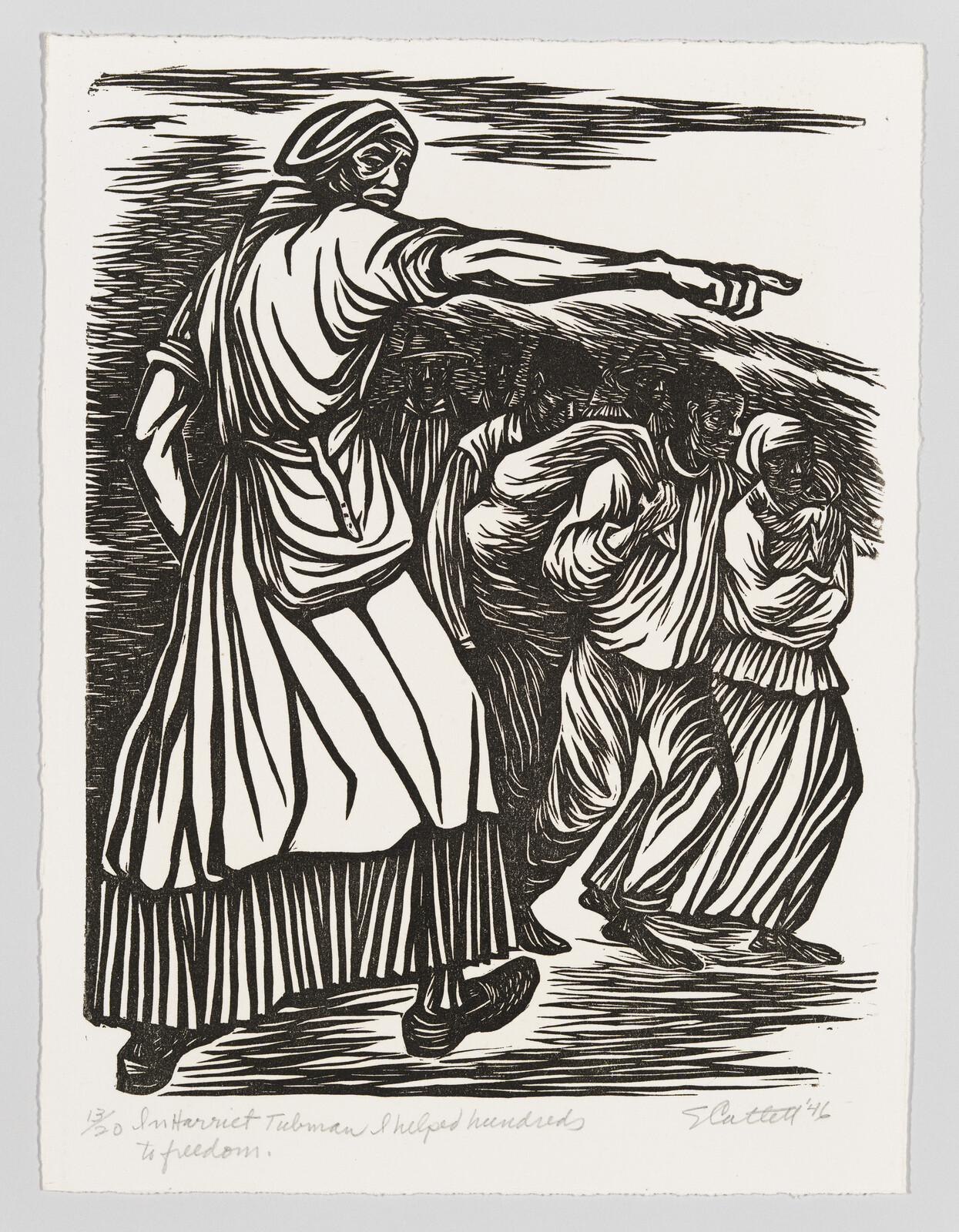
Elizabeth Catlett
In Harriet Tubman I helped hundreds to freedom
1946, printed 1989 -
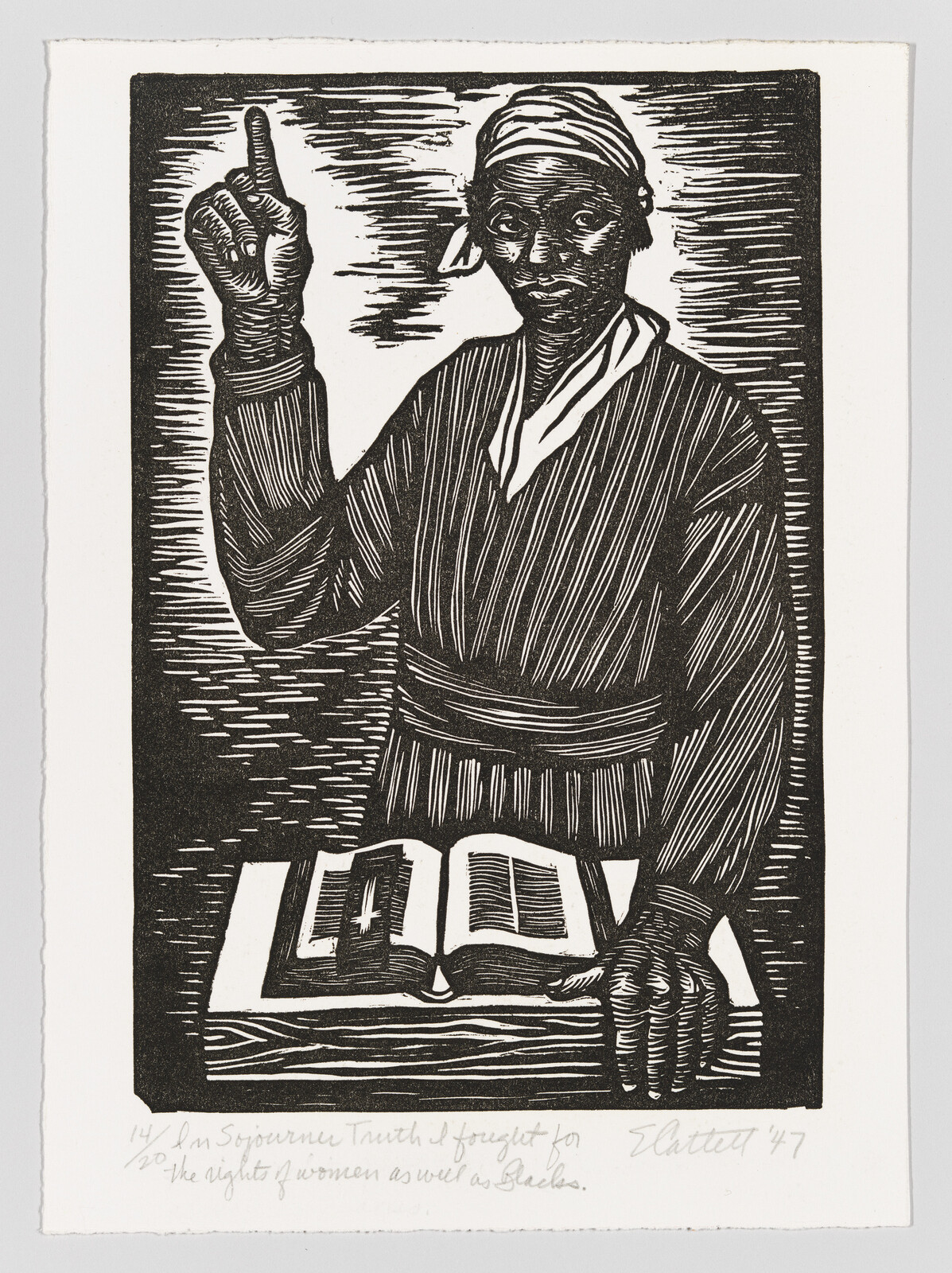
Elizabeth Catlett
In Sojourner Truth I fought for the rights of women as well as Negroes
1947, printed 1989 -
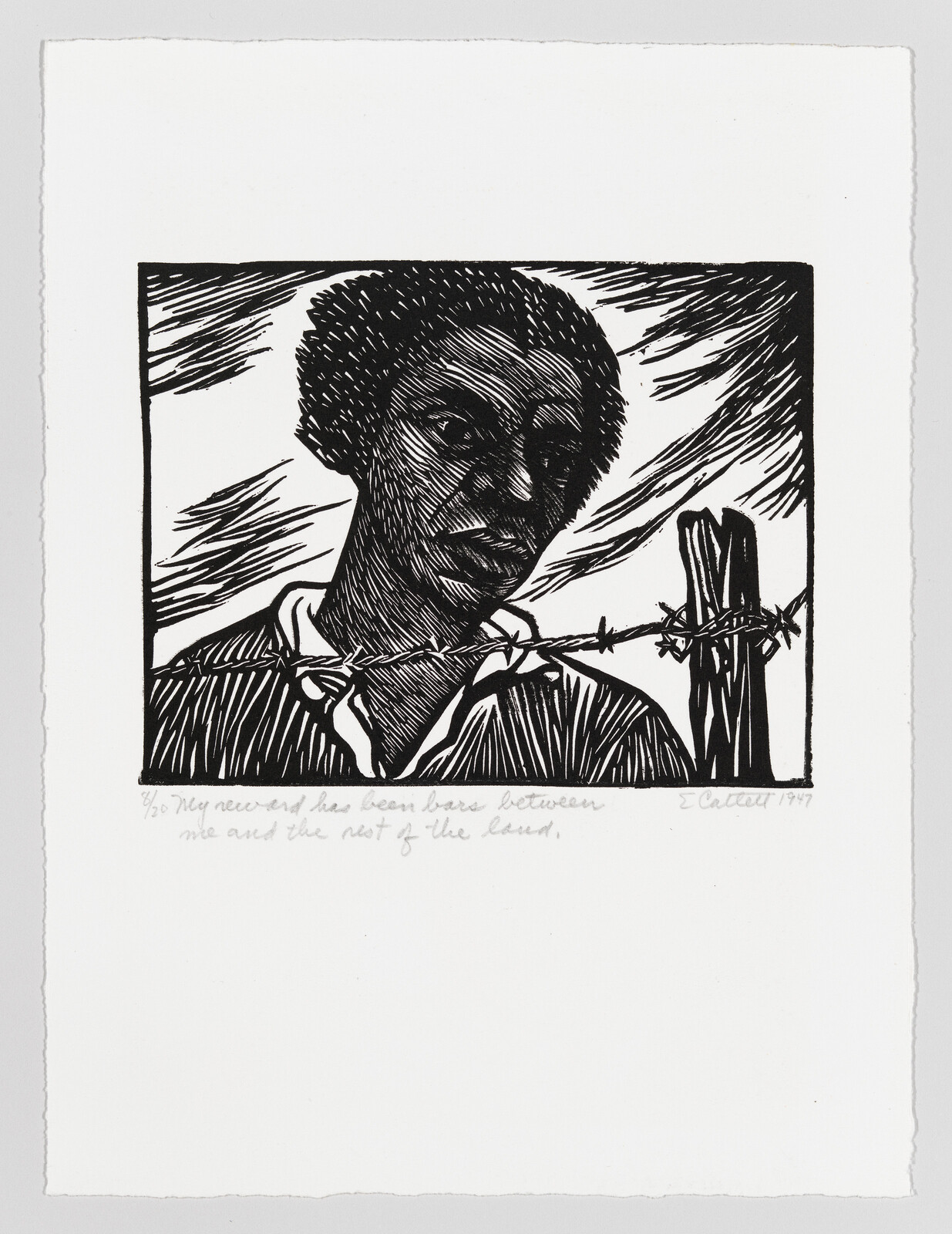
Elizabeth Catlett
My reward has been bars between me and the rest of the land
1947, printed 1989 -
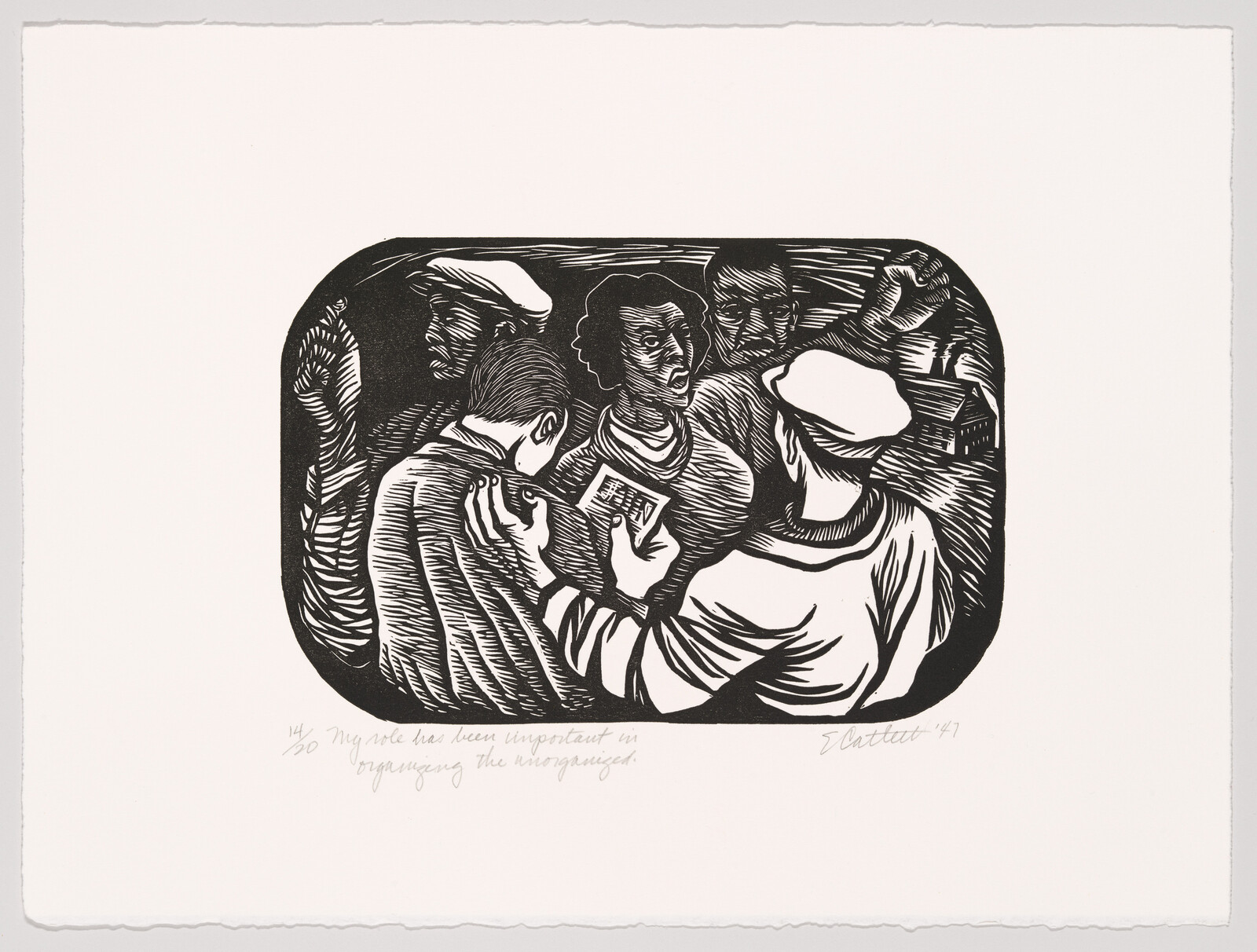
Elizabeth Catlett
My role has been important in organizing the unorganized
1947, printed 1989 -
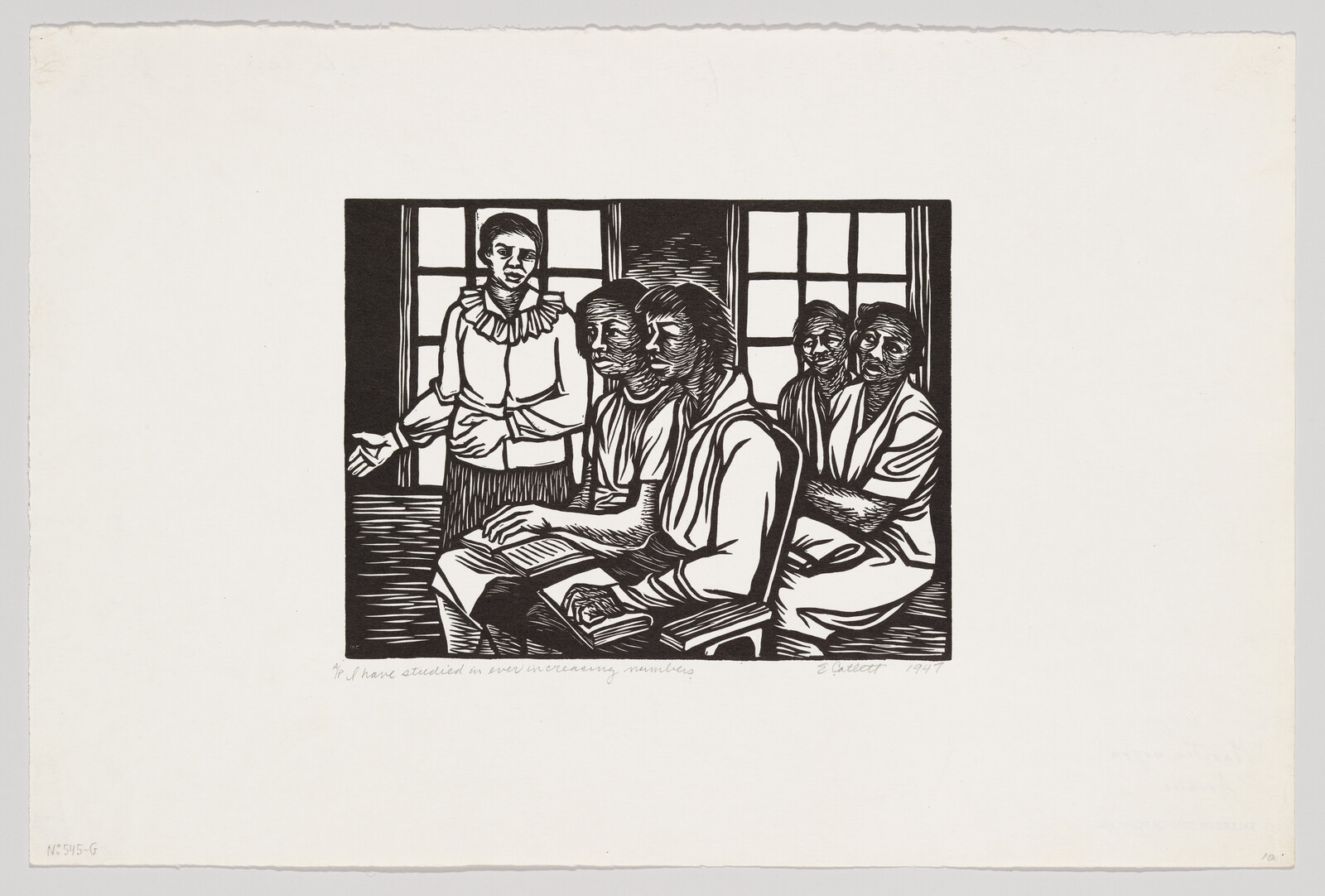
Elizabeth Catlett
I have studied in ever increasing numbers
1947 -
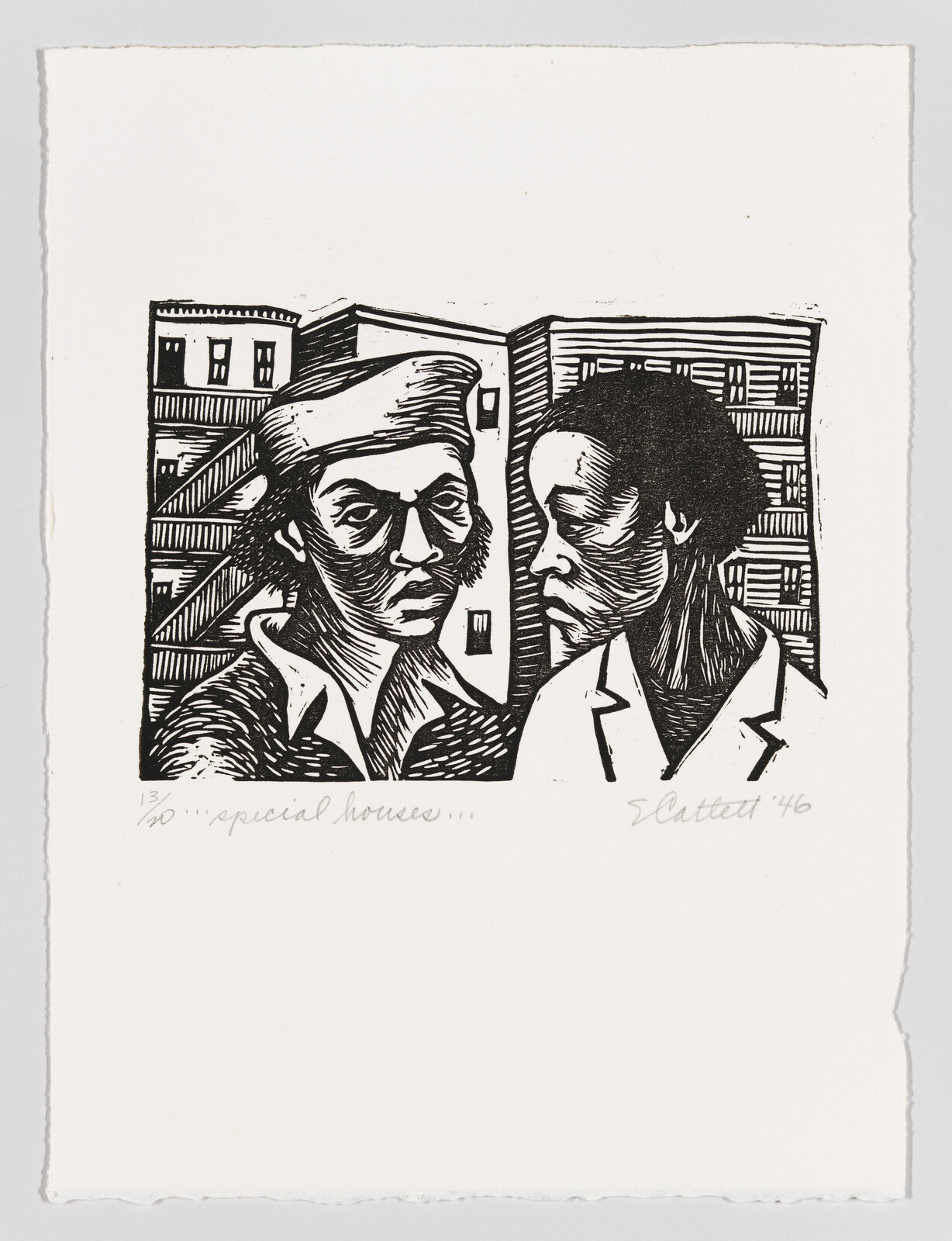
Elizabeth Catlett
...special houses...
1946, printed 1989 -
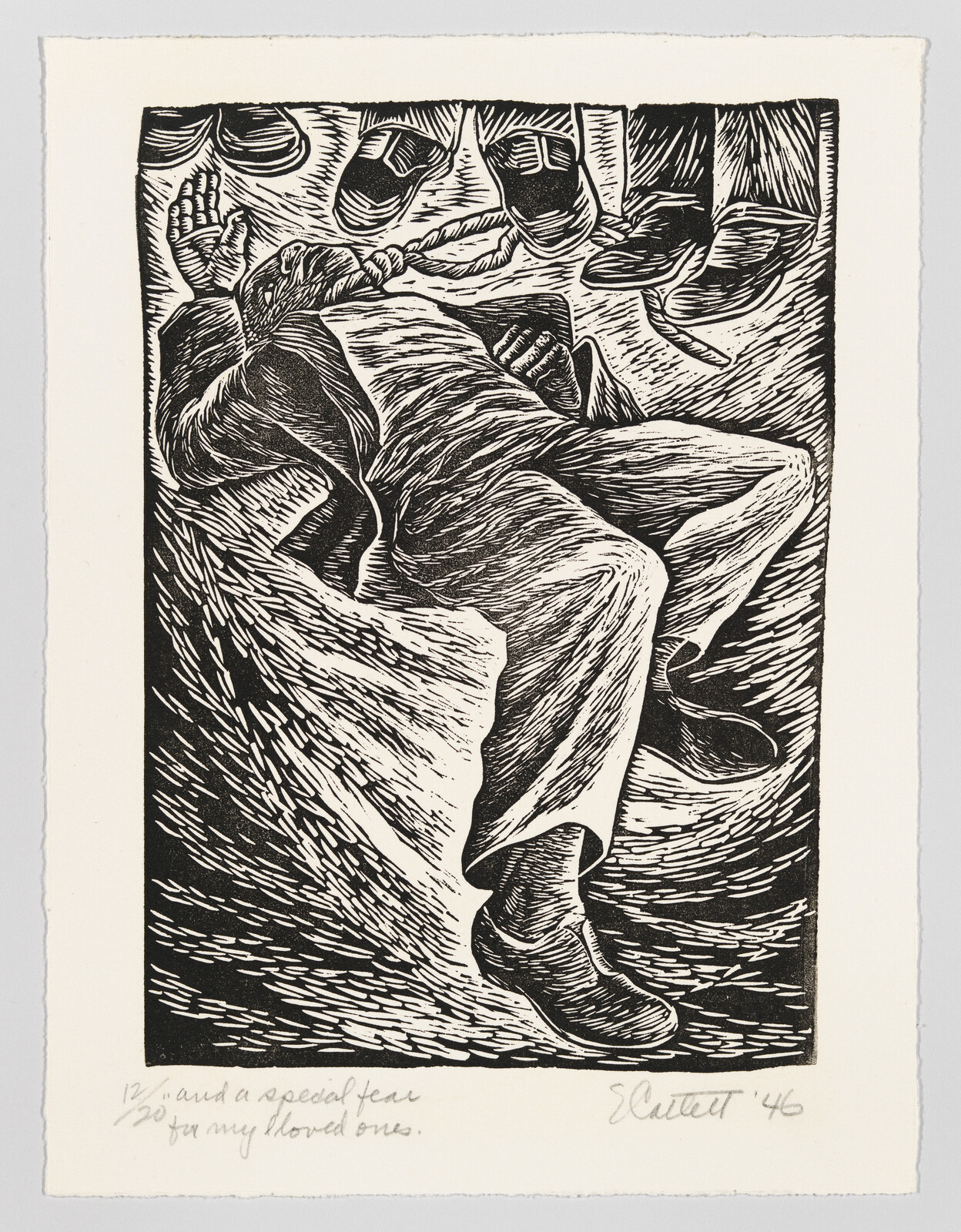
Elizabeth Catlett
..and a special fear for my loved ones
1946, printed 1989 -
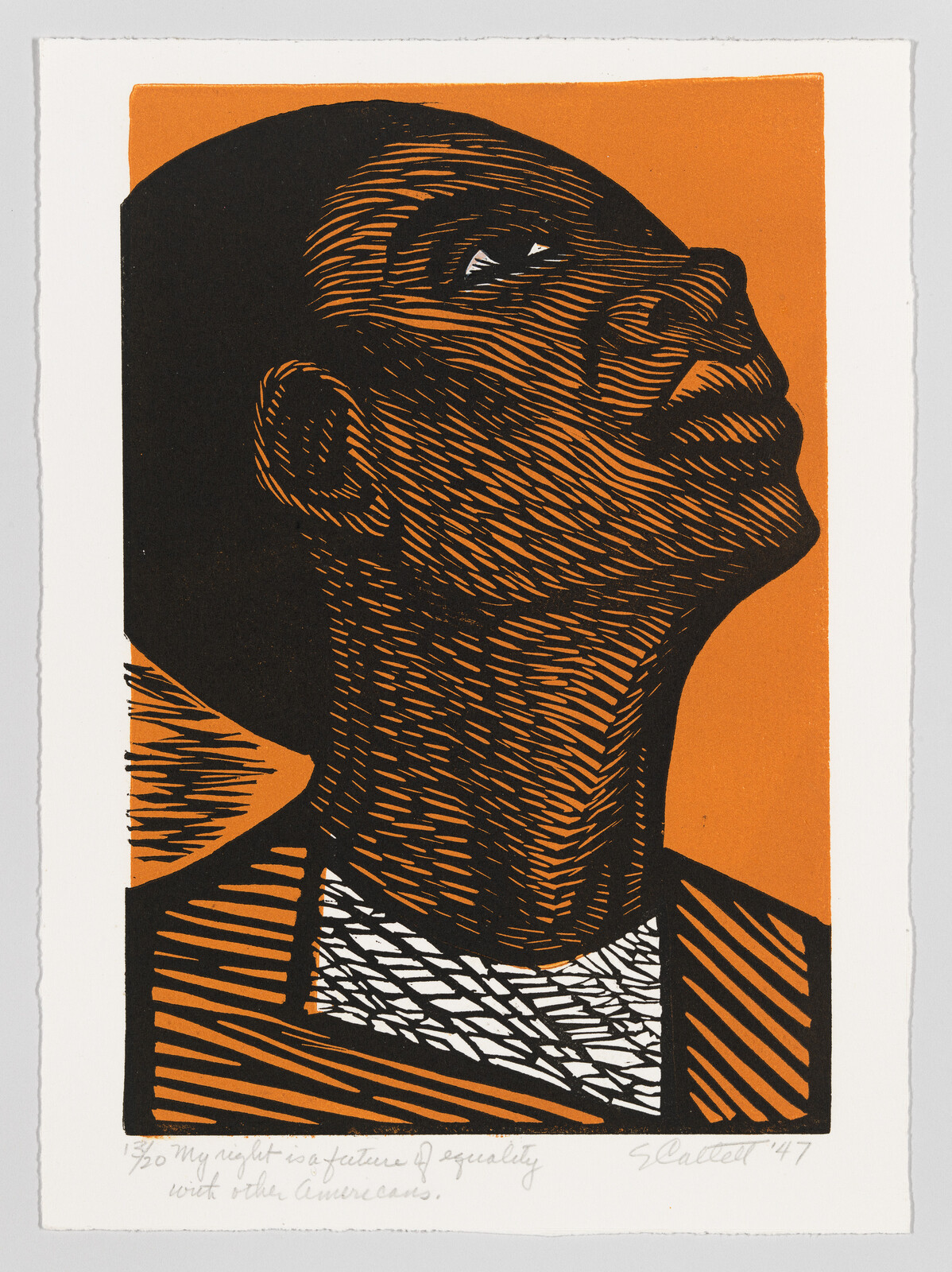
Elizabeth Catlett
My right is a future of equality with other Americans
1947, printed 1989 -
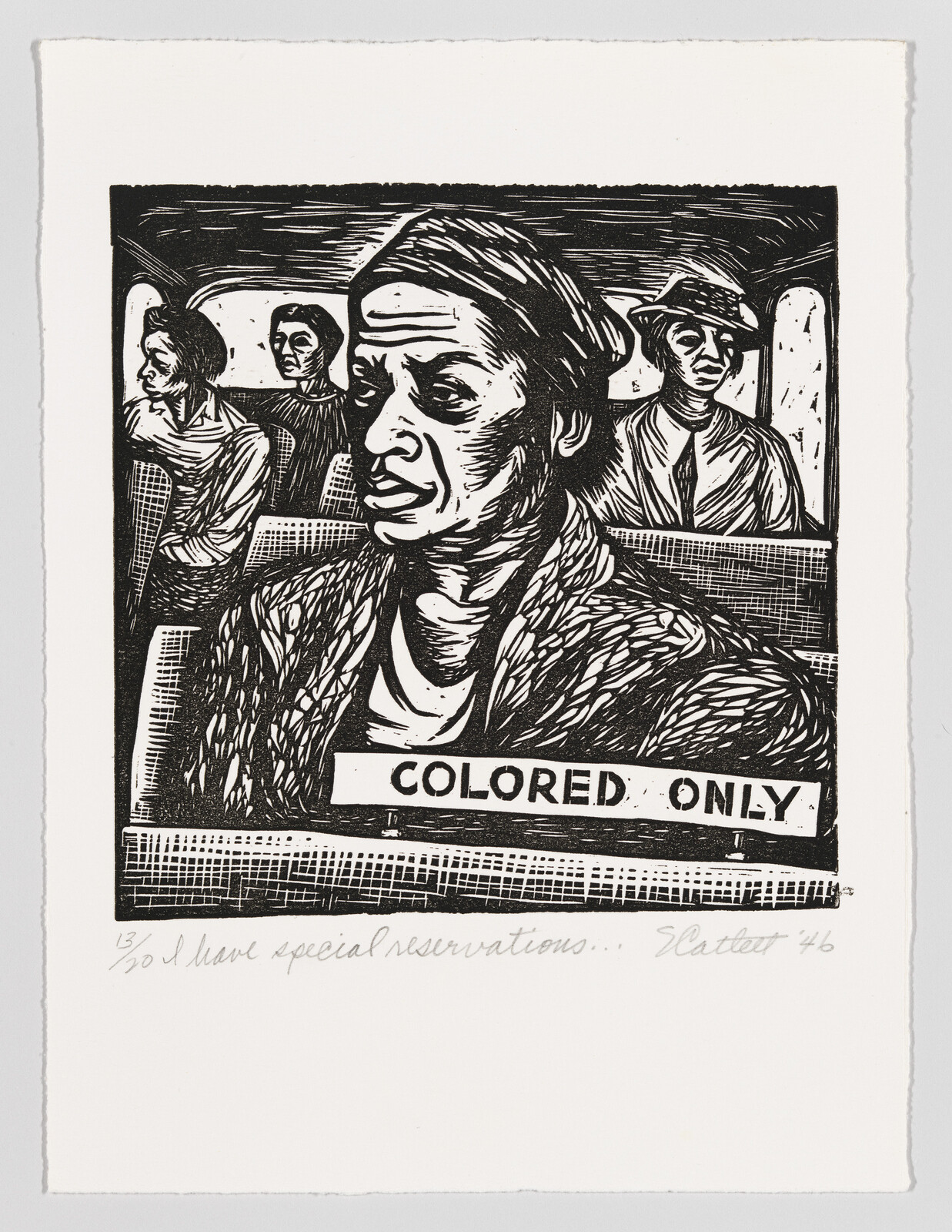
Elizabeth Catlett
I have special reservations...
1946, printed 1989