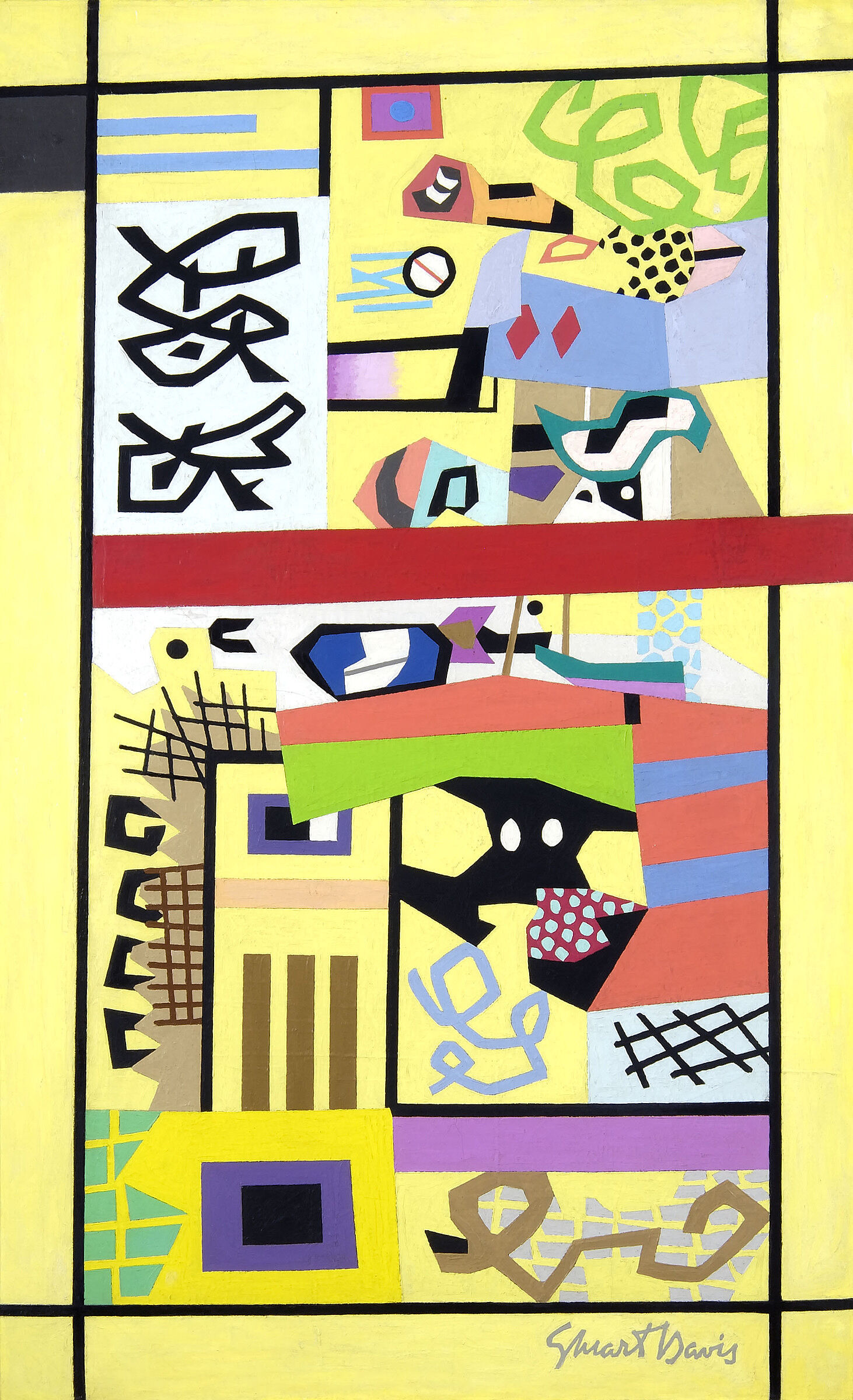
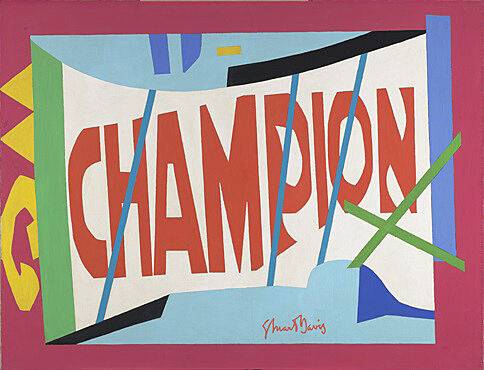
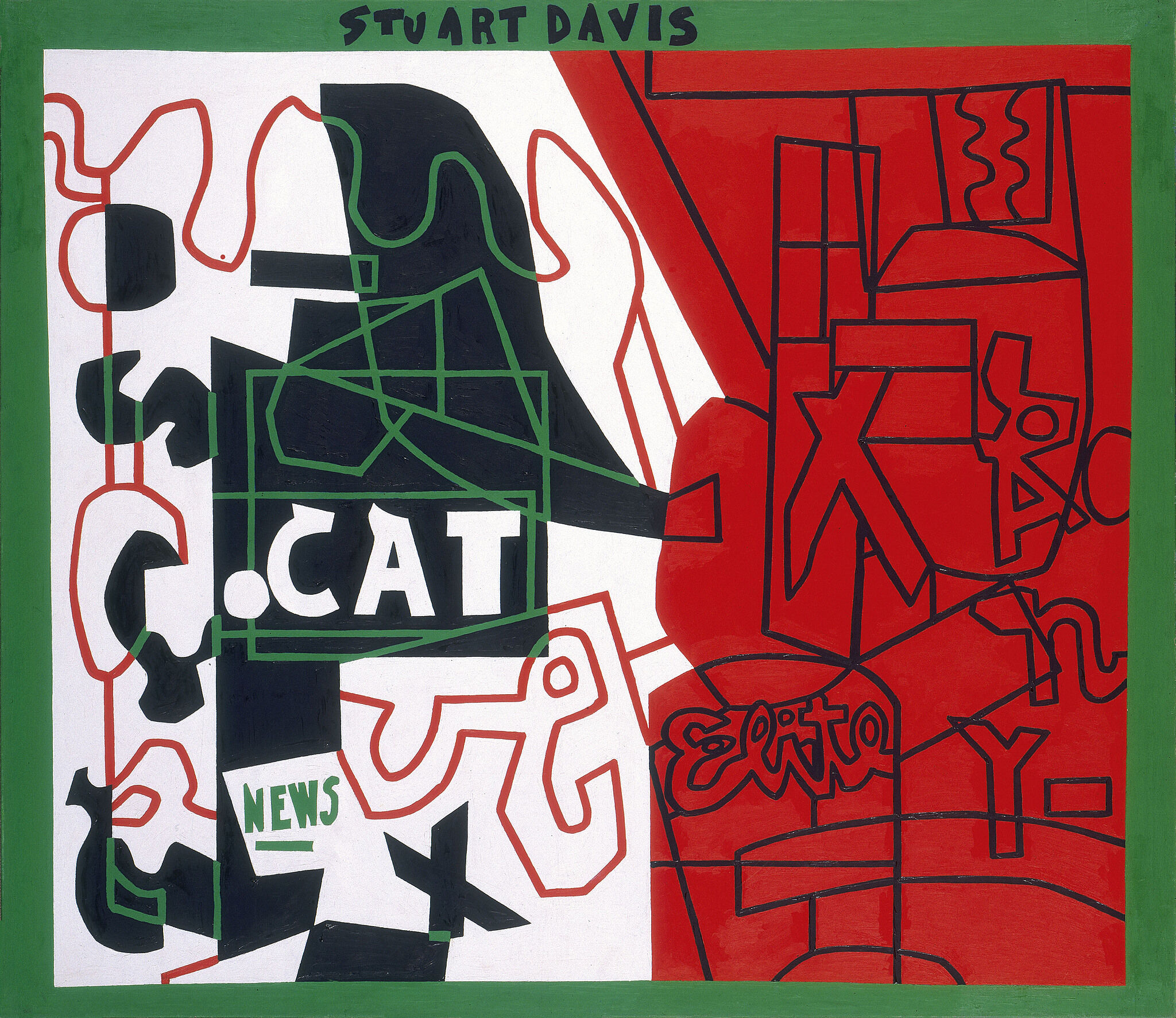
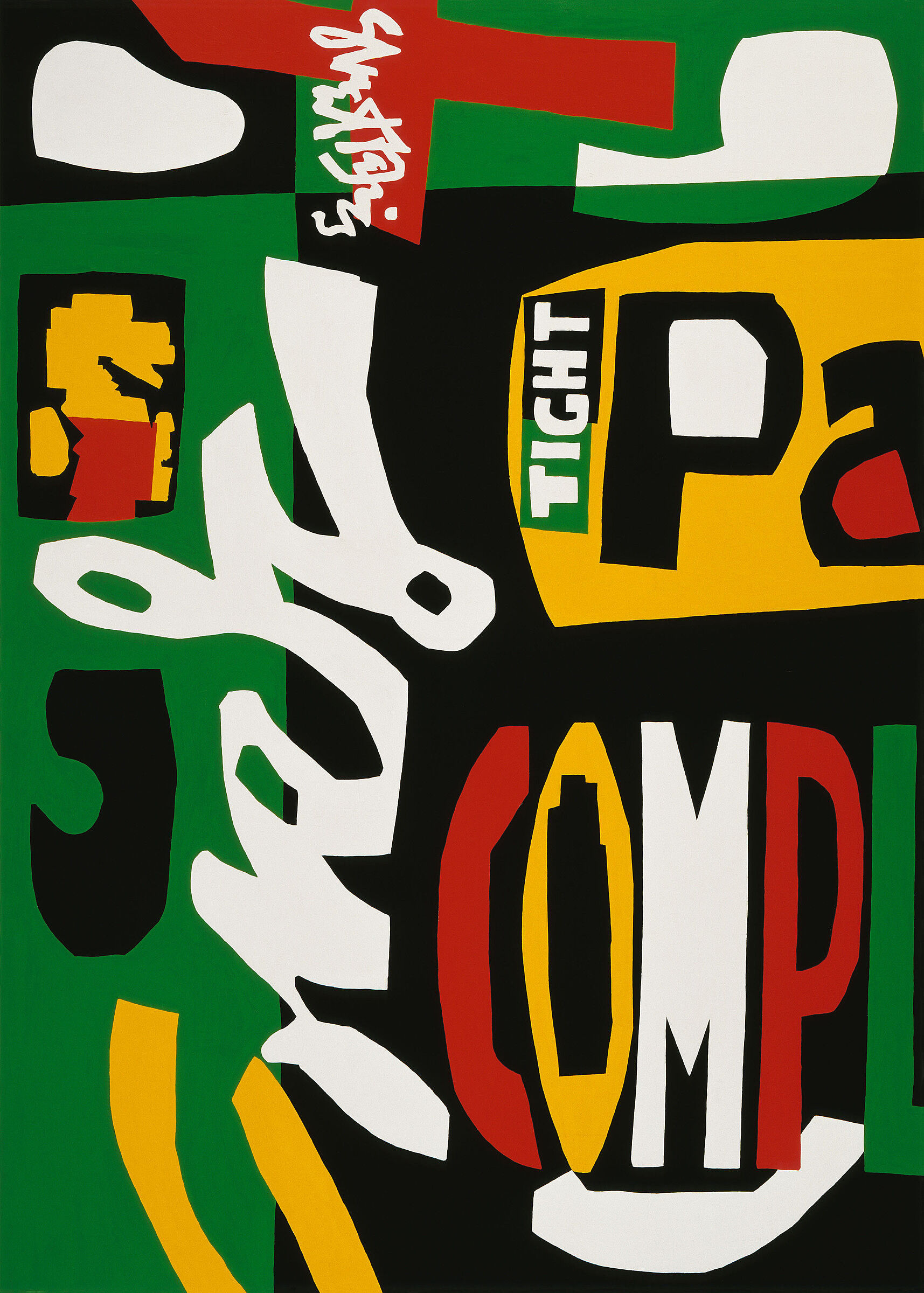
In the late 1950s, Davis's art became even more expansive as he enlarged his shapes further and reduced his palette to three colors—red, green, and yellow—along with black and white. He continued to base the majority of his paintings on extant motifs, but now he occasionally selected a close-up or inverted section of an earlier image as his starting point. Playful and animated, Davis's late paintings exude a sense of exhilaration and spontaneity that, in his words, "help to keep the eye of the beholder alive, force him to make observations, and give value to aspects of nature which everyday preoccupations too often leave unnoticed."
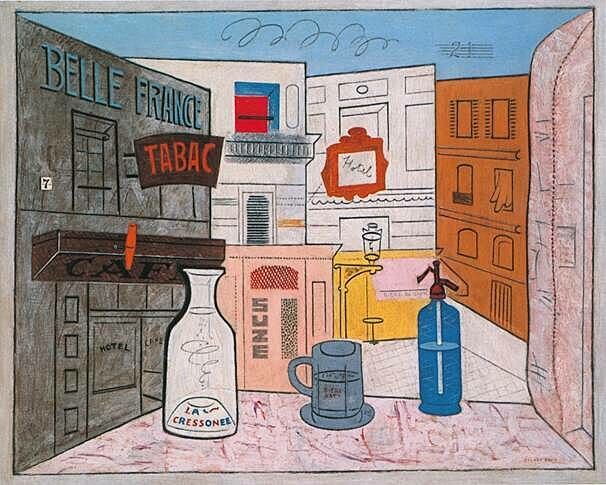
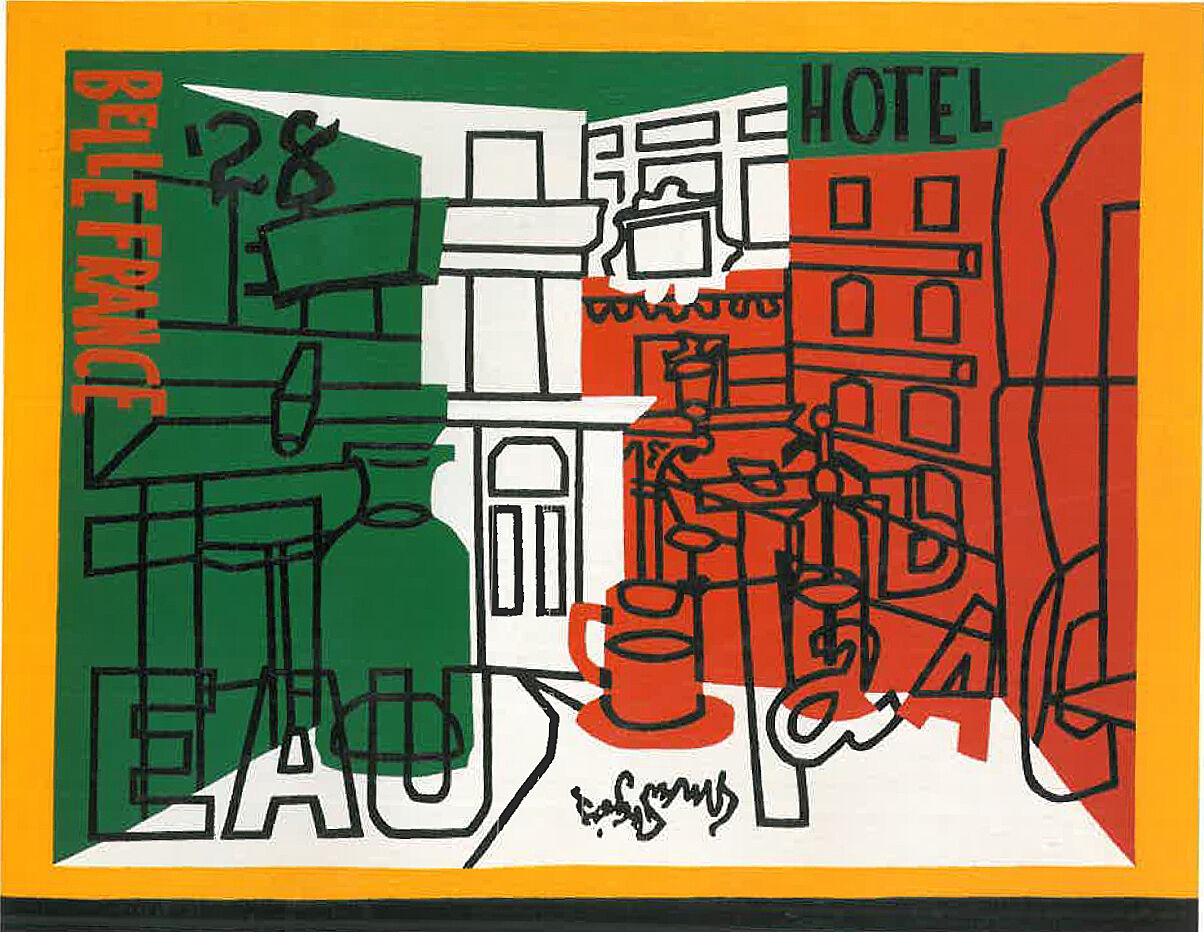
Barbara Haskell: Davis went to Paris in 1928 courtesy of a purchase by Gertrude Vanderbilt Whitney of two of his paintings. When he was there, he extended the geometric angularity that he had introduced in his Eggbeater paintings, but made it much more lyrical, much more delicate in keeping with his sense about the city. The picture, like many of the paintings from Paris, has this very confectionary palette, very linear detailing. For the first time he introduces his line as an independent element which becomes very prominent in his later work.
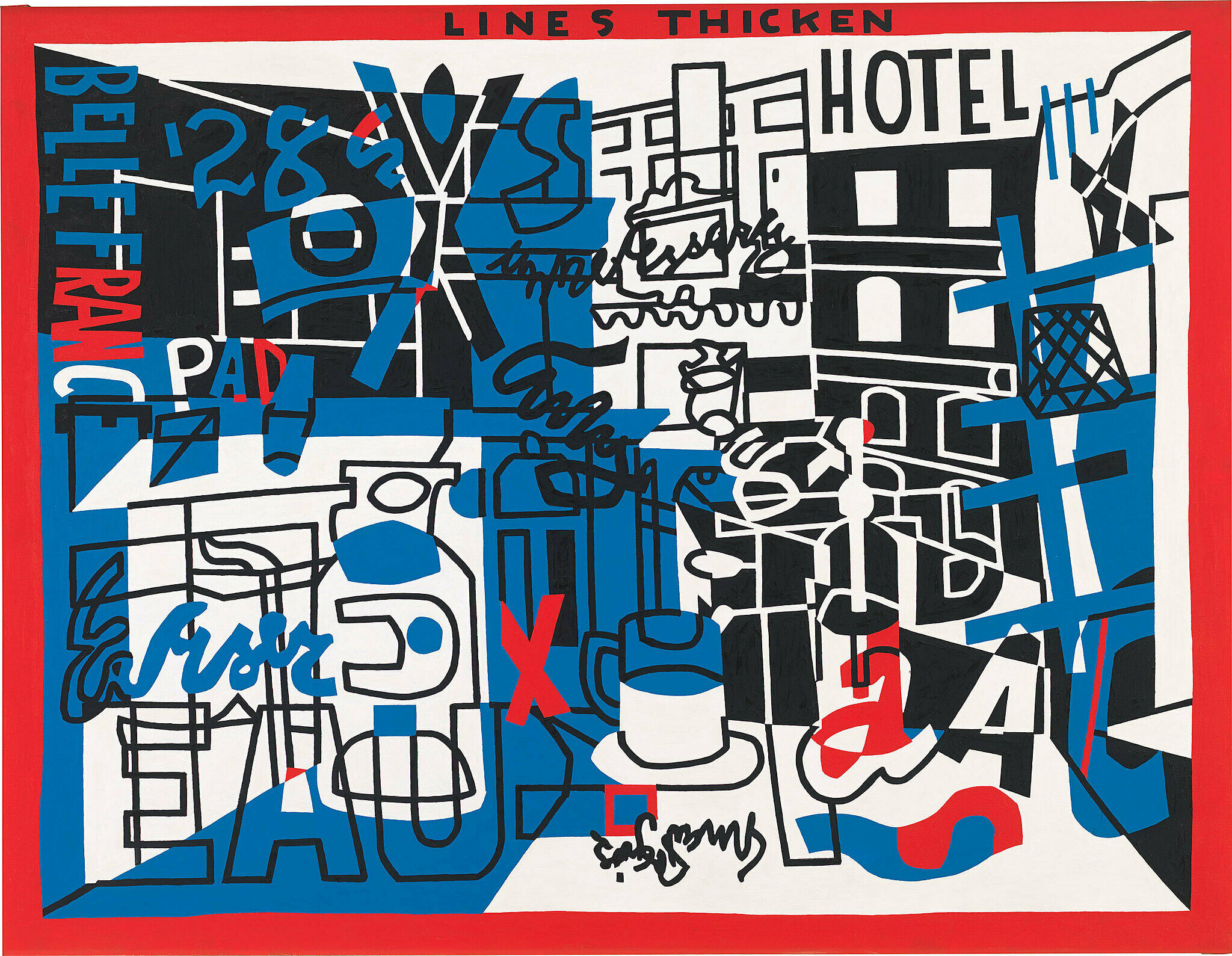
He presents the viewer as if we're sitting at a restaurant on the second floor overlooking a city street. In front of us are various objects used in drinking, which apparently Stuart Davis did a great deal of when he was in Paris.
Whimsically titled after the Brasserie Lipp, a restaurant Davis frequented while in Paris, this work combines a street scene and a still life. Painted from the perspective of someone sitting at a table on the restaurant’s second floor, drinking absinthe and beer and looking at the facades of the buildings in the square below, Rue Lipp suggests Davis’s affection for Parisian cafés as meeting places for the American expatriate crowd.
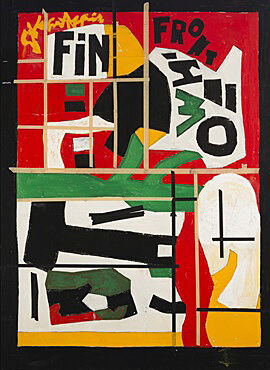
Barbara Haskell: Fin is the most personal of Davis's paintings. For one thing, it's unfinished. It shows his working method where he would use masking tape to define certain areas of the picture, while he studied them in the course of working out their composition and their color. The masking tape remains on in this picture, giving it a sense of the tactility, the intimacy that other pictures don't have.
He was working on it one night. He had had had a series of heart troubles. He and his wife saw a French film on television that night which ended with the word, "Fin," meaning, "The End." He painted the word on his canvas that evening before going to bed and died that night.
By 1962, when Davis began this picture, he was being heralded as a major figure of modern art. Artists like Don Judd, for example, were celebrating his achievements. He was beginning to be considered a father of pop art and of geometric color abstraction. These bold areas of color that so defined his work were being executed by younger artists. He was in the forefront of contemporary currents in art.
Narrator: This is the last stop on our tour. Thank you for joining us. Please enjoy the rest of your visit at the Museum.
Davis suffered from heart problems and high blood pressure for decades. On June 23, 1964, after watching a French film on television that ended with the word “fin,” which means “the end,” he added the word to the painting on his easel before going to bed. That night he had a stroke and died in the ambulance on the way to New York’s Roosevelt Hospital.
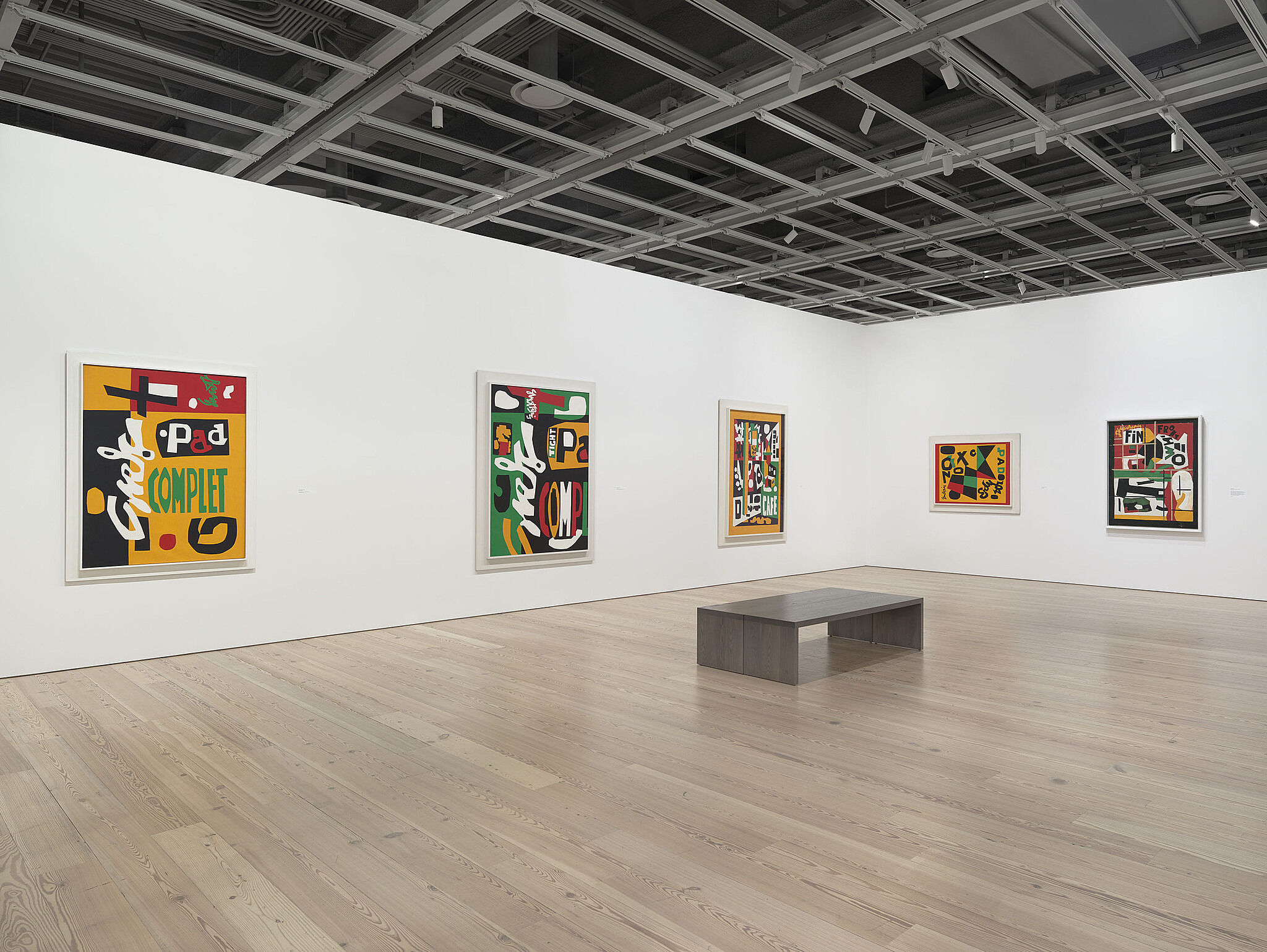
Installation view of Stuart Davis: In Full Swing (Whitney Museum of American Art, New York, June 10–September 25, 2016). Photograph by Ron Amstutz