Stuart Davis: In Full Swing | Art & Artists

June 10–Sept 25, 2016


Exhibition works

7 total
Paris, New York, and Gloucester
Read more

Paris, New York, and Gloucester


A painting of storefronts.

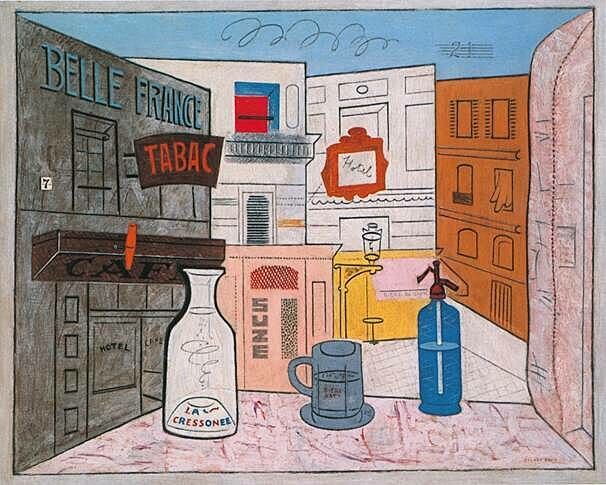
Stuart Davis, Rue Lipp, 1928. Oil on canvas, 32 × 39 in. (81.3 × 99.1 cm). Michael and Fiona Scharf. © Estate of Stuart Davis/Licensed by VAGA, New York

Paris, New York, and Gloucester

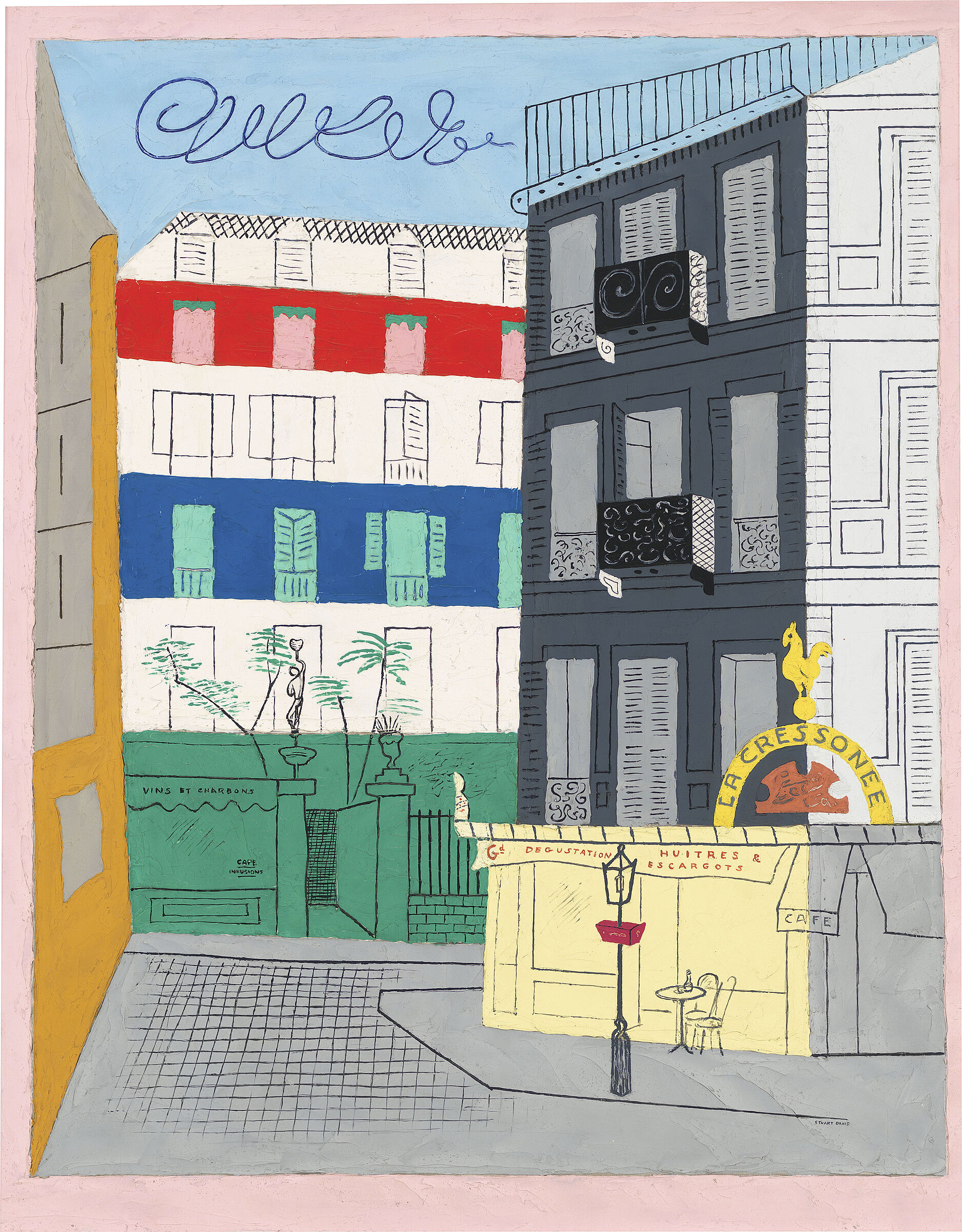
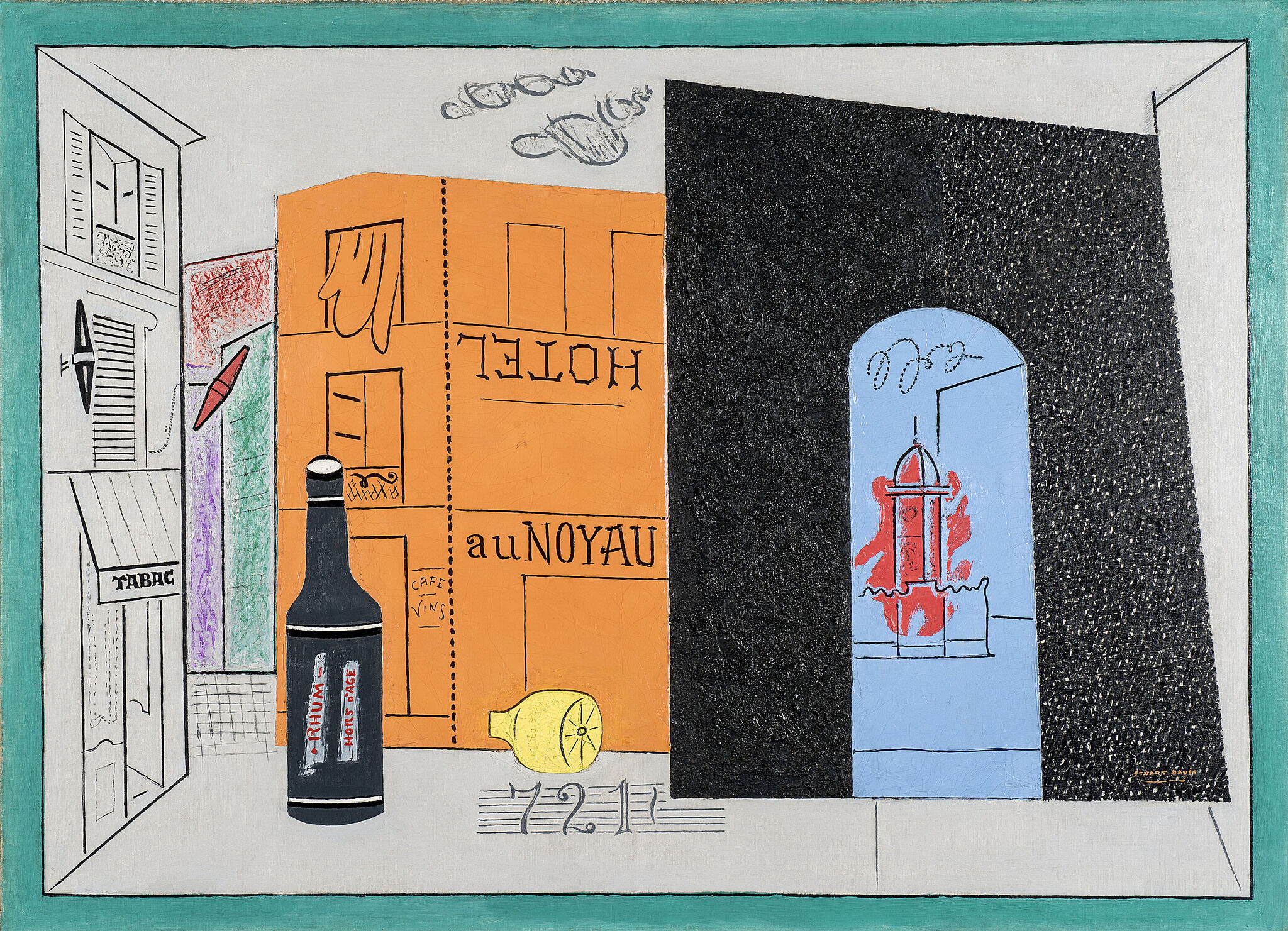
In the 1920s, Paris was the center of the art world. So many Americans lived there during the decade that one journal humorously called it the "capital of America." By 1928, Davis was one of the few artists in the inner circle of the Whitney Studio Club who had not made the pilgrimage. To support his trip to Paris that year, Gertrude Vanderbilt Whitney purchased several of his paintings. Davis remained in the French capital for thirteen months, depicting the city's streets with the same angled geometries he had used in his egg-beater still lifes, while softening the severity of those earlier paintings with a confectionary palette and whimsical calligraphy. The sojourn solidified his commitment to angular geometry as a vocabulary. Its most significant contribution to his development, however, was dispelling any lingering sense of inferiority he had in relation to European artists. He would later characterize his time in Paris as the most seminal event of his artistic life.

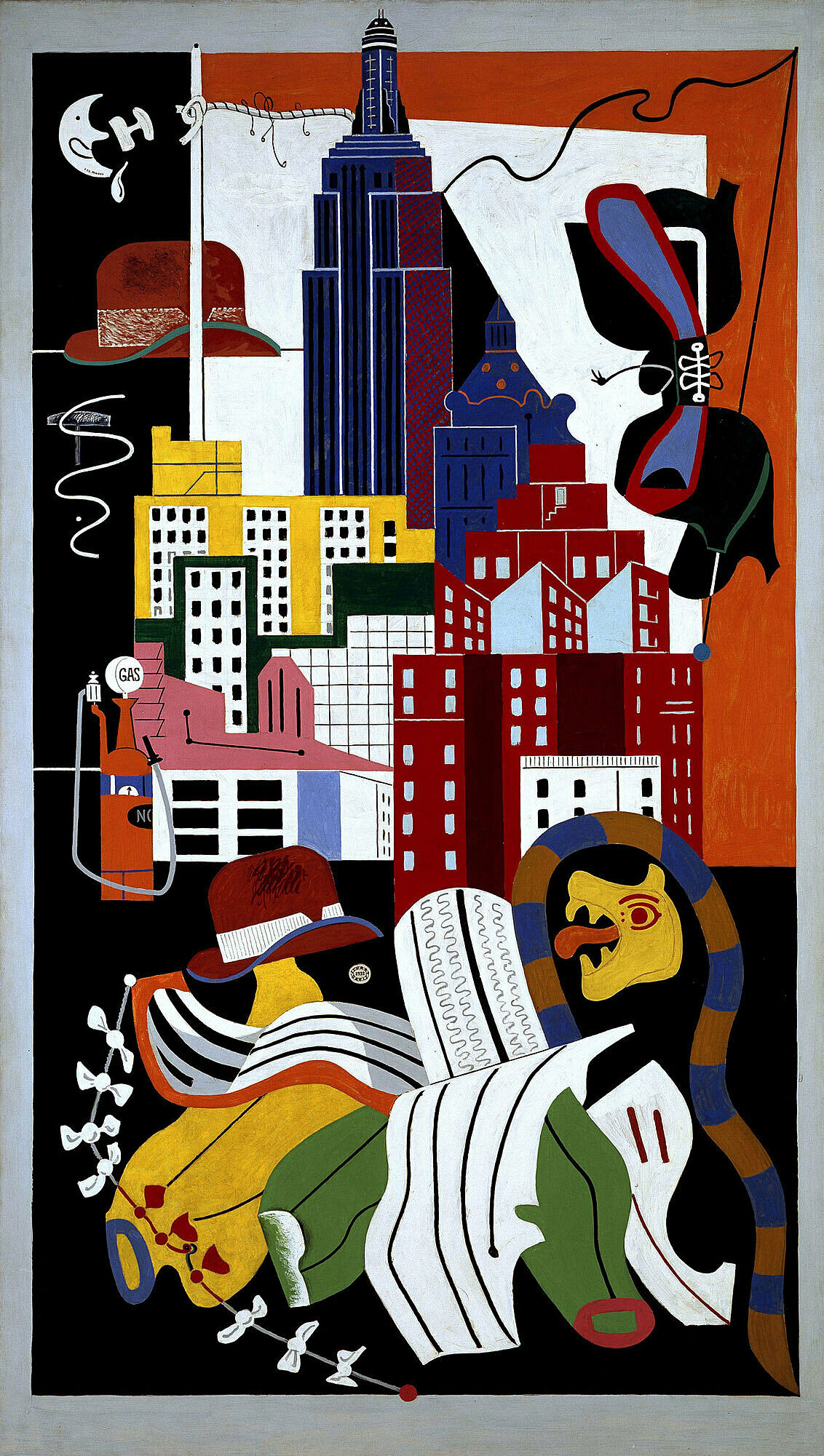
When he returned to the United States in 1929, Davis was struck by the country's modernity. Technological advances in communication and transportation such as the telephone, cinema, radio, and air travel had made it possible to experience seemingly countless events taking place around the world almost simultaneously. To capture this insight, he juxtaposed multiple views of a scene within single paintings and distilled his subjects into sequences of small triangles that visually oscillated between two and three dimensions.

Below is a selection of works from Paris, New York, and Gloucester.

Stuart Davis (1892–1964), Place Pasdeloup, 1928. Oil on canvas, 36 3/8 x 29 in. (92.4 x 73.7 cm). Whitney Museum of American Art, New York; gift of Gertrude Vanderbilt Whitney 31.170. © Estate of Stuart Davis/Licensed by VAGA, New York

Place Pasdeloup, 1928

0:00

Stuart Davis, Rue Lipp, 1928

0:00

Barbara Haskell: Davis went to Paris in 1928 courtesy of a purchase by Gertrude Vanderbilt Whitney of two of his paintings. When he was there, he extended the geometric angularity that he had introduced in his Eggbeater paintings, but made it much more lyrical, much more delicate in keeping with his sense about the city. The picture, like many of the paintings from Paris, has this very confectionary palette, very linear detailing. For the first time he introduces his line as an independent element which becomes very prominent in his later work.

He presents the viewer as if we're sitting at a restaurant on the second floor overlooking a city street. In front of us are various objects used in drinking, which apparently Stuart Davis did a great deal of when he was in Paris.

Stuart Davis, Rue Lipp, 1928

In Stuart Davis: In Full Swing

Rue Lipp, 1928

Whimsically titled after the Brasserie Lipp, a restaurant Davis frequented while in Paris, this work combines a street scene and a still life. Painted from the perspective of someone sitting at a table on the restaurant’s second floor, drinking absinthe and beer and looking at the facades of the buildings in the square below, Rue Lipp suggests Davis’s affection for Parisian cafés as meeting places for the American expatriate crowd.

Stuart Davis (1892–1964), Arch Hotel, 1929. Oil on canvas, 28 3/4 x 39 1/2 in. (73 x 100.3 cm). Sheldon Museum of Art, University of Nebraska—Lincoln; Anna R. and Frank M. Hall Charitable Trust H-268.1947. © Estate of Stuart Davis/Licensed by VAGA, New York

Arch Hotel, 1929

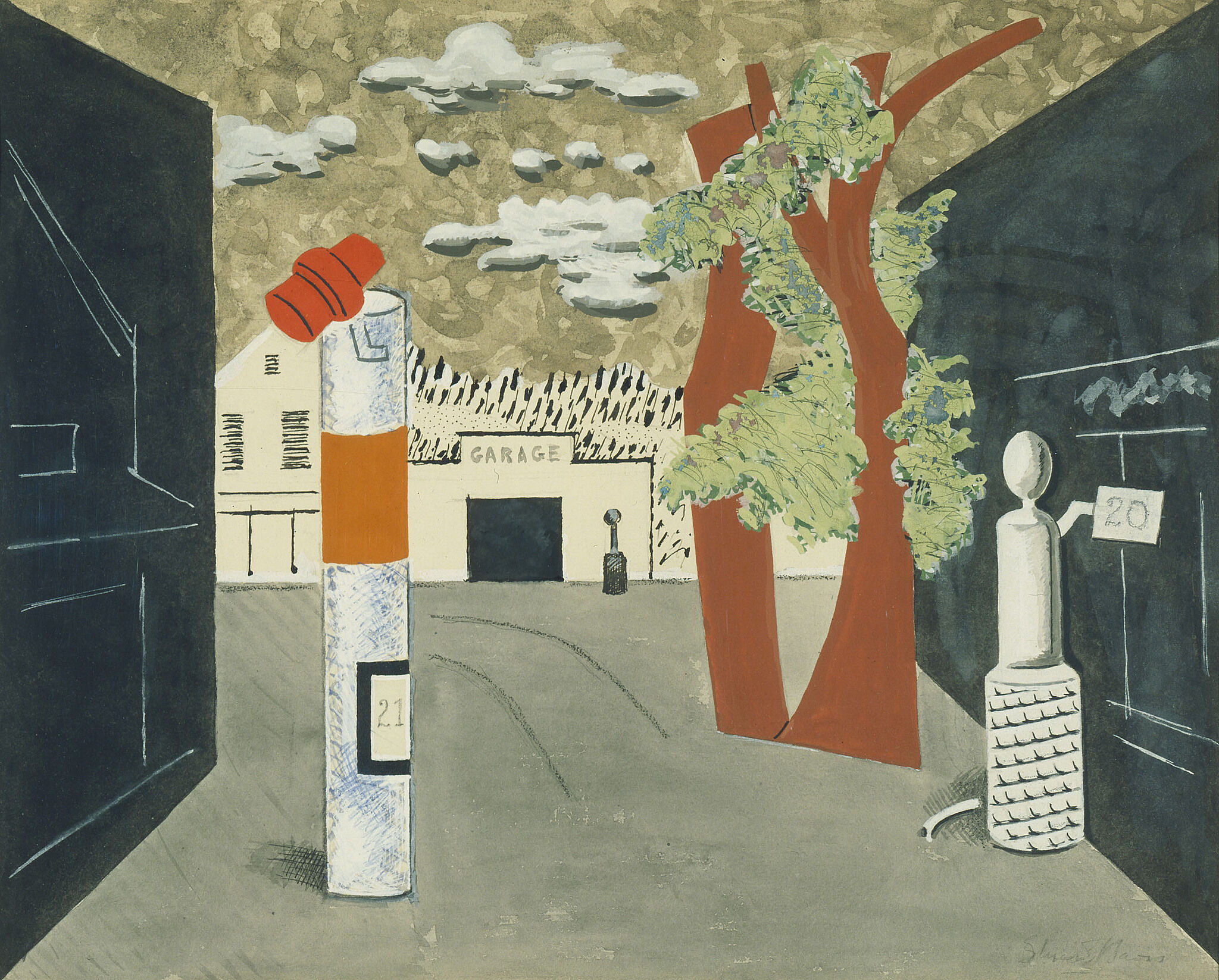
Stuart Davis (1892–1964), Town Square, c. 1929. Watercolor, gouache, ink, and pencil on paper, 15 1/2 × 22 7/8 in. (39.4 × 58.1 cm). The Newark Museum, Newark, New Jersey; purchase 1930, The General Fund. © Estate of Stuart Davis/Licensed by VAGA, New York

Town Square, 1929

0:00

Stuart Davis, House and Street, 1931

0:00

Barbara Haskell: Stuart Davis in House and Street is presenting two simultaneous views of the same scene, the intersection between Front Street and Coenties Slip.

Mark Joshua Epstein: Stuart Davis gives us two distinct zones in this painting, but he’s really careful to put them inside these very obvious borders. We get the black border, and then outside of the black border, the red border with the blue on the left side. To me, that’s his way of saying, “This is the city. We encounter these things together all of the time. And I as an artist want to contain them all in one picture plane.” So on the left we have something that’s right in front of us, something we would walk by on the street, a fire escape that we can see right up close, and on the right side we have something else in the distance that’s a little more elusive. We don’t exactly know what’s around that curve, or what’s in that gridded building in the back.

Barbara Haskell: In this piece, Davis is presenting his idea that the experience of modernity has to do with simultaneity. And that we're bombarded by images and see multiple images all of the time. Davis returned from Paris in 1929 and was originally horrified by the enormity of New York. He said, "How can anyone make art in the face of this enormous city?" And then as he become more acclimated, he came to see that that, in fact, was the quality of modernity, that speed and simultaneity that were exactly what characterized modern urban life. He embraced that notion.

Stuart Davis, House and Street, 1931

In Stuart Davis: In Full Swing

House and Street, 1931

House and Street depicts an intersection in lower Manhattan. In the painting, which Davis based on a 1926 sketch, the artist juxtaposed the facade of a building on Front Street with the Third Avenue elevated-train tracks turning from Front Street onto Coenties Slip to suggest the simultaneity of perceptions that he felt characterized modern urban life. Fascinated with the graphic language of advertising, he included a reference to Alfred Smith’s 1926 reelection campaign for governor of New York along with a sign for Front Street and the logo of the Bell Telephone Company.

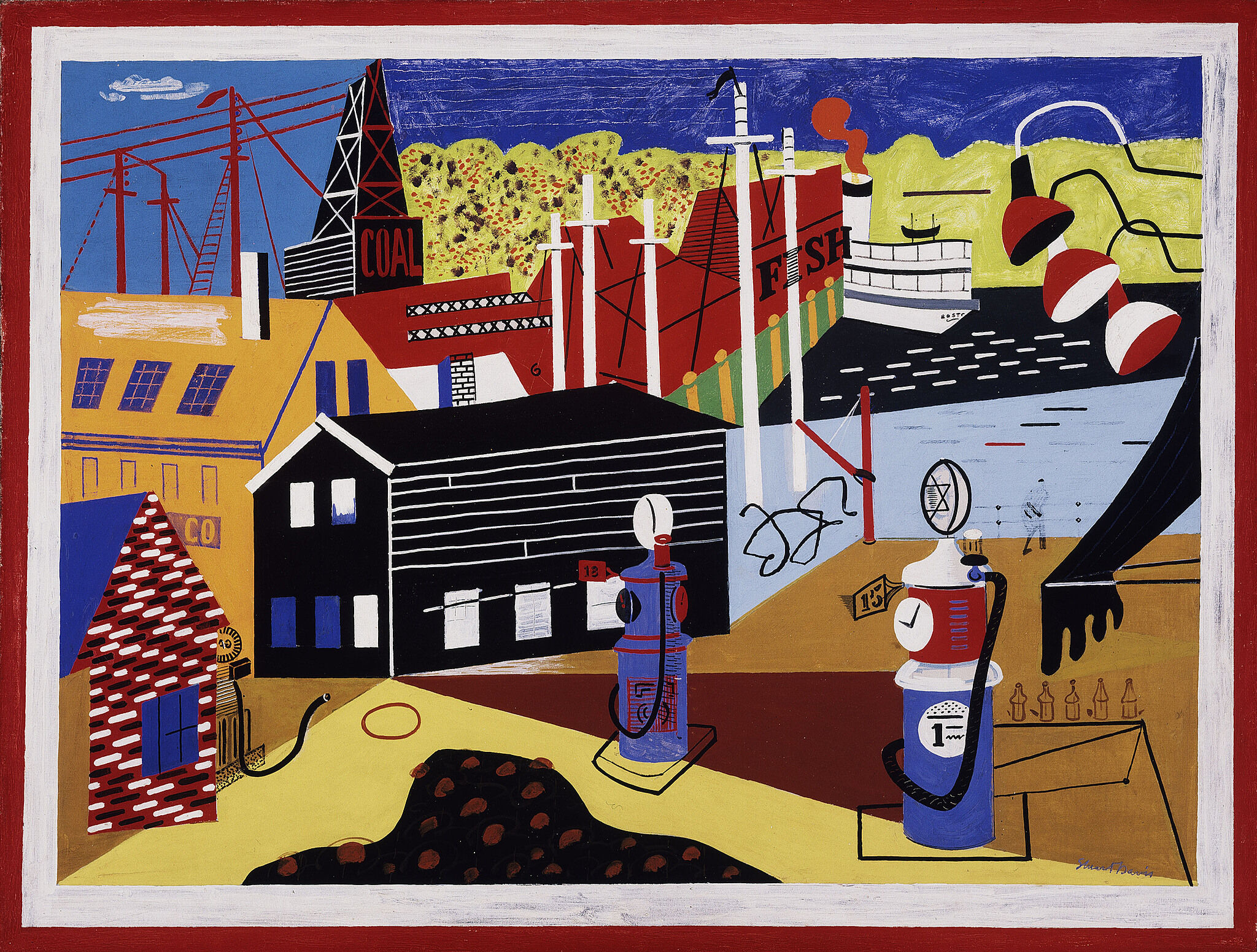
Stuart Davis (1892–1964), Landscape with Garage Lights, 1931–32. Oil on canvas, 32 x 42 in. (81 x 106.5 cm). Memorial Art Gallery of the University of Rochester; Marion Stratton Gould Fund. © Estate of Stuart Davis/Licensed by VAGA, New York

Landscape with Garage Lights,
1931–32

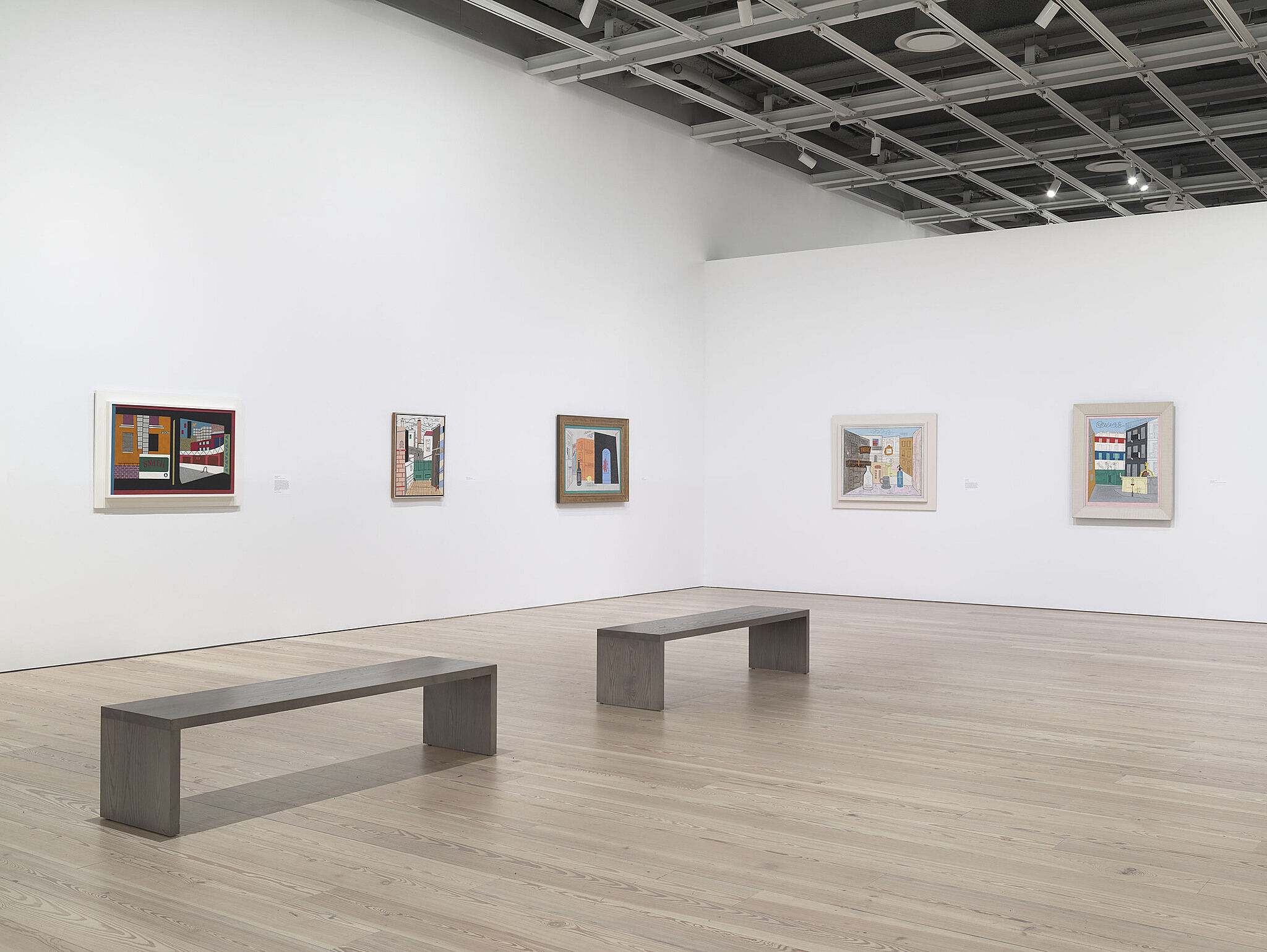
Installation view of Stuart Davis: In Full Swing (Whitney Museum of American Art, New York, June 10–September 25, 2016). Photograph by Ron Amstutz


Explore works from this exhibition
in the Whitney's collection

View 7 works

On the Hour

A 30-second online art project:
Frank WANG Yefeng, The Levitating Perils #2

Learn more about this project

Learn more at whitney.org/artport

On the Hour projects can contain motion and sound. To respect your accessibility settings autoplay is disabled.