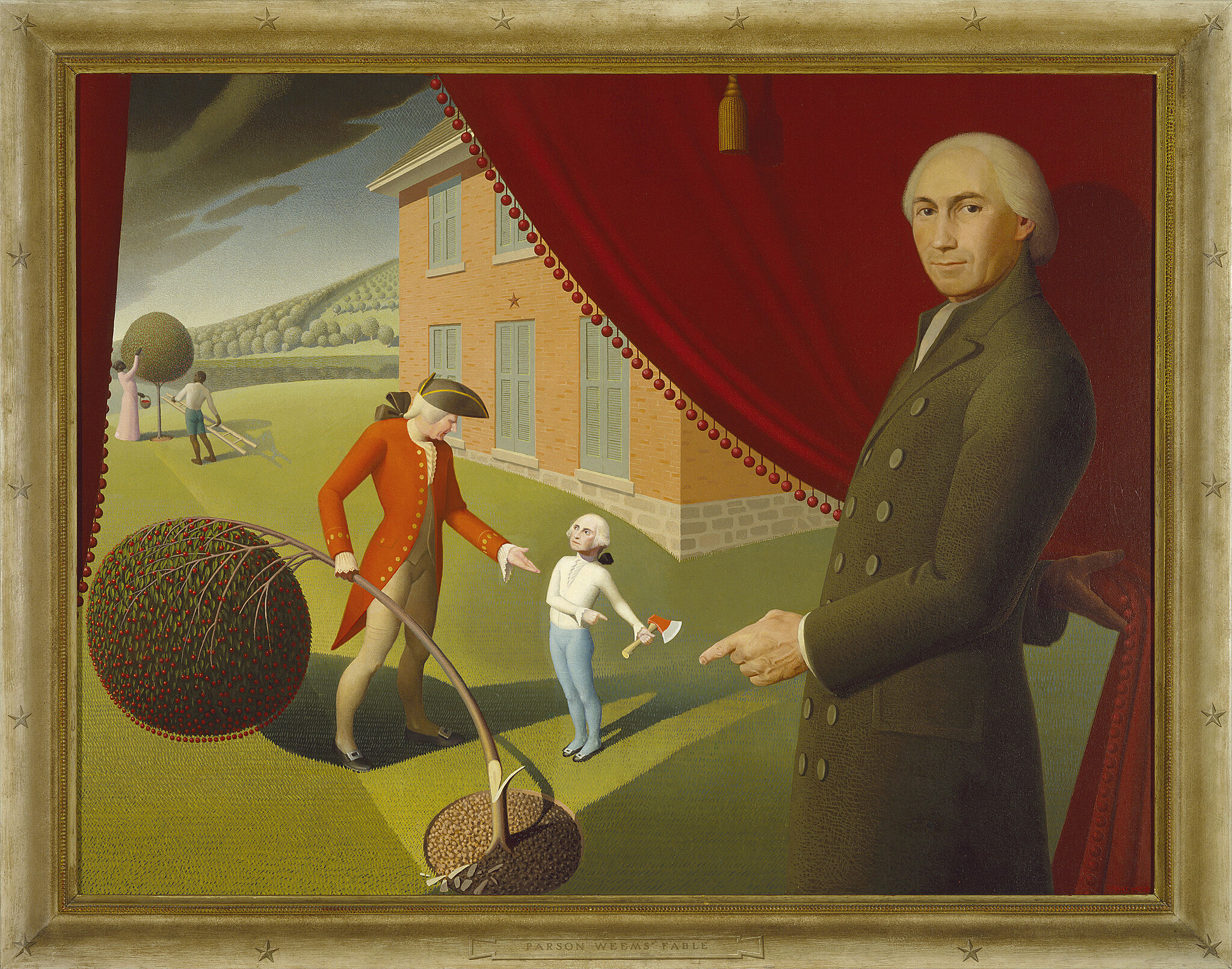
Wood intended this painting, which depicts Parson (Mason Locke) Weems’s 1806 fable of a young George Washington virtuously confessing to having cut down his father’s cherry tree, to inspire national pride. Setting up the image like a stage play, Wood portrayed Weems standing in the foreground, lifting a curtain to reveal the drama of the future president’s admission of guilt. By showing the story as fiction, Wood aimed to avoid the patriotic excess associated with fascist exploitation of national mythologies. Despite Wood’s optimistic intentions, the painting’s effect is unsettling. This feeling may arise in part from his depiction of a stern father admonishing a young Washington with the adult president’s head—an expression, perhaps, of his own powerful and occasionally conflicted memories of childhood.
From today’s perspective, the two black figures picking cherries in the background of a painting about Washington—who, like his father, was a slaveholder—serve as a reminder of slavery’s role in the making of the United States. Their presence undercuts the feeling of pride in the nation that the artist had hoped to elicit when he painted it in 1939.