Grant Wood: American Gothic and Other Fables | Art & Artists

Mar 2–June 10, 2018


Exhibition works

8 total
Decorative Arts
Read more

Decorative Arts


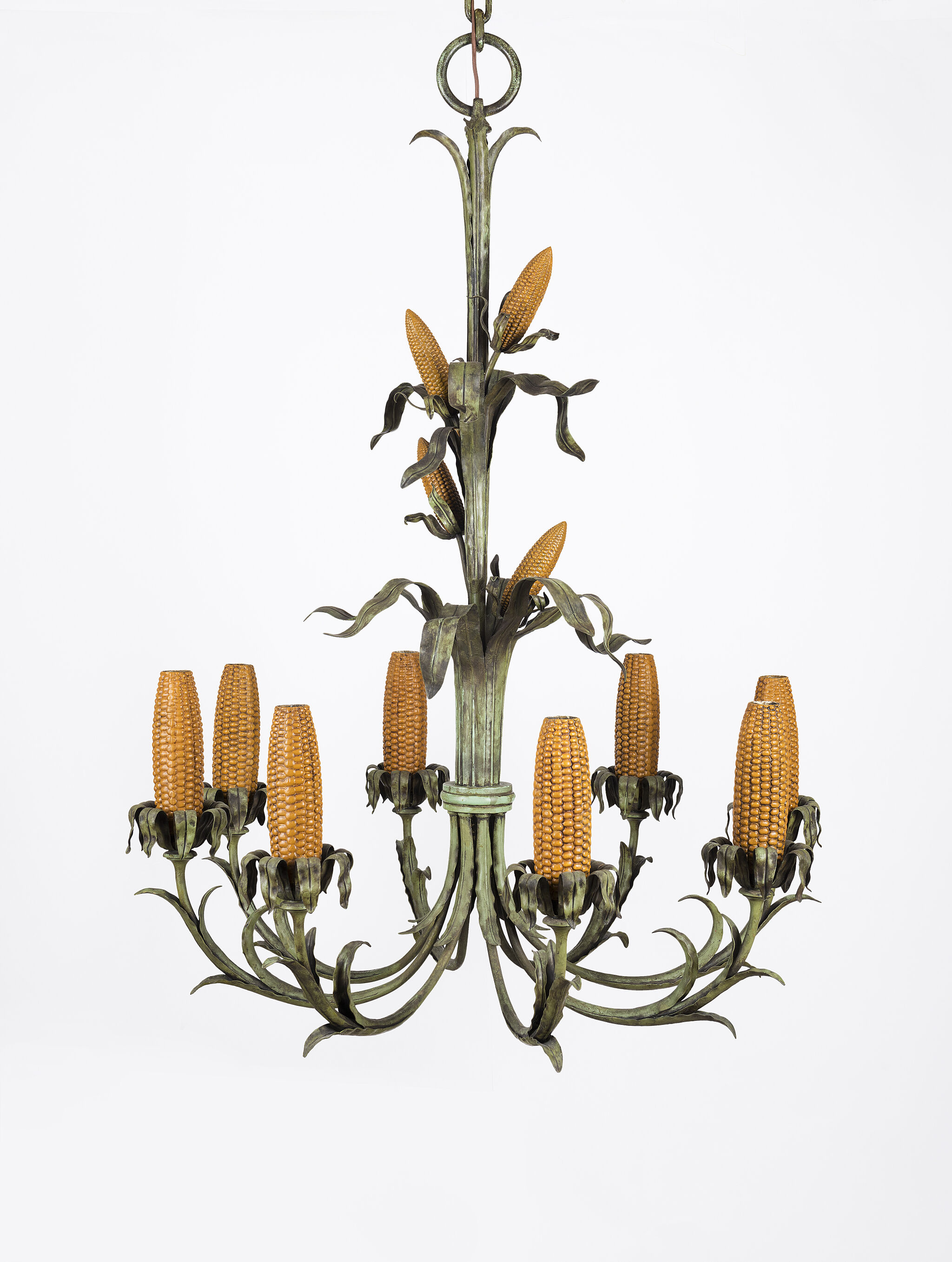
Chandelier Sculpture made from Corn Cobb

Grant Wood, Corn Cob Chandelier for Iowa Corn Room, 1925. Copper, iron, and paint, 94 x 32 x 34 in. (238.8 x 81.3 x 86.4 cm). Cedar Rapids Museum of Art, Iowa; gift of John B. Turner II 81.17.3 © Figge Art Museum, successors to the Estate of Nan Wood Graham/Licensed by VAGA, New York, NY. Photograph © 2017 Mark Tade

Decorative Arts

Grant Wood began his career as a decorative artist. Even after he shifted to fine arts, he retained the ideology and pictorial vocabulary of Arts and Crafts, a movement that promoted simplicity of design and truth to materials. To it, he owed his later use of flat, decorative patterns and sinuous, intertwined organic forms as well as his belief that art was a democratic enterprise that must be accessible to the average person, not just the elite. 

Wood’s training began early. For two summers after graduating from high school he studied at the Handicraft Guild in Minneapolis before joining the Kalo Arts and Crafts Community, a workshop and training facility for artisans in Park Ridge, Illinois, a suburb of Chicago. In 1914, he opened the Volund Crafts Shop with a fellow craftsman and began to receive recognition for his jewelry and metalwork in the Art Institute of Chicago’s prestigious annual decorative arts exhibitions. Nevertheless, commercial success eluded him and he closed the shop and returned to Cedar Rapids in 1916 to begin his painting career. The decision did not, however, bring an end to his work in decorative arts, which he continued well into the 1930s. 

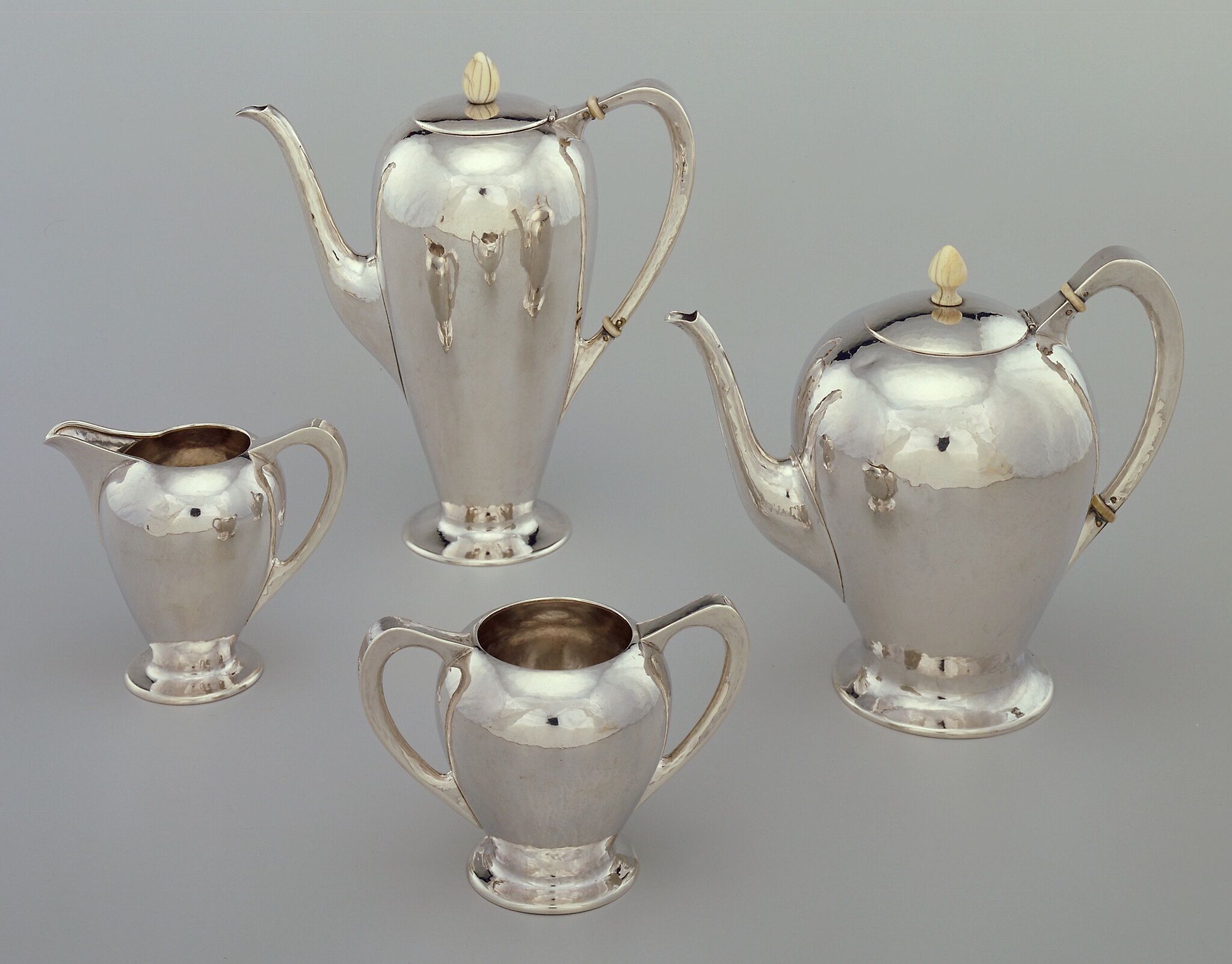
Silver tea set.
Silver tea set.

Volund Crafts Shop (Grant Wood and Kristoffer Haga). Four Piece Coffee and Tea Set, c. 1914. Silver and ivory, dimensions variable. Minneapolis Institute of Art; gift of funds from Sandra and Peter Butler. Photograph courtesy Minneapolis Institute of Art

Four Piece Coffee and Tea Set, c. 1914

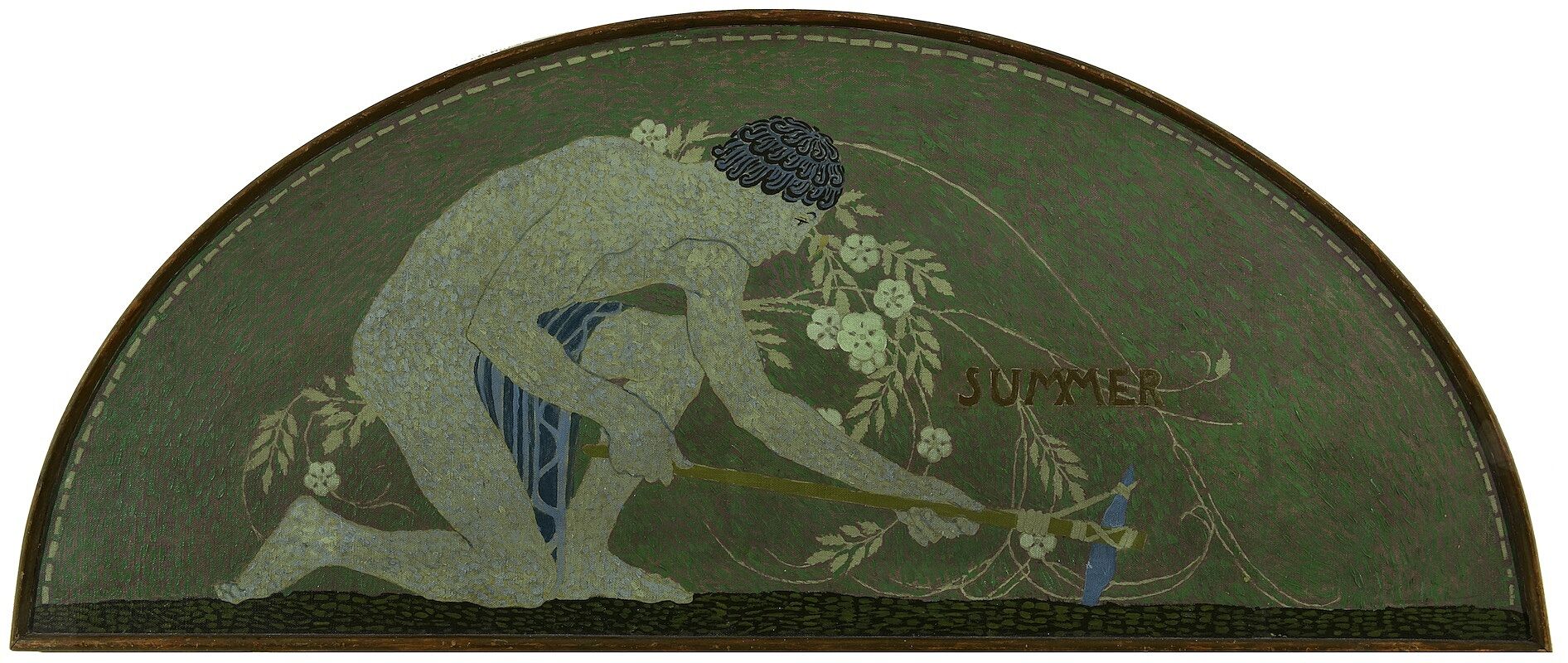
Painted lunette.
Painted lunette.

Grant Wood (1891–1942), Four Seasons Lunettes: Summer, 1923. Oil on canvas, 15 3⁄4 x 38 3⁄4 in. (40 x 98.4 cm). Cedar Rapids Community School District, Iowa; on loan to the Cedar Rapids Museum of Art, Iowa. Photograph © 2017 Mark Tade

Four Seasons Lunettes: Summer, 1923

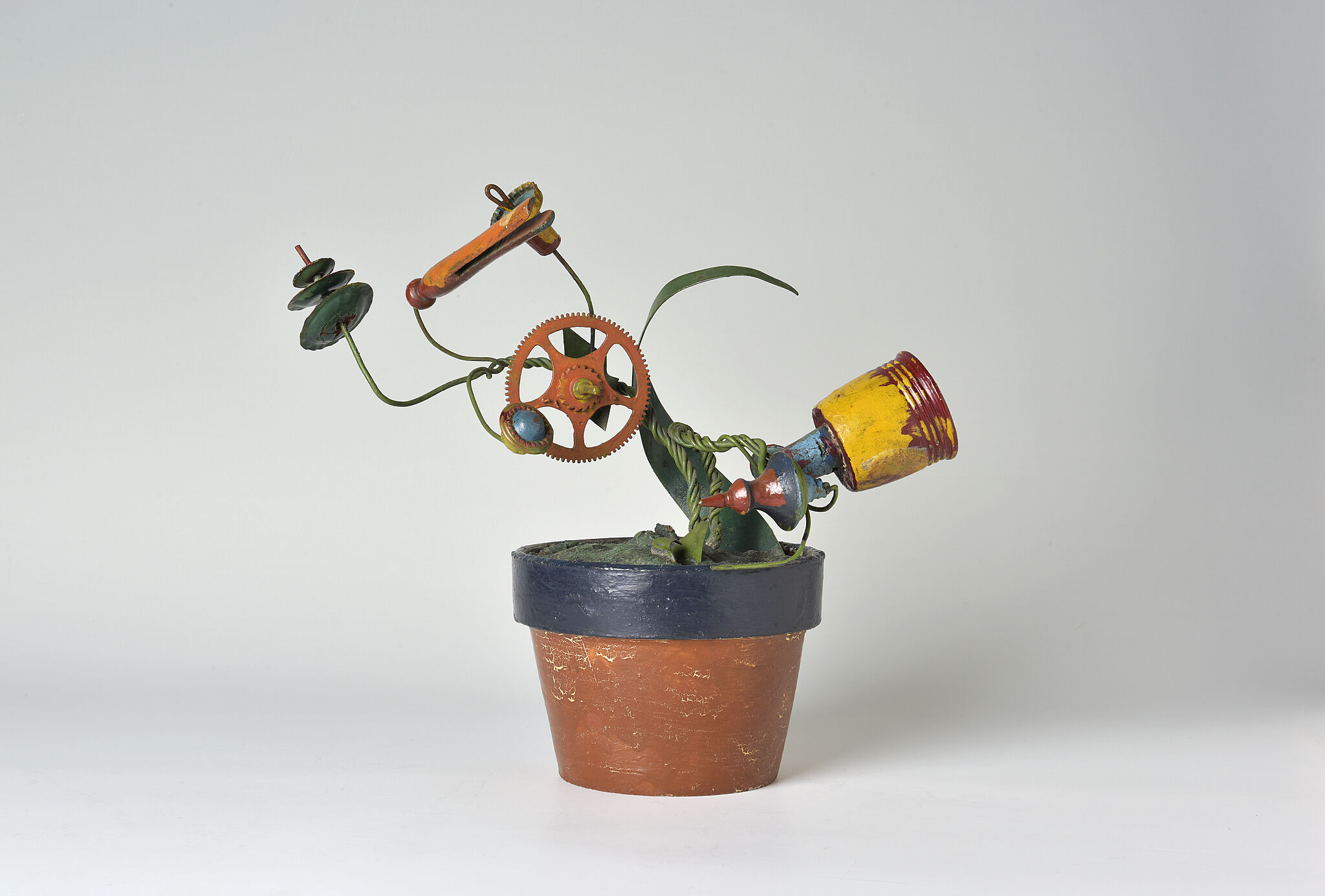
Grant Wood (1891–1942), Lilies of the Alley, Earthenware flowerpot and found objects, 12 x 6 x 10 1⁄2 in. (30.5 x 15.2 x 26.7 cm). Cedar Rapids Museum of Art, Iowa; gift of Harriet Y. and John B. Turner II. 72.12.38. © Figge Art Museum, successors to the Estate of Nan Wood Graham/Licensed by VAGA, New York, NY. Photograph © 2017 Mark Tade

Lilies of the Alley, 1925

Between 1925 and 1935, Wood lived rent-free in the hayloft of the Cedar Rapids carriage house behind the mortuary owned by his friend and patron David Turner. He transformed the space into a studio and living quarters for himself and his mother, dubbing it 5 Turner Alley. In a punning reference to the lily of the valley plant, Wood titled this sculpture and the three others like it in the exhibition after his street. He created these flowerlike forms from an assortment of found materials, including bottle caps, shoehorns, gears, and clothespins, and placed them in earthenware flowerpots, which he gave to friends. Precursors of mid-twentieth century assemblages, Wood’s lilies reveal his inventiveness and whimsical humor.

Chandelier Sculpture made from Corn Cobb

Grant Wood, Corn Cob Chandelier for Iowa Corn Room, 1925. Copper, iron, and paint, 94 x 32 x 34 in. (238.8 x 81.3 x 86.4 cm). Cedar Rapids Museum of Art, Iowa; gift of John B. Turner II 81.17.3 © Figge Art Museum, successors to the Estate of Nan Wood Graham/Licensed by VAGA, New York, NY. Photograph © 2017 Mark Tade

Corn Cob Chandelier for Iowa Corn Room, c. 1925–26

Wood received three significant commissions between 1925 and 1927 to decorate the dining rooms of hotels in Cedar Rapids, Sioux City, and Council Bluffs, Iowa. For each one, he created what became known as an Iowa Corn Room, so called because its decorations revolved around the theme of Iowa corn, subject matter that would come to dominate his art. 

Working with the artist Edgar Britton in response to a 1925 commission from hotelier Eugene Eppley to decorate the dining room of his Montrose Hotel in Cedar Rapids, Wood created a number of corncob chandeliers, including this one, as well as a 360-degree panoramic mural depicting a harvested corn field and a frieze reproducing the lyrics of the “Iowa Corn Song.”

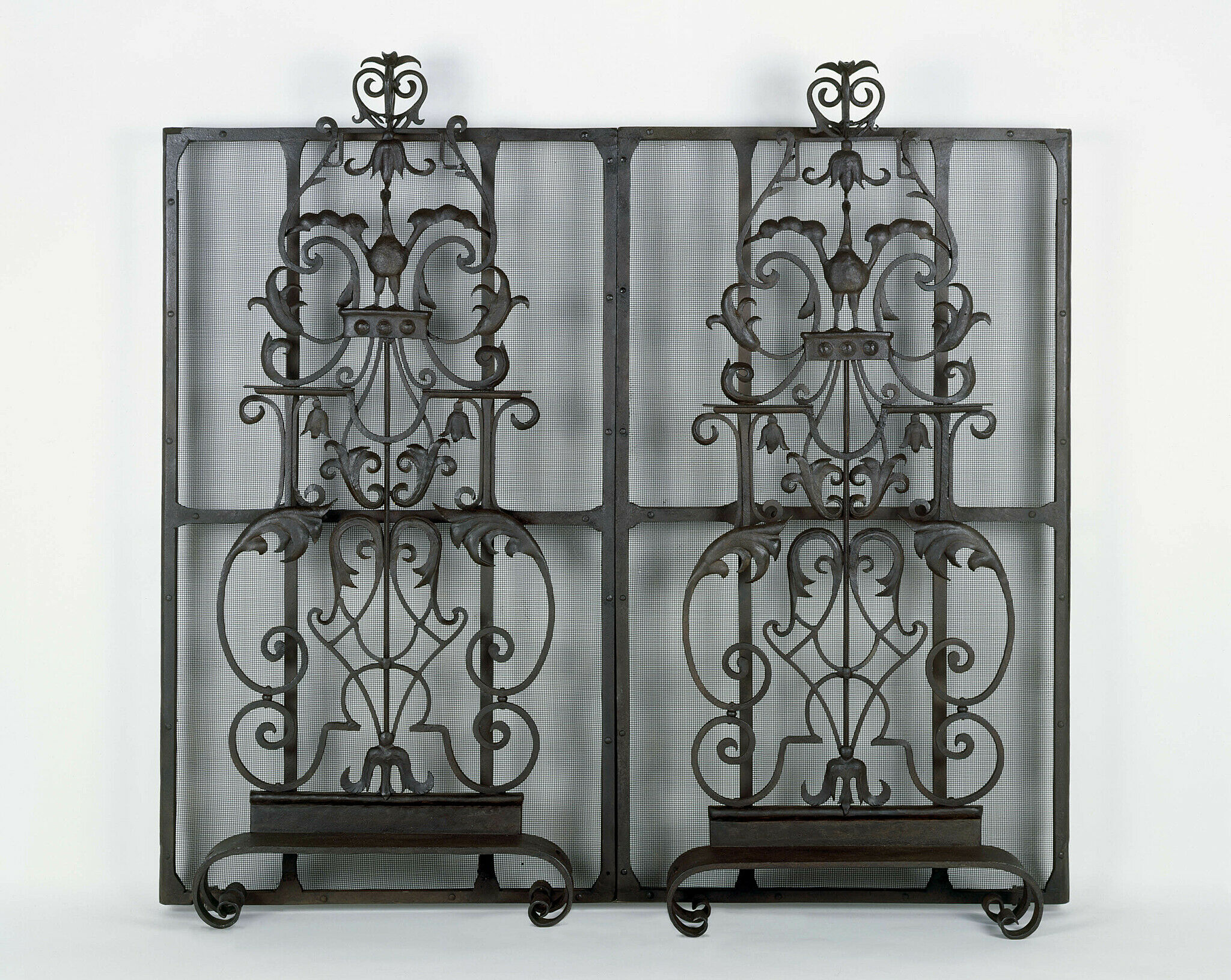
Ornaments made from fireplace screens

Grant Wood (1891–1942), Fire Screen Ornament, c. 1929–30. Wrought iron, 50 1⁄4 x 21 1⁄4 x 4 1⁄2 in. (127.6 x 54 x 11.4 cm). Cedar Rapids Museum of Art, Iowa; gift of John T. Hamilton III 69.12. © Figge Art Museum, successors to the Estate of Nan Wood Graham/Licensed by VAGA, New York, NY

Fire Screen Ornament, c. 1929–30

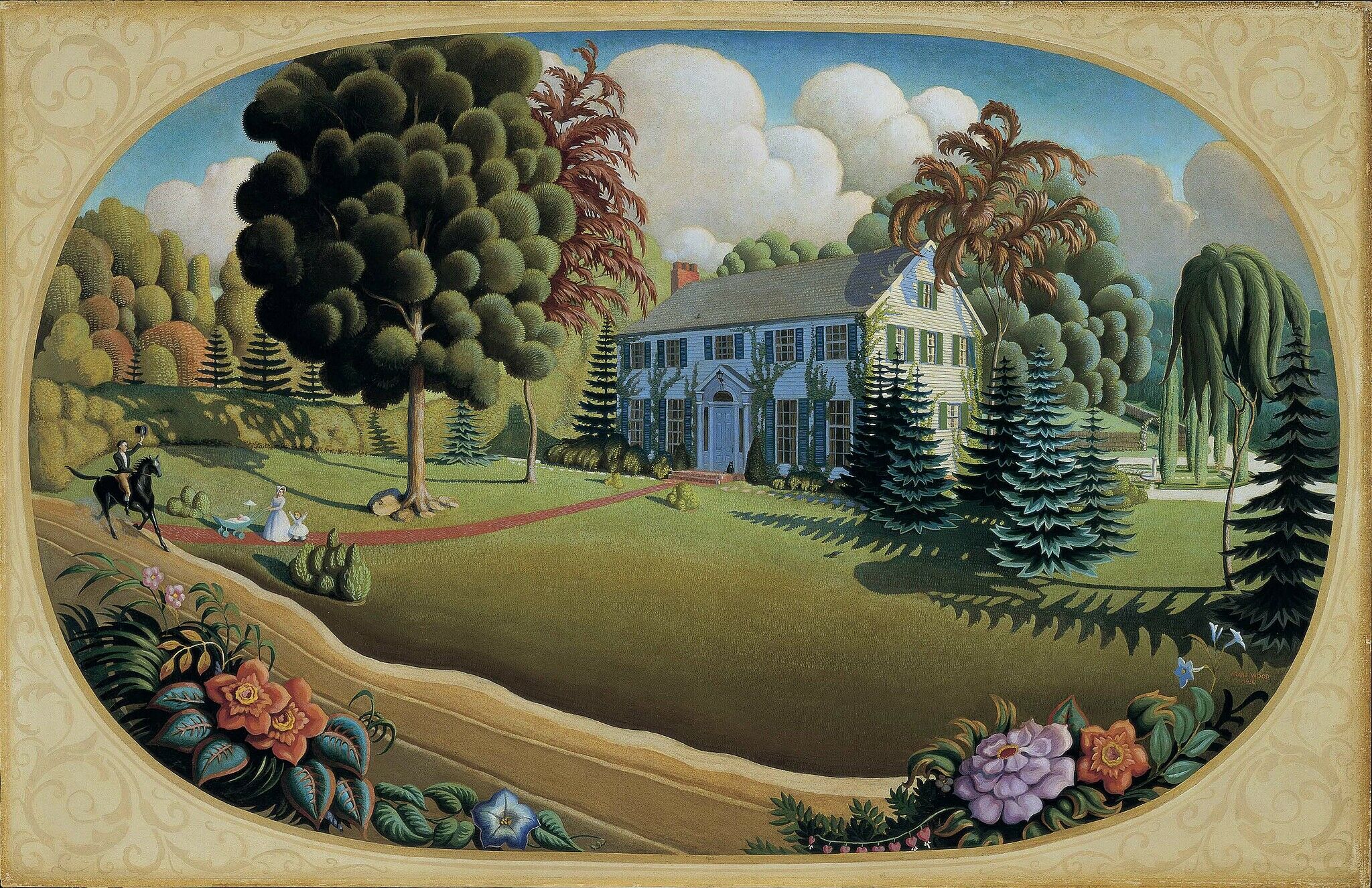
Oil painting of house and trees.

Grant Wood, Overmantel Decoration, 1930. Oil on composition board, 41 x 64 in. (104.1 x 162.6 cm). Cedar Rapids Museum of Art, Iowa; gift of Isabel R. Stamats in memory of Herbert S. Stamats 73.3. © Figge Art Museum, successors to the Estate of Nan Wood Graham/Licensed by VAGA, New York, NY

Overmantel Decoration, 1930

Painted in the same year as American Gothic, Overmantel Decoration was part of the decorative scheme for the neocolonial home Wood designed for Mr. and Mrs. Herbert Stamats, a local Cedar Rapids publisher and his wife. Placing large painted panels, usually of landscapes, over the fireplace was common in the eighteenth and early nineteenth centuries. In depicting the Stamats family strolling in old-fashioned dress in front of their brand-new home, Wood drew on sources as varied as Currier and Ives lithographs, his mother’s willowware china platter, and family photo albums to create a fanciful scene of pre-industrial America that speaks to his romance with the world of his childhood of the 1890s.


Explore works from this exhibition
in the Whitney's collection

View 5 works

On the Hour

A 30-second online art project:
Frank WANG Yefeng, The Levitating Perils #2

Learn more about this project

Learn more at whitney.org/artport

On the Hour projects can contain motion and sound. To respect your accessibility settings autoplay is disabled.