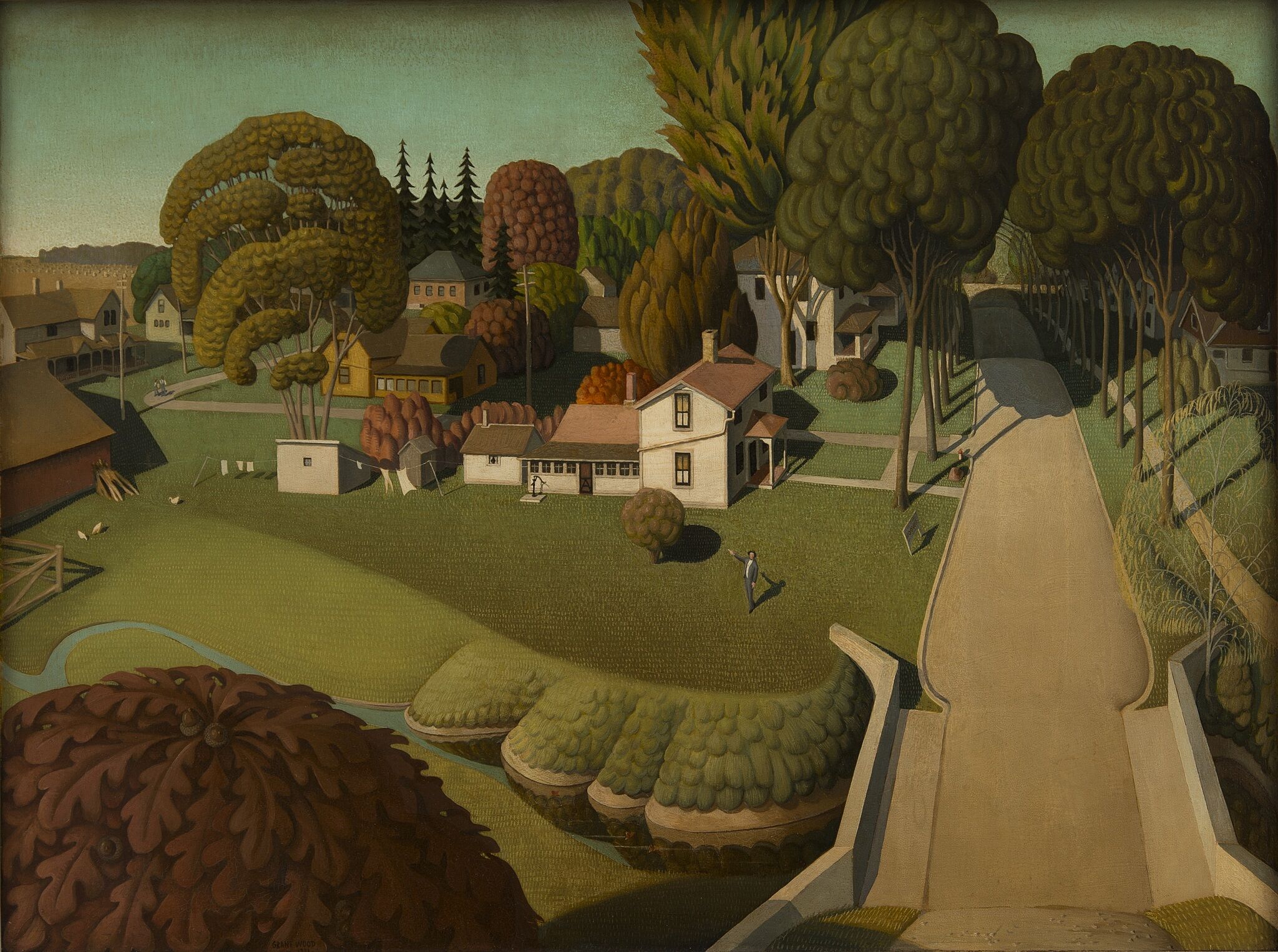
Herbert Hoover (1874–1964), the thirty-first U.S. president, was born in West Branch, Iowa, in a modest three-room cottage where he lived for the first six years of his life. Although subsequent owners made the cottage nearly invisible by moving a two-story house in front of it, Hoover’s presidency turned his childhood home into a national tourist attraction.
In Wood’s painting, a tiny figure stands on the lawn pointing theatrically to the original home. Wood’s initial drawing for this work includes an insert featuring Hoover’s humble birthplace—a visual device like those used by nineteenth-century cartographers to symbolize progress. In both of Wood’s works, miniature buildings, foliage, and people resemble painted toys, creating an eerie hallucinatory effect that hints at Wood’s attempt to recapture the magic and innocence of childhood. The Iowa Republicans who had commissioned the work as a present to Hoover disliked the image and returned the painting to Wood without payment.