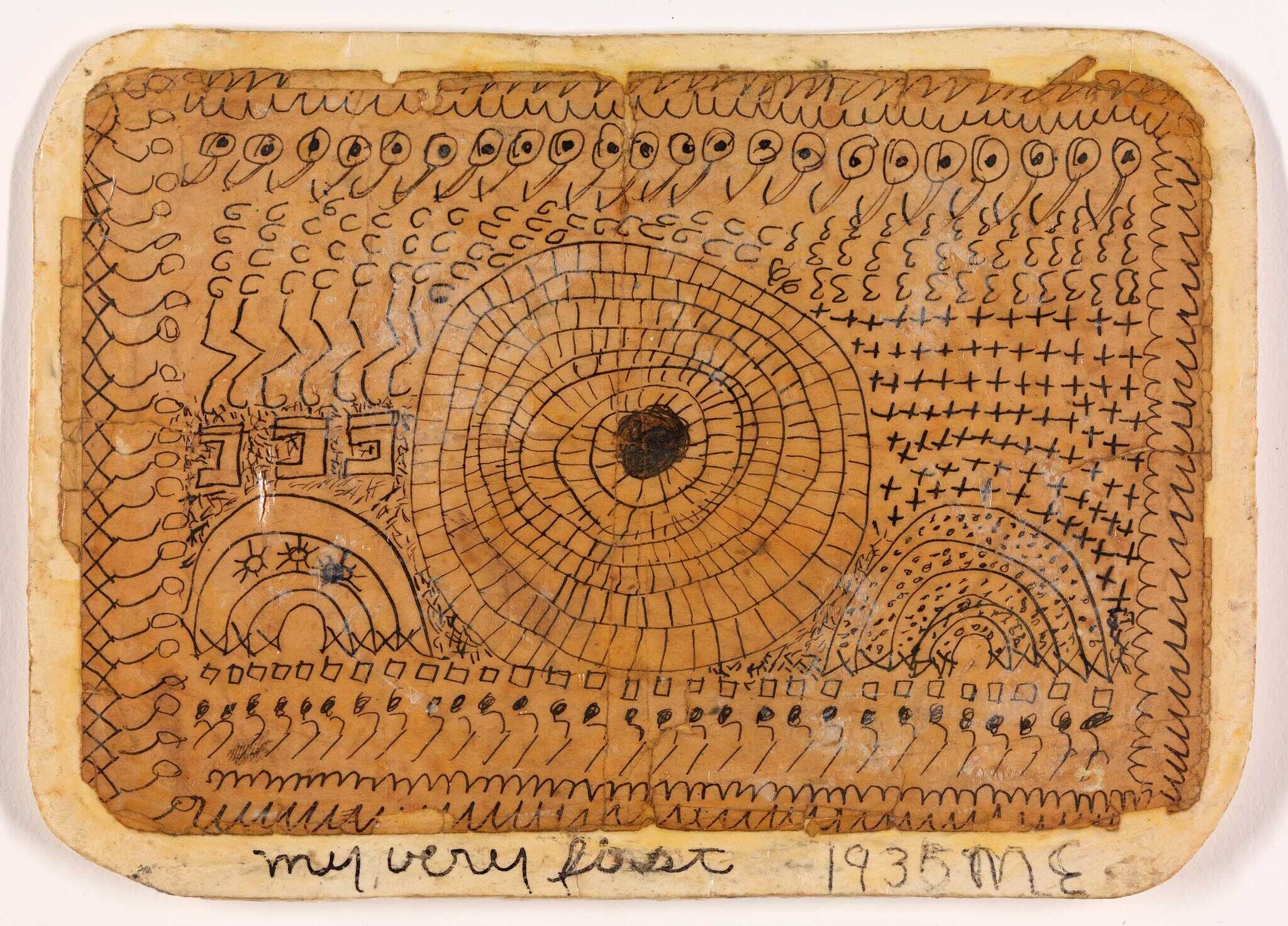
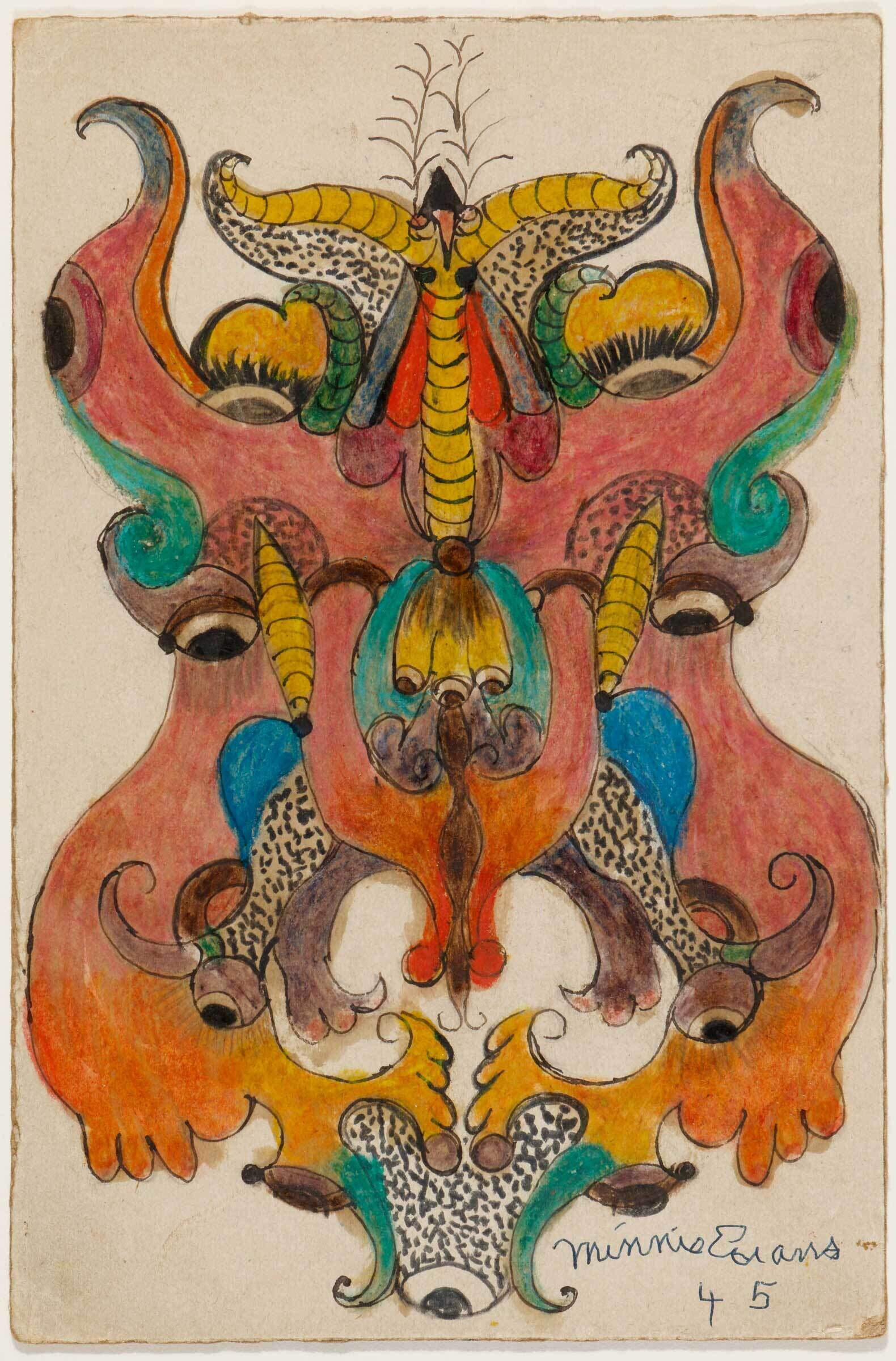
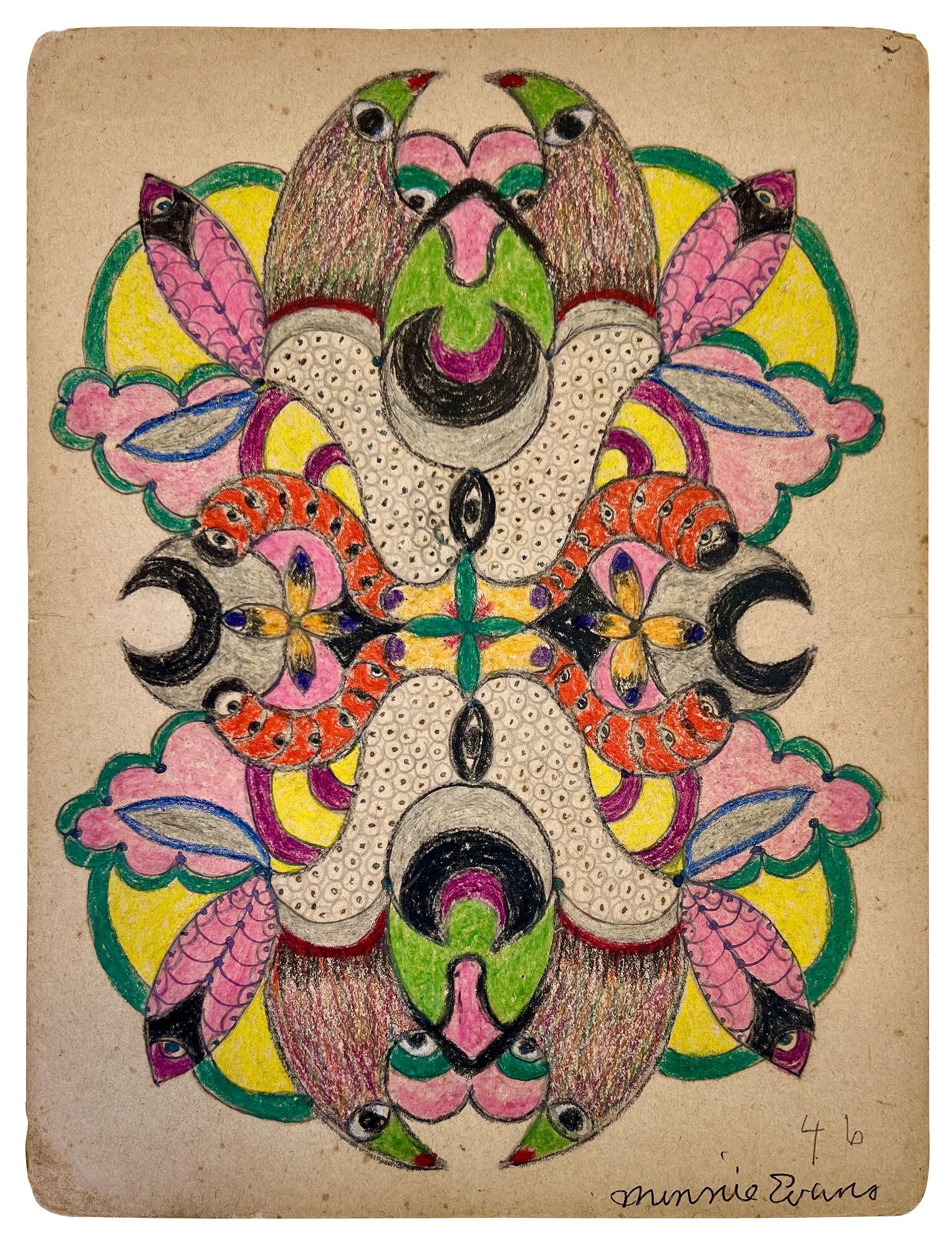
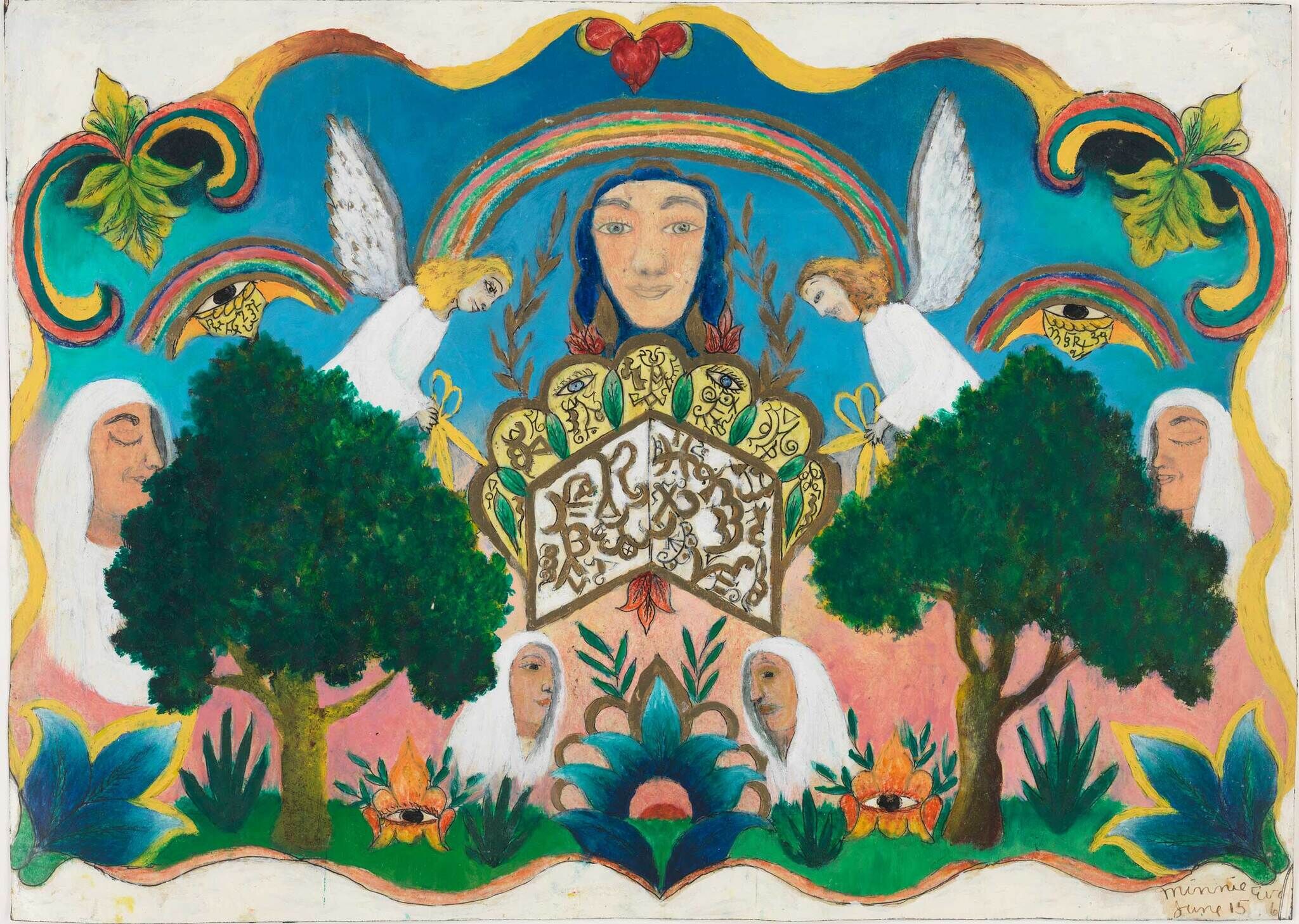
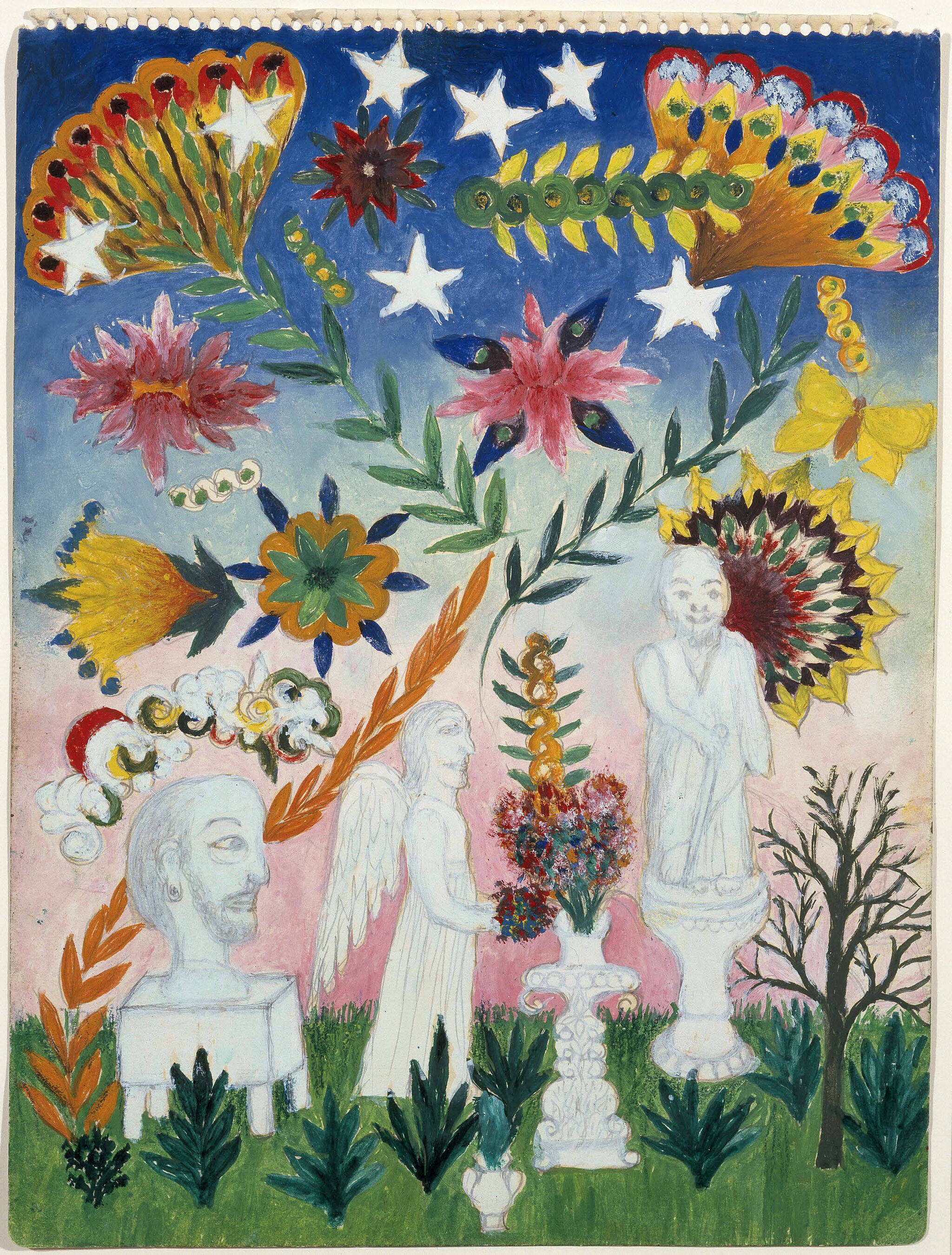
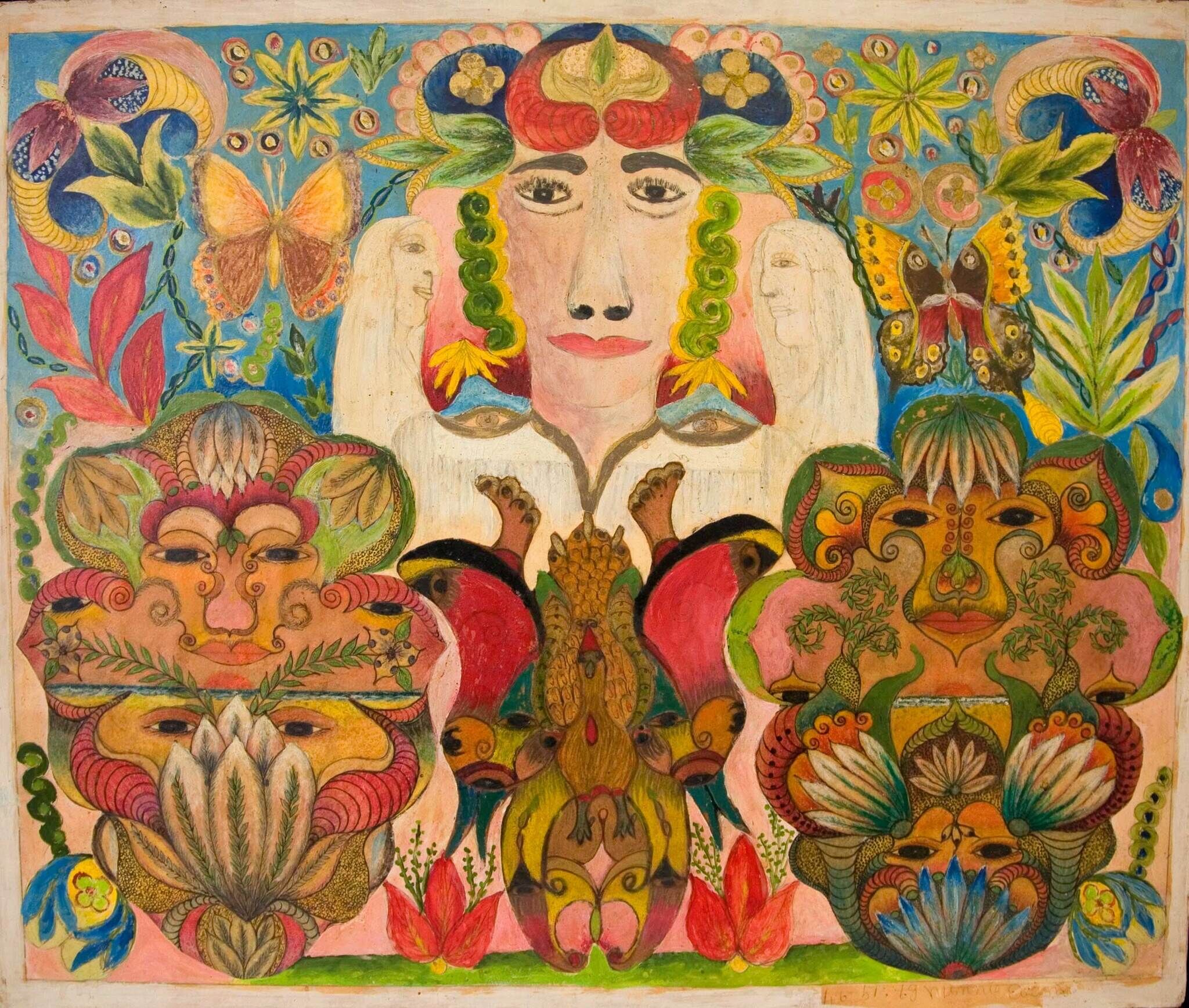
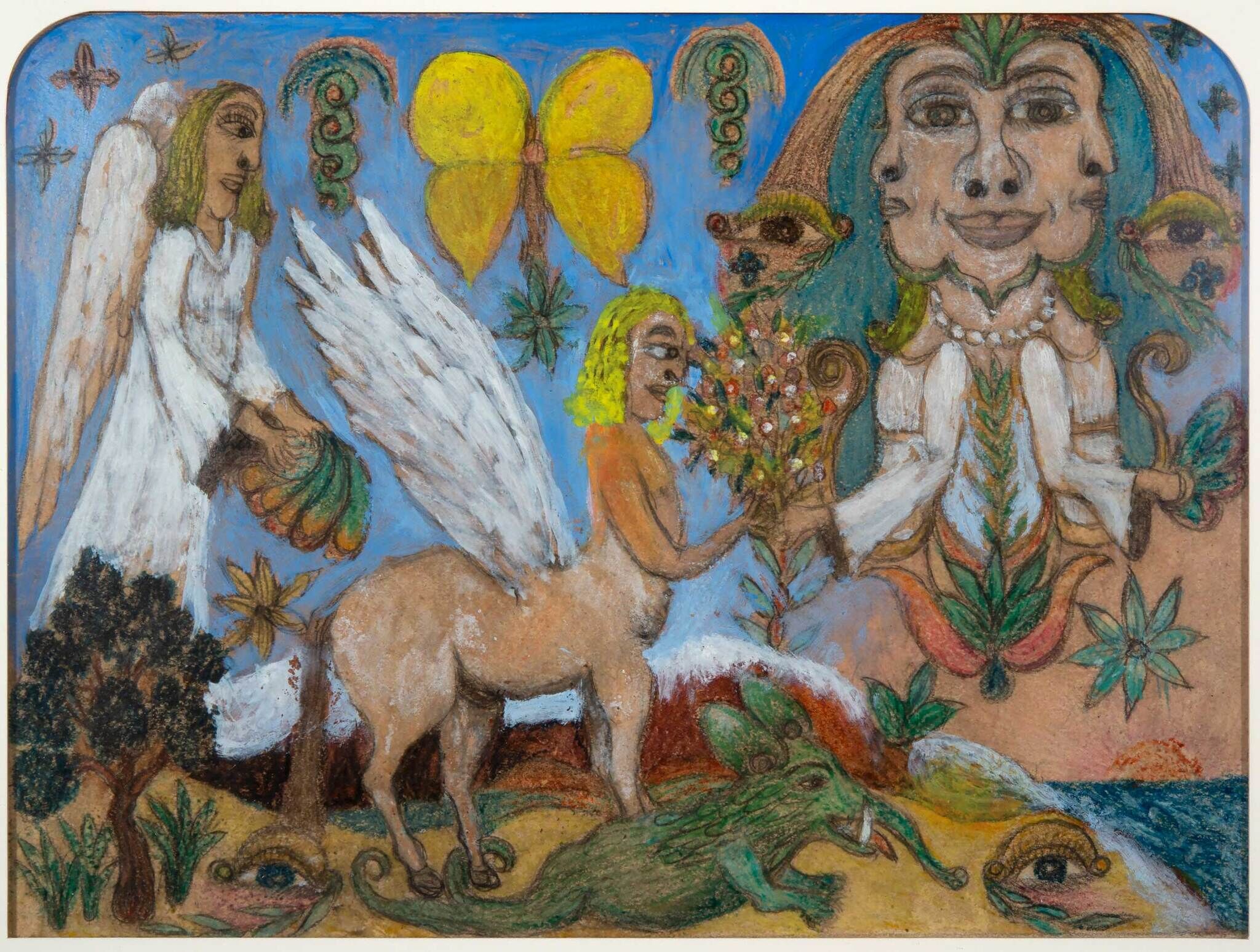
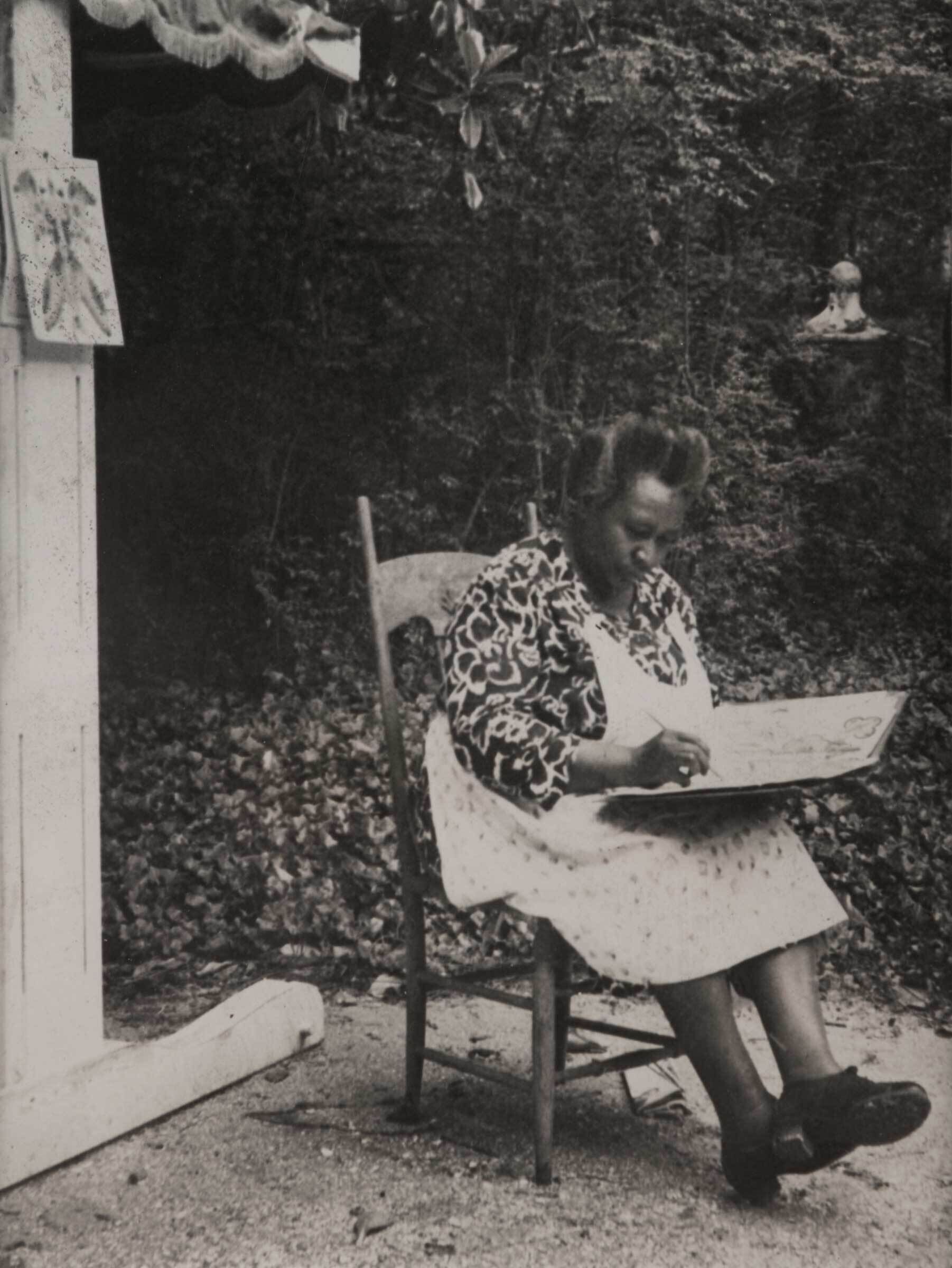
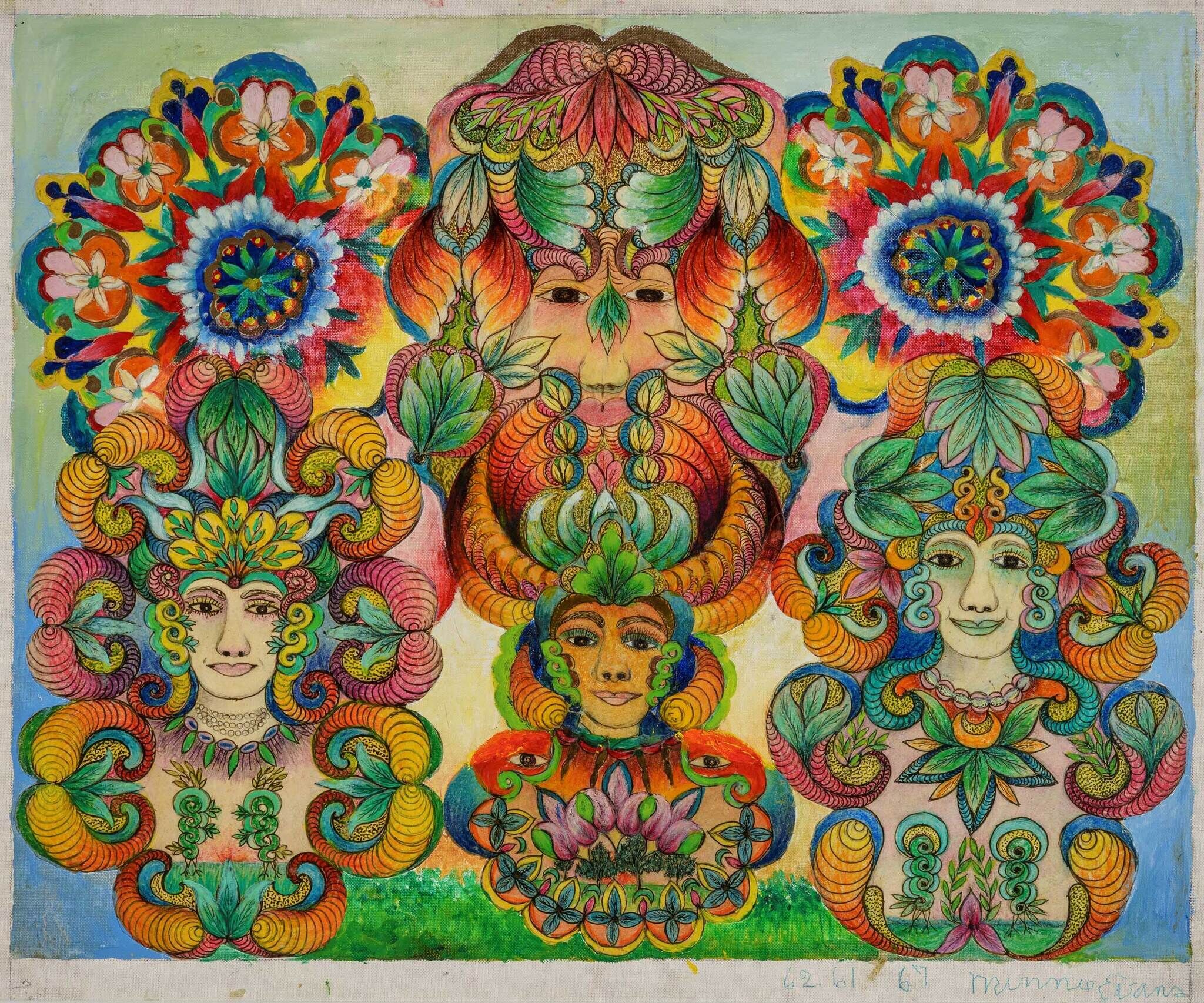
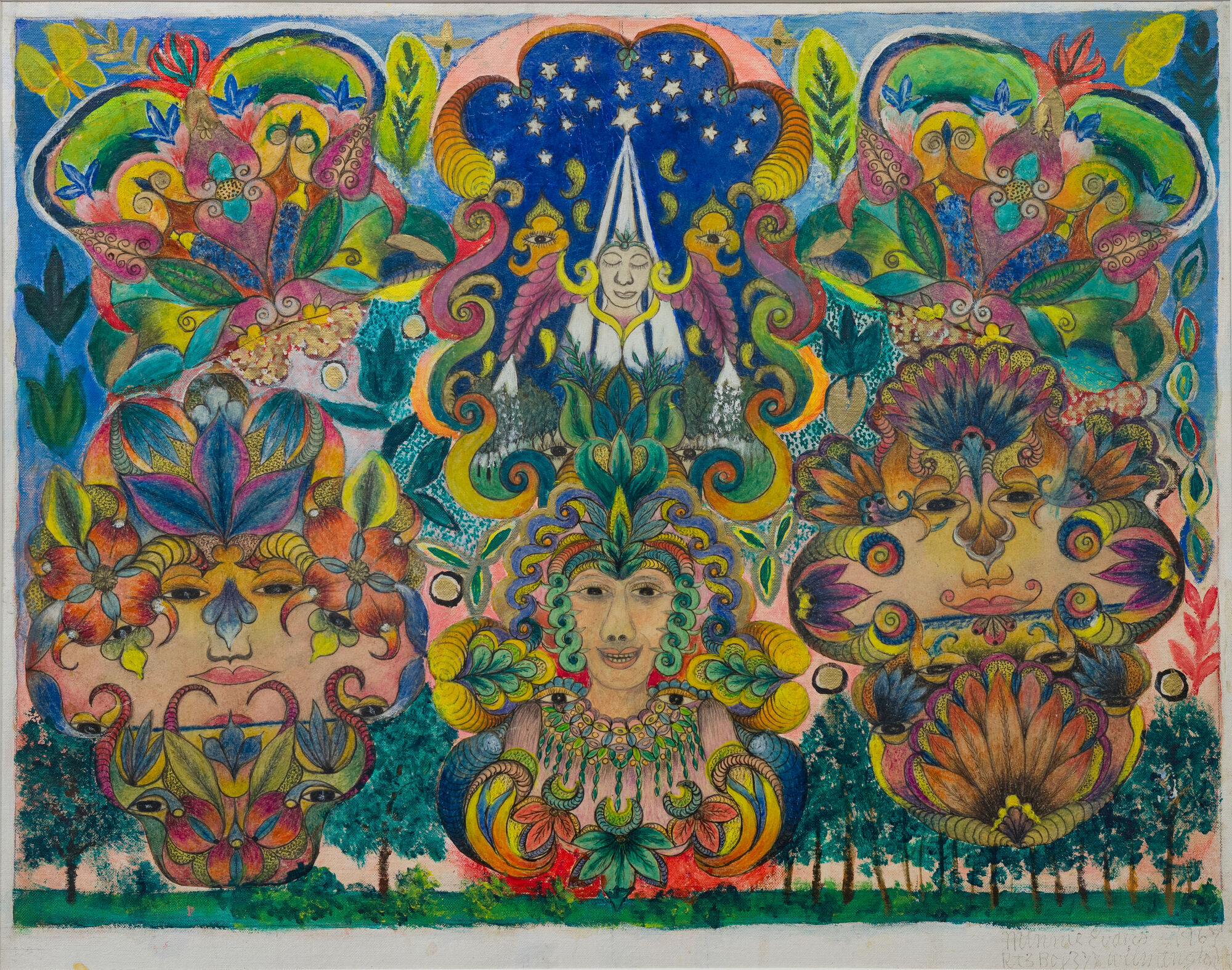
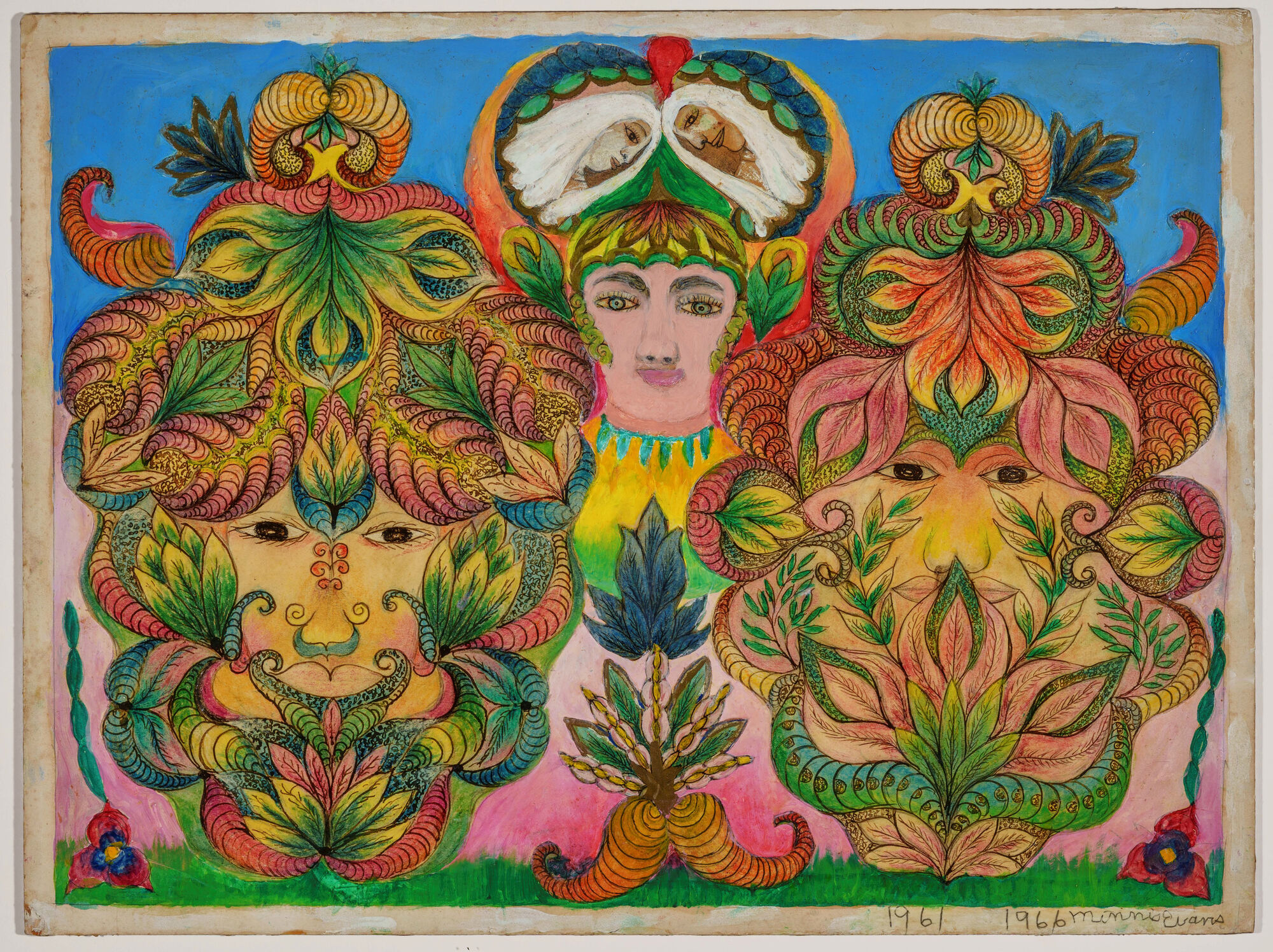
In 1966 Evans traveled twice to New York to see exhibitions of her work that were presented at two churches on Manhattan's Upper East Side. While in the city, she visited the Metropolitan Museum of Art and the American Museum of Natural History, and what she saw inspired her to work at a larger scale. She began cutting out images from previous work, gluing them to larger and sturdier surfaces such as canvas board, and adding design elements to create densely packed, all-over compositions. During the next several years, Evans made approximately twenty of these collages. Their dual expression of harmony and disquiet reflects Evans's experiences in the Jim Crow South as well as her belief in God's ultimate triumph over evil. As she once said, "The world is filled with darkness, but Jesus is going to change that. He is going to call the righteous out of the dust and the ground. We are near the end of human history."
This painting recalls the costumes worn annually during Carnival in Trinidad. Evans never visited the island, but she felt an affinity for it as the home of her ancestors and might have been inspired by photographs of its Carnivals or those of the related Mardi Gras held in New Orleans.
Untitled (Three Large Figures, Night Sky and Stars Collage), 1967
Describing one of the visions that inspired her art, Evans spoke about how she could see pictures spread across the sky and coming out of her lush, leafy surroundings: "I dreamt the whole sky the whole element was nothing but pictures put together like this. Just as far as I could see. They were all in the yard. They was all in the bushes. All on the trees."