The Lost World: The Art of Minnie Evans

Through Jan 10, 2027


Exhibition feature

9 total
2
Read more

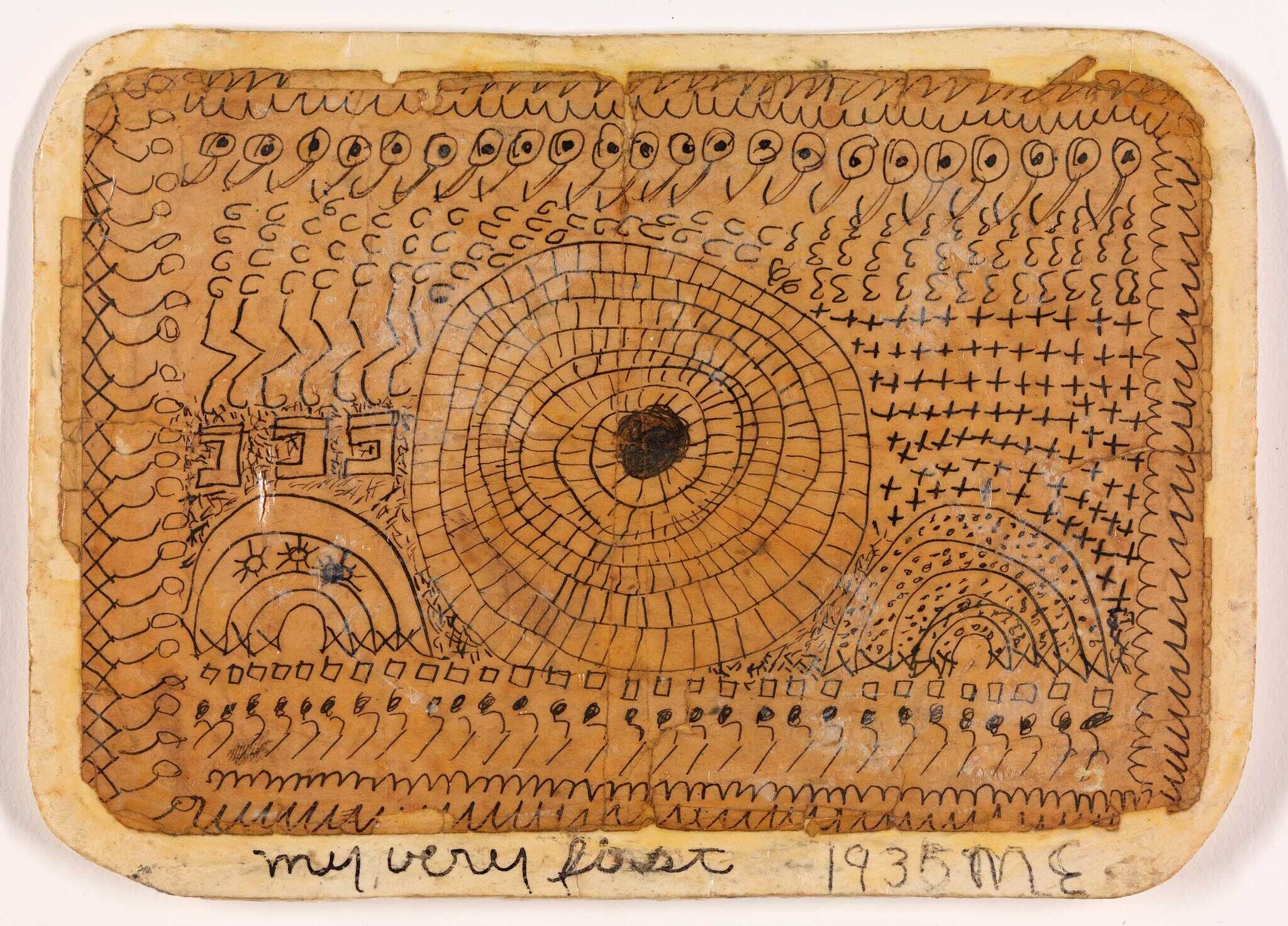
Minnie Evans, My Very First, 1935. Pen and ink on paper, 5 1/2 × 7 7/8 in. (14 × 20 cm). Whitney Museum of American Art, New York; gift of Dorothea M. and Isadore Silverman 75.8.1. © The Estate of Minnie Evans

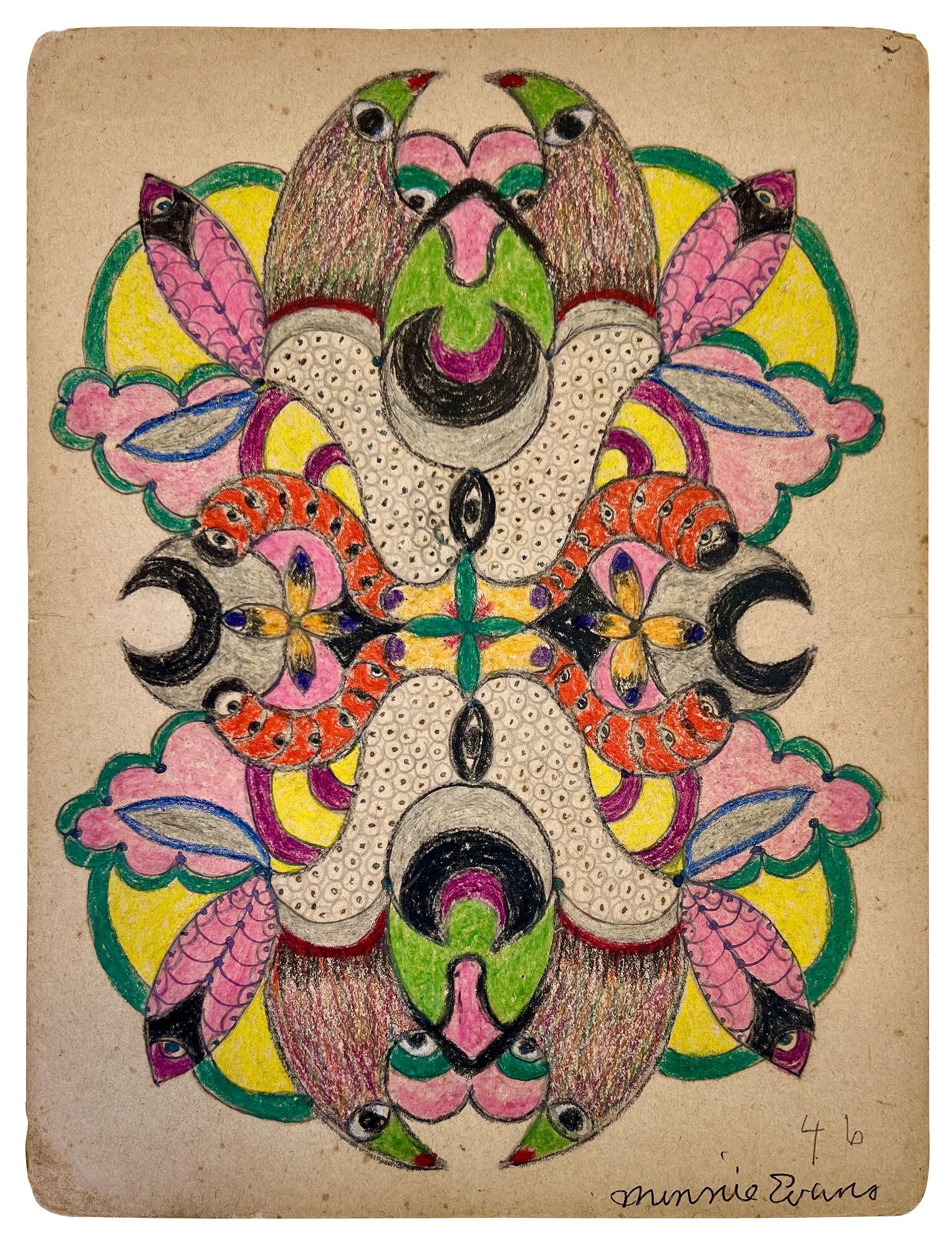
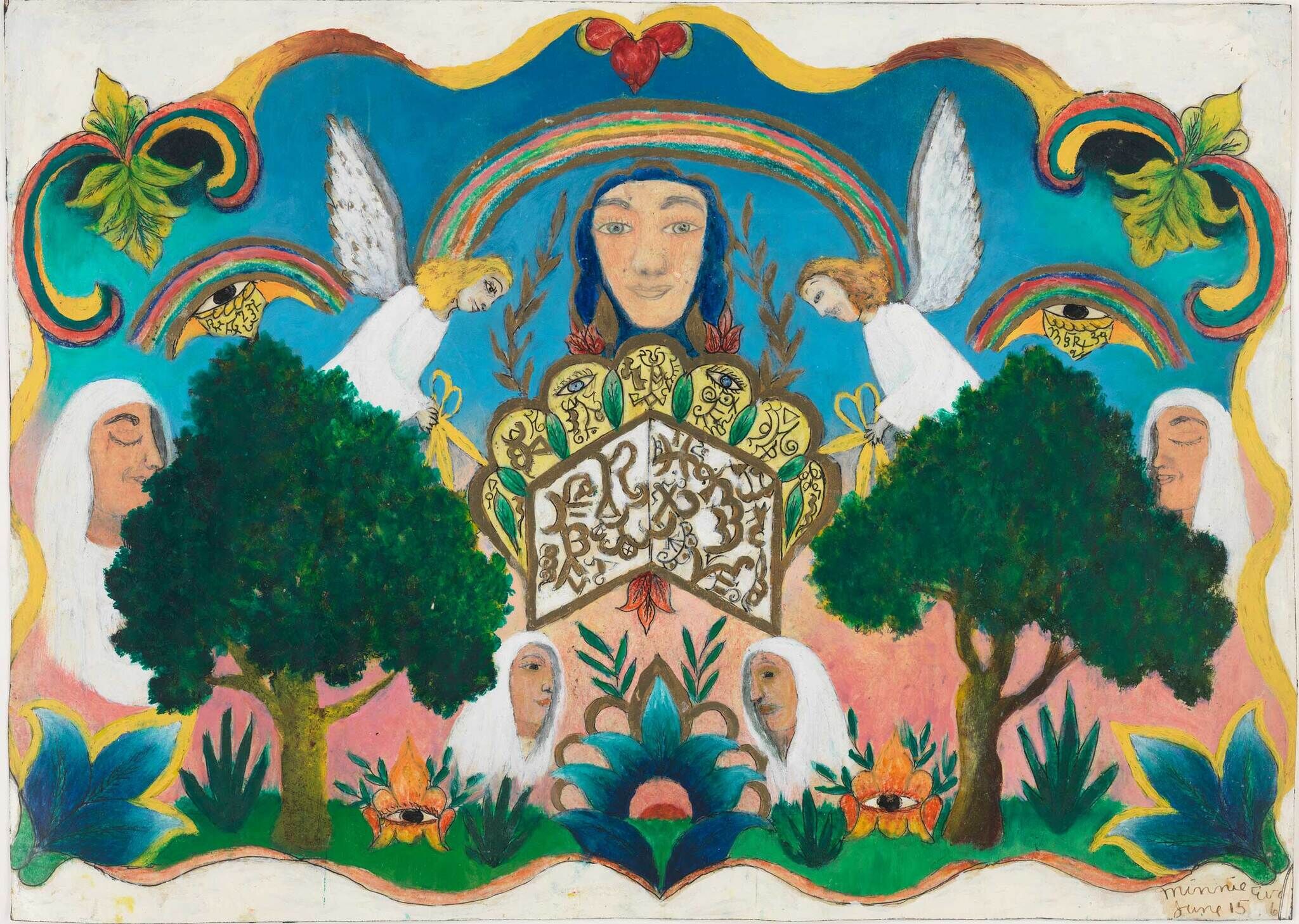
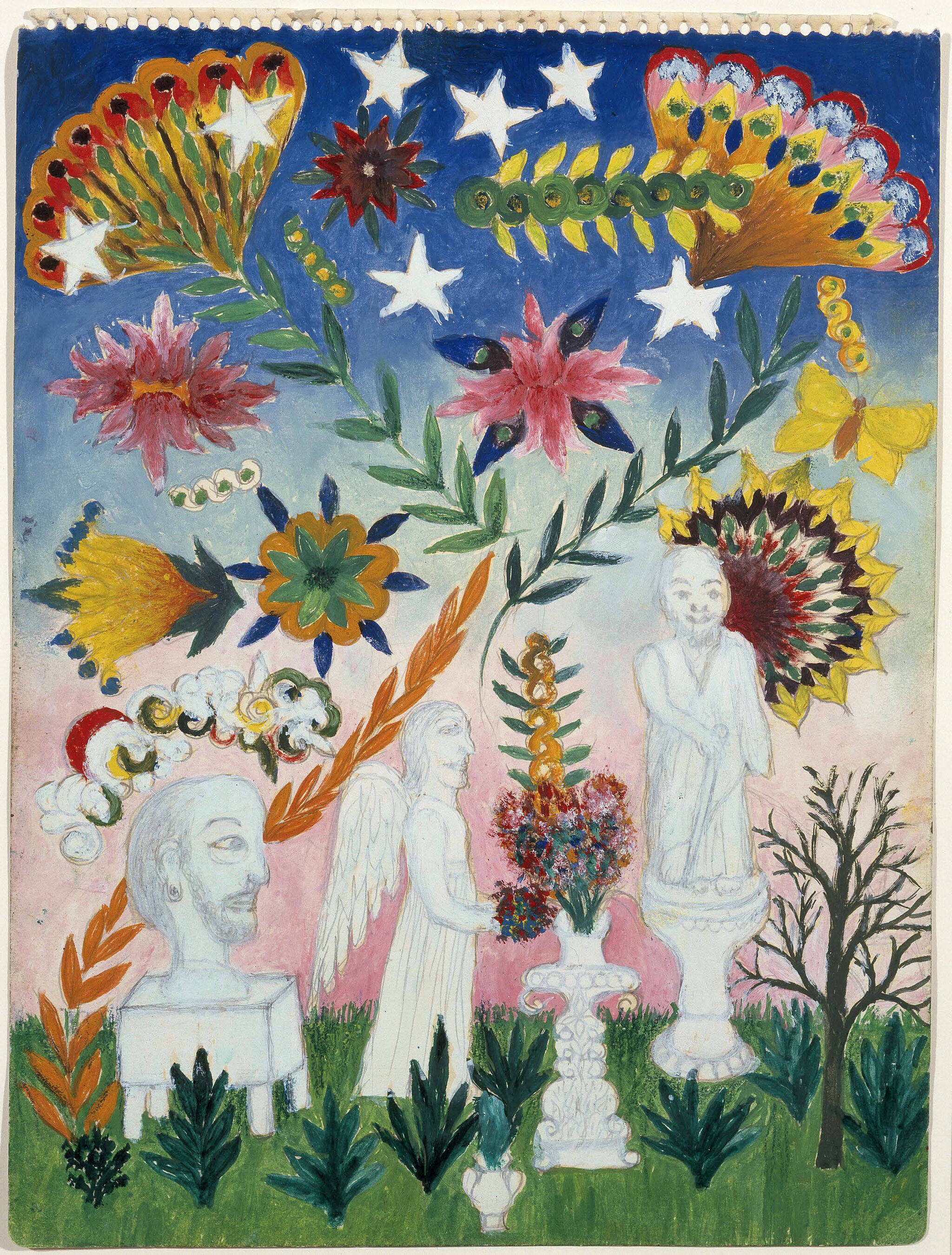
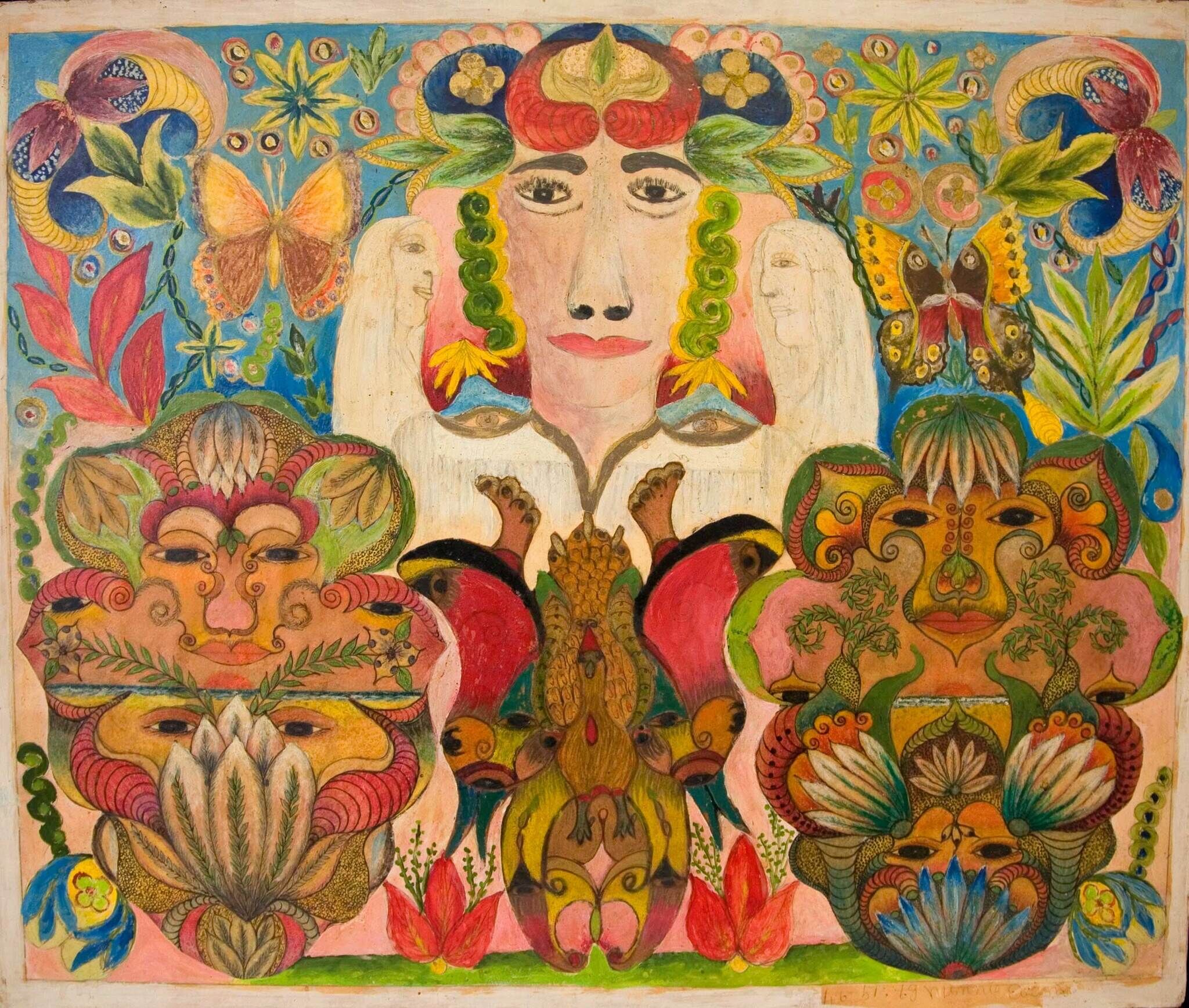
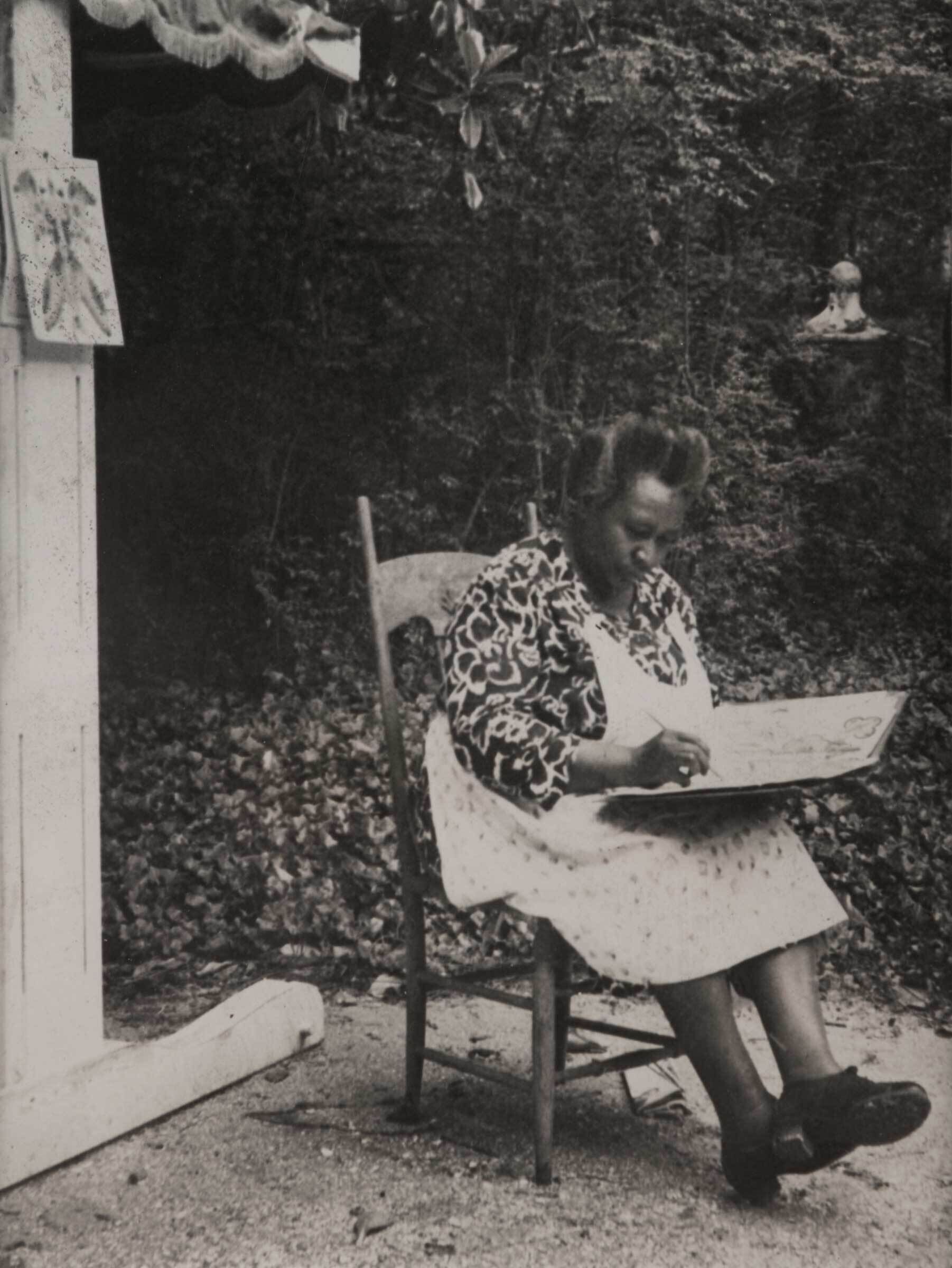
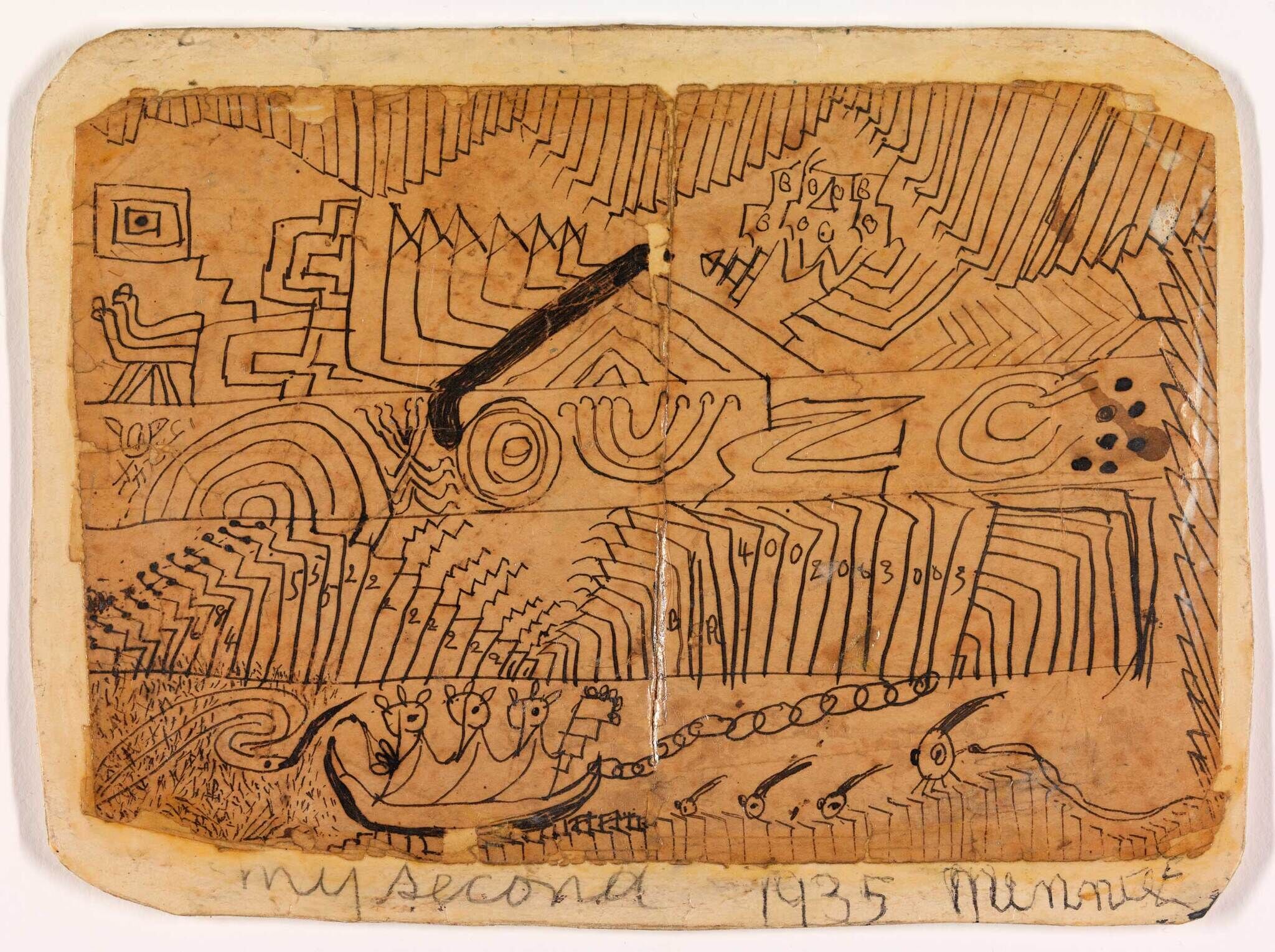
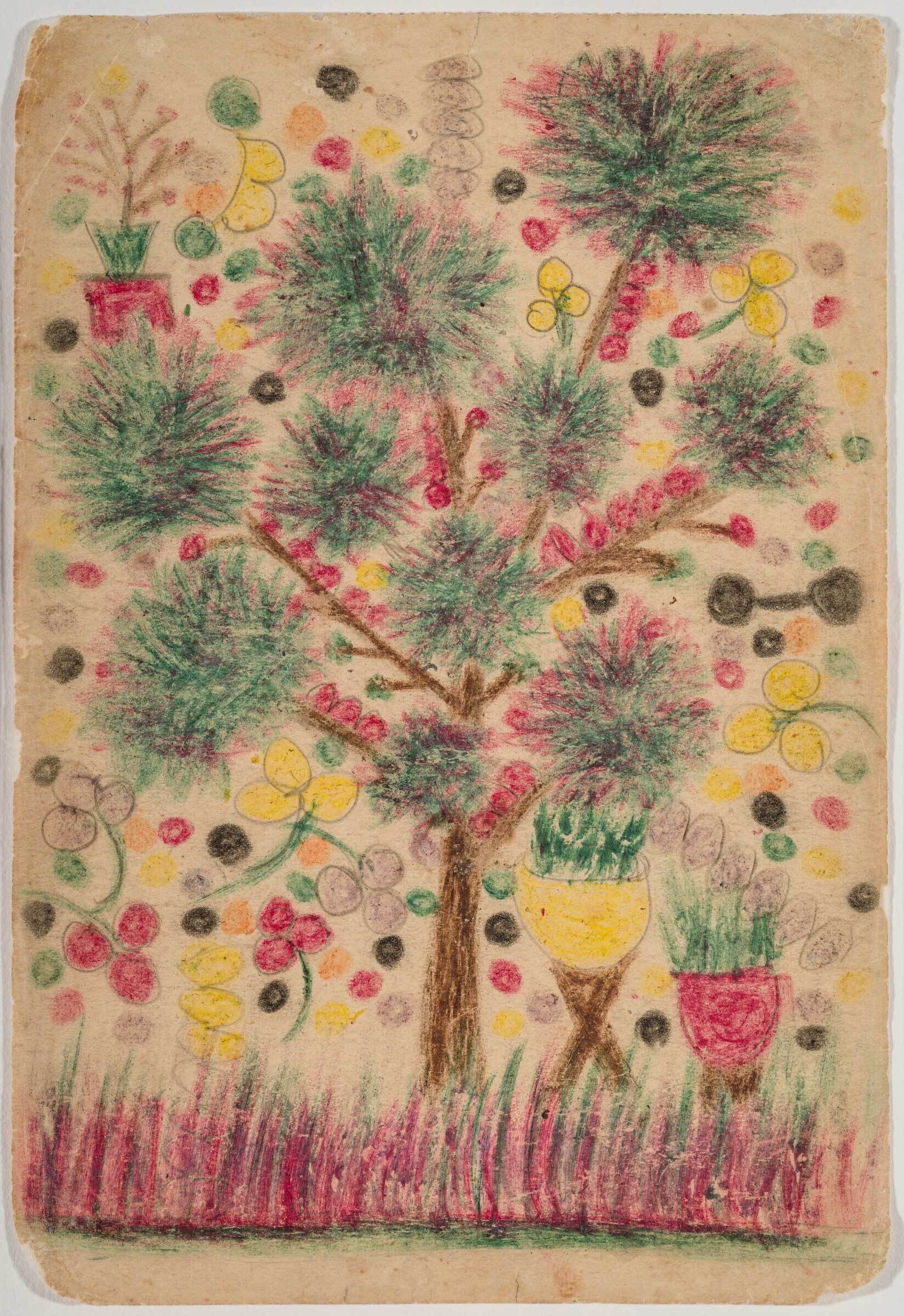
Soon after Evans's maternal grandmother died, the artist created her first two drawings. Both works include tiny marks and cryptic symbols that she later associated with ancient writing and recall the patterns found in textiles and devotional drawings from Trinidad, where her maternal ancestors were enslaved before being brought to the United States. After creating My Very First and My Second in 1935, Evans did not remember drawing for another five years. In 1940, when the two works fell out of a magazine while she was cleaning, she saw it as a sign to resume. "Something told me to draw or die," she later recalled. "It was shown to me what I should do." She began drawing with vigor, using pencil and Crayola crayons to make approximately 140 small-scale drawings over the next few years. The limited color palette of these works was due to wartime pigment shortages that reduced the number of colors in each crayon box. The works' imagery likely reflects the decorative arts—coverlets, Persian carpets, wallpaper, and ornamental structures—Evans would have seen in the mansions and gardens of the Airlie estate in Wilmington, North Carolina, where she had worked as a housekeeper for decades.

Aged paper filled with black pen geometric patterns, a small boat of stick figures, and chained creature.

Minnie Evans, My Second, 1935. Pen and ink on paper, 5 5/8 × 7 5/8 in. (14.3 × 19.4 cm). Whitney Museum of American Art, New York; gift of Dorothea M. and Isadore Silverman 75.8.2. © The Estate of Minnie Evans

My Second, 1935

A crayon drawing of a leafy tree surrounded by potted plants and colorful dot flowers.

Minnie Evans, Untitled (Pom-Pom Tree), c. 1943. Crayon and pencil on paper, 7 1/4 × 5 in. (18.4 × 12.7 cm). Collection of Nathan Kernan. © The Estate of Minnie Evans. Photograph by Paul Takeuchi

Untitled (Pom-Pom Tree), 1943

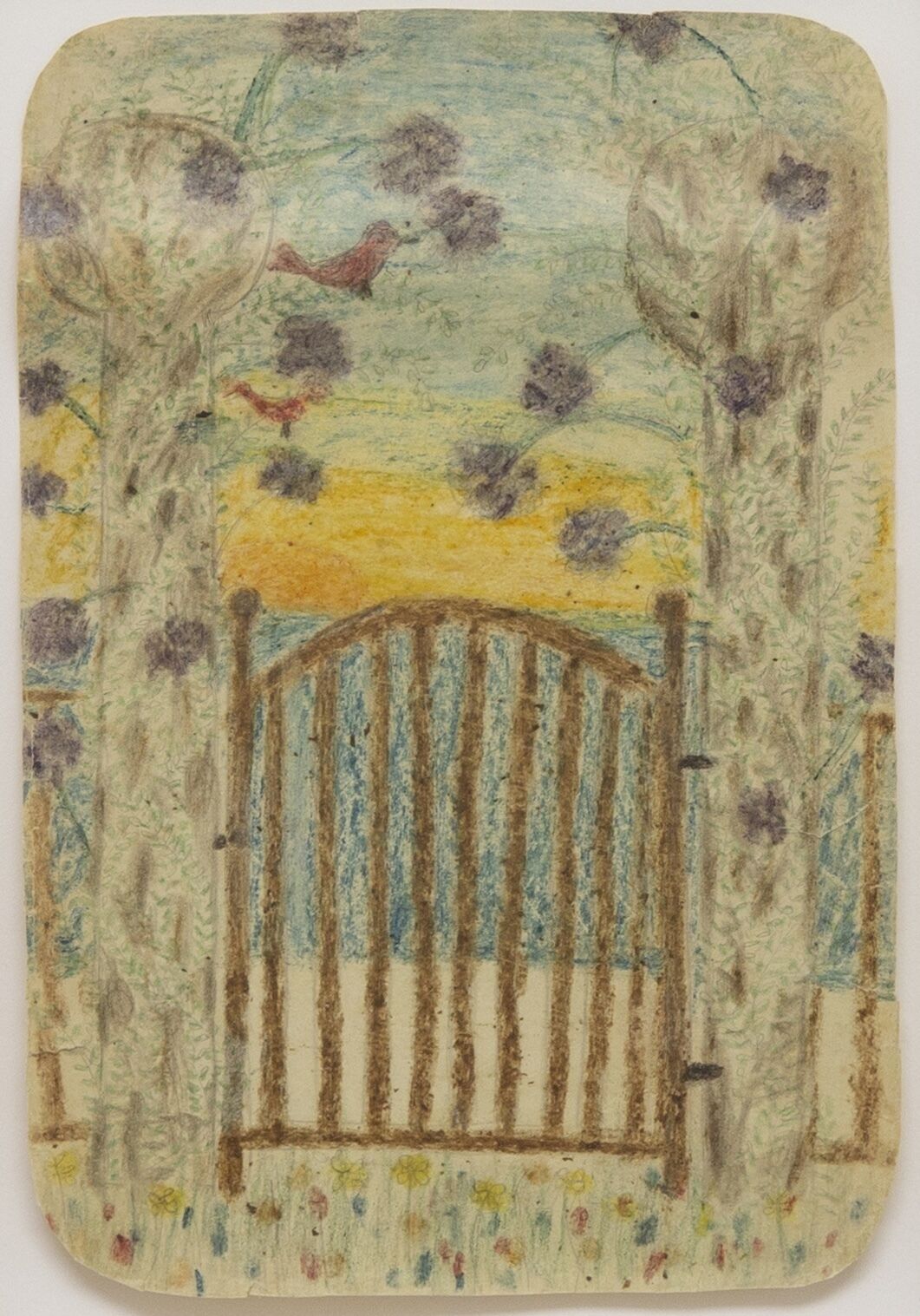
Minnie Evans, Untitled (Pembroke Park Gate), c. 1940. Crayon and pencil on paper, 7 × 4 3/4 in. (17.8 × 12.1 cm). Collection of Christian Daniel. © The Estate of Minnie Evans

Untitled (Pembroke Park Gate), 1940

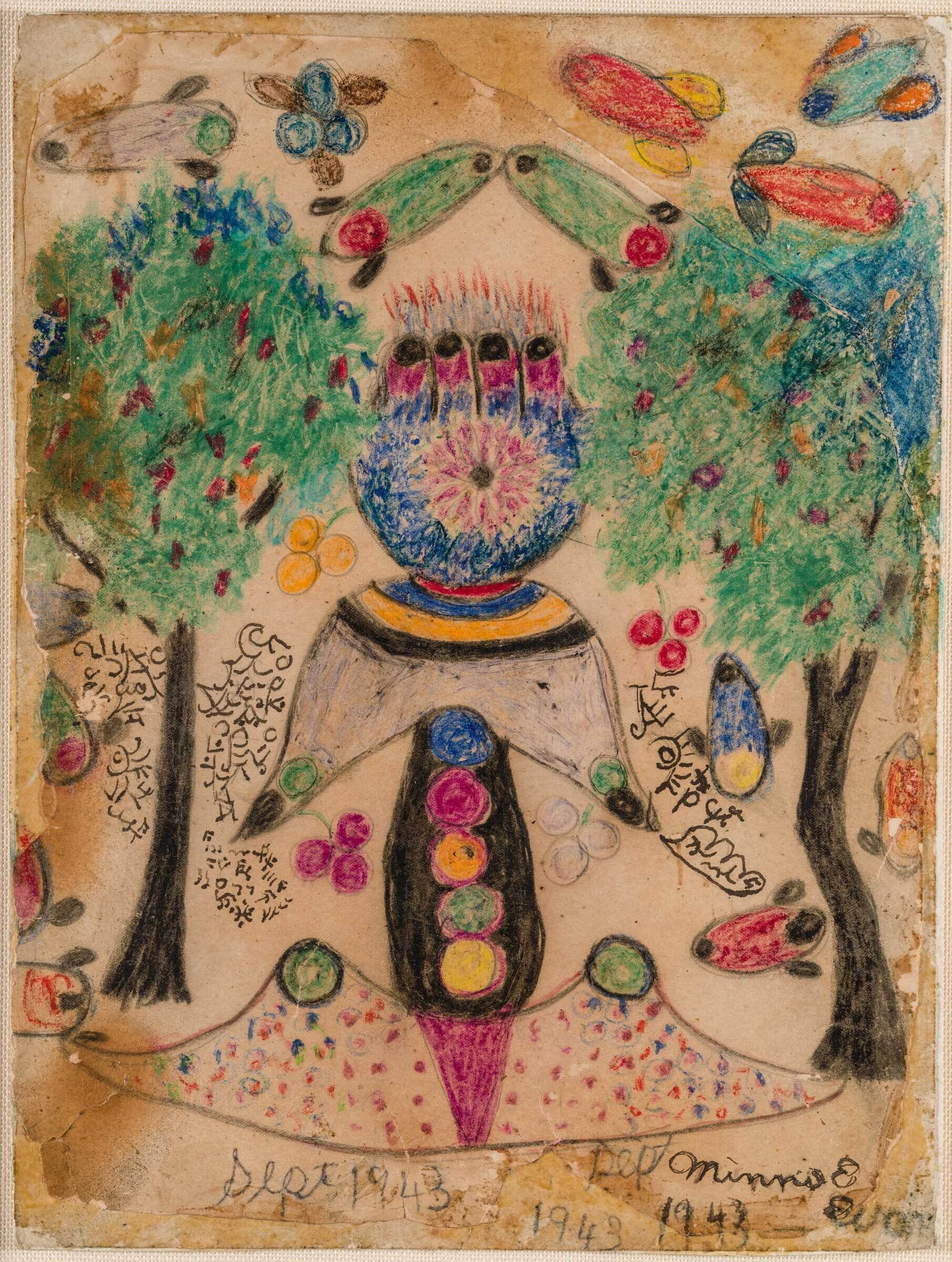
Minnie Evans, Mosquito Bombs, 1943. Ink and crayon on paper, mounted on paper 11 3/4 × 9 in. (29.8 × 22.9 cm). Collection of Nathan Kernan. © The Estate of Minnie Evans. Photograph by Paul Takeuchi

Mosquito Bombs, 1943

The military presence in Wilmington exploded after the United States entered World War II, with the construction of new military bases, a major airfield, and a military plant. Evans began having dreams of airplanes dropping bombs. In Mosquito Bombs, whose title refers to the World War II combat aircraft of the same name, she transformed an enemy bombardment into a lush garden of joyous deliverance.

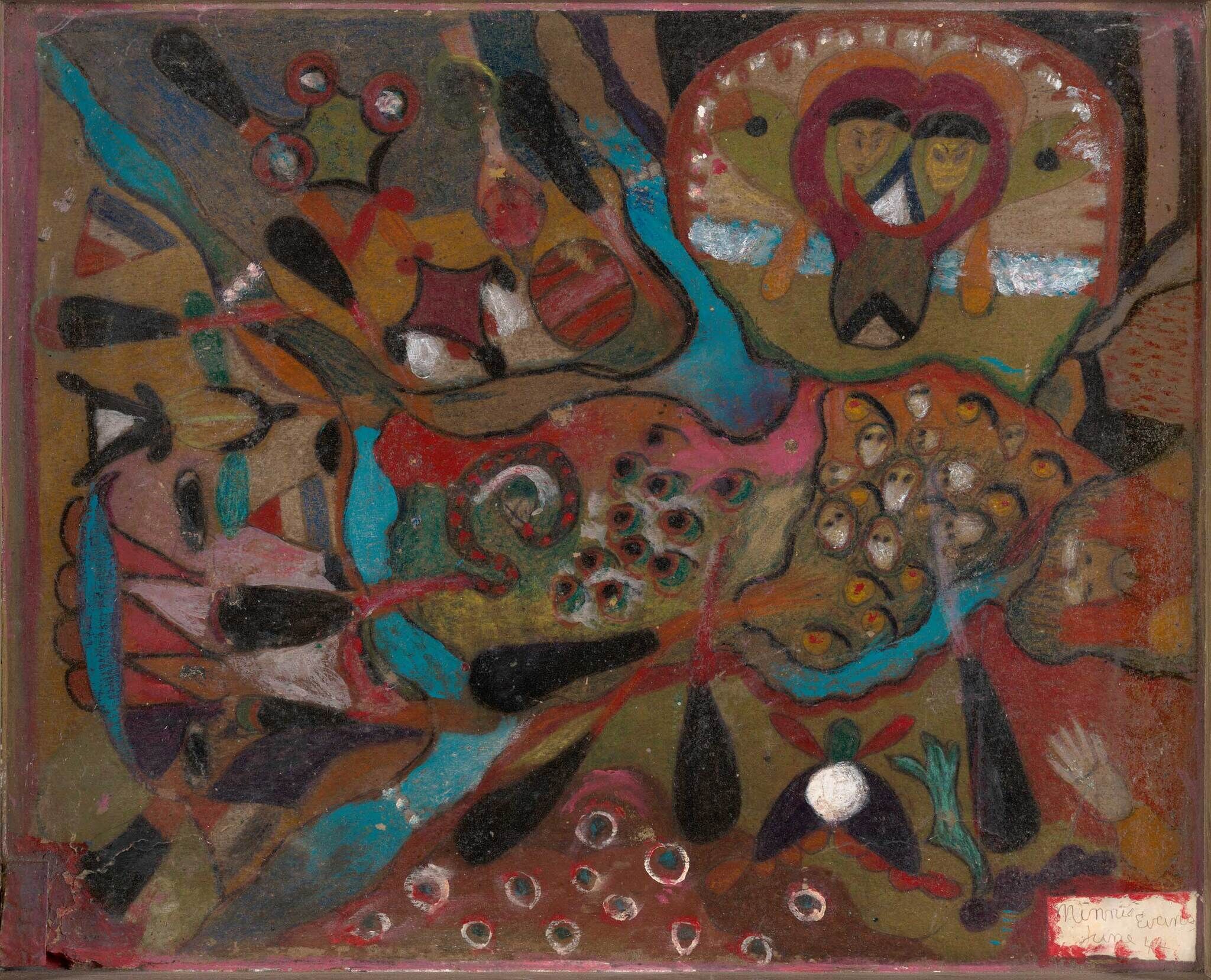
Bright abstract painting with swirling shapes, many eye-like circles, and two faces inside a heart.

Minnie Evans, Invasion Picture, 1944. Oil on composition board, 20 × 24 9/16 in. (50.8 × 62.4 cm). Ackland Art Museum, University of North Carolina at Chapel Hill, Ackland Fund. © The Estate of Minnie Evans 

Invasion Picture, 1944

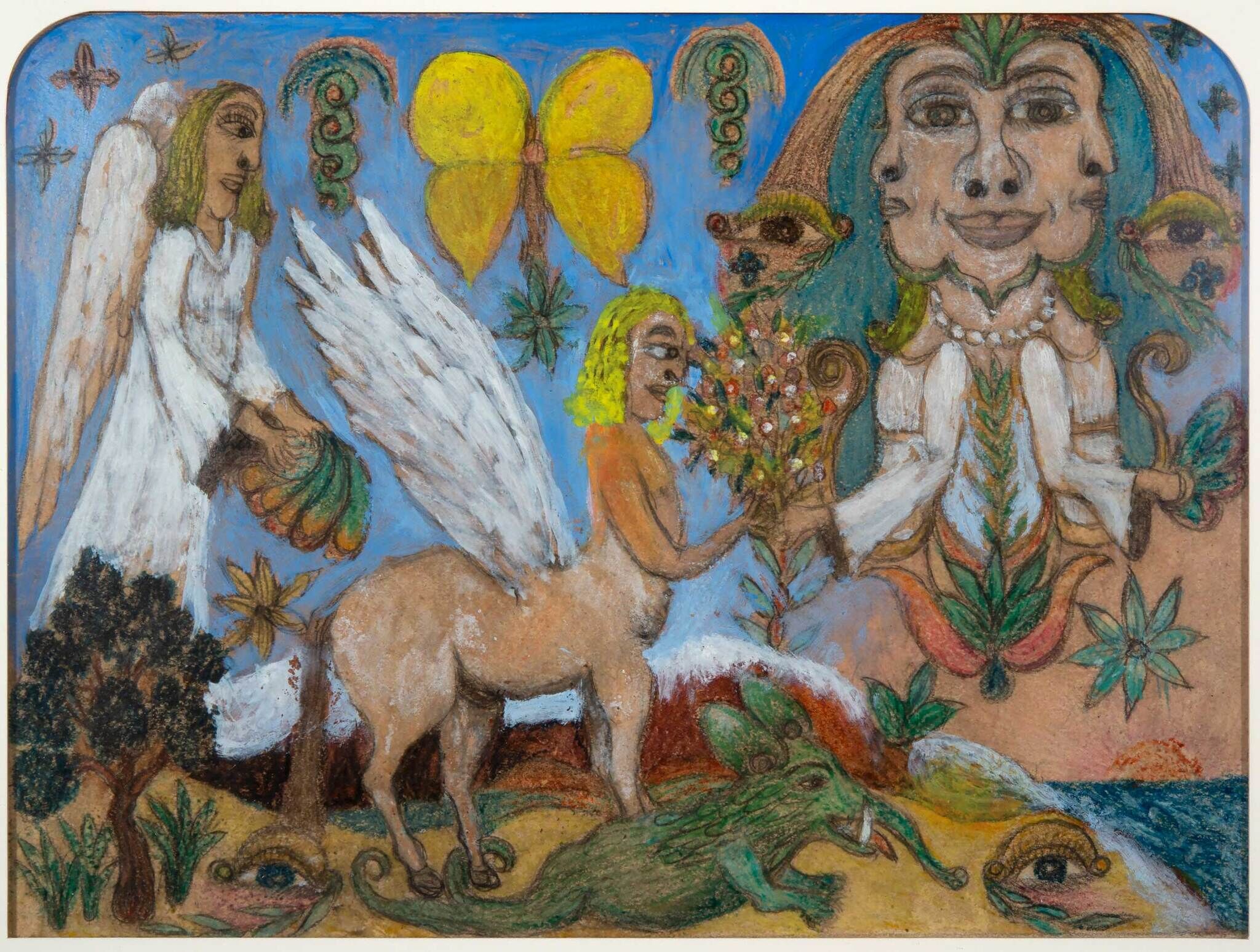
In late May 1944, Evans showed works like Mosquito Bombs to a fortune teller in Wilmington who told her that the Allies' invasion of Europe would not happen until she painted it. Days later Evans had a vision where God appeared three times behind a "great wreath." After his third visit, during which she heard him tell her to "draw or die," she painted this work where multiple perspectives, scales, and forms collide. The painting includes a mound of skulls and an image of a Mosquito combat aircraft soaring above a watery landscape that echoes Wilmington's coastal topography. D-day, the invasion of Normandy, occurred several days after she completed this work.

Explore works from this exhibition
in the Whitney's collection

View 3 works

On the Hour

A 30-second online art project:
Frank WANG Yefeng, The Levitating Perils #2

Learn more about this project

Learn more at whitney.org/artport

On the Hour projects can contain motion and sound. To respect your accessibility settings autoplay is disabled.