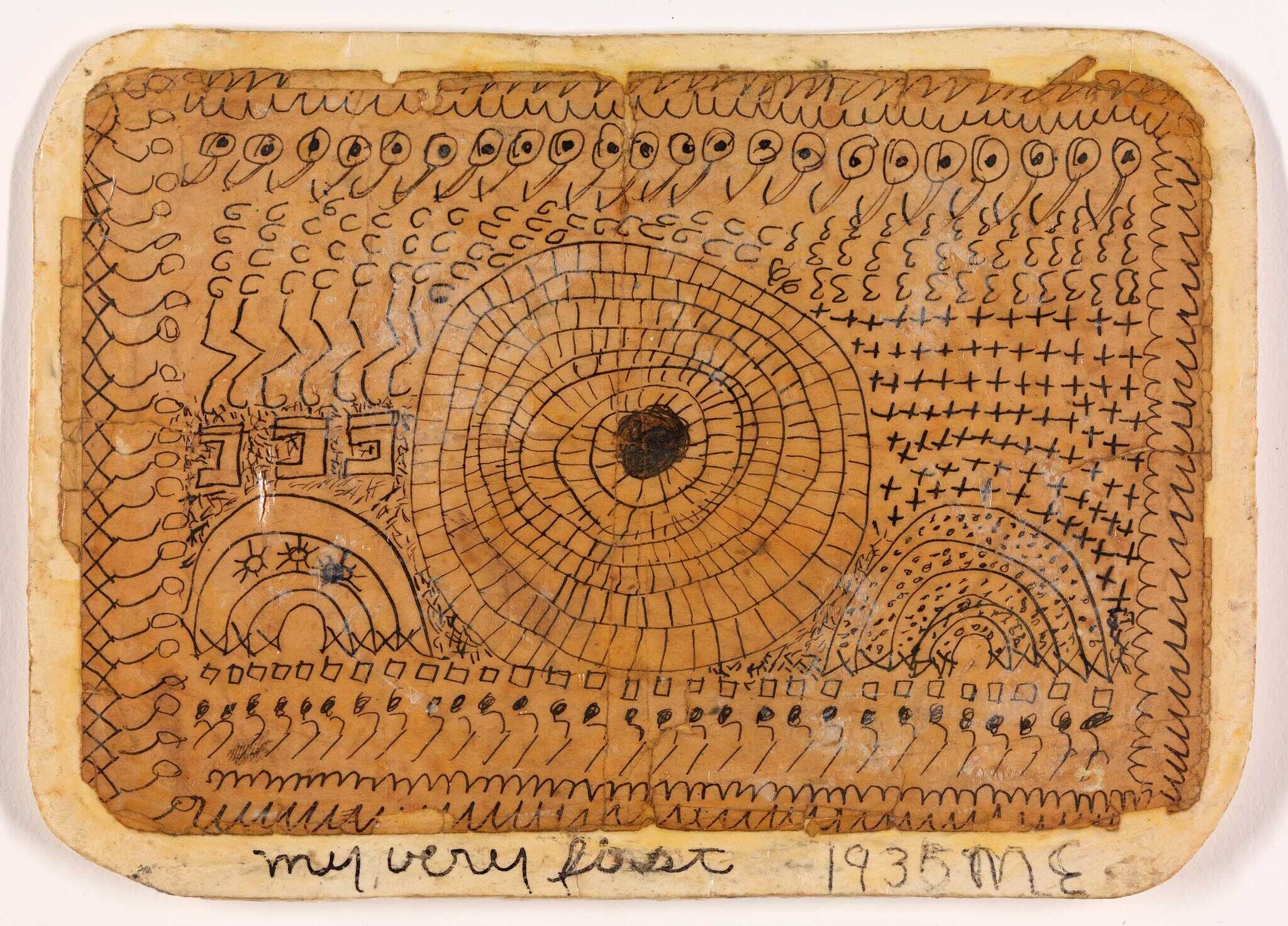
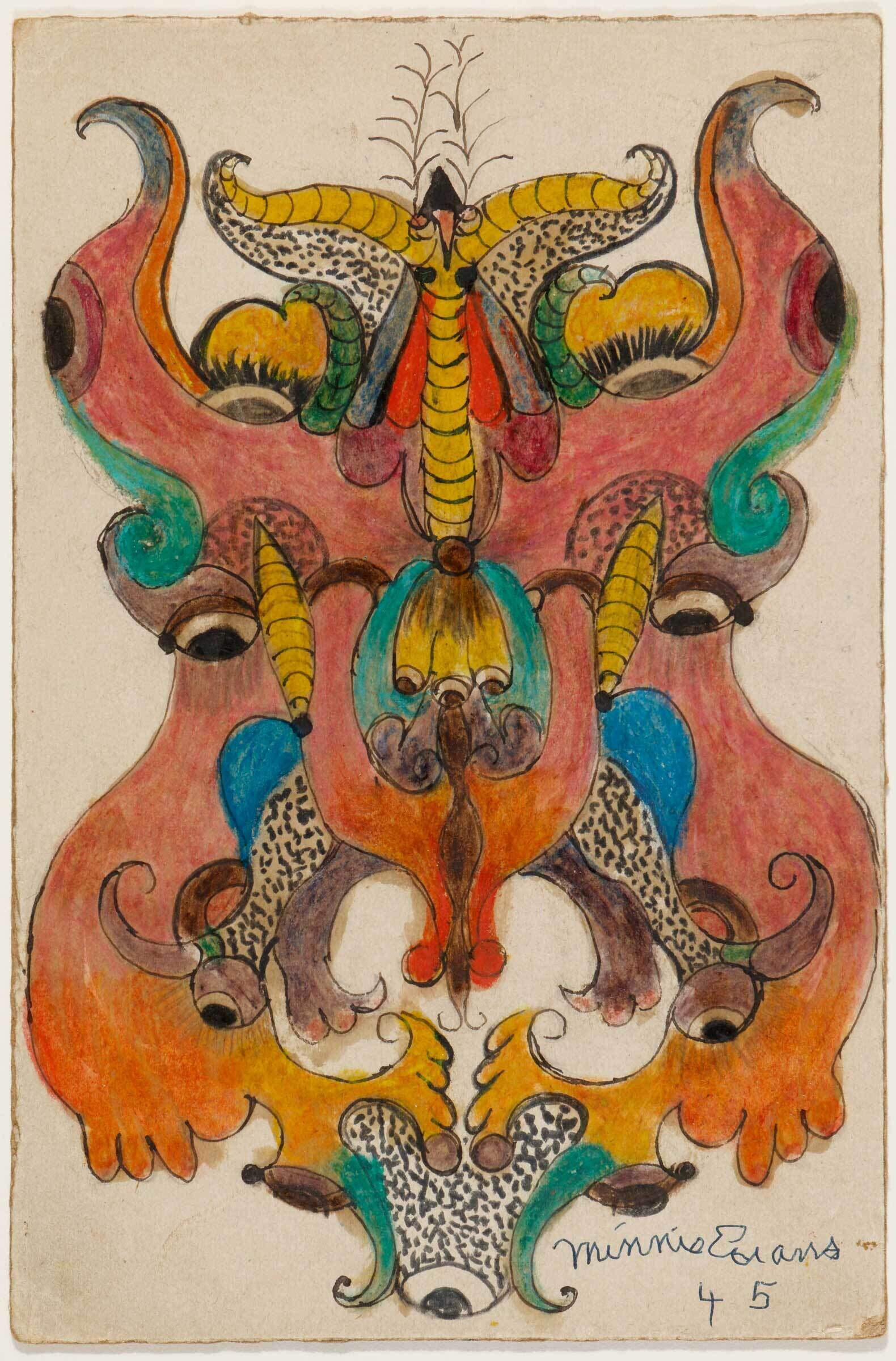
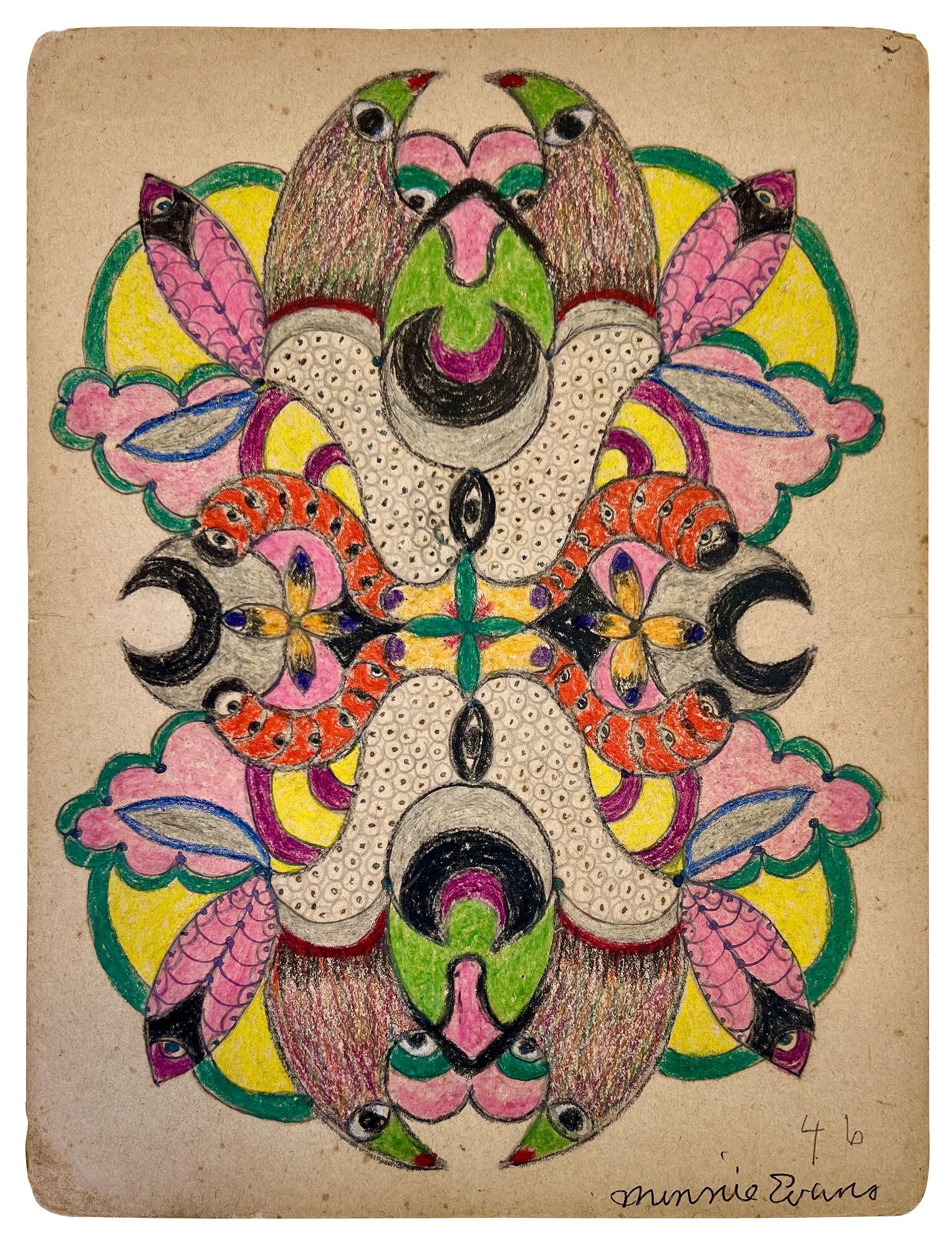
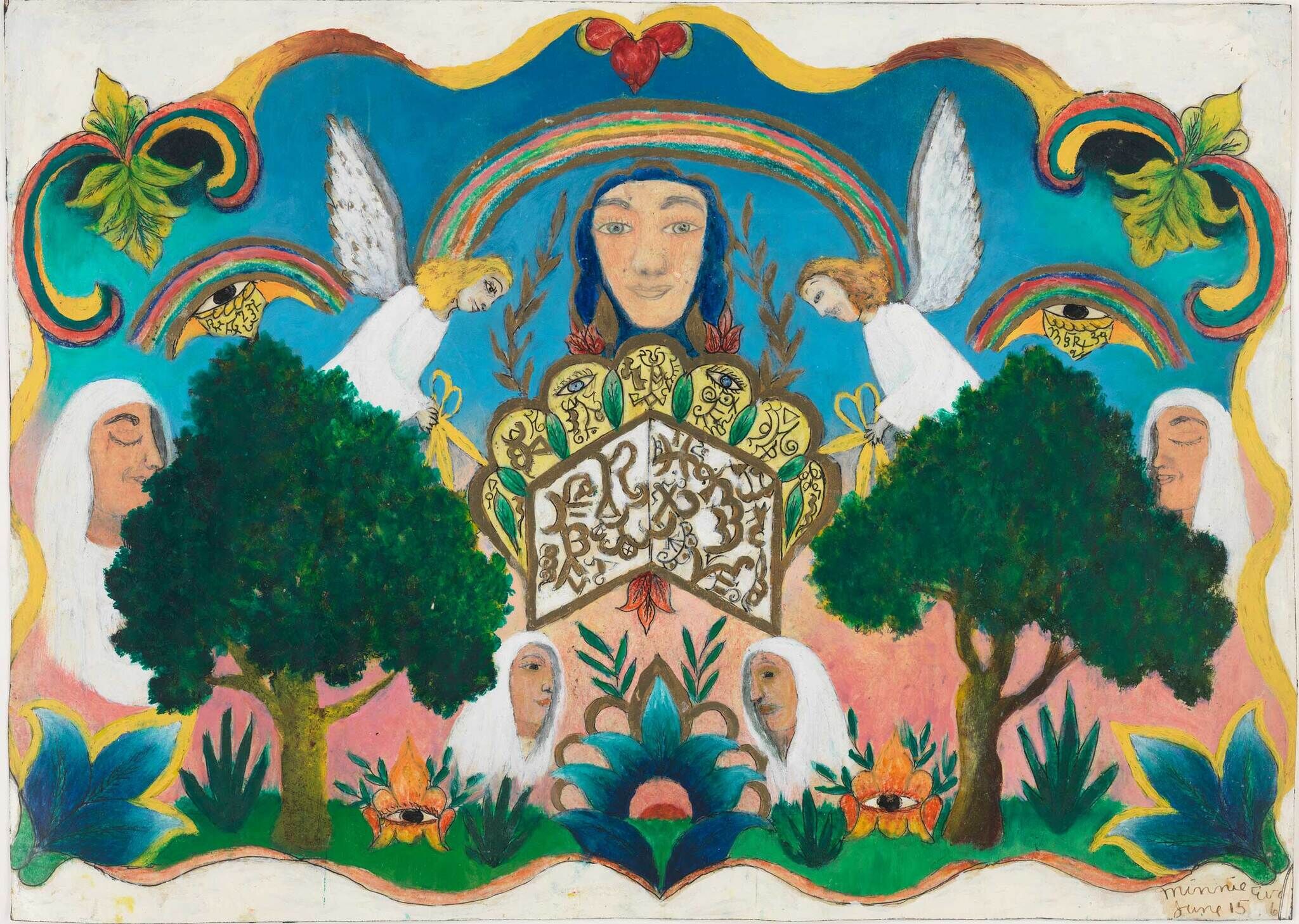
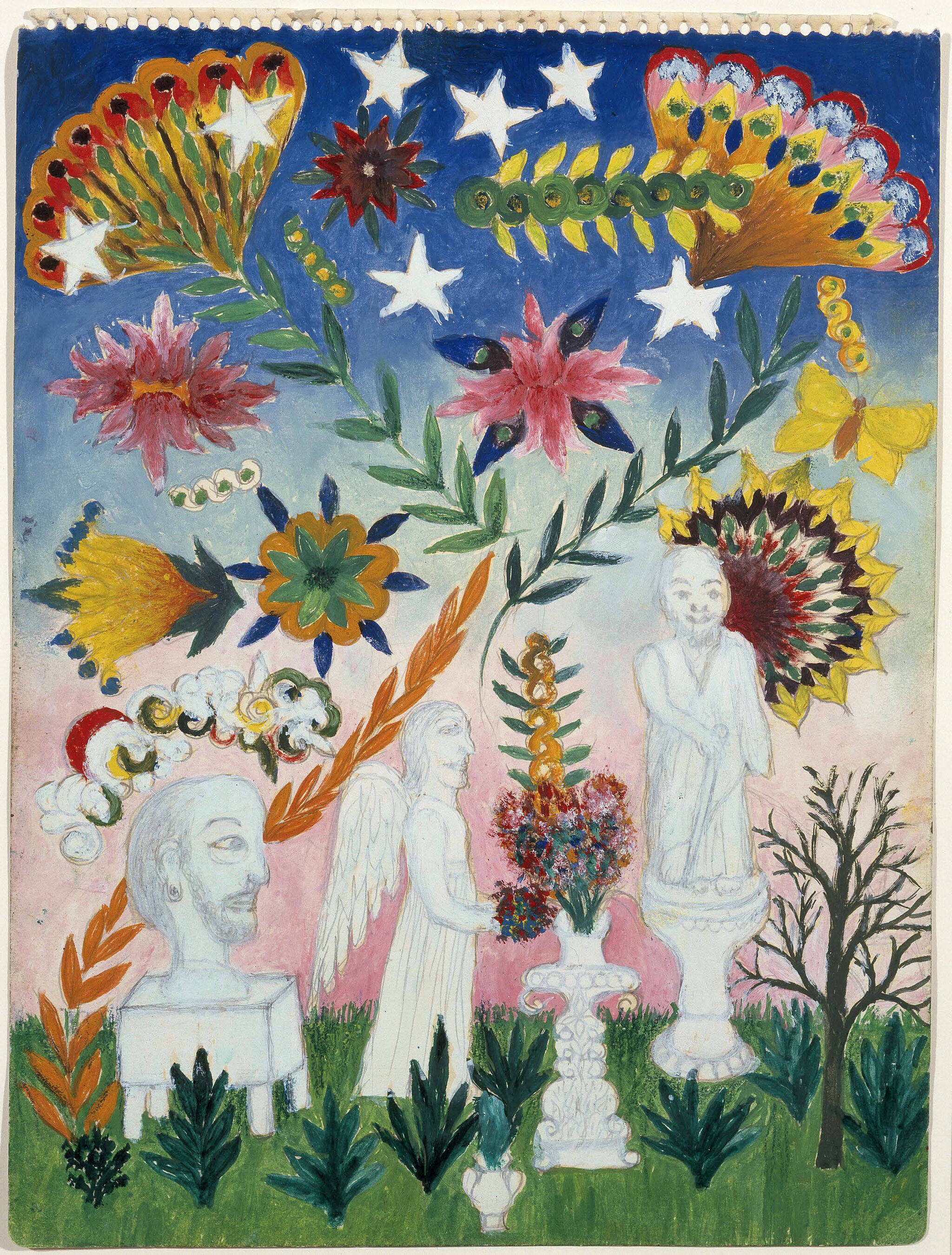
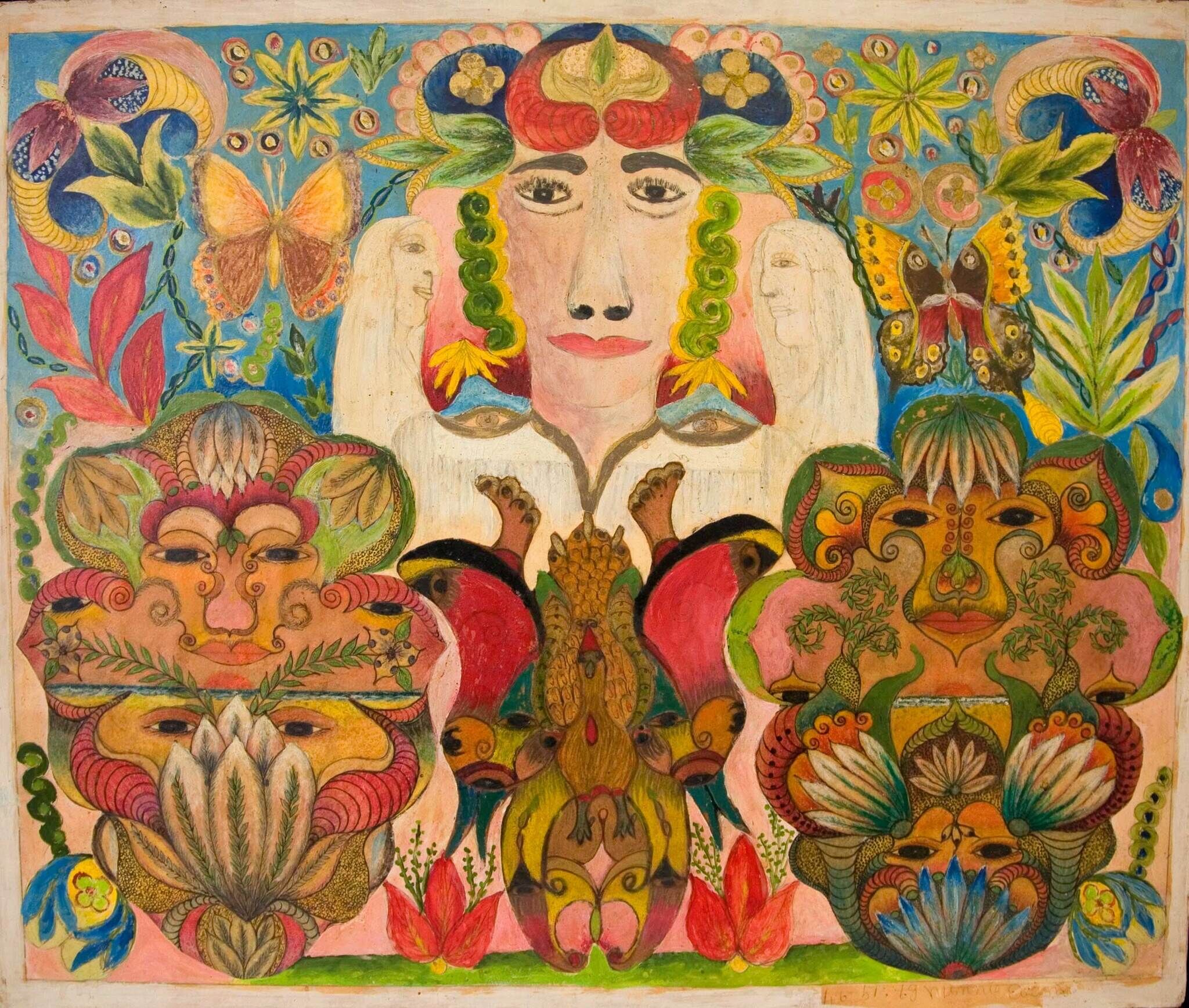
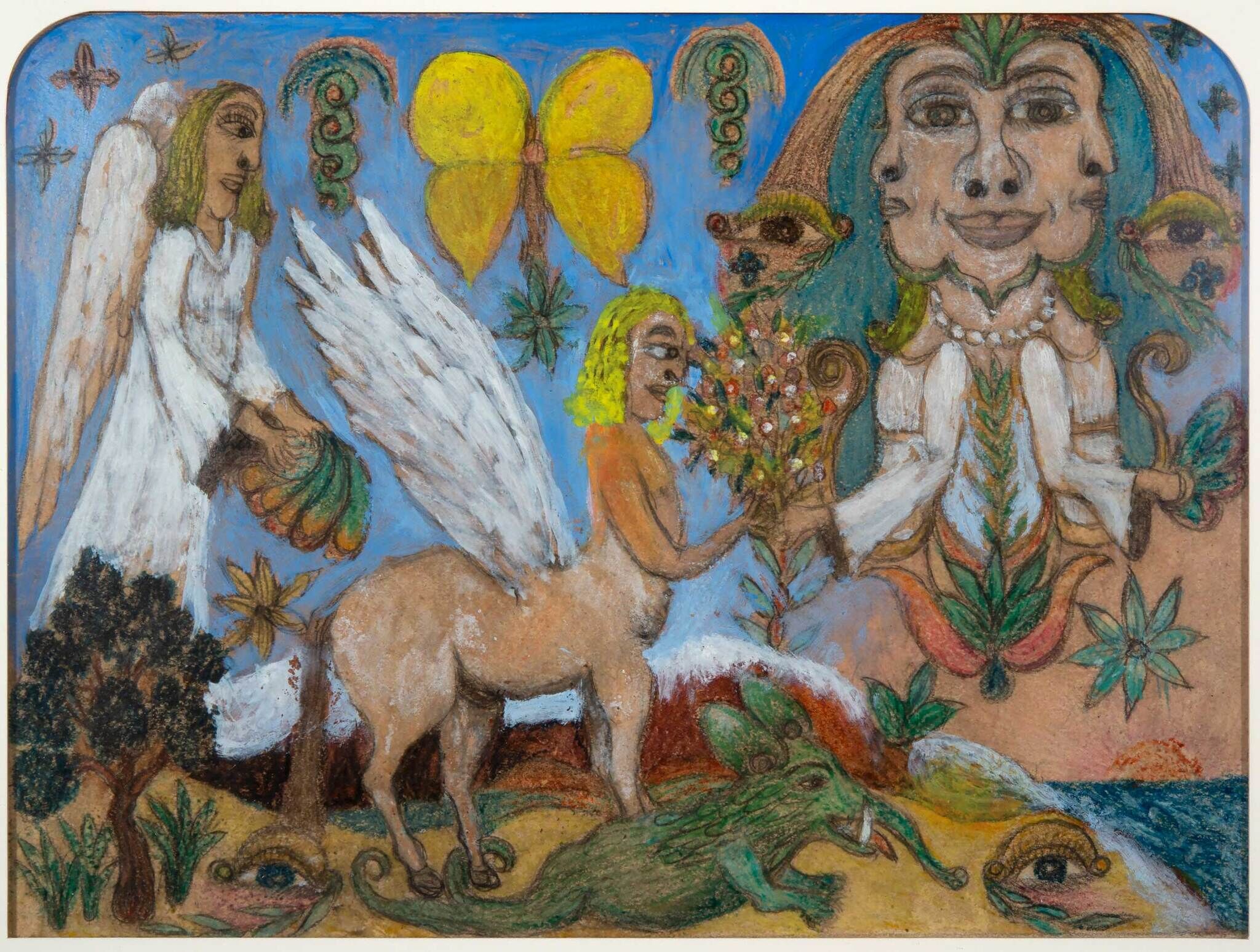
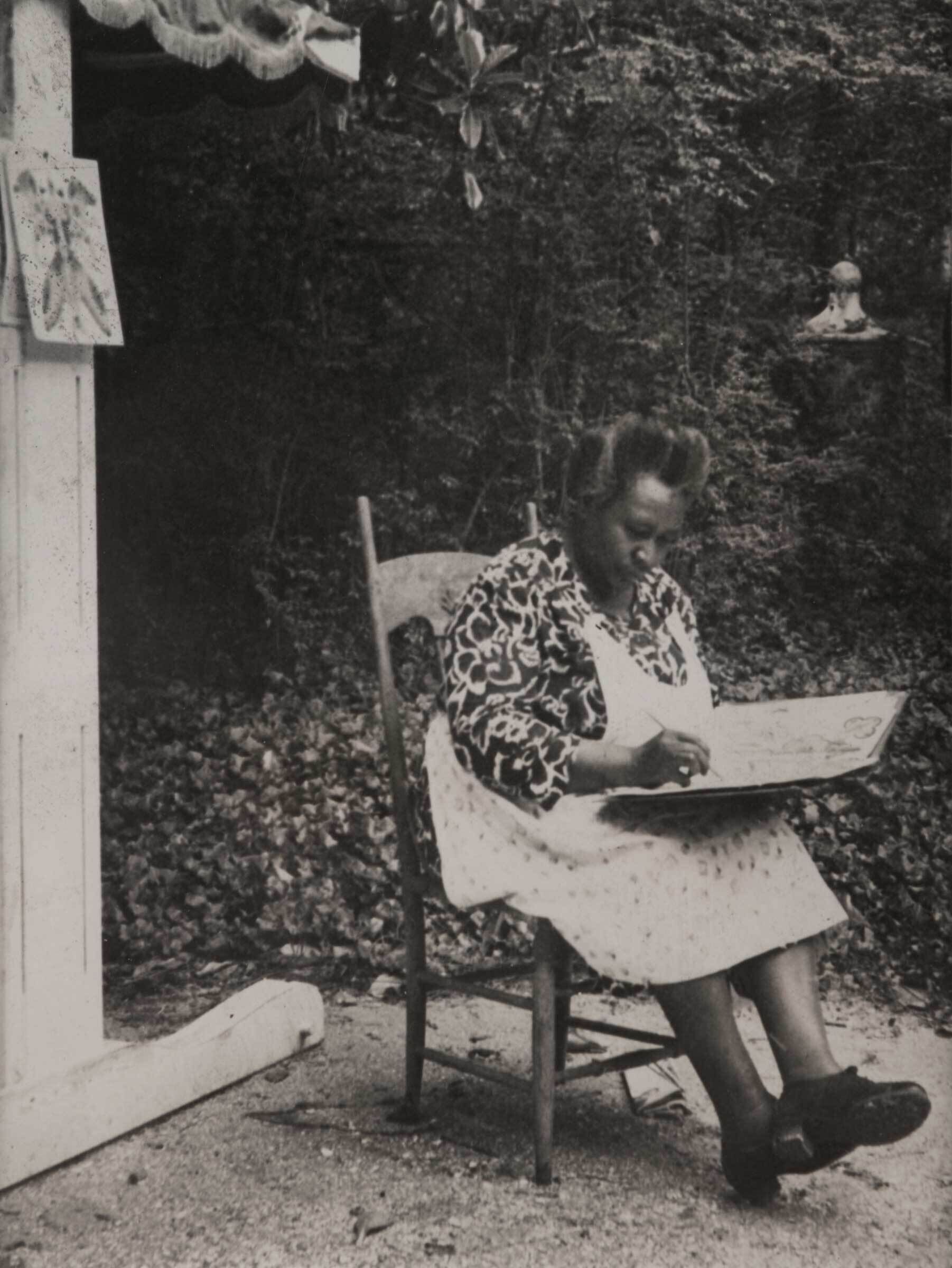
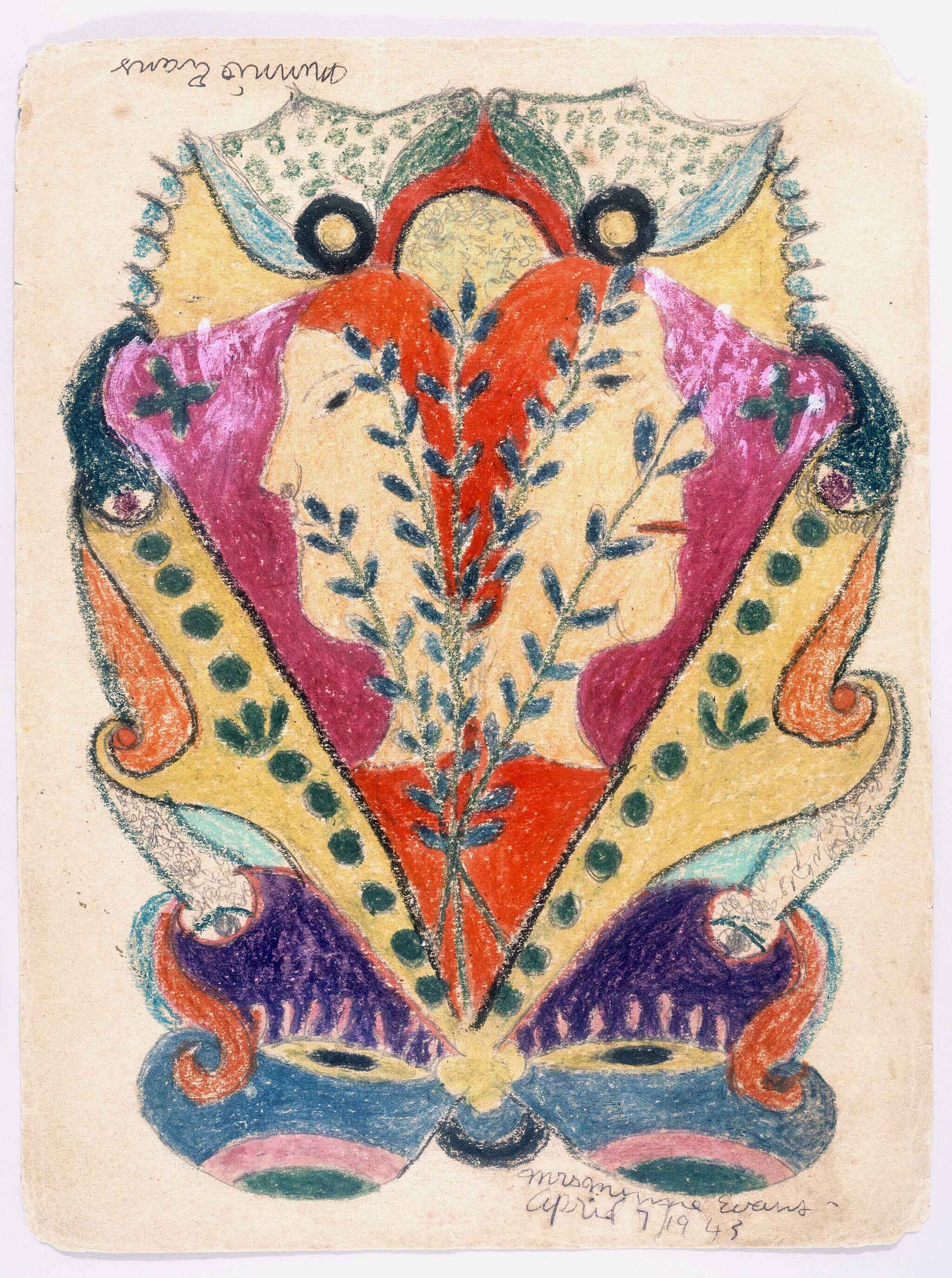
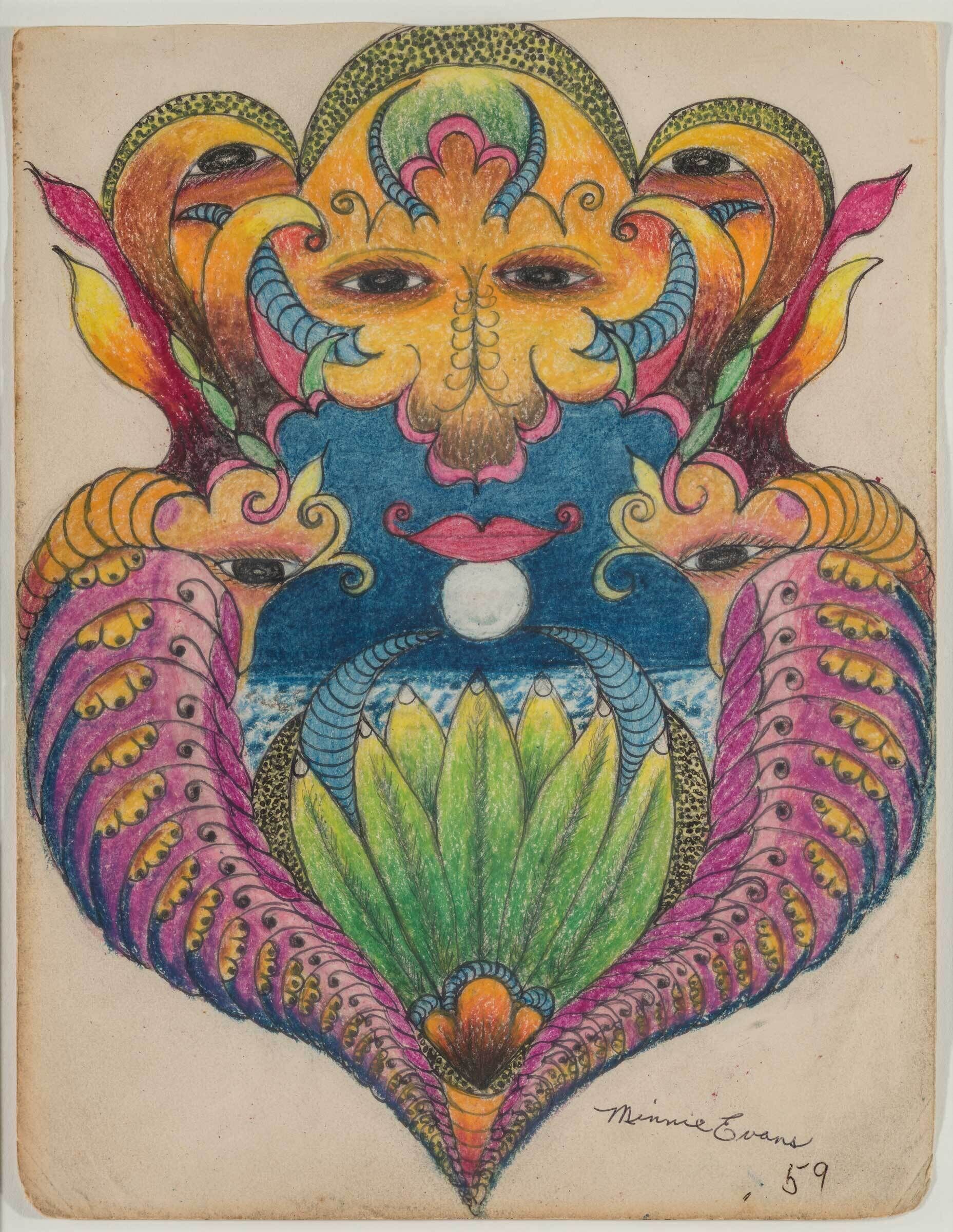
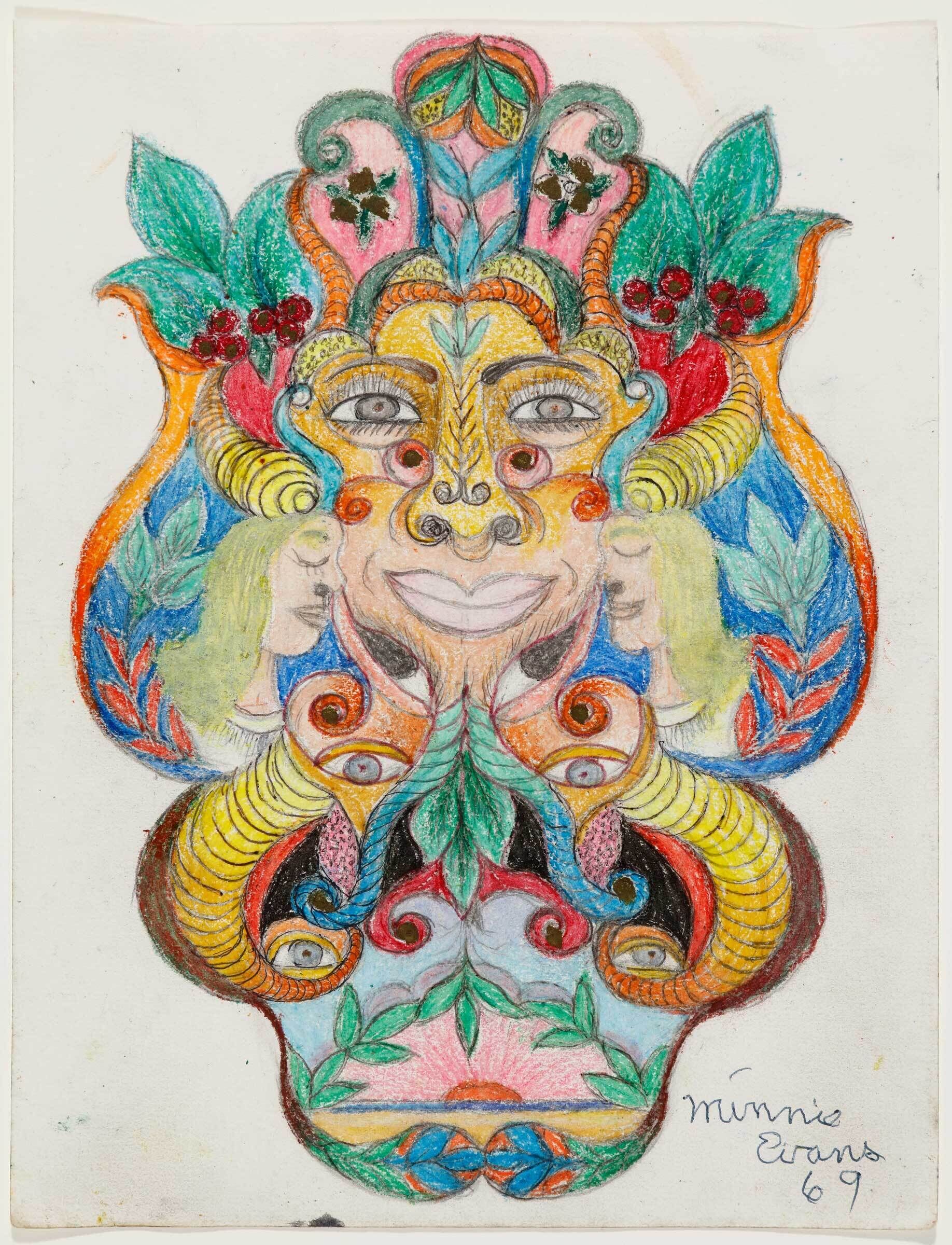
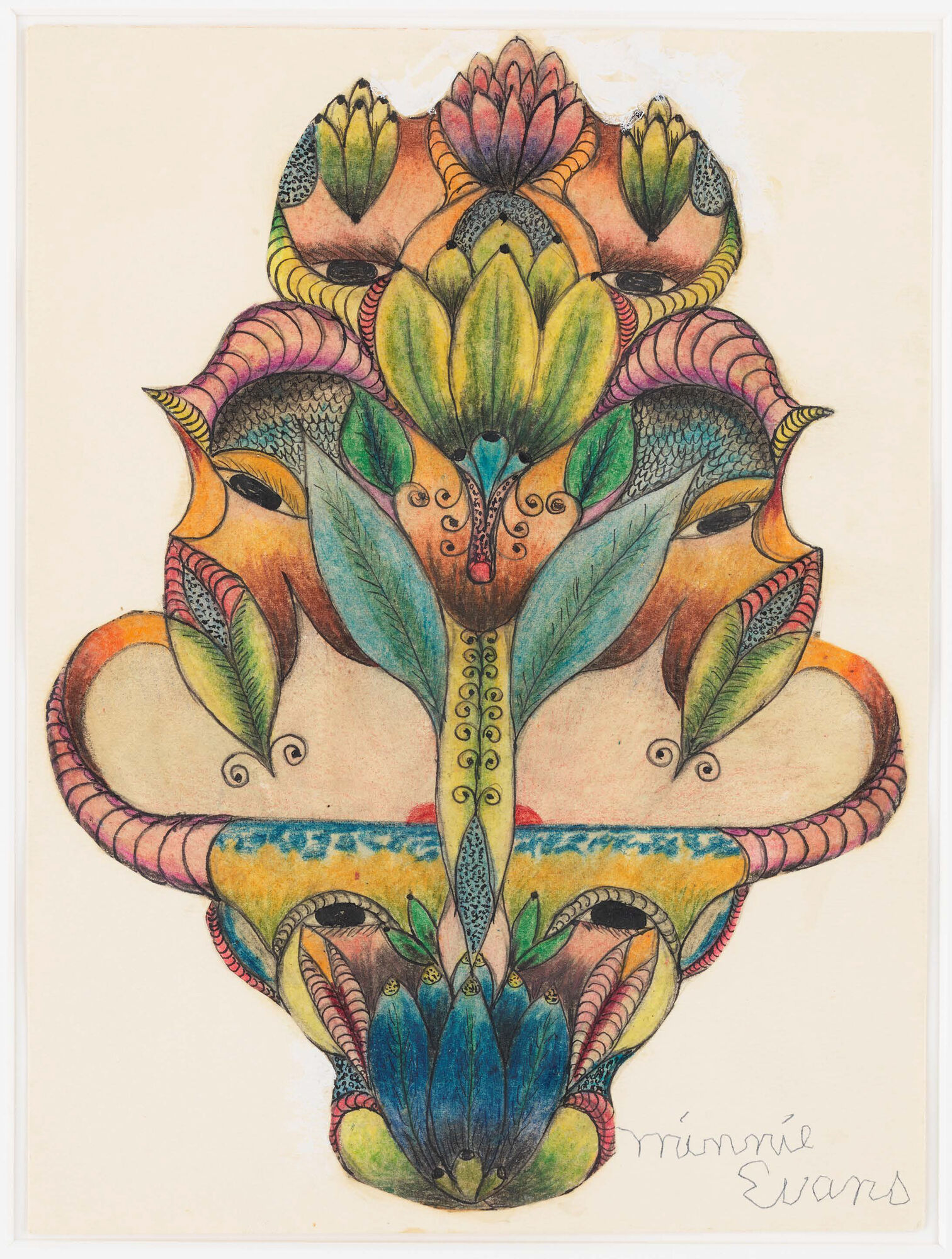
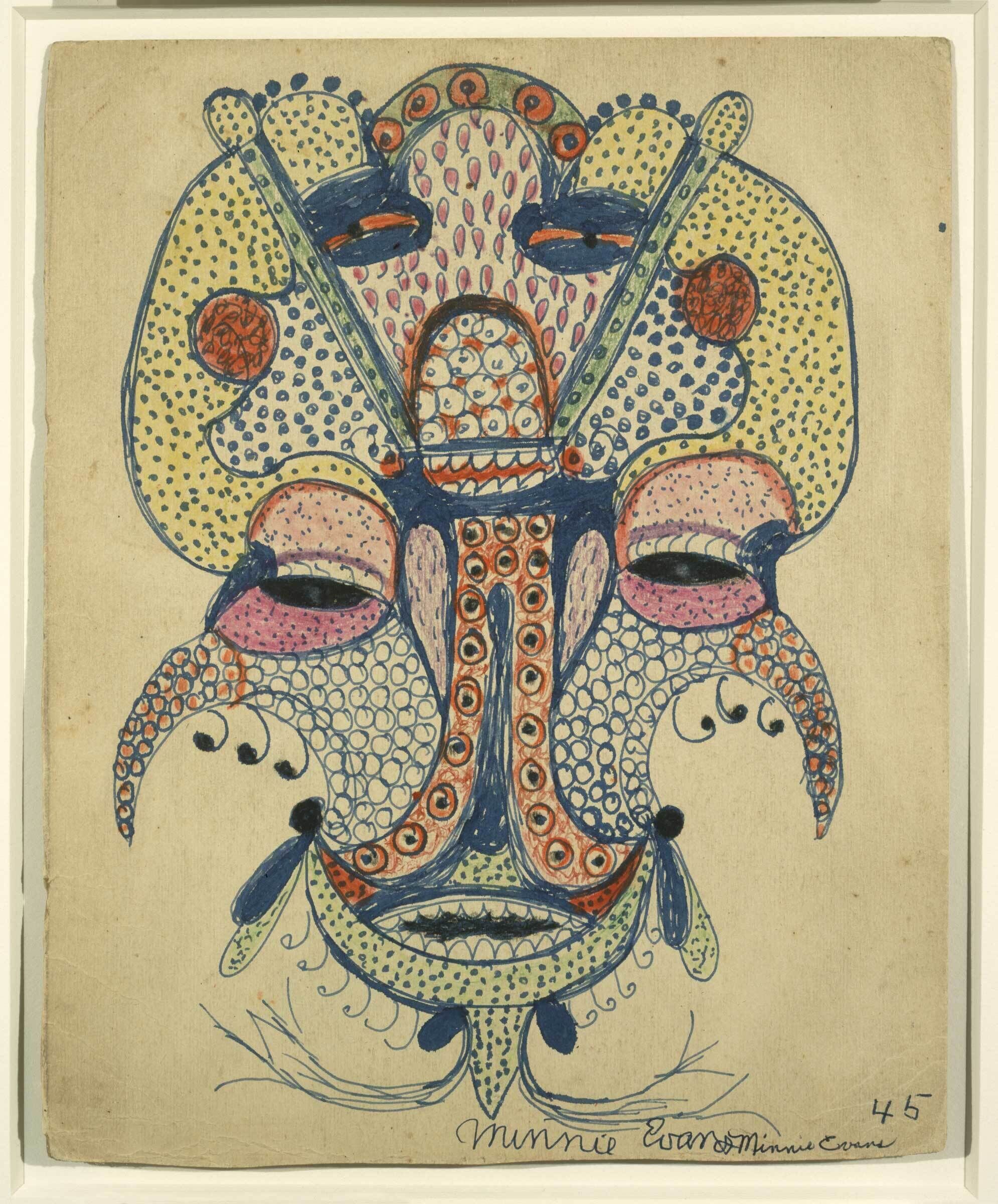
In the early 1940s, Evans began to make luminescent works in the forms of geometric and organic patterns radiating symmetrically outward from a central point. Although Evans never articulated this connection herself, these works resonate with the tradition of Hindu and Buddhist mandalas, which use figurative and geometric forms often in symmetrical arrangements as tools for spiritual focus or meditation. This compositional form would remain key for Evans throughout her career, becoming more complex and colorful as her art evolved.
Evans was attracted to ancient history and mythology as a child, stating: "In my early school days I did not love anything but history. I would love to read about the Gods...I use[d] to love to study about the Greeks and all of those kind of things and the Trojans...That's all I studied, all I loved." Her passion for mythology may have inspired the symmetrical, mirrorlike Janus forms that emerged in her drawings in the 1940s.