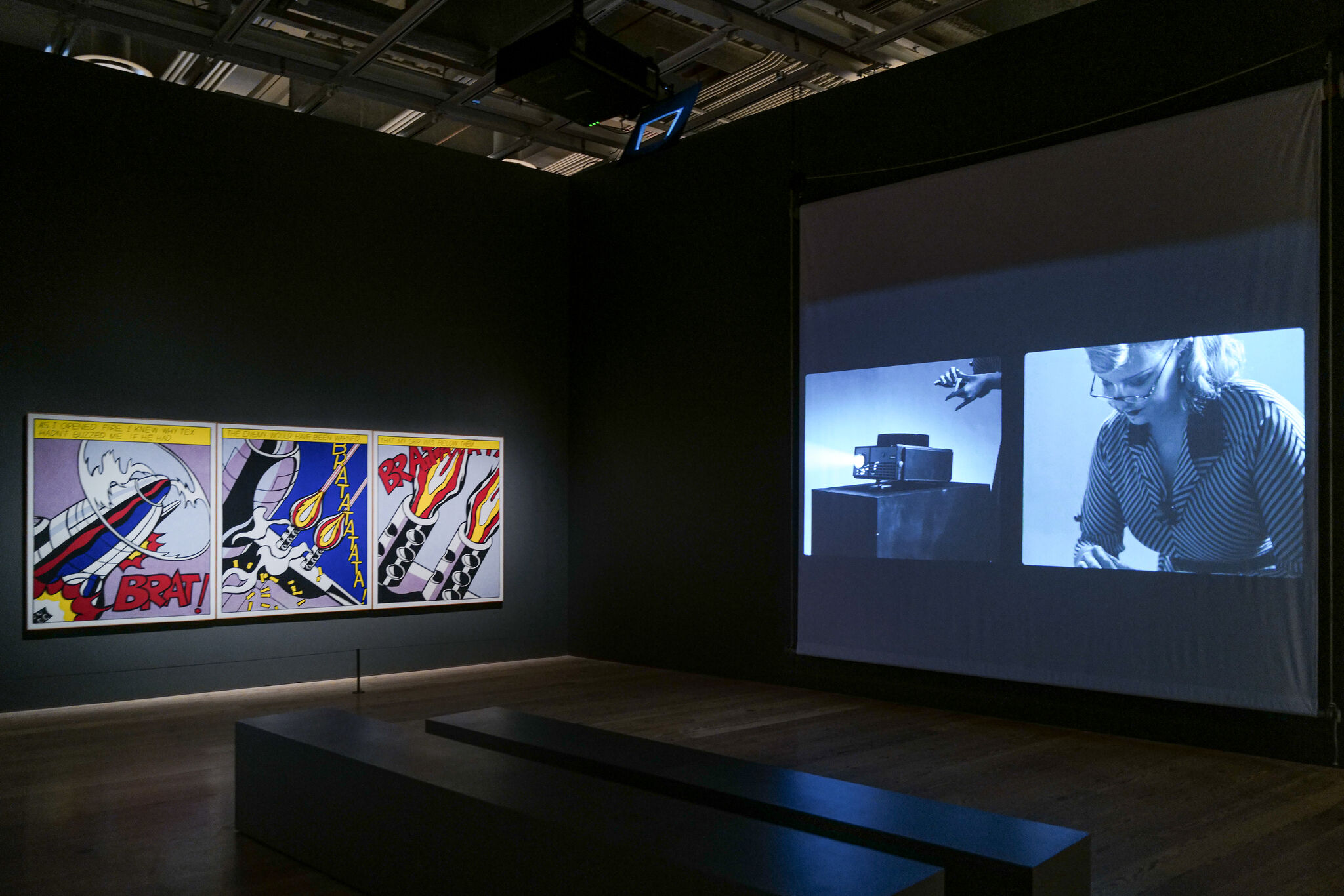
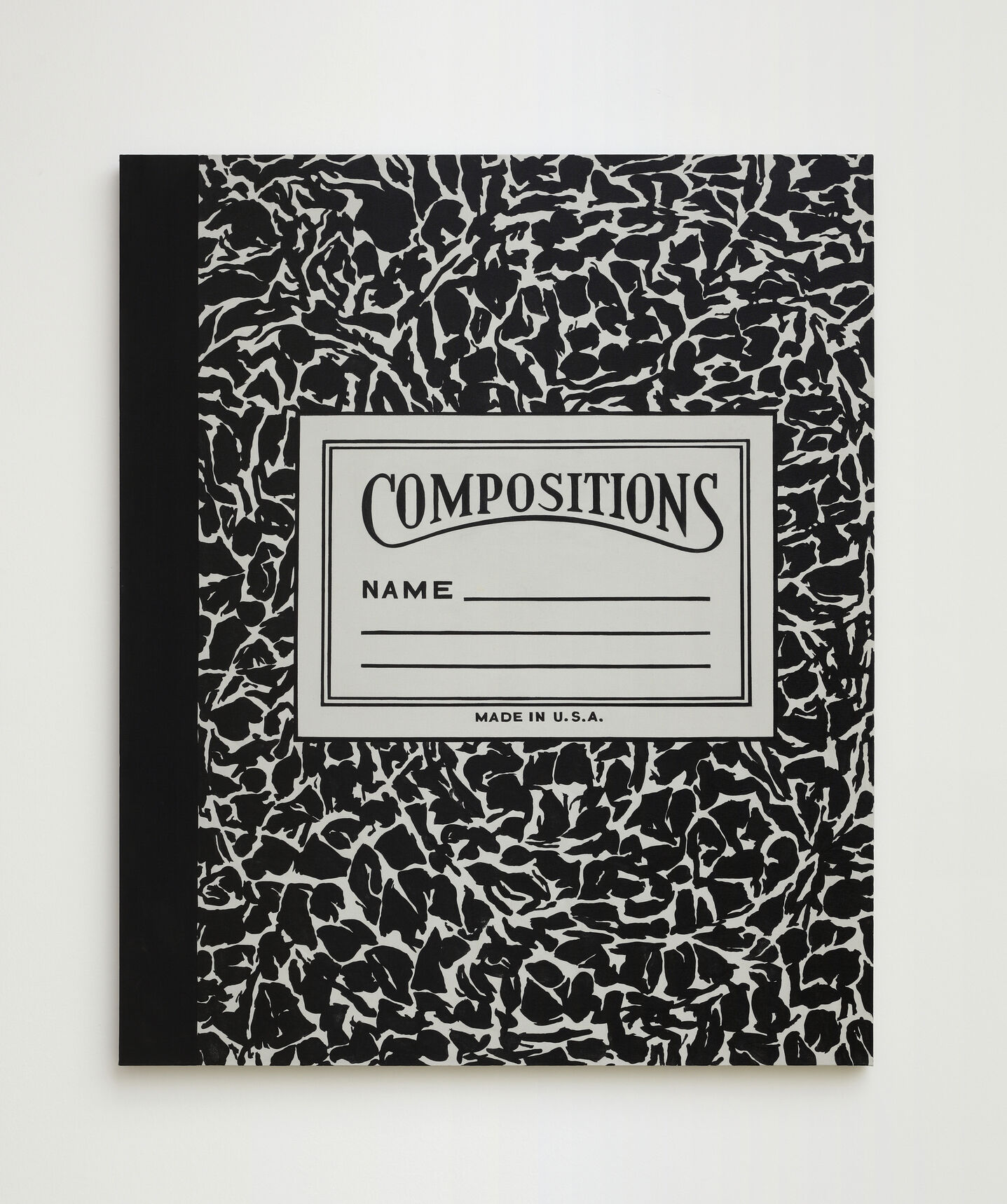
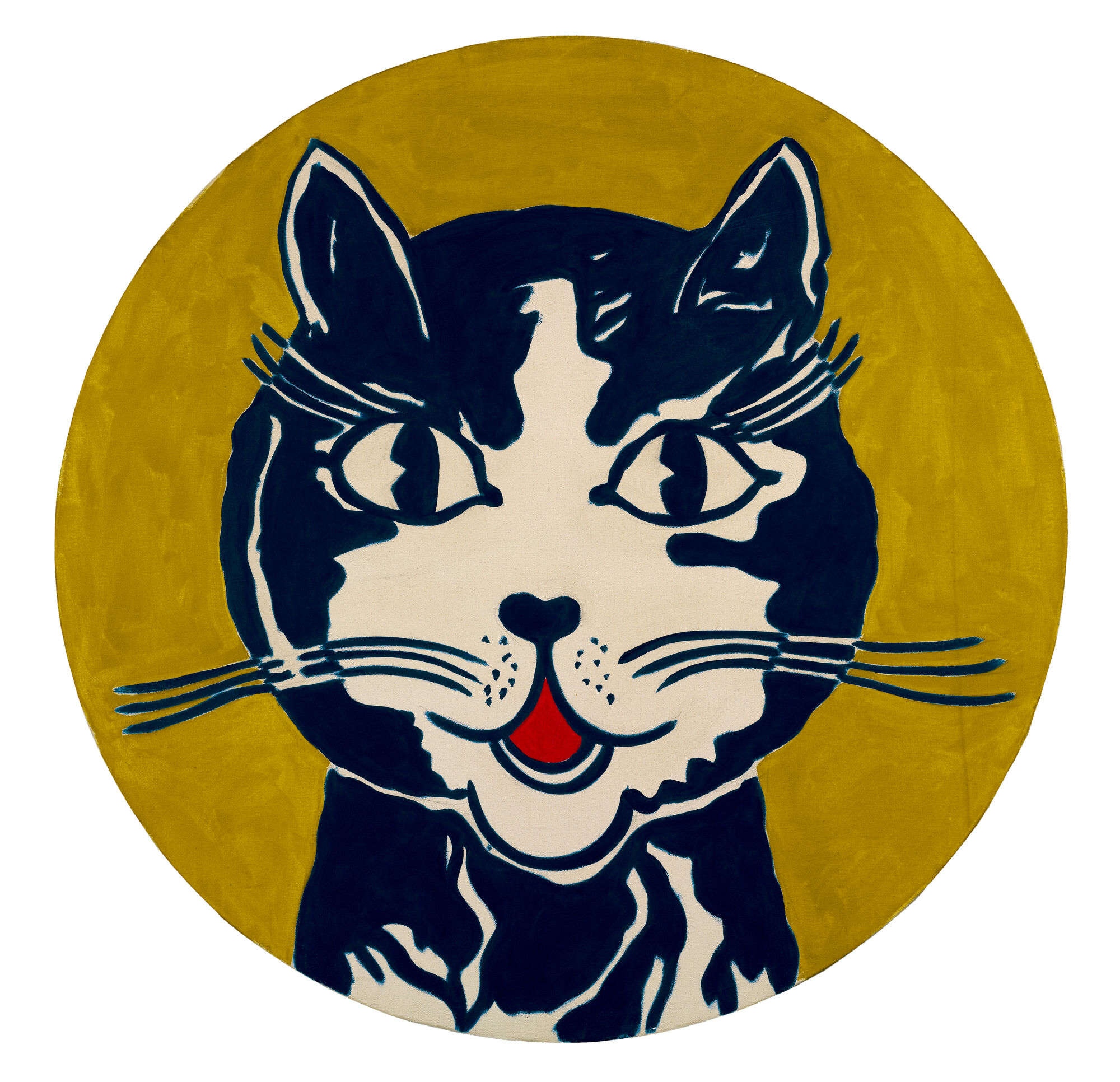
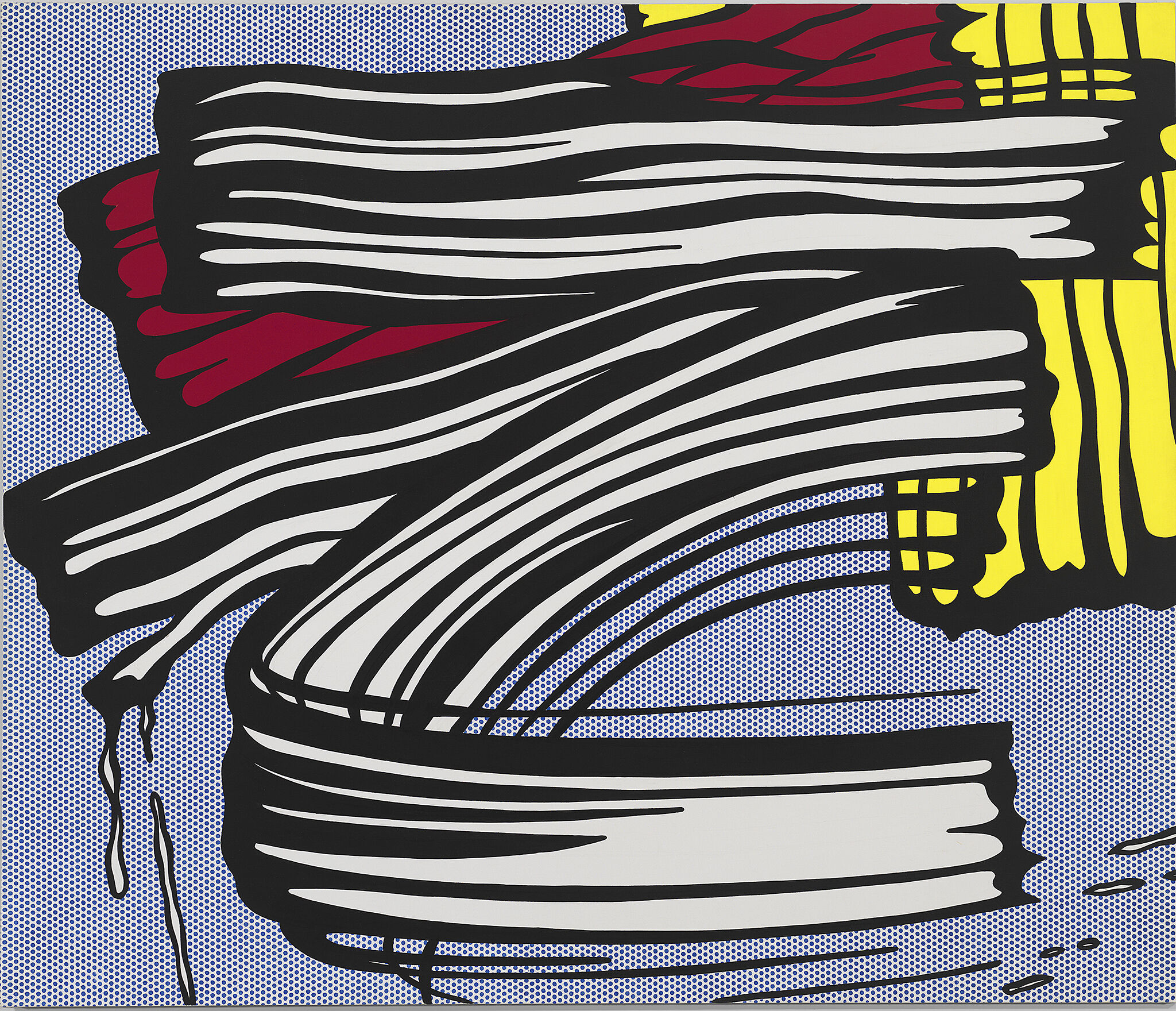
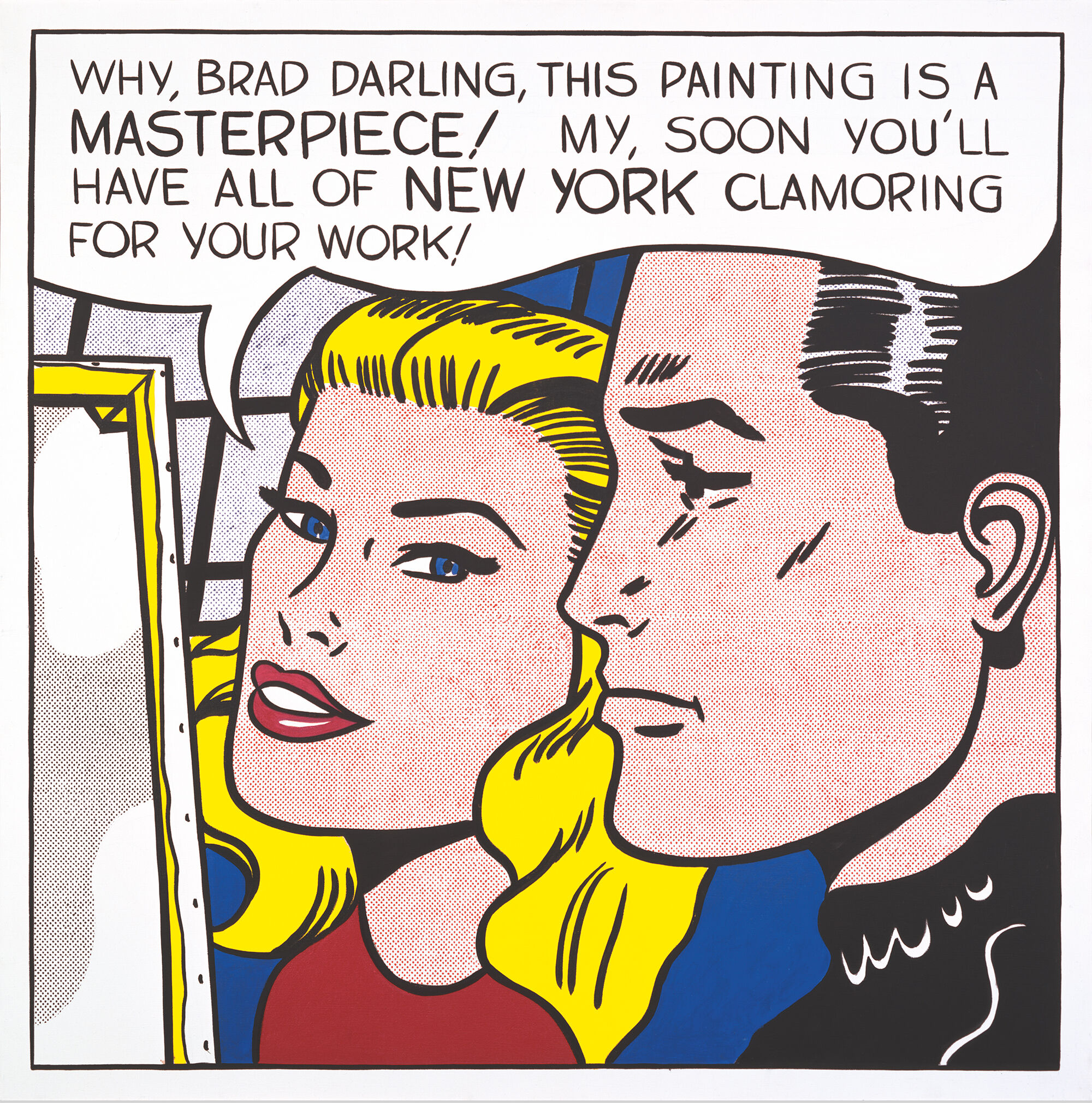
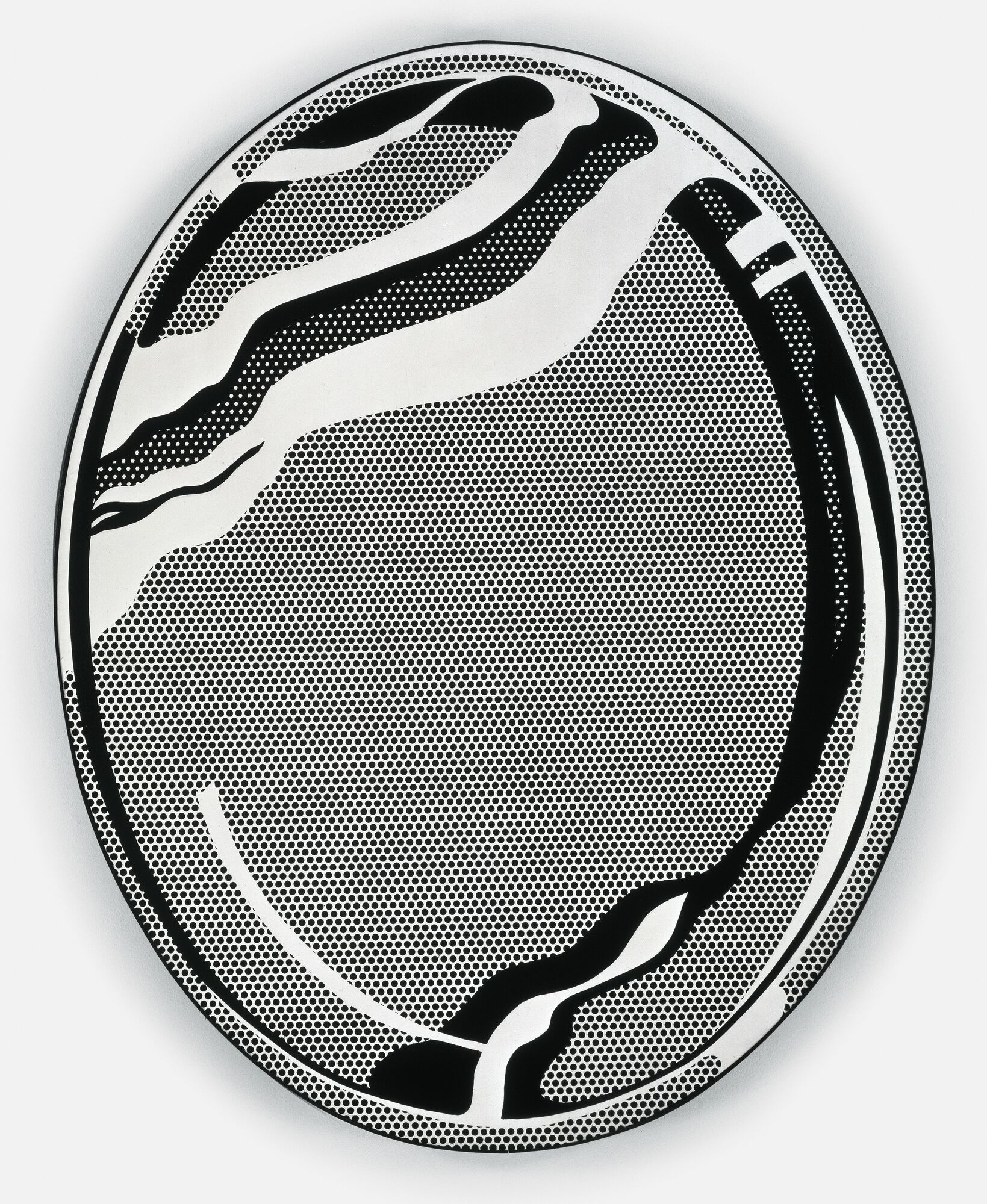
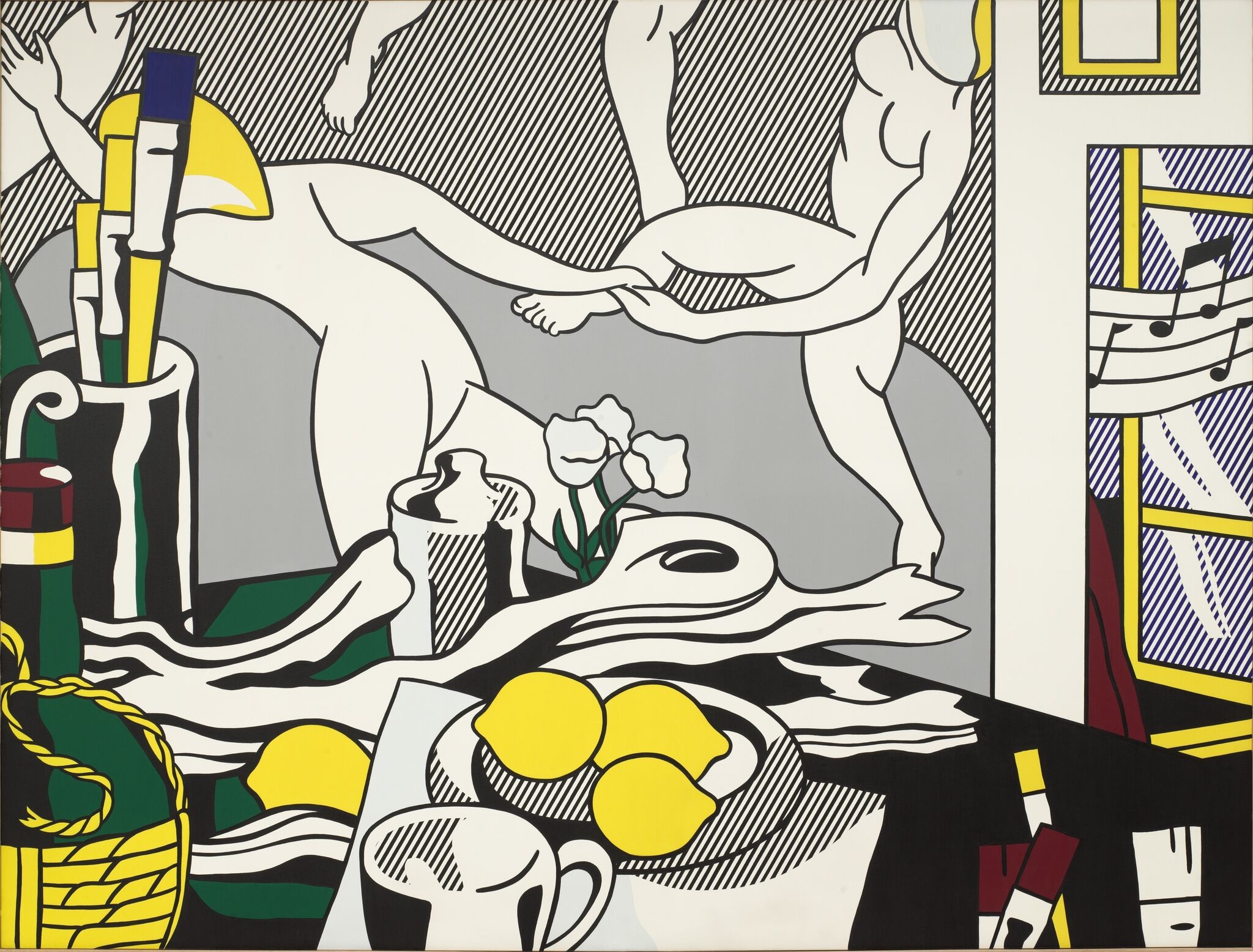
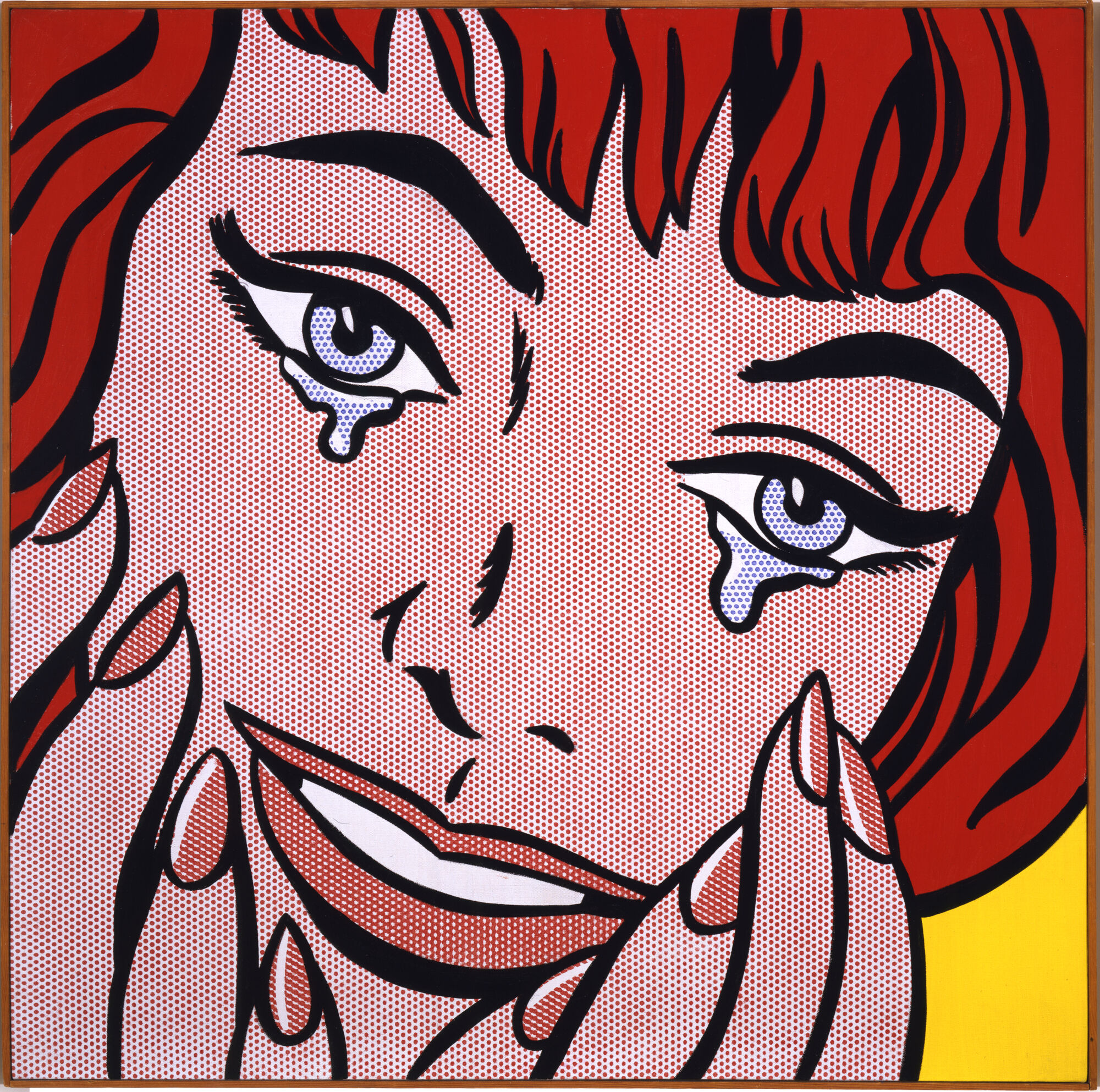
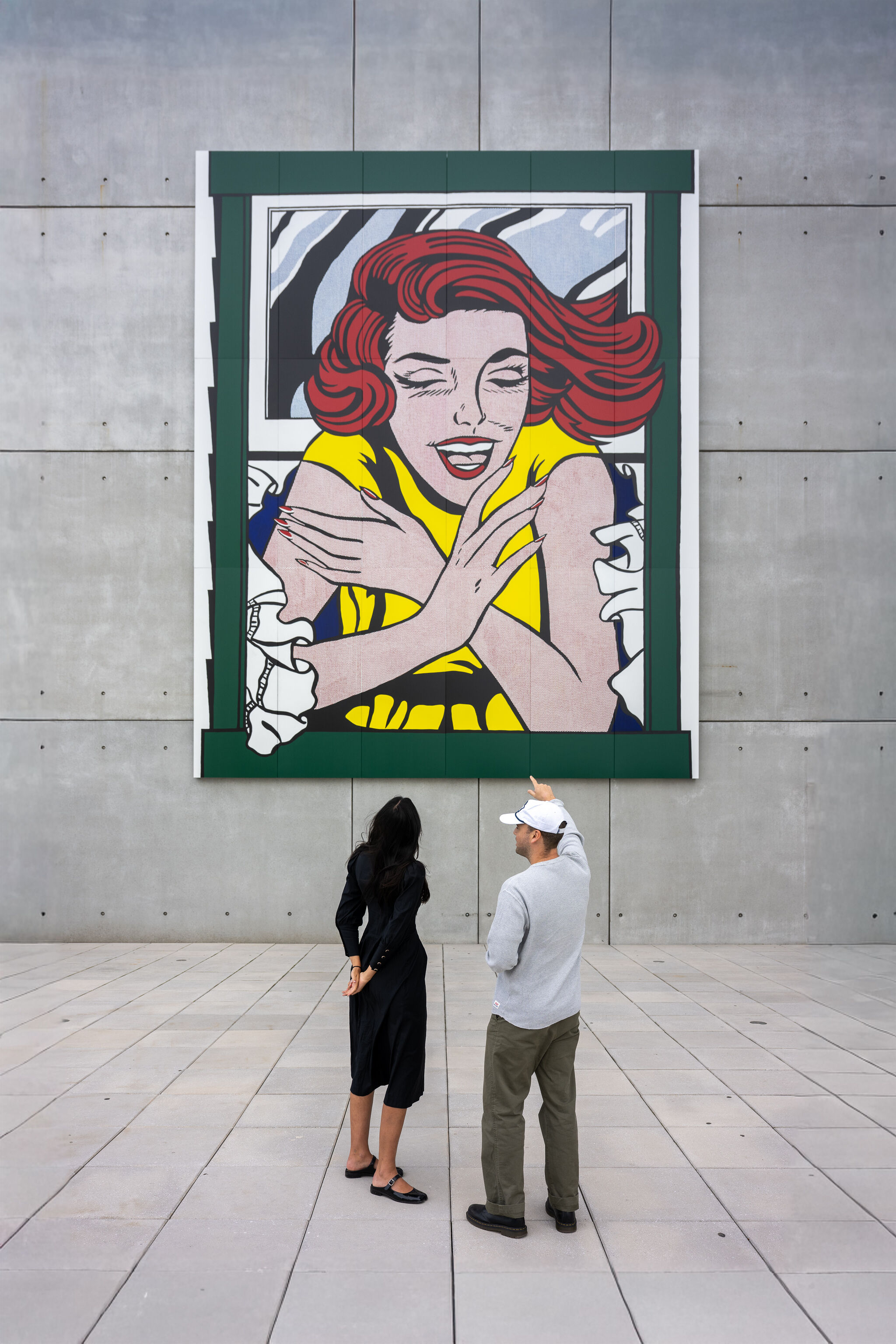
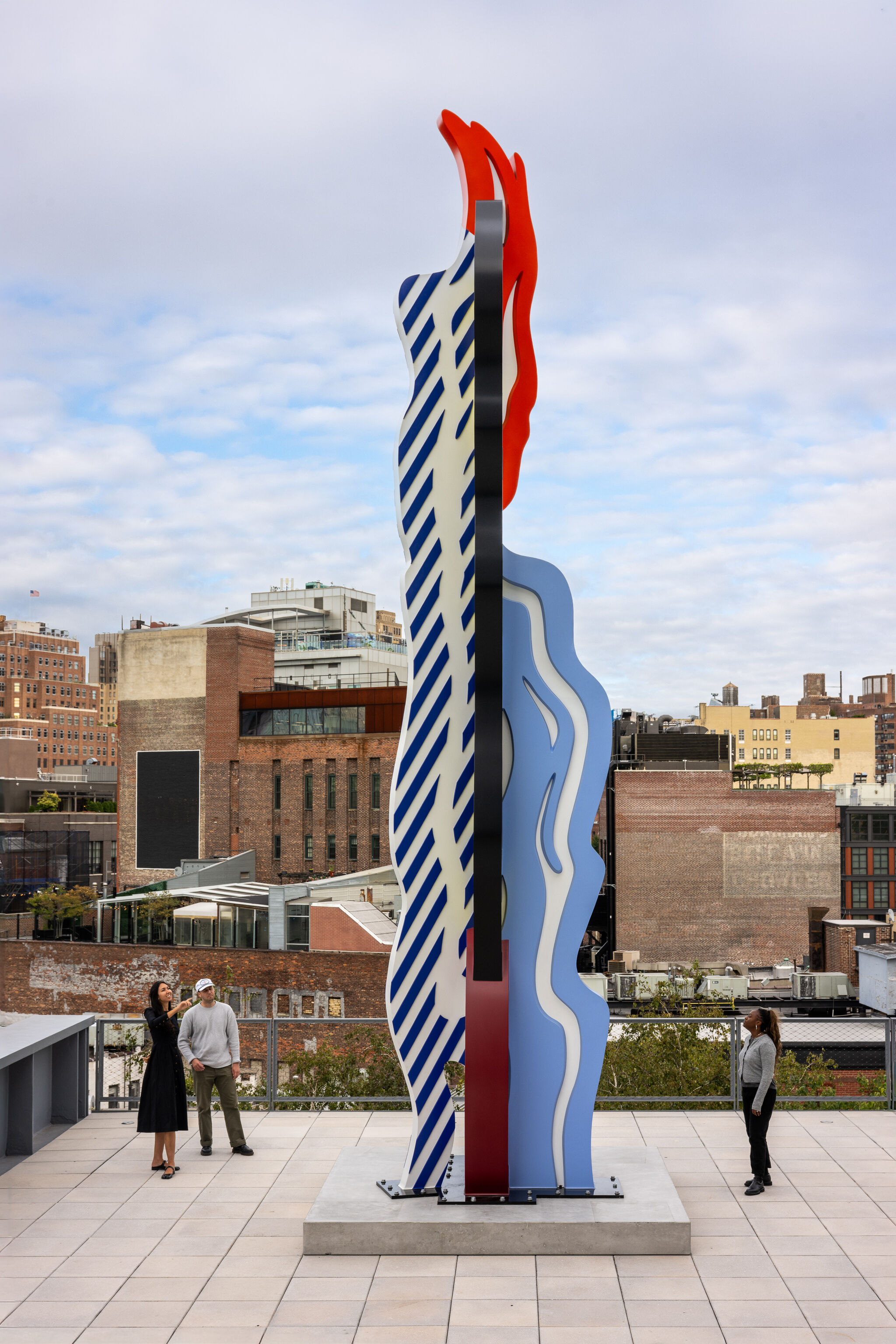
Duplication lies at the heart of Lichtenstein’s practice. Presenting works from across his career, these galleries probe the artist’s declaration that reproduction was the real subject of his work. Early on, Lichtenstein found his imagery in storybooks, US history paintings, and military cartoons. In the 1960s, he turned his attention to a postwar image culture in which pictures circulated rapidly through comics, newspapers, magazines, and advertisements, as well as museum postcards and art books. Lichtenstein sketched from his chosen images, cropping, simplifying, and adjusting the compositions before enlarging his drawings with a projector and transferring them to canvas. He also developed techniques to imitate the regularity of mechanical image reproduction, including a series of increasingly sophisticated perforated screens that he pushed paint through to simulate Benday dots.
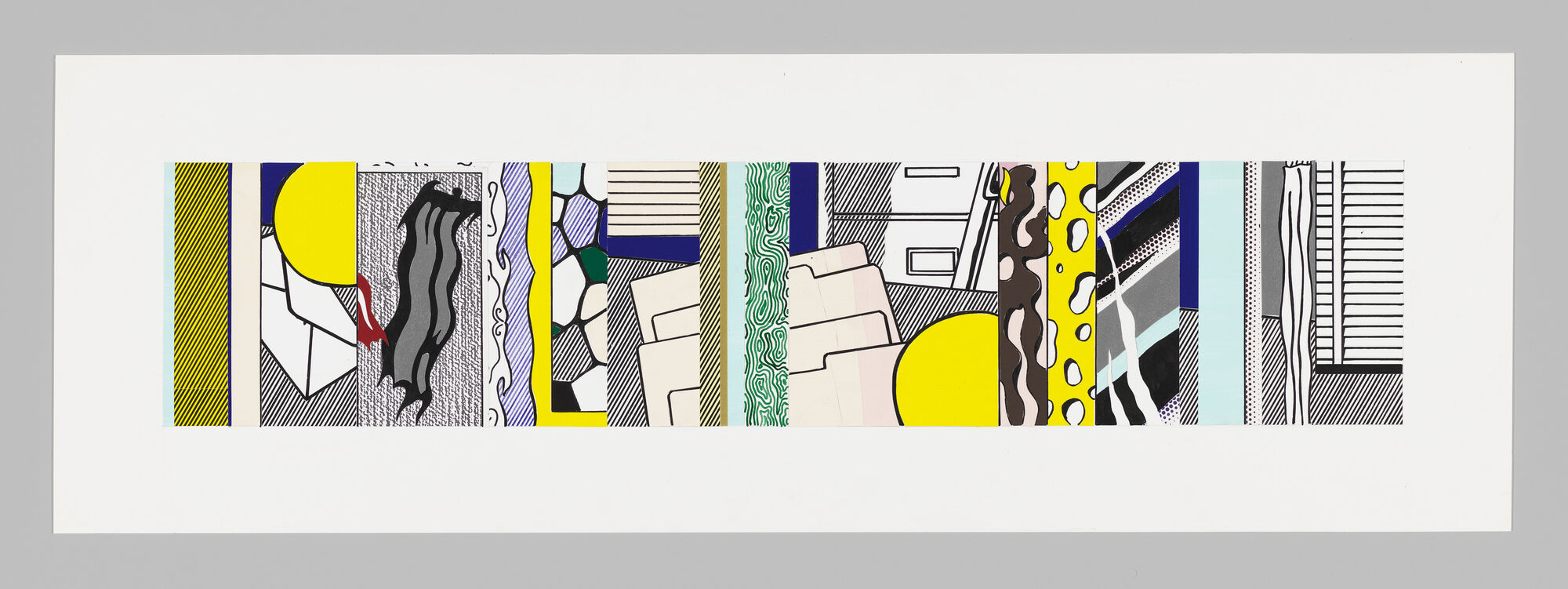
It was not long before Lichtenstein’s own work was subjected to duplication. Both Richard Pettibone and Elaine Sturtevant appropriated his pictures in the mid-1960s, taking the questions Lichtenstein’s art posed around authorship and originality to another level. Around the same time, Lichtenstein began to reimagine the possibilities of duplication, shifting his attention from pictures to patterns and exploring seriality through multipart paintings