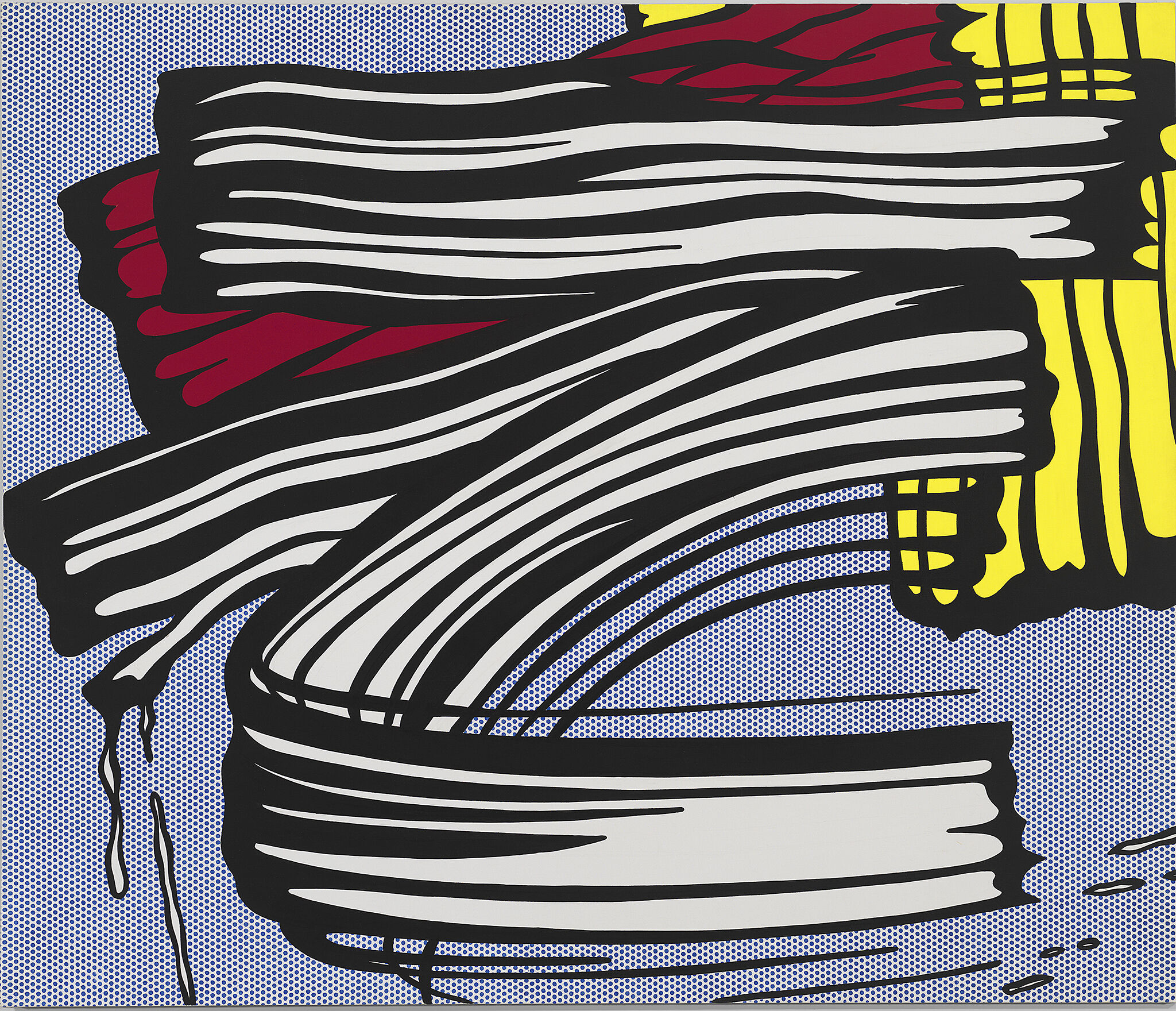
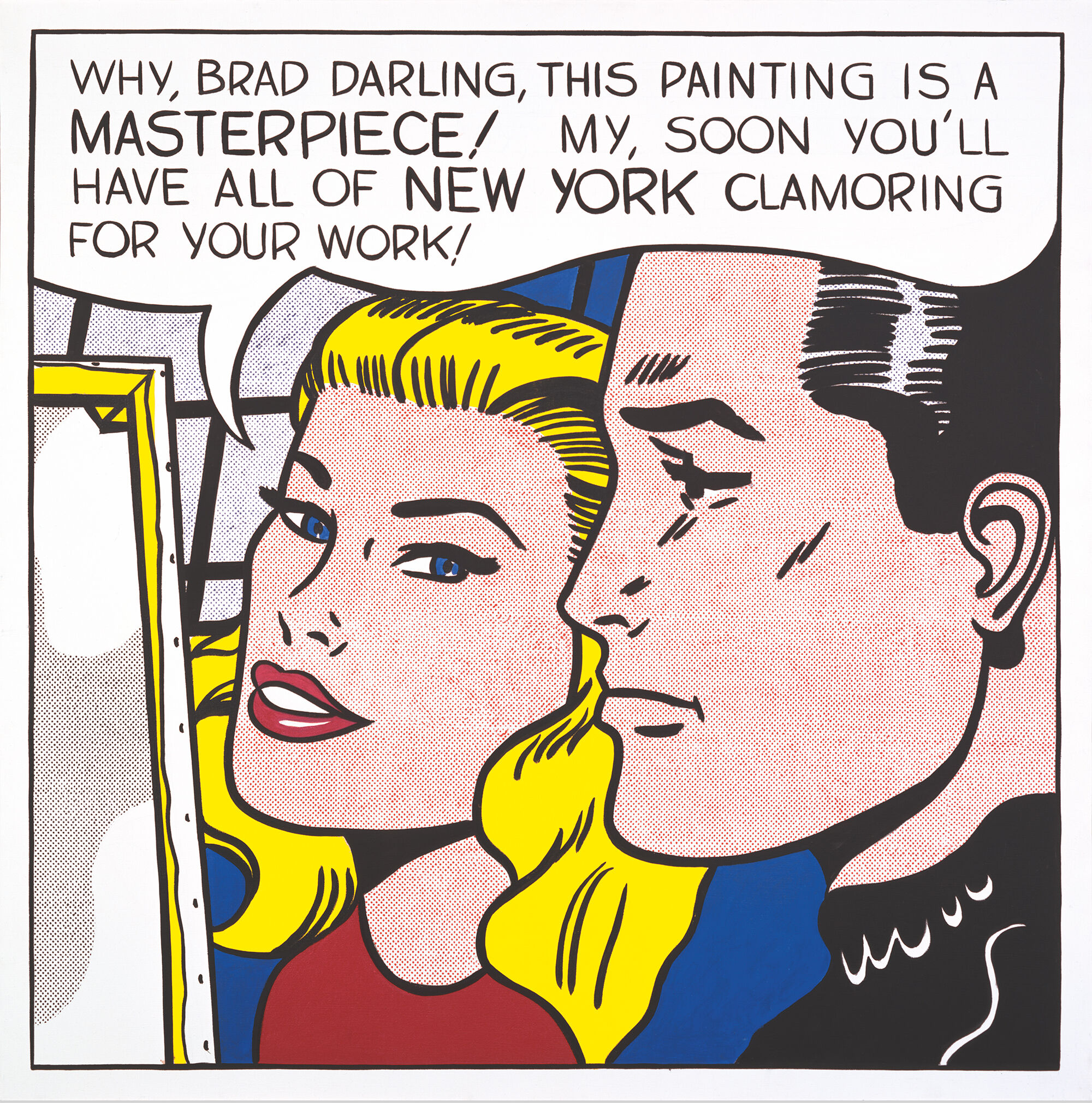
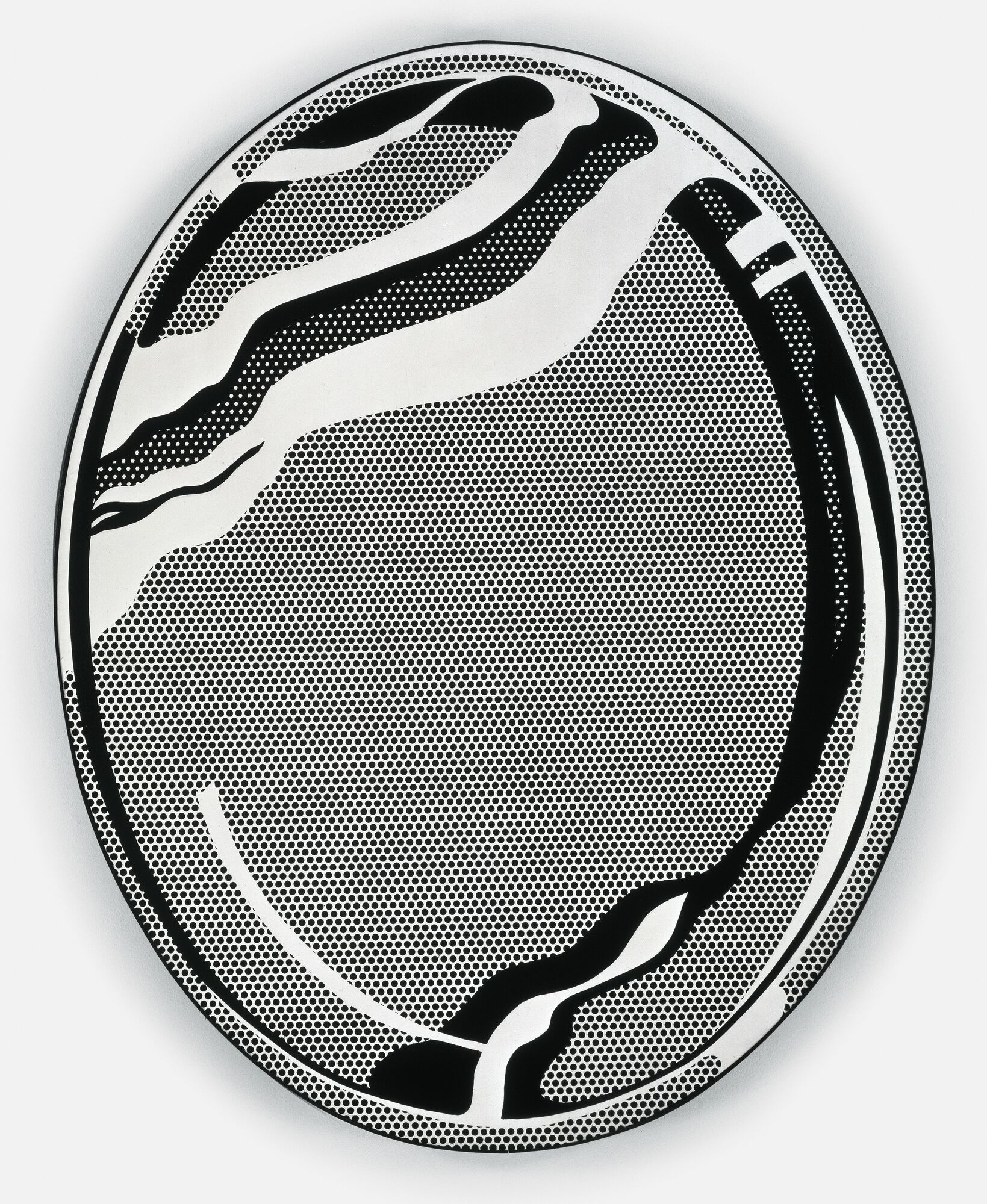
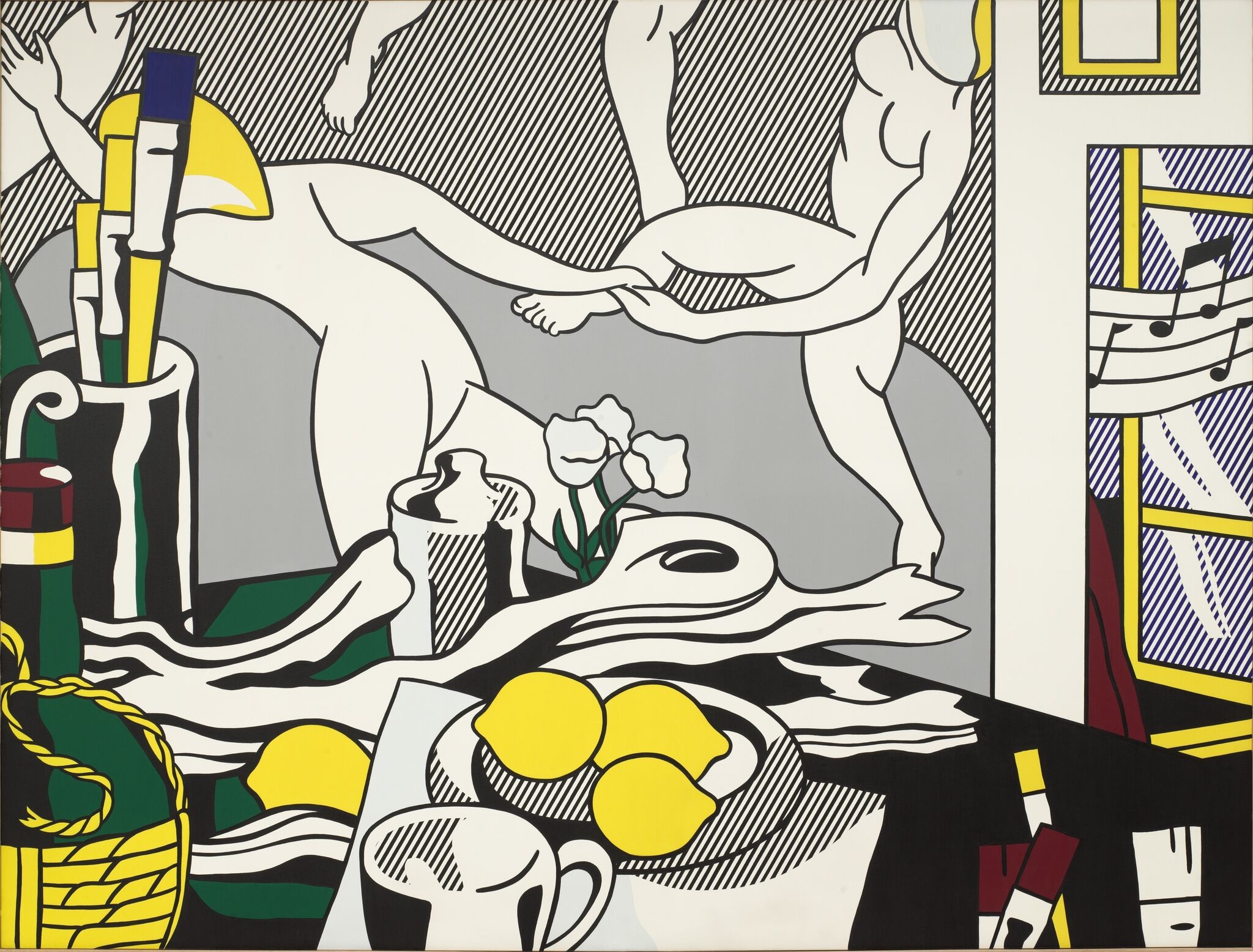
Inspired by a comic-book image of a painter at work, Lichtenstein began transforming the brushstroke into a graphic sign in the mid-1960s. The painter’s gesture, that expressive mark of Abstract Expressionists such as Lee Krasner and Willem de Kooning, had long stood for authenticity and self-expression. Lichtenstein refashioned brushstrokes and their attendant drips, smears, and splashes—enlarged, outlined, and rendered with crisp precision against fields of dots—as standalone images and playful surrogates for painterly expression itself. “Visible brushstrokes in a painting convey a sense of grand gesture,” he explained. “But in my hands, the brushstroke becomes a depiction of a grand gesture.”
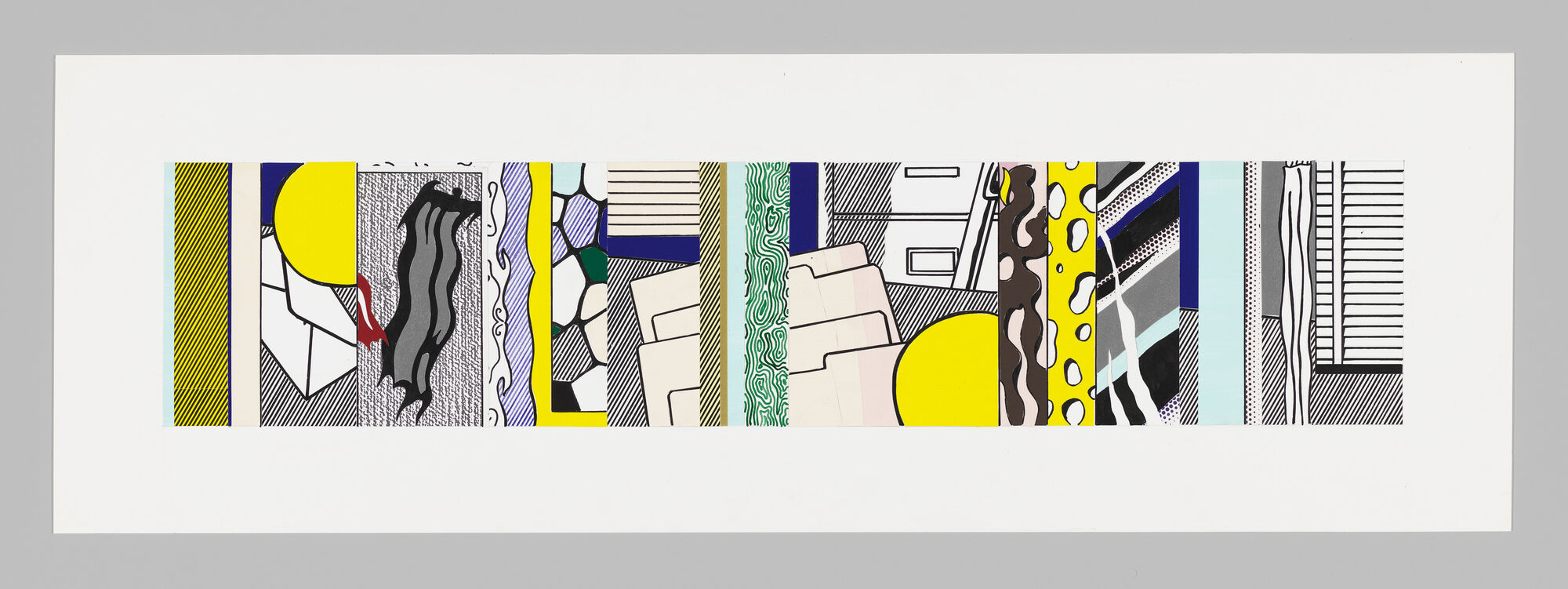
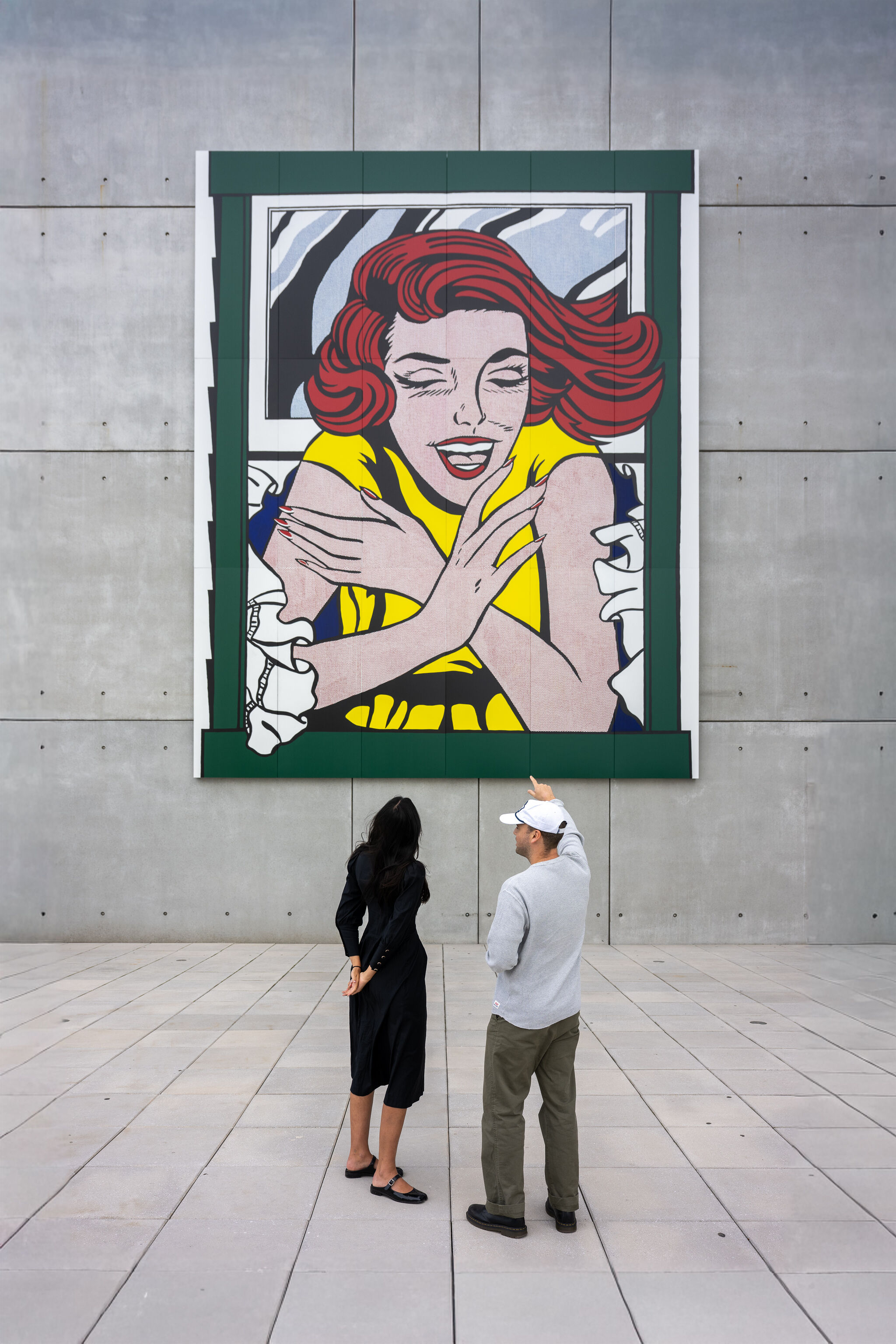
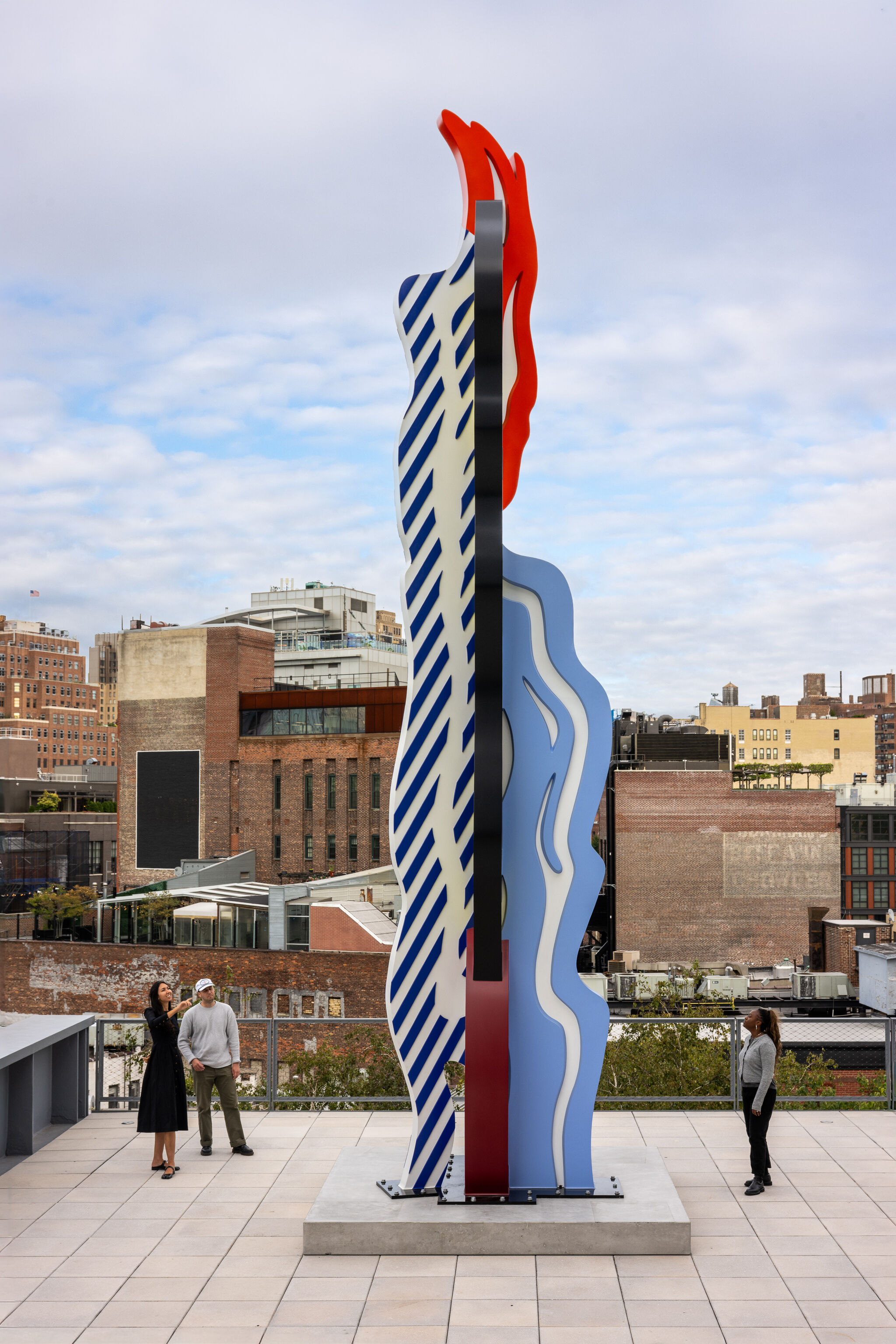
As one of Lichtenstein’s most distinctive motifs, the brushstroke appears across paintings, prints, sculptures, and murals throughout his career, including the monumental 1988 sculpture installed in the outdoor gallery on this floor. Here a re-creation of one of the four walls from his University of Düsseldorf Brushstroke Mural (1970) serves as the backdrop for a number of brushstroke paintings from the 1960s. The blank cutouts correspond to doors in the original building.