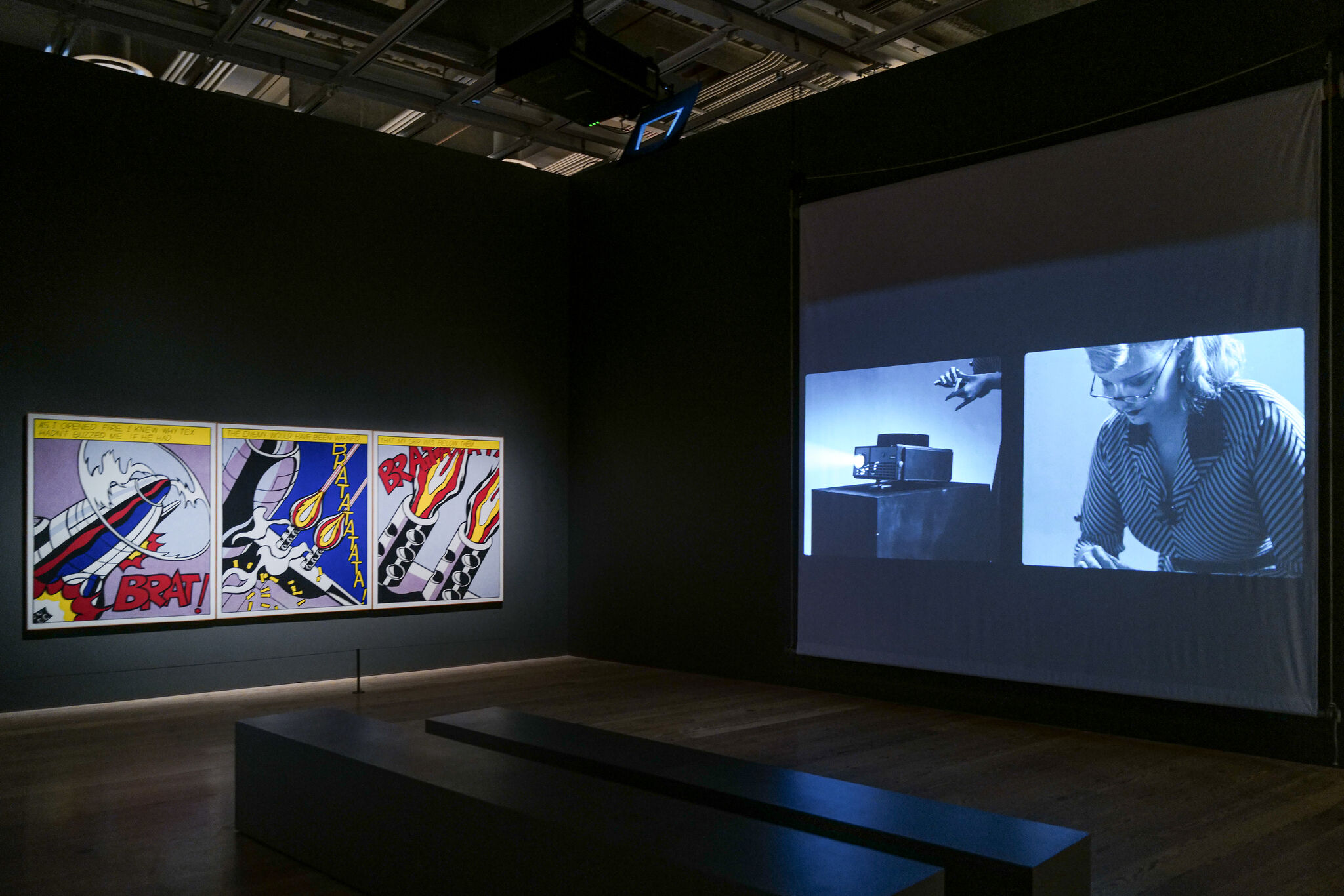
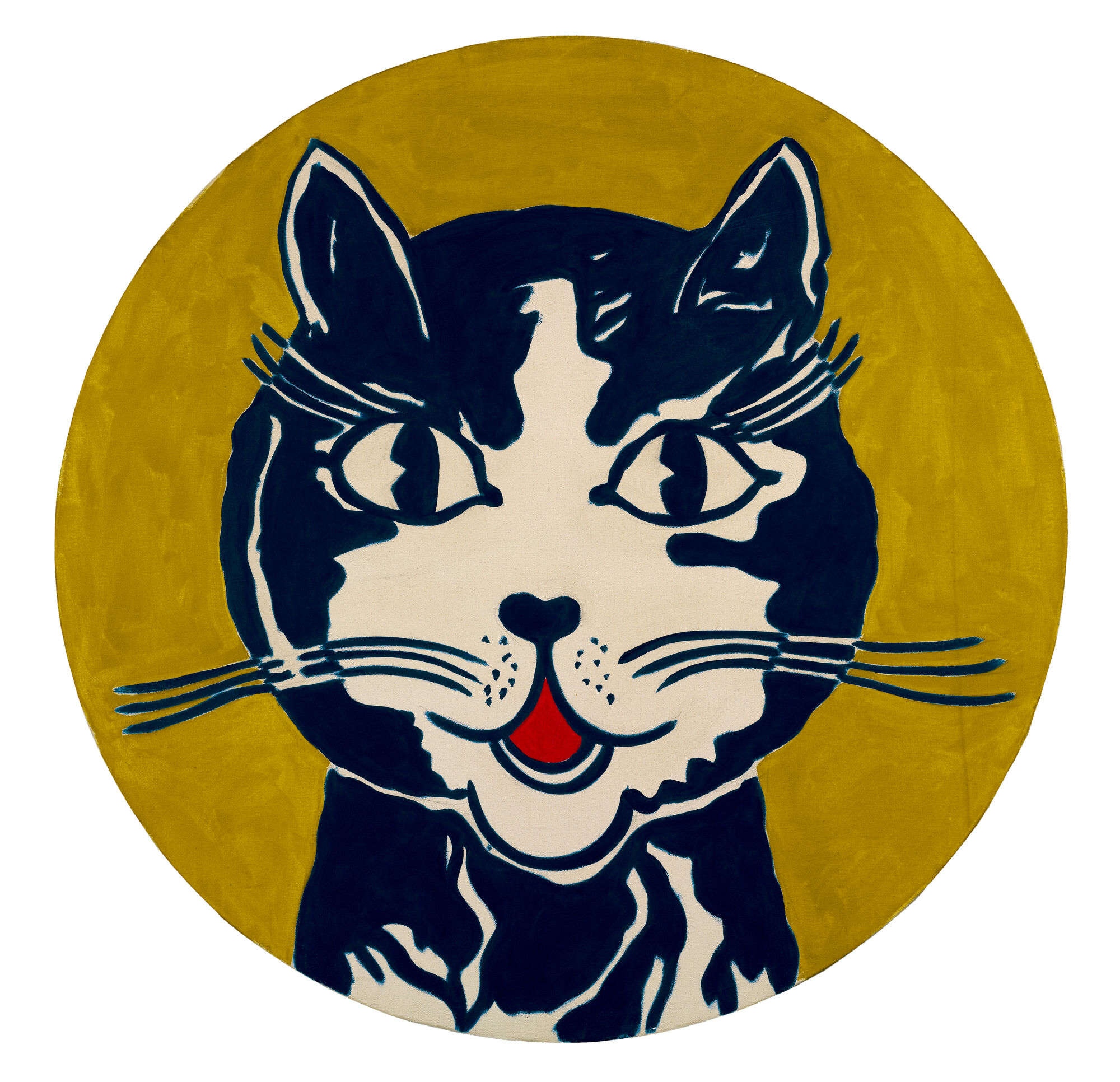
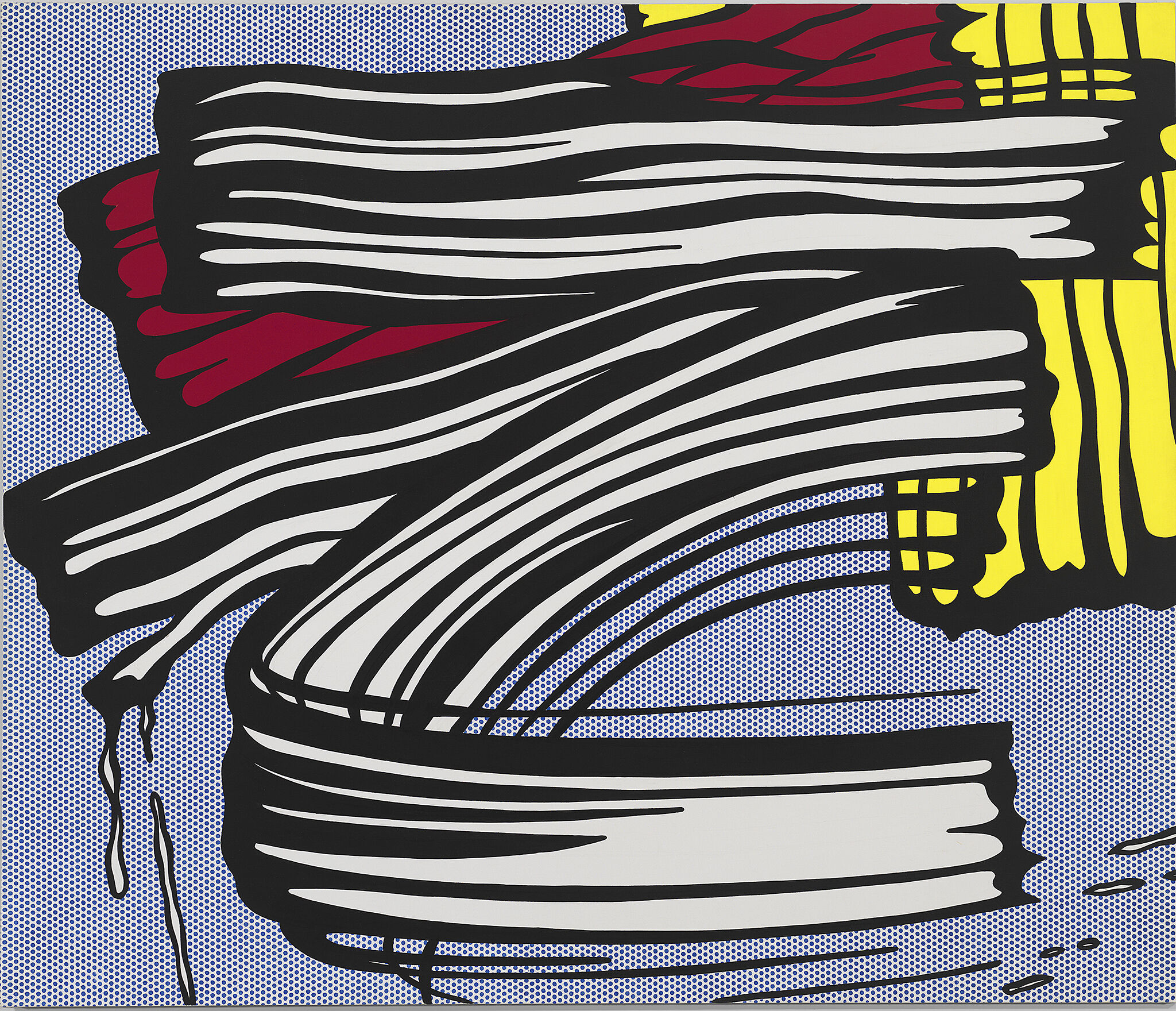
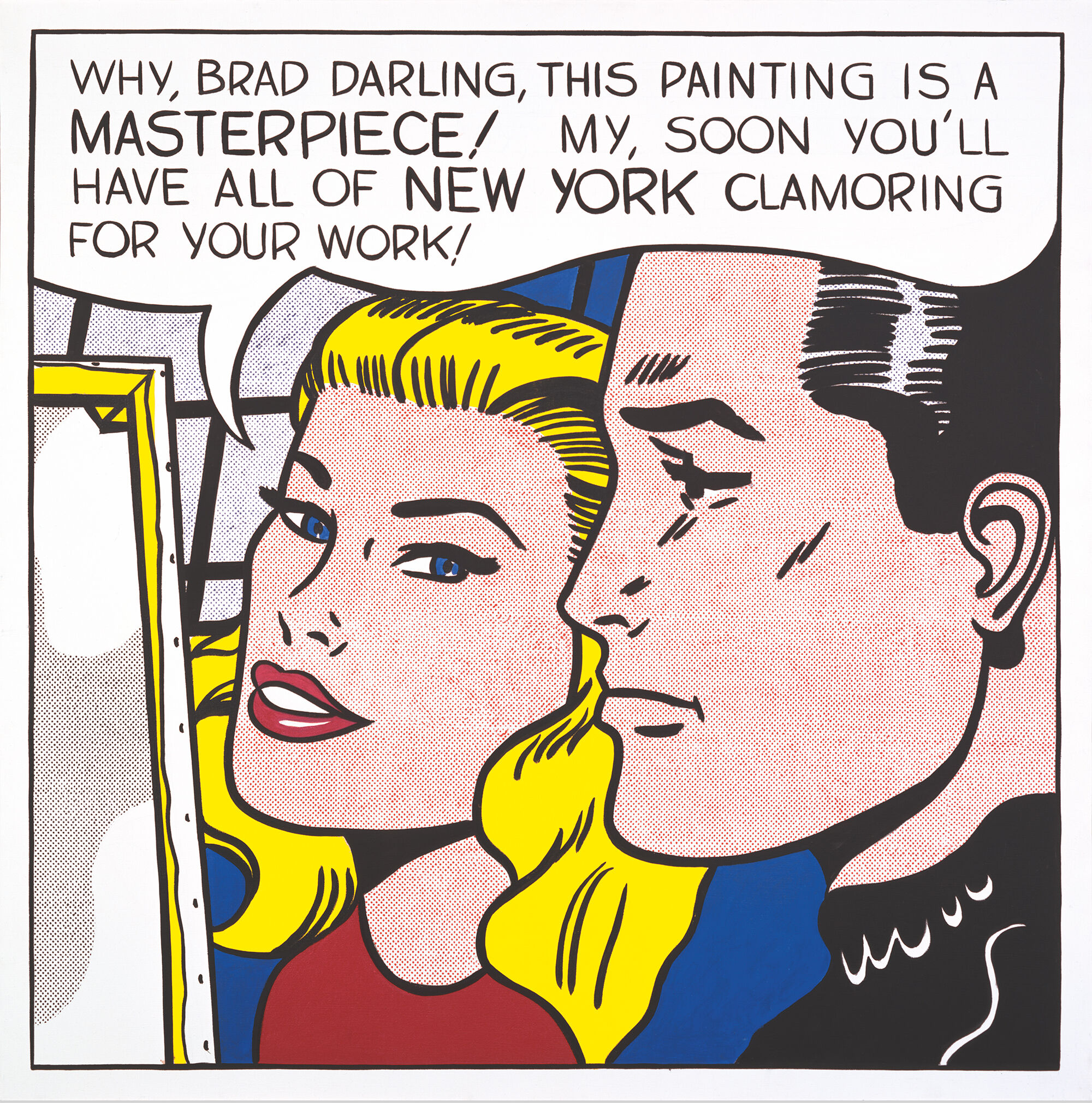
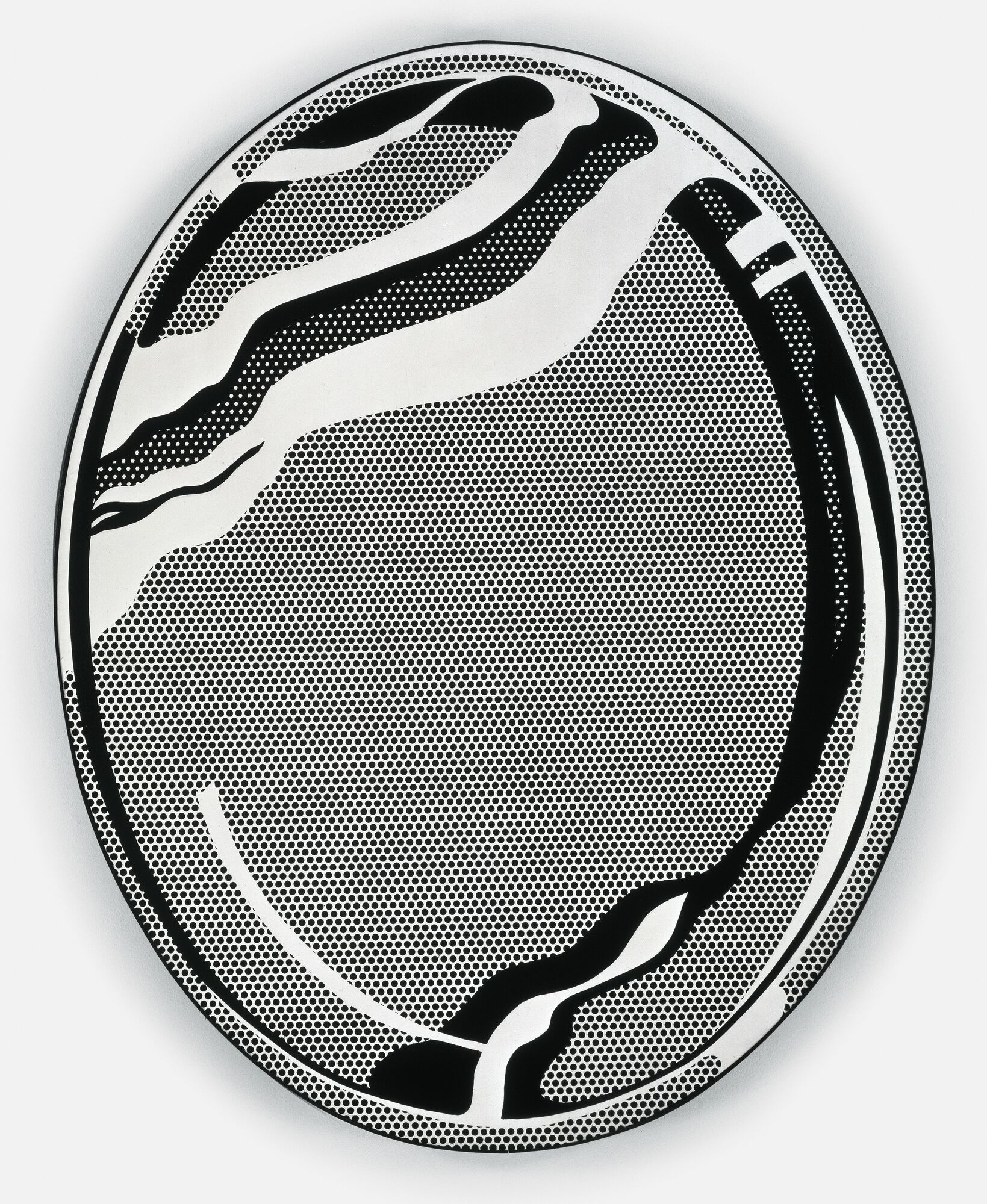
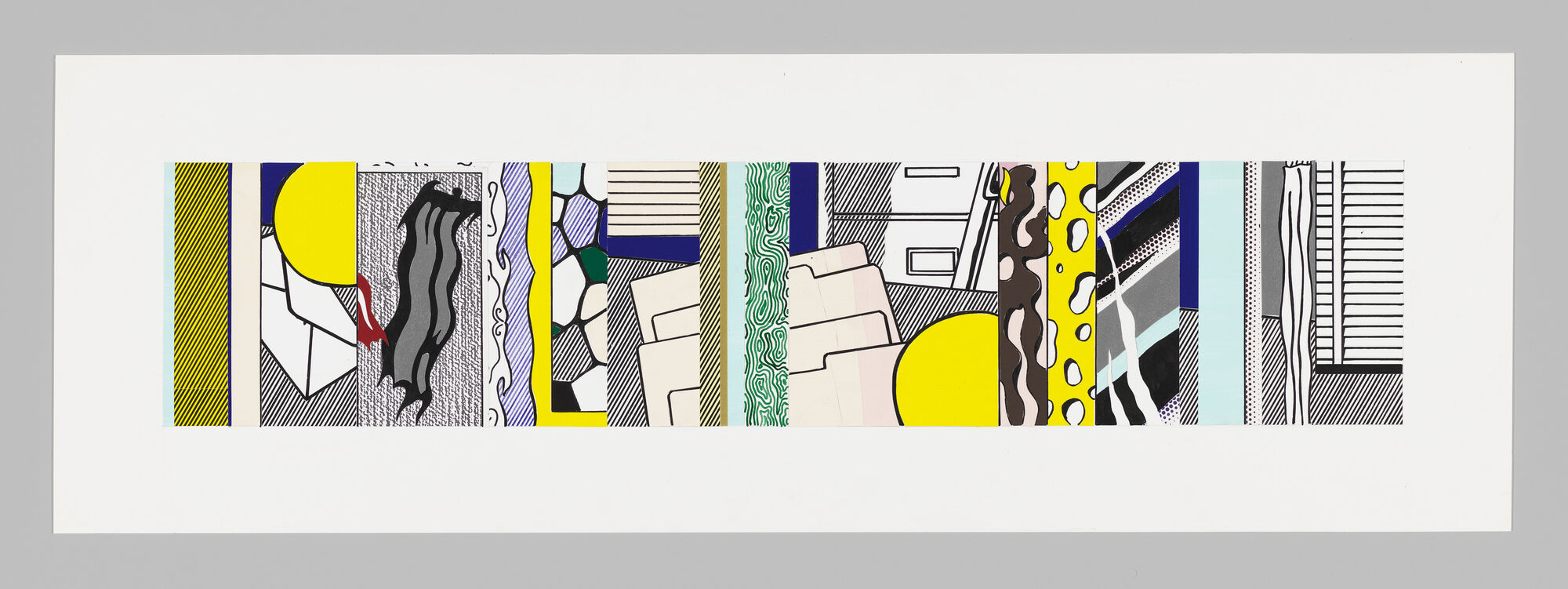
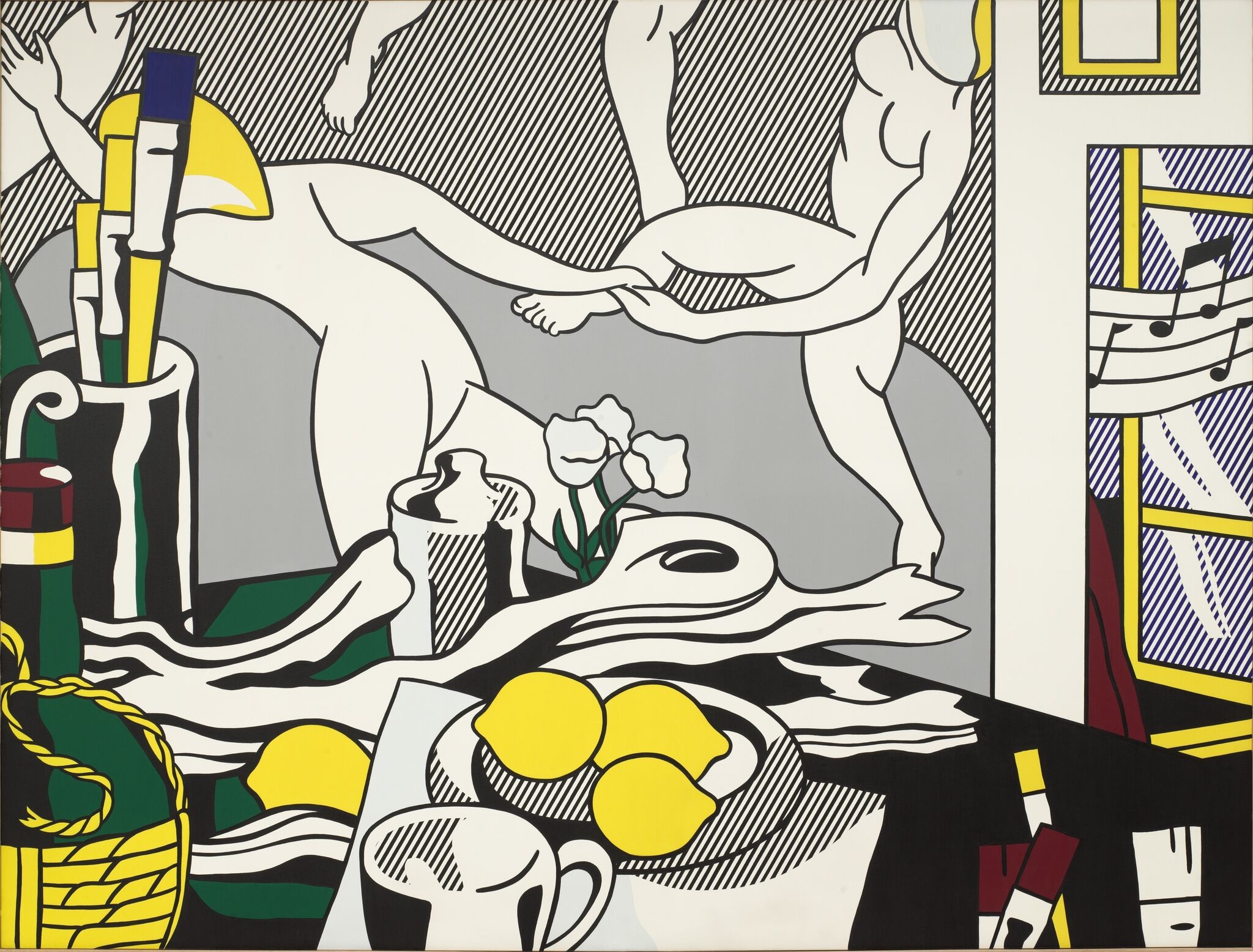
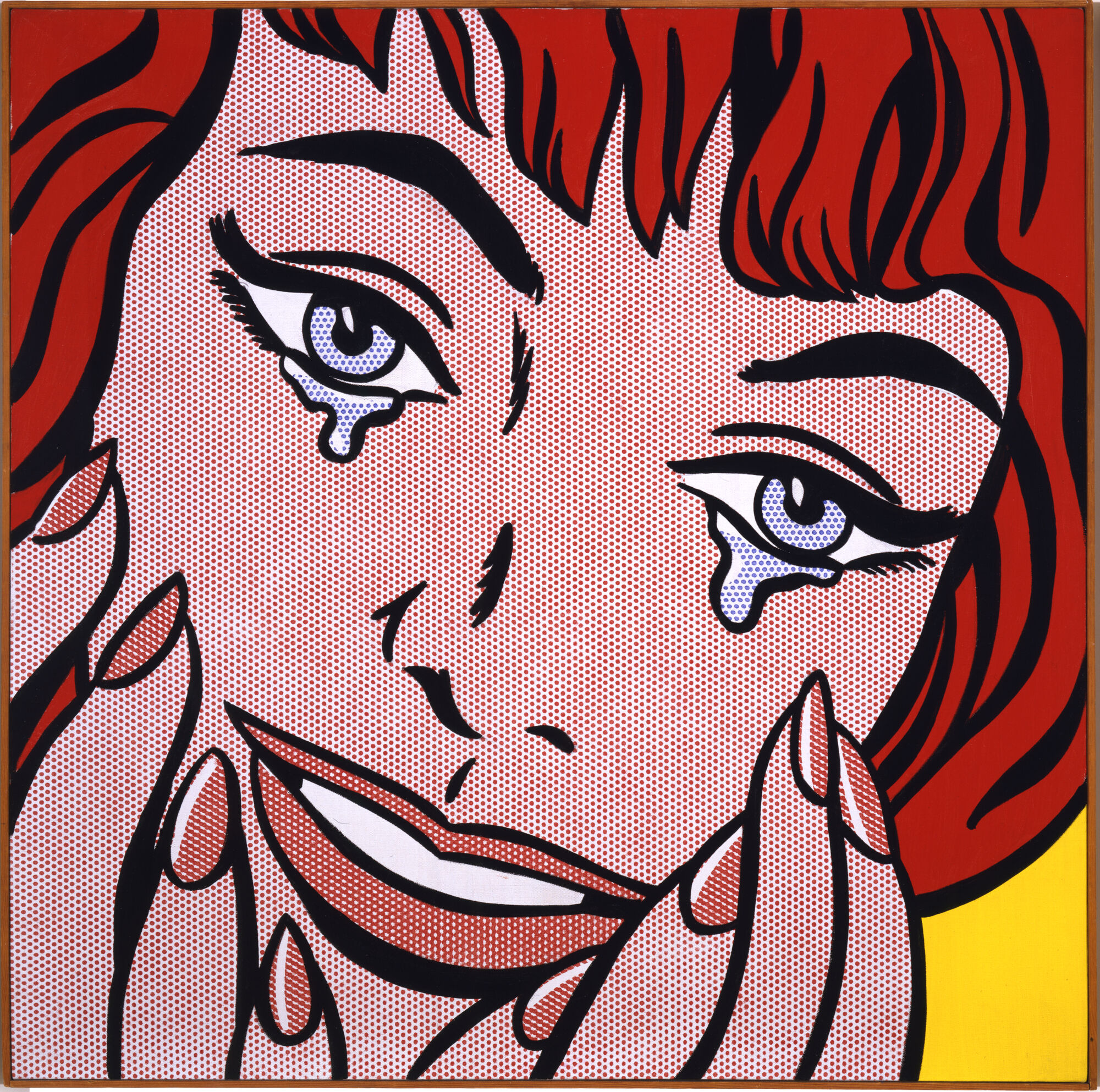
These tactile designs illustrate the progression of Lichtenstein’s signature dot over the course of his career. From left to right, this evolution is demonstrated in the details of four works from this exhibition presented in chronological order.
Lichtenstein’s dots were not a fixed formula, but a technique he continually refined from the early 1960s until his death in 1997. In works such as Portrait of Allan Kaprow (1961), he experimented with making dots by hand, pushing paint through the holes of a dog brush with the bristles removed to make rows of repeated marks. By the time he made Happy Tears (1964), his process had become more controlled, relying on commercial templates to evoke the look of mass-media printing while remaining handmade. For Rouen Cathedral, Set III (1968–69) and later works, he used custom-made dot templates that allowed for greater variation in scale, density, and atmosphere. In Treetops Through the Fog (1996), for example, the dots seem to dissolve into mist, showing how a technique associated with graphic clarity also produces subtlety and depth.
These tactile designs were created by Clovernook Center for the Blind and Visually Impaired.