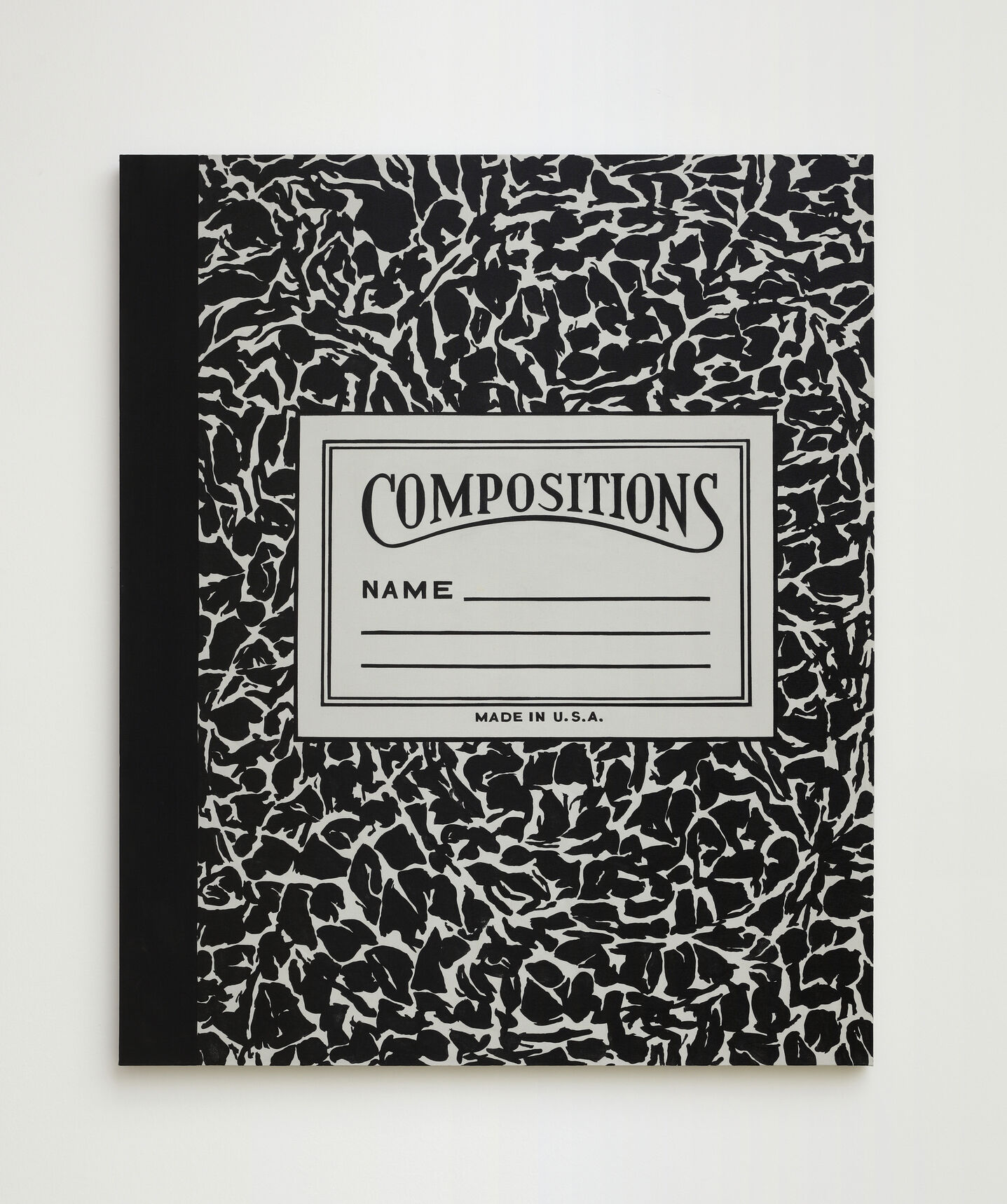
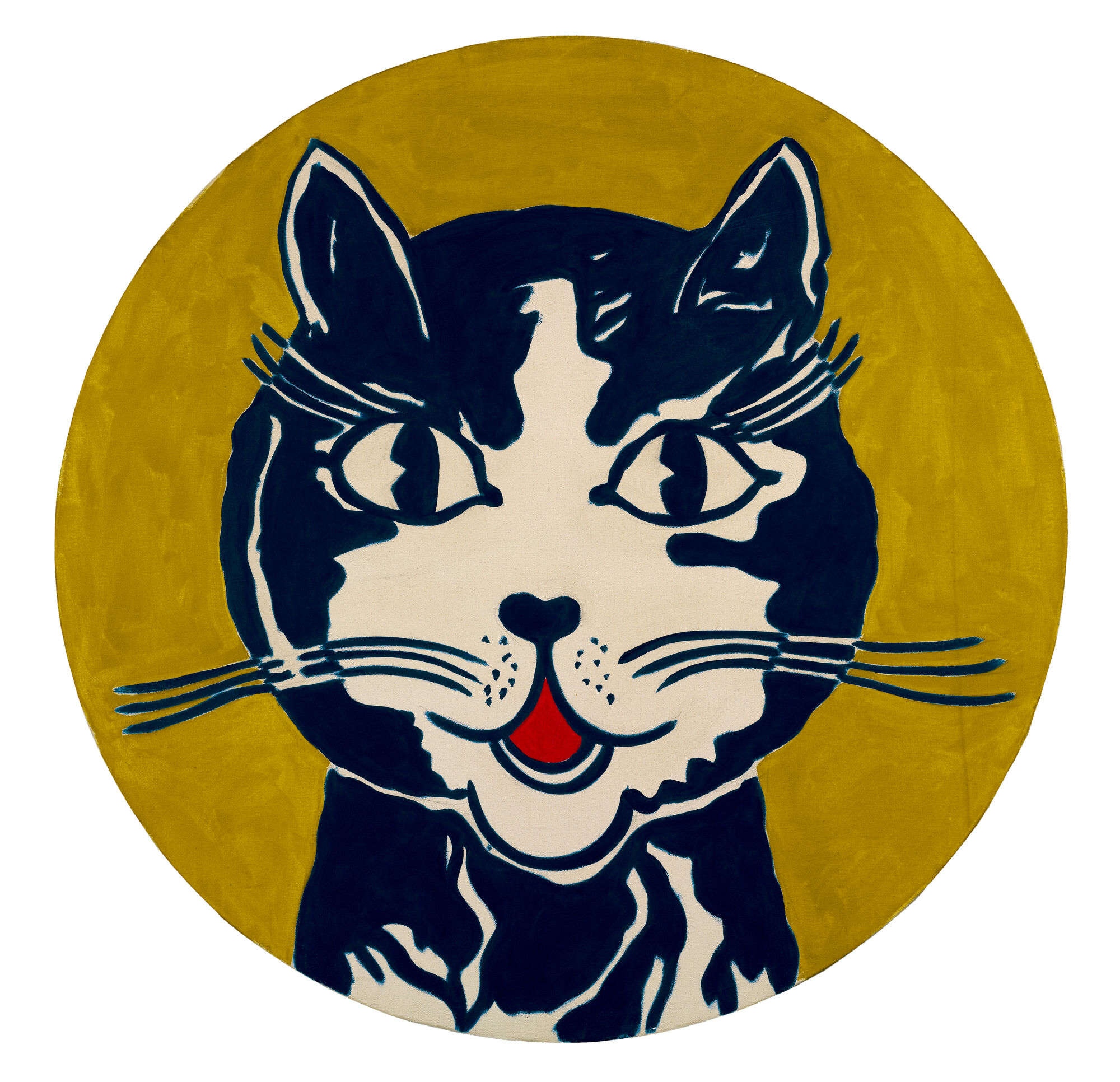
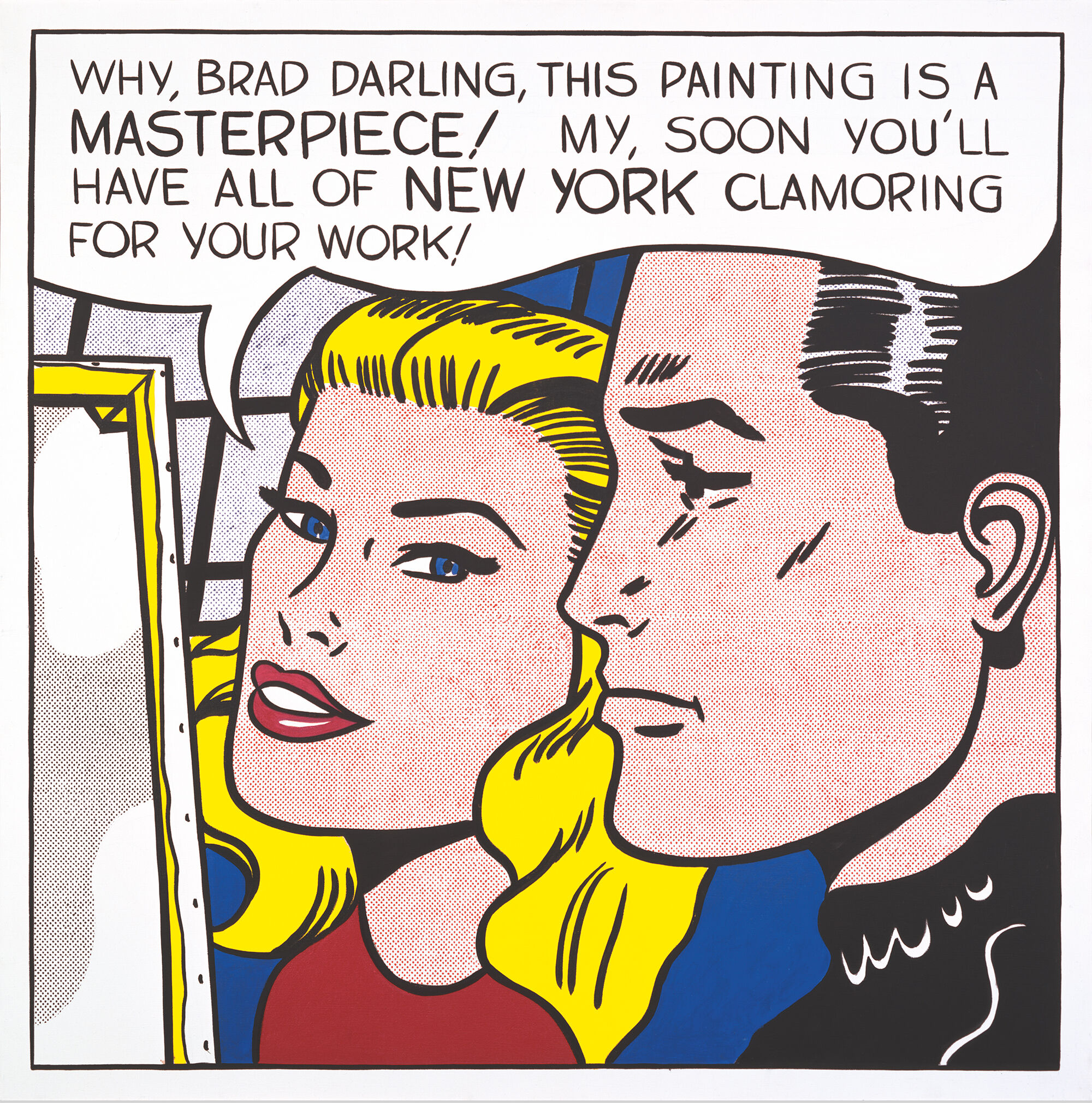
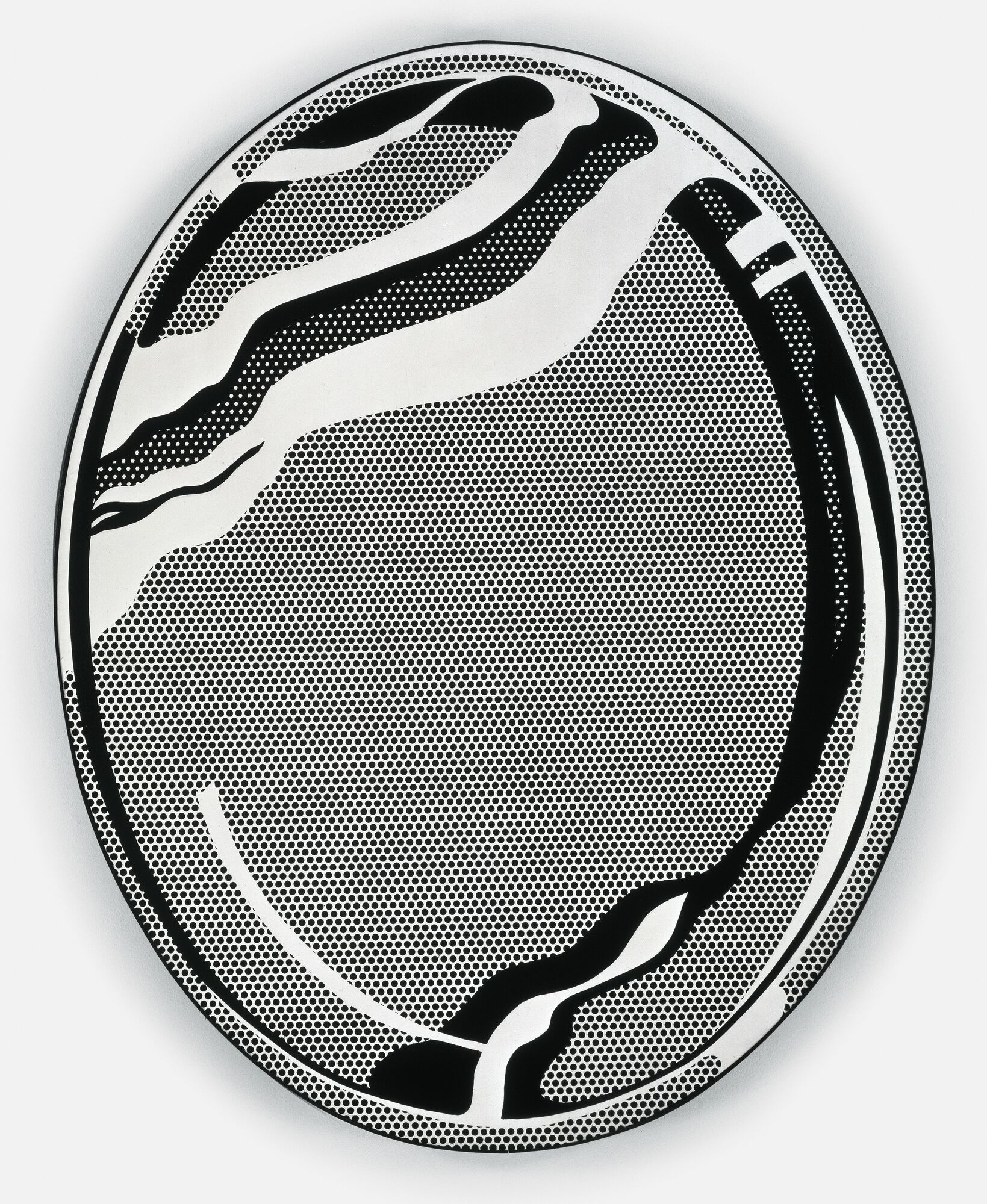
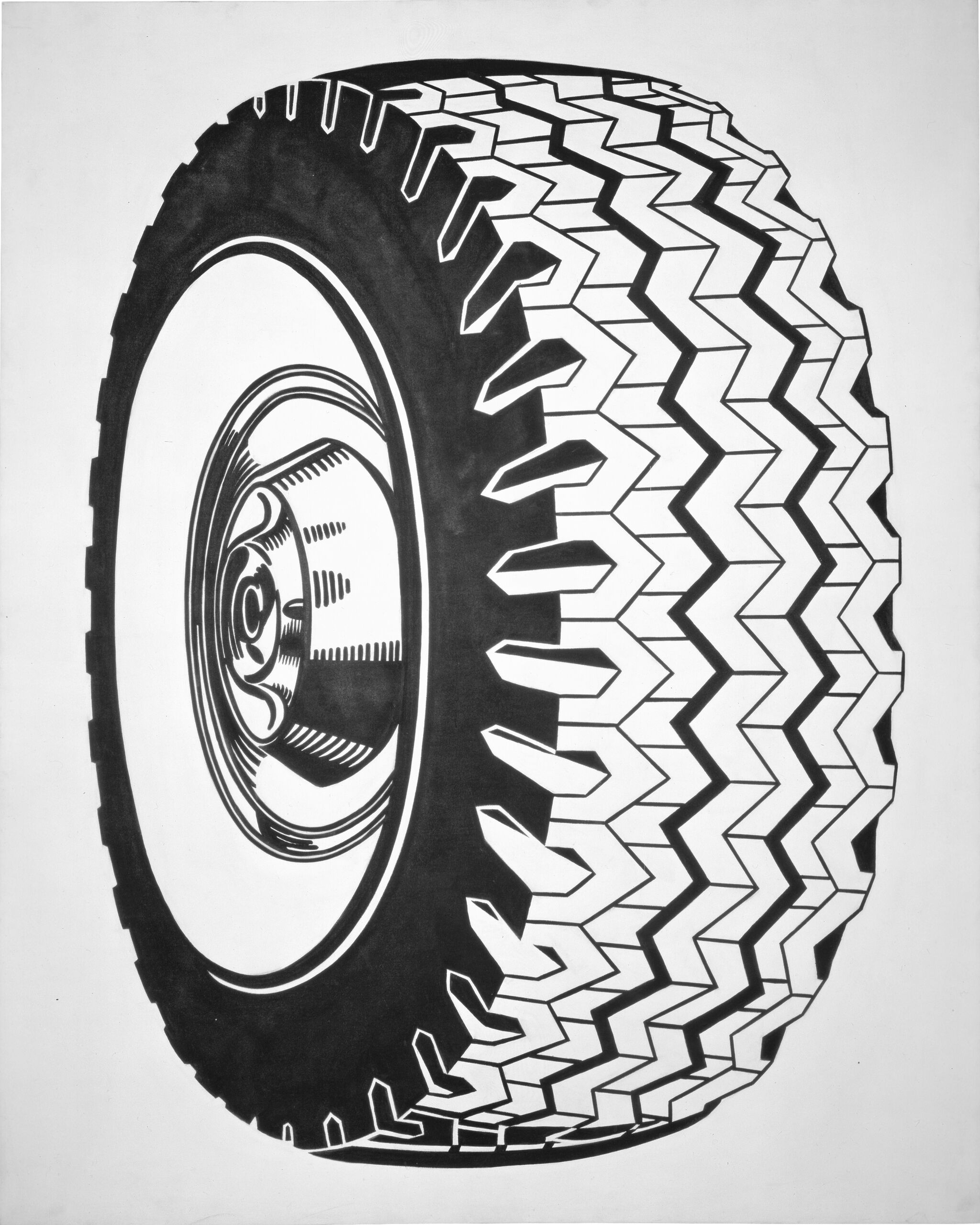
Following stints in Cleveland and upstate New York, Lichtenstein returned to the New York metropolitan area in 1960, where he taught at Douglass College, part of Rutgers University, in New Jersey. It was there that Lichtenstein had an artistic breakthrough. He began making deadpan paintings and drawings of common items based on mass-media reproductions: an electrical cord, a tire, a hot dog, a notebook. Frontal, centered, and stripped of any narrative context, these images are a study in neutrality. As Lichtenstein later remarked: “The passionless style is my passion.”
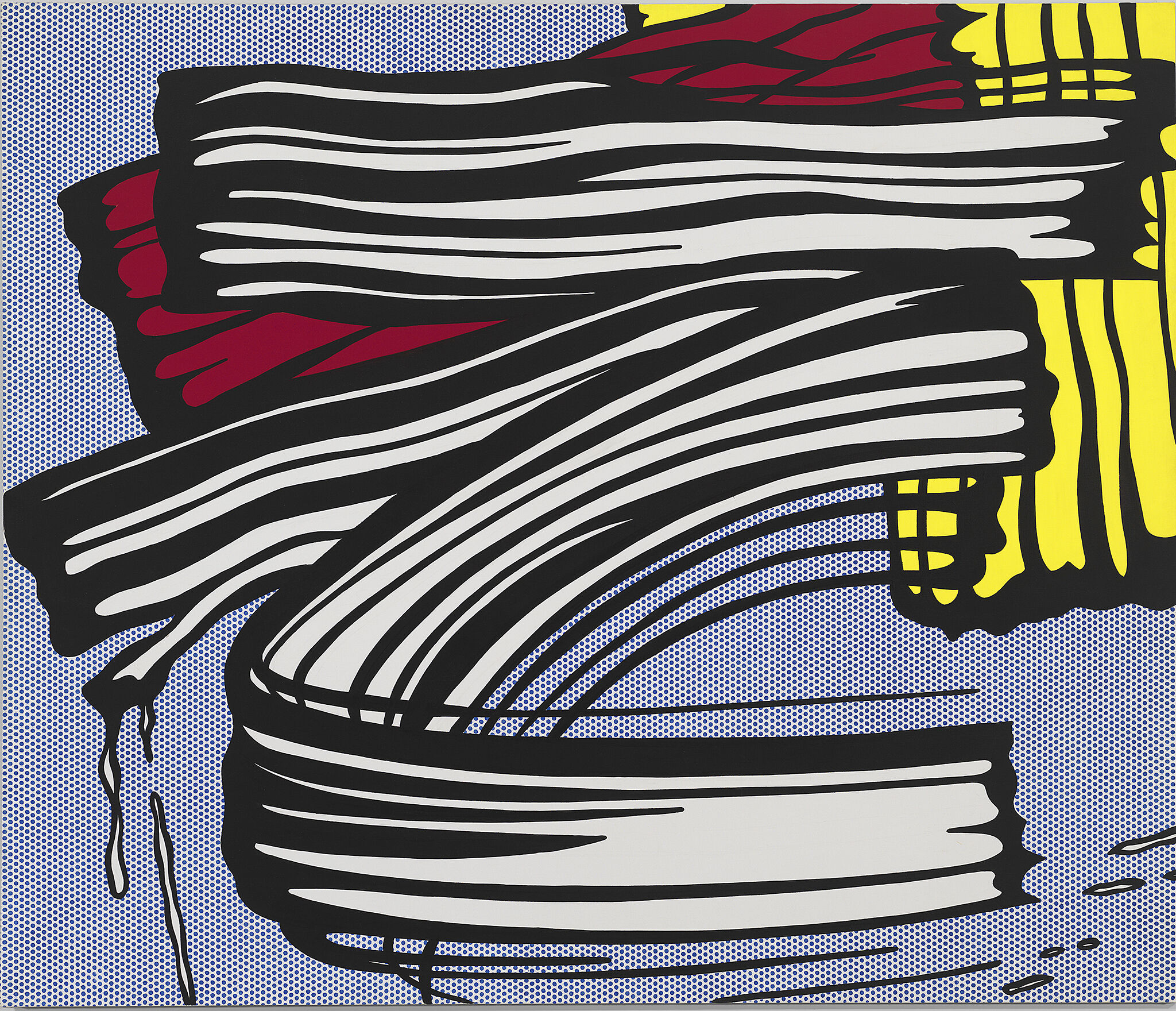
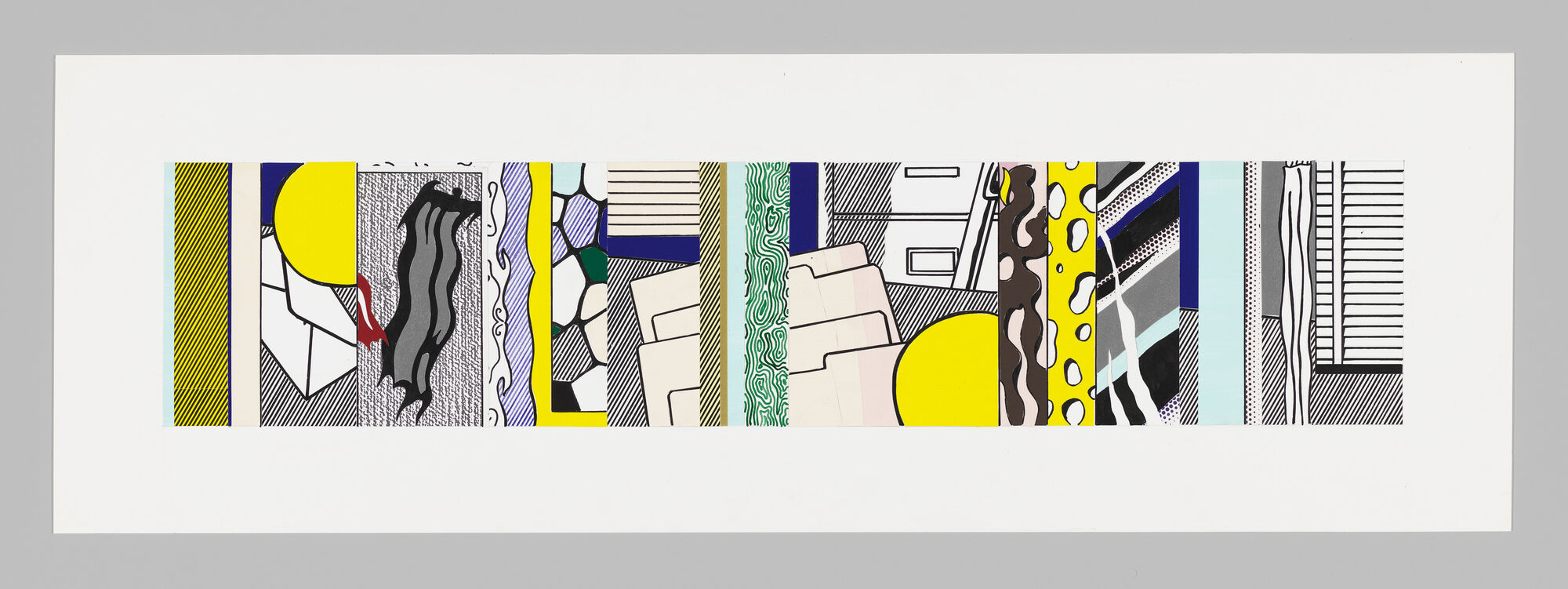
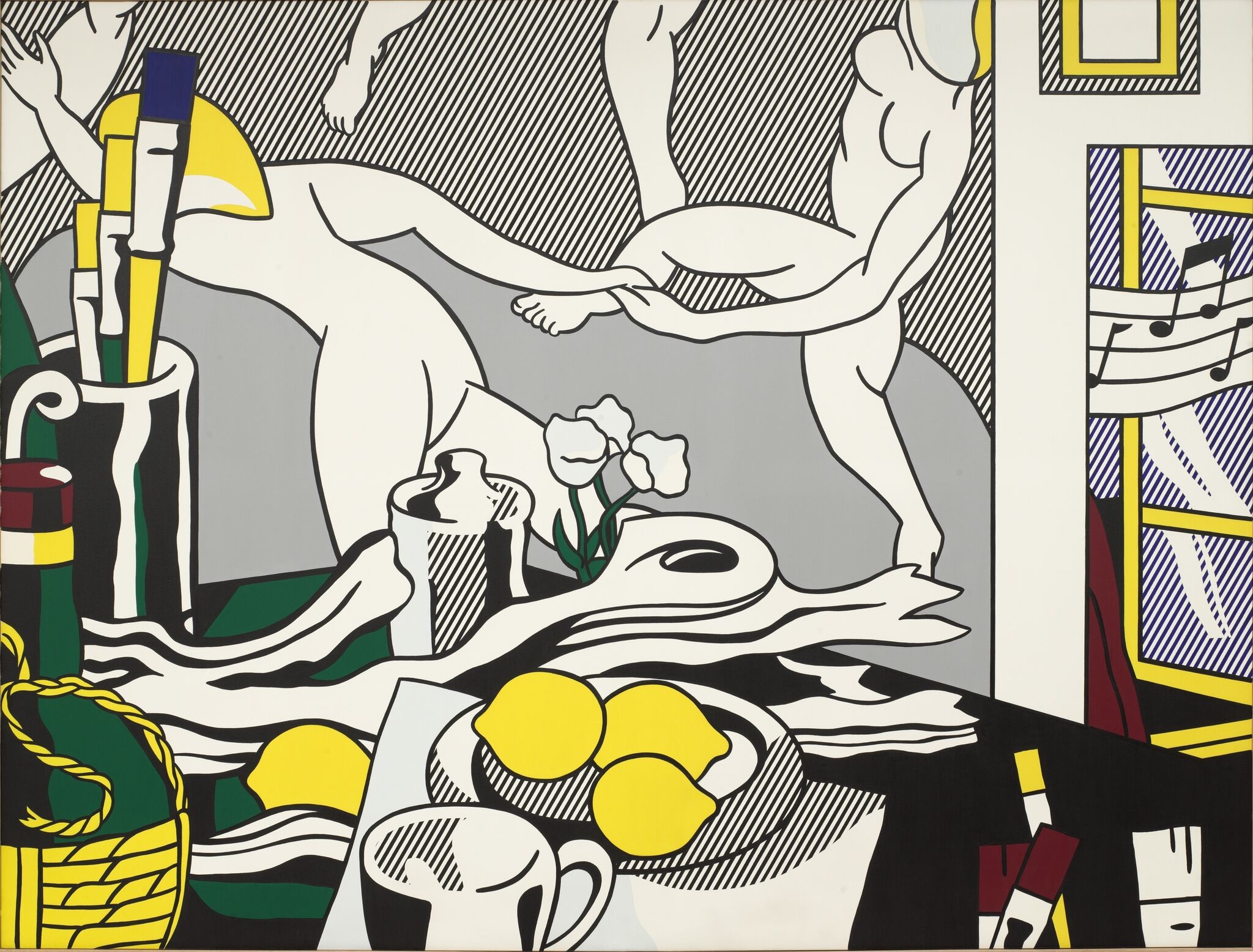
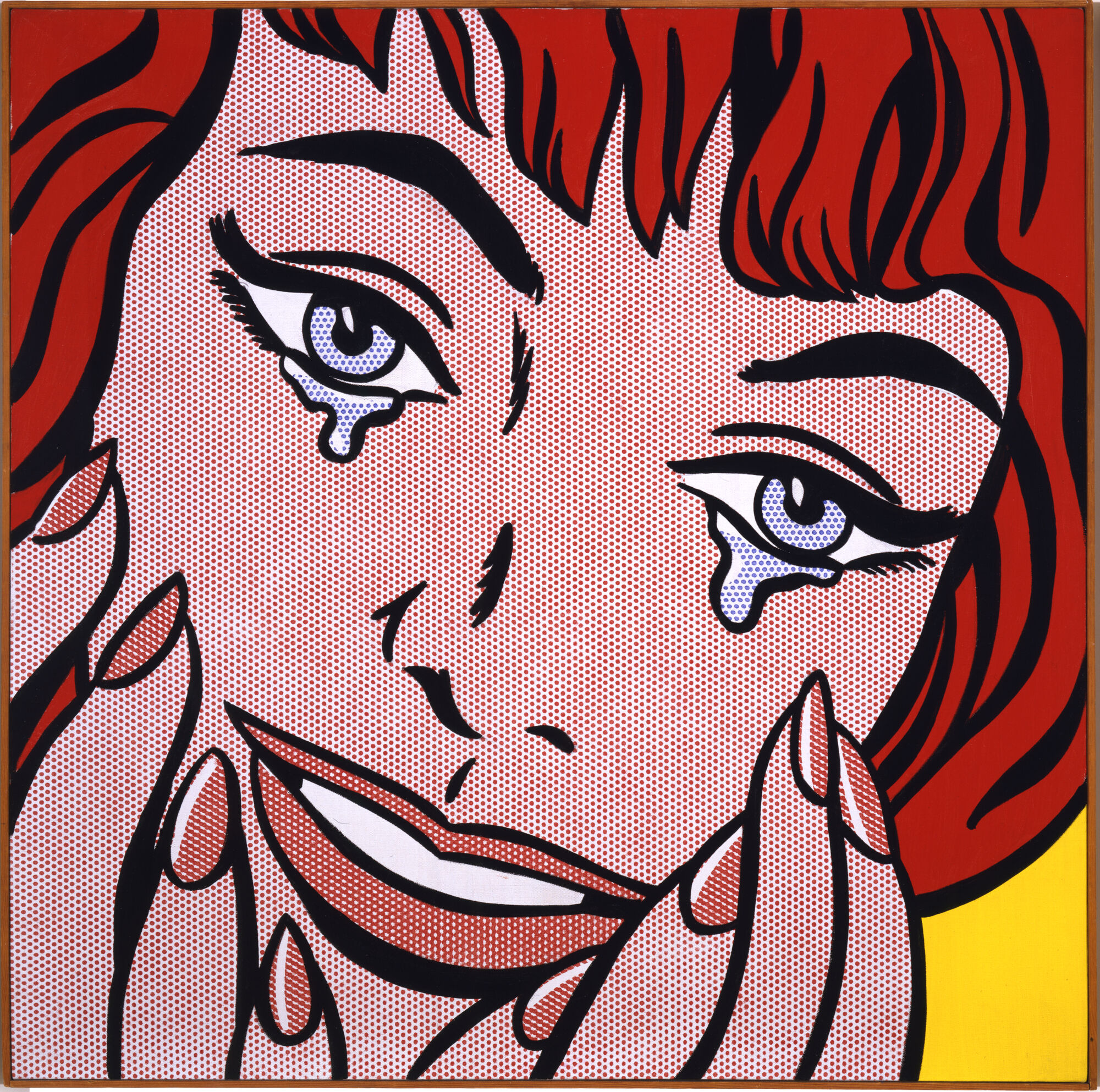
That emotional restraint was matched by a deliberately mechanical looking style, one that evoked the graphic clarity of commercial design while being distinctly handmade. These works also draw on the perceptual skills Lichtenstein honed in the Flash Lab at Ohio State University, where, as Hoyt L. Sherman wrote: “Familiar objects, such as a chair, or wastebasket, or a gasoline can, when suspended in space, have the effect of abstract forms.” In Lichtenstein’s work, hard contours, simplified shapes, and sharp contrasts transform everyday objects into tightly unified compositions.