
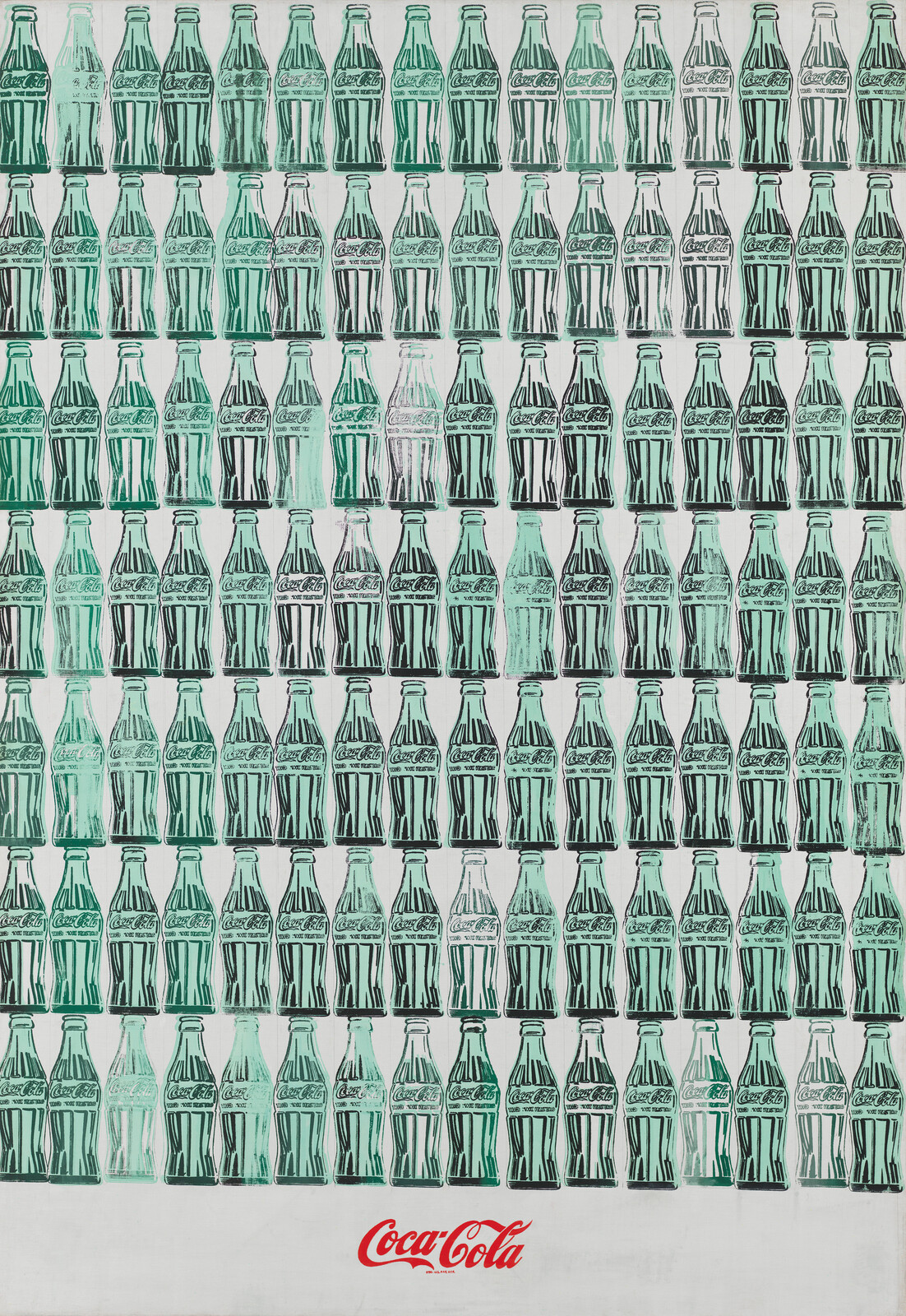
Green Coca-Cola Bottles was created the year that Andy Warhol developed his pioneering silkscreen technique, which allowed him to produce his paintings through a mechanical process that paralleled his use of mass culture subjects. Here, the image of a single Coca-Cola bottle is repeated in regular rows, seven high by sixteen across, above the company’s logo. The repetitive imagery and standardized format evokes the look of mechanical reproduction, but the black outlines were probably stamped by hand from a single carved woodblock onto green areas printed in a grid pattern. This engenders subtle differences in the work’s pattern; each of the bottles differs in both the evenness of the green underpainting and in the clarity of its stamped profile. The bottles are also often slightly askew, disturbing the overall regularity of the grid and making them appear simultaneously handmade and individualized, streamlined and mass-produced. In his deadpan and ironic way, Warhol at once criticized and glorified the consumerist idols and surface values of America’s media-saturated postwar culture. “A Coke is a Coke,” he explained, “and no amount of money can get you a better Coke than the one the bum on the corner is drinking.”
Classification
Paintings
Medium
Acrylic, screenprint, and graphite pencil on canvas
Dimensions
Overall: 82 3/4 × 57 1/8 in. (210.2 × 145.1 cm)
Accession number
68.25
Credit line
Purchase, with funds from the Friends of the Whitney Museum of American Art
Rights and reproductions
© The Andy Warhol Foundation for the Visual Arts, Inc. / Licensed by Artists Rights Society (ARS), New York
Wikidata
Q3116084
Exhibitions
Installation photography
-
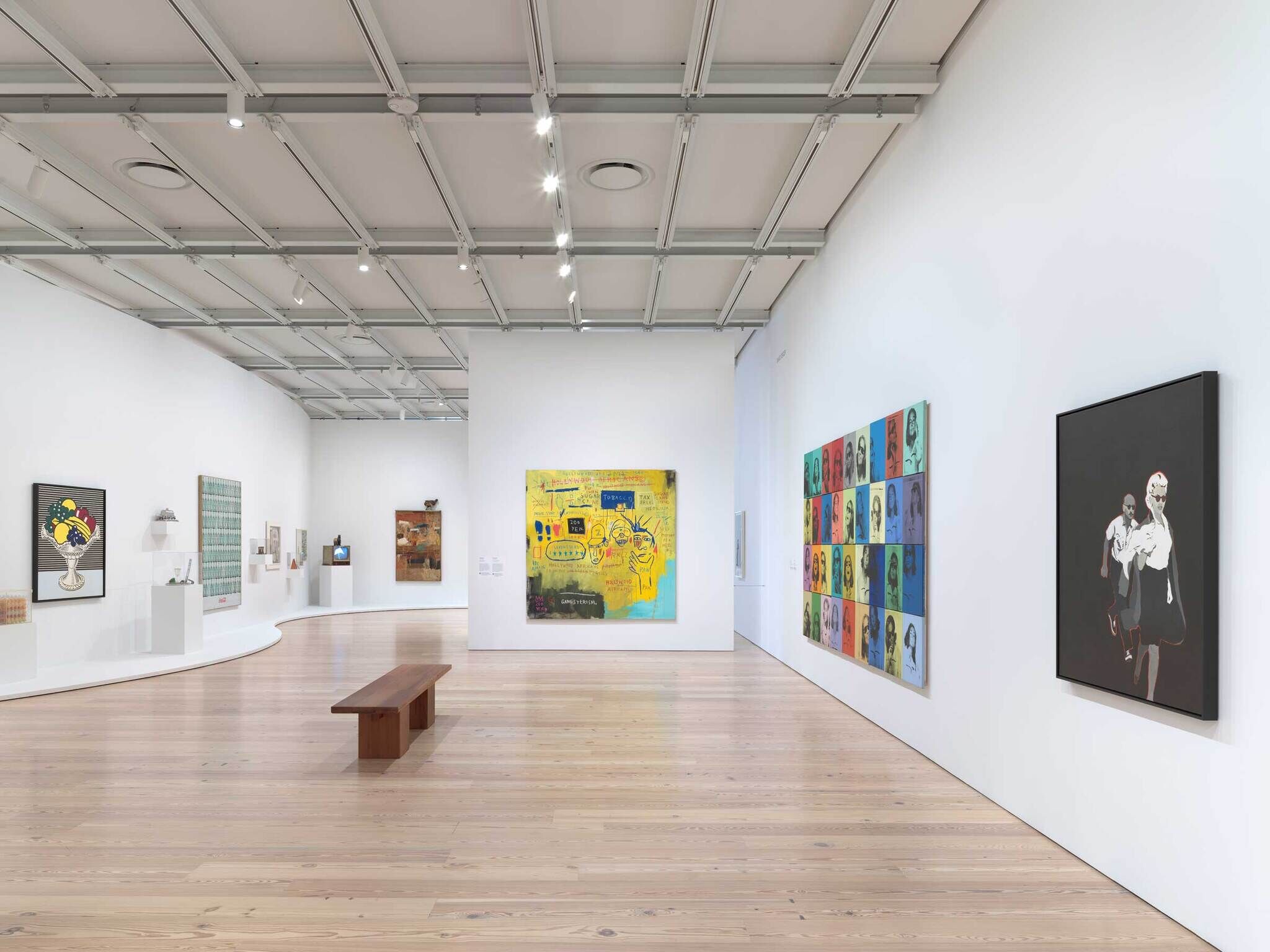
Installation view of “Untitled” (America) (Whitney Museum of American Art, New York, July 5, 2025-). From left to right: Robert Watts, Case of Eggs (with Rainbow Wax Eggs), 1964; Roy Lichtenstein, Still Life with Crystal Bowl, 1972; Jeff Koons, Jim Beam - Passenger Car, 1986; Lucas Samaras, Dinner #15, 1965; Man Ray, New York, 1917/1966; Andy Warhol, Green Coca-Cola Bottles, 1962; Jasper Johns, Painted Bronze, 1960 (cast and painted 1964); Gerald Murphy, Cocktail, 1927; Betye Saar, I’ve Got Rhythm, 1972; Mary Bauermeister, Homage to Marbert Du Breer, 1964; Nam Jun Paik, Magnet TV, 1965; Robert Rauschenberg, Satellite, 1955; Jean-Michel Basquiat, Hollywood Africans, 1983; Andy Warhol, Ethel Scull 36 Times, 1963; Rosalyn Drexler, Marilyn Pursued by Death, 1963. Photograph by Ron Amstutz
From the exhibition “Untitled” (America)
-
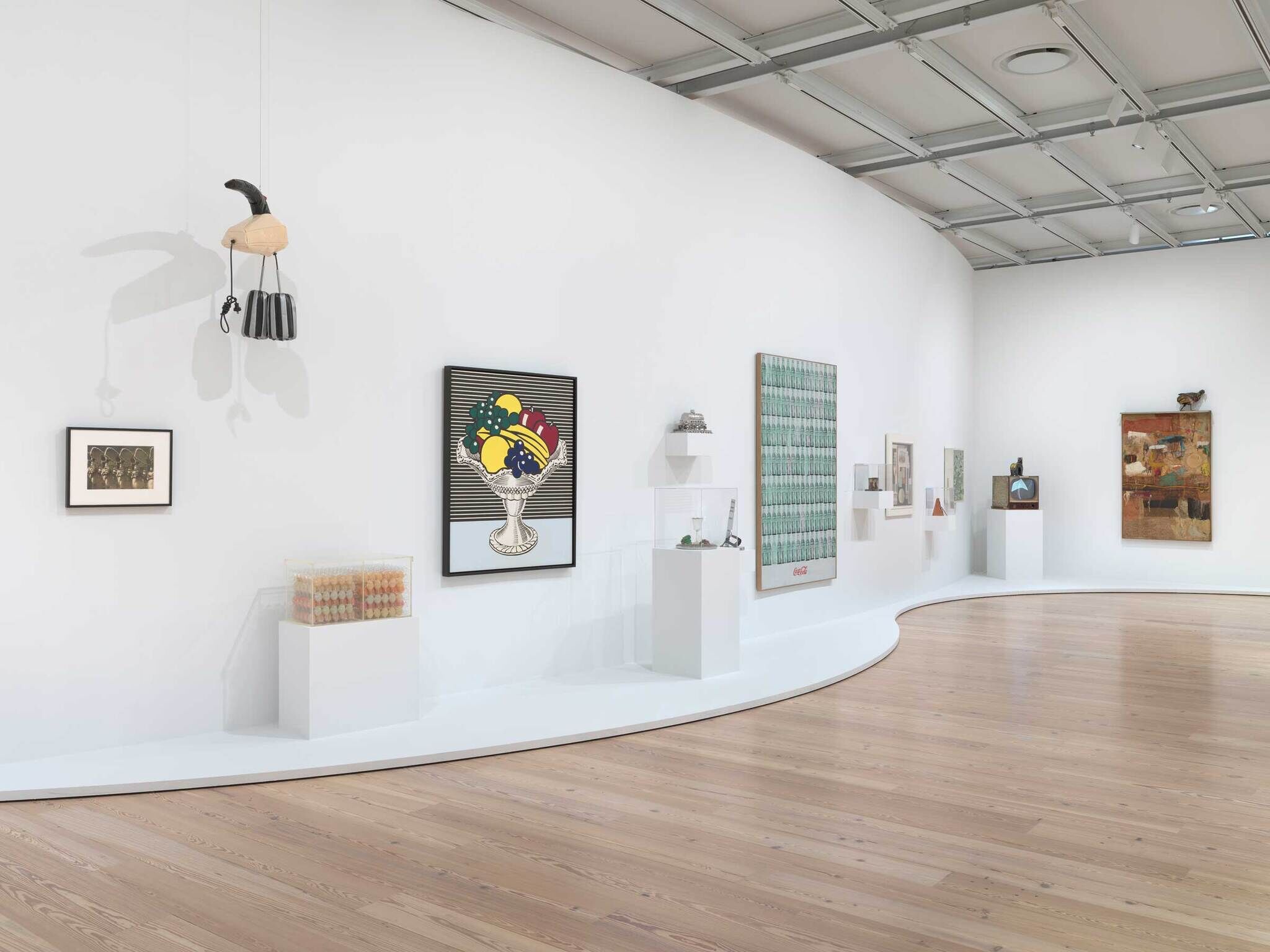
Installation view of “Untitled” (America) (Whitney Museum of American Art, New York, July 5, 2025-). From left to right: Margaret Bourke-White, Edison Electric, 1930; Claes Oldenburg, Soft Dormeyer Mixer, 1965; Robert Watts, Case of Eggs (with Rainbow Wax Eggs), 1964; Roy Lichtenstein, Still Life with Crystal Bowl, 1972; Lucas Samaras, Dinner #15, 1965; Jeff Koons, Jim Beam - Passenger Car, 1986; Man Ray, New York, 1917/1966; Andy Warhol, Green Coca-Cola Bottles, 1962; Jasper Johns, Painted Bronze, 1960 (cast and painted 1964); Gerald Murphy, Cocktail, 1927; Betye Saar, I’ve Got Rhythm, 1972; Mary Bauermeister, Homage to Marbert Du Breer, 1964; Nam Jun Paik, Magnet TV, 1965; Robert Rauschenberg, Satellite, 1955. Photograph by Ron Amstutz
From the exhibition “Untitled” (America)
-
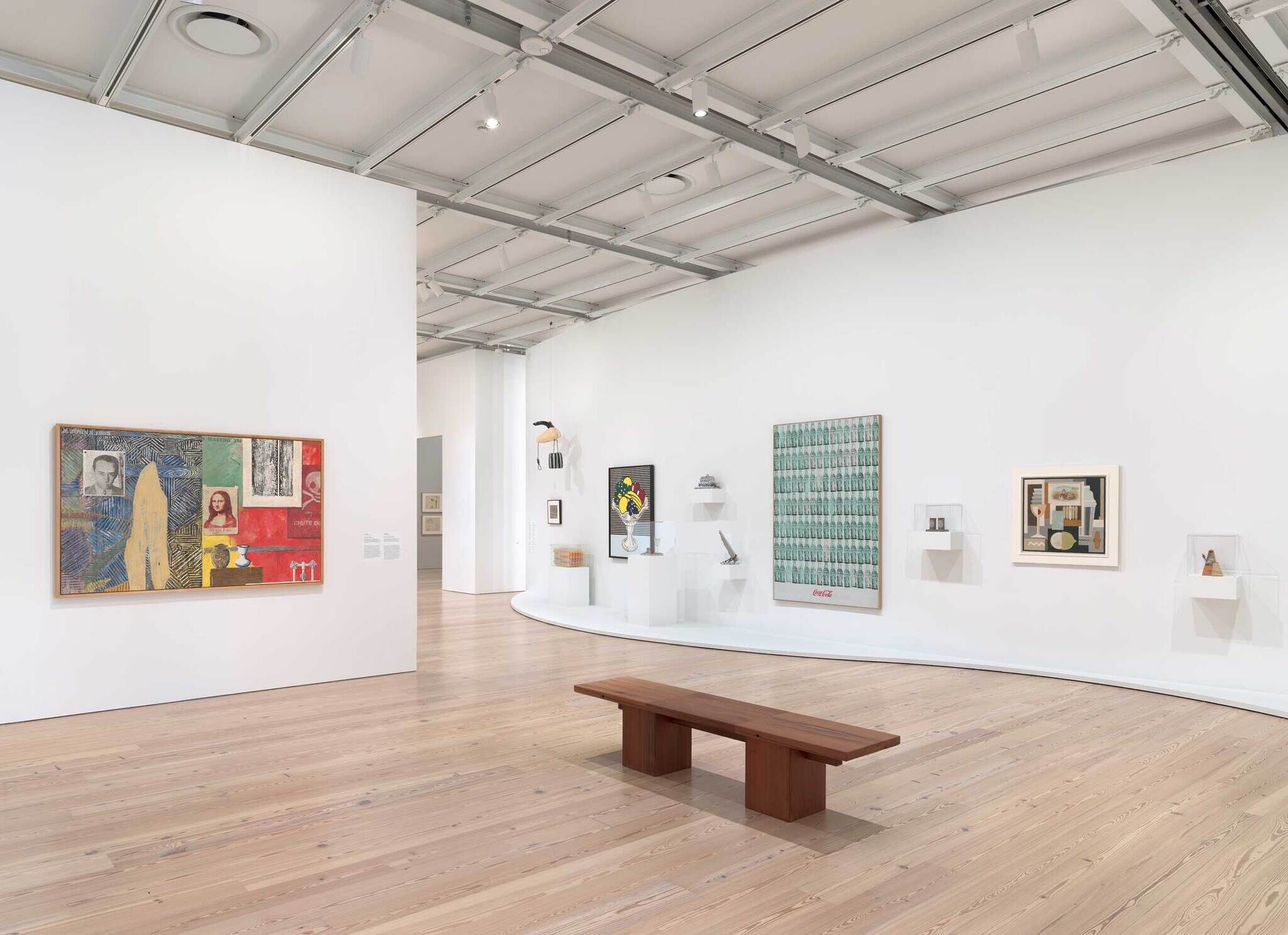
Installation view of “Untitled” (America) (Whitney Museum of American Art, New York, July 5, 2025-). From left to right: Jasper Johns, Racing Thoughts, 1983; Claes Oldenburg, Soft Dormeyer Mixer, 1965; Margaret Bourke-White, Edison Electric, 1930; Robert Watts, Case of Eggs (with Rainbow Wax Eggs), 1964; Roy Lichtenstein, Still Life with Crystal Bowl, 1972; Lucas Samaras, Dinner #15, 1965; Jeff Koons, Jim Beam - Passenger Car, 1986; Man Ray, New York, 1917/1966; Andy Warhol, Green Coca-Cola Bottles, 1962; Jasper Johns, Painted Bronze, 1960 (cast and painted 1964); Gerald Murphy, Cocktail, 1927; Betye Saar, I’ve Got Rhythm, 1972. Photograph by Ron Amstutz
From the exhibition “Untitled” (America)
-
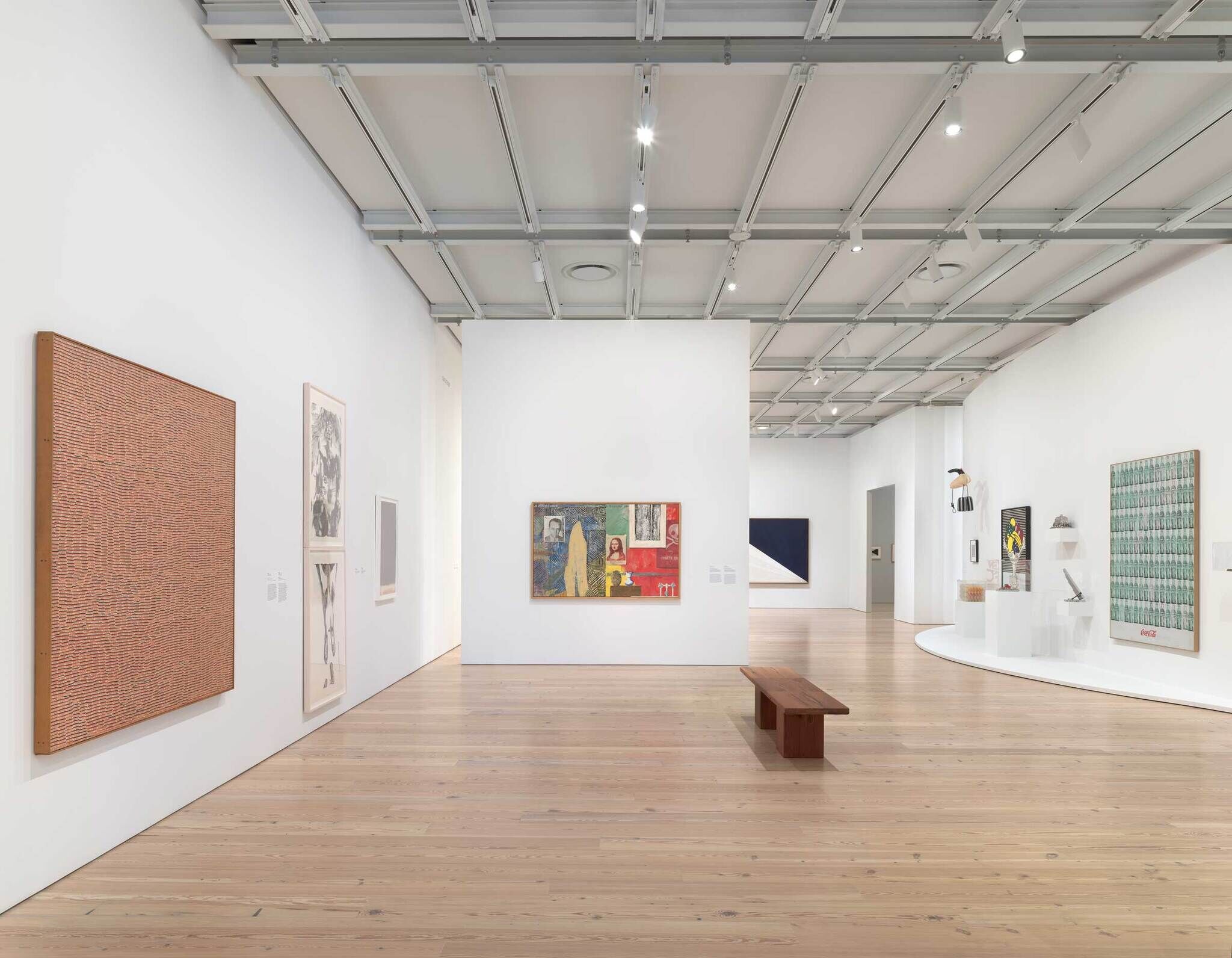
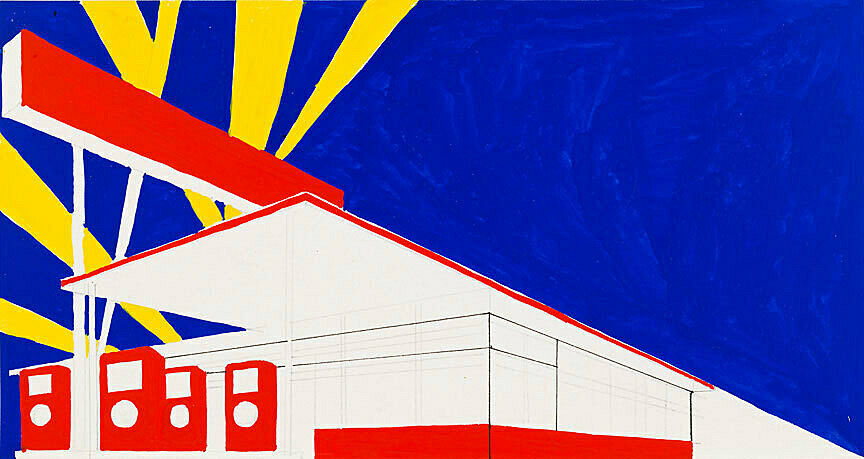
Installation view of “Untitled” (America) (Whitney Museum of American Art, New York, July 5, 2025-). From left to right: Yayoi Kusama, Air Mail Stickers, 1962; Marisol, Diptych, 1971; Chryssa, Newspaper Page, Sock Advertisement, 1959–62; Jasper Johns, Racing Thoughts, 1983; Edward Ruscha, Large Trademark with Eight Spotlights, 1962; Claes Oldenburg, Soft Dormeyer Mixer, 1965; Robert Watts, Case of Eggs (with Rainbow Wax Eggs), 1964; Margaret Bourke-White, Edison Electric, 1930; Roy Lichtenstein, Still Life with Crystal Bowl, 1972; Lucas Samaras, Dinner #15, 1965; Jeff Koons, Jim Beam - Passenger Car, 1986; Man Ray, New York, 1917/1966; Andy Warhol, Green Coca-Cola Bottles, 1962. Photograph by Ron Amstutz
From the exhibition “Untitled” (America)
-
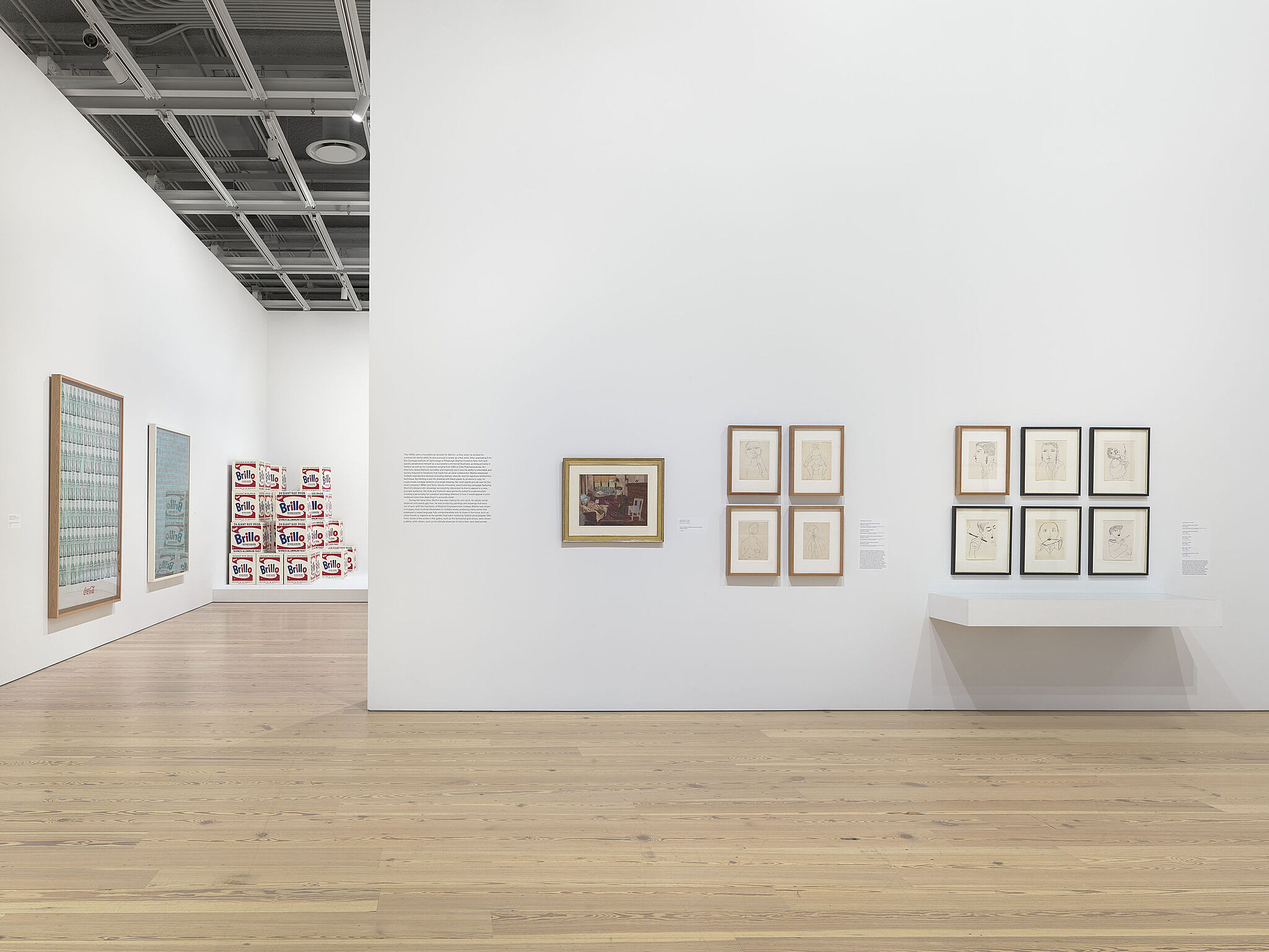
Installation view of Andy Warhol – From A to B and Back Again (Whitney Museum of American Art, New York, November 12, 2018–March 31, 2019). From left to right, top to bottom: Green Coca-Cola Bottles, 1962; S&H Green Stamps, 1962; Brillo Boxes, 1969 (version of 1964 original); Living Room, c. 1948; Upper Torso Boy Picking Nose, 1948–49; Constipated Women, 1940s; Female with Animal at Breast, 1948–49; Man with Lines Exuding from Mouth, 1948–49; Unidentified Male Portrait, 1950s; Unidentified Male Portrait, 1950s; Otto Fenn, c. 1952; Unidentified Male Portrait, c. 1952; Billy Loew, c. 1952; Otto Fenn, c. 1952. Photograph by Ron Amstutz. © 2018 The Andy Warhol Foundation for the Visual Arts, Inc. / Licensed by Artists Rights Society (ARS), New York
From the exhibition Andy Warhol—
From A to B and
Back Again -
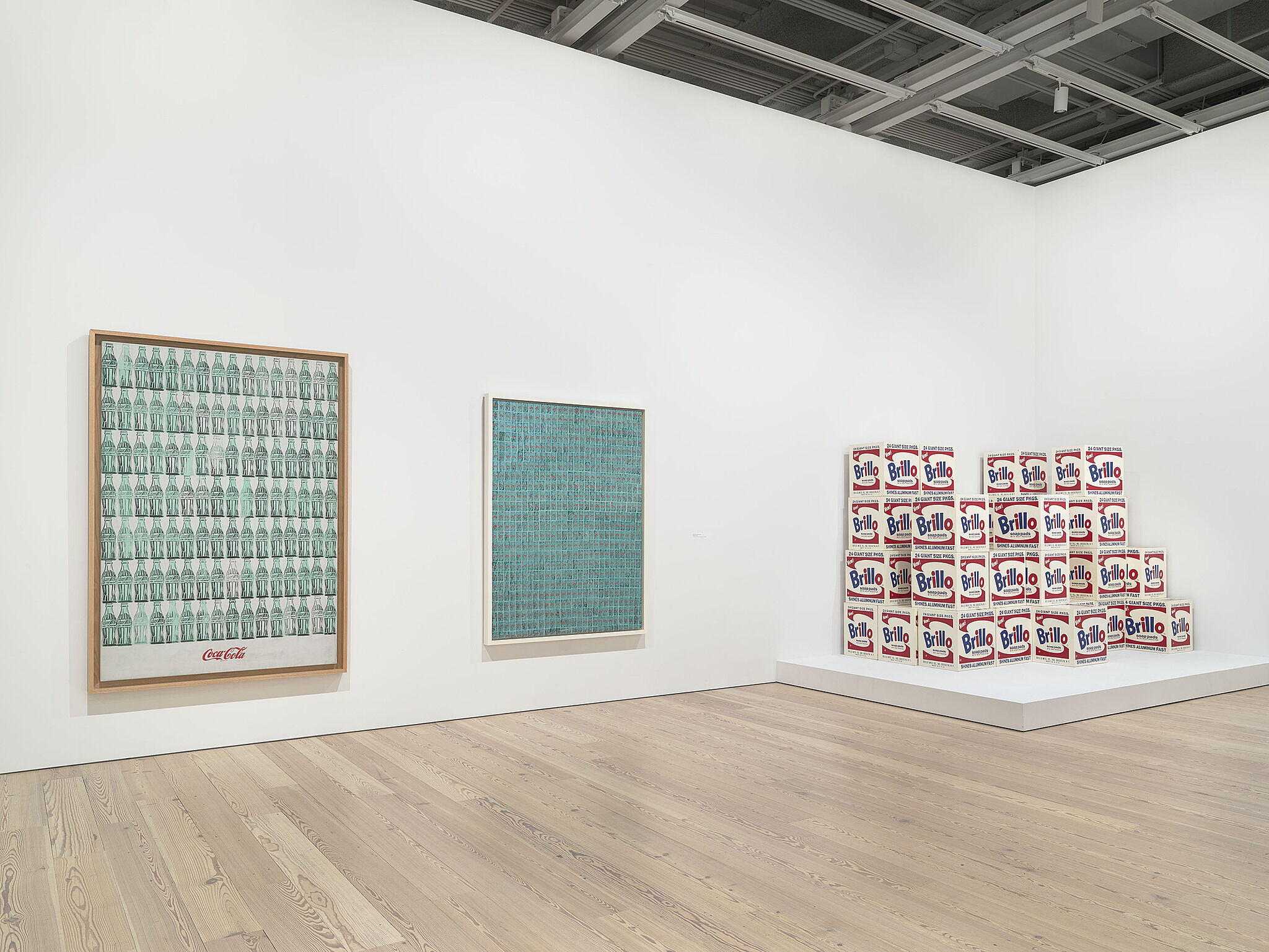
Installation view of Andy Warhol – From A to B and Back Again (Whitney Museum of American Art, New York, November 12, 2018–March 31, 2019). From left to right: Green Coca-Cola Bottles, 1962; S&H Green Stamps, 1962; Brillo Boxes, 1969 (version of 1964 original). Photograph by Ron Amstutz. © 2018 The Andy Warhol Foundation for the Visual Arts, Inc. / Licensed by Artists Rights Society (ARS), New York
From the exhibition Andy Warhol—
From A to B and
Back Again -
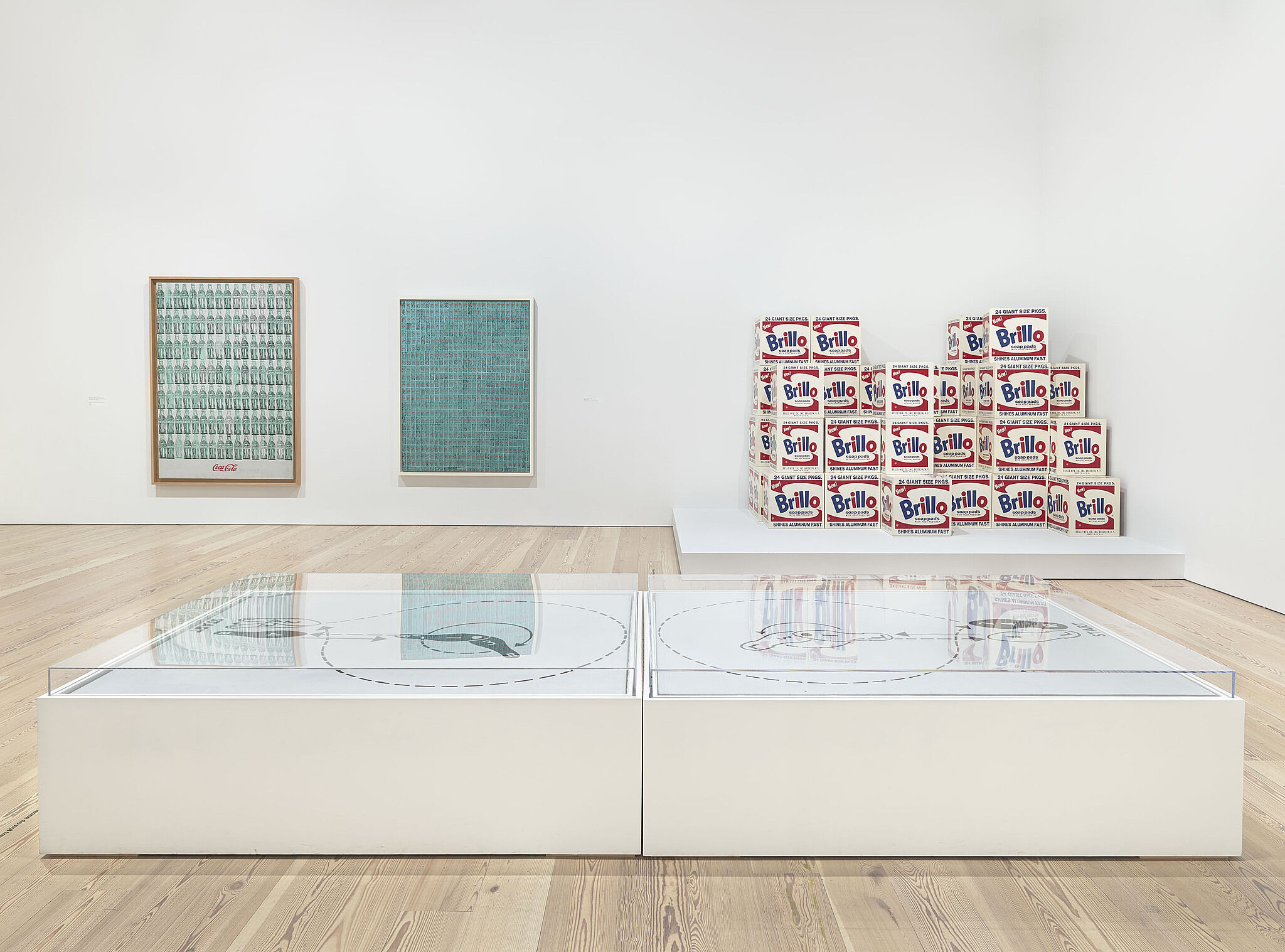
Installation view of Andy Warhol – From A to B and Back Again (Whitney Museum of American Art, New York, November 12, 2018–March 31, 2019). From left to right: Green Coca-Cola Bottles, 1962; S&H Green Stamps, 1962; Brillo Boxes, 1969 (version of 1964 original). Floor vitrines: Dance Diagram [3] [“The Lindy Tuck-In Turn—Man”], 1962; Dance Diagram [4] [“The Lindy Tuck-In Turn—Woman”], 1962. Photograph by Ron Amstutz. © 2018 The Andy Warhol Foundation for the Visual Arts, Inc. / Licensed by Artists Rights Society (ARS), New York
From the exhibition Andy Warhol—
From A to B and
Back Again