Jaune Quick-to-See Smith: Memory Map | Art & Artists

Apr 19–Aug 13, 2023


Exhibition works

11 total
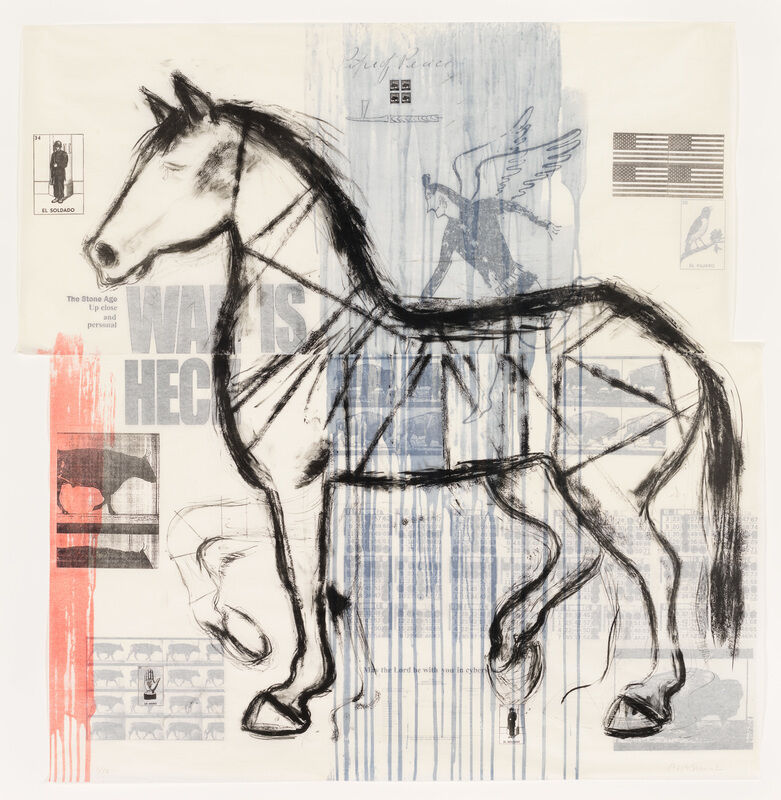
War is Heck
Read more

War is Heck


A brushy black outline of a horse overlayed on top of printed details in the background including american flags, the words “War is Heck”, images of a soldier, buffalos, cows and a winged figure.

Jaune Quick-to-See Smith, War is Heck, 2002. Lithograph, photolithograph, and collage. 58 9/16 × 57 5/8 in. (148.7 × 146.4 cm). Printed and published by P.R.I.N.T. Press. Whitney Museum of American Art, New York; gift of Dorothee Peiper-Riegraf and Hinrich Peiper. Courtesy the artist and the Garth Greenan Gallery, New York.

War is Heck

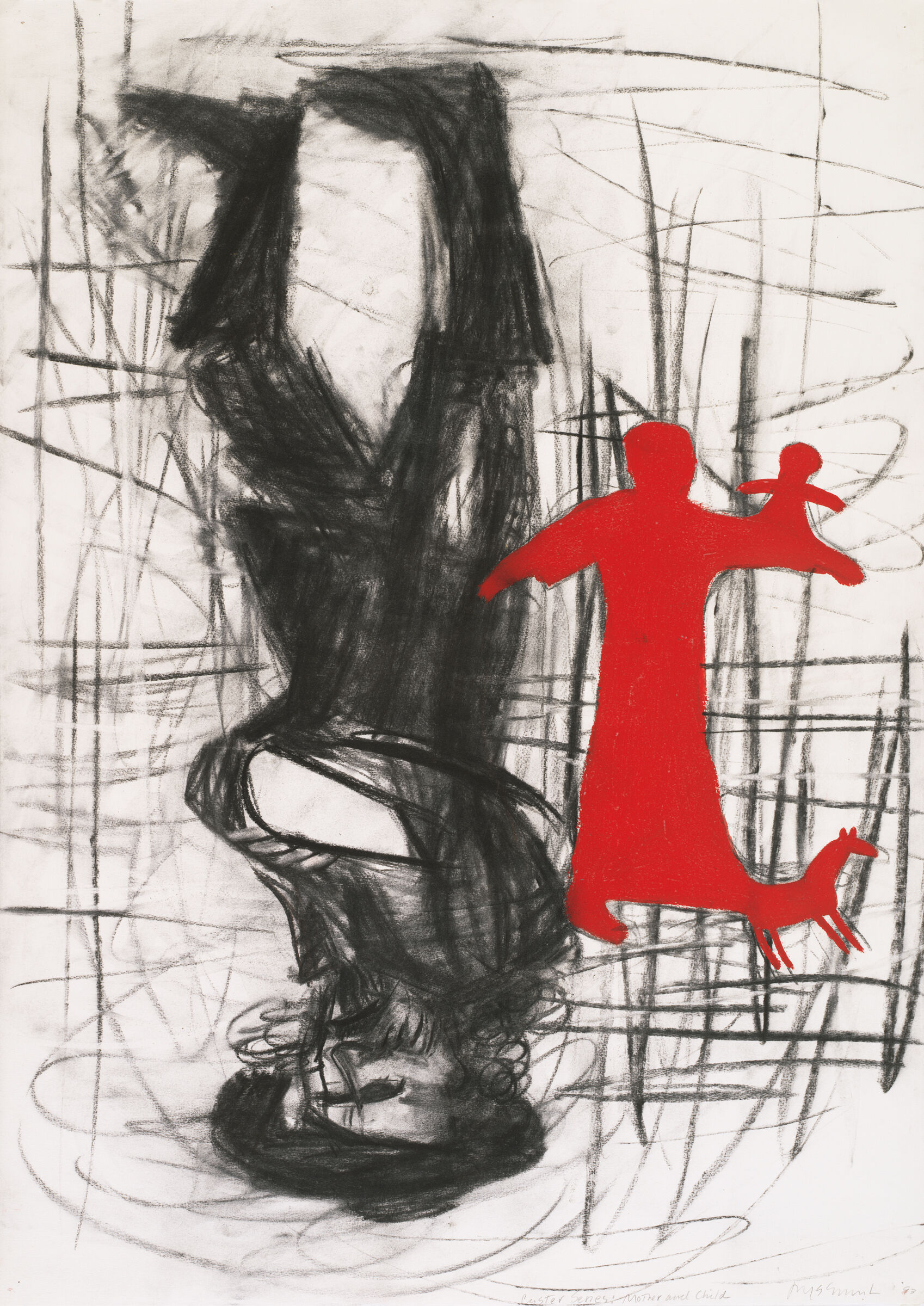
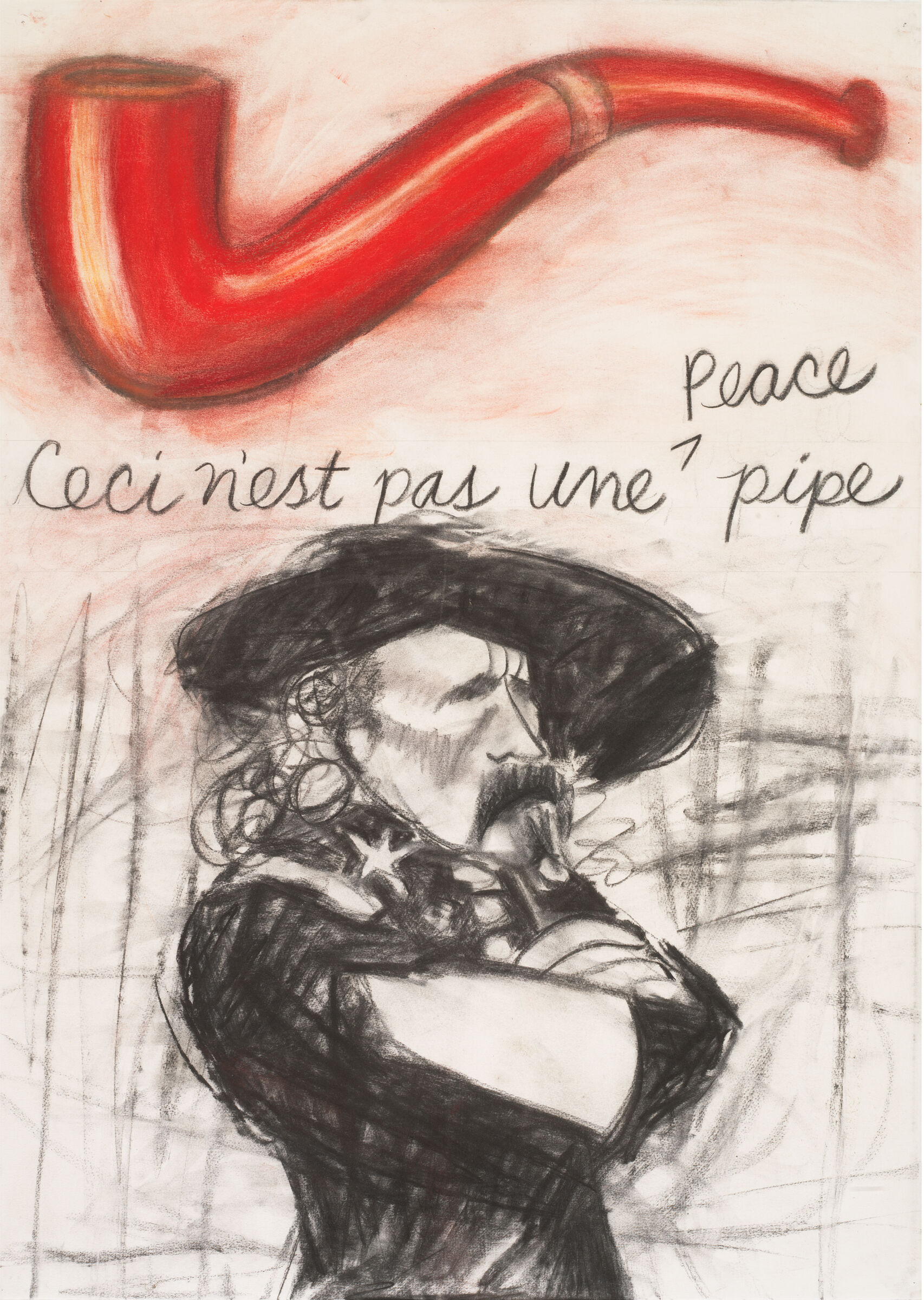
The consequences of US-led invasions—of Indigenous lands on this continent and other sovereign nations abroad—are visible themes in Smith’s work across the decades. A 1993 series of prints and drawings co-opts a well-known image of George Armstrong Custer, the United States Army general notorious for his deadly campaigns against Lakota, Arapaho, and Northern Cheyenne people during the late 1860s, and for his defeat and death at the Battle of Little Bighorn in Montana in 1876. Custer’s widow successfully cultivated his mythic reputation as a military hero, a distorted view transmitted through American popular culture by widely circulated photographs and illustrations of him. Smith introduces an element of humor to Custer’s image, ridiculing his renown and underscoring the inaccuracies of recorded history. 

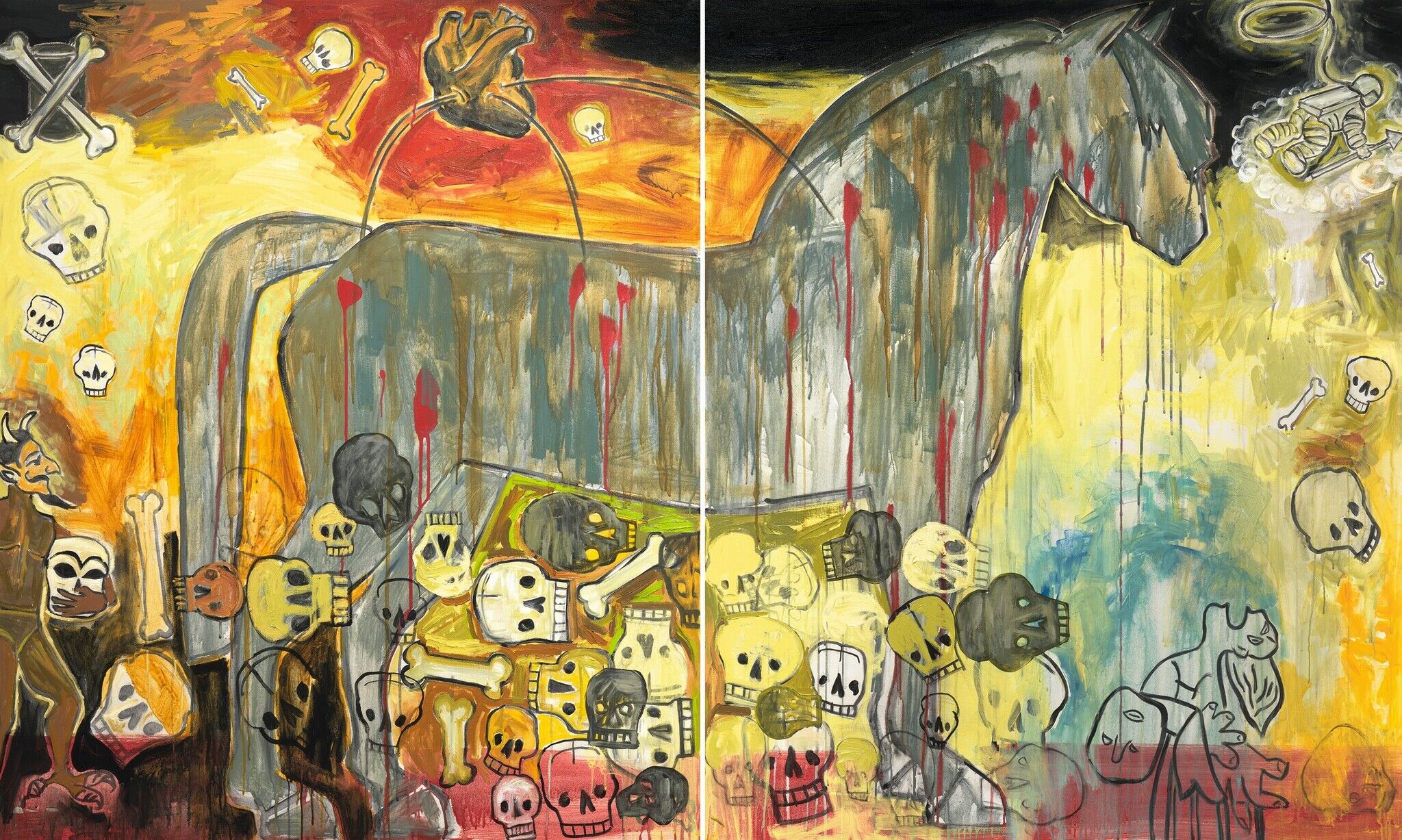
In the early 2000s, Smith’s outrage over the invasion of Iraq and the post-9/11 policies of George W. Bush prompted her to address the imperialist violence perpetrated by the United States outside of North America. Her paintings and prints convey her visceral reaction to the horrors of war, often by employing art historical references such as Picasso’s Guernica (1937), images of Sumerian artifacts looted from the Iraq Museum in Baghdad, and political cartoons by José Guadalupe Posada. Smith also highlights how objects and sites of cultural heritage are often targeted and weaponized in wars, and joins a long line of artists who have condemned such conflicts in their work.

A horse standing over skulls with large patches of red, yellow, and orange surrounding it.

Jaune Quick-to-See Smith, War Horse in Babylon, 2005. Oil and acrylic on canvas, two panels: 60 × 100 in. (152.4 × 254 cm) overall. Forge Project Collection, traditional lands of the Muh-he-con-ne-ok. © Jaune Quick-to-See Smith. Photograph courtesy the artist and Garth Greenan Gallery, New York

Jaune Quick-to-See Smith, War Horse in Babylon, 2005

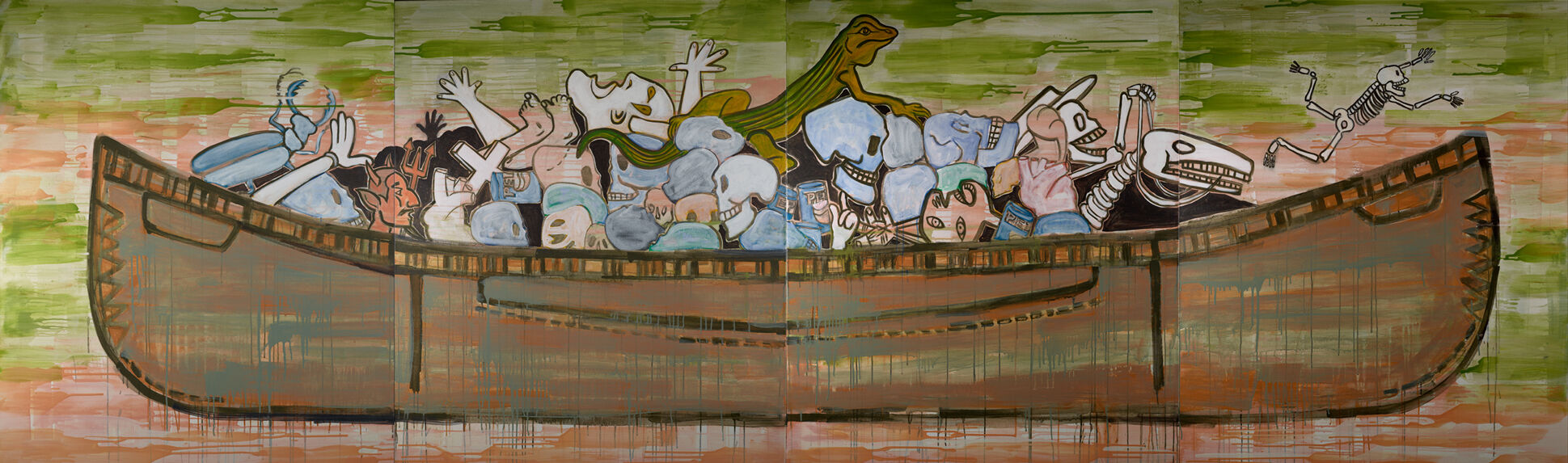
A canoe filled witha pile of skulls and faces in desperate agony.

Jaune Quick-to-See Smith, Trade Canoe for Don Quixote, 2004. Oil, acrylic, charcoal, and graphite pencil on canvas, four panels: 60 × 200 in. (152.4 × 508 cm) overall. Denver Art Museum; William Sr. and Dorothy Harmsen Collection, by exchange 2005.62A-D. © Jaune Quick-to-See-Smith. Photography courtesy Denver Art Museum

Jaune Quick-to-See Smith, Trade Canoe for Don Quixote, 2004

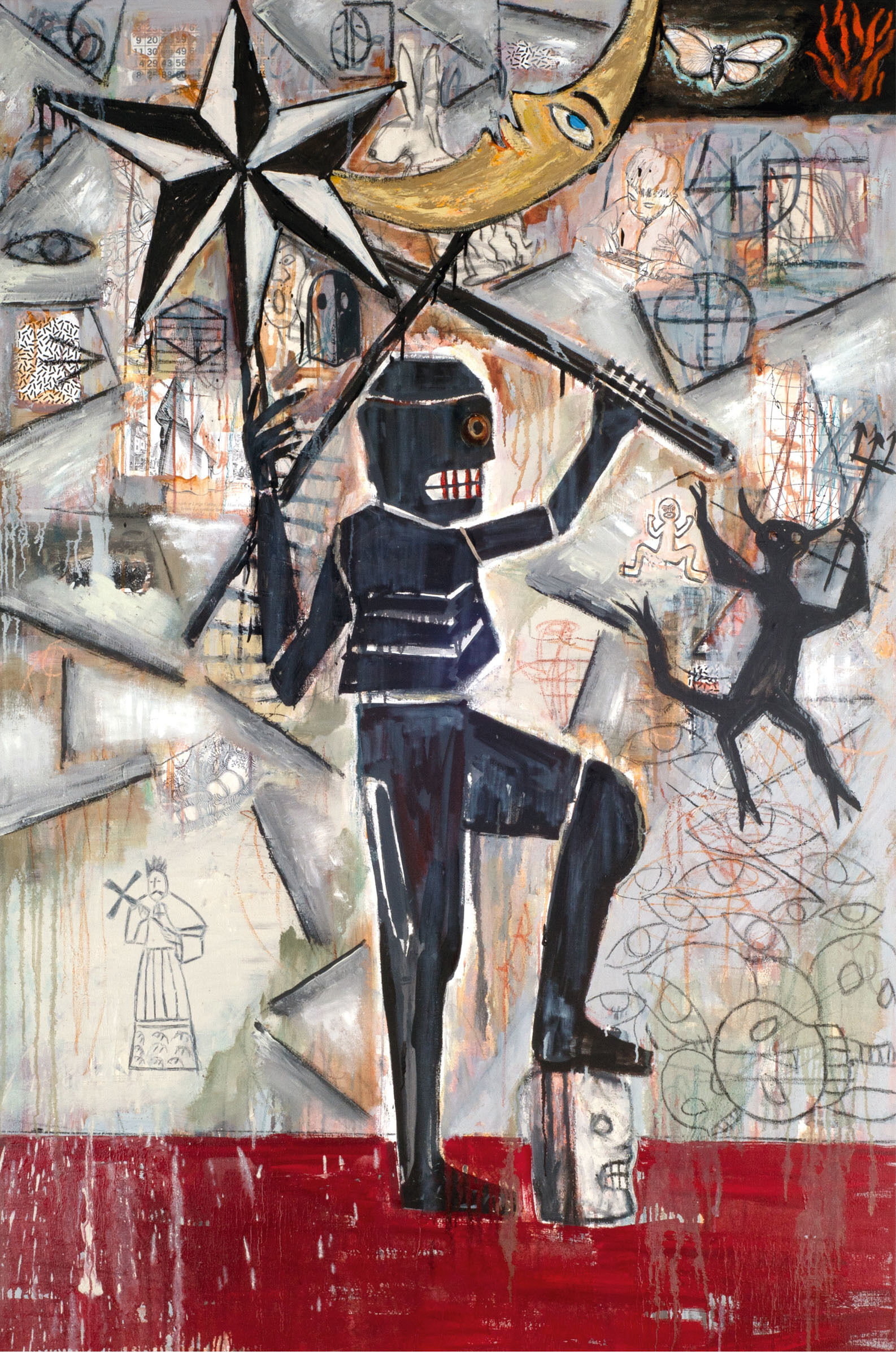
A figure in black has a foot on a white skull and is holding a star and moon and surrounded by sketched imagery.

Jaune Quick-to-See Smith, Imperialism, 2011. Oil, acrylic, charcoal, and paper on canvas, 72 × 48 in. (182.9 × 121.9 cm). Gochman Family Collection. © Jaune Quick-to-See Smith. Photograph courtesy the artist and Garth Greenan Gallery, New York

Jaune Quick-to-See Smith, Imperialism, 2011

An upside down sketch of a man in a hat next do a silhoutte of a person, child, and horse in red.

Jaune Quick-to-See Smith, Custer Series: Mother and Child (after Baselitz), 1993. Acrylic and charcoal on paper, 41 1/2 x 29 1/2 in. (105.4 x 74.9 cm). Collection of the artist; courtesy Garth Greenan Gallery, New York. © Jaune Quick-to-See Smith

Jaune Quick-to-See Smith, Custer Series: Mother and Child (after Baselitz), 1993

A sketch of a man with a large red pipe hovering above his head and the words "ceci n'est pas une peace pipe.

Jaune Quick-to-See Smith, Custer Series: Peace Pipe (after Magritte), 1993. Charcoal and pastel on paper, 41 1/2 × 29 1/2 in. (105.4 × 74.9 cm). Gochman Family Collection. © Jaune Quick-to-See Smith. Photograph courtesy the artist and Garth Greenan Gallery, New York

Jaune Quick-to-See Smith, Custer Series: Peace Pipe (after Magritte), 1993


Explore works from this exhibition
in the Whitney's collection

View 17 works

On the Hour

A 30-second online art project:
Frank WANG Yefeng, The Levitating Perils #2

Learn more about this project

Learn more at whitney.org/artport

On the Hour projects can contain motion and sound. To respect your accessibility settings autoplay is disabled.