Jaune Quick-to-See Smith: Memory Map | Art & Artists

Apr 19–Aug 13, 2023


Exhibition works

11 total
"Landscape is Always Full of Movement"
Read more

"Landscape is Always Full of Movement"


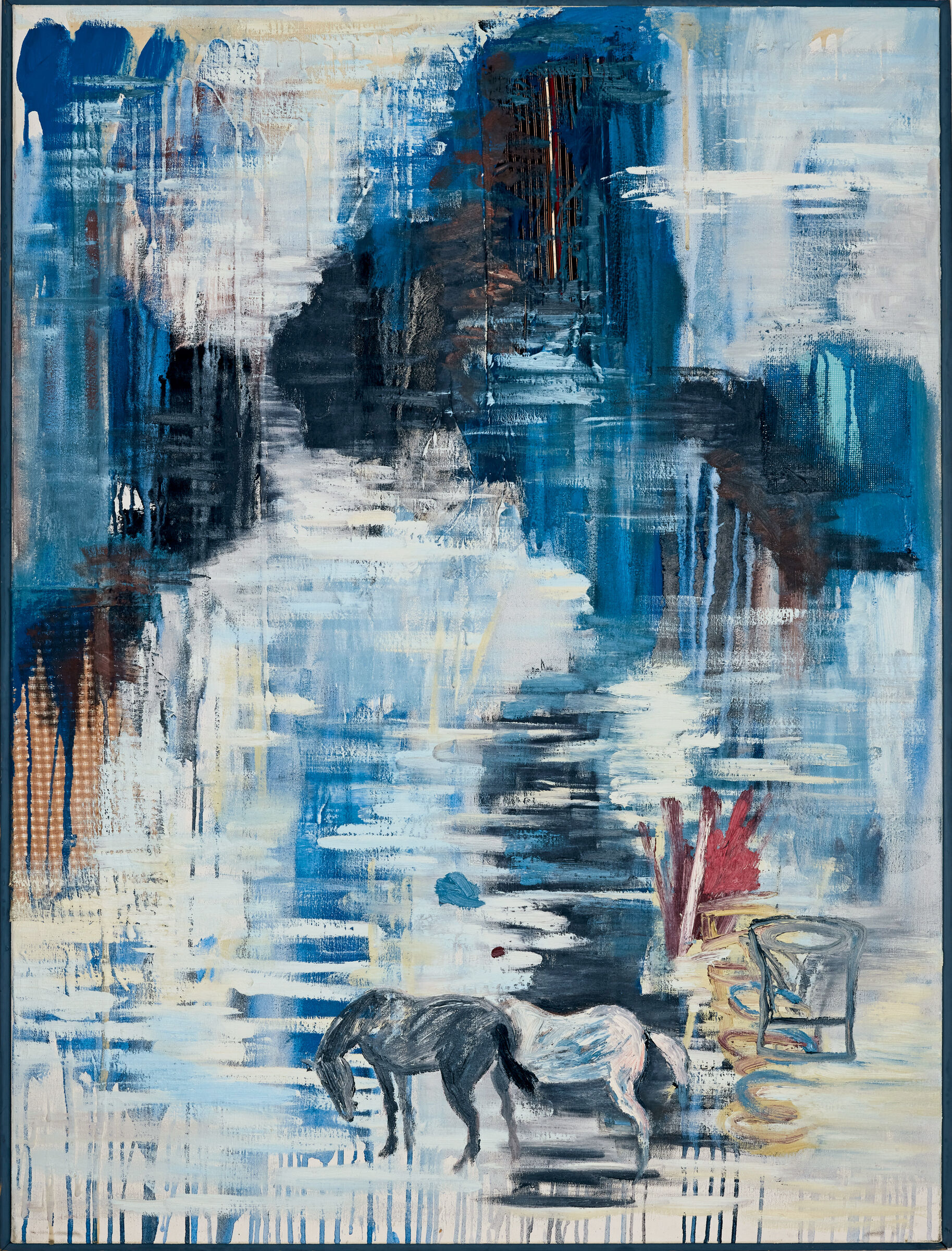
Two horses surrounded by large swathes of blue, brown, and white.

Jaune Quick-to-See Smith, Blackwater Draw II, 1983. Acrylic and fabric on canvas, 48 × 36 in. (121.9 × 91.4 cm). The John and Susan Horseman Collection; courtesy The Horseman Foundation. © Jaune Quick-to-See Smith. Photograph by Jenna Carlie

"Landscape is Always Full of Movement"

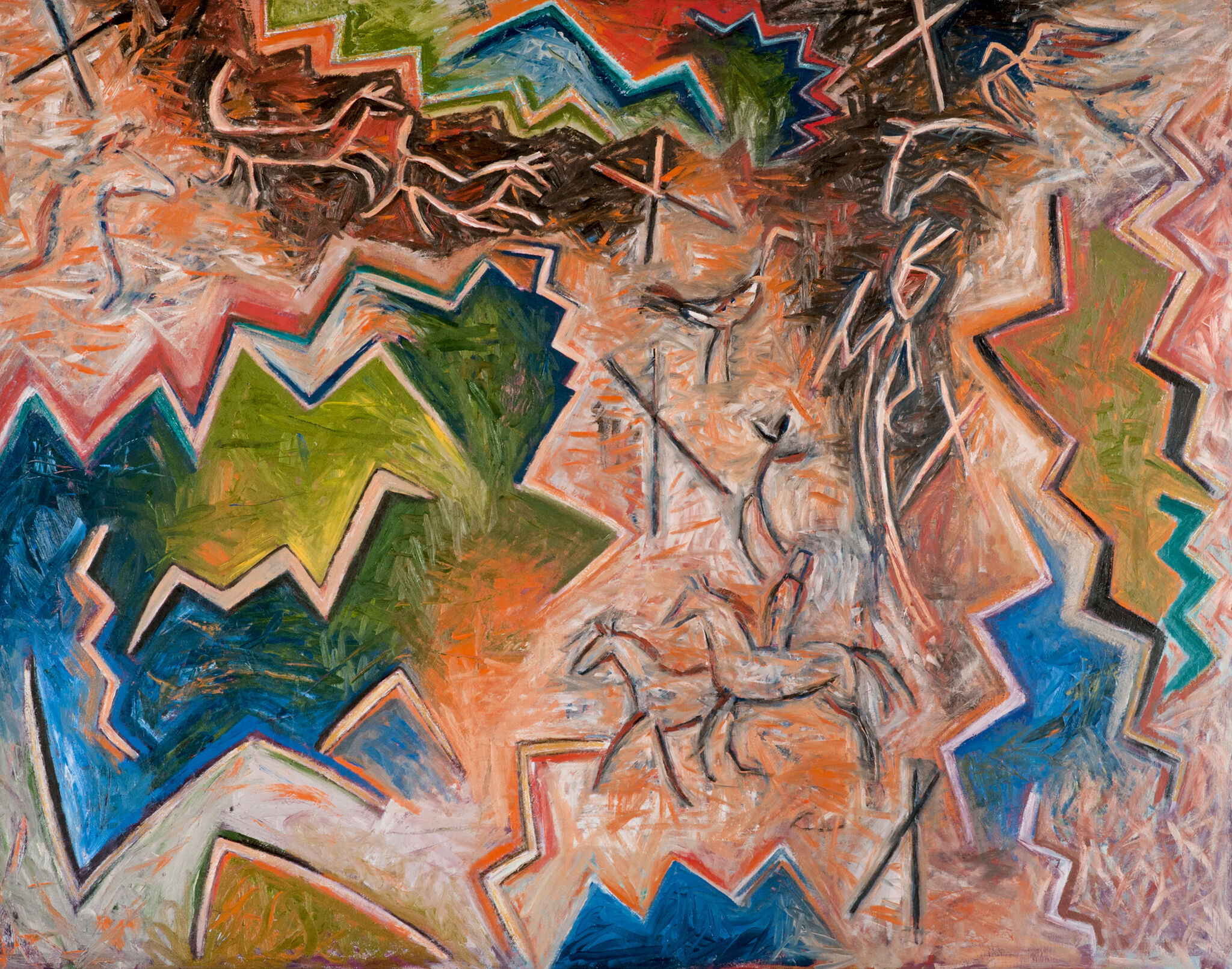
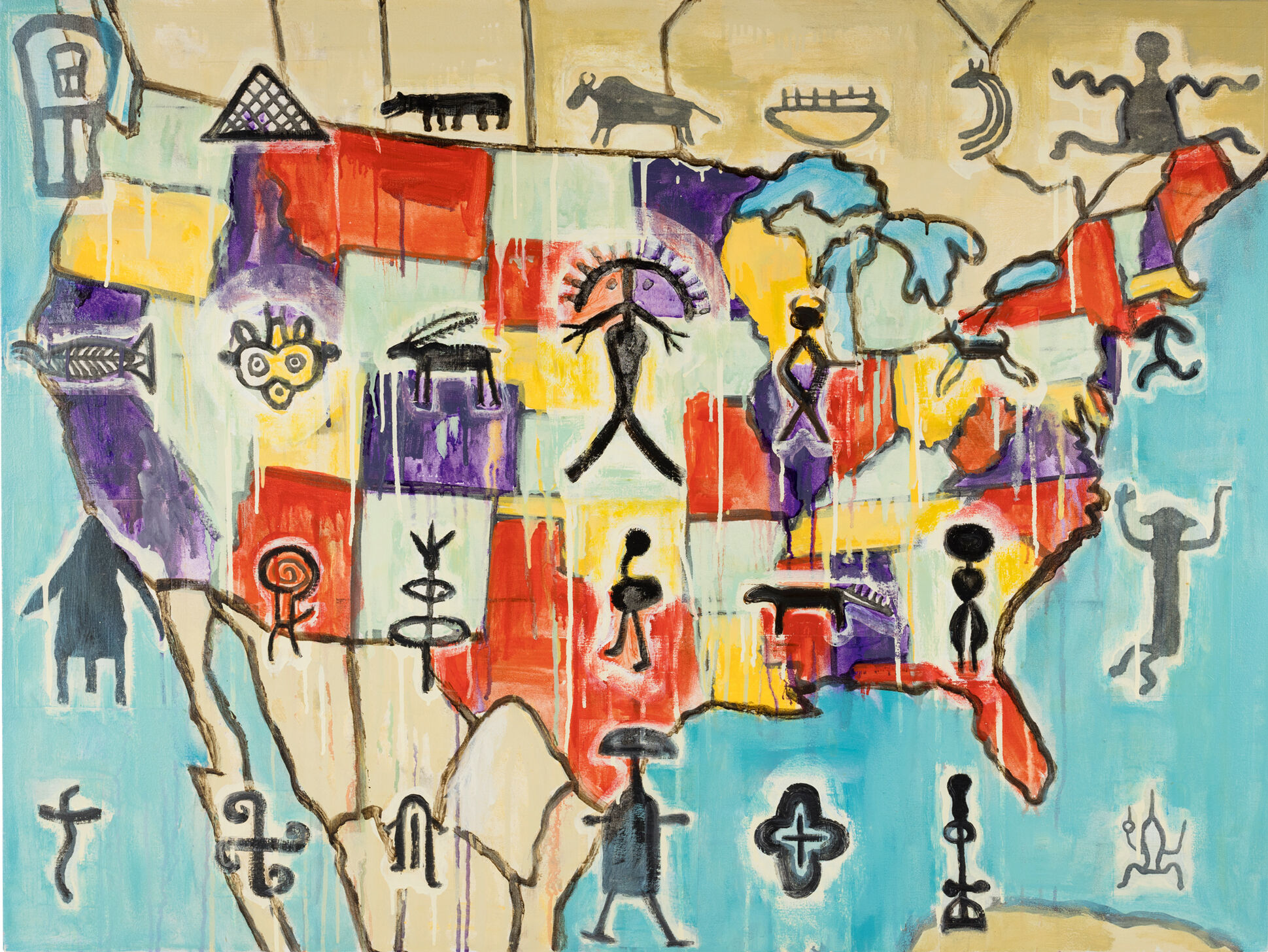
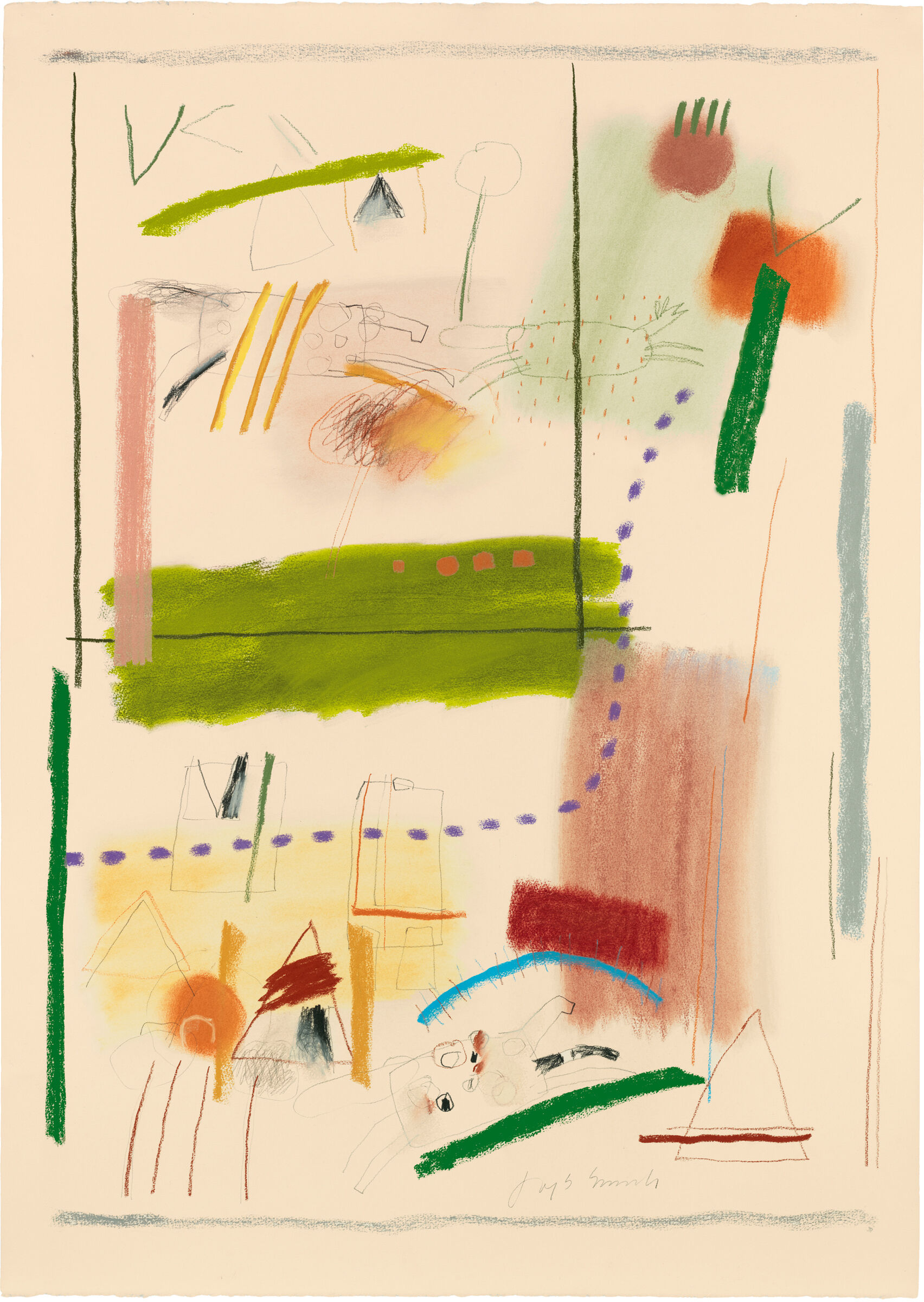
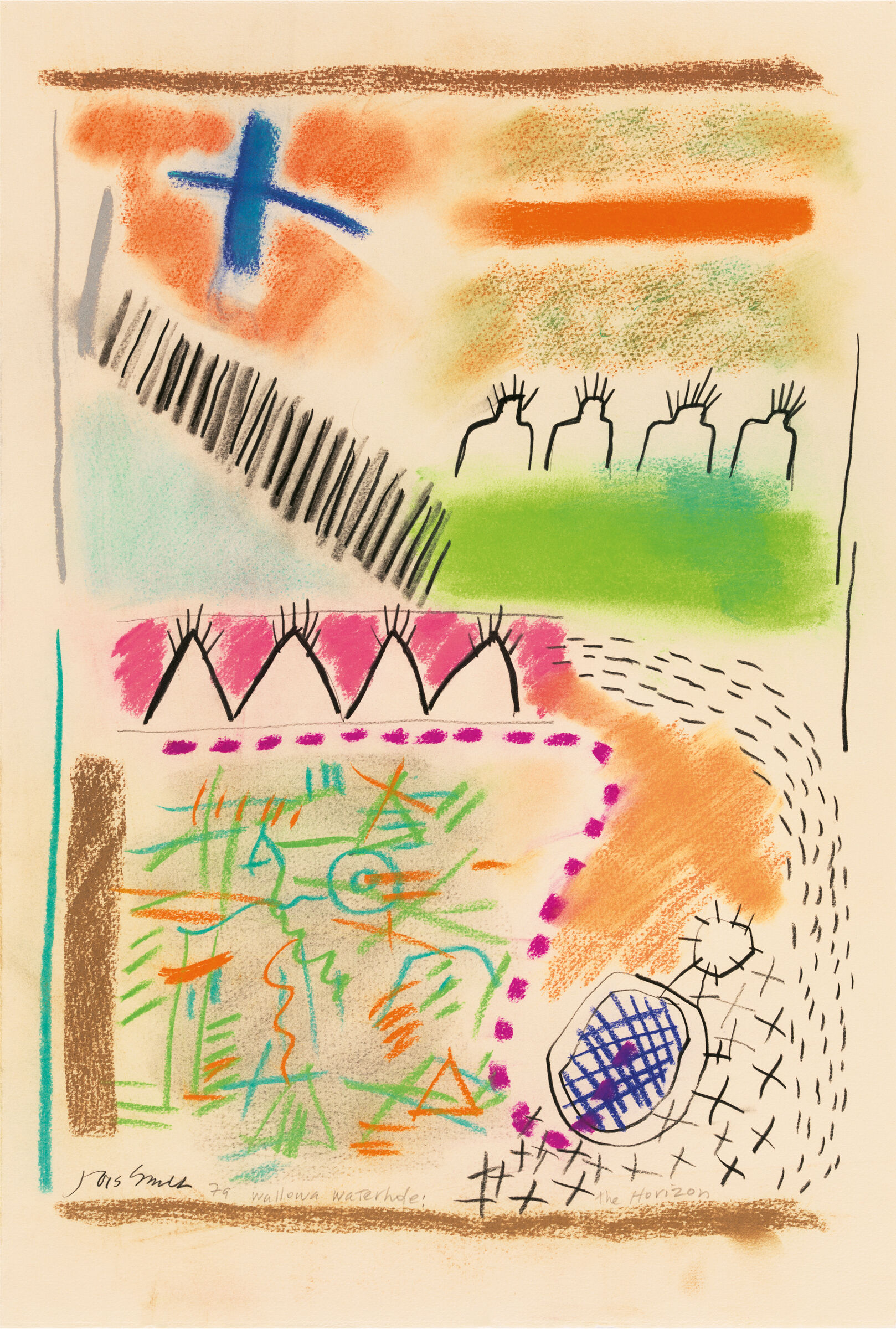
“Landscape is always full of movement,” Smith wrote in 1984, in an artist statement for one of her earliest solo exhibitions. Throughout the late 1970s and early 1980s, Smith made drawings and paintings of places with significance to her, including Wallowa, Oregon, and her reservation in Montana. The works, which she came to describe as maps, reject the conventions employed by Euro-American landscape painters. Instead of capturing romanticized, unpopulated panoramas of distant mountains or rivers, Smith depicts inhabited landscapes, with her marks signifying human and animal movements. Smith’s lines and blocky forms suggest the travois, a sled-like conveyance made of two poles and a platform used primarily by Plains people to transport heavy loads. Like the travois, these drawings carry personal meaning and understanding about place.

Shapes, lines, and doted lines scattered on paper with pops of colors in muted hues.

Jaune Quick-to-See Smith, Kalispell #1, 1979. Pastel and charcoal on paper, 41 3/4 × 29 5/8 in. (106 × 75.2 cm). Whitney Museum of American Art, New York; gift of Altria Group, Inc. 2008.137. © Jaune Quick-to-See Smith

Jaune Quick-to-See Smith, Kalispell #1, 1979

A map filled with bright colors and lines forming textures and patterns.

Jaune Quick-to-See Smith, Wallowa Waterhole: The Horizon, 1979. Paste; and charcoal on paper, 22 1/4 × 15 in. (56.5 × 38.1 cm). Collection of Timna Rosenheimer. © Jaune Quick-to-See Smith. Photograph courtesy the artist and Garth Greenan Gallery, New York

Jaune Quick-to-See Smith, Wallowa Waterhole: The Horizon, 1979

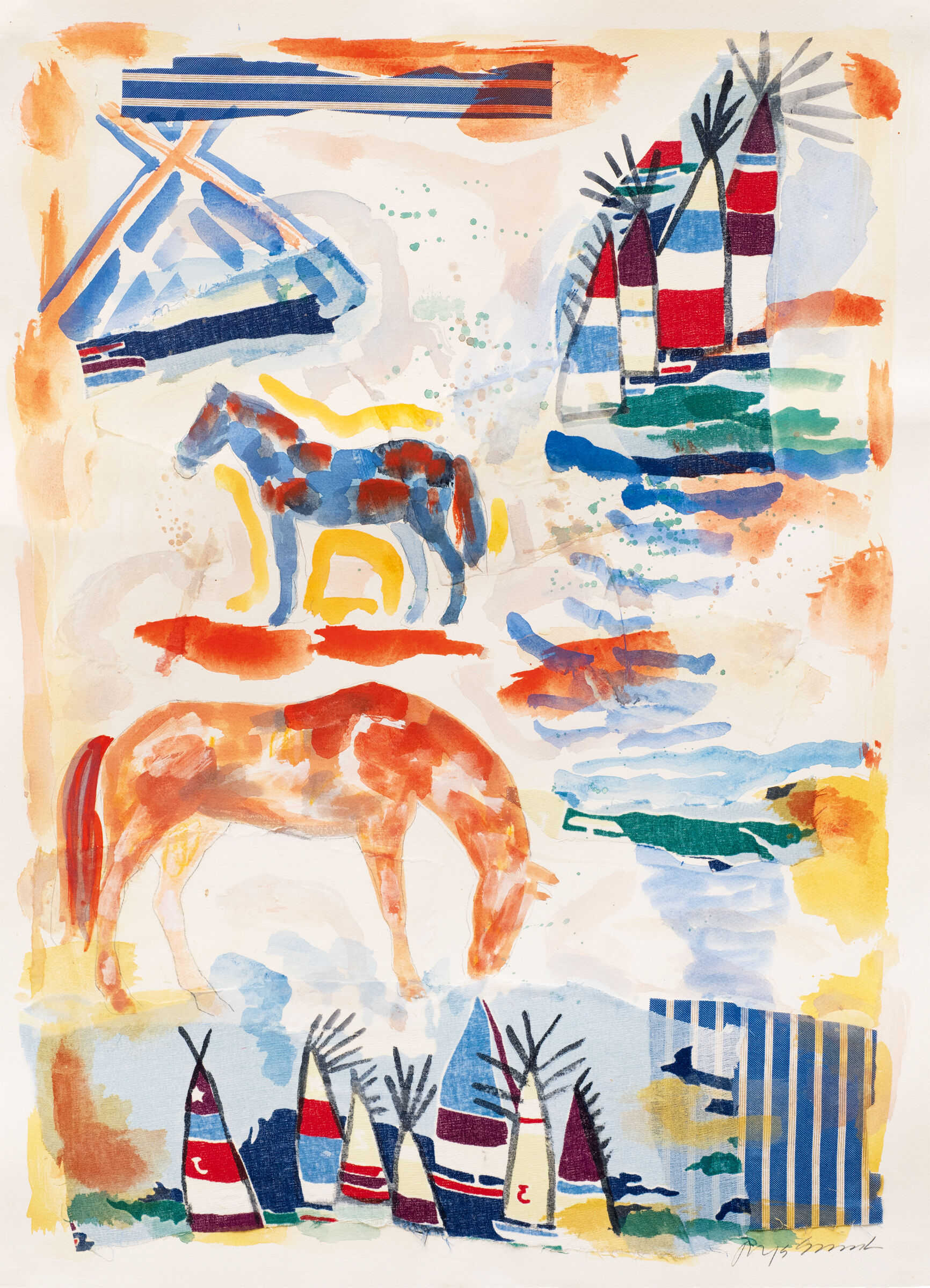
Horses and ships made of patches of translucent color are scattered over the paper.

Jaune Quick-to-See Smith, Cheyenne Series #5, 1984. Collage of paper and fabric with watercolor, pastel, and graphite pencil, 30 × 22 in. (76.2 × 55.9 cm). Tia Collection. © Jaune Quick-to-See Smith. Photograph by James Hart Photography

Jaune Quick-to-See Smith, Cheyenne Series #5, 1984

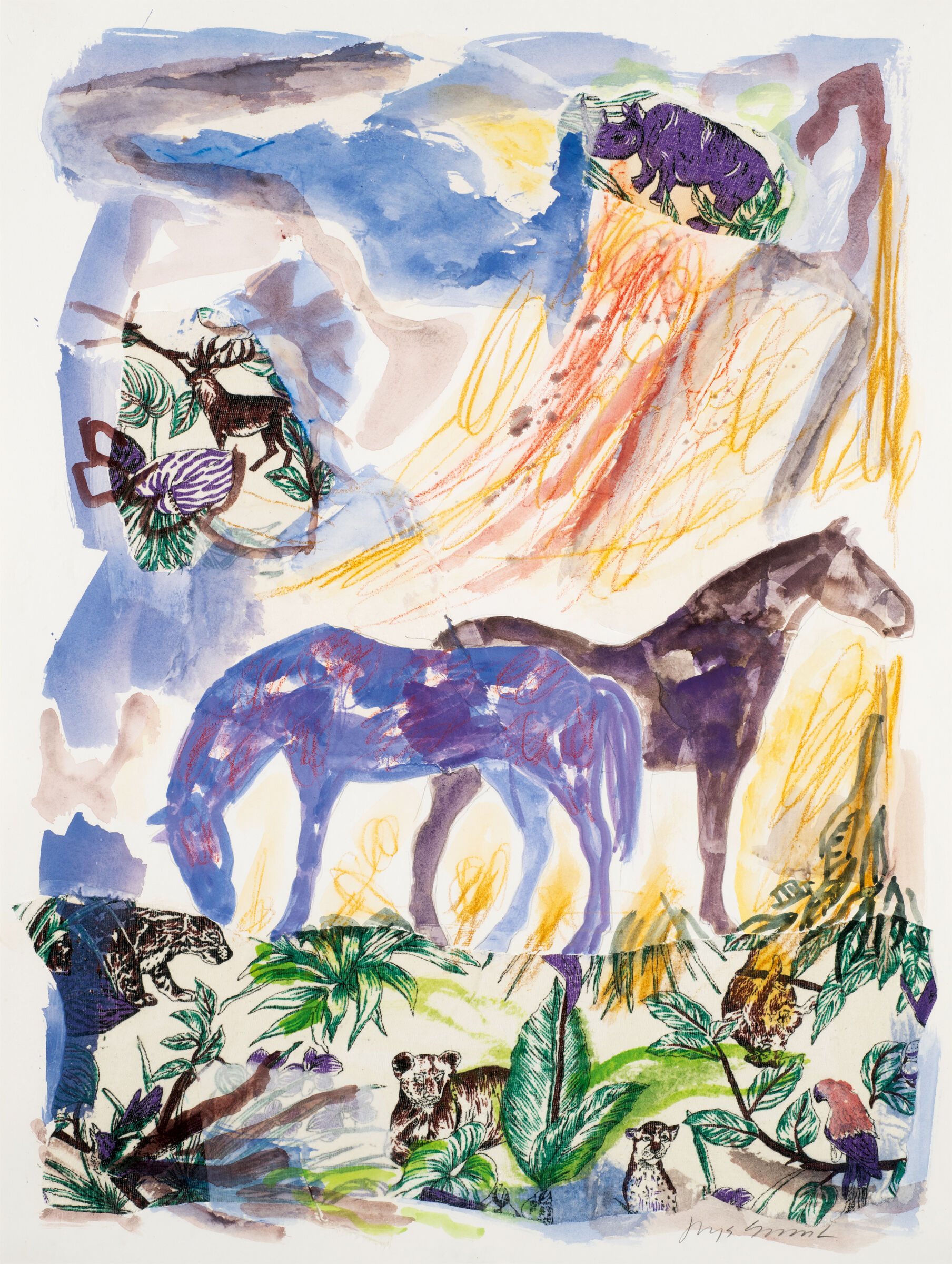
Many different animals—horses, a rhino, leopards, birds—are scattered over the paper surrounded by large swathes of color.

Jaune Quick-to-See Smith, Cheyenne Series #53, 1984. Collage of paper and fabric with watercolor, pastel, and graphite pencil, 30 × 22 in. (76.2 × 55.9 cm). Tia Collection. © Jaune Quick-to-See Smith. Photograph by James Hart Photography

Jaune Quick-to-See Smith, Cheyenne Series #53, 1984


Explore works from this exhibition
in the Whitney's collection

View 17 works

On the Hour

A 30-second online art project:
Frank WANG Yefeng, The Levitating Perils #2

Learn more about this project

Learn more at whitney.org/artport

On the Hour projects can contain motion and sound. To respect your accessibility settings autoplay is disabled.