Most often based on iconic photographs of figures who have played a significant role in the larger cultural narrative, these paintings serve as powerful visual symbols of Black accomplishment and aspiration. Historically, portraits have been used to communicate authority, achievement, and social standing. Taylor's depictions of legendary figures within the Black community who have broken barriers and achieved world-changing political, artistic, or athletic success, advance this tradition. In honoring these figures, Taylor signals to the remarkable feats of ambition and overcoming that have inspired him.
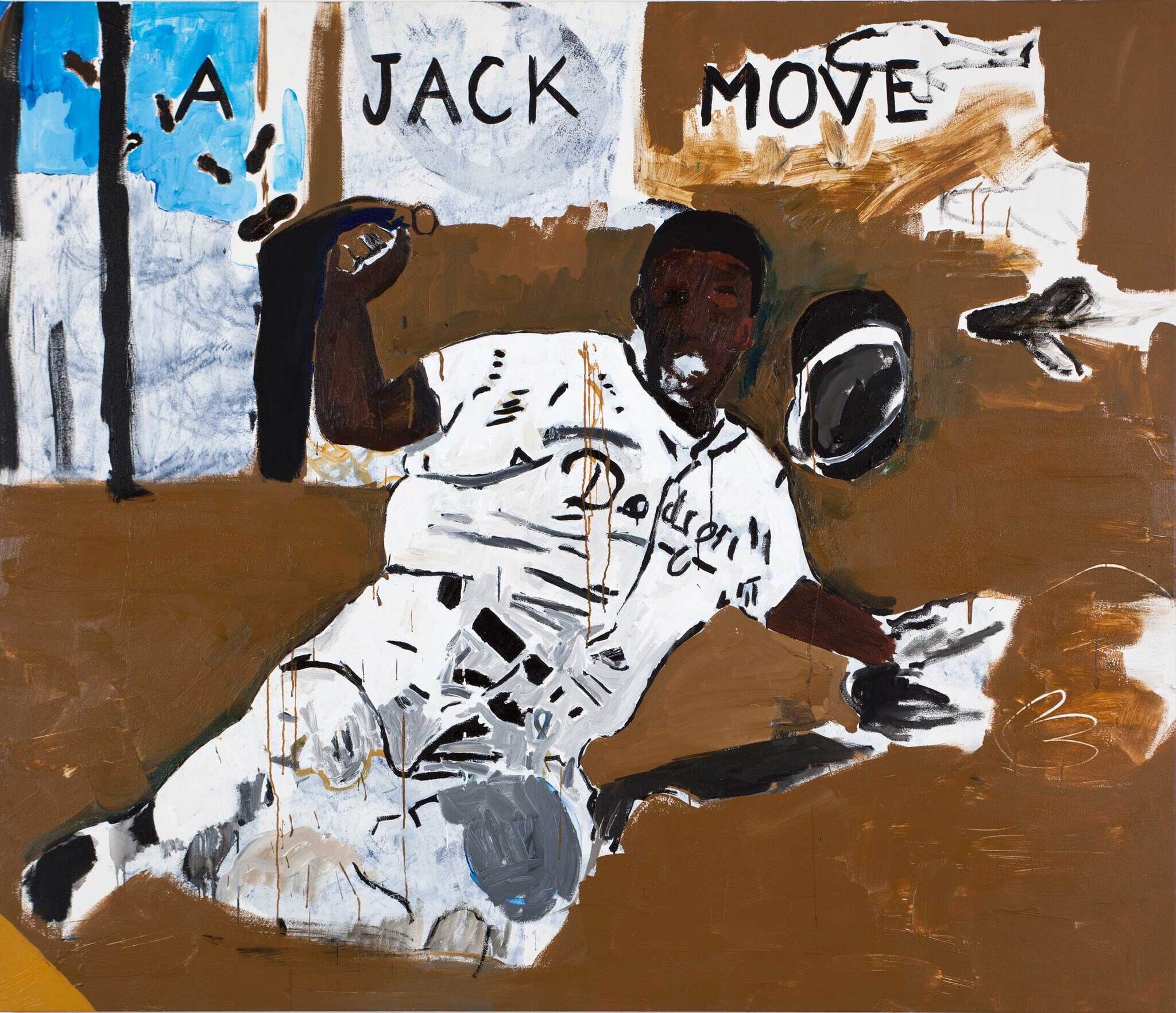
Jackie Robinson was a sports legend who integrated Major League Baseball in 1947 after more than sixty years of segregation. He played in six World Series with the Brooklyn Dodgers, and was key to the team winning the 1955 World Series championship. Robinson used his fame to advocate for racial equality and social justice. The painting’s title employs a slang term for robbing someone or something—referring in this case to “Jack” Robinson stealing bases in a baseball game. Taylor slyly hints at this double entendre by including a trail of footprints, possibly leaving the scene of a crime, in the painting’s upper left corner.
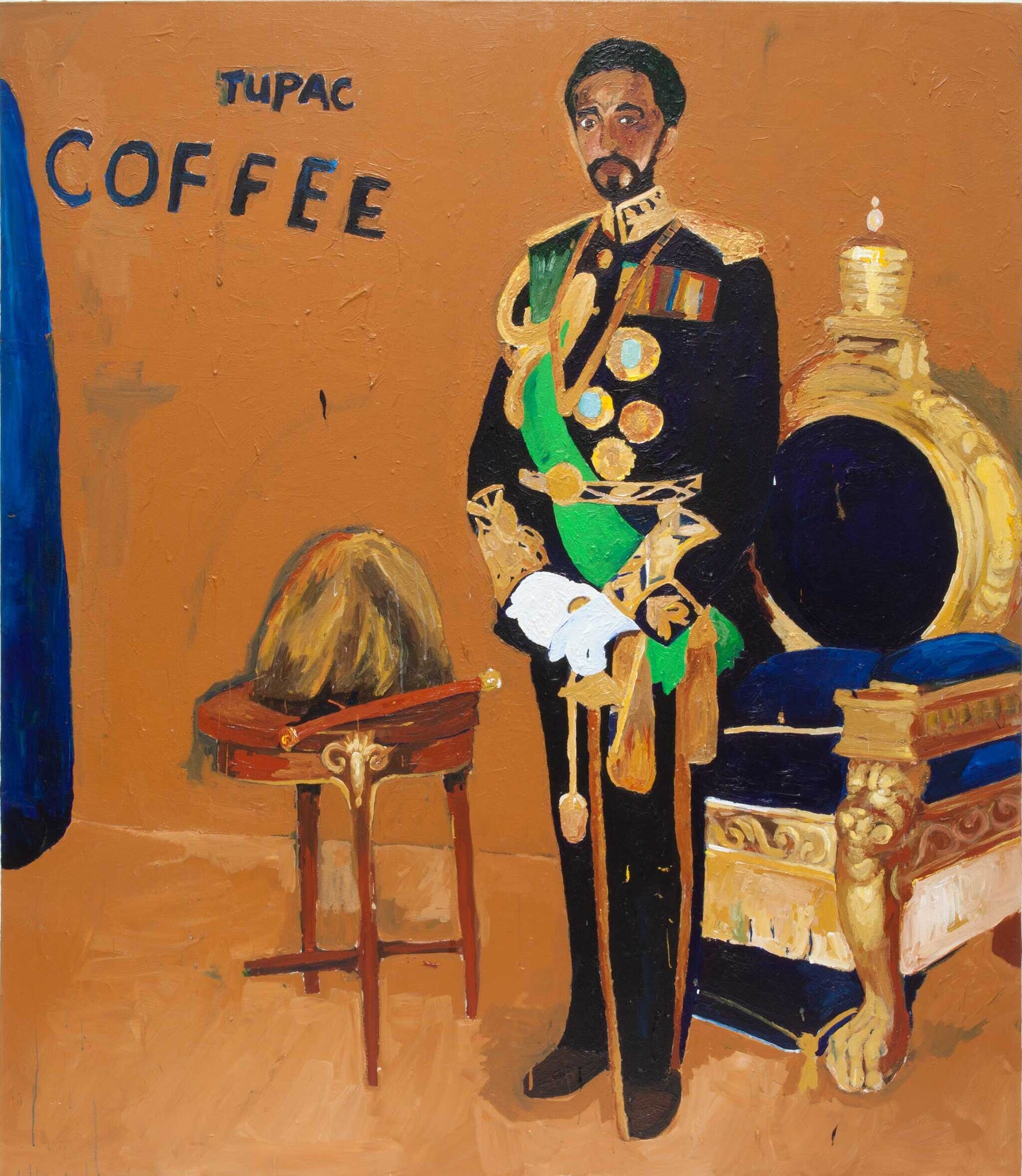
This portrait of Haile Selassie, the former emperor of Ethiopia, was painted soon after Taylor’s trip to that country. Depicted here in military regalia while standing before a throne, Selassie (“His Imperial Majesty,”
or “H. I. M.”) championed the decolonization of African nations and played a pivotal role in establishing the Organization of African Unity, which later became the
African Union. Taylor joins Selassie’s image with textual references to coffee, Ethiopia’s most profitable commodity, and to Tupac Shakur, the globally recognized rapper and actor whose music addressed social inequality, mass incarceration, discrimination, and anti-Black police violence.
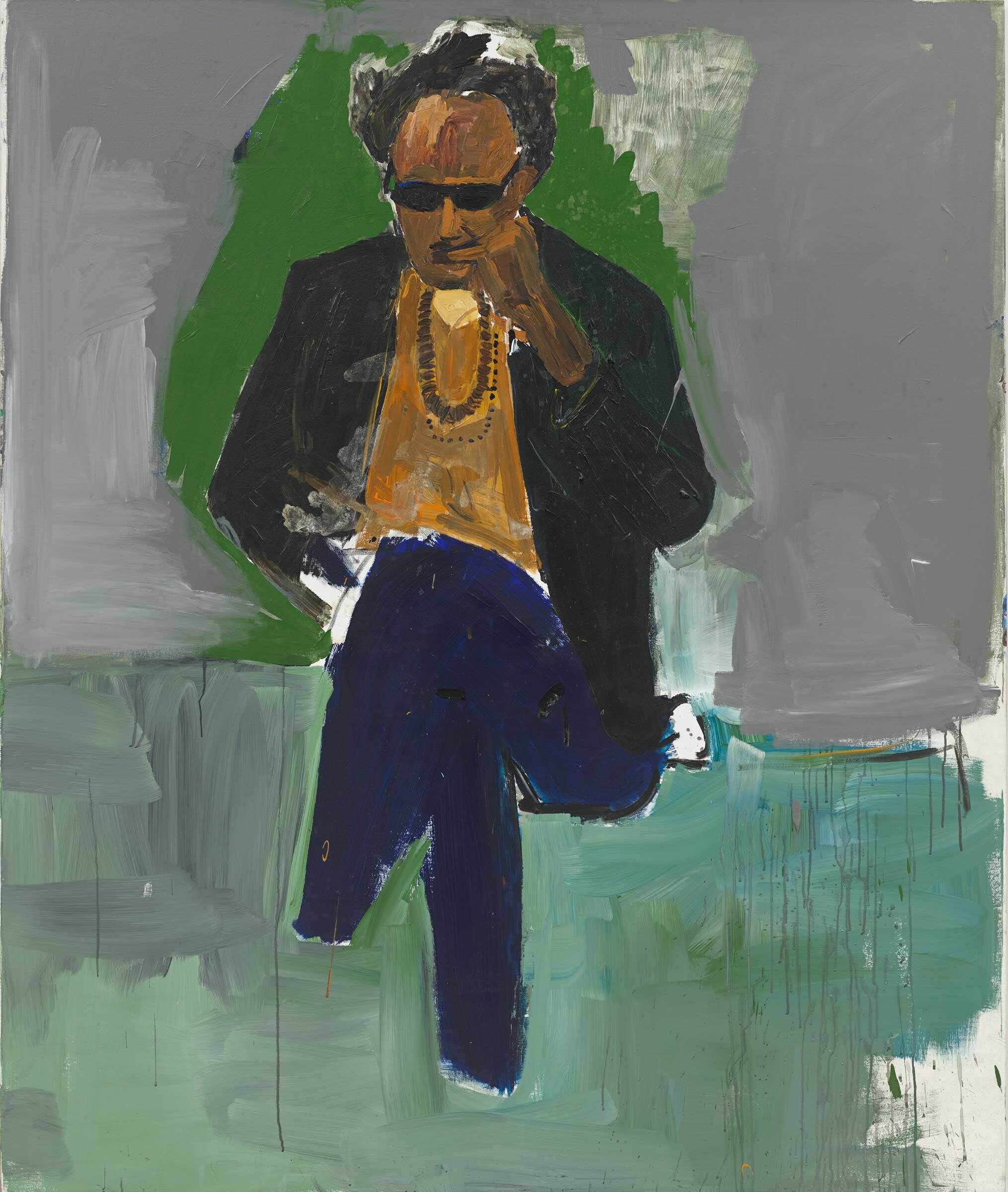
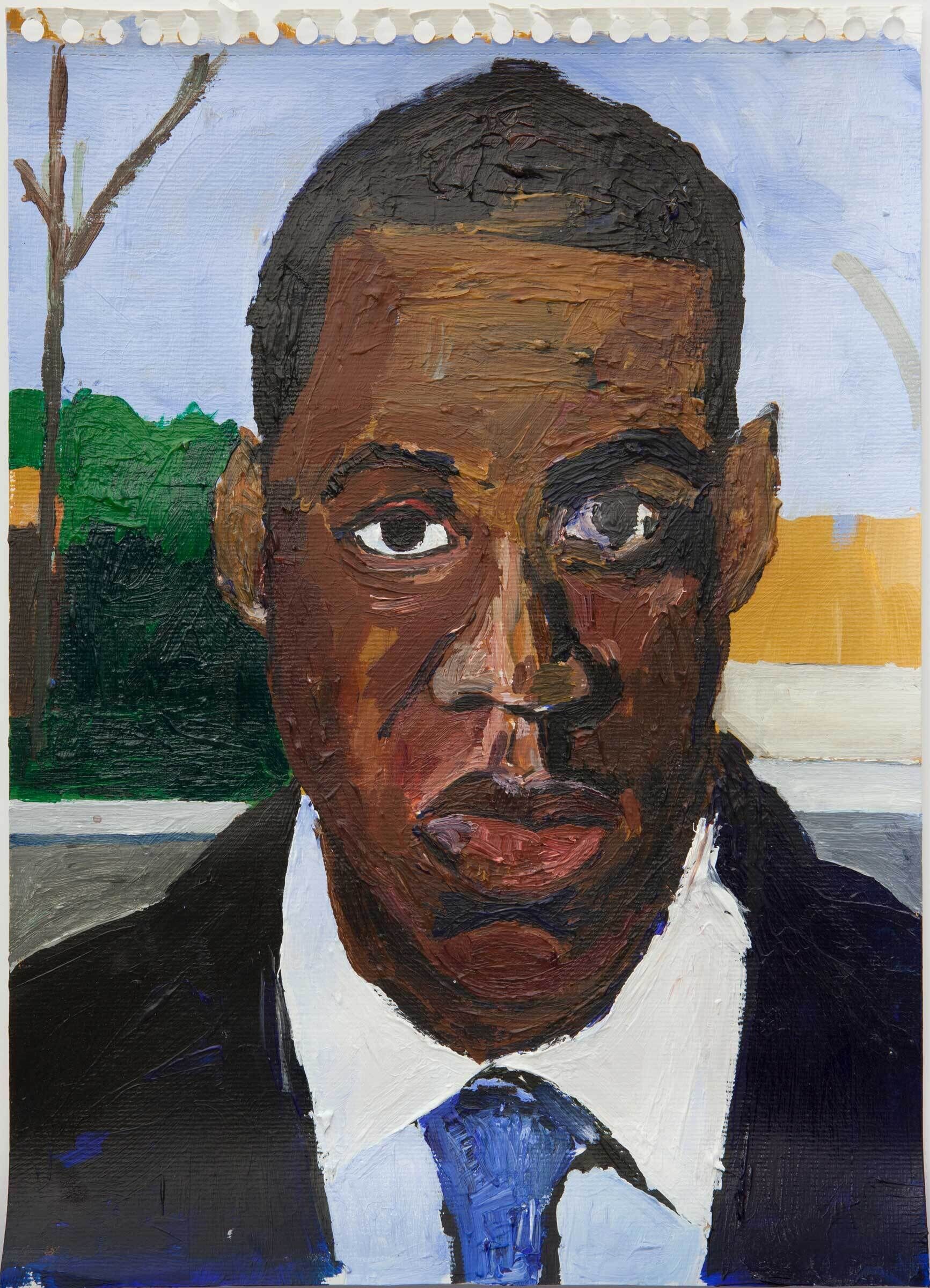
Taylor’s close-up portrait of the hip-hop mogul and businessman Jay-Z was commissioned for the cover of the 2017 holiday issue of The New York Times Style Magazine and painted from memory. The work’s title recalls the slogan featured on the picket signs of striking Memphis Sanitation workers in 1968 and used during the Poor People’s Campaign for economic justice, led by Martin Luther King Jr., in Washington DC that same year. Applying the phrase to this portrait suggests that even Jay-Z, despite his wealth and cultural status, is not beyond the reach of America’s racism
and still needs to assert his humanity.
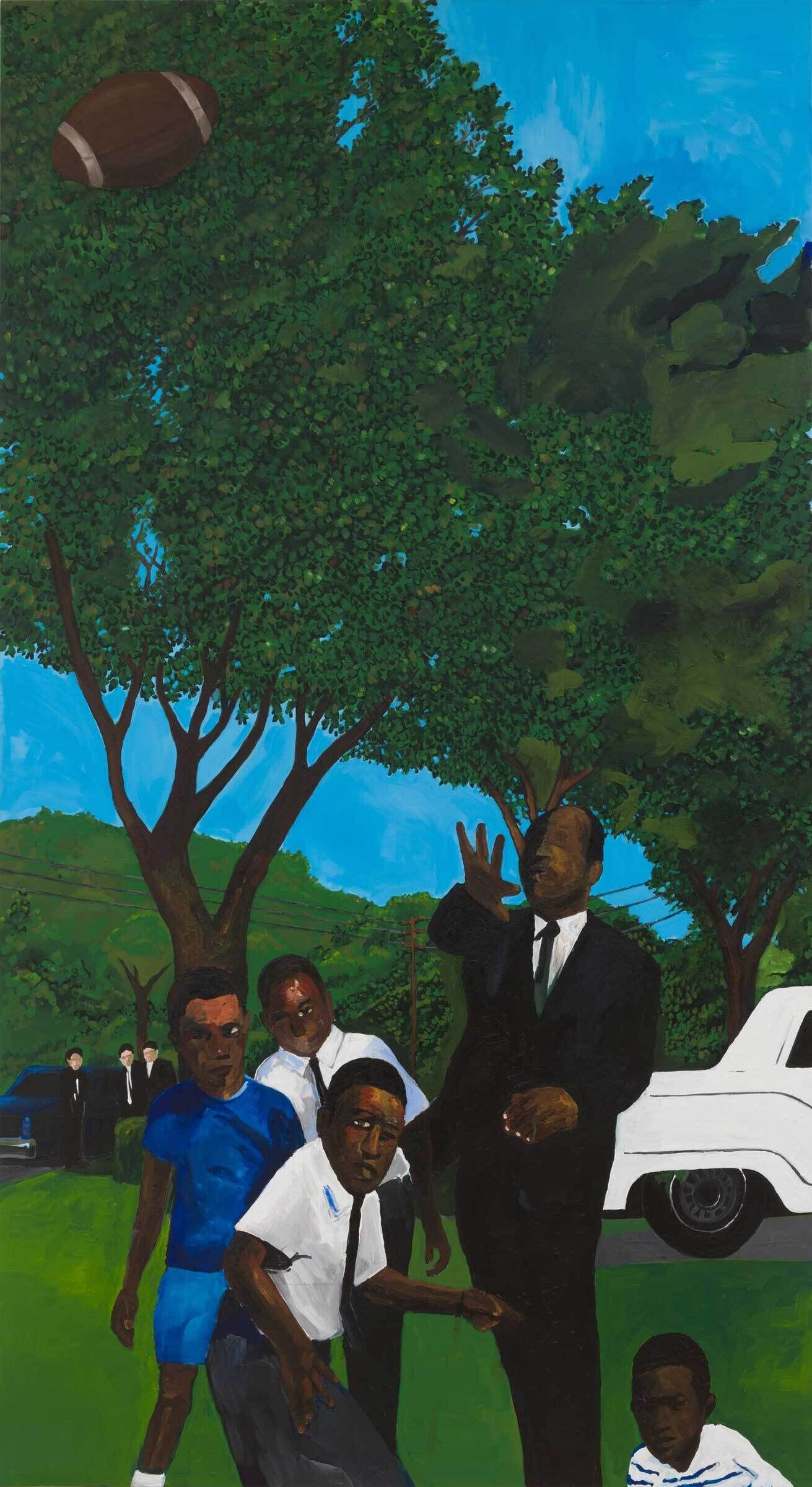
This painting depicts the civil rights leader Martin Luther King Jr. in a moment of leisure, tossing a football with four children. The football’s upward trajectory might allude to King’s famous pronouncement that “the arc of the moral universe bends toward justice,” while the ominous presence of three white men in the distance may hint at the ever-present threat of violence faced by Black Americans.
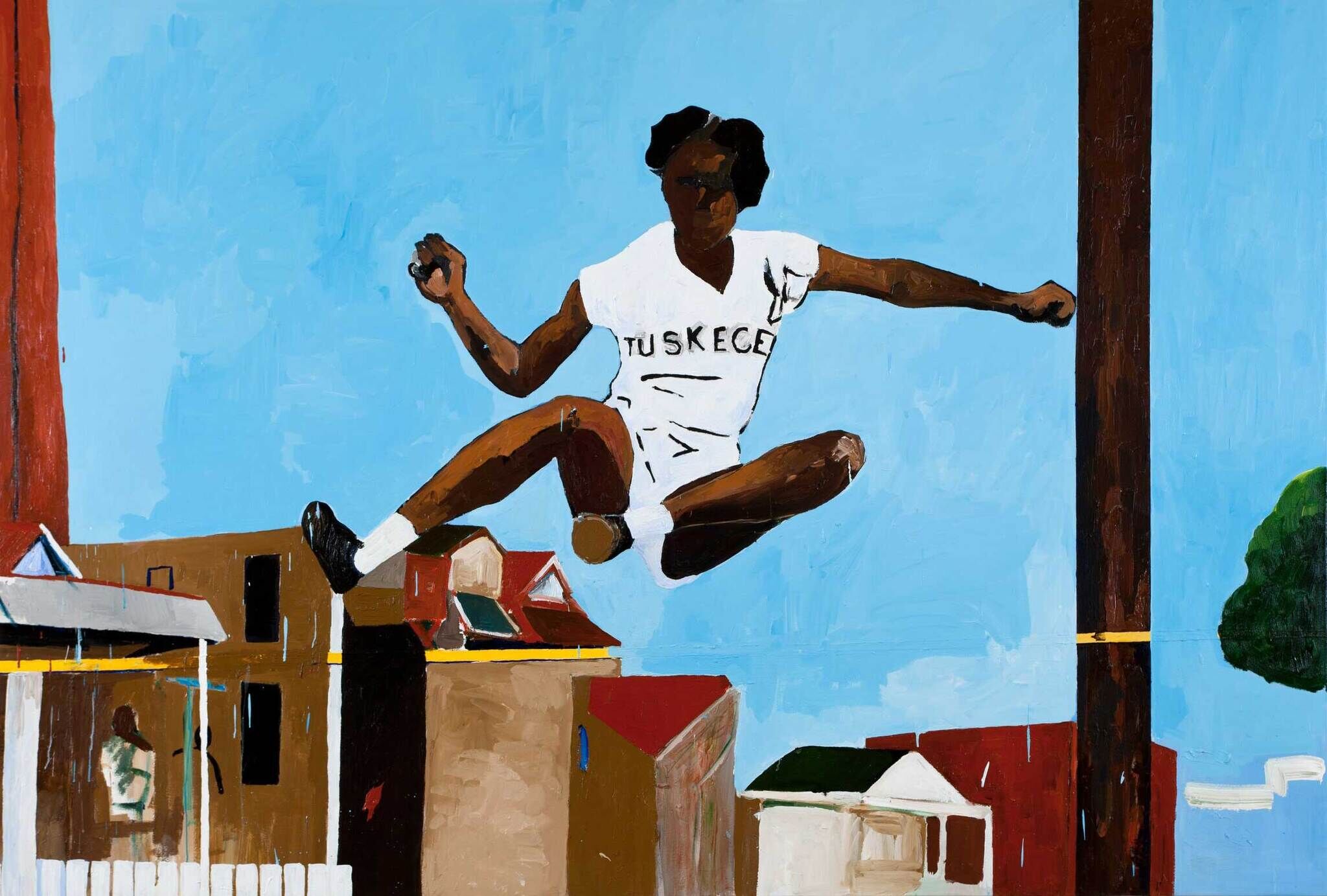
The track-and-field legend Alice Coachman set a record in the high jump at the 1948 London games, becoming the first Black woman to win an Olympic gold medal. Her success and barrier-breaking achievement symbolized hope and progress for Black Americans at a time when
racial segregation and discrimination pervaded the United States. Taylor based this painting on a photograph taken of Coachman while she was a student at the Tuskegee Institute, one
of the nation’s first historically Black universities. By altering the photo and positioning Coachman as if she is jumping over houses in a neighborhood,
Taylor metaphorically alludes to the social and economic barriers she overcame growing up in the segregated South.