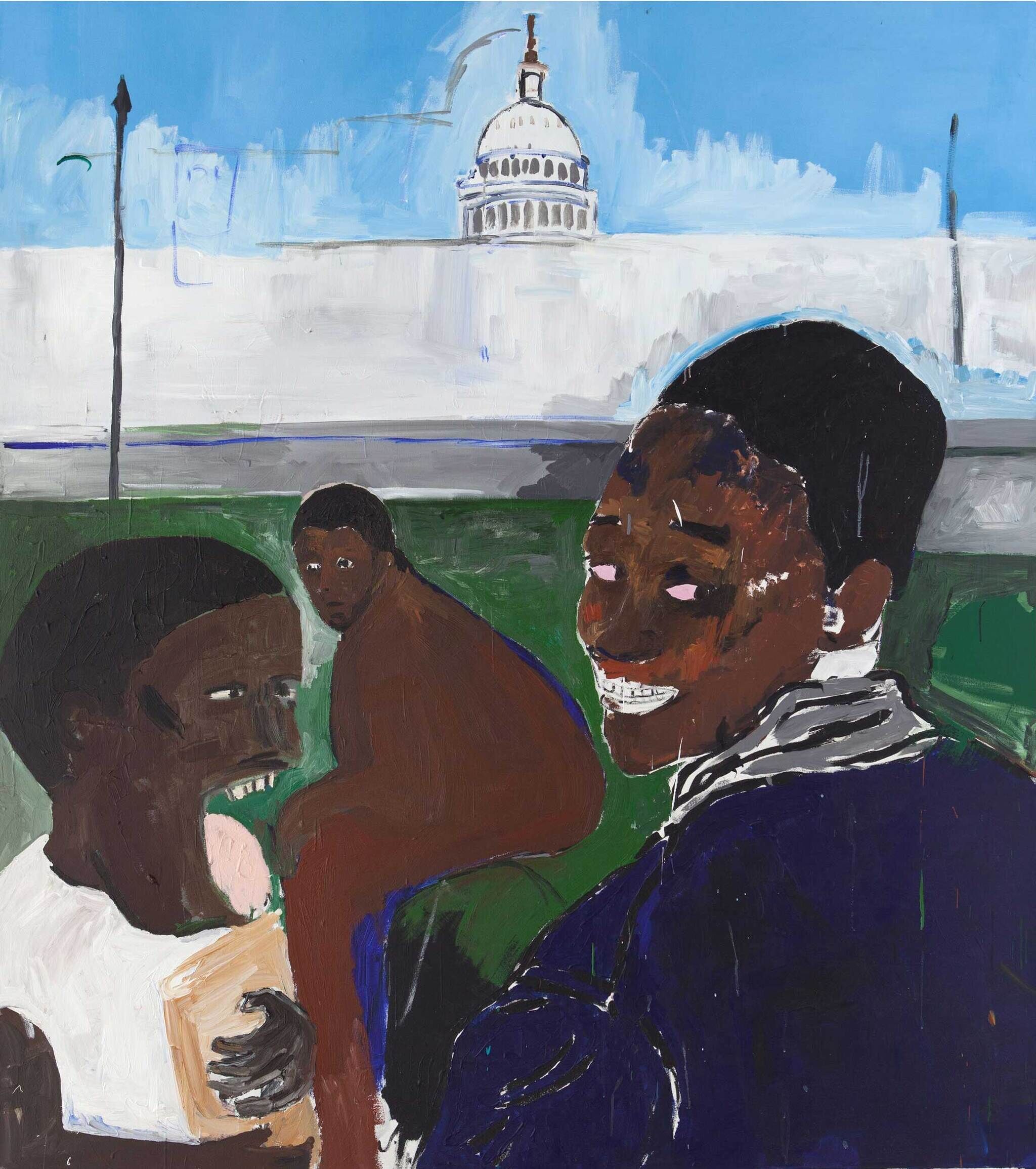
Within Taylor's broad range of subjects are works that delve into political and social allegory and current events. In some, he addresses police brutality in ways that can be terrifyingly direct but also tender. Several paintings memorialize young men murdered by the police and reference the US penal system through images of prison walls, guard towers, and citizens with their hands up. In others, he packs images and text into surreal compositions whose elusive meanings comingle reportage, personal memory, and common outrage. Together, these works extend a long tradition of socially charged history paintings. As with Francisco Goya's The Third of May 1808 (1814), which Taylor cites as a precedent, the emotional message is one of horror and grief.
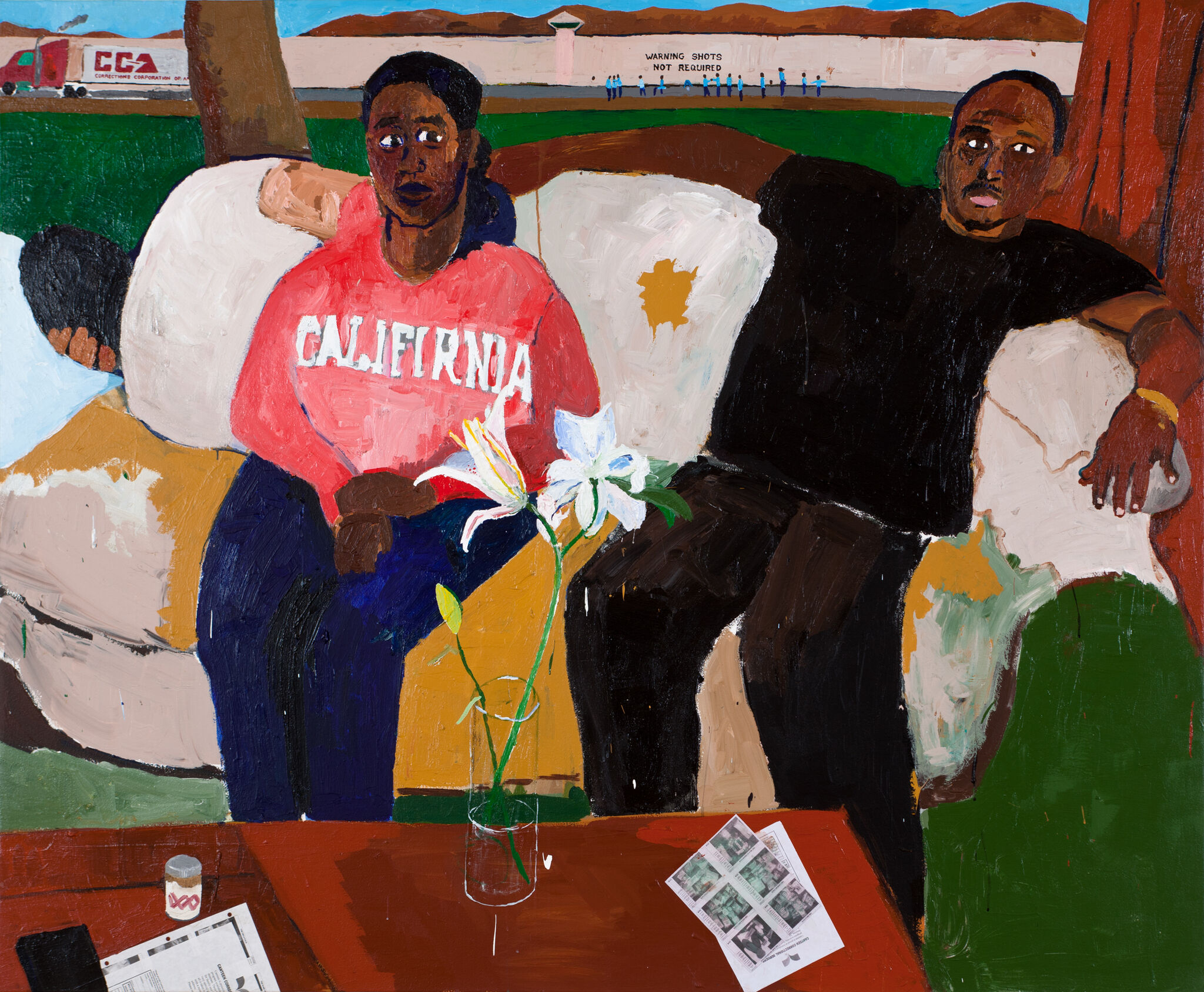
In Resting, Taylor depicts his niece and nephew sitting on a couch in their home with a reclining figure behind them. In the background, he portrays a tractor trailer and a group of uniformed men lining up in front of a penitentiary wall stenciled with the words
“Warning Shots Not Required.” Among the materials collaged on the coffee table in the painting’s foreground are Canteen Correctional Service forms that family members fill out to authorize items prisoners can purchase at the commissary. The inclusion of these elements alludes to the personal interaction many Black families have with “the system,” lending a bitter irony to the work’s title.
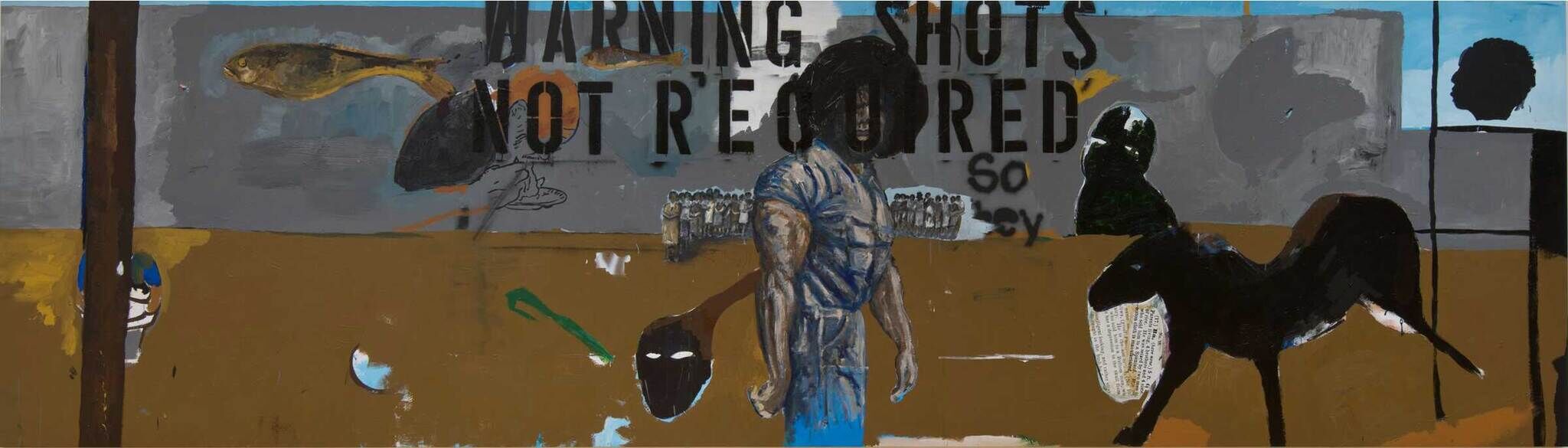
This painting features Stanley “Tookie” Williams—the larger-than-life cofounder of the notorious Los Angeles street gang the Crips, professional bodybuilder, and
convicted murderer, who in his later years became an advocate for antigang education while serving a death-row sentence at San Quentin State Prison. Taylor paints Williams standing amid an array of symbolic motifs in front of a high prison wall. The image of the horse, which figures in this and many of Taylor’s
other works, may refer to the artist’s grandfather, a horse trainer, who was ambushed and shot to death by white vigilantes in Texas in 1933. The work’s title, stenciled onto the composition, refers to policies that allow police officers to fire often deadly shots without warning if they consider themselves or another individual to be in imminent danger.
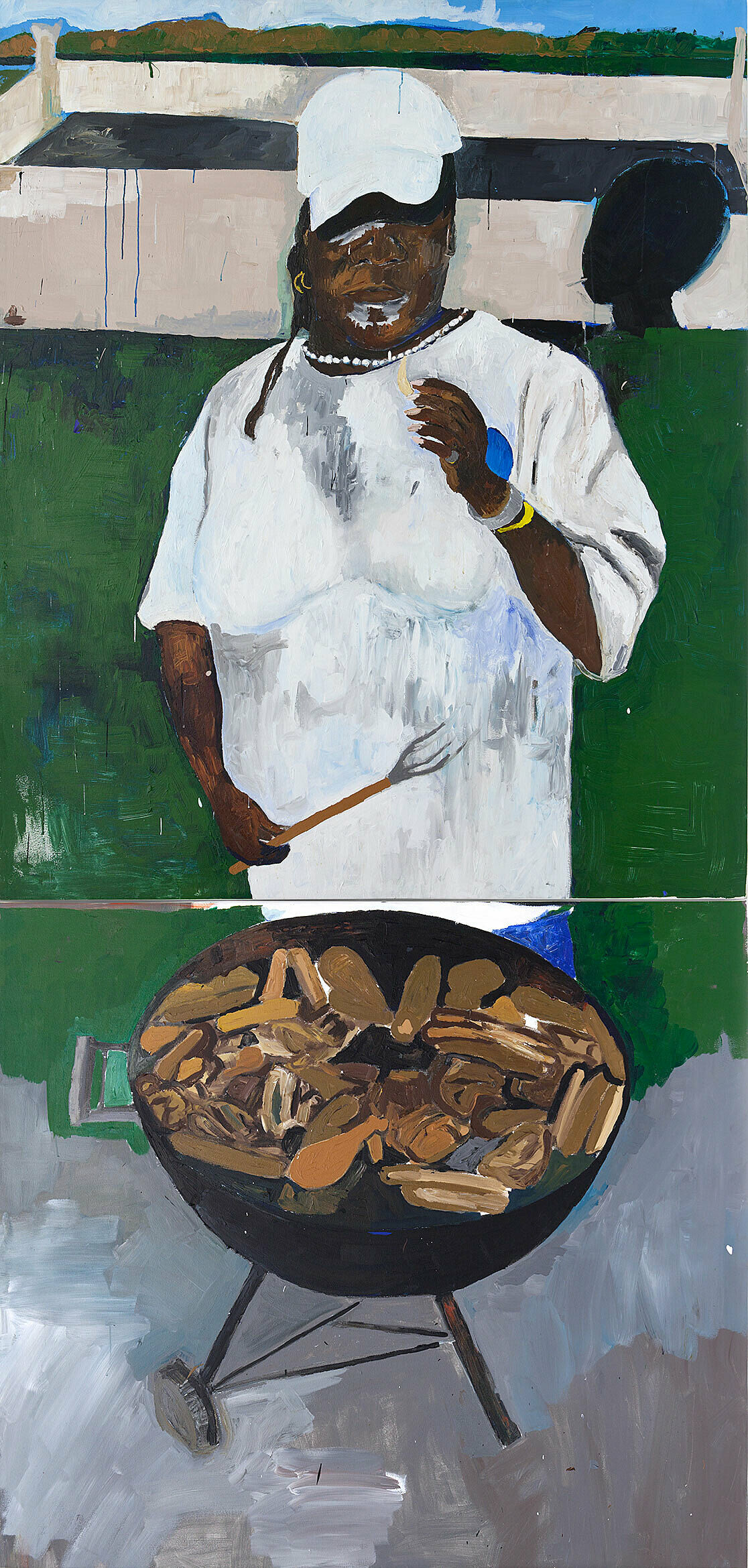
Henry Taylor (b. 1958), The 4th, 2012. Acrylic on canvas, top: 90 × 74 in. (228.6 × 188 cm); bottom: 66 × 74 in. (167.6 × 188 cm); overall: 156 × 74 in. (396.2 × 188 cm). Collection of the artist; Blum & Poe, Los Angeles/New York/Tokyo. Photograph by Sam Kahn
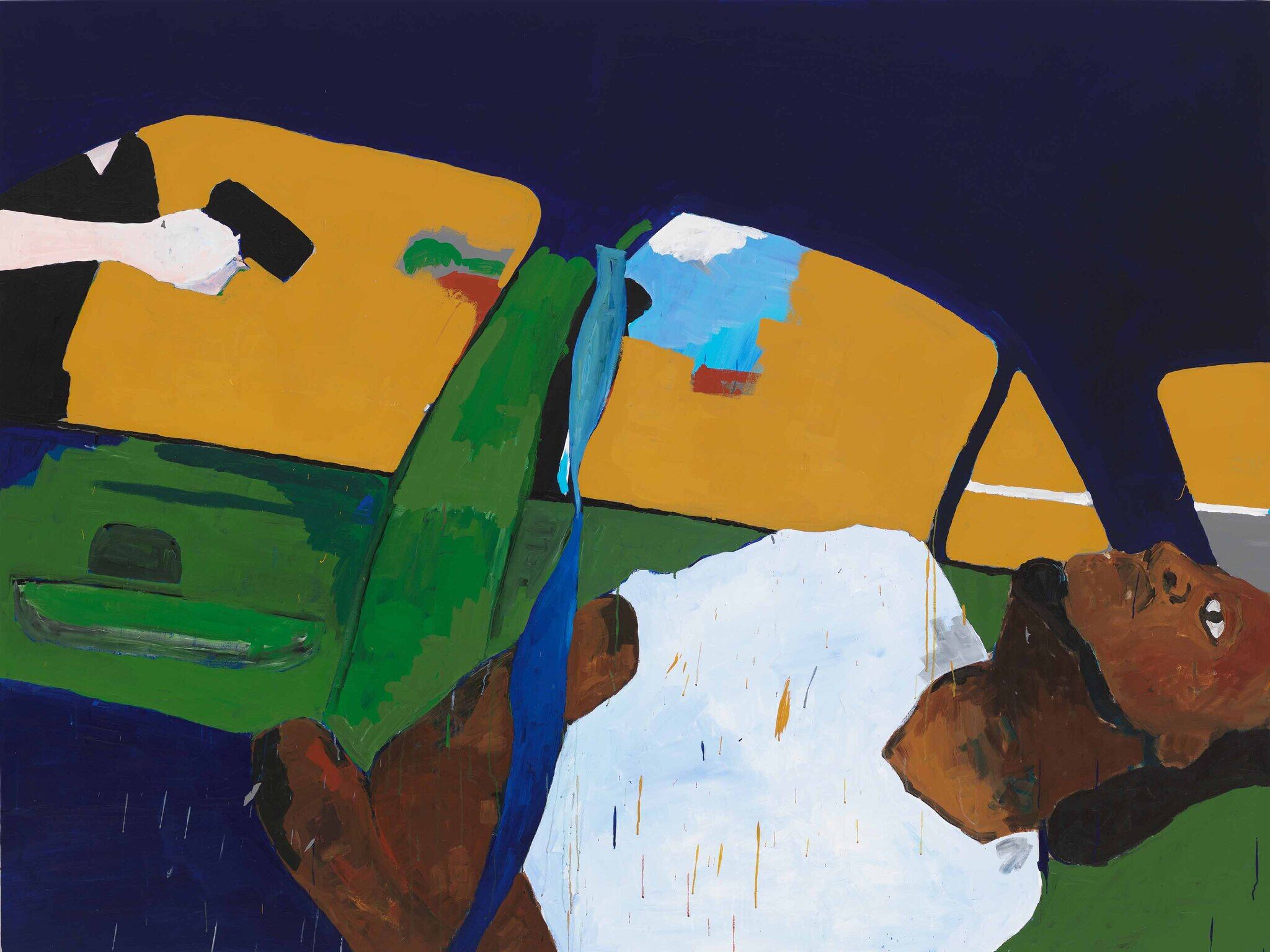
Henry Taylor, THE TIMES THAY AINT A CHANGING, FAST ENOUGH!, 2017
This painting, which depicts the 2016 police killing
of Philando Castile during a traffic stop outside Minneapolis, places the viewer in the position of Castile’s girlfriend, Diamond Reynolds, who livestreamed the aftermath of Castile being shot from her cell phone as she sat next to him in the car. Taylor has said that
he was motivated to paint this scene immediately upon learning about it—“I don’t even think I thought about
ever showing that one when I painted it; it was just something I had to get out of my head.” Taylor’s title, a reversal of the well-known Bob Dylan lyric, visually laments the far-too-common deadly interactions between Black Americans and law enforcement.
In depicting the last moments of Castile’s life, Taylor draws on familiar art-historical precedents, such
as Jacques-Louis David’s The Death of Marat (1793) and deposition paintings of Christ.
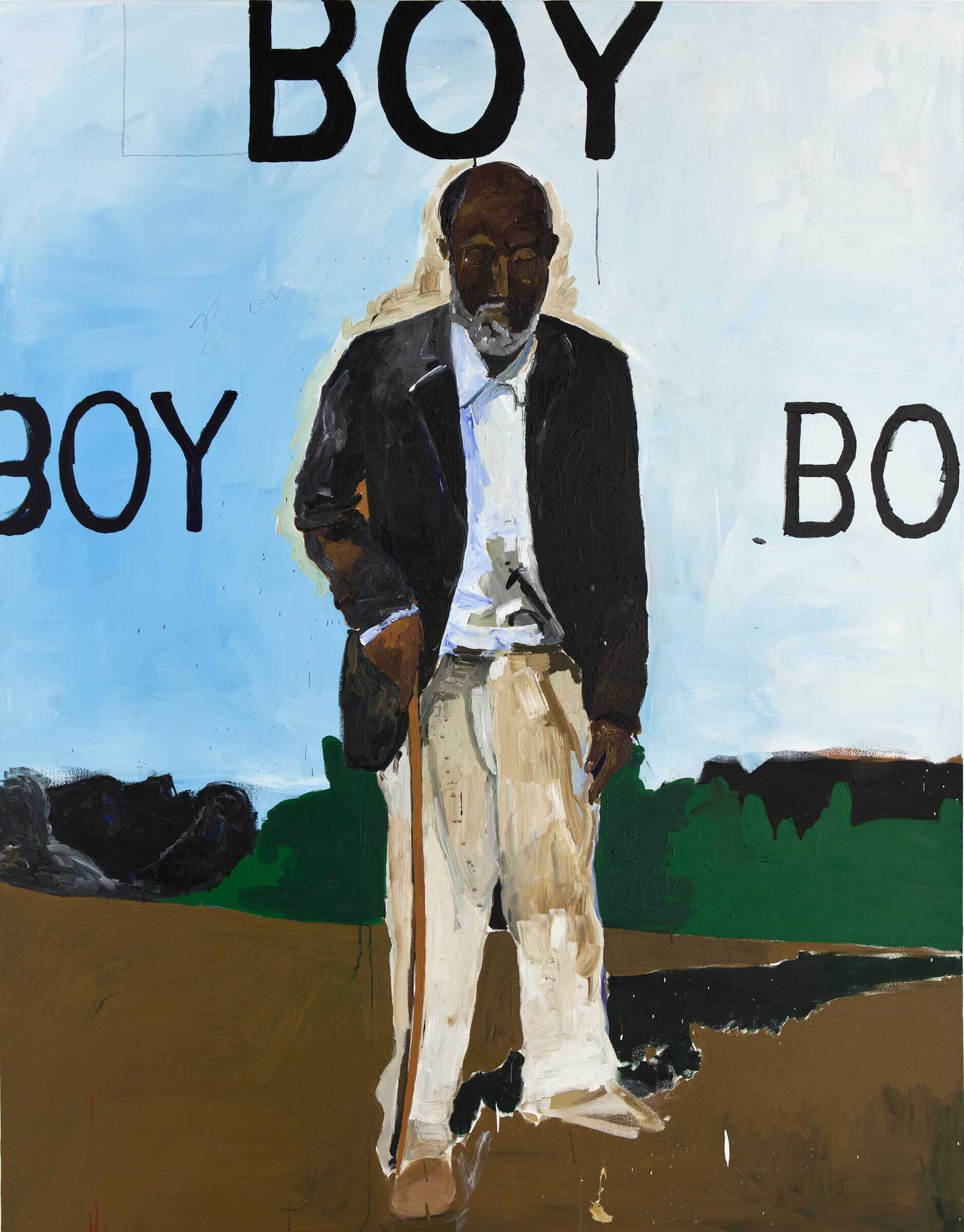
Taylor often reflects on his Southern heritage in
his work. This painting of an elderly Black man standing amid plowed fields is one in a series of works Taylor based on Farm Security Administration photographs of Southern sharecroppers in the 1930s, and while it
is not explicitly a depiction of a Taylor family member, it honors his ancestors’ legacy. Taylor adds the word
“BOY” three times to the background of this work as if to suggest that the man was called that degrading epithet many times. Given the persistence of racially abusive language in the United States, the painting’s title is likely ironic.