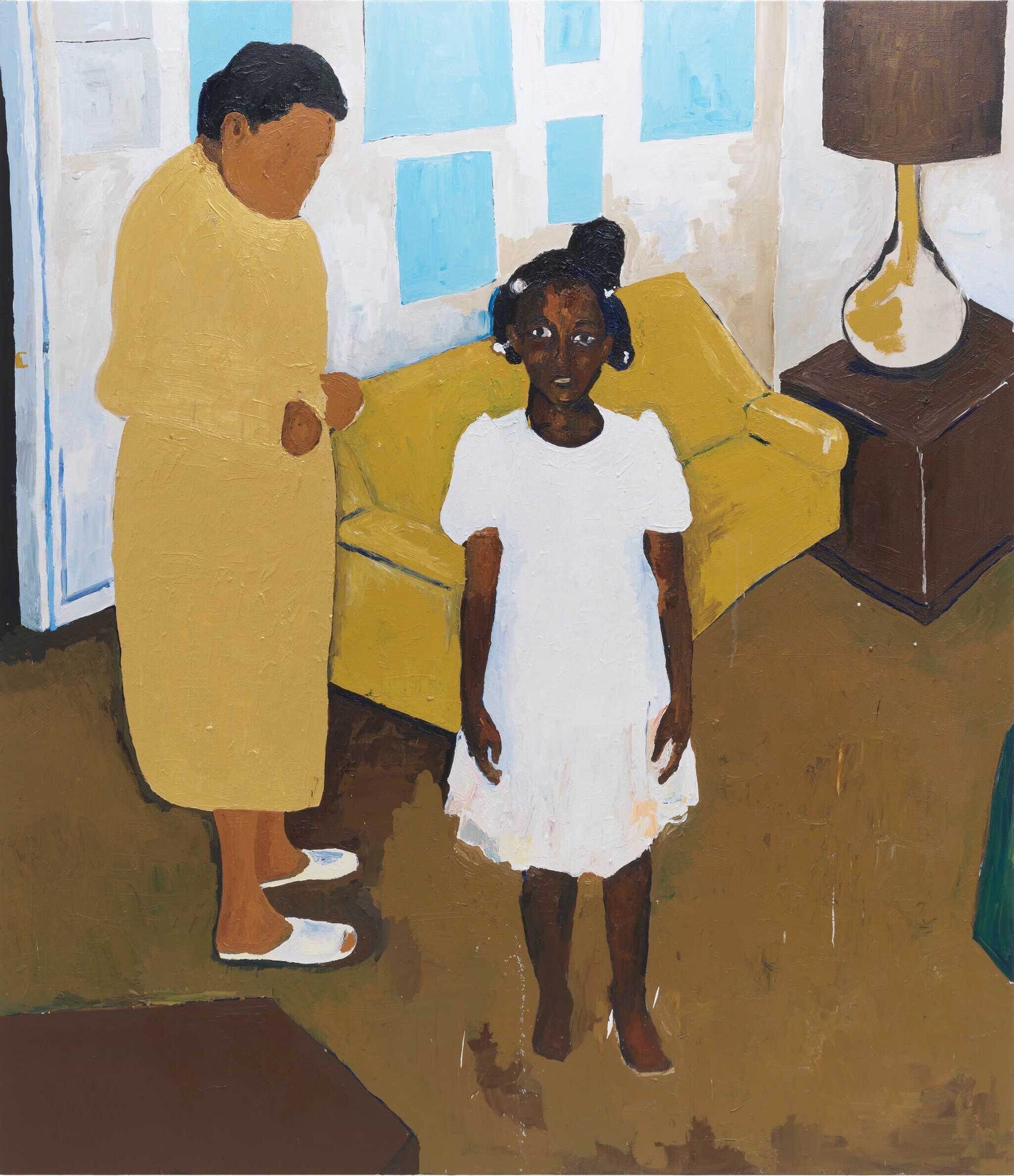
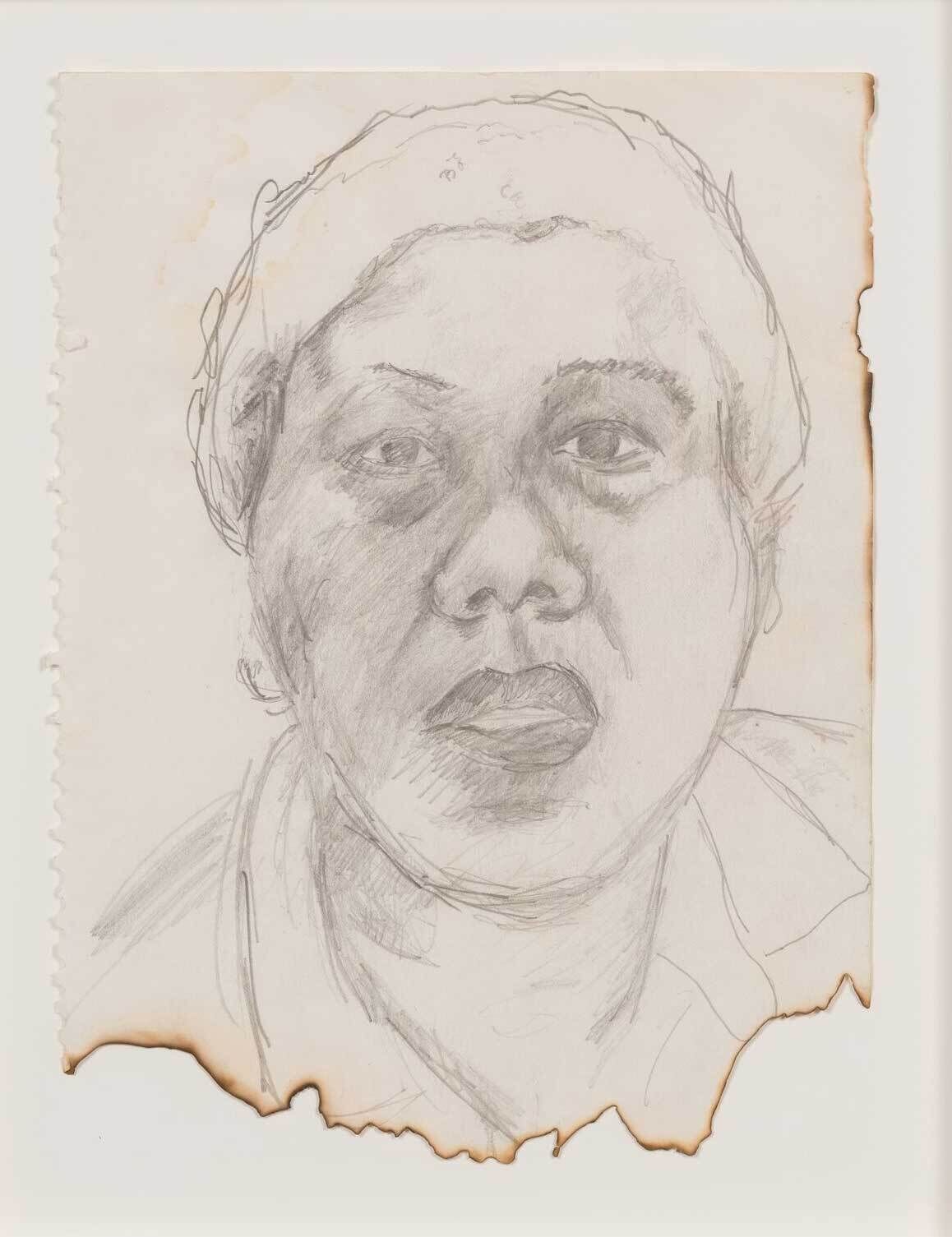
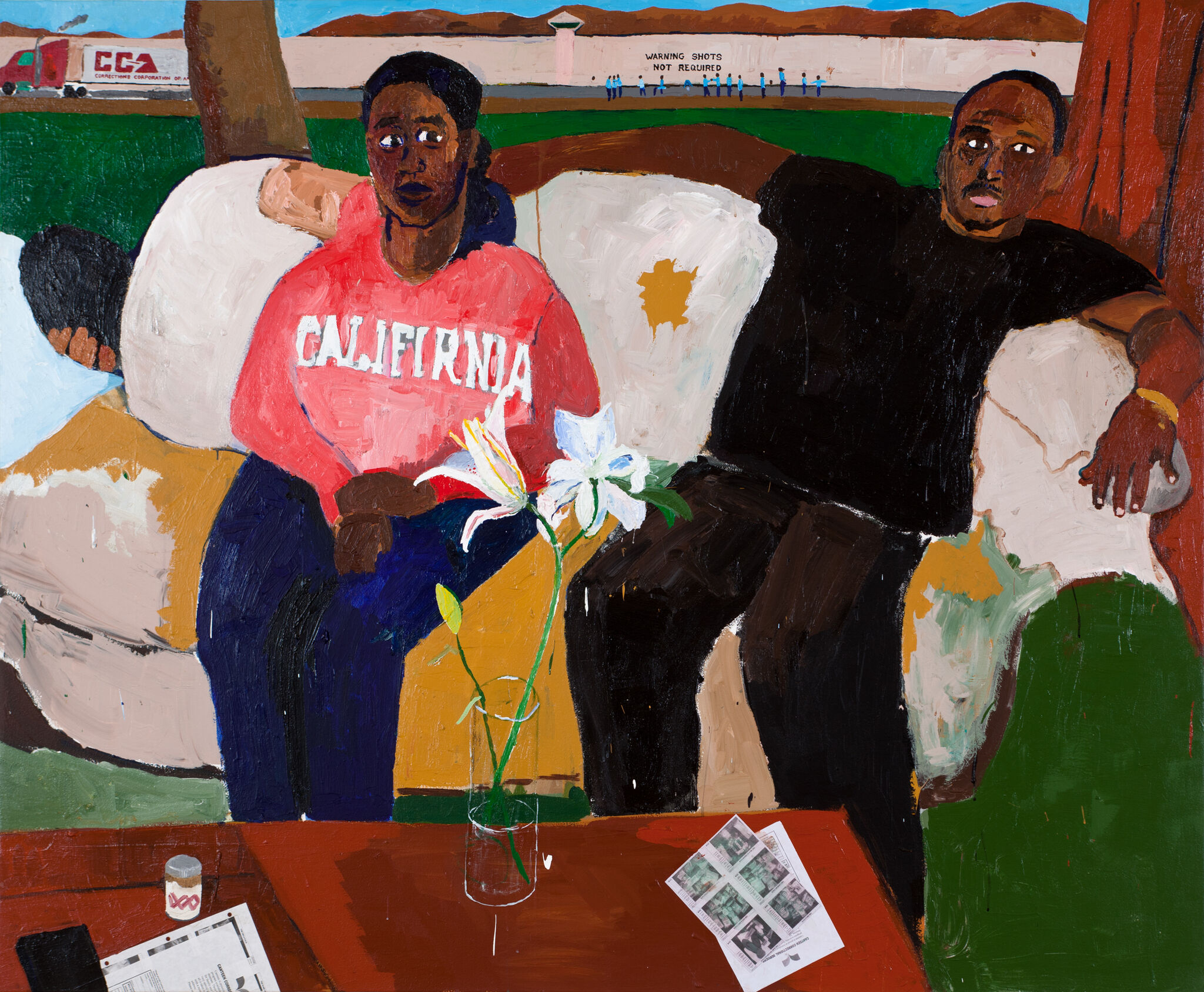
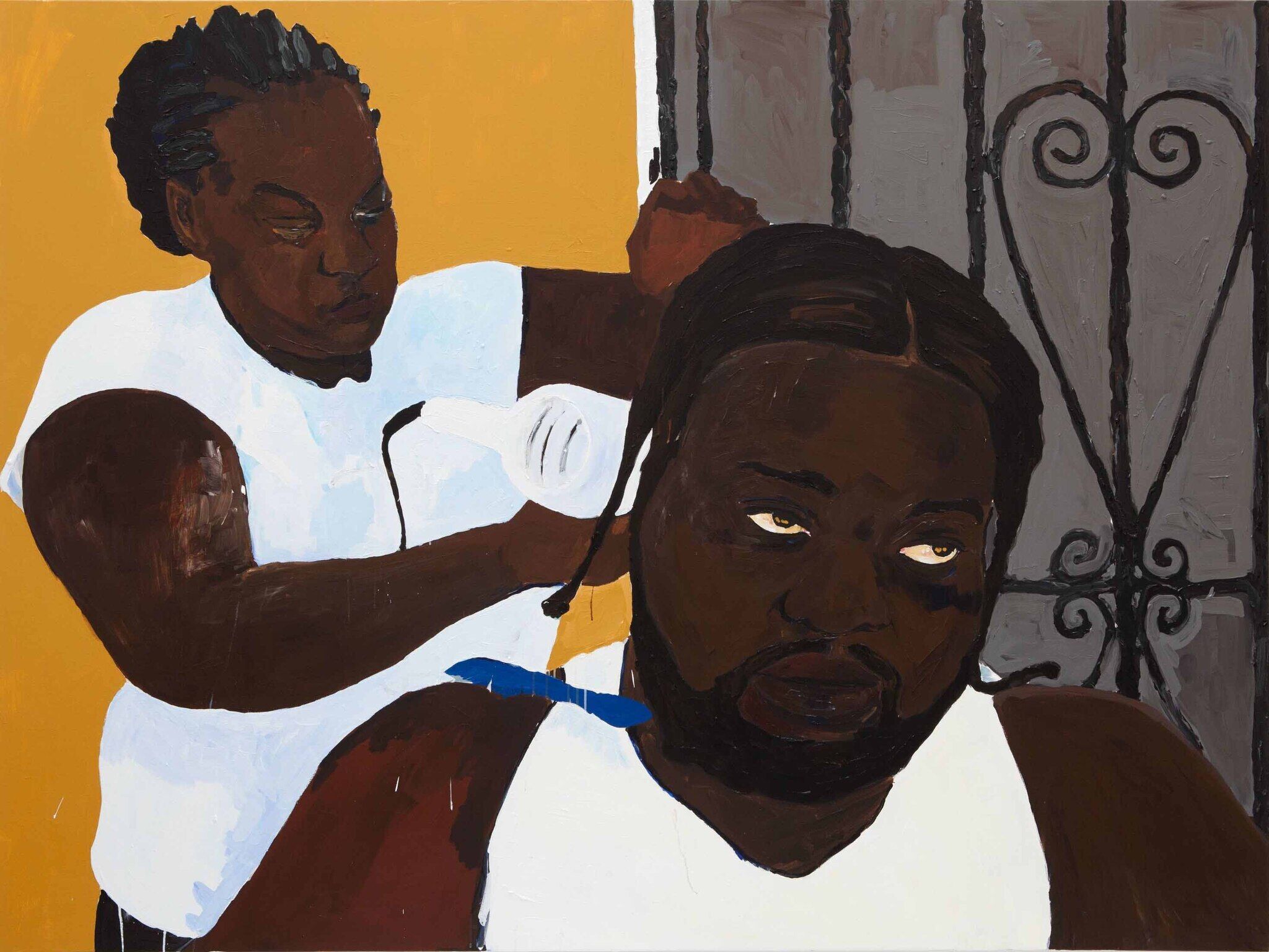
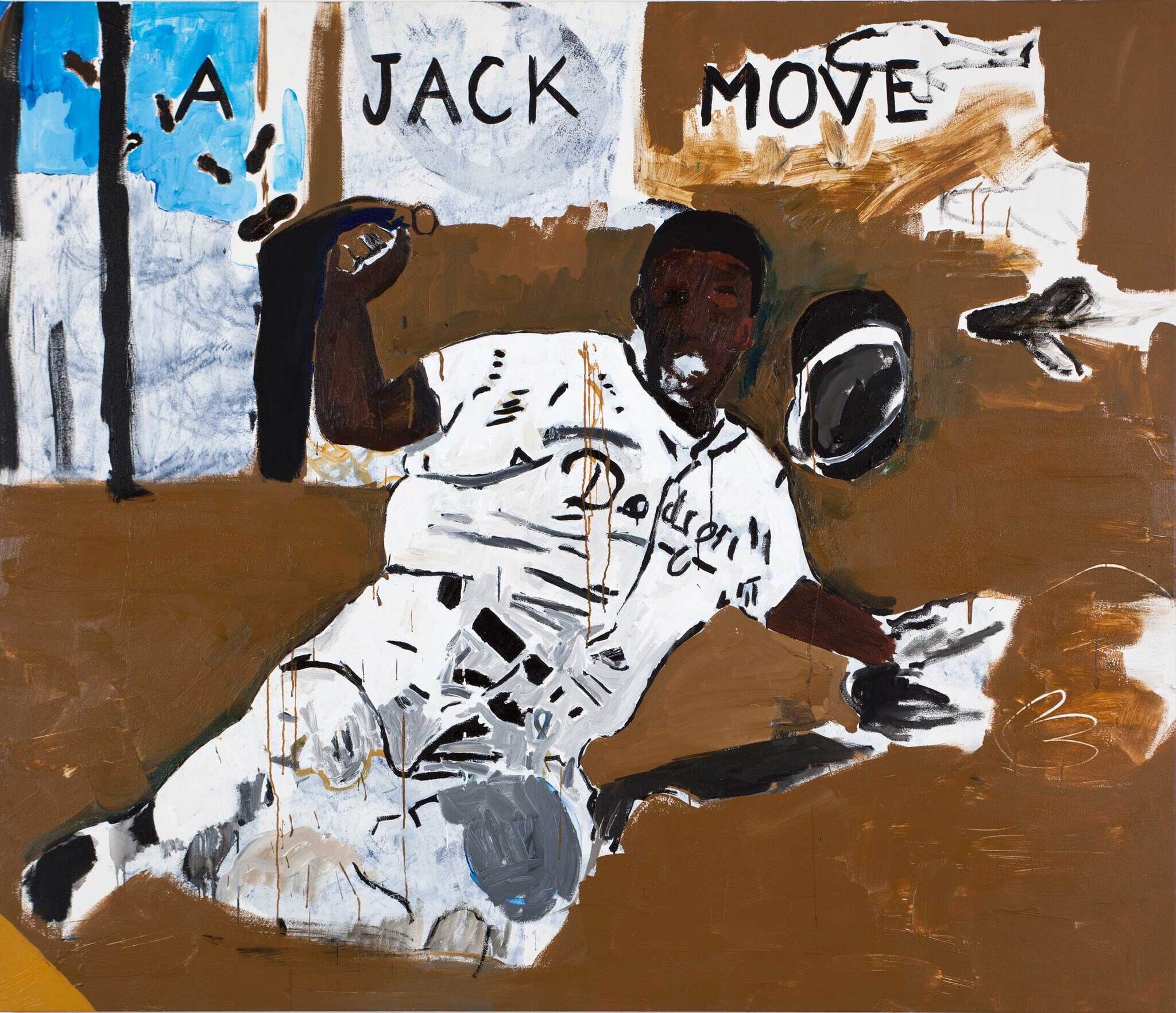
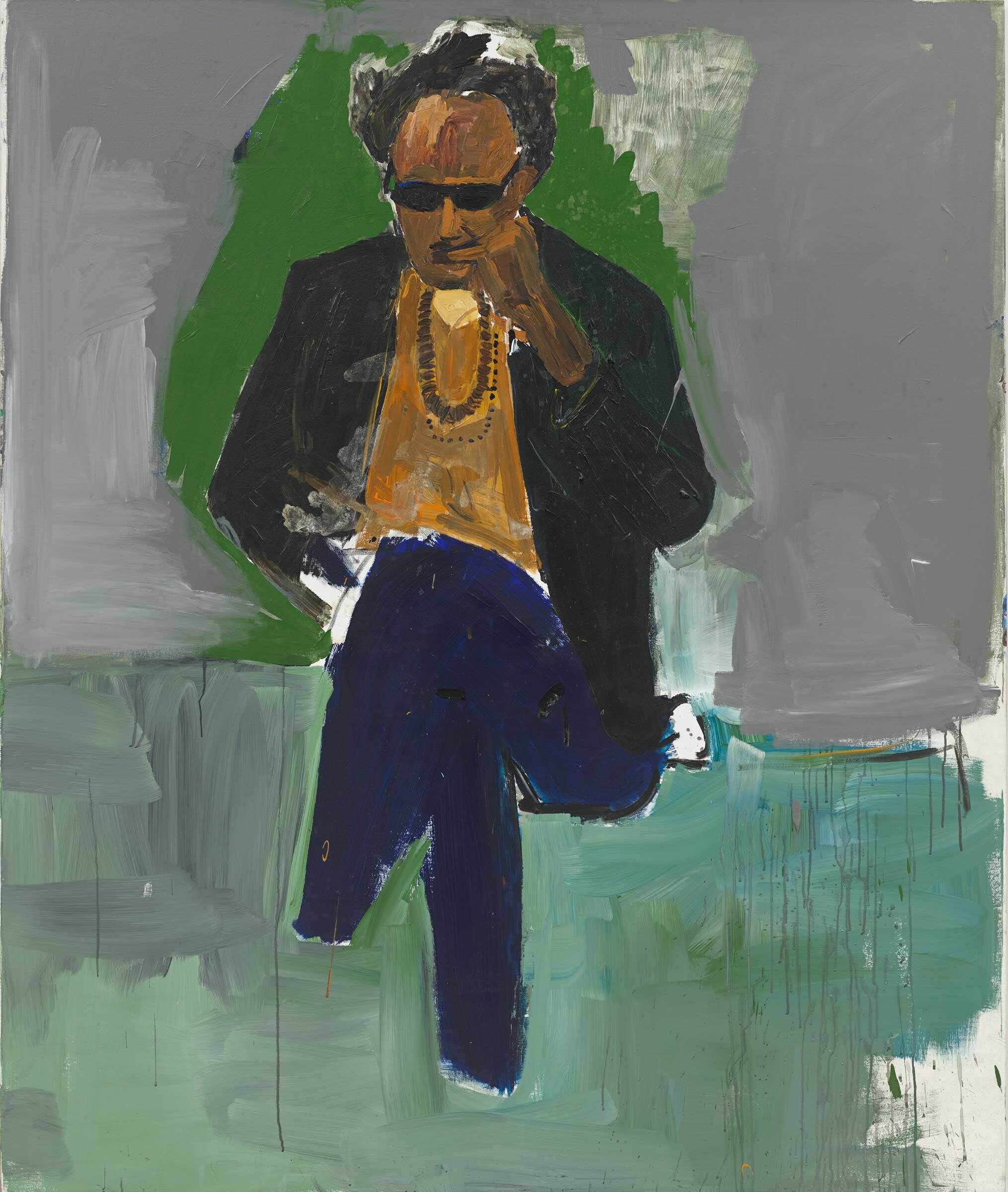
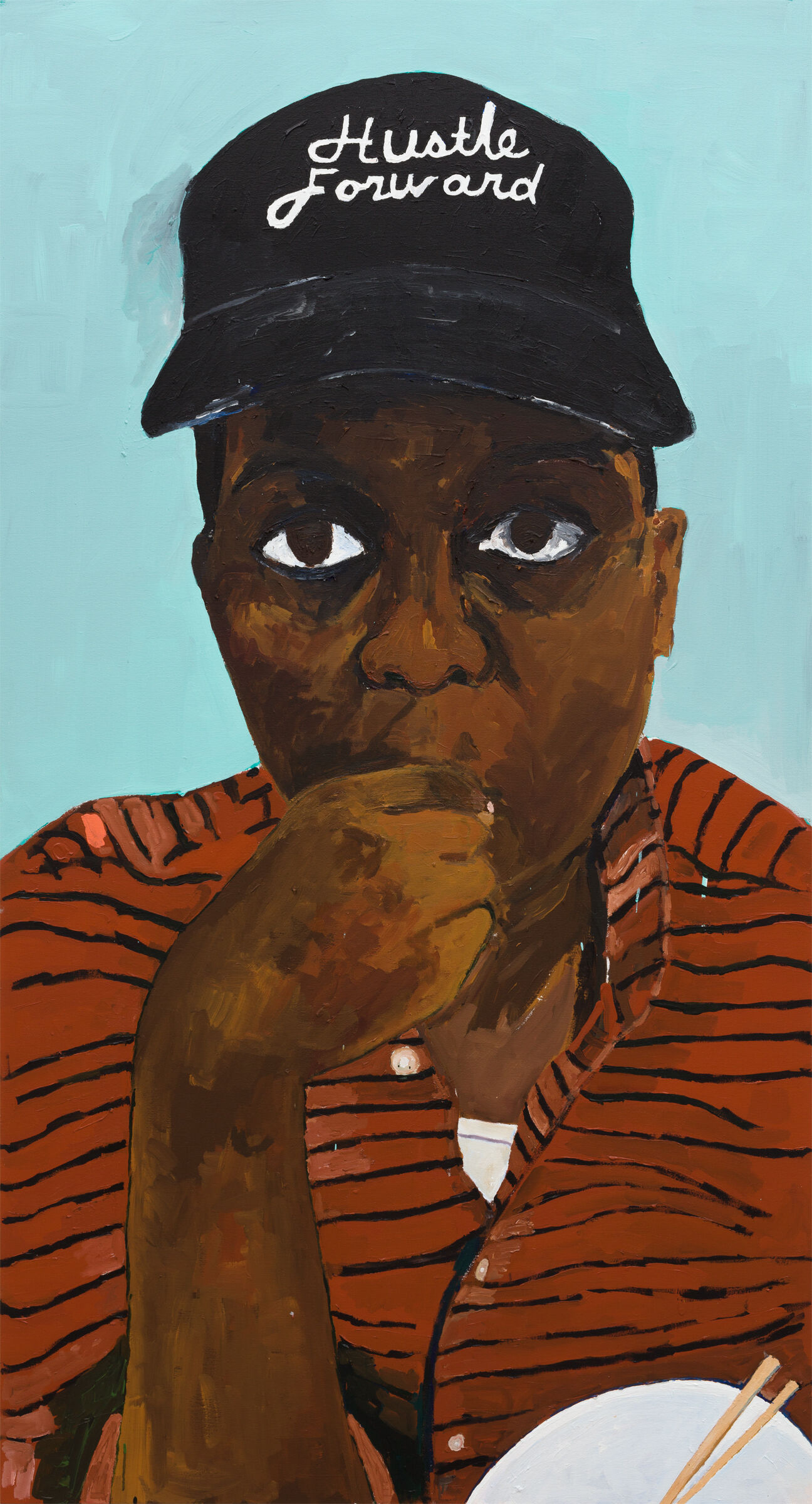
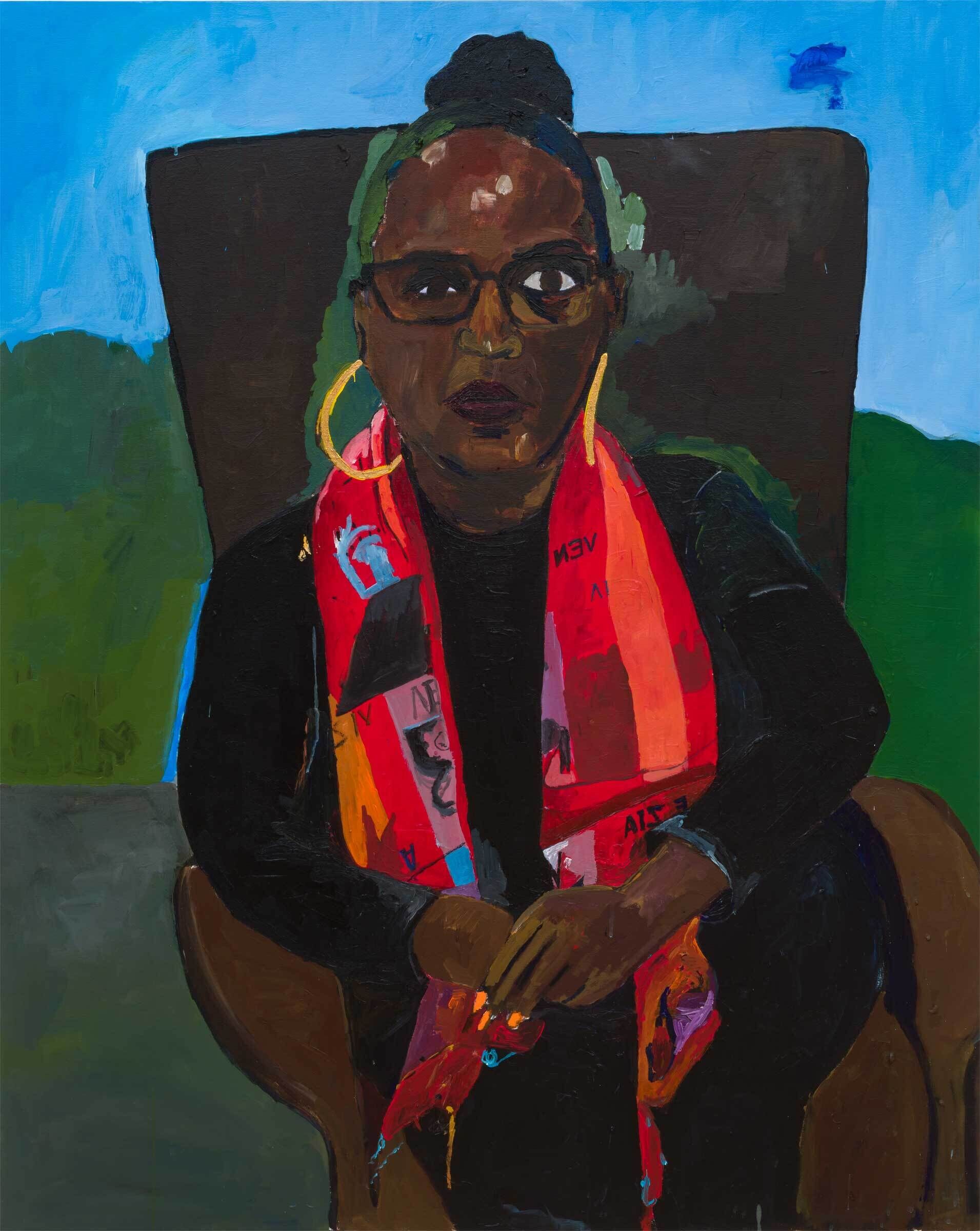
Taylor is the youngest of eight children in a large extended family whose members—from his mother, father, siblings, aunts, uncles, and cousins to his own three children—appear frequently in his work. Taylor's parents moved from the East Texas cotton town of Naples to Oxnard, California, in 1944, making them among the millions of Black Americans who left the segregated South in search of greater economic opportunities and social freedoms during the post-World War II phase of the Great Migration. Their experiences, and the stories he heard from them growing up, instilled in Taylor a sensitivity to the cultural and political currents affecting Black Americans. As with his other works, Taylor paints his family from memory, in-person sittings, and snapshots.
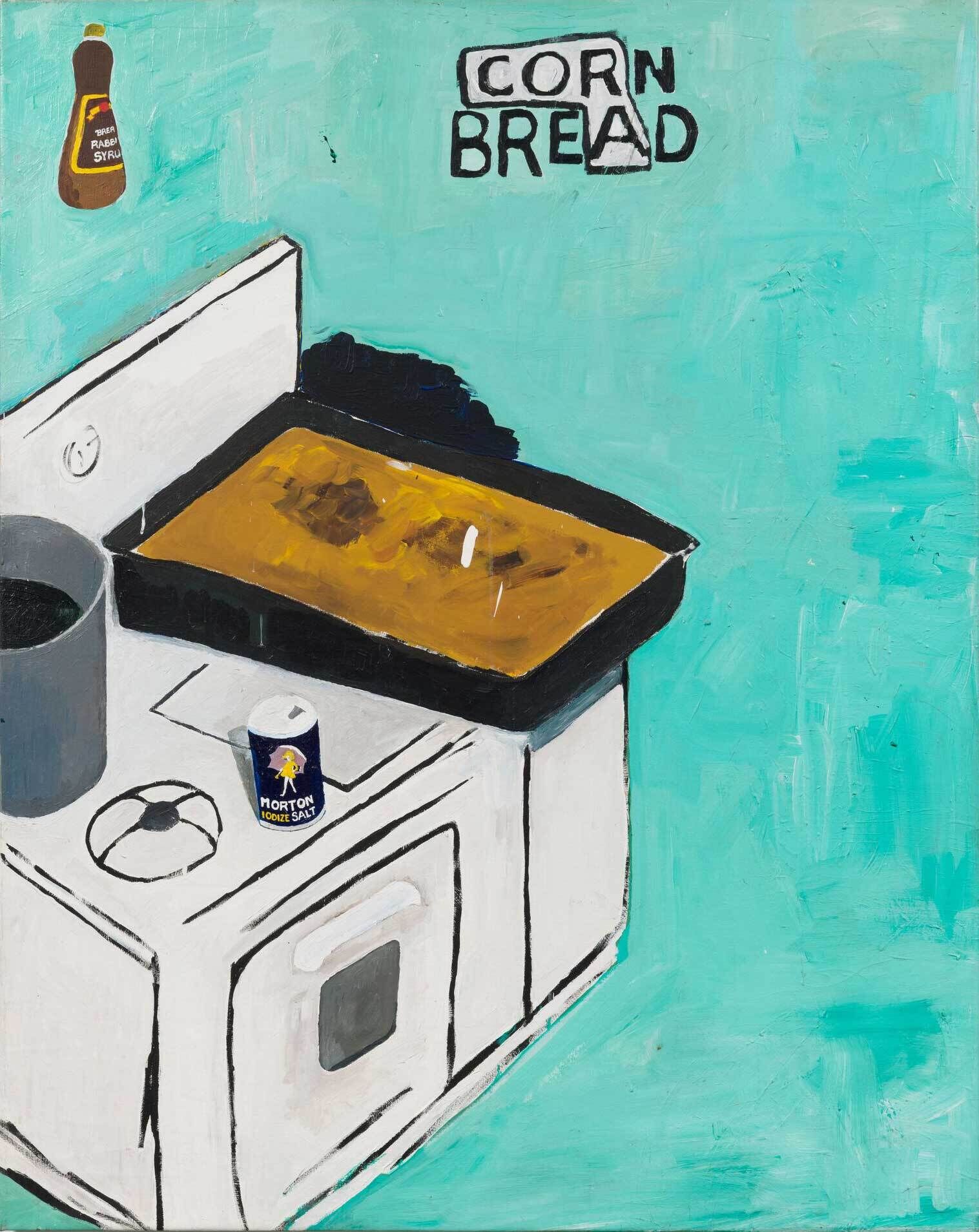
This work is an homage to Taylor’s mother, Cora, whose name the artist has playfully circled (as if in a word search puzzle) within the hand-lettered “corn bread” seen at the top. To further the connection with his mother, Taylor depicts items from his childhood that he associates with her: a large pan of golden cornbread
(a staple at Cora’s dinner table), an empty pot, and a container of Morton iodized salt. Hanging above the stove in anticipation of being poured over the cornbread is a bottle of Brer Rabbit syrup, a subtle critique of this country’s long enabling of racist stereotypes.
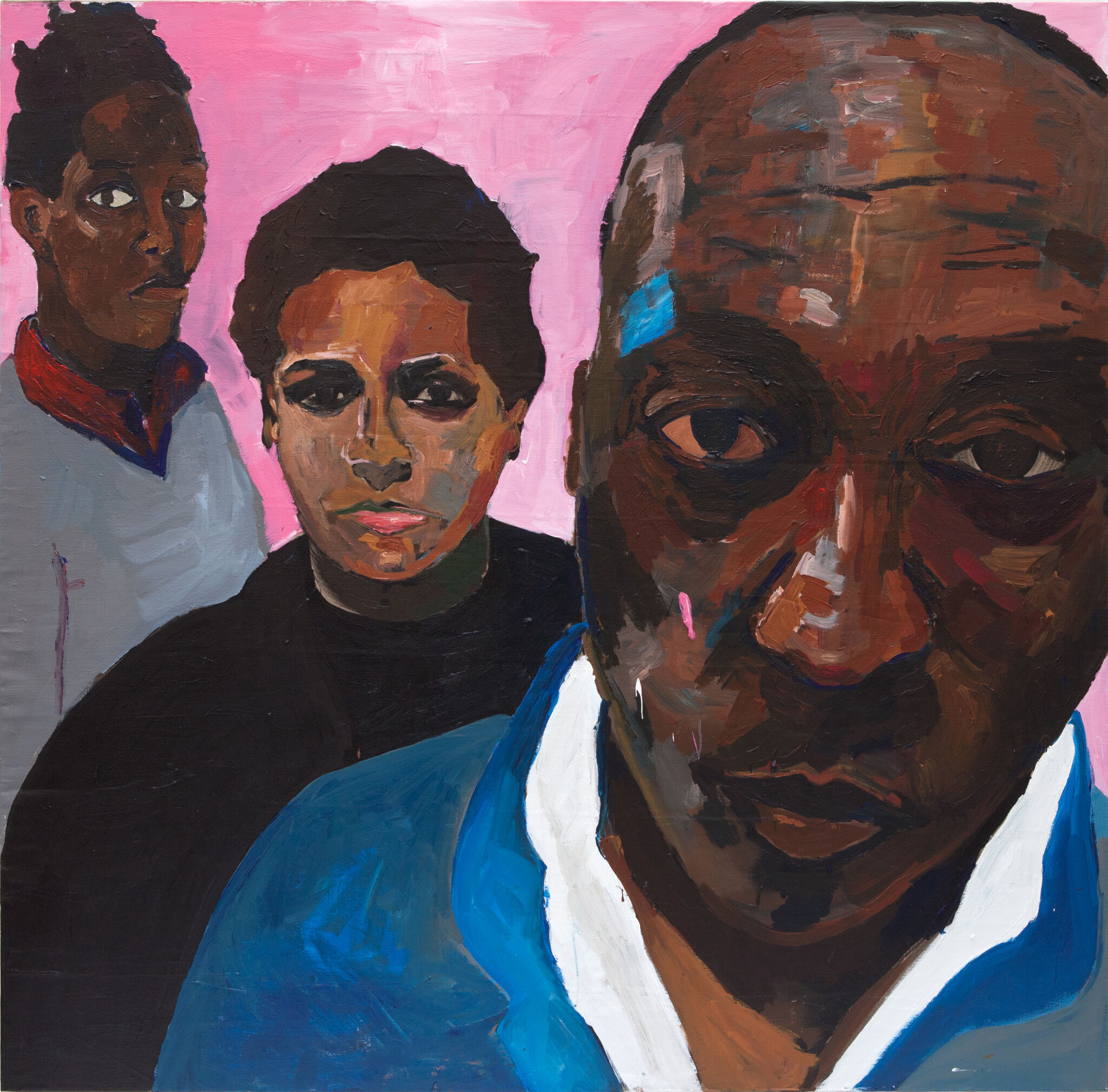
Taylor based this work on a photograph of himself and his son. While creating the painting, he added
a portrait of his daughter in the background. By filling the foreground with an imposing, closely cropped image of himself assertively staring at the viewer, and staggering the figures of his children as if they are receding into space, Taylor creates an unconventional family portrait whose ambiguous title, i’m yours, raises the question of who is being possessed and by whom.
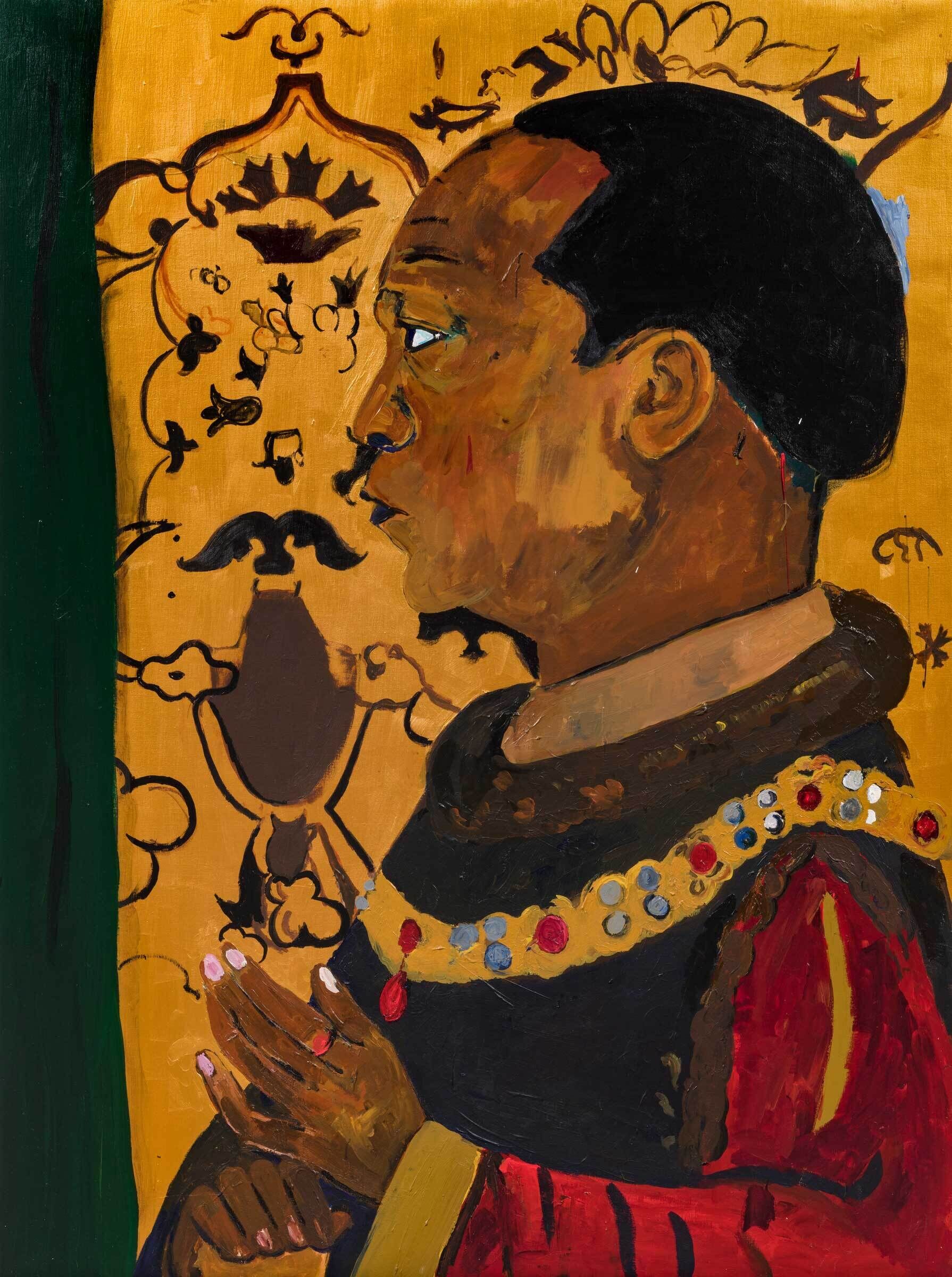
Taylor often remakes or “covers” the work of other artists just as a musician would adapt or remix a previously recorded song. He based this self-portrait on an unattributed late-sixteenth-century painting
of the English king Henry V that he saw at London’s National Portrait Gallery. Substituting a regal image of himself for that of the English monarch plays on his nickname “Henry the VIII,” which he adopted in his youth as the youngest of eight children, while also challenging the stereotypes of European history painting that have typically excluded or demeaned Black people.