
Independent
Study Program
The Whitney Independent Study Program (ISP) is a renowned program for research that emphasizes artistic practice as a key mode of social and political inquiry. It offers three concentrations: Studio, Curatorial, and Critical Studies. Established in 1968, the ISP is noted for its seminars, its internationally recognized community of visiting faculty and alumni, and its engagement with critical theory, cultural studies, social history of art, and institutional critique. Artists, curators, critics, and scholars are brought together to think anew about their work. Through the horizontality and dynamism of peer-to-peer learning, they learn to both analyze and become active protagonists in critical debates about the social role of art. The ISP is a tuition-free, non-degree-granting program. It welcomes applications from artists, curators, critics, and scholars in all stages of their careers. Since 2023, the ISP’s permanent home has been at the storied Roy Lichtenstein Studio in Greenwich Village in New York City, a few blocks south of the Whitney Museum. The Whitney Museum, as part of its unique mission of championing living artists, supports the ISP’s advocacy for a living, engaged scholarship.
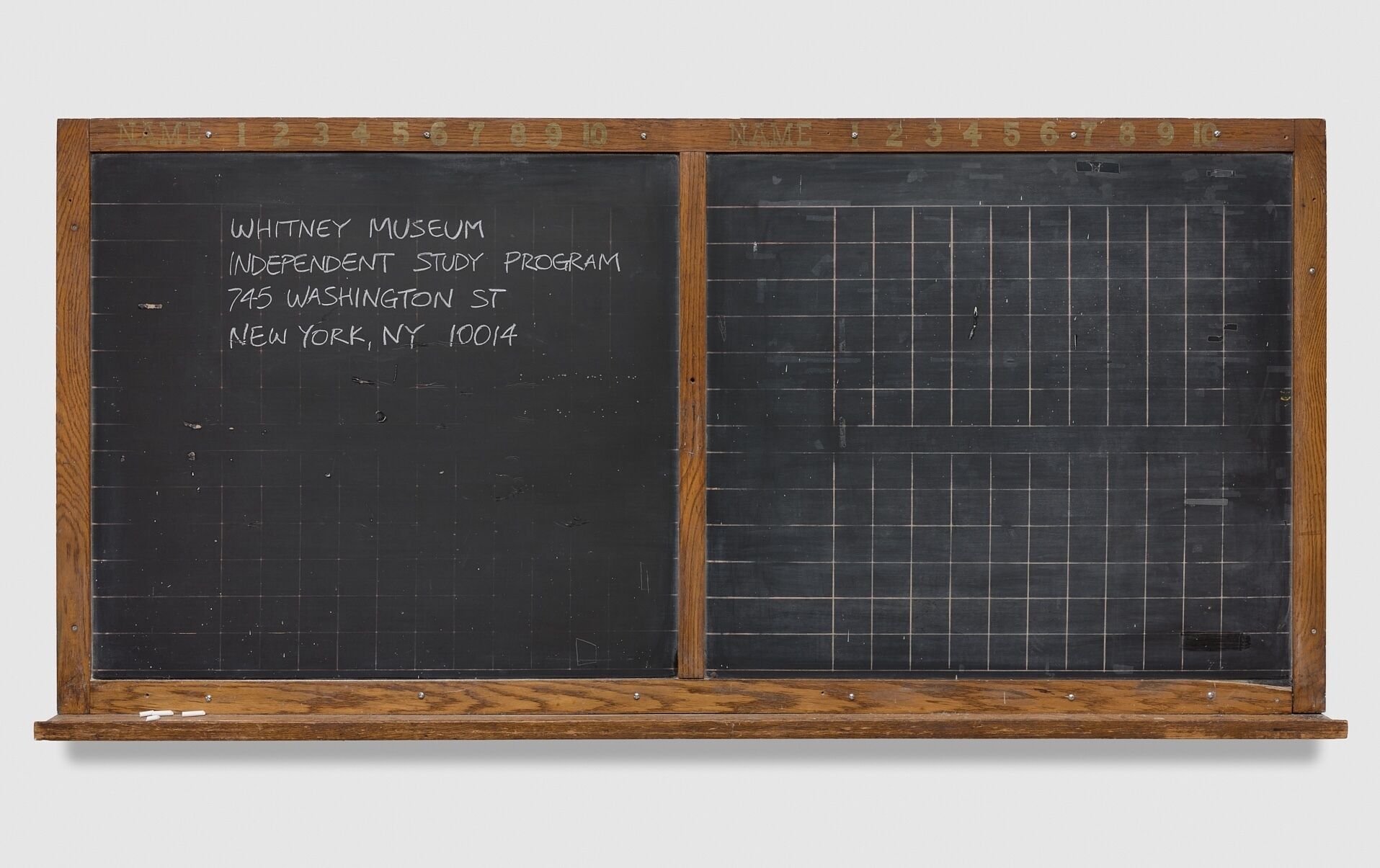
ISP blackboard at the Roy Lichtenstein Studio, with text by Kenneth White. Photograph by Gustavo Murillo
In the news
Applications open for the Whitney Independent Study Program’s 2027–28 cohort on December 1, 2026. Artists, curators, critics, and scholars are invited to apply.
The Whitney Museum of American Art has appointed Soyoung Yoon as Director of its Independent Study Program.
Questions? Contact whitneyISP@whitney.org.
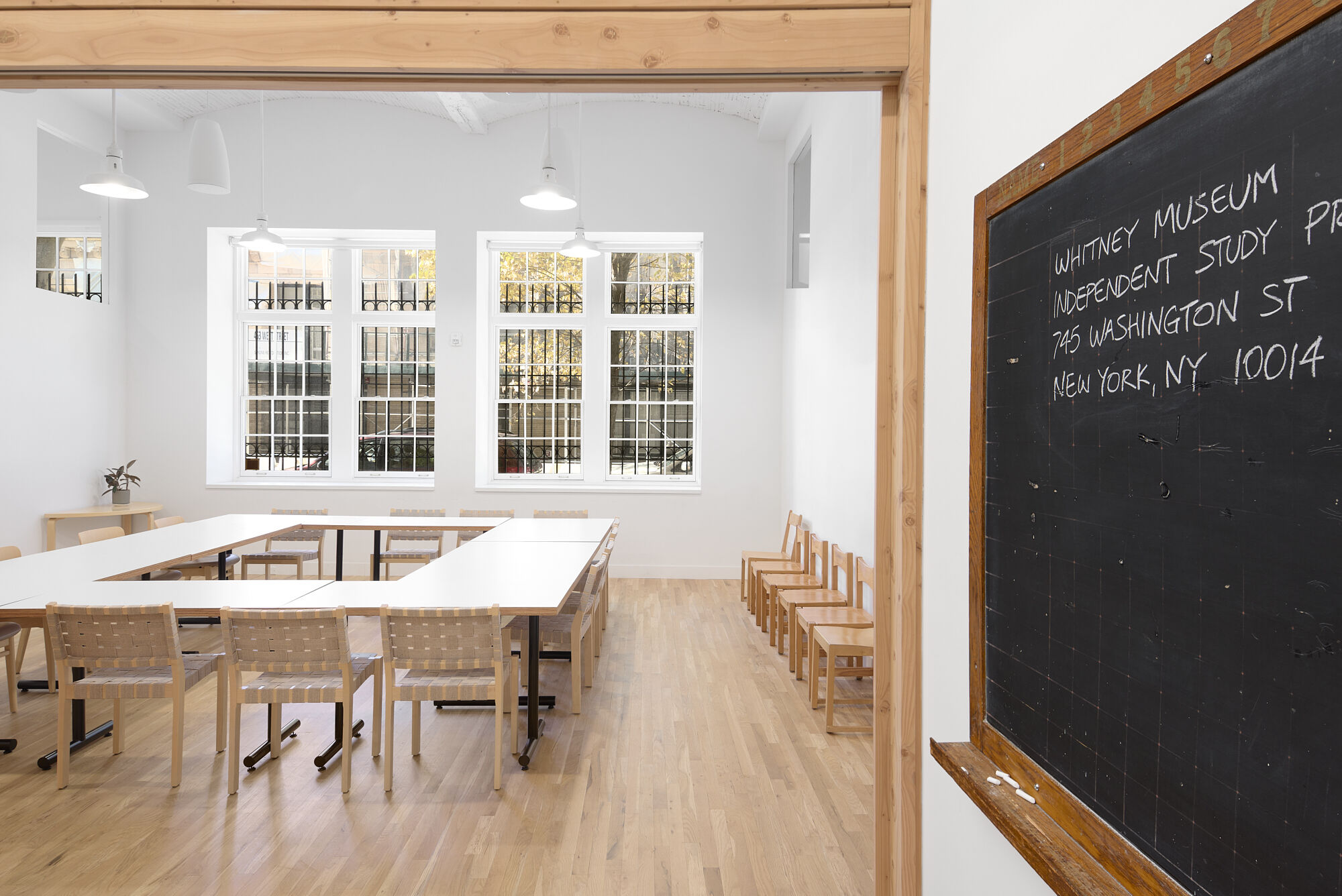
ISP blackboard and seminar room at the Roy Lichtenstein Studio; text by Kenneth White. Photograph by Gustavo Murillo
About the program
Since its founding in 1968, the ISP has evolved from an experimental project challenging established approaches to art education into a world-renowned model for an alternative approach to the education and professional development of artists, curators, critics, and scholars. Today, the ISP is a highly influential program with an emphasis on artistic practice as a key mode of social and political research. It features three concentrations: Studio, Curatorial, and Critical Studies. Participants are brought together to think anew about their work. They pursue their independent study through twice-weekly seminars and individualized mentorship from visiting faculty.
Seminars are the backbone of the ISP. Through the interdisciplinarity, horizontality, and dynamism of peer-to-peer learning, ISP participants and visiting faculty engage in ongoing discussions and debates that examine the historical, intellectual, and material conditions of artistic production. The seminars draw on the ISP’s history of deep engagement with critical theory, cultural studies, social history of art, and institutional critique. They also address the import of artistic and theoretical developments that are foundational to emergent forms of art, culture, and thought today. Making, curating, and writing inform one another as ISP participants pursue their own self-directed study and allow the process of inquiry to shape what form their work takes. The ISP’s seminars emerged from artists’ ambitions to not only read but engage with theory. The seminar is a space through which participants learn to both analyze and become active protagonists in critical debates about the social role of art.
Through its internationally recognized community of visiting faculty and alumni, the ISP connects its ethos of independent study to collaborations across institutions, practices, geographies, and platforms. It seeks to foster lasting alliances with research collectives and cultural organizations, creating opportunities to test ideas together and bring them into wider discussion and debate. The ISP is part of the Whitney Museum’s commitment to living artists through scholarship that responds to—and participates in—the world around it: a living, engaged scholarship.
The ISP is a tuition-free, non-degree-granting program. The ISP welcomes applications from artists, curators, critics, and scholars in all stages of their careers. Candidates apply to one of its three concentrations: Studio, Curatorial, or Critical Studies. At the Roy Lichtenstein Studio, each ISP participant is provided with an individual studio workspace. Every ISP participant is assigned to a primary faculty mentor. All ISP participants receive a stipend for research, materials, and travel for their independent study, made possible by the generous support of the Elaine Graham Weitzen Foundation for Fine Arts.
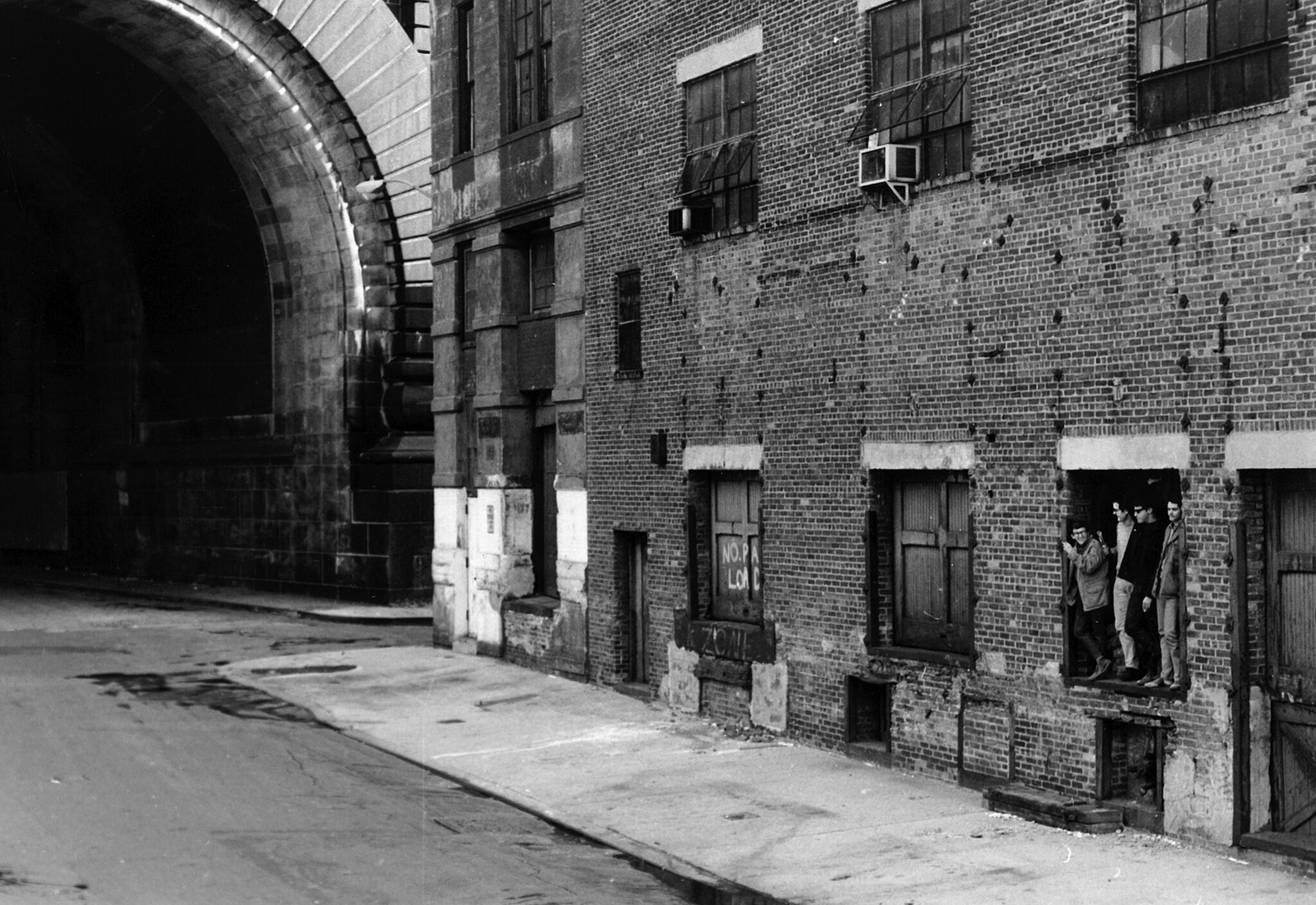
Ron Clark, ISP’s director from 1968–2023, and three students in the doorway of the first ISP space on Cherry Street, New York, 1968. © The Independent Study Program, Whitney Museum of American Art
Anniversary publications
Explore the ISP’s history through anniversary publications and programming that offer an overview of the people, practices, and debates that have shaped the program since its founding in 1968.
Select list of visiting faculty and guest speakers
Vito Acconci, Alex Alberro, Nora Alter, Laurie Anderson, Emily Apter, Jean Baudrillard, Homi Bhabha, Dara Birnbaum, Yve-Alain Bois, Gregg Bordowitz, Trisha Brown, Benjamin H. D. Buchloh, Johanna Burton, Judith Butler, Eduardo Cadava, Ron Clark, Tony Cokes, Joan Copjec, Jonathan Crary, Douglas Crimp, Thomas Crow, Rosalyn Deutsche, Eva Díaz, Mark Dion, Jimmie Durham, Adrienne Edwards, Okwui Enwezor, VALIE EXPORT, Harun Farocki, Silvia Federici, Richard Foreman, Simone Forti, Hal Foster, Hollis Frampton, Andrea Fraser, LaToya Ruby Frazier, Coco Fusco, Philip Glass, Leon Golub, Jennifer González, Felix Gonzalez-Torres, Dan Graham, Isabelle Graw, Renée Green, Group Material, Hans Haacke, Stuart Hall, David Harvey, Sharon Hayes, Edgar Heap of Birds, Jenny Holzer, bell hooks, Chrissie Iles, Alfredo Jaar, Emily Jacir, Donald Judd, Isaac Julien, Robin D. G. Kelley, Mary Kelly, Silvia Kolbowski, Rosalind Krauss, Barbara Kruger, Miwon Kwon, Louise Lawler, Roy Lichtenstein, Lucy Lippard, Sarah Lookofsky, Sylvère Lotringer, Park McArthur, Tom McDonough, Kobena Mercer, Annette Michelson, Chantal Mouffe, Laura Mulvey, Mark Nash, Alice Neel, Molly Nesbit, Barnett Newman, Linda Nochlin, Gabriel Orozco, Craig Owens, Christiane Paul, Adrian Piper, Yvonne Rainer, Martha Rosler, Andrew Ross, Alan Ruiz, Allan Sekula, Lorna Simpson, Michael Snow, Susan Sontag, Gayatri Spivak, Leo Steinberg, Hito Steyerl, Jean-Marie Straub and Danièle Huillet, Trinh T. Minh-ha, Marcia Tucker, Anthony Vidler, Carrie Mae Weems, Fred Wilson, Peter Wollen, The Yes Men, Soyoung Yoon, and Constantina Zavitsanos.
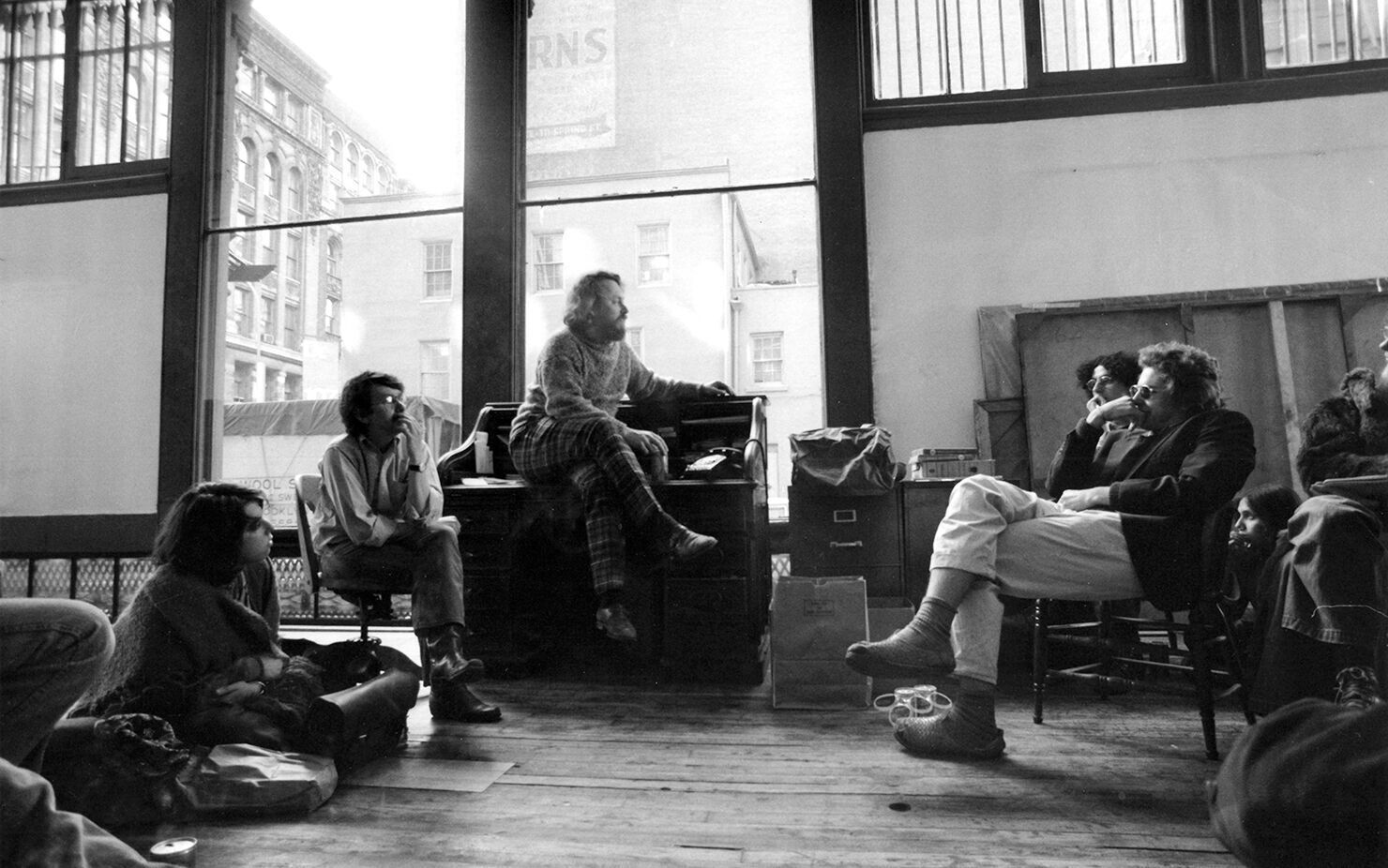
Independent Study Program seminar with artist Donald Judd at his studio, 1974. On Judd’s right is Ron Clark, and on his left is artist Julian Schnabel. Courtesy Barbara Quinn and the Whitney Museum of American Art, New York
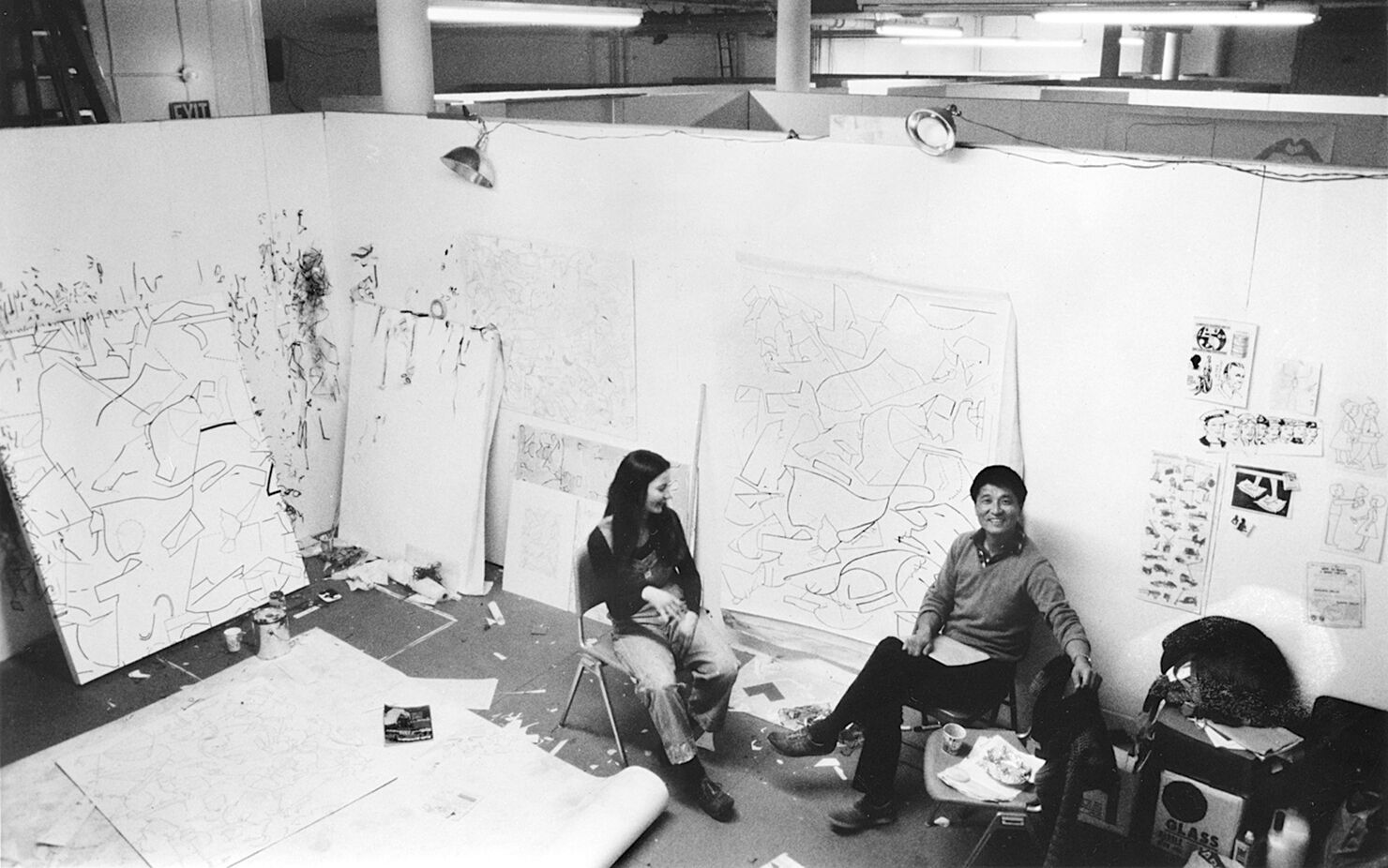
David Diao and Barbara Buckman at the ISP studio, 1982. Box 5, folder 5, Historical Photographs Collection, Frances Mulhall Achilles Library and Archives, Whitney Museum of American Art, New York. Photograph by Alex Hahn
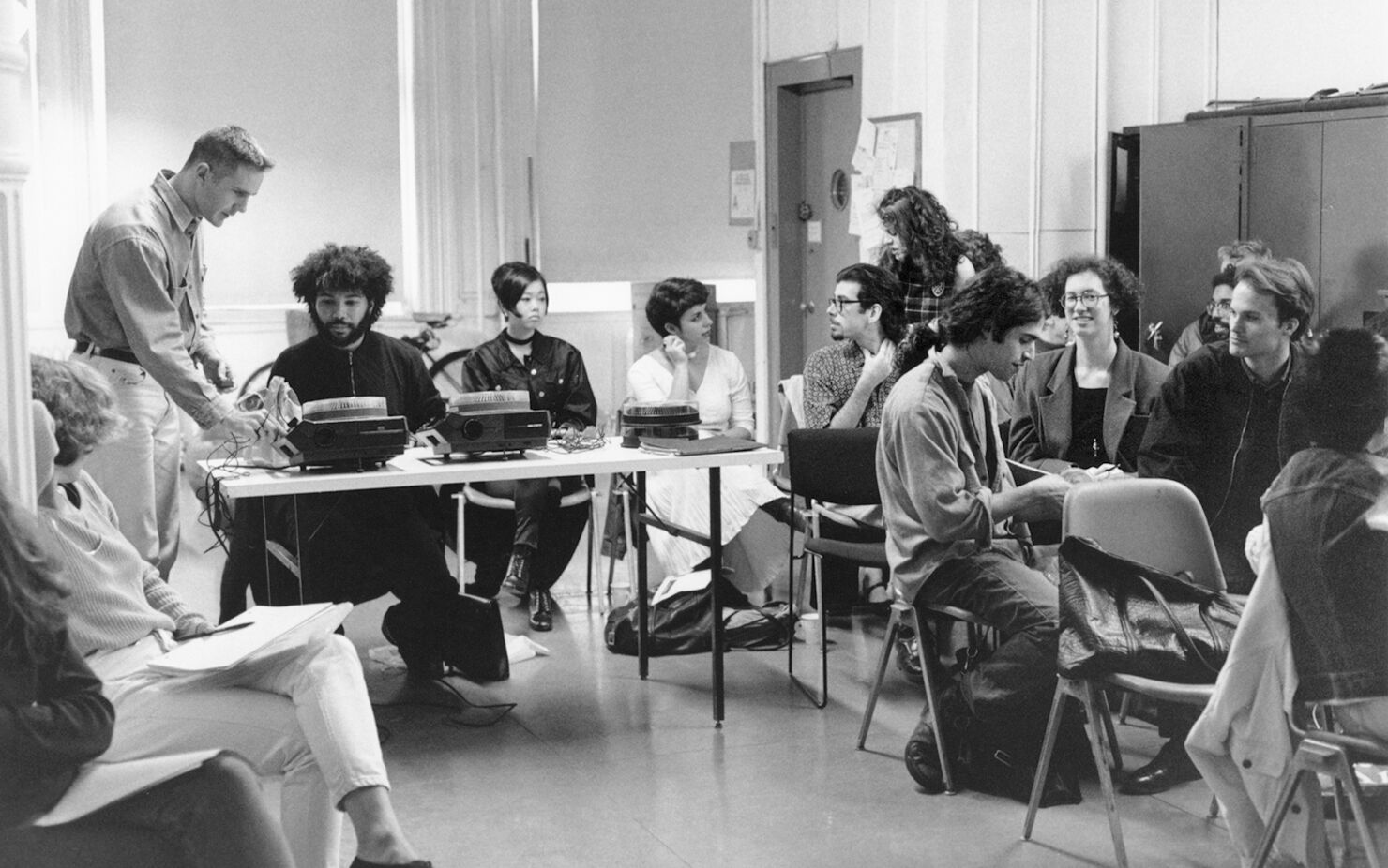
Artist Fred Wilson preparing to lead a seminar at the ISP space at 384 Broadway, 1993. Photographer unidentified
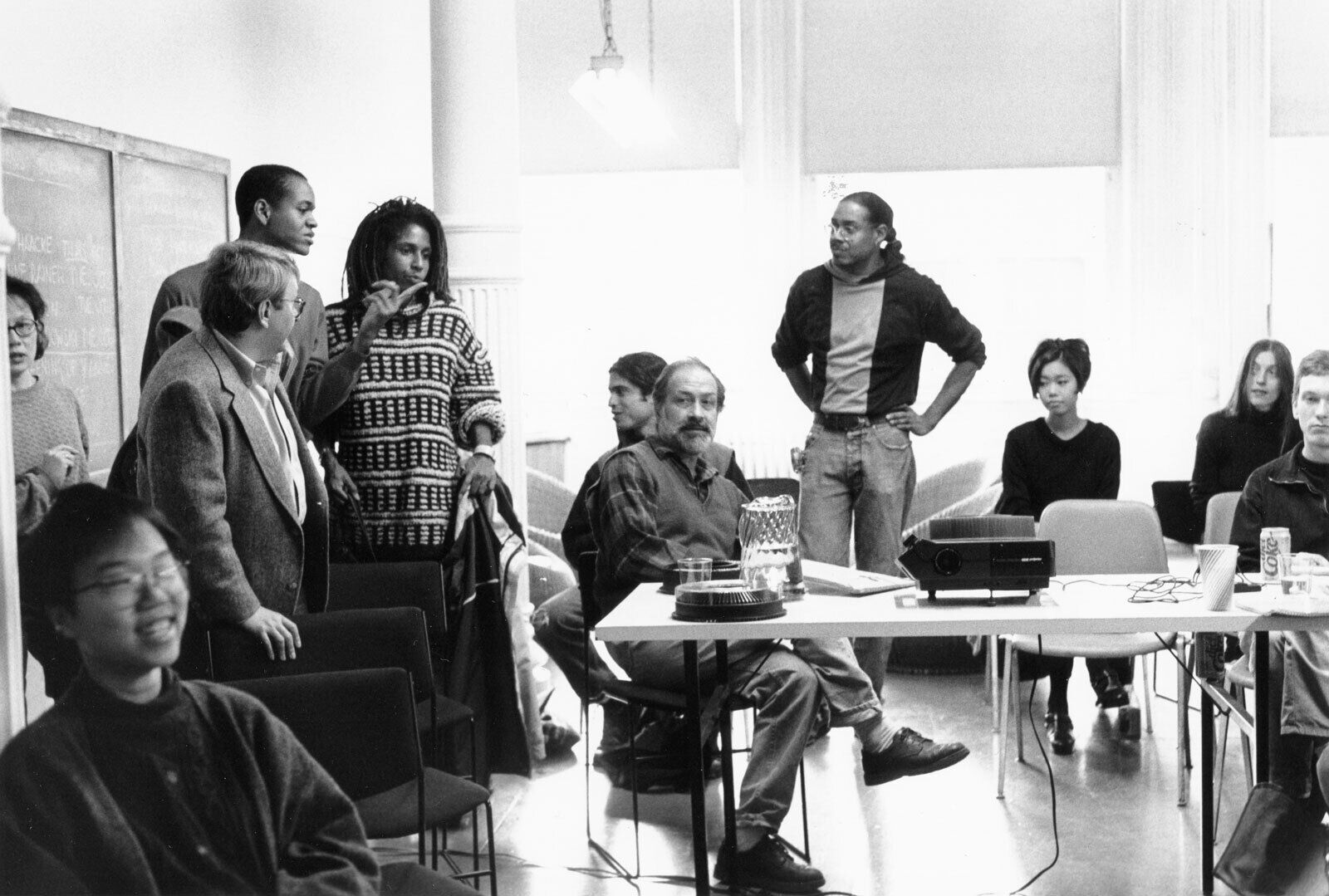
Hans Haacke preparing to lead a seminar at the Whitney Independent Study Program space at 384 Broadway, 1993, with Monica Chau, Yau Ching, Ron Clark, Lyle Ashton Harris, Renee Cox, Ken Landauer, Michael Richards, Mariko Mori, Jutta Koether, and Tom McDonough. Photographer unidentified
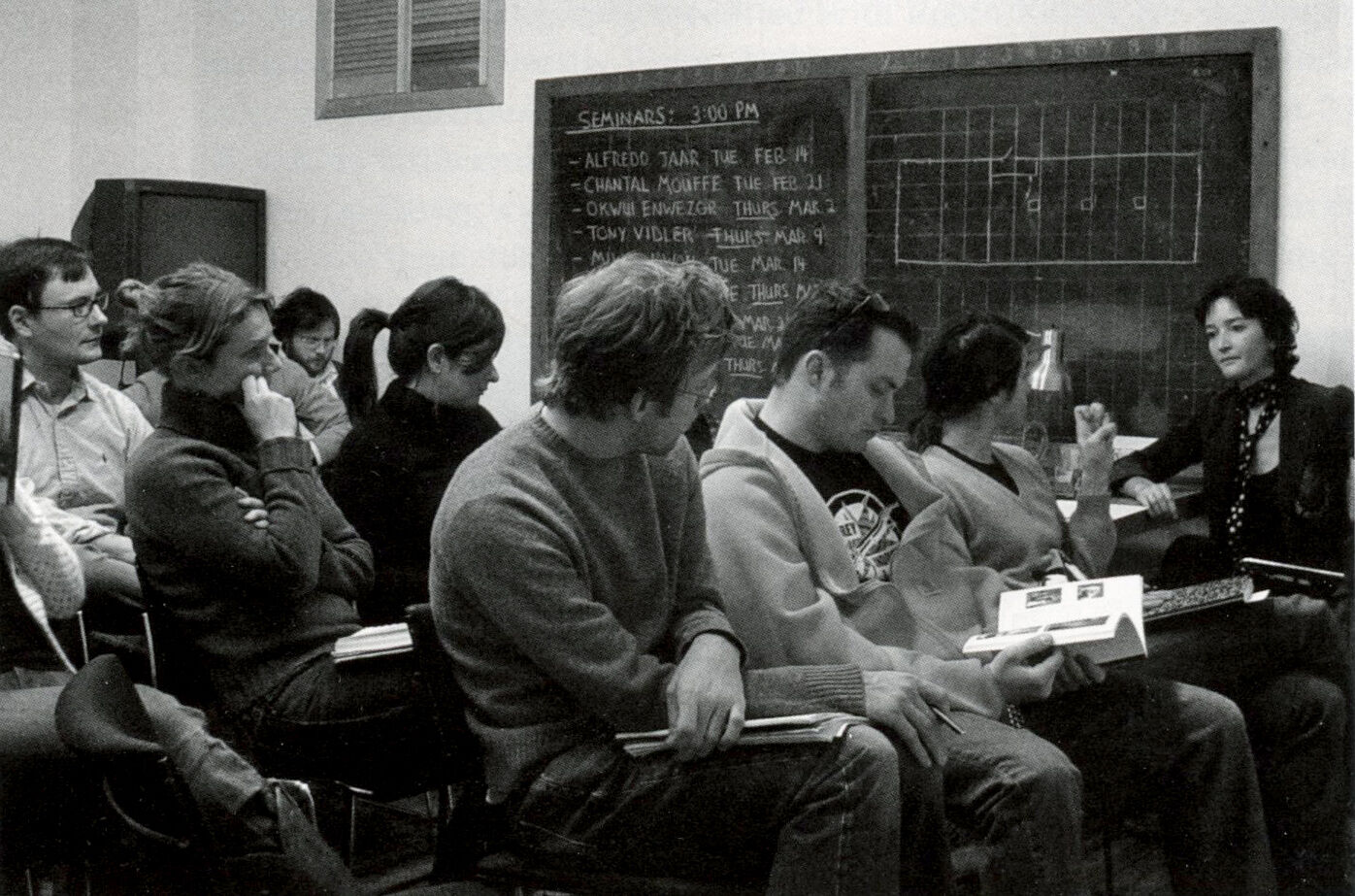
ISP faculty member Eva Díaz leading a seminar at the ISP space at 100 Lafayette Street, 2005. Photographer unidentified
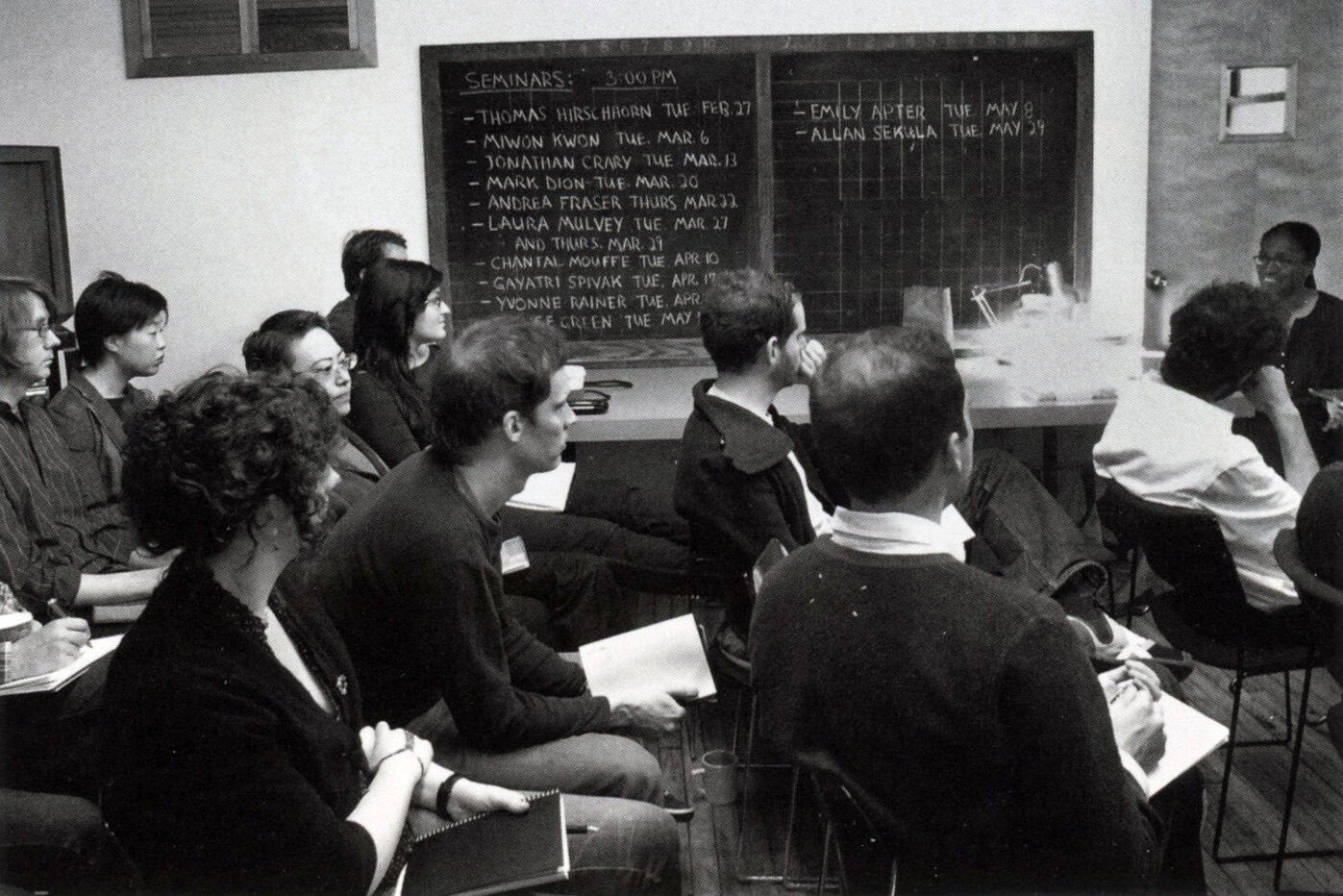
Artist Renée Green leading a seminar at the ISP space at 100 Lafayette Street, 2006. Photographer unidentified
Program structure
Soyoung Yoon is Director, and Margarita Sánchez Urdaneta is Manager. The nine-month program year runs September 7, 2027–June 1, 2028, with seminars on Tuesdays and Thursdays, 2–5 pm.
Seminars
Seminars are at the center of the ISP, bringing together participants from all three concentrations (Studio, Curatorial, and Critical Studies) twice a week for three-hour discussions and debates with visiting faculty, guest speakers, Whitney Museum staff, and/or the ISP Director.
Each spring, the ISP selects its yearly cohort through the admissions process. The composition of the cohort informs the design of the syllabus, the selection of visiting faculty and guest speakers, and the assignment of primary faculty mentors before the program year begins in the fall.
Working groups, workshops, and other supplemental curricular programming extend the dynamic of peer-to-peer learning and horizontality of the seminar.
Mentorship
Each ISP participant will be assigned a primary faculty mentor in support of their independent study. Through the individualized mentorship and the group dynamic of the seminars, each participant pursues their lines of inquiry and determines what form their research takes, be it a work of art, a talk, a performance, a screening, an essay, an exhibition, or an archive.
ISP Curatorial participants, in addition to their primary faculty mentor, are assigned to Whitney Museum Curators who serve as internal mentors.
Faculty mentors are designated as Helena Rubinstein Visiting Faculty.
Programming
Programming enriches and extends the research of ISP participants, alumni, and visiting faculty through forums as part of the process of research and experimentation. Programming could include working groups, workshops, participant-led seminars, and teach-ins; studio visits; talks, screenings, performances, and other events.
A new home at the Roy Lichtenstein Studio
The ISP’s permanent home is at 745 Washington Street in Greenwich Village, a few blocks south of the Whitney Museum, in the former residence and studio of Roy Lichtenstein. The ISP’s space at the Roy Lichtenstein Studio includes access to a seminar room, individual studio workspaces, a meeting room, a reading room, a kitchen, and a hanging garden.
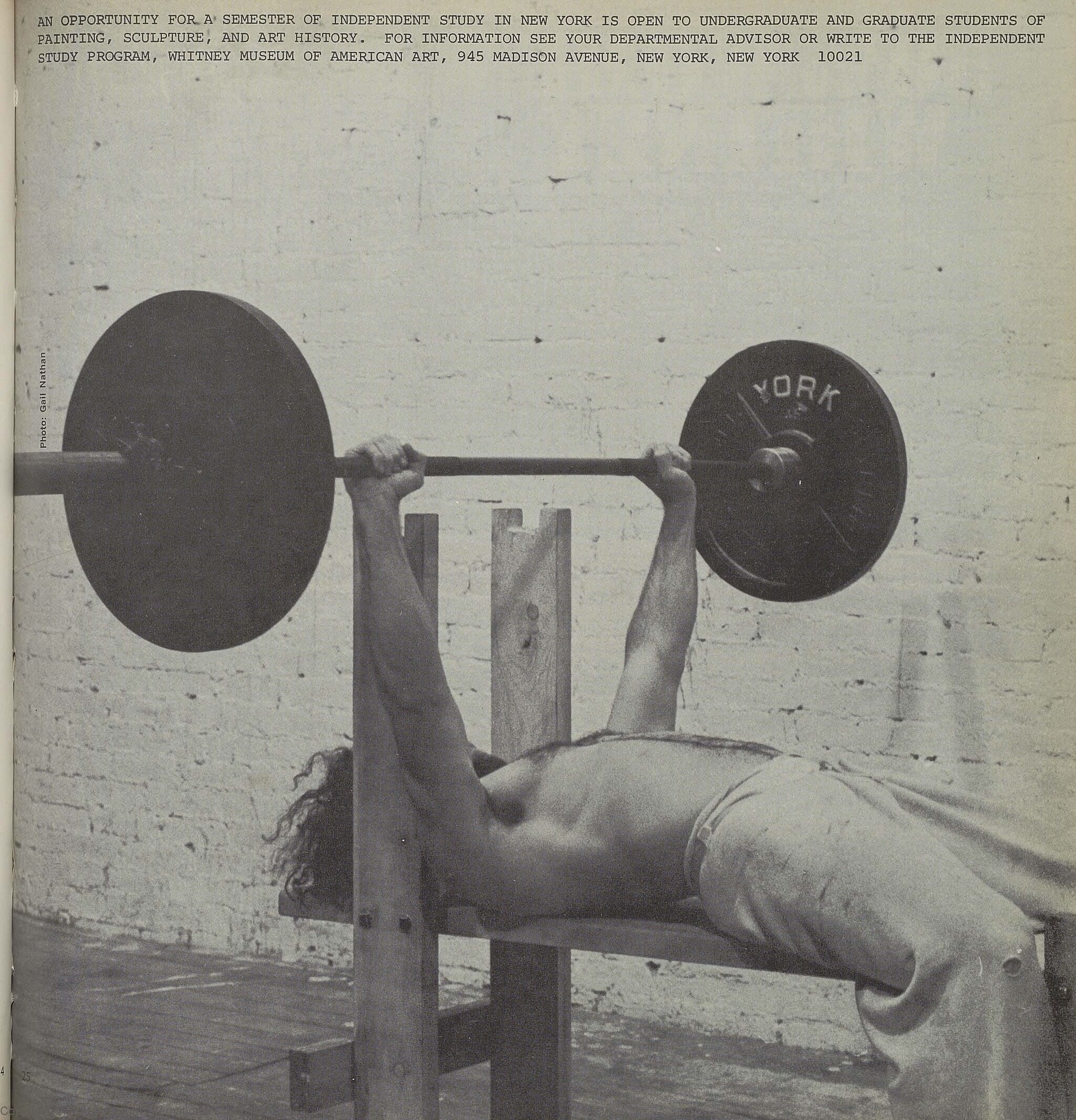
Advertisement for ISP admissions in Artforum, volume 9, issue 4 (December 1, 1970). Photograph at ISP’s first Cherry Street location under Founding Director Ron Clark, featuring ISP alumnus Mike Howard, by ISP alumna Gail Nathan. © Gail Nathan
Applications
Applications for the 2027–28 cohort open on December 1, 2026. The ISP welcomes applications from artists, curators, critics, and scholars in all stages of their careers. Candidates apply to one of the three concentrations (Studio, Curatorial, or Critical Studies). Applications close on Friday, January 22, 2027, at 11:59 pm Eastern Time (New York; UTC−5). Shortlisted applicants will be invited to interview in March.
Apply through SlideRoom (link forthcoming). Select the Studio, Curatorial, or Critical Studies concentration according to the methodologies and questions that are foundational to the research proposal. Consult the admissions guidelines (link forthcoming) for more details on deadlines, requirements, and recommendations.
Applicants must submit the following materials:
- A résumé or CV.
- Contact information for two references. References will be contacted when the applicant advances to the interview stage.
- A statement of purpose of up to 1,500 words. The statement should describe the applicant’s current practice, what has shaped their work to date, and their reasons for applying to the ISP.
- A research proposal of up to 2,500 words, excluding the bibliography. The proposal should describe what the applicant wishes to explore as their independent study at the ISP.
- Visual, audiovisual, sound-based, or text-based work samples, or a combination of these formats. Text-based samples may total up to 4,000 words, excluding the bibliography. See admission guidelines for additional information on formats.
International applicants
The ISP welcomes international applicants and sponsors eligible applicants through the J-1 Exchange Visitor Program. J-1 visa sponsorship is subject to eligibility, and approval is not guaranteed. For details, see the admissions guidelines.
Costs and participant support
- The ISP is a non-degree-granting program with no tuition or application fee.
- All ISP participants receive a research, materials, and travel stipend, as well as an individual studio workspace at the Roy Lichtenstein Studio.
Additional information
For details about applications, participant support, external academic credit arrangements, accessibility, and accommodation requests, consult the admissions guidelines. For questions not addressed there, contact whitneyISP@whitney.org. Include the intended concentration—Studio, Curatorial, or Critical Studies—and the specific question.
Program information on this page is subject to change. The admissions guidelines govern in the event of any inconsistency.
The Whitney Museum of American Art does not discriminate in admission to or participation in the Independent Study Program on the basis of race, color, religion, creed, national origin, sex, gender identity or expression, sexual orientation, age, disability, marital status, veteran status, or any other characteristic protected by law.
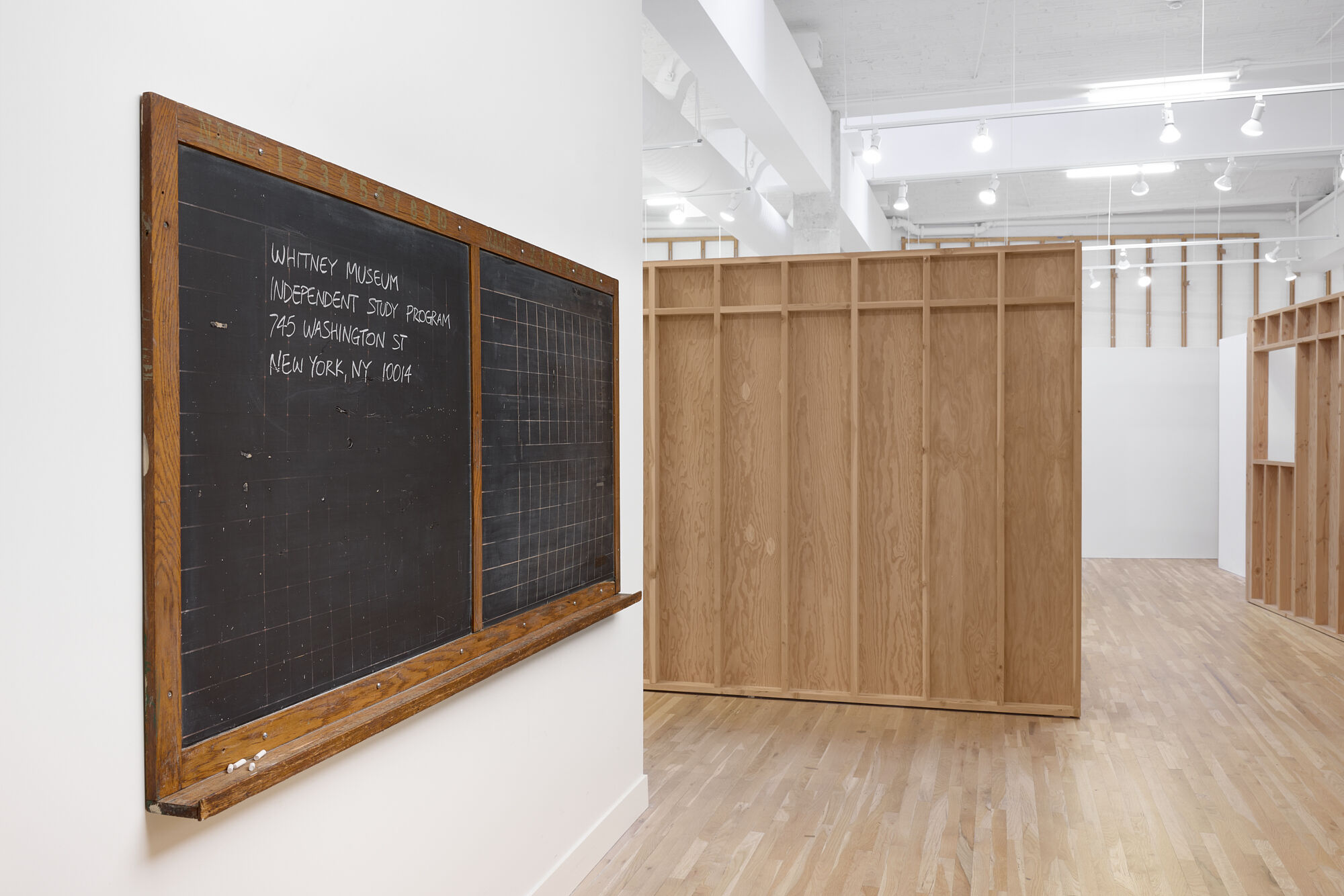
ISP blackboard and studios at the Roy Lichtenstein Studio; text by Kenneth White. Photograph by Gustavo Murillo
Generous support for the Independent Study Program is provided by endowments created by Joanne Leonhardt Cassullo, the Dorothea L. Leonhardt Foundation, the Elaine Graham Weitzen Foundation for Fine Arts, and the Helena Rubinstein Foundation.
Significant support is provided by The Capital Group Charitable Foundation and Margaret Morgan and Wesley Phoa.
Additional support is provided by an endowment created by George S. Harris.