Jeff Koons: A Retrospective | Art & Artists

June 27–Oct 19, 2014


Exhibition works

14 total
Banality
Read more

Banality


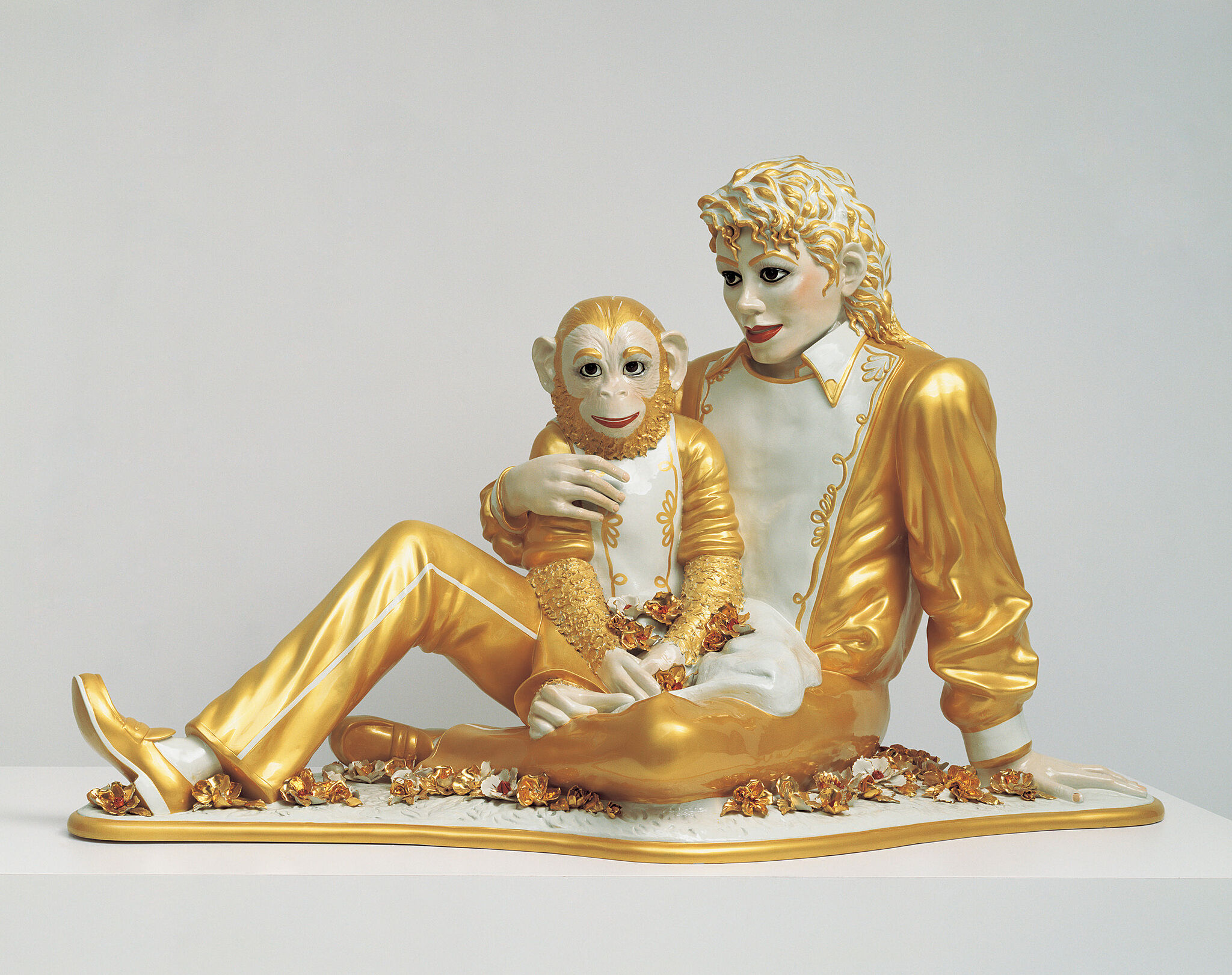
A sculpture of Michael Jackson and his pet chimpanzee Bubbles.

Jeff Koons, Michael Jackson and Bubbles, 1988. Porcelain; 42 x 70 1/2 x 32 1/2 in. (106.7 x 179.1 x 82.6 cm). Private collection. © Jeff Koons

Banality

Expanding on the lowbrow subjects of Statuary, Koons’s next series, Banality, ventured further into the realm of kitsch. Unlike his earlier sculptures based on readymade sources, those in Banality are mash-ups of stuffed animals, gift shop figurines, and images taken from magazines, product packaging, films, and even Leonardo da Vinci. Nothing was too corny, too cloying, or too cute. Working with traditional German and Italian craftsmen who made decorative and religious objects, Koons enlarged his subjects and rendered them in gilt porcelain and polychromed wood, materials more associated with housewares and tchotchkes than contemporary art. As with his previous series, he conceived of Banality as an elaborate allegory, this one aimed at freeing us to embrace without embarrassment our childhood affection for toys or the trinkets lining our grandparents’ shelves.

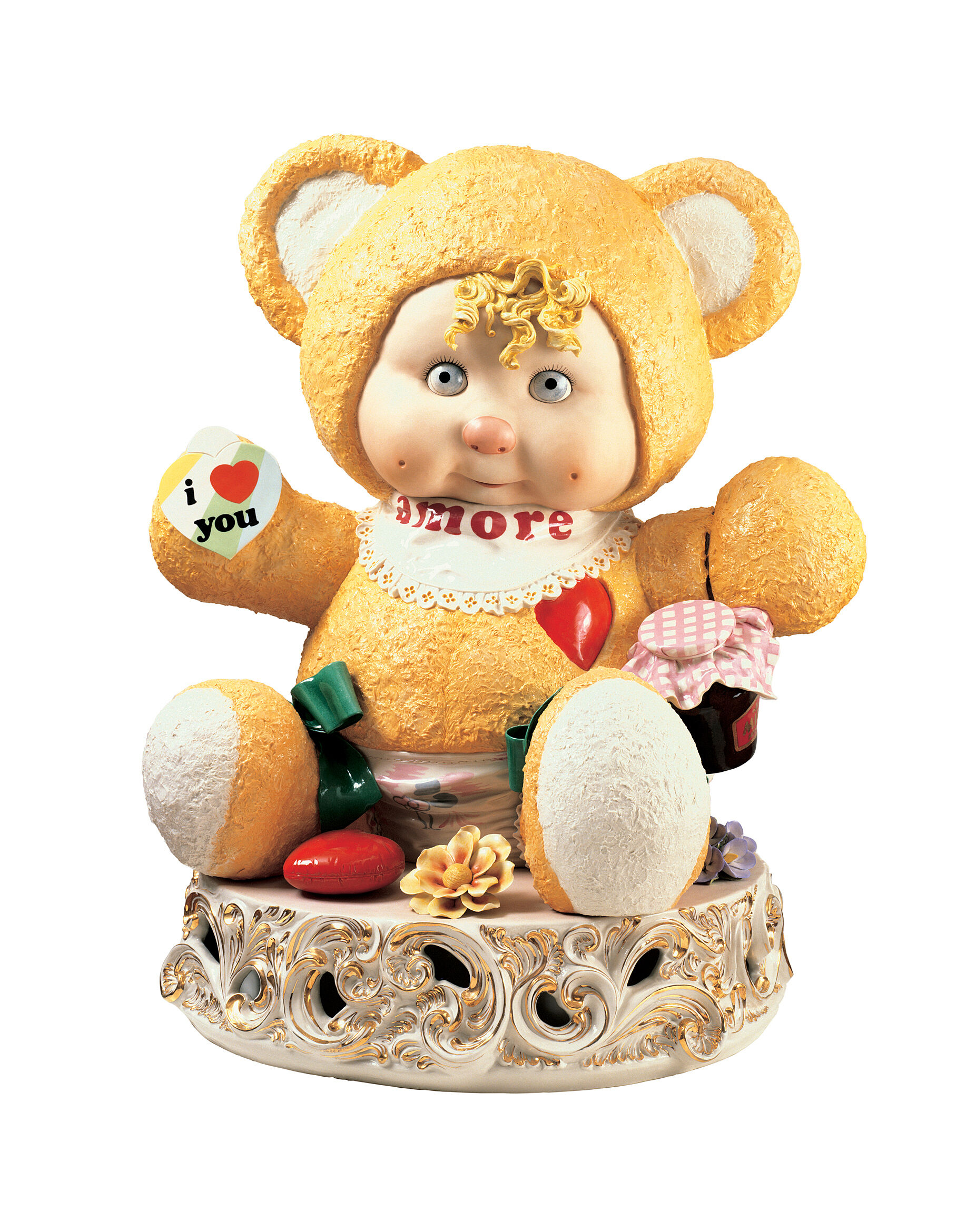
A sculpture of a teddy bear doll with a child's face.

Jeff Koons, Amore, 1988. Porcelain; 32 x 20 x 20 in. (81.3 x 50.8 x 50.8 cm). Lehmann-Art Ltd. © Jeff Koons

Amore, 1988

This porcelain sculpture depicts a Cabbage Patch Kid dressed in a bear costume to which Koons has added a heart sticker, a pot of jam, and other decorative elements. Such dolls were popular in the 1980s among children and adult collectors but in Koons’s hands the soft and loveable plush toy becomes a cold and hard statue. “Everything here is a metaphor for the viewer’s guilt and shame,” he commented. “Art can be a horrible discriminator. It can be used either to be uplifting and to give self-empowerment or to debase people and disempower them. And on the tightrope in between, there’s one’s cultural history. These images are aspects from my own, but everybody’s cultural history is perfect, it can’t be anything other than what it is—absolute perfection. <i>Banality</i> was the embracement of that.”

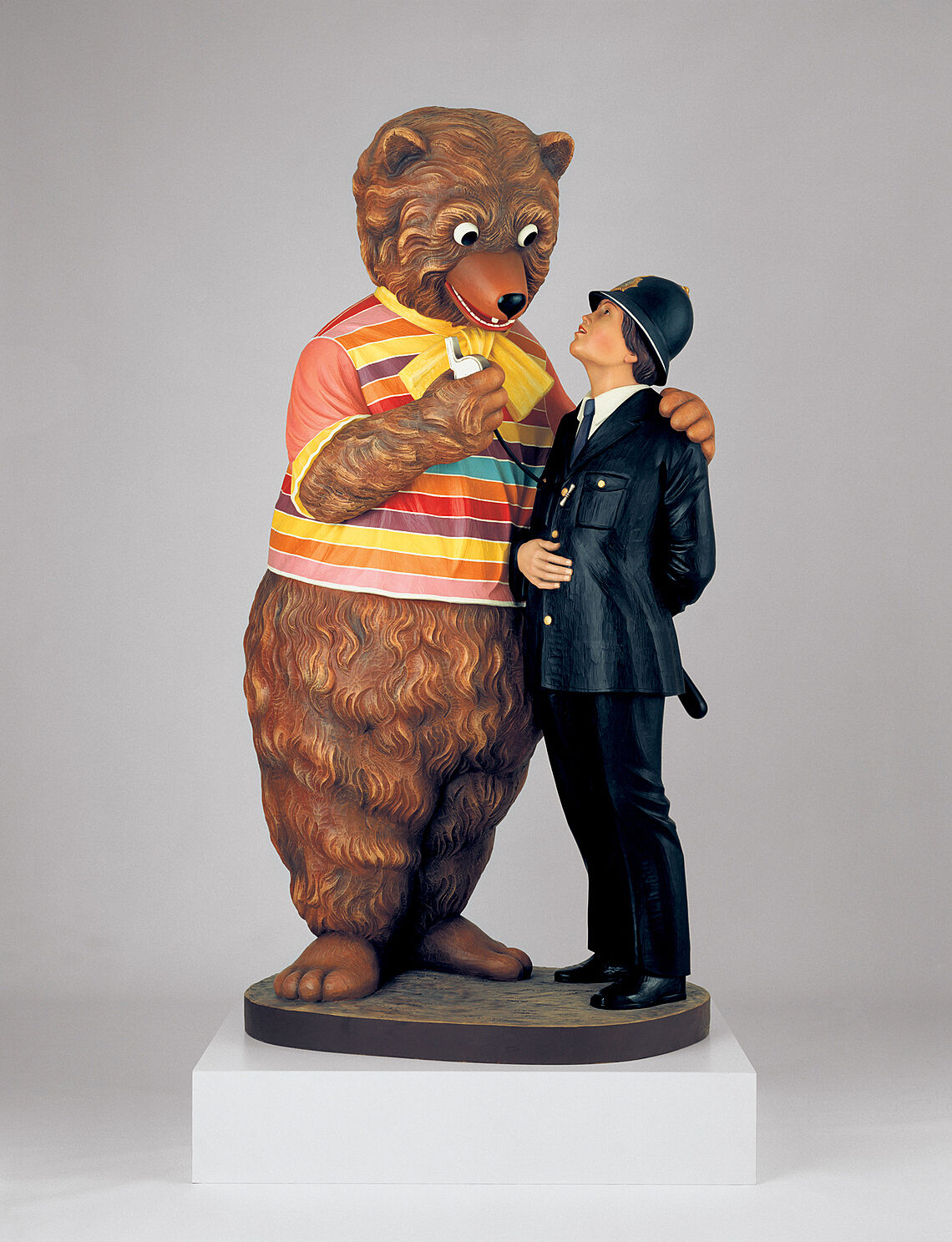
Jeff Koons, Bear and Policeman, 1988. Polychromed wood; 85 × 43 × 37 in. (215.9 × 109.2 × 94 cm). Artist’s proof. Collection of Jeffrey Deitch. © Jeff Koons

Bear and Policeman, 1988

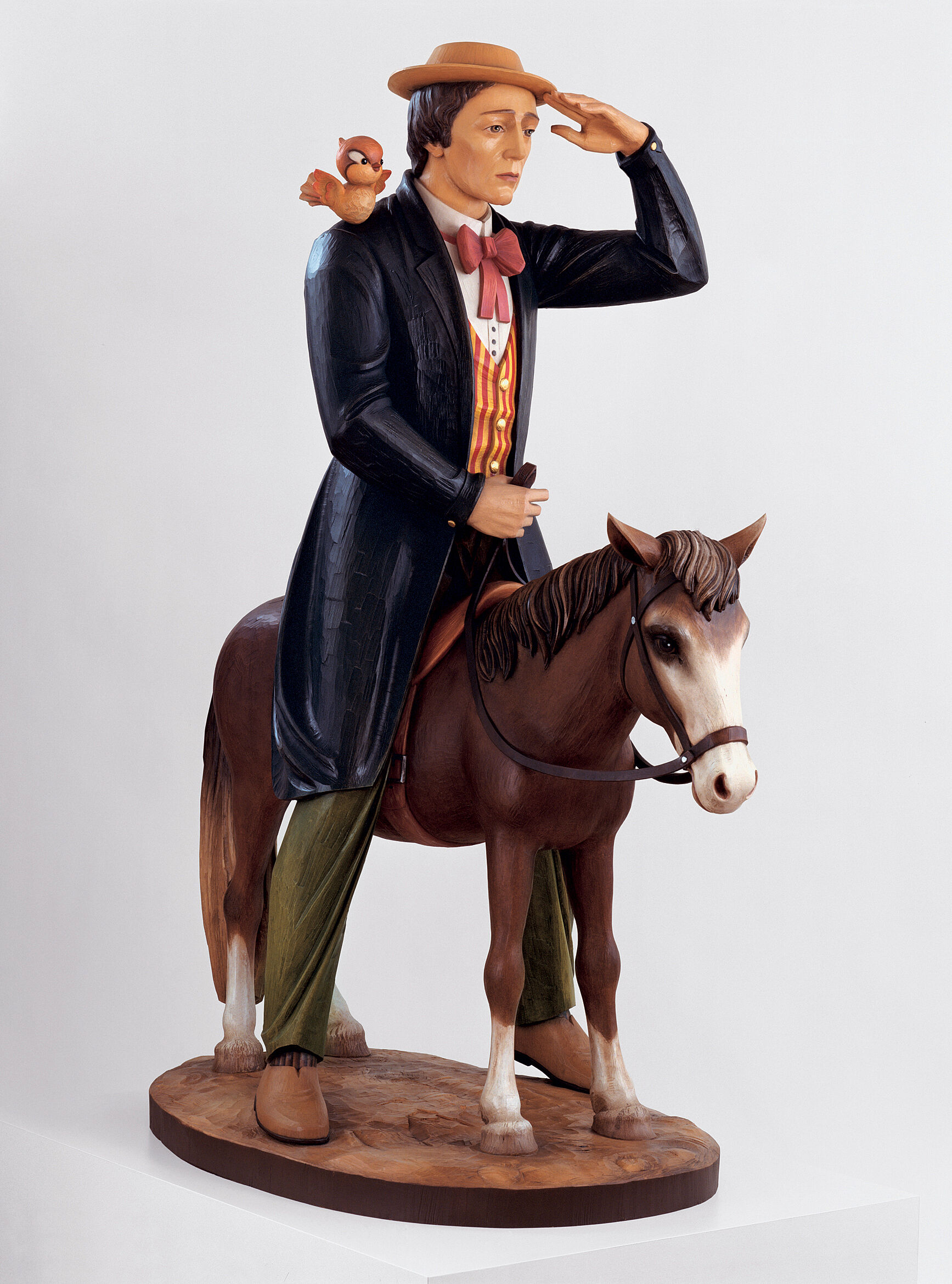
Jeff Koons, Buster Keaton, 1988. Polychromed wood; 65 3⁄4 x 50 x 26 1⁄2 in. (167 x 127 x 67.3 cm). Edition no. 3/3. The Sonnabend Collection and Antonio Homem. © Jeff Koons

Buster Keaton, 1988

A sculpture of Michael Jackson and his pet chimpanzee Bubbles.

Jeff Koons, Michael Jackson and Bubbles, 1988. Porcelain; 42 x 70 1/2 x 32 1/2 in. (106.7 x 179.1 x 82.6 cm). Private collection. © Jeff Koons

Michael Jackson and Bubbles, 1988

Rendered larger than life in gilded porcelain, this sculpture depicts the late pop superstar Michael Jackson and his beloved pet chimpanzee, Bubbles. Koons admired Jackson as the epitome of mainstream appeal, and praised him as someone willing to do “absolutely anything that was necessary to be able to communicate with people.” In Koons’s eyes this included plastic surgery and skin-lightening procedures that he claimed Jackson undertook to reach more middle-class white audiences. “That’s radicality. That’s abstraction,” Koons said. With his ivory skin tone and rosy cheeks, the sculpted Jackson hints at this transformation as well as at the fraught entanglement of celebrity, money, and race in the United States. The work’s composition is indebted to Michelangelo’s Pietà (1498–99), in which Christ lies on the lap of Mary after his crucifixion, an association that suggests the extent to which Pop stars sacrifice themselves for fans who shower them with an almost religious adoration.

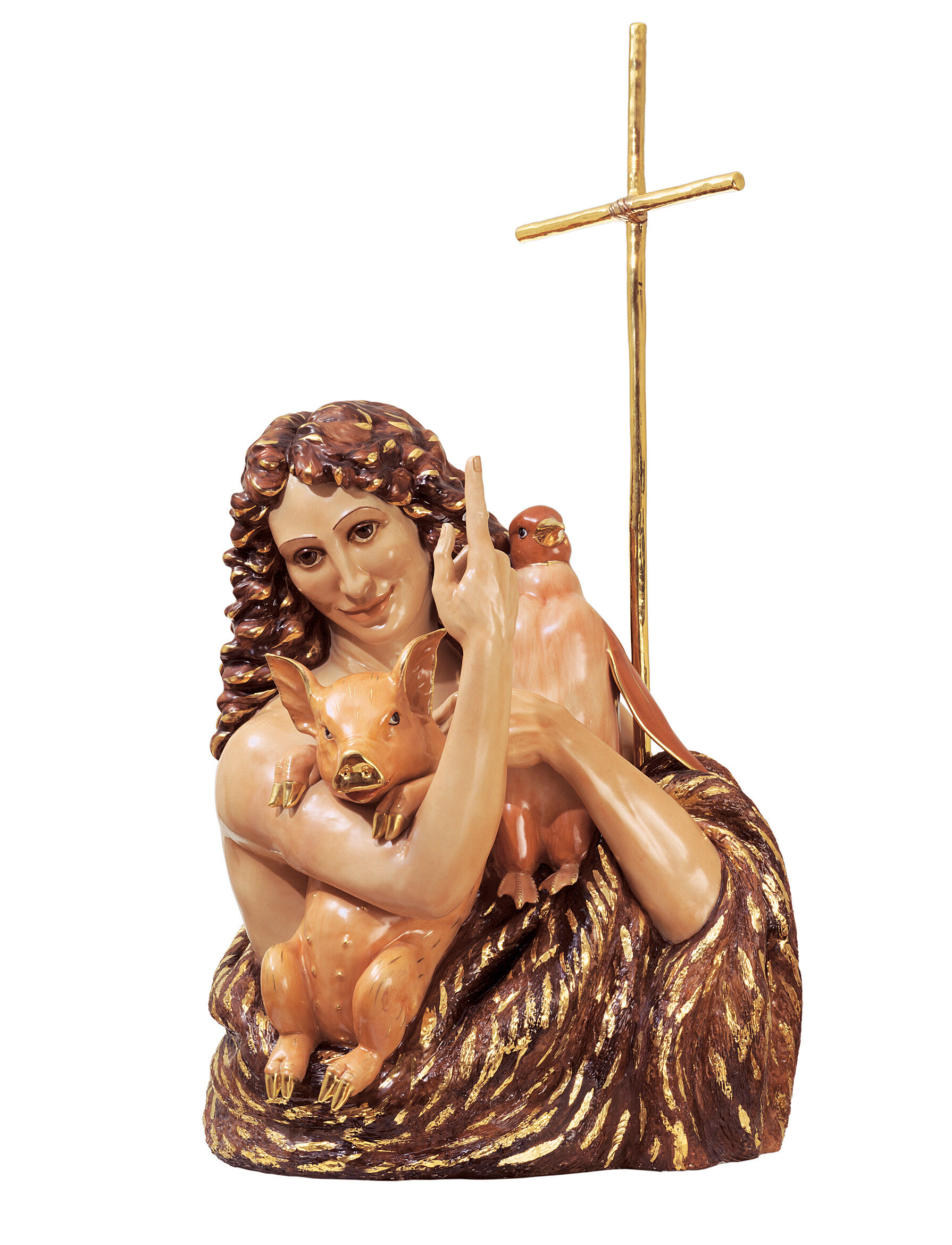
Jeff Koons, Saint John the Baptist, 1988. Porcelain; 56 1⁄2 x 30 x 24 1⁄2 in. (143.5 x 76.2 x 62.2 cm). Edition no. 3/3. The Sonnabend Collection, Nina Sundell, and Antonio Homem. © Jeff Koons

Saint John the Baptist, 1988

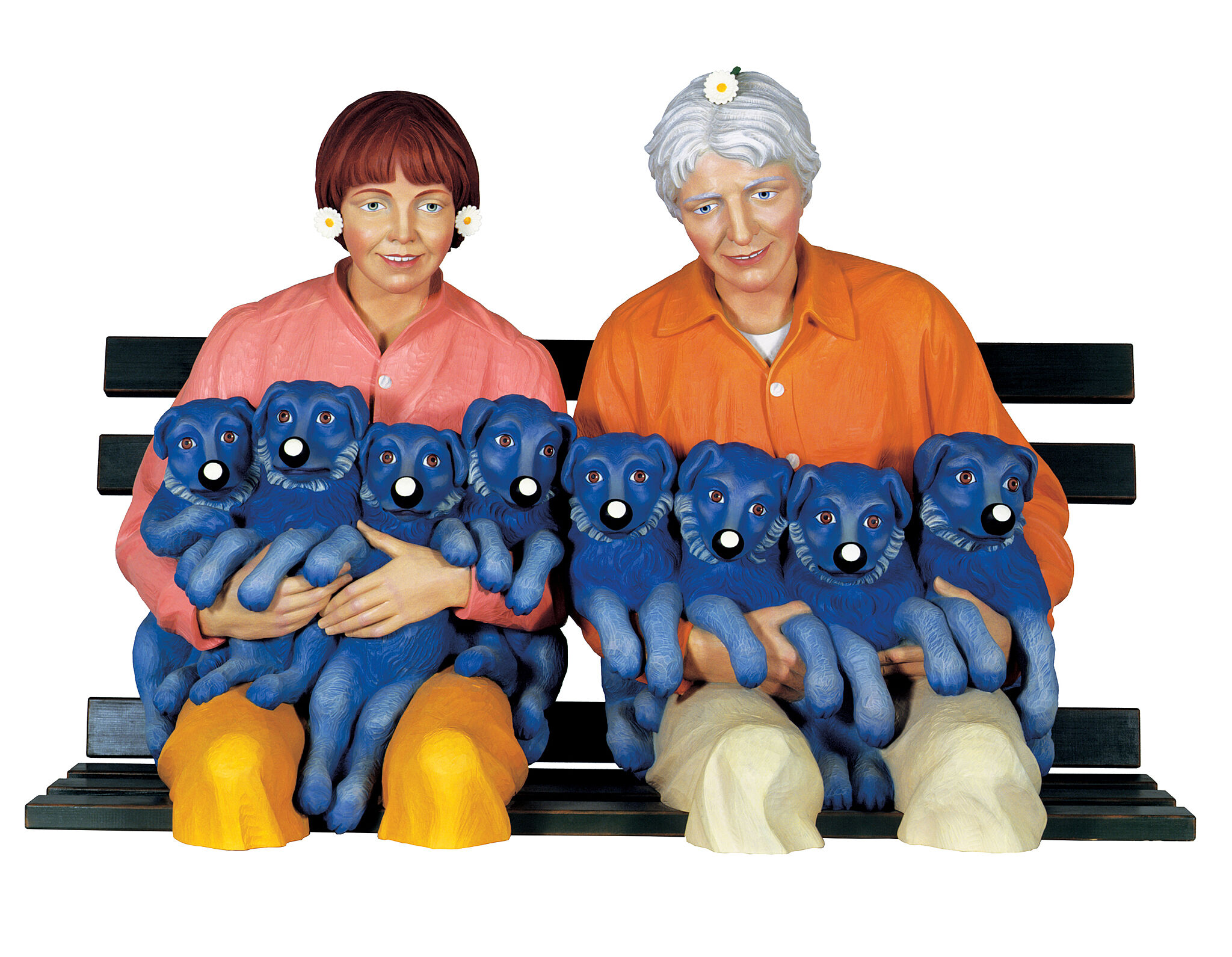
A sculpture of two people sitting on a bench holding 8 puppies.

Jeff Koons, String of Puppies, 1988. Polychromed wood; 42 x 62 x 37 in. (106.7 x 157.5 x 94 cm). Private collection; courtesy Hauser & Wirth. © Jeff Koons

String of Puppies, 1988

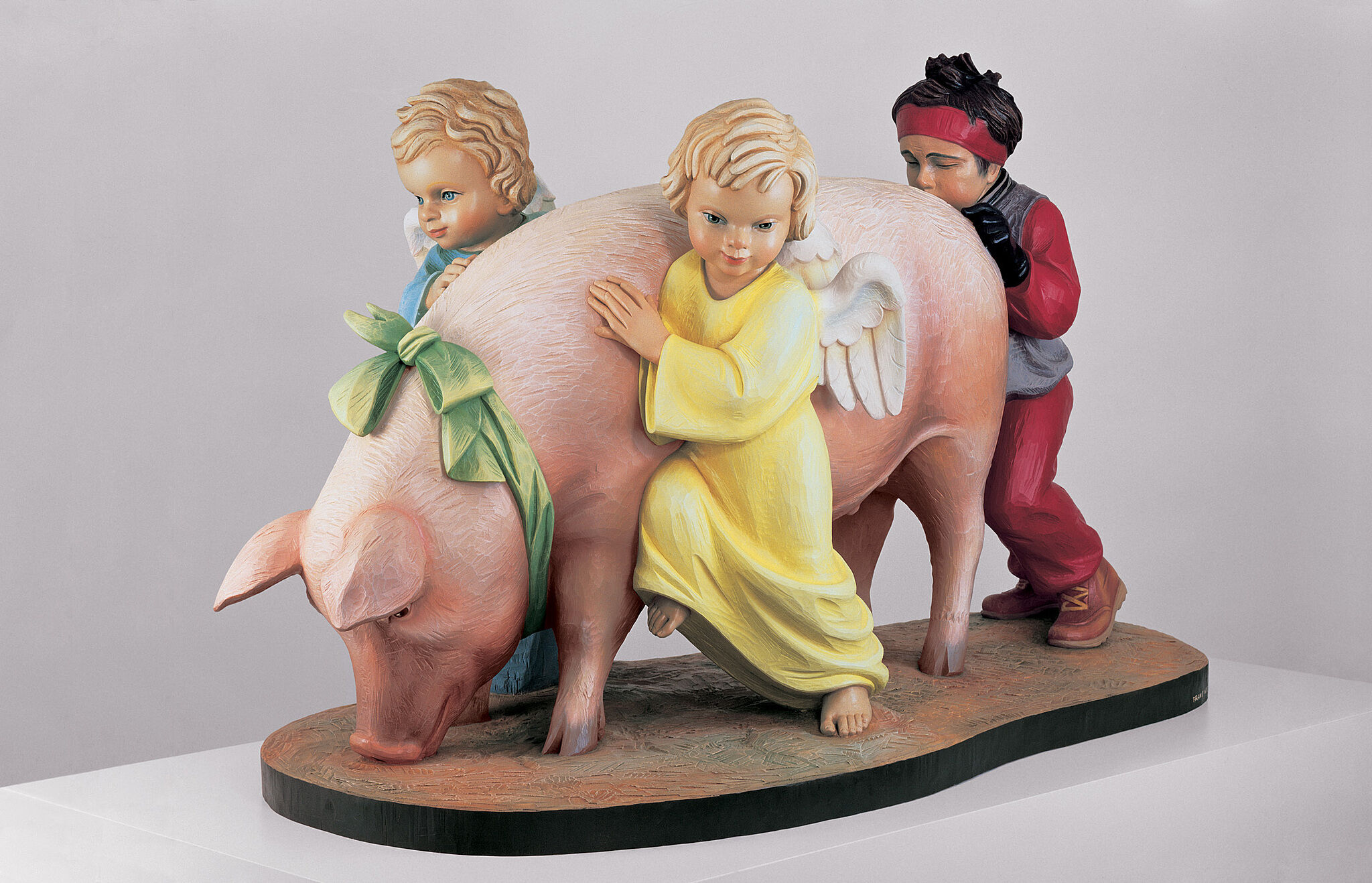
Jeff Koons, Ushering in Banality, 1988. Polychromed wood; 38 × 62 × 30 in. (96.5 × 157.5 × 76.2 cm). Private Collection. © Jeff Koons

Ushering in Banality, 1988

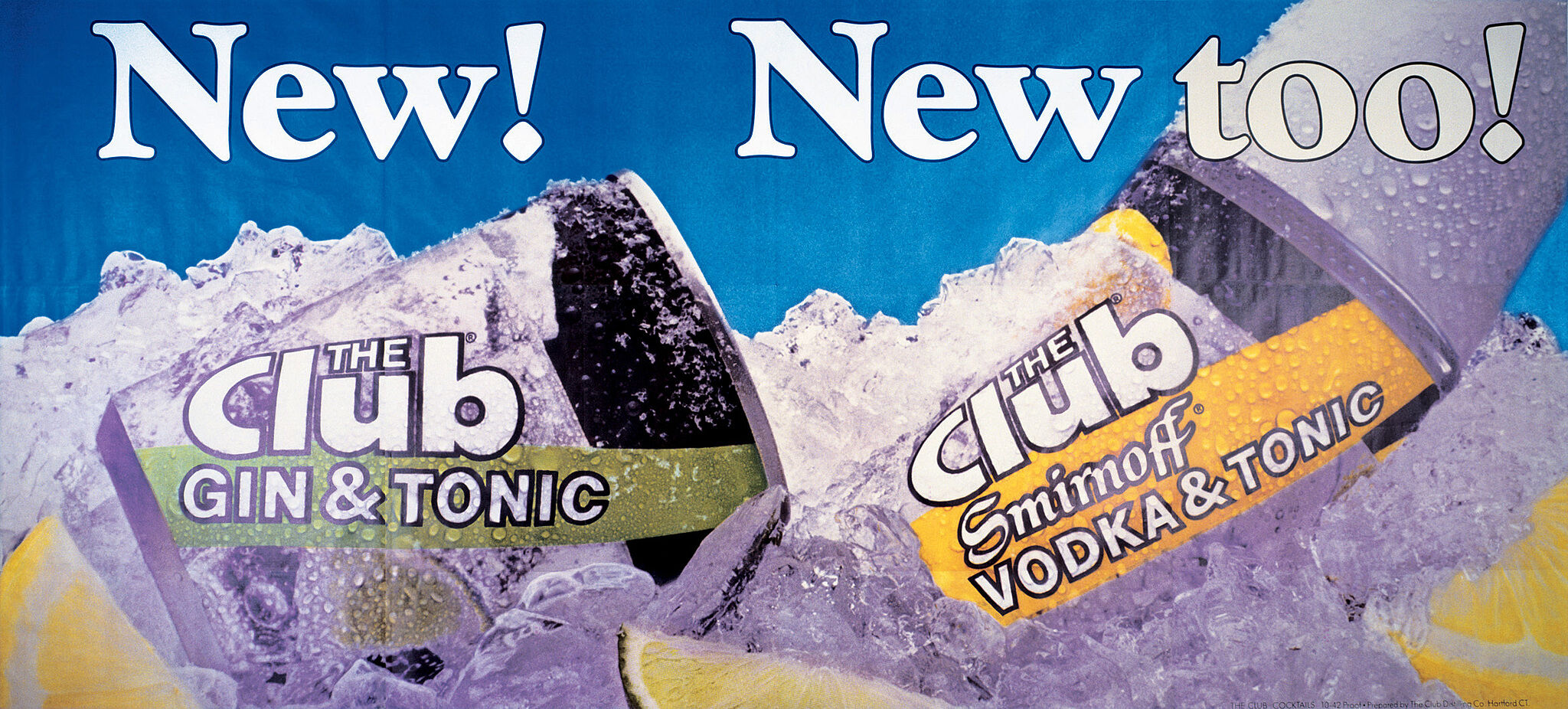
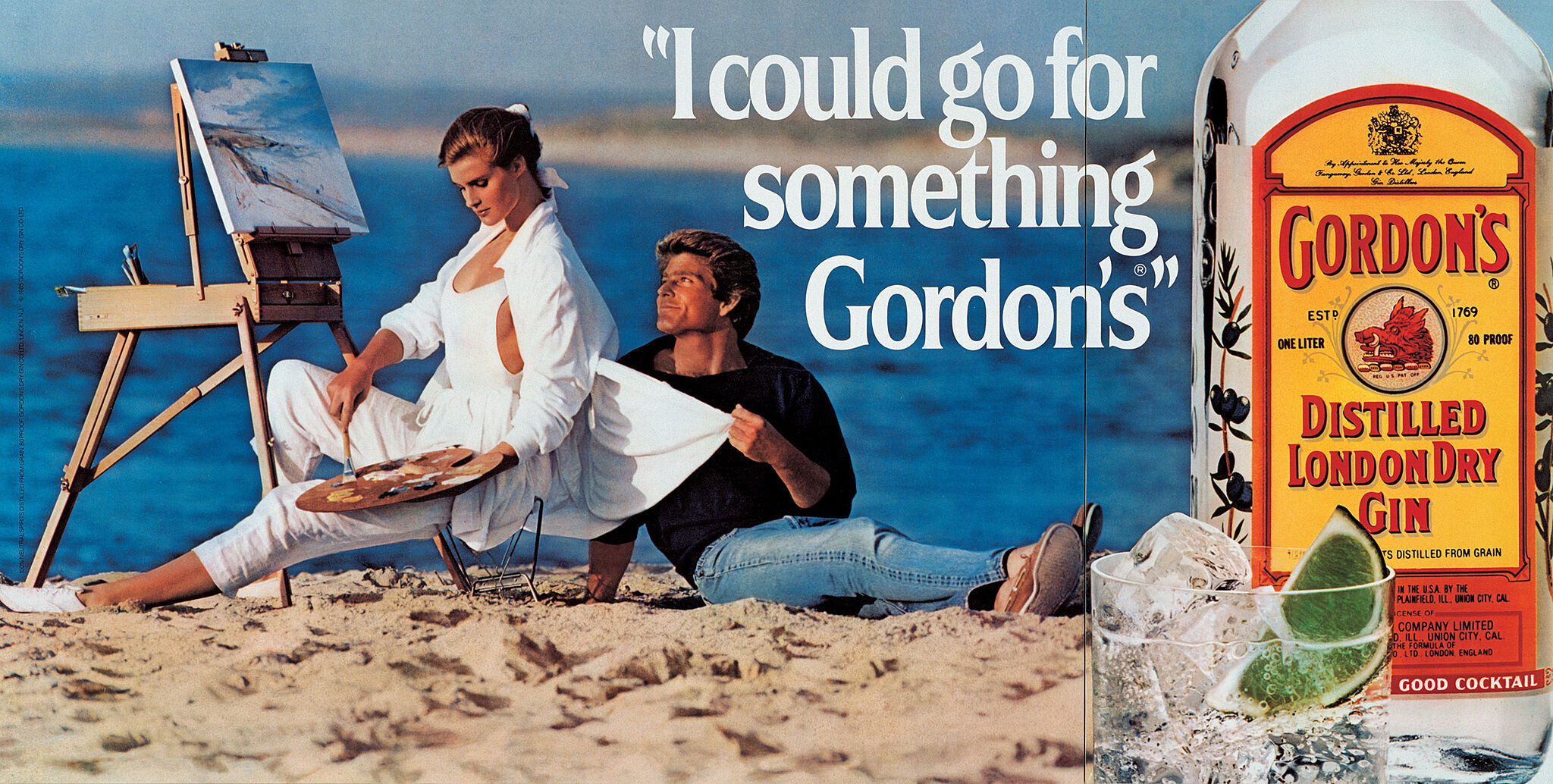
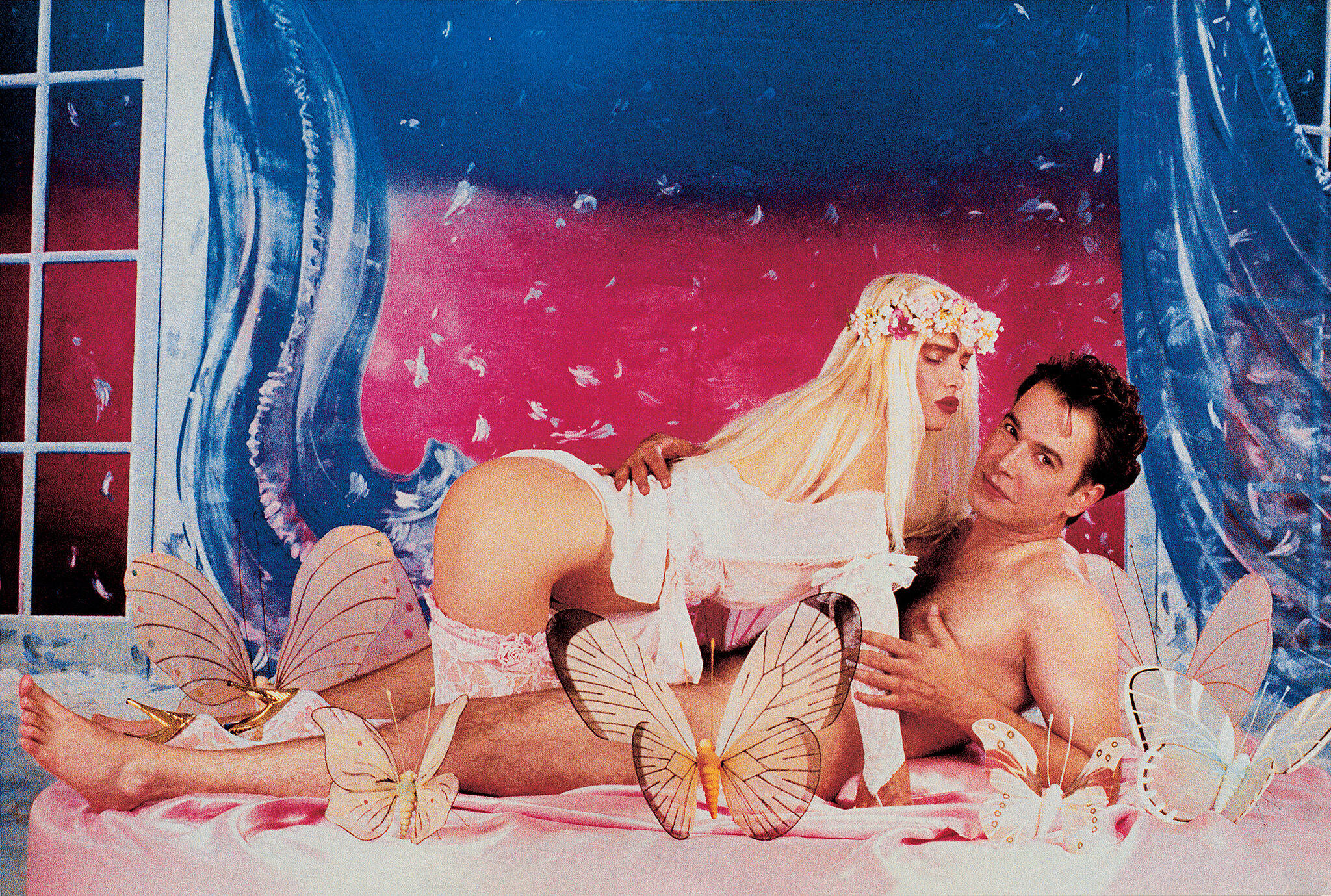
For Koons, the beribboned pig in this sculpture represents America’s glut of banal culture, while the attending angels suggest the moral dimension of the artist’s desire to liberate his viewers from the shame of bad taste. He sees himself in the work, too: “I’ve always thought of myself as the young boy in the back pushing the pig.” Koons was well aware that Banality’s unapologetic affirmation of mass culture had the potential for controversy, and he wholeheartedly assumed the role of provocateur by appearing in a series of glamorous advertisements that announced his new body of work. In one, he embraces a live pig in order, he later joked, to call himself a pig before anyone else could.


Explore works from this exhibition
in the Whitney's collection

View 5 works

On the Hour

A 30-second online art project:
Frank WANG Yefeng, The Levitating Perils #2

Learn more about this project

Learn more at whitney.org/artport

On the Hour projects can contain motion and sound. To respect your accessibility settings autoplay is disabled.