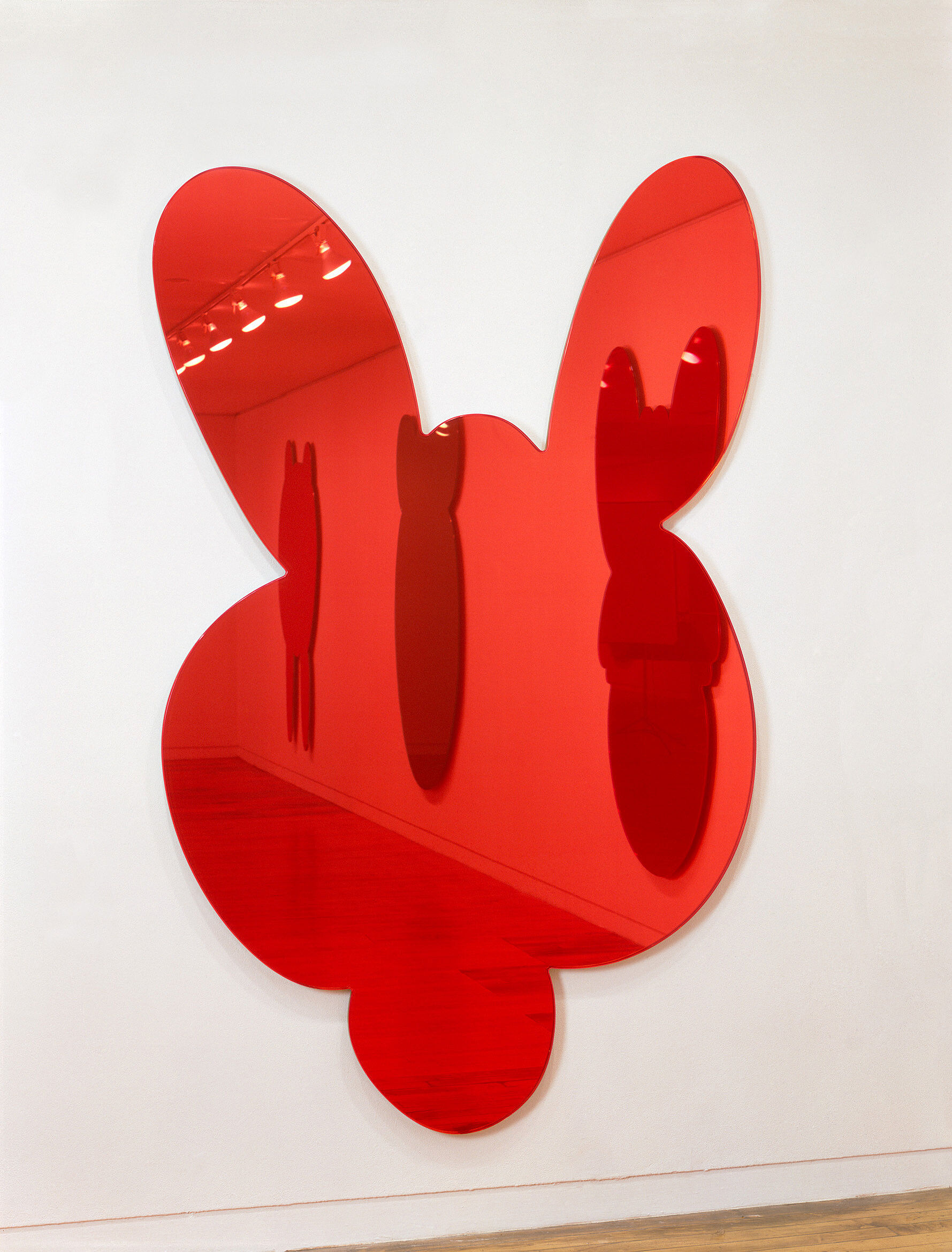
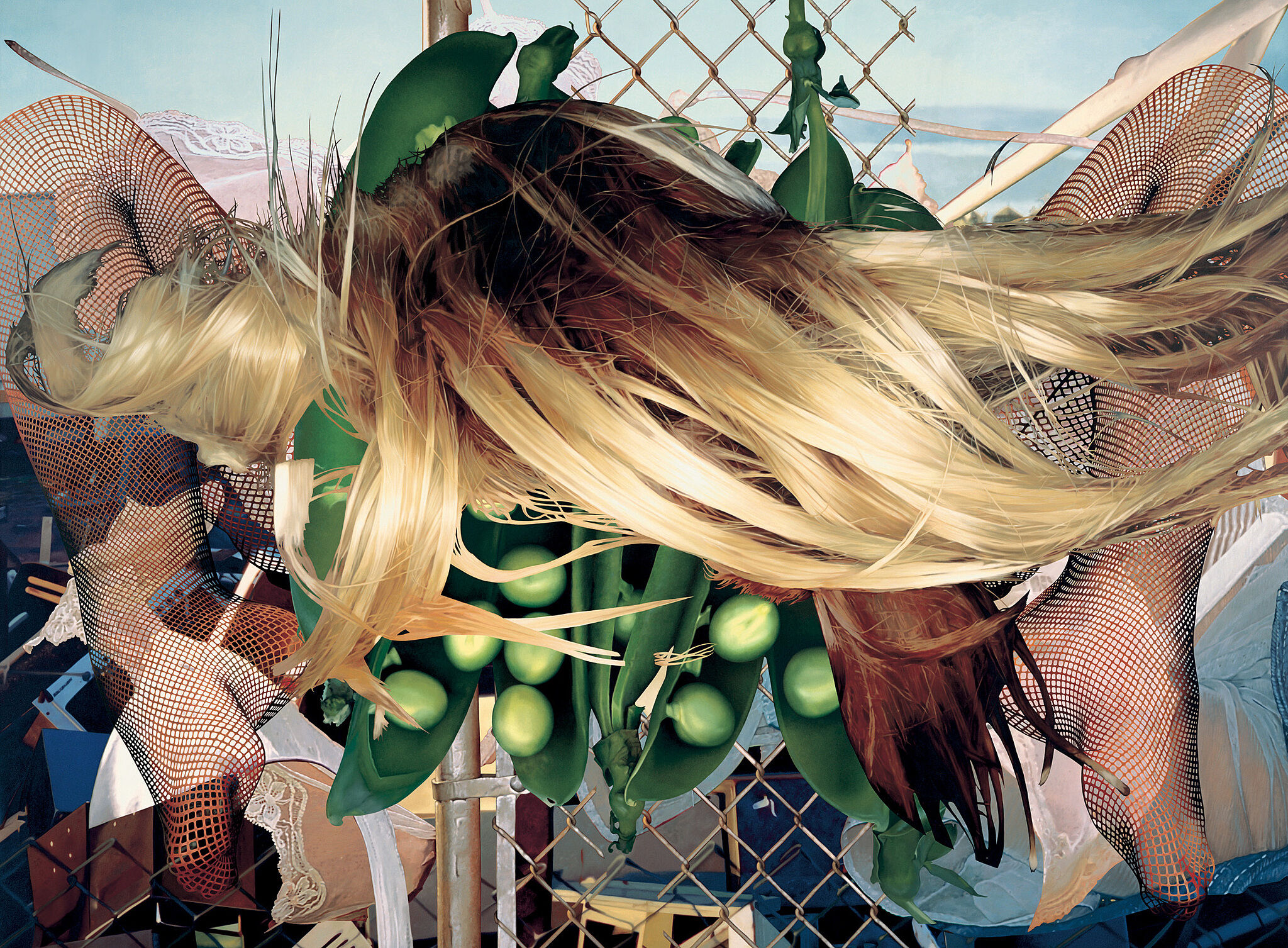
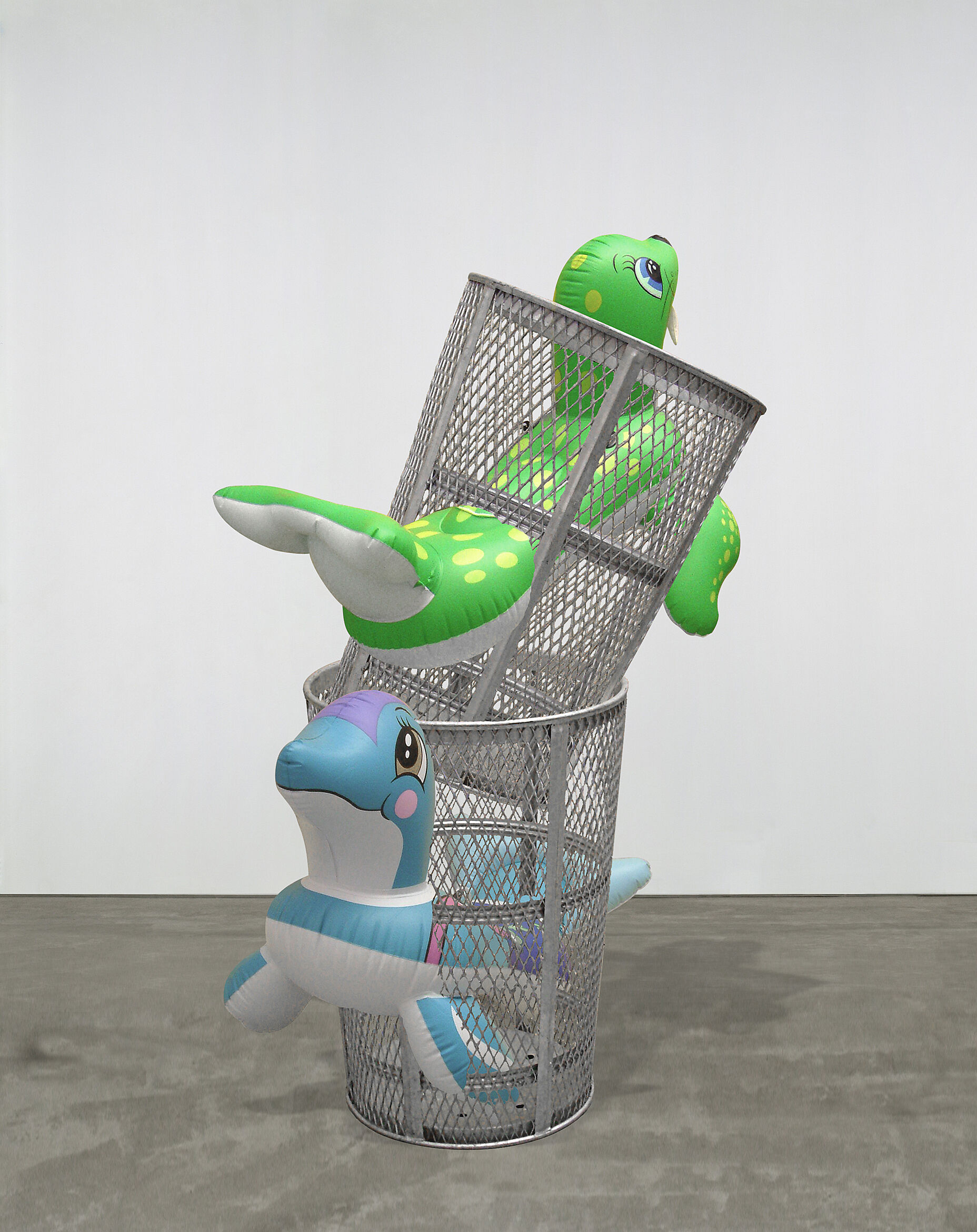
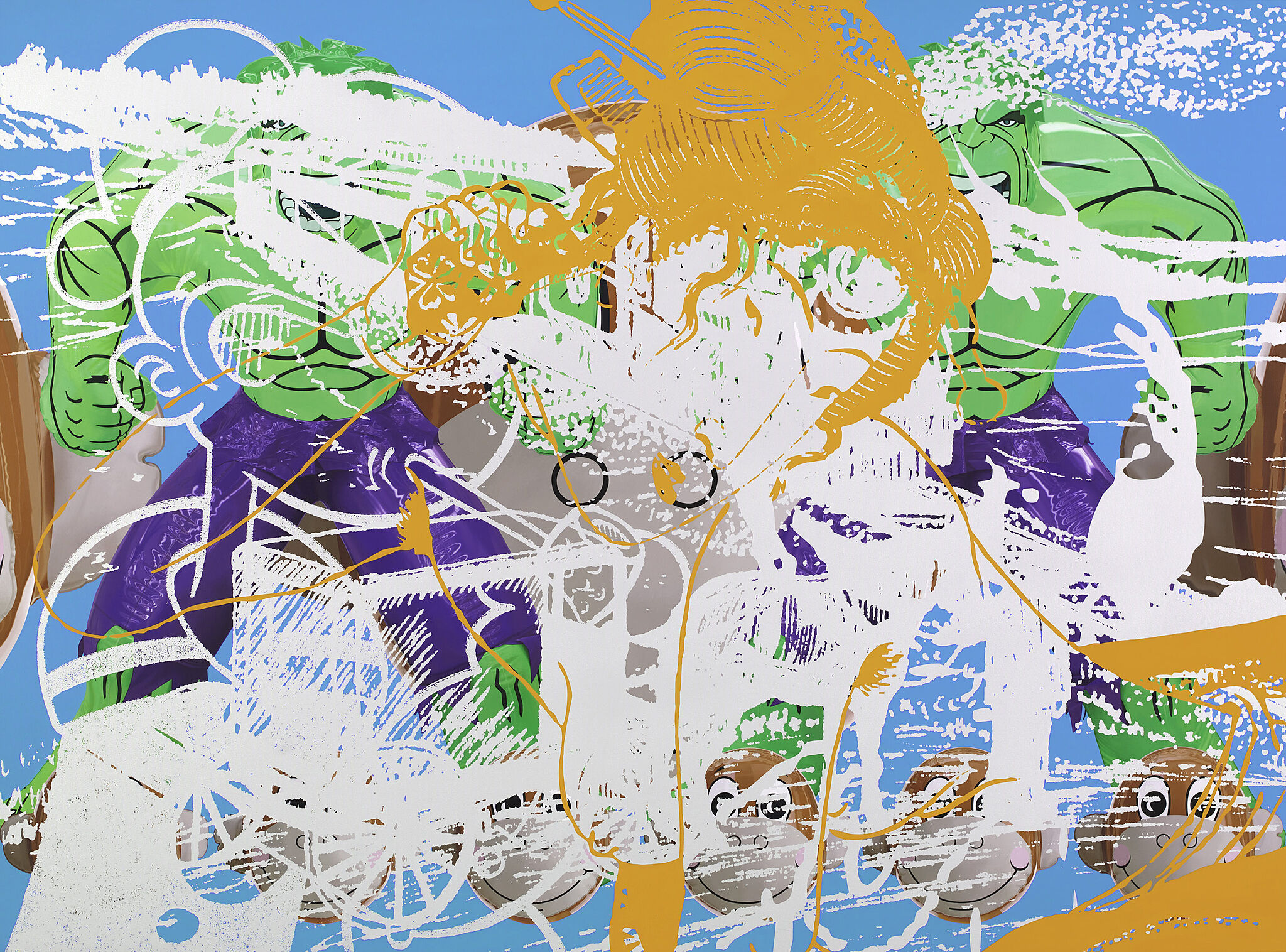
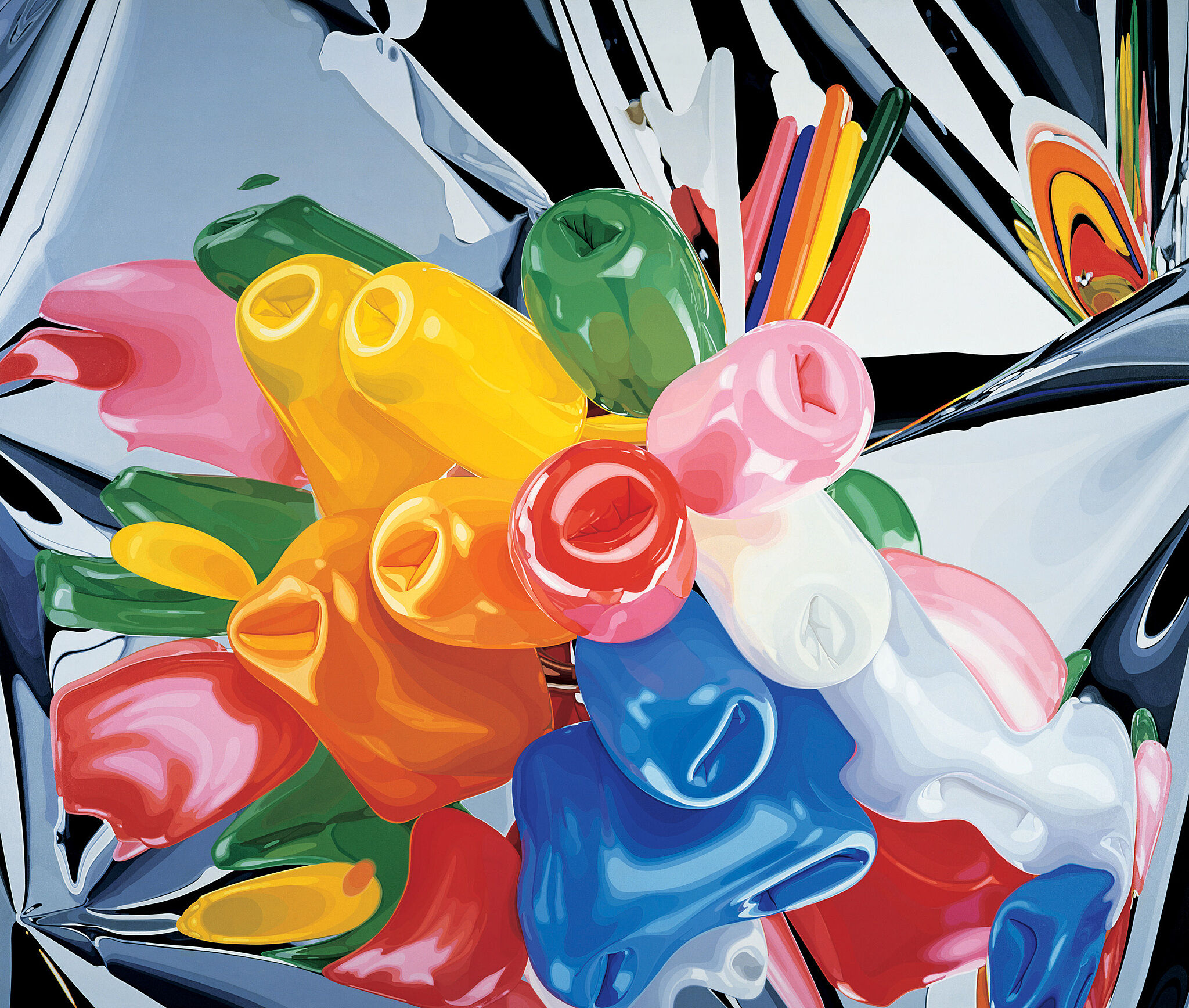
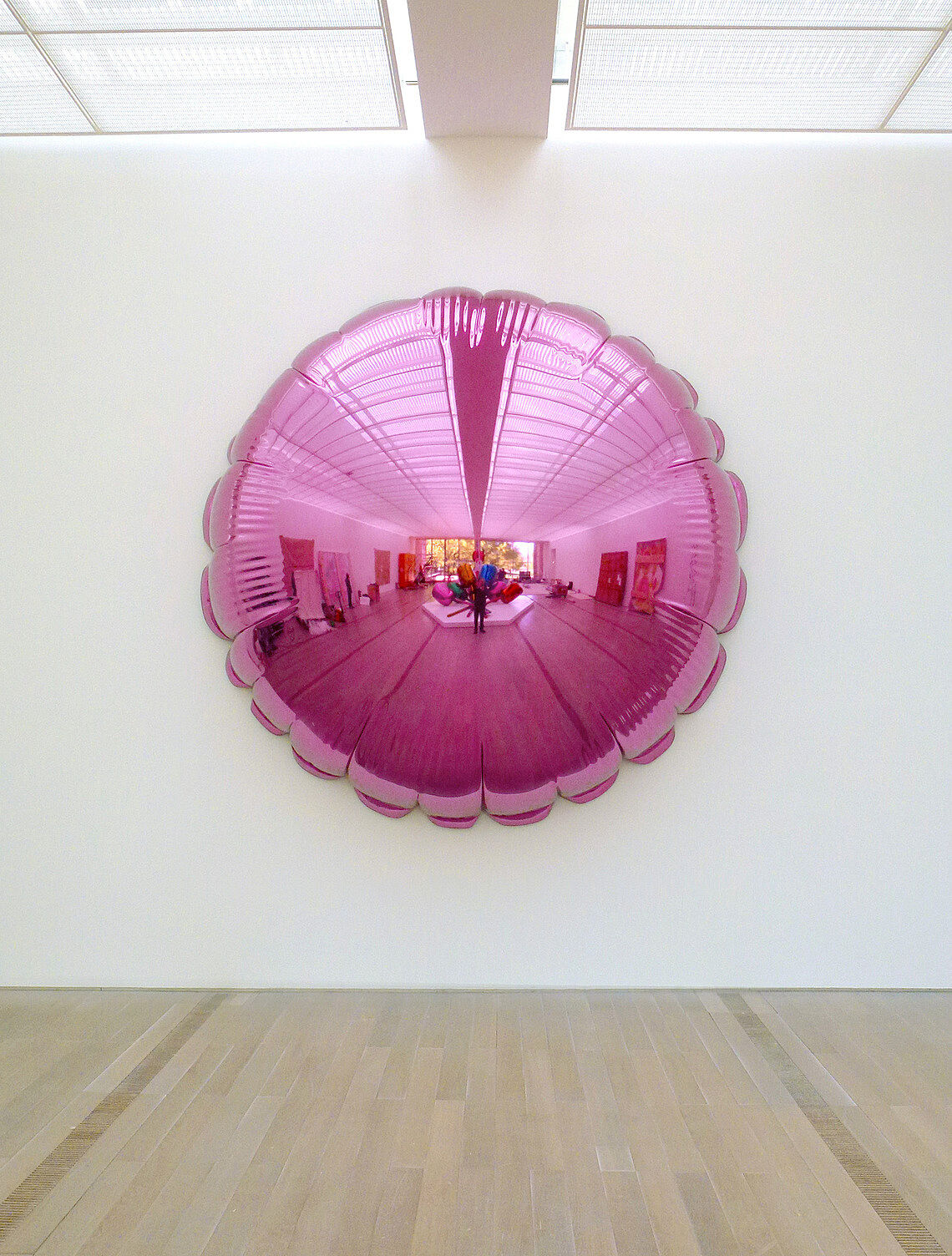
Koons conceived his series Celebration in 1994 as a paean to the milestones that mark a year and the cycle of life. Fittingly, it was inspired by an invitation to design a calendar for which he created photographs that referred to holidays and other joyous events. These images formed the basis for large-scale sculptures and paintings that the artist hoped might serve both as archetypal symbols accessible to a broad public and as a personal reminder to his abducted son that the boy was constantly on his father’s mind. Taken as a whole, the sixteen paintings and twenty sculptures of Celebration evoke birth, love, religious observances, and procreation, whether in the form of a cracked egg, a giant heart, the paraphernalia of a birthday party, or the sexually suggestive curves and crevices of a balloon animal.
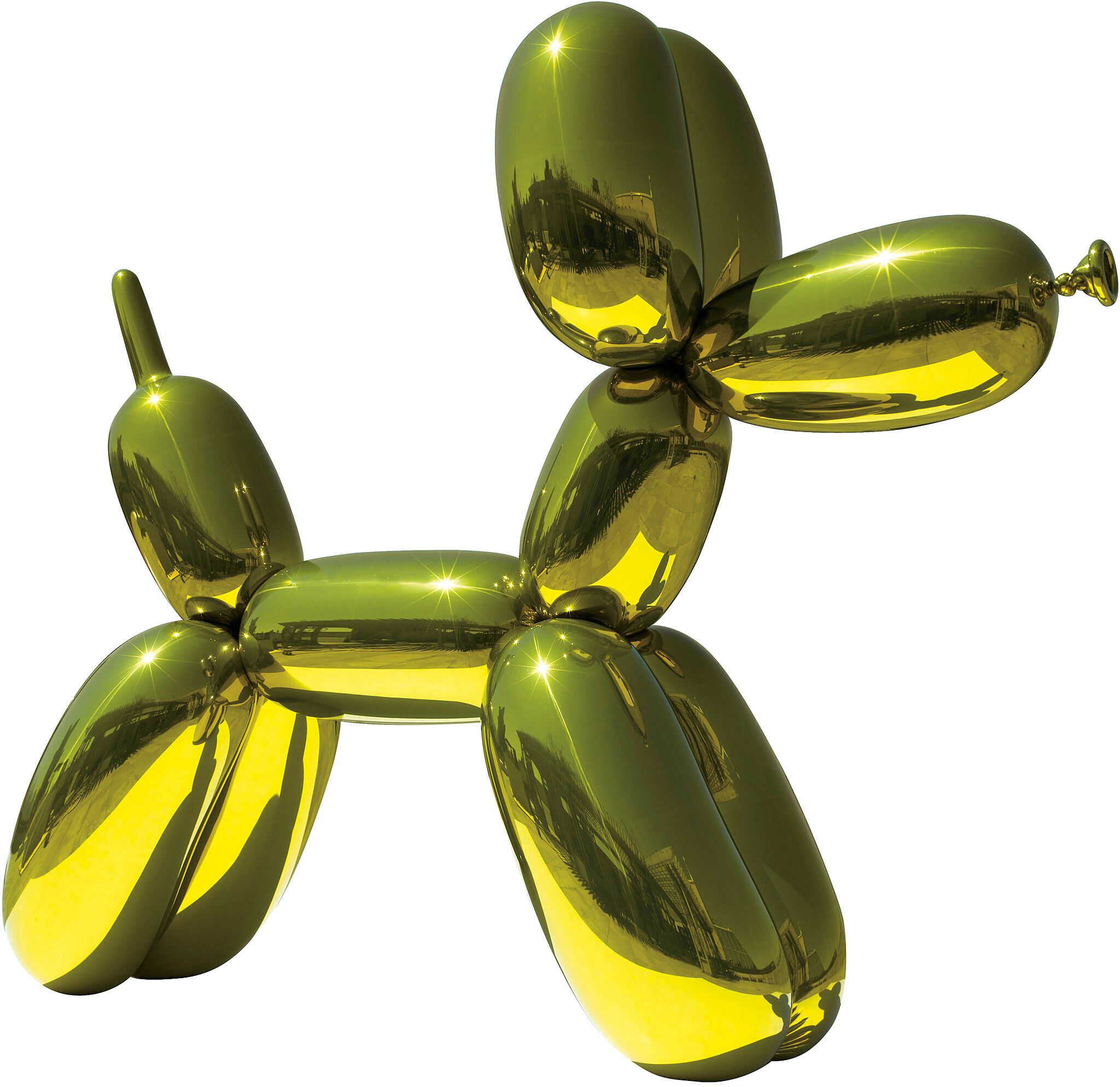
Despite its ten-foot stature and one-ton weight, Balloon Dog (Yellow) uncannily conveys its ephemeral source. Koons worked with a specialized foundry in California to cast and finish the work’s sixty separate precision-engineered, stainless steel parts. He stipulated not only that the outside of the sculpture should capture the curves and puckers of a balloon dog but also that its inside suggest the free circulation of air, as if it were actually fashioned from a single balloon. Koons imparted Balloon Dog (Yellow) with an air of innocent playfulness as well as elements that suggest sexual orifices and protuberances. He has hinted at the sculpture’s darker themes by comparing its form to a Trojan horse, the giant wooden gift that the Greeks bestowed on their Trojan enemies, while Greek soldiers lurked inside. Like all of the Celebration sculptures, Balloon Dog (Yellow) is one of five examples in different colors, lending each version a unique character and distinct emotional charge.
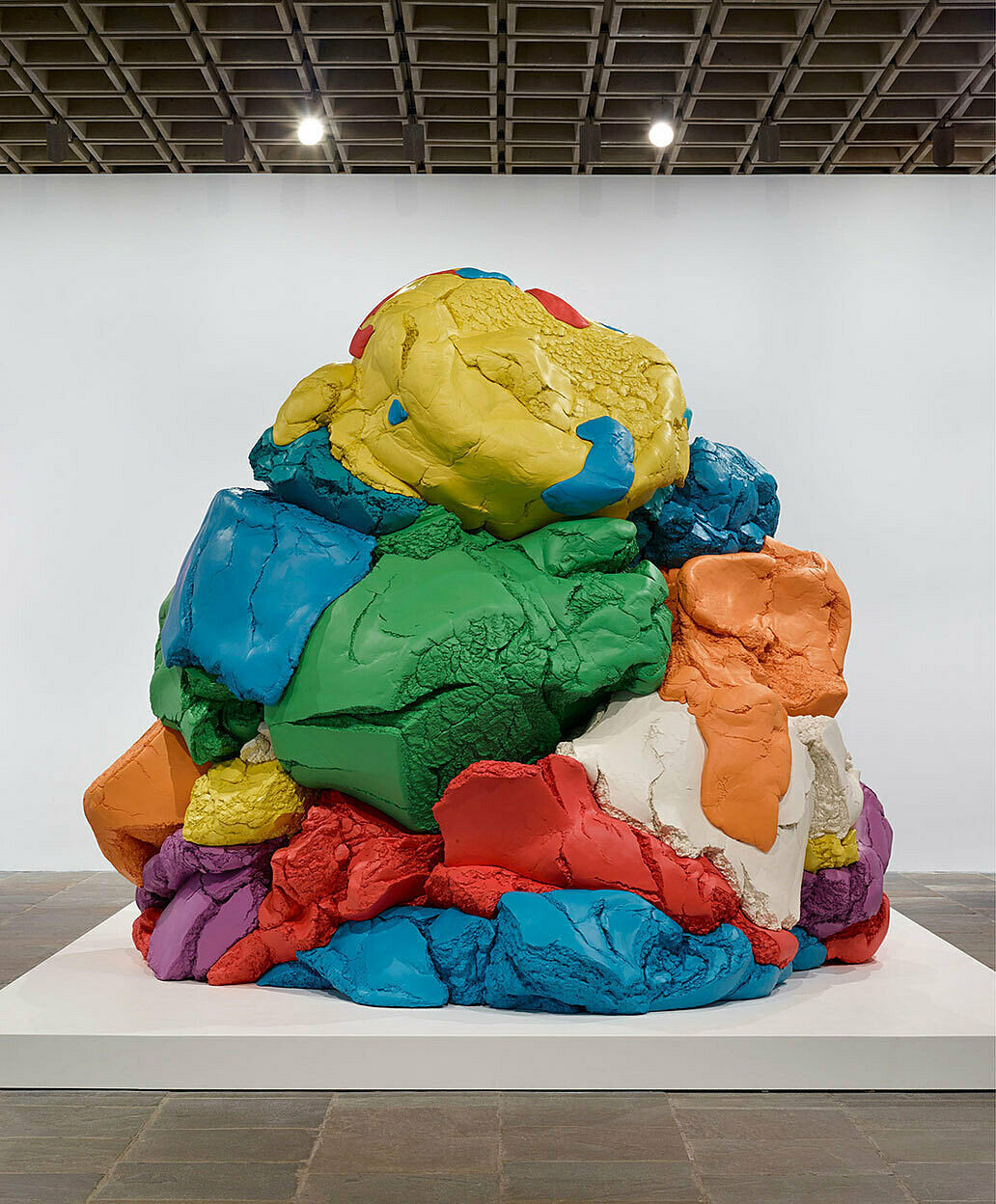
In contrast to the perfect smoothness and largely monochromatic palette of many sculptures in Celebration, this one represents an enormous craggy mound of Play-Doh. The material is one of the first that American children use to make simple artworks, and Koons remembers his son proudly presenting him with a Play–Doh sculpture. Yet here the freedom, confidence, and spontaneity of the boy’s initial gesture ironically prompted one of the most complex sculptures Koons has ever made, requiring two decades to fabricate. The sculpture was first conceived in polyethylene but was ultimately fashioned from twenty-seven individual interlocking pieces of painted aluminum, unveiled for the first time in this retrospective. The mountain of Play-Doh may call to mind scatological associations or geological forms, but for Koons, it’s also “a very joyous, very pop material.” A perfect replica of an offhand creation, Play-Doh plays with the distinction between abstraction and representation, while serving as a monument to childlike imagination.
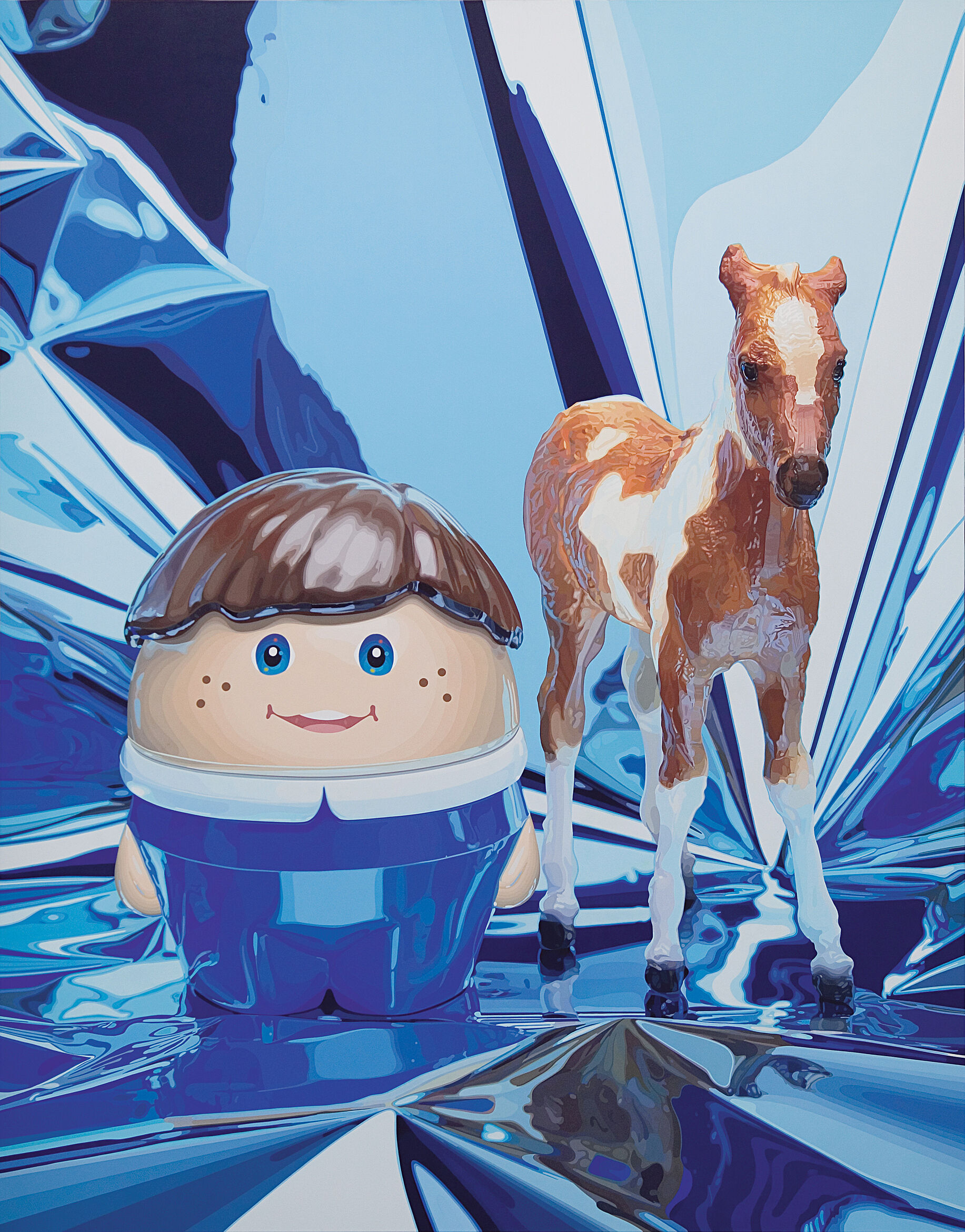
The figures in this painting were inspired, in part, by Pablo Picasso’s Boy Leading a Horse (1906) and Koons’s fond memories of regular trips as a child to his family’s farm outside York, Pennsylvania. For Koons, standing before a pony, with its mixture of power, size, and innocence, was awe-inspiring, a response the canvas evokes through its extraordinarily precise articulation in paint. The artist began by photographing the toys against a reflective Mylar backdrop. He then broke down the image into thousands of discrete units separated by sinuous contours. This design was transferred to the canvas with the aid of a projector and stencils and filled by his assistants with myriad colors, each carefully distinguished from the next. For Koons, these crisp distinctions underscore the “objective” quality of the painting and augment our trust in it, in contrast to traditional blended shading in which gradient steps are not so clearly discerned.