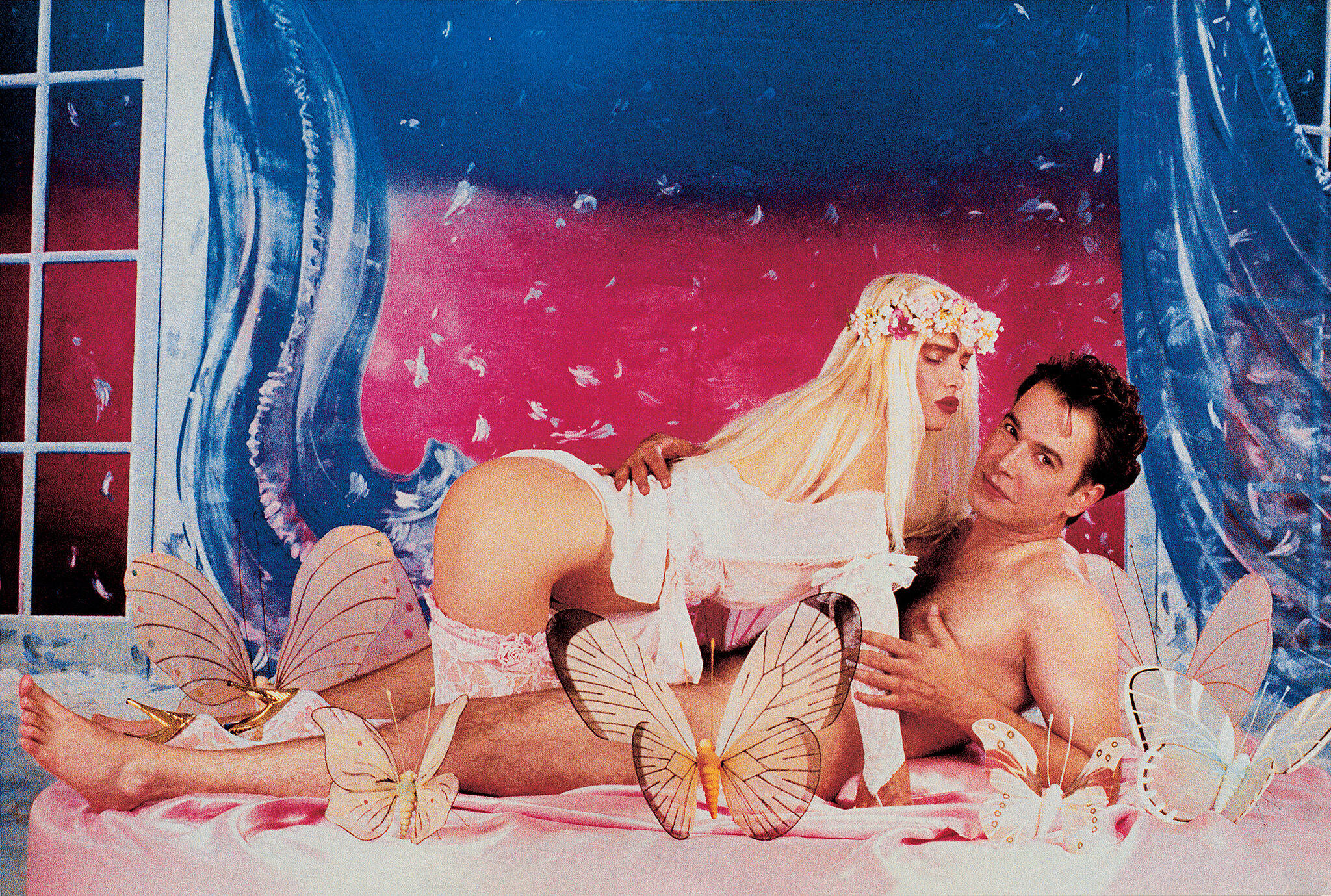
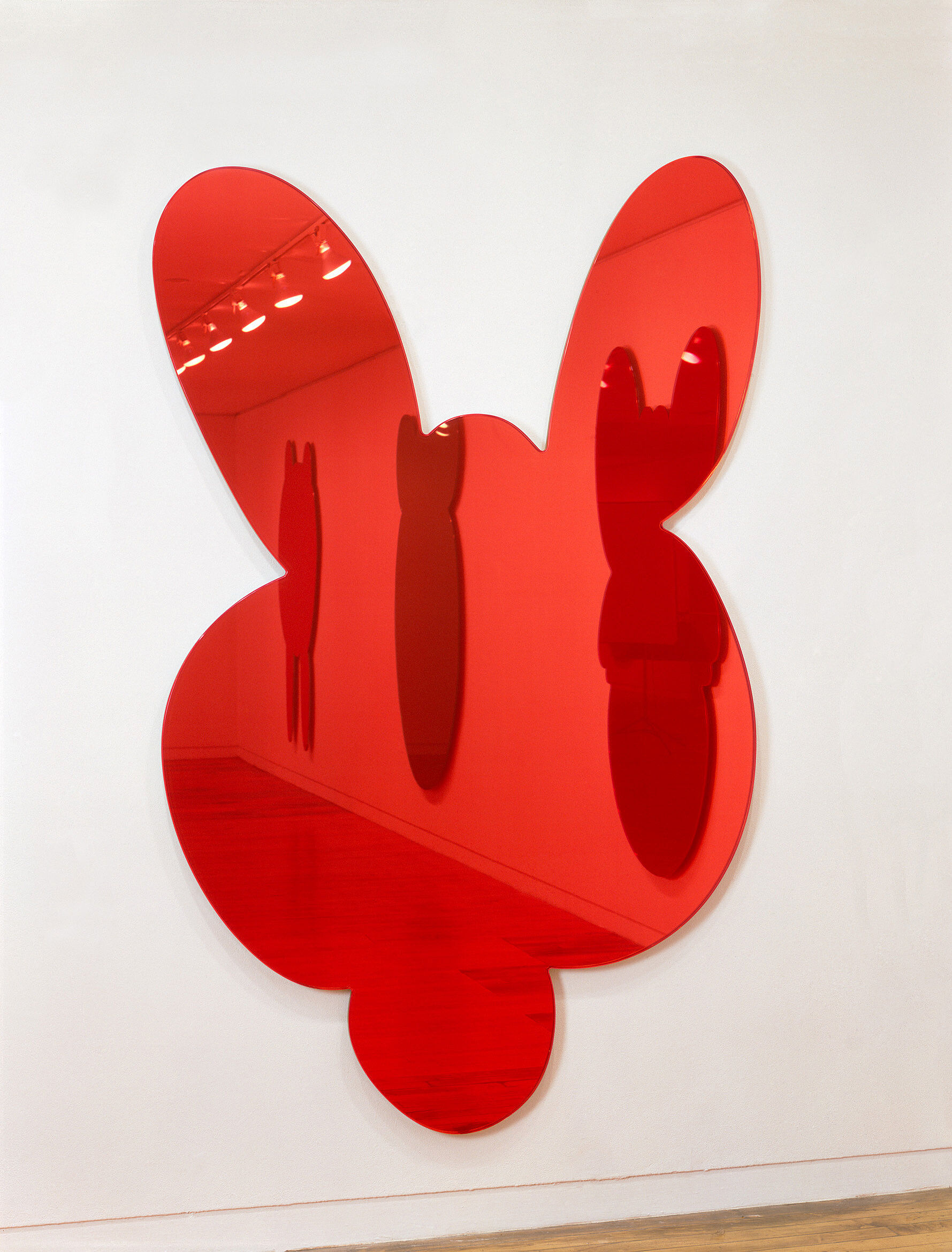
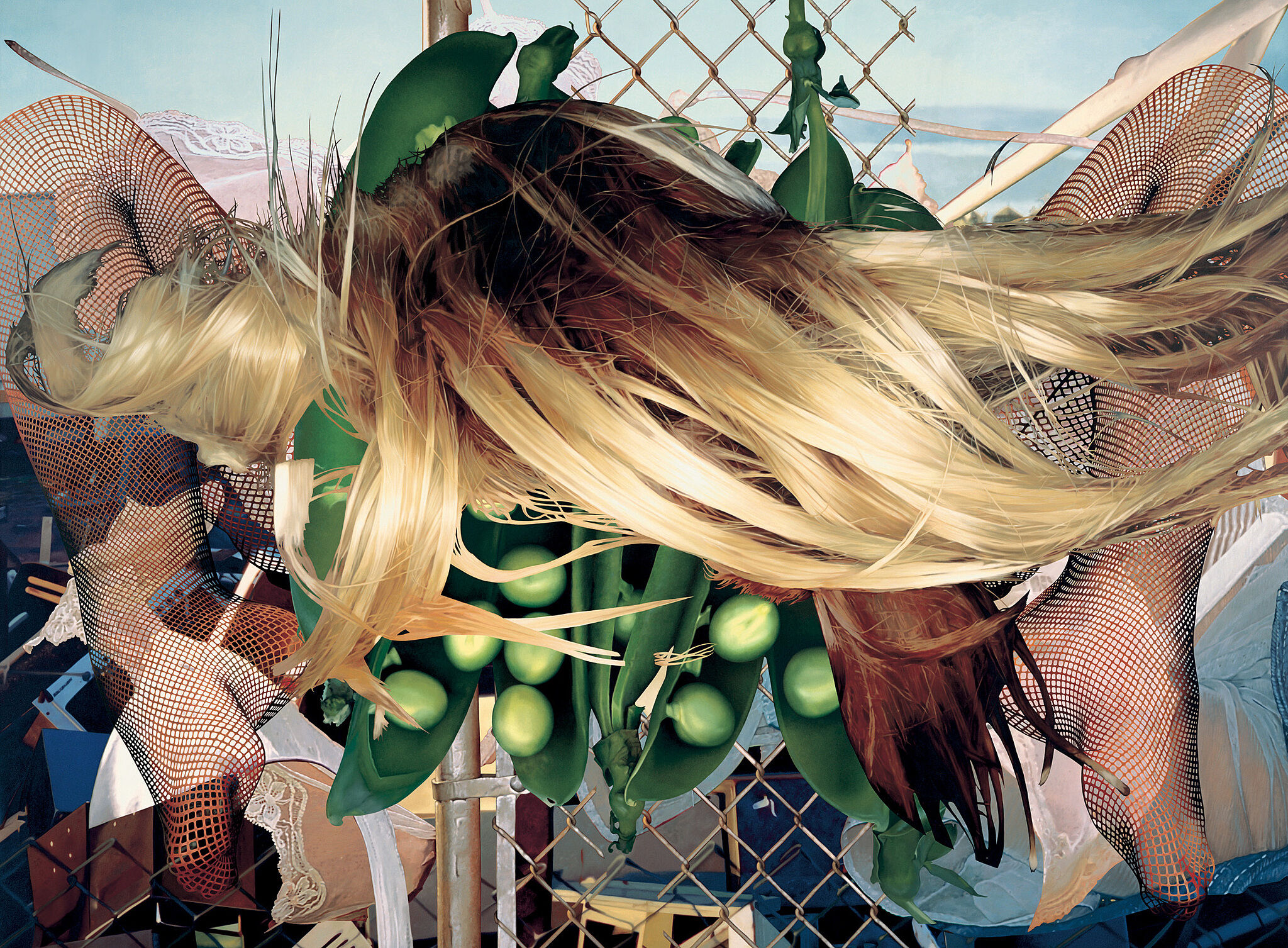
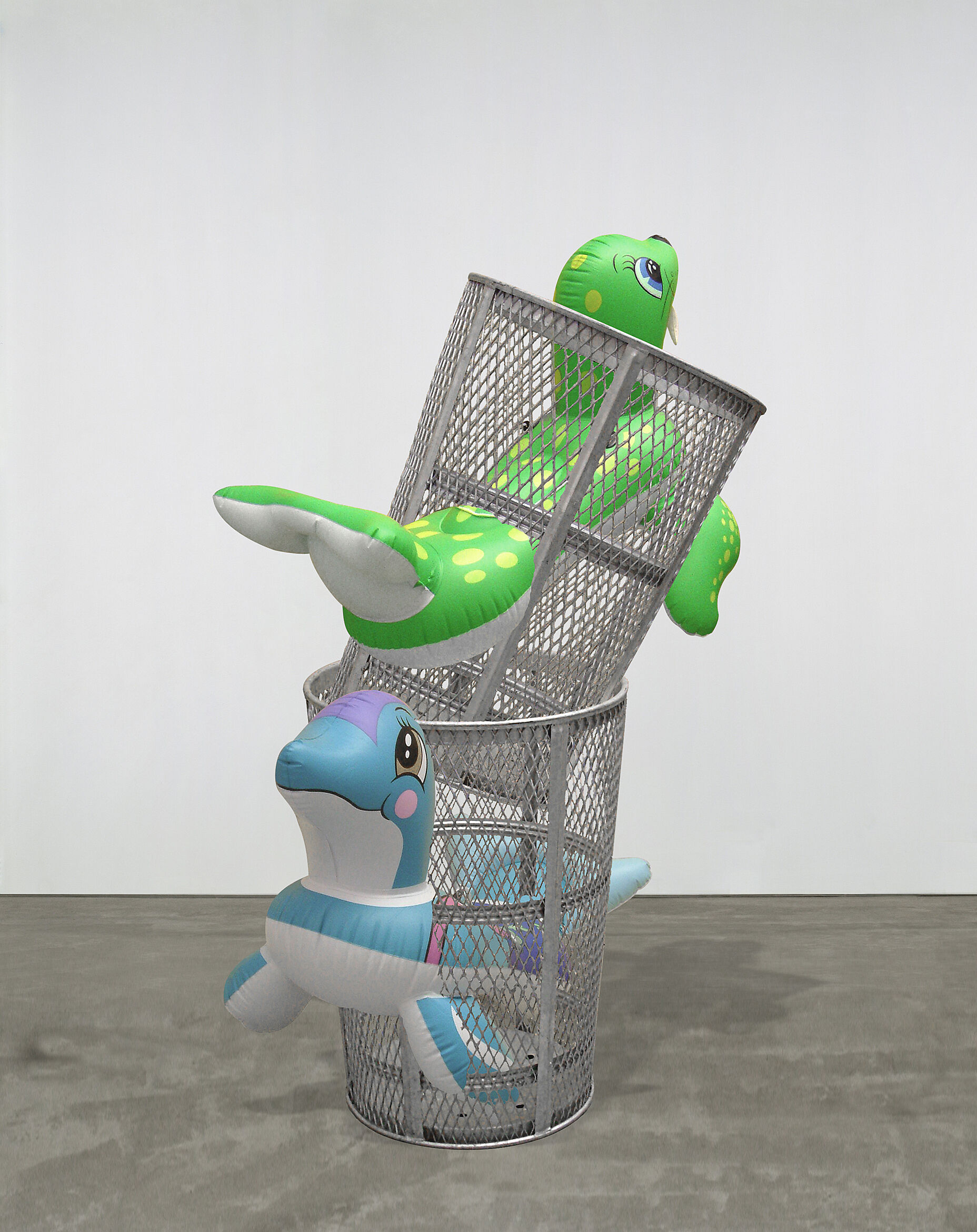
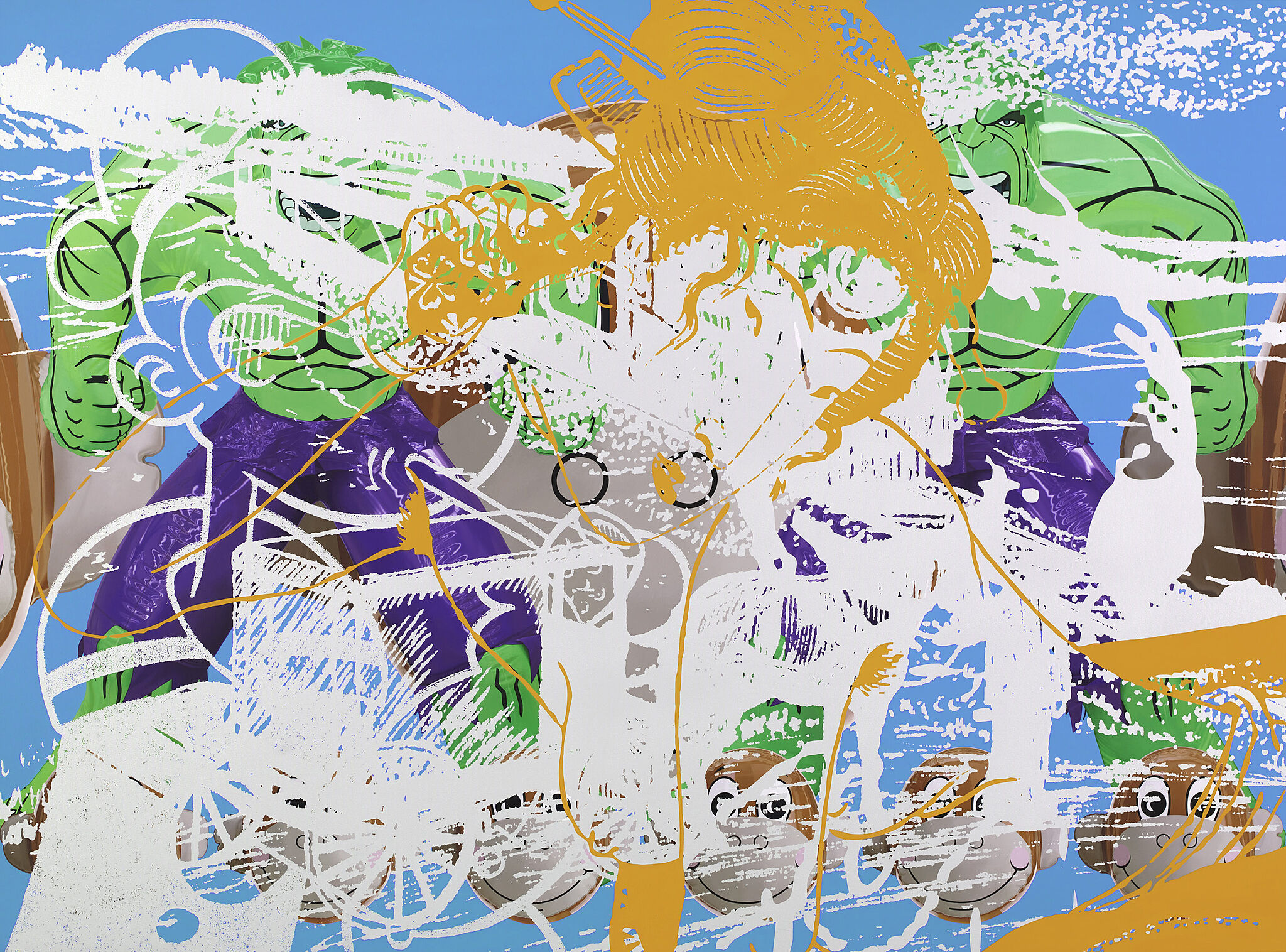
Koons created Easyfun in 1999, during one of the most difficult periods of his artistic and personal life. His marriage to Ilona Staller ended acrimoniously, and she abducted their young son to Italy. Meanwhile, Koons embarked on Celebration, a series of large paintings and sculptures that were extremely difficult to execute for technical and financial reasons. With Easyfun, he attempted to free himself from these difficulties and to work in a faster and more direct manner. The colorful mirrors suggest a joyous menagerie of cartoon animal silhouettes, yet their blank faces and exaggerated scale also evoke a darker sense of foreboding. These works shift attention from their maker to their viewers, whom they reflect and distort. Easyfun also comprises Koons’s sculpture Split-Rocker and his first handmade oil painting, Loopy.
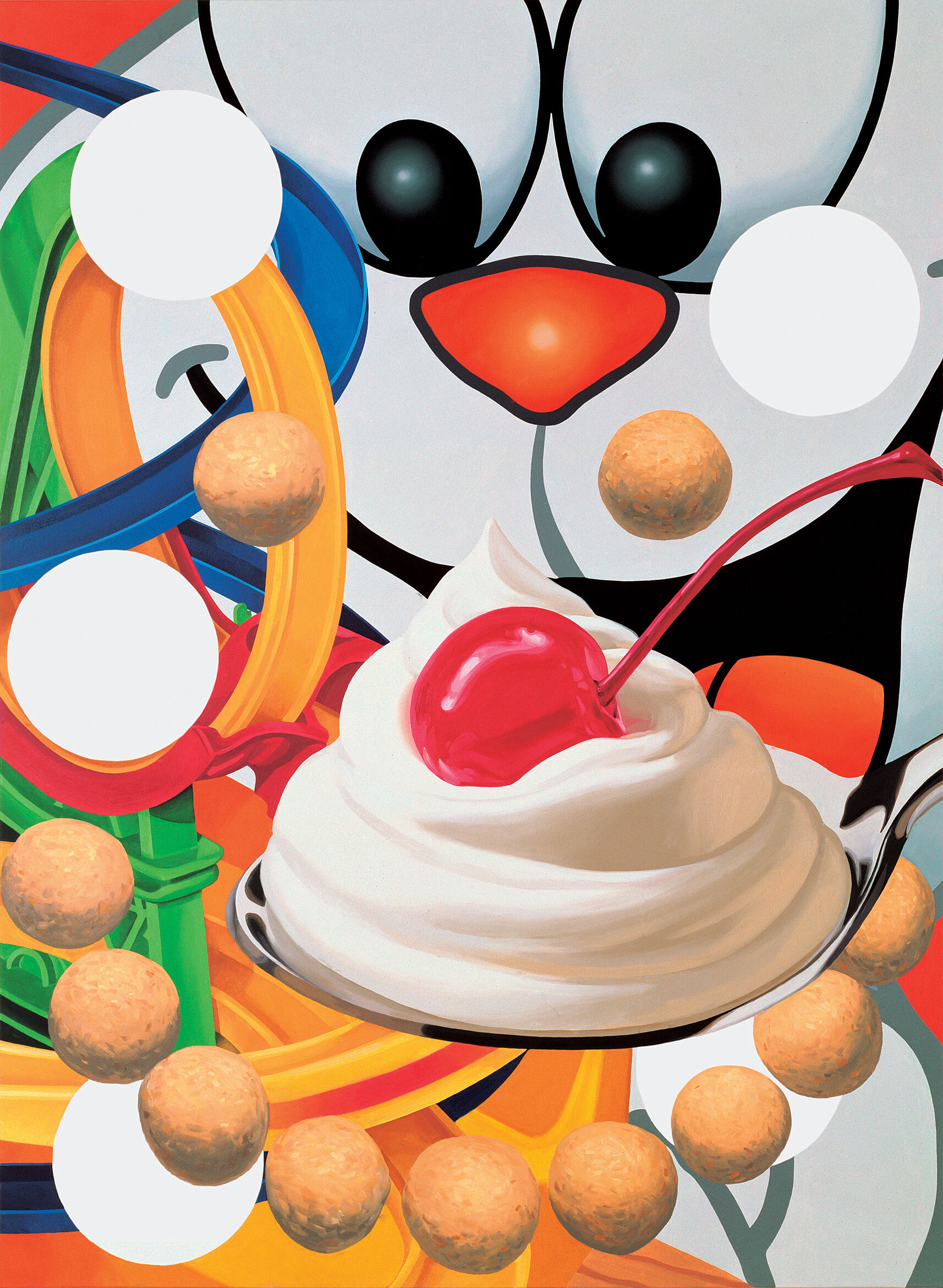
Inspired in part by Pablo Picasso’s remark, “When I was a child I could draw like Raphael, but it took me a lifetime to draw like a child,” Loopy and other paintings from the Easyfun series aim to recapture the innocent spirit of childhood. The smiling cartoon rabbit at the top of the canvas is the familiar mascot of Trix cereal. Its red nose is echoed in the cherry crowning a dollop of whipped cream, while its smile is doubled in the crescent of cereal pieces curving across the bottom of the picture. Winding through this imagery are tracks made for Hot Wheels toy cars and white polka dots that Koons has linked to the work of John Baldessari. Koons has commented that he hopes his paintings capture our attention the same way that a simple cereal box can grip a child’s imagination each day at breakfast.
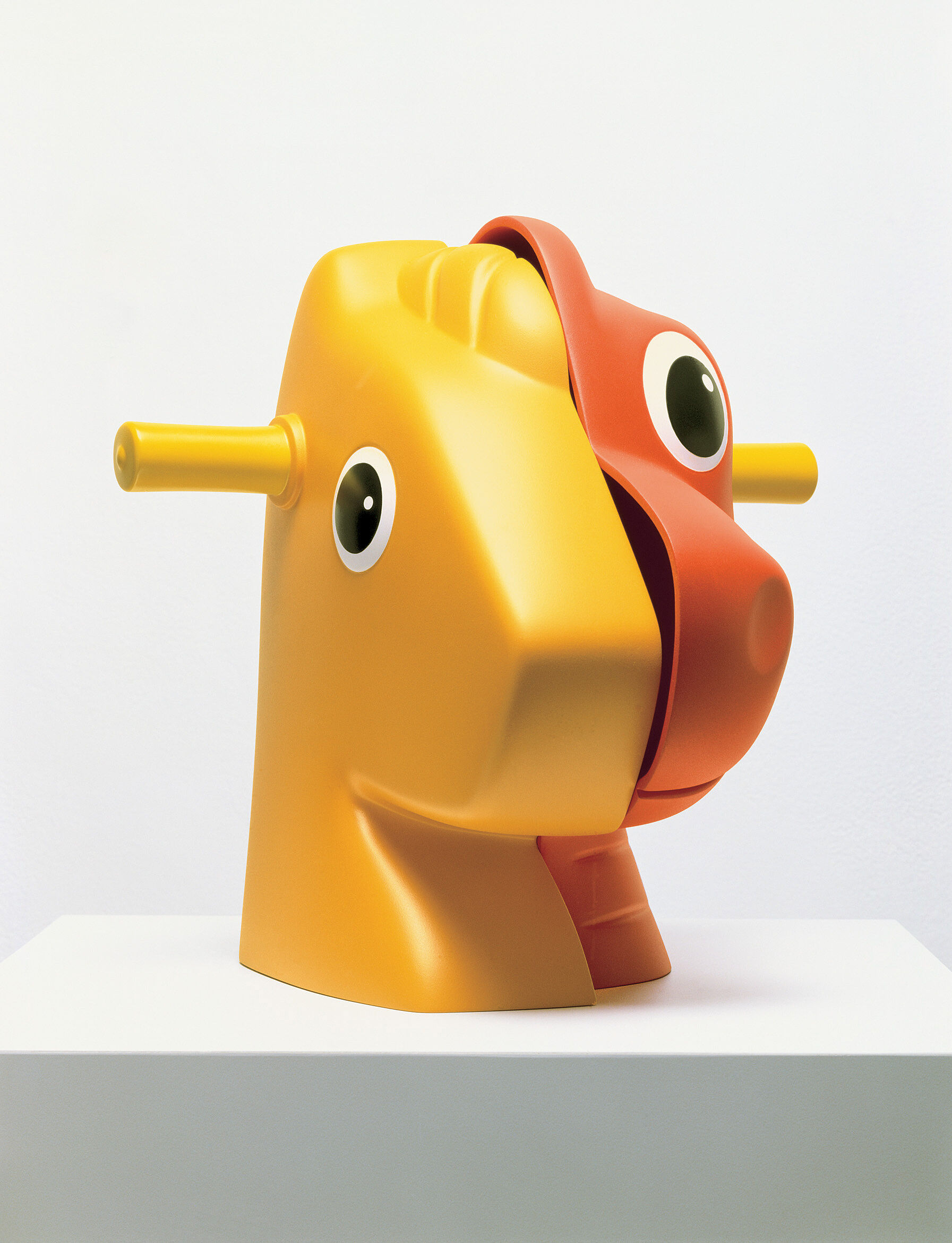
Split-Rocker is a disjointed combination of two children’s rocking toys in the shapes of a horse and a dinosaur. The work is a very personal one for Koons, since the toy pony had belonged to his son Ludwig. The sculpture’s fractured nature contrasts with the bilateral symmetry of the Easyfun mirrors and can be interpreted in relation to the split Koons experienced from his child, and to his own tense psychological state at the time of its production. Additionally, the form evokes the constructions of Pablo Picasso, one of Koons’s artistic heroes. In 2000, Koons replicated Split-Rocker at enormous scale as a topiary sculpture reminiscent of his well-known floral Puppy from 1992.