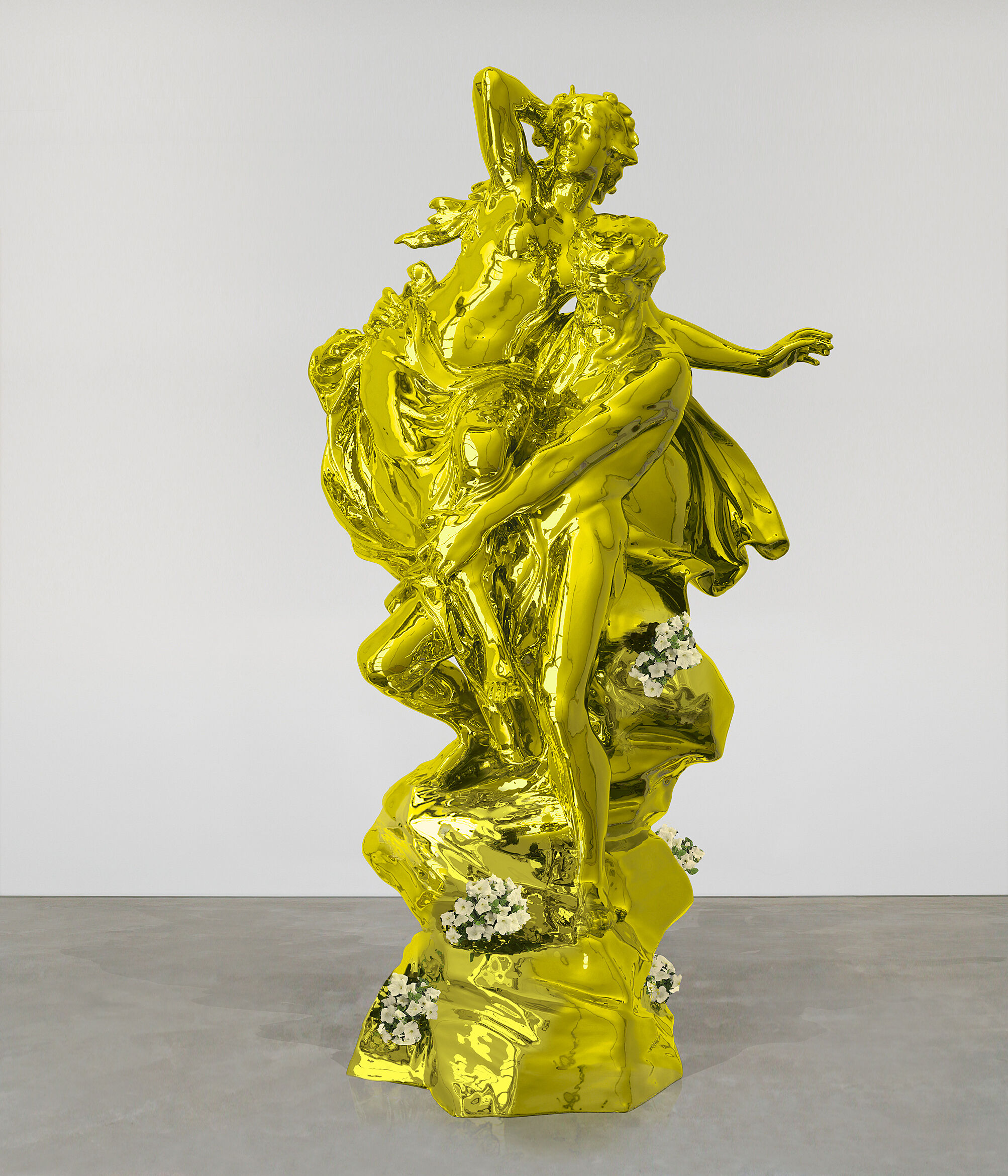
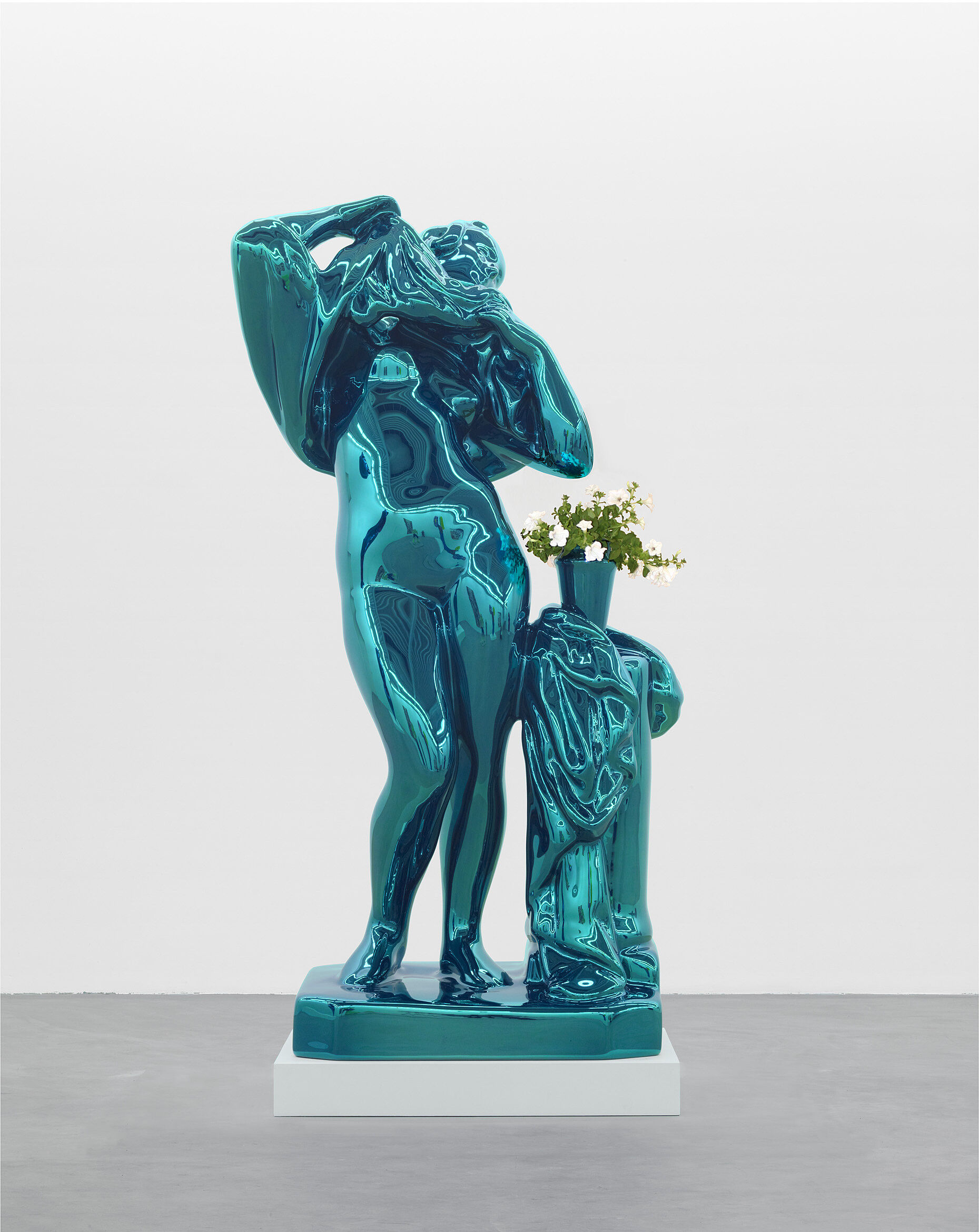
While Koons’s previous art-historical references spanned decades or centuries, in Antiquity he looks across millennia to Paleolithic and classical precedents that evoke the themes of love, beauty, and desire. Yet even these ancient sources have been filtered through multiple lenses, as Koons’s newest works subtly acknowledge how the idea of classical sculpture has evolved and been re-created over time. His model for a work like Metallic Venus is not a Greek or Roman original, but a porcelain knickknack, itself likely based on a later copy. Koons marks his place in this chain of history by using CT scans and other forms of digital imaging to aid in translating his sources into stone or stainless steel, walking a fine line between high and low references, the original and the copy, the traditional and the startlingly new.
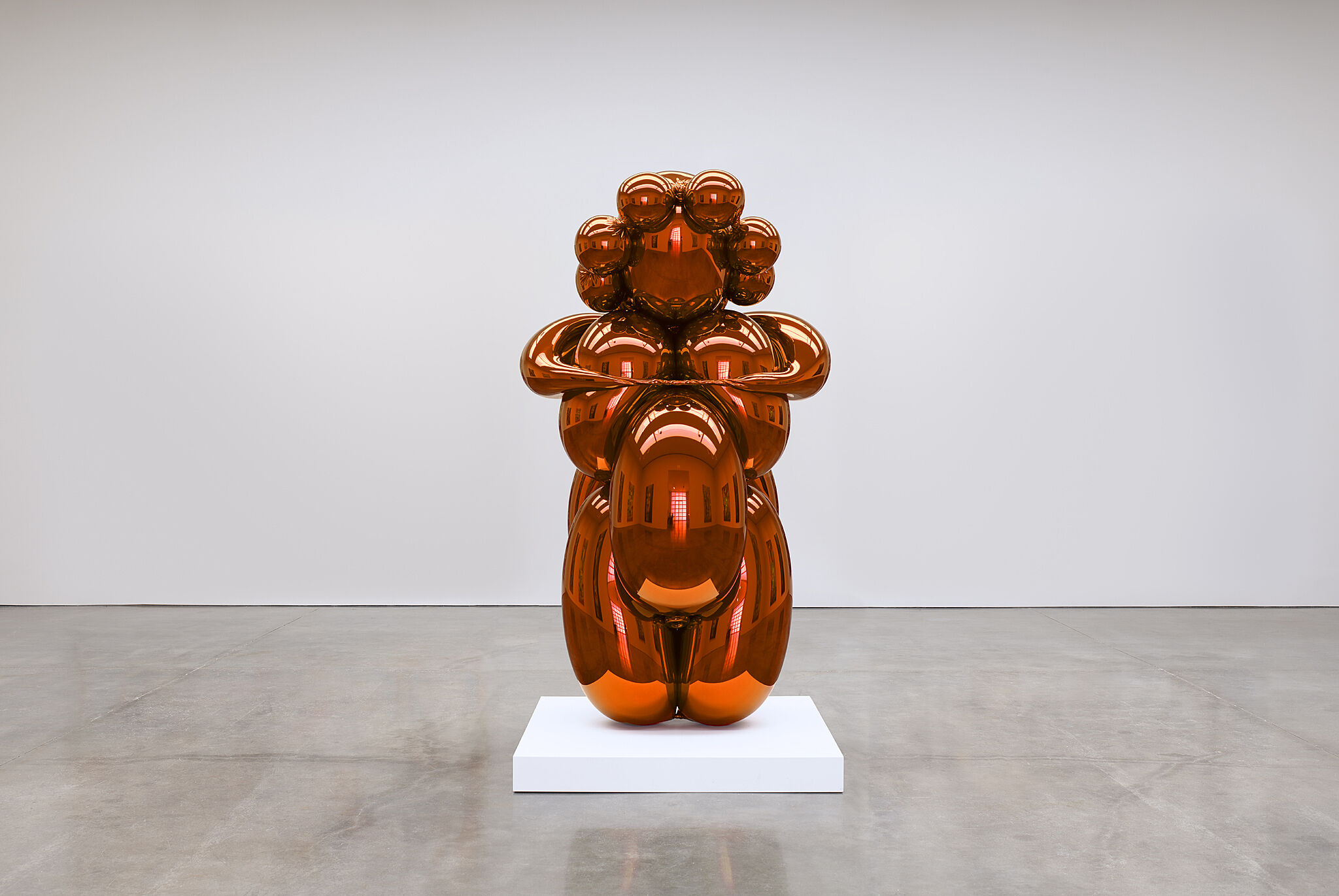
Koons was drawn to the Paleolithic statuette known as the Venus of Willendorf because of its associations with fertility and ritual. He has said that as a younger artist he looked for sources that were “product-oriented,” whereas the Venus figure attests to his more recent involvement with “connecting to things that are archetypal and profound, things that connect you to human history.” Koons designed the sculpture’s model using a single balloon since the feeling of air connecting through its many twists and chambers was integral to its sense of life. He had the balloon CT scanned (a process that could capture the figure’s innermost contours) and scaled up its proportions while maintaining fluid curves and its complex twisted and puckered details. Despite being hard and opaque, the final sculpture retains an amazing sense of inflatedness and adds a contemporary layer of homage and caricature to the original artifact’s exaggerated anatomical forms.
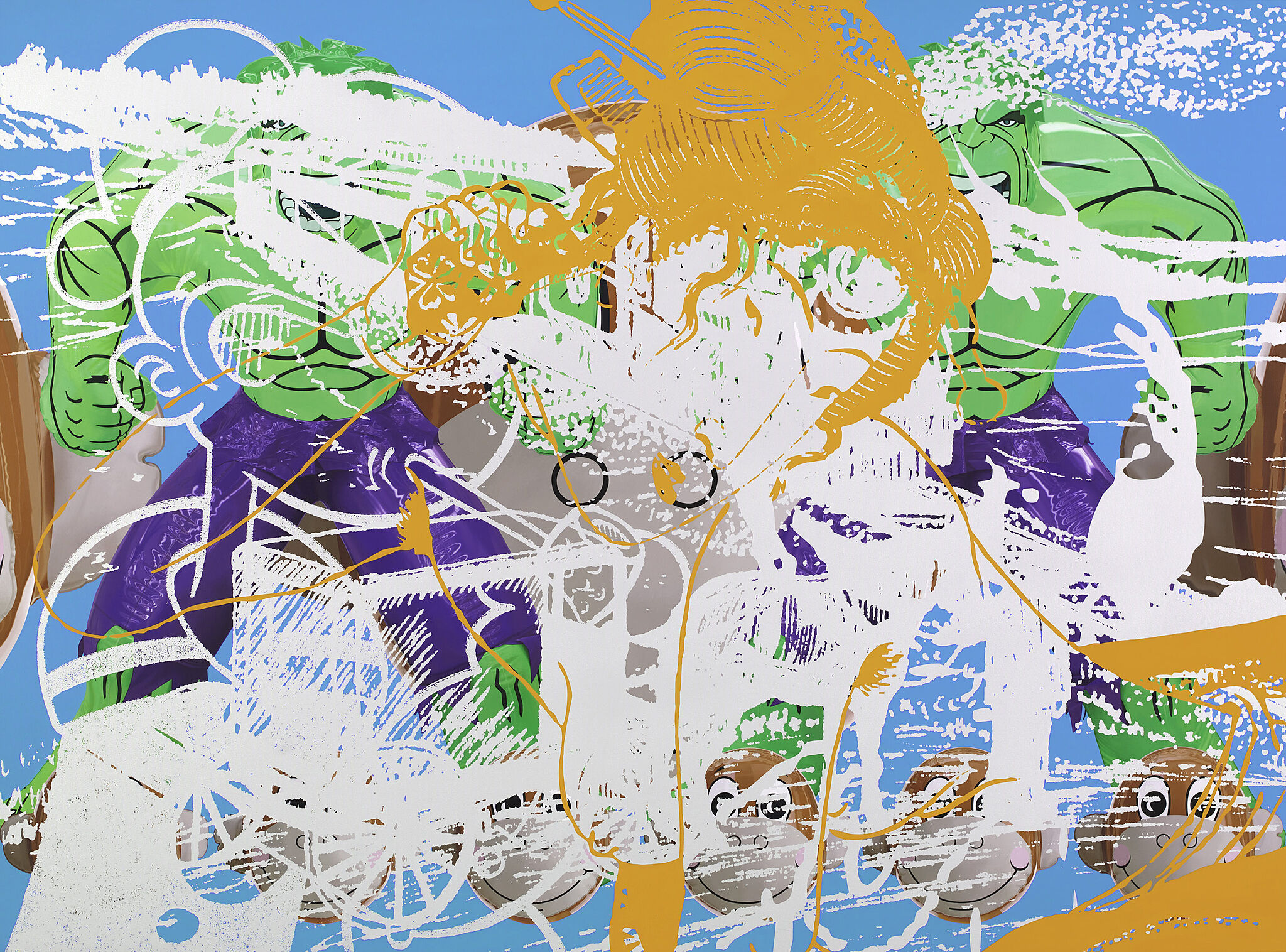
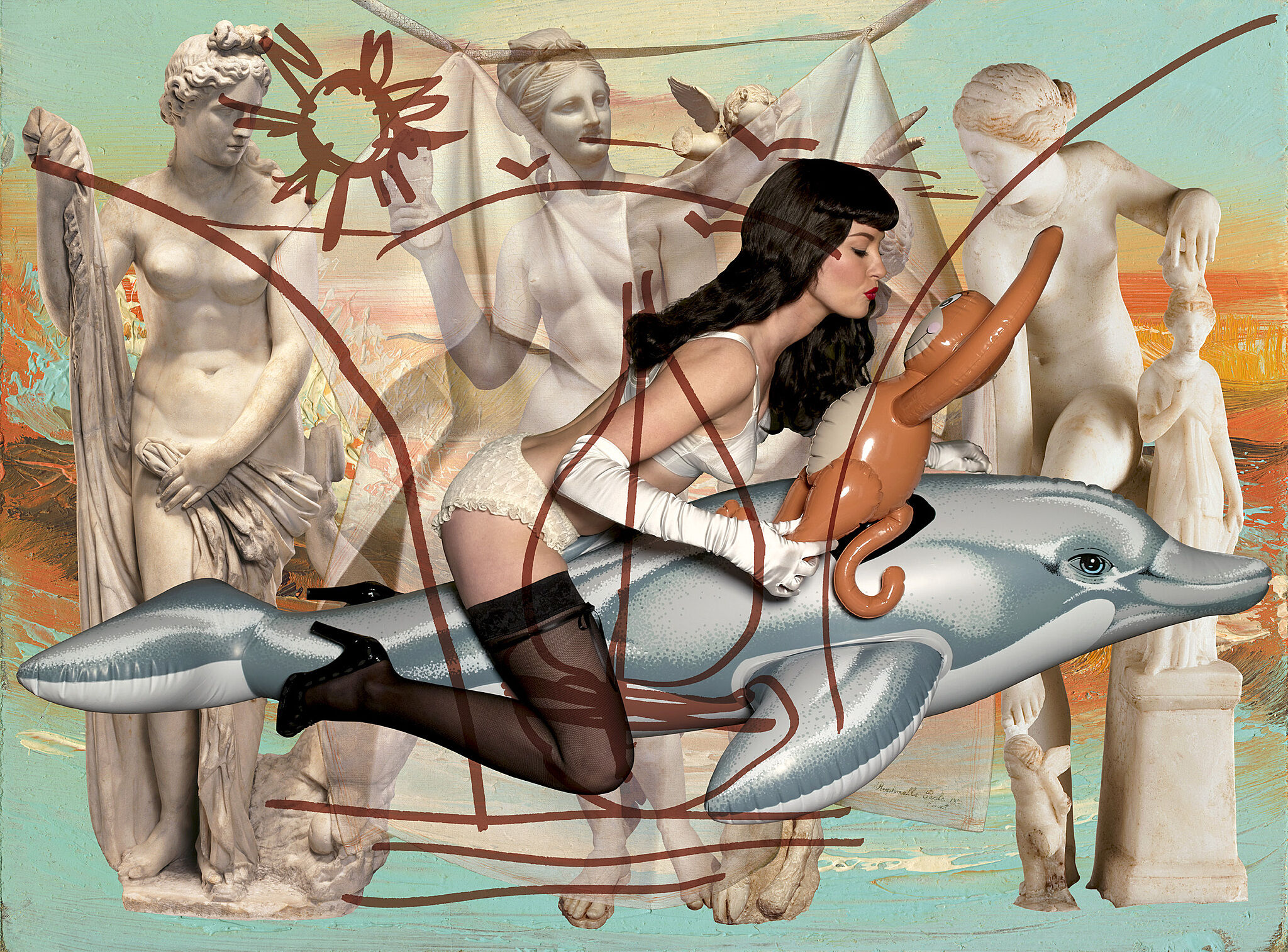
The central image in Antiquity 3 is based on a photograph Koons shot of the actress Gretchen Mol posing as the 1950s pin-up star Bettie Page. Ringed by classical statues and straddling an inflatable dolphin, she represents a contemporary Aphrodite, the Greek goddess of love, whom the ancients often depicted astride the dolphin that delivered her from the sea. Here Koons playfully connects past and present and riffs on an enduring, if contested, ideal of female beauty, while suggesting that celebrities are the true gods of our time. Koons also addresses the very nature of art’s illusory powers in this series. All of the source images are themselves representations of other things—a photograph of an actress playing someone else, a toy in the shape of a dolphin, a marker drawing of a sailboat, and statues in the guise of women serving as goddesses.