Last chance
High Wire: Calder’s Circus at 100 | Art & Artists
Through Mar 9
High Wire: Calder’s Circus at 100 | Art & Artists
Calder's Circus
4
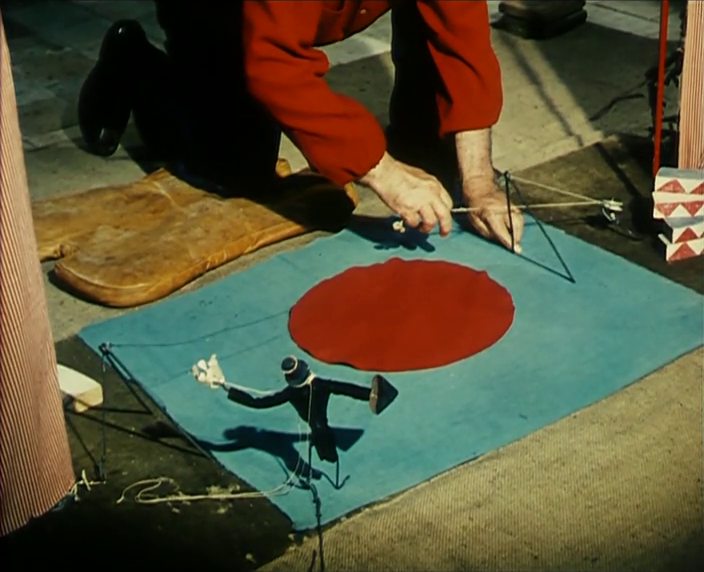
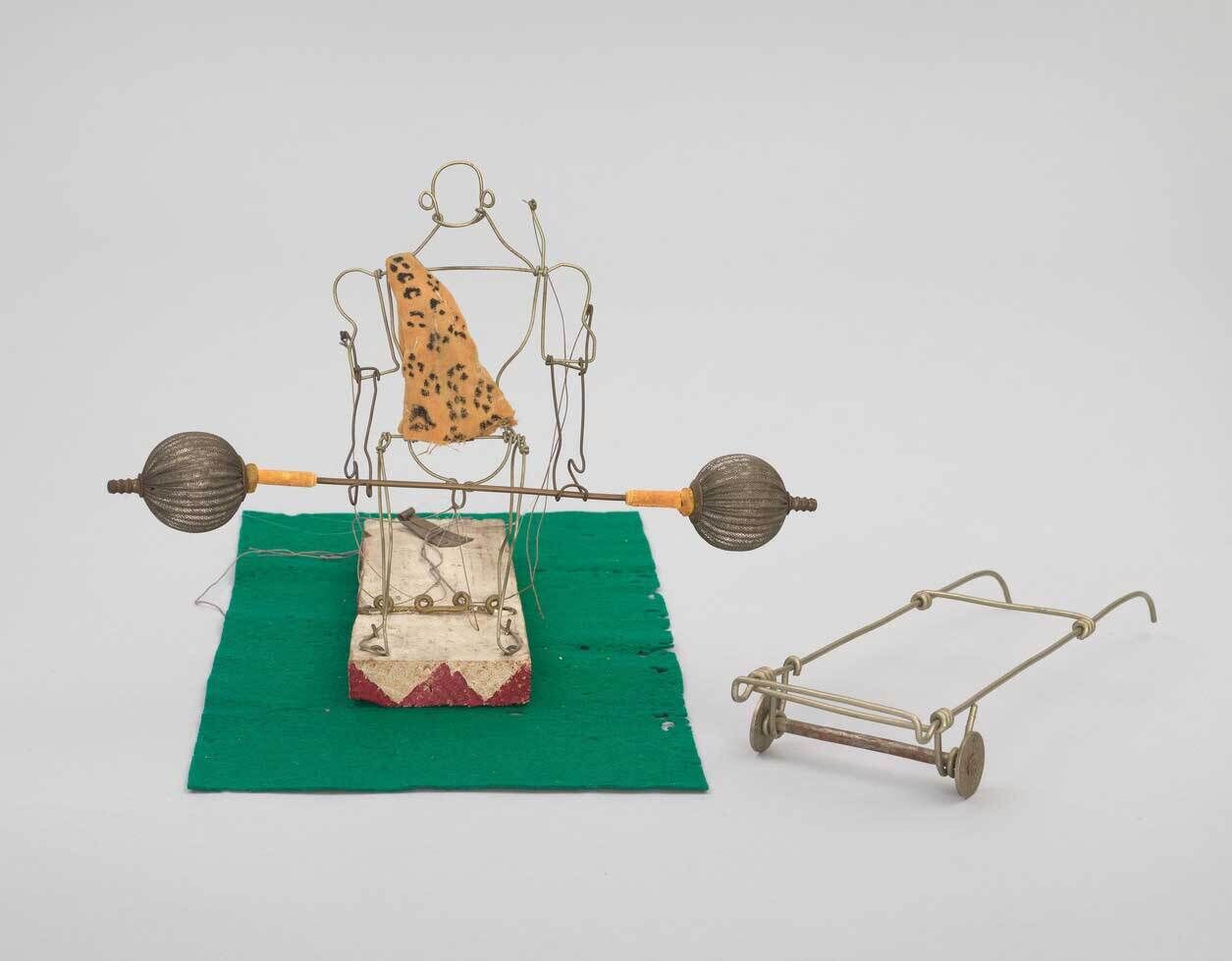
Calder used common place materials and simple mechanics to achieve realistic movements for his Circus figures as well as to create suspenseful and sometimes unpredictable moments, just like in the real life circus. Pulling a string, for instance, would cause Rigoulot, the weightlifter, to move his wire arms and torso with remarkable anatomical accuracy as he raises a barbell, and the belly dancer, Fanni, swivels and undulates as Calder rotates a gear system he devised from an eggbeater attached to a wire crank. Meanwhile, the tightrope figures, who are made to move and leap across the wire by Calder as he tightens it using a pulley, maintain their balance by the weight of their lead feet.
Alexander Calder, Rigoulot, the Strong Man, Weight Lifter, Dolly for Barbell, and Green Felt, from Calder's Circus, 1926-31. Wire, cloth, metal, thread, tape on painted wood base, coins, and felt, dimensions variable. Whitney Museum of American Art, New York; purchase, with funds from a public fundraising campaign in May 1982. One half of the funds were contributed by the Robert Wood Johnson Jr. Charitable Trust. Additional major donations were given by The Lauder Foundation; the Robert Lehman Foundation, Inc.; the Howard and Jean Lipman Foundation, Inc.; an anonymous donor; The T.M. Evans Foundation, Inc.; MacAndrews & Forbes Group, Incorporated; the De Witt Wallace Fund, Incorporated; Martin and Agneta Gruss; Anne Phillips; Mr. and Mrs. Laurance S. Rockefeller; the Simon Foundation, Inc.; Marylou Whitney; Bankers Trust Company; Mr. and Mrs. Kenneth N. Dayton; Joel and Anne Ehrenkranz; Irvin and Kenneth Feld; Flora Whitney Miller. More than 500 individuals from 26 states and abroad also contributed to the campaign 83.36.9.1-3. © 2026 Calder Foundation, New York / Artists Rights Society (ARS), New York

Exhibition works
-
Installation view of High Wire: Calder’s Circus at 100 (Whitney Museum of American Art, New York, October 18, 2025–March 9, 2026). From left to right: Alexander Calder, Two Acrobats, 1932; Alexander Calder, Lone Pole, 1932; Alexander Calder, Sphérique I, 1931; Alexander Calder, Object with Red Discs, 1931; Alexander Calder, Big Red, 1959; Alexander Calder, Little Ball with Counterweight, c. 1931; Projection: Carlos Vilardebó, Le Cirque Calder, 1961. © 2026 Calder Foundation, New York / Artists Rights Society (ARS), New York. Photograph by Ron Amstutz
-
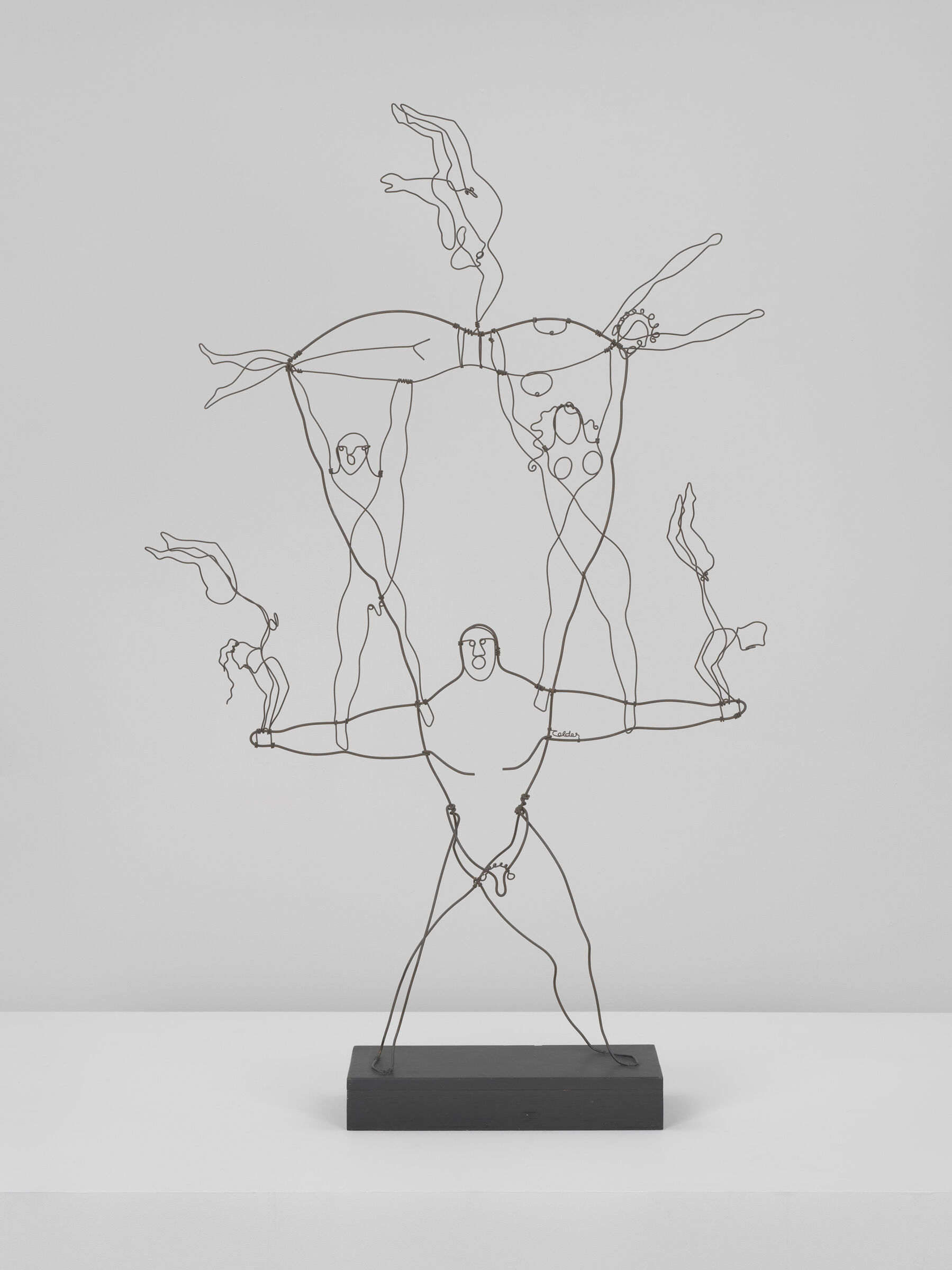
Installation view of High Wire: Calder’s Circus at 100 (Whitney Museum of American Art, New York, October 18, 2025–March 9, 2026). From left to right: Alexander Calder, The Catch IV, 1932; Alexander Calder, Tightrope Walker, 1932; Alexander Calder, Two Acrobats, 1932; Alexander Calder, Lone Pole, 1932. © 2026 Calder Foundation, New York / Artists Rights Society (ARS), New York. Photograph by Ron Amstutz
-
Installation view of High Wire: Calder’s Circus at 100 (Whitney Museum of American Art, New York, October 18, 2025–March 9, 2026). From left to right: Alexander Calder, Victorine (The Circus Queen), 1928; Alexander Calder, Wire Sculpture by Calder, 1928; Alexander Calder, Acrobats, 1929; Alexander Calder, The Brass Family, 1929; Alexander Calder, Circus Scene, 1929; Alexander Calder, Acrobats, c. 1927. © 2026 Calder Foundation, New York / Artists Rights Society (ARS), New York. Photograph by Ron Amstutz
-
Installation view of High Wire: Calder’s Circus at 100 (Whitney Museum of American Art, New York, October 18, 2025–March 9, 2026). From left to right: Alexander Calder, Acrobats, 1929; Alexander Calder, The Brass Family, 1929; Alexander Calder, Circus Scene, 1929; Alexander Calder, Acrobats, c. 1927; Alexander Calder, Untitled (Circus scene; polo match), c. 1926; Alexander Calder, The Flying Trapeze, 1925. © 2026 Calder Foundation, New York / Artists Rights Society (ARS), New York. Photograph by Ron Amstutz
-
Installation view of High Wire: Calder’s Circus at 100 (Whitney Museum of American Art, New York, October 18, 2025–March 9, 2026). From left to right: Alexander Calder, Big Red, 1959; Projection: Carlos Vilardebó, Le Cirque Calder, 1961; Alexander Calder, The Wild Beast Cage, 1932; Alexander Calder, Tumbler on Swing, 1931; Alexander Calder, On the High Wire, 1932. © 2026 Calder Foundation, New York / Artists Rights Society (ARS), New York. Photograph by Ron Amstutz
-
Installation view of High Wire: Calder’s Circus at 100 (Whitney Museum of American Art, New York, October 18, 2025–March 9, 2026). From left to right: Alexander Calder, Sphérique I, 1931; Alexander Calder, Object with Red Discs, 1931; Alexander Calder, Little Ball with Counterweight, c. 1931. © 2026 Calder Foundation, New York / Artists Rights Society (ARS), New York. Photograph by Ron Amstutz
-
Installation view of High Wire: Calder’s Circus at 100 (Whitney Museum of American Art, New York, October 18, 2025–March 2026). In vitrine: Alexander Calder, Calder’s Circus, 1926–31. Back, from left to right: Alexander Calder, The Catch IV, 1932; Alexander Calder, Tightrope Walker, 1932; Alexander Calder, Two Acrobats, 1932; Alexander Calder, Sphérique I, 1931; Alexander Calder, Little Ball with Counterweight, c. 1931; Alexander Calder, Big Red, 1959; Projection: Carlos Vilardebó, Le Cirque Calder, 1961. © 2026 Calder Foundation, New York / Artists Rights Society (ARS), New York. Photograph by Ron Amstutz
-
Installation view of High Wire: Calder’s Circus at 100 (Whitney Museum of American Art, New York, October 18, 2025–March 2026). In vitrines: Alexander Calder, Calder’s Circus, 1926–31. Projection: Carlos Vilardebó, Le Cirque Calder, 1961. © 2026 Calder Foundation, New York / Artists Rights Society (ARS), New York. Photograph by Ron Amstutz
-
Installation view of High Wire: Calder’s Circus at 100 (Whitney Museum of American Art, New York, October 18, 2025–March 2026). In vitrine: Alexander Calder, Calder’s Circus, 1926–31. Back, from left to right: Alexander Calder, Wire Sculpture by Calder, 1928; Alexander Calder, Acrobats, 1929; Alexander Calder, The Brass Family, 1929; Alexander Calder, Circus Scene, 1929; Alexander Calder, Acrobats, c. 1927. © 2026 Calder Foundation, New York / Artists Rights Society (ARS), New York. Photograph by Ron Amstutz
-
Installation view of High Wire: Calder’s Circus at 100 (Whitney Museum of American Art, New York, October 18, 2025–March 2026). From left to right: Alexander Calder, The Flying Trapeze, 1925; In vitrine: Alexander Calder, Calder’s Circus, 1926–31. © 2026 Calder Foundation, New York / Artists Rights Society (ARS), New York. Photograph by Ron Amstutz
-
Installation view of High Wire: Calder’s Circus at 100 (Whitney Museum of American Art, New York, October 18, 2025–March 2026). In vitrine: Alexander Calder, Calder’s Circus, 1926–31. Back, from left to right: Alexander Calder, Wire Sculpture by Calder, 1928; Alexander Calder, The Brass Family, 1929; Alexander Calder, Circus Scene, 1929; Alexander Calder, Untitled (Circus scene; polo match), c. 1926; Alexander Calder, The Flying Trapeze, 1925. © 2026 Calder Foundation, New York / Artists Rights Society (ARS), New York. Photograph by Ron Amstutz
-
Installation view of High Wire: Calder’s Circus at 100 (Whitney Museum of American Art, New York, October 18, 2025–March 2026). In vitrines: Alexander Calder, Calder’s Circus, 1926–31. Back, from left to right: Alexander Calder, Wire Sculpture by Calder, 1928; Alexander Calder, Acrobats, 1929; Alexander Calder, The Brass Family, 1929; Alexander Calder, Circus Scene, 1929; Alexander Calder, Acrobats, c. 1927; Alexander Calder, Untitled (Circus scene; polo match), c. 1926; Alexander Calder, The Flying Trapeze, 1925. © 2026 Calder Foundation, New York / Artists Rights Society (ARS), New York. Photograph by Ron Amstutz
-
Installation view of High Wire: Calder’s Circus at 100 (Whitney Museum of American Art, New York, October 18, 2025–March 2026). In vitrine: Alexander Calder, Calder’s Circus, 1926–31. Back, from left to right: Alexander Calder, The Catch IV, 1932; Alexander Calder, Tightrope Walker, 1932; Alexander Calder, Two Acrobats, 1932. © 2026 Calder Foundation, New York / Artists Rights Society (ARS), New York. Photograph by Ron Amstutz
-
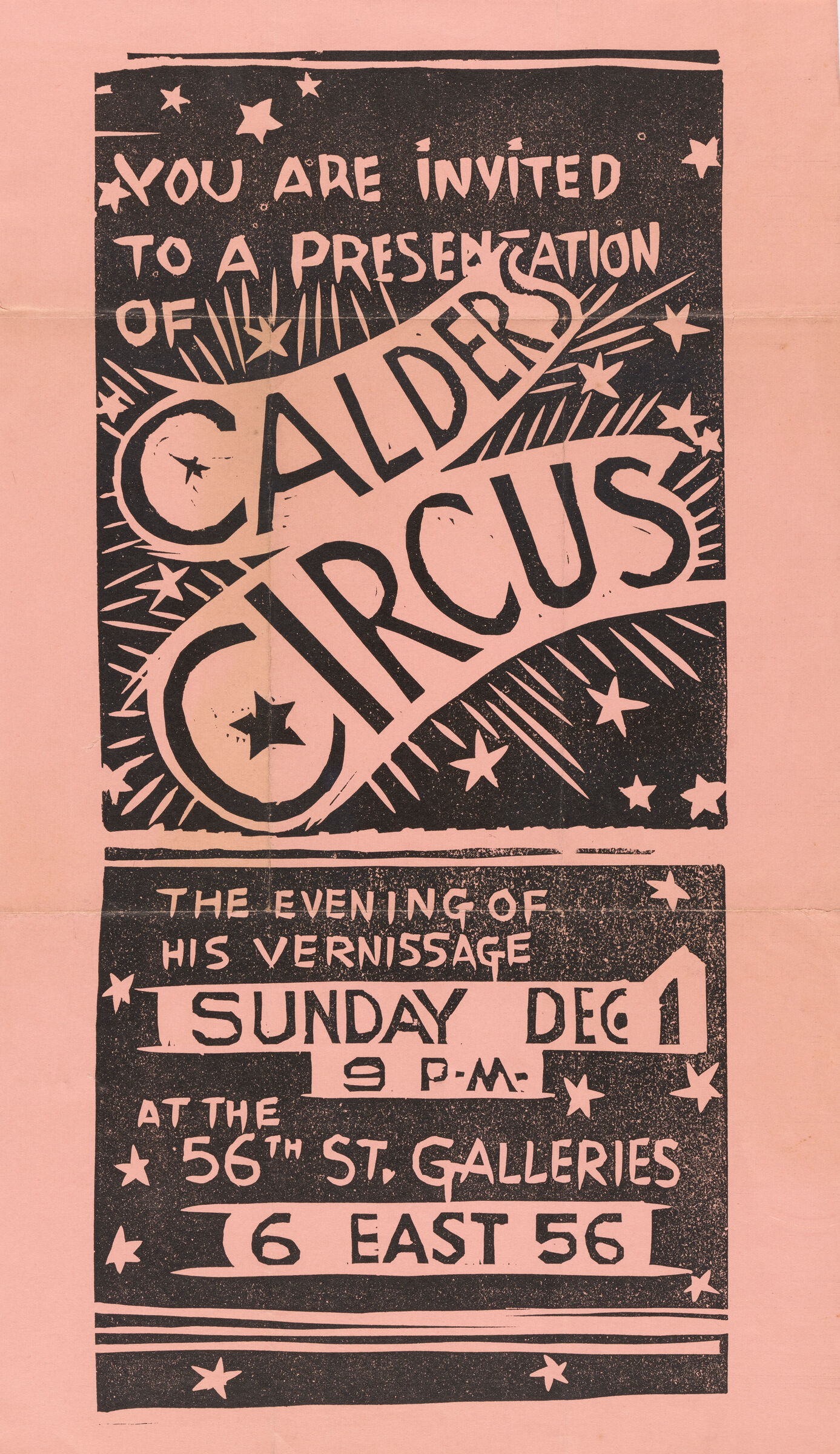
Installation view of High Wire: Calder’s Circus at 100 (Whitney Museum of American Art, New York, October 18, 2025–March 2026). From left to right: Alexander Calder, Wire Sculpture by Calder, 1928; Alexander Calder, Acrobats, 1929; Alexander Calder, The Brass Family, 1929. In vitrine, from left to right: Alexander Calder, Invitations to performance of Calder’s Circus/Cirque Calder (7 Villa Brune, Paris), 1930; Alexander Calder, Invitation to performance of Calder’s Circus/Cirque Calder (Chez Hawes-Harden, New York), 1929; Alexander Calder, Invitation to performance of Calder’s Circus/Cirque Calder (Chez Matter, New York), 1942; Alexander Calder, Invitation to performance of Calder’s Circus/Cirque Calder (7 Villa Brune, Paris), 1930; Alexander Calder, Invitations to performance of Calder’s Circus/Cirque Calder (14 rue de la Colonie, Paris), 1932; Alexander Calder, Invitation to performance Calder’s Circus/Cirque Calder (Fifty-Sixth Street Galleries, New York), 1929. © 2026 Calder Foundation, New York / Artists Rights Society (ARS), New York. Photograph by Ron Amstutz
-
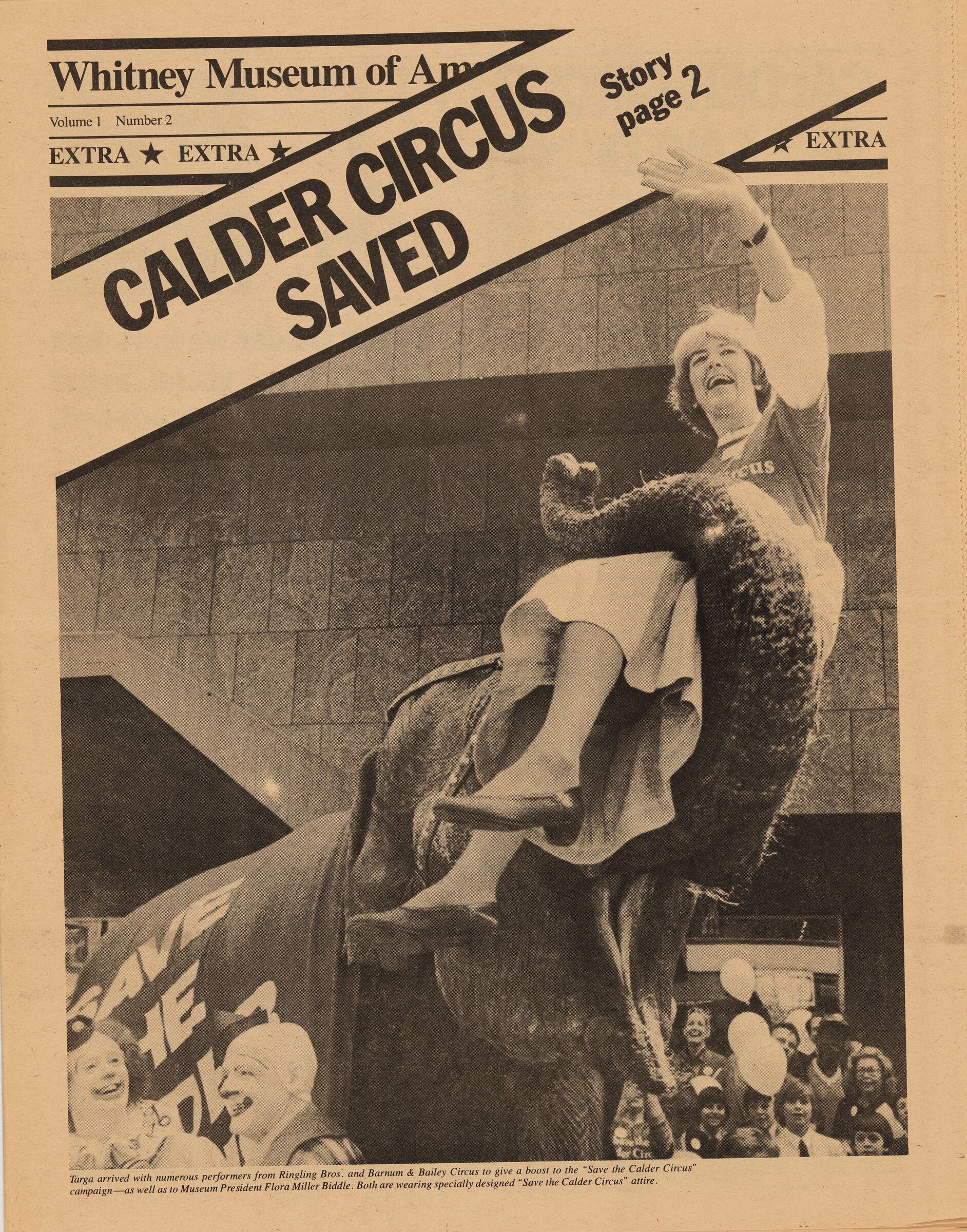
Installation view of High Wire: Calder’s Circus at 100 (Whitney Museum of American Art, New York, October 18, 2025–March 2026). In vitrine: Materials related to the history of Calder’s Circus at the Whitney and the “Save the Circus” acquisition campaign, 1971–82. On monitor: “Conserving Calder’s Circus”, 2012. © 2026 Calder Foundation, New York / Artists Rights Society (ARS), New York. Photograph by Ron Amstutz
-
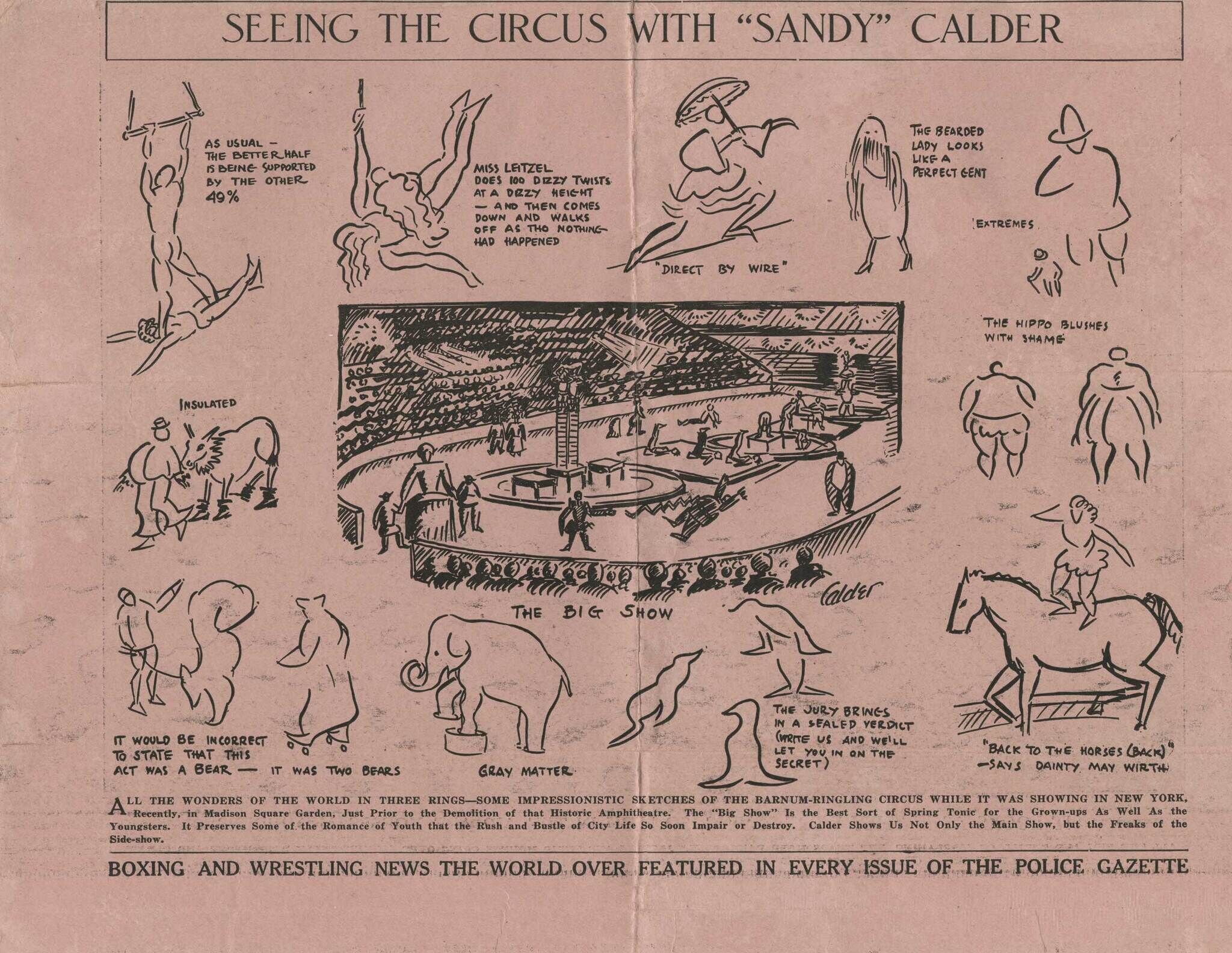
Installation view of High Wire: Calder’s Circus at 100 (Whitney Museum of American Art, New York, October 18, 2025–March 2026). From top to bottom: Alexander Calder, Wire Sculpture by Calder, 1928; Alexander Calder, Victorine (The Circus Queen), 1928; In vitrine, from left to right: Alexander Calder, Untitled (Circus ring), 1925; “Seeing the Circus with ‘Sandy’ Calder,” National Police Gazette, May 23, 1925; Calder with a series of Action Toys, Gould Manufacturing Company, Oshkosh, Wisconsin, 1929; “Statement on Wire Sculpture,” 1929; Clippings of articles about Calder from The World (New York) [“His Elephants Don’t Drink”], January 18, 1931; Paris-Midi [“Le Plus Petit Cirque du Monde”], April 23, 1931; and Chicago Tribune (Paris edition) [“American Artist Wins Praise For His Work In Wire”], May 2, 1931. © 2026 Calder Foundation, New York / Artists Rights Society (ARS), New York. Photograph by Ron Amstutz
-
Installation view of High Wire: Calder’s Circus at 100 (Whitney Museum of American Art, New York, October 18, 2025–March 2026). From top to bottom: Alexander Calder, Victorine (The Circus Queen), 1928; In vitrine, from left to right: Alexander Calder, Untitled (Circus ring), 1925; “Seeing the Circus with ‘Sandy’ Calder,” National Police Gazette, May 23, 1925; Calder with a series of Action Toys, Gould Manufacturing Company, Oshkosh, Wisconsin, 1929; “Statement on Wire Sculpture,” 1929; Clippings of articles about Calder from The World (New York) [“His Elephants Don’t Drink”], January 18, 1931; Paris-Midi [“Le Plus Petit Cirque du Monde”], April 23, 1931; and Chicago Tribune (Paris edition) [“American Artist Wins Praise For His Work In Wire”], May 2, 1931. © 2026 Calder Foundation, New York / Artists Rights Society (ARS), New York. Photograph by Ron Amstutz
-
Installation view of High Wire: Calder’s Circus at 100 (Whitney Museum of American Art, New York, October 18, 2025–March 2026). From top to bottom: Alexander Calder, The Brass Family, 1929; In vitrine, from left to right: Alexander Calder, Invitations to performance of Calder’s Circus/Cirque Calder (7 Villa Brune, Paris), 1930; Alexander Calder, Invitation to performance of Calder’s Circus/Cirque Calder (Chez Hawes-Harden, New York), 1929; Alexander Calder, Invitation to performance of Calder’s Circus/Cirque Calder (Chez Matter, New York), 1942; Alexander Calder, Invitation to performance of Calder’s Circus/Cirque Calder (7 Villa Brune, Paris), 1930; Alexander Calder, Invitations to performance of Calder’s Circus/Cirque Calder (14 rue de la Colonie, Paris), 1932; Alexander Calder, Invitation to performance Calder’s Circus/Cirque Calder (Fifty-Sixth Street Galleries, New York), 1929. © 2026 Calder Foundation, New York / Artists Rights Society (ARS), New York. Photograph by Ron Amstutz
-
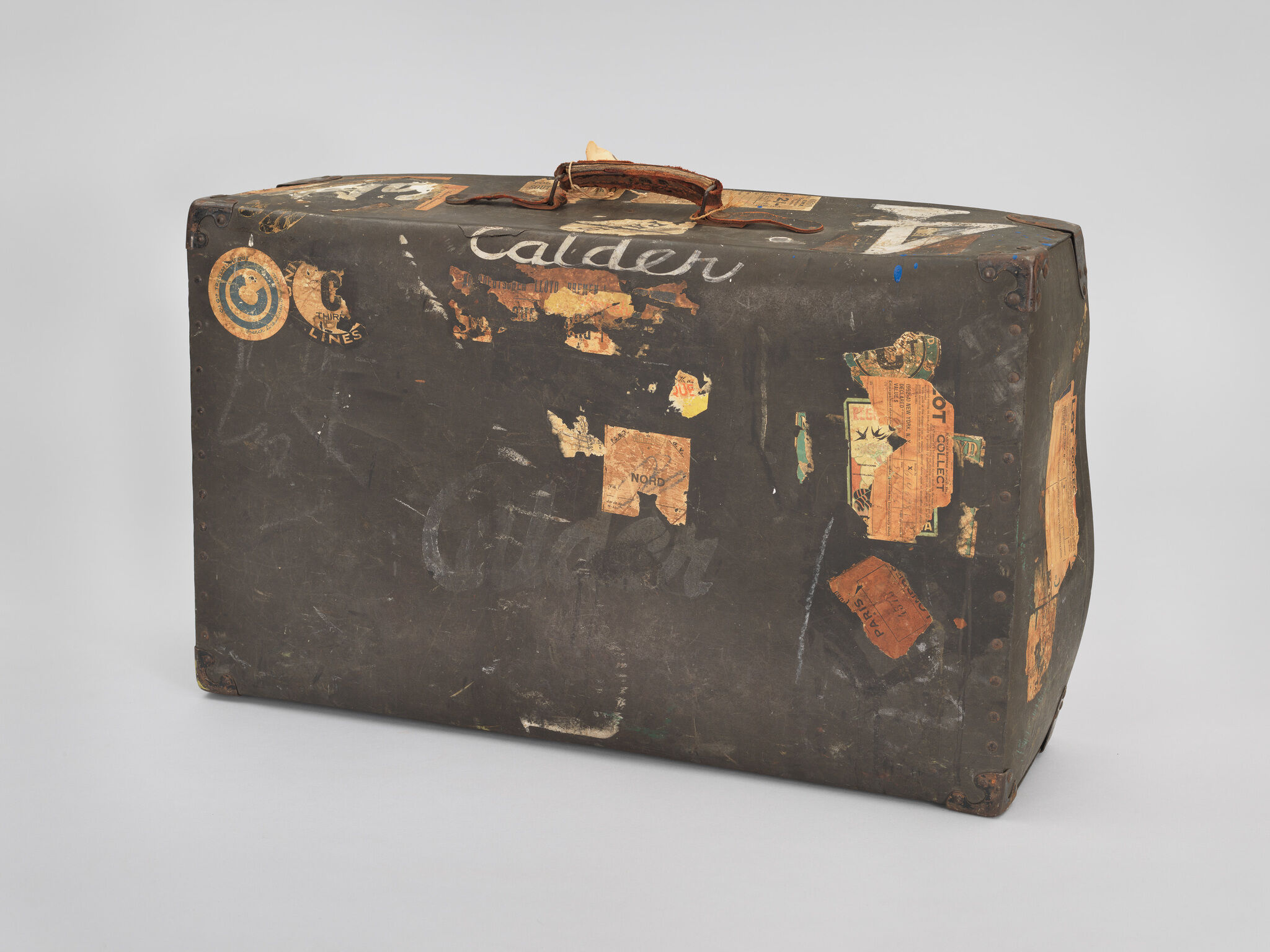
Installation view of High Wire: Calder’s Circus at 100 (Whitney Museum of American Art, New York, October 18, 2025–March 2026). From top to bottom: Alexander Calder, Acrobats, c. 1927; In vitrine, from left to right: André Kertész, Calder with the Circus, Paris, 1929; Thomas Bouchard, Calder with the Circus, c. 1931; Fred Hamilton, Calder performing the Circus, New York, c. 1942; Brassaï, Spear Thrower and Cowboy acts from Calder’s Circus, Paris, c. 1931; Fred Hamilton, Calder performing the Circus, New York, c. 1942; Fred Hamilton, Louisa Calder with the Circus, New York, c. 1942; Suitcases for Calder’s Circus at Galerie Maeght, Paris, c. 1953; Rufus Stillman, Calder with the Circus, Roxbury, Connecticut, 1953. © 2026 Calder Foundation, New York / Artists Rights Society (ARS), New York. Photograph by Ron Amstutz
-
Installation view of High Wire: Calder’s Circus at 100 (Whitney Museum of American Art, New York, October 18, 2025–March 2026). From top to bottom: Alexander Calder, Acrobats, c. 1927; In vitrine, from left to right: André Kertész, Calder with the Circus, Paris, 1929; Thomas Bouchard, Calder with the Circus, c. 1931; Fred Hamilton, Calder performing the Circus, New York, c. 1942; Brassaï, Spear Thrower and Cowboy acts from Calder’s Circus, Paris, c. 1931; Fred Hamilton, Calder performing the Circus, New York, c. 1942; Fred Hamilton, Louisa Calder with the Circus, New York, c. 1942; Suitcases for Calder’s Circus at Galerie Maeght, Paris, c. 1953; Rufus Stillman, Calder with the Circus, Roxbury, Connecticut, 1953. © 2026 Calder Foundation, New York / Artists Rights Society (ARS), New York. Photograph by Ron Amstutz