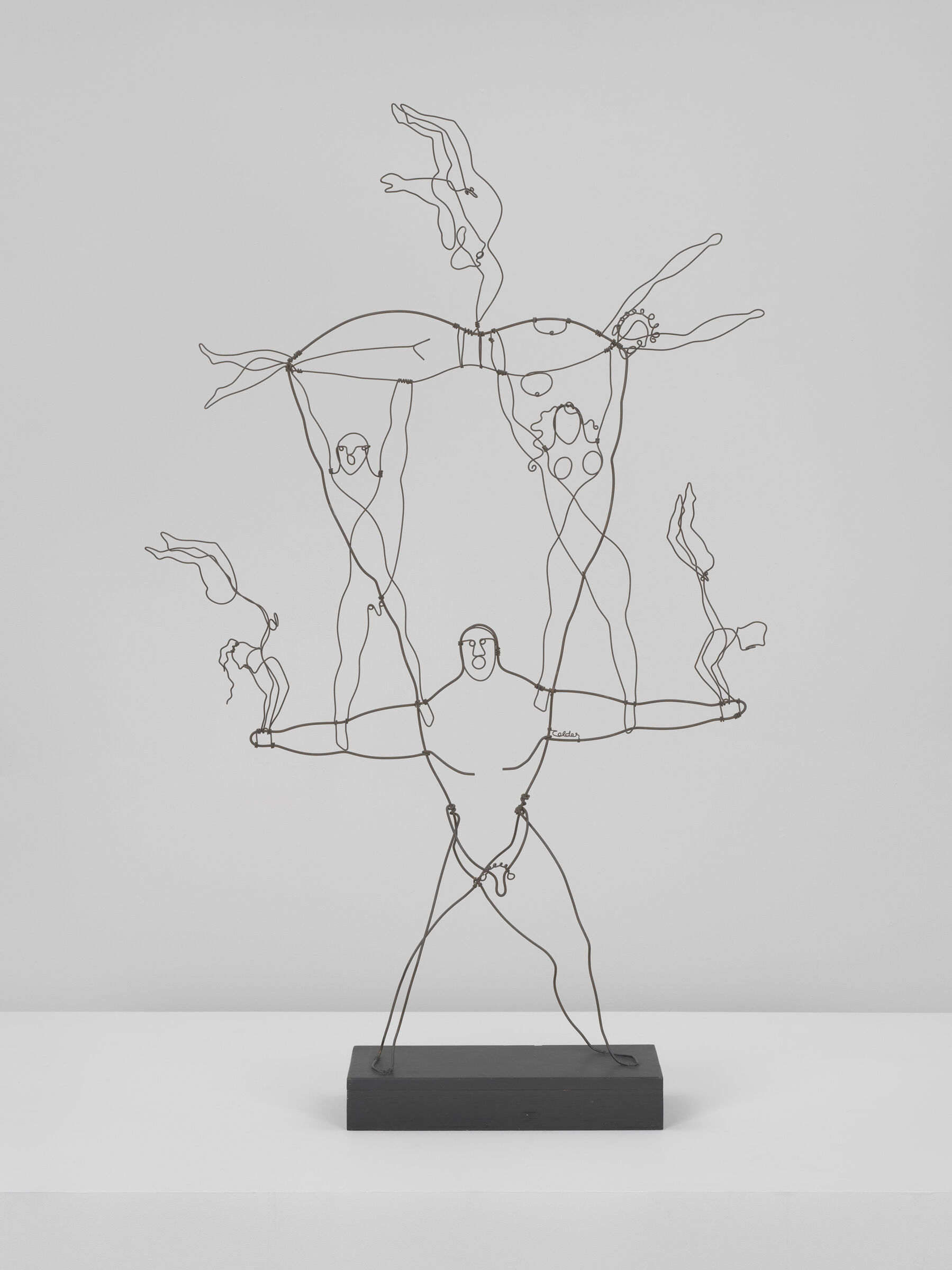
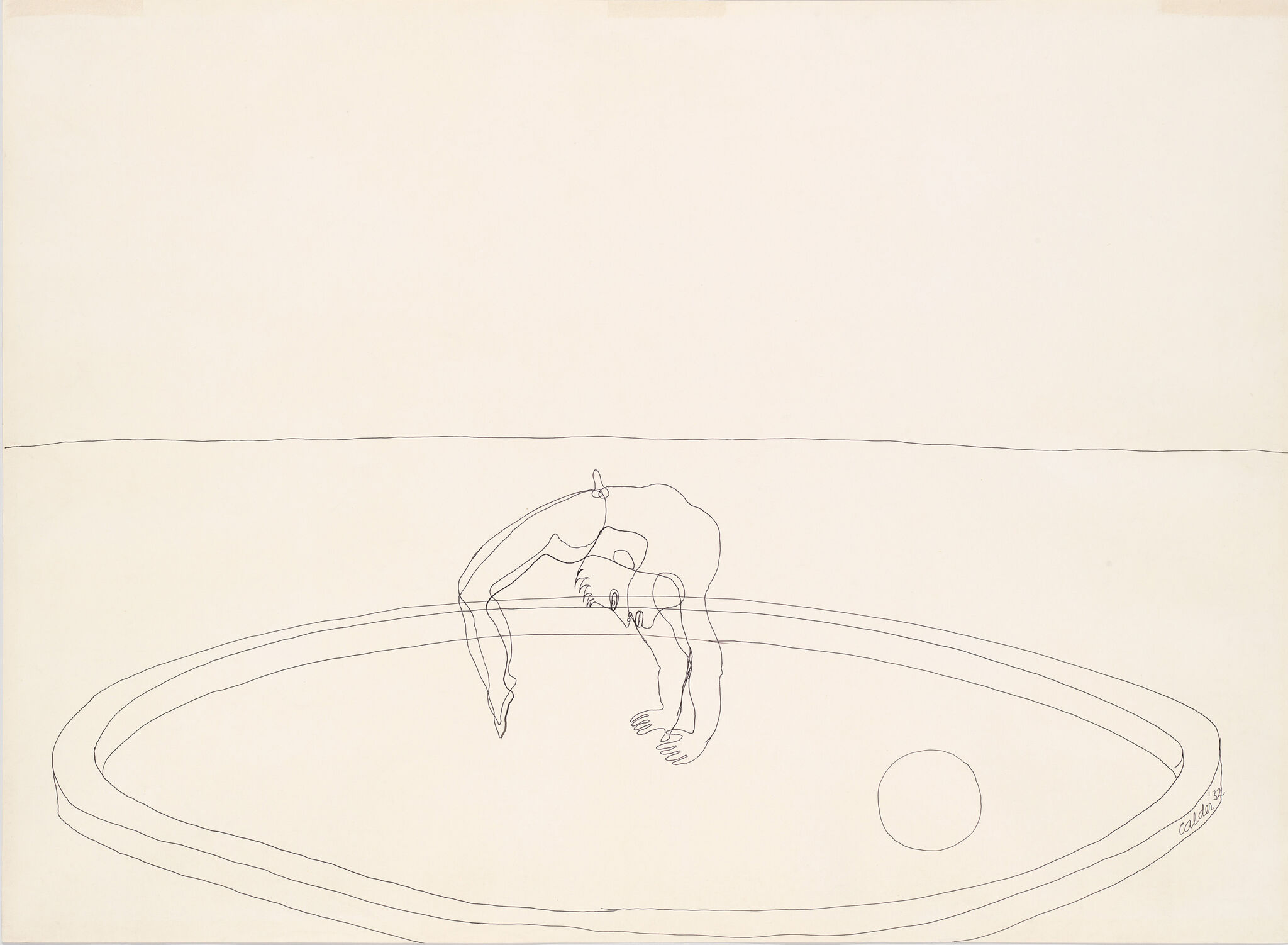
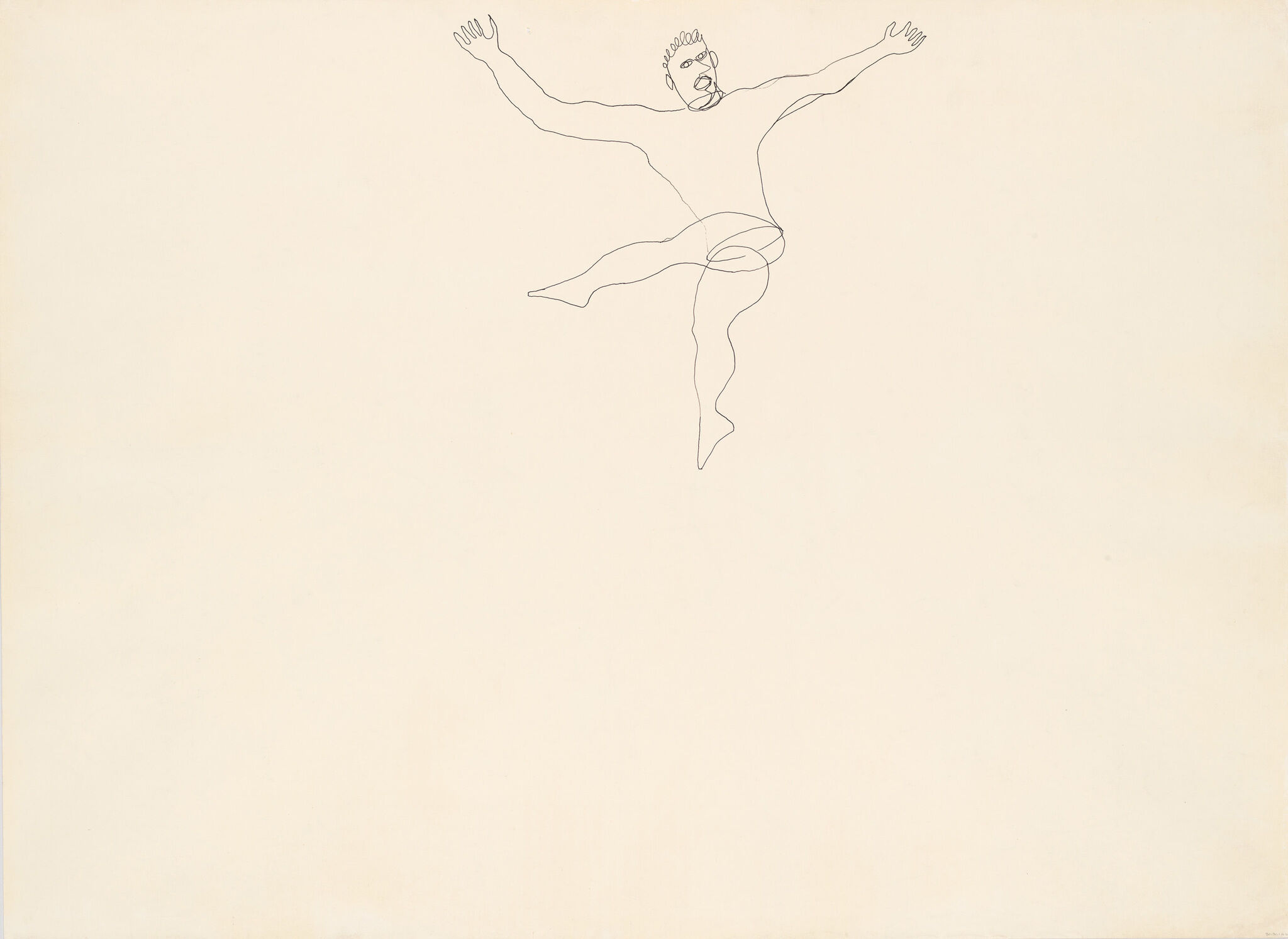
Calder continued exploring the theme of the circus in a series of ink drawings created in 1931 and 1932. These works were neither based on direct observation nor attempts to depict the circus realistically. In these “three-dimensional line drawings,” as he called them, Calder translates his radical approach to sculpture—using wire to shape lines, forms, and volumes—back onto the flat surface of paper. The Catch IV depicts the clasped hands of the trapeze artists as if all three dimensions could be shown simultaneously. In Two Acrobats, Calder further plays with the idea of dimensionality by drawing a single acrobat on each side of the paper; displaying the work with both sides visible reveals the acrobats’ bodies to be connected.