Whitney Biennial 2012
2012
Hear directly from artists as they talk about the thoughts, processes, and ideas behind their work in the 2012 Whitney Biennial exhibition.
-
120
Oscar Tuazon
Audio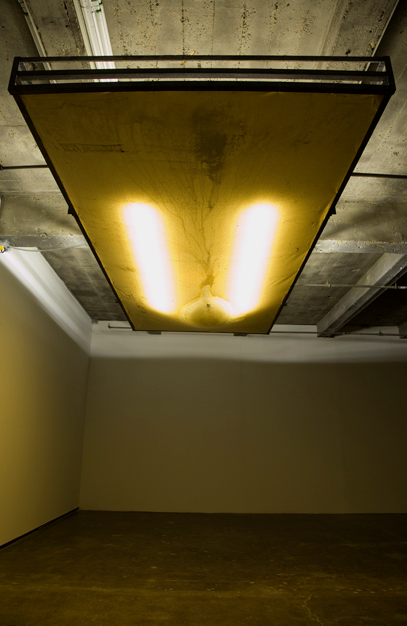
-
220
Thom Andersen
Audio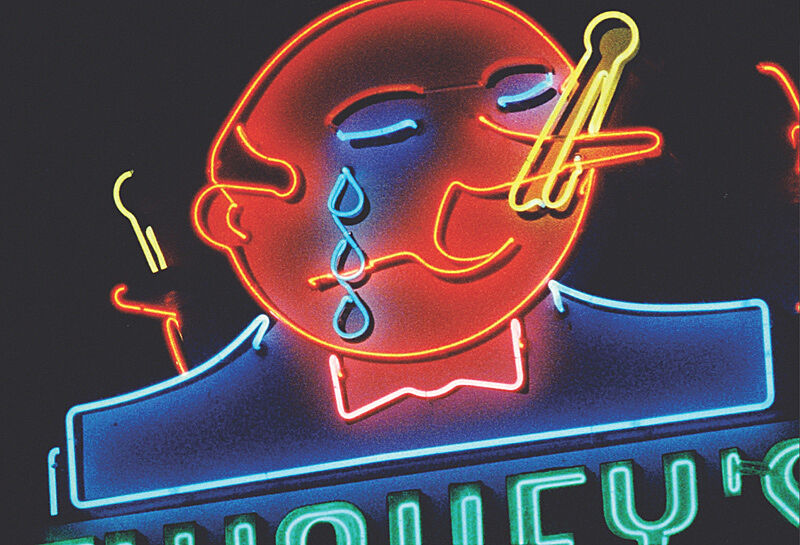
-
221
Forrest Bess (by Robert Gober)
Audio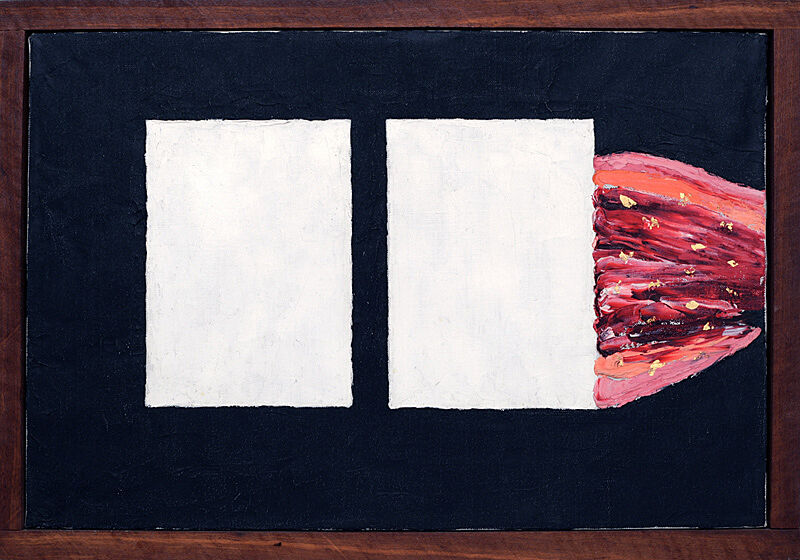
-
2212
Forrest Bess (by Robert Gober)
Audio
-
222
Moyra Davey (photography)
Audio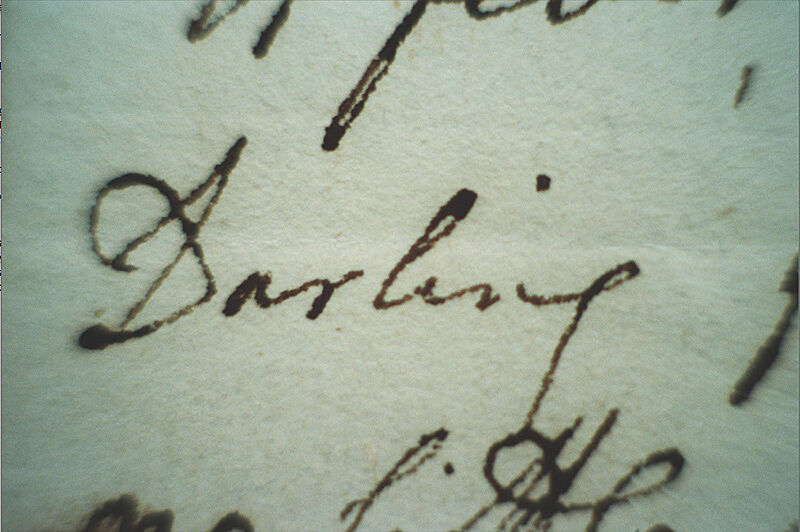
-
2222
Moyra Davey (photography)
Audio
-
223
Moyra Davey (Les Goddesses)
Audio
-
224
Matt Hoyt
Audio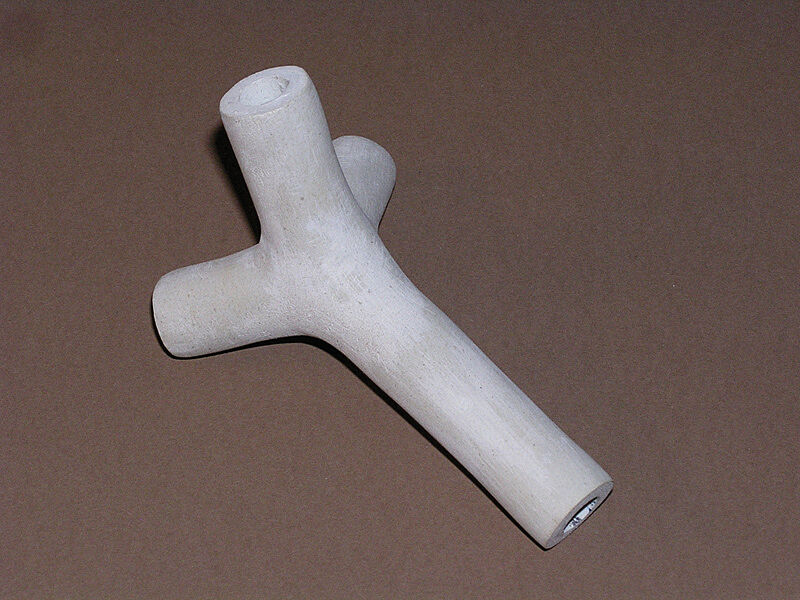
-
225
George Kuchar
Audio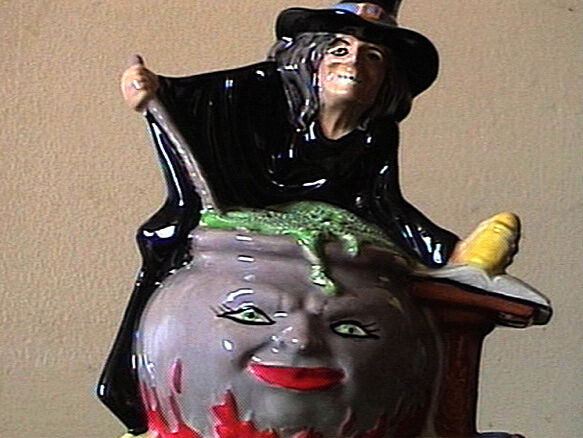
-
226
Laida Lertxundi
Audio -
227
Joanna Malinowska
Audio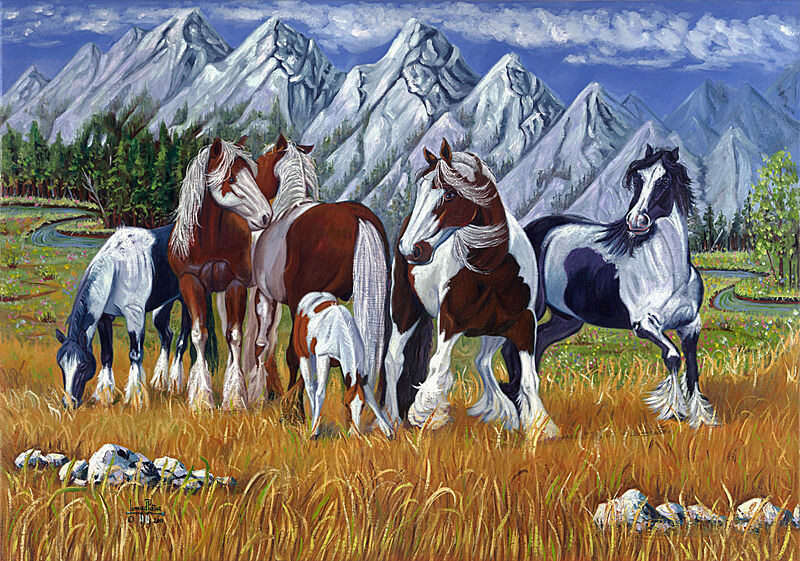
-
2272
Joanna Malinowska
Audio
-
228
Laura Poitras
Audio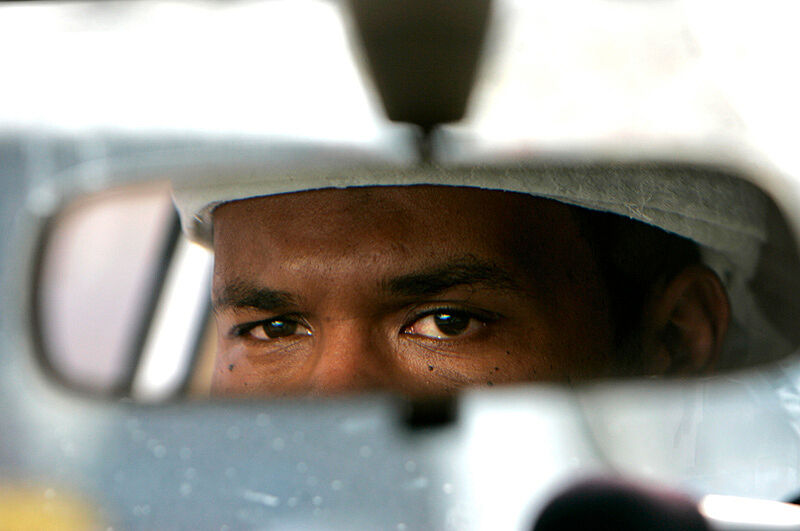
-
229
Matt Porterfield
Audio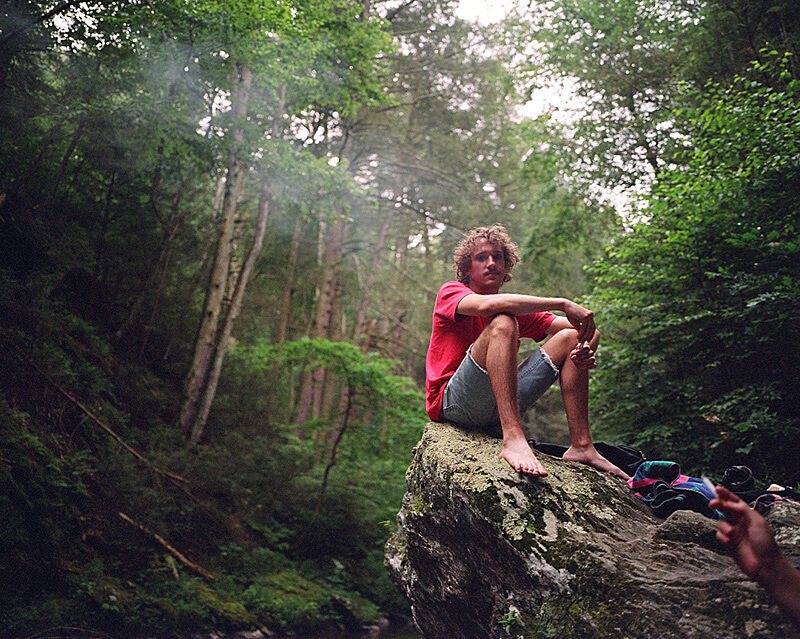
-
230
Luther Price (films)
Audio
-
231
Michael Robinson
Audio
-
232
Wu Tsang (Wildness)
Audio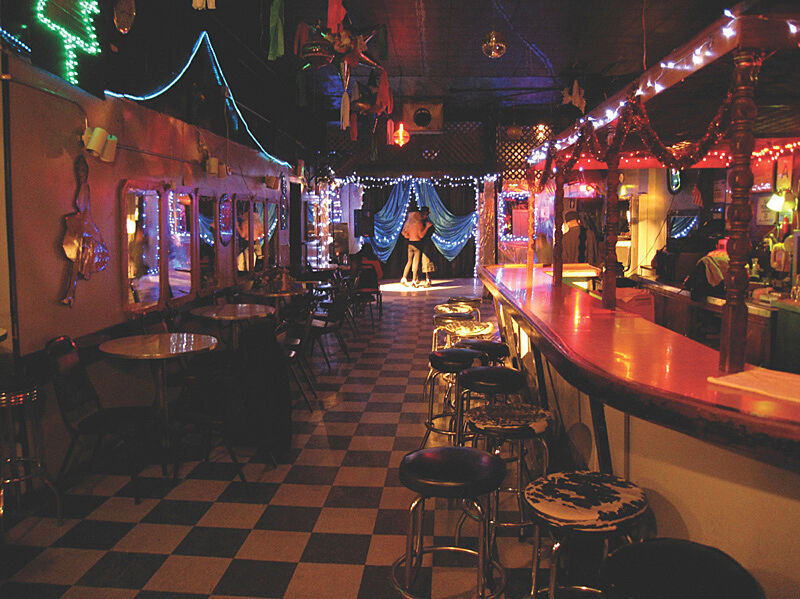
-
233
Frederick Wiseman
Audio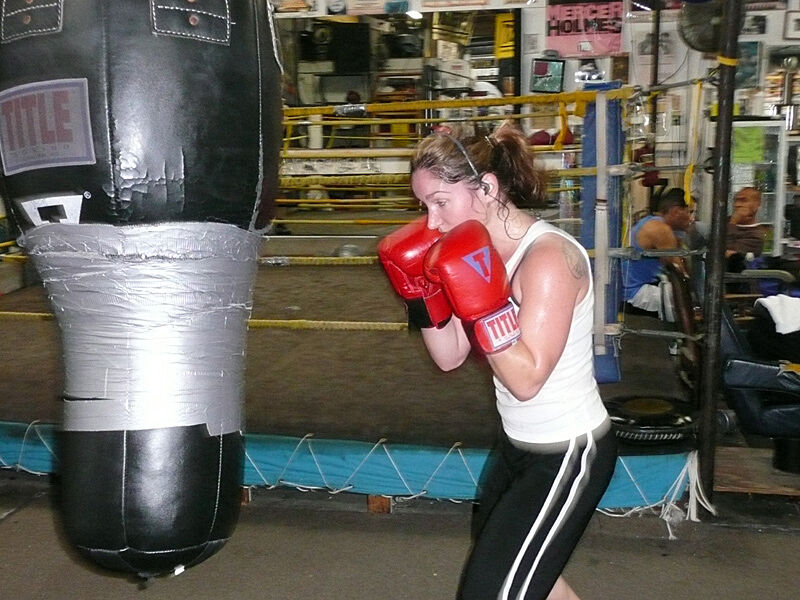
-
320
Lutz Bacher (Pipe Organ)
Audio -
321
Lutz Bacher (The Celestial Handbook)
Audio -
322
Cameron Crawford
Audio -
323
Liz Deschenes
Audio -
324
Nicole Eisenman
Audio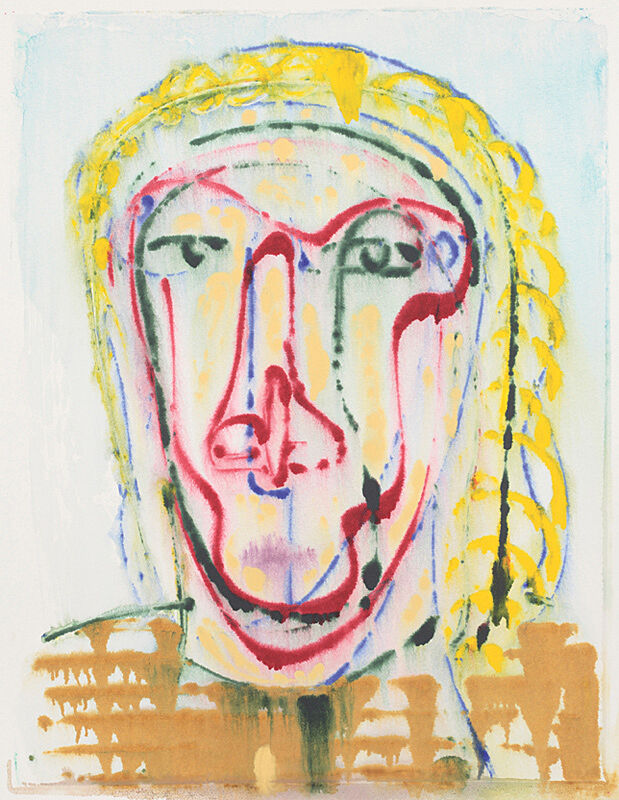
-
325
Vincent Fecteau
Audio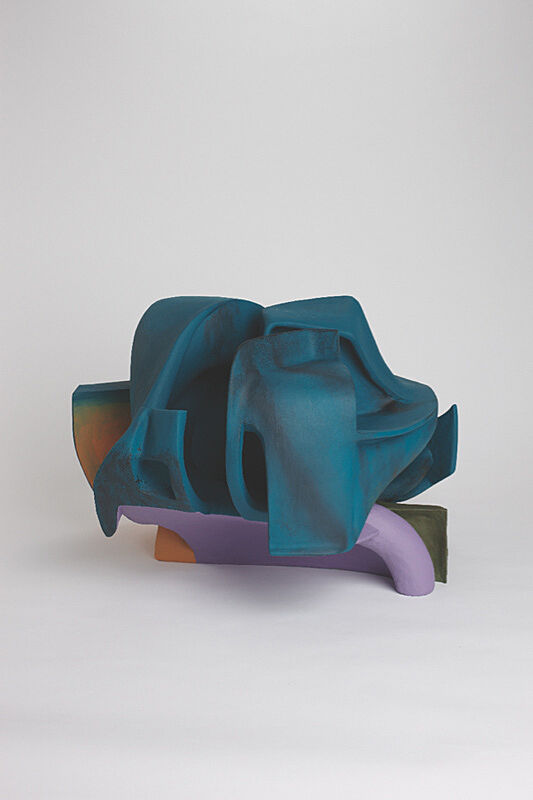
-
326
LaToya Ruby Frazier
Audio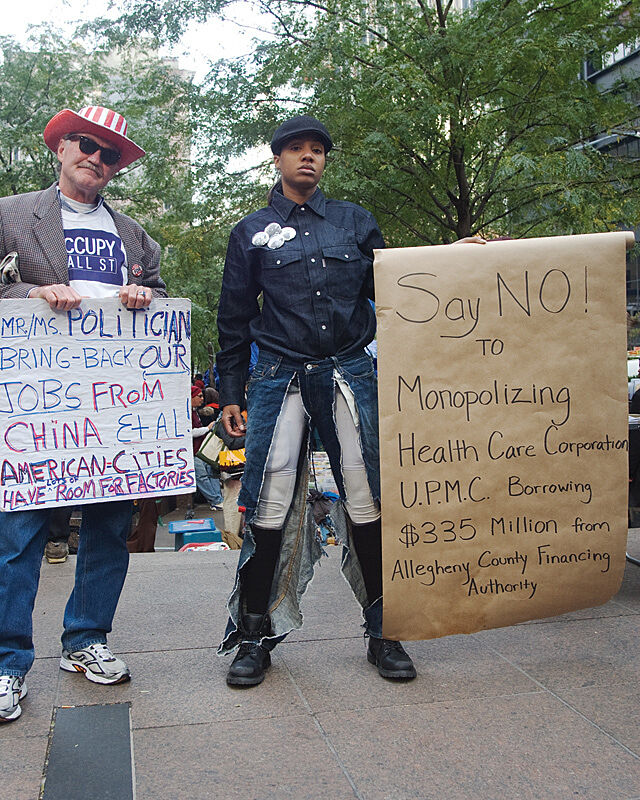
-
3262
LaToya Ruby Frazier
Audio
-
327
Dawn Kasper
Audio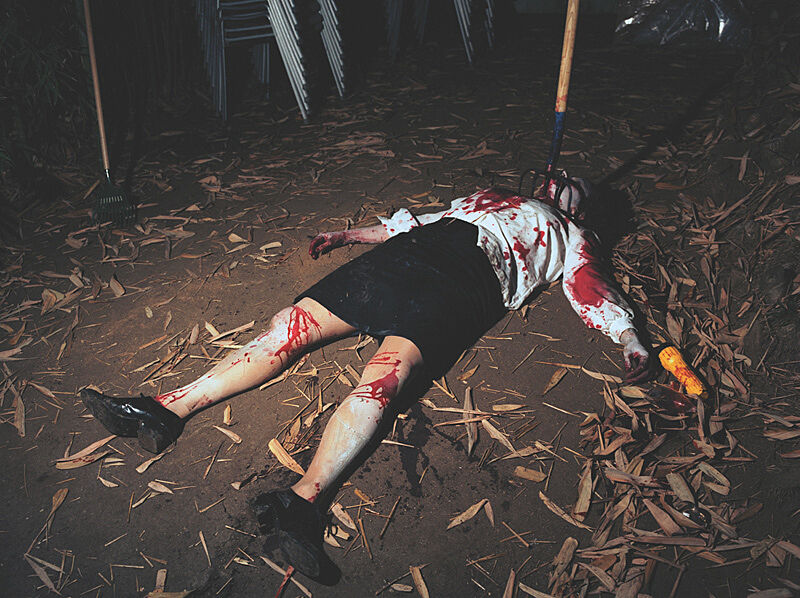
-
328
Jutta Koether
Audio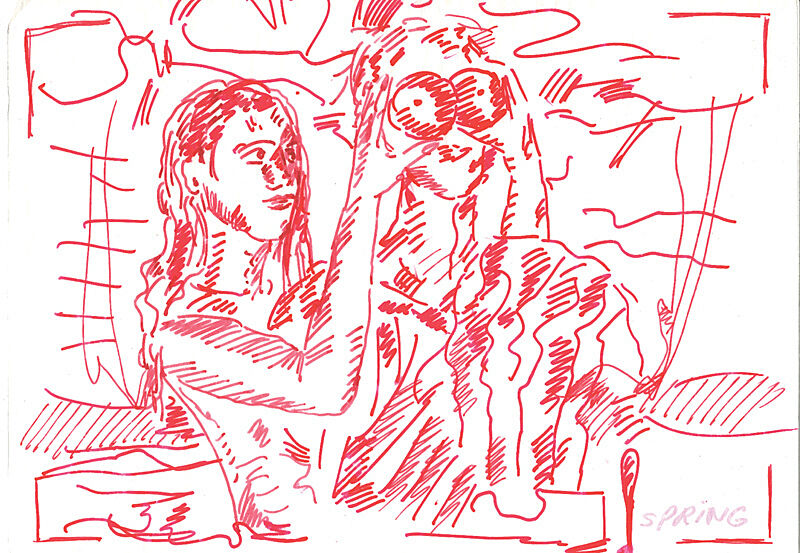
-
3282
Jutta Koether
Audio
-
329
Kate Levant
Audio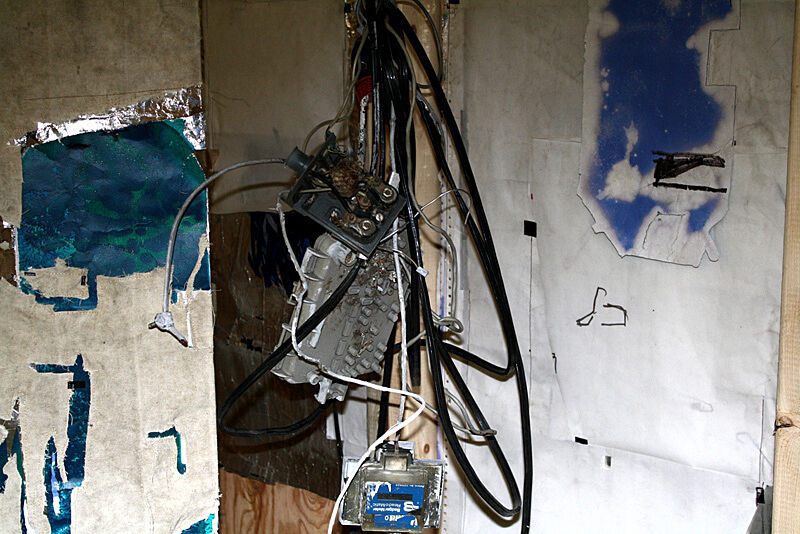
-
330
Sam Lewitt
Audio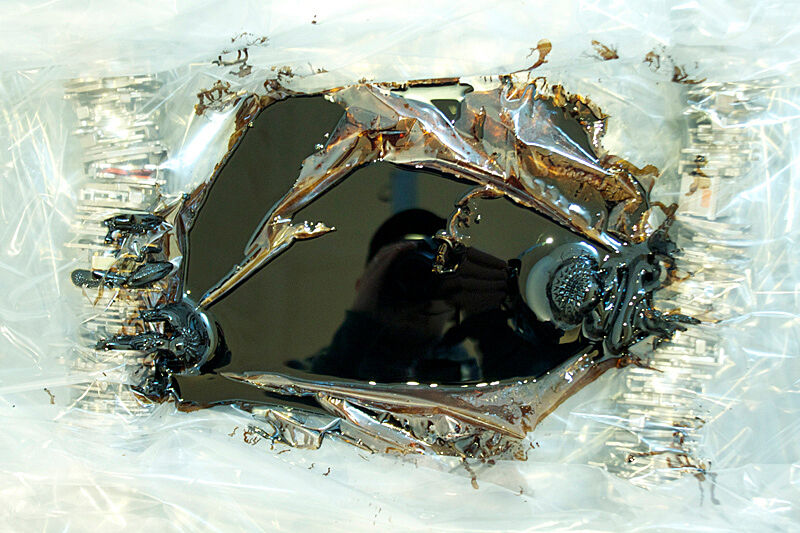
-
3302
Sam Lewitt
Audio
-
331
Andrew Masullo
Audio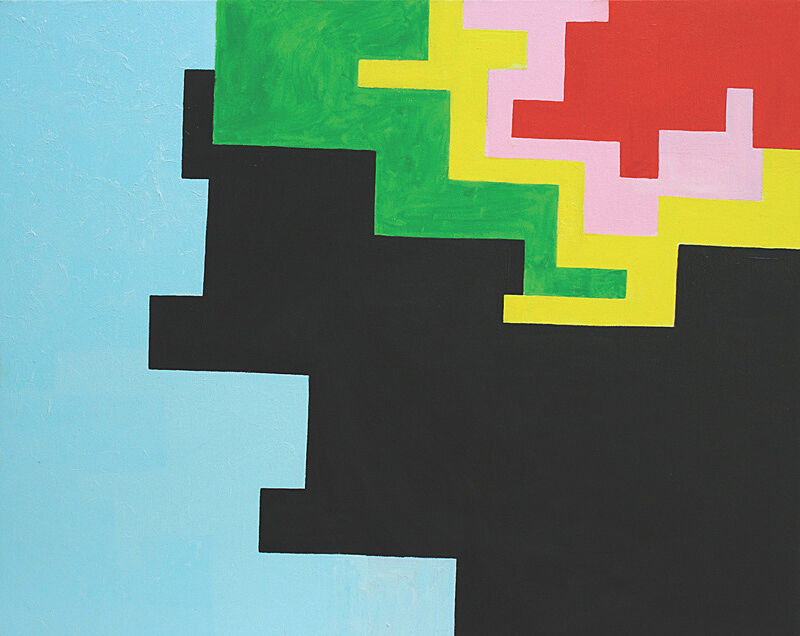
-
332
Nick Mauss
Audio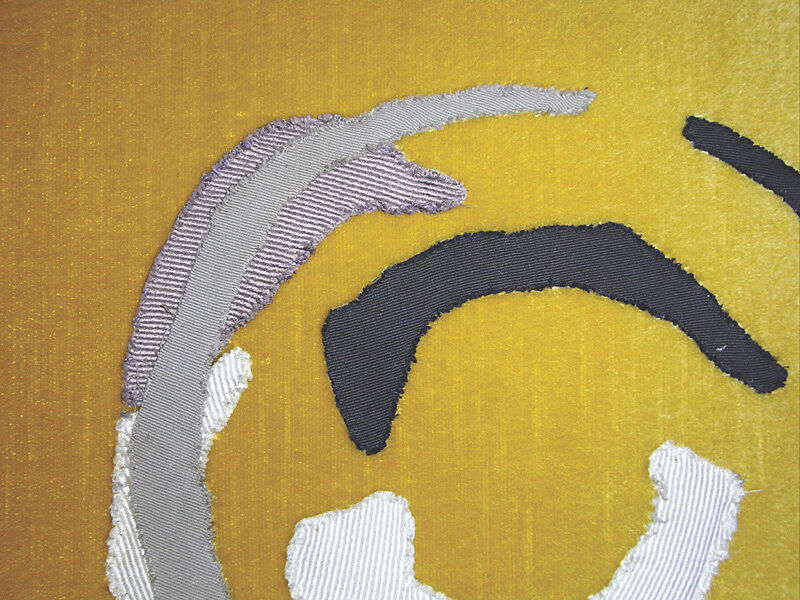
-
3322
Nick Mauss
Audio
-
333
Luther Price (slide projections)
Audio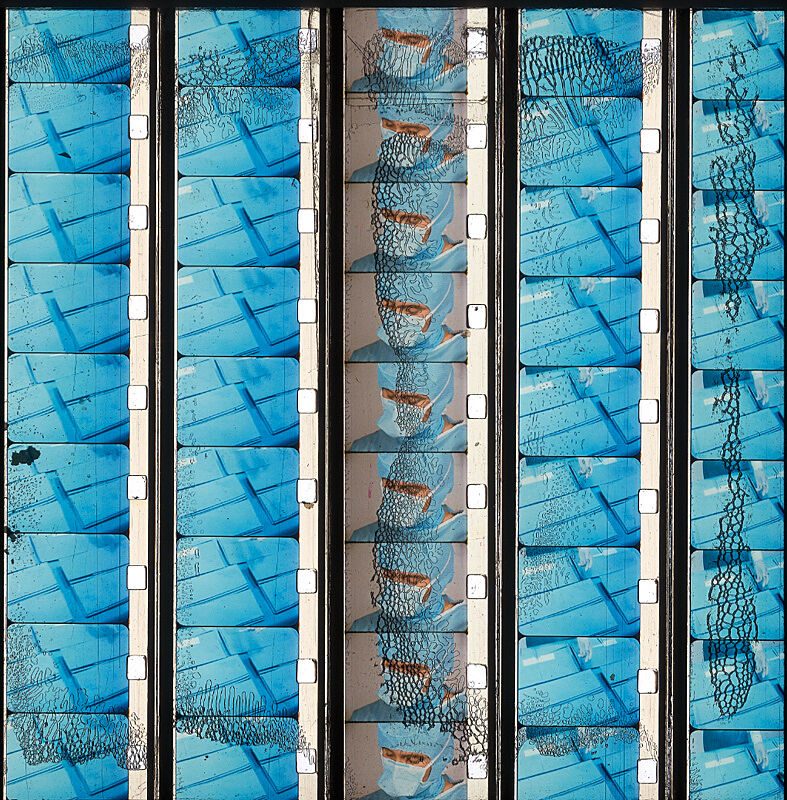
-
334
Elaine Reichek
Audio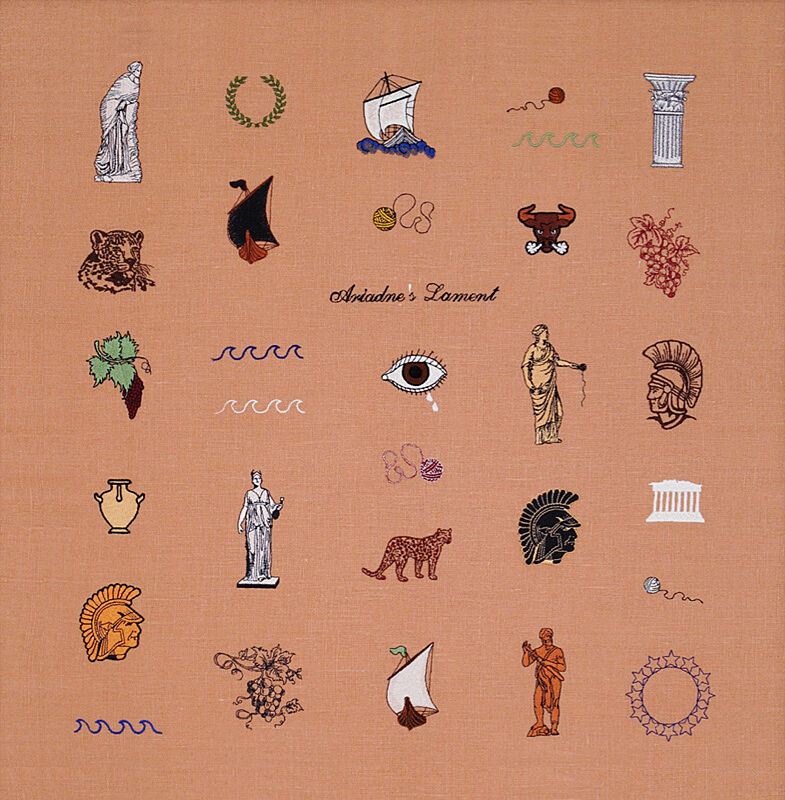
-
335
Tom Thayer
Audio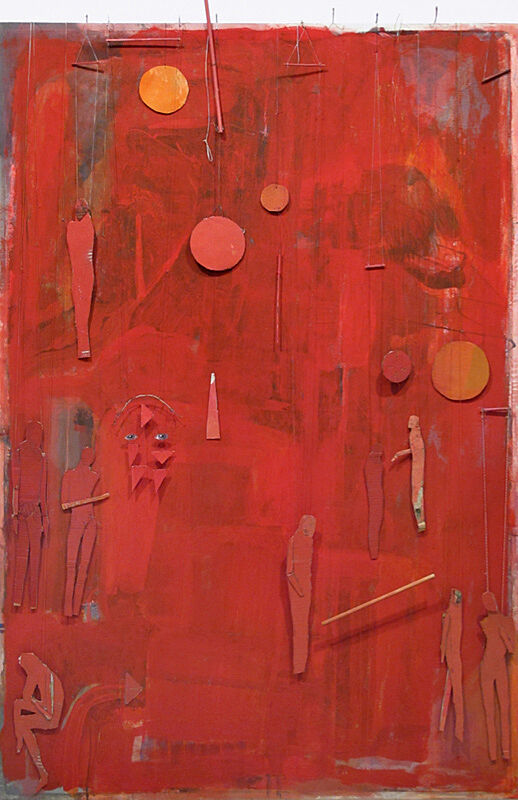
-
420
Charles Atlas
Audio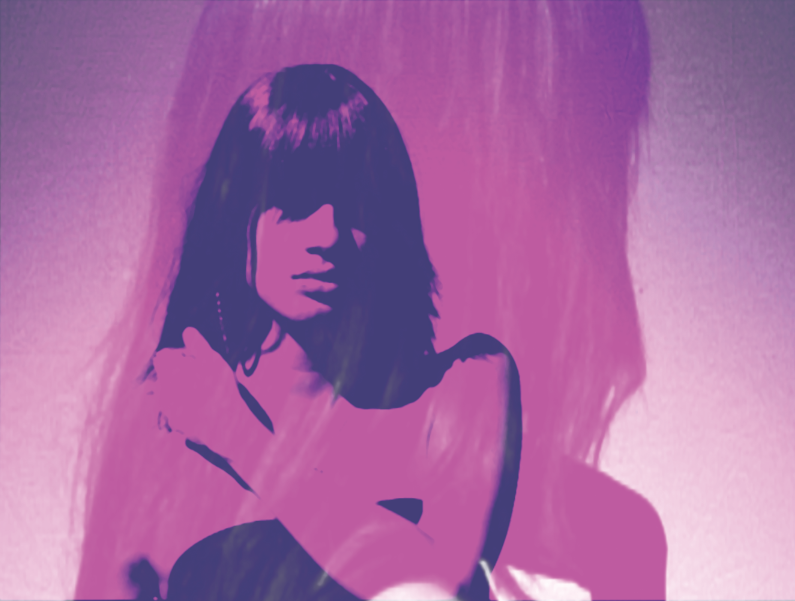
-
421
Lutz Bacher (What are you Thinking and Baseballs)
Audio -
422
Richard Maxwell
Audio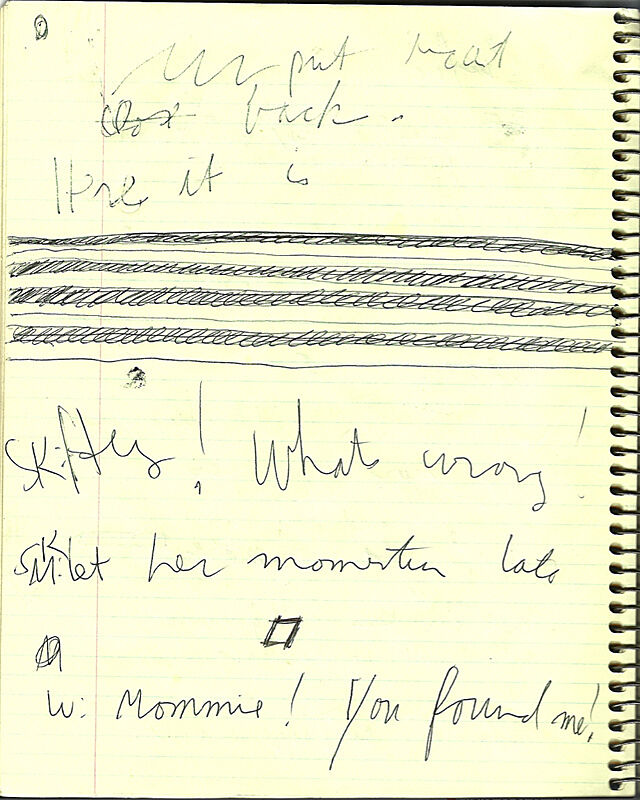
-
4222
Richard Maxwell
Audio
-
423
Sarah Michelson
Audio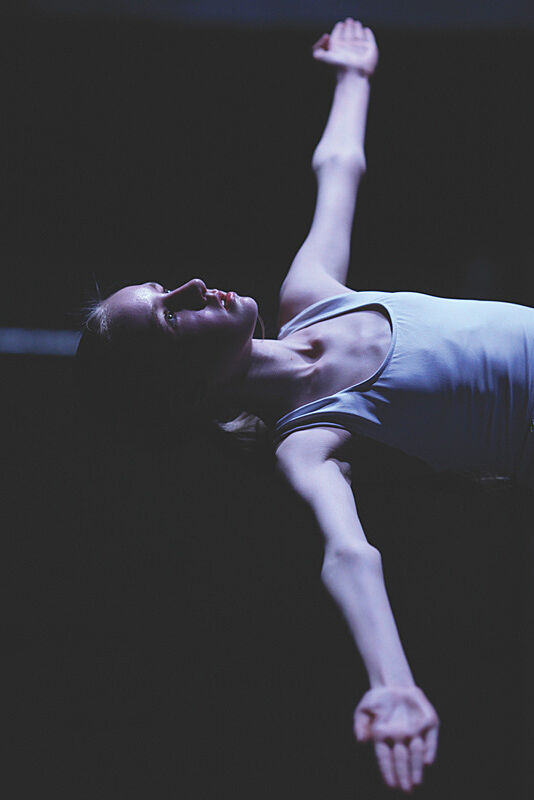
-
424
Alicia Hall Moran and Jason Moran
Audio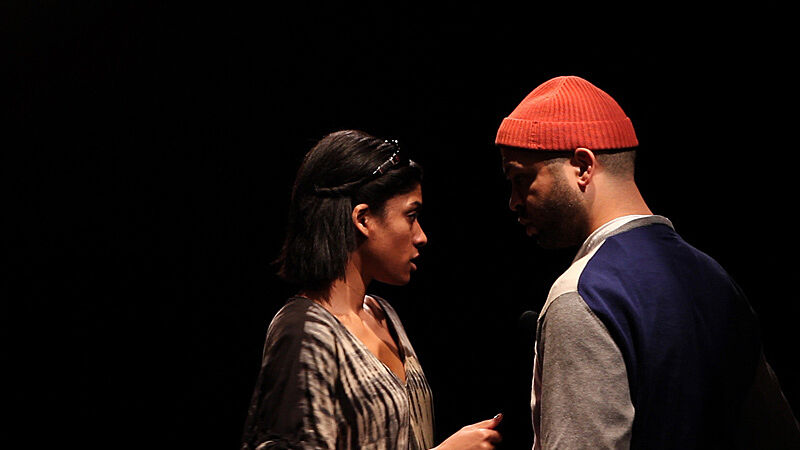
-
4242
Alicia Hall Moran and Jason Moran
Audio
-
426
Wu Tsang (Green Room)
Audio -
427
Gisèle Vienne with Dennis Cooper, Stephen O’Malley, and Peter Rehberg
Audio
-
521
Lucy Raven
Audio
-
522
The Red Krayola
Audio
-
523
Georgia Sagri
Audio
-
202
Werner Herzog
Kids
-
203
Luther Price
Kids
-
301
Vincent Fecteau
Kids
-
302
LaToya Ruby Frazier
Kids
-
3022
LaToya Ruby Frazier
Kids
-
303
Jutta Koether
Kids
-
304
Sam Lewitt
Kids
-
305
Andrew Masullo
Kids
-
306
Elaine Reichek
Kids
-
307
Tom Thayer
Kids
-
501
Lucy Raven
Kids
Narrator: Artist Oscar Tuazon.
Oscar Tuazon: I started working with a module; I wanted to figure out—sort of a module for one person, a space for one person. So it’s just a space big enough to stand in, and it’s like a phone booth, or a shower, or a closet. And from there I wanted to start assembling those modules and building groups, building corridors, spaces, bigger spaces. Ideally I’d like the piece to exist without a form at all–it can be reconfigured, rebuilt, moved around, used for any kind of multiple purpose people want to use it for.
The piece lives for most of the exhibition in the lobby gallery. And then for one week it moves to the fourth floor and is used as part of a performance—as sort of a fashion show by the artist K8 Hardy. It’s something I like a lot, to design work that gets used for something.
I guess the difference between how an architect would work with space and how an artist would work with space, in my mind, is that an architect needs to design around preexisting uses, around things that we’re habituated to doing. And I don’t really have that. That’s not my job [laughs]. I feel like I can design for uses that haven’t been invented yet—activities that aren’t even recognized as—that can’t be recognized—ways of feeling or ways of being in a space. So it’s kind of useless usefulness.
Oscar Tuazon, “I want to put something inside my body and carry something in it. I want to get inside my body and get carried in it, I’d like to get buried in it, put my head in it and get in it, I’m not scared of it”, 2010. Welded steel, clamps, canvas, plastic tubing, water. 84 x 192 x 12 in. (213.4 x 487.7 x 30.5). Collection of Kunsthaus Zurich. © Oscar Tuazon; courtesy the artist and Maccarone, New York
Narrator: In this program, Thom Andersen will be screening Los Angeles Plays Itself—a 2003 film about the way the city appears in movies—and Get out of the Car from 2010.
Thom Andersen: When I made Los Angeles Plays Itself I called it a “city symphony in reverse.” That is it was composed not of images of the city but of other movies about the city. So I thought I would try to make a movie that was composed of images of the city.
People who are used to seeing Hollywood movies or so-called indie movies might see it differently. You have to remember that the white population or the Anglo population of Los Angeles is only 27% of the population. So when you start to think that in just about every one of these movies set in Los Angeles that’s the only part of the city you see, obviously the image of the city that you see in movies is very provincial and distorted.
The title of the movie comes from a Richard Barry song. Richard Barry was a rhythm and blues singer in Los Angeles in the 1950s. Of course it also has another meaning. Since the images are all static shots made from a tripod, they weren’t the sort that could be made from a moving car or really even a standing still car.
I guess I was trying to make a movie with the simplest of cinematic means. There’s also very little movement within the shots. So the main movement in the movie occurs in the relationship between the sound and image. And the movement in the soundtrack rather than the image track.
Thom Andersen, still from Get Out of the Car, 2010. 16mm film, color, sound; 35 min. © Thom Andersen; courtesy the artist
Narrator: For the Biennial, artist Robert Gober has curated a room of paintings and archival material by Forrest Bess. Bess lived from 1911 to 1977. During his own lifetime, he was best known as a painter. But he also produced an extensive series of notes and documents pertaining to surgery he performed on himself, anesthetized only by alcohol.
Robert Grober: He lived this incredibly physically isolated, self-determined life as a bait fisherman off the coast of Texas, but at the same time was not unsophisticated and managed through his own wiles to exhibit his work with Betty Parsons in New York in the late 40s at the same time that Betty Parsons was showing Pollock and Newman and people like that. It was sort of a fascinatingly bifurcated existence that he could pull of these two extremes at the same time.
During his lifetime Bess kept a large scrapbook, journal, manifesto, diary that he called his medical thesis.
And what it is is a hand-made, cut-and-pasted, repository of his thoughts, other people’s thoughts, everything–images from Mesopotamia, from alchemy, from medieval texts, to psychotherapy, medical journals, his thoughts, his dreams. It combined all of these different, disparate, across-the-ages arts elements together in an attempt to prove this idea that he got that by joining the male and the female within himself physically, through a series of operations, that he could achieve eternal life.
One thing that Bess always wanted to do was to combine, within an exhibition, his medical thesis with his paintings. His dealer, Betty Parsons, always politely declined. So what this exhibition is, in a nutshell, is my attempt, based upon his wishes as expressed in his letters, to the best of my ability make the show happen that never happened during his lifetime. Which is to combine the two things. So there’s—I think there’s ten borrowed paintings on the walls, and then the vitrine filled with documentation that hopefully fleshes out what he did to his flesh.
Narrator: To hear more about Bess and his paintings, please tap the screen.
Forrest Bess, Untitled No. 12 A, 1957. Oil on canvas, 12 x 18 in. (30.5 x 45.7 cm). Collection of Andrew Masullo. Photograph by Wilfred J. Jones
Robert Gober: He felt the paintings came directly from his unconscious. He didn’t alter them. He felt that they were mysterious messages being sent to him from his unconscious, and it was just as much his job to decipher them through this language of symbols as it might be ours. Because he certainly didn’t have a reductive meaning for the paintings through the symbols.
It was an unhappy ending, almost needless to say.
It was a combination of natural forces—from a hurricane which took away his home in later life, to the advanced stages of alcoholism, perhaps some innate mental instability that seemed to run within the family. Poverty, which takes its toll. A stroke. It was a whole combination of factors that led to a diminution of himself later in life and a rather unhappy ending.
Narrator: In 1977, Bess died of skin cancer in a nursing home.
Forrest Bess, Untitled No. 12 A, 1957. Oil on canvas, 12 x 18 in. (30.5 x 45.7 cm). Collection of Andrew Masullo. Photograph by Wilfred J. Jones
Moyra Davey: This first piece is a grid of photographs that were folded and mailed to a friend in Paris.
Narrator: Artist Moyra Davey.
Moyra Davey: The photographs were taken from a book that Mary Wollstonecraft published in 1796 called Letters Written During a Short Residence in Sweden, Norway, and Denmark. And they're just close ups of the word "letter" over and over again.
Narrator: Davey has exhibited photographs since the early 1980s. It was only in 2007 that she started mailing them.
Moyra Davey: You know up until then, I had always treated my photographs very carefully. Everything had to be clean and perfect. I discovered this business of folding a photograph and writing on it and putting it through mail, making a piece of mail art out of it, essentially, was something that was hugely pleasurable and a big departure from my twenty-, or thirty-year practice of making photographs, mounting them, framing them, handling them with white gloves, and so on.
It's a very social, very social process. The idea of addressing something to a friend or a relative, and knowing that they were going to open it and have the experience of seeing this photograph. I get feedback from people.
Narrator: To hear about Davey’s other photo work, please tap the screen.
Moyra Davey, Darling, 2011. Chromogenic print, 4 x 6 in. (10.2 x 15.2 cm). Collection of the artist. © Moyra Davey; courtesy the artist
Narrator: In We Are Young and We Are Friends of Time, Davey reproduced more details of Wollstonecraft’s letters. She also photographed diaries by Mary Shelley and Clair Clairmont—the first woman was Wollstonecraft’s daughter, while the second was Shelley’s stepsister. Davey was interested in these women on a couple of different levels. Their status as early public intellectuals was one, of course. But she also became interested in details of their lives–birthdays, names, and so on–that corresponded to those of her own friends and family. By focusing on these details, Davey brought an autobiographical element into the work. That’s most visible in the two photographs that are outside the main grid of We Are Young and We Are Friends of Time.
Moyra Davey: Just to the side are two photographs that I took when I was just starting out as a photographer. I was probably in my early twenties, maybe twenty-two. One is a photograph of a snooker table in Montreal, and the other is a photograph of two pinball tables. They're works that I made when I was close to the age that Mary Shelley and Claire Clairmont were when they were writing these diaries and letters.
Moyra Davey, Darling, 2011. Chromogenic print, 4 x 6 in. (10.2 x 15.2 cm). Collection of the artist. © Moyra Davey; courtesy the artist
Narrator: Artist Moyra Davey discusses Les Goddesses. The video draws much of its material from the writings and life stories of Mary Wollstonecraft, Mary Shelley, and Clair Clairmont.
Moyra Davey: The video is, you know, it combines very personal, private, intimate types of revelations with a sort of delving into this feminist literary history of public intellectuals. I'd been trying to write the autobiographical material. I had a kind of impulse. I had a need, a kind of urgency, for some reason, I don't know why, to write about certain moments of my youth. But I was finding it really difficult, nearly impossible actually.
At the same time I was reading Wollstonecraft and I made this discovery, which was this coincidence of dates between the lives of Wollstonecraft and her daughters and their stepsister and my own family. It was that discovery that allowed me to write the two accounts, the two stories, and interweave them.
Doing the research into Wollstonecraft's life gave permission in a way to write some of the stories of my own life and my family's, my sisters' stories. It was just a device. That coincidence was simply a device, but I used it as a way to connect the two stories. One story enabled the other I think.
Moyra Davey, Darling, 2011. Chromogenic print, 4 x 6 in. (10.2 x 15.2 cm). Collection of the artist. © Moyra Davey; courtesy the artist
Narrator: Sitting in the open on simple shelves, Matt Hoyt’s tiny sculptural objects seem both intimate and vulnerable. In the exhibition they’re meant only to be looked at, not touched–a fact that can make them seem inviting and withholding at the same time.
Matt Hoyt: A lot of times people, I feel, like they want to pick them up and see the other side of them. So there’s this tension that’s created if they are out in the open.
Narrator: This tension creates a sense of mystery. So does the fact that the forms themselves are unresolved. At some moments they seem like objects found in the natural world, at others, it’s more obvious that they’re products of the imagination. Hoyt’s development of the group of objects as a whole also has a very organic quality.
Matt Hoyt: I’ll usually begin a piece by imagining something, and then I’ll try to give form to what I’m imagining, and then from there a collection of them builds up, and then the pieces start to suggest new pieces to be made. A lot of times I’ll look at one and see that something changed about it, then I’ll make it in the way that I’m imagining it changing in my mind.
I don’t like to separate studio space from living space. I like to have them around all the time, so I’m seeing them out of the corner of my eye constantly. And so they’ll be worked on for years and years, and I’ll make sometimes very subtle changes or sometimes just group them together differently, and the associations will change for me in that way.
Matt Hoyt, Component Object, 2010. Mixed media, 4 x 2 1/2 x 2 1/2 in. (10. 2 x 6.4 x 6.4 cm), dimensions variable. Collection of the artist
Narrator: George Kuchar began making films, along with his twin brother, as a young Bronx teen in the 1950s. In the decades that followed, he first became involved in New York’s downtown scene, and then moved to San Francisco. He began shooting video prolifically in the 1980s, ultimately making more than two hundred tapes—including many video diaries of the artist’s own experiences. Last year he died of cancer at the age of sixty-nine. The following interview was conducted in August of 2009.
Charles Bernstein: My guest today, for the first of three shows, is George Kuchar. I’m your host, Charles Bernstein.
Your work creates a joyous and extremely funny view of ways of life that many people, in the United States anyway, consider immoral.
George Kuchar: Yeah probably just because part of my life was a little bit off the tracks somewhere. I didn’t mean it to go that way.
Charles Bernstein: So identity politics does not play a part in the way that you imagine your work. Just as the way you’ve answered about politics, it’s—
George Kuchar: Yeah, I don’t think so. No, because the identities are all–a lot of them are me. You know, different aspects of my personality—the people in the movies.
Charles Bernstein: You have multiple identities as a filmmaker?
George Kuchar: In the movies you make, you have your alter egos, and they’ll come on and stuff. A lot of the diaries, of course, I’m in the diaries. I always wanted to be an actor. So no, no alter ego intended. There’s the real person. But then, of course, you have your face, because you have your real face. But, you know, it’s like a burlesque show: if you take all your clothes off right away who’s interested? [Laughter] You have to peel off a little bit at a time and then there has to be magic and mystery—you know what I mean? Maybe you go behind a screen or something. So, it’s the same way with a movie image. I may appear on the picture, but that’s not really the total me. The total me may be quite horrifying, in points, you know what I mean? But there’s always a mystery of the person and it should always be there.
George Kuchar, still from Cyclone Alley Ceramics, 2000. Video, color, sound; 12 min. © The Estate of George Kuchar; courtesy Video Data Bank
Laida Lertxundi: Hi, I’m Laida Lertxundi.
Narrator: Lertxundi was born in Spain and lives and works in Los Angeles. One of the films in the program she’s showing this week is called A Lax Riddle Unit.
Laida Lertxundi: It’s an anagram of the letters in my name and in my last name. Somebody gave it to me as a present. And I liked having the word “lax” in it, both to represent Los Angeles International but also the—laxity or something being not rigid has to do with a lot of the ways that I work during what’s called production, or where I’m shooting, it’s very improvised and there’s a sort of languidity that I want people to feel and then all of the structuring comes from editing.
Narrator: One thing you’ll notice when watching Lertxundi’s films is the soundtrack. We might see people or audio devices playing music on-frame, or simply hear the ambient sounds of the landscape.
Laida Lertxundi: One of the main inspirations to start using music on the frame, something that’s happening live and is synchronous to the image, comes from watching narrative films and thinking about sound-and-image relationships with non-diegetic music, music that comes from outside of what you’re looking at, and the sort of suspension of disbelief that allows you to think that belongs even though it’s an external element.
But it’s also about replacing narrative expectations—when we see figures in a landscape or in a place we immediately try to develop a kind of relationship between them, or imagining a certain structure that the film is going to develop. I’m interested in placing some of those expectations in the viewer but then replacing any idea of plot or a story with sound and image relationships, and sound and image coming into conflict and being separated but equal so they’re both noticed. So it’s sort of—the construction of the soundtrack is most of what’s happening, and it comes to the foreground.
Joanna Malinowska: I’m Joanna Malinowska.
There are three works in the exhibition. One of them is a sculpture, a video, and a wall with a painting done by another artist.
The painting is an oil on canvas made by Leonard Peltier in 2011 in prison. Leonard Peltier is an American-Indian movement activist who has been in prison for over thirty-six years.
Narrator: Peltier has been convicted of killing two FBI agents during a riot on a reservation. Activists have long pointed to evidence they say undermines the government’s case against him.
Joanna Malinowska: I sort of thought it would be interesting also to include his work in the Biennial, especially since we are talking about the Whitney Museum of American Art. I haven't investigated this matter, but I think probably the presence of indigenous Americans in the Whitney Museum is very marginal.
I thought it would be nice to build a special wall for his paintings, another way of creating additional, extra territory for him. I thought that in a way it's sort of symbolically smuggling him out or [laughs] bringing him to the Biennial. He is not officially invited. By building him a wall, I can say that this is my work. The wall is my work, and I can do whatever I want with it. So, I'm [laughs] inviting Leonard Peltier.
Narrator: To hear about the sculpture and video, please tap the screen.
Leonard Peltier, Horse Nation, 2011. Oil on canvas, 24 x 36 in. (60.96 x 91.44 cm.). Collection of the artist; © Leonard Peltier. Photograph courtesy of Leonard Peltier Defense Offense Committee
Narrator: The sculpture is made from replicas of walrus and mammoth tusks–materials drawn from artistic traditions indigenous to the Arctic. But its form comes from twentieth-century modernism. It’s based on Marcel Duchamp’s Bottle Rack, a so-called “readymade” sculpture that Duchamp purchased at a store and declared to be art. He was interested in what made art art. By contrast, Malinowska seems to have monumentalized an imaginary hybrid culture.
Joanna Malinowska: It's a bit of a take on collective consciousness and the idea that there are similar things appearing in different parts of the world or history and they're not necessarily related, but somewhat similar.
And I think what is also important about this sculpture to me is that I think it's important for the balance of the universe to spend some energy and effort to make something that is completely redundant [laughs]. I think this is one of those things, I guess. Although if you argue, maybe it could be used as a coat hanger or, I don't know, some kind of structure for making smoked salmon or something [laughs].
Narrator: Malinowska’s video also seems to be quasi- or pseudo-anthropological. It’s about making chicha de yucca.
Joanna Malinowska: It's a drink popular in Amazon and other parts of South America. It's made out of yucca, cassava, or manioc, I guess. These are three different names for the same root vegetable. Traditionally, it is made by the very unappetizing method of chewing and spitting in order to cause the fermentation process.
I'm interested in the whole process of this like almost ritualistic way of preparing it, and then testing its consumption on me and other characters.
I think my work has been very much influenced by an interest in anthropology. Here, I'm trying to become like an object of a research, so it's an interesting position for me to find myself in.
Leonard Peltier, Horse Nation, 2011. Oil on canvas, 24 x 36 in. (60.96 x 91.44 cm.). Collection of the artist; © Leonard Peltier. Photograph courtesy of Leonard Peltier Defense Offense Committee
Laura Poitras: My name’s Laura Poitras.
The Oath is the second part of a trilogy that I’m working on about US post-9/11 issues.
The type of storytelling I do is that I try to look at big themes, but see how they get embodied by individuals. So the first film I made in the trilogy is about the war in Iraq, so I followed an Iraqi doctor living in Baghdad. And with this film I wanted to make a film about Guantanamo, so I went to Yemen, because Yemen has the largest population of prisoners at Guantanamo. I went there looking for a returnee story–somebody being released from Guantanamo and coming home. And then the second day in Yemen I was introduced to a man who was a taxi driver. And he also happened to–in his past he worked for Bin Laden as a bodyguard. And the whole story changed at that point.
I think the big themes that I’m interested in in The Oath—it gives you a lot of information about the war on terror. I mean, how is it that Bin Laden’s former bodyguard is driving a taxicab in Yemen, and people who’ve been cleared for release are still being held captive at Guantanamo? That just seems absurd. It’s a film that also talks about interrogation in really important ways. And it raises big questions about Guantanamo, and the very flawed Military Commission process that’s gone on there. And so all those things kind of are combined in that. So I would say that it’s a film that looks at the mistakes that we’re engaging in in the war on terror.
Laura Poitras, still from The Oath, 2010. High-definition video, color, sound; 96 min. © Laura Poitras; courtesy the artist
Matt Porterfield: Hi my name’s Matt Porterfield.
Putty Hill’s my second film. It’s shot in Baltimore, where I live, in this neighborhood in Northeast.
The fictional idea that the film is built around is that there’s been a funeral, or there will be a funeral—there’s been a death. A young man dies of a heroin overdose. The film is built in the two days before his funeral, so family and friends are gathered, thinking about his life.
We have these documentary style interviews that pepper the film, or interrupt the fictive scenes. And in these interviews, the cast, who are performing throughout as versions of themselves, are asked questions by an off-screen interlocutor. And the questions are both of the fictive world but a lot of the questions are sort of about their lives. And so that way we have a cast who are able to share their own stories.
We cast the film by holding open auditions over the course of a year and a half, at churches, museums, community centers. I did a lot of street casting, met people at bars.
It’s a neighborhood I just have a real visceral feeling for, and want to depict on film, because I think in a way this neighborhood in northeast Baltimore is–sort of normal. There are cities, communities just like it all over the United States–postindustrial cities.
I’m interested in sort of depicting the diversity within the American working class. I don’t think it’s done so well, or fairly, in American movies. So, I don’t know, this neighborhood seems like a really perfect template to explore that.
Joyce Kim, production still for Matt Porterfield’s Putty Hill, 2011. Chromogenic print, 20 x 24 in. (50.8 x 61 cm) each. © Matt Porterfield; courtesy the artist and the Hamilton Film Group
Luther Price: In the past decade what I’ve been working on pretty much as a constant thing is found footage.
Narrator: Filmmaker Luther Price.
Luther Price: Found footage because of the nature of the different aspects of content and issues that I can work with—the manipulation of the found footage, whether it be burying it, painting it, manipulating its content all together, just creating these original, hand-made, sixteen millimeter, say ten-minute films, that are their own, original, one-of-a-kind pieces that are projection ready, that are crafted well.
I had buried film years ago, in vinegar, in different things, in just little baggies, just as an experiment. Just to bury them. Digged them up, and I loved the way everything became oxidized. Nothing was distinguishable. Everything became very much reduced down to beautiful colors. Gorgeous greens and purples.
You know, different stocks do different things, and then it became an archival process, where, well, what if I do it this way? What if I leave it in the sun? What if I just keep it in salt water for two weeks?
Sometimes you need to like—snip. If you see a section that’s really beautiful, snip it, you know, and then let the rest of it go. It’s a process. It’s a fun process. But it’s not as random as it seems. It might have started off random but I’ve realized that you have a lot of control with what can happen.
Joyce Kim, production still for Matt Porterfield’s Putty Hill, 2011. Chromogenic print, 20 x 24 in. (50.8 x 61 cm) each. © Matt Porterfield; courtesy the artist and the Hamilton Film Group
Michael Robinson: Hi, I’m Michael Robinson.
I generally move back and forth between works that I shoot myself and works where everything is appropriated.
Within the six films I’m showing in the program here I guess two of them I shot myself and four of them are purely appropriation-based.
At the core of all my work I’m interested in looking at how we relate to media, and how our expectations of narrative, both within film and television and literature but also within our daily lives is really shaped by our relationships to media.
I mean I don’t think my films—so far they haven’t directly referenced the internet, or, topically they don’t take on the internet as a subject, but I do feel like the last few years I’ve been thinking a whole lot–I mean everyone has—about how much our existence is changing by how much time we spend online and how we’re disseminating and understanding information differently through that. So even if the films often take material from different eras, pre-internet eras, and seem beside the point of talking about online culture, that is there for me.
I’m concentrating more on the sort of emotional and psychological ramifications of the way we spend our time. I mean whether it’s listening to the radio, or tv, or now the internet. I think I’m less interested in replicating media frenzy or a super-anxious state than I am kind of in thinking about that from a more emotional standpoint. I mean I want all of the films to feel a little bit like either nightmares or spells in that there’s a kind of logic to them but it’s coming from someplace that’s maybe illogical.
Michael Robinson, still from These Hammers Don’t Hurt Us, 2010. Digital video, color, sound; 13 min. © Michael Robinson; courtesy the artist
Wu Tsang: My name is Wu Tsang.
I was doing this party with some friends called Wildness at a bar called The Silver Platter in Macarthur Park Los Angeles. We did the club for two years and it was a weekly club.
And I was documenting the performances but also becoming very integrated and involved with the community of folks that hung out at the Silver Platter over the course of that time. And I started filming interviews because I was interested in collecting oral histories. The bar had actually opened in 1963. It’s a really special place that’s kind of like a safe space for queer, LGBT, mostly Latina/Latino, and a lot of immigrants from Mexico and Central America.
So in doing the party and filming the performances and organizing the performances and doing these interviews with some of the women who hung out there and some of the owners and people who worked there I at some point realized that I had a feature-length film on my hands. And sort of all along the way expanding the politics of what it meant to be working in that space as both an outsider and as someone who was identifying in certain ways with the community in certain ways. And sharing experience like as queer people or trans people, but also as an outsider and as an artist.
I actually worked with a collaborator, a co-writer, and we invented the Silver Platter as a character in the film, who actually is the main narrator. Who kind of watches over everybody. So the main story line is this little drama, my character is this kind of young, idealistic person who comes—maybe I’m searching for something and I’m finding it at this place and the bar is watching me become a part of the community and sort of observing how I make mistakes. And kind of teaching me lessons and being both warm and—sort of this parental figure that loves me but also puts me in my place when I need to be.
Wu Tsang, Production still from WILDNESS, 2012 (in progress). High-definition video, color, sound. © Wu Tsang; courtesy the artist
Narrator: There are two films by Frederick Wiseman on the Biennial program. He shot Boxing Gym in Austin, Texas. Crazy Horse takes its name from a Parisian nightclub. Wiseman’s film follows the rehearsal and development of one of the club’s nearly-nude reviews. Wiseman took the same approach in both films.
Frederick Wiseman: The technique is one where I don’t do any research in advance. The shooting of the film is the research. I just hang around, and shoot whatever interests me. In the case of Boxing Gym, a hundred hours were shot, and for Crazy Horse, a hundred and fifty hours of rushes. I spend a year editing, and find the film in the editing. I don’t even begin to think about the structure until I’ve edited all of the possible sequences that might make it into the film. When I have those candidate sequences in close to final form, I then begin to work on the structure. The editing is a lot like writing a novel or a play. I have the same problems as a writer, with issues of characterization, abstraction, metaphor, and passage of time. However, in documentary, the relationship between fact and imagination is different than it is in fiction. A novelist’s work is only limited by the scope of his experience in relation to his imagination. Whereas I’m limited by what is shot, by the way my imagination plays against the rushes.
Frederick Wiseman, still from Boxing Gym, 2010. 16mm film, color, sound; 91 min. © 2010 KO Films, Inc.; courtesy Zipporah Films, www.zipporah.com
Narrator: Lutz Bacher’s Pipe Organ is an electric Yamaha that has been outfitted with a set of mechanized hammers. The instrument runs continuously, playing a random sequence of notes and silences.
For this audio guide, Bacher was the interviewer, not the interviewee. She asked Alex Zachary of Alex Zachary Peter Currie Gallery to describe her work.
Alex Zachary: For me, the rows of hammers, this sort of external machine that’s grafted onto the machine reminds you, of your expectation that a piano needs to be played by somebody. There are fingers that will play the piano. And instead it has this thing that is sitting on top of it, or that’s been sort of mounted onto the keyboard, which suggests that in this case nobody’s playing the piano.
A pipe organ in the church sort of leads the congregation in a song of praise or prayer or something. Some sort of music to the heavens. And this thing sort of ended up doing that. It sounds like it’s doing its own kind of otherworldly music in its own way.
Narrator: Bacher frequently describes her project as one of, quote, “cosmological investigation.” She also tries to remove evidence of her own hand from her artworks—letting other, perhaps larger, voices speak.
Narrator: The eighty-five prints in The Celestial Handbook are scattered throughout the Museum. The plates themselves are very small, but the objects that they depict are unimaginably large. There are galaxies, nebulae, and, in one case, quote, “an infinite profusion of shining suns.” That phrase comes from Burnham’s Celestial Handbook, a book self-published in 1966 by Robert Burnham, an amateur astronomer.
In her work, Bacher simply frames and re-presents the pages of Burnham’s book. In doing so she literally spaces them out, making them objects of independent focus. One thing that comes forward as a result is the relationship between the images and Burnham’s captions. Sometimes these are poetic, sometimes they’re minimally factual. Either way, they rarely seem to describe their subjects adequately. In Bacher’s staging of the original book, that failure becomes a point of interest. It suggests that the work’s real subject may be the cosmic chaos that exceeds the reach of language.
Narrator: Cameron Crawford discusses one of the sculptures he contributed to the Biennial, a crocheted monofilament curtain.
Cameron Crawford: I was specifically interested in the deaths of six people that I knew, some of whom I had ambivalent feelings about and some of whom I was close with. I was interested in the fact that I was sad for each of those deaths, seemingly detached—or that sadness seemingly didn't depend on the degree of affection or esteem I had for each of the people individually. In this way I was bothered but also interested in the way that that feeling reduced all of them to the same kind of stimulus and that in that way they all became interchangeable, kind of single abstract units that might as well be one another. I thought that that reduction of a person into that idea was unpleasant. So I wanted to make something to try and think about that for—I think almost a year.
The curtain represents those kind of units repeated over and over again both in the crochet loops and also in the one-foot-by-one-foot grid and also that blocked or frustrated impulse towards transcendence.
And so it made sense to have a large net-like curtain that would be almost invisible that would consist of repeated units and that would foreclose a certain quantity of space and that in doing so, in making a space that couldn’t be penetrated or accessed, would make that space metaphysically solid and opaque, but at the same time utterly transparent and so frustrating to theorize.
Narrator: For the Biennial Liz Deschenes made an installation of photograms, sheets of photographic paper that she exposed directly to light and then developed—never using a camera. Their forms respond to the Museum building itself, which was designed by architect Marcel Breuer and opened in 1966. The building is distinctive because of its stepped façade, which projects outward the higher it goes, and because of its dramatically angled, projecting windows.
Liz Deschenes: The four-panel piece that is a stand-in for the facade will be toned a matte silver surface. The pieces that are stand-ins for the windows are glossy black. The Breuer building shape is a reference for the work, the building's volume and contours reference parts of two distinct cameras, the double lenses of a Rolleiflex and the bellows from a large format view camera.
The building looks like two cameras composited together. It looks like a machine. It doesn't look like a traditional building, the same way I desire the photographs not to look like traditional photographs. The "what is it" is an important part of the investigation.
The two pieces that I'm doing that reference the windows will actually be angled like the way the Breuer windows are angled but reversing the angles. So, the expectations of photography are defied. You don't find a representational image. You find a reflection of the architecture and the spaces where the work is actually installed.
Narrator: These works by Nicole Eisenman are monotypes, a kind of print. To make them, the artist draws on a non-absorbent plate and presses it against a piece of paper. The process is very immediate, intimate, and yields only one image. It’s a simple technique, but it allows for a lot of variety and spontaneity. Eisenman has said that making monotypes has allowed her to, quote, “explode ideas around mark-making.” If you look closely you’ll see that there are hard contours, subtle washes, intense patches of color, and moments of collage, overpainting, and etching. On the one hand, Eisenman seems to be exploring all of these marks, trying to find out what they can do. On the other, she’s using them to evoke a complex range of human emotion.
Nicole Eisenman, Untitled, 2011. Mixed-media monotype, 24 3/4 x 19 3/4 in. (62.9 x 50.2 cm) each. The Hall Collection. © Nicole Eisenman; courtesy Leo Koenig Inc., New York
Vincent Fecteau: Well I usually start off thinking about something that I’m interested in. So it could be something that I see, like the shape of a car, or the shape of a building, the shape of a tree alongside a building, a line.
Narrator: Vincent Fecteau discusses his small, abstract sculptures.
Vincent Fecteau: And I usually start with that form in mind, knowing that it will change over time. So I start with a form, I change that form, I change it again, I change it again. It either looks more like something, or less like something. It goes too close to looking like one thing; I move it away to look like something else. The idea being that it never quite settles into any one way of being read. That it can be all those things.
All of these changed color multiple times, based on the way the form was going and how I wanted to manipulate that. The color for me is about trying to find some sort of emotional part of it, or to sort of move the form slightly in one direction or another.
I have this wish to make something that’s unreadable on some level. And I think that’s part of a reaction to the fact that sculpture is so physical and real. So I kind of am interested in playing around with that.
Vincent Fecteau, Untitled, 2011. Gypsum cement, resin clay, and synthetic-polymer paint, 16 x 24 x 23 1/2 in. (40.6 x 61 x 59.7 cm). Collection of the artist. © Vincent Fecteau; courtesy Galerie Buchholz, Berlin; greengrassi, London; Matthew Marks, New York. Photograph by Ian Reeves
LaToya Ruby Frazier: I'm LaToya Ruby Frazier.
For ten years, I've been in this search of trying to balance out the poetics and politics of documentary photography.
Narrator: Documentary photography is a tradition that dates largely to the Great Depression of the 1930s. At that time, the Farm Security Administration hired photographers to bring attention to the plight of the rural poor.
LaToya Ruby Frazier: I would always wonder, when I looked at those images, what those images would have been like if they weren't used for government propaganda. What they would have looked like if they were actually shot by the people who really experienced the Great Depression.
I was born in 1982, and by the 1980s, in particular, in Braddock, Pennsylvania, which is a historical steel mill town, the steel industry had already crashed. So, the only type of families left were families like mine that were fragmented, that had no type of social or economic power.
Narrator: To hear in depth about one of these projects—The Homebody Series, a group of domestic interiors–please tap the screen.
LaToya Ruby Frazier, Corporate Exploitation and Economic Inequality!, 2011. Digital photograph, dimensions variable. © LaToya Ruby Frazier; courtesy the artist. Photograph by Abigail DeVille
LaToya Ruby Frazier: It became very important for me to relinquish my power of holding the camera and actually giving it to my mother and grandmother, and letting them turn that camera on me.
Narrator: In the past, Frazier had often turned her camera over to her grandmother, who died in 2009. In these pictures, Frazier appears in the home of her grandmother’s late stepfather.
LaToya Ruby Frazier: I'm back in this house five years later. And the house was abandoned, it was falling apart. It was being taken over by the Fire Department. They hadn't done any work on it, and when I went into the house, after five years, some of my artwork was still on the wall. Some of the things that belonged to my grandmother were still in the rooms. It was as if we were still there, but everything had eroded in the space.
And for me, it's also about psychologically continuing on their legacy. Gramps was one of the few African American men that worked in Carnegie Steel Mill. And my grandmother took care of him until he passed away, she wouldn't put him in a home. And so, it's very important for me to think about these portraits as not just the past or the present but how to shoot these portraits so I can think about my future self.
LaToya Ruby Frazier, Corporate Exploitation and Economic Inequality!, 2011. Digital photograph, dimensions variable. © LaToya Ruby Frazier; courtesy the artist. Photograph by Abigail DeVille
Narrator: In 2009, Dawn Kasper lost her job and could no longer afford to have a studio. She began the Nomadic Studio Practice Experiment—treating temporary situations as though they were her studio. Since February 8 of this year, her studio has been in the Whitney Museum. With a few exceptions, she’ll be in this room–or elsewhere in the building–through all of the Museum’s open hours.
Dawn Kasper: The Nomadic Studio Practice in this environment is a studio. Is my studio. In this context within which to realize performance, and within which to realize unresolved projects. It will constantly be changing.
My friends were sort of joking—you’re going to be in a diorama! You know like, “look honey, it’s an artist!”
It’s like everything I own is in the Museum right now!
I’m inviting people to come and interact with me. People can come in. I’m interested in how I will establish boundaries with that in mind, in that environment. Will people understand that they can come and draw with me, or do collage, or even if they want to bring their computer?
Nine times out of ten I’ll probably be people watching in the Museum and learning from my environment and adapting. A lot of it’s about adapting, I think, and the exposure of that psychology. I mean it could totally fail miserably, I mean, I could have some sort of nervous breakdown, but that’s–I mean, in a way it’s part of that process.
Dawn Kasper, Murder At The Schindler House, 2003. Performance, Fritz Haeg Sundown Salon, MAK Center, Schindler House, Los Angeles, 2003. © Dawn Kasper; courtesy the artist. Photograph by Karl Haendel
Narrator: These four paintings, mounted on glass, are Jutta Koether’s The Seasons. In this installation, Winter faces outward. Autumn is on the backside of Winter, and forms a kind of cycle with Spring, Summer, and the window of the Museum.
The paintings are based on a series by the seventeenth-century painter Nicolas Poussin, which is in the Louvre. Poussin is important to Koether because he was a very philosophical painter. In a sense, he laid the groundwork for her own conceptual approach to painting.
Traditionally, paintings of the four seasons have harmonized the human life cycle with nature. As the terms “Arab Spring” and “Greek Summer” suggest, that impulse still exists.
Jutta Koether: In the tumultuous sort of moments of history people try to in a way connect it back to the tumultuous uncontrollable forces of nature. And at the same time, we are at a point where it’s hard to differentiate whether the tumultuous events in nature are manmade or natural.
Narrator: To hear more about The Seasons, please tap your screen.
Jutta Koether, (Drawings for All) The Seasons, 2011 (detail). Ten ink drawings on vellum, 9 x 12 in. (22.9 x 30.5 cm) each. Collection of the artist. © Jutta Koether; courtesy the artist
Narrator: Please take a moment to focus on Spring. You’ll notice wild, broken serpentine lines encircling the central couple—a kind of garland. Additionally, steeply zig-zagging lines move over the canvas, cutting across the couple’s faces and running over their heads. These elements are most evident in Spring, but they’re present in the other paintings too.
Jutta Koether: It’s almost like the turmoil or the exuberance or the sort of nonstop activity of something. It’s a décor, it doesn’t mean much, and yet it holds everything together. And I juxtaposed those renderings of these garlands which, in some cases, they are really torn, also sort of as a symbol for our times. In a way the garlands are broken; the seasons all blend, or they start ripping up. And I juxtaposed it with these charts, which are these economical indexes from ups and downs of the markets. And each one it is sort of, let’s say, a different up and down or descent or destabilizing.
The decision to put them on glass has really something to do with my own sort of interest in let’s say, deliberately exposing or destabilizing the notion of painting.
It seems no matter how the markets go up and down, painting as a thing is a currency. And I wanted to sort of get it off the walls, and have it exposed in all its fragility. So people are able to see the backs, to see the whole thing as this sort of strangely vulnerable object.
Jutta Koether, (Drawings for All) The Seasons, 2011 (detail). Ten ink drawings on vellum, 9 x 12 in. (22.9 x 30.5 cm) each. Collection of the artist. © Jutta Koether; courtesy the artist
Narrator: Kate Levant’s sculpture is made of materials she pulled from a house near her studio in Detroit, Michigan–a city that was hit especially hard by the foreclosure crisis.
Kate Levant: The house was burned down, collapsed and abandoned. The siding was removed, and it was just sitting out, bare.
Narrator: Levant peeled off insulation, corrugated cardboard that was alive with insects, and other materials. She’s painted some, and made patterns across the surface of others. In some places, she’s repeatedly printed an ID photograph of her own face.
Kate Levant: I’m talking about the layers of a home but I’m also talking about the system of a city that kind of crippled and disintegrated, and is disintegrating, but it’s still living inside of itself and kind of mutating. And so to live there and be in it and be dealing with the material of it—it’s strange to—I walk around and the neighborhood I have been living in is extremely blown out, and you wonder what that does even just to your own psychology, to be surrounded by so much broken definition. Walls are collapsed. And I can just kind of snatch a layer off of it and it’s lawless. It’s like what does that do? If you have to adjust to keep your own mentality going, and living kind of straightforwardly, you have to kind of constantly keep defining your reasoning, and your point of—you know, your path.
Kate Levant, hive.tangle.jpg, 2011. Stripped utility meter, dimensions variable. © Kate Levant; courtesy the artist and Zach Feuer Gallery
Sam Lewitt: I’m Sam Lewitt.
Well this work involves the staging of a material, which is a magnetic liquid, or a liquid with magnetic properties, that’s poured over assemblies of different kinds of metal, ferrous and plastic hardware that serve as weights, which hold down a series of plastic bags on the ground of the Museum.
Narrator: The liquid is called Ferrofluid. NASA invented it in the early sixties, hoping to produce a magnetic rocket fuel. That didn’t work, but after Ferrofluid was commercialized in 1968, it proved to be useful in the construction of everything from audio speakers to hard drives.
Sam Lewitt: It’s in the technologies that we carry around, and it’s in the technologies that build those technologies. So in some sense it’s a very public material, but in another sense it’s also a very exotic material. It’s hidden away, it’s foreign, and it’s somewhat alien.
I come in to maintain the material, which evaporates in roughly two-week cycles under the air of the fans that are also in the exhibition space. So I’ll come in every two weeks and pour two thousand cc’s over the rapidly evaporating material that spectators see in the exhibition space.
Narrator: For Lewitt, the metaphors that have grown up around Ferrofluid are an essential part of its interest. He’s played with this language in the poster hanging over the work. To hear more about this, please tap the screen.
Sam Lewitt, Untitled (material for Fluid Employment), 2012. Digital photograph, dimensions variable. © Sam Lewitt; courtesy the artist and Miguel Abreu Gallery
Narrator: Ever since Ferrofluid first went commercial in 1968, marketers and manufacturers have described it in optimistic terms. It’s self-regulating. It’s self-organizing. It’s adaptable. It’s flexible. These terms assumed a new kind of life and force in the 1960s. In a time of great change and utopian thinking, they became essential to the language of personal, political, and social progress. Today these terms have been taken up by the mainstream. In Lewitt’s view, they have become ideologically rigid—undergoing a hardening process roughly analogous to the one he stages using Ferrofluid.
Sam Lewitt: I was really interested in, actually, that date of 1968, because the emergence of this material not only comes out of the labs of private research and development at a moment of immense social upheaval where indeed these terms like self-organization had a sort of emancipatory tone. And that this material could emerge in that situation seemed, I don’t know, maybe not a total coincidence. And maybe it’s not a total coincidence that that language of self-organization and flexibility ended up becoming the sort of dominant vocabulary that became the stuff of human-resources management and neo-liberal capitalism.
Sam Lewitt, Untitled (material for Fluid Employment), 2012. Digital photograph, dimensions variable. © Sam Lewitt; courtesy the artist and Miguel Abreu Gallery
Andrew Masullo: Oil paint’s rich. The colors are rich, and it feels rich, and you can take your time.
Narrator: Artists have to take their time with oil paint, because it dries slowly. Andrew Masullo.
Andrew Masullo: I don’t run out of ideas with oil paint. You know, something’s really wet and it has to be put away. I’ve tried acrylics in the past, and things dry so quickly that I put stuff down and it’s all dried, and I can keep going—but I have nothing to keep going on; I’m running on fumes and everything looks awful. It’s much better to–do some and then have to put it away, and sort of feel this little heartache like “oh, I don’t want to put this away right now, because I do kind of think I might know what I want to do next.” But I’m forced to put it away, which is a good thing, because then I can take it out and it’s completely fresh again once I look at it. Hopefully completely fresh again!
I’m grateful if someone can look at a painting and not just see it as entertainment. And maybe stop talking about things that have nothing to do with the painting they’re look at at the time, you know about taxes or their babysitter. You know if you can draw someone in. There’s a German verb—it’s called zu locken, which is to lure someone in, maybe to coax someone in. If you can coax someone in a little bit, to get a little closer, and then give them a little bonus because the surface or whatever’s going on looks different from far away, then when they go far away again they can see the painting a different way in their mind’s eye—these are wonderful things.
Andrew Masullo, 5030, 2008–10. Oil on canvas, 24 x 30 in. (61 x 76.2 cm). Collection of the artist. © Andrew Masullo; courtesy Daniel Weinberg Gallery, Los Angeles
Nick Mauss: My name’s Nick Mauss.
What you see first are two doors and a Marsden Hartley painting.
The doors next to this painting lead into an antechamber made of velvet and appliquéd cotton, which looks like it’s been painted, like it’s an enlarged sketch. And that space is sort of—it’s meant as a passageway, but it’s this incredibly elaborate, tiny space, with no real function except to sort of transition from one space to another space. It also feels like a kind of void to me. It’s a remake of a room that existed in Paris that was commissioned in the thirties. The rest of the building in which this room exists was very minimal, and kind of stark. And to have this really opulent, small velvet room in there, I think, must have been pretty spectacular.
Narrator: The room, which Mauss has re-created here, was originally in the Guerlain perfume company’s headquarters in Paris. The room was designed by Christian Bérard, a fashion illustrator, set designer, and painter. Mauss has hung an Andy Warhol work in the room itself. Nearby, you can see works by Ellsworth Kelly, Gary Winogrand, and Charles Demuth, which Mauss has also incorporated into his installation. In addition, he’s built special freestanding frames for two drawings.
Nick Mauss: The two drawings by Eyre De Lanux are two-sided, and they sort of stand in the space on pedestals in frames almost as if they were people who have also wandered through this room, or somehow relate to the room. The drawings are combinations of pictures and text, so they have this sort of rebus quality. It becomes very clear that they are love letters, that they’re motivated by yearning.
There’s also a reverse projection just on the left of the room, which is very small and intense and almost has a feeling of a slow pulse or something.
Narrator: To hear more about this installation, please tap the screen.
Nick Mauss, Material Studies, 2008-11 (detail). Digital photographs, dimensions variable. Image courtesy the artist; 303 Gallery, New York; and Galerie Neu, Berlin
Narrator: Mauss deliberately leaves the relationship between the elements of his installation open to interpretation—including the works by the other artists.
Nick Mauss: I think the whole arena of these works together, in front of and then beyond the space, have been given a new context where received ideas about them fall away and you can look at them and create new relationships.
There’s this almost incomprehensible grouping of words on one of the Eyre De Lanux drawings which, for me, almost sums up how I feel about the entire thing. What it says is, “synthèse,” I believe is the French word for “synthesis,” and then it says “I have it,” and the last word is, “heart.” So as long as I’ve sort of planned this, and worked on this piece, it’s still really touching for me to see this empty room–in a way it’s like this kind of void, but a different void than I’d ever kind of pictured before.
Nick Mauss, Material Studies, 2008-11 (detail). Digital photographs, dimensions variable. Image courtesy the artist; 303 Gallery, New York; and Galerie Neu, Berlin
Narrator: The large-format slides you see projected here were made by the filmmaker Luther Price. Price works with found footage, which he manipulates physically. To make these slides, Price begins with strips of film—often his own outtakes. He wedges them between pieces of glass, often including other elements–sometimes insects, dust, hair, or collapsed bubble wrap. He frequently allows controlled imperfections to emerge, such as air bubbles between the pieces of glass.
Luther Price: Like little collage pieces.
Narrator: Luther Price.
Luther Price: I get just as much enjoyment out of working this way because you are working just with a still, and sort of creating sort of a collage or almost, I feel, like a painting sometimes.
Narrator: Sometimes Price obscures the original so much that it’s hard to make up your mind whether you’re looking at a photographic image or an abstraction. And then in the next slide, there may be a real fly, projected thousands of times larger than in real life. The images are so physical that you can’t help thinking about the real materials in the slides—giving the act of projection a substantiality it doesn’t usually have.
Luther Price, Meat, 1999. Handmade slide, 1 1/2 x 1 1/2 in. (3.8 x 3.8 cm). Collection of the artist. © Luther Price; courtesy the artist
Elaine Reichek: It's all tremendously organic, the way in which I work between technology, the hand, the eye, those are all included in the general practice.
Narrator: Artist Elaine Reichek.
Elaine Reichek: I use machines really for everything, except there is one drawing in the Biennial which is just a kind of–when I say drawing, I mean drawing with thread–in which I just look at the image and sit in front of it and make a drawing. For other works, I will scan an image, Google-shop an image, or take it from a book, or find an online source for it, and then work it through Photoshop and put it through a program which converts each stitch, each pixel to a square. And it gives you a chart, which is color-coded. It's a long translation process. And then from the coded chart I will hand-embroider something.
Narrator: These works come from a series called Ariadne’s Thread. The title is drawn from the story of a Greek mythic heroine who experiences love, despair, and ecstasy—in no small part due to the actions she performs with Reichek’s main material, thread.
Elaine Reichek: It's a discredited material that drags a great deal of baggage with it. I use it naturally, it's just my medium. And you're not hindered by your medium. You're simply saying "I use an old medium which has a long history, longer than painting. You know, Eve sews a little fig leaf for them [laughs] when they leave the garden. So it has a long history. And it has politics embedded in it. The politics of cloth, the politics of thread, Gandhi spins a revolution. Cloth has been used as money. It was taken on the Crusades. It has all these really—indigenous embroidery, national embroidery—it has all these really interesting kind of real-world connections.
I'm interested in the hand and the anxiety between handmade work and—there's a kind of anxiety about technology. Every new surge of technology has been associated with a great deal of anxiety. Certainly today we all fantasize we're going to end up with big heads and no hands, or big heads and hands and no body.
Elaine Reichek, Ariadne’s Lament, 2009 (detail). Digital embroidery on linen, 27 1/2 x 26 1/2 in. (69.9 x 67.3 cm). Collection of the artist. © Elaine Reichek; courtesy the artist; Nicole Klagsbrun Gallery, New York; and Shoshana Wayne Gallery, Santa Monica. Photograph by Paul Kennedy
Narrator: In this room, you’ll see paintings, collages, sculptures, puppets, video, and other objects made and installed by Tom Thayer. One thing you’ll notice is that he tends to work with simple materials and technologies that border on the obsolete. He’s interested in the way human gestures appear when they’re rendered in humble materials—like cardboard.
Tom Thayer: When an obviously inanimate material like cardboard or scraps of paper are transformed by instilling that gestural quality, there is something magical that happens to the communication. And it's like isolating or extracting some of our most touching qualities about being alive, and examining them for a moment. It's like being able to look into a mirror and see some essence of life that you don't think about every day.
To me, it really has something to do with transforming materials.
And many of these things have had a functional history. They've had a previous life that has had a function. For instance a painting often is something that was filmed as part of an animation and a lot of times has elements that I hang off the front of it that were maybe at one time a puppet or a sculpture. The collages are generated by making animated videos using like a cut paper—using like a stop motion cut paper type process.
When everything in the room is like that, it kind of activates this space just a little bit, just the history of these things and the way your mind kind of looks at it and wonders, "What could have happened with these? How did they arrive here?" Rather than just kind of a static image or sculpture.
Tom Thayer, This Life is Nothing More Than Waiting for the Sky to Open, 2011. Paint on canvas, cardboard, string, wire and mixed media. 72 x 48 in. (182.88 x 121.92 cm). © Tom Thayer; collection of Michael Coppola and Ann Zumwalt, courtesy of Derek Eller Gallery, New York. Photograph courtesy Derek Eller Gallery, New York
Narrator: Charles Atlas began making films and videos of postmodern dance in the mid-1970s. From early on he was a collaborator rather than a simple documentarian. One of his most important partnerships was with the late dancer and choreographer Merce Cunningham. Their final work together, Ocean, will be on view during the first week of his residency.
Charles Atlas: I started out with Merce Cunningham, so I was very lucky. And he taught me a lot. In the course of our collaboration, we collaborated on about fifteen films that we made together for film or video. And I learned to see from him, from the beginning. So it really—when I decide how I’m going to film some dance, I try to watch myself watching, and see what I look at and then translate it into a filmic sense.
Narrator: In the past decade, Atlas has begun doing live, improvisational video performances. During the second week of his residency on the Whitney’s fourth floor he and his collaborators will perform each day.
Charles Atlas: The performances consist of the musician and I doing a duo improvisation. He works off of electronics, and I work off of loop-based video. And I typically have two laptops, some DVD players and a hardware mixer. And I use all sorts of materials. Material I’ve made, material I’ve found in films, on the internet. And I have a kind of idea in my head about what the structure might be, but it’s an improvisation. I listen to the music, and he watches the film.
I never was a performer, so it’s a new role for me. I was always a behind-the-scenes kind of guy. And it’s fun [laughs]. Fun for me and I hope interesting for the audience.
Charles Atlas, still from Turning (live mix) with Antony and the Johnsons, 2004. Image courtesy the artist and Vilma Gold, London
Narrator: Here, Lutz Bacher presents a film called What are you Thinking and a sculptural installation—perhaps unsurprisingly titled Baseballs. For this audio guide, Bacher interviewed Alex Zachary of Alex Zachary Peter Currie Gallery about her work. The film, she pointed out to him, reduces the medium’s elements to its most basic components–picture and sound.
Alex Zachary: Picture and sound, but the picture is a regulated fade from black to white and black again. And there’s an audio track, from where? From a film, we don’t know. One has the feeling very soon after beginning to watch it that its content sort of overflows the limits of the three-minute loop very quickly. The central question of “what are you thinking,” and the answer, “I’m thinking of how happy I am,” sort of give rise to an infinite number of narratives that sort of spill out from that call and response, that sort of central question and answer.
Narrator: Zachary sees Baseballs as being similar to the film.
Alex Zachary: You don’t have to stretch your imagination very far to think that they look like a sky full of stars, or a vast galaxy. They also look like quarks spinning out of control, or atoms.
Lutz Bacher: So there’s like a micro and a macro potentiality.
Alex Zachary: There’s something to do with their scale, which I would say applies to the film also—the thing is both infinitely small and infinitely large.
Richard Maxwell: My name is Richard Maxwell.
Narrator: During his residency on the Whitney’s fourth floor, Maxwell is directing open rehearsals of his next play.
Richard Maxwell: We’re rehearsing, right, that’s what we’re doing—we’re rehearsing. And you could obviously look at it as a performance simply because people are going to be watching it. And a lot of people are going to be watching it; it’s an open rehearsal therefore it would qualify as a performance. I don’t like this idea; I don’t like that we could be thought of as mocking something up for the purposes of looking like a rehearsal. I like the idea of actually working.
I’m not seeking interaction. But if interaction happens we’re not going to ignore it. It’s a weird thing to foment some kind of happening or event with passersby, but they’re in the room. And one thing I talk to my actors about quite a bit is this idea of not denying anything that’s in the room, acknowledging what’s there and this separation or this fourth wall that gets talked about in theater just isn’t there. I feel like it’s a one-room experience. And a lot of times I think that because of the story gets told we’re tempted into a world that is not there, that is pretend. But I really believe in the actors having one, at least one, foot grounded in the room that we’re in. And that there isn’t this kind of hierarchy between stage and audience.
Marcel Breuer’s design is definitely highlighted in whatever we’re going to do, because I’m just so impressed with the scale and the proportions and just the sheer size of that space.
It’s a room that, actually, it’s inviting thought. It’s supporting thought—that’s what it feels like to me. Maybe because it’s surprisingly intimate. It’s vast, but when you actually are there and it’s empty and you’re talking it’s very alive and you feel very close to whoever you’re talking to, regardless of what the spatial relationship is almost.
In a way we’re flipping what theater is thought of, as product-based, and looking at the process of it. And I’m wondering if that is a way of thinking about belonging in the room that you happen to be in.
Narrator: To hear Maxwell read from his book, Theater for Beginners, please tap the screen.
Richard Maxwell, Notes, 1998–2007. © Richard Maxwell, courtesy the artist
Richard Maxwell: I’m reading from a book I’m working on, called Theater for Beginners.
I like actors who are brave, and respond to the world informed and present moment to moment. This sensitivity puts them in league with the painter, responding, yet never completely knowing. He is the gateway to realization. No matter how long a writer has worked on the writing, no matter how great the staging is, the performer has the final say. The painter at least has the object before him to refer to. The actor does not, and is perpetually in danger of being destabilized by subjectivity since he can’t see himself onstage. What is it that propels him forward in the face of adversity? Something like 95% of actors are presently not working. He feels in the end that his desire, his belief, will prevail, his spirit. There are so few opportunities, generally. This is and has to be, finally, OK. I believe the only noble path for the theater actor is finally one of selflessness. Nobility exists inside of who he is, how he listens, how he responds. The rest is utterly elusive.
I had a disagreement with an actor once that ultimately led to us parting ways. At the end of the first rehearsal, she was troubled. After much discussion she asked me, does it ever get beyond zero. I said no. My answer was disingenuous but served its purpose, because she left the project. I said no because not getting beyond zero has to be OK. And my answer is disingenuous because when you stop and think about all that is going on—what she would wear, what she would sing, what she would play, what the others in combination with her would do, what the addition of a whole audience can do, what the room’s architecture will yield, what the temperature will be, what the lights and set would look like, what it could mean—how could it possibly ever be zero? The venture quickly is a dizzying array of limitless possibilities, and we have just begun.
Rehearsing at The Kitchen. The play takes place where security guards work. An anonymous lobby, someplace urban. Thinking it might be important for people to understand what security guards actually do on the job, the cast and I come up with a list of job duties. We make a checklist, and then try to find a routine. We watch each guard go through the routine we’ve made. The first item on the checklist—alarm systems! Alex begins to pantomime checking an imaginary alarm system and then clicks OK on his actual clipboard. That’s when it hits me. Why does it have to be faked? We’re in a room that has an alarm system. We’re also in a room that has HVAC. Why not check that? Where is the alarm system? Near the entrance, in the back of the house. But that’s offstage! So what? That’s where it is. You have a clear directive. What if there isn’t a surveillance camera? I don’t know, but I know you can’t check OK without being able to actually verify if it’s working. So there’s an overlooked reality here in front of you. What is actual and what is imagined both get rooted in the room. If we do not accept other realities the most we can hope for is a kind of convincing realism.
Richard Maxwell, Notes, 1998–2007. © Richard Maxwell, courtesy the artist
Sarah Michelson: Chapter One.
Before the dawn, on the Earth’s ninth day, the crisp green gold of leaves and wood–vital and pleasures infinite. And what is sleep or rest. What is day? What is night? What is sky? What is sea? All are in a stage of discovery and wonder. The sun and the earth are still strangers, getting acquainted, and learning fresh and new ideas together. Nothing has been defined. Where will you go? What will you do? All is open. All is available. You only need to decide what glory, what place, what presence. There is something called a sun, there, and now, what is this? I feel drops. Something is pricking me. It’s rain. It’s called rain. Rain falls on my arms. See the goodness felt in me. In my arm. Look at me. I’m a man, man. My skin, my golden-honeyed skin. My hair. I have hairs. Hair. The names came, and keeping coming, man choosing the names. The garden. More trees. More leaves. More grass. The man, the man is standing, the man is walking, the man is sleeping, the man is naked. Another night is coming. We call this night because it is dark. Close eyes, sleep, dream. Out of something so rare and privileged come thoughts. Thinking and reason begin in sleep and arrives in wakefulness, put into sharp relief by dreams.
Sarah Michelson, Devotion, 2011. Photograph © Paula Court
Jason Moran: My wife Alicia Hall Moran and I, we met at music school, at Manhattan School of Music. She's from the classical tradition and I'm from the jazz tradition. But both really still dealing with the African American perspective within those respective traditions.
Alicia Hall Moran: Something I always like to think about is a friend of mine who travels the world. She's really wonderful and courageous and generous, does volunteer work all around the world. I once said to her, "How can you go out into these places and not understand what you're going to get even as far as food and water source?" And she said, "Well, how can you live so near your parents?"
I think that's it in a nutshell for me. It's like, yeah, I'm going to figure these people out who raised me. I'm going to be in their face. Because that's where all my good stuff is, and I want it, and I'm going to have to excavate for it.
So that's kind of been the process I've done is look around me, do studies on the people that I know, who, luckily for me, many are brilliant. So that's a long lifelong journey, and that's what I think the Art Song project Jason and I are going to present is about.
We have work on our walls. We go to museums. We get to meet artists. Some are our friends. We really probably only have music as a way to honestly answer the effect that that's had on our life. So we felt, with the invitation of the Whitney, being a perfect moment to really dig in and work hard for the reward of a good performance, this was the time to come real face-to-face with that and show how we've been inspired.
Narrator: In their five-day residency in the Whitney, Jason Moran and Alicia Hall Moran will perform, along with a number of collaborators. You’ll also see videos from past collaborations. To hear about some of the events, please tap the screen.
Rehearsing for the premiere of Slang (Other Minds Festival of New Music, San Francisco, 2011). Video stills from a forthcoming documentary on Jason Moran by Gregg Conde and Radiclani Clytus. © Gregg Conde and Radiclani Clytus; courtesy Gregg Conde
Jason Moran: There's a centering moment which one might say is a meditative moment that begins each day. So this entails or kind of recalls spirituals, negro spirituals, a ring shout, which is something from the slave tradition in which slaves would gather in the woods and sing loose spirituals while walking around in a counter‑clockwise circle. Usually kind of arriving at a frenzy point out of repetition and using a mantra and sound and movement. It starts there, with music and spirituality.
Narrator: From there, many things may happen. Jason Moran and the Bandwagon, Moran’s regular group, will perform with Joan Jonas—an artist both Morans have worked with extensively. There will be a variety of performance events, which will take place in the main performance space that the Morans are creating. Meanwhile, there will be a smaller performance space by the window, arranged for just one performer and one audience member.
Jason Moran: As a performer, when you stand on a stage or wherever you do your performances, you're not really sure of who you're affecting. You know it might be the person that's the farthest away that's gathering the most and the person in the front is actually asleep. But this will be our first time looking at a way to really connect with that one person that's sitting in front of us. And it's not only us, it's writers who come in. It's poets who come in and speak from that spot. In that way there's a direct relationship with the artist and audience, which are both one and the same. They need each other, you know.
Rehearsing for the premiere of Slang (Other Minds Festival of New Music, San Francisco, 2011). Video stills from a forthcoming documentary on Jason Moran by Gregg Conde and Radiclani Clytus. © Gregg Conde and Radiclani Clytus; courtesy Gregg Conde
Wu Tsang: My name is Wu Tsang.
Narrator: Tsang has created this work—Green Room—as a place for artists in the fourth-floor performance program to rest and relax in down moments. When they’re not using it, he’s showing a two-channel video in the space.
Wu Tsang: I see Green Room as being an extension of my artistic practice as a performer, and as someone who likes to host and facilitate events.
I was doing this party with some friends called Wildness at a bar called The Silver Platter in Macarthur Park Los Angeles. We did the club for two years and it was a weekly club.
The bar had actually opened in 1963, and it’s a really special place, that’s like a safe space for queer, LGBT, mostly Latina/Latino, and a lot of immigrants from Mexico and Central America.
I’m very interested in thinking about night life spaces as being really politicized, urgent, almost survivalist spaces for queer communities, particularly like queer communities of color, where there are so few spaces that are available in the world for people to feel, like, comfortable being who they are.
There’s two channels of image and a really complicated sound environment so, you’re meant to kind of experience, more immersively, maybe what the feeling of being at the bar is.
The two-channel video that’s in Green Room is kind of replicating some of the voices and the experiences of some of the women of the Silver Platter. And this one woman in particular who has a very difficult experience emigrating to Los Angeles from Honduras. She kind of has to leave because her family, her father in particular, they don’t accept that she’s trans and so her life is in danger. So she comes to LA to try to make it on her own and finds the Silver Platter. It’s kind of a really hopeful, amazing story.
Gisèle Vienne: I'm Gisèle Vienne.
Dennis Cooper: I'm Dennis Cooper.
Stephen O'Malley: I'm Stephen O'Malley.
Narrator: The artists discuss their installation, Last Spring: A Prequel.
Dennis Cooper: This robot, this mannequin, is speaking to the people in the audience of the piece, and saying, basically, "I know I look like a mannequin, but I am real. I swear I am real, and I swear I don't know how this happened. I don't know why I look like this. I don't know how this is possible, that you're seeing what you're seeing, but I am a real boy and I am really trapped somewhere, and you must, must, must come rescue me."
Narrator: Cooper wrote the text, and Vienne designed the doll. She worked with a special-effects crew to make it.
Gisèle Vienne: Then the doll itself, the body is done out of silicone and I wanted to have this very soft body, so the body itself can react to the movement. That means when it's breathing, the arm is moving or when it's shaking the glove puppet, the body can react that way because of the soft material. The head and the hands are done out of resin. And on purpose, we didn't want to have this doll super-realistic. We wanted still to look like a doll and to try to work on this uncanny relation we can have to something that we recognize as an object but we still have a strange relation to it.
Narrator: O’Malley made the music along with Peter Rehberg, and worked on the program to coordinate the doll’s movements with the light and music. He also designed the wall drawing that frames the doll, setting up compositional rules for other artists to follow during the work’s installation.
Stephen O'Malley: You'll see that the wall drawing has several hundred small drawings inside, actually. It's supposed to seem a bit naïve and sort of obsessive in the way that this kind of technical exercise might be for a young boy.
Gisèle Vienne with Dennis Cooper, Stephen O'Malley, and Peter Rehberg, LAST SPRING: A Prequel, 2011. Mixed-media installation with sound, dimensions variable. Collection of Gisèle Vienne and DACM. © Gisèle Vienne; courtesy Gisèle Vienne and DACM
Lucy Raven: My name is Lucy Raven.
Narrator: Research is an essential part of Raven’s work. In making RP47, she sought out test screen patterns, which she’s presented here in random order. Images like these have been used throughout the history of cinema to calibrate projectors.
Lucy Raven: The projector basically puts up a reel of these images, which run on a one‑frame loop in a projector, to test all these same things. Focus and aspect ratio, field steadiness. And the ones I'd seen were beautiful, actually, and I was fascinated by this. Yeah, I was compelled by these images that you're not supposed to see, that are designed to make you see better.
In fact they're ephemera, really, of the film industry. They're meant to calibrate certain systems, and when those systems become obsolete, they're usually discarded.
In a sense, there shouldn't really be that many, because they're all testing the same thing, but in fact there are quite a few, and many of the ones here are testing really specific sorts of film—anamorphic, Cinerama.
Each different gauge and format had a different test that was designed for it, and oftentimes camera companies or projector companies also made their own tests.
Narrator: Film test images don’t work well in HD—the current standard in art museums. Raven has adjusted all of the images to fit this format.
Lucy Raven: But they, at the same time, offer a sort of incomplete history of projection, which we still have. It's not just about the obsolescence of film, for example but, in this case, what I started to realize was that projection as a whole is probably soon to be obsolete as well as screenal culture takes on a larger role in the way we look at images including, I think, at the movie theaters, pretty soon.
Lucy Raven, still from RPx, 2012 (in progress). Randomized digital projection, indefinite duration. Collection of the artist © Lucy Raven, courtesy the artist
Narrator: The Red Krayola began in 1966 as a psychedelic rock group. The band has evolved musically since then, and its personnel has changed as well. Singer and guitar player Mayo Thompson has been the main constant throughout. One of the Red Krayola’s contributions to the Biennial is The Portal, a Skype interface with the band.
Mayo Thompon: And The Portal is a—it’s like science fiction when I was a child. You know, two-way radios with visions on them where people could talk to each other—not just Dick Tracy, now we can actually do these things.
We’re not making a fetish, let’s put it that way, out of the means of delivering information. We’re just exploiting it. We’re just not committed to these modes. We’re not ultramodern people; we’re hostage to these relations just like everybody else. We’ve got email accounts and cell phones, and this time we’re stuck with Skype. If we meet sometime in twenty years maybe it would be what I always hoped it would be, which would be telepathic.
We’re going to be on duty from the time that the museum opens we’ll be there until the time the museum closes. We’ll be together all day. We’re going to be sending from a number of locations around the world.
We cram a lot of time into three months. We get to realize some dreams that we’ve had about how process would be relevant to an understanding of what it is we do. Largely we present finished goods–dry goods. Ready for the road. In this case we can open up and talk about process, and reveal more of the background, which has always been a kind of a part we’ve insisted on in our music, and perhaps it’s one of the things that alienates people because we insist on showing how uncomfortable, discomfiting, strange, uncanny, unwieldy, unwholesome, unhealthy, uneconomic, unbelievable et cetera these kind of processes are.
Narrator: The installation also includes a number of paintings by the conceptual art collective Art and Language, who’ve been close associates of the Red Krayola. Some of the songs that the band will be rehearsing and performing here were written in collaboration with Art and Language during the 1980s.
The Red Krayola. © Archives of The Red Krayola. Photograph by Anna Mülter
Georgia Sagri: My name is Georgia Sagri, in Greek it's Yeorgia Sagri.
Narrator: Sagri combines installation and performance. She’ll be using film, video, audio recording, and hosting conversations, all exploring the concept named in the title, Working the No Work. As the exhibition progresses, Sagri will transform the activities and materials generated in this space into a book.
Georgia Sagri: The core theme of the project is the concept Working the No Work, an attempt to counter and exit the exploitation of the human body by capitalism and labor relations.
The attempt is just to think through those ideas of work and what means work and what means salary and what means to be exploited to do certain work or a certain task, or what happens to the body in certain particular spaces or certain particular modes of production.
And when we say “no work,” of course we don't mean “work” as the pleasure of a human being to create things or to make things.
I'm literally using this space and the installation to understand certain things, to understand certain movements, to realize them in space in real time, and figuring out together with the viewers, what is picking up a pen, or what is writing for eight hours, or what is to sit on a chair with that particular figuration of the body, what it means to stand in a queue, what is it to waiting for the bus in the bus stop?
What are all these kinds of moments where we just don't realize them. They’re ways of compromising, you know, ways of compromising into very particular systems of architecture, engineering, movement, relation. So that's basically what I am trying to bring forth.
Georgia Sagri, Μοντέλο της Αντιγόνης, performance view, May 2011, BQE, Real Fine Arts, Brooklyn © Georgia Sagri; courtesy Real Fine Arts, Brooklyn
Narrator: Werner Herzog is a famous German filmmaker. He makes films about all kinds of things, including a man who lived with grizzly bears, prehistoric cave paintings, and even vampires.
For his Biennial artwork, Herzog created a project focused on Hercules Seghers, a Dutch artist from the 1600s. Seghers worked at around the same time as Rembrandt. Today, most people haven’t heard of him. It was said that Seghers was so poor that he couldn’t afford to buy artist’s materials and had to paint on his tablecloth and sheets. Some of his prints even ended up being used to as paper to wrap sandwiches and fish in!
When you enter this installation, you will see projections of Seghers’s dreamy mountainous landscapes and hear haunting cello music by the Dutch musician Ernst Reijseger. Herzog has said that Seghers’s, quote, “landscapes are not landscapes at all, they are states of mind; full of angst, desolation, solitude, a state of dreamlike vision,” end quote. Take a look for yourself and see what you think!
Hercules Segers (1589/90–c. 1633–38), Mountain Gorge Bordered by a Road, c. 1615–30. Contre-épreuve of etching, with oil paint, 6 × 6 5/16 in. (15.4 × 16 cm). Collection Rijksmuseum, Amsterdam; on loan from the Rijksacademic van Beeldende Kunsten
Narratror: Luther Price makes art out of what he calls “found footage.” He finds old films or slides. He takes these slides and then buries, paints, or squeezes ink onto them. Sometimes, he puts other stuff on them too—like ice cream sprinkles, tiny stars, and even his own snot! After he is finished, he projects the slides. If you look closely, you can see the layers of debris and disintegration.
Here, he talks about his artistic process:
Luther Price: Hello, I’m Luther Price. In the past decade, what I’ve been working on pretty much as a constant thing is found footage. Creating these original, handmade, 16-millimeter films, that are one-of-a-kind pieces, that are projection-ready. I also enjoy found footage. The manipulation of the footage whether it be painting it, burying it...I usually bury them in the spring and dig them up…no, bury them in the fall and dig them up in the spring.
For a lot of people who work in solitude, work alone, all you have is the process as your collaborator. That becomes your collaborator. You’re not working with another person, you’re working with the process. Which in a sense becomes your collaborator.
Luther Price, Meat, 1999. Handmade slide, 1 1/2 x 1 1/2 in. (3.8 x 3.8 cm). Collection of the artist. © Luther Price; courtesy the artist
Narrator: Take a look at these sculptures by San Francisco artist Vincent Fecteau. To create them, he uses different kinds of clay and plaster, and then paints them with bright, bold colors. Walk around the sculptures and look at them from different angles. Think about how the artist has transformed these different materials into works of art—by stretching, folding, and molding them.
Fecteau talks about how he gets inspired to make this work:
Vincent Fecteau: Well I usually start off thinking about a form that I’m interested in. So it could be something that I see like the shape of a car, or the shape of a building, the shape of a tree alongside a building, a line... And I usually start with that form in mind, knowing that it will change over time. And so I start with a form, I change that form, I change it again, I change it again.
Vincent Fecteau, Untitled, 2011. Gypsum cement, resin clay, and synthetic-polymer paint, 16 x 24 x 23 1/2 in. (40.6 x 61 x 59.7 cm). Collection of the artist. © Vincent Fecteau; courtesy Galerie Buchholz, Berlin; greengrassi, London; Matthew Marks, New York. Photograph by Ian Reeves
Narrator: Take a look at LaToya Ruby Frazier’s photographs. Frazier takes pictures of her family and her community, Braddock, Pennsylvania. Braddock is a small town near Pittsburgh that was once prosperous, with a steel mill that employed many people. The mill is now closed. Today, Braddock has high rates of poverty and unemployment.
Here, the artist talks about taking pictures of her mother and grandmother.
LaToya Ruby Frazier: It's interesting to make these self-portraits, because I'm not photographing us as three separate women, I'm photographing us as one entity, one person.
And so, I often feel like my grandmother is the image, in my mind, of the past. And my mother would become the image of the present, and that I would embody the image of the future. And for me, it's about understanding who I need to be, or what I'm going to become. And so, how do I make these portraits and confront myself with these portraits to see or learn who I want to be in the future? It's always that constant question.
Narrator: To hear Frazier talk about how important photography was to her when she was a kid, please tap the screen.
LaToya Ruby Frazier, Corporate Exploitation and Economic Inequality!, 2011. Digital photograph, dimensions variable. © LaToya Ruby Frazier; courtesy the artist. Photograph by Abigail DeVille
LaToya Ruby Frazier: In my home, we didn't have a family album. And that's the first thing you do, you know, when you're making friends with other teenagers and other kids, you go over to someone's house, you pull out your family album and you say, look at my family members. I didn't have that to offer. And so, I wanted to take it upon myself to be the family photographer, but make these portraits of things that, again, were happening. And they might not have been the images of people smiling. It might not be of people at, you know, Thanksgiving Dinner or opening Christmas gifts. I was interested in the tenderness and the cruelty of what was really happening, to how my family was being dismantled and how I didn't have any control, because I was just a kid, over what was happening. I was a helpless kid. So, again, I wanted to make my own family album that spoke to these types of painful realities instead of ignoring it. And I think that there's a power in that, not that it would heal me or that it’s cathartic, but to be able to confront that.
LaToya Ruby Frazier, Corporate Exploitation and Economic Inequality!, 2011. Digital photograph, dimensions variable. © LaToya Ruby Frazier; courtesy the artist. Photograph by Abigail DeVille
Narrator: Check out Jutta Koether’s large, colorful paintings. They’re called The Seasons. Take some time to walk around and look closely at them. Can you guess which painting goes with which season? The more you look at these, the more you see. Can you find a cat painted with orange and red brushstrokes? A bunch of purple grapes? A basket of red apples? The words “bio gods?”
The artist designed this installation herself. She intended the paintings to be hung like this—on glass in front of this angled window. You can also see the back of two of the paintings. Usually at museums you only get to see the front of the painting.
What does it feel like to be inside this space, looking out the window, surrounded by paintings? The artist calls her installation, quote, “a window onto a window.”
Jutta Koether, (Drawings for All) The Seasons, 2011 (detail). Ten ink drawings on vellum, 9 x 12 in. (22.9 x 30.5 cm) each. Collection of the artist. © Jutta Koether; courtesy the artist
Narrator: Look closely at Sam Lewitt’s installation. What do you notice? Lewitt uses a material called Ferrofluid, which is a liquid with magnetic properties that is used to make hard drives and music speakers. Lewitt says that he wants to show us a technology that is usually invisible, one that is hidden in electronic parts.
To make this, the artist puts magnets on top of large plastic squares. Then he carefully pours the Ferrofluid on top of the magnets. Do you see how it glistens and shivers as the fans blow air onto it? The material almost has a life of its own. Lewitt asks us to consider, quote, “Who is the author of this work? Who creates the work? The stuff or the artist?”
Sam Lewitt, Untitled (material for Fluid Employment), 2012. Digital photograph, dimensions variable. © Sam Lewitt; courtesy the artist and Miguel Abreu Gallery
Narrator: Check out this wall full of brightly colored abstract paintings by Andrew Masullo. Each one is different!
When Masullo paints, instead of using an easel, he sits on the floor. He holds the canvas on his lap or props it up in front of him. He usually works on five to ten paintings all at once. He also likes to paint with his TV on—it provides a distraction from the seriousness of painting.
Here is what he says about his artistic process:
Andrew Masullo: The real fun part is making the stuff, trying to figure it out, getting lost, getting frustrated, being happy when something goes my way, knowing that a mistake is just an opportunity for the next time.
Narrator: Masullo uses oil paints, which take a very long time to dry. Sometimes he just has to put what he is working on away until it dries.
He says:
Andrew Masullo: It’s much better to do some and then have to put it away, and sort of feel this little heartache like, “Oh, I don’t want to put this away right now, because I do kind of think I might know what I want to do next.” But I’m forced to put it away, which is a good thing, because then I can take it out and it’s completely fresh again once I look at it. Hopefully completely fresh again!
Andrew Masullo, 5030, 2008–10. Oil on canvas, 24 x 30 in. (61 x 76.2 cm). Collection of the artist. © Andrew Masullo; courtesy Daniel Weinberg Gallery, Los Angeles
Narrator: Look closely at Elaine Reichek’s work. Do you notice that these are all embroidered? She is drawing with thread! Reicheck makes her works by hand or by using a digital sewing machine, combining the old practice of sewing with modern technology.
All of Reichek’s Biennial artwork is inspired by the ancient Greek myth of Ariadne, a mere mortal who also used thread to weave her exciting story.
Long ago in Greece, there lived a woman named Ariadne, who fell in love with a handsome warrior named Theseus. Theseus was sent to kill the Minotaur, a half-bull, half-man creature who lived at the center of the labyrinth. Ariadne helped Theseus by giving him a ball of string so that he could find his way out of the treacherous maze after killing the Minotaur. The two lovers then ran away together. While Ariadne was sleeping, Theseus sailed away, abandoning her on an island. Betrayed, she wept with fear and grief.
Reichek continues with Ariadne’s story:
Elaine Reichek: And then appears a handsome and courageous and fun loving Bacchus. He comes with his cymbals, and his dancing ladies, and his wine, and his animals. He comes in a beautiful chariot with—they haven’t figured out if it’s panthers or leopards, it’s really panthers, driving the chariot. He leaps out with this beautiful red cape, and he says to her, "What are you carrying on about this mortal? I'm a god. Get over it." And she says, literally, "Oh. Silly me. Why was I crying about him, Theseus, when I could have a god, and not only that I'm going to be immortal. I'm going to reside in the heavens. A big, starry crown and people will remember me forever."
You go, girl. You changed on a dime and got better.
Elaine Reichek, Ariadne’s Lament, 2009 (detail). Digital embroidery on linen, 27 1/2 x 26 1/2 in. (69.9 x 67.3 cm). Collection of the artist. © Elaine Reichek; courtesy the artist; Nicole Klagsbrun Gallery, New York; and Shoshana Wayne Gallery, Santa Monica. Photograph by Paul Kennedy
Narrator: Walk around Tom Thayer’s installation. What do you notice? Thayer creates art that contains all sorts of things like paintings, paper puppets of people and birds, collages, and animated videos. During the Biennial, the artist will create a performance in this room using all of these different things.
Here, Thayer gives some advice.
Tom Thayer: It’s kind of like making artwork, you're on this journey, and you don't really know where it's going. And it's a collaboration between you and the art materials or you and like, you'll do something and maybe what happens is a little unexpected. So then, that's sort of the materials, making their move and then you respond to that and then the materials respond back to you.
I would maybe tell a young artist that probably a lot of the most interesting things happen through mistakes and failures. That seems to be where a lot of the magical things happen.
Tom Thayer, This Life is Nothing More Than Waiting for the Sky to Open, 2011. Paint on canvas, cardboard, string, wire and mixed media. 72 x 48 in. (182.88 x 121.92 cm). © Tom Thayer; collection of Michael Coppola and Ann Zumwalt, courtesy of Derek Eller Gallery, New York. Photograph courtesy Derek Eller Gallery, New York
Narrator: Check out Lucy Raven’s player piano! If you’re lucky you might even hear it play music. Player pianos are old-fashioned instruments that play pre-programmed music by themselves.
Raven worked with another Biennial artist, musician Jason Moran, to program the piano. It plays the same song, “Dance Yrself Clean,” three different ways. Do you think it sounds weird to hear different kinds of music coming from an old-fashioned instrument?
Raven is interested in the differences between old and new technology. Here, she talks about how a player piano works:
Lucy Raven: There's basically holes punched into paper, which run on a scroll through this pneumatic pumping system and the air is pumped through the holes. And so when you hear a sound, that's air being pumped through a hole. There's either a hole or there's not, so there's not a lot of nuance with how something's played. That said, you can adjust the way the holes are, to create different sorts of volume levels.
There’s a moment in the longest version of the song, the transcription of "Dance Yrself Clean," where you see a lot of keys going at once. It's about five minutes in, and it's actually more keys than two hands could play, and that's one of the great things that you can do with the player piano.
Narrator: Did you get to hear the piano playing? We thought you might also like to hear the original version of “Dance Yrself Clean” by LCD Soundsystem. Please tap the screen.
Lucy Raven, still from RPx, 2012 (in progress). Randomized digital projection, indefinite duration. Collection of the artist © Lucy Raven, courtesy the artist
0:00
0:00