
Dawoud Bey
2021
Hear directly from the artist and curator on selected works from the exhibition.
This exhibition was installed on Floors 1 and 8.
-
800
Introduction
Audio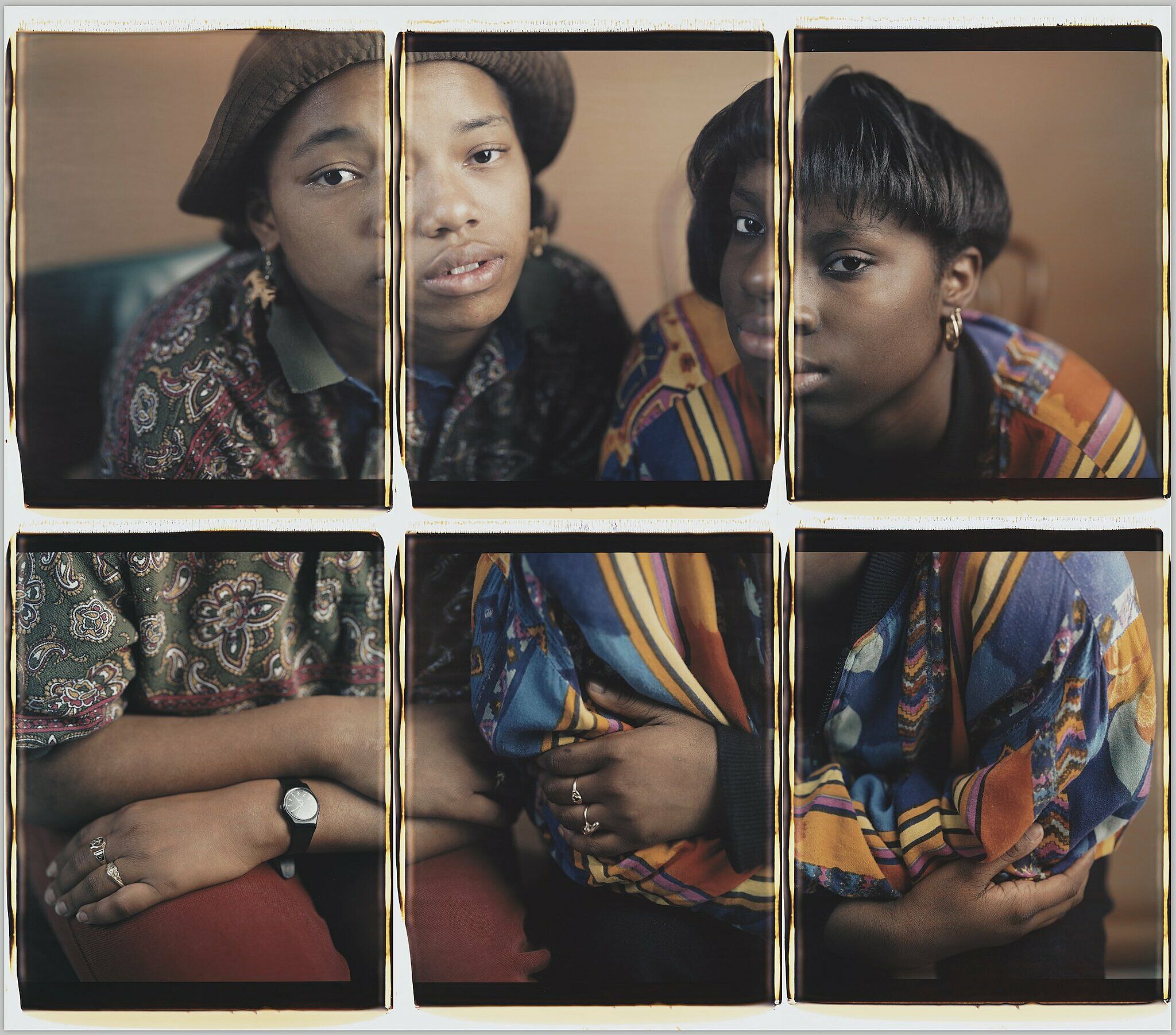
-
801
Girls, Ornaments, and Vacant Lot
Audio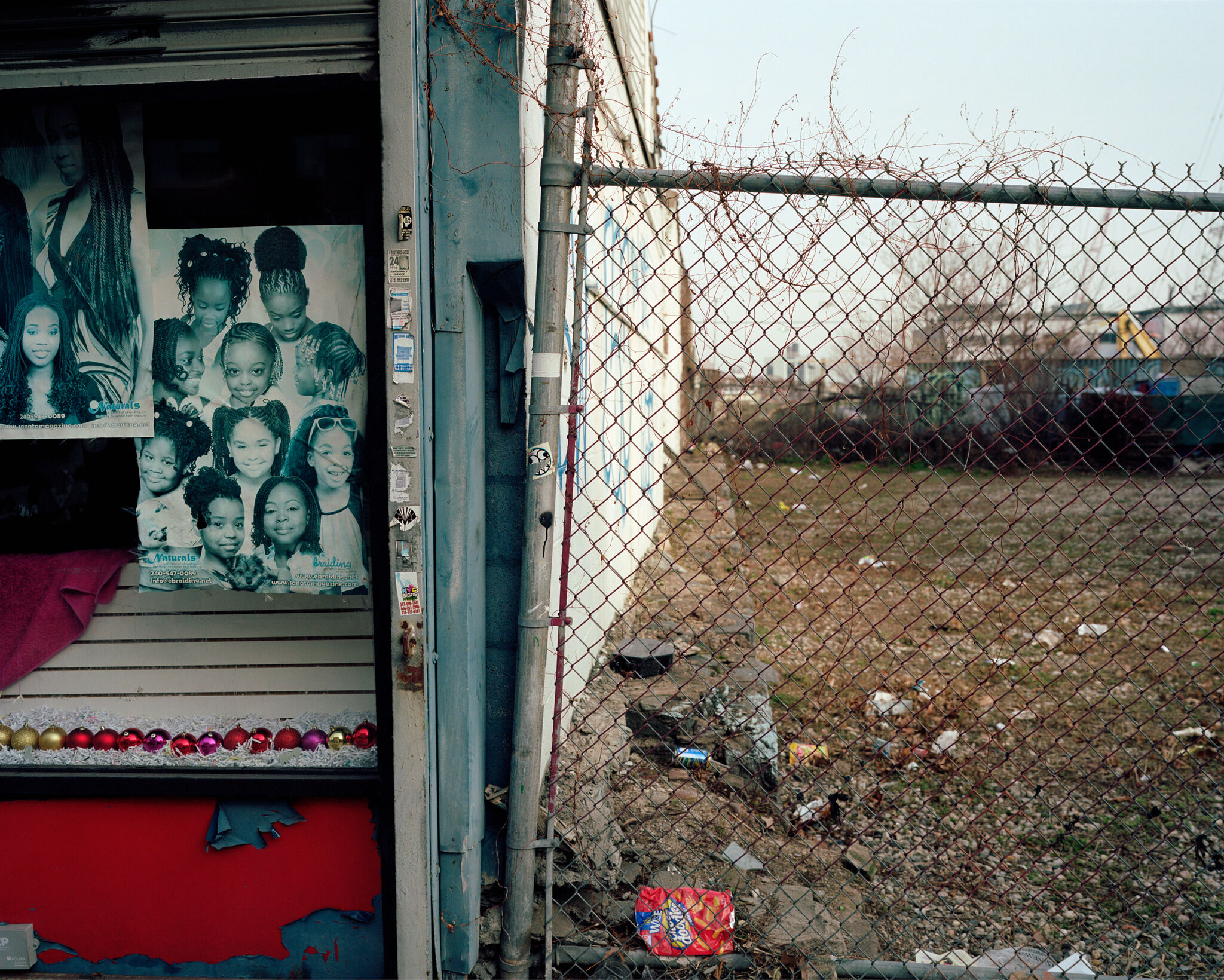
-
802
A Man in a Bowler Hat
Audio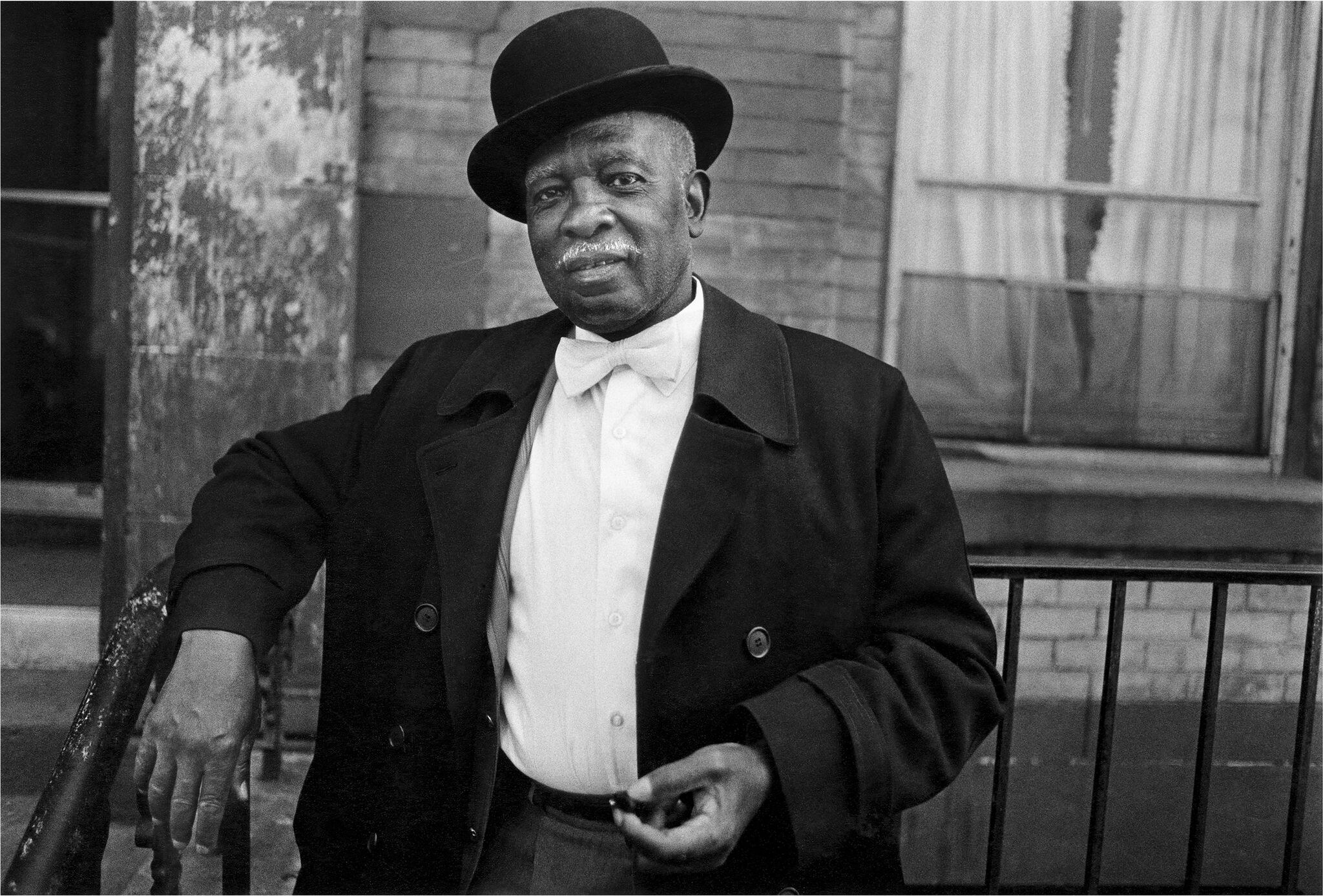
-
803
Young Man at a Tent Revival, Brooklyn, NY
Audio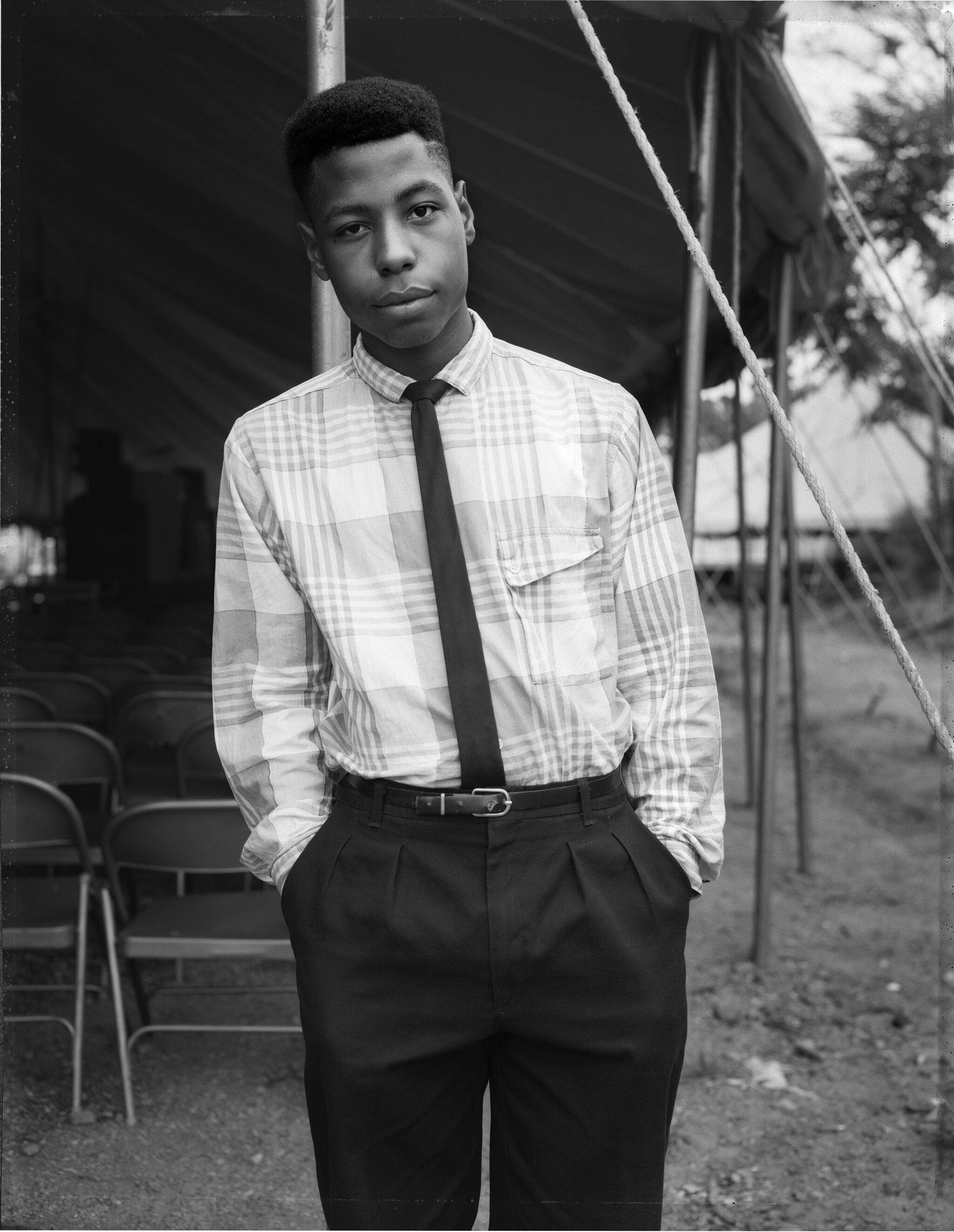
-
804
Lorna, New York, NY
Audio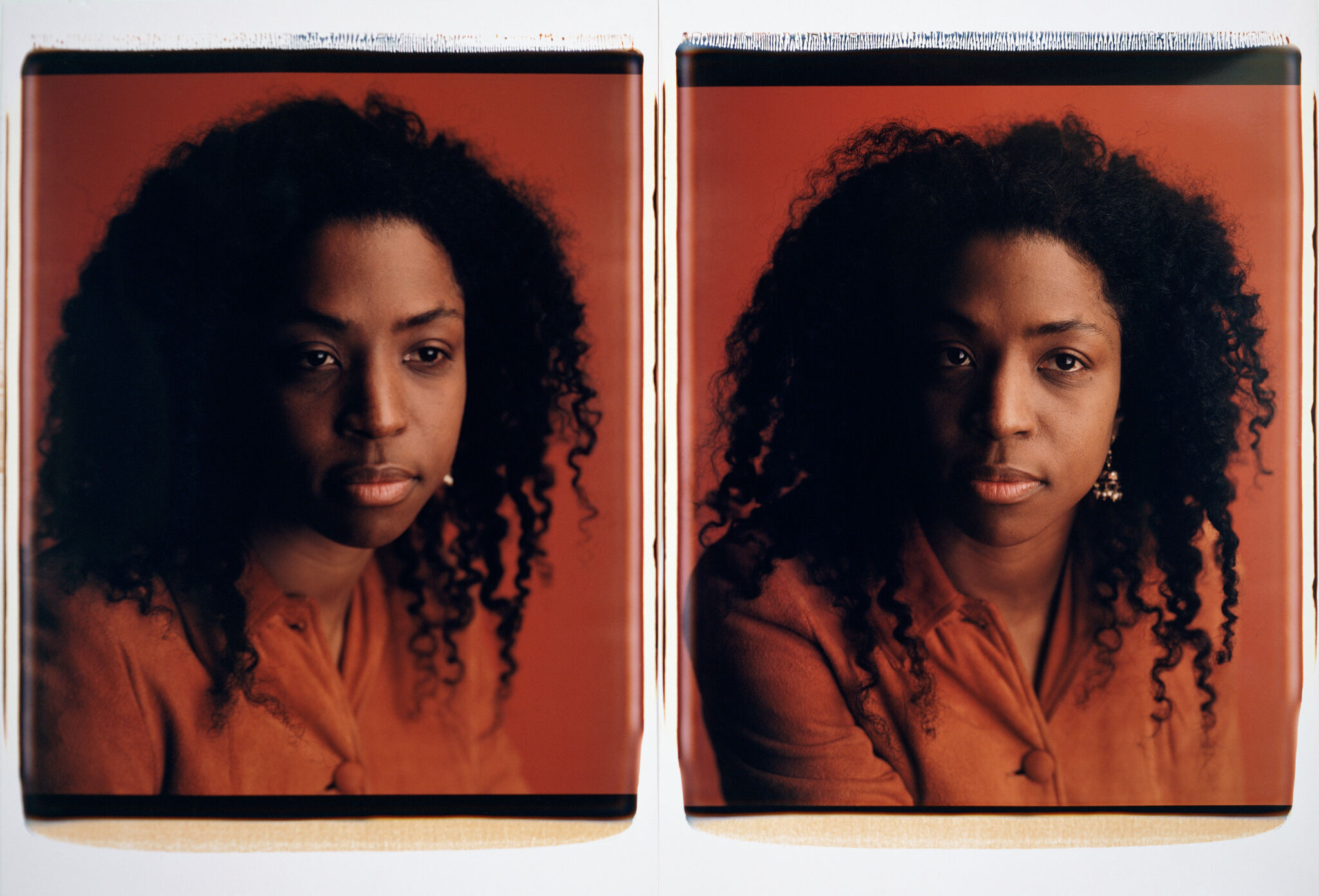
-
805
Omar, Phillips Academy, Andover, MA
Audio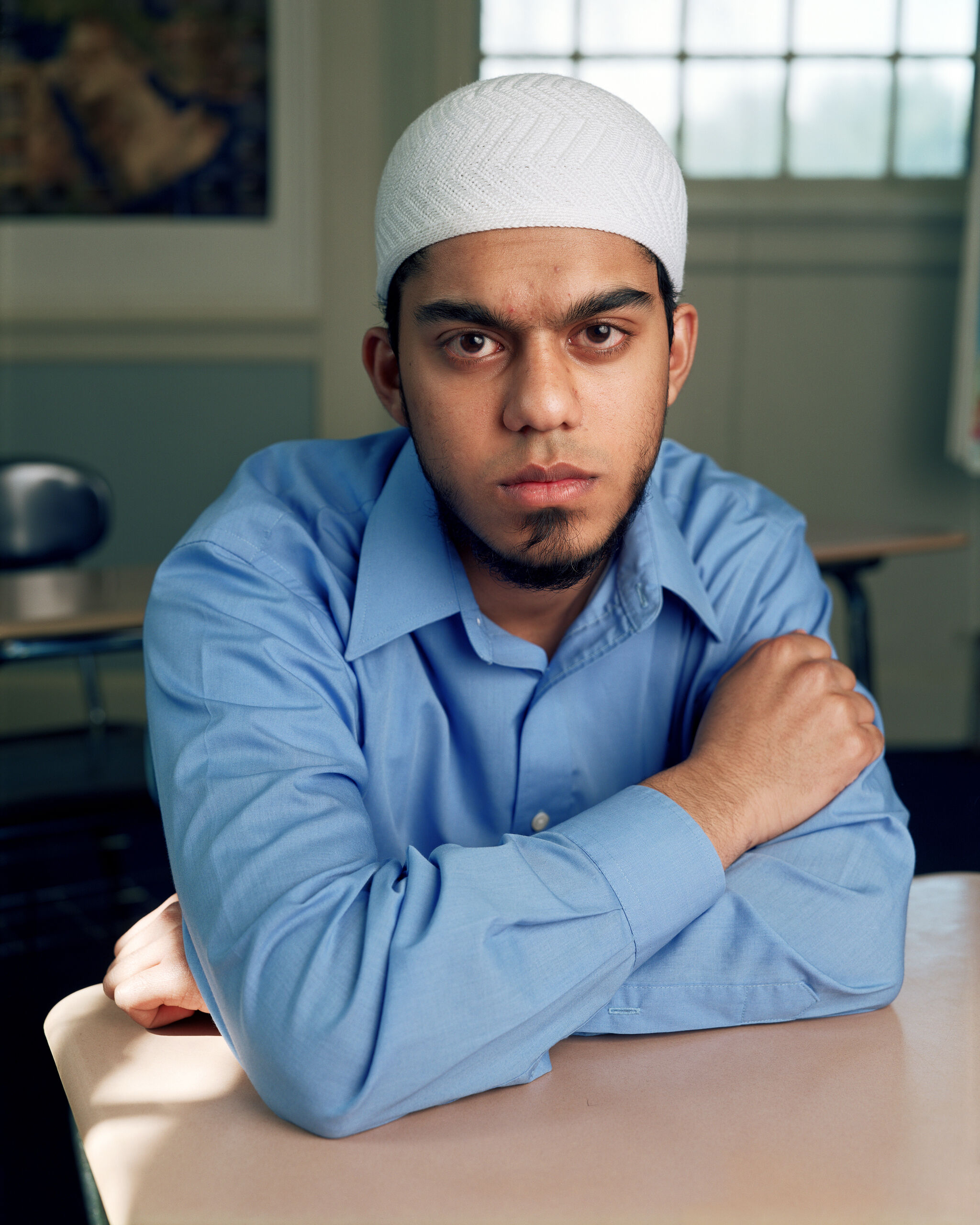
-
806
Untitled #25 (Lake Erie and Sky)
Audio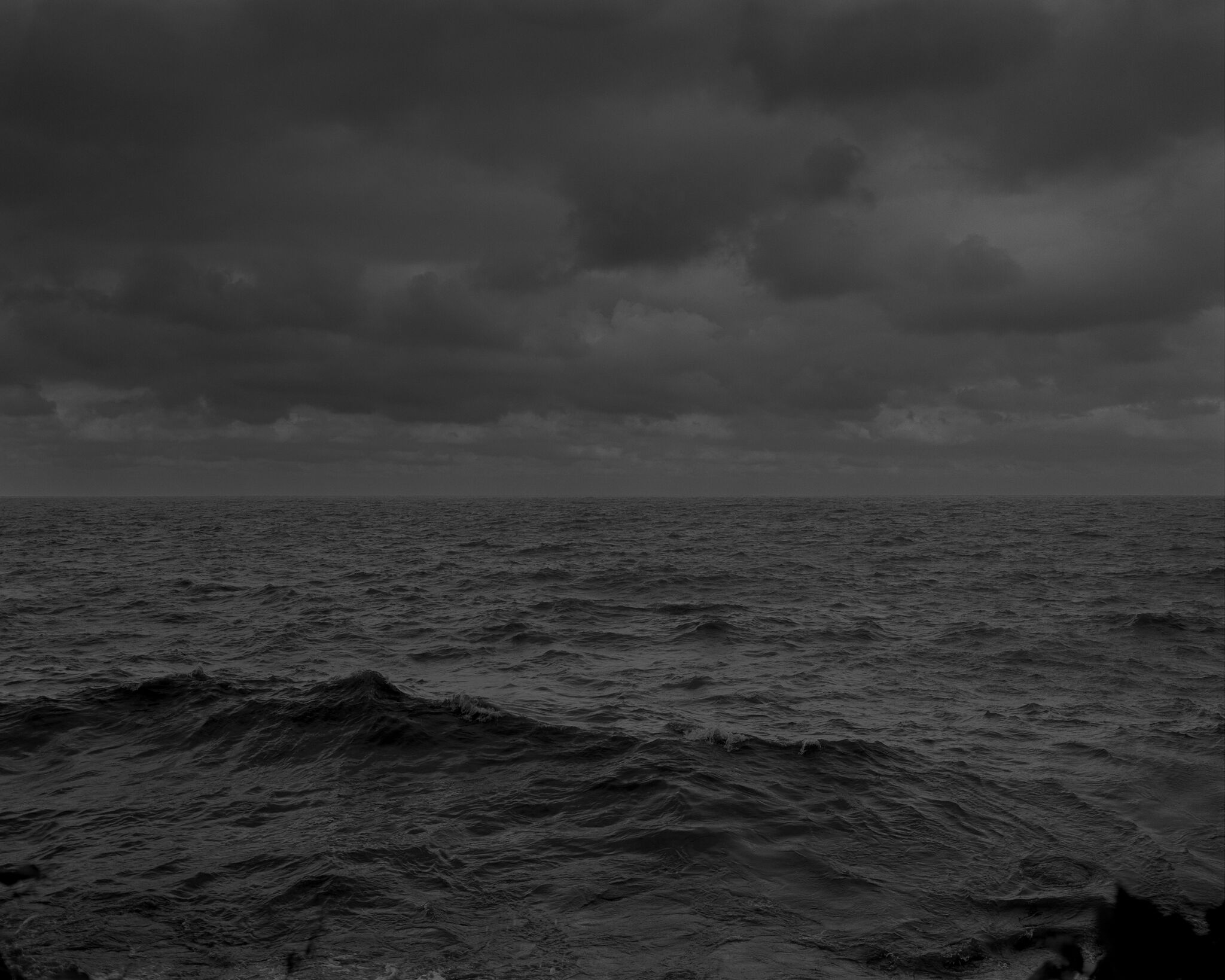
-
103
Mathis Menefee and Cassandra Griffin
Audio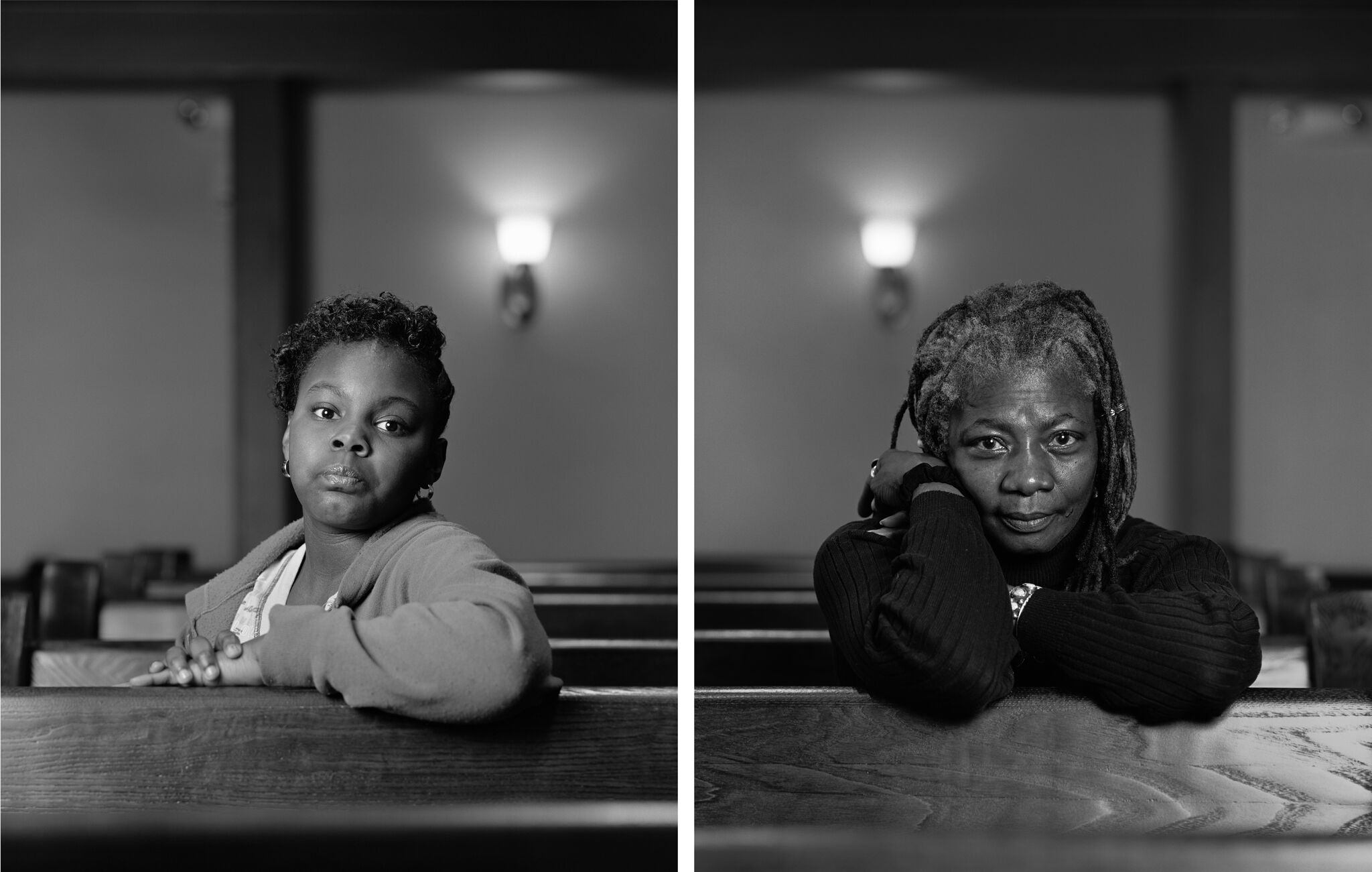
-
104
Sound Description: Dawoud Bey, 9-15-63, 2013
Sound description
Dawoud Bey: This retrospective exhibition looks at examples of my work going back to the very first project, I guess you could say the exhibition is both about an evolution in the things that I’m interested in looking at, as well as being a kind of evolution of the way I think about making certain kinds—or different kinds—of photographs as a way of visualizing those ideas.
Narrator: Welcome to Dawoud Bey: An American Project. This exhibition presents works from the artist’s decades-long career, beginning in the mid-seventies up until 2017. Throughout the show, you’ll see images taken with a range of cameras, from small 35 millimeter cameras to a giant polaroid camera weighing hundreds of pounds. Using different formats and techniques has been one way that Dawoud Bey has sought to reveal the sometimes invisible exchange between the photographer and the photographed.
Dawoud Bey, Martina and Rhonda, Chicago, IL, 1993. Six dye diffusion transfer prints (Polaroid), 48 × 60 in. overall (121.9 × 152.4 cm). Whitney Museum of American Art; gift of Eric Ceputis and David W. Williams 2018.82a-f. © Dawoud Bey
Dawoud Bey: One of the things that was beginning to happen in Harlem was that there were these, as I called them, spaces where something used to be. And when those places are completely obliterated, when they're torn down and you end up with a vacant lot, there’s a kind of disruption of place memory. Because at some point, even if you know the community well, you can’t quite remember what used to be there. And that to me was a profound experience.
Narrator: Bey made Harlem Redux about four decades after getting his start in the neighborhood. In the earlier series he focused on the community’s people. Later—in the face of gentrification—he turned his lens more towards its physical spaces. With its faded hair care advertisements featuring images of African American girls, this photograph captures traces of Harlem’s disappearing past.
Dawoud Bey: And then there’s this gaping hole next to them of the vacant lot where something that was, was torn down. Part of that narrative is everyone knows what’s eventually going to occupy that vacant lot. It’s not going to be a mom and pop store. It’s going to be another luxury condo building or luxury apartment rental.
Dawoud Bey, Girls, Ornaments, and Vacant Lot, NY, from Harlem Redux, 2016. Pigmented inkjet print (printed 2019), 40 3/8 × 48 1/4 × 2 in. (102.6 × 122.6 × 5.1 cm). Collection of the artist; courtesy Sean Kelly Gallery, New York; Stephen Daiter Gallery, Chicago; and Rena Bransten Gallery, San Francisco. © Dawoud Bey
Narrator: Bey has described A Man in a Bowler Hat as his first successful photograph.
Dawoud Bey: There’s no evident discomfort. It doesn’t look like a stranger standing in front of him with a camera making a photograph. And the success of that work would be the camera itself disappeared. You don’t look at those portrait-based works and think about the camera. So it moves from being a photograph or a photographic object to being an experience between you and that individual. And that was always my ambition with that work.
Narrator: Bey knew that he wanted to photograph this man as soon as he saw him. But at first, the twenty-two-year-old photographer didn’t have the nerve to ask, as the man was standing with a group of friends.
Dawoud Bey: And then I got to the end of the block and started having a conversation with myself because it was clear that if I was going to do and be what I thought I wanted to do and make the kind of photographs that I wanted to make then I was going to have to figure this out.
Narrator: Bey did end up approaching the man and asked if he might make a photograph of him. This kind of direct engagement runs throughout the series that he called Harlem, U.S.A.
Dawoud Bey: I spent about five years getting to know the community, allowing people in the community to get to know me, and trying to make what I felt was an honest representation of African Americans in that particular urban community. That in some ways stood in relation to the more, I guess you could say, pathologically-driven representations of African Americans.
It was an interesting thing because what I came to realize was that in making those photographs there was not only the picture-making part, but there was very clearly the social part: how does one insert themselves momentarily into someone’s life and come away with something that resonates with some real aspect of the individual?
Dawoud Bey, A Man in a Bowler Hat, Harlem, NY, from Harlem, U.S.A., c. 1976. Gelatin silver print (printed 2019), 11 × 14 in. (27.9 × 35.6 cm). Collection of the artist and Sean Kelly Gallery, New York; Stephen Daiter Gallery, Chicago; and Rena Bransten Gallery, San Francisco. © Dawoud Bey
Narrator: In photographs like Young Man at a Tent Revival, Brooklyn, NY, Bey began working in a more collaborative way with his subjects.
Dawoud Bey: Making the street portraits, I was looking to photograph ordinary African Americans in the midst of living their lives. And I would just momentarily enter their lives with my camera, my tripod, my positive-negative Polaroid film and ask them if I could make a photograph of them. And I told them that thirty seconds after we do this I’m going to give you a print. Then of course they wanted to know how much do you want. I said, no, it’s not that kind of thing. I’m going to give you the photograph.
I started photographing with a 4x5 camera, which of course is very different from photographing with a small 35 millimeter camera which is held in the hand and which you can work with very spontaneously. A 4x5 camera mounted on a tripod implies a much more deliberate way of working. And certainly in terms of making portraits, a much more consensual way of working. Things have to be positioned in front of the camera. If they move, you can’t just quickly move with them. A 4x5 negative allows for making a much larger photograph, which is something else that I wanted to do with this work, was to give the Black subjects in the work a more physically enhanced presence on the wall.
Dawoud Bey, Young Man at a Tent Revival, Brooklyn, NY, 1989. Pigmented inkjet print (printed 2019), 40 × 30 in. (101.6 × 76.2 cm). Courtesy the artist and Sean Kelly Gallery, New York; Stephen Daiter Gallery, Chicago; and Rena Bransten Gallery, San Francisco. © Dawoud Bey
Narrator: The artist Lorna Simpson is a longtime friend of Bey’s. He photographed her in 1992 while working in the 20x24 Polaroid Studio, using a camera that produced 20x24-inch prints.
Dawoud Bey: By then I had been making photographs in the streets for a very long time. And I decided I wanted to think about other ways in which I could continue making portraits.
Narrator: In the Polaroid studio, Bey worked with the support of a technician. The camera weighed 265 pounds, and its bellows was about 6 feet long when fully extended.
Dawoud Bey: As I was making those initially individual portraits, we had to pin them up on the wall in the studio both to look at them to make sure everything was right with them, but also so that they could dry. And when I started, I mean, each portrait was always more than one exposure. But I thought about it in the conventional way in which one makes several photographs, and then you look at them, and then you choose the one photograph that best exemplifies that particular situation. And as I was pinning them up and looking at them I began to feel like they looked even more interesting together.
And the implications of the work in terms of an expanded sense of time, and animation was even more interesting than the single portrait. And so I started making a group of diptych portraits. The lighting and the staging was similar, except one portrait with the person directly engaging the camera and the viewer. And the second one, they were not engaging the camera and they had a different quality of introspection.
Dawoud Bey, Lorna, New York, NY, 1992. Two dye diffusion transfer prints (Polaroid), 30 × 44 in. overall (76.2 × 111.76 cm), 31 1/2 × 23 1/8 in. each framed. Collection of Eileen Harris Norton. © Dawoud Bey
Narrator: In 1992, Bey approached the Smart Museum of Art in Chicago about doing a project there. He began a residency with twelve high school students from three Chicago South Side schools.
Dawoud Bey: Young people became the focus of my work.
Narrator: Bey’s project, Class Pictures, soon expanded to include teenagers from across the United States.
Dawoud Bey: And I decided that I wanted to make a group of photographs that were a sort of snapshot of young people in America at that particular moment. And I really felt that it was important not only to have a visual representation of them in the photograph, but to also have their own self-representation through their words. Photographs are inherently mute. There’s a lot that they don’t tell you.
Narrator: Bey would photograph the teens in a classroom setting, after they had been given time to write descriptions of themselves.
Dawoud Bey: They have amazing stories that they would tell us if only someone would ask. So, my work became a vehicle for them to extend themselves into the world in that kind of way.
Omar, I think, is one of the most poetic self-descriptive statements. And I can’t remember the whole statement but I always remembered the last line because he said something like “sometimes I wonder what color my soul is, I hope that it is the color of heaven.” And each time I read his statement, it just comes alive all over again.
Dawoud Bey, Omar, Phillips Academy, Andover, MA, from Class Pictures, 2005. Pigmented inkjet print (printed 2019), 40 × 32 in. (101.6 × 81.3 cm). Collection of the artist; courtesy Sean Kelly Gallery, New York; Stephen Daiter Gallery, Chicago; and Rena Bransten Gallery, San Francisco. © Dawoud Bey
Narrator: Bey made these photographs in response to a commission for the 2018 Front Triennial, in Cleveland. As he researched the history of northeast Ohio, he discovered that it had played an important role in the Underground Railroad. He began thinking about ways to portray this history and depict the sites that had protected those fleeing slavery.
Dawoud Bey: Of necessity, those locations, most of them were never known. They couldn’t be. They weren’t supposed to be. So there is that layer of invisibility built into the history. And so what I did was through research finding a few sites that are in fact known to be related to the Underground Railroad and then began to look at the landscape around those sites imagining a fugitive African American moving through that landscape, what that landscape might have looked like and felt like.
They’re all about the imagination. Looking closely at a piece of the land and noticing all of these thorns that certainly make the landscape so much more threatening if one had to move through it. So when I thought about it through that particular narrative, the landscape became for me a very transformed space. And that’s the space and place that I want the viewer to think about when they look at that work. I want them to completely forget about the present. This work is not about the present, which is why those photographs are all so large. I wanted to create a physical space for the viewer to enter into that, allow them just to be in that landscape.
Dawoud Bey, Untitled #25 (Lake Erie and Sky), from Night Coming Tenderly, Black, 2017. Gelatin silver print, 44 × 55 in. (111.8 × 139.7 cm). San Francisco Museum of Modern Art; Accessions Committee Fund purchase. © Dawoud Bey
Narrator: These portraits are part of a series titled “The Birmingham Project.” They refer to the racially motivated bombing of a Birmingham church in 1963. Four young girls died in the church, and two boys were shot later that day. The events marked a turning point in the Civil Rights movement.
Dawoud Bey: So I started with this idea of history, trying to figure out how to engage with and visualize something that happened almost fifty years ago. How do you in some kind of way, through one’s work, collapse the past and the present?
Narrator: Bey photographed African American children in Birmingham who were the ages of those who were killed on that day. He juxtaposed these images with portraits of adults, also from Birmingham, who were the ages that the children would have been if they had lived.
Dawoud Bey: It was a deeply moving and sometimes difficult experience making the work, because each time for example a young girl would come in to be photographed, my heart would catch. Because you look at this little eleven-year-old girl and imagine her going to church on a Sunday morning and being killed in a blast of dynamite. And my heart would catch, because for me they could have been, and at that moment they were, in fact, the girls who were in that church.
That was the very same moment in which Trayvon Martin was killed in Florida. So it was very clear that this work was not just about a set of historical circumstances but had very real implications for the present moment as well. And obviously we just heard a few days ago about a police officer shooting a Black man in the back seven times.
Narrator: When Bey reflected on this series last summer, it was four days after police officer Rusten Sheskey shot Jacob Blake in Kenosha, Wisconsin, on August 23rd. Thinking back to 1963, Bey continued.
Dawoud Bey: Johnny Robinson, one of the boys who was killed that Sunday, was shot in the back by a police officer who thought he saw him throwing rocks at a car. And he called out to him and he walked away. And he picked his gun up and shot him in the back. These narratives continue to play out. It’s not just about 1963.
Dawoud Bey, Mathis Menefee and Cassandra Griffin, Birmingham, AL, from The Birmingham Project, 2012. Pigmented inkjet prints, 40 × 64 in. each (101.6 × 162.56 cm each). Rennie Collection, Vancouver. © Dawoud Bey
Sound Description: Dawoud Bey, 9-15-63, 2013
Running Time: 00:11:26
Sound description: Ethereal, computer-generated tones coalesce and overlap.
0:00
0:00