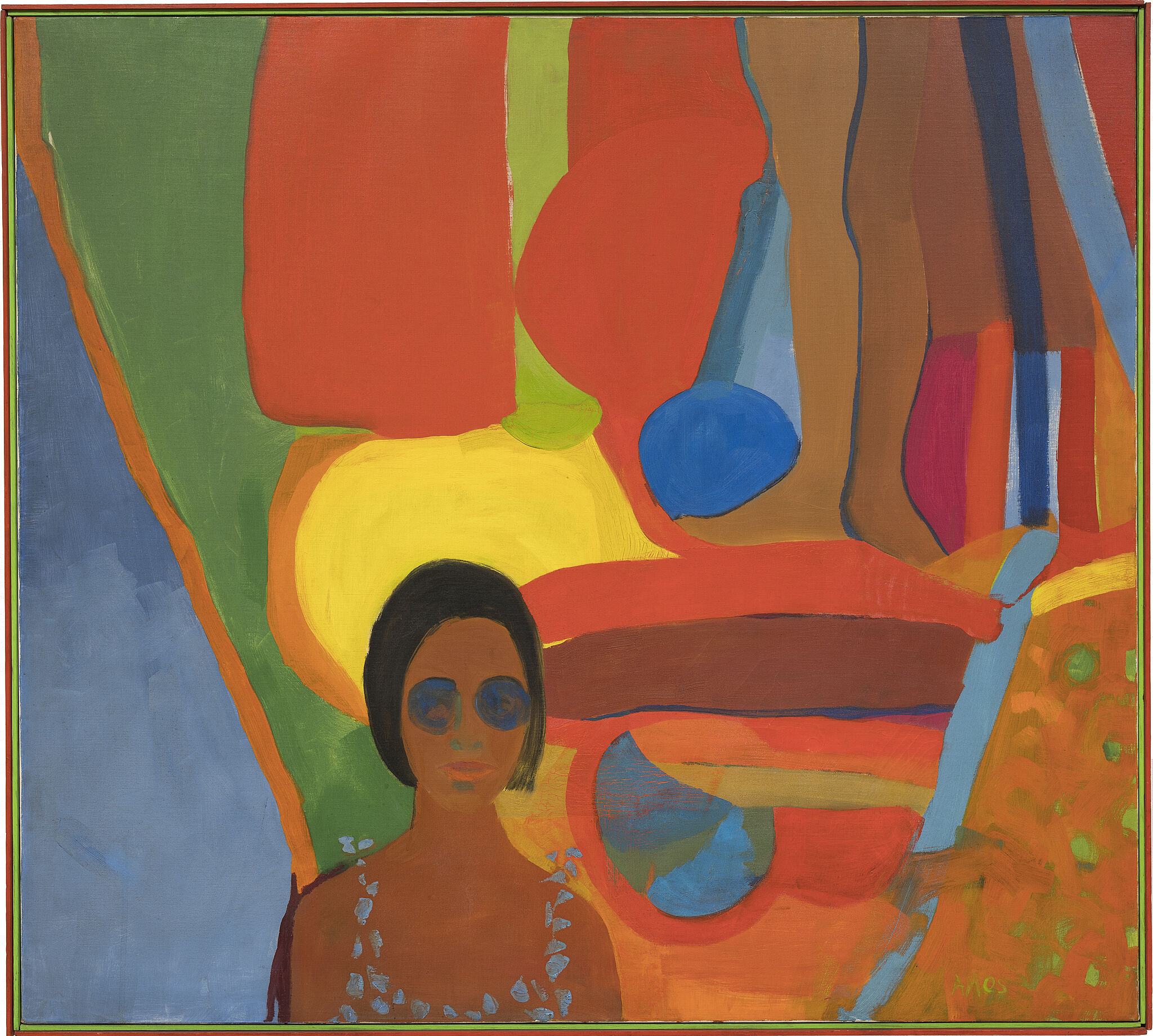
Spilling Over
2019
"More often than not, you have to assume that there is some sort of relationship between radical gestures and art, and radical gestures and the world."
—Rashid Johnson
Hear from the artists, the exhibition’s curator, and scholars speaking about works on view.
-
800
Introduction
Audio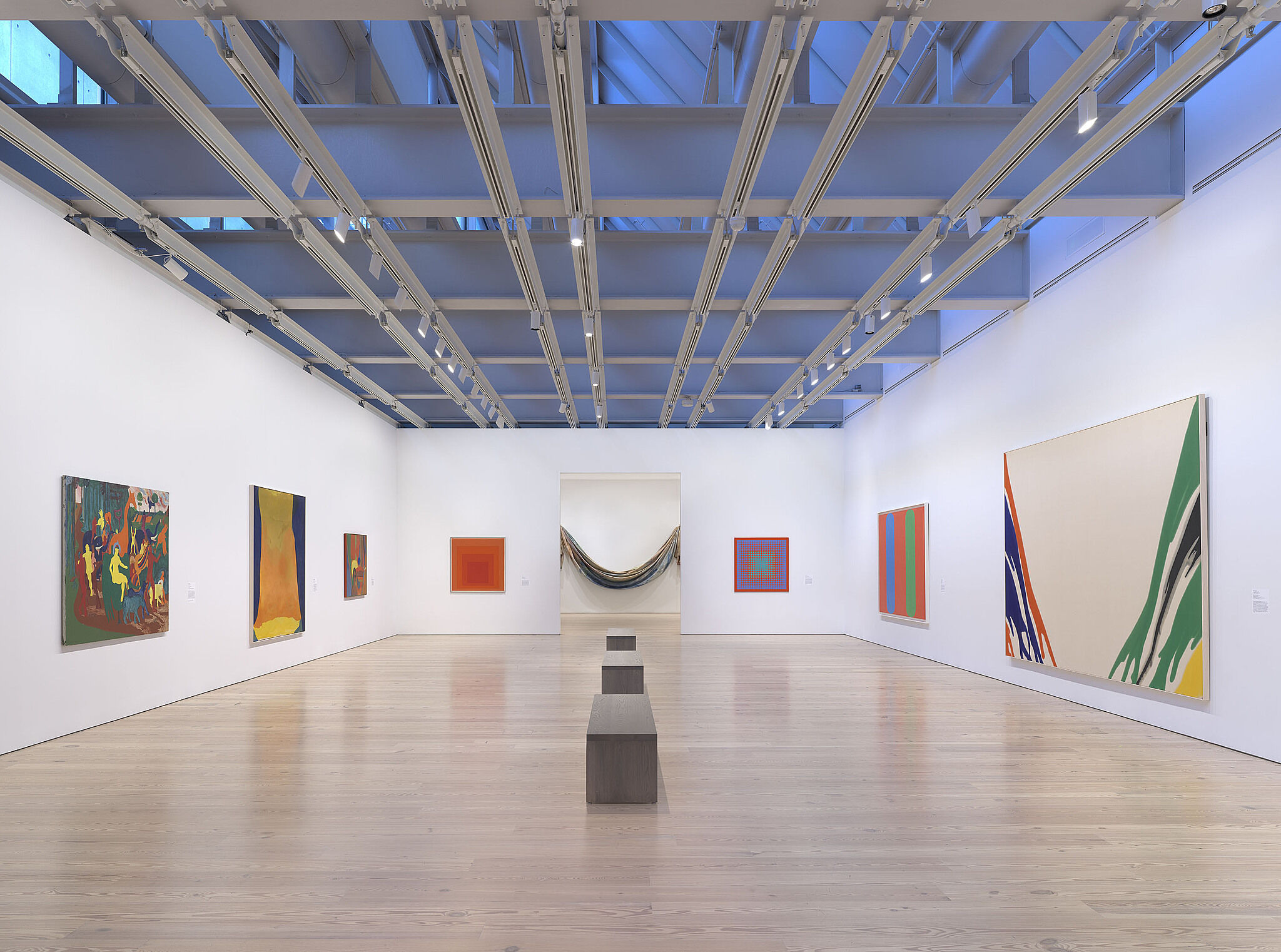
-
801
Alvin Loving, Septehedron 34, 1970
Audio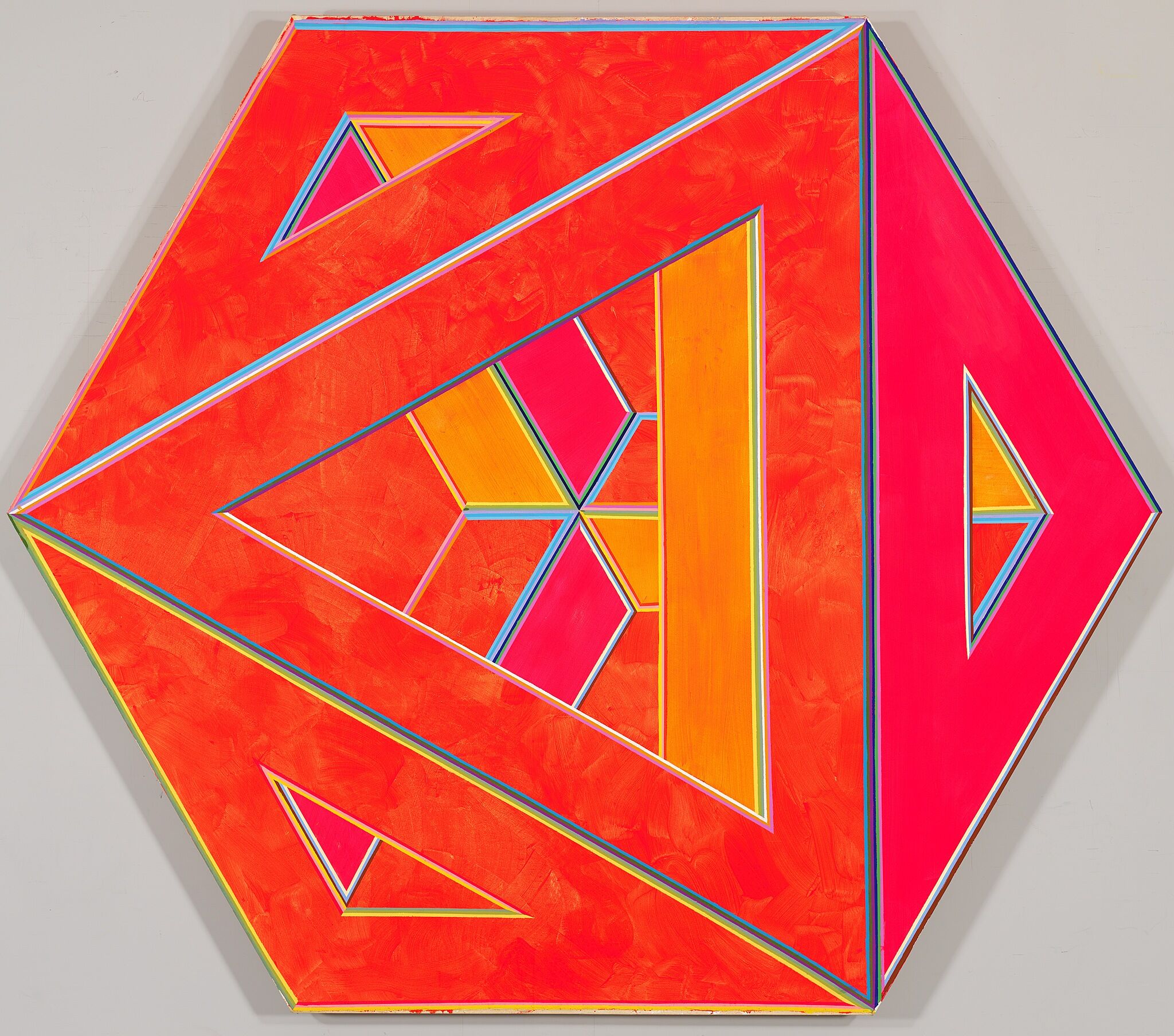
-
802
Bob Thompson, Triumph of Bacchus, 1964
Audio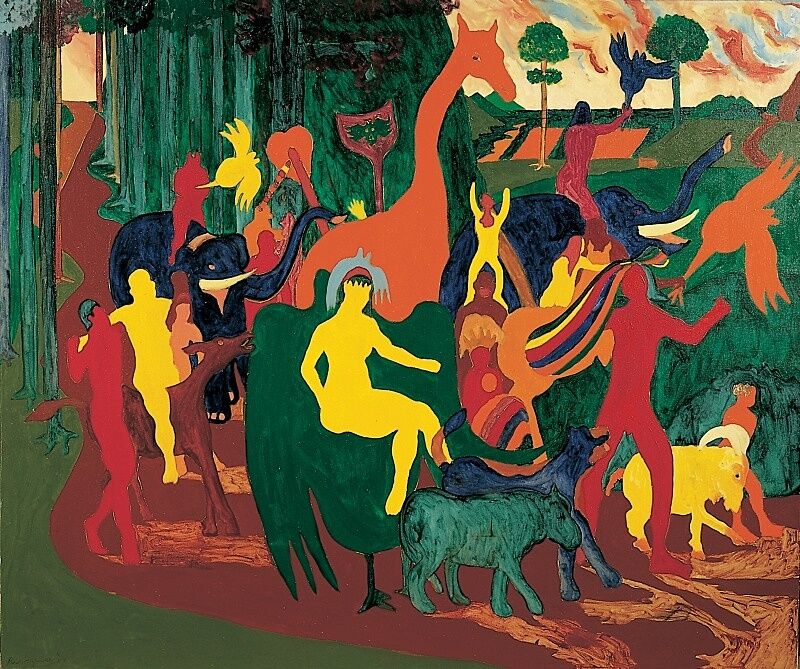
-
803
Ellsworth Kelly, Blue Green Red, 1964
Audio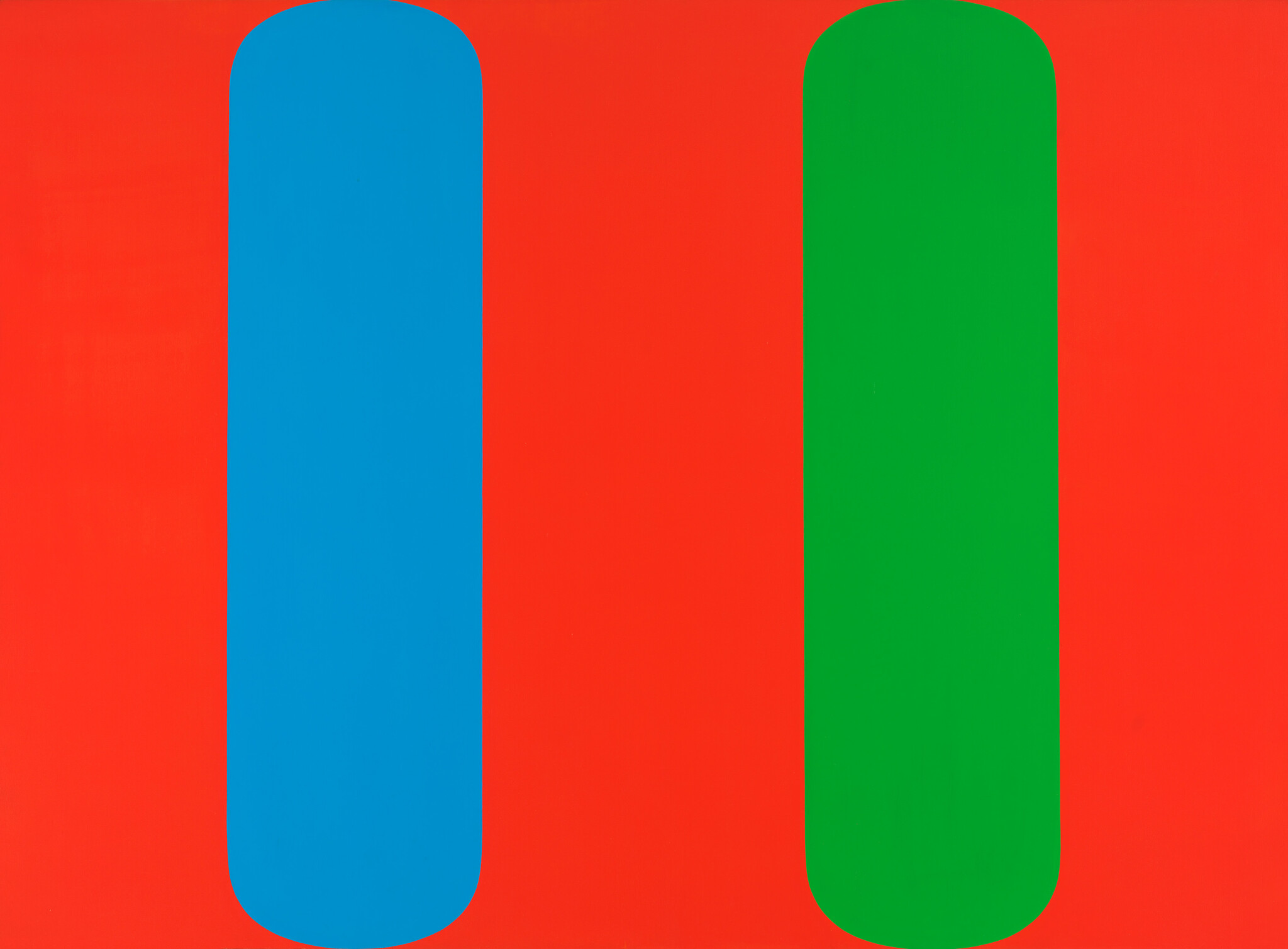
-
804
Kay WalkingStick, April Contemplating May, 1972
Audio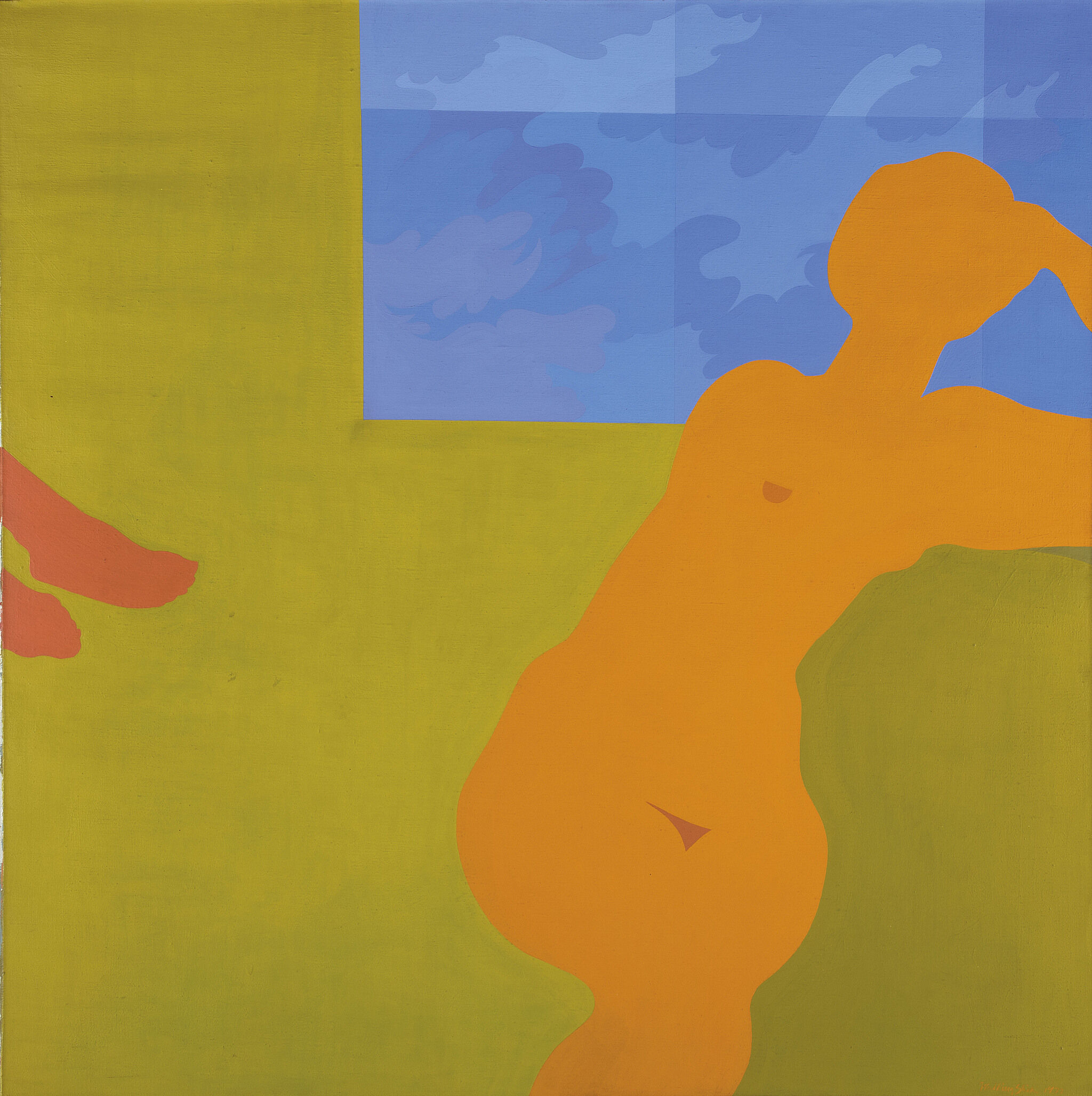
-
805
Frank Bowling, Dan Johnson’s Surprise, 1969
Audio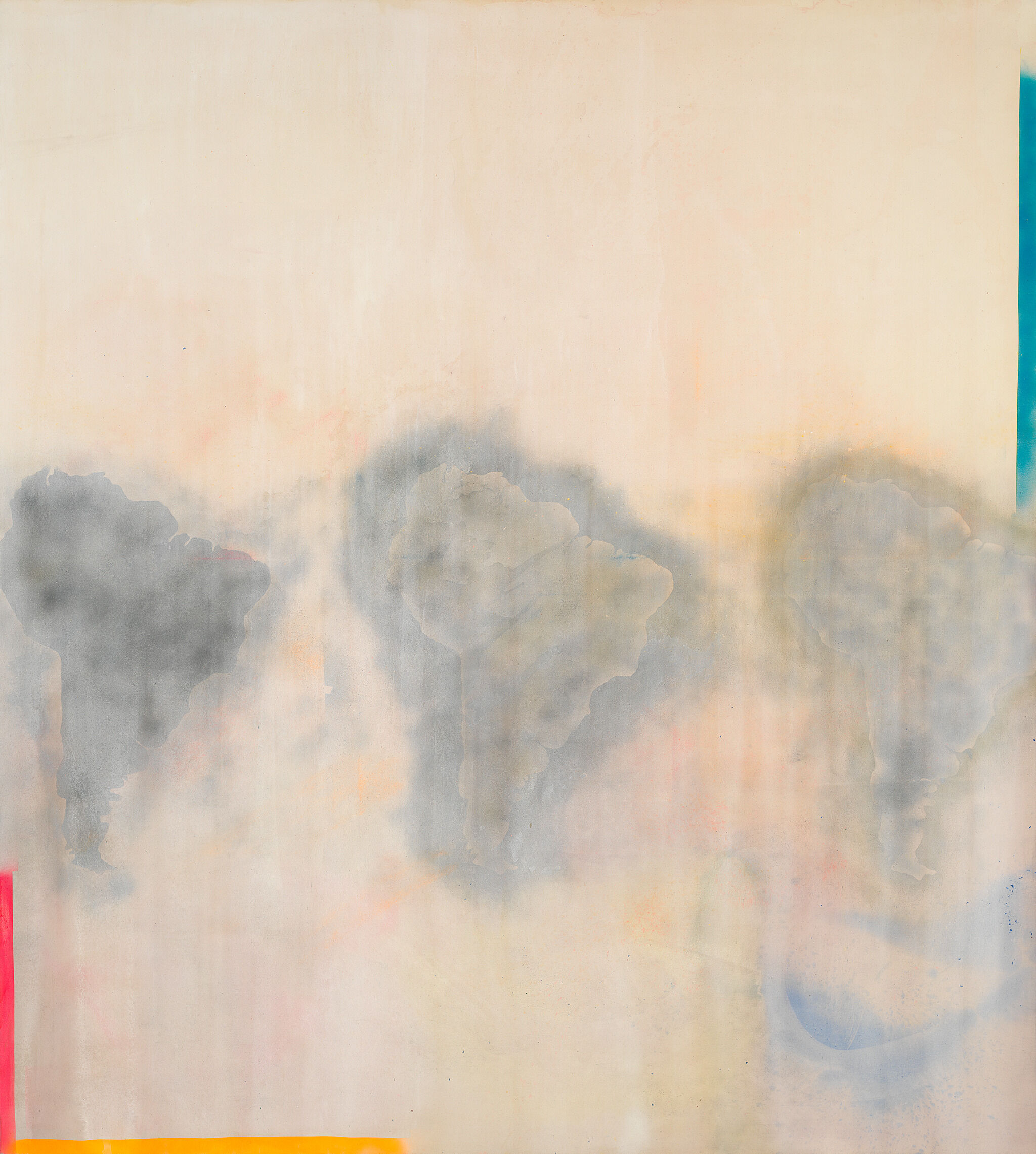
-
806
Sam Gilliam, Bow Form Construction, 1968
Audio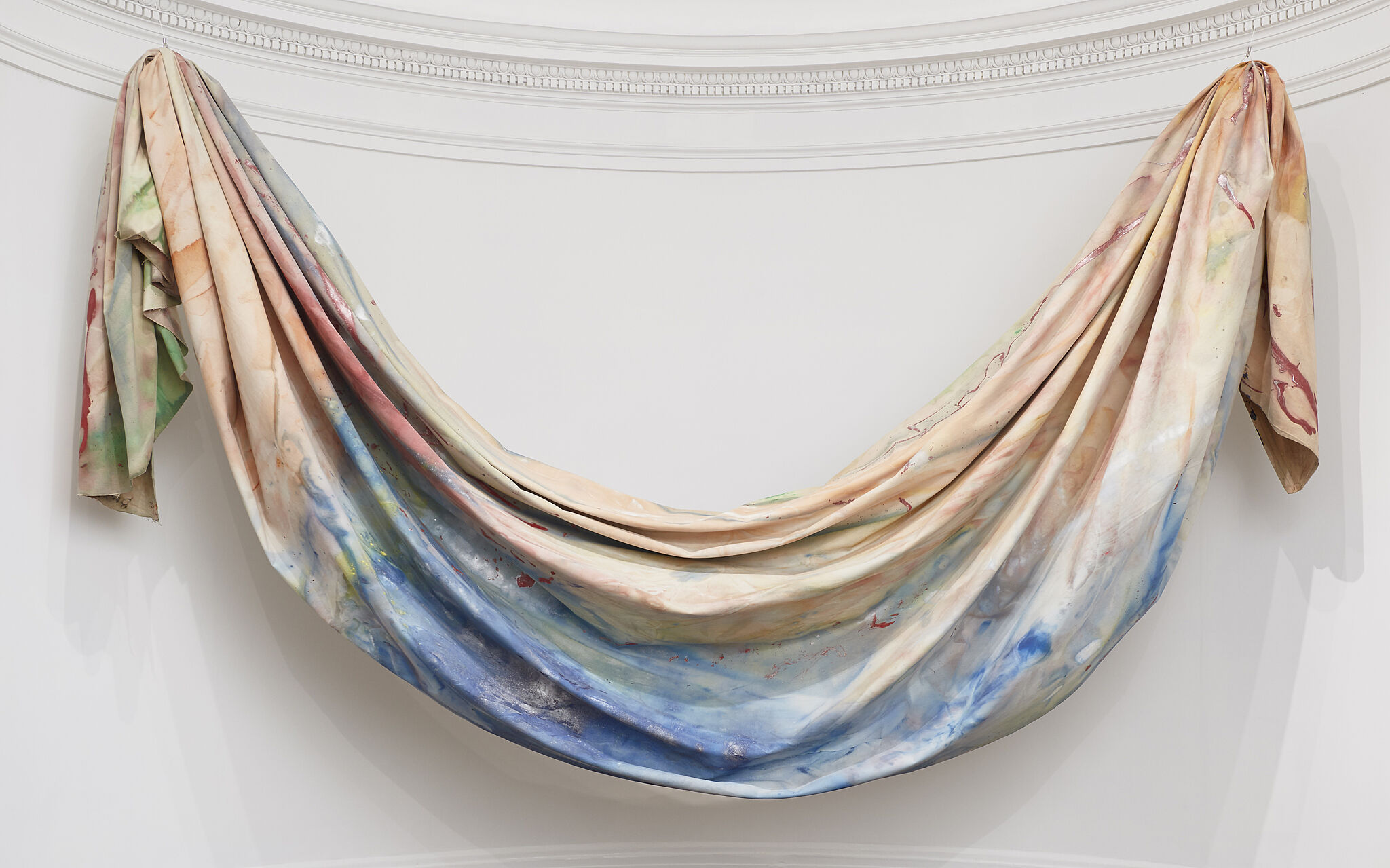
David Breslin: Hi, my name is David Breslin. I'm the DeMartini family curator and director of the collection at the Whitney Museum of American Art.
This exhibition gathers paintings from the 1960s and early 1970s that used color as the animating factor. I think one could say that, for all painting, color is something that's instrumental, but for these paintings, it's really determinative of how we see them, how we are affected by them, how I think the artist really wanted to put forward color as opposed to gesture or line or representative subject matter to really get across what he, she, they were wanting to do with this painting.
I've always loved paintings from this period because of the way that they really call the viewer, really compel the viewer into the space that the paintings make.
And what some of those artists were really thinking about was less about what was in the painting in terms of subject matter, but really how those painting made a viewer feel, how they set the stage for a certain environment in which the viewer and their feelings, their perception, their politics, really began to share the same stage as the painting in the room.
Installation view of Spilling Over: Painting Color in the 1960s (Whitney Museum of American Art, New York, March 29-August 2019). From left to right: Bob Thompson, Triumph of Bacchus, 1964; Helen Frankenthaler, Orange Mood, 1966; Emma Amos, Baby, 1966; Josef Albers, Homage to the Square: “Wait”, 1967; Sam Gilliam, Bow Form Construction, 1968; Richard Anuszkiewicz, The Fourth of the Three, 1963; Ellsworth Kelly, Blue Green Red, 1964; Morris Louis, Gamma Delta, 1959-60. Photograph by Ron Amstutz
Alvin D. Loving: Well abstraction is the most direct route to the intellect. In other words when you look at my work, there’s nothing else there than what you see. There’s no hidden messages. It’s about color. It’s about material. As a human being, and politically that should be in there too...
Narrator: That’s Alvin D. Loving in 2004, from an interview conducted by Dirk Eitzen at Franklin and Marshall College. The artist passed away the following year.
Darby English: What’s really interesting to me about Loving’s geometric images, and often very powerful about them, is a level of intimacy I feel with an artist in a problem-solving situation.
Narrator: Art historian Darby English is the author of 1971: A Year in the Life of Color.
Darby English: This particular picture for me, Septehedron 34, is like a window onto a process where the artist is asking himself, what can I get this shape to do for me? He’s taken a canvas, given it an extra two sides—it’s six-sided object—and into that object he has inserted, basically a cube, with a succession of cuts that he’s made into it.
So, it’s like what can I get this shape to do for me? And what am I going to have to do to get everything I can from it? So every turn, every cut, every color interaction, every void, every projection tracks to a decision that he’s made.
It’s a very difficult picture to spend a long time with. I used to hate it. I hated it until I realized that I needed to figure it out.
Alvin Loving, Septehedron 34, 1970. Acrylic on shaped canvas, 88 5/8 × 102 1/2 in. (225.1 × 260.4 cm). Whitney Museum of American Art, New York; gift of William Zierler, Inc. in honor of John I. H. Baur 74.65. Courtesy the Estate of Al Loving and Garth Greenan Gallery, New York
Narrator: Bob Thompson’s Triumph of Bacchus is loosely based on a work by the Renaissance painter Titian. Bacchus—the yellow figure borne aloft by the large form that seems part bird, part throne—rests calmly at the center of the group. Thompson, whose forms were inspired by classical Renaissance artists such as Piero della Francesca, built this composition out of silhouetted figures.
Stanley Crouch: His commitment to these silhouettes is very important, because I think that that was part of the freedom that he was searching for.
Narrator: Stanley Crouch has written an essay on Thompson, exploring the intersections of art history, jazz, and Black American experience in his painting.
Stanley Crouch: That is, that if you use silhouettes and you use them with very bright colors, they're not black, not necessarily, because you make their features secondary to their form. That, I think, is part of Thompson's attempt to achieve the universal. That is, that part of what he's saying is that it's all geometry, anyway. No one can ever say that, because of my race, geometry does not like me. Because that to him I think was important, is that there are certain things that transcend all of our social conventions and social shortcomings.
Narrator: Thompson’s paintings were often allegories celebrating contemporary jazz musicians like Nina Simone and Ornette Coleman. He focuses here on a classical figure, but one who embodies a spirit of improvisation that might also be found in free jazz: Bacchus was the Greek god of wine, madness, and divine ecstasy.
Bob Thompson, Triumph of Bacchus, 1964. Oil on canvas, 60 1/4 × 72 1/8 in. (153 × 183.2 cm). Whitney Museum of American Art, New York; purchase with funds from the Painting and Sculpture Committee and The Lauder Foundation, Leonard and Evelyn Lauder Fund 98.19. © Michael Rosenfeld Gallery LLC, New York, NY
Narrator: In this painting, Ellsworth Kelly made an abstract painting out of the three hues mixed to produce color television—a recent invention at the time he completed this work.
Darby English: Kelly is looking at the basics of painting making: color relationships, composition, non-composition, and he’s trying to present the basics as the basics that they are—without losing the soul.
Narrator: Art historian Darby English.
Darby English: Imagine being an artist or being someone trying to be an artist and going to a handbook with the basic information about shapes and colors and composition laid out before you, you see a lot of charts, you see a lot of things presented in sequence and in hierarchies, you see a lot of things set into very legible diagrammatic relationships so that, quote, unquote, anyone who comes along and picks it up can learn the principles.
Kelly’s question seems to be, how can I present the basic information in a way that lacks the coldness and the abstractness of a diagram? It’s in a way like teaching without didacticism, if that makes any sense.
Ellsworth Kelly, Blue Green Red, 1964. Oil on linen, overall: 73 1/4 × 100 3/8 in. (186.1 × 255 cm). Whitney Museum of American Art, New York; purchase, with funds from the Friends of the Whitney Museum of American Art 66.80. © Ellsworth Kelly Foundation
Kay WalkingStick: April Contemplating May is a, is a picture of two women in a space defined by color. And they are in color. Not white girls.
As I said, I was trying to create space, primarily through color. And certainly the placement of the feet pulls you back into a space, a kind of space. And then having the big blue painting behind her head pushes you a little bit further back.
And it’s in a space with a painting in the back called Pieces of Sky.
When you look at the painting, the sky changes from these bright lovely blues to these sort of gray, smoggy, sooty, whites, and blues.
This also has, for me at least, a suggestion of the importance of, taking care of our environment. That this is our country, this beautiful place is ours to treasure and to take care of.
I think I was very happy at this point. I think I had a nice life, and I did have these questions going on in my mind about the American Indian Movement, and the feminist movement, and the so-called sexual revolution.
I was certainly raised with the idea that I was a Cherokee. Stand up straight, Kay, you’re a Cherokee. But I hadn’t really been involved in it, intellectually. So, that was playing a part too.
And that, inchworm green, I love. I just love [laughs] that color. And it's spring, which is, of course, because it's April contemplating May.
Kay WalkingStick, April Contemplating May, 1972. Acrylic on canvas, 49 7/8 × 49 7/8 in. (126.7 × 126.7 cm). Whitney Museum of American Art, New York; purchase with funds from the Painting and Sculpture Committee 2018.138. © Kay WalkingStick. Courtesy of the artist and the June Kelly Gallery
Narrator: In Dan Johnson’s Surprise, Frank Bowling—who was born in Guyana—used a map of South America to structure a largely abstract composition. In this 2012 interview with the Tate Modern, he described his approach at the time he made this work.
Frank Bowling: In my youth I tended to look at the tragic side of human behavior and try and reflect that in my work, but gradually as I became more involved in the making of paintings, I realized that one of the main ingredients in making paintings was color and geometry.
And then, by sheer chance, the map shapes appeared whilst I was in Hotel Chelsea, so I started painting maps of South America and Guyana, and then I decided that I would do the entire flat map as a motif to work with. I just found the shapes and graphics suggested in maps very engaging.
Darby English: He was completely identified with that language of modernism, but something stops Bowling from going all the way abstract, and he lets you know that by putting a figure or an outline of the South American continent into the painting.
Narrator: Darby English is an art historian, and author of 1971: A Year in the Life of Color.
Darby English: He had to leave a little bit of the world in, and that to me is what I think he’s doing at this moment.
Frank Bowling, Dan Johnson's Surprise, 1969. Acrylic on canvas, 115 15/16 × 104 1/8 in. (294.5 × 264.5 cm). Whitney Museum of American Art, New York; purchase with funds from the Friends of the Whitney Museum of American Art 70.14. © 2019 Frank Bowling/Licensing by Artists Rights Society (ARS), New York
Sam Gilliam: Now, when I did the drape paintings, I wasn’t making sculpture, I was reacting against painting.
Narrator: Sam Gilliam’s radical gesture as a painter—working on a canvas that was not bound to a stretcher bar—has been very influential, even on artists whose work may not look like his. One of those artists is Rashid Johnson.
Rashid Johnson: I’ve always thought about him in the early sixties, sitting in his studio in Washington, D.C., with the turmoil that’s kind of happening around him. The complexity of the time. Something as interesting as Martin Luther King marching on the Washington Monument. And there’s Sam living close by. And how he’s kind of going back into his studio and exploring shape, exploring color, then bleeding into the draped paintings, that we see that are included in this exhibition.
And what was he thinking, you know? What was the radical gesture? Was that radical gesture of emancipating the canvas from the stretcher bars one that reflected the sense of emancipation or freedom that was being searched for by people of color at the time? What relationship do those things have to one another? Because more often than not, you have to assume that there is some sort of relationship between radical gestures and art, and radical gestures and the world.
Narrator: The recording of Gilliam comes from a 1989 oral history conducted by the Archives of American Art, part of the Smithsonian Institution.
Sam Gilliam, Bow Form Construction, 1968. Acrylic and enamel on draped canvas, 119 7/16 × 332 5/16 in. (303.4 × 844.1 cm). Whitney Museum of American Art, New York; purchase with funds from the Friends of the Whitney Museum of American Art and the Howard W. Lipman Foundation, and gift of the Ford Foundation Purchase Program and an anonymous donor, by exchange 2001.343. © Sam Gilliam / Artists Rights Society (ARS), New York. Photograph by Tom Powel Imaging
0:00
0:00