
Andy Warhol—From A to B and Back Again
2018
“Andy's work really goes to the heart of the matter of what it means to be a human being and what our potential is . . . It's the real deal.”—Jeff Koons
Hear from a range of contemporary artists, curators, and scholars speaking about iconic works on view. Contributors include Jeff Koons, Hank Willis Thomas, Deborah Kass, Peter Halley, Sasha Wortzel, and Richard Meyer.
-
500
Introduction
Audio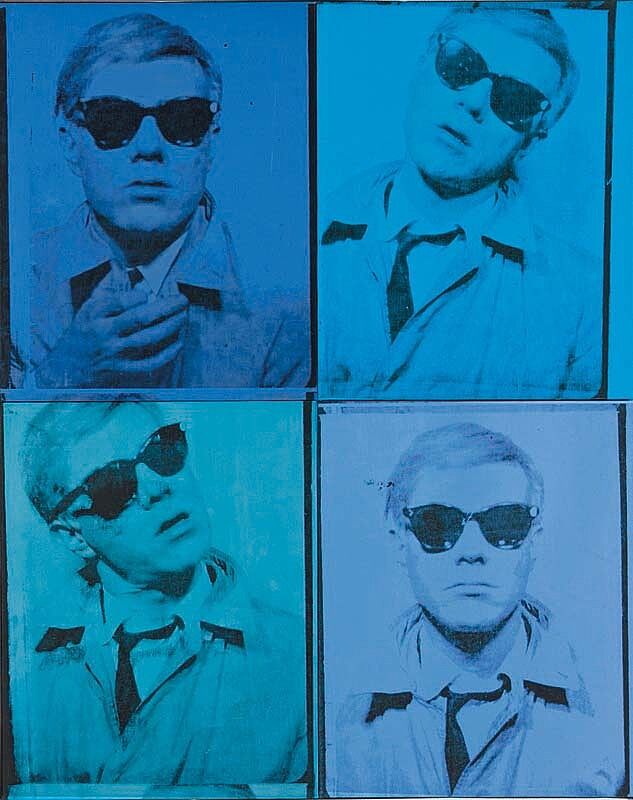
-
501
Campbell’s Soup Cans, 1962
Audio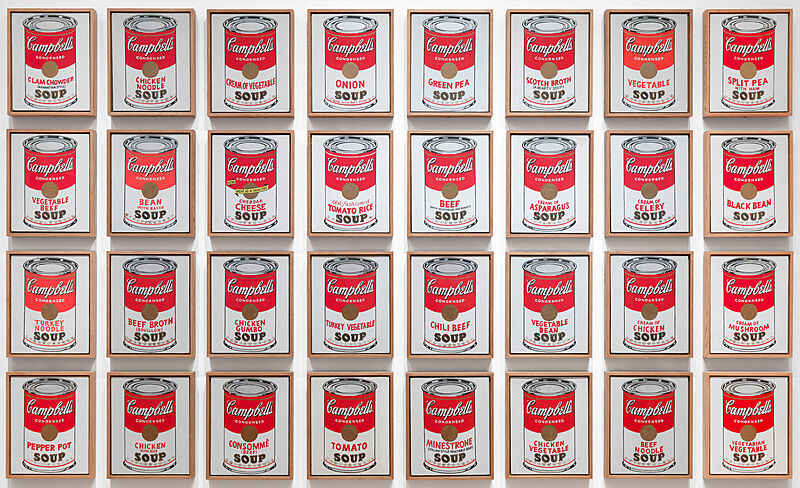
-
502
Green Coca-Cola Bottles, 1962
Audio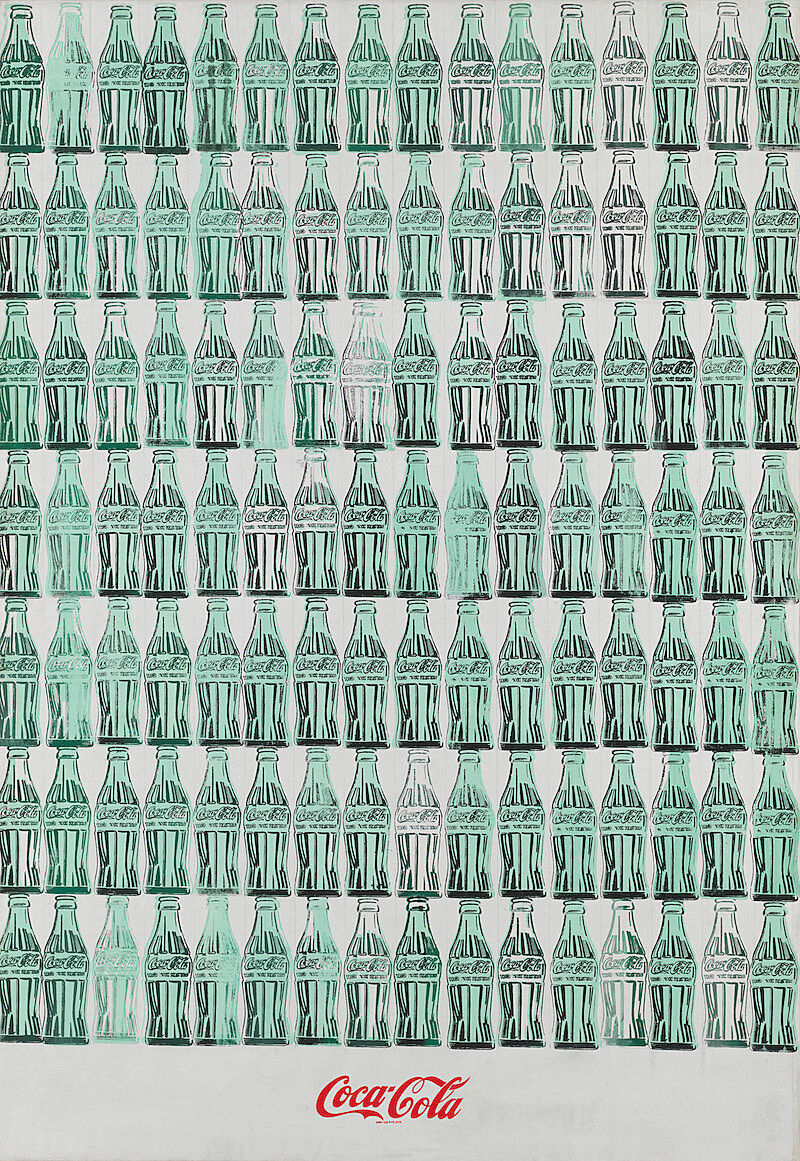
-
503
Living Room, c. 1945
Audio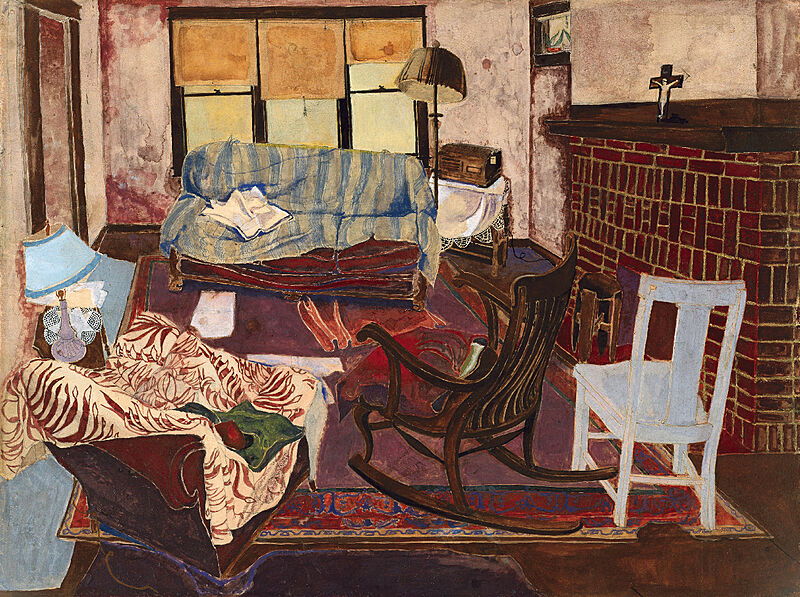
-
504
Truman Capote, 1956
Audio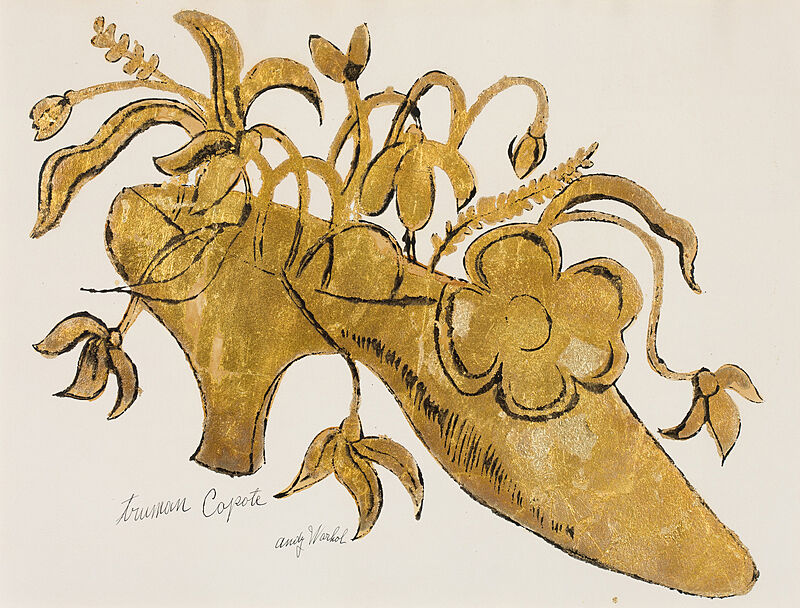
-
505
129 Die in Jet, 1962
Audio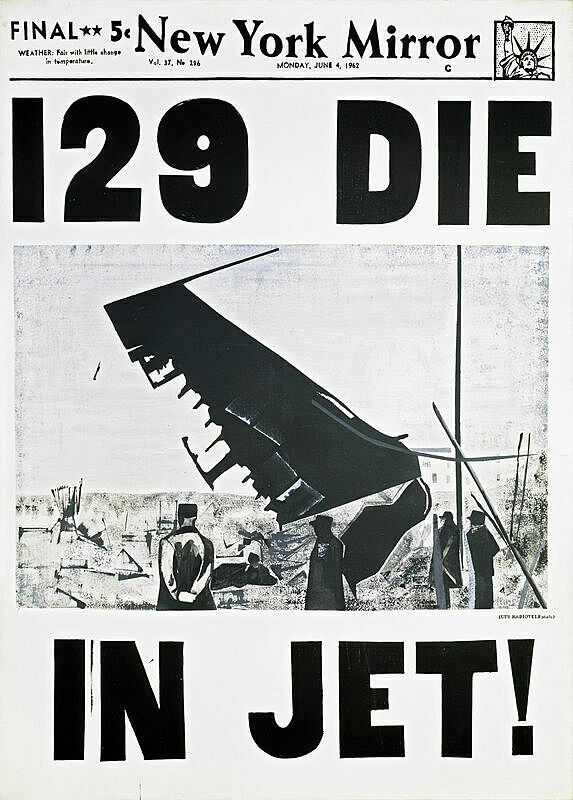
-
506
Before and After [4], 1962
Audio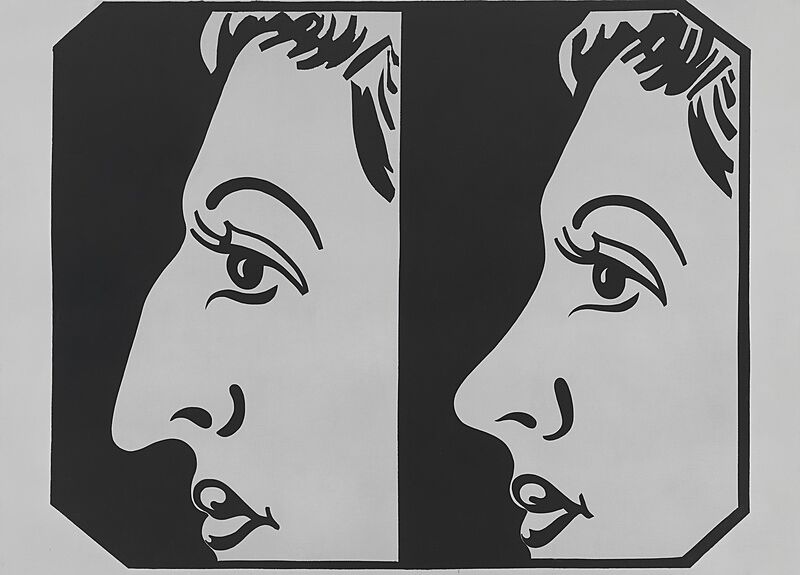
-
507
Marilyn Diptych, 1962
Audio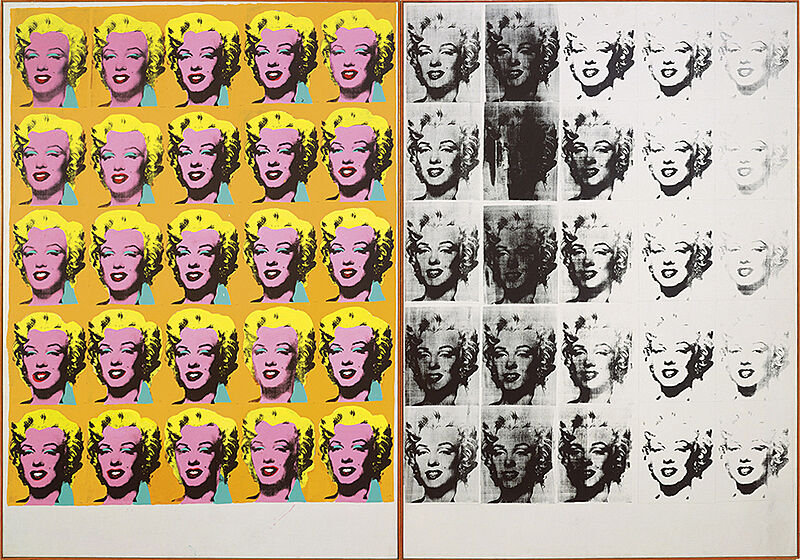
-
508
Large Sleep, 1965
Audio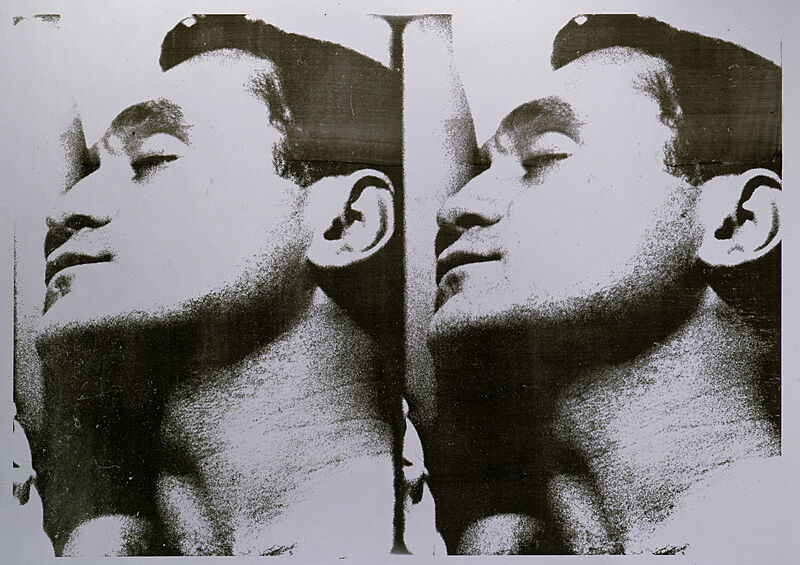
-
508-2
Large Sleep, 1965
Audio
-
509
Ethel Scull 36 Times, 1963
Audio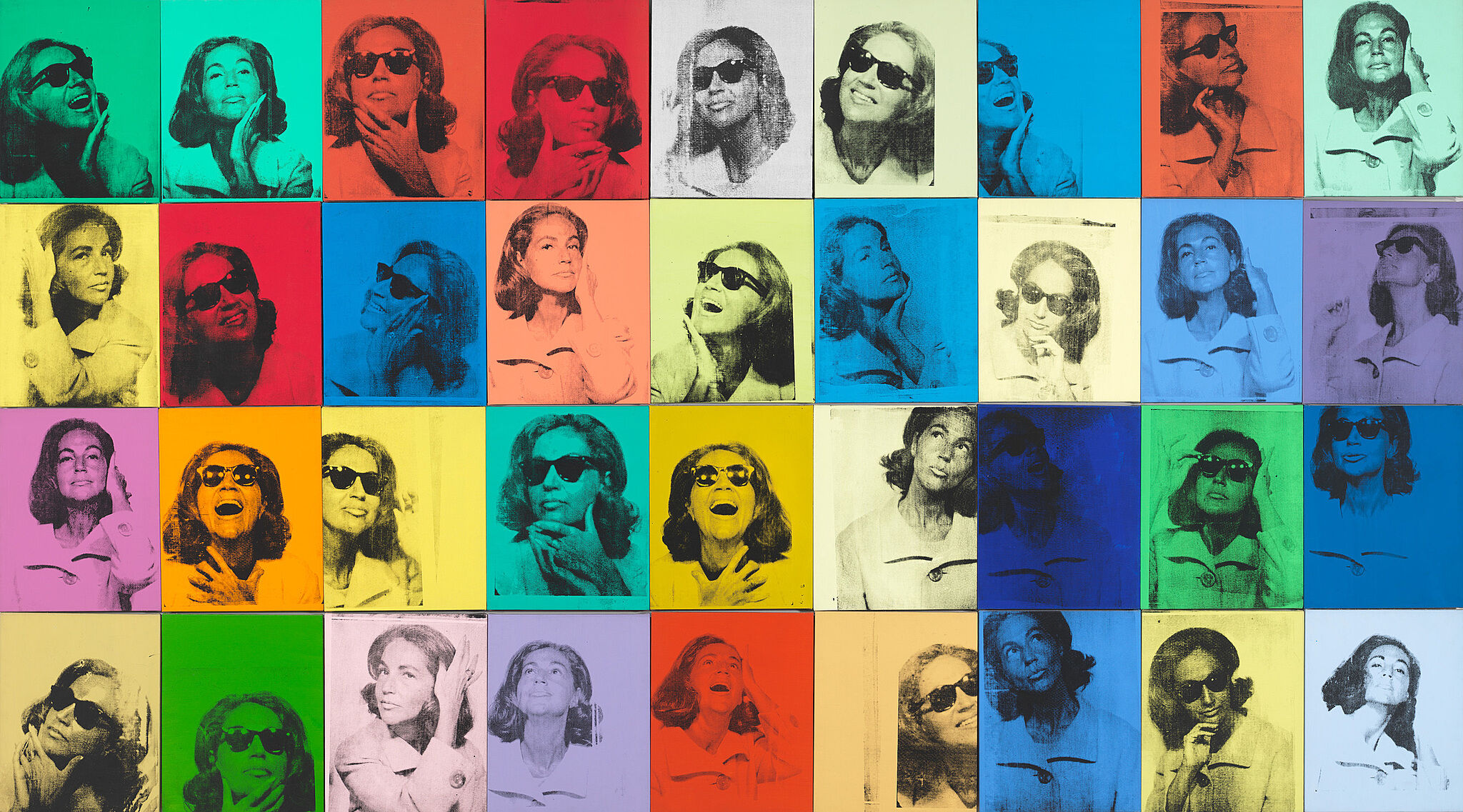
-
510
Most Wanted Men, 1964
Audio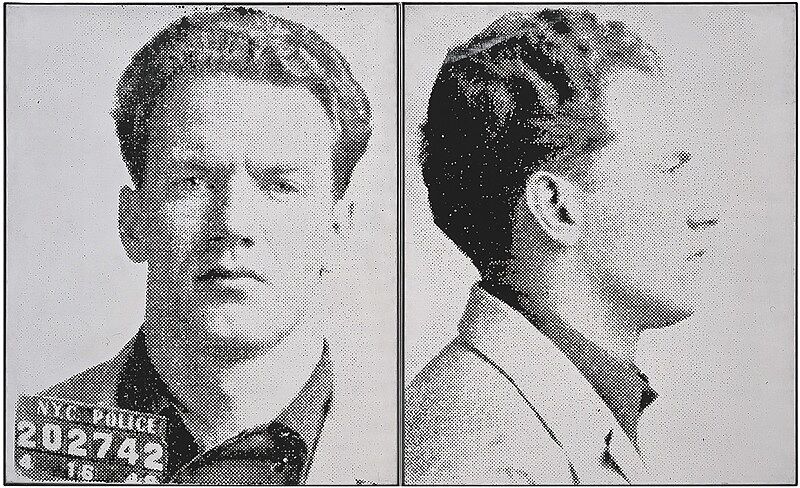
-
511
Mustard Race Riot, 1963
Audio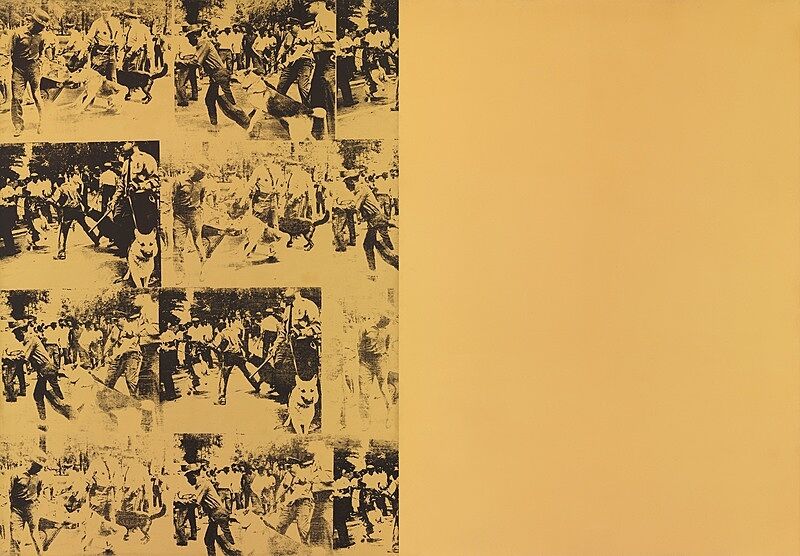
-
512
Lavender Disaster, 1963
Audio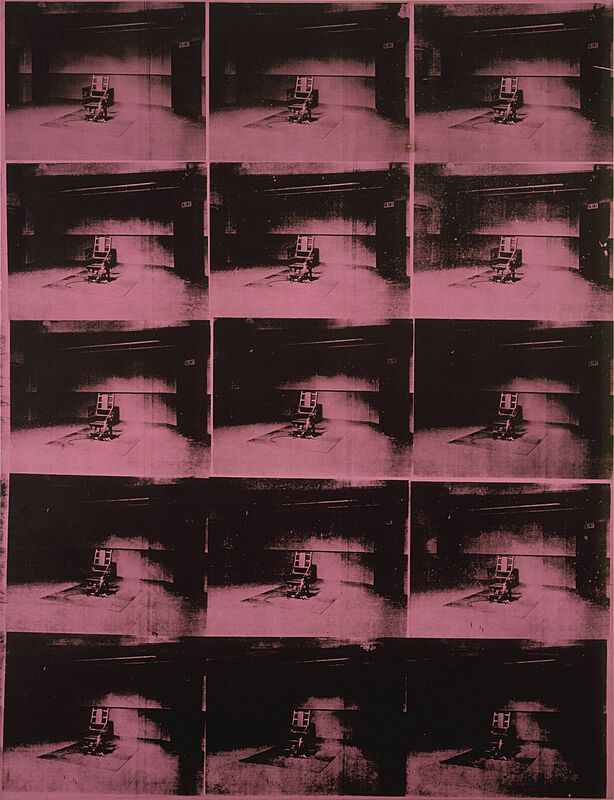
-
513
Nine Jackies, 1964
Audio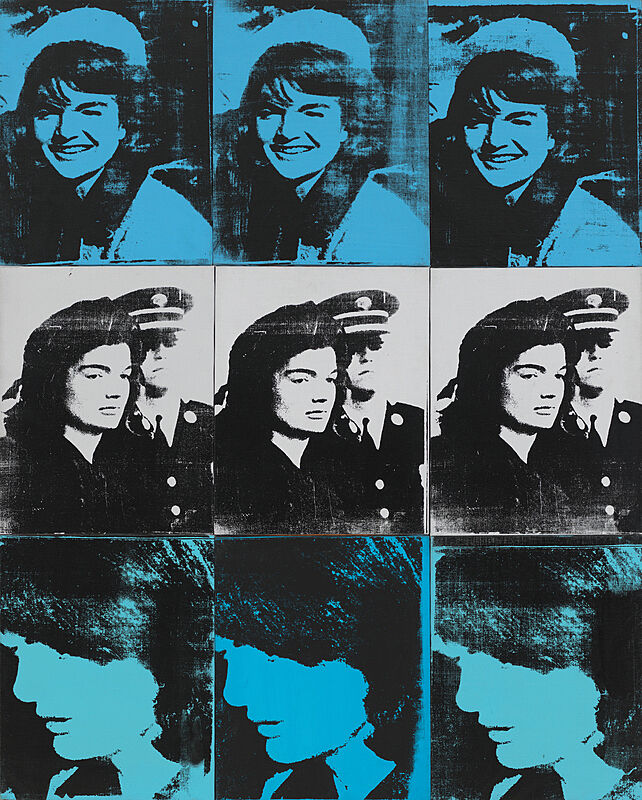
-
513-2
Nine Jackies, 1964
Audio
-
514
Big Electric Chair, 1967-68
Audio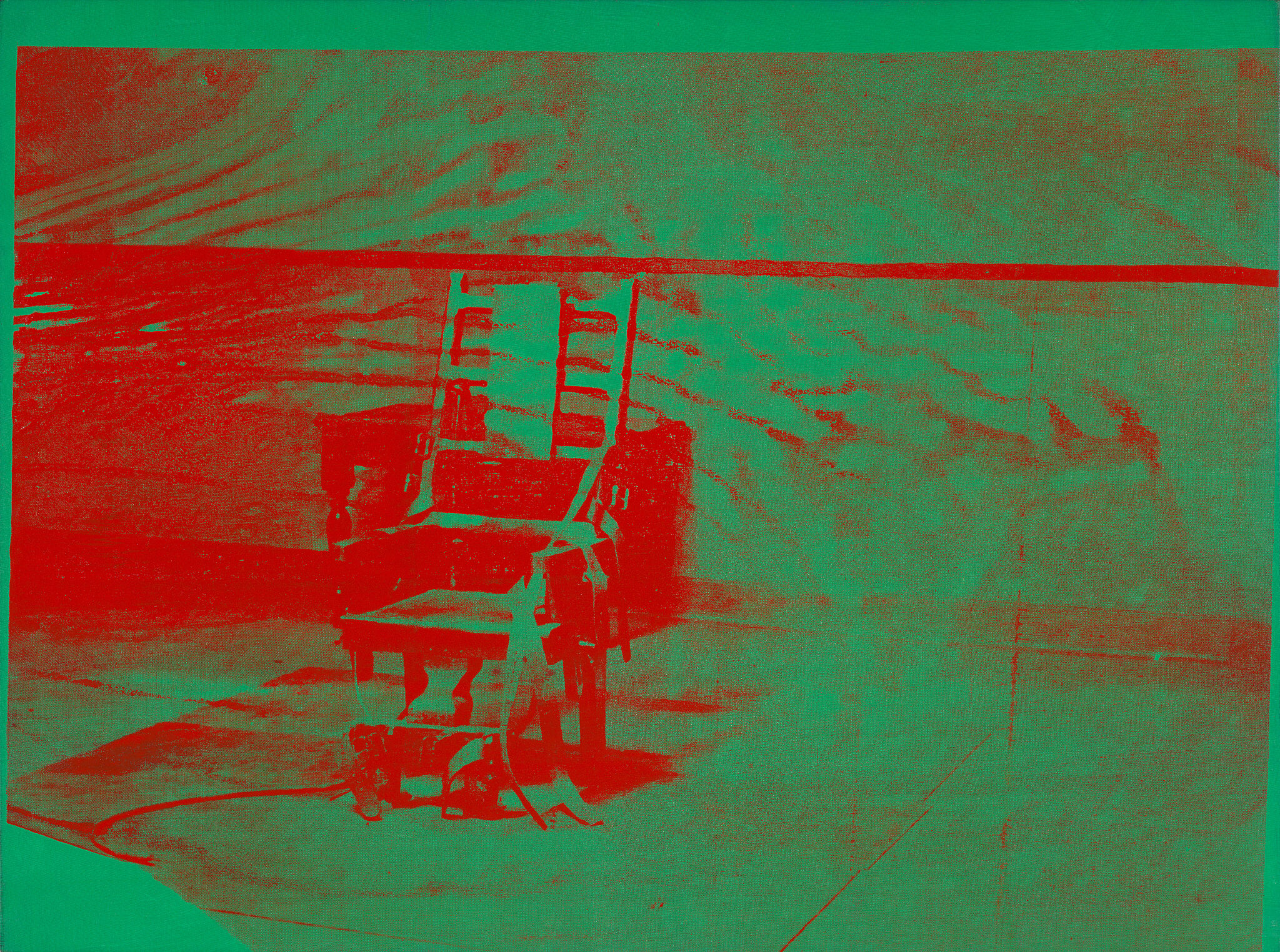
-
515
Andy Warhol's Silver Flotations, 1966
Audio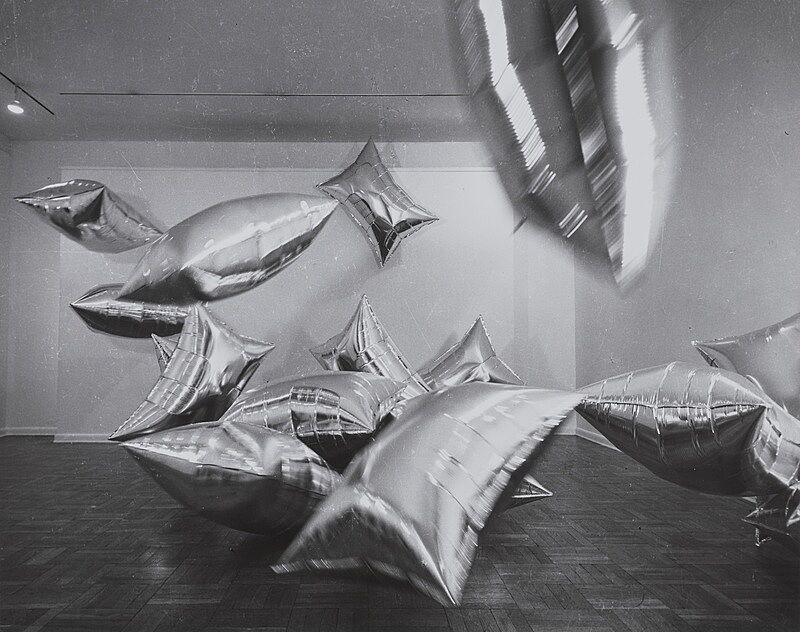
-
516
Mao, 1972
Audio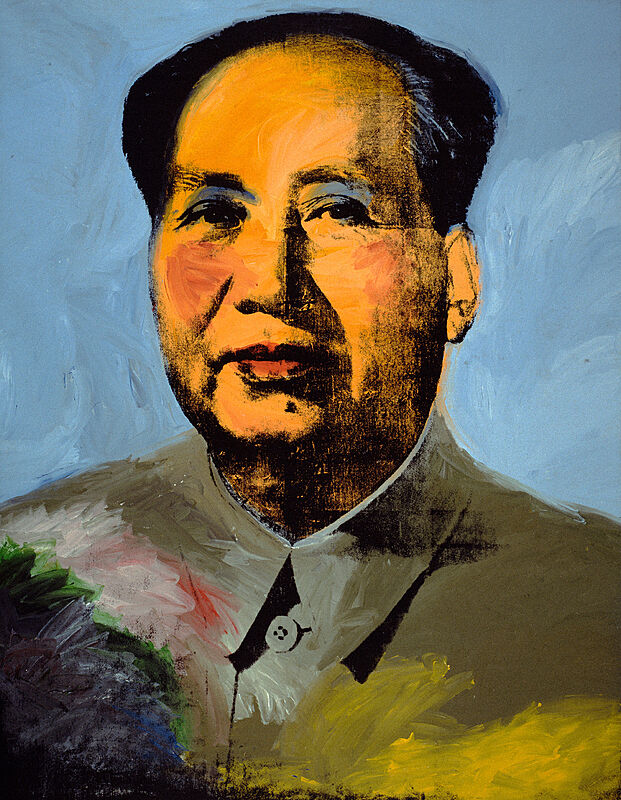
-
517
Mark of the Beast (Positive), c. 1985-86
Audio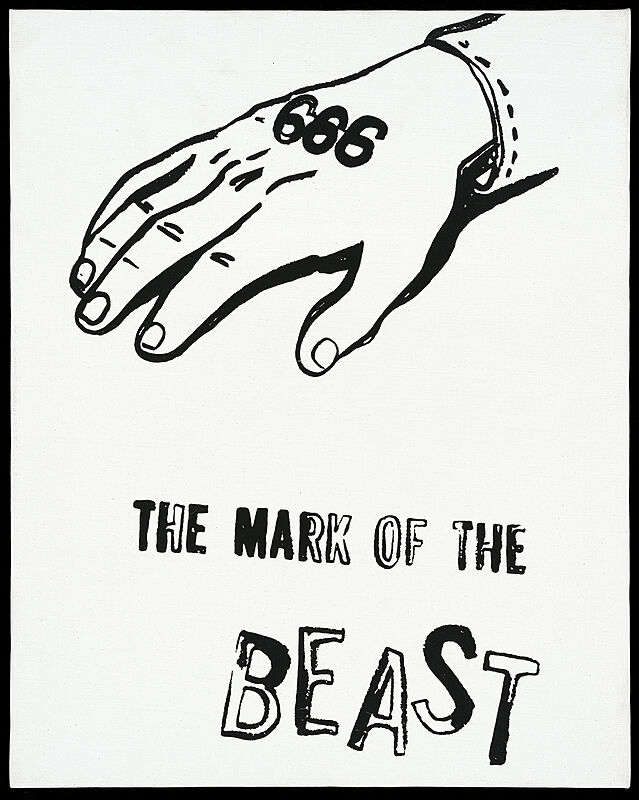
-
518
Paramount, 1984-85
Audio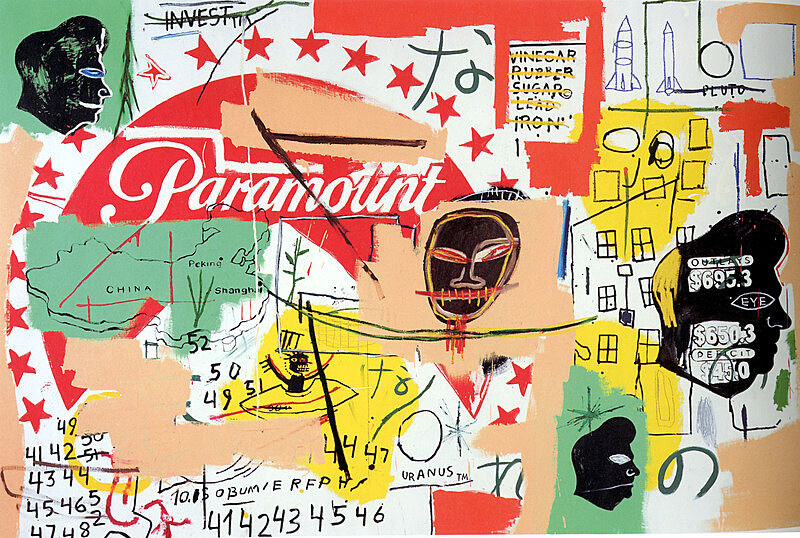
-
519
Ladies and Gentlemen, 1975
Audio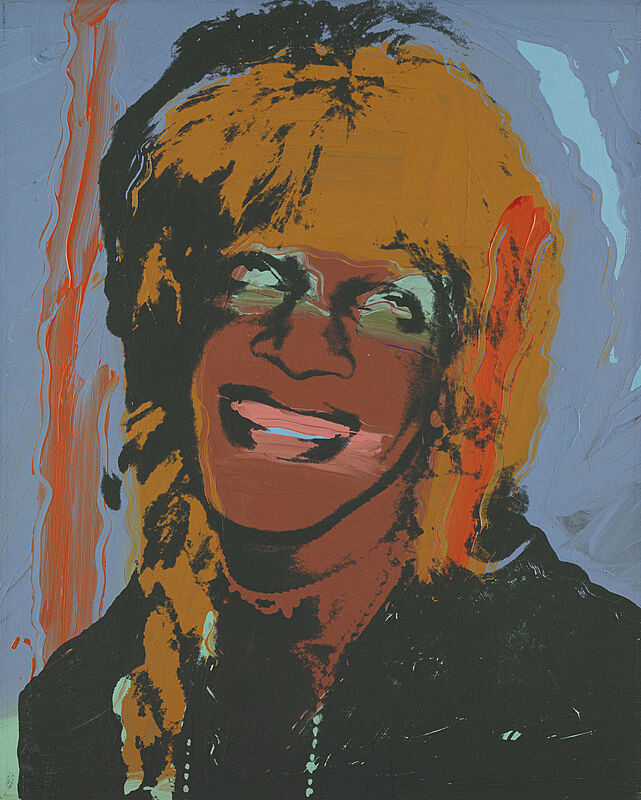
-
520
Oxidation Painting, 1978
Audio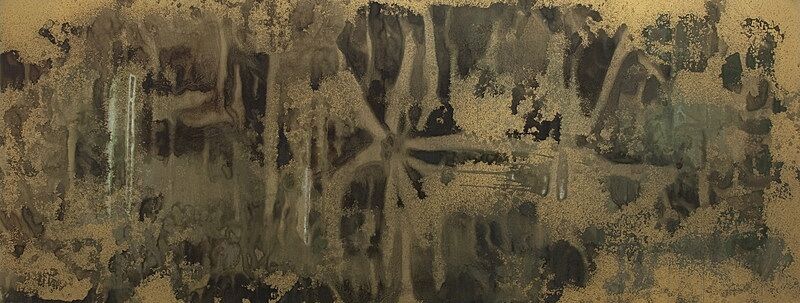
-
521
Camouflage Last Supper, 1986
Audio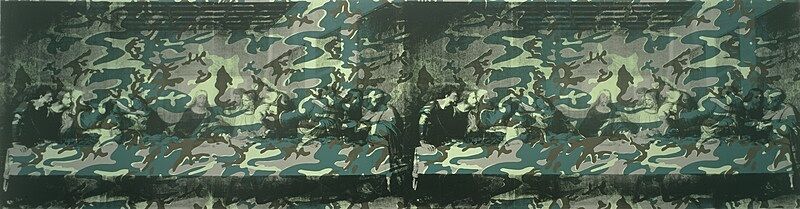
-
551
Audio description: 32 Campbell's Soup Cans, 1962
Verbal description
-
552
Audio description: Brillo Boxes, 1969
Verbal description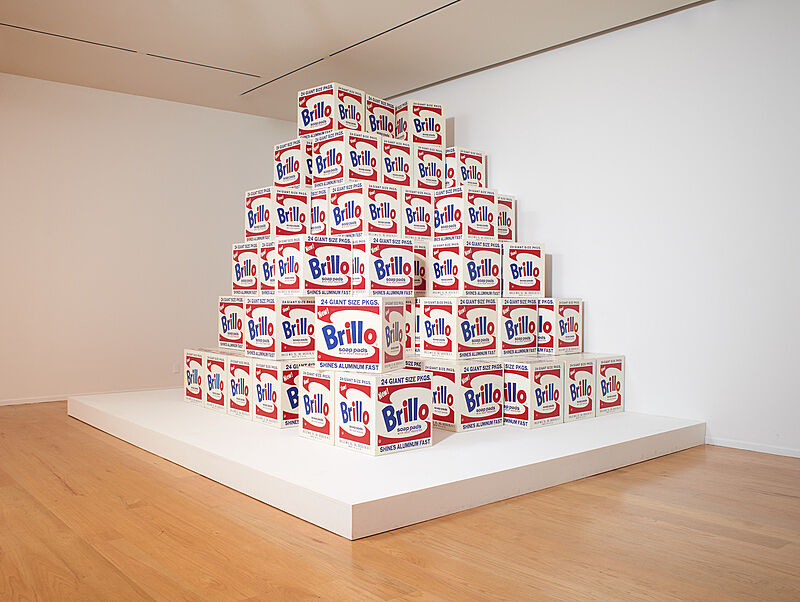
-
553
Audio description: Coca-Cola [2], 1961
Verbal description -
554
Audio description: Before and After [4], 1962
Verbal description
-
555
Audio description: Ethel Scull 36 Times, 1963
Verbal description
-
556
Audio description: Nine Jackies, 1964
Verbal description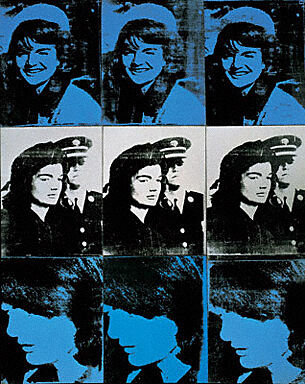
-
557
Sound Description: Andy Warhol’s Silver Flotations, 1966
Sound description -
560
Transcription: Water, 1971
Transcription -
561
Transcription: Factory Diary: Andy Warhol, Geri Miller, Candy Darling at the Factory, c. 1971-72
Transcription -
562
Sound Description: Factory Diary: Montauk, Jed's First Weekend Back, August 12, 1973, 1973
Sound description -
563
Transcription: Factory Diary: Andy Paints Mao, December 7, 1972, 1972
Transcription -
102
Transcription: Factory Diary: Andy on Phone, 1978
Transcription -
117
Sound Description: Andy Warhol's Exploding Plastic Inevitable, 1966
Sound description -
101
Portraits
Audio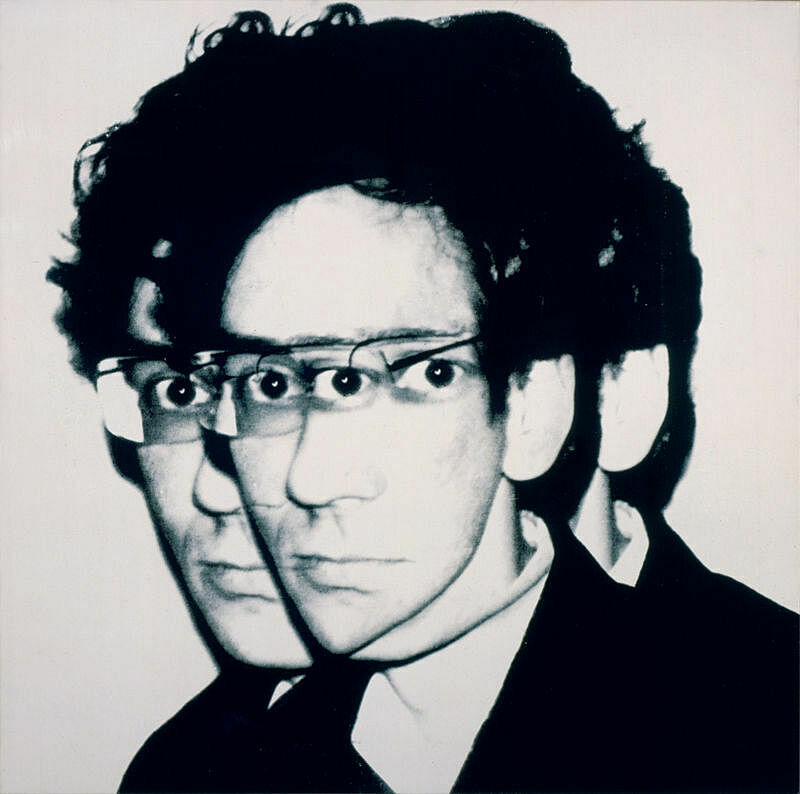
-
300
Transcription: Andy Warhol Eating a Hamburger, 1981
Transcription -
301
Transcription: The Underground Sundae, 1967
Transcription -
302
Transcription: Cadence Commercial, 1965
Transcription -
303
Transcription: Factory Diary: David Bowie And Group At The Factory, September 14, 1971, 1971
Transcription -
304
Sound Description: Factory Diary: Julia Warhola in Bed, c. 1970-71
Sound description -
305
Transcription: Fashion: Male Models, 1979
Transcription -
306
Transcription: Andy Warhol's TV, Season 1, Episode 6, 1981
Transcription -
307
Transcription: Andy Warhol's TV, Season 2, Episode 5, 1983
Transcription -
308
Transcription: Andy Warhol's Fifteen Minutes, Episode 3, 1997
Transcription
Donna De Salvo: Andy Warhol is probably one of the most well-known American artists, and he has always said "If you want to know all about Andy Warhol, just look at the surface of my paintings."
Narrator: Donna De Salvo is Deputy Director for International Initiatives and Senior Curator.
Donna De Salvo: But in reality there's far more to know about, not only Warhol as a person, but most importantly, Warhol as an artist.
Narrator: Warhol was born in Pittsburgh in 1928, and moved to New York in 1949. He first became famous for his Pop art of the early sixties, paintings and sculptures based on images of advertisements and consumer products. But he experimented constantly until his death in 1987, pushing the boundaries of all the media he worked in. He also became tremendously influential. On this audio guide, we’ll hear not only from curators and scholars, but also from younger artists who have thought deeply about Warhol in their own work.
Down the long hallway to the left of the exhibition entrance, there’s a large installation inspired by Warhol’s first exhibition at the Whitney, in 1971. Be sure not to miss it! Our tour will start straight ahead, with Warhol’s Pop [art].
Andy Warhol, Self-Portrait, 1963–64. Silkscreen ink and acrylic on canvas, four panels: 40 × 32 in. (101.6 × 81.3 cm) overall. Cingilli Collection © 2018 The Andy Warhol Foundation for the Visual Arts, Inc. / Licensed by Artists Rights Society (ARS), New York
Donna De Salvo: One of the most recognizable of Warhol's works is his painting of the Campbell's soup can.
Narrator: Donna De Salvo.
Donna De Salvo: In fact, if you ask people about Andy Warhol, it's probably the work that is most recalled. But in fact, it was never one simple idea of a soup can, but a much more complex investigation of both painting and the properties of painting, as well as how certain products live in the culture.
Narrator: Throughout art history, painters have explored the idea of theme and variation—like Monet painting haystacks over and over again in different light. Here Warhol plays with that idea, but with a twist. Theme and variation has given way to mass production and varieties—thirty-two flavors, to be exact, each identified on the can.
Jeff Koons: Andy's work is scary. And it looks, on the surface, that it's very friendly and open—and it is.
Narrator: Artist Jeff Koons.
Jeff Koons: Andy's work really goes to the heart of the matter of what it means to be a human being and what our potential is, and how open we are to the moment that we live in, how much we can perceive of everything around us, and then how much we take advantage of the opportunity to make gesture in our time. And to try to transform what we can be. It's the real deal
Andy Warhol, Campbell’s Soup Cans, 1962. Casein, acrylic, and graphite on linen, thirty two panels: 20 × 16 in. (50.8 × 40.6 cm) each. The Museum of Modern Art, New York; partial gift of Irving Blum, additional funding provided by Nelson A. Rockefeller Bequest, gift of Mr. and Mrs. William A. M. Burden, Abby Aldrich Rockefeller Fund, gift of Nina and Gordon Bunshaft in honor of Henry Moore, acquired through the Lillie P. Bliss Bequest, Philip Johnson Fund, Frances R. Keech Bequest, gift of Mrs. Bliss Parkinson, and Florence B. Wesley Bequest (all by exchange) 476.1996.1–32. © 2018 The Andy Warhol Foundation for the Visual Arts, Inc. / Licensed by Artists Rights Society (ARS), New York
Michael Lobel: What we're looking at here is an early silkscreen painting by Andy Warhol. It's titled Green Coca-Cola Bottles, and Warhol made this painting in the summer of 1962.
Narrator: Michael Lobel is Professor of Art History at Hunter College and the Graduate Center, CUNY.
Michael Lobel: Prior to Warhol's use of the silkscreen technique to make paintings, silkscreening had basically been a commercial technique.
Narrator: Warhol screened each bottle one at a time, deliberately making each different from the next. If you focus on the overall visual patterning, it almost reads as an abstract painting. Warhol was very ambitious—he wanted his art to be taken seriously, and abstraction dominated the art world at the time. But he also wanted the work to be perceived as radical and provocative.
Michael Lobel: He did leave a band of space at the bottom of the painting, and as you'll see, within that band he placed the logo of Coca-Cola. And for me, that's interesting because usually the bottom of a canvas is where we expect to find an artist's signature.
And I think this tells us a lot about how Warhol was thinking about his own relationship to these images, and that as an artist in the age of mass media, as an artist immersed in consumer culture, it might make sense for him to remove his signature and replace it with a common product logo.
Narrator: In the next gallery, we’ll step back in time to the 1950s, when Warhol was working as a commercial illustrator—an experience that deeply informed his development of the Pop art style on view in this room.
Andy Warhol, Green Coca-Cola Bottles, 1962. Silkscreen ink, acrylic, and graphite on canvas, 82 3/4 × 57 1/8 in. (210.2 × 145.1 cm). Whitney Museum of American Art, New York; purchase with funds from the Friends of the Whitney Museum of American Art 68.25. © 2018 The Andy Warhol Foundation for the Visual Arts, Inc. / Artists Rights Society (ARS), New York
James Warhola: My name is James Warhola. I'm one of Andy Warhol's nephews. I'm originally from Pittsburgh where Andy Warhol's from.
This is a painting he did in his college days. It's called The Living Room. It was for a project at Carnegie Tech; now it’s called the Carnegie Mellon University.
Many of the projects at Carnegie Tech were really problem-solving ideas. This one was something that the teacher required him [to come] up with a fictional story of a family living in his neighborhood. What Andy did was he didn't really use a fictional—he actually used his own apartment, his own house, and his own experience for the basis of his project.
Everything's disheveled and a little out of order. There's no curtains on the windows, but that kind of probably showed the evidence that they were just a lower class family. But they did have means of entertainment, which was the radio. This family was also religious. They kept the crucifix above the fireplace. Of course, my grandmother would make doilies and little decorative covers to go under the lamps and things, so that is a little bit more evidence of the environment that they lived in.
Andy Warhol, Living Room, c. 1948. Watercolor on paper, 15 × 20 in. (38.1 × 50.8 cm). Collection of the Paul Warhola family. © 2018 The Andy Warhol Foundation for the Visual Arts, Inc. / Artists Rights Society (ARS), New York
Narrator: Shoes were a central part of Warhol’s professional identity during the 1950s. Papered onto this wall, you’ll see advertisements that he illustrated for the shoemaker I. Miller—his most significant commercial client. In the frames, there’s a series of collages of shoes.
Richard Meyer: These works were not done for any client. They were done by and for Warhol himself. They were what Life magazine called "his crazy golden slippers.”
Narrator: Warhol dedicated each shoe to a different celebrity, such as Judy Garland, Elvis Presley, and the trans advocate Christine Jorgensen. He named one high-heeled shoe after Truman Capote—it’s spilling over with flowers and weeds. Richard Meyer is Robert and Ruth Halperin Professor in Art History at Stanford University.
Richard Meyer: Truman Capote at the time had a play on Broadway called House of Flowers. So the kind of flowering vines, or weeds maybe, that look like they're wilting a bit, not the healthiest flowers that are coming out of the shoe, are a reference to that, but they're also a reference to Truman Capote's effeminacy and the way in which he challenged normative gender codes at the time.
And this was something that Andy Warhol was very attracted to. Truman Capote was what we would now call the most "out" gay celebrity of the day. And Andy Warhol, in the fifties, wrote Truman Capote postcards and kind of tried to meet him, and Truman Capote of course had no interest in an unknown, unfamous, commercial artist.
Later, in the sixties, when Warhol became very famous, he would not only meet Truman Capote, but they would become close friends.
Andy Warhol, Truman Capote, c. 1956. Collaged metal leaf with ink on paper, 16 × 20 1⁄2 in. (40.6 × 52.1 cm). Collection of Edward De Luca. © 2018 The Andy Warhol Foundation for the Visual Arts, Inc. / Licensed by Artists Rights Society (ARS), New York
Donna De Salvo: 129 Die is amongst a number of paintings Warhol did beginning around 1960, where he takes the front page of the newspaper and makes it the subject of his painting.
Narrator: Donna De Salvo.
Donna De Salvo: Now of course the bold headline, the very spectacular nature of this plane crash, is one of the things that Warhol would have been attracted to. The idea of currency and what's topical is always key in Warhol's work, throughout.
Narrator: Like all of the paintings in this gallery, this one was painted by hand—Warhol wouldn’t start working with the mechanical process of silkscreen until the following year. But even his hand-painted works show a great interest in the technology of mass reproduction.
Donna De Salvo: He's painting something to look like a photograph. And not only that, it's of early technology of the wire service where the photograph actually comes through electronically, and it never has the crispness of the photographs that we know today.
Andy Warhol, 129 Die in Jet, 1962, acrylic and graphite on linen, 100 ¼ x 71 7/8 in. (254,5 × 182.5 cm). Museum Ludwig, Cologne. © 2018 The Andy Warhol Foundation for the Visual Arts, Inc. / Artists Rights Society (ARS), New York
Narrator: Warhol based this painting on an ad for nose jobs that he found in the back pages of the National Enquirer.
Deborah Kass: I first discovered Andy in the Arts and Leisure section of the Sunday New York Times when I was around thirteen. In the sixties. I saw his painting Before and After and it totally blew my mind.
Narrator: Artist Deborah Kass.
Deborah Kass: I knew I wanted to be an artist and that was the art section. But this was one of the first works of art I had ever seen that I could actually relate to. I wasn’t sure what his intention was, the artist Andy Warhol, I didn't know what he had in mind. But I knew people with nose jobs. And they all happen to be Jewish. So my question was, was this, sort of in my little adolescent head, was this painting bad for the Jews? I actually didn't care because it just spoke about something I actually understood, something from my own experience.
That had never happened looking at a piece of art. Pretty women, or women being tortured, or women being murdered, or women just posing, was what most art history was about. That wasn't news. What was news is that it reflected an experience I was familiar with.
Narrator: In a veiled way, this is one of Warhol’s most autobiographical works, reflecting—with humor and irony—the pressure he felt to assimilate. He himself had his nose thinned, and dropped the “a” in his family surname, Warhola, because he felt it revealed his immigrant origins too clearly.
Andy Warhol, Before and After [4], 1962. Acrylic and graphite on linen, 72 1/8 × 99 3/4 in. (183.2 × 253.4 cm). Whitney Museum of American Art, New York; purchase with funds from Charles Simon 71.226. © 2018 The Andy Warhol Foundation for the Visual Arts, Inc. / Licensed by Artists Rights Society (ARS), New York
Narrator: In 1962, Warhol began using photos in his silkscreen process—something that allowed him to make images that were totally of-the-moment, and seemed to capture the feeling of the culture. He began making paintings of Marilyn Monroe shortly after her death by overdose—always using the same publicity shot of her as a young, vital actress. There’s a tension in works like this one: they feel poignant and special on the one hand, and factory-like on the other.
Michael Lobel: When you look at some of Warhol's silkscreen paintings of celebrities, like Marilyn Monroe or Elvis Presley, you see that he's presenting these celebrities in the same form that he often chooses to present consumer objects.
Narrator: Professor Michael Lobel.
Michael Lobel: In the Hollywood studio system there were departments for makeup and costume and diction. Hollywood celebrities were packaged in many of the same ways we come to expect mass-produced objects and consumer goods are packaged in our culture.
Andy Warhol, Marilyn Diptych, 1962. Acrylic, silkscreen ink, and graphite on linen, two panels: 80 7/8 × 114 in. (205.4 × 289.6 cm) overall. Tate, London; purchase 1980. © 2018 The Andy Warhol Foundation for the Visual Arts, Inc. / Artists Rights Society (ARS), New York
Narrator: To make Large Sleep, Warhol printed enlargements of two sequential frames from his 1963 film Sleep onto plexiglass. It’s the only work in this gallery that’s actually based on film stills. But as you compare it to the paintings around you, you’ll notice that the way Warhol repeated images in these works implies a sense of motion, like a film strip. This cinematic effect was no accident. At the time, Warhol had come to feel that the medium of painting was too limited—and he was especially interested in film. Sleep was one of the earliest films Warhol made. It consists entirely of shots of his lover, John Giorno, sleeping. If you’d like to hear about the film itself, which will be screening twice in the film programs on the Museum’s third floor, please continue on to the next track.
Andy Warhol, Large Sleep, 1965. Silkscreen ink on Plexiglas in stainless steel and Plexiglas frame, 66 1⁄2 × 48 3⁄4 × 9 1⁄4 in. (168.9 × 123.8 × 23.5 cm). The Andy Warhol Museum, Pittsburgh; Founding Collection, contribution The Andy Warhol Foundation for the Visual Arts, Inc. 1998.1.2375. © 2018 The Andy Warhol Foundation for the Visual Arts, Inc. / Artists Rights Society (ARS), New York
Claire Henry: Apparently John Giorno was famous for sleeping, his ability to sleep through anything. Warhol decided that he wanted to make a film of him sleeping.
Narrator: Claire Henry is Assistant Curator for the Warhol Film Project at the Whitney.
Claire Henry: In the lore come to be known as "an entire film of a man sleeping. It's an eight hour film." It's actually only five and a half, but it's still pretty long. What I love about the film, is if you do sit through it and endure it, and Warhol didn't expect everyone to, or I don't believe he ever did himself, you really understand, or you begin to feel your body in the chair.
You feel your own breathing while you're looking for him breathing, and it becomes this shared experience between you and the sleeping John Giorno.
Andy Warhol, Large Sleep, 1965. Silkscreen ink on Plexiglas in stainless steel and Plexiglas frame, 66 1⁄2 × 48 3⁄4 × 9 1⁄4 in. (168.9 × 123.8 × 23.5 cm). The Andy Warhol Museum, Pittsburgh; Founding Collection, contribution The Andy Warhol Foundation for the Visual Arts, Inc. 1998.1.2375. © 2018 The Andy Warhol Foundation for the Visual Arts, Inc. / Artists Rights Society (ARS), New York
Narrator: Ethel Scull was Warhol’s first portrait commission. She had expected that he would make a painting of her in his studio. But when he picked her up from her Fifth Avenue apartment, that’s not how things went.
Richard Meyer: He puts her in the taxi cab, they go down to Times Square, he took her into an arcade, and he put her in a photo booth machine where you put—at that point it was four for a quarter.
Narrator: Professor Richard Meyer.
Richard Meyer: So he started feeding quarters into the machine and saying to Ethel Scull, "Don't just sit there! Do something, take your sunglasses off, put your fingers through your hair, smile" and he just started basically directing her.
He kept feeding quarters into it until they had over 100 different images.
You get the sense that Ethel Scull, in this photo booth machine, becomes an actress, and the character she's embodying is a version—or maybe multiple versions—of herself. And yes, it is herself as a celebrity. And that's, I think, what all those people who commissioned portraits of Warhol in the seventies who weren't famous wanted. They wanted the Warhol brand. It wasn't yet a brand here. Yet, this is what helped it become a brand, but they wanted to look famous through Warhol's style of painting them.
Andy Warhol, Ethel Scull 36 Times, 1963. Acrylic and screenprint on canvas, thirty-six parts, overall: 80 × 144 in. (203.2 × 365.8 cm) Overall (each): 20 × 15 7/8 in. (50.8 × 40.3 cm). Whitney Museum of American Art, New York; Jointly owned by the Whitney Museum of American Art and The Metropolitan Museum of Art; Gift of Ethel Redner Scull 86.61a-jj. © 2026 The Andy Warhol Foundation for the Visual Arts, Inc. / Licensed by Artists Rights Society (ARS), New York
Narrator: Warhol made these canvases by recycling images that he had first used in a large mural—a commission for the New York State Pavilion at the 1964 World’s Fair. Professor Richard Meyer.
Richard Meyer: He had this idea that he would do, instead of the expected Pop image, that his mural would be the Most Wanted Men. The criminals, or the alleged criminals, most wanted by the New York City Police Department.
What Warhol is doing that is so subversive here is he's saying, "This is America, too. This is New York as well. It's not just about gleaming new cars, or about inventions that we've yet to even see in the real world. It is about rules, laws that are sometimes transgressed, people who are criminal or accused of being criminal."
Narrator: The fair was supposed to communicate a utopian optimism. The organizers were horrified at Warhol’s submission, and insisted it be destroyed. As it turns out, the work also had a homoerotic subtext that they seem not to have been aware of. The book with the mugshots had come into Warhol’s possession by way of a closeted gay police officer, who was involved with one of Warhol’s male artist friends.
Richard Meyer: Part of what I think is happening in Most Wanted Men is a kind of pun. Not only that these men are wanted by the police, but that to be a most wanted man, if the wanter is also male, was itself a crime at the time. And I think that this is Warhol's very subtle way of talking about the criminalization of same-sex desire.
Andy Warhol, Most Wanted Men No. 6, Thomas Francis C., 1964. Silkscreen ink on linen, two panels: 48 × 77 5⁄8 in. (121.9 × 197.4 cm) overall. The Eli and Edythe L. Broad Collection. © 2018 The Andy Warhol Foundation for the Visual Arts, Inc. / Artists Rights Society (ARS), New York
Narrator: Warhol based Mustard Race Riot on three different images by the photographer Charles Moore, which were taken in Birmingham, Alabama, in 1963 and published in Life magazine. The original images show a protester being attacked by an all-white police force during a peaceful civil rights demonstration. Describing the original photos in a 2005 interview, Moore explained “I don’t want to fight with my fists. I want to fight with my camera.”
Artist Hank Willis Thomas.
Hank Willis Thomas: I think the title, Race Riot, is maybe somewhat of a misnomer for the work, because a race riot is different than a civil rights protest, but the tension is kind of heightened there, and I think, when you see a police dog attacking an unarmed person, maybe the title, Race Riot, takes on a new meaning.
I have my own fifty year, almost sixty years later, interpretation, of these images. I think of them more as postcards to the future, knowing that, when you call something art, it allows people to think differently about things they already know. Charles Moore's image, as a photographic document, and historical document, and news document, had one function, but it circulates very differently and, some might say, on a longer timeline, in the fine art world, where objects are made and preserved for hundreds of years.
Somehow, by Warhol making them his art, they've become more iconic and, in some ways, more important. I do feel like we often miss some meaning, because he didn't put too much information about his intentions, but also maybe that puts the onus on the viewers and the people who come from different generations to look more closely at them.
Andy Warhol, Mustard Race Riot, 1963. Silkscreen ink, acrylic, and graphite on canvas, two panels: 9 ft. 5 7⁄8 in. × 13 ft. 8 in. (2.89 × 4.17 m) overall. Museum Brandhorst, Munich. © 2018 The Andy Warhol Foundation for the Visual Arts, Inc. / Artists Rights Society (ARS), New York
Trevor Fairbrother: Lavender Disaster is one of the largest and really a very beautiful, haunting example of Warhol's electric chair series.
Narrator: Trevor Fairbrother is an art historian and a curator who has frequently worked on Warhol.
Trevor Fairbrother: In a strange way it’s actually a portrait of an electric chair because he used a photograph that was taken as basically as a PR media image for use by the government. So if somebody famous was going to be electrocuted, if they were going to be killed by the government next week, they could give this picture to the newspapers. So this is a portrait and an advertisement for the government’s industry of death. The fact that Warhol chooses that, makes us look at it by showing it to us fifteen times, doesn't tell us why he's doing it, and then puts it on a background color which is totally lovely, I mean it's a bright, optimistic color. Lavender, lavender disaster. Disaster is a word that’s got no hope at all.
Jeff Koons: One of the beautiful things about Andy's work is it brings all these tensions of the twentieth century together.
Narrator: Artist Jeff Koons.
Jeff Koons: And it's able to bring all these things together a lot of it through the medium of silkscreening and how that process itself affects an image, and how if you're laying down the ink and you're pulling something, sometimes the ink's going to come through, other times it's not. You're going to have this sense of violence in creating something.
Andy Warhol, Lavender Disaster, 1963. Acrylic, silkscreen ink, and graphite on linen, 106 × 81 7⁄8 in. (269.2 × 208 cm). The Menil Collection, Houston. © 2018 The Andy Warhol Foundation for the Visual Arts, Inc. / Artists Rights Society (ARS), New York
Narrator: In this painting, Andy Warhol presents nine images of Jacqueline Kennedy in the moments leading up to and following the assassination of her husband, President John F. Kennedy. In the top row, we see Jacqueline Kennedy in Dallas, Texas, just before the assassination. Notice the faint image of John F. Kennedy ‘s face at the edge of each frame. In the middle row, we see the First Lady during her husband’s funeral procession. And in the bottom row, Warhol presents a close-up of her grief-stricken face, taken from a photograph of Mrs. Kennedy standing next to Lyndon B. Johnson as he was sworn in aboard Air Force One. In this work, Warhol points out how the media turned Kennedy into a symbol of the grief of a nation.
Warhol took these images from newspaper photographs, which he cropped and then silkscreened onto canvas. By his deliberate repetition of the poignant images, Warhol poses an important question: When the media bombards us with repeated images of tragedy, does this make us relive and reenact these horrific events or does it gradually numb us to the pain?
Jacqueline Kennedy herself recognized the importance of the media and used it brilliantly. If you’d like to hear more, please go onto the next track.
Andy Warhol, Nine Jackies, 1964. Acrylic and silkscreen ink on linen, nine panels: 60 3⁄8 × 48 1⁄4 in. (153.4 × 122.6 cm) overall. Whitney Museum of American Art, New York; gift of The American Contemporary Art Foundation, Inc. Leonard A. Lauder, President 2002.273. © 2018 The Andy Warhol Foundation for the Visual Arts, Inc. / Licensed by Artists Rights Society (ARS), New York
Narrator: John Hellmann is a Professor of English at Ohio State University and the author of The Kennedy Obsession: The American Myth of J.F.K.
John Hellmann: John F. Kennedy ran for President precisely in the year where, for the first time, it was said, it was reported that virtually every American home had a television set. And he drew upon the power of film, and Jackie Kennedy I think, learned to do that as well.
Narrator: Jacqueline Kennedy carefully planned her husband’s funeral, which was broadcast into countless homes across the nation.
John Hellmann: There was a black horse in the funeral that walked along without a rider, and this was meant to symbolize the fallen hero. She also came up with the idea of the eternal flame at his grave and it still burns at his grave in Washington DC.
All these were grand, theatrical elements that gave a special, kind of ceremonious meaning to her husband’s death. And it transformed its meaning from simply history and political science into the realm of art and myth. I think that’s one of the things that Andy Warhol in the painting Nine Jackies, is drawing our attention to.
Andy Warhol, Nine Jackies, 1964. Acrylic and silkscreen ink on linen, nine panels: 60 3⁄8 × 48 1⁄4 in. (153.4 × 122.6 cm) overall. Whitney Museum of American Art, New York; gift of The American Contemporary Art Foundation, Inc. Leonard A. Lauder, President 2002.273. © 2018 The Andy Warhol Foundation for the Visual Arts, Inc. / Licensed by Artists Rights Society (ARS), New York
Donna De Salvo: In 1967, '68, he made a number of electric chair paintings, repurposing the image that he had earlier used in 1963.
Narrator: Warhol had announced his “retirement” from painting a few years before—somewhat ironically. In fact, he did continue to make paintings that recycled old subjects to new, experimental ends.
Donna De Salvo: This idea of the optics and the kind of vibration that is created by the clash of these color combinations really enhances the—not only surreal, but almost sense of a psychedelia, of an almost kind of science-fiction view of the subject.
Narrator: In the late sixties, Warhol grew interested in using art in mind-altering ways. He also became increasingly involved with music and counterculture performance. Working with the band the Velvet Underground, he created a kind of avant-garde discotheque, with light and sound assaulting the senses.
Andy Warhol, Big Electric Chair, 1967–68. Acrylic and silkscreen ink on linen, 54 1/8 x 73 1/4 in. (137.5 x 186.1 cm). The Art Institute of Chicago; gift of Edlis/Neeson Collection, 2015.128. © 2018 The Andy Warhol Foundation for the Visual Arts, Inc. / Artists Rights Society (ARS), New York
Narrator: In the late sixties, Warhol began using new technologies to make art. This video shows one result of his experiments, the Silver Clouds. He made them with the engineer Billy Klüver.
Julie Martin: Andy said, I’d like to have a floating light bulb, in other words taking a quotidian object and doing something else with it.
Narrator: Julie Martin, one of Warhol’s technological collaborators, was married to Klüver.
Julie Martin: So Billy went back to the labs and he and his colleagues calculated that you’d have to have a bulb almost as big as a house to lift the batteries that were available in those days. But in the meantime, a neighbor of his gave him this material, this heat-sealable Mylar from 3M and said, maybe you’re interested in this. Billy took it to Andy and Andy said, oh this is great, let’s make clouds. So Billy went back to the lab and they began to see if you [could] heat seal curves, which wasn’t done in those days. In the meantime, Andy just took the material, folded it over, sealed the edges, and made what he called Silver Clouds. I think this is a very much an artist response to the material, to working in the most simple way, the most physical way. But then of course you get this incredible thing, sculpture, with no weight, and sculpture that moves and responds to the environment.
Rudy Burckhardt, Andy Warhol Silver Clouds at Leo Castelli, 1966. Gelatin silver print, 6 7⁄8 × 10 in. (17.5 × 25.4 cm). Archives of American Art, Smithsonian Institution, Washington, DC. © 2018 The Andy Warhol Foundation for the Visual Arts, Inc. / Estate of Rudy Burckhardt / Artists Rights Society (ARS), New York
Narrator: Warhol based this large-scale painting of Mao Tse-Tung, the leader of Communist China, on the cover image of a collection of his aphorisms known as The Little Red Book. At the time, that painting of Mao was believed to be the most-reproduced image in the world.
Donna De Salvo: Not only does he play with Mao as this global cultural figure, as a cult figure, but also through the scale of this particular work, really understands something about the power of an image to convey a philosophy, and a point of view without ever even having to use words.
Narrator: Donna De Salvo.
Donna De Salvo: Now in these series of paintings, you [also] begin to see Warhol become much more expressive in the background colors that he applies to his canvas. He's still using a photo silkscreen, but he begins to create almost painterly gestures that you would probably associate more with conventional notions of painting.
It was a departure from what was conventionally seen as painting, in the original mark, in the gesture. Here it becomes stylized, it becomes almost a sort of add-on to it, or kind of an accessory.
Andy Warhol, Mao, 1972. Acrylic, silkscreen ink, and graphite on linen, 14 ft. 8 1⁄2 in. × 11 ft. 4 1 ⁄2 in. (4.48 × 3.47 m). The Art Institute of Chicago; Mr. and Mrs. Frank G. Logan Purchase Prize and Wilson L. Mead funds, 1974.230 © The Andy Warhol Foundation for the Visual Arts, Inc. / Artists Rights Society (ARS), New York
Narrator: Returning to a practice he’d largely abandoned in the 1960s, Warhol based the paintings you see on this wall on advertisements. But these works are more overtly political, alluding to gentrification, the Cold War, and AIDS. Some of the paintings refer to HIV tests. One pictures a hand marked with the numbers “666,” over the phrase “The Mark of the Beast.” Warhol subtitled this work Positive, and another one Negative. That one shows a star radiating out from a figure’s forehead, beneath the words “Are you ‘different?’” In these works, Warhol responds to the extreme homophobia that marked early responses to AIDS. Jessica Beck is the Milton Fine Curator of Art at The Andy Warhol Museum.
Jessica Beck: The discourse had gotten so negative that it became a moment in which people were suggesting that homosexual men should be tattooed if they were positive for HIV and AIDS. So an image like The Mark of the Beast points to that discourse. It also points to the symptoms of the disease, the sarcoma that would accompany the disease.
Andy Warhol, The Mark of the Beast (Positive), c. 1985–86. Acrylic and silkscreen ink on canvas, 20 × 16 in. (50.8 × 40.6 cm). Hall Collection. © 2018 The Andy Warhol Foundation for the Visual Arts, Inc. / Artists Rights Society (ARS), New York
Narrator: In this painting, Warhol collaborated with the younger painter Jean-Michel Basquiat. They took turns working on the canvas. First, Warhol would silkscreen an image onto it. Then Basquiat would, as he put it, “deface” them—as he might have done to an outdoor advertisement when he was working as a street artist.
T.J. Wilcox: But there's a kind of competitive spirit in them as well.
Narrator: Artist T.J. Wilcox.
T.J. Wilcox: It's not just a group hug. And I think you see that particularly in his paintings of, the painting that he and Basquiat made together where, I know from reading the diaries and other descriptions, Warhol was often quite annoyed because he would print on the canvases and then Basquiat would come later and make his additions and they would go back and forth sometimes. And Warhol always felt that Basquiat painted over the best passages in the painting and maybe he did. So that duel, there's a kind of love/hate relationship in it, and I think you still see that playing out in the canvases now.
Jean-Michel Basquiat and Andy Warhol, Paramount, 1984–85. Acrylic on canvas, 76 × 105 in. (193 × 266.7 cm). Private collection. © 2018 Jean-Michel Basquiat Estate. Licensed by Artestar, New York. © The Andy Warhol Foundation for the Visual Arts, Inc. / Artists Rights Society (ARS), New York
Sasha Wortzel: My name is Sasha Wortzel, and I'm the Director of Access and Community Programs at the Whitney Museum. I'm also an artist, and together with Tourmaline, I'm the co-creator of a film and art project called Happy Birthday Marsha!, which is about the legendary, iconic Marsha "Pay It No Mind" Johnson and her role in the Stonewall riots of 1969.
Narrator: Warhol’s series Ladies and Gentlemen focused on crossdressers and trans women. Marsha P. Johnson is one of them—she’s the one wearing a blonde wig with a braid down one side.
Sasha Wortzel: Something I really love about this series is the way that the sitters really have this glamour, this beauty, that they are gifting to Warhol that really shines through in these images.
Someone like Marsha P. Johnson, in her daily life, faced a lot of violence. The police, repression, raids on gay bars, policing of sex work, poverty. And despite all that, she was somebody who had this really beautiful, generous spirit and smile, and just the ability to spread her joy in the world, even when the world was dark. And that really comes through in that portrait when I look at her.
Narrator: For contemporary audiences, the series can seem problematic. It constitutes a portrait of a community, but one that had very little say in the manner of their own representation. The sitters were not the intended audience, so were not really considered in the making of the work—in fact Johnson was later kicked out of a gallery that was showing one of Warhol’s portraits of her. Warhol was close with many trans women and cross dressers and often went to the same clubs as them. But he was more of an outsider than an insider in the trans community. Unlike Johnson and some of her contemporaries, he was by no means an activist. Yet in retrospect, the series is an important portrait of a moment in the struggle for queer and trans rights.
Andy Warhol, Ladies and Gentlemen (Marsha P. Johnson), 1975. Acrylic and silkscreen ink on linen, 50 × 40 1⁄8 in. (127 × 101.8 cm). Museum Brandhorst, Munich. © 2018 The Andy Warhol Foundation for the Visual Arts, Inc. / Artists Rights Society (ARS), New York
Narrator: To make this Oxidation Painting, Warhol and his assistant Ronnie Cutrone covered the canvases in a medium that included copper pigment. They then poured urine and urinated on it. The chemical reaction between the acidic liquid and the metallic pigment caused the surface to oxidize and change color. Warhol and Cutrone discovered that variations in mineral content of the urine meant that the reaction could create either a green or black color. Both were on a regimen of B-vitamins at the time, so the stains they made were nearly indistinguishable.
T.J. Wilcox: There's a real physicality to them that I think speaks both to the time, to the freedom that he may have been feeling expressed in the night life of that period.
Narrator: Artist T.J. Wilcox.
T.J. Wilcox: But they also seem like an exception in his practice, something kind of outside of his normal way of doing things, which I think is very interesting. They're obviously as close as he ever got to making works like the ones he first encountered as a young artist in New York. They are in a way his Abstract Expressionist paintings, but made with a very different kind of brush.
Andy Warhol, Oxidation Painting, 1978. Copper metallic pigment and urine on canvas, 6 ft. 6 in. × 17 ft. (1.98 × 5.18 m). The Brant Foundation, Greenwich, CT. © 2018 The Andy Warhol Foundation for the Visual Arts, Inc. / Artists Rights Society (ARS), New York
Narrator: To make Camouflage Last Supper, Warhol overlayed a reproduction of Leonardo da Vinci’s Last Supper with a camouflage pattern. For Warhol, the most productive, creative way to approach the Last Supper was to respond to the way it existed in the present—not just as an art historical masterpiece, but as something that circulated in the media, and indeed generated controversy.
Donna De Salvo: There was a lot of debate at the time about the restoration of da Vinci's Last Supper, which had been restored many, many times, to the point where it was unclear in certain parts of the painting what was original and what had been restored.
Narrator: Donna De Salvo.
Donna De Salvo: When asked about the restoration, which at that point was a great controversy amongst art historians—some who wanted to restore it, some who felt it should be left in its deteriorated state—Warhol preferred the deteriorated state of the painting.
Narrator: This was one of Warhol’s last paintings. On February 22, 1987, he died from complications relating to gallbladder surgery. He was fifty-eight years old. He remains exceptionally influential, inspiring artists, designers, filmmakers, and others worldwide.
Thank you for joining us today. Please be sure to explore the rest of the exhibition. You can see Warhol’s portraits in the lobby, and some of his videos, TV shows, and other works on the third floor.
Andy Warhol, Camouflage Last Supper, 1986. Acrylic and silkscreen ink on canvas, 6 ft. 8 in. × 25 ft. 5 in. (2.03 × 7.75 m). Private collection. © 2018 The Andy Warhol Foundation for the Visual Arts, Inc. / Artists Rights Society (ARS), New York
Narrator: Campbell’s Soup Cans, a work from 1962, consists of thirty-two canvases. Each is twenty by-sixteen-inches. Here, they’re hung in four rows of eight. But the work could be installed in other configurations.
Warhol made the paintings using casein, acrylic, and graphite. The general format of all the canvases is the same. Each one depicts a large can of Campbell’s soup against a white backdrop. The top half of each can’s label is red, and the lower half is white, bridged in the center by a small gold emblem. Below the can’s silver rim the name “Campbell’s” is written in white italic cursive with a thin black shadow. Centered below the brand name, written in smaller white all-caps, is the word “condensed.” The lower half of the label is white. On each canvas, two lines of red text announce the variety of soup in uppercase letters. At the bottom of the can, centered between rows of golden fleurs-de-lis, is the word “soup’”in black and gold letters.
The most obvious difference between the paintings is the text identifying the flavors of soup—each of the thirty-two canvases represents a different variety. There’s chicken noodle, split pea with ham, tomato, and pepper pot, among others. One image, depicting Cheddar Cheese soup, also bears little banners declaring that it’s “NEW!” and “Great as a sauce, too!” On close inspection, it becomes evident that the canvases are painted by hand. The reds vary slightly from painting to painting. The metal rims at the top and bottom of each can are also subtly different from the next. They are all rendered in black-and-white lines, with an almost cartoonish graphic quality. Warhol has made some of these lines thicker and others thinner, as though each can were reflecting the light in a slightly different way.
Andy Warhol, Campbell’s Soup Cans, 1962. Casein, acrylic, and graphite on linen, thirty two panels: 20 × 16 in. (50.8 × 40.6 cm) each. The Museum of Modern Art, New York; partial gift of Irving Blum, additional funding provided by Nelson A. Rockefeller Bequest, gift of Mr. and Mrs. William A. M. Burden, Abby Aldrich Rockefeller Fund, gift of Nina and Gordon Bunshaft in honor of Henry Moore, acquired through the Lillie P. Bliss Bequest, Philip Johnson Fund, Frances R. Keech Bequest, gift of Mrs. Bliss Parkinson, and Florence B. Wesley Bequest (all by exchange) 476.1996.1–32. © 2018 The Andy Warhol Foundation for the Visual Arts, Inc. / Licensed by Artists Rights Society (ARS), New York
Narrator: This sculpture consists of a stack of fifty plywood boxes, piled up as they would be in a warehouse. Each box measures seventeen inches tall by seventeen inches wide and fourteen inches deep. They are replicas of the cardboard cartons used to ship Brillo soap pads to supermarkets in the 1960s.
Warhol reproduced all of the text and graphics that appeared on these boxes in the 1960s. Today, the Brillo box design is much different. Each of Warhol’s boxes features a base of white house paint with Brillo branding in crisp red and blue silkscreen ink on the top, sides, and ends. On the sides of the box, blue capital letters printed across the top proclaim: “24 Giant Size Packages,” with the last word abbreviated to PKGS period. Below that is a swooping red design element that frames the top of the Brillo logo.
In the upper left-hand corner of the red swoosh is the white word “New” with a jolly exclamation point. Arching across the middle of the sides is the large Brillo name in which the consonants are navy blue and the vowels are cherry red. Beside the O, near the edge of the box, is a small capital letter R inside a thin circle: the registered trademark symbol found on most consumer products.
Under the Brillo name are two lines of smaller text that read “soap pads / with rust resister.” Curving under these two lines and the Brillo name is a second—nearly identical—red design element, that has been rotated 180 degrees. Across the bottom of the sides, in blue all caps, is the promise “shines aluminum fast.”
On the top of the box, the design has been compressed to a rectangle, and several lines of text have been omitted, leaving a large blank space for a shipping stamp or label.
Andy Warhol, Brillo Boxes, 1969 (version of 1964 original). Silkscreen ink on wood, fifty parts: 20 × 20 × 17 in. (50.8 × 50.8 × 43.2 cm) each. Norton Simon Museum, Pasadena, CA; gift of the artist P.1969.144.001‒050. © 2018 The Andy Warhol Foundation for the Visual Arts, Inc. / Licensed by Artists Rights Society (ARS), New York
Narrator: This canvas, which measures almost six feet tall and over four feet wide, represents an ad for Coca-Cola, featuring the image of a glass bottle rendered in black casein paint and crayon.
The large, detailed bottle stands on our left, rising up from the bottom of the canvas. Covering the right-hand edge of the painting is a vertical field of abstract marks. Most of this area is filled in with patches of light black crayon markings, but the top features a more solid patch of heavy black paint. These markings could be seen as records of the work of the artist’s hand, and do not appear to represent anything. In fact, this abstract field cancels out the imagery, serving to obscure the Coca-Cola logo, so that only the first three letters are showing. And there are other areas where passages of abstraction seem to get in the way of the image. A smudge of dry black paint marks the upper left hand corner, clouding the top of the glass bottle. Soon after making this work, Warhol committed to a more machine-like painting style—as in a hard-edged painting of a Coke bottle nearby.
Narrator: This painting by Andy Warhol is entitled Before and After [4], and was created in 1962. It is a large linen canvas, measuring eight and a half feet wide by six feet tall—about the size of a king mattress. Warhol made the work using acrylic paint and graphite pencil. The only colors are a soft, light gray that makes up the background, and a dark, solid black used to depict the forms. As a result of stark contrast between the two colors, the work looks like a print or a lithograph. In fact, Warhol based it on plastic surgeon’s ad in the back of the National Enquirer.
As the title suggests, the image is divided into two halves: a before, and an after. Each half contains the same woman’s face in profile, looking towards the left side of the canvas. In both images, black lines denote her features—a single eye and eyebrow, her mouth, and her nose. Her eyelashes curl upward perfectly, as if covered in mascara; the eyebrows are shaped into skinny arches; and the lips are plump and shiny, as they would be when lipstick is applied.
The only difference between the two panels is the size of the woman’s nose. In the panel on the left, the woman’s nose is large, curved, and long. In the right-hand panel, the nose is small, dainty, and slightly upturned. Looking at these panels, Warhol’s title becomes much clearer. These are the before and after images of a nose job.
Andy Warhol, Before and After [4], 1962. Acrylic and graphite on linen, 72 1/8 × 99 3/4 in. (183.2 × 253.4 cm). Whitney Museum of American Art, New York; purchase with funds from Charles Simon 71.226. © 2018 The Andy Warhol Foundation for the Visual Arts, Inc. / Licensed by Artists Rights Society (ARS), New York
Narrator: Ethel Scull 36 Times was made in 1963, and was Warhol’s first commissioned portrait painting. This painting measures twelve feet wide by six and a half feet tall. It is composed of thirty-six individual screenprints, each one on a separate canvas that is twenty inches tall by sixteen inches wide. All of them are hung vertically, in four rows of nine screenprints each.
The subject of the piece, Ethel Scull, was a wealthy art collector, who eventually accumulated one of the largest collections of Pop art in the world. Each canvas is based a photograph of her, all in the same format and from the same distance. In fact, Warhol used a Times Square photobooth to shoot all of the pictures in rapid succession. Scull is glamorously styled, with soft, wavy hair, a large collar on her coat, and dark sunglasses. She poses in ways reminiscent of celebrity photo shoots—her head resting on the palm of her hand, one hand running through her hair, or her gazing out into the distance. In most of the photos, Ethel Scull is smiling or laughing; in others, she seems pensive and thoughtful; in still others, she is jokingly pouting or coyly looking into the camera. Because the photos are so clearly from the same photoshoot, it becomes obvious that all of these emotions were put on for the benefit of the artist. Rather than capturing a true moment, Warhol here is highlighting the artifice that goes into some photography, especially photography of celebrities.
Warhol painted each canvas a solid color before printing the images on it. All thirty-six canvases have their own unique color background, though some belong in the same color family. About a third of the canvases are painted in bright, deep reds, oranges, and yellows, colors one might experience in autumn leaves or ripe apples. Another third are painted with rich blues, greens, teals, and purples, colors reminiscent of ocean life. The final third are more muted, pale, and pastel versions of all the other colors, as might be used to paint Easter eggs. There is no discernible order to how Warhol placed these colors within his grid of canvases. They are all jumbled together, with warm colors next to cool or bright next to muted. Placed in this scattered way, they create a spectacular display of color.
Andy Warhol, Ethel Scull 36 Times, 1963. Acrylic and screenprint on canvas, thirty-six parts, overall: 80 × 144 in. (203.2 × 365.8 cm) Overall (each): 20 × 15 7/8 in. (50.8 × 40.3 cm). Whitney Museum of American Art, New York; Jointly owned by the Whitney Museum of American Art and The Metropolitan Museum of Art; Gift of Ethel Redner Scull 86.61a-jj. © 2026 The Andy Warhol Foundation for the Visual Arts, Inc. / Licensed by Artists Rights Society (ARS), New York
Narrator: This painting, entitled Nine Jackies, was made by Andy Warhol in 1964. It examines the public persona of Jacqueline Kennedy before and after the assassination of her husband, President John F. Kennedy. To make it, Warhol pulled images of her directly from the newspaper, carefully cropping them to eliminate everything but Jackie’s image. The painting is hung vertically, measuring five feet tall by four feet wide. It is composed of nine individual screenprints on canvas, organized in three rows of three, each twenty inches tall by sixteen inches wide. Each of the rows of screenprints is a single image repeated three times, so while there are nine rectangles, there are only three different images.
The top row reveals a smiling, happy Jackie, cropped so that only her head and shoulders are visible. The image itself is made of black ink, and the background behind the images in this row is a bright, warm blue. The black ink is a bit blotchy, suggesting newsprint. Jackie looks straight into the camera, smiling broadly. She wears a small pillbox hat that tilts jauntily to the left, while her hair is bouncy and loose. Little can be seen of the background; there is a suggestion of someone standing next to her, possibly the president. This photograph was taken shortly before the assassination.
The second row of images are made up the same sketchy black ink, but the background color is a dull, somber gray. The First Lady appears in front of a man in military uniform; both gaze stoically to the right. This image comes from the president’s funeral; the figures are watching as his coffin was carried into the Capitol. The image reveals Jackie as a public figure very much controlling her emotions throughout this highly publicized ceremony.
The final row of images zooms in even closer to Jackie’s face, photographed at Lyndon B. Johnson’s swearing-in ceremony, shortly after Kennedy was pronounced dead. Once again, the image is printed in black ink, but the background color changes from rectangle to rectangle, from teal to blue and back again. Here her face appears in profile, her perfectly placed bangs obscuring her eyes. However, her hunched posture and slack mouth clearly indicate a moment of deep sadness. By juxtaposing different subtle moods Jackie displayed in the media, Warhol proposes that the viewer understand the national tragedy through the lens of her public persona.
Andy Warhol, Nine Jackies, 1964. Synthetic polymer and silkscreen ink on canvas, 59 1/2 × 48 1/4 in. (151.1 × 122.6 cm). Whitney Museum of American Art, New York; gift of The American Contemporary Art Foundation Inc., Leonard A. Lauder, President 2002.273. © 2018 The Andy Warhol Foundation for the Visual Arts, Inc. / Artists Rights Society (ARS), New York
Sound Description: Andy Warhol’s Silver Flotations, 1966
Running time: 4 mins
Sounds include: Reverberating xylophone pings punctuated by Sci-Fi, cartoony transmitting sounds. (Presented here as silent)
Transcription: Water, 1971
Running time: 32:31 mins
[static rumbling]
[water sloshing]
[voices chatting in background]
Voice one: It’s good with gum.
Andy Warhol: What is?
Voice one: I said it’s good with gum.
Andy Warhol: What is?
Voice one: Water.
Andy Warhol: Oh. So what have you been doing?
Voice one: Sewing Jackie’s clothes.
Andy Warhol: Oh really?
Voice one: With nobody else, everybody dropped — [film skips].
Andy Warhol: She dropped out? Are you the lead now? For every part?
Voice one: I guess. Jackie is James Dean, now.
Andy Warhol: Oh really?
Voice one: M-hm. Changed her name to James Dean. I call her Jackie.
Andy Warhol: [unintelligible]
Voice one: No, just James Dean, I guess. Or Jimmy Dean. Who knows.
Andy Warhol: How’s it doing, is it doing business?
Voice one: Not really.
Andy Warhol: Really? Why not?
Voice one: I don’t know. Got really small audiences.
Andy Warhol: Oh really?
Voice one: But tonight, there are supposed to be lots of reservations, so maybe it will pick up again.
Andy Warhol: Who’s the main singer?
Voice one: There’s not a really a main singer, really. I mean, Mario sings, I sing, Dorian sings.
Andy Warhol: Dorian’s back in it?
Voice one: Yeah, m-hm. It’s entirely different. You should come and see it. Lots of new scenes.
Andy Warhol: Where’s it at?
Voice one: At the Arena on East Fourth Street.
Andy Warhol: Would you like another glass of water?
Voice one: No, I haven’t finished this one yet. Thanks anyway. It’s so much nicer in the theater. Cushion-lined seats. Comfortable. It’s more decorative. More character. A lot more fun.
Andy Warhol: We were supposed to find a way to do that [unintelligible].
Voice one: M-hm. Still no word?
Andy Warhol: No, Gavin was here, and he was supposed to come back yesterday and today, but he hasn’t called.
Voice one: I’d like to go if you have a part for me… So, I haven’t seen Holly for four or five days. Somebody told me she was living with some drug addicts or something, and they keep the telephone off the hook and they don’t answer.
Andy Warhol: Why?
Voice one: I guess they think it’s too much trouble to answer the phone or something.
Andy Warhol: Is Joan still in town?
Voice one: He left. He went to Texas or something.
Andy Warhol: Oh he did?
Voice one: Yeah.
Andy Warhol: Is she still with Bron?
Voice one: Um, sort of in between.
Andy Warhol: [unintelligible]
Voice one: Yeah, she was fabulous. She did a wonderful dance, a belly dance with all the scarves around her. It was fabulous. She should’ve kept up. She should’ve done it every night.
Andy Warhol: Oh really? Wow. What is Paul doing?
Voice one: She’s got a job working at the Color Hotel.
Andy Warhol: What hotel?
Voice one: The Color Hotel. You know, right behind the Color Bar. She’s dropped out of the play, working.
Andy Warhol: Really?
Voice one: She had an ulcer or something.
Andy Warhol: Ulcer! She had cancer?
Voice one: You know, Paul, she’s so busy and everything — it all catches up with her. She was hemorrhaging or something, she figured she had to get a job. You know, to pay her doctor bills, I guess, which is a good idea, I suppose. She gets to the trucks. She’s got her hair cut.
Andy Warhol: Oh… Really…
Voice one: She’s a boy now, yeah. Such a shame. But it’s kind of nice, she looks like the original little Dutch boy.
Andy Warhol: Oh really?
Voice one: Really. From that can of paint or whatever it is. Really fun.
Andy Warhol: You sure you wouldn’t like another glass of water?
Voice one: No, really.
Andy Warhol: Okay.
Voice one: Unless you have something with bubbles or something. I’ll take another one.
[water pouring]
Andy Warhol: That was a good cup.
Voice one: That was, yeah. [unintelligible], come here, talk to Andy.
Andy Warhol: Want a glass of water?
Voice one: [unintelligible] thinks the marrying kind now
Voice two: And I can’t even sing too well.
Andy Warhol: Oh really?
[unintelligible chatting]
Andy Warhol: That’s a big part. You have to sleep with Jackie still?
Voice two: Never had to.
Andy Warhol: Oh.
Voice two: I’m the marrying kind.
Voice one: That’s right.
Voice two: [laughs] That’s not right, I just sleep with Silva now.
Voice one: Doing Christmas trees all over the country?
Andy Warhol: What?
Voice two: I do Christmas trees. Design them, decorate them.
Voice one: You aren’t doing that now, though?
Voice two: Next week I’ll do it again, locally.
Andy Warhol: Really? Wow.
Voice two: I think I’ll go on What’s My Line. Doing Christmas trees.
Andy Warhol: Really?
Voice two: Yeah. No, I’ll send them a card and tell them though. So, that’s what’s new.
[unintelligible chatter]
Andy Warhol: Have you made innovations in Christmas tree design?
Voice two: I did a thing for a magazine. “New York’s Best Christmas Tree Decorator.”
Andy Warhol: Oh really? When will it be out?
Voice one: Ooh, coming up in the world.
Voice two: November. And I’ll be doing Macy’s this year for Christmas.
Voice one: Last time we came up — you weren’t here — Paul had a little black wig and green tights and a little go-go skirt on, and it was really mad. It was nice, I liked it. Paul didn’t like it.
Andy Warhol: Really?
Voice one: M-hm. It was funny, though. She looked like an overweight go-go dancer.
Voice two: Who?
Voice one: Paul — Sloppy Marie.
Voice two: Oh. Marie’s father came last night and went on the stage drunk, and announced there’s not going to be a performance.
Andy Warhol: Why?
Voice two: I don’t know, maybe ‘cause Paul wasn’t in it. Then he did a dance on the stage and couldn’t get him off.
Andy Warhol: Did they know who he was?
Voice two: It was Paul’s father.
Andy Warhol: Does he live in the neighborhood?
Voice two: No. I think he lives down South. He’s very distinguished looking, like the Colonel. He wears a gray suit,
Voice one: Sort of like this, a white mustache and grey hair. You know, very businessman-like, and there he was, red-faced, tap dancing onstage.
Andy Warhol: Where was Paul?
Voice one: At home, at the Color Hotel, working behind the desk.
Andy Warhol: Is that where her father is staying?
Voice one and Voice two: I don’t know, probably not.
Andy Warhol: He’s her father?
Voice one: That’s what he said when he came in.
Voice two: And who would admit to that, unless they were really Paul’s father [laughs].
Andy Warhol: You sure you don’t want more water?
Voice one: No.
Andy Warhol: Oh, Michael’s having some.
Voice two: How come you’re just shooting the water?
Andy Warhol: Oh, it’s a movie for Yoko and John Lennon.
Voice two: Where did they buy their house? Is it on Fourth?
Andy Warhol: No, they didn’t buy a house.
Voice two: We saw a house last night that was fantastic on East Fourth.
Andy Warhol: And you said it was theirs?
Voice two: No, it just looked so extravagant for down there.
Andy Warhol: Oh, really? On East Fourth? Where?
Voice two: Up the street from Cooties..
Voice one: Let’s see… He doesn’t like me to.
Andy Warhol: Who?
Voice one: Paul.
Andy Warhol: Oh no, you can come over.
Voice one: Paul, do you want the rest of my water?
Andy Warhol: You’re doing the sound check for the water?
Voice two: Sure, are we?
Paul: I don’t know.
Voice one: She lives about two blocks from me.
[unintelligible talking]
Voice one: I guess.
Voice two: I work. I design trees. I really do, it’s good. It’s my fourth year of designing Christmas trees.
Andy Warhol: You and Paul live in the same apartment?
Voice two: Oh no, she’s two blocks away. So we’re close together — I go over all the time.
[water pouring]
[unidentifiable voice]: Thank you for the water.
Voice one: [unintelligible]… the voice the sound of the voice [unintelligible]… and the reaction you’re getting on the water here…
[water pouring]
Voice two: Thank you, for the water.
Andy Warhol: So, you don’t see Bob anymore?
Voice two: Yeah, I just came by to see him. I don’t have a telephone.
Andy Warhol: You don’t?
Voice two: No, it’s been disconnected, and ‘cause of the phone strike I can’t get it repaired.
Andy Warhol: Oh really? Oh…
Voice two: Till they’re off strike, then I’ll have a phone again. And so every time I call him he’s not home. We were supposed to get together last weekend and I called and then he was in bed. So today I’m going to check for him.
[water pouring]
Voice two: Mmm, it’s good. It’s delicious. I have your box below nostalgia(?) magazine from way back when, if you want to run through it later on. Records of crank machines — we have a home in New Jersey with an attic full of magazines, phonographs, whatever.
[unintelligible murmuring]
Voice two: Isn’t Jackie paying you right now?
Voice one: Jackie’s just giving me all of her clothes, not paying me.
Voice two: Are you kidding?
Voice one: [laughs] No.
[unintelligible talking]
Voice one: …get beat up. Oh, someone living in the Color Hotel, they’re all kind of messed up there.
Voice three: He’s still in the hotel?
Voice one: M-hm, he’s working behind the desk.
Voice three: He is!
Voice one: Taking people up from the elevator.
Voice three: He could get in so much trouble there.
[unintelligible talking]
Voice one: I think he’s trying to get back on… Yeah, he looked like a little Dutch boy. Really. He’s kind of cute, huh? Yeah, he decorates Christmas trees. Very innovational.
[water pouring]
Voice two: Is that a rumor — that I had to sleep with Jackie or something? Did people think I had to sleep with Jackie?
Voice one: I guess so.
Voice two: I never did.
Voice one: Maybe Jackie’s been telling people.
Andy Warhol: [gasps] Really?
Voice two: People can believe whatever they want to.
Voice one: Is it true? Tell us the truth now, [unintelligible].
Voice two: If I did, I’d never do anything I was ashamed of. It’s not true.
Voice one: James Dean’s been seen behind the trucks [laughs].
Andy Warhol: Huh?
Voice one: Last night he came out with a cowboy hat on and —
Andy Warhol: [unintelligible]
Voice one: Not really, no. But, you know — more so, I guess. He wears telephone wires wrapped around her shoulders and cowboy hats and things like that. But she looks so butch. You know, coils and telephone wires — things like that. Dark makeup. Sort of gray hair. Like brown body makeup — it looks good. He looks good. It does, yeah. Very good looking.
Andy Warhol: [unintelligible]
Voice one: Can you? Oh, good. I’d love one, yeah. Oh, that’s okay. I need a variety, you know. I need something different, anyway. It’s all I have.
Andy Warhol: [unintelligible]
Voice one: Okay, good. That would be fabulous. I’m getting very low on clothes.
Andy Warhol: When are you leaving?
Voice four: Tomorrow afternoon. I’m going to Amsterdam to stay for a few days. Yeah, yeah. And from Amsterdam I’m going to Hamburg. So next week I’ll be in Hamburg, and I’m going to study again. Yeah, I like it. I miss my work — I told you [laughs]. I want to read a lot. Two of my friends, they have a beautiful, small, white dog, like a Spitz, and they used to walk this dog every night from twelve to two, and I used to walk with them. It’s really beautiful, walking through the Village, not talking. It’s very relaxing. It’s good, it makes you tired, so you can go to sleep afterwards. So, that’s what I did last night.
Voice five: Is the picture the only thing shown? In other words, voice is going with that film, is that it? Like it will be together, even though it’s not together? So the tape will have this sound on it, but the water will be the screen — is that it?
[unintelligible speaking]
Voice one: Yeah, because it’s really expensive, it’s old fashion, secondhand. He likes that. Seventies and forties.
Voice six: All the water we’re drinking… Did you write for Interview?
[unintelligible response]
Voice one: Off the television set.
Voice four: Running it?
Voice one: Oh no, I made it in another dark room.
Voice four: Ah, on a regular TV.
Voice one: Hm?
Voice four: On a regular TV?
Voice one: Oh yeah, not a video tape, no, just a regular TV.
Voice four: How did you make it — was it flash? It’s a Polaroid?
Voice one: No, 35mm.
Voice four: That’s a nice square.
Voice one: I know, isn’t it?
Voice five: Where will this take place, this happening? Will it take place somewhere or is it personal or private?
Voice one: It’s for John and Yoko.
Voice five: Right, that’s it.
Voice four: Why does it need this water? They just wanted something from Andy or was it a special idea, with the water?
[unintelligible response]
Voice four: Ah-huh. You started yesterday with this?
Andy Warhol: I did, yeah.
[unintelligible talking]
Voice four: Did you sell it? You should sell it.
Voice five: Electric eel fish, a midget doing a backstroke…
Voice four: In New York? In my free time? Oh, in New York, not so much. I try to work out my experience in writing. I wrote an essay about my experiences, but I prefer to draw and paint. I’m going to an art school in Germany.
Voice six: I like that starlet we gave you there last time.
Voice one: Oh, Paul? Yes, I haven’t seen him in weeks. Fisher — Paul Fisher, wasn’t that it? I thought she was latched onto him like a leech, but I guess not.
Voice four: Do you know what John and Yoko are doing with this tape? Are they going to show it or is it just for themselves?
[unintelligible response]
Voice four: Instead of a picture.
Voice seven: [laughs] She probably really did! Yeah, we did, we introduced him to Jackie but Jackie had this other guy working, so he didn’t — yeah.
Voice six: He just disappeared.
Voice seven: Yeah. He had muscles.
Voice six: He was really tall! As tall as the door.
Voice one: Oh, I know. With my heels though, I’m the tallest.
Transcription: Factory Diary: Andy Warhol, Geri Miller, Candy Darling at the Factory, c. 1971-72
Running time: 10:34 mins
[unintelligible conversation]
[loud static]
Andy Warhol: Who was it?
Voice one: It was a girl on the phone.
[unintelligible voice]
Andy Warhol: Who?
[unintelligible voice]
Andy Warhol: Oh.
Voice one: Yeah, she's been calling him since ten o'clock this morning.
Andy Warhol: [unintelligible]
Voice one: Who knows [yawns]
[unintelligible voice]
Voice two: Andy, that boy really looked like he loved me when I came up to the Factory, and you could spot a phony, huh?
[unintelligible voice]
Andy Warhol: What?
Voice three: She made Eric [unintelligible] give back a dirty old shirt just for some rock and roll.
[unintelligible conversation]
Voice two: It was the guy you met, the one who loved me.
Voice three: So you bought a shirt for him?
Voice two: It was his shirt in the first place. I really was wrong giving his shirt away.
Andy Warhol: So—oh, was that the shirt that Jane had and Fred lost?
Voice two: Yeah, 'cause Eric didn't know where it was. It's like a—
Andy Warhol: Oh, Fred lost it. Fred, he lost it.
Voice four: Fred Hughes?
Voice two: You mean [unintelligible] gave it to you?
Andy Warhol: Yes, he put it on [unintelligible].
Voice two: Why'd he give it to you?
Voice four: Fred did.
Andy Warhol: [unintelligible]
Voice two: How'd Jane get it?
Voice four: Jane who?
Voice three: Holzer.
Voice two: Oh, he left it over Jane Holzer's house.
Andy Warhol: No. Jane got it from somebody, because you asked it for him. I don't know if [unintelligible].
Voice two: Jane got the shirt from [unintelligible].
Andy Warhol: I think he gave it to her.
Voice two: Why? Oh 'cause she liked it.
Andy Warhol: No, I think she was coming with to give to Greg—
Voice two: To give to me.
Andy Warhol: And his friend was coming to Paris to meet Eric, and Eric was going to give it to
you then.
Voice two: Wait a minute, you mean Larissa.
Andy Warhol: Yeah.
Voice two: I gave Larissa his shirt. Now everything's okay, the shirt she lost is his. I can’t worry about my boyfriend's. See, Eric [unintelligible] has my boyfriend's shirt and in exchange he gave me his. So because I was asking for my boyfriend's shirt back, I gave Eric his, and put it in a box, and gave it to Larissa to bring to him.
Andy Warhol: No, Eric lost…we lost…he lost Eric's shirt.
Voice two: My boyfriend's or Eric's?
Andy Warhol: Your shirt.
Voice two: [gasps] You lost it!
[unintelligible voice]
Voice two: Oh no.
Andy Warhol: [unintelligible]
Voice two: He left it in a car?
Andy Warhol: No, it was stolen at a discotheque.
Voice two: Why did he leave it at a discotheque?
Andy Warhol: [unintelligible]
Voice two: But why'd Fred leave it in the disco?
Andy Warhol: He didn't leave it, it was just stolen while [unintelligible].
Voice two: But Andy, how could he break up with me if he said he loved me so much? John. He said he [unintelligible]…the one Andy said really loves me. He said he found a girl who goes to college and lives home with her parents, and she's really nice and good. He thinks I'm real bad for doing nudity [unintelligible]. Well that's something.
Voice four: Who's John?
Voice two: John…[unintelligible]. He loves me. Andy said he does. Hi! I got you a present. Oh, I don't know if you'll like it. [unintelligible].
Voice five: Oh, thank you. Oh, yeah.
[unintelligible conversation]
Voice six: Who was that woman?
Voice seven: Jane Holzer.
[unintelligible conversation]
Voice two: I hardly have time.
[unintelligible conversation]
Voice eight: Alright. Alright, apartment three-C, eight PM. And what's the name of the [unintelligible].
[unintelligible voice]
Voice eight: What? Z, E, A—
[phone rings]
Voice eight: Okay. So [unintelligible] just called me, we're having a baby shower for Jane.
[unintelligible voice]
Voice eight: Yeah. He doesn't want me to be on the phone. What?
[unintelligible conversation]
Voice eight: What? He's on the phone, yeah. So I'll see you then. Okay, have a good time this week. Bye.
[unintelligible voice]
Voice eight: Not the way I look today.
[unintelligible voice]
Voice eight: Oh, can I have a lollipop?
[unintelligible conversation]
Voice eight: Well, I’ll take it.
[unintelligible conversation]
Voice eight: Yes, thank you very much.
[unintelligible conversation]
[phone rings]
Voice eight: [unintelligible singing]
Voice nine: Oh, that song is shit.
Voice eight: Well, everybody loves it. You're the only one. You know, you're opinion does not rule the world.
Voice nine: That song is shit.
Voice eight: The sun does not rise because [unintelligible].
Voice nine: [unintelligible]
Voice eight: [singing] What [unintelligible] dies?
[unintelligible voice]
Voice eight: [singing] Black and blue. I'm white hot. How are you?
Voice ten: [singing] How would you like Club 82.
Voice eight: [singing] What [unintelligible] dies. Turn him on. Drunk driver. All are gone. A man at the wheel. Mustn't take me into his arms just to break me. I've arms of my own, and men make me awfully tired, uninspired. What [unintelligible] dies. Black and blue. I'm white-hot, how are you? All those idle threats fill our lives with regrets. Not to mention despair. [unintelligible] not mine. What would I call divine? Well they’re mine. What show dies? What show dies? What show dies?
[unintelligible conversation]
Voice eight: [singing] Oh my magic [unintelligible]. Oh my magic [unintelligible]. Oh my magic has me inspired. Oh my magic [unintelligible]. [unintelligible]. The same old voodoo [unintelligible]. That same [unintelligible] feeling inside. There's [unintelligible] start to [unintelligible]. [speaking] I can't hold it and sing at the same time.
[unintelligible voice]
Voice eight: [singing] Darlin’, down, down, down I go. Round and round I go, in a spin. Love that spin I'm in, under that old black magic you call love. [speaking] How was that? Oh that's it.
[unintelligible conversation]
Sound Description: Factory Diary: Montauk, Jed's First Weekend Back, August 12, 1973, 1973
Running time: 7 mins
Sounds include: Static and muffled, unintelligible conversation throughout with various intelligible phrases emerging, such as “They’re from Montauk,” “They deliver,” and “I think he’s just tired.”
Transcription: Factory Diary: Andy Paints Mao, December 7, 1972, 1972
Running time: 33 mins
Voice one: [unintelligible] Listen, Joe [unintelligible] You didn't see a piece of yellow paper about [unintelligible] did you, yesterday?
Andy Warhol: No.
Michael: No? Okay.
Andy Warhol: Gee, the footprints. Where are they? There they are.
Michael: [unintelligible] assistant?
Andy Warhol: What?
Michael: Okay.
Andy Warhol: Andy Warhol. Oh, yeah. Hi, this is Andy. This is Andy. Fine. Oh, yeah. Oh, we're doing a film. Do you want to talk to Michael? It's Madeline.
Michael: Okay.
Andy Warhol: Okay, hold on.
Michael: Tell her I can't.
Andy Warhol: He's in the middle of photographing me. Do you want him to call you right back? What? No, no. What? No, no. He just started to leave and I decided to start. You're on TV now, so ... Yeah. Huh? Oh, because it's being filmed. Yeah. Okay, he'll all you right back. [unintelligible] Okay, bye. Yeah. Sorry she called you. Watch out for Archie. He's got his feet all dirty already.
Michael: Oh, really?
Andy Warhol: Yeah, three times. Do you see them?
Michael: [unintelligible]
Andy Warhol: He did it three times.
Michael: [unintelligible] three times.
Andy Warhol: Huh?
Michael: Did it help?
Andy Warhol: Yeah, it did help. [unintelligible] look it.
Michael: [unintelligible]
Andy Warhol: Huh?
Michael: [unintelligible]
Andy Warhol: But he's so dirty.
Michael: Archie?
Andy Warhol: Yeah, his feet.
Voice two: [unintelligible] provide the commentary on this.
Andy Warhol: Huh?
Michael: Dennis had to do the commentary.
Andy Warhol: Who is?
Voice two: [unintelligible]
Andy Warhol: Oh, just a few minutes.
Voice two: [unintelligible]
Andy Warhol: Huh?
Voice two: [unintelligible]
Andy Warhol: What?
Voice two: Just the third one?
Andy Warhol: Huh?
Voice two: [unintelligible]?
Andy Warhol: Oh, did you take him out? Is he here?
Voice two: Who?
Andy Warhol: The dog.
Voice two: Why, did you need him?
Andy Warhol: No. I thought you brought him in. I saw you [crosstalk]-
Voice two: [unintelligible]
Andy Warhol: Huh?
Voice two: [unintelligible]
Andy Warhol: Oh, that's right, he can't jump.
Voice two: Is this the third one, yeah?
Andy Warhol: No, it's [unintelligible] Oh, third one. [crosstalk]
Voice two: Are you gonna stand for the first canvas [unintelligible]?
Andy Warhol: Huh?
Voice two: [unintelligible] If you want to. You want to help? [unintelligible]
Andy Warhol: Huh?
Voice two: The paint [unintelligible]
Andy Warhol: No [unintelligible]
Voice two: [unintelligible]
Andy Warhol: I know. How do you know?
Voice two: [unintelligible]
Andy Warhol: You did?
Voice two: Yeah. [unintelligible]
Andy Warhol: Huh?
Voice two: [unintelligible]
Andy Warhol: I know [unintelligible] she might just jump right off.
Voice two: [unintelligible]
Andy Warhol: Oh, she had [unintelligible] said that Dustin Hoffman got that table, or something.
Voice two: [unintelligible]
Andy Warhol: The table [unintelligible]
Voice two: [unintelligible]
Andy Warhol: Yeah.
Voice two: [unintelligible]
Andy Warhol: Oh, I don't know.
Voice two: [unintelligible]
Andy Warhol: Yeah.
Voice two: [unintelligible]
Andy Warhol: Oh, sure.
Voice two: Oh, yeah, tell me I said [unintelligible]
Andy Warhol: Well, he's gonna find out.
Voice two: Huh?
Andy Warhol: He's gonna find out later.
Voice two: [unintelligible]
Andy Warhol: Yeah.
Voice two: [unintelligible]
Andy Warhol: I think he wants to jump down on this.
Voice two: Should I let him?
Andy Warhol: No, his feet are so dirty already.
Voice two: [unintelligible]
Andy Warhol: Huh?
Michael: [unintelligible] take your microphone?
Andy Warhol: No, I'll move it away. Michael, it's the same color that you have on.
Michael: What?
Andy Warhol: The same color that you have on. Same color.
Voice two: [unintelligible] Francis is already [unintelligible] more?
Michael: What?
Andy Warhol: Huh?
Michael: Yeah.
Voice two: When he did it?
Andy Warhol: No, I didn't do it.
Voice three: Brian's [unintelligible].
Andy Warhol: [unintelligible]
Michael: And that's why it's stuck?
Andy Warhol: Yeah.
Michael: Some people do that themselves.
Andy Warhol: Yeah, I know.
Michael: [unintelligible]
Andy Warhol: It's very messy. You have to put glue on. You have to stretch it. Then you have to put [unintelligible] on. You have to do it right, because then paint [unintelligible]
Michael: It must be expensive.
Andy Warhol: Well, no.
Michael: [unintelligible]
Andy Warhol: Oh, really? Well, it's a lot more. Yeah, [unintelligible] is really cheap.
Michael: Where do you get these giant rollers?
Andy Warhol: Oh, from ... I think they're ... that New York Central. Do you use New York Central, Michael?
Michael: Sometimes. I use Pearl's.
Andy Warhol: Huh?
Michael: I use Pearl's mostly.
Andy Warhol: Where's Pearl's?
Michael: [unintelligible]
Andy Warhol: Oh, really? They're cheaper, or what?
Michael: Yeah, they're cheaper.
Andy Warhol: How much cheaper? What are ... ?
Michael: That's about the cheapest really.
Andy Warhol: What did ... [crosstalk]
Michael: It's great. It's a really great paint.
Andy Warhol: Really?
Michael: Yeah.
Andy Warhol: I never heard of it.
Michael: Most of the artists from Soho [unintelligible]
Andy Warhol: Oh, really? You mean they opened their own store, or ... ?
Michael: Well, no, they just [crosstalk]
Andy Warhol: I don't know. Did you lock the door? Maybe it's Glen.
Voice three: [unintelligible]
Andy Warhol: Huh?
Voice three: [unintelligible]
Michael: It's both house paint and [unintelligible]
Andy Warhol: Oh, really?
Michael: [unintelligible]
Andy Warhol: Carl's back?
Voice three: Yes.
Andy Warhol: Did he have something?
Voice three: [unintelligible]
Andy Warhol: What kind of paints do you ... ? How much cheaper are they then?
Michael: I don't know. They're pretty cheap.
Andy Warhol: Really?
Michael: [unintelligible]
Voice two: Are you gonna do the other side?
Andy Warhol: What?
Voice two: [unintelligible]
Andy Warhol: Huh?
Voice two: [unintelligible]
Andy Warhol: Yeah.
Voice two: [unintelligible]
Andy Warhol: [unintelligible]
Voice two: [unintelligible]
Andy Warhol: Huh?
Voice two: [unintelligible]
Voice three: Andy, you should make this an instructional.
Andy Warhol: What?
Voice three: You should make this an instructional thing and do the narration later.
Andy Warhol: Oh, okay. Let me see, you take ... [unintelligible] you do. You take ... To get things done quick, you want to do it as fast as you can. The sloppier it is, the better. Just be sloppy and fast.
Michael: So, you're painting ... How will you know what color's on this?
Andy Warhol: Huh?
Michael: How do you know what color's on this?
Andy Warhol: Just nice and sloppy.
Michael: Why do you pour paint on the canvas?
Andy Warhol: Huh?
Michael: Why do you pour a whole jar of that paint on the canvas?
Andy Warhol: Well, just to mix it.
Michael: [unintelligible]
Andy Warhol: Huh? Do it there.
Michael: What if you get it on your blue jeans?
Andy Warhol: What? No, I can't get on my blue jeans, because they're not Mariah's. I've ruined every one of them, so ... got to keep it clean this time.
Michael: [unintelligible]
Andy Warhol: Do you think Jackie Rogers is gonna have kid food tonight?
Michael: [unintelligible]
Andy Warhol: Huh?
Michael: [unintelligible]
Andy Warhol: [unintelligible] really shitty people would go.
Michael: [unintelligible] food.
Andy Warhol: Really? Did you forget something, Paul?
Paul:: Huh?
Andy Warhol: Did you forget something.
Paul:: No.
Andy Warhol: [unintelligible] how fast you can get diseases [unintelligible]
Paul:: How long have you been working on this?
Andy Warhol: Huh?
Paul:: Half hour?
Andy Warhol: No [unintelligible]
Paul:: Looks good like this.
Andy Warhol: Oh, I know [unintelligible]
Paul: [unintelligible]
Andy Warhol: Okay.
Paul: My dad called.
Voice three: Are you coming tonight?
Paul: No. The hotel is [unintelligible]
Voice three: What movie are you gonna [unintelligible]?
Paul: [unintelligible] but he isn't.
Andy Warhol: Oh, he isn't?
Paul: No, unless they could arrange if you get it [unintelligible] everything at the White House.
Andy Warhol: Oh, really?
Paul: I don't blame him. But I hope he's not sick.
Voice three: Doesn't he have cancer or something?
Paul: Yeah.
Andy Warhol: No, he doesn't. Must've gotten better.
Paul: Well, they announced that they opened him up again last year-
Andy Warhol: Oh, really?
Paul: ... and they said he was gone. They can't say anything else, whether he's there or not.
Andy Warhol: Well, he's still around.
Paul: Oh, yeah, he seems very healthy. But look at Jerome. He seemed very healthy, right up to the last few months.
Andy Warhol: Oh, yeah, but ... Oh, you mean Jerome's around ... Yeah, I think it was like five years or something.
Paul: Why? He had it first five years ago?
Andy Warhol: I guess so, yeah. [crosstalk]-
Paul: Because he had [unintelligible] That's how it is.
Andy Warhol: You remember it was [unintelligible] years ago, the first operation?
Paul: That's it [unintelligible]
Andy Warhol: It must've been about that.
Paul: What about all these lumps?
Voice three: Oh, there they are. [crosstalk]
Voice two: Do you think you're making a [unintelligible] very important painting?
Andy Warhol: [unintelligible]
Voice two: [unintelligible]
Andy Warhol: Yeah, and ... And I ... [unintelligible]
Voice two: So have you finished painting all your Christmas presents, yet?
Andy Warhol: Painting all my ... I think so.
Voice two: There's only about a few more days left. You think you'll get this all finished?
Andy Warhol: I think so. Oh, that's what I should give for Christmas is a small [unintelligible] What a great idea. That's what I'll do. That's a great idea. I'll have it done tomorrow then.
Voice two: You're lucky.
Andy Warhol: Huh?
Voice two: [unintelligible]
Andy Warhol: What?
Voice two: Why can't you paint all these in one day? You just get too tired after doing one?
Andy Warhol: No, there's not enough floor space.
Voice two: I guess you really get going until [unintelligible] anything.
Andy Warhol: No, there's not enough floor space. I have to wait until office hours are over. Just around, so that I can use up all excess paint. You take ... And then you take the apples, and you mix it in there. How does she do it? I paint like ... What's her name? Mrs. Childs cooks.
Voice two: [unintelligible] Julia Childs.
Andy Warhol: Julia ... Lydia Childs [crosstalk]
Voice two: Julia Childs.
Andy Warhol: Who?
Voice two: Julia Childs.
Andy Warhol: Oh, Julia Childs.
Voice two: [unintelligible]
Andy Warhol: Julia's insane body. And we keep the [unintelligible]
Voice two: Do you watch that, Michael?
Michael: She got cut off the air though [unintelligible]
Voice two: No, no, she's back on. Do you watch [unintelligible]
Michael: It's a rerun.
Voice two: No, no, no, no. She has a whole year to go.
Michael: [crosstalk] Julia Childs [unintelligible] I used to watch the other [unintelligible]
Paul: I used to watch her in L.A. when I was really [unintelligible].
Michael: I like Graham Kerr a lot.
Paul: No, Julia Childs [unintelligible]
Andy Warhol: Julia Childs is one hundred times better [unintelligible] Paul. [unintelligible]
Paul: That's right. [crosstalk]
Andy Warhol: Gotta put a little red in here for his heart. [crosstalk] Oh, [unintelligible] getting tired. This brush is too small.
Michael: How come you don't use rollers?
Andy Warhol: What? Oh, because you don't ... It doesn't look artistic then. You gotta get it to look artistic, Michael.
Voice two: This is a personal touch now. It's [unintelligible] personal touch [unintelligible]
Andy Warhol: Personal touch. It has fingerprints, and this way people can't do a copy of ... You should do [unintelligible] this way, Michael.
Michael: I do.
Andy Warhol: [unintelligible]
Michael: Yeah.
Andy Warhol: Really? [unintelligible]
Paul: [unintelligible] you can hardly keep it on the canvas.
Andy Warhol: What? It came down to [unintelligible] color without starting over.
Michael: That's [unintelligible] [crosstalk] Looks like metal.
Andy Warhol: What?
Michael: It will like metal [unintelligible]
Andy Warhol: [unintelligible]
Michael: [unintelligible] accident [unintelligible]
Andy Warhol: I want to get this [unintelligible]
Voice two: Do you want to go see ... [crosstalk]
Michael: Andy, who do you think would do a good soundtrack on this [unintelligible]?
Andy Warhol: What?
Michael: Who could we get to come down here and then watch this, and then tape each one of their voices at the same time?
Andy Warhol: Brigid.
Michael: Somebody famous.
Andy Warhol: Oh, who's still [unintelligible] Lucy Balls. [crosstalk]
Voice two: [unintelligible]
Michael: Yeah, [unintelligible] we could mix it.
Andy Warhol: Yeah, with Mrs. Mertz, Libby Mertz.
Voice two: [unintelligible]
Andy Warhol: [unintelligible] Well, we started about a quarter to two o’clock. It's [crosstalk] twenty after—
Voice two: ... setting up the cameras.
Andy Warhol: Twenty after. We had to wash Archie's feet.
Voice two: Twice.
Andy Warhol: Twice, because Paul came in, opened the door, and Archie ran [crosstalk]-
Voice two: ... let the dog run by him. And then it happened all over again.
Michael: Andy, but what about the next part?
Andy Warhol: Huh?
Michael: Don't you have to do the silkscreen part?
Andy Warhol: No, I don't have to do the silkscreen part. We send it out.
Voice two: We don't have ... It's too big.
Voice three: It's too big.
Michael: Did you scream at him?
Andy Warhol: Huh?
Michael: Did you scream at him?
Andy Warhol: What?
Michael: Did you scream at him?
Andy Warhol: Scream at who?
Michael: Archie.
Andy Warhol: No, he didn't know what he was doing. He was having fun.
Voice two: [unintelligible]
Andy Warhol: Who?
Voice two: He got very upset and tried to bite Jerry Miller.
Andy Warhol: Oh, really?
Voice two: Yeah.
Andy Warhol: How?
Voice two: [unintelligible]
Andy Warhol: Barking?
Voice two: [unintelligible] bark is a lot.
Andy Warhol: Really? Jerry Miller?
Voice two: Yeah.
Andy Warhol: But she was here all day yesterday.
Voice three: I think he saw the lightning [unintelligible]
Andy Warhol: He saw her yesterday.
Voice three: [unintelligible]
Andy Warhol: Huh? What?
Voice three: I think it was the [unintelligible] doctor's again.
Andy Warhol: Oh, really? Oh, that's probably what it was. Oh, that must be it.
Michael: This tape is valuable.
Andy Warhol: What?
Michael: This tape is valuable.
Andy Warhol: It is? Just a little more. Should I give it a little color?
Voice two: Really? Why don't you just [unintelligible] with you.
Michael: Why don't you leave it white?
Voice two: Why don't you try and what you've always wanted to do?
Andy Warhol: What?
Voice two: Do a piss painting.
Andy Warhol: Huh?
Voice two: Piss paint.
Andy Warhol: No, I can't do that.
Voice two: [unintelligible]
Andy Warhol: Yeah.
Voice two: [unintelligible]
Andy Warhol: Hmm?
Voice two: [unintelligible]
Andy Warhol: Why?
Voice two: [unintelligible] Christmas.
Andy Warhol: [unintelligible] just a little bit black.
Michael: You painted yourself into a corner.
Andy Warhol: Yeah. Oh, I can make gray. That's [unintelligible] There's brown.
Voice two: What colors make gray?
Michael: White and black.
Andy Warhol: White and black.
Voice two: Then why did you paint ... ?
Andy Warhol: I'm getting there. It takes too much.
Michael: Red and black make brown. [crosstalk] makes light brown.
Andy Warhol: [unintelligible] this way not [unintelligible] screw up. Finish working on it.
Michael: Right on schedule. It's gonna end in about a minute.
Andy Warhol: Really?
Michael: Yeah, you better hurry.
Andy Warhol: Okay. We're done here?
Voice two: [unintelligible]
Andy Warhol: All finished.
Voice two: [unintelligible]
Andy Warhol: It's finished. There. Oh, we got to finish it now. Is it the end?
Michael: Almost. Andy, is there any special symbolism in using gray on his right shoulder?
Andy Warhol: Huh?
Michael: Is there any special symbolism on using gray on his right shoulder?
Andy Warhol: Gray? Where?
Michael: Yeah, what about yellow down there in the bottom?
Andy Warhol: [unintelligible] I ran out of white.
Michael: [unintelligible]
Andy Warhol: And ... Oh, it looks really good.
Michael: Does the blue sky mean [unintelligible] diplomatic [crosstalk]- ?
Andy Warhol: No, it just means that it's exactly like the colors of gray we use on the poster of Mao Tse Tung. [unintelligible] Well, I guess we're done. [unintelligible]
Voice two: The touch up still takes long
Andy Warhol: Huh?
Voice two: The touch up [unintelligible] takes long, you know?
Andy Warhol: What touch up?
Voice two: [unintelligible] not to re touch it.
Andy Warhol: Huh?
Voice two: Does this say [crosstalk]-
Andy Warhol: It costs more to retouch a picture than it is to paint.
Voice two: [unintelligible]
Transcription: Factory Diary: Andy on Phone, 1978
Running Time: 22 mins
[film buzzing in background through entirety of film with digital sounds heard intermittently]
Andy Warhol: Uh-huh.
Uh-huh.
Oh yeah, I’m—I’m looking at it now. Uh-huh. Uh-huh. [laughs]
Uh-huh. [sniffs]
Uh-huh. Oh yeah, no, Studio 54 is great because they, uh—it’s actually a television studio. And they have, you know, wonderful lights. The light person, I think his name is Fisher.
And yeah, it’s really great. We know Steve, that’s our best friend. So he would be a great person to do a segment with because he talks funny. I don’t know if you’ve seen quotes that he does, but they’re really funny and different.
Uh-huh. Uh-huh.
[car horns in background]
Uh-huh.
Well, you know, we saw Caroline Kennedy a couple weeks ago and I thought she’d be the best person, you know, to be on with, because she’s turned into a really beautiful girl and she’s funny. Oh yeah, and she might really do it because she’s interested in [unintelligible] and everything like that.
No, no, that’s a good idea. The studio would be—both studios would be really good.
Uh-huh. Oh yeah, like CBGB’s —that’s the new rock place. Yeah. That’s on, uh…in the Bowery. On Fourth Street and Bowery.
[car horns in background]
Well are there any other—yeah, there are so many new places, like the Store Club just opened. I haven’t been there but, you know, there’s one opening every day now. And new restaurants.
Uh-huh. Uh-huh.
Last night I saw the Dylan movie, did you see that? Oh, well—it was just a little too long. But, well—he was trying to do the things that I did, but, I don’t know, the music is so good that, I mean, it’s over everything. So you like it, you watch it, because you hear the music and it’s so good.
Uh-huh…uh-huh...uh-huh. Uh-huh.
[static]
[film winding up]
Uh-huh.
Oh no, which one is that? Uh-huh. Uh-huh. Oh? Uh-huh. Oh. Uh-huh, uh-huh. Oh.
Oh, Dylan? No…well, he might now, if he wanted to do some publicity for his movie or something. But I don’t know if he would. Uh-huh. Uh-huh.
Oh yeah, I have it. Oh no, no, yeah, you took a lot of them off. Well I still like [unintelligible] I think she’s going to be a big star this year. Well I like Tatum O’Neal, and Bianca Jagger would be terrific. And then Trina would be good. Uh-huh. Yeah, and then maybe we can get Pelé. And Liza Minnelli with Halston might come on for a little bit or something. And then Holly Woodlawn is a really good comedian that nobody has ever done yet. She’s in England right now. And I’m sure Patti Smith would do something. And then [unintelligible] and Talking Heads and the [unintelligible] and Craig Russell—that’s a lot. You know what to pick from.
Uh-huh. Oh, well no, they’re okay, but Bianca wants to make it on her—you know. Bianca would be newer and better.
Well, she’s learning how to dance. I think she was just out in Hollywood and she got her pictures. She said they’re going to make the announcement soon. But she’s studying a lot of dancing—she’d be great doing a really good dance number.
He could probably do it, the dance number, too. Tatem, uh…well I thought Tatem or Caroline Kennedy would be together or something. You know, we could do that, introducing the people. But yeah, yeah…oh yeah. Uh-huh.
Uh-huh. Oh yeah, Holly does really good comedy. Well no, everyone knows Sweeney’s—that’s sort of another place, I think it was one of the first places to start nightclubs again. And they really created lots of people. That’s where Edith Beale was—maybe she would be funny. You know, Jackie’s cousin? Edie Beale, the lady that lives in East Hampton, and Jackie Kennedy—she’s so good. She would be a good person to perform I think.
Uh-huh. Oh yeah, that would be a nice nightclub to show because it’s been around for a couple years, and a lot of new people start there. Oh yeah, she could do poetry or a rock number.
Oh, Craig Russell—was that that person that did the movie called Outrageous!? Maybe he would be really good.
Vincent’s lights are going out. [laughs] Vincent’s lights are going out. Vincent is one of the producers.
But he has—he has different—well, [unintelligible mumbling], we’ll see what everything looks like.
Oh yeah, no, we haven’t done that yet. We just got the little Polaroid movie camera that you can shoot and develops in a few minutes. That’s something nice to work with. Oh yeah. Oh yes, that would be really great.
Uh-huh. Oh yeah, that’d be great. Uh-huh. Uh-huh.
Well, let me think. Vincent, what are some new places around town? I forget.
Vincent: Porcupine?
Andy Warhol: Yeah. What’s that one up where Mick Jagger had his party?
Vincent: Tracks?
Andy Warhol: Oh, there’s a place called Tracks. Yeah. It sounds good. The name sounds good. And then there’s New York, New York at Discotheque, but I don’t think we’d do that if we did Studio 54. Uh-huh. Uh-huh. Yeah.
Doing it in a taxi would be great. That’s a great idea. Oh yeah—interviewing somebody. That’s a great idea. Uh-huh. Interviewing somebody in bed. And what else…
Yeah.
[car horn]
Uh-huh. Oh yeah, that’d be great.
[screeching]
Uh-huh. Oh yeah. Uh-huh. Oh yeah, that’d be great. Yeah. You know who’s great who would be terrific in the program, and maybe an interview, would be—Margaret Trudeau. Margaret Trudeau? Yeah, because she’s going to be on our next cover. We just interviewed her and she’s one of our best friends and she’s trying to get into the movie business. So I think right now she would be [unintelligible] a little bit.
Well, yeah—one movie, she just finished. In Canada. So she’s been offered another movie with somebody here. And [unintelligible] really liked her a lot, wanted her for something, but she turned it down. Oh yeah, I mean, she’s the most intelligent person I’ve ever met, and she talks a lot, and her interviews are really good.
And Peter Beard. Do you remember last cover?
[phone rings]
Peter was on our last cover. He’s—do you know Peter at all? Or know about him? He’s a photographer and he was dating, I guess, Caroline and [unintelligible] and he has beautiful girls around all the time.
Uh, let’s see… Can we think of any more people Vincent?
Vincent: [unintelligible]
Andy Warhol: Oh yeah, maybe she would do something. Oh yeah, that might be great.
Vincent: [unintelligible]
Andy Warhol: No, they were going to bring it down.
Vincent: [unintelligible] One’s twenty-two by twenty-four inches…[unintelligible]
Andy Warhol: Um…no, I just think it should be entertainment mostly, with people they haven’t seen on television before. Yeah, and you know, Halston is opening up his new offices and they’re just so fantastic. Halston. With the Olympic Towers, and it’s overlooking St. Patrick’s Church, and it’s so beautiful—it would be a great place to do a—
Sound Description: Andy Warhol's Exploding Plastic Inevitable, 1966
Running time: 22 mins
Sounds include: Static and hollow clanks and echoes, and a compilation of songs, including “It Was a Pleasure Then” by Nico, and “Venus in Furs” and “European Son” by The Velvet Underground.
Trevor Fairbrother: When you hang your Warhol portrait on the wall, it's kind of like putting up a billboard in your living room.
Narrator: Trevor Fairbrother is an art historian and curator, who’s often worked on Warhol.
Trevor Fairbrother: They're large, they're aggressive in a good way, they're cheerful, they're funny.
Narrator: One black-and-white portrait pictures a man wearing glasses, his face appearing three times as though in a multiple exposure. That’s the artist Peter Halley.
Peter Halley: The way that Warhol did the photography was the subject would sit in chair and he would stand up over them. And he did his portraits with this old Polaroid camera that was designed for portraits, which was called a Big Shot. And it had this long cone like protuberance in the front which made it sort of phallic. So as he snapped pictures Andy would sort of rock forwards and backwards. It was a little bit, as I wrote later, like being very gently humped. It was a kind of fanciful way a kind of sexual motion. And of course at the same time, slightly uncanny. And then I didn't know what had happened with with those photos. I had never heard anything back until Warhol died.
Narrator: Halley discovered after Warhol’s death that the photos had been made into paintings, including the one you see here.
Andy Warhol, Peter Halley, 1986. Acrylic and silkscreen ink on linen, 40 × 40 in. (101.6 × 101.6 cm). Collection of Peter Halley. © 2018 The Andy Warhol Foundation for the Visual Arts, Inc. / Artists Rights Society (ARS), New York
Transcription: Andy Warhol Eating a Hamburger, 1981
Running time: 4:15 mins
[thud]
Andy Warhol: It doesn't come out.
My name is Andy Warhol, and I just finished eating a hamburger.
Voice one: [flatly] Burger. New York.
[upbeat piano music cut short]
Transcription: The Underground Sundae, 1967
Running time: 1 min
Voice one: Shh!
Voice two: What's that?
Voice three: A sundae.
Voice two: That's a sundae?
[camera equipment rustling]
[coughing]
Voice four: Quiet, please.
[coughing]
Voice four: Quiet!
[softer coughing]
Voice four: Stand by the crawl, please. Roll it!
[clapperboard claps]
Voice five: [cartoonishly with fluctuating intonation] Andy Warhol for Schrafft's.
[cartoonish giggling]
Voice six: [enunciating] A little change is good for everybody.
Transcription: Cadence Commercial, 1965
Running time: 58 seconds
Voice one: [enunciating] Cadence is the new laxative for constipation due to tension, nerves, and irregular living.
I repeat, Cadence is the new laxative for constipation due to tension, nerves, and irregular living.
Cadence, made by the makers of Contac, is available only at your pharmacy.
Transcription: Factory Diary: David Bowie And Group At The Factory, September 14, 1971, 1971
Running time: 14 mins
David Bowie: If you'd like to take the camera back, I'd prefer to do something. Can I do something, Stan? [crosstalk] No. This is fun. Okay?
Voice one: Oh, yeah, [unintelligible]
David Bowie: All right.
Voice one: [unintelligible] thirty-five-minute video [unintelligible] thirty-five minutes.
[unintelligible]
David Bowie: That looks strange. I've done enough. Yeah, I have [unintelligible]
Voice one: Oh, right on. You're gonna be on video.
Voice two: What?
Voice one: [unintelligible] [crosstalk] give him five minutes. Where are they? [crosstalk]
Voice three: [unintelligible] in this room for [crosstalk]
Michael: [unintelligible]
David Bowie: Hmm?
Michael: Can you do one of those poems?
David Bowie: No, I do know some of his poems. I don't know his very well. I really don't have anything to say.
Voice two: What [unintelligible]
Michael: Don't have anything to say about what?
Voice two: Anything.
Michael: Anything, what's anything? Do you have anything to say? [crosstalk]
Voice two: No.
Michael: No?
Voice two: [unintelligible]
Michael: You just cushion.
Voice four: [unintelligible] just like S-A-M, and [crosstalk]
Michael: Do you have any cigarettes?
Voice five: No.
Michael: Do you know anyone who does?
David Bowie: Yeah, I got some cigarettes.
Michael: Oh, cool.
Voice three: [unintelligible]
Michael: It's hard once you laugh.
Voice two: What?
Michael: I said, it's hard once you laugh.
Voice one: [unintelligible]
Michael: What?
Voice one: Why?
Michael: I don't know. I'm so distracted.
Voice three: [crosstalk] belonged to him.
Voice six: Okay.
Voice three: Something like Yoko Ono on the bottom too.
Voice six: Right [unintelligible]
Voice three: Is this your writing?
Voice six: [unintelligible]
Voice three: I can't live like [unintelligible] the ...
Voice six: The [unintelligible]?
Voice two: [unintelligible] [crosstalk]
Voice one: Thank you. [crosstalk] What's your name?
Michael: Michael.
Voice one: Michael?
Michael: [unintelligible]
Voice one: Pardon?
Michael: [unintelligible] we have something to say without the microphone.
Voice one: I don't know. I just walked in.
Michael: Is he spying on me? He might be spying on me.
Voice seven: [unintelligible]
Michael: Yeah. [crosstalk] Yeah, maybe. Yeah, well, he loves me, and Barbra Streisand, and Ken Russell. We're his ... [unintelligible]
Voice seven: I have nothing to say today. [crosstalk]
Voice seven: All my stories drained out earlier today.
Voice one: Oh, did they? Which ones? [crosstalk]
Voice seven: Oh ... [unintelligible]
David Bowie: Passing time. May I record the passing of time.
Voice one: He looks like that Burroughs boy. That boy. You look like the [unintelligible] Not the boys near Andy. That boy that said he was Burroughs’s son.
Voice two: Who?
Voice one: That boy who said he was William Burroughs’s son.
Voice two: [unintelligible]
Voice one: Doesn't he look a bit like him?
Voice two: Yeah.
David Bowie: I look like Lauren Bacall I think.
Voice four: [unintelligible]
Voice seven: Come on, let's stay for a while.
Voice eight: Andy, [unintelligible] [crosstalk]
Voice four: Andy [unintelligible] [crosstalk]
Voice six: Okay. Okay, all right. Okay. Thursday. Wednesday. Okay. Okay.
Voice eight: All right [unintelligible]
Voice six: Oh, I thought I'd given it to you last time. But I gave it you it earlier. Yeah, no, I did. Yeah, I just happened to give it it to you a little earlier. Oh, okay, goodbye.
Voice three: And, you know, I'm thinking when you could give me for twenty wasn't right, because there are twelve in a pack. It costs twenty-four. So this time he only gave me ten, and he'll forget the last time. [crosstalk]
Voice seven: George. I paid 6.95 for it.
David Bowie: You what? You paid 6.95 for it?
Voice seven: Yeah, if you buy English records here, they cost seven dollars here.
David Bowie: Jesus Christ, that's a lot of money. I picked up a Lenny Bruce for two dollars the other day. I thought that was the average. I only bought that. And I bought-
Voice seven: I got ... paid seven dollars Sid Barrett's album, because you can't get those here either. David Bowie: Sid's album. Oh, you like Sid, do you?
Voice seven: Yeah.
David Bowie: He's one of my favorite writers. Do you know Kevin Ayers?
Voice seven: No.
David Bowie: Oh, Kevin Ayers and the Whole World you should listen to. They're fabulous.
Voice seven: Is he on ... ?
David Bowie: I don't know what label he's on. They're a band that play around London. They're seven dollars here. I got a ... of course in Italian [unintelligible] was seven dollars and you learn it in six weeks.
Voice seven: Oh, yeah?
David Bowie: Yeah, and they got four albums in there. There's no reason why they should be [unintelligible]
Voice seven: Does your record album ... on an American label, or anything like that?
David Bowie: It will come out on RCA I suppose. What? The new one?
Voice seven: Yeah.
David Bowie: No, it'll come out in October or something.
Voice nine: Are you going to Italy?
David Bowie: Am I going to what?
Voice nine: Italy.
David Bowie: Am I going to Italy? If I can. I want to buy some clothes over there.
Voice nine: [unintelligible]
David Bowie: I'm gonna try.
Voice nine: [unintelligible]
Voice ten: Yeah, I lived in Rome for three years [crosstalk] Yeah, I can teach you some very, you know, really simple things. You going to Rome?
David Bowie: [unintelligible]
Voice ten: Yeah, I lived there for three years.
David Bowie: Do you know ... Have you been to London?
Voice ten: Yeah.
David Bowie: Do you know Freddy?
Voice ten: Freddy who?
David Bowie: Freddy Barrett.
Voice ten: No.
David Bowie: No? I call him Rudy Valentino [unintelligible] sometimes I recorded him. I tried to record him. Well, I sing actually, and we say it's him. You know? He's a designer and he spends a lot of time being taken to Italy and bringing back ideas and fashions. I thought you might know him.
Voice ten: [unintelligible] Paul Newman
David Bowie: Maybe. It's difficult to say.
Voice ten: Pauline.
David Bowie: Oh, that Paul. Oh, that Paul ... I don't know [unintelligible] [crosstalk]
Voice six: I'm working on that now.
Voice eleven: Yeah.
Voice six: We're just working on that now. So just-
Voice eleven: Finishing it.
Voice six: Yeah.
Voice eleven: Bringing it in.
Voice six: We're still behind. We're just doing them all, and so-
Voice eleven: Where do you do all your editing and stuff.
Voice six: Well, we rented a place in the country, so that nobody can ... You know, when people come here, it's just so hard to [unintelligible] come down. And so, we just do it out there and ... So they've finished two already. So they're working on the [unintelligible]
Voice eleven: Do you edit most of your own stuff?
Voice six: No, we have somebody ... that does it. Somebody that works with us for a long time [unintelligible]
Voice eleven: Come on, Davey. We should make a move.
David Bowie: Yeah, we should. Maybe you want to come back, because we took only a short trip to find out who's gonna do the next album for us.
Voice eleven: Are you leaving?
David Bowie: Hmm?
Voice eleven: You're leaving?
David Bowie: We have to leave, yeah. We have to leave now, and we have to leave America in a day. And tomorrow's like that, because we ... everything was already booked up before we came. People to see, and places to do ... be in, and ...
Voice eleven: What time? Next [unintelligible]
Voice six: He'll be in for ... when he comes back, or this week or something for the magazine.
Voice eleven: Yeah. What time [unintelligible]
Voice ten: [unintelligible] what they had for Thursday, and then Thursday night we'll go. And then we'll be back in ... I should think about the second week in November we'll be back. [unintelligible]
David Bowie: In the second week of November.
Voice eleven: Will we have time to do it this week, or ... ? So we have audition coming up and ...
Voice five: Possibly tomorrow we could do sometime tomorrow afternoon. [crosstalk]
Voice six: [unintelligible]
Voice five: All right, maybe we'll do that.
Voice six: Okay.
Voice five: Come on then. Get the rest of my sorted [unintelligible]
Voice twelve: We have to go.
Voice three: They're casting for [unintelligible] in one of the bins of trash. The [unintelligible]
Voice thirteen: That doesn't pick up the look on my face.
Voice fourteen: You bitches [unintelligible]
David Bowie: Bye, bye.
Voice thirteen: Bye.
Speaker seventeen: [unintelligible]
Voice one: What's your name again?
Voice thirteen: [unintelligible]
Voice one: [unintelligible]
Voice thirteen: Yeah, [unintelligible]
Voice one: Yeah.
Voice fifteen: Have you heard of [unintelligible]? Who was he.
Voice sixteen: I think he's the first ... drag rock and roll star.
Voice fifteen: What's his name?
Voice sixteen: David Bowie.
Voice fifteen: David Bowie?
Voice sixteen: Yeah. His record is pretty good. He's a pretty good singer, but he performs in these like, 40s satin flowing dresses, you know?
Sound Description: Factory Diary: Julia Warhola in Bed, c. 1970-71
Running time: 23 mins
Sounds include: Static throughout, furniture rustling, and a voice speaking unintelligibly with intermittent intelligible words and phrases emerging, such as “Andy,” “You understand me?” and “You see something?”
Transcription: Fashion: Male Models, 1979
Running time: 30 mins
Andy Warhol: Fashion.
Michael Holder: I have really dry skin so I don't use soap on my face but maybe a couple times a day. Maybe when I wake up and then before I go to bed at night. I do wash my face just with plain, warm water several times a day.
Annibal Llende: [inaudible]
Russell Todd: You walk down the street and there are times where people will stare at you and God knows what they're thinking. But as a model you do have an idea that people are looking at you and watching you.
David White: Millions of dollars are off us, actually being a model to sell their product. So, I don't see why we shouldn't make what we make. Sometimes I think we should make more. I mean that's the way I think it is.
Marcus Able: It's not hard. Oh no, not at all. At $125 an hour, hell that's not hard.
Tony Sanchez: Why me, as opposed to sixteen other guys?
Zoli: I would say of the new people that walk in to this agency for an interview, I would probably say the percentage to chance of them being accepted is somewhere between two and five percent. Of the people that walk in will accomplish that. Out of that two and five percent, it's hard to really nail down a specific number. I would say a good half will not last the first couple of months.
Marcus Able: I guess it was my girlfriend. She just said that, look there's a lot of money to be made and you can do it. So, I tried it and I'm making okay money for a schoolboy.
Tony Sanchez: I was raised with my Cuban family, and I'm Cuban, when I first said I'm going to Paris. I said I'm going in two weeks to Paris and I'm going to be a model. I had done several things before. I was a dancer and then I started going to theater. And the first time I did something for television I was doing Godspell and they came over and said, we want you guys to come over and do a soft drink commercial. So, that's the first thing I ever did. So it was like, first they got scandalized when I started dancing and second they got more scandalized when I started acting and dancing. And then when I said I was going to Paris and I was going to be a model, they just didn't take me serious. They just laughed and then one day they went into my bedroom, I was packing my bags, and I said, I'm leaving tomorrow.
David White: I started modeling in Fort Lauderdale and I was a lifeguard in Fort Lauderdale. And it was a shooting from New York City, a bunch of models came down and a couple of photographers and everything. And they were shooting and they needed lifeguards and I was sitting on the lifeguard chair and they said, we'll give you fifty dollars for the day if you'll come over tomorrow and model for us. So, the first thing I thought was, fabulous. Fifty bucks cash, why not?
Michael Holder: I was collecting unemployment and drawing. I was going to art school. And I had worked in the shipyard there in San Francisco for three years, up until about six months before I started modeling. I started modeling in San Francisco a year and a half ago. I was—I basically needed a job. I was looking for a good part-time job. I went to an agent who someone at a gym where I worked out told me that I didn't have to think of myself as a model ahead of time and have a portfolio together. But I could just talk to the people and see whether they thought I could do it or not. And I went and they were very enthusiastic from the beginning and had me working two days later.
Zoli: I first became aware of modeling and the modeling careers when I was about seventeen or eighteen. I passed, a friend of mine took me to a modeling agency and just for a lark to look in and see what goes on in a place like that. And the phones were ringing. So, I picked up the phone, nobody else seemed to be picking it up. So I said, hold on please and I picked up another, said, hold on please, and I spent five hours there saying, hold on please. At the end of the day they asked me to come back the next day.
Michael Taylor: I think the male models I interviewed in the book, for example all of them started modeling as through the recommendation of a friend, A. And that no one went out to become a male model. They were doing other jobs and someone said, oh, you might make a great model. Why don't you see this friend of mine? And through that they went into the business. What has changed now is that men are going out to become a male model. They are leaving their homes and coming to New York to invest their time in that as a business.
Renauld White: So, I looked in the phone book and I looked under models in the yellow pages. And I found a list of agencies. So, I picked the first one, or the one that was familiar to me, which was Ford. I went up to East Fifty-Ninth Street and I walked in. Again, I was totally unprepared, I had no photographs, no knowledge. And they said to me, "Well, you're too tall, you've got a scar on your nose and there isn't really any demand for black men. We don't really have that much for young, black men."
Russell Todd: Models sell an image and that image that they sell is a creation of both how they look and what they do with it. A couple of days ago I was working on a shooting and it happened that the art director on the job was in the picture, we were doing something where we needed another person and he was playing the part in this picture, and he did not know what to do. At one point I turned to him and I said, you really have a great opportunity here, because I feel he'll probably appreciate what models do when the picture is being taken. Because a good model makes it look like it's very easy. I get really crazy when I hear models—and on talk programs too—talk about how they don't like modeling and how they—somehow or another there seems to be this apologetic attitude that they have to convince people that they really don't like what they do.
Annibal Llende: Some days it's a real pain and you don't want to do it. Taking your book on go-sees, going around the city, but other days when you think, I'm doing this, I'm going to get a job, I'm going to appear in print, I'm going to be paid for it, it's fine. It depends on the weather a lot also.
Joop: When I came from Europe it was sort of culture shock that so many clients and photographers are not really considered with the model as a talent. Not everybody does it but in general, they just treat you, if I don't know how to explain it. It's just for instance, the don't say hello, or they don't shake your hand or tell their name as an introduction. And you don't really get a rapport and that annoys me because basically you want to have a rapport because you and the photographer have to work together to get a good result. And that's the picture.
Marcus Able: I think if a photographer is good he does limit the model because he knows what he wants. He knows the kind of image or kind of mood he wants portray in his photographs, so he'll direct the model.
Tony Sanchez: Dealing with new persons with new mentalities all the time, you always, when you get to a job the first thing you have to do is know who you're working with. That's not, like, the easiest thing because you either hate the person working with and that's really hard if you don't get a rapport with the photographer. You're supposed to be kissing a girl on the bed and you think the girl is the worst thing you've ever seen in your life because she has no mind or whatever. And it's really a lot of psychological strength you have during the job. Sometimes you just go back home and physically you're not tired, but you're drained.
David White: I think it takes a lot of willpower and a lot of intelligence to do your job and do it right. A lot of people can stand up and say, now pose and take your pictures and all this, but as far as knowing how to pose and how to wear your clothes and all this, I think it takes a lot of training and a lot common sense, more than schooling ability. I think you have to be street smart and have common sense to be a model. I don't think you have to be extremely intelligent, no.
Michael Holder: I guess before I started working as a model I shared a lot of the myths about models. That they were dumb or they were loose.
Renauld White: I do get perturbed when models try to come off as being intellects. When in reality, I mean come on, you're making money from the way you look. And don't try to overemphasize the fact that you did acquire something up there, that's fine. But for the grace of God, you could be working in McDonald's serving coffee, but there's nothing wrong with that either.
Joop: Models as intelligent as somebody who has studied for doctor. Because it is an incredible business.
Tony Sanchez: There's nothing much you can learn in this business if you don't know something already. If you get surrounded by all the people in the business and you only talk about modeling all the time, how much can you know?
Marcus Able: No, I'll say that models are not stupid. And not get into any trouble, I don't know.
Zoli: Models generally are thought of I think by the public, I believe a bad public image. They're thought of either as stupid or not too productive or lazy or kinky or some bad terms. And I don't think that that is really correct. If you take one hundred lawyers, I think you're going to be, find some stupid lawyers, some kinky lawyers, some lazy lawyers, and some unproductive ones.
Russell Todd: My agency's really good, Zoli. I've only been there for about six, seven months and things have been really great. Things are coming out very nicely. The people are friendly there. The bookers are wonderful. I haven't had any passes with them and I don't believe I ever will. I hope not.
Tony Sanchez: My parents are very excited about my success as a model. When I first started off they thought, they didn't know what was happening. They spent all this money on a college education and look what you're doing and what does it mean.
Annibal Llende: There's a book on the market, it's called Male Model and one of the quotes from the book says that every model is a whore. Which, I don't know, there's different levels, because you're selling yourself but you're really not trying to sell yourself. You're selling whatever you're wearing. But some people do feel they're selling themselves and some people do behave as a whore in the business. But I can only talk for themself and I don't feel like a whore at all.
Marcus Able: Outside of modeling my image is just whatever it is, it's not anything I'm consciously trying to portray. For my clients I guess the image does change, if you want to look older, grease your hair back and pull it back like that and don't smile, give them the mean look. And if you want to do some junior ads you have your hair dry and smile. It's, you know.
David White: People think that $100 an hour or $1,000 a day or something like that is a lot of money being making, but I think if you take your money and you spend it wisely as far as the days you don't work and the days you do work. I mean I've gone like three weeks without working, strange as it might be. But [inaudible] it's alright as long as the averages out to the end of the year where you've made a fairly good salary because after Uncle Sam hits you, you paid your rent and you've done all your partying that you have to do being a model, buying new clothes. I don't think we make any more money than a doctor or a lawyer.
Michael Holder: I wish I went to the gym every day, but my schedule is such that I'm really not able to do it regularly. But I try to do a complete program. I try to swim a lot and I do it because for health and just because it's the mental relaxation I get from it. Otherwise I start to get tense and rundown.
Russell Todd: You do have to [inaudible] a lot of time. Sometimes it's a hassle but you have to look at the clients, you have to shave, you have to do your hair right, try to keep good skin as possible.
Speaker one: You think you'd ever get tired of it?
Russell Todd: As of now I don't think I'll ever, I don't think I'll get tired of it. Who knows what will happen. I enjoy the work and never mind going through these preparations to look good.
Annibal Llende: When you go and see a client and they always have these incredible expectations, they always tell you, if you had your hair shorter or if you were blonder. Then why did you call me in the first place. It's a point it doesn't really affect me that much because you do some things and some things you're not meant to do. But it's really funny sometimes because it's like if you were blonder you'd be perfect for this job.
Marcus Able: Well, some people use it as a stepping stone to acting careers. Also, as a means of saving up money for a business or let's say restaurant or something. I guess some people are intrigued by the quote, glamour of it. None of those really appeal to, especially I guess for me the glamour is nonexistent, really.
Zoli: For male models the business has changed quite a bit since I started nine years ago. It has multiplied I would say tremendously. When I started very few designers had a men's design. American male was not very fashion conscious. They had no flair, no style, and now every women's designer seems to have a male line as well. They do very well. People are better dressed. GQ has become a very big selling magazine. And male models’ income has increased tremendously because of all this in the last year I think it is. It doubles every year. The male model industry because of that has grown and become much larger too. And many more models now and it's keeping more models at work. And it's keeping more photographers at work. It's a whole new outlet.
Michael Taylor: A professional male model? What is my idea of one? Well, A, it's one who has a strong cliental who works constantly at his business, who knows how to do his job, to be expedient, to do his job excellently, to take a garment, to take clothes, to take a product, know how to remove himself enough to enhance a product. So that that sells.
Joop: Sometimes I create a competition myself, but basically there's no competition because everybody has their own looks and everybody has their own, what do you want to say, specialty. And I know there's not another Joop. There's so many other models that I cannot compete with because they have their specialty. And what I do when I work from nine till six it is my business and I have a good rapport with the models, very human. I have work with them and I want the result to be good. And after six o'clock then my private life starts.
Zoli: If someone comes from the street, brand new, has never done, has a few snapshots as it happens, to build their career can be a drawn out process, a lengthy process. The first thing one has to do is probably groom the person a little. Then try to get that person in front of as many cameras as possible until, so they can get some good pictures for a portfolio. And until also, the only way to get good pictures is to be at ease in front of the camera. And to build confidence, this is done through trial and error of many test shootings and just practicing the craft.
Speaker two: [crosstalk] Yes.
Speaker three: She asked me. I said, well I know it's some like that.
Speaker two: [crosstalk] How are you?
Speaker three: Yes, yes.
Speaker two: Okay, either a photographer, ad agency, magazine will call up, ask for certain time on a model. And we will mark the time off on the chart, take the information, who's calling, what it's for, how long it's going to be, how much, hopefully lots of money. If it's going to be a weather permit, wardrobe. And we get in touch with the model and give him all the information and coordinate the time and place between the client, the photographer and the model.
And that's about it. We also set up go-sees for models to see advertising agencies or photographers, magazines, calls. Take TV—our TV department gives us all their information for our charts also. We recommend models to the clients, they'll ask us for a certain type and we'll suggest certain people. Models they didn't know. A lot of time they know most of the models and we'll just book them but it comes up quite often that we have to suggest people. I have been doing this for sixteen years.
Speaker one: And you love it?
Speaker two: And I love it.
Speaker one: That's great. Thank you very much.
David White: That's what annoys me the most. People don't treat you as David, they treat you as the Devin Man or the GQ cover or something like this. They don't treat you as the person you should be treated as, so that annoys me the most. They don't give you the opportunity to have a good time.
Russell Todd: There's this whole image of models being great jet setters and being out on the town every night doing this and doing that and staying up till all hours and still looking absolutely fabulous at eight o'clock in the morning. And I'm sure there are people who do that, I mean I do go out, I mean if I want to go out dancing I go to Studio 54.
Annibal Llende: I very seldom go out, as out I just go to friend's house and whatever, to the movies. But if I just feel like going out dancing or things like that I—yeah I'll go to Studio and jump for a while.
Joop: I'm going out of course. Lately because of my study and because I'm in rehearsals and the house that I'm decorating in the country, I don't have that much time to go out. But I did my whole thing when I started to come out in New York. Went to all the discotheques that at that moment were popular. I do it less right now because my time is really very important. But if I go out I go to Studio 54 because I think it's a wonderful place to unload and to get rid of all your anxiety by dancing till four or five o'clock in the morning.
Marcus Able: I stay home basically or go to movies or sometimes I'll go to a bar or something with a friend, but it's not, it's just with people basically I go out with people I know. I don't, I've been to Studio 54.
Annibal Llende: When I go out at night usually I go dancing, possibly to Studio 54 or Xenon. Sometimes, occasionally down to the Mudd Club to see what's happening there. I like to catch a show on Broadway.
Renauld White: Last night I went to the Beacon Theater, they have concerts there. I like going to concerts. I like discos occasionally. I don't really go out that much. I prefer staying in.
Michael Holder: It was set up by my agent basically. He brought all the people involved in that together, the manufacturer of the jeans, the Peter Rogers Associates who is the agency, and also I assume he had something to do with getting the manufacturer to get the franchise to use the name from the people at Studio 54. But this all kind of set up as a package deal and Zoli recommended that Peter Rogers use me, as the art director on this. So, I worked with Peter once before that and his only question was, well, I have to see your body. I have to know if it's right for this ad that we want to do. I didn't know what they were planning on doing and I said, well I'm changing my clothes so take a look. He said, okay it's fine.
David White: It's getting to the point now were a lot of photography is nude and as far as fashion. So, you can get away with that, but I don't think they like the idea of a model doing their job and they've been laid out in the sack with a couple of people. They don't like that at all. But I see nothing wrong with it whatsoever.
Zoli: I'm thirty-eight years old, going on thirty-nine I think. Yeah.
Michael Taylor: I'm thirty-six years old. I've been a model for ten years.
Michael Holder: I'm thirty-two.
David White: Well, some people think I'm thirty, some people think I'm twenty-three. It depends when people ask you when you go on a job, my real age is twenty-six, but when you go on a job and they want you, they'll say we want an eighteen to twenty-four, so you comb your hair back and you shave real closely and you look like you're twenty-four. It all depends on the attitude you take and what you have to do and then that's how old you are. Age anyway is no big difference.
Annibal Llende: I'm twenty-one.
Tony Sanchez: I'm twenty years old. Just turned.
Michael Holder: I used to think this is incredible that they are paying me this money for doing this. But now I realize that I'm confident at what I do. People want me to work for them for a reason because it's a competitive field. There are a lot of people that want to do this. There are a lot of people that are modeling. And those of us who are successful, there's a reason for it. Part of it is my mother's cheekbones and part of it is because I'm as professional as I can be when I'm working with people in this field.
David White: … Somebody that I would think had better eyes or maybe a better smile or something. It used to bug me because I'd go home and try to smile like the other model and it doesn't work. You have to be yourself and if the competition is there, but as far as trying to look better, everybody's got their own look and if you try to copy, say Ted Dawson's look or Michael Holder's look, or something like that it doesn't work. You just have to be yourself. That's why you're here and if you don't look at it as a business they're not going to use you any longer. They're gonna take somebody else. They say you're only as good as your last picture.
Speaker four: Okay, now hold that [inaudible]. Steven, you [inaudible] my right. But don't [inaudible] just the head. [inaudible] Move the elbow in. That's good. Okay. [crosstalk] positions. [inaudible] Alright [inaudible] After the shooting. [inaudible] your jeans there. That's fine. I'd like to see your face a little bit clearer. Chin up.
Andy Warhol: Fashion.
Speaker five: The next sixty seconds are for men and women who want to succeed in business. For sixty seconds I'm going to talk about something that can help you. This, The Wall Street Journal. The Journal is the only national, daily business publication. Every business day The Journal's staff of business news experts reports anything happening anywhere that can affect business. Your business, the latest management trends and techniques, news of labor, your competition. Up-to-the-minute business information. Often available nowhere else. Information that can help you do your job better. Make smarter business decisions. Rushed to you every business day to use that day. There's nothing else like The Wall Street Journal.
Speaker six: Call toll free 800-228-3131 and get The Journal delivered to your home or office for twenty-six weeks for just thirty-three dollars. Twenty-six weeks, 130 issues for thirty-three dollars. That's 800-228-3131. If you want to succeed in business call now. Don't let another sixty seconds go by.
Speaker seven: Okay, all right. Let's go. Put it right down the old part line. Come on baby.
Speaker eight: When I was twelve I was sure I was gonna be a big-leaguer. Of course, when you're twelve anything is possible. Now my responsibilities have made my possibilities more limited. But I still have one dream that can come true. Getting a college degree. And with the National University Consortium, now I can do it.
Speaker nine: The National University Consortium combines books, television and optional classes to help you get a degree. Call today. Now you can do it.
Transcription: Andy Warhol's TV, Season 1, Episode 6, 1981
Running time: 30:12 mins
Group chatter: Well, I started mostly with [unintelligible] Aretha Franklin [crosstalk].
Voice one: Wire me for sound.
Risa Dickstein: You see your horse first?
Voice two: Yeah, look at him. He's in a box [unintelligible] down there.
Risa Dickstein: You have the same horse every time?
Voice two: Yes.
Risa Dickstein: What's your horse’s name?
Voice two: John’s tomb.
Risa Dickstein: Did you name him?
Voice two: He came to the job with that name.
Risa Dickstein: Excuse me?
Voice two: He came on the job with that name. He's a –
Risa Dickstein: How old is he?
Voice two: Right now, he's eight years old. He was on the job as a three-year-old.
Risa Dickstein: How old are you?
Voice two: Forty.
Risa Dickstein: How old –
Voice two: How old are you?
Risa Dickstein: Thirty-seven. Do you have to be a different size? I mean –
Voice three: Attention to roll call. McGovern?
McGovern: Here.
Voice three: Six and the first? Holstein? Eleven o'clock mail post changed at twelve o'clock to one and the first. Eagen?
Eagen: Yeah.
Voice three: Seven and the first horse Bobby. Twelve hundred meal. Horse change two and the first. McCluskey?
McCluskey: Yeah.
Voice three: Three and the first. JT, 11:30 meal to five and the first. Monahan?
Monahan: Yeah.
Voice three: Four and the first, Rocky, 10:30, eight and the first is your postage. Hampton SEP, Manhattan south area. Alright and uh, there's a note here from the OCCB in regard to weapon seizure, and narcotics arrest. They say there's an inordinate amount of guns around, when they're making collars on drugs. So to be aware of it and be careful out there. Ready to go. You take your post, alright?
Voice four: Ready for some other checks. Uh, we'll get three other collars on me. Hey, hey, hey.
Voice five: Suppose we get mobilized, huh? I don't wanna be out there like a fool. That's why take a radio. What if I need help out on the street, huh? [crosstalk]
Voice four: Okay, I'll be around.
Group chatter: [unintelligible] Why don't you polish? Oh, stay there.
Lieutenant Vecere: Well, what we're talking about, we're talking about an eight hour and thirty-five minute shift. What we're basically saying, the man comes in before his eight-hour shift, before seven o'clock. These men come in an hour, forty-five minutes, a half-hour before the beginning of the tour to get their equipment into shape. To clean up the horses that have already been cleaned, to give them that extra polish, their tact has been cleaned, still clean that. This is time that they donate, you might say to the city ordinance. It’s their own time because they're so proud of being in the outfit. Normally, I'm not knocking any patrolman on his job because, they come in early. I think we have more [unintelligible] the core here. There's more spit, uh, if you wanna call it spit and polish in the south, that the men really feel great about themselves. You can see them [crosstalk] when they're going on patrol.
You can pick out a mounted man, not because he has a yellow stripe running down the side of his trousers, but his shoes are always polished, his brass is polished. I remember being a patrolman, I never polished brass. I mean that was the farthest thing from my mind. I'm a lieutenant today and I still polish brass.
Our horses here in the city, experience quite a bit of problems, in that they're on concrete, they're on blacktop, and the fact that they're out there eight hours a day with the officer. They do experience a lot of fair fatigue, stress. It's a stressful environment that they work and therefore some break down sooner, and others seem to last forever. They're just all troopers and they just won't give up.
We do have a lot of donations from private people. Many of the horses that we have downstairs and throughout our mounted unit are also donations from other people. For various reasons they've had a horse and they no longer care to keep it. If it's in sound shape, we pick up the horse and we put it on patrol.
Risa Dickstein: What's your [unintelligible]?
Lieutenant Vecere: We have Twenty-One, which was donated by the 21 Club.
Voice six: Markup.
Lieutenant Vecere: We also have Markup, which was donated by the Garment Area.
Voice six: Garment Area.
Lieutenant Vecere: They have two horses, Markup and Markdown.
Voice six: Markup and Markdown. Which -
Risa Dickstein: Markup and Markdown.
Lieutenant Vecere: Markup happened to be the taller horse, and Markdown happened to be the short one, implicating the fact markups are usually higher and markdowns are usually lower.
Voice six: Lower.
Lieutenant Vecere: I would assume. We thank those people anyway for the donation. We just picked up a donation of money from J. C. Penny. They've donated money for, to our foundation to purchase a horse, and that horse is going to be named Penny Express.
[street noises]
[horse hooves clattering]
[crosstalk]
Lieutenant Vecere: I said before that every officer that comes into this unit is the same as any officer that works out of a precinct. He has a nightstick, he carries a gun. He does the same...he's a policeman. He's not per se a mounted officer and that's his only function. He's a police officer, first of all.
The use of the gun – he doesn't use the gun any more than any officer that used it. He would use that as required by the Penal Code and in no other case would he use it. Yes, we have had many arrests on horseback, where the man has chased the perpetrators down the street. You can readily see how easy it is on mounted as compared to a patrol car in a city as the streets of NY when we had a lot of heavy traffic.
Voice six: We tied our horses in garages and parking lots or whatever. Occasionally, we don't know what happens, maybe, some kid, drunk, whatever, whatever happens, the horse gets loose, hit by a car, whatever. Their natural instinct is to come back to the barn, and they actually work a lot in midtown, Broadway area, and it's a long ride.
Now when a horse breaks, his, his natural instinct is to come home, where he's safe, where he can eat. They don't know red lights, or green lights, and they'll, sometimes they get hurt. Very rare, but it does happen occasionally. But a –
Risa Dickstein: But they come back?
Voice six: Oh yeah, they all come back. I had a horse, one time I was taking him outta the van and he just slipped out of my grasp, for some reason. He walked, well he didn't walk, he trotted two blocks down, he put his nose up in the air, realized where he was, going the wrong way. You could see what went through the horse’s mind. You kinda like say, "Whoa", stopped, turned around and looked, and he came right back to the barn. Got to the door and he stood there and I'm looking at this horse, I was all embarrassed. People looking at me, but I did things like that. I was fortunate nothing happened.
Lieutenant Vecere: I had this very tall horse, Liberty, and ya know, when you're short, it's kinda hard to reach up for the stirrups. This particular day with the heavy uniform on I decided I was going to climb on top of the garbage can, filled with manure. Ya know.
Risa Dickstein: [laughs] This is a war story?
Lieutenant Vecere: This is a war story. What happened though, the cover on the garbage pail didn't fit properly and it kinda wobbled, but I got up on top of that garbage pail, and I brought the horse parallel to the garbage pail and I was going to finesse this. I was gonna put my left foot into the stirrup and climb on. What happened though, the horse moved away, about a foot and a half, two feet away, and it was either getting down off this darn garbage pail or trying to make this attempted leap. Well, I leaped. I missed the stirrup and I came down in the garbage can. Not, roughly not all, just my elbow.
A few of the men who were already mounted, looked around and they laughed kinda sheepishly. So, I looked up and I said, "John, did you see that?" And John saw it, but he looked away and said, "No, I didn't see that Lieutenant.” I yelled at the others, "Did you see this?" They were all laughing, grinning. So nobody admitted to seeing this here –
Risa Dickstein: Of course not.
Lieutenant Vecere: So I just, "Damn it, again. None of you people pay attention!”
Voice six: I came on this job – first of all I'm a Hispanic, Puerto Rican. Probably the only Puerto Rican, mounted Sergeant, on this job to this day. I would just say that. I think I'm right.
Risa Dickstein: Somebody’s gonna tell the EDOC –
Voice six: Now, I always, always wanted to lead the Puerto Rican Day parade. I swear, that was one of the things that I always wanted to do. And by god, this year, I did it. I'm riding up Fifth Avenue, ya know, about half way up the parade route, I says, "My god, ya know –
Risa Dickstein: I'm doing it!
Voice six: Here I am and… Just on a different note though, about the same thing, my mother passed away ten years ago, and I only wish she was there, ya know. But my father saw me and that was really great. There's something else that happened. All the years I waited to do this, they had a centerfold of the daily news had a picture of all of us coming up Fifth Avenue, but I had my head turned! They only got the back of my head.
Lieutenant Vecere: The horse is their partner. That's it. When they go out on patrol, they work on a post by themselves. They go out in forces, as you saw them go out this morning. Once they hit that particular post, one man drops off on his post, they go further down, the other man drops off and so forth. So they're working by themselves. They're working with that horse. That's their partner. He takes care of the horse, the horse takes care of him. [crosstalk]
[horse hooves clattering]
[water hose splashing]
[Joseph Coppola’s hammer banging on metal]
[voices speaking in background]
[hammer banging on hooves]
Voice seven: Think we’re gonna take the robbery post. From West Eight Street on Sixth Avenue over to University Place. Start off the morning strolling the street looking for violations. You know, past crimes that have been committed, past robberies – and the rest of the day I’m just patrolling the street for street crimes.
Well, everybody always says that you take the smell home with you, you know. And uh, sometimes it's true, you know. Like when you have stable duty, you know. Your clothes, you know, get the smell and –
[cut to classroom]
Voice eight: I think where I'd like to maybe just start is opening the floor to some questions because, since you must be pretty familiar with the fact that they're musicians – and especially with Blondie – was a band that started in the New York so-called punk clubs in the mid-1970s and achieved tremendous international commercial and artistic success. You might have some questions that you might want to ask them about hopes, dreams, and aspirations.
Chris Stein: So, if you ask just some specific questions, maybe that will lead us into some more expanded type of dialogues. But not really knowing the specific direction of the class here – [laughter from room] – we'll take some questions from the audience in leu of phone calls.
Voice nine: You comment on [unintelligible] the cover art of your latest album was pretty controversial.
Debbie Harry: So, I'm um, pretty surprised by it. Everybody's sort of taking it personally, as if they’re expecting spikes to be driven through their head or something. A lot of people that are – I was really surprised that serious business people like DJs and stuff say they wanna know how I posed for the picture. Stuff like that. I mean... Sorta funny. I've had to really explain this a lot, this cover. More than, more than any other cover, obviously.
Voice eight: In case anybody isn't familiar with the cover, Debbie has acupuncture needles going through her head. And it was banned from where? The subway, somewhere in London? Because they had trains – someone might try to do it?
Debbie Harry: Yeah, the train stations. And they wouldn't advertise it on television, either.
Chris Stein: But you see the power of the printed word whereby, I heard somebody say, "England." See, everybody over here got the word that the thing was banned in England, when in reality it was only banned in the subway. And I don't know where that comes from but it just goes to show you can't believe anything we hear in the media.
[laughter from room]
Voice eight: Well, with some exceptions.
Voice ten: But when you read it, it's the truth.
Voice eight: Unless you know better.
Voice ten: It becomes the truth.
Chris Stein: That's another course. Yeah, but the record cover was very controversial in that the record failed miserably. I mean, we didn’t have a hit. No, that's not true. The record did okay, went gold, but we didn't have a big hit from the record, unfortunately. It was number six in England. Yes.
Voice eleven: What's the stuff with Debbie Harry and the [unintelligible]? Is it Debbie Harry by herself? What's in the works now? Are you going back to the Blondie band?
Debbie Harry: We're doing a Blondie album next, in December.
Voice eleven: What’s it going to be about?
Debbie Harry: I don't know yet.
Voice eleven: Okay.
Debbie Harry: It's about music.
Chris Stein: Listen, that’s a steep question.
Debbie Harry: I don't know yet.
Voice twelve: What was the reason behind changing your visual? You know, you’re blonde and... Overnight it was like, there's a new Blondie, Debra Harry.
Debbie Harry: Well, I don't know. I got tired of, you know, doing the same thing, right? Everybody, you know, you go out and you say "Ah, I'm gonna cut my hair," or "I gotta change, I gotta do something different." And you do it. So, that's what I did.
Chris Stein: It's like going out every night. You know, it can be fun, but once it becomes a routine –
Debbie Harry: Yeah.
Chris Stein: Then forget it.
Voice twelve: Walter, as far as successes are concerned, do you feel like a [unintelligible]?
Walter Steding: No, I don't do what I do without regard to Tom, because I'm doing it because I wanna do it. No one's really pushing me to do it. At a time that I see things happening in the future, I'm looking ahead but I'm not setting any limits. I know that I'm just gonna keep on going with it because the opportunities are there for me to keep pursuing it.
Chris Stein: Let me just briefly say, Walter is very successful to a lot of people and I think he's quite aware of that. You know, it's just a matter of mass appeal. It's just a different thing entirely.
Walter Steding: The record industry, it's a big business like anything else, like he was saying. It's even insensitive people that might be running it. But as the cost of records keep getting more expensive to produce, just even things like that. Eventually the business will have to conform to what people wanna hear and what people are doing because of the nature of the economics. Like the big companies, they can make good records but they can't compete with the creative videos that new groups are making. So, they're gonna have to change. There's no time limit – it’s going to change anyhow, so you just keep doing it.
Voice eleven: In the club business, the same thing has happened with the creativity, because you could run and buy a piece of property in New York a couple of years ago in `74, `75, could take places like the Mud, and the Ritz. I think they pay, hardly – when we picked up the studio, I think we paid $50,000 a year rent, which wasn't a lot at that time for a place the doesn't have the potential to have a type of business. Now for a year on the Forties they want $6,000,000 and um, or any different type of facility that's nice – I saw this great place, I thought it would be a great place for a club, it's a Phoenix house on the –
[laughter from room]
Debbie Harry: On the West Forties.
Voice eleven: Right
Debbie Harry: Forty-third or something.
Voice eleven: Yeah, it would be great. It's like, it has levels, and there would be plazas and get people – I believe in having people on different spaces. But they want $10,000,000 for the real estate, and they want it all cash, ya know. And I don't mention the word “cash.”
[laughter from room]
I mean they want a check. My accountant told me “You don't say the word ‘cash.’” But um, they want money, and to carry the building for one year this one piece of property that I really love now, costs – takes a year to construct the course – $900,000 just to –
Debbie Harry: Just to build it.
Voice eleven: No, just to carry it. For the rent, for the mortgage and the [unintelligible]. It's very difficult for – so that's why all these small clubs have opened up.
Voice eight: But wait a minute, let me ask you something. What happens if you have a club that's great, like CBGB in 1974, was great 'cause there were about twenty of us that use to go and hang out there. It was new, it was wonderful, and we all loved it, and then people started writing about it. I mean how could you not? If you saw a place that was terrific, unless you just want to keep it a secret and keep it very elitist, you write about it. Then New York Magazine writes about it or something, and then Paul Simon and Linda Ronstadt start coming down there. And the people from Long Island come!
[laughter from room]
Then everybody says, "It's awful now." I mean, but Blondie was subject to this, too. When only a few people knew what Blondie was, everybody thought this was a private, special little treasure, and people who were fans of the bands, were fans of the bands. But you wanted to be successful, you wanted to make money, you wanted people to know who you were – and then you had that success and then people say, "Ugh, they sold out". I mean, how do you avoid that?
Chris Stein: Right, no, you don't.
Debbie Harry: There's no way to avoid it. That's the way it is.
Voice thirteen: I'm one of those people who [unintelligible]. What’s wrong with not letting people from Long Island –
[laughter from room]
Chris Stein: It’s more symbolically.
Debbie Harry: No, it’s just a sort of symbolic use for my [crosstalk] a lot of people discovering something. It used to be Jersey!
Voice eleven: We're not from Park Avenue, any of us, so [crosstalk]. That's what people say when people go to another clubs, right.
Chris Stein: Just figure it as an expression.
Voice eleven: They say all the Manhattan people are coming and then the Manhattan people in the Upper East Side come over and it isn't as good because, ya know. Then the people from the – they call them bridges, I made up the expression "bridges" because – the tunnel people
Debbie Harry: You did?
Voice eleven: Yeah!
Debbie Harry: That was yours?
Voice eleven: They asked me what I’d like to do to keep the club good, so I said, “I’d like to cut off all the bridges and tunnels.”
Debbie Harry: I use to think that the best audience was an audience that didn't know you and didn't like you, and didn't want to know you and didn't want to like you. And I used to really like that, you know, having to take and change everybody, or to make them like me, or like the music. That's a lot of fun. I sorta get a kick out of that. It's sort of a letdown to go out in front of a huge audience, and have them really happy that you're there, and clapping and cheering and excited, before you've even done anything. 'Cause then, ya know, it's like, it could either be, you know – I mean, how much higher can you go? But that's only my own paranoia.
Chris Stein: Look what it did for the Dodgers.
Voice eight: Oh, shut up.
[laughter from room]
Chris Stein: It's nice to think about going out in New York, but it's like, very specific. You should think about why people get together in the first place. What is the human need for congregation?
Voice eleven: Sex.
Chris Stein: Yeah, I'll buy that.
Debbie Harry: Next time you go to a club, take your clothes off and have a good time.
[laughter from room]
Chris Stein: I heard about, oh, I did hear about one thing, I heard about this guy who had a big club in Switzerland or something like that, and in one night there's like two thousand, three thousand people there, and this guy got up on stage, somebody got on stage and they said, "Everybody take your clothes off!” And everybody took off their clothes, and they threw them all in this – like, two thousand people! Then they all got dressed again, but nobody could find their own clothes, actually.
[laughter from room]
Voice eleven: I've been to jail once, I'm not going back.
Debbie Harry: That was in the carnival or something, right?
Voice eight: Did you have one more question? Did you raise your hand? No. Okay, one more then we gotta go.
Transcription: Andy Warhol's TV, Season 2, Episode 5, 1983
Running time: 23:11 mins
[80s pop synth music]
Voice one: It's Andy Warhol's TV, with actress and model Brook Shields. New artists, Keith Haring, and Kenny Scharf, and a trip to Palm Beach for the Piaget one-hundred-thousand-dollar World Cup polo game, and the New Faces.
Cindy Gibb: Well, since I've been on Search for Tomorrow two years ago, I started out at seventeen very naïve and innocent, and just being a school girl and dancer. Then I fell in love and the guy who I fell in love with, I ended up getting into a car accident with. Then he injured my knee in the car accident, and I was about to have a big dance audition so, he felt guilty, so he put all my money into an investment with him, and he lost all my money so he felt bad that he lost all my money so he went in the ring, in the boxing ring to fight. You see he had this aneurysm from the last fight he had and he went blind from it.
Then he went blind and he pushed me away, and made me go away. My present husband's brother – sister – decided that she liked him and so she went and slept with him and decided that she was going to marry this guy. She told him she was pregnant and got – and so I lost my real love to her, because she pretended to be pregnant, so they got married. I got back together again with her brother who really was after my ass the whole time, and the thing was that while I was seeing him, I then got into the plane crash in the Galapagos Islands. Then when I got back from the Galapagos, I got married and then my husband started fooling around with my half-sister best friend and I just walked in on them and kicked them out of the house. That's what I’m doing at nineteen.
Voice one: Stay tuned for new artists, Keith Haring and Kenny Scharf.
[80s pop music]
[singing]
Voice two: [singing] Browns, browns, browns, Bill. Browns, Browns, Browns, Bill.
[disc scratching]
Tony Shafrazi: When they first came to New York, they both went to School of Visual Arts, and yet they found the most interesting things that were taking was in New York, in the streets. That would be the graffiti on the trains, posters, etcetera, plus the music that was taking place in the clubs. They were both participating in this exciting climate. The culture they found to be most meaningful was what was taking place in the street.
Voice two: [singing] You’re listening to the world famous Supreme Team Show. WBI 105 FM.
Keith Haring: I moved into a YMCA at first. Burning Branch YMCA on Twenty-Third Street. It was pretty weird, right in the beginning. Then after I moved, in about three days, I met someone on a pier in the West Village and moved in, and became their roommate. I lived in the West Village for about three months until that got completely unbearable, and I couldn't really handle the “clone scene.” For two years, I was mainly watching other things. I was watching other things and not really doing anything. I mean now, I'm probably more interested or influenced by funk and popular music that's on the radio. I listen to disco stations and things, hang out at Paradise Garage.
Tony Shafrazi: I think in a short amount of time, having arrived in New York and becoming part of the New York art scene, they've effectively changed the language of the art scene in New York in a matter of two or three years, in the sense that they've created a tremendous variety of imagery and characters that have appealed to a vast audience. Be it children, students of art, serious artists, and museum directors and collectors.
Keith Haring: It just presented more and more possibilities, and opened up more and more opportunity to do it bigger.
Kenny Scharf: And better.
Keith Haring: For more people and better, and not have to worry about doing a stupid job or working at the Mudd Club in between or something like that.
Kenny Scharf: Right.
Keith Haring: You don't have to answer to anybody anymore. Also, I sort of took it all in stride. Nothing ever really changed a lot. It seems like, to a lot of people, like it happened fast, but for me, it seems like everything just followed one thing after another and fell in place. It didn't even really sink in that, yeah, here I am four years later doing drawings at the Whitney. You have all these new things heaped on top of you that you're supposed to deal with and be responsible for and supposed to become this role model for all these other people. It's sort of a big responsibility to be the one person that is singled out because all these other people, I mean hundreds of other people that supposedly would like to be in your shoes, are obviously not going to be given the chance, because at any one time, there is only a handful of people that get to do it.
Tony Shafrazi: Kenny Scharf, for example, seriously believes that he was promised, that he could travel to the moon, and so he's still trying to fulfill that dream. Anyways, the reality that is given to us is meaningless compared to the fantasy that he believed in, so his dedication is towards fulfilling that fantasy and making it into a reality.
[cartoon theme song from television]
Kenny Scharf: Describing my art in three sentences, I would say: it's a lot of fun, you can come along for the ride, and let's go to space. My inspiration is from me and my life and the world, I guess. Television is a big part of it, because I sat in front of it really close for a long time when I was a little kid. We got this new color TV. It was a big RCA when it first came out. They don't have them like this anymore, but the first ones had, if you looked really close, they were all colored dots and a black background, so if you looked pretty close, it was pretty amazing.
I went to Scotland with Samantha McEwen, and I had with me the National Enquirer that I had bought in the airport. When we got there, I did one every day with the scenes of what I saw, and there are all these different stars from the National Enquirer and they're in Scotland. Like this one is Tippi Hedren's daughter, this one is Faye Dunaway as Joan Crawford.
Keith Haring: You have lots of religious paintings.
Kenny Scharf: Yes I do, I found that in the trash, that one there.
Keith Haring: You found it in the trash?
Kenny Scharf: I found most of them, the religious things, in the trash. I don't like to make any distinction between my art and my life or my surroundings. I try to just be myself and if this is, this kind of thing – which, I don't know what you would call it – decorations, or just my apartment, I don't know. Some people don't think it's art or whatever. I’m just doing what I do naturally. I'm not thinking, "Is this art or not?"
[80s pop music]
Voice one: Stay tuned for Brooke Shields
Jim Catch: I came to New York about two weeks ago with the ITMSA Modeling Convention. It was about forty other models from Nebraska and we came and competed against, I'd say about six-hundred different models in different divisions. In my division, there were about eighty people, all men. And we competed in runway and print competitions. I managed to take the overall competition with using your five best slides, and then you wore two outfits on the runway. You modeled them in front of different judges from different agencies and different photographers here in New York. It was a good competition. I thought it was going to be real cutthroat, and that the people were going to be out to win. For winning in the competition, they gave me a nice sized trophy and about $3,000 to help me in my modeling, so I can stay in New York and live for a while until I can find work. Hopefully, that'll help. It has so far.
[80s pop music]
Leza Van Beuren: The other day, I went to the yacht club for July Fourth festivities. I walked into the bathroom, I had lost my purse the night before, I had mascara underneath my eyes and I felt like – you name it, you fill it in. I walked over and Rose says to me, "Oh, Leza, you look awful!” And I looked at her and I thought, "Uh-oh." She said "You want a brush?" I said, "I don't think so, because when I look awful, I don't have to worry about going to the mirror every five minute and doing this." She just kind of looked at me and I just turned right around and said, "Screw it, I'm leaving," and I did.
Brooke Shields: I had just finished Sahara, and the reason why we finished it in December – we started it in December, excuse me. Right now, I am just going to go to school and hopefully, I will be making films during the summer.
Maura Moynihan: Aren't you going to sing the title song for Sahara?
Brooke Shields: Yes, I will be singing the title song for Sahara. We haven't quite finished it. We haven't really decided what song we're going to sing.
Maura Moynihan: Is it written yet?
Brooke Shields: No, it's not written yet, but it will be. It will be me.
Maura Moynihan: Are you dating anyone right now?
Brooke Shields: No. I mean, I –
Maura Moynihan: Did you date in high school or not?
Brooke Shields: I went out on a few dates, but it always seemed too – I was always very busy and I always was – I really, I like to go to school and I like to work, so I was always spending more time working or going to school. It always seemed that dating always – it never was easy, it was never simple. I would go out on a date and all of a sudden, the "relationship" was established. It just seemed so crazy to me and I just wanted to – I would have rather have friends. I went out with groups of kids, and groups of boys and girls, and I had a much better time. I'm not ready, hardly ready for a –
Maura Moynihan: Are you still friends with John Travolta? Did you ever really have a romance with him?
Brooke Shields: I went out with him for a while. We had tried, really, to keep it quiet. First we were really good friends, and then as we went out more, we became even closer friends. It was really unfair with the way it happened, because publicity-wise and the press really, we had really tried to keep it quiet, and because we didn't want –
Maura Moynihan: To exploit the relationship.
Brooke Shields: To exploit anything like that at all. Both of our films were coming out at the same time, and we didn't want to have to take anything away from either of the films. It was written that it was just a hype for the films, and it really wasn't. We really did like each other and I'm still good friends with him. I still talk to him on the phone and I call him, and we have a good friendly relationship now.
Maura Moynihan: Do you threaten men? The men that you meet?
Brooke Shields: I don't mean to, I don't try to.
Maura Moynihan: But do you think you do, just because you are so beautiful, and well known, successful?
Brooke Shields: I wouldn't really know, but I have a feeling that some men feel, or some guys feel uncomfortable around me and I can't really figure out why. I really try to just be as regular and normal. I haven't quite figured it out yet.
Maura Moynihan: Do you have a lot of men friends who are perfectly relaxed with you?
Brooke Shields: Not very many.
Maura Moynihan: Really?
Brooke Shields: The few that I do have, I am close to and I can call. There are only a few, really.
Maura Moynihan: Are they your own age? Or are they older?
Brooke Shields: Some are my own age, and a couple are older. It's nice, because then in time, if there's a man that you're just friendly with, you can learn about other men through your friend, and without being threatened about asking any questions or without being worried that you'll be interpreted the wrong way.
Maura Moynihan: Do you exercise a lot of control over the image of you that the public sees? Are you happy with it?
Brooke Shields: I can control that, again, just to a point. I know what I am as a person, and any kind of an image that I keep is really just for myself. People will look at me and see me basically the way they want to see me. I think I can just do so much. The way I'm portrayed in just interviews is really the way I am. Of course, people will have their own opinions.
Maura Moynihan: But you do have a down to earth, normal, daily routine, and school life and family life.
Brooke Shields: I think the school life and the family life have helped. I do work and I am very active and I'm very busy, but I always have my school and my family and I think that helps a great deal. Because you can get so caught up in any area that you are involved in.
[80s pop music]
Voice one: Stay tuned for Palm Beach Polo.
Voice one: Piaget, the world's most expensive watchmakers, celebrated their first sponsorship of a World Cup Championship Polo match. Yves Piaget concorded his favorite group of trendsetters to begin the celebration at Regine’s in New York City, then continued onto Palm Beach, for the Piaget World Cup Ball and Polo Match.
[unintelligible chatting]
Brooke Shields: Actually, I have school tomorrow. That’s my work right now, yes.
Voice three: What are we supposed to do now?
Andy Warhol: Freak out. God, three beautiful girls. All these beautiful – five beautiful girls.
Voice four: [foreign language].
Andy Warhol: What a bunch of great girls. Wow, gee. Yeah. Come on girls, take your double champagne.
Voice five: Have you had a personal interest yourself, Mr. Piaget, in polo?
Yves Piaget: Not really in polo, but in horse, I would say. In my country, unfortunately, we don't play polo. But polo for me is really a fascinating sport.
Voice five: Has your family been in the watchmaking business for years?
Yves Piaget: Oh, yeah. We represent now the fourth generation. My great-grandfather founded the first watch shop in 1874 in Switzerland. He was a farmer, and during the winter time and in the evenings, he worked on watchmaking, and my grandfather did the same. Finally, my father and his brothers developed the company. Our prices are pretty high, because it's hand-manufactured first, and we only make watches in gold and in platinum exclusively. We never made one piece in stainless steel or something like that. We always use the latest technology, apply the latest technology, so our movements are really – of very high quality. And that means that our watches are maybe the most expensive in the world, and I hope the most beautiful, too.
Voice six: [over loudspeaker] Glades High School marching band will begin. Ready to start playing.
[brass instruments playing slowly, but grandly]
[steady drum beats underneath brass]
[faster, isolated drum line beats]
Hebe Dorsey: I spent some time in Palm Beach a few years ago, and I was surprised by the number of young people, and also this sort of formal wear here. Yesterday, for instance, the young girls were dressed in shorts, which I thought was very much “in,” then today they're wearing hats, which is like turning the clock back. I thought that the people are very well dressed – not too much sequin upon sequin, kind of thing, like they used to. That was too much for a while. There are a few women that I thought were badly dressed because they were underdressed, but on the whole, they were very well dressed. It was a very good looking room, and a lot of young people, which is surprising for Palm Beach. I've been told that Palm Beach was getting younger, but I couldn't believe it. Apparently it's true, it's happening.
[old time jazz music]
Hebe Dorsey: I think it's like all parties: it's a see-and-be-seen game, primarily. Don't you?
Voice six: [over loudspeaker] There's a little bank shot now that we see. Number one coming in. Turning the play now. Nice play from Penlo downfield to Howard who takes it on the near side. Down here the one-hundred-thousand-dollar Piaget World Cup is now underway, and by the way, coming in at number one –
Andy Warhol: How big is a polo field?
Maura Moynihan: It's three times the length of a football field.
Andy Warhol: What's a chucker?
Maura Moynihan: A chucker is one of the rounds in the game. There are six chuckers and each chucker is seven minutes.
[marching band music]
Andy Warhol: How many players on a team?
Maura Moynihan: There are four players on a team.
Andy Warhol: What happens at intermission?
Maura Moynihan: At intermission, the audience goes out onto the field and they replace all the holes that the horses tore up in the field with new grass.
[unintelligible announcements over loudspeaker]
[excited, faster announcements over loudspeaker]
[slow siren]
[clapping]
Voice seven: [unintelligible]. Turn, look back! Turn and look! Get him out!
Voice eight: [unintelligible]. Pretty tough, huh?
Voice seven: Taught them not to get back.
Voice nine: They don't understand. We wanted to keep these [unintelligible]. We're the professionals. We train the horses. Not them.
[heavy horse breathing]
Voice eight: He must be hurting.
Voice nine: Yeah, I know.
[excited announcement over loudspeaker]
[fast horse steps]
[crowd cheering and clapping]
[ambulance sirens]
[fading announcements over loudspeaker]
Transcription: Andy Warhol's Fifteen Minutes, Episode 3, 1997
Running time: 30 mins
Voice one: Shh. Love. Dreams. Romance.
[Soft, melodic violin music]
Regina Beukes: Romanticism is a very important part of music. I think we all strive. We know. We first construct our lives by dreaming first, and then we build our lives on those dreams and part of that is the ability to be romantic. I think part of interpreting music is being able to get out of the crazy material situation and go into a romantic world. It's a large part of music.
Miriam Bendahan: My hair is my color palette because I only wear black. I design couture eveningwear and I never wear what I design, therefore I can design whatever I please. I don't have any goals in life because I believe that if you ever achieve them, what are you gonna do next? You can wear my dresses dancing to a Cole Porter or a Gershwin tune, whereas I prefer to slam to Dead Kennedys.
[punk music]
Suzanne Lanza: Do you watch TV at home in bed a lot?
Andy Warhol: Oh, yeah, I do. I'll have my TV on all night long.
Suzanne Lanza: You fall asleep with it on?
Andy Warhol: Yeah, I may wake up with it on in the middle of the night. [unintelligible]
Suzanne Lanza: What's your favorite thing to watch late night?
Andy Warhol: We watch the news.
Suzanne Lanza: Of news?
Andy Warhol: Yeah.
Suzanne Lanza: Old news?
Andy Warhol: Yeah.
Suzanne Lanza: I've never seen that channel.
Andy Warhol: Who are those kids?
Suzanne Lanza: Those are The Fleshtones, this rock group. They started out at the Mudd Club.
[song by The Fleshtones]
Andy Warhol: Do you have a motorbike or have you ever ridden on a motorbike or motorcycle?
Suzanne Lanza: Yeah.
Andy Warhol: You do?
Suzanne Lanza: A Harley.
Andy Warhol: Do you really?
Suzanne Lanza: Yeah. There's nothing I like better than getting on my Harley and riding around town.
Voice two: Moto-Fashion, and a trip through Tunnel and much, much more.
[music]
Voice three: Built in 1891, the Tunnel was originally known as Terminal Warehouse Company. Located on Twelfth Avenue in the heart of New York shipping district. The hardware serviced by some of America's greatest railroads, such as the New York Central, the Baltimore and Ohio and the Lehigh Valley. These companies favored the immense brick building on Twenty-Seventh Street with a sheltered terminal, large enough to accommodate two freight trains and its one million feet of storage space.
[music continues]
Rudolf: Now how come a train station becomes a disco. Well that's just a symptom of the times, and I personally believe that every single train station in this country should become a disco and I will work towards that goal.
[music continues]
Thomas Leeser: This is the Gold Bar and it's twenty-four karats of gold. It's all the way down in the basement and goes all the way up to the first floor. This is the Gold Bar. It's made of twenty-four-karat gold and goes all the way down to the basement.
Carla Stiemer: I tend bar at the Gold Bar, and believe me it ain't the end of the rainbow.
Voice four: I hear you're an art cop.
Alan Jones: I really don't know what to tell you, it's the way the neighborhood’s gone. There's a gallery on every corner, what are you gonna do?
Suzanne Lanza: Andy what's an art cop?
Andy Warhol: I don't know, what's an art cop?
Suzanne Lanza: That's why I asked you, I don't know.
Andy Warhol: I don't know I've never heard of an art cop. Someone who cops art?
Alan Jones: The Mudd Club, yeah, it used to be the coolest place around. The place where every undiscovered artist rubbed shoulders with the rock and roll crowd but all that's changed. The music went uptown or to Hollywood, I don't know where, and me, I'm an art cop, just like my old man, walking a bead on the back streets of the art world. So Brooke, didn't this used to be the old Mudd Club?
Brooke Larson: Yes it was up until about three and a half years ago.
Alan Jones: This used to be the hottest club in New York, what happened?
Brooke Larson: Well I don't know exactly why it closed but, yeah, it was. In fact it was an art world club.
Alan Jones: What did happen? I mean back then rock and roll was the biggest thing.
Brooke Larson: Well I think people that were still drugs and alcohol and staying out late and I think all of the sudden the art world became a little more serious and people maybe stopped staying out as late. Maybe everyone was just getting older and couldn't stay out as late.
Alan Jones: So now instead of getting bombed they're getting framed.
Brooke Larson: Yeah. I guess that's one way we could look at it.
[music]
Robert Longo: What was so great about the Mudd Club is nobody knew what it was. Tier 3 was another place that was good. There was all these places nobody really knew what they were except we didn't have anything else to do.
Alan Jones: Robert, you're an artist whose always played a lot of rock and roll, what is it that makes a painter or a sculptor get into music in the first place?
Robert Longo: I can look at work that I've done and kind of figure out which paintings, which records I've listened to while I've made certain works. It's kind of like choreographed in a sense. It's kind of like the records have a lot to do with being the fuel that powers the machine. It's like dropping another nickel in the machine or something.
Alan Jones: So how do you figure out which came first, the art or the music?
Robert Longo: They're not illustrations of the music. It's not like making new wave art. The music is real conducive to it. I get more productive when there’s better music. It just means I can be in the studio longer otherwise I just want to watch TV.
[music continues]
Voice five: I don't believe in reincarnation because I refuse to come back as a bug or as a rabbit.
Voice six: You know you're a real up person.
[music]
Andy Warhol: Do you like... how did you become a model? How did it all happen?
Suzanne Lanza: My acting teacher told me I should be a model.
Andy Warhol: Usually it's the other way around.
Suzanne Lanza: I know.
Andy Warhol: Did you ever take ballet classes?
Suzanne Lanza: Yeah, when I was little I did ballet.
Andy Warhol: Oh you did? It's great, I wish I could have done it.
Suzanne Lanza: Did you ever go to the ballet?
Andy Warhol: Oh, I went to the ballet this last week.
Suzanne Lanza: Which one?
Andy Warhol: Ecstatic Orange.
Suzanne Lanza: Was it good?
Andy Warhol: Yeah it was really great.
Heather Watts: I've danced a lot of ballets in the New York City Ballet. I am currently appearing in Peter Martin's new production which is called Ecstatic Orange. I think I'm just myself in the ballet.
Michael Torke: The ballet Ecstatic Orange is about the color orange. I composed the music for it.
Jock Soto: I dance with Heather Watts in Ecstatic Orange.
Heather Watts: And everywhere else.
Jock Soto: I like to dance with Heather Watts in every other ballet.
Michael Torke: It's efficient to use a mirror when to compose because then you can get the theme to go backwards and upside down and other kinds of fun things to do to make the melody go longer.
Heather Watts: I don't have any mirrors in my apartment at all because I spend my life in front a mirror. I can actually look at a mirror and not see, I don't see what other people see in a mirror. Do you?
Andy Warhol: What do you see?
Heather Watts: I just see the scene. I've stood in front of the mirror since I was ten years old since I started ballet every day for hours. So I look at it in sort of... it's not me. If I were to look at myself I have to look at a picture or something.
Jock Soto: When I look in the mirror all I see is a huge head. Look.
Voice two: It's Andy Warhol's fifteen minutes with Victor Love.
Victor Love: Hello, I'm Victor Love and I play bigger Thomas in Richard Wright's Native Son. Now when I was preparing to do the role, I used to read this book every evening before we did our little scene the next day. When I was really pressed for time I would take out the old trusty cliff notes. So anyway I thought I would like to share with you how I did what I did. So let's take a page at random. Page eighty. Mary Dalton, I killed her by accident of course. Jan gets out of the car. Jan is played by Matt Dillon and Mary Dalton is played by Liz McGovern.
She leaned her head on his shoulder, my shoulder. You don't mind, do you? Of course I minded, but I'll read for you. I don't mind. You know for three hours you haven't said yes or no, she says to me. She doubled up with laughter. He tightened with hate. I'll leave it for you to figure this out. Go see the movie. Write me.
Andy Warhol: I'll look at the Wall to Wall group.
Suzanne Lanza: From Washington.
[music]
Voice two: It's Andy Warhol's fifteen minutes with Victor Love, Ian McKellen, The Fleshtones, Saqqara Dogs, Bo Diddley.
Bo Diddley: I was the first. The very first. It was me, Chuck Berry, and James Brown, what you would call rock and roll, rhythm and blues. Whichever one, it's the same thing to me because Muddy Walters, Little Walter, Jimmy Rodgers, and Jimmy Reed and Elmore James was all blues artists. When I came along that was the reason why they started calling it rhythm and blues because nobody knew anything else to call it. All the other music that was going on was country and western and they couldn't call what I was doin' country.
I don't mind dealing with a little change because you got different generations coming up and the kids that are really listening to that rock and roll now. Some of my grandkids are the ones that put me where I'm at now. I'm real happy to be able to be accepted by little bitty guys, it’s real weird but it's great.
As far as them people copying my tunes, I love it. I think it's really great. I'm thankful that I was smart enough and talented enough—we'll put it that way—to come up with something that a lot of people thought enough of to do because I know a lot of musicians, a lot of people gotta lot of songs out that nobody has tried to copy.
Suzanne Lanza: I'm gonna read you a story Andy called The Magic Flute, it's a bedtime story.
Act One. A wild rocky path near the temple of Vices, Prince Tamino dressed in Japanese hunting costume and carrying a bow but no arrows rushes down past.
[opera music]
Jeffery Reynold: Opera at the Academy is trying to develop young talent to do more than just stand and sing. More theater, heavy duty on the acting and you have to be able to sing but the number one thing is to bring opera into the twentieth century and get the populace, to try to build up an audience for this thing. I initially started out in musical theater, my father however is a singer and he sings in the Mets so I wasn't aware of what was going on over there.
I got so tired of seeing giant women singing Wagner and my father got a hernia from carrying so many heavy women across the stage so I decided to look for something different and I happened to find the Academy.
[opera music]
Suzan Hanson: At the Academy they had classes that helped coach you in [unintelligible] in a new theatrical way and once we started doing productions they were a lot more theatrical. I find it an exciting place to work and I think my personal work has grown from being there.
[opera music]
Eric Fraad: I wanted to create a special theater where there would be a [unintelligible], which is as great as a rock show, and create an event which would be not for an aging audience but for a young audience for a new audience and to make it as hot and as accessible as any rock show would be.
Chris O'Riley: Most memorable audience reaction was a woman who had known the opera for some years and said that if Mozart had heard it and was the kind of person we think he is he would have had a really good time.
Suzanne Lanza: As it rises to a glorious climax, the curtain falls. Wasn't that romantic?
Andy Warhol: Do you write a lot?
Suzanne Lanza: No, because I'm working all the time but you know.
Andy Warhol: That's great.
Suzanne Lanza: Once in a while I go on weekend dates.
Andy Warhol: Do you pick up photographers or who do you like, or do you go out with models or?
Suzanne Lanza: No not models. Never models.
Andy Warhol: Photographers.
Suzanne Lanza: Photographers sometimes. Just boys off the street.
Andy Warhol: No. You pick up boys off the street?
Suzanne Lanza: No.
Andy Warhol: Do you really?
Suzanne Lanza: No.
Voice two: Bo Diddley, Saqqara Dogs and much, much more.
[music]
Bond Bergland: We saw each other’s work and then we started working together in live situations and then we moved to New York and then I was doing solo shows at the time because I didn't have a band so we were just doing solo guitar and projections and we always felt an affinity for each other’s work because there's a certain kind of vibrational theory that neither of us really understand but are following intuitively that we seem to do together better than separately.
Hearn Gadbois: I wanna tour in a big bus with what Kenny Rogers has really, that has a recording studio and its own Mr. Coffee and video.
Voice seven: And brothel.
Hearn Gadbois: So that's my thought on the road, we'll work small until we get bigger of course.
Voice seven: Actually it's working tiny until we get small.
Hearn Gadbois: Okay.
The Fleshtones: One, two, three. We're The Fleshtones and we'll be right back.
Bobbi Humphrey: The way I feel about romance is that in order to have a romance first of all you got to have freedom and independence and sincerity. I'm working on the song I wrote [unintelligible] and it says, after waster years, after bitter tears, the paper won't erase the fears.
Ian McKellen: A woman's face with nature’s own hand painted asked thou. The master mistress of my passion. A woman's gentle heart but not acquainted with shifting change as a false woman's fashion and an eye more bright than theirs less false in rolling, gilding the object while upon it gazeth. A man in hue all hues in his controlling that steals men's eyes and women's souls amazeth and for a women were thou first created to nature as she wroughtly fell a doting and by addition we of the defeated by adding one thing to my purpose. Nothing. But since she pricked the art for women's pleasure mine be thy love. And thy love use their treasure.
[music]
Voice one: Romance. Love. Dreams.
[music]
0:00
0:00