Mary Corse: A Survey in Light
2018
Hear directly from Mary Corse and curator Kim Conaty on selected works from the exhibition.
-
800
Introduction
Audio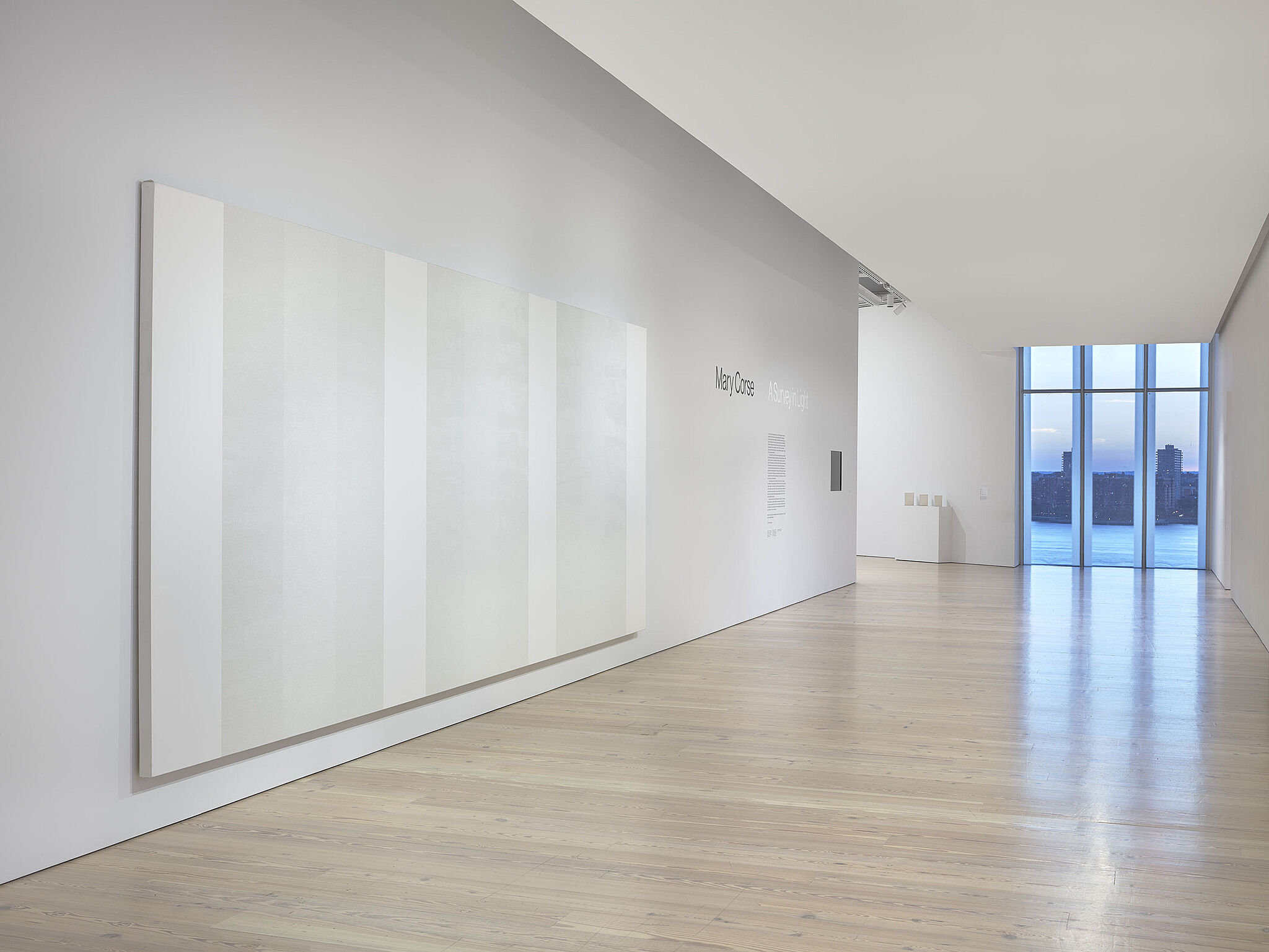
-
801
Mary Corse: Untitled (Two Triangular Columns), 1965
Audio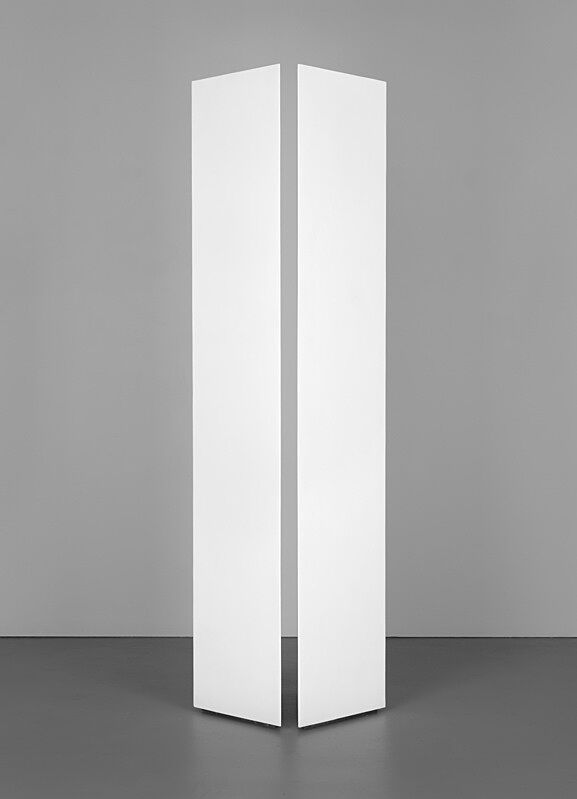
-
802
Mary Corse, Untitled (Octagonal Blue), 1964
Audio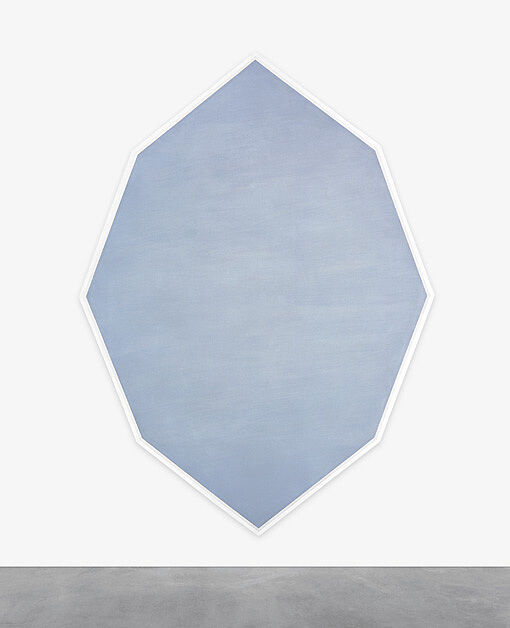
-
803
Mary Corse, Untitled (Negative Stripe), 1965
Audio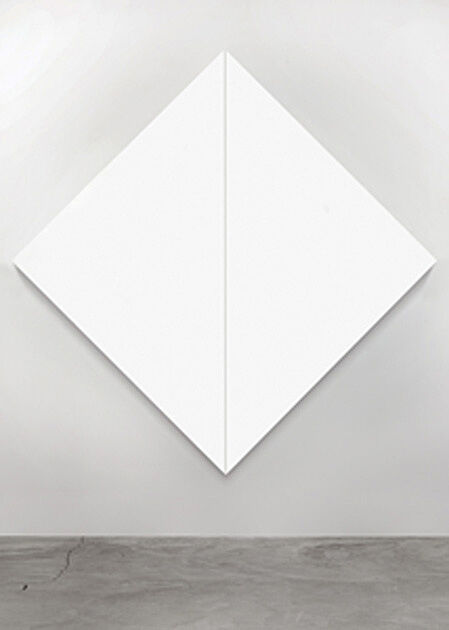
-
804
Mary Corse, Untitled (Space Plexi and Painted Wood), 1966
Audio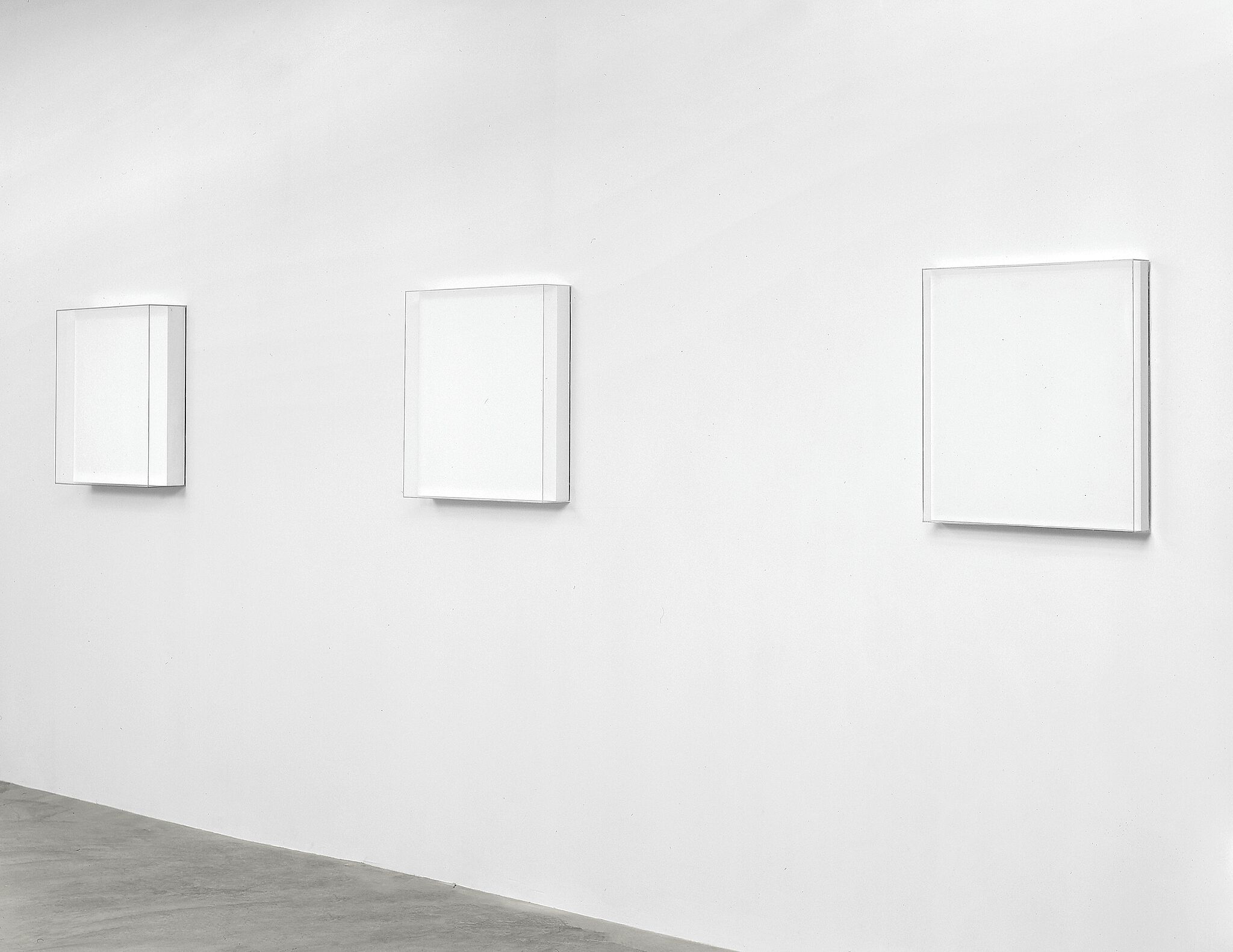
-
805
Mary Corse, Untitled (White Light Series), 1966
Audio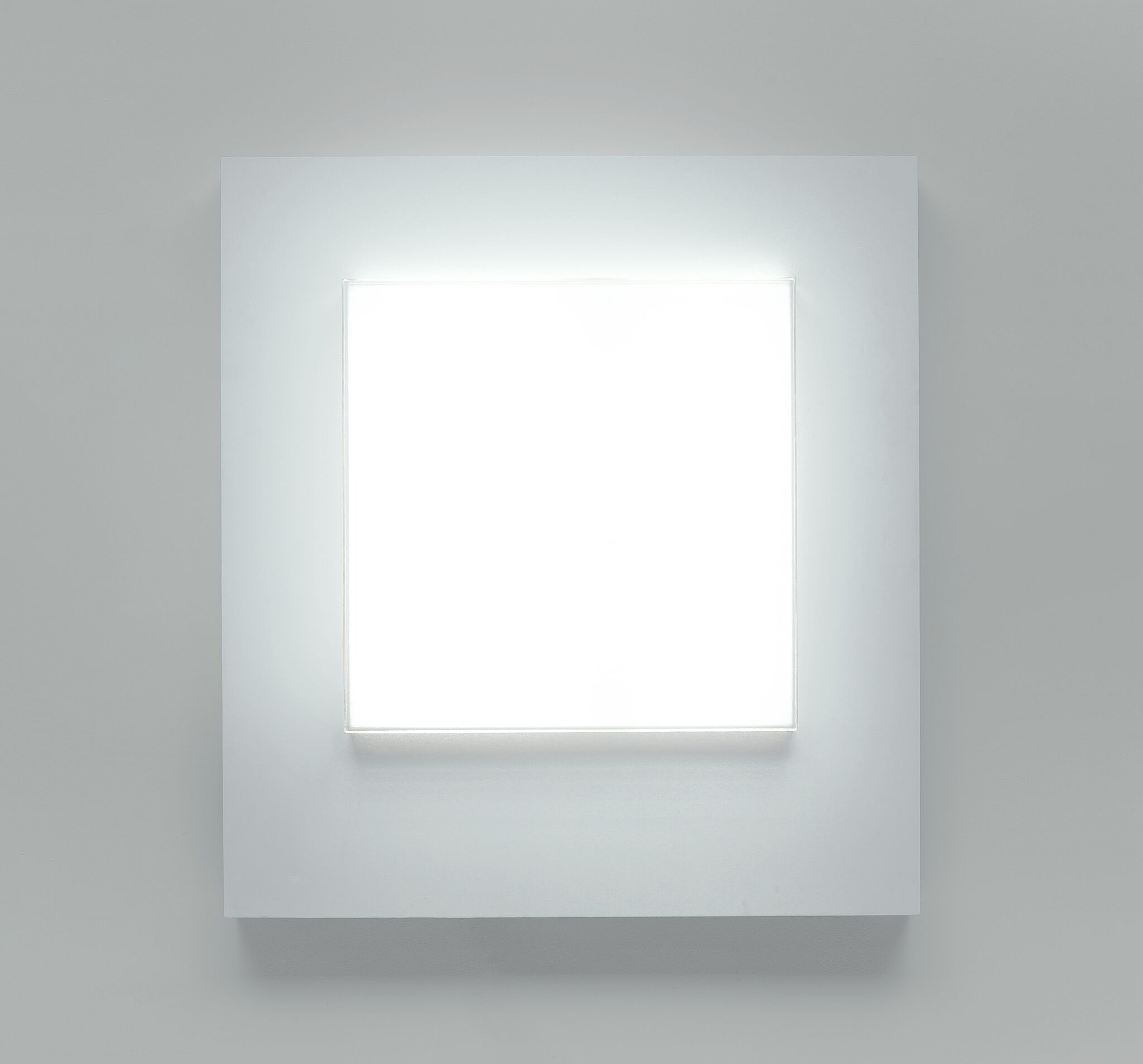
-
806
Mary Corse, Untitled (White Grid, Vertical Strokes), 1969 [also refers to Untitled (White Grid), 1969]
Audio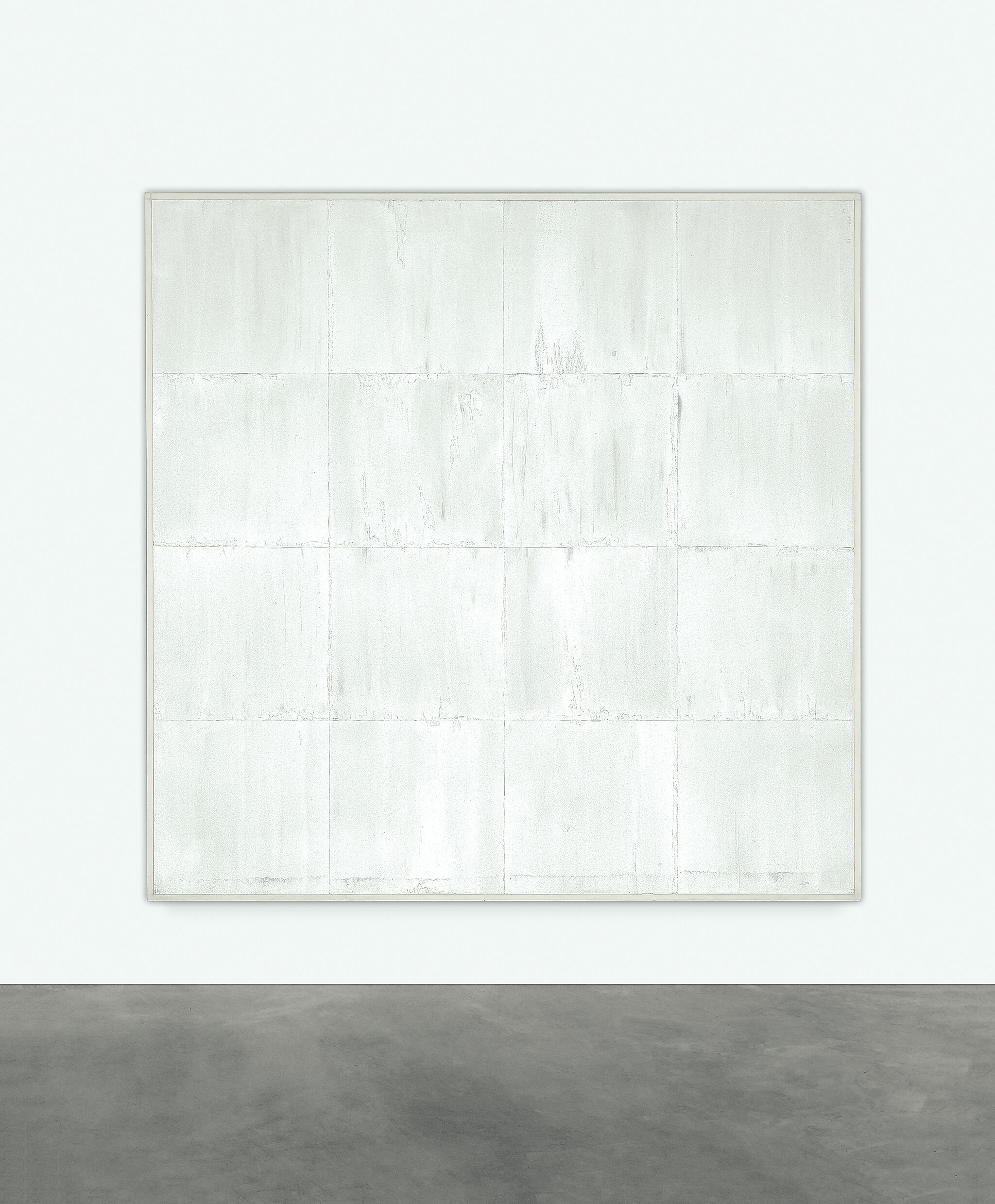
-
807
Mary Corse, Untitled (Black Earth Series), 1978
Audio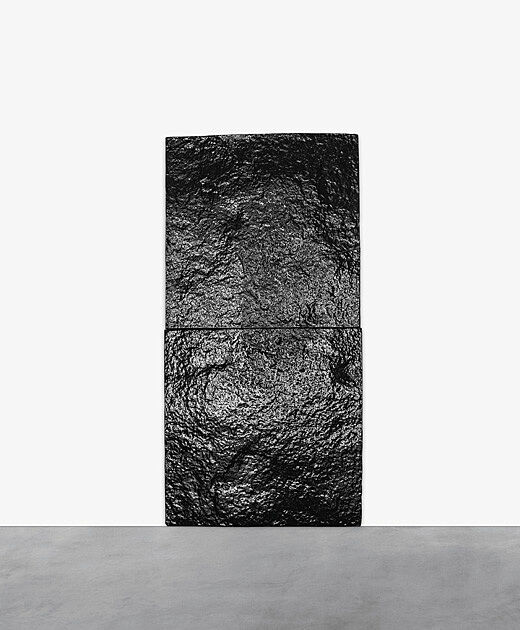
-
808
Mary Corse, Untitled (White Inner Band), 2003
Audio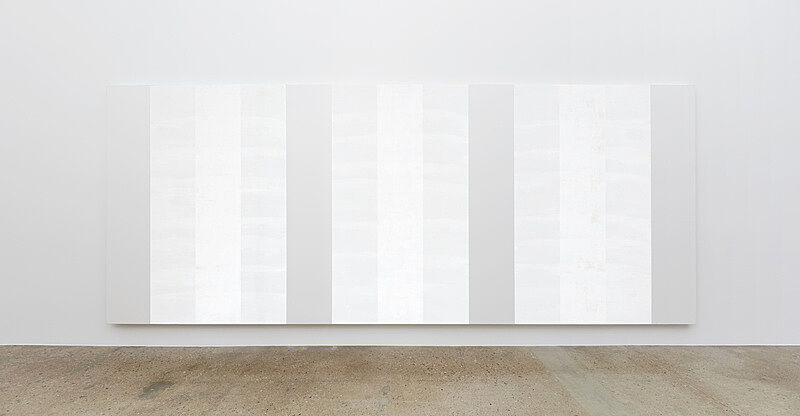
Narrator: Welcome to Mary Corse: A Survey in Light. For almost fifty years, Mary Corse has devoted herself to one central problem: the relationship between painting and light. Working ambitiously and experimentally—she once described herself as a kind of “mad scientist”—she’s created a body of work that is both beautiful and thought-provoking.
The exhibition follows Corse from downtown Los Angeles—where she studied and had her first studio—to Topanga Canyon, in the Santa Monica mountains just outside of Los Angeles. She moved to Topanga in 1970, and has lived and worked there ever since.
On this tour, we’ll hear from the exhibition’s curator, as well as the artist herself. We’ll begin with a painting she made in 1964. It’s an octagonal canvas, painted blue.
Installation view of Mary Corse: A Survey in Light (Whitney Museum of American Art, New York, June 8-November 25, 2018). From left to right: Untitled (Two Triangular Columns), 1965; Untitled (Space Plexi + Painted Wood), 1966; Untitled (Two Triangular Columns), 1965; Untitled (White Diamond, Negative Stripe), 1965; Untitled (Hexagonal White), 1965. © Mary Corse. Photograph by Ron Amstutz
Kim Conaty: This sculptural grouping is really an intellectual extension of Corse's shaped paintings.
Corse constructed these columns on her own, working in a very hands-on way in her studio. She cut the plywood, she sealed it together, and she painted the columns very carefully with white acrylic paint, trying to hide, as much as possible, any of the marks of her painting. In that way, she was trying not to show the hand of the artist in the creation of these works. She went so far as to spend a good deal of time sanding the surfaces of these sculptures, again, to underscore their more objective nature versus subjective nature.
As she's always thought about painting as something that might take us into a different dimension and that might somehow become more of an ethereal experience, she also tries to get across the same idea even in these large, approximately 8-foot-tall columns. To do this, she worked with plexiglass. This was the first time in her work that she did begin to work with plexiglass, and she created bases for the work so they would not sit directly on the ground, but they would actually appear to hover off the ground, just a couple of inches, in a way echoing the space in between the two columns.
Mary Corse (b. 1945), Triangular Columns, 1965. Acrylic on wood and plexiglass, two parts, 92 × 18 1/8 × 18 1/8 in. (233.7 × 46 × 46 cm) and 92 × 18 1/16 × 18 in. (233.7 × 45.9 × 45.7 cm). Whitney Museum of American Art, New York; gift of Michael Straus in loving memory of Howard and Helaine Straus 2016.6a-b
Kim Conaty: My name is Kim Conaty. I am the Steven and Ann Ames Curator of Drawings and Prints at the Whitney Museum, and I am the curator of Mary Corse: A Survey in Light.
In this particular work, she's thinking about a couple of issues. One is trying to think through how to capture a field of color on the wall that doesn't necessarily need to take a rectilinear format. So we have the work that's in an octagonal form, in fact, in a framing device that she constructed herself.
Second, with Octagonal Blue, Corse was working with this idea of how to bring light into the painting.
Narrator: She began adding tiny metallic flakes to the paint in an effort to reflect ambient light.
Kim Conaty: For her, this was something that was a challenge, that was more than just depicting light, as artists have done for centuries using color or thickness of paint to try to capture the look of light. But for her, the effect was not as intense as she was hoping.
Narrator: As Corse continued to experiment, she focused next on the reflective properties of white acrylic paint—testing its potential in a wide variety of formats.
Mary Corse, Untitled (Octagonal Blue), 1964. Metal flakes in acrylic on canvas, 93 x 67 1/2 in. (236.2 x 171.5 cm). Courtesy Kayne Griffin Corcoran, Los Angeles, Lehmann Maupin, New York; and Lisson Gallery, London. Photograph © Mary Corse
Narrator: Here, Corse has contrasted the bright, painted surface with a thin strip of raw canvas running down the middle.
Kim Conaty: She’s imagining that there is literally a space behind that surface, from which light could be emitted. So she begins to make these strips, these interior bands that bisect her canvases. She does this in the diamond-shaped painting in the gallery, and also in the hexagonal-shaped painting in this gallery.
In both cases, we’re looking at a negative stripe, meaning that she painted the rest of the painting except for the central stripe down the middle. In another group of paintings related to these, she did the opposite, where she over-painted a stripe down the center of the painting.
And in both cases, she’s exploring the idea of how to actually almost crack the painting open. How can we get into this interior space? Or at least make a suggestion that there is space beyond the flat picture plane.
Mary Corse, Untitled (White Diamond, Negative Stripe), 1965. Acrylic on canvas, 84 x 84 in. (213.36 x 213.36 cm). Collection of Michael Straus. Photograph © Mary Corse
Narrator: Mary Corse spoke about her work with the art critic and historian Suzanne Hudson at the Los Angeles County Museum of Art in 2017.
Mary Corse: I was doing these white forms with plexiglass where I sanded out the brush strokes, very minimal, getting rid of any artist line, any subjectivity, any ego.
Narrator: The three works are similar in their overall dimensions. But look carefully. You’ll see that Corse methodically shifted the proportions between the painted panels and the depth of the plexiglass boxes.
Kim Conaty: For her, this was a way of literalizing the concept of space in a painting, which is something that, like light, has been a question for painters over the centuries. We think about perspectival space, one-point perspective, how we create the illusion of depth on the flat painted panel. In her case, she created literal depth by using the plexiglass not as a framing device, but as part of the painting, encasing the space of the painting itself.
This group of plexiglass paintings is a very important transitional work for Corse.
Mary Corse: With my work, each painting comes out of the paintings before in a way. Once I went to the plexiglasses there—and they were white—the next step was the white should be light.
Narrator: Corse took that next step in works like the one to your left. Here, light itself became a material to be used in works that she thought of as paintings. She didn’t actually paint them. But she used light to push forward many of the concerns that had come to dominate abstract painting—exploring the natures of pictorial space, illusion, and perception itself.
Our next stop is another one of Corse’s light paintings—it’s around the corner.
Mary Corse, Three works, each titled Untitled (Space Plexi + Painted Wood) (all 1966). Plexiglass and acrylic on composition board, approx. 24 5/16 x 24 5/16 in. (61 x 61 cm) each; depths, from left to right: 5 7/8 in. (14.9 cm), 4 1/8 in. (10.5 cm), 2 5/8 in. (6.7 cm). Collection of Andrea Nasher
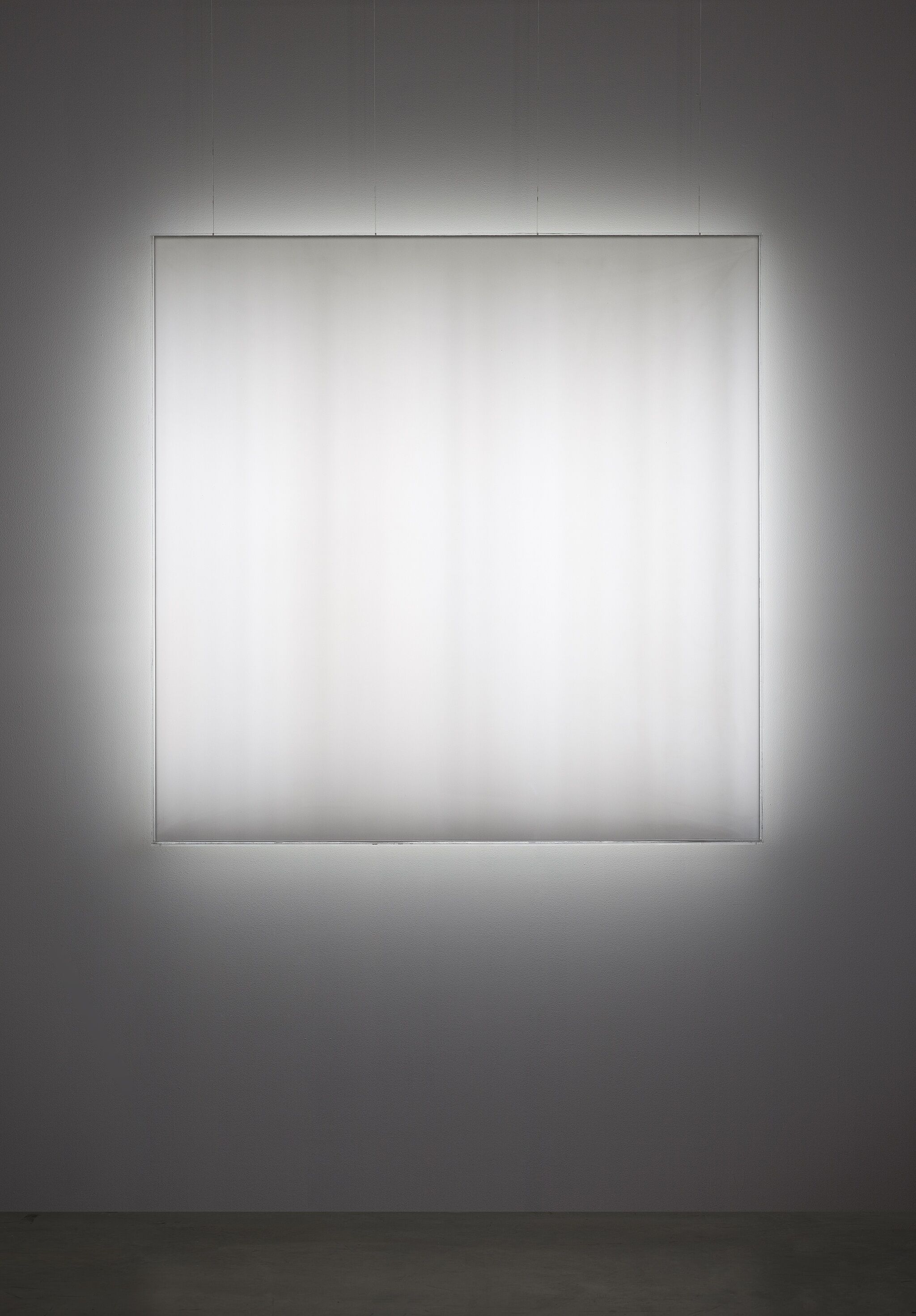
Narrator: Corse made her earliest Light Paintings—like this one—using fluorescent tubes, which gave off an even light. In these first works, she recognized that she’d always have to deal with cords and outlets, which she found distracting. Here, the cord runs behind the wall. But early on, Corse went to much greater lengths to eliminate them.
Mary Corse: I searched around for a technology where I could get rid of the wires. I got very into Nikola Tesla, you know, Tesla, now the car is named after him, but he was a major scientist. And I realized that, oh, I can take this high frequency generator and put it in the wall.
Narrator: The light in the the earlier works comes from tubes filled with argon gas, which are powered by the hidden Tesla coil’s electromagnetic field. The materials required to engineer a Tesla coil were highly specialized, and they required advanced training.
Mary Corse: There was this company, Edmund Scientific, where you could get all kinds of scientific parts. In order to get the parts, you had to take a test. So I had to study some physics in order to pass this test.
Narrator: Corse’s studies proved very important to her. In particular, she was struck by the idea that in quantum physics you could see light either as a particle or a wave, but not both at the same time. For her, this fact underscored the idea that perception depended on the observer, and that it would always be subjective. For a long time, she had worked to make her painting as objective as possible. But studying physics made her feel that if she wanted her art to be more real, it had to be more subjective.
Mary Corse: That's why I went back to painting, because of the brushstroke. But I didn't want to leave the light, because the light is about our essence. So I went searching around to how to put the light in the painting.
Narrator: The first painting to result from this search hangs near the entrance to this room.
Kim Conaty: Untitled (First White Light Series) is the first example of Corse's experimentation with an altogether new material for her, glass microspheres. In Corse's search for a way to be able to get light into painting or have light emitted from painting itself, she came across, by chance, an interesting industrial material.
She was driving along the road in Malibu, California, when she noticed that the light coming from behind her was hitting the highway lines and illuminating them. This is, of course, the glass microspheres, a material also known as retroreflective beads, that have been used industrially for highway safety.
Mary Corse: And so I went back, after the light pieces, to the paintings with the micro-glass spheres, the highway safety spheres, which put the light in the painting, and put it in your perception—because as you move, it changes—So, you realize that perception is creating the art.
Mary Corse, Untitled (White Light Series), 1966. Fluorescent light, plexiglass, and acrylic on wood, 72 x 66 x 11 in. (182.9 x 167.6 x 27.9 cm). Solomon R. Guggenheim Museum, New York; gift, Michael Straus, 2016
Kim Conaty: The work you see in front of you, as well as the one to the right, represent a new compositional format, using glass microspheres, that Corse began to explore shortly after Untitled (First White Light Series). In both of these paintings, Corse is using a grid. The difference between the two canvases was important for Corse. While earlier in her career she had tended to hide the brushstrokes, to hide any sign of her own hand in the making of the work, in these works, she decided to foreground it. She did so by differentiating the paintings by the direction of the brushstrokes themselves.
Mary Corse, Untitled (White Grid, Vertical Strokes), 1969. Glass microspheres and acrylic on canvas, 108 x 108 in. (274.3 x 274.3 cm). Collection of Andrea Nasher
Mary Corse: I had been doing white paintings for, what, ten years now or something, all white, and very ethereal. And I guess, I was discovering that, hey, we have a material reality also! So I found myself obsessed with the idea of—coming from the white light painting—then to do black earth.
Kim Conaty: As Corse became more interested in working with clay and creating these earth slabs, she designed and built her own kiln in front of her studio. A place where she could fire the tiles themselves, which then she would glaze in her studio and hang like paintings on the wall.
Mary Corse: I wanted to mold it off the rock. I wanted it to be made out of clay, made out of earth. Mold it off the earth. So I went hiking around the Malibu Mountains, it's surprising how hard it is to find a rock that's not too bumpy, you know? But I did. So I found a friend who would go with me, and we took all this equipment up the mountain, and poured this big plaster mold. It was fun. Then we carried it down, got another friend to help us put it on the front of my car, on the top of the hood, tie it down, and drive it back to the studio.
Mary Corse, Untitled (Black Earth Series), 1978. Ceramic, two tiles, 96 x 48 in. (243.8 x 121.9 cm). Courtesy Kayne Griffin Corcoran, Los Angeles, Lehmann Maupin, New York; and Lisson Gallery, London. Photograph © Mary Corse
Narrator: In this final gallery, we see three examples of the formats that Corse began to explore between the 1980s and the present. In all of them, she deepened her investigations of light and perception.
Kim Conaty: Corse's White Light Inner Band paintings are among the most elusive of her White Light Series. These paintings, which include fields of matte white acrylic paint and two different types of fields of white acrylic paint with glass microspheres, change dramatically as the viewer moves from one side to the next.
Corse found that by painting with the glass microspheres in a specific way, she was able to create the appearance of an interior band that would appear and completely disappear as the viewer passed from one side of the canvas to the next. The way that Corse creates this effect is one of her most closely held secrets.
In the way that these works resist a static form, they also emulate light itself. Light is ambient. Light is ephemeral. Light continues to move. The experience of these works puts us in the driver seat. We are literally able to create our own experience, and to see them in a particular way, that she would acknowledge is distinct from how any other individual might see them.
These works also remind us that light itself is what makes vision possible. That it is only through light bouncing off of the physical objects around us that we are able to apprehend them as objects at all. And light becomes a protagonist in these works.
Mary Corse (b. 1945), Untitled (White Multiple Inner Band), 2003. Glass microspheres and acrylic on canvas, 96 × 240 in. (243.8 × 609.6 cm). Courtesy Kayne Griffin Corcoran, Los Angeles, Lehmann Maupin, New York; and Lisson Gallery, London. Photograph © Mary Corse
0:00
0:00