
Collected by Thea Westreich Wagner and Ethan Wagner
2015
Listen to this audio guide of selected works in the exhibition, Collected by Thea Westreich Wagner and Ethan Wagner, co-organized by the Whitney and the Centre Pompidou.
-
600
Introduction to Collected by Thea Westreich Wagner and Ethan Wagner
Audio -
601
Simon Starling, Work, Made-ready, In Light of Nature, 2003
Audio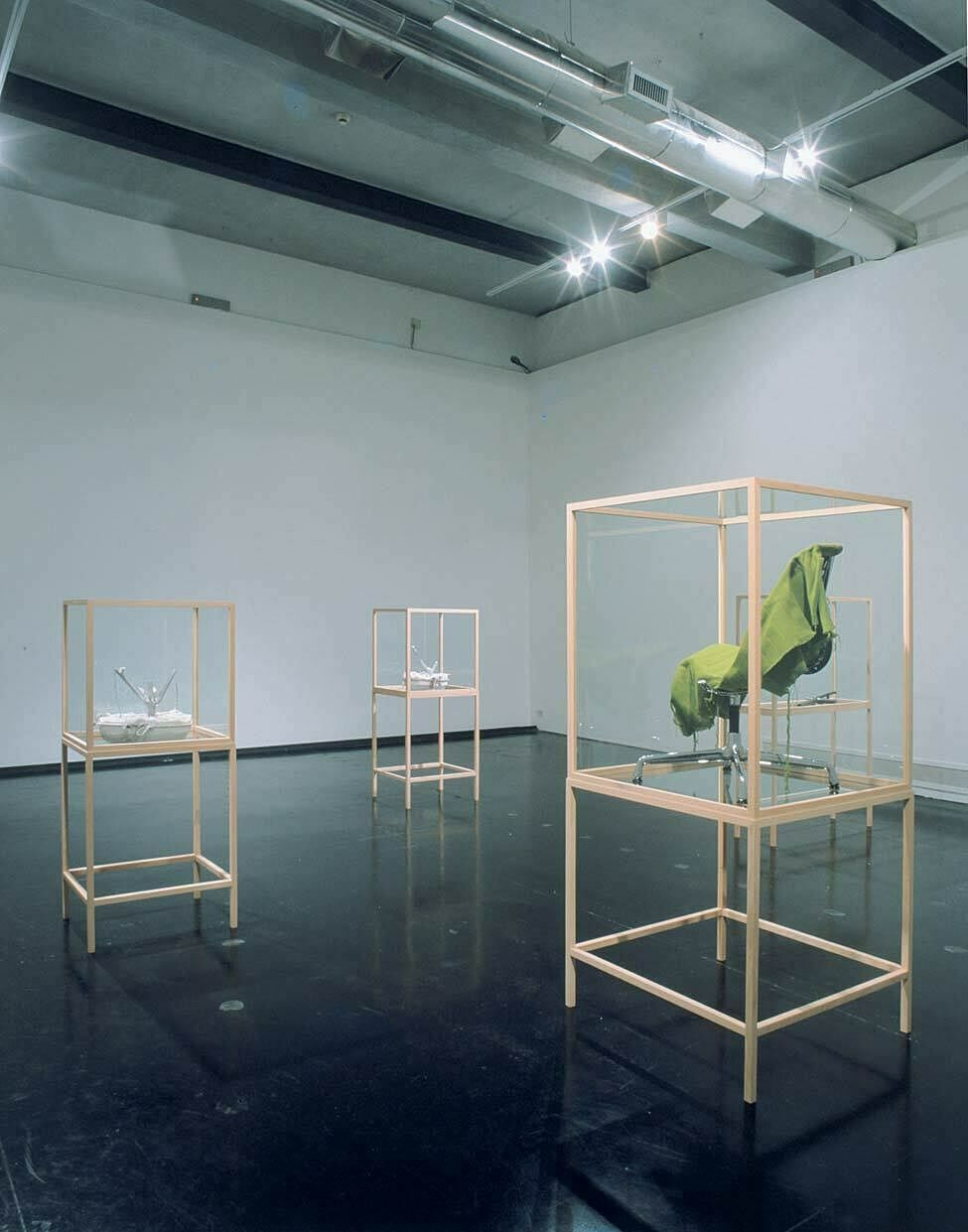
-
604
Robert Gober, The Ascending Sink, 1985
Audio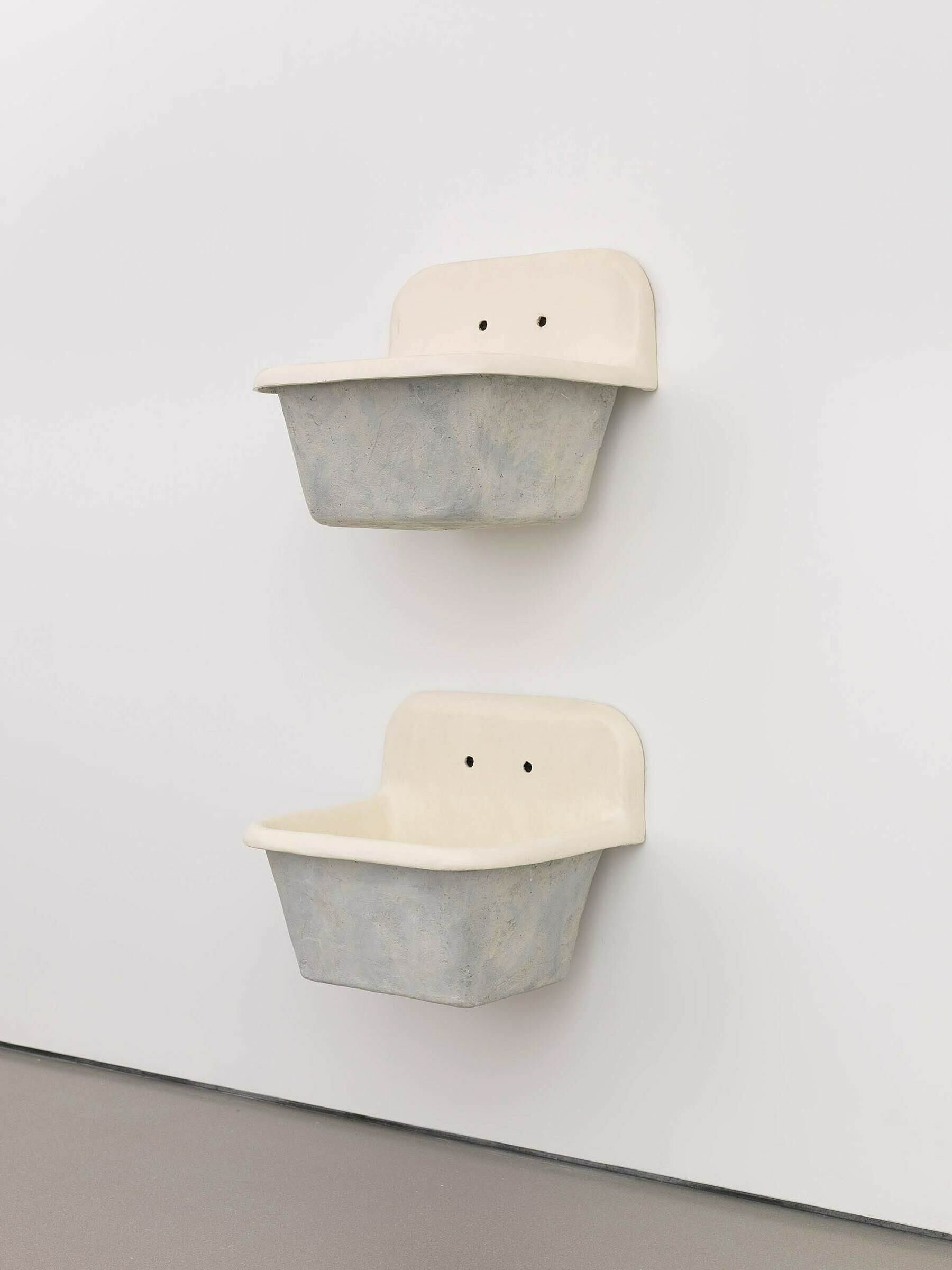
-
6042
Robert Gober, The Ascending Sink, 1985
Audio
-
605
Bernadette Corporation, Creation of a False Feeling, 2000
Audio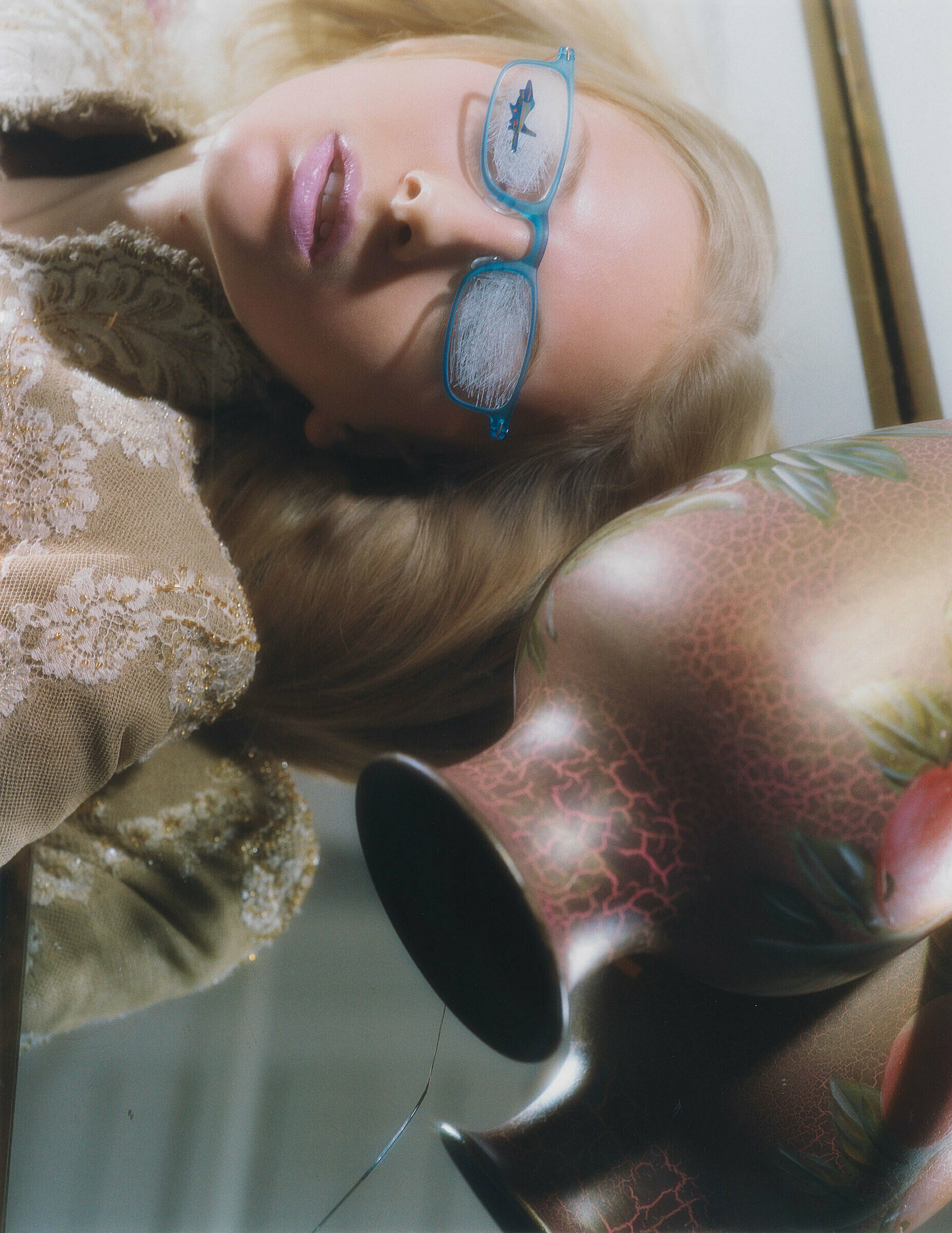
-
607
Christopher Wool, Untitled, 1990–91
Audio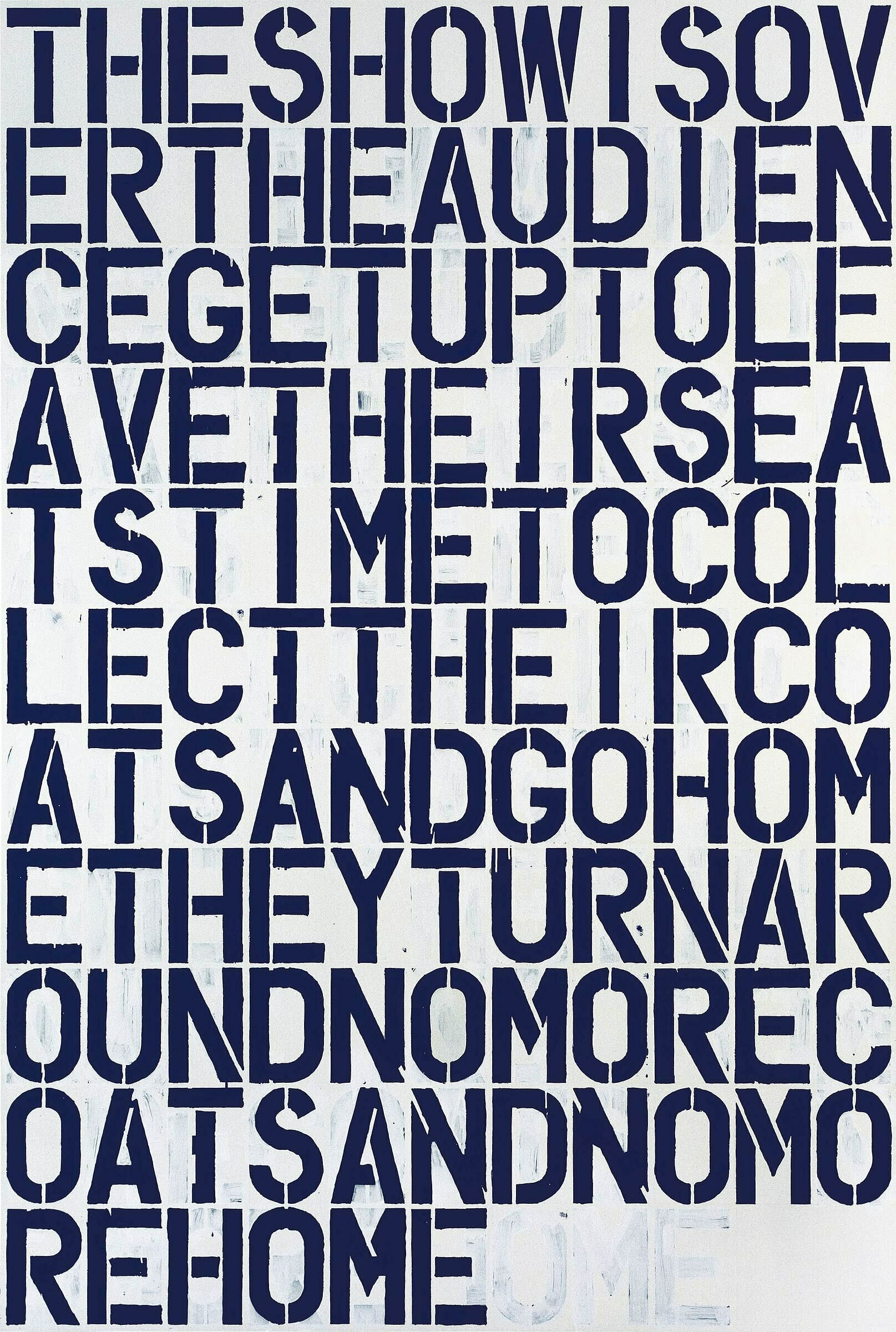
-
609
Robert Gober and Christopher Wool, Untitled, 1988
Audio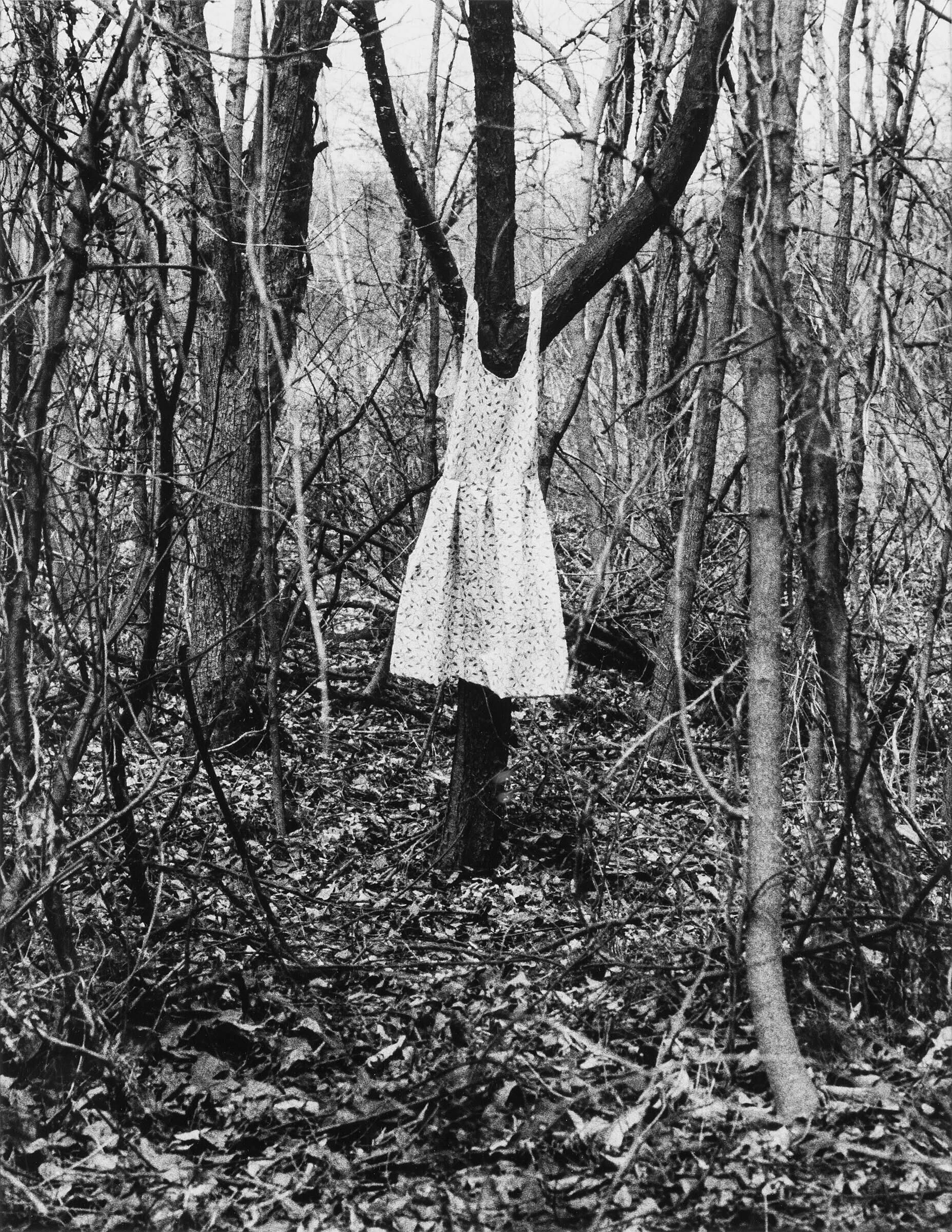
-
6072
Christopher Wool, Untitled, 1990–91
Audio
-
610
David Robbins, Talent, 1986
Audio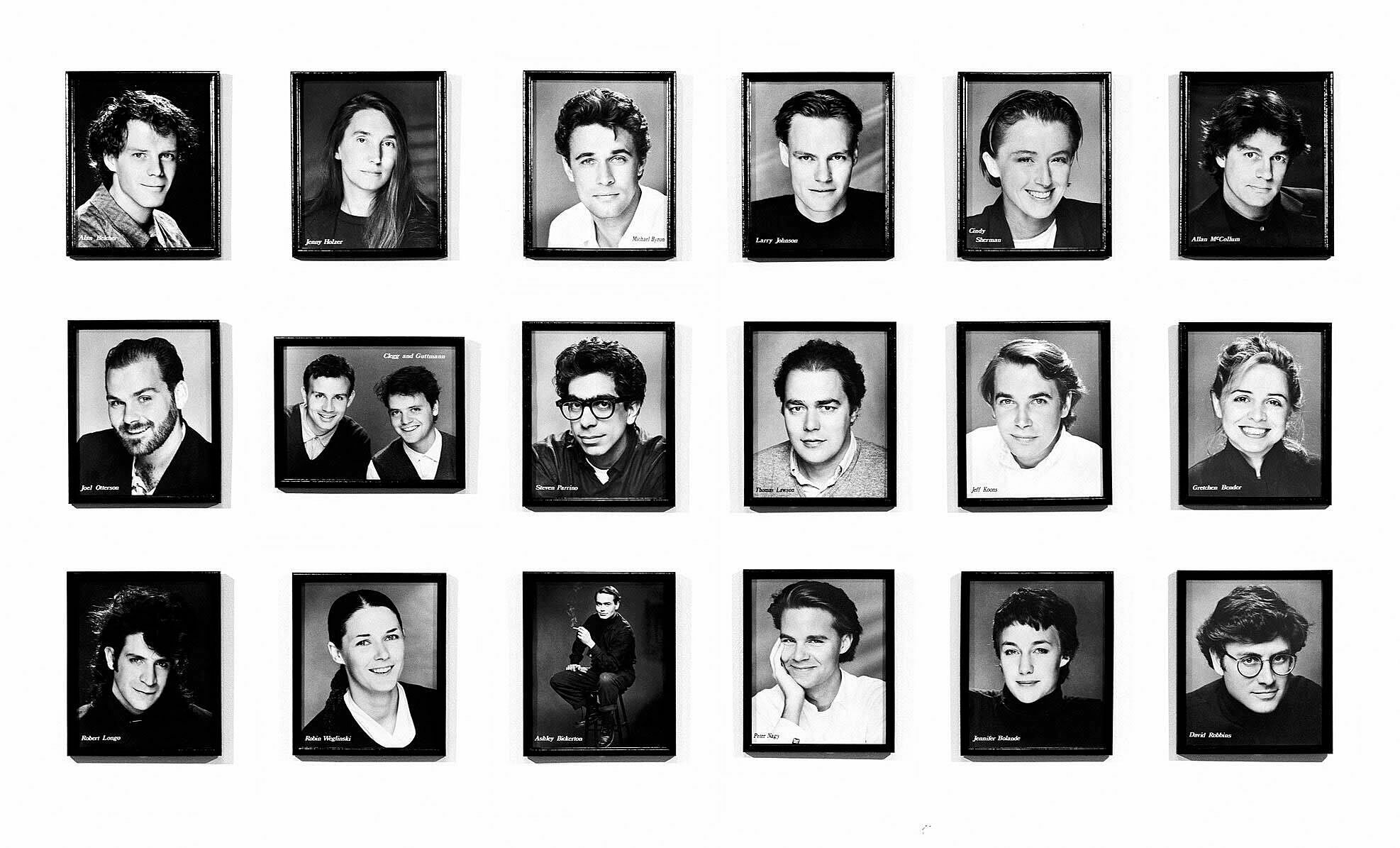
-
611
Henrik Olesen, Some Gay-Lesbian Artists and/or Artists relevant to Homo-Social culture V/American Male Bodies/English Lads/Melancholy, 2007
Audio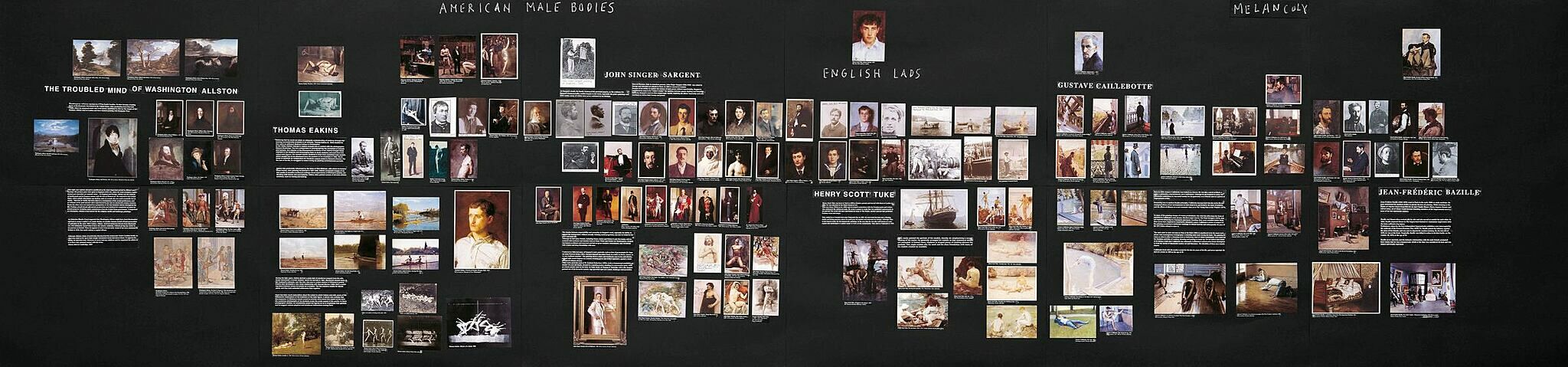
-
615
Daniel Lefcourt, Breach of Contract (Total Nonperformance) & Clarification, 2006
Audio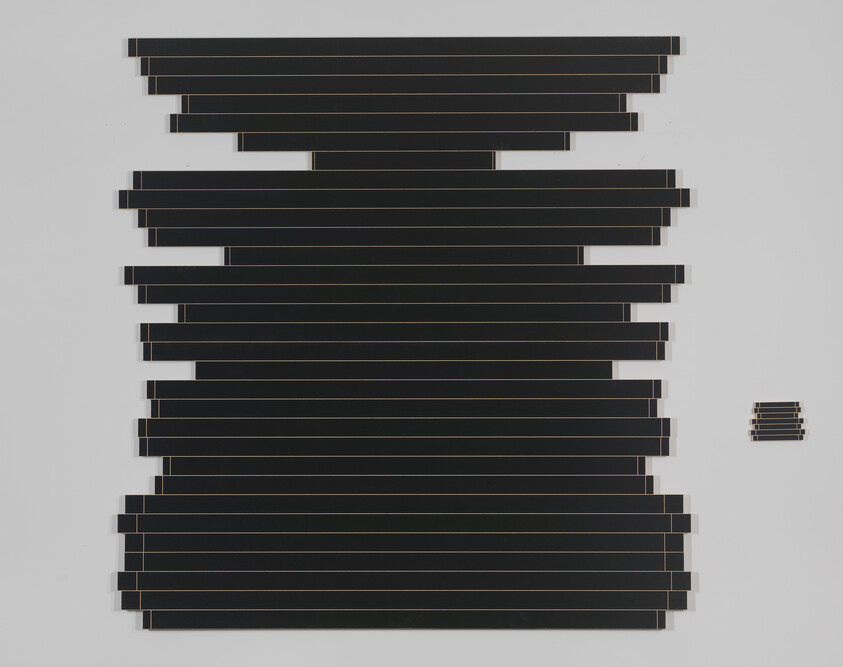
-
616
Sam Lewitt, Paper Citizen 4322, 2010
Audio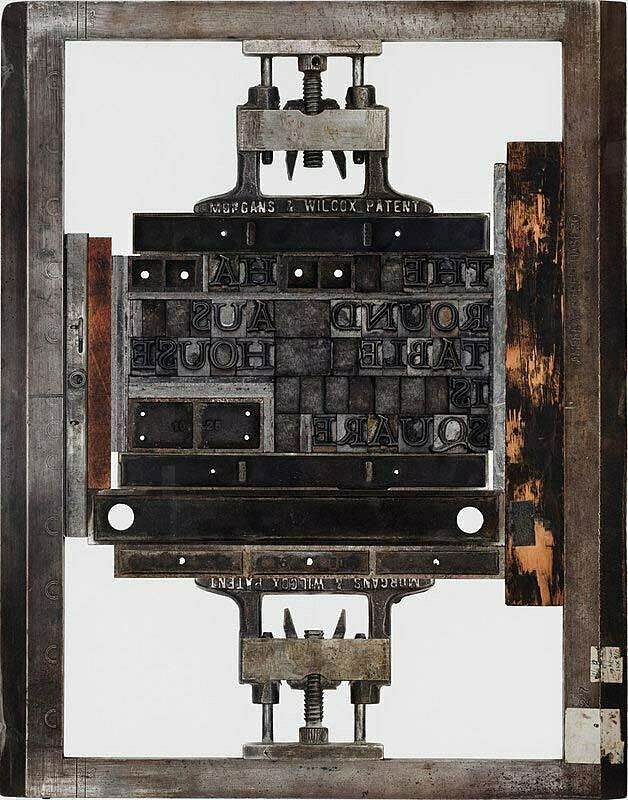
Narrator: Welcome to Whitney Museum. This exhibition presents a selection from a gift of contemporary artworks given by Thea Westreich Wagner and Ethan Wagner. The couple has been actively collecting contemporary art since the 1980s, and this exhibition demonstrates their adventurous and dedicated approach. Curator Elisabeth Sussman.
Elisabeth Sussman: We tried to take this gift and select from it related bodies of work that told some sort story, themes that have been of interests to artists over the last forty years or so.
Narrator: This opening room is a kind of overture, presenting some of those themes. The painting on this title wall is by Christopher Wool.
Thea Westreich Wagner: Of all the artists that I knew very early on, I would say that Christopher Wool was, by far, the most influential.
Narrator: Thea Westreich Wagner.
Thea Westreich Wagner: We traveled together. We looked at art together. What I learned from him became the paradigm for the rest of my life. When I met Ethan it was clear that that's exactly the way he engaged with things. It's been the same ever since.
Narrator: This process of encountering an artist and becoming deeply involved with his or her work has been very important in shaping this collection—though in complex ways.
Ethan Wagner: It's not like the studio visit provides a roadmap, to collective decisions, it's not that at all.
Narrator: Ethan Wagner.
Ethan Wagner: It's much more a diving in to the intentionality and the objects themselves. In the course of those visits with Christopher, we would invariably come out, we'd pick one, maybe to acquire, change it, go back to one, and then sooner or later find our way and make a selection.
Thea Westreich Wagner: Both of us have been drawn to the notion of a new idea, of some sort of contribution to thinking that's new and that extends your understanding of art making practices and, in fact, of history, of politics, of literature. Art has that power, especially when you're lucky enough to engage directly with artists and to be, in a sense, in and out of studios, hanging out, learning, growing with the experience of a direct interaction with the artist him or herself.
Narrator: The American works in this exhibition will enter the Whitney’s collection. Those by European artists will go to the Centre Pompidou in Paris. All told, the gift included 850 works—a selection of which is on view here. Please enjoy the exhibition.
Elisabeth Sherman: Hi. My name is Elisabeth Sherman. I'm an assistant curator at the Whitney Museum of American Art.
The four vitrines here compose a work by Simon Starling called Work Made-ready, In Light of Nature. Simon Starling was directly inspired for this work by an artist named Karl Blossfeldt, who taught in Berlin between 1899 and 1930.
Blossfeldt is very well known for his photographs of botanical structures documenting almost for the first time the inherent forms in the natural world around us. In addition to these photographs, Blossfeldt was also making bronze models from which his students could draw and sculpt these botanical structures.
Starling was interested in the way that these botanical structures from this moment forward began to inform much of industrial product design. Objects that seemed very distant in our daily lives from the natural world, but whose design is actually inspired directly from these natural structures. For example, in this work he took a contemporary office chair, deconstructed an aluminum component of it, melted that aluminum component down, and recast the original Blossfeldt model of the plant using the material from today to hearken back to the original early twentieth-century model.
Simon Starling, Work, Made-ready, In Light of Nature, 2003. Four wood and glass vitrines, two casting molds, two aluminum casts, and two aluminum objects, dimensions variable. Centre Pompidou, Paris; promised gift of Thea Westreich Wagner and Ethan Wagner E.2014.0797. Courtesy Neugerriem Schneider, Berlin
Narrator: Robert Gober made this sculpture in 1988.
Elisabeth Sussman: What they are, are the facsimiles of two laundry sinks that are mounted on a wall, one above the other. They are absolutely not functioning. The object that we're looking at doesn't really add up to anything. You have to project onto this what you think it means.
What's always been very interesting to me is that Gober saw such sinks as these laundry sinks in his studio. For some reason, he was fascinated by the shape and by the look of this thing. So, rather than go to the hardware store and buy them, he decided he would make them. And he would make them to look exactly like the sinks.
He reacts to the sink, he takes it out of its ordinary life and through this meticulous fabrication, he knows it, in a way. He lets the meaning of it, the original attraction to it, kind of filter into his unconscious mind through the process of making it. That's, in itself, profound to me.
Beyond that, what does it mean? I mean, then you can start speculating, about what do you do with the sink. Do you wash your hands? Do you wash your tools? The one thing that comes out of it seems to be that you are just washing, cleaning, cleaning, cleaning.
Then you say to yourself, "OK, but who needs two of them? One on top of the other exactly alike." You could say everything I just said to you about one sink. Why do you need two of them?
That's a good question, I mean, I'm asking myself that question. But it—that boils down to maybe requiring an art historical answer.
Narrator: If you’d like to hear more on this question, please tap your screen.
Robert Gober, The Ascending Sink, 1985. Plaster, wood, wire lath, steel, and enamel, two parts: 92 x 38 x 27 in. (233.7 x 96.5 x 68.6 cm). Whitney Museum of American Art, New York; promised gift of Thea Westreich Wagner and Ethan Wagner. P.2011.167. © Robert Gober
Elisabeth Sussman: The reason it needs two of them, probably, is because Gober is coming after the minimalist Donald Judd. Donald Judd would make these completely non‑objective objects and stack them up the wall. They were simply boxes inside. It was a different color from the outside, and there were maybe one or two of them or maybe one, two, three, four, five, six, and they would go up a wall like that.
Gober is sort of, in a way, he's saying, "This is a sculptural object," by replicating it and stacking it on the wall like this. I think maybe that's why there are two. Because he wants to kind of, push back on this idea that this is a single sink—which is all about washing and cleaning and so on, whatever you, other meanings you want to bring to it. But it's also about the history of sculpture.
What it then also says to me, if you get on that wavelength of why is it about the history of sculpture, I think what's really interesting about it is that he takes this kind of non‑objective box of Donald Judd stacked on the wall as his model prototype, and he gives it meaning.
Robert Gober, The Ascending Sink, 1985. Plaster, wood, wire lath, steel, and enamel, two parts: 92 x 38 x 27 in. (233.7 x 96.5 x 68.6 cm). Whitney Museum of American Art, New York; promised gift of Thea Westreich Wagner and Ethan Wagner. P.2011.167. © Robert Gober
Narrator: This photograph is called Creation of a False Feeling.
Elisabeth Sussman: You don't know whether this woman is dead or alive, you don't know whether she's outdoors or indoors, you don't know why that vase is next to her in that position. Has it hit her on the head? I mean, there are all sorts of possibilities. This is, you don't know, looking at this picture, if, really, what you're looking at is an ad for the very nice jacket that she has on.
This is a typical technique of a certain kind of fashion photography that you create a mood and ambiance that doesn't necessarily tell you a lot about the clothes, the way they look and fit and so on. But it tells you a lot about the kind of mood that you could project in a sort of fantasy of wearing this outfit.
Narrator: The image was produced by the Bernadette Corporation, an artist collective founded in 1993. Its members came together to make art, do fashion design, and explore the boundaries between commerce, advertising and art.
Elisabeth Sussman: What they're doing is mimicking, I think, an extreme fashion photography. At the same time, this is part of—they are selling this as an image. They were very much part of a New York scene in the early 2000s that was questioning the economics of the art world, the foundations of it, who found that the blurring of those lines between commerce and art were becoming incredibly evident, that investment in art as capital was going on. That all sorts of boundaries were being kind of stepped over, including the one of being an individual artist. The fact that it's a group that calls itself a corporation tells you a lot.
Bernadette Corporation, Creation of a False Feeling, 2000. Inkjet print, sheet, 70 1/2 × 49 13/16 in. (179.1 × 126.5); image, 60 11/16 × 47 1/16 in. (154.1 × 119.5). Whitney Museum of American Art, New York; promised gift of Thea Westreich Wagner and Ethan Wagner P.2014.10. Courtesy the artists and Greene Naftali Gallery
Narrator: In the 1980s, Christopher Wool began making paintings out of text, making the letters and words the subject of the work.
Elisabeth Sussman: It's both graphically very strong, and at the same time, the texts themselves are powerful. A signature of Christopher's work at this time is that he will break the words up, so that it takes you a while to read the text because the one word will carry over into two lines.
Narrator: Wool took this text from a book that rock critic Greil Marcus wrote about punk. Curator Elisabeth Sussman.
Elisabeth Sussman: The event that is described in the text is that there is an enclosed little space where people are somehow immersed in their lives, in the spectacle. And that at the end of the immersion, when the immersion is over, and they are forced to leave their little space and to go back into the so‑called world, there's no world there. Or there is no exit. It’s a very existentialist kind of idea.
Narrator: If you’d like to hear more about Wool’s text paintings, please tap your screen.
Christopher Wool, Untitled, 1990–91. Enamel on aluminum, 108 x 72 in. (274.3 x 182.9 cm). Whitney Museum of American Art, New York; promised gift of Thea Westreich Wagner and Ethan Wagner. P.2014.319. Courtesy of the artist and Luhring Augustine, New York.
Narrator: This photograph is a collaboration between Robert Gober and Christopher Wool. They included it in a joint exhibition in 1988. Curator Elisabeth Sussman.
Elisabeth Sussman: The woman's dress is a summer dress, which is interesting. Because it's a dress that has no sleeves, no neckline, it's not a, it's a very vulnerable dress. It's there in this kind of wintry landscape. That's interesting, to me. The dress is, looks like a white dress, but it has a printing on it of a repetitive black and white pattern, and that black and white pattern is by Christopher Wool, and resembles the kinds of paintings he was doing at the time.
The other thing that is striking about the photograph is that the tree that it's hanging on, is a three‑pronged tree. For some reason or another, this dress hanging on the tree reminds you slightly of a crucifix, there's just a slight idea that this could be a stand in for a body. But it's really, there's no body there, there's just a dress.
To me, it was very much about kind of establishing this, a sort of mood. Yeah, a feeling of walking into a gallery space that wasn't a neutral space, and that was trying to tell you something that you were going to be emotionally vulnerable to.
Robert Gober and Christopher Wool, Untitled, 1988. Gelatin silver print, Sheet, 13 13/16 x 10 7/8 in. (35.1 x 27.6 cm); image, 13 1/4 x 10 5/16 in. (33.7 x 26.2 cm). Edition no. 2/10. Whitney Museum of American Art, New York; promised gift of Thea Westreich Wagner and Ethan Wagner. P.2011.170. © Robert Gober. Christopher Wool; Courtesy of the artist and Luhring Augustine, New York.
Narrator: Curator Elisabeth Sussman on Wool’s stenciled letters.
Elisabeth Sussman: On the one hand, they are shapes of graphic interest to the artist. Breaking it up makes the thingness of it more apparent, because it's hard to read and it means you have to look at the letters really hard. You can't assimilate this quickly.
It's very beautiful. The letters themselves just have beautiful forms and powers. By the way, it's painted in a kind of interesting navy blue color, so it's not exactly like you would expect a sign to be.
But I think if the question is what does it mean to paint it? A text like this? I mean, all of the above, that you enjoy it graphically and you like all of that. But that ultimately, you can get the power of an experience without anything figurative other than a text. I think that must have been the reason to paint it, to project such a powerful idea with words only is quite a feat.
Christopher Wool, Untitled, 1990–91. Enamel on aluminum, 108 x 72 in. (274.3 x 182.9 cm). Whitney Museum of American Art, New York; promised gift of Thea Westreich Wagner and Ethan Wagner. P.2014.319. Courtesy of the artist and Luhring Augustine, New York.
Narrator: David Robbins titled this work Talent.
Elisabeth Sussman: It’s multiple photographs that are hung on the wall of a group of artists who were having their start then.
Narrator: As you look at the work, you’ll see that it includes a number of young artists who are now very well-known, such as Cindy Sherman, Jeff Koons, and Jenny Holzer.
Elisabeth Sussman: You'd have artists who were running galleries, and artists who showed at multiple spaces. There was a sense of community. He's taken head shots of them. He's taking them in the most banal way.
Narrator: The title suggests that there is some irony in these artists’ apparent earnestness.
Elisabeth Sussman: They are being seen at this point in the '80s as being picked up by an expanding art market, who saw not only the art itself, but these personalities behind the art and these personalities, aka the artist, become aka “talent.” It's kind of a fusion of the earnest, young artist in New York, plus them at their most innocent moment and them at their most—what can I say? They're kind of giving into this idea that they are going to be, as personalities, as interesting as their art is.
David Robbins (b. 1957), Talent, 1986. Eighteen gelatin silver prints. Sheet and image 10 x 8 (25.4 x 20.3) each. Edition no. 100/100. Whitney Museum of American Art, New York; promised gift of Thea Westreich Wagner and Ethan Wagner; promised gift of Thea Westreich Wagner and Ethan Wagner. P.2011.347.1-18 © David Robbins
Elisabeth Sherman: This large blackboard‑like collage by the artist Henrick Olesen is composed of various categories of subject matter. For example, in one section we see the heading "American Male Bodies," and under it sub‑sections categorized by examples like Thomas Eakins, John Singer Sargent, and Henry Scott Tuke. Within each of these sections, Oleson has collaged various images from these moments of art history, depicting—as the title suggests—American male bodies.
Narrator: Please take a moment to examine the rest of this work. You’ll see that it’s a kind of multi-part investigation of a theme.
Elisabeth Sherman: The title of this series, Some Gay Lesbian Artists and/or Artists Relevant to Homo‑social Culture, is investigating the way images in popular culture—either contemporary images in advertising that we're very familiar with, or the images that have been presented to the world throughout art history—construct and force a kind of conformity on social order. Specifically, he's interested in how the depiction of gay, lesbian, and other queer identities have been represented throughout art history, either marginalized, or in other moments, celebrated.
Henrik Olesen (b. 1967), Some Gay-Lesbian Artists and/or Artists relevant to Homo-Social Culture V / American Male Bodies / English Lads / Melancholy, 2007. Collage, including computer printouts, on board, 55 1/8 x 236 3/16 (140 x 600). Centre Pompidou, Paris; promised gift of Thea Westreich Wagner and Ethan Wagner. E.2014.0786. Courtesy Galerie Buchholz, Cologne/Berlin
Elisabeth Sherman: At first glance, this work by Daniel Lefcourt may appear to be a painting from another era. A minimalist canvas of simply black stripes on a white ground.
Upon closer inspection, however, you can see that this is actually almost a sculptural object. It's acrylic on board, cut into this shape and hung directly on the wall. Rather than being all about its form as much as of minimalist painting was, and containing absolutely no content, this work is actually very specifically an absence.
Lefcourt found the mockups from a newspaper's print production, where they had redacted information about a scandalous story that they were covering, leaving only Xs where the images should be, and black lines where all of the text should have been. Lefcourt was drawn to the shapes and forms created by these redacted bands of information, and even more so interested, as he said, in the signs of their absence, that the form itself was very directly reflecting to something that should be there, but isn't quite there.
While not necessarily about our surveillance culture or the hiding or revealing of information by the government, in the contemporary moment this work very much points to all that is around us that we know we cannot see.
Daniel Lefcourt, Breach of Contract (Total Nonperformance) & Clarification, 2006. Acrylic on composition board, three parts, overall: 89 15/16 × 107 3/16 in. (228.4 × 272.3 cm). Whitney Museum of American Art, New York; Promised gift of Thea Westreich Wagner and Ethan Wagner P.2011.227a-c
Narrator: Sam Lewitt’s Paper Citizen mixes obsolete and contemporary forms of communication. To make it, he first scanned old letterpress letters—materials used in the process that formed the backbone of print culture for centuries. He then made individual image files for each letter, and used these digital tools to re-create a page from an old text. He made that image into a chromogenic print—an analog photography process. In the end, the work forms a kind of bridge between outmoded and current communication technologies.
Elisabeth Sherman: Interestingly, the text, which is practically illegible because it's backwards, and dark, and inside of this flat display mechanism, in this case comes from a Latin grammar book for English speakers, so also connecting our contemporary means of communication with a completely outmoded and not even verbally spoken form of language.
Narrator: Take a look around this room. You’ll find a number of artists examining the inner workings of technology.
Elisabeth Sherman: One of the interests that actually ties together many of the artists in this gallery, is peeling back and pulling apart the otherwise seamless-seeming technologies that drive our everyday life, whether they're driving commerce, or communication, or image production. They all feel to the average consumer completely invisible, and fluid, and easy to use, when in reality they are being driven by incredibly complicated systems with often overreaching possibilities. There is a critical lens being shown on them, reminding the viewer how these technologies are really functioning in their everyday lives.
Sam Lewitt, Paper Citizen 4322, 2010. Chromogenic print: sheet. 63 3/8 × 49 5/8 in. (161 × 126 cm.); image, 62 1/2 × 48 7/8 in. (158.8 × 124.1 cm). Edition no. 1/3. Whitney Museum of American Art, New York; promised gift of Thea Westreich Wagner and Ethan Wagner P.2011.250. Courtesy the artist and Miguel Abreu Gallery, New York
0:00
0:00