
Jay DeFeo: A Retrospective
2013
This audio guide features commentary by artist Jay DeFeo, Dana Miller, curator of the permanent collection, Whitney Museum of American Art, Leah Levy, Director, The Jay DeFeo Trust, Corey Keller, associate curator of photography, San Francisco Museum of Modern Art, Greil Marcus, writer and critic, Ursula Cipa, and Fred Martin, friends of DeFeo.
-
400
Introduction to Jay DeFeo: A Retrospective
Audio -
401
Jay DeFeo, Untitled (Florence), 1952
Audio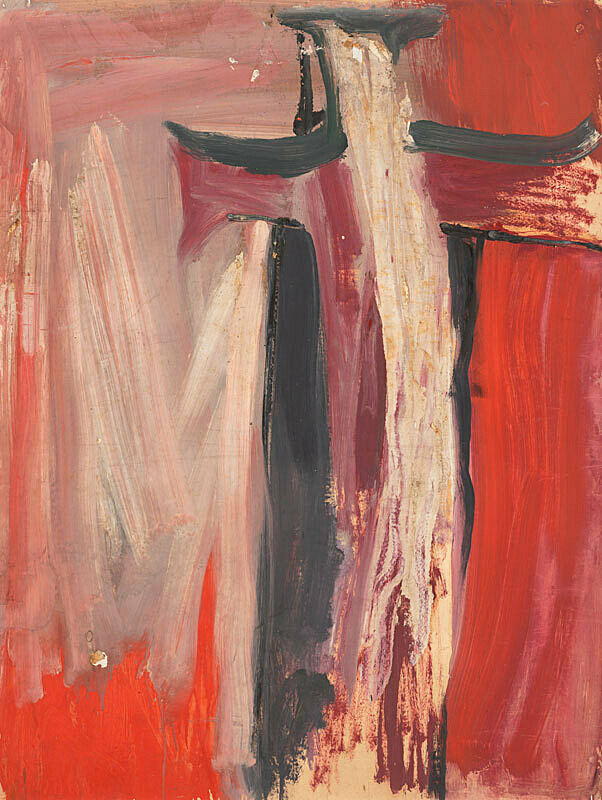
-
401 2
Jay DeFeo, Untitled (Florence), 1952
Audio
-
402
Jay DeFeo, Untitled, c. 1953
Audio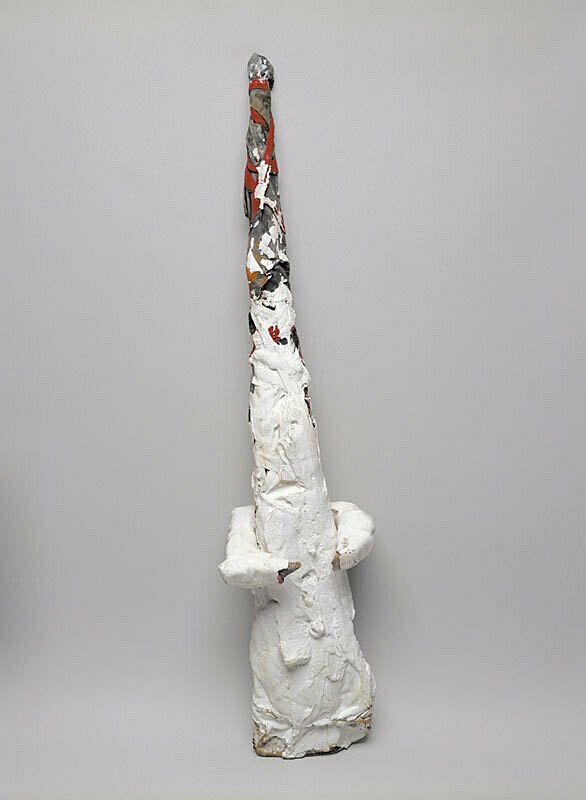
-
403
Jay DeFeo, Untitled, c. 1953-55
Audio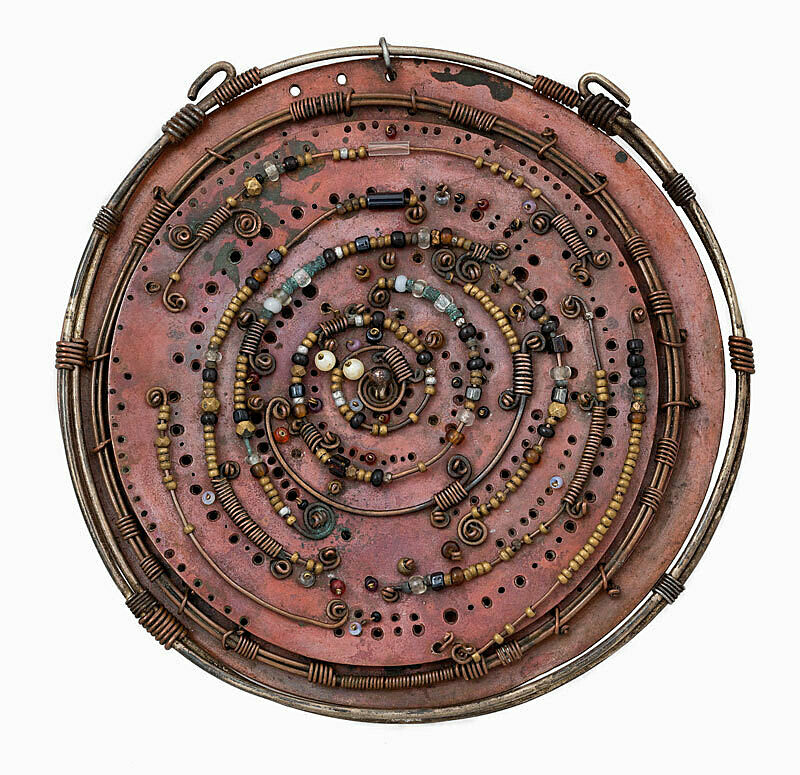
-
404
Jay DeFeo, Landscape with Figure, 1955
Audio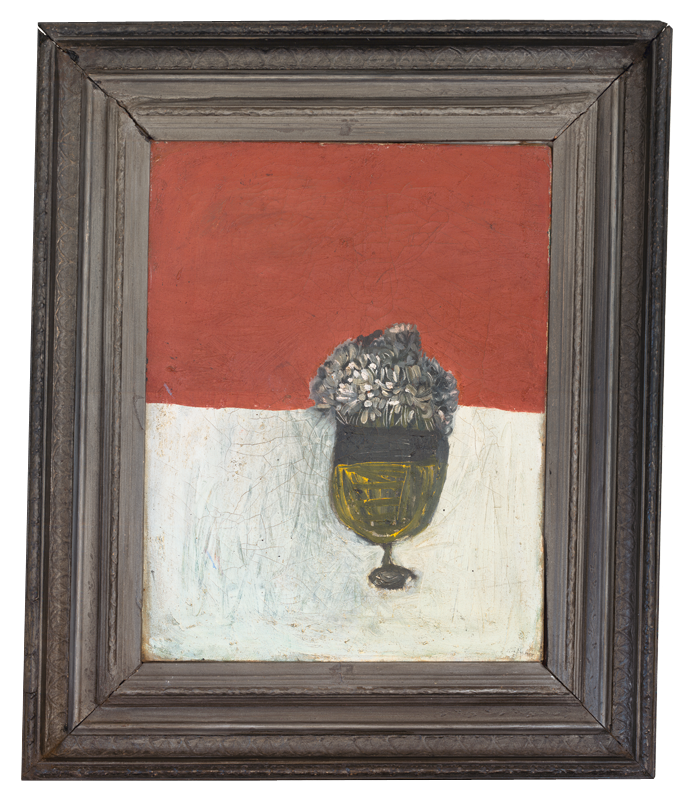
-
404-2
Jay DeFeo, Landscape with Figure, 1955
Audio
-
405
Jay DeFeo, Untitled (Everest), from the Mountain series, 1955
Audio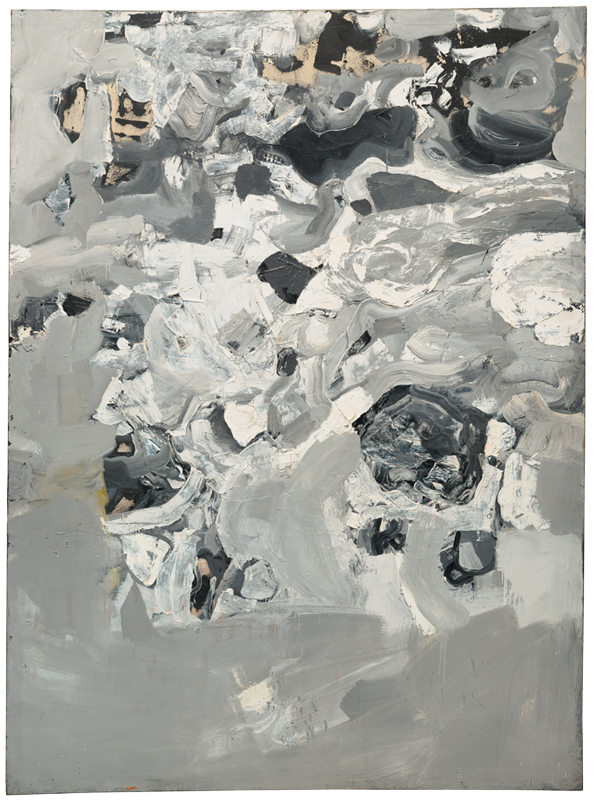
-
405-2
Jay DeFeo, Untitled (Everest), from the Mountain series, 1955
Audio
-
406
Jay DeFeo, Blossom, 1958
Audio -
408
Jay DeFeo, The Verónica, 1957
Audio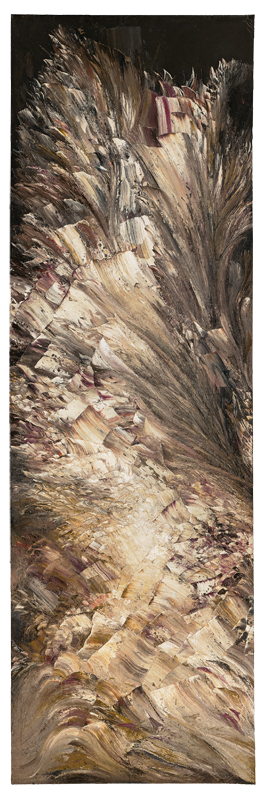
-
408-2
Jay DeFeo, The Verónica, 1957
Audio
-
409
Jay DeFeo, The Jewel, 1959
Audio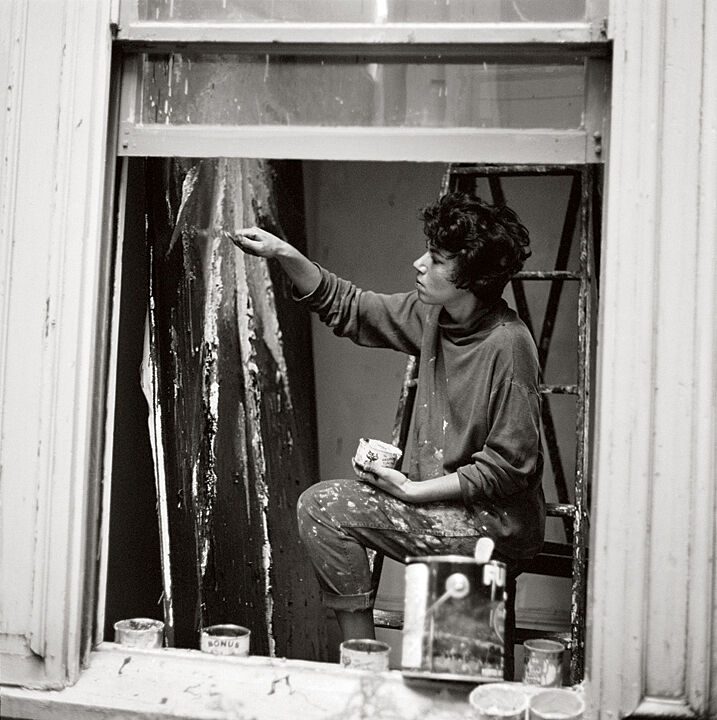
-
410
Jay DeFeo, The Rose, 1958–66
Audio
-
411
Jay DeFeo, After Image, 1970
Audio -
412
Jay DeFeo, Tuxedo Junction, 1965/1974
Audio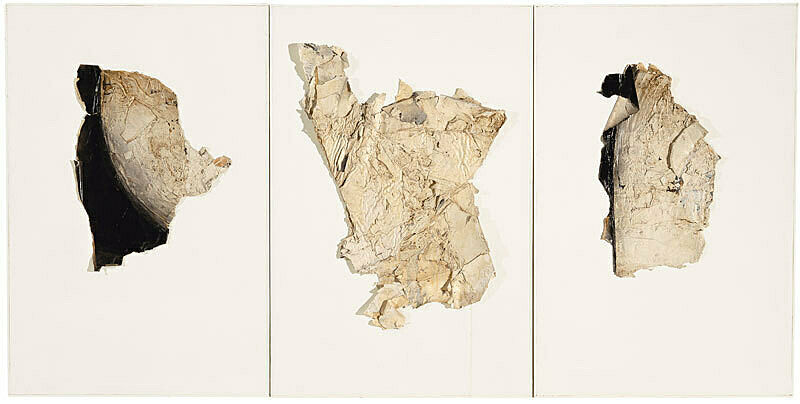
-
413
Jay DeFeo, Crescent Bridge II, 1970–72
Audio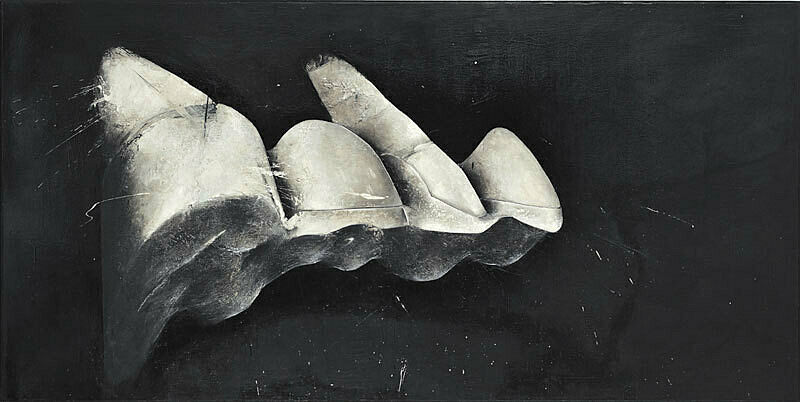
-
414
Jay DeFeo, Untitled, 1973
Audio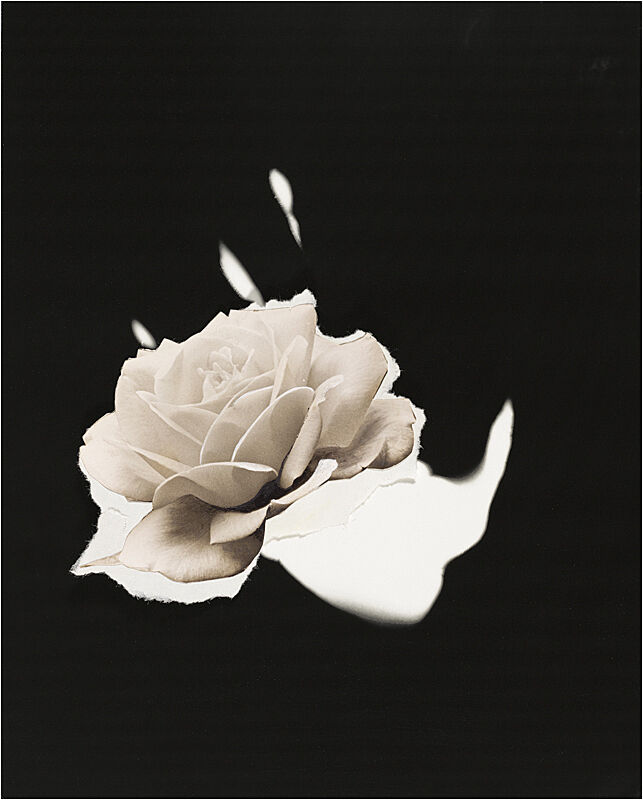
-
415
Jay DeFeo, Untitled, from theTripod series, 1976
Audio -
416
Jay DeFeo, Masquerade in Black (Loop System No. 4), 1975
Audio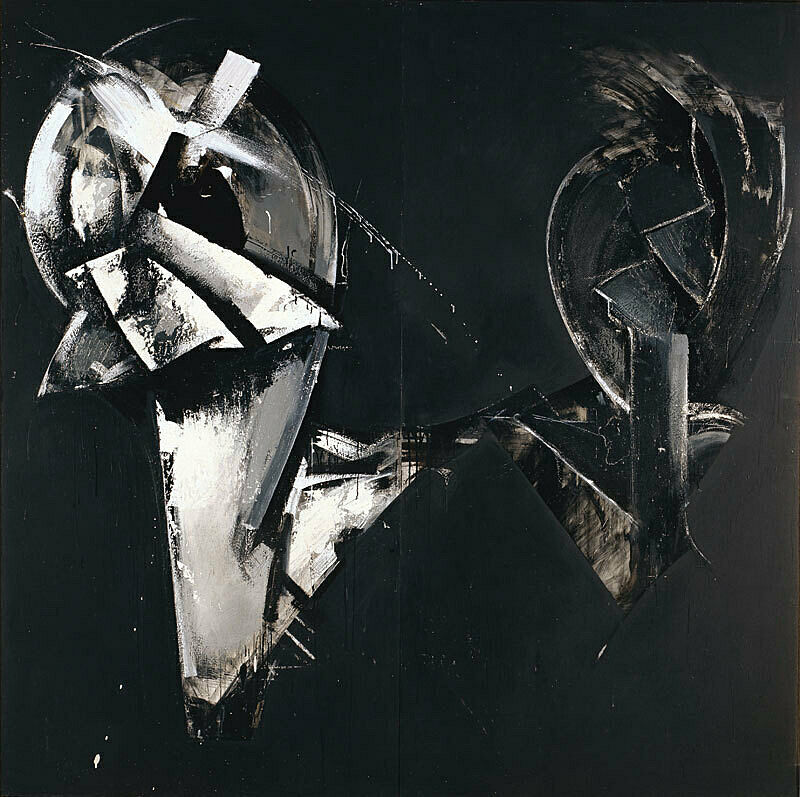
-
417
Jay DeFeo, Pend O’Reille No. 2, from the Eternal Triangle series, 1980
Audio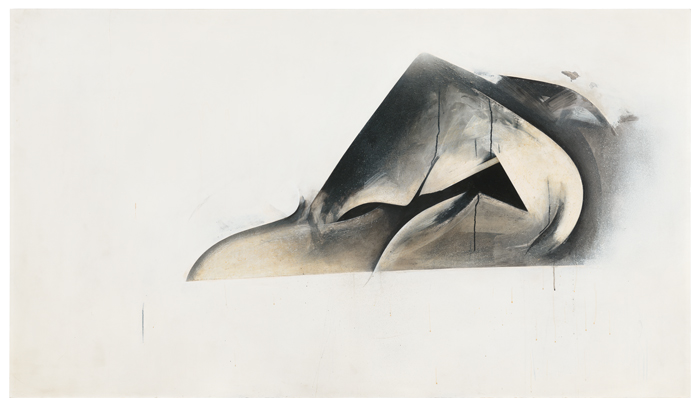
-
417-2
Jay DeFeo, Pend O’Reille No. 2, from the Eternal Triangle series, 1980
Audio
-
418
Jay DeFeo, Verdict No. 1, 1982
Audio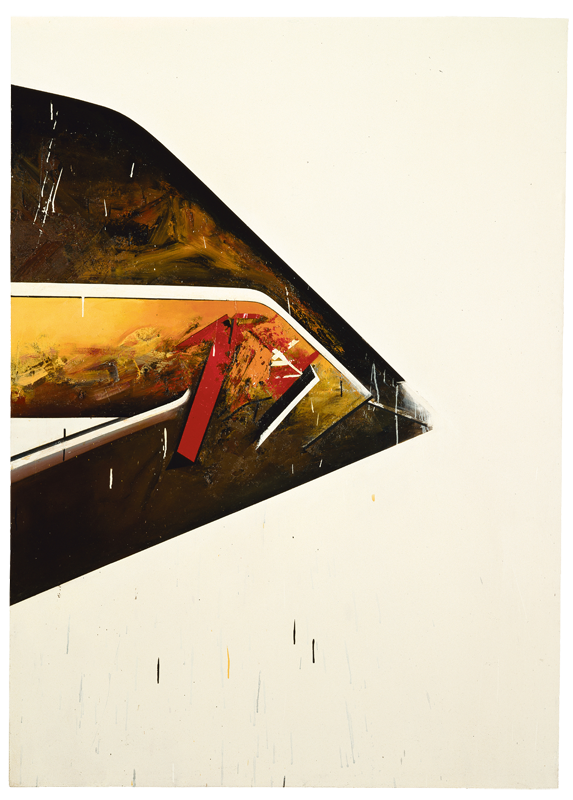
-
419
Jay DeFeo, Untitled, 1987
Audio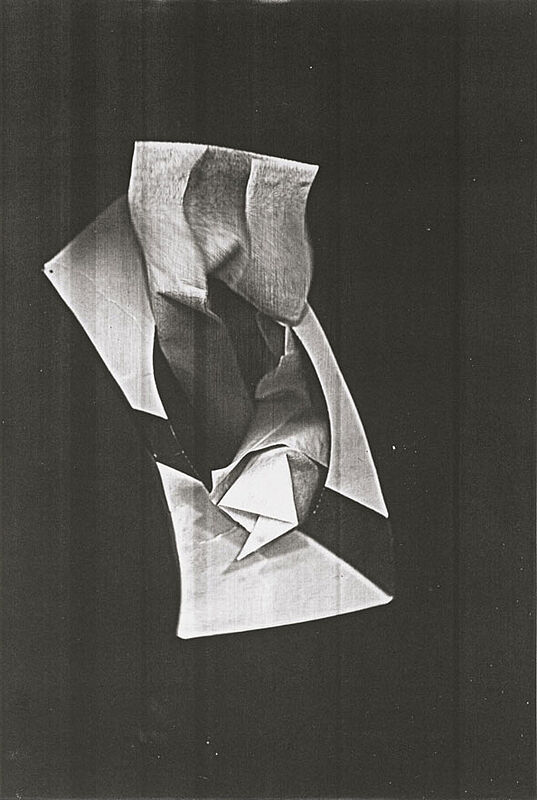
-
420
Jay DeFeo, Seven Pillars of Wisdom No. 3, 1989
Audio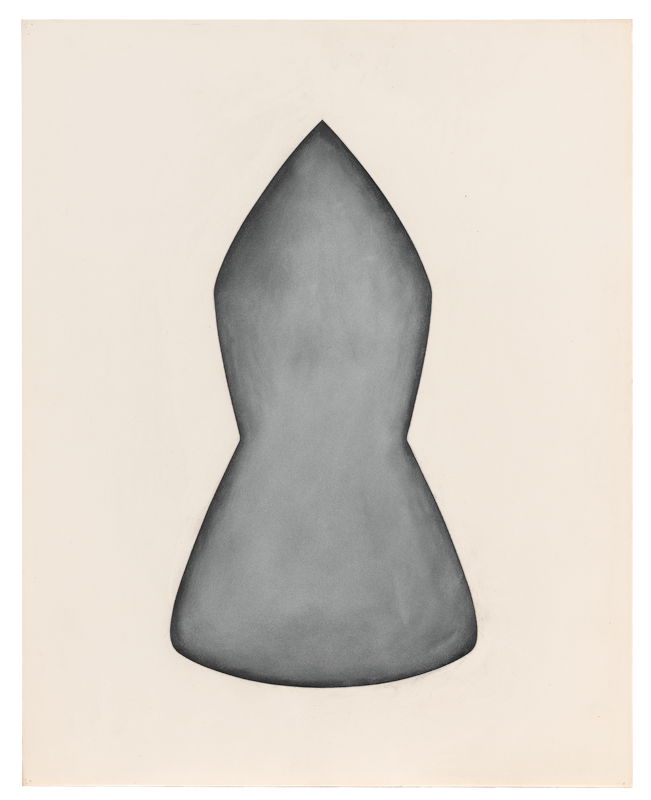
-
421
Jay DeFeo, Dove One, 1989
Audio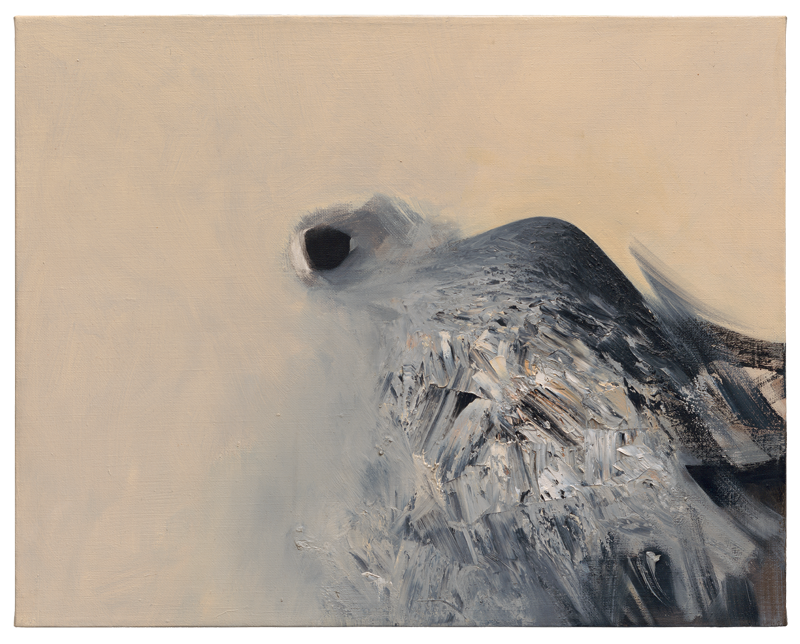
-
422
Jay DeFeo, White Water, 1989
Audio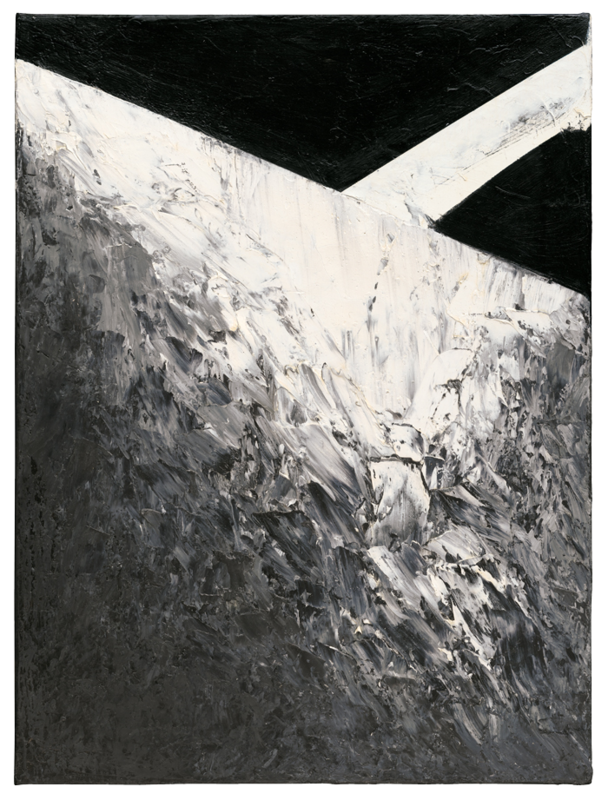
Narrator: Welcome to this exhibition, Jay DeFeo: A Retrospective. DeFeo was an artist who painted, drew, took photographs, and experimented with her own imaginative combinations of media. She lived and worked in the San Francisco Bay Area for her entire career. As a young woman, she was at the center of the action in Beat San Francisco. The Beat movement was largely literary, with poets like Allen Ginsberg and Laurence Ferlinghetti and novelist Jack Kerouac at the fore—and there was no one “Beat” style, especially in the visual arts. But DeFeo shared her peers’ exploratory spirit and a desire to push her art as far as it would go. For DeFeo, that spirit long outlasted the Beat moment.
This is the first retrospective to take a comprehensive look at DeFeo’s career. She’s been best known for one monumental painting, The Rose, that she worked on for almost eight years. Through the late 1970s and 1980s the painting was a kind of Bay Area legend—something rumored to be fantastic but never seen, hidden from sight behind a wall in a conference room in the San Francisco Art Institute. Until the work was conserved and then acquired and exhibited by the Whitney Museum in the mid-1990s, the myth of The Rose tended to overshadow all else. This exhibition aims to give the big picture of DeFeo’s career.
On this tour, you’ll hear from curators, personal friends of the artist, and archival recordings of DeFeo herself.
Narrator: DeFeo made this painting during a six-month stay in Florence in 1952. She used broad, vigorous brushstrokes. At the time, she was working with great speed and urgency. Using inexpensive tempera paint, she made hundreds of paintings, primarily on paper—working at such a fevered pitch that near the end of her visit she was treated by a doctor for exhaustion.
Dana Miller: Many of the works that she made in Florence depict a cruciform. Not a crucifix, because there's rarely the imagery of a body on a cruciform, but the cruciform itself. Of course, this was a shape that was ubiquitous in Florence.
Narrator: Dana Miller is Curator of the Permanent Collection at the Whitney Museum of American Art and curator of Jay DeFeo: A Retrospective.
Dana Miller: She said that the imagery appealed to her not for its religious connotations, but as a formal vocabulary, that she was really interested in it as a shape, and I think, in particular, its application to the body, the way that it represents the body in an abstract manner.
Narrator: It was in Florence that DeFeo really began to find her own voice as an artist. To hear about all of the interests she was trying to synthesize, please tap your screen.
Jay DeFeo, Untitled (Florence), 1952. Tempera with collage on paper, 39 1/4 x 29 1/2 in. (99.7 x 74.9 cm). Mills College Art Museum, Oakland; purchase, Mrs. John C. Sigourney [Mary Singleton]. B.A. 1949, Fund. © 2013 The Jay DeFeo Trust/Artists Rights Society (ARS), New York. Image courtesy Mills College Art Museum. Photograph by Ben Blackwell
Narrator: DeFeo's artistic training at the University of California, Berkeley had been rigorous and fairly traditional. But like many artists of that time, she encountered the work of Abstract Expressionists like Willem de Kooning, Franz Kline, and Jackson Pollock in magazines. And she'd just spent months traveling around Europe and North Africa, absorbing art history from cave paintings to medieval and Renaissance art and beyond.
Dana Miller: She's trying to synthesize a lot of complementary aspects, the prehistoric and indigenous cultures, the archetypal imagery that she was looking at with the spontaneity and quick emotive expressionism of what was then considered Abstract Expressionism, and trying to reconcile these things, the sort of cerebral and the emotive into a single work.
Jay DeFeo, Untitled (Florence), 1952. Tempera with collage on paper, 39 1/4 x 29 1/2 in. (99.7 x 74.9 cm). Mills College Art Museum, Oakland; purchase, Mrs. John C. Sigourney [Mary Singleton]. B.A. 1949, Fund. © 2013 The Jay DeFeo Trust/Artists Rights Society (ARS), New York. Image courtesy Mills College Art Museum. Photograph by Ben Blackwell
Narrator: In 1953, DeFeo returned to Berkeley. After painting so intensely in Florence, she shifted her attention to sculpture.
Dana Miller: She was so impressed by the surfaces of Florence and the patina of age and tried to, in some way, incorporate that type of texture and that sense of time into her pieces.
Narrator: The archaic feeling of DeFeo's sculptures comes in part from her use of modest materials.
Dana Miller: Of course, some of her choices were dictated by affordability and availability, and she was using what was readily at hand and cheap, which was very common at that point in the 1950s, if you look at what artists in New York were doing as well, but I think it's reflective of the very open atmosphere of Abstract Expressionism--that there was a real sense of possibility, that anything and everything could be a material for a work of art. And in her case, it was rags, wood, plaster.
Narrator: Most of the sculptures from this period were much larger than this one, and no longer exist. DeFeo would fill her studio with them, rearranging them from day to day--as if they were parts of a larger environment instead of discrete objects in themselves.
Jay DeFeo, Untitled, c. 1953. Wood, cloth, and plaster, 33 x 6 1/2 x 6 1/2 in. (83.8 x 16.5 x 16.5 cm). Private collection. © 2013 The Jay DeFeo Trust / Artists Rights Society (ARS), New York. Image courtesy The Jay DeFeo Trust, Berkeley, CA. Photograph by George Hixson
Jay DeFeo: This became my jewelry period.
Narrator: Jay DeFeo, speaking in 1980.
Jay DeFeo: Actually it was only intended to be small sculptures, but because it kind of leant itself to practical application many of these pieces later became jewelry. And I was heavily involved in making these pieces for about three years.
Narrator: DeFeo became ambivalent about making jewelry—she began to feel that it required her to approach her art like an assembly line. But objects like this copper pin were important to her. In these works, she refined what she called her "visual vocabulary"—the formal language that developed in Florence. Concentric circles, like the ones in this pendant, became very important. She frequently gave her works very distinct centers that seemed to either radiate outward or provide a window or aperture into their center. She explored these formats on a small scale in objects like this one, and continued to develop them as her career went on.
DeFeo's interest in making these small objects intensified after moving into a small, low-rent studio. And her reasons for shifting the production of those objects toward jewelry or wearable art were also financial.
Dana Miller: What happened [laughs] was she actually was arrested for shoplifting paint.
Narrator: Dana Miller.
Dana Miller: She was looking to creating oil paintings again in a serious way for the first time, and she didn't have enough money to pay for paint. In her first and only attempt to shoplift, because she was so inept and so inexperienced, she got caught. She felt the need to create more . . . I think what would be considered conventional jewelry pieces, as a way of supporting herself. She lost some of the part-time teaching. She had to find a means of supporting herself through her art.
Jay DeFeo, Untitled, c. 1953–55. Copper, iron, beads, pearls, and wire, 3 1/4 x 3 1/4 x 1/4 (8.3 x 8.3 x 0.6 cm). Oakland Museum of California; gift of Jean Martin A93.51.1. © 2013 The Jay DeFeo Trust / Artists Rights Society (ARS), New York. Image courtesy Oakland Museum of California. Photograph by Ben Blackwell
Narrator: Dana Miller discusses this 1955 painting.
Dana Miller: It's called Landscape with Figure, which is interesting because it would be, in traditional terms, probably considered a still life. But for her, she ignores the still life and treats the composition—the figurative element—as a portrait set within a landscape. The landscape is divided. It's a white portion and a red/orange portion at the top.
Narrator: The vase is also composed of simple geometric shapes, which form a clean-edged container. But the paint handling in the petals is more expressive and the flowers appear somewhat unruly.
Dana Miller: There is this conflict within her work between this very refined, classical strict composition and this very loose, intuitive expressionist way of working.
In some cases she tries to reconcile those two things within one work. In some cases she'll make two works and one will be on one end of the spectrum and the other will be at the other end of the spectrum. But I look at this composition as having both elements within one painting.
Narrator: This painting belongs to Fred Martin, whom DeFeo met in art school in the 1940s. Tap your screen to hear him talk about this painting.
Jay DeFeo, Landscape with Figure, 1955. Oil on canvas, 18 x 14 in. (45.7 x 35.6 cm). Private collection. © 2012 The Jay DeFeo Trust / Artists Rights Society (ARS), New York. Photograph by Ben Blackwell
Fred Martin: My name is Fred Martin, and I knew Jay DeFeo from when we were students at Berkeley, in 1948-49. Jay and I kept in touch with each other . . . in a way, forever, including even now.
I used to bring museum curators, and critics, and dealers, and collectors to meet Jay and her husband, Wally Hedrick, and that was often there. I liked it a lot, so I traded one of my paintings with Jay for that painting, in its frame.
I never thought of it as Landscape with Figure. I don't care what it says on the back. To me, it's a bowl of flowers.
Most of the time it was in storage here or there, sometimes on the wall, sometimes not. Sometimes I didn't know where it was, other times I did. Remember us artists, we flop around a lot. We don't treat our friends' work as museum masterpieces. We just treat them as things we like.
Jay DeFeo, Landscape with Figure, 1955. Oil on canvas, 18 x 14 in. (45.7 x 35.6 cm). Private collection. © 2012 The Jay DeFeo Trust / Artists Rights Society (ARS), New York. Photograph by Ben Blackwell
Dana Miller: In 1954, DeFeo and her husband, Wally Hedrick, who was a fellow artist, moved to a large apartment and studio space on Fillmore Street. That studio space had, I think, 14-foot ceilings. The environment encouraged her or reinforced her desire to return to oil painting on a large scale.
Narrator: DeFeo began working on a group of thickly painted works that she referred to as the Mountain series. This one was subtitled, "Everest." Dana Miller.
Dana Miller: You get a sense of the geologic quality of the surface, that these almost appear to be rock surfaces with gouges and crevices that one might actually be able to climb on or grab hold of.
Narrator: As you'll see, DeFeo used a lot of black, white, and gray. But she objected to the idea that color wasn't important in her work.
Jay DeFeo: I see it as a low-key palette. I see blacks and whites and grays as having color . . . And I also think that texture becomes--such a close element with the color, the textural quality of it almost takes on a color. And at any rate I use a lot of textural changes in the work, and I think for that reason oftentimes the color is minimalized because the richness is taken over by textural concerns.
Narrator: Tap your screen to hear Dana Miller discuss the Mountain series and the subtitle "Everest."
Jay DeFeo, Untitled (Everest), from the Mountain series, 1955. Oil on canvas, 100 5/8 x 74 1/4 in. (255.6 x 188.6 cm). Oakland Museum of California; gift of Jay DeFeo. © 2013 The Jay DeFeo Trust / Artists Rights Society (ARS), New York. Image courtesy Oakland Museum of California. Photograph by Ben Blackwell
Narrator: DeFeo and a number of her fellow artists were fascinated by mountain climbing.
Dana Miller: There were several very well-publicized ascents of Everest and K2 in the mid-50s that were incredibly romantic—these explorers and challenges that they faced. They were completely fascinated and reading all of the newspaper accounts and the books about them. I think they were inspired by the risk-taking and the high stakes of those kinds of adventures, and took that to be a metaphor.
Narrator: For DeFeo and her contemporaries, these tales were inspiration for their own creative adventures on an epic scale.
Jay DeFeo, Untitled (Everest), from the Mountain series, 1955. Oil on canvas, 100 5/8 x 74 1/4 in. (255.6 x 188.6 cm). Oakland Museum of California; gift of Jay DeFeo. © 2013 The Jay DeFeo Trust / Artists Rights Society (ARS), New York. Image courtesy Oakland Museum of California. Photograph by Ben Blackwell
Narrator: This work, Blossom, is a collage made from magazine cutouts. DeFeo made a small number of these in the mid-1950s.
Dana Miller: She took many of the images from girlie magazines. She collaged them into the form of this pinwheel floral motif, so they transcend their origins. The initially lurid imagery transcends its origins to become something else, a new reality, this floral motif.
She, I'm sure, was very much influenced by the going-ons of her peers, artists such as Jess and Wallace Berman and Bruce Conner, many of whom were experimenting with collage.
They were all looking to found materials, things that were readily available, cheap, things that spoke to the world around them and reflected the rapidly changing postwar consumer society. And doing so in a very sort of ironic and humorous fashion.
Corey Keller: The Verónica is one of DeFeo's most important, and to my mind, most beautiful paintings.
Narrator: Corey Keller is Associate Curator of Photography at the San Francisco Museum of Modern Art.
Corey Keller: Instead of a brush, she's moving paint with a knife, so there's a physicality to the process that's really beautifully visible. You can see the way the paint is pushed. She starts at the top left corner and works her way down to the bottom right hand corner. Since it's such a large canvas, one false move and she would have had to start all over.
Narrator: When she was traveling in Europe in the early 1950s, DeFeo witnessed a bullfight in Barcelona. She was deeply struck by its beauty, as well as its horror. She named this painting after one of the traditional moves that a bullfighter makes during the event. Jay DeFeo in 1980.
Jay DeFeo: I called this one Verónica after the bullfighting pass, because it, not because it had anything to do with bullfighting exactly but because it has a lyric quality that the swing of the cape has. Also it's kind of a floral, it has a kind of a plant-like reminiscence.
Narrator: The title of this piece may also be a spiritual reference. Tap your screen to hear more.
Jay DeFeo, The Verónica, 1957. Oil on paper mounted on canvas, 132 x 42 3/8 in. (335.3 x 107.6 cm). San Francisco Museum of Modern Art; gift of Irving Blum 73.58. © 2012 The Jay DeFeo Trust / Artists Rights Society (ARS), New York. Photograph by Ben Blackwell
Corey Keller: As with everything else with DeFeo, there's a second layer of meaning.
Narrator: Corey Keller.
Corey Keller: The name of the bull fighting maneuver, the Verónica, comes from a much more ancient source. One of the women who accompanied Christ to Calvary wiped his brow with a piece of cloth, and the legend has it that Christ's face was imprinted, almost like a photograph, on that piece of cloth. She brought it to Rome where it was pronounced a vera icona, true image. From that, it became popularized as Verónica. That was how Saint Veronica got her name. She was the woman who brought the piece of cloth, as well as the bull fighting maneuver is named after that piece of cloth.
Jay DeFeo, The Verónica, 1957. Oil on paper mounted on canvas, 132 x 42 3/8 in. (335.3 x 107.6 cm). San Francisco Museum of Modern Art; gift of Irving Blum 73.58. © 2012 The Jay DeFeo Trust / Artists Rights Society (ARS), New York. Photograph by Ben Blackwell
Leah Levy: Approaching The Jewel, there's an explosion of paint.
Narrator: Leah Levy.
Leah Levy: As we get closer to it we see the depth and the richness of the paint. There are browns and reds and something extremely raw and visceral to my eye about this painting. And yet there's an organizational, crystalline nature to it, with rays emanating from the center.
The thickness of the paint in The Jewel recalls DeFeo's comment that her works of this period were a marriage of painting and sculpture. She used oil paint as if it were a sculptural material, hacking at it, building it up, and breaking it apart. And The Jewel, actually, in some places, looks as if it is a three-dimensional object being broken apart by the sheer energy of the eruption at its center.
Narrator: DeFeo began The Jewel in 1958, and worked on it for about two years. At the same time, she began a work that would eventually become The Rose. In her mind, the two works were opposite aspects of a single vision. She painted The Jewel in warm reds and golden browns, and built the paint up so that the work was convex at the center. The Rose was black and white, and concave at the center. DeFeo understood The Jewel as a positive life force. The Rose, which she initially titled Deathrose, had darker connotations. DeFeo often worked on more than one piece at a time, exploring complementary ideas in each.
Jay DeFeo working on The Jewel (1959) at 2322 Fillmore Street, 1959. Photograph by Jerry Burchard. © 2013 The Estate of Jerry Burchard
Narrator: In 1958, DeFeo began work on two paintings simultaneously. This one, The Jewel, took her about two years to complete.
She continued working on its counterpart—a work that she initially titled Deathrose—for almost eight years.
In 1959, Dorothy Miller, a curator at the Museum of Modern Art, invited her to include the painting, which was still in progress, in the exhibition Sixteen Americans. It was a tremendous opportunity. This was the exhibition that first brought major attention to the artists Jasper Johns, Robert Rauchenberg, and Frank Stella. DeFeo had five works in the exhibition, but she wasn't willing to let the unfinished Deathrose leave her studio. Still, its photograph appeared in the exhibition catalogue.
When DeFeo began the painting—which she ultimately titled The Rose —its focal point wasn’t positioned at the center of the canvas compositionally. After she’d worked on the painting for about a year, she concluded that it needed to be both larger and centered.
It took sixteen people working all day to cut the enormous painting off of its stretcher and glue it to a bigger canvas. They then wedged the painting tightly into the bay window in DeFeo’s studio.
DeFeo built up the surface with layers of oil paint and carved it back down repeatedly, resulting in multiple different stages over the years. She described those stages in art-historical terms. The photograph on your screen now shows a flamboyantly curving composition—what DeFeo called its “baroque” phase.
Eventually, DeFeo straightened out the lines, so that the final work took on what she described as a more “classical” form.
Jay DeFeo working on The Jewel (1959) at 2322 Fillmore Street, 1959. Photograph by Jerry Burchard. © 2013 The Estate of Jerry Burchard
Narrator: Not long after completing The Rose, DeFeo moved to a small cottage in Marin County, across the Golden Gate Bridge from San Francisco. Exhausted by her labor on The Rose, she ceased making art for nearly four years. This mixed media drawing, After Image, was one of the first works she made following her hiatus. DeFeo based its central image on a photographic reproduction in a book about shells. In some ways, it presents a stark contrast with The Rose.
Dana Miller: It's small scale, it's intimate, it's flat, except for the torn tracing paper that is layered on top of it.
Narrator: In calling this work After Image, DeFeo suggests that it depends on something that came before. After eight years painting The Rose, she could hardly have made this composition—with its central aperture and radiating lines—without thinking of her masterwork. But the materials and the overall effect are very different.
Dana Miller: It's very illusionistic. It's primarily acrylic paint, and rather than letting the image emerge out of the process of painting, she has located a source image and has chosen to depict it with a highly mimetic, realistic quality. That approach sets the tone and really outlines the approach of much of her work for the next, I would say, five or six years.
Narrator: To make Tuxedo Junction, DeFeo recycled fragments of a 1965 work called The Estocada. The earlier work was partially destroyed when she left her Fillmore Street studio.
Jay DeFeo: That last day on Fillmore Street when there was one last drawing to be removed from the hallway. It was kind of in the form of a collage that I had stapled all over this wall with some fantastic hope that someday it would all get put down on a single format. But there wasn’t time for all of that so between the two of us we just yanked it off the wall in pieces and just made our getaway. And I carried these darned fragments around with me for years. I had so little space in my home I was finally storing all of these things under my bed, and I got to the point where I was really fed up with these dust catchers.
Narrator: Fed up or not, DeFeo used the fragments of that 1965 painting productively. In 1973, she photographed their layered ridges repeatedly, producing texture studies such as the two photographs shown nearby. A year later, she mounted the fragments themselves onto Masonite to make this work.
Dana Miller: She took a fixative and sprayed the fixative onto those fragments so that the rust and dust from her bedsprings would remain intact. She wanted that sense of age and that part of the story of the piece to remain part of the newer work.
She titled it Tuxedo Junction after a Glenn Miller song that she had always liked, an older song that was reissued at that time. I think that there's a metaphor there between older work being reissued or re-released and the difference between Estocada fragments being reworked into a piece that's almost ten years later.
Jay DeFeo, Tuxedo Junction, 1965/1974. Oil on paper mounted on Masonite (three parts), 48 3/4 x 32 1/2 in. (123.8 x 82.6 cm) each. Private collection. © 2013 The Jay DeFeo Trust / Artists Rights Society (ARS), New York. Image courtesy The Jay DeFeo Trust, Berkeley, CA. Photograph by M. Lee Fatherree
Dana Miller: The two major works that DeFeo first completed when she returned to work in the 1970s are called Crescent Bridge I and Crescent Bridge II that date from 1970 to 72. She spent two years working on the pair.
The subject matter of this, although it's not readily apparent, and DeFeo courted that sense of mystery very purposefully, is a bridge of her teeth, that's actually composed of her real teeth and some dentures, that she used repeatedly as subject matter.
Narrator: DeFeo believed she might have lost her teeth due to overexposure to lead paint during her eight years of work on The Rose—though sometimes she attributed the loss to turpentine.
Dana Miller: It's something that she carried around with her and kept and treated as this precious object, and then rendered in this enormous scale. So one might be able to tell or to derive the original subject matter, but probably not.
To take something so personal as one's teeth and blow it up so that they look like rocky outcropping, is I think a pretty extraordinary step. DeFeo spoke of them as having this otherworldly quality of being in deep space. The documentary evidence of her studio at the time when she's making these works, shows that there are photographs of the surface of the Moon that she was looking at when she was making these pieces. Even though they might be considered still life, that same way she's moving across the traditional categories of still life, and landscape, and portrait, these are landscapes for her.
Jay DeFeo, Crescent Bridge II, 1970–72. Synthetic polymer and mixed media on plywood, 48 × 96 in. (121.9 × 243.8 cm). Whitney Museum of American Art, New York; purchase 2002.329. © 2012 The Jay DeFeo Trust / Artists Rights Society (ARS), New York. Photograph by Sheldan C. Collins
Narrator: DeFeo made this untitled photographic collage in 1973.
Corey Keller: In this work, you see a photograph that she has made of a rose.
Narrator: Corey Keller.
Corey Keller: She's carefully ripped along the contours of the rose's shape, tearing the photographic paper so that the actual fibers of the paper are exposed.
Then she's glued it onto a second piece of paper, on which you can see a fairly ghostly shape of her hand. The second photograph is a photogram made by placing her hand on the photographic paper and exposing it to light. So what it literally is, is a shadow of her hand, and then she has pasted the rose on top of that.
The work is actually three dimensional, and it has a very subtle sculptural quality to it. Which of course refers to so much of her other work. The subject, the rose, is easily refers back to her magnum opus, the painting The Rose, as does the sculptural quality of the photogram.
The hand could refer to herself as a maker. It's a way of referencing her own intervention in the process. It's a way of saying, "I was here."
Jay DeFeo, Untitled, 1973. Collage with cut gelatin silver print, torn paper, and paint on gelatin silver print photogram, 10 x 8 in. (25.4 x 20.3 cm). San Francisco Museum of Modern Art; purchase through a gift of Robin Wright and the Accessions Committee Fund: gift of Barbara and Gerson Bakar, Shawn and Brook Byers, Jean and James E. Douglas, Jr., Pamela and Richard Kramlich, Mary and Howard Lester, and Nancy and Steven Oliver. © 2013 The Jay DeFeo Trust / Artists Rights Society (ARS), New York. Photograph by Don Ross
Dana Miller: In the mid-1970s, DeFeo began making drawings of manmade items in her surroundings. Treating these items, primarily mechanical items as portraits, and bringing out the inner life of these objects.
One of those that she rendered most frequently was her camera tripod, actually two camera tripods, primarily because they were in her studio and in close proximity to her during that time. But also because of their very figurative aspects.
Narrator: She described the tripod she pictured here as the “dressed” tripod. The “dress” was a wet drawing that she’d hung on the tripod to dry. She liked the appearance of the arrangement, and used it as inspiration.
Dana Miller: That's the tripod and its dress, the dressed form or the female figure. The costume, if you will. In this particular work you see that she's created a collage almost mimicking that episode so that there's a drawing of the tripod that's been cut out and then another drawing of the dress that has been collaged and draped on top.
Dana Miller: In the early 1970s, one of the images of the objects around her that DeFeo gravitated to was a broken ceramic cup handle.
Narrator: That cup handle appears in the 1973 photo-collage.
Dana Miller: She had saved the handle from several years prior, and took photographs of it, and made works on paper, including Unknown Image, from 1971, which, you see the white ceramic cup handle towards the top left.
This cup handle became the source for a series called the Loop System that she made in the mid-1970s. And in 1974, she was working on Loop System No. 2, and in the process of spray painting the back, masked some of the central imagery with paper towels.
While she was working in her studio, she realized that the image of the painting with the paper towels was perhaps as interesting as the work that she was making. She took photographs of the painting partially masked with the paper towels, arranging the towels just so, and creating a new composition.
Those photographs then became the source for the second two Loop System paintings Masquerade in Black, which is Loop System No. 4, and Cygnus, which is Loop System No. 3, the white and the black, the point and the counterpoint, both of which are derived from photographs of Loop System No. 2.
I think for DeFeo, she was always interested in making various iterations of an image or a subject—that she rarely made one image of a particular subject, that she wanted to create relationships amongst her paintings, amongst her drawings, bodies of work and families that had relationships. She would experiment, and create one in black and the other in white, or one small and the other large, or an image and then the reverse or reflective image of that particular composition.
Jay DeFeo, Masquerade in Black (Loop System No. 4), 1975. Synthetic polymer and mixed media on Masonite, 96 × 96 in. (243.8 × 243.8 cm). San Francisco Arts Commission. © 2012 The Jay DeFeo Trust / Artists Rights Society (ARS), New York. Photograph by Ben Blackwell
Narrator: In Pend O’Reille, DeFeo focused on one of her well-worn, kneaded erasers.
Leah Levy: She had hundreds of these.
Narrator: Leah Levy.
Leah Levy: The DeFeo Trust has gallon jars filled with these erasers which she liked, identified somehow as being very special to her and kept. They were her friends in the studio.
At some point, she began photographing them, and it appears that she also began modeling them in a way and sculpting them into small forms that she photographed. These photographs then became models for her drawings, and ultimately for the Pend O’Reille paintings.
DeFeo often thought of her working process as both adding and subtracting, as creating and as destroying, and talked about those as twin activities in making art. The eraser became very crucial in the destroying part. She would take material away from a drawing with the same care that she would add a mark into it, selecting areas very carefully. Specifically eliminating form back to the original page, or in some cases to the protective acrylic she sprayed on the paper so that she wouldn't rip through it when she was erasing.
Narrator: Tap your screen to hear DeFeo’s friend and former student, Ursula Cipa, on her use of materials during these years.
Jay DeFeo, Pend O’Reille No. 2, from the Eternal Triangle series, 1980. Synthetic polymer with collage on Masonite, 48 1/2 x 84 1/2 in. (123.2 x 214.6 cm). The Jay DeFeo Trust, Berkeley, CA and Galerie Eva Presenhuber, Zurich. © 2013 The Jay DeFeo Trust / Artists Rights Society (ARS), New York. Image courtesy The Jay DeFeo Trust, Berkeley, CA. Photograph by Ben Blackwell
Ursula Cipa: With Jay, everything was material.
Narrator: Ursula Cipa.
Ursula Cipa: I mean, the way she saw the world, everything was a possible material used for her process. That was always exciting to be around. She would sometimes add ingredients to the acrylic, to give it texture. For instance, she was once on a diet, so she had a lot of egg shells lying around. [laughs] Her studio was right next door to her kitchen. She lived in an old Victorian cottage. She saw the eggshells, and she started mixing them into her paints.
I remember she would always, to the end of her life— her walls were covered with images that she turned upside down, looked at, reused. If she broke a glass she would keep the shape around, because it just suggested something else to her. I remember once walking into her kitchen. It was just covered with all these plastic bags, and I asked her what she was doing with it. She said, oh, I just love the colors, you know? Everything was material for her. She was constantly looking all of the time.
Jay DeFeo, Pend O’Reille No. 2, from the Eternal Triangle series, 1980. Synthetic polymer with collage on Masonite, 48 1/2 x 84 1/2 in. (123.2 x 214.6 cm). The Jay DeFeo Trust, Berkeley, CA and Galerie Eva Presenhuber, Zurich. © 2013 The Jay DeFeo Trust / Artists Rights Society (ARS), New York. Image courtesy The Jay DeFeo Trust, Berkeley, CA. Photograph by Ben Blackwell
Narrator: In Verdict No 1, a triangle slices across the canvas. The form was based on an image, which DeFeo found in Scientific American, of an airplane causing a sonic boom shock wave. DeFeo was fascinated with the idea of a noise becoming visible, and with the form of the triangle moving quickly through space.
DeFeo painted Verdict No. 1 in 1982. It was the first painting that she’d made in oil on canvas since completing The Rose sixteen years before. Leah Levy.
Leah Levy: These early paintings and the ones that followed them in the 1980s are a celebration of her return to color, to a canvas that was flexible and responsive in a different way to the oil paint that she always loved more than acrylic.
Narrator: Even working in this traditional medium, DeFeo experimented with her materials.
Leah Levy: In her new Oakland studio where this work was completed, DeFeo had boxes of tape of various sizes, colors, textures and widths, and Verdict No. 1 is an exceptional example of her incorporating and collaging those additional materials into her paintings.
Narrator: DeFeo used this tape—among other things—to lend the paint a depth and texture it wouldn’t otherwise have.
Leah Levy: Here, we can't tell even with careful examination sometimes what's oil paint, what's tape, where the edges of one form end and the tape begins, or what the layers of paint are that look like tape.
Jay DeFeo, Verdict No. 1, 1982. Oil with tape on canvas, 84 x 60 in. (213.4 x 152.4 cm). The Jay DeFeo Trust, Berkeley, CA. © 2013 The Jay DeFeo Trust / Artists Rights Society (ARS), New York. Image courtesy The Jay DeFeo Trust, Berkeley, CA, photograph by M. Lee Fatherree
Corey Keller: What DeFeo has done here is to perform a very simple act. Is to take a Kleenex box, a tissue box and put it on the platen glass of a photocopy machine.
Narrator: Corey Keller.
Corey Keller: The photocopier operates basically like a camera. But there's something about the way a photocopier works in which something of the three dimensionality of the object that's placed on the glass is preserved.
Works made on a photocopier are both flat and three-dimensional at the same time. In the tissue box, it's very much apparent, the way the void of the hole where the tissues come out becomes very deep, and the texture of the tissue is pronounced, the pleating of the paper. It really highlights those aspects in a way that a straight photograph might not have done.
Jay DeFeo, Untitled, 1987. Photocopy on paper, 11 x 7 3/8 in. (27.9 x 18.7 cm). The Jay DeFeo Trust, Berkeley, CA. © 2013 The Jay DeFeo Trust / Artists Rights Society (ARS), New York. Image courtesy The Jay DeFeo Trust, Berkeley, CA. Photograph by Ben Blackwell
Narrator: The Seven Pillars of Wisdom is one of eleven pieces that Jay DeFeo made of a single view of a single cup. This work is number three in the ten numbered works in the series.
Greil Marcus: Her friend, Ron Nagle, who's a ceramic sculptor in San Francisco, had given her a cup for her sixtieth birthday in 1989, the year that she died.
Narrator: Writer Greil Marcus.
Greil Marcus: Here was this cup, and she began to look at it. She began to turn it. She began to stand over it, look up from below it, look at it from every conceivable angle, look into it, look at it out of the corner of her eye.
Of these ten pieces, the one that I find the most overwhelming and the one that carries its own aura that just demands that you come to grips with it somehow, is this implacable image that can look like a knight in armor. It can look like an avenging devil. It can look like a tombstone. It can look like all different sorts of things.
It's a really scary piece. And yet you have to remember it's made out of play. It's made out of experiment. It's made out of fetishization. You take a little cup, and it was very little, this cup that Ron Nagle gave to Jay DeFeo. With a visual instinct, a tremendously rich imagination, and an ability to let go, to let your subconscious become your conscious mind, to let your subconscious guide your eye and your hand to make something that wasn't there before.
It just shows if you apply enough energy, enough desire, and enough sense of delight at the multiplicity of visual forms in the world, you can make anything out of them. There's no end to the shapes that even the most ordinary object can take.
Jay DeFeo, Seven Pillars of Wisdom No. 3, 1989. Charcoal and metallic powder on paper, 29 × 23 in. (73.7 × 58.4 cm). The Jay DeFeo Trust, Berkeley. © 2012 The Jay DeFeo Trust / Artists Rights Society (ARS), New York. Photograph by Ben Blackwell
Dana Miller: In the spring of 1988, DeFeo had a persistent cough and went to the doctor, and by April of that year she had been diagnosed with lung cancer. Once the shock of the diagnosis wore off, she resolved to fight the cancer with everything that she could, and she continued to make work.
Narrator: The following year, she found a wounded dove in her basement. She took it to a veterinarian in the hope that they might save it, but it was too late, and the bird died.
Dana Miller: She wrote that she identified with that bird, and was really thrown by its demise, and had a very strong memory of the eye of the bird in the box looking at her.
The eye spoke to her, presumably, as a visual element, formally, because she was so attracted to that ocular shape and to the notion of vision and perception. But also because here was an animal fighting for its life.
She said she couldn't bear to look at the bird. The only thing that she could bear to see was its eye, and took that vision to be a symbol of strength and its valiancy in the face of enormous suffering, and made a pair of works, Dove One and Dove Two, in response to that moment and that experience.
She said about Dove One and Dove Two in her journal that she'd never been able to directly express and paint a feeling about a life happening, and felt that she had finally been able to do so with that pair of works.
Jay DeFeo, Dove One, 1989. Oil on linen, 16 × 20 in. (40.6 × 50.8). Collection of Dan and Claire Carlevaro. © 2012 The Jay DeFeo Trust / Artists Rights Society (ARS), New York. Photograph by Ben Blackwell
Dana Miller: As DeFeo was struggling with cancer, she continued to work and many of the paintings that she made at that time were on a relatively small scale. She primarily went back to a low-key palette, the low-key palette that she had used in the 1950s. She said that she really felt that all of those changes had to be made wholesale, that to think about size and color and texture needed to be done in one breath.
She used the idea of man's battles against nature in the way that she had initially with the notion of mountain climbing, I think, as a metaphor for her struggles with cancer. Many of the works from this period have references to forces of nature, such as whitewater and mountain climbing. On the eve of her surgery in 1988, she watched a televised climb of Mount Everest. She would use the idea of mountain climbing again as a metaphor for her struggle.
This incredibly dynamic composition of White Water, I think, can be seen in those terms as well.
Narrator: DeFeo’s struggle came to an end on November 11, 1989. She died not having seen The Rose—which was languishing behind what was initially meant to be a temporary wall at the San Francisco Art Institute—since 1974. That work, she told an interviewer about a year before her death, had been like a novel. Afterwards she’d gone on to make works that by comparison might seem more like haiku—smaller, but no less serious. And in fact, she described all of her work as being part of one evolving, multi-faceted effort which was best understood as a whole. She moved between small scale and large, a low-key palette and intense color, and abstraction and figuration. Her work never settled into a signature style, yet retained a powerfully distinct voice. The traditional narratives of twentieth-century art have tended to focus on artists associated with identifiable movements. This comprehensive examination of Jay DeFeo’s career allows us the opportunity to assess a powerful artist entirely on her own terms.
This is the last stop on our tour. Thank you for joining us today for Jay DeFeo: A Retrospective.
Jay DeFeo, White Water, 1989. Oil on linen, 16 x 12 in. (40.6 x 30.5 cm). The Jay DeFeo Trust, Berkeley, CA, and Galerie Eva Presenhuber, Zurich. © 2013 The Jay DeFeo Trust / Artists Rights Society (ARS), New York. Image courtesy The Jay DeFeo Trust, Berkeley, CA. Photograph by Ben Blackwell
0:00
0:00