The Lost World: The Art of Minnie Evans

Through Jan 10, 2027


Exhibition feature

9 total
7
Read more
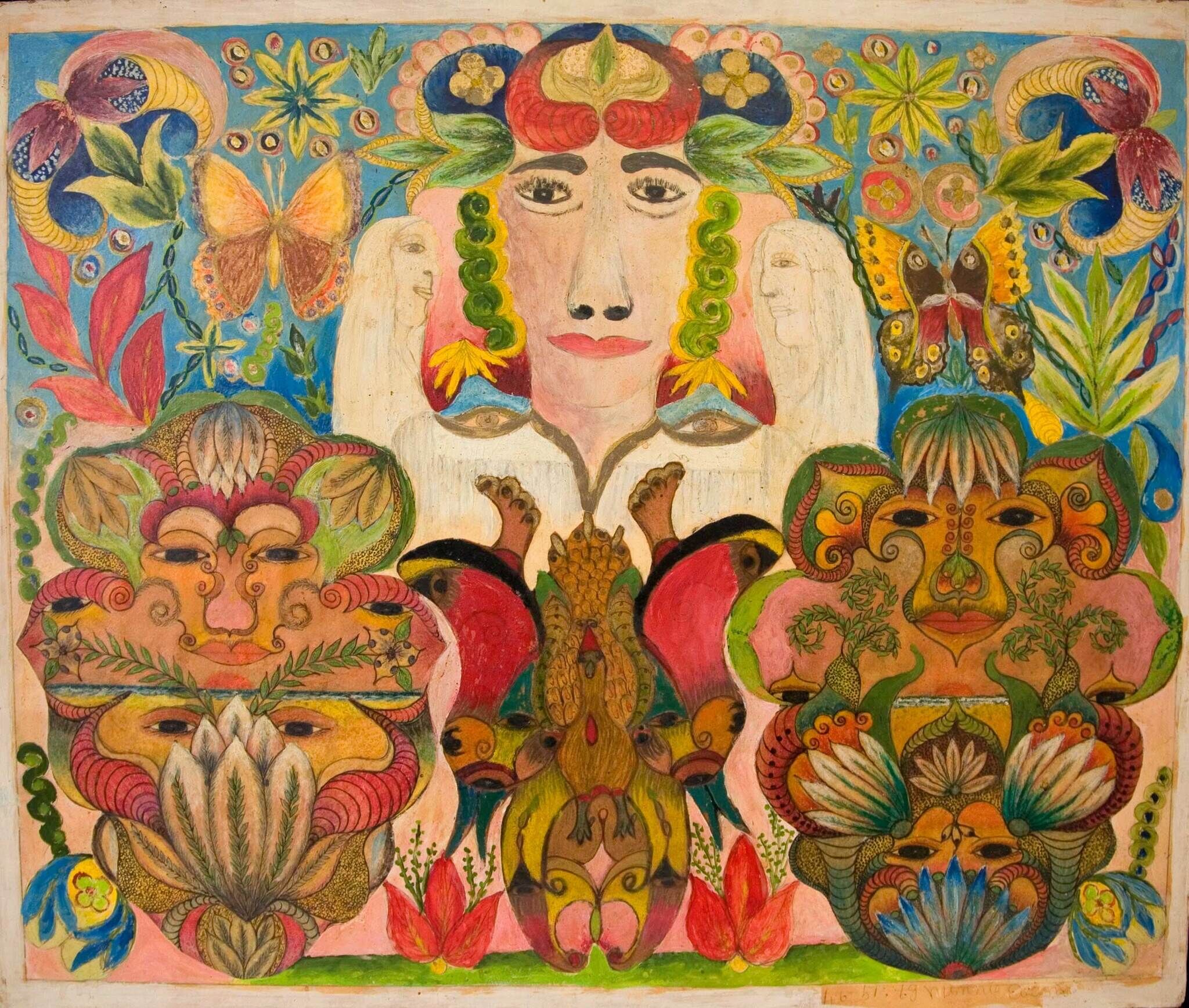
A colorful folk-art panel showing stacked stylized faces formed from flowers, leaves, and butterflies.

Minnie Evans, Untitled (Face Flanked by Angels and Mandalas Collage), 1946–1968. Pencil, ink, crayon, and oil on paperboard, 20 × 24 in. (50.8 × 61 cm). High Museum of Art, Atlanta, purchase through funds provided by an anonymous donor to Collectors Evening 2011, 2011.4 © The Estate of Minnie Evans

En 1966, Evans viajó dos veces a Nueva York para ver exposiciones de su obra en dos iglesias del Upper East Side de Manhattan. Mientras estuvo en la ciudad, visitó The Metropolitan Museum of Art y el American Museum of Natural History, y lo que vio la inspiró a trabajar a una mayor escala. Comenzó por cortar imágenes de obras anteriores, que pegaba sobre superficies más grandes y resistentes como cartón entelado, a las que añadía elementos de diseño para crear densas composiciones que abarcaban toda la superficie. Durante los años siguientes, Evans creó aproximadamente veinte de estos collages. Su expresión dual de armonía e inquietud refleja las experiencias de Evans en el Sur de Jim Crow, así como su creencia en el triunfo de Dios sobre el mal. Según afirmó una vez, "El mundo está lleno de oscuridad pero Jesús cambiará eso. Él llamará a los justos de entre el polvo y la tierra. Estamos cerca del fin de la historia de la humanidad."

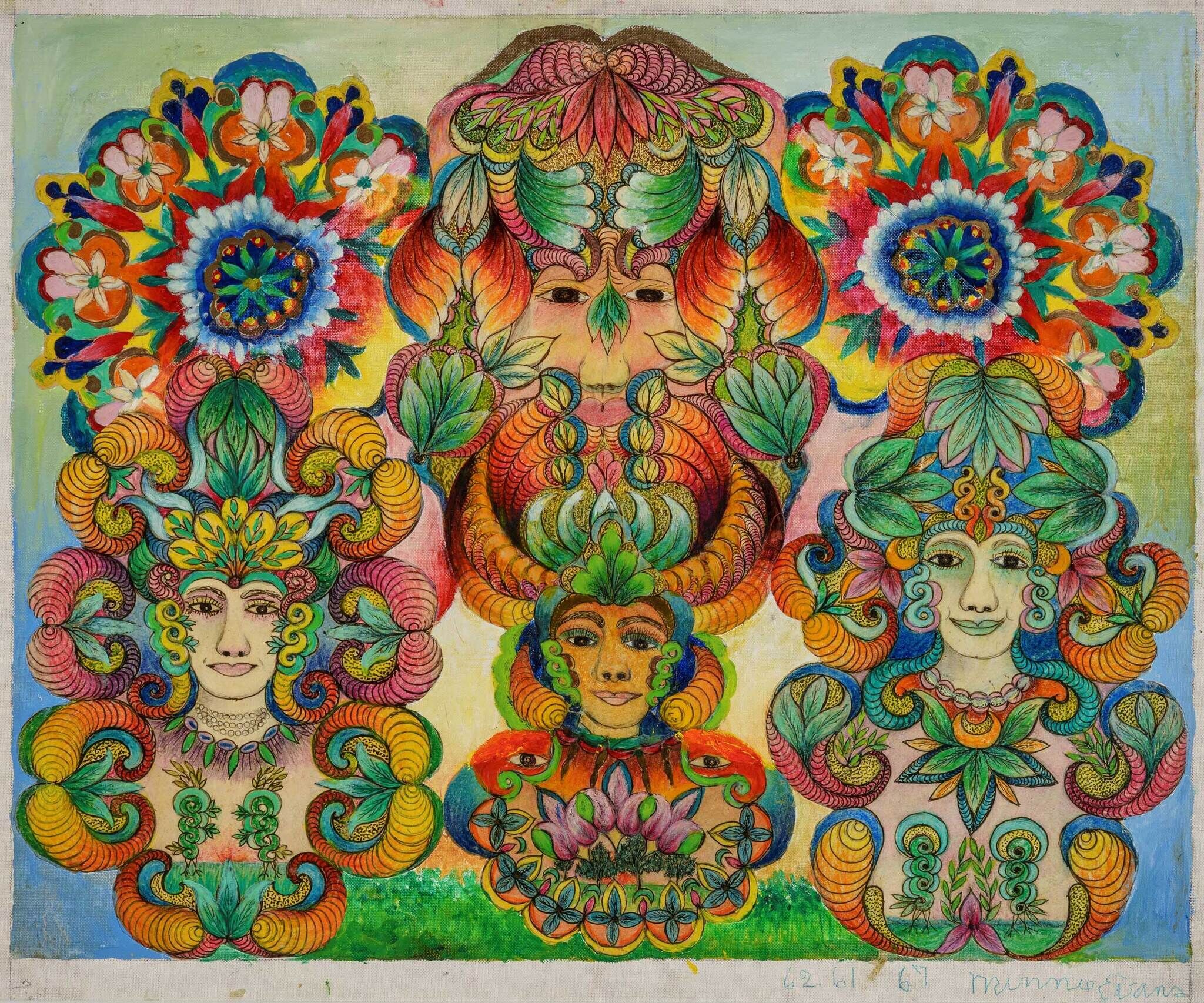
Three ornate faces with elaborate floral and leaf headdresses in bright, swirling colors.

Minnie Evans, Untitled (Four Figures Collage), 1961–1967. Oil, crayon, and pencil on paper and canvas. Collection of John Jerit. © The Estate of Minnie Evans

Sin título (El León de Judá), 1960
Sin título (Mujer con plumas azules), 1962
Sin título (Rey), 1962

Imágenes como esta recuerdan a los trajes utilizados anualmente en el Carnaval de Trinidad. Evans nunca visitó la isla, pero sentía afinidad con ella como el hogar de sus ancestros y pudo haberse inspirado en fotografías de sus carnavales o del Mardi Gras, celebrado en Nueva Orleans.

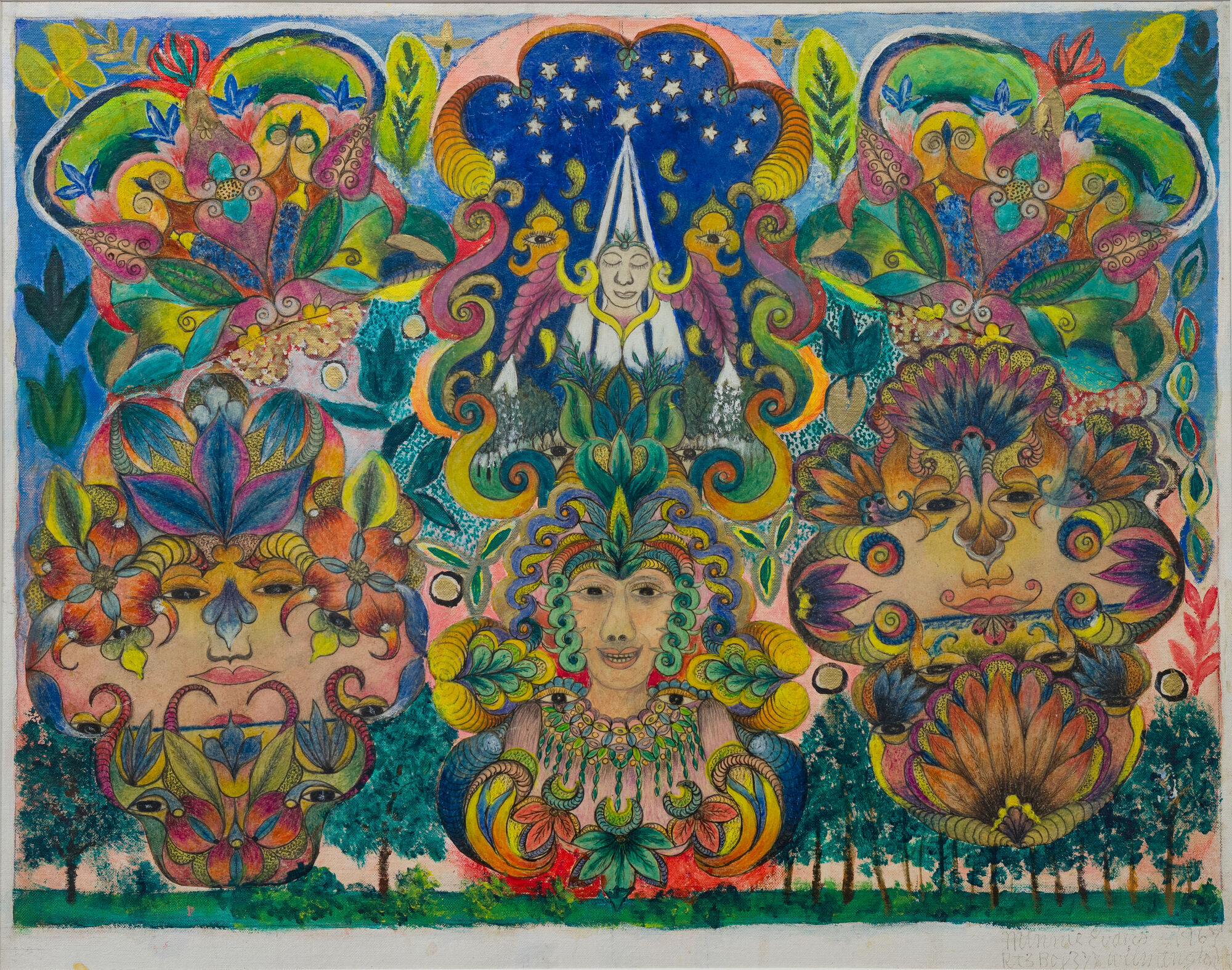
Central smiling figure wears a pointed white headdress and horned floral crown amid colorful faces and plants.

Minnie Evans, Untitled (Three Large Figures, Night Sky and Stars Collage), 1967. Oil, crayon, and pencil on paper and canvas 21 × 27 in. (53.34 × 68.58 cm). The John and Susan Horseman Collection, Courtesy of the Horseman Foundation. © The Estate of Minnie Evans. Photograph by Lisa Mitchell

Untitled (Three Large Figures, Night Sky and Stars Collage), 1967

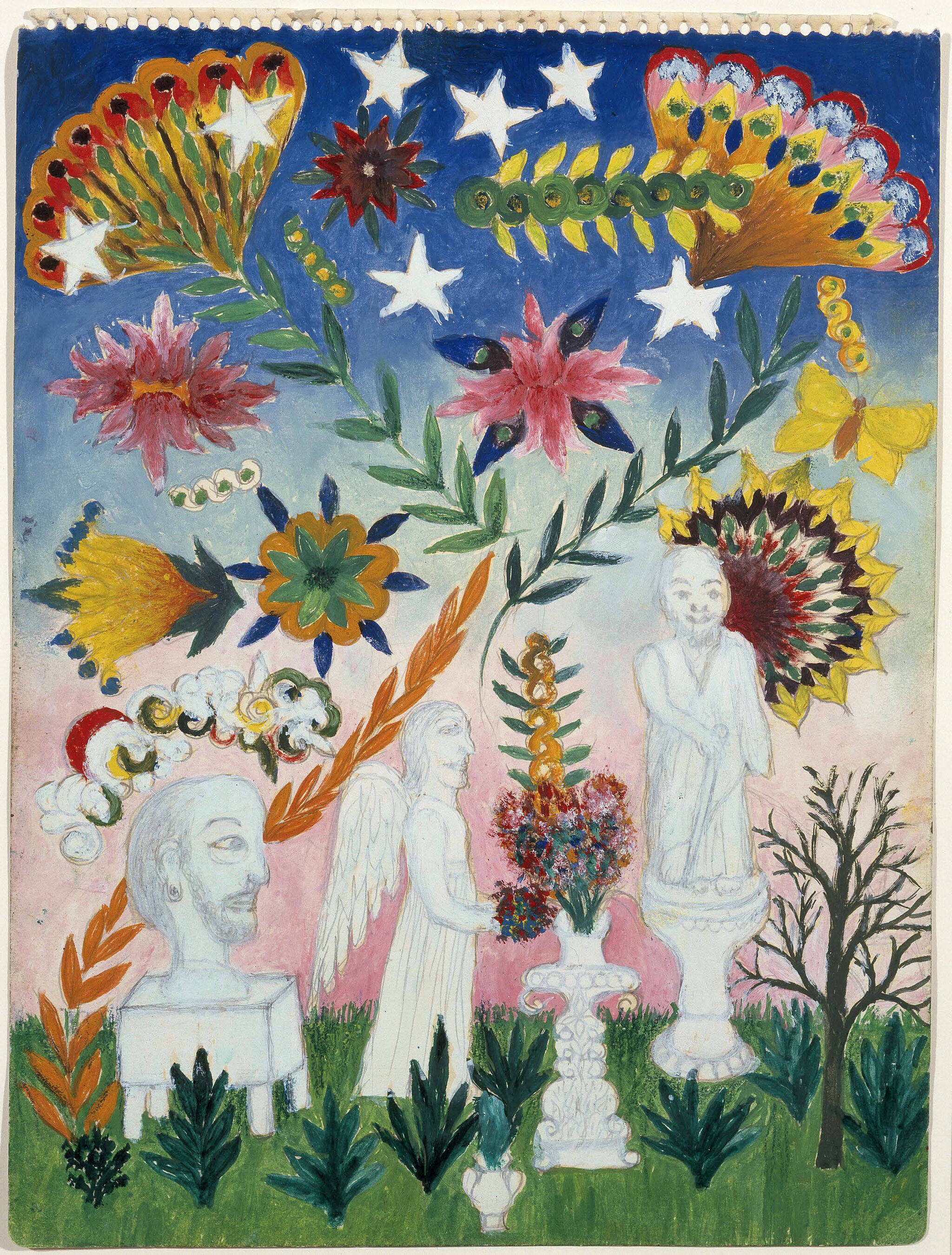
Describing one of the visions that inspired her art, Evans spoke about how she could see pictures spread across the sky and coming out of her lush, leafy surroundings: "I dreamt the whole sky the whole element was nothing but pictures put together like this. Just as far as I could see. They were all in the yard. They was all in the bushes. All on the trees."

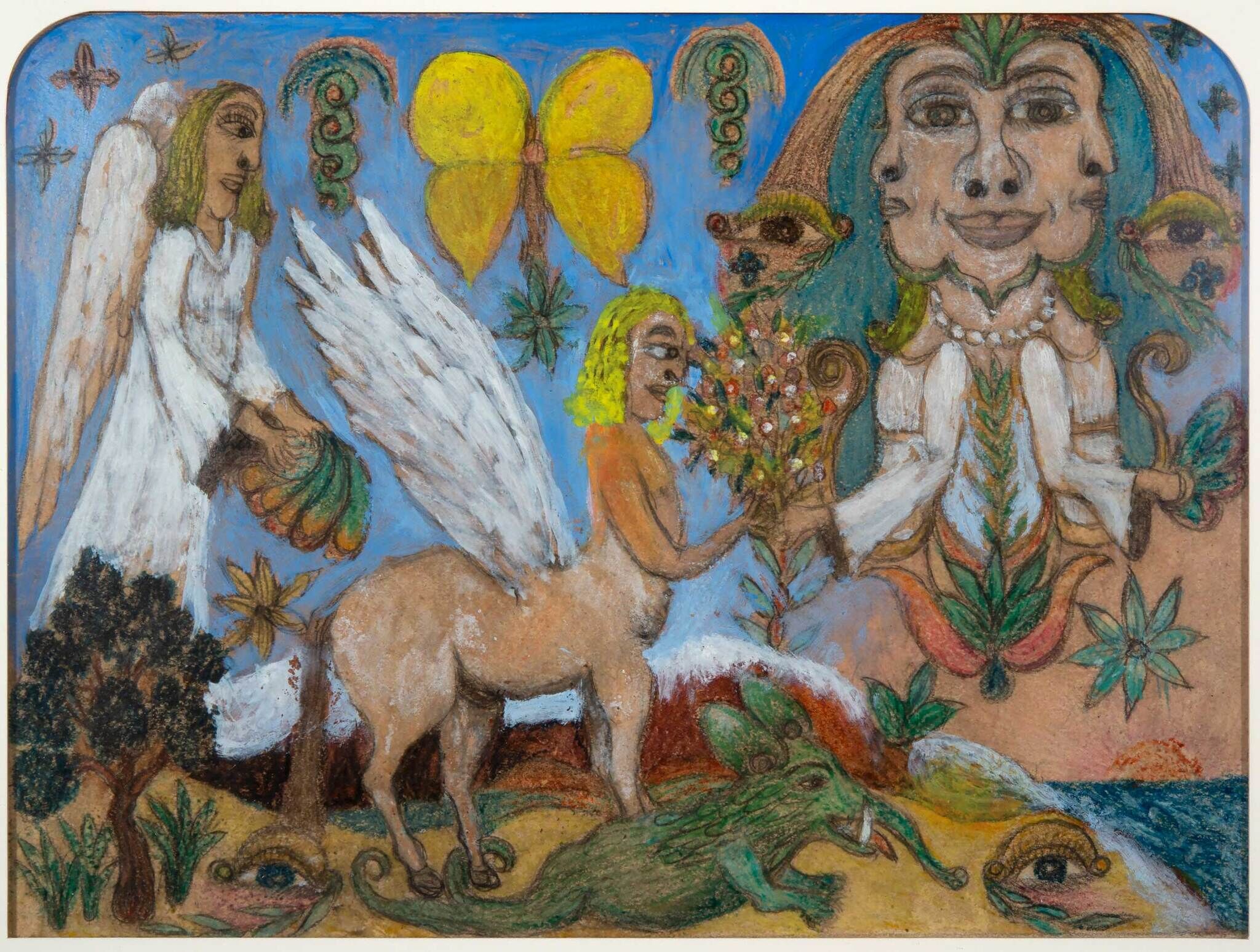
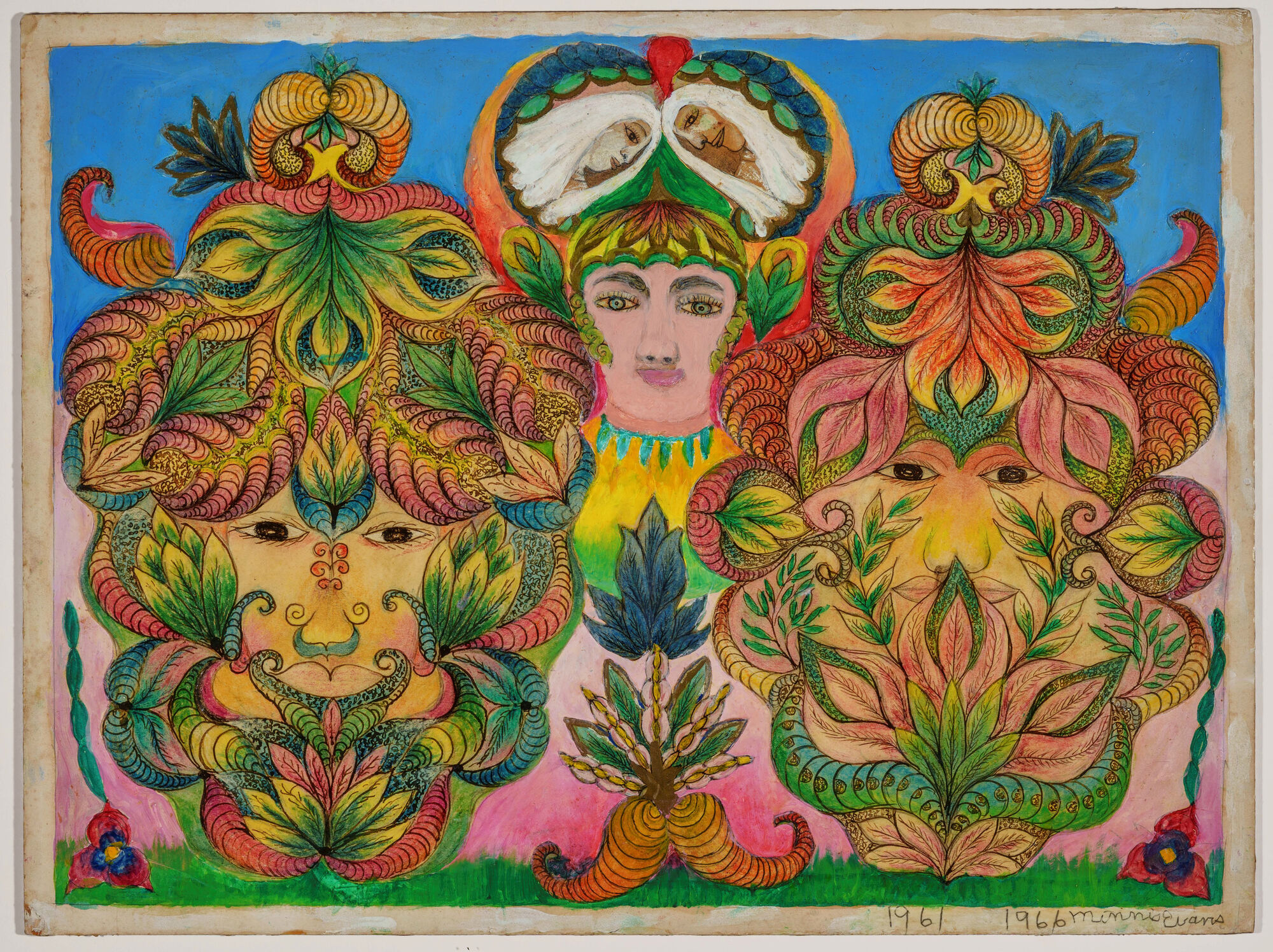
Three decorative faces made of swirling leaves and flowers fill the bright painting.

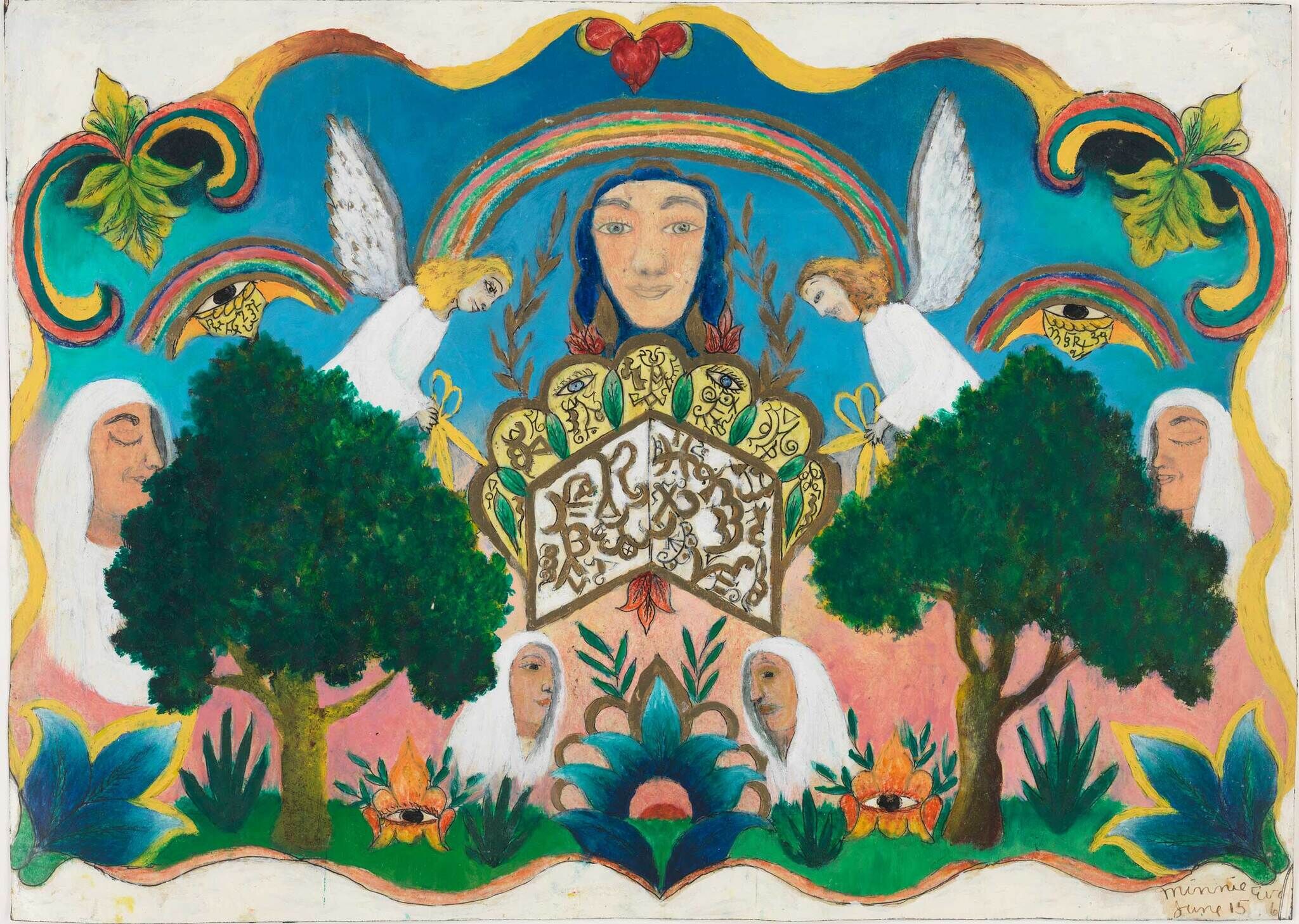
Minnie Evans, Untitled (Three Figures and Angels Collage), 1961–1967. Oil, crayon, and pencil on paper and canvas, 14 × 19 in. (35.56 × 48.26 cm). Collection of John Jerit. © The Estate of Minnie Evans

Untitled (Three Figures and Angels Collage), 1961–1967


Explore works from this exhibition
in the Whitney's collection

View 3 works

On the Hour

A 30-second online art project:
Frank WANG Yefeng, The Levitating Perils #2

Learn more about this project

Learn more at whitney.org/artport

On the Hour projects can contain motion and sound. To respect your accessibility settings autoplay is disabled.