
Shu Lea Cheang: Garlic=Rich Air
July 2003
Shu Lea Cheang: Garlic=Rich Air
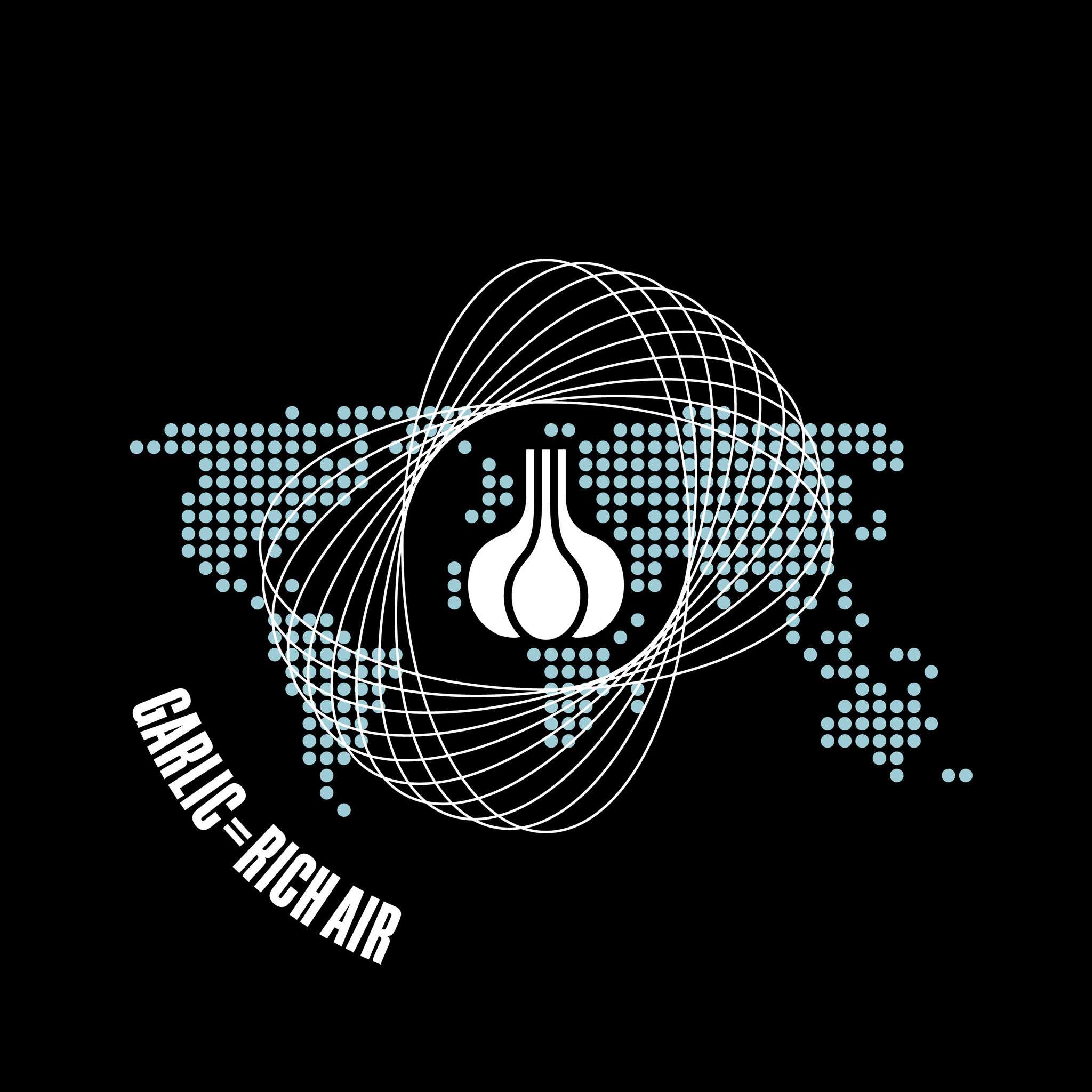
Garlic=Rich Air by Shu Lea Cheang was an interactive online project that imagined the year 2030 as a postcapitalist society in which garlic served as the new social currency in a global shared network. Garlic bulbs, or “G,” could be bought, sold, and traded on G-Mart, an online currency trading platform. Users could sign up for a barter economy on a website that enabled them to deposit digital goods in exchange for organic garlic, the value of which was set collectively by the community. At the close of the market, users were invited to participate in a virtual-to-physical exchange where virtual “G” could be traded for real organic garlic, a commodity predicted by the artist to be in demand in 2030.
Credits:
net.installation: Shu Lea Cheang
Design: Yippieyeah
Programming: Roger Sennert
Project server: Artstream/Standby program
The original Garlic=Rich Air is no longer online, and relied on Java applets that are not readily playable, but can be run using browser extensions or other emulation tools. Rhizome provides access to a few versions of the project, including the linked emulated one.
Shu Lea Cheang (b. 1954; Tainan, Taiwan) is an artist and filmmaker who engages in genre-bending, gender-hacking art practices. She frequently uses sci-fi narratives in her film scenarios and artworks and builds interfaces that invite public participation. A net art pioneer, her work BRANDON (1998–99) was the first piece of net art commissioned and collected by the Guggenheim Museum, New York. Cheang represented Taiwan at the 2019 Venice Biennale with her mixed-media installation 3x3x6. Crafting her own genre of sci-fi “New Queer Cinema,” she has made four feature films: FRESH KILL (1994), I.K.U. (2000), FLUIDø (2017), and UKI (2023). In 2024 Cheang received the LG Guggenheim Art and Technology Award. In 2025, her survey exhibition KI$$ KI$$ was shown at Haus der Kunst, Munich; and her theatre performance Hagay Dreaming was presented at Tate Modern, London.
Gate Pages
Every month from March 2001 to February 2006, the Whitney invited an artist or collective to present their work in the form of a “Gate Page” on artport. Each page was meant to function as a portal to the artist’s own sites and projects. The Gate Pages comprise a range of artistic approaches to the format—while some of them are designed as entry points to the respective artist’s website or promote a recently launched work, others take the form of a more complex stand-alone project.
Wherever necessary and possible, these works are made functional through emulation and reconstructions from the Internet Archive. Not all of them have been restored to their original state and their conservation is ongoing. You can also view the original Gate Pages archive to see how they were presented at the time of their creation.
artport
View more on artport, the Whitney Museum's portal to Internet and new media art.