
Motomichi Nakamura: Bcc (Blind Carbon Copy)
August 2003
Motomichi Nakamura: Bcc (Blind Carbon Copy)
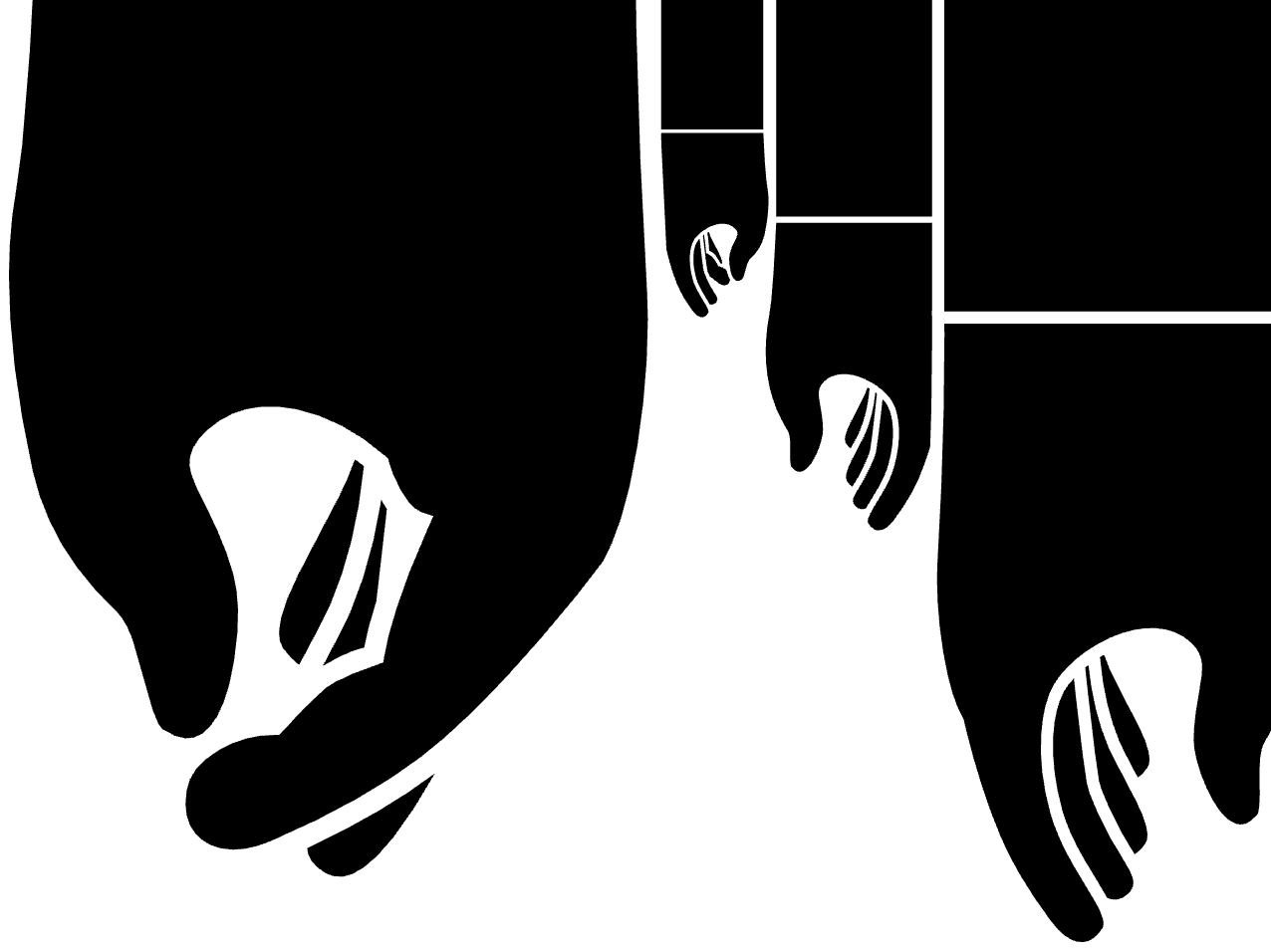
Bcc (Blind Carbon Copy) by Motomichi Nakamura reflects on the dehumanizing effects of online communication. An animation of hands with continuously moving fingers—presented in a stark, vector-based aesthetic reminiscent of propaganda art—serves as the main interface. As users move their “pointing hand” cursor over the animated hands, they form into fists and sweat or blood-like drops start to fall from them. Clicking the hands draws text from search-engine results, bulletin-board posts, and email exchanges in multiple languages, juxtaposing human vulnerability with the indifference of media platforms. Bcc captures the anxiety, loneliness, and detachment of the digital sphere and questions how technology reshapes our capacity for connection and intimacy. The work invites viewers to consider the psychological impact of online communication, reminding users that the systems designed to draw us closer may also isolate us further.
Motomichi Nakamura (b. 1972; Tokyo, Japan) is an immersive and projection mapping artist and educator. Using a three-color palette and a bold graphic style, his approach is influenced by his Japanese roots and enriched by his experiences in the United States and Latin America. His animated films have been screened at the Sundance Film Festival, Onedotzero Festival, Pictoplasma, and Holland Animation Film Festival, among others. His projection installations have been exhibited globally at museums and galleries, including the New Museum, New York; Winzavod, Moscow Contemporary Art Center; Olympia Park, Munich; Museo de Arte Contemporáneo, Monterrey, Mexico; and Gaîté Lyrique, Paris. Commercially, he has worked on projects for MTA Arts and Design, New York; Channel 4’s Random Acts, EA (Electronic Arts), MTV, USA Networks, and UNIQLO, and has produced short films and music videos for artists including Nicola Cruz and the Swedish band The Knife.
Gate Pages
Every month from March 2001 to February 2006, the Whitney invited an artist or collective to present their work in the form of a “Gate Page” on artport. Each page was meant to function as a portal to the artist’s own sites and projects. The Gate Pages comprise a range of artistic approaches to the format—while some of them are designed as entry points to the respective artist’s website or promote a recently launched work, others take the form of a more complex stand-alone project.
Wherever necessary and possible, these works are made functional through emulation and reconstructions from the Internet Archive. Not all of them have been restored to their original state and their conservation is ongoing. You can also view the original Gate Pages archive to see how they were presented at the time of their creation.
artport
View more on artport, the Whitney Museum's portal to Internet and new media art.