Edward Hopper’s New York
Oct 19, 2022–Mar 5, 2023
Edward Hopper’s New York
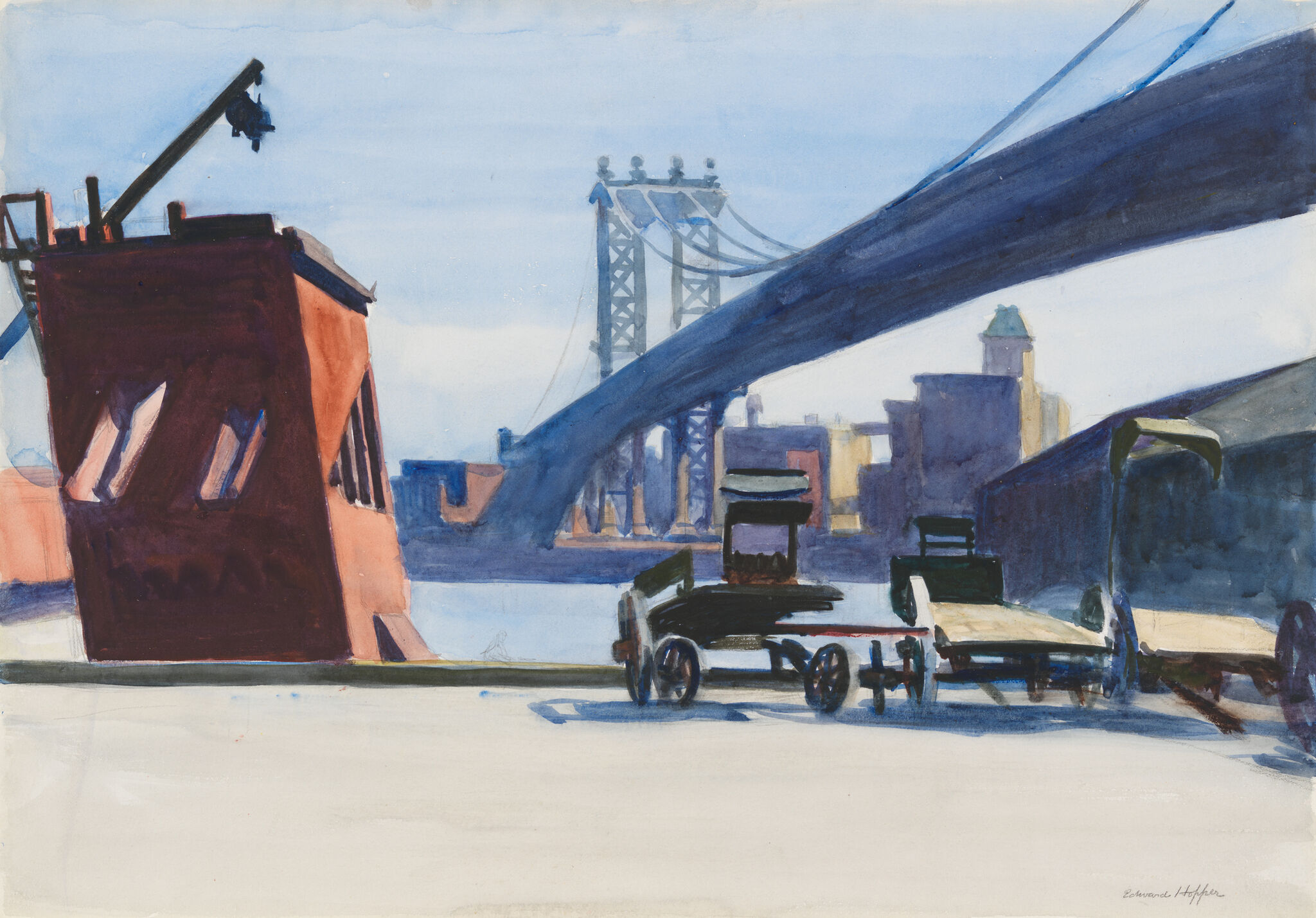
Edward Hopper, Manhattan Bridge, 1925–26. Watercolor and graphite pencil on paper, 13 15/16 × 19 15/16 in. (35.4 × 50.6 cm). Whitney Museum of American Art, New York; Josephine N. Hopper Bequest 70.1098. © Heirs of Josephine N. Hopper/Licensed by Artists Rights Society (ARS), New York
Para Edward Hopper, Nueva York era una ciudad que existía en su mente a la vez que en el mapa, un lugar que tomó forma a través de la experiencia, la memoria y el imaginario colectivo. En sus últimos años indicó, “es la ciudad americana que mejor conozco y que más me gusta”.
Nacido en 1882 en el pueblo de Nyack a orillas del río Hudson, en el estado de Nueva York, Hopper conoció Manhattan durante visitas familiares. Luego de terminar sus estudios medios superiores, iba regularmente a la ciudad en ferry para asistir a clases de arte y a donde eventualmente se mudó en 1908. Desde 1913 hasta su muerte en 1967, vivió y trabajó en un apartamento en Washington Square Park, donde pasó de ser un prometedor ilustrador independiente a uno de los artistas más célebres del país.
A lo largo de su carrera, en frecuentes caminatas por el vecindario y viajes en trenes elevados, Hopper observó asiduamente la ciudad, perfeccionando su comprensión del entorno de sus construcciones y las particularidades de la experiencia urbana moderna. El Nueva York de Hopper, sin embargo, no era un retrato exacto de una metrópolis del siglo veinte. En el transcurso de su vida, la ciudad experimentó enormes cambios, los rascacielos alcanzaron alturas que rompieron todos los records, las construcciones se multiplicaron en los cinco distritos y aumentaron exponencialmente su población cada vez más diversa; su representación de Nueva York seguía siendo a escala humana y mayormente despoblada. Hopper dejó de lado el icónico skyline de la ciudad y sus pintorescos sitios de referencia como el puente de Brooklyn y el Empire State Building, en su lugar volcó su atención hacia lugares poco conocidos e incluso ignorados y pequeños espacios fuera de los trayectos más frecuentados; atraído por el choque incómodo de lo viejo y lo nuevo, lo cívico y residencial, lo público y privado que capturaban las paradojas de una ciudad cambiante. El Nueva York de Edward Hopper traza la permanente fascinación del artista por la ciudad, revelando una visión de Nueva York que es una manifestación tanto del propio Hopper como un registro de la ciudad que lo rodea.
Resources
Access additional Edward and Josephine Hopper resources.
Press Highlights
“…this is Hopper’s New York, emphasis on the possessive, and for all its crowd-pleasing fare this is a more challenging show about his dominion over the city.” —New York Times
“Curated with great intelligence and care by Kim Conaty, “Edward Hopper’s New York” is a terrific show based on a great idea, and it’s weird that no one thought to approach his work in this way before.” —The New Yorker
“But as a startling and immaculate show at the Whitney Museum of American Art makes clear, some of Hopper’s most gothic allegories of disconnection and loneliness were set in the perpetually raucous metropolis.” —Financial Times
“…a celebration of the city and the master who co-exist and reveal the immortality of New York.” —Forbes
“The show succeeds at revealing a different side of Hopper, eschewing many of the artist’s most famous paintings in favor of ones that cultivate a sense of him as a New Yorker and an artistic innovator.” —The Guardian
“…the artist shows us urban dreamers but keeps their thoughts private.” —Wall Street Journal
“…the diverse selection of works encourages us to do away with clichés and consider that Hopper’s vision of the city was as varied and complex as the man himself.” —The Art Newspaper
“…captures a lifelong love that shifted with the city itself, sometimes uncomfortably, but never grew stale.” —The Boston Globe
“…a dynamic mix of artworks and archival materials that tell the story of Hopper’s life and work in New York City…” —Artnet
“It’s a chance to see how one New Yorker saw our city evolve over almost six decades.” —NY1
“One of the joys of this Whitney show is the many preparatory sketches on display.” —The Village Voice
“...the first exhibition to take an in-depth look at the painter’s relationship with New York City, where he lived for six decades.” —PIX11
“Edward Hopper's New York features about 200 works that capture a changing and changeless city, and illuminate the inner lives of city dwellers.” —CBS Sunday Morning
“...the Hopper exhibition is perfectly on brand: an invitation to New Yorkers, past, present and future, to navel-gaze and ponder the enigma of why the greatest city in the world is both the cause and cure of loneliness.” —The Washington Post
“…Hopper’s strongest works are invigorated by tension between an apparent naturalism and lucid structure and an implied, enigmatic—rather than overt—narrative..” —The Wall Street Journal
“What Hopper discovered was that when the people are gone, the buildings come to life.” —New York Review of Books
“Stillness at the threshold of movement is a crucial feature in the illusionistic dramaturgy of Hopper’s work.” —Artforum
“Rarely does a museum so effectively recalibrate the public’s understanding of a non-living artist.” —The Art Newspaper
Publication
Edward Hopper's New York
Kim Conaty
This engaging book delves into the iconic relationship between Edward Hopper (1882–1967) and New York City. This comprehensive look at an essential aspect of the revered American artist’s life reveals how Hopper’s experience of New York’s spaces, sensations, and architecture shaped his vision and served as a backdrop for his distillations of the urban experience. During sidewalk strolls and elevated train rides, Hopper sketched the city’s many windowed facades. Exterior views gave way to interior lives, forging one of Hopper’s defining preoccupations: the convergence of public and private. These permeable walls allowed Hopper to evoke the perplexing awareness of being alone in a crowd that is synonymous with modern urban life.
Drawing on the vast resources of the Whitney Museum of American Art, the largest repository of Hopper’s work, and the recently acquired gift of the Sanborn Hopper Archive, this book features more than 300 illustrations and fresh insight from authoritative and emerging scholars.
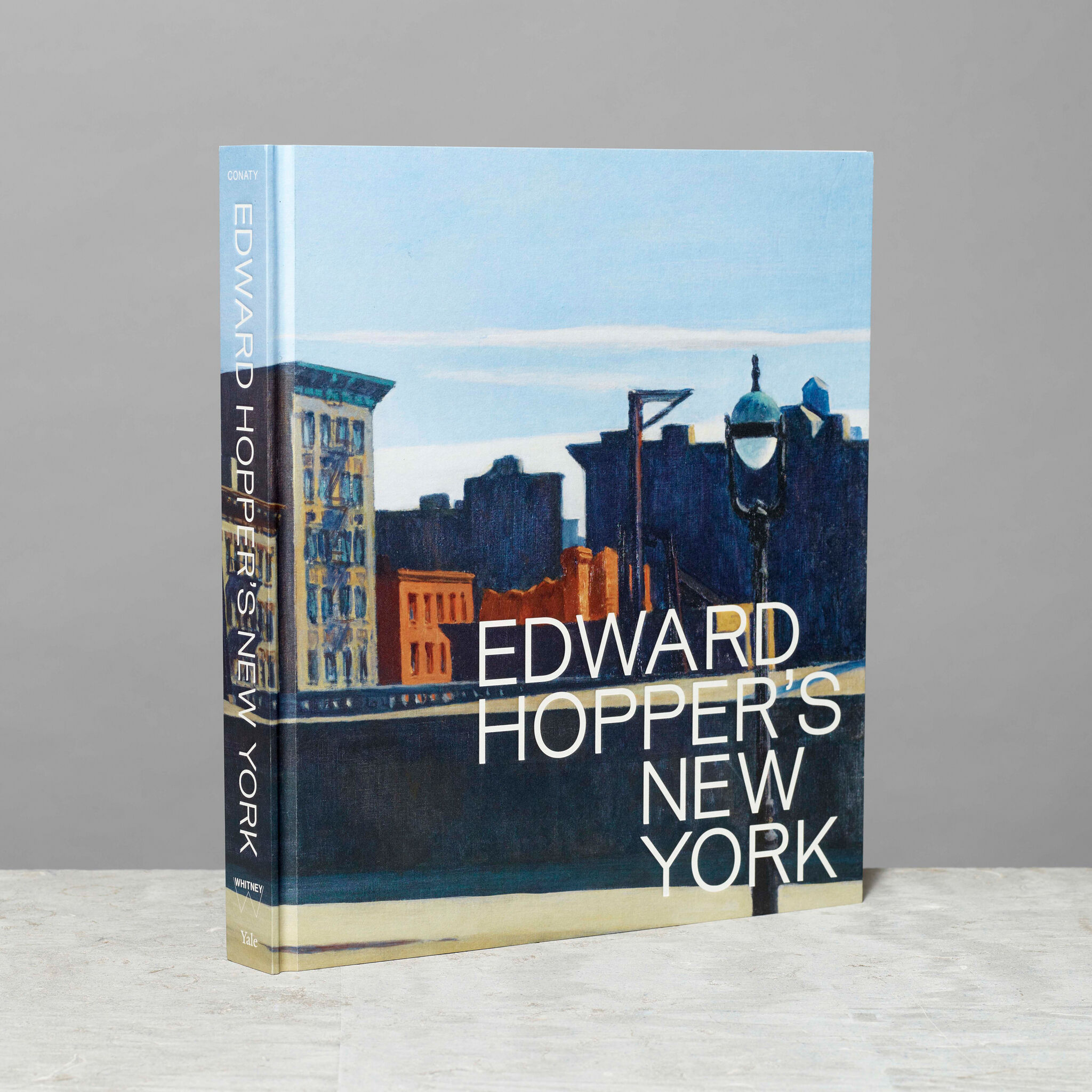
Edward Hopper’s New York catalogue cover
Installation photography
-
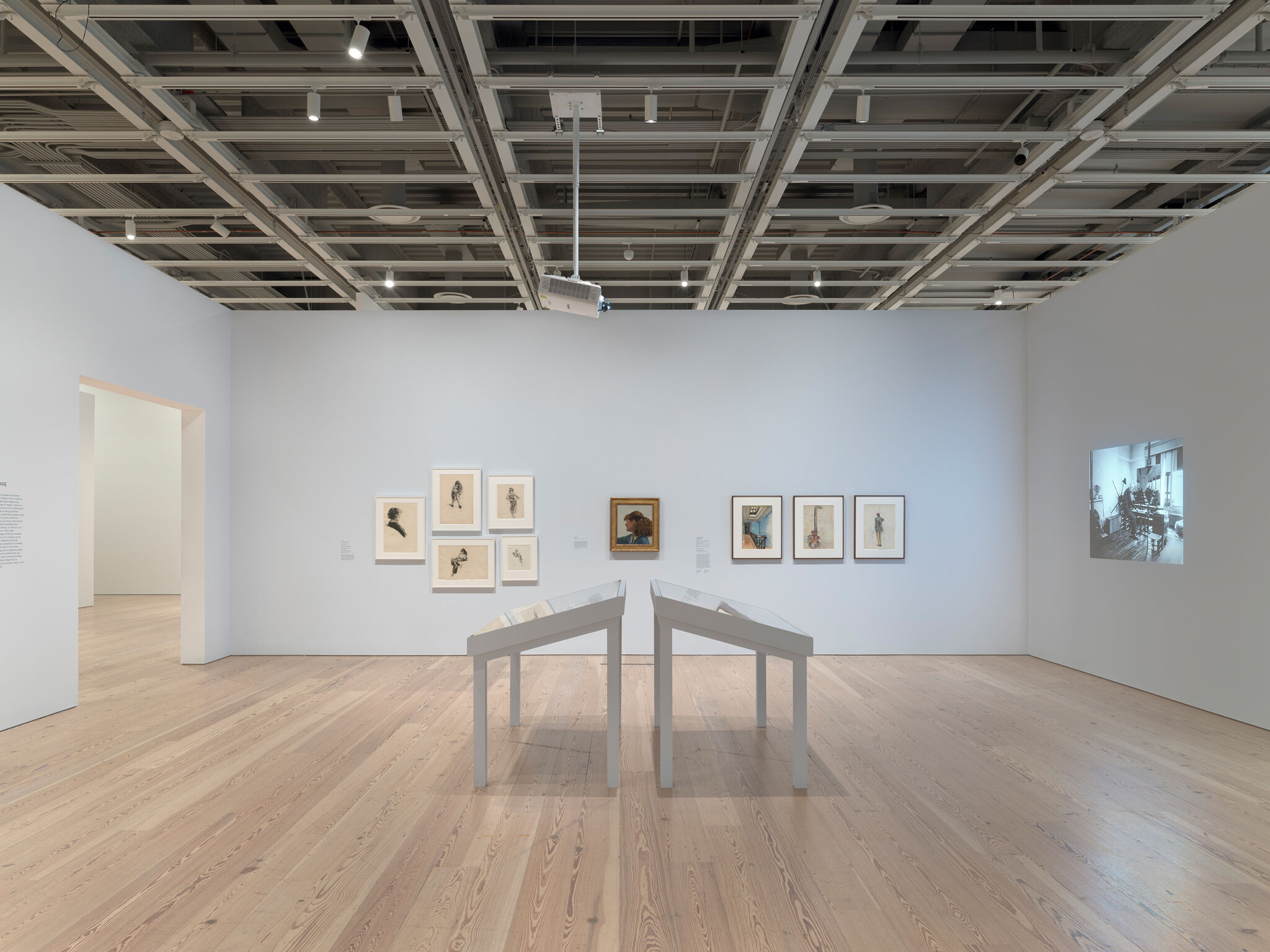
Installation view of Edward Hopper’s New York (Whitney Museum of American Art, New York, October 19, 2022- March 5, 2023). From left to right: Study of Jo Hopper Seated, c. 1945-50; Study of Jo Hopper Reading, 1925; Jo Hopper Reading; 1935-40; Study of Jo Hopper Reading, 1934-35; Study of Jo Hopper Reading, c .1924-30; Jo Painting, 1936; Josephine Nivison Hopper, 74 Stairs to Studio at Three Washington Square North, c. 1932; Josephine Nivison Hopper, Stove and Fireplace, Three Washington Square North, c. 1932; Josephine Nivison Hopper, Back of E. Hopper, c. 1932; Visual Arts from America (documentary series produced, by the United States Information Agency (USIA)/ Voice of America (VOA), with segment on Edward Hopper and Josephine Nivison Hopper, 1965. Photograph by Ron Amstutz
-
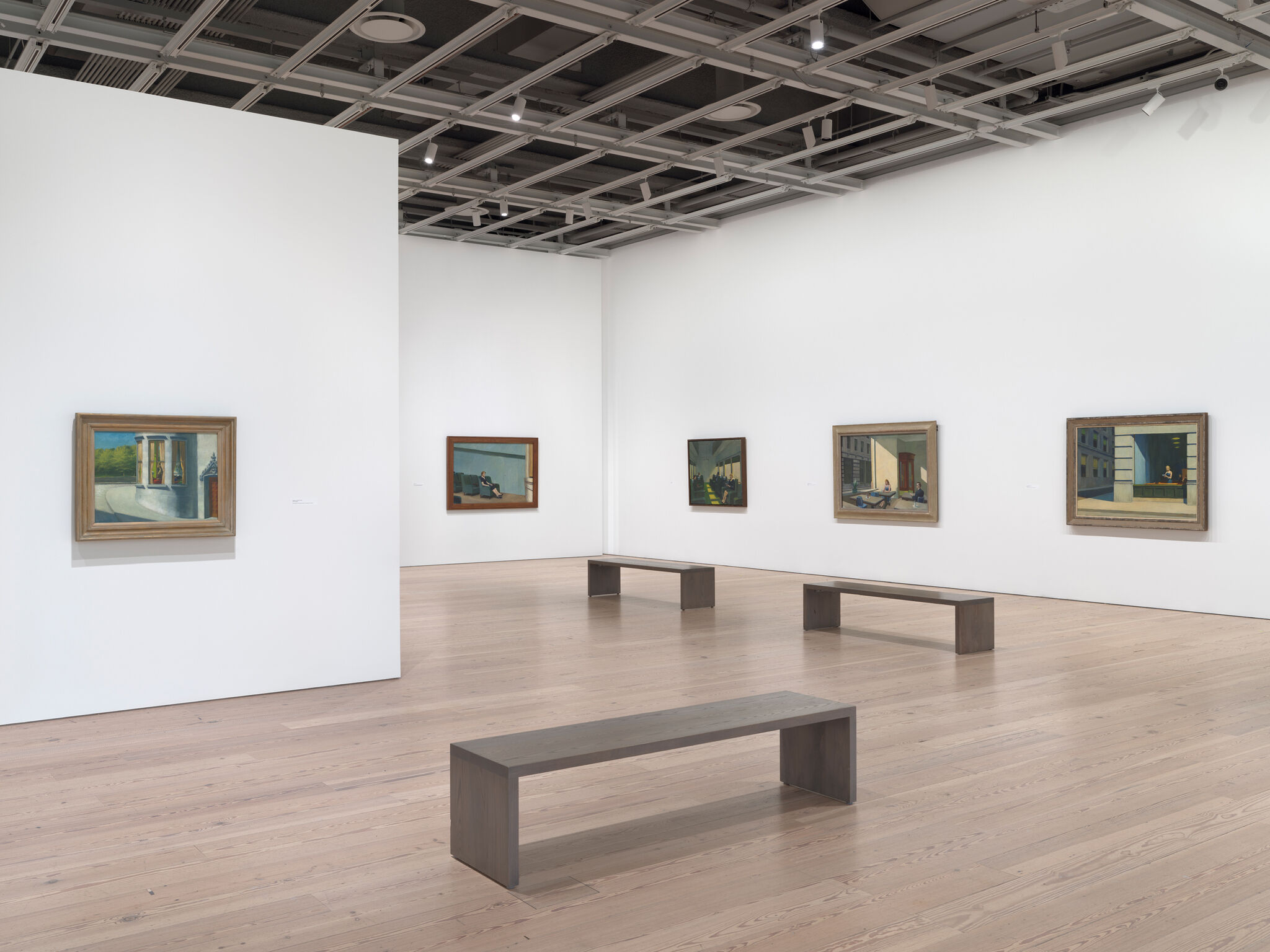
Installation view of Edward Hopper’s New York (Whitney Museum of American Art, New York, October 19, 2022- March 5, 2023). From left to right: August in the City, 1945; Intermission, 1963; Chair Car, 1965; Sunlight in a Cafeteria, 1958; New York Office, 1962; Morning Sun, 1952. Photograph by Ron Amstutz
-
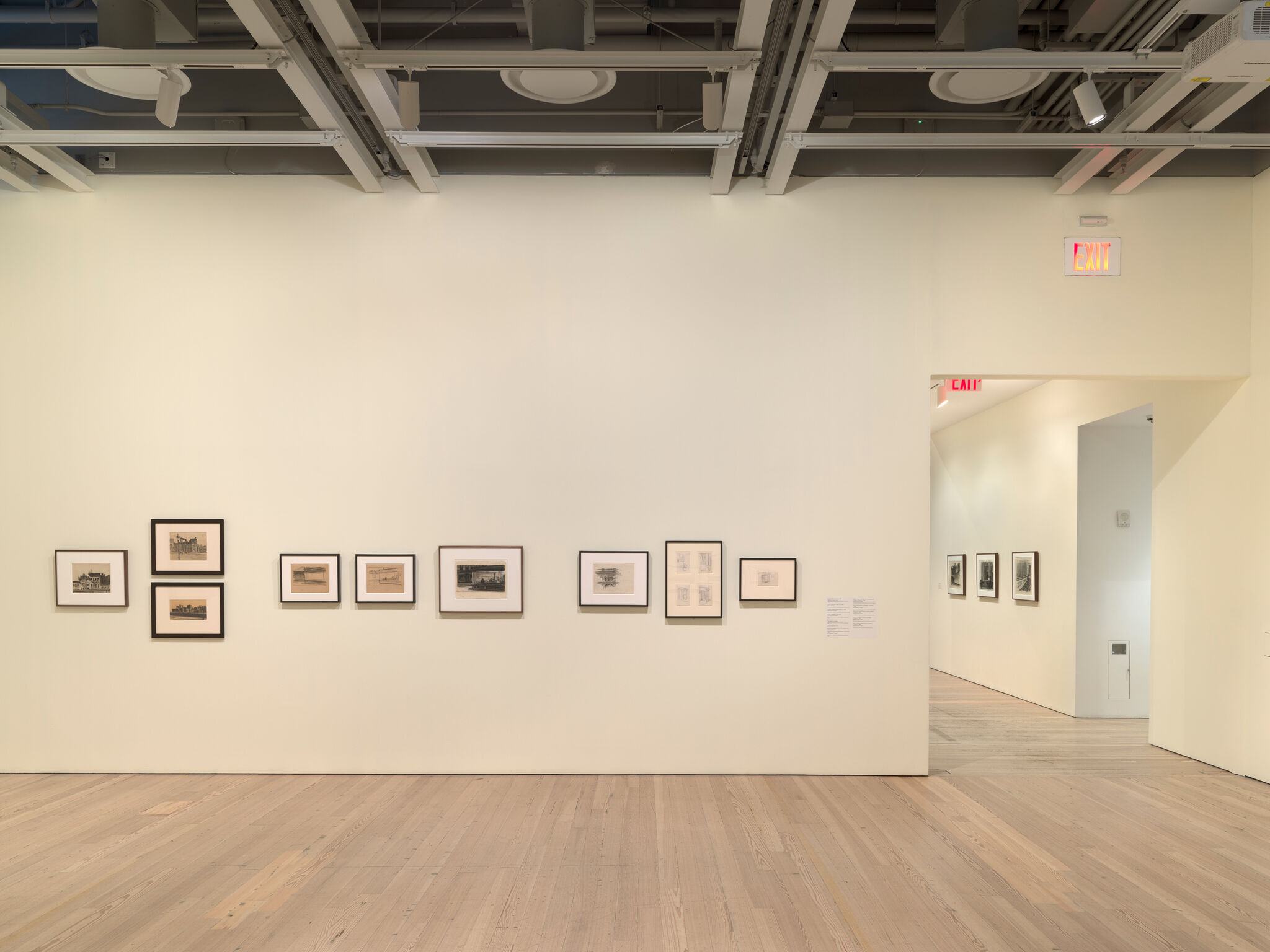
Installation view of Edward Hopper’s New York (Whitney Museum of American Art, New York, October 19, 2022- March 5, 2023). From left to right: Study for Williamsburg Bridge, 1928; Study for Manhattan Bridge Loop, c. 1928; Study for Manhattan Bridge Loop No. 2, c. 1928; Study for Nighthawks, 1941 or 1942; Study for Nighthawks, 1941 or 1942; Study for Nighthawks, 1941; Study of the Upper Stories of 82 Washington Square East, c. 1928; Study of a Chair, Potted Palm and Cornice (Study for Sunlight in a Cafeteria), c. 1958; Study of a Revolving Brass Door (Study for Sunlight in a Cafeteria) c. 1958; Study of Windows (Study for Sunlight in a Cafeteria), c. 1958; Study of a Building’s facade (Study for Sunlight in a Cafeteria), c. 1958; Study for Approaching City, 1946; Study for City Sunlight, 1954, Study for First Row Orchestra, 1951. Photograph by Ron Amstutz
-
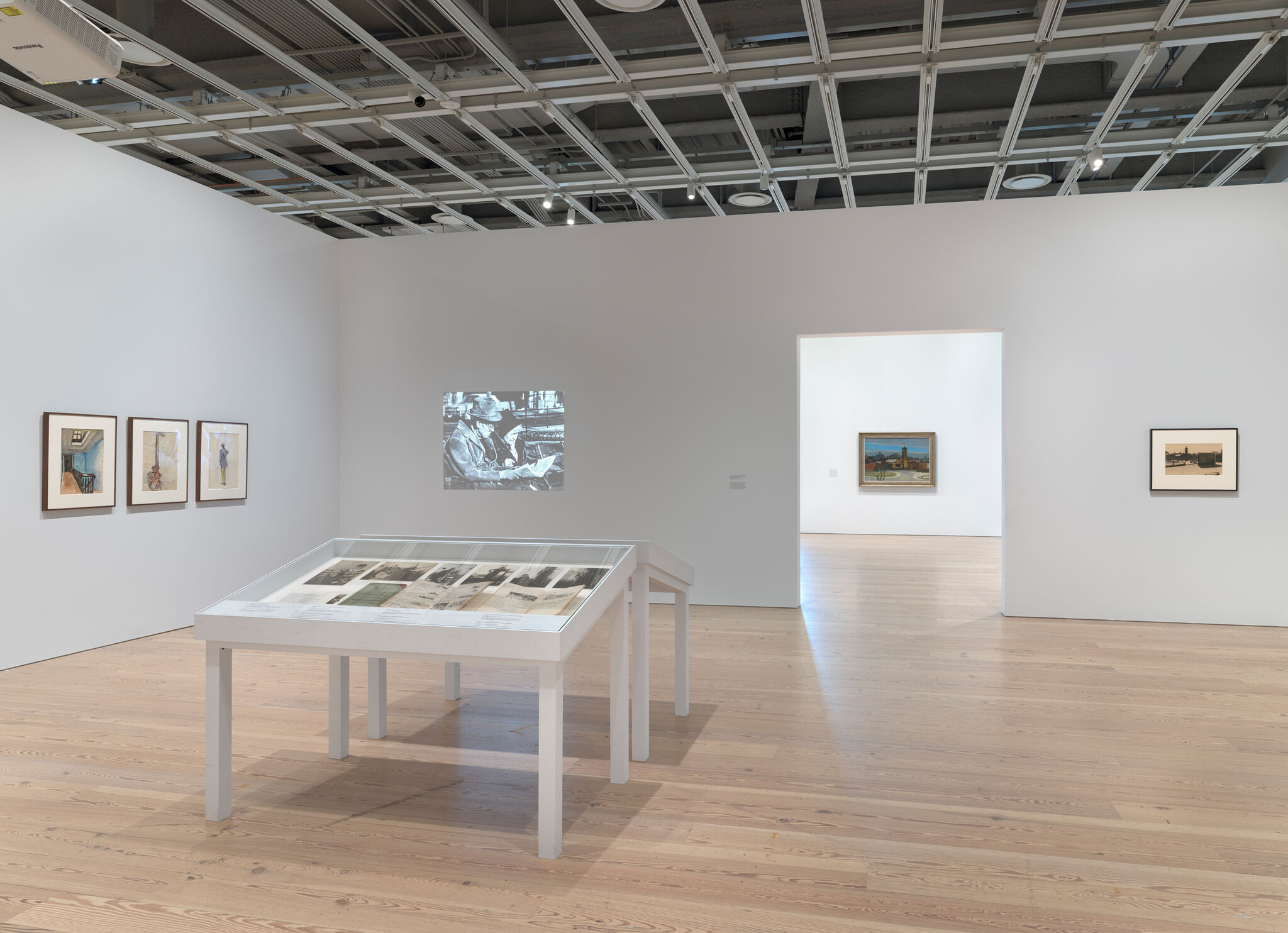
Installation view of Edward Hopper’s New York (Whitney Museum of American Art, New York, October 19, 2022- March 5, 2023). From left to right: Josephine Nivison Hopper, 74 Stairs to Studio at Three Washington Square North, c. 1932; Josephine Nivison Hopper, Stove and Fireplace, Three Washington Square North, c. 1932; Josephine Nivison Hopper, Back of E. Hopper, c. 1932; Edward and Jo Hopper, c. 1947; Edward Hopper with his printing press in the studio, c. 1947; Edward Hopper in the studio, c. 1950; Edward Hopper in his studio, 1950; Edward and Jo Hopper in his studio, 1950, Photo-booth pictures of Edward and Jo Hopper, c. 1930s; Edward Hopper and Josephine Nivison Hopper, Artist’s ledger-Book I (1913-63), Artist’s ledger- Book II (1907-62), Artist’s ledger-Book III (1924-67); Visual Arts from America (documentary series produced, by the United States Information Agency (USIA)/ Voice of America (VOA), with segment on Edward Hopper and Josephine Nivison Hopper, 1965; November, Washington Square, c. 1932/1959; Town Square (Washington Square and Judson Tower), 1932. Photograph by Ron Amstutz
-
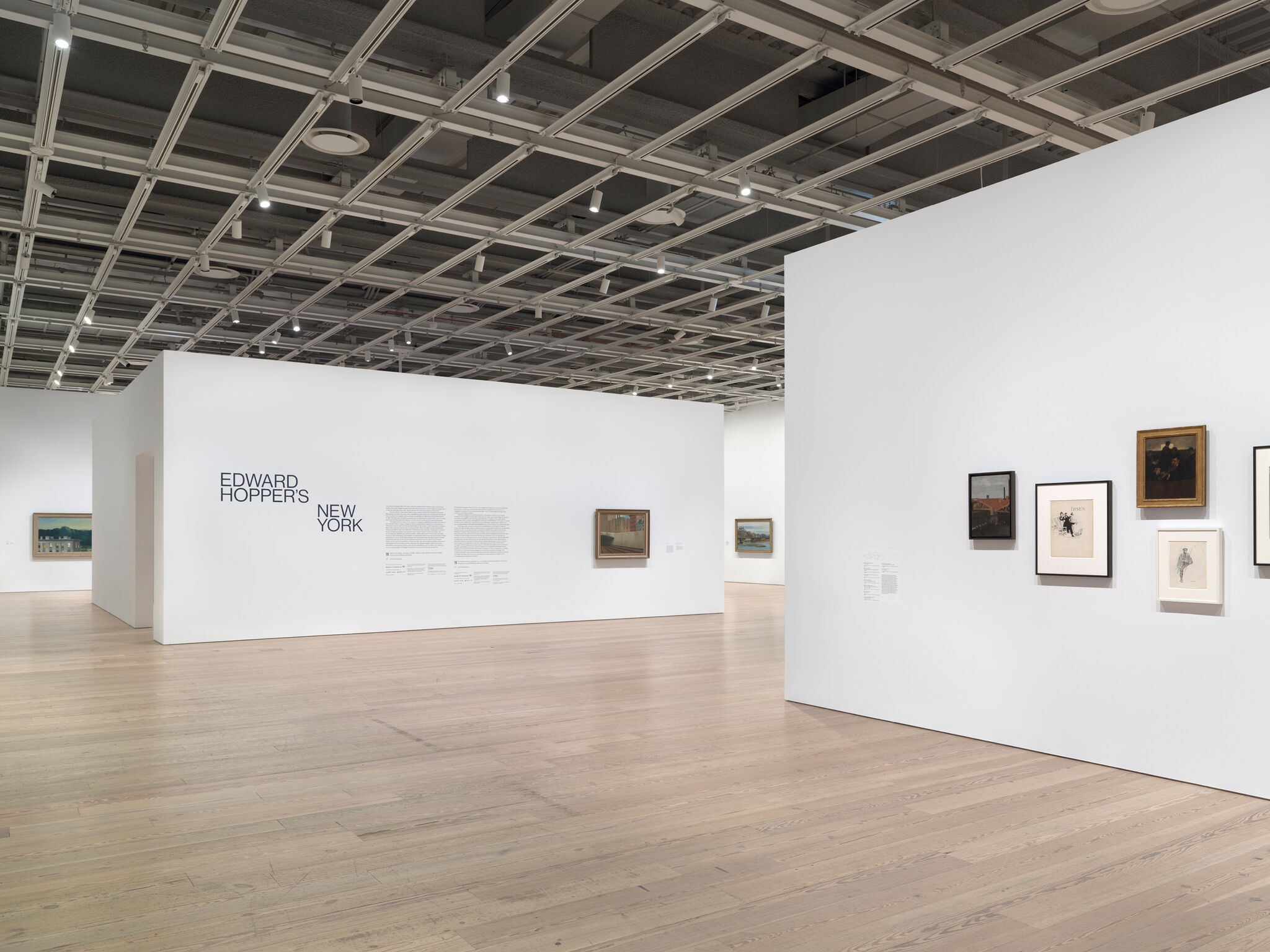
Installation view of Edward Hopper’s New York (Whitney Museum of American Art, New York, October 19, 2022- March 5, 2023). From left to right: House at Dusk, 1935; Approaching a City, 1946; Macomb’s Dam Bridge, 1935; Rooftops of Ferry Slip, 1904-06; Ibsen, 1900-06; Group of Musicians in an Orchestra Pit, 1904-06; Mounted Cop, 1899-1906. Photograph by Ron Amstutz
-
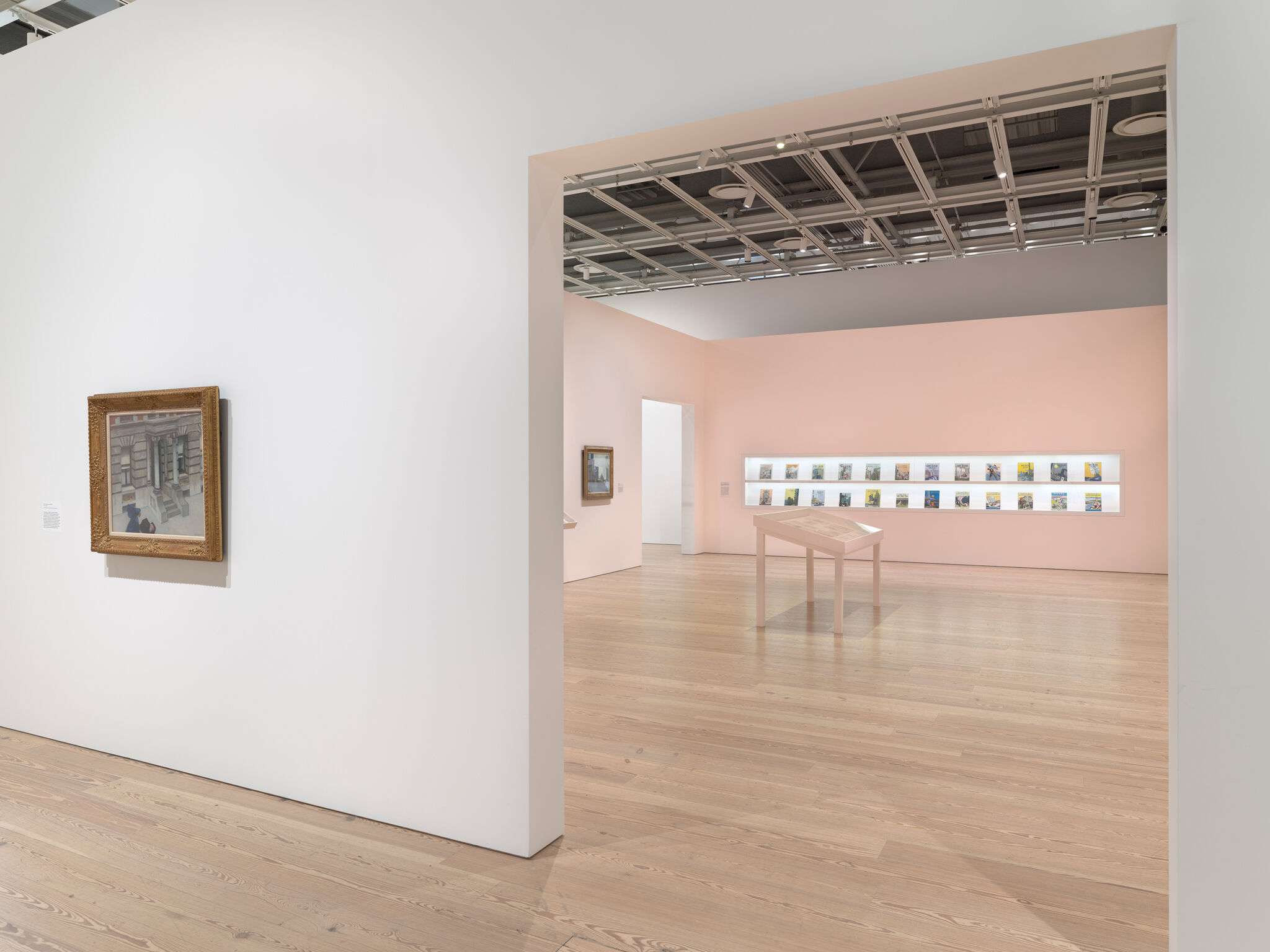
Installation view of Edward Hopper’s New York (Whitney Museum of American Art, New York, October 19, 2022- March 5, 2023). From left to right: New York Restaurant, c. 1922; Office at Night, 1940; Cover Art by Hopper for Hotel Management, Morse Dry Dock Dial, La France, Tavern Topics, The Express Messenger, and Wells Fargo Messenger, 1917-25; Entries from 1920 Hopper’s Artist’s Ledger- Book IV, 1913-67; Wearing Apparel Show catalogue and directory, Madison Square Garden, New York, 1910; Brighton Flat Clasp Garters, c. 1909-11; Samuel W. Peck & Co. (“Sampeck clothes”), c. 1911-12; National Cigar Stands, c. 1911-12; Brigham, Hopkins Company Straw Hats (brochure), c. 1908; Scaffolding by Chesebro Whitman Co. Inc, c 1911-12; RB Fashion-Clothes, c.1911-1912; Brandegee Kincaid & Co., c. 1909-11; Knothe Unseen Suspenders, c. 1917-20. Photograph by Ron Amstutz
-
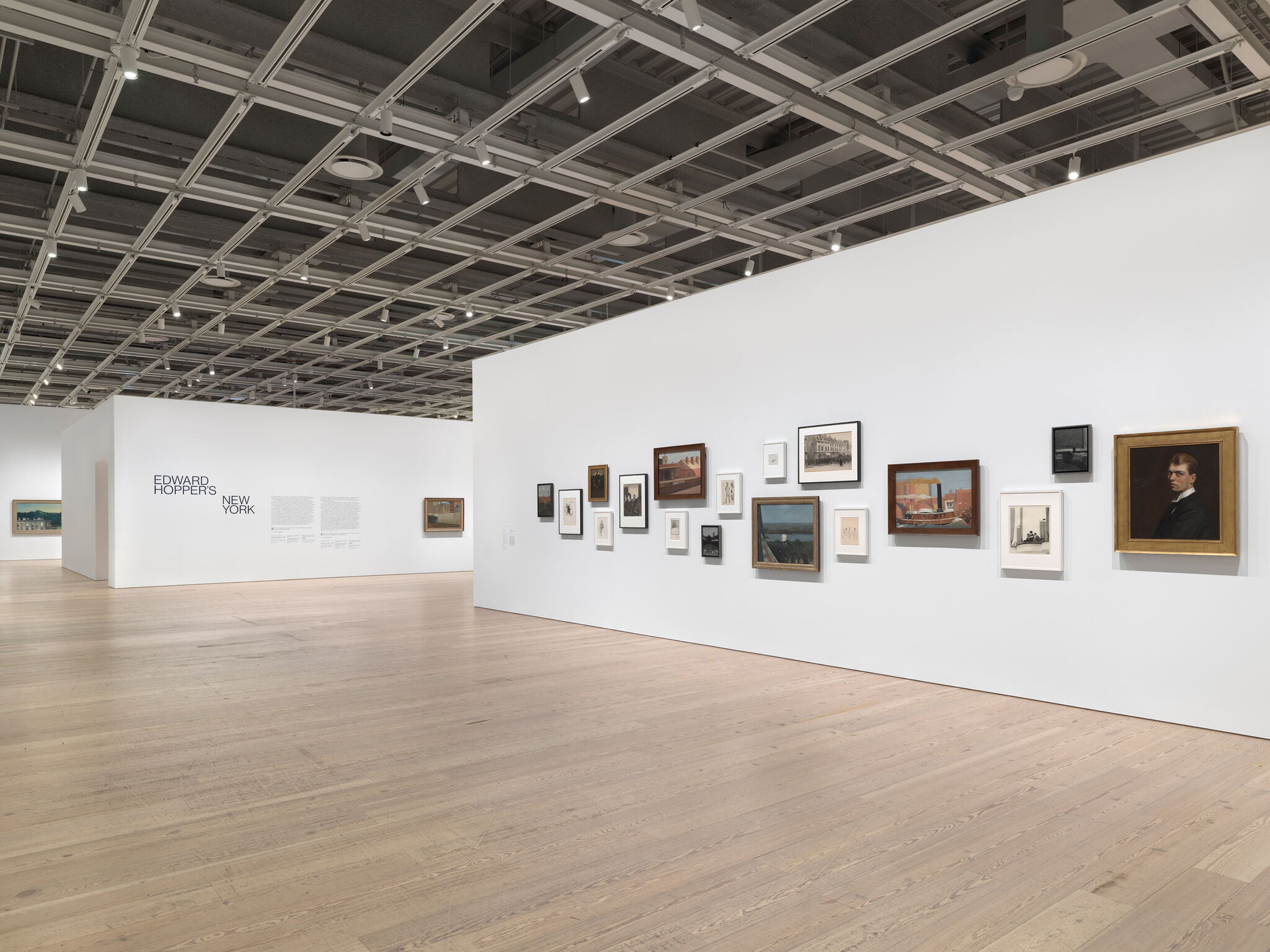
Installation view of Edward Hopper’s New York (Whitney Museum of American Art, New York, October 19, 2022- March 5, 2023). From left to right: House at Dusk, 1935; Approaching a City, 1946; Rooftops of Ferry Slip, 1904-06; Ibsen, 1900-06; Group of Musicians in an Orchestra Pit, 1904-06; Mounted Cop, 1899-1906; Ibsen (At the Theater), 1900; The El Station, 1908; Three Men at an Art Exhibition, 1900-03; Sketches of an ‘L Guard, 1899; Ferry Slip, 1904-06; Moving Train, 1900; Blackwell’s Island, 1911; South of Washington Square, 1915; Study of Three Men in Suits and Hats Seated on Bench, 1895-99; Tugboat with Black Smokestack, 1908; At the Theater, 1916-22; Solitary Figure in a Theater, 1902-04; Self- Portrait, 1903-06. Photograph by Ron Amstutz
-
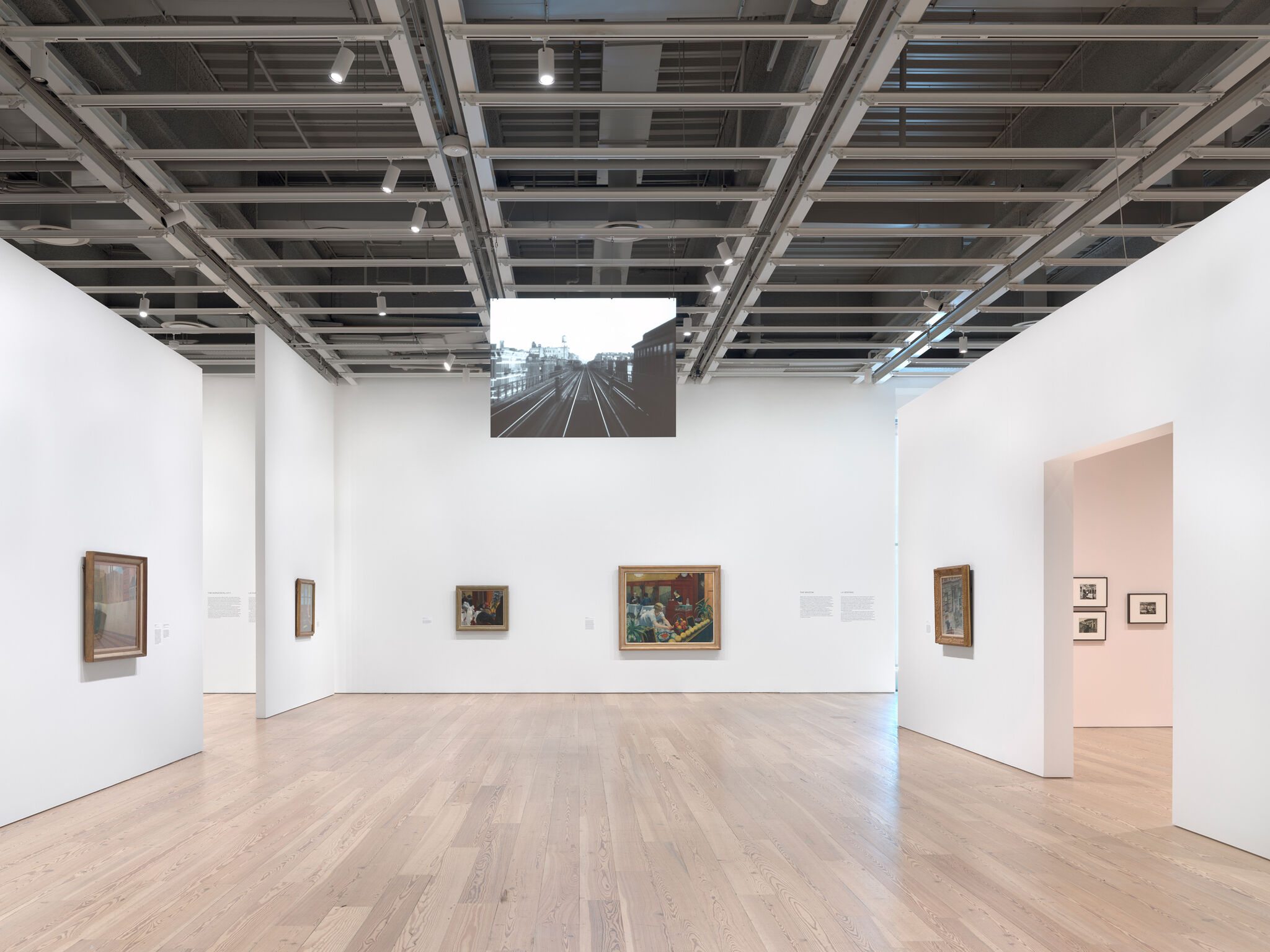
Installation view of Edward Hopper’s New York (Whitney Museum of American Art, New York, October 19, 2022- March 5, 2023). From left to right: Approaching a City, 1946; New York City (From an Elevated Railroad), c. 1916; Room in Brooklyn, 1932; New York Restaurant, c. 1922; Tables for Ladies, 1930; New York Pavements, 1924-25; Night on the El Train, 1918; The El Station, 1919-23. Photograph by Ron Amstutz
-
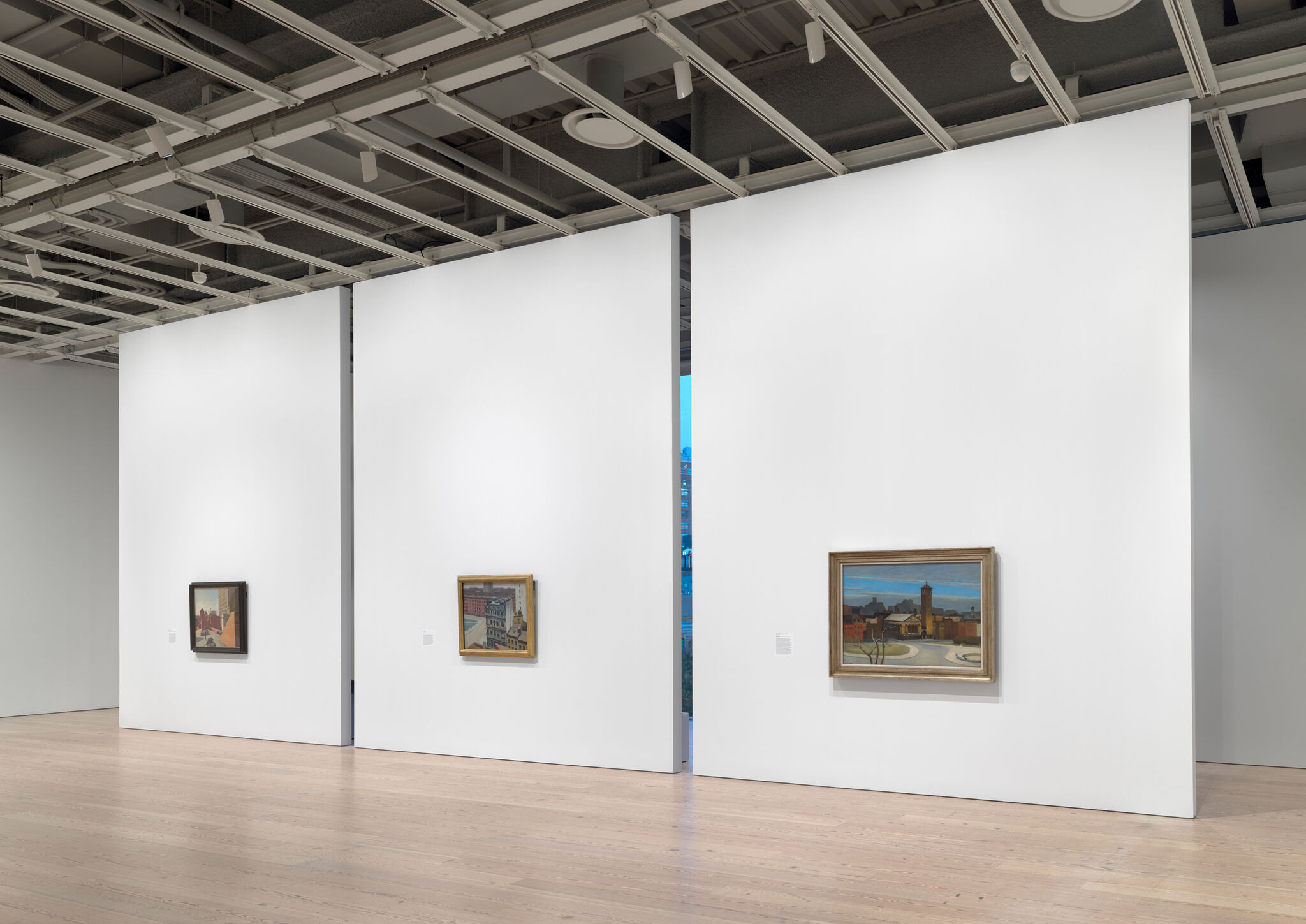
Installation view of Edward Hopper’s New York (Whitney Museum of American Art, New York, October 19, 2022- March 5, 2023). From left to right: City Roofs, 1932; The City, 1927; November, Washington Square, c. 1932/1959. Photograph by Ron Amstutz
-
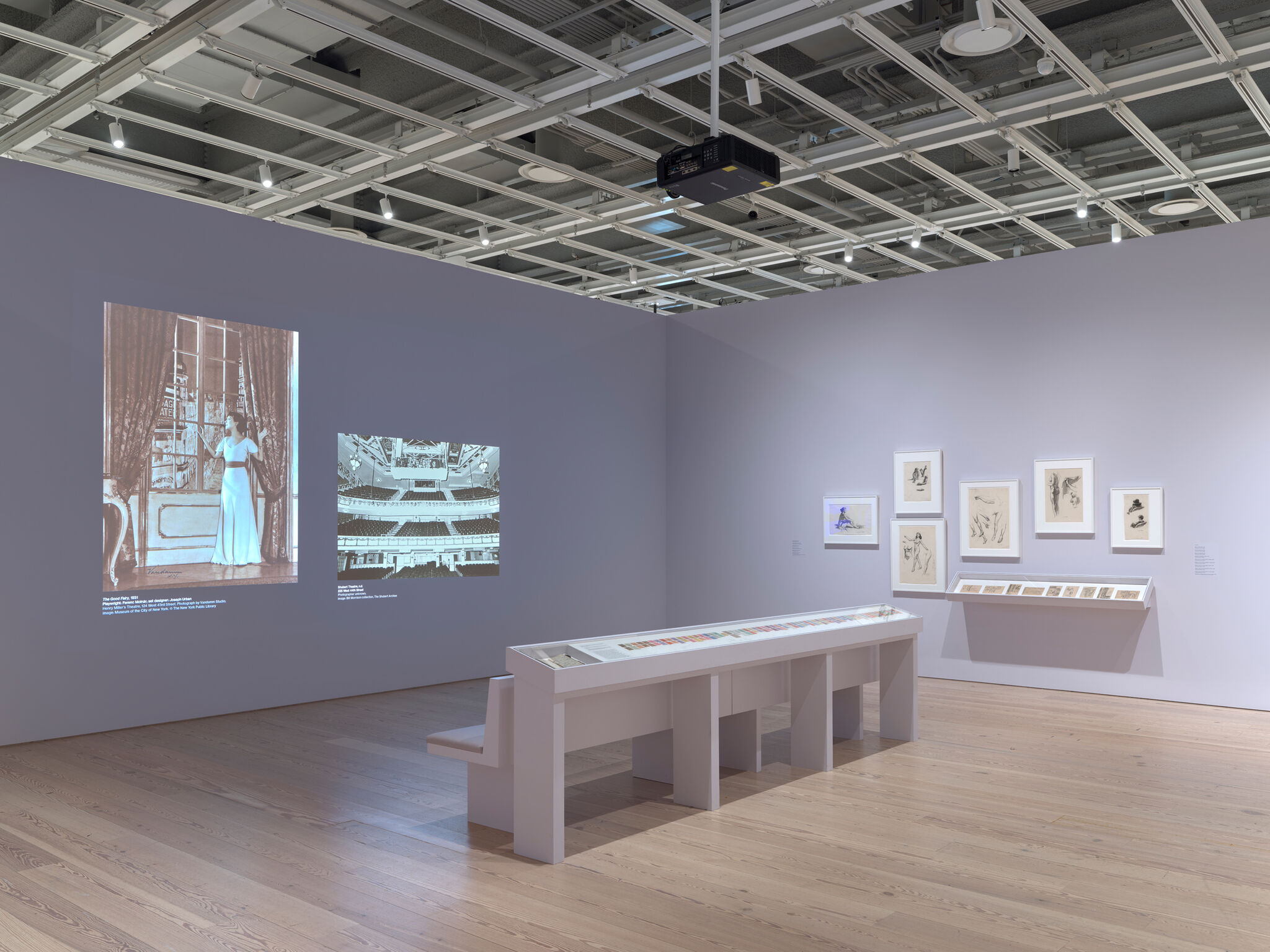
Installation view of Edward Hopper’s New York (Whitney Museum of American Art, New York, October 19, 2022- March 5, 2023). From left to right: Digital slide show composed of photographs of stage designs, performances and theater interiors related to productions attended by Edward and Jo Hopper, c. 1901-49; Slection of Hopper’s ticket stubs, 1925-37; Josephine Hopper’s untitled black two-ring notebook, c. 1952-61; Study for Morning Sun, 1952; Study for Girlie Show, 1941; Study for Nighthawks, 1941 or 1942; Study for Girlie Show, 1941; Study for Morning in a City, 1944; Study for New York Movie, 1939; Study for New York Movie (Strand theatre), 1938; Study for New York Movie (Republic theatre), 1938; Study for New York Movie (Globe theatre), 1938; Study for New York Movie (Republic theatre), 1938; Study for New York Movie (Palace theatre), 1938; Study for The Sheridan Theatre, 1937; Study for Girlie Show, 1941; Study for Girlie Show, 1941; Study for Girlie Show, 1941. Photograph by Ron Amstutz
-
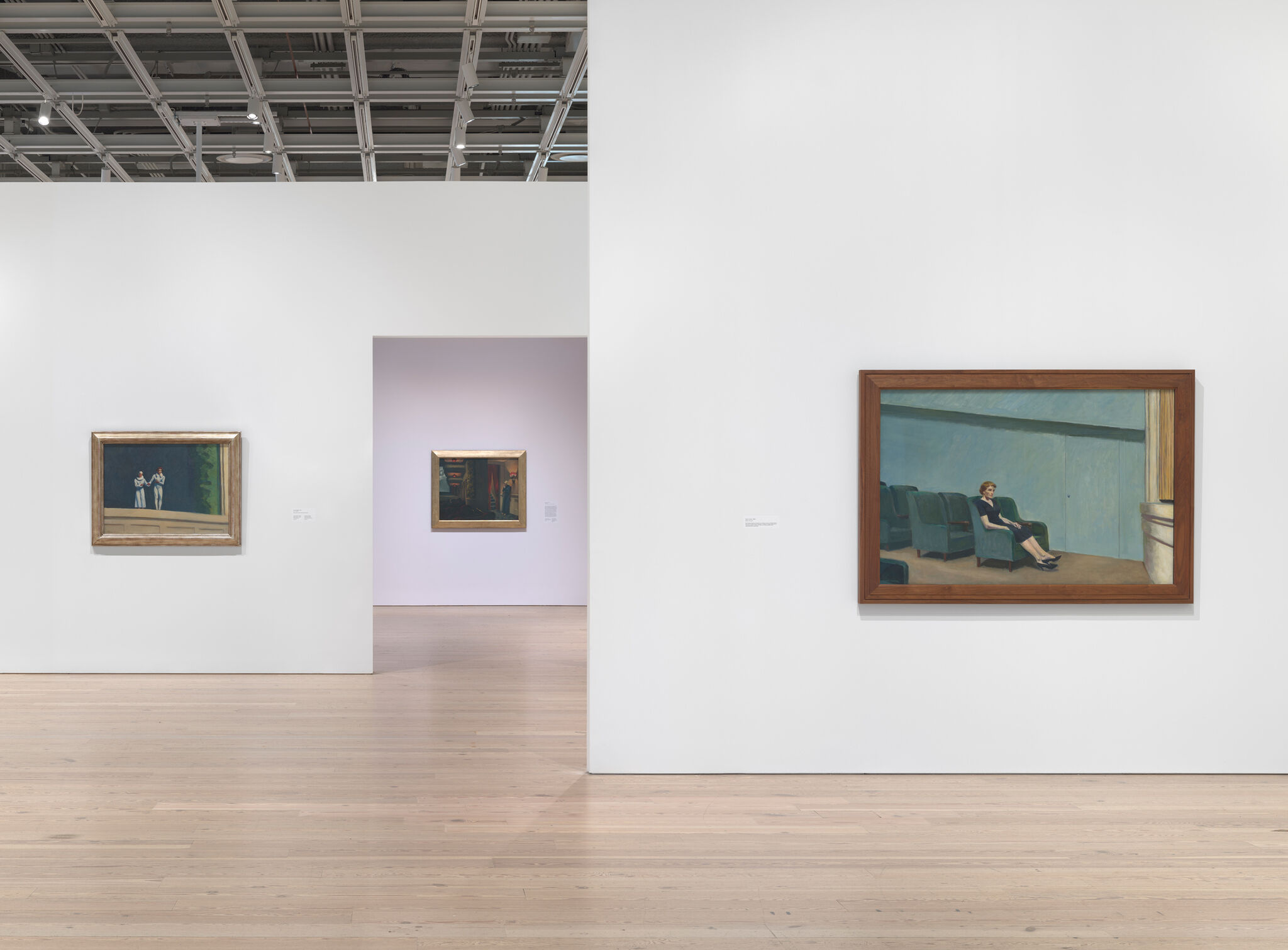
Installation view of Edward Hopper’s New York (Whitney Museum of American Art, New York, October 19, 2022- March 5, 2023). From left to right: Two Comedians, 1966; New York Movie, 1939; Intermission, 1963. Photograph by Ron Amstutz
-
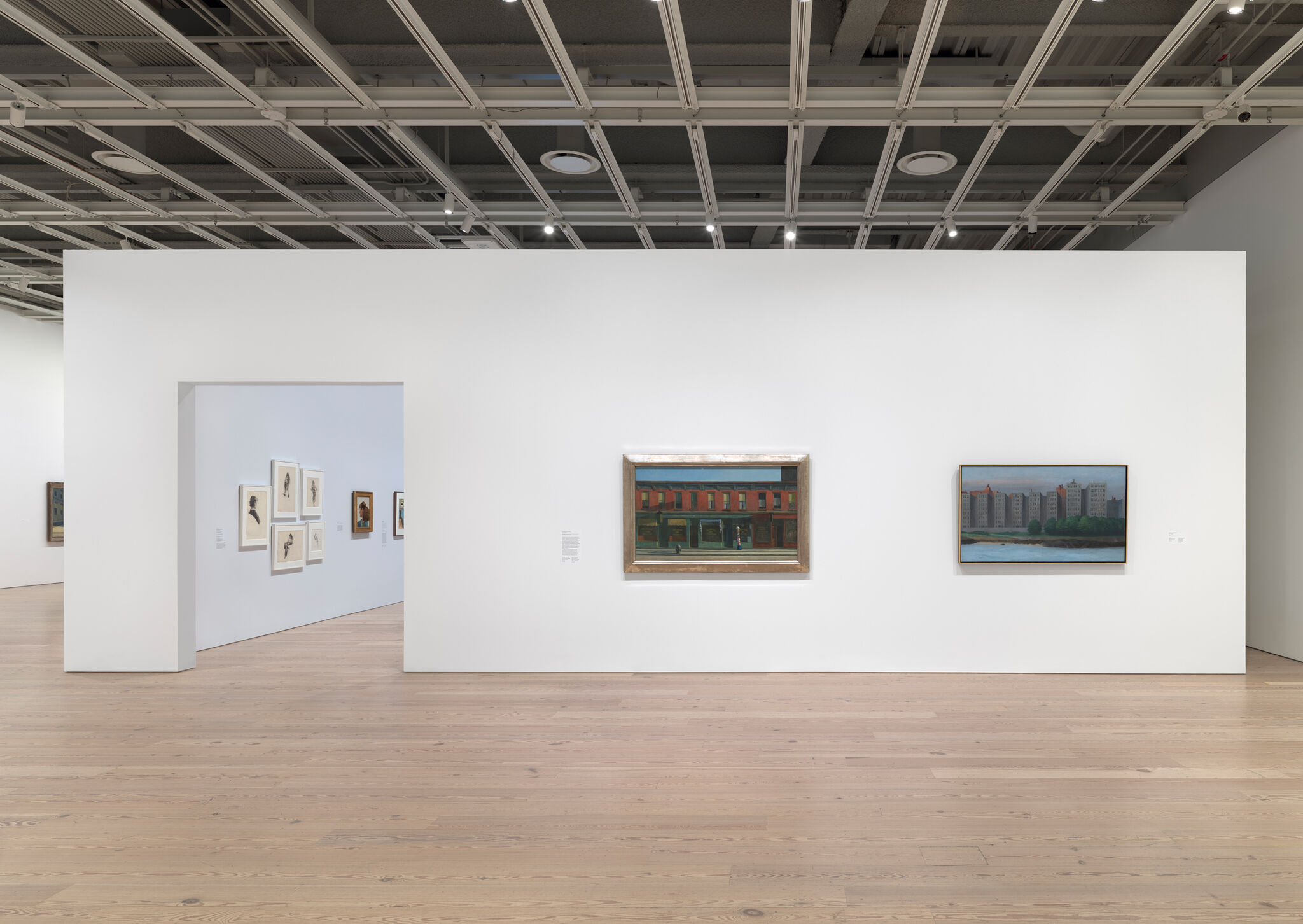
Installation view of Edward Hopper’s New York (Whitney Museum of American Art, New York, October 19, 2022- March 5, 2023). From left to right: New York Office, 1962; Study of Jo Hopper Seated, c. 1945-50; Study of Jo Hopper Reading, 1925; Jo Hopper Reading; 1935-40; Study of Jo Hopper Reading, 1934-35; Study of Jo Hopper Reading, c .1924-30; Jo Painting, 1936; Josephine Nivison Hopper, 74 Stairs to Studio at Three Washington Square North, c. 1932; Early Sunday Morning, 1930; Apartment Houses, East River, c. 1930. Photograph by Ron Amstutz
-
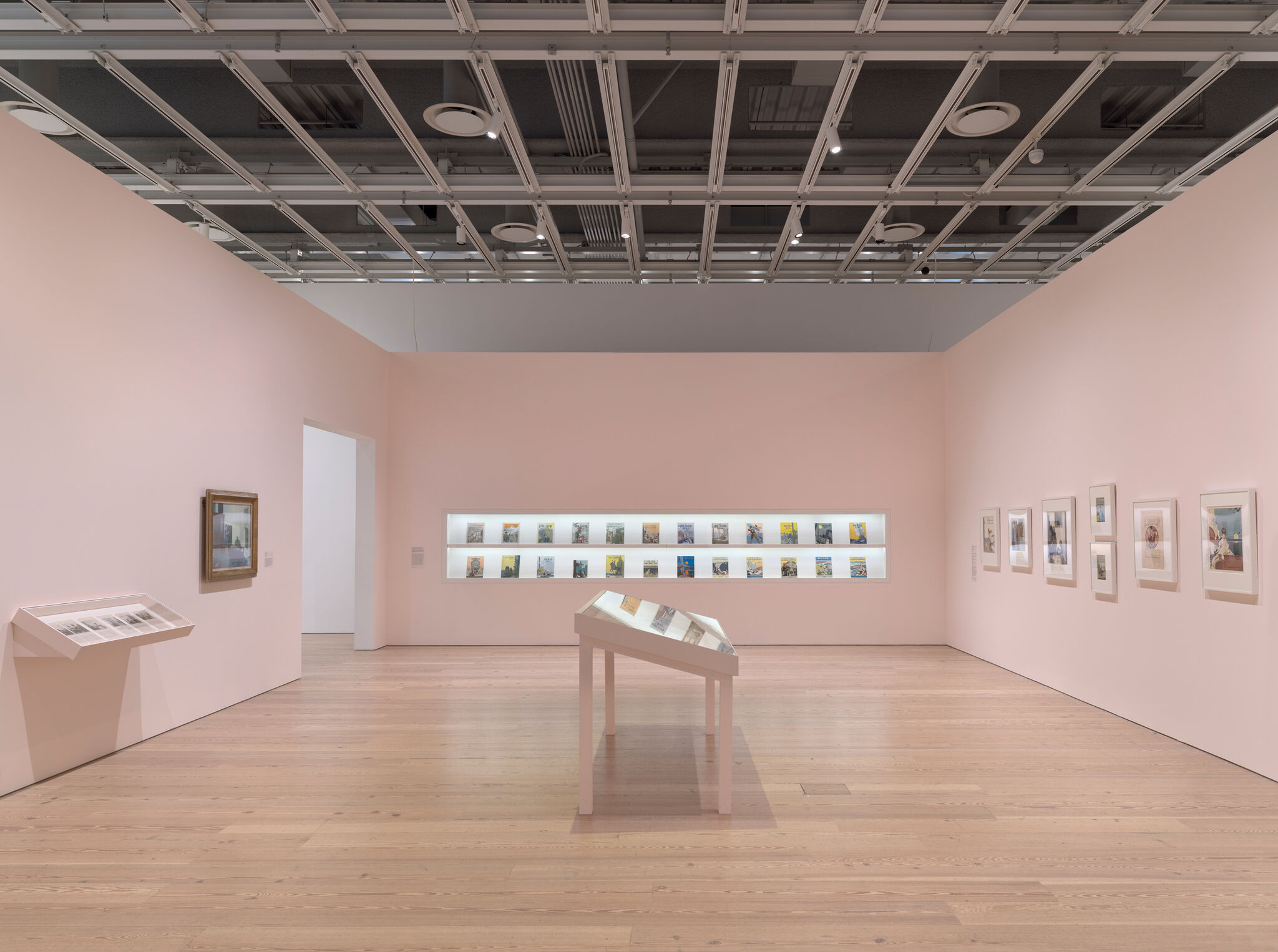
Installation view of Edward Hopper’s New York (Whitney Museum of American Art, New York, October 19, 2022- March 5, 2023). From left to right: Selection of Hopper’s Illustrations for Carrol D Murphy’s article “What Makes Men Buy?”, System, the Magazine of Business, September 1912; Selection of Hopper’s Illustrations for Carrol D Murphy’s article “The Spur of Pay and Promotion”, System, the Magazine of Business, June 1913; One of Hopper’s Illustrations for Charles Weinfeld’s article, “How I Sell Life Insurance”, System, the Magazine of Business, November 1913; Office at Night, 1940; Entries from 1920 Hopper’s Artist’s Ledger- Book IV, 1913-67; Wearing Apparel Show catalogue and directory, Madison Square Garden, New York, 1910; Brighton Flat Clasp Garters, c. 1909-11; Samuel W. Peck & Co. (“Sampeck clothes”), c. 1911-12; National Cigar Stands, c. 1911-12; Brigham, Hopkins Company Straw Hats (brochure), c. 1908; Scaffolding by Chesebro Whitman Co. Inc, c. 1911-12; RB Fashion-Clothes, c. 1911-1912; Brandegee Kincaid & Co., c. 1909-11; Knothe Unseen Suspenders, c. 1917-20; Cover Art by Hopper for Hotel Management, Morse Dry Dock Dial, La France, Tavern Topics, The Express Messenger, and Wells Fargo Messenger, 1917-25; New York and Its Houses, c. 1906-10; A Theater Entrance, 1906-10; In A Restaurant , 1916-25; Bulletin of the New York Edison Company, 1906-07; Bulletin of the New York Edison Company, 1906-07; Bricklayer’s Coffee Break, 1907-10; Boy and Moon, 1906-07. Photograph by Ron Amstutz
-
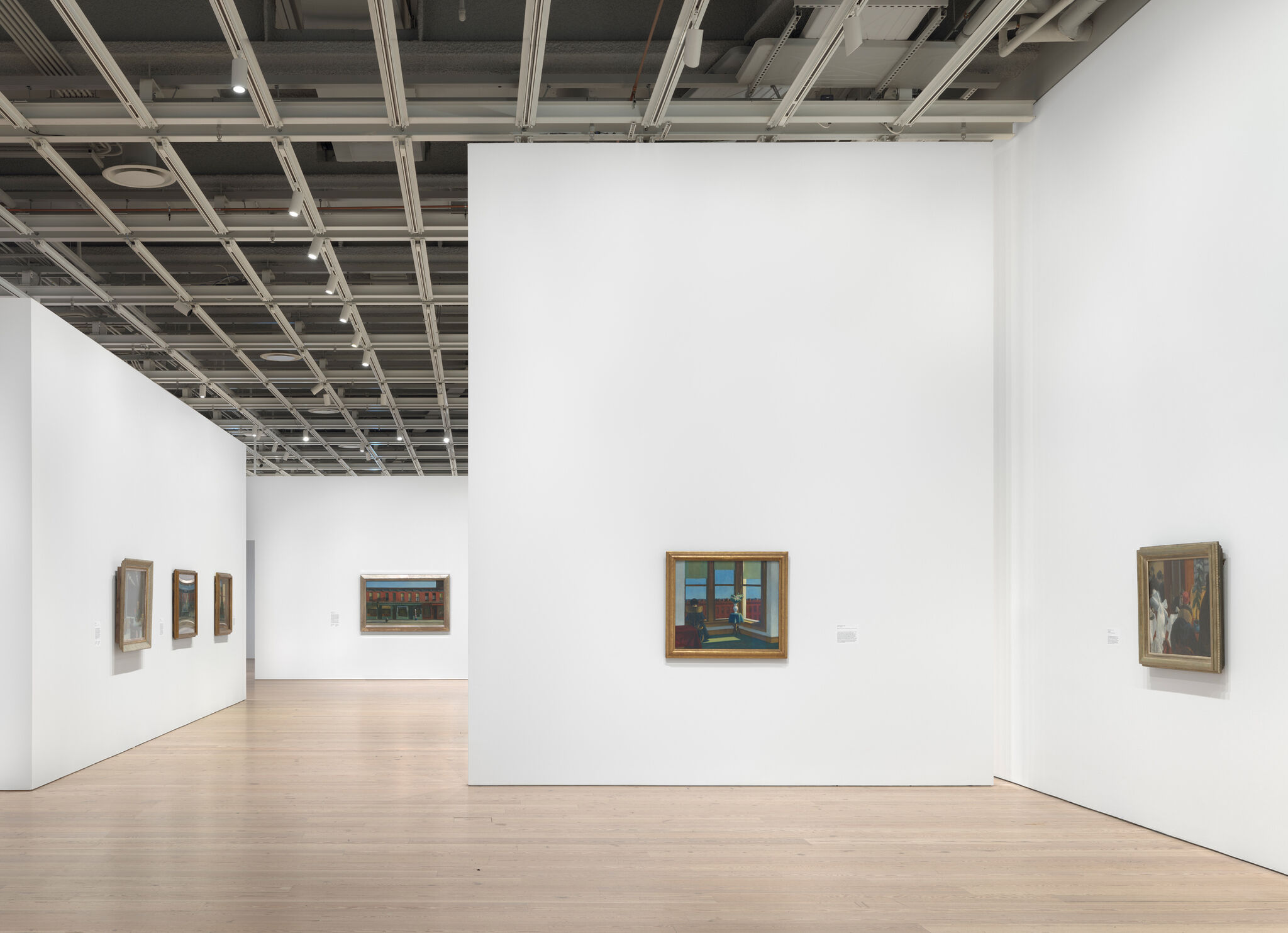
Installation view of Edward Hopper’s New York (Whitney Museum of American Art, New York, October 19, 2022- March 5, 2023). From left to right: Automat, 1927; Office in a Small City, 1953; Sunlight on Brownstones, 1956; Early Sunday Morning, 1930; Room in Brooklyn, 1932; New York Restaurant, c. 1922. Photograph by Ron Amstutz