
High Wire: Calder’s Circus at 100
Oct 18, 2025–Mar 9, 2026
High Wire: Calder’s Circus at 100
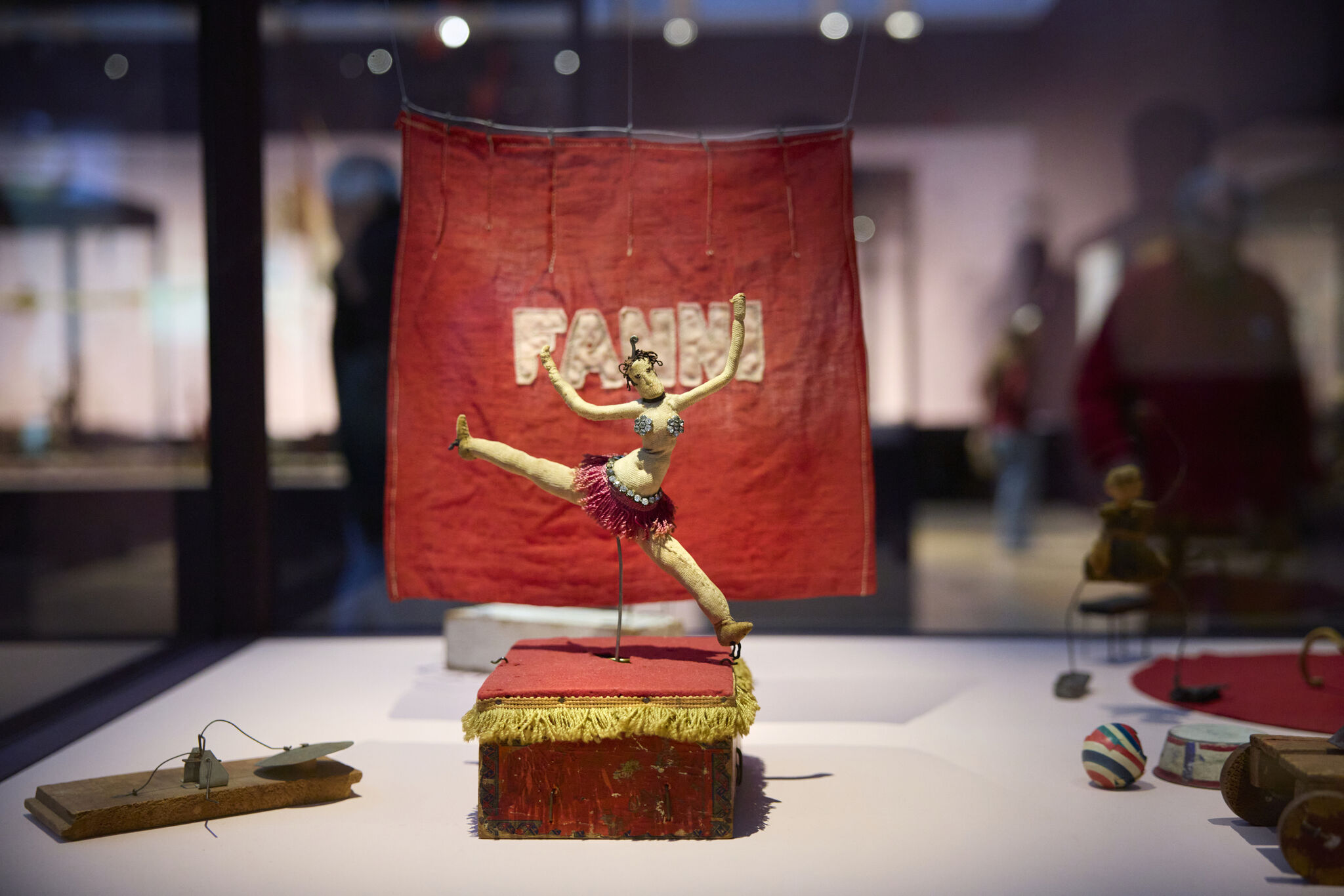
Alexander Calder, Calder's Circus (detail), 1926-31 (installation view, High Wire: Calder’s Circus at 100, Whitney Museum of American Art, New York, October 18, 2025–March 9, 2026). Wire, wood, metal, cloth, yarn, paper, cardboard, leather, string, rubber tubing, corks, buttons, rhinestones, pipe cleaners, and bottle caps, dimensions variable. Whitney Museum of American Art, New York; purchase with funds from a public fundraising campaign in May 1982. One half the funds were contributed by the Robert Wood Johnson Jr. Charitable Trust. Additional major donations were given by The Lauder Foundation; the Robert Lehman Foundation, Inc.; the Howard and Jean Lipman Foundation, Inc.; an anonymous donor; The T. M. Evans Foundation, Inc.; MacAndrews & Forbes Group, Incorporated; the DeWitt Wallace Fund, Inc.; Martin and Agneta Gruss; Anne Phillips; Mr. and Mrs. Laurance S. Rockefeller; the Simon Foundation, Inc.; Marylou Whitney; Bankers Trust Company; Mr. and Mrs. Kenneth N. Dayton; Joel and Anne Ehrenkranz; Irvin and Kenneth Feld; Flora Whitney Miller. More than 500 individuals from 26 states and abroad also contributed to the campaign 83.36.1-72. © 2026 Calder Foundation, New York / Artists Rights Society (ARS), New York. Photograph by Gus Powell
En 1926, Alexander Calder (1898–1976) era un joven artista estadounidense viviendo en París que empezó a producir lo que hoy se considera su obra de arte más formativa: El circo de Calder. Calder creó un espectáculo circense en miniatura, con animales y personajes que montaba para audiencias en vivo, con utilería hecha a mano, música e iluminación. El espectáculo de varios actos que ofrecía el Circo de Calder, o Cirque Calder en francés, a veces se prolongaba hasta dos horas y atraía a miembros de la vanguardia de la ciudad, incluyendo a artistas como Marcel Duchamp, Joan Miró, Piet Mondrian e Isamu Noguchi. Calder se acomodaba en el suelo para manipular las figuras hechas de materiales como alambre, madera, metal, corcho, tela y cuerda, que con su inventiva mecánica y la flexibilidad de sus cuerpos, volaban por el aire, tragaban espadas y realizaban hazañas audaces. Como muchos artistas de la época, Calder sentía fascinación por el circo y disfrutaba no sólo de su amplio atractivo popular y carácter dramático y arriesgado, sino también de su estructura y cinética: “Me encanta la mecánica de las cosas, la amplitud del espacio y el centro de atención”.
Cuerda floja: El circo de Calder a sus 100 años conmemora el centenario de esta obra icónica junto con otros ejemplares de esculturas de alambre y dibujos de la temática circense de Calder, material de archivo relacionado y muestras tempranas de sus esculturas abstractas. Para Calder, el circo ofrecía un tema dinámico con el que podía explorar las ideas centrales de equilibrio y movimiento que definirían su obra a partir de 1931, especialmente con la invención de la escultura “móvil”, punto de partida de un artista que llegó a afirmar: “Pienso mejor en alambre”.
Press highlights
“... one of the most joyous shows in town.” —Hyperallergic
“A century on, [Calder’s] Circus still stands.” —Artnet
“... few artworks have captured the hearts of art lovers of all ages more than Alexander Calder’s humble yet expansive masterpiece ...” —Harper’s Bazaar
“...these materials trace the artist’s spontaneous spirit and humor...” —Galerie Magazine
“La expresión del buen humor resulta imperecedera.” —La Vanguardia
“...Calder’s Circus is for everyone.” —Hyperallergic
“... a jewel of the museum’s collection ...” —AnOther Magazine
“... offers audiences a rare opportunity to see the full scope of a piece that continues to resonate ...” —Untitled Magazine
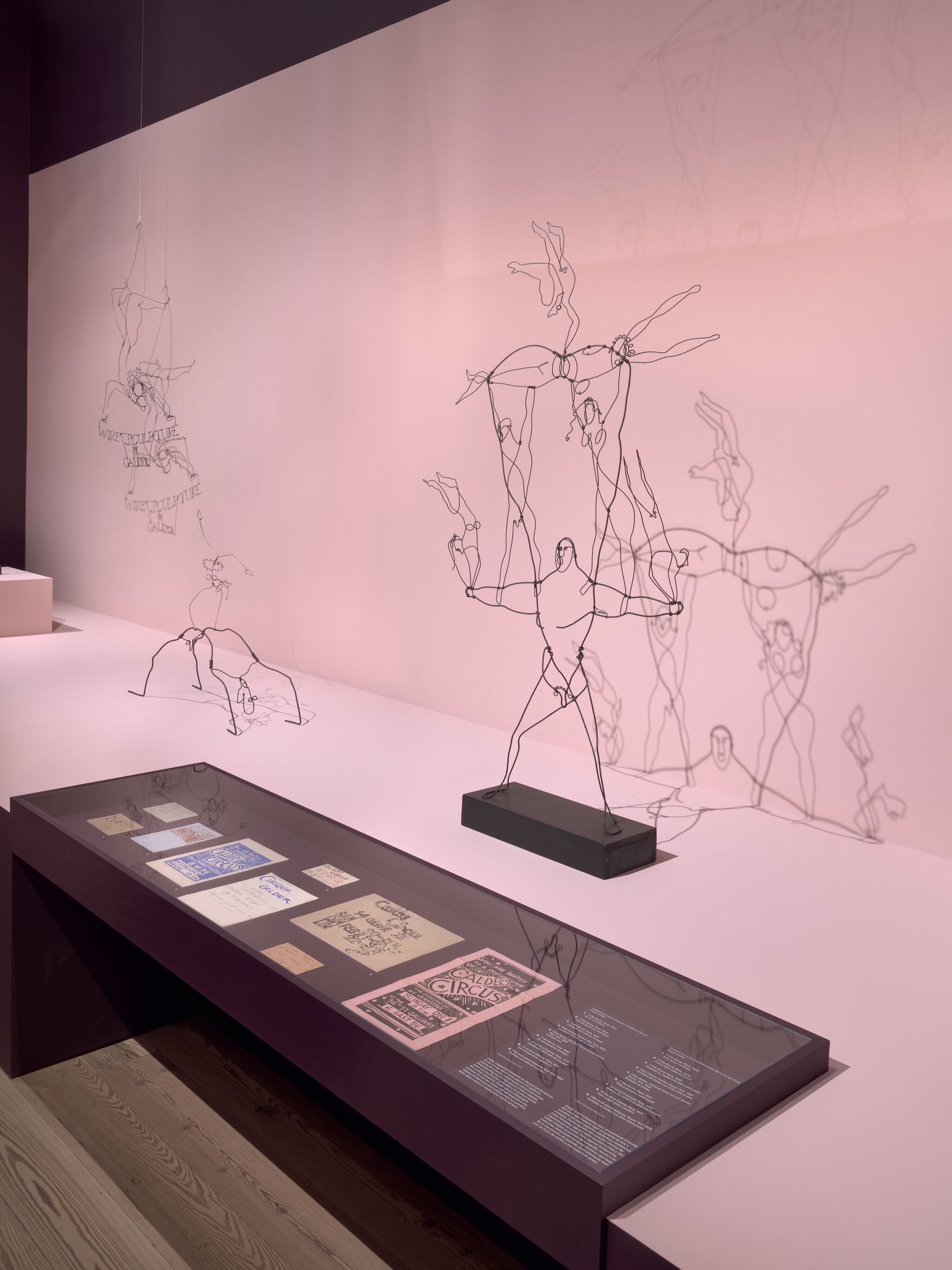
Installation view of High Wire: Calder’s Circus at 100 (Whitney Museum of American Art, New York, October 18, 2025–March 2026). From left to right: Alexander Calder, Wire Sculpture by Calder, 1928; Alexander Calder, Acrobats, 1929; Alexander Calder, The Brass Family, 1929. In vitrine, from left to right: Alexander Calder, Invitations to performance of Calder’s Circus/Cirque Calder (7 Villa Brune, Paris), 1930; Alexander Calder, Invitation to performance of Calder’s Circus/Cirque Calder (Chez Hawes-Harden, New York), 1929; Alexander Calder, Invitation to performance of Calder’s Circus/Cirque Calder (Chez Matter, New York), 1942; Alexander Calder, Invitation to performance of Calder’s Circus/Cirque Calder (7 Villa Brune, Paris), 1930; Alexander Calder, Invitations to performance of Calder’s Circus/Cirque Calder (14 rue de la Colonie, Paris), 1932; Alexander Calder, Invitation to performance Calder’s Circus/Cirque Calder (Fifty-Sixth Street Galleries, New York), 1929. © 2026 Calder Foundation, New York / Artists Rights Society (ARS), New York. Photograph by Ron Amstutz
Installation photography
-
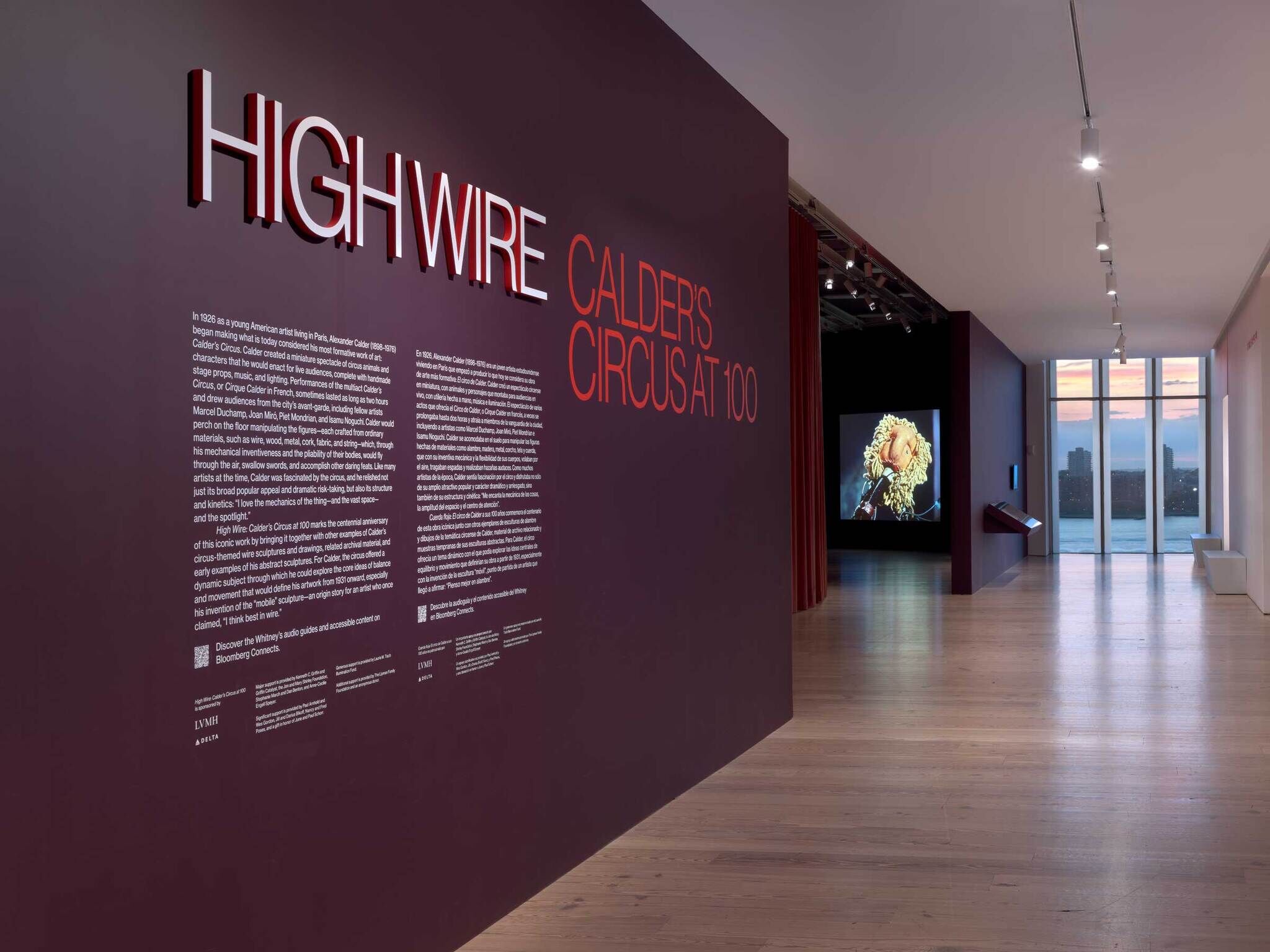
Installation view of High Wire: Calder’s Circus at 100 (Whitney Museum of American Art, New York, October 18, 2025–March 9, 2026). Projection: Carlos Vilardebó, Le Cirque Calder, 1961. © 2026 Calder Foundation, New York / Artists Rights Society (ARS), New York. Photograph by Ron Amstutz
-
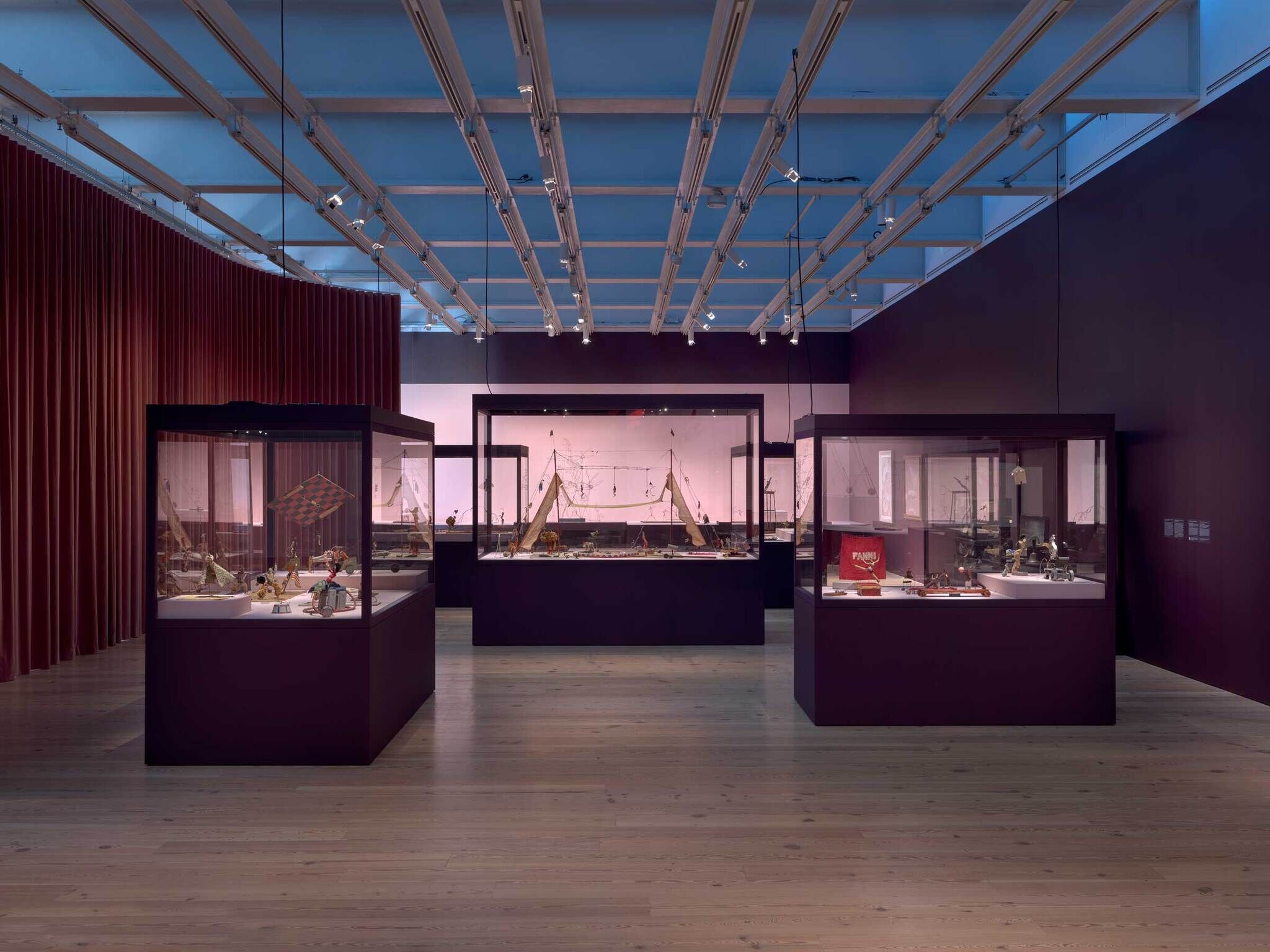
Installation view of High Wire: Calder’s Circus at 100 (Whitney Museum of American Art, New York, October 18, 2025–March 9, 2026). In vitrines: Alexander Calder, Calder’s Circus, 1926-31. © 2026 Calder Foundation, New York / Artists Rights Society (ARS), New York. Photograph by Ron Amstutz
-

Installation view of High Wire: Calder’s Circus at 100 (Whitney Museum of American Art, New York, October 18, 2025–March 9, 2026). From left to right: Alexander Calder, Two Acrobats, 1932; Alexander Calder, Lone Pole, 1932; Alexander Calder, Sphérique I, 1931; Alexander Calder, Object with Red Discs, 1931; Alexander Calder, Big Red, 1959; Alexander Calder, Little Ball with Counterweight, c. 1931; Projection: Carlos Vilardebó, Le Cirque Calder, 1961. © 2026 Calder Foundation, New York / Artists Rights Society (ARS), New York. Photograph by Ron Amstutz
-
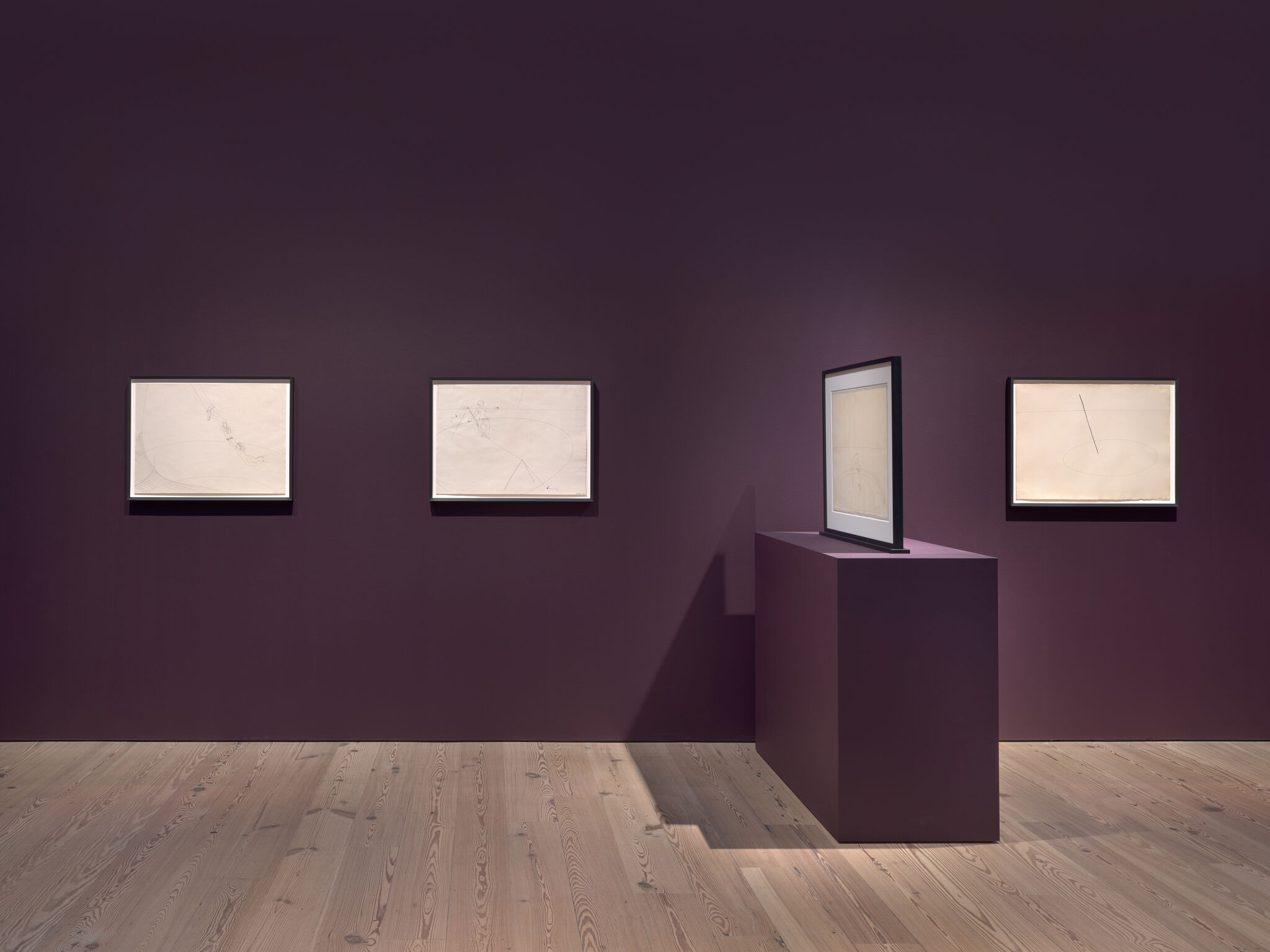
Installation view of High Wire: Calder’s Circus at 100 (Whitney Museum of American Art, New York, October 18, 2025–March 9, 2026). From left to right: Alexander Calder, The Catch IV, 1932; Alexander Calder, Tightrope Walker, 1932; Alexander Calder, Two Acrobats, 1932; Alexander Calder, Lone Pole, 1932. © 2026 Calder Foundation, New York / Artists Rights Society (ARS), New York. Photograph by Ron Amstutz
-
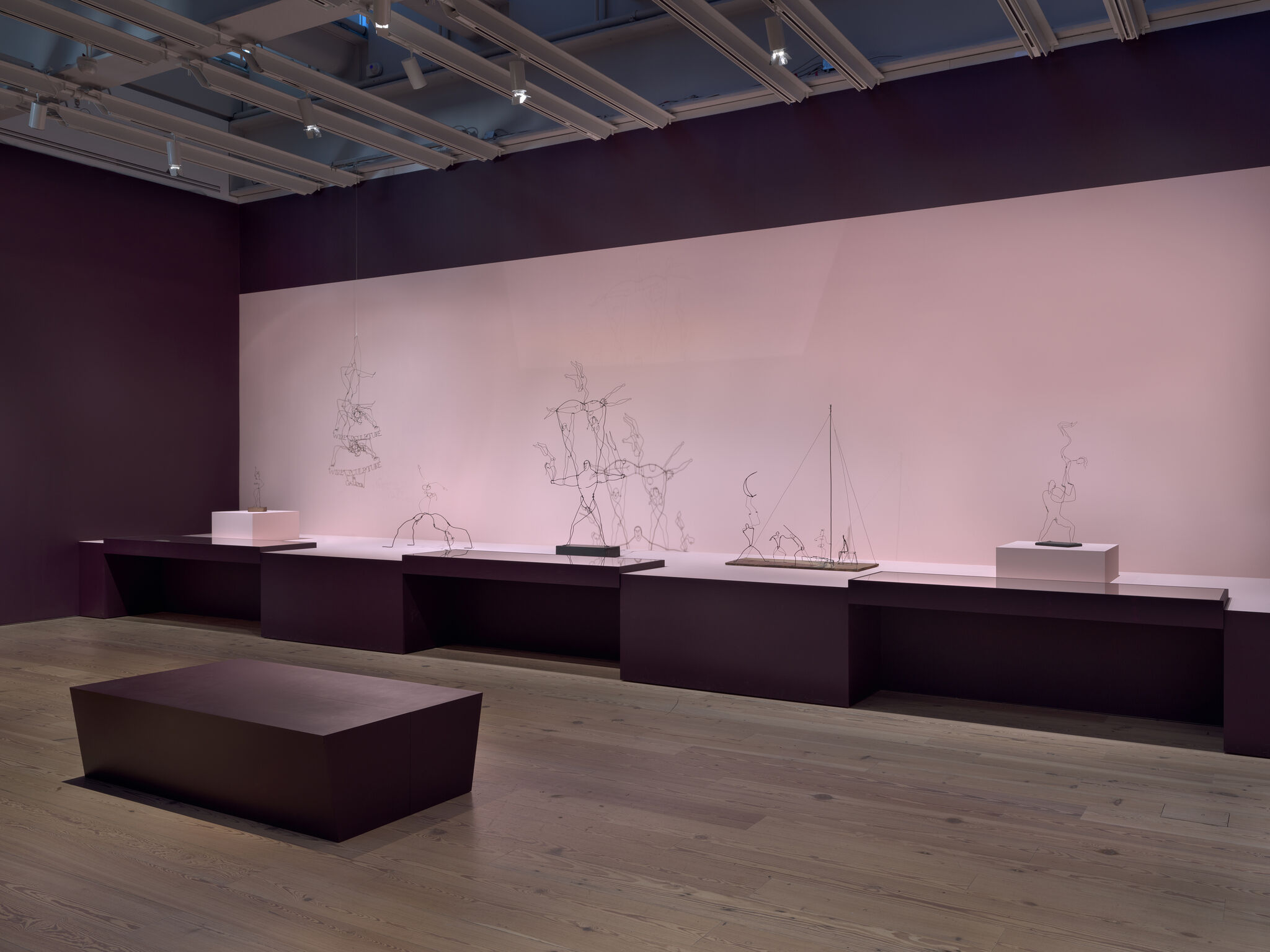
Installation view of High Wire: Calder’s Circus at 100 (Whitney Museum of American Art, New York, October 18, 2025–March 9, 2026). From left to right: Alexander Calder, Victorine (The Circus Queen), 1928; Alexander Calder, Wire Sculpture by Calder, 1928; Alexander Calder, Acrobats, 1929; Alexander Calder, The Brass Family, 1929; Alexander Calder, Circus Scene, 1929; Alexander Calder, Acrobats, c. 1927. © 2026 Calder Foundation, New York / Artists Rights Society (ARS), New York. Photograph by Ron Amstutz
-
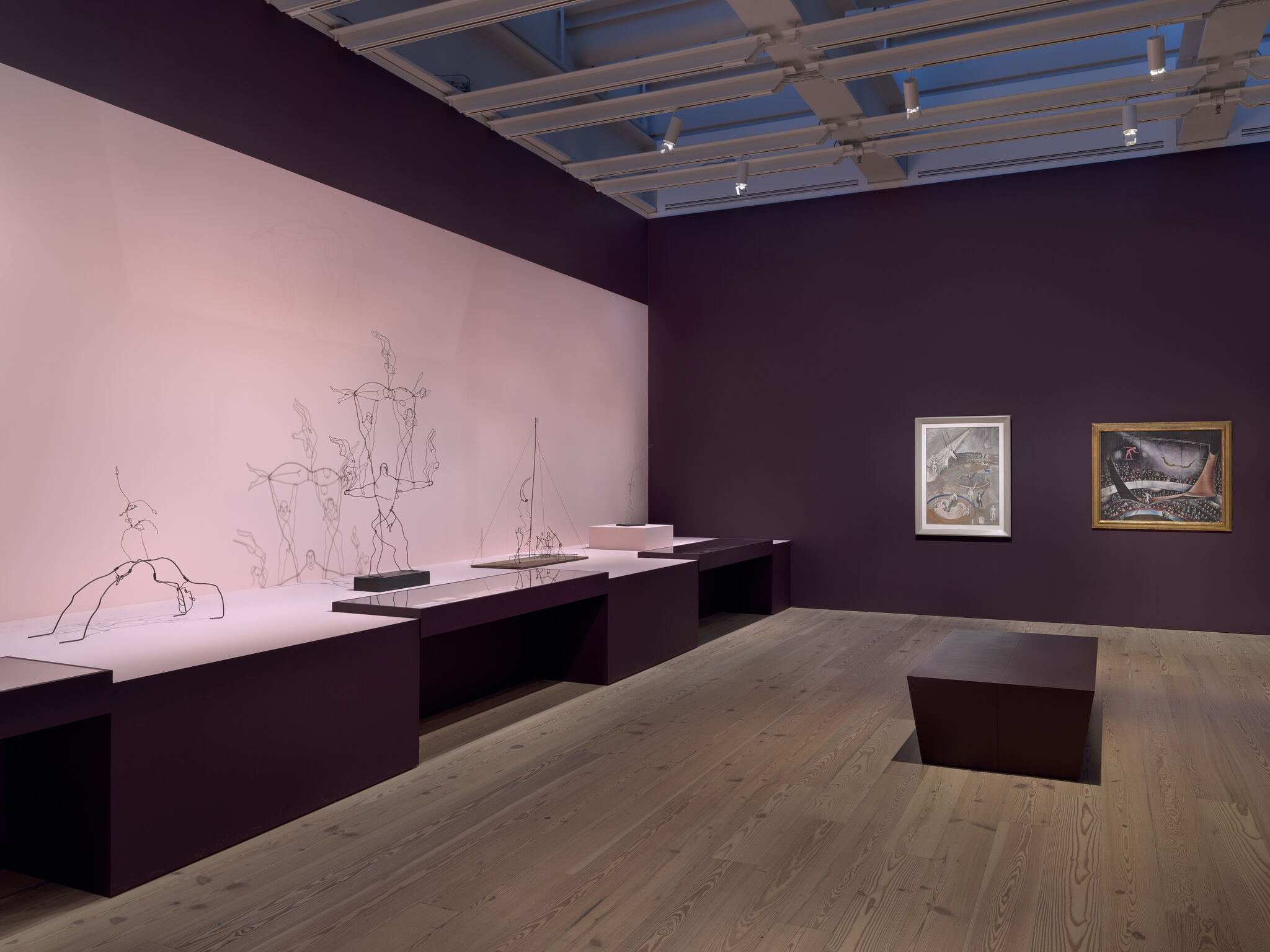
Installation view of High Wire: Calder’s Circus at 100 (Whitney Museum of American Art, New York, October 18, 2025–March 9, 2026). From left to right: Alexander Calder, Acrobats, 1929; Alexander Calder, The Brass Family, 1929; Alexander Calder, Circus Scene, 1929; Alexander Calder, Acrobats, c. 1927; Alexander Calder, Untitled (Circus scene; polo match), c. 1926; Alexander Calder, The Flying Trapeze, 1925. © 2026 Calder Foundation, New York / Artists Rights Society (ARS), New York. Photograph by Ron Amstutz
-
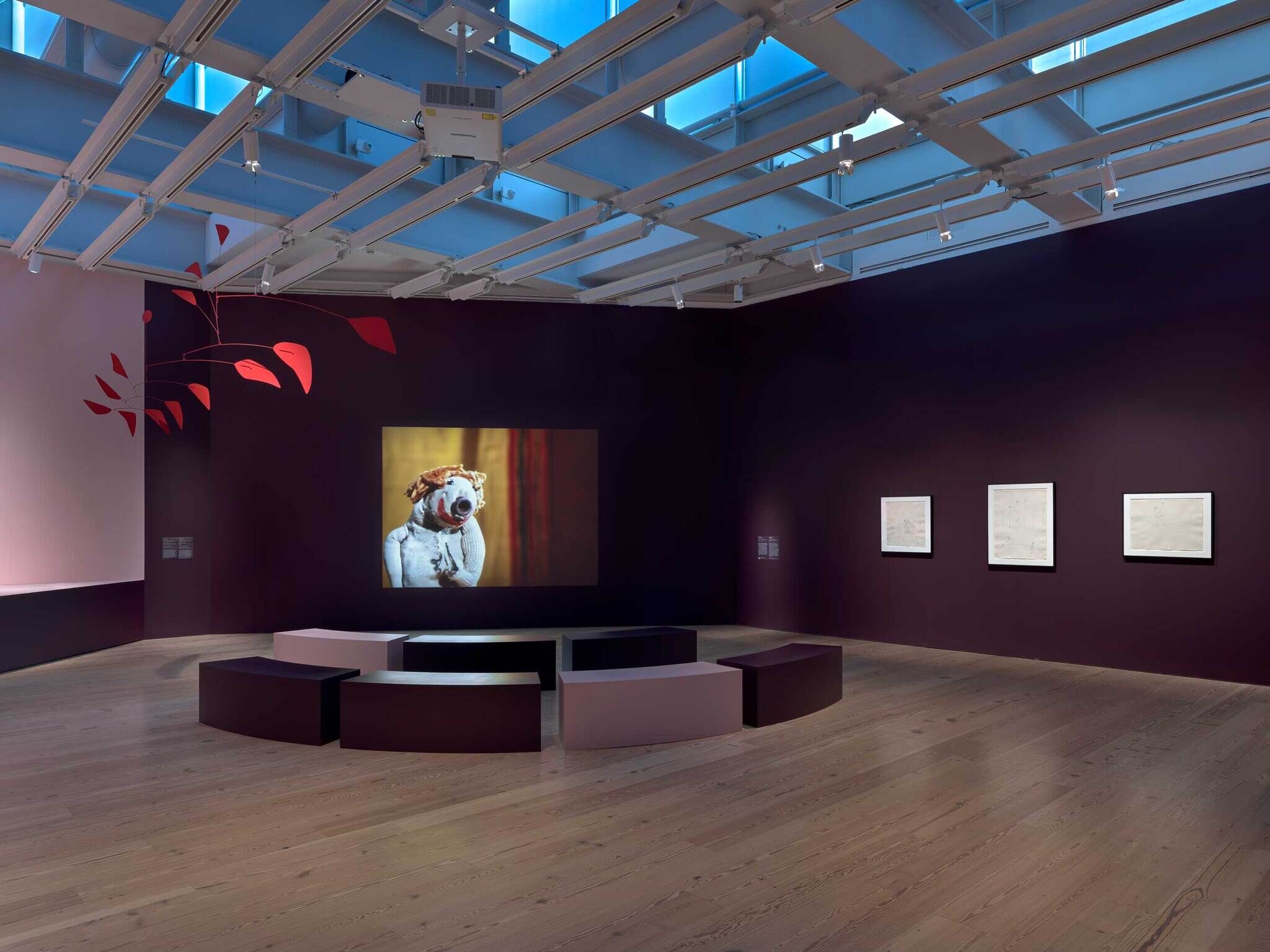
Installation view of High Wire: Calder’s Circus at 100 (Whitney Museum of American Art, New York, October 18, 2025–March 9, 2026). From left to right: Alexander Calder, Big Red, 1959; Projection: Carlos Vilardebó, Le Cirque Calder, 1961; Alexander Calder, The Wild Beast Cage, 1932; Alexander Calder, Tumbler on Swing, 1931; Alexander Calder, On the High Wire, 1932. © 2026 Calder Foundation, New York / Artists Rights Society (ARS), New York. Photograph by Ron Amstutz
-
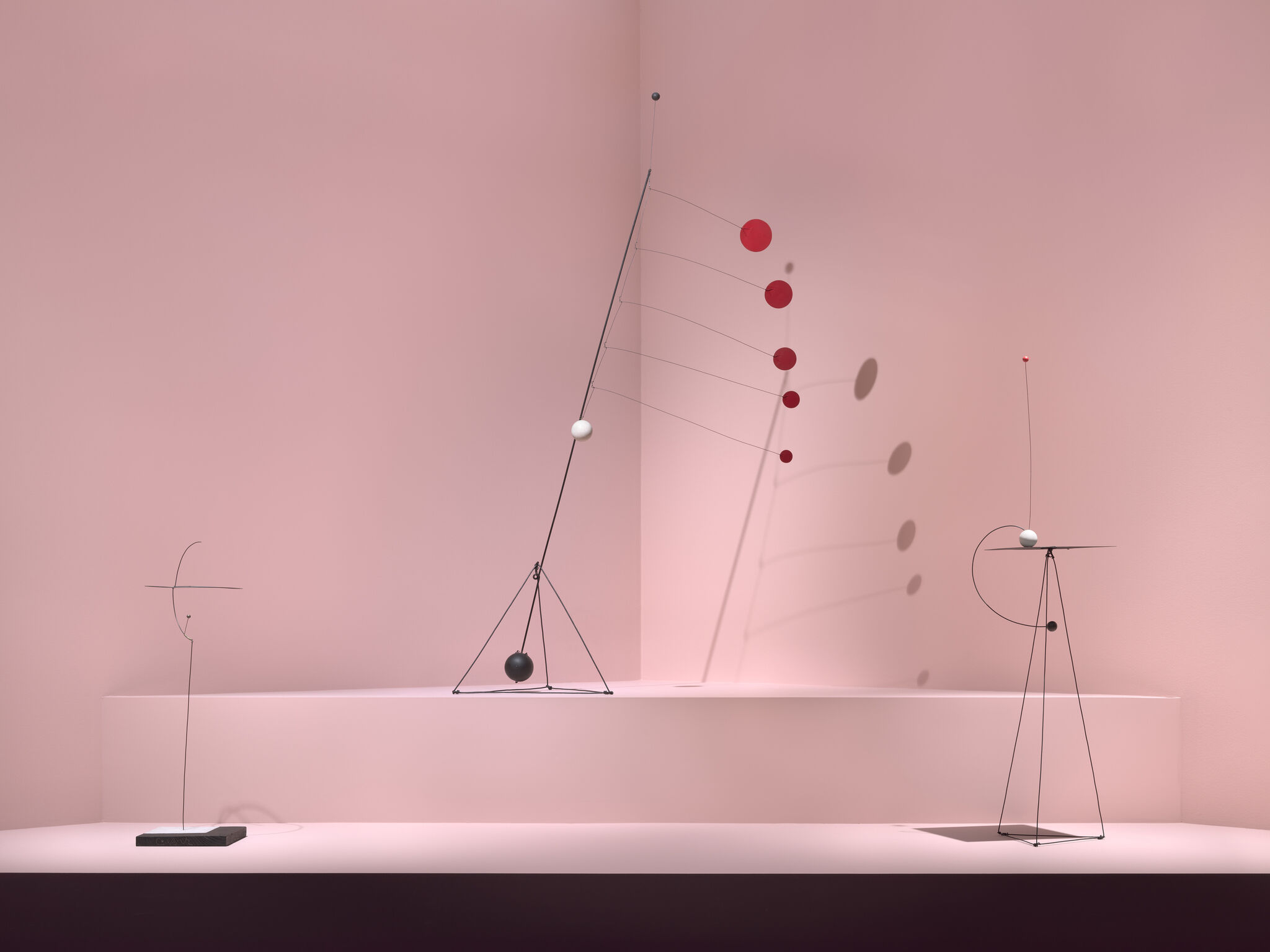
Installation view of High Wire: Calder’s Circus at 100 (Whitney Museum of American Art, New York, October 18, 2025–March 9, 2026). From left to right: Alexander Calder, Sphérique I, 1931; Alexander Calder, Object with Red Discs, 1931; Alexander Calder, Little Ball with Counterweight, c. 1931. © 2026 Calder Foundation, New York / Artists Rights Society (ARS), New York. Photograph by Ron Amstutz
-
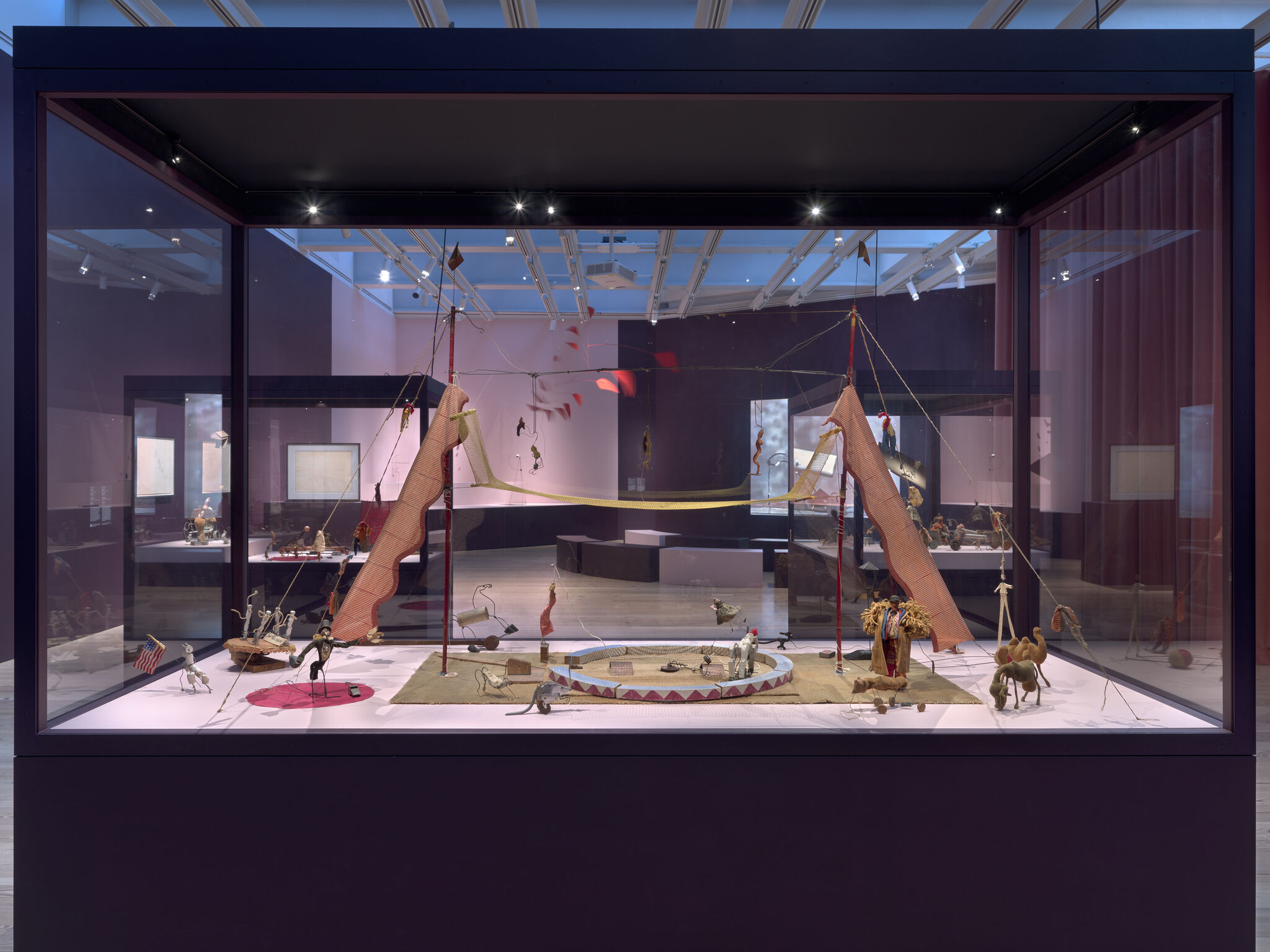
Installation view of High Wire: Calder’s Circus at 100 (Whitney Museum of American Art, New York, October 18, 2025–March 2026). In vitrine: Alexander Calder, Calder’s Circus, 1926–31. Back, from left to right: Alexander Calder, The Catch IV, 1932; Alexander Calder, Tightrope Walker, 1932; Alexander Calder, Two Acrobats, 1932; Alexander Calder, Sphérique I, 1931; Alexander Calder, Little Ball with Counterweight, c. 1931; Alexander Calder, Big Red, 1959; Projection: Carlos Vilardebó, Le Cirque Calder, 1961. © 2026 Calder Foundation, New York / Artists Rights Society (ARS), New York. Photograph by Ron Amstutz
-
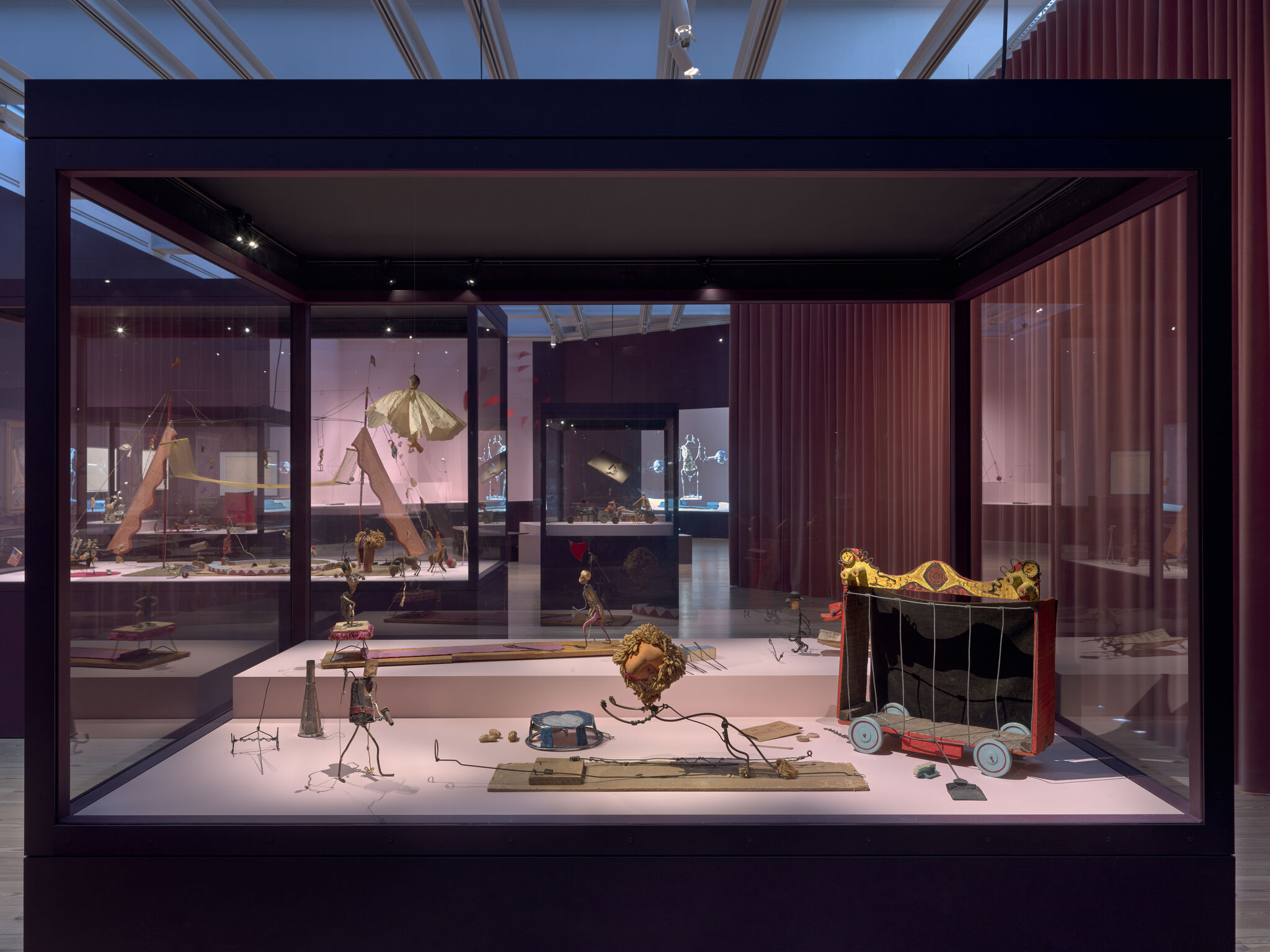
Installation view of High Wire: Calder’s Circus at 100 (Whitney Museum of American Art, New York, October 18, 2025–March 2026). In vitrines: Alexander Calder, Calder’s Circus, 1926–31. Projection: Carlos Vilardebó, Le Cirque Calder, 1961. © 2026 Calder Foundation, New York / Artists Rights Society (ARS), New York. Photograph by Ron Amstutz
-
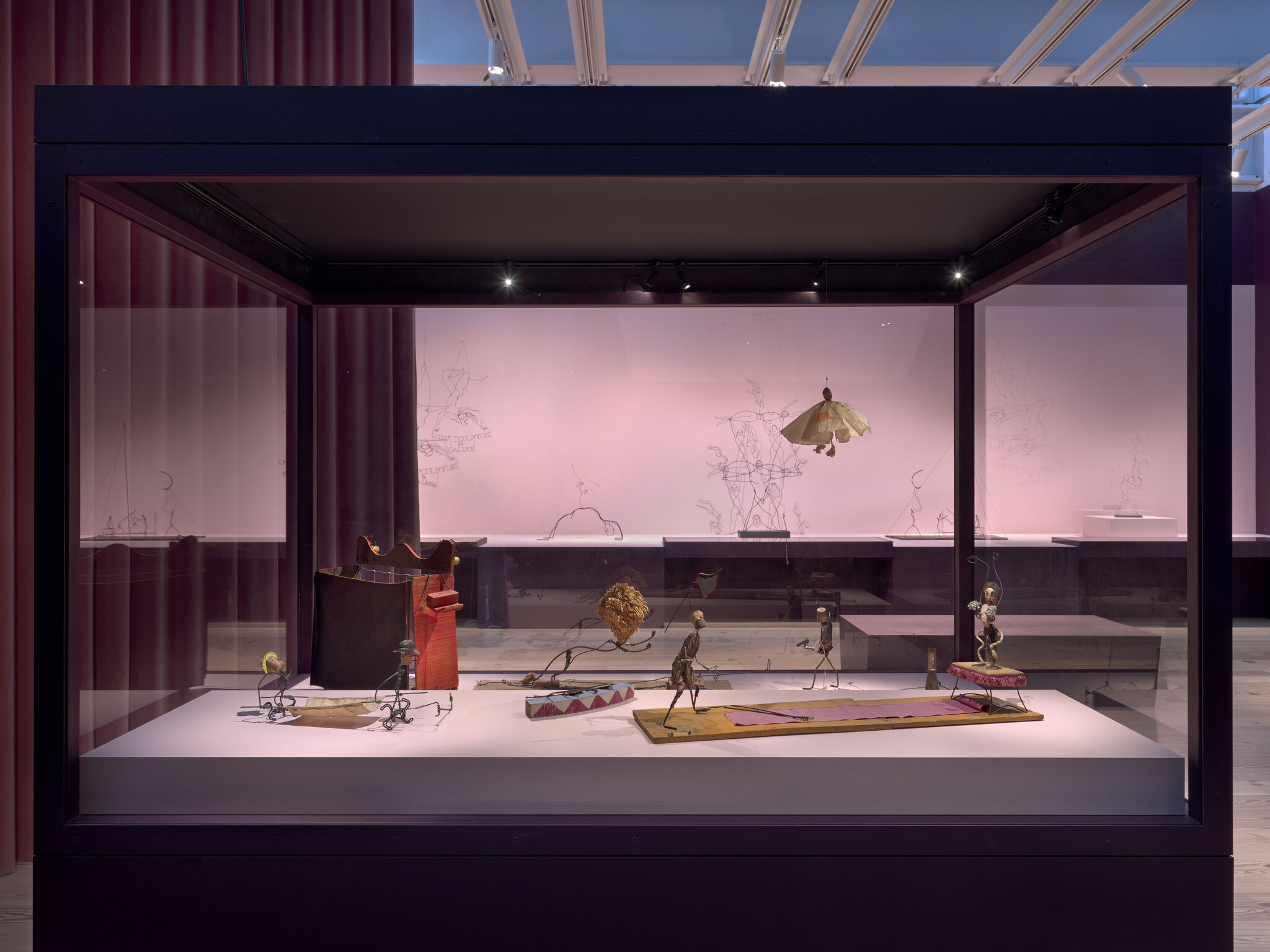
Installation view of High Wire: Calder’s Circus at 100 (Whitney Museum of American Art, New York, October 18, 2025–March 2026). In vitrine: Alexander Calder, Calder’s Circus, 1926–31. Back, from left to right: Alexander Calder, Wire Sculpture by Calder, 1928; Alexander Calder, Acrobats, 1929; Alexander Calder, The Brass Family, 1929; Alexander Calder, Circus Scene, 1929; Alexander Calder, Acrobats, c. 1927. © 2026 Calder Foundation, New York / Artists Rights Society (ARS), New York. Photograph by Ron Amstutz
-
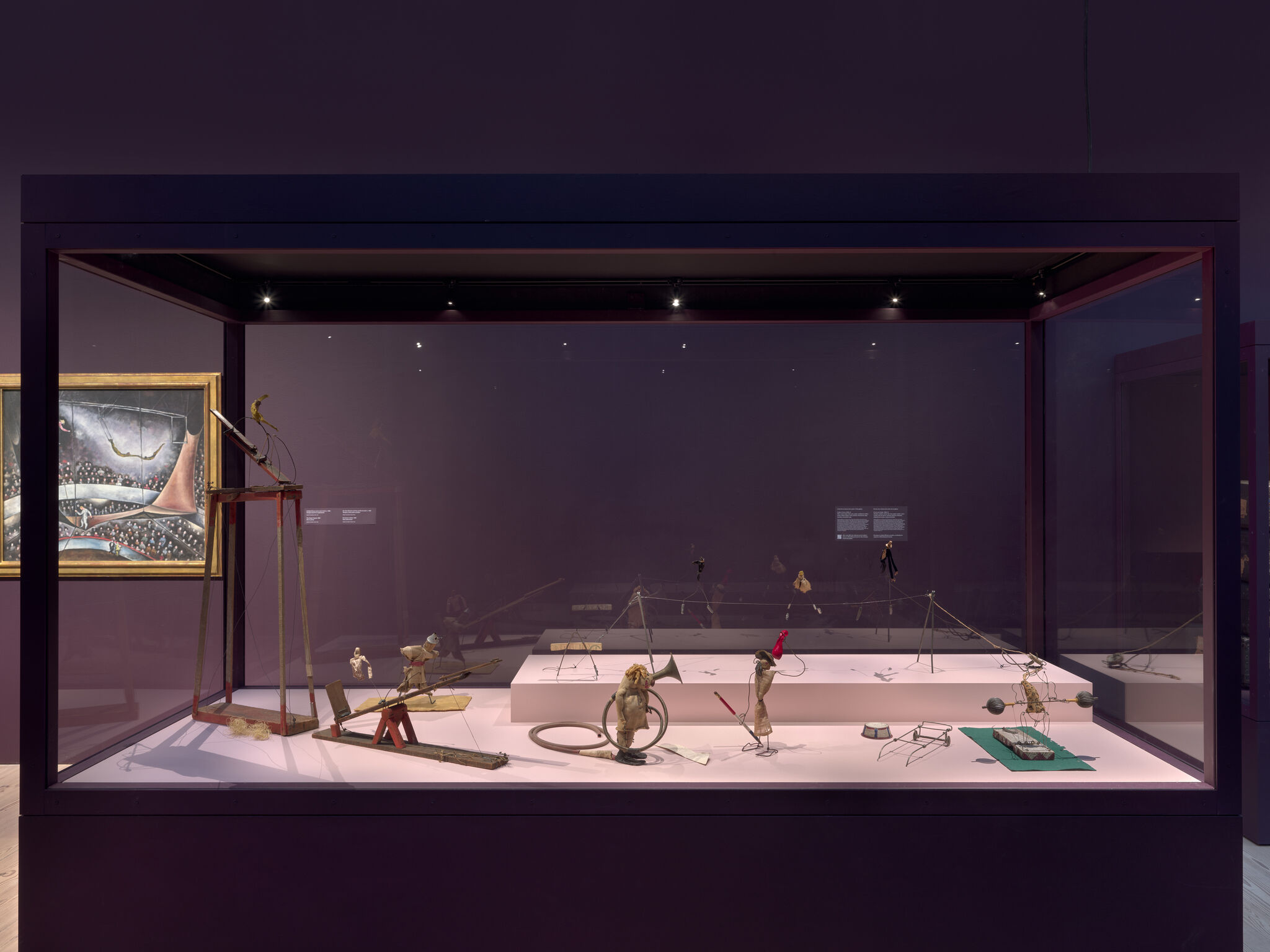
Installation view of High Wire: Calder’s Circus at 100 (Whitney Museum of American Art, New York, October 18, 2025–March 2026). From left to right: Alexander Calder, The Flying Trapeze, 1925; In vitrine: Alexander Calder, Calder’s Circus, 1926–31. © 2026 Calder Foundation, New York / Artists Rights Society (ARS), New York. Photograph by Ron Amstutz
-
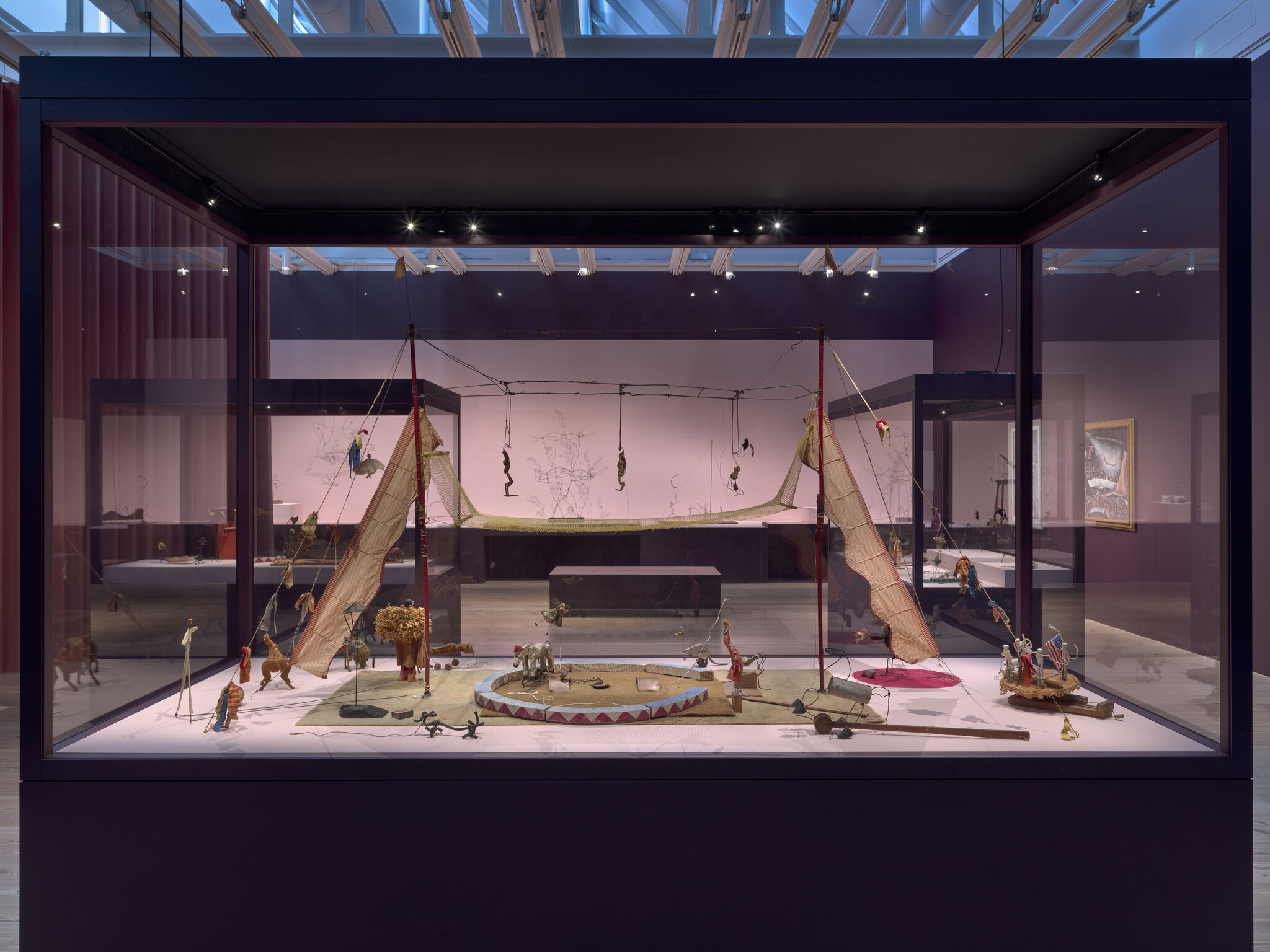
Installation view of High Wire: Calder’s Circus at 100 (Whitney Museum of American Art, New York, October 18, 2025–March 2026). In vitrine: Alexander Calder, Calder’s Circus, 1926–31. Back, from left to right: Alexander Calder, Wire Sculpture by Calder, 1928; Alexander Calder, The Brass Family, 1929; Alexander Calder, Circus Scene, 1929; Alexander Calder, Untitled (Circus scene; polo match), c. 1926; Alexander Calder, The Flying Trapeze, 1925. © 2026 Calder Foundation, New York / Artists Rights Society (ARS), New York. Photograph by Ron Amstutz
-
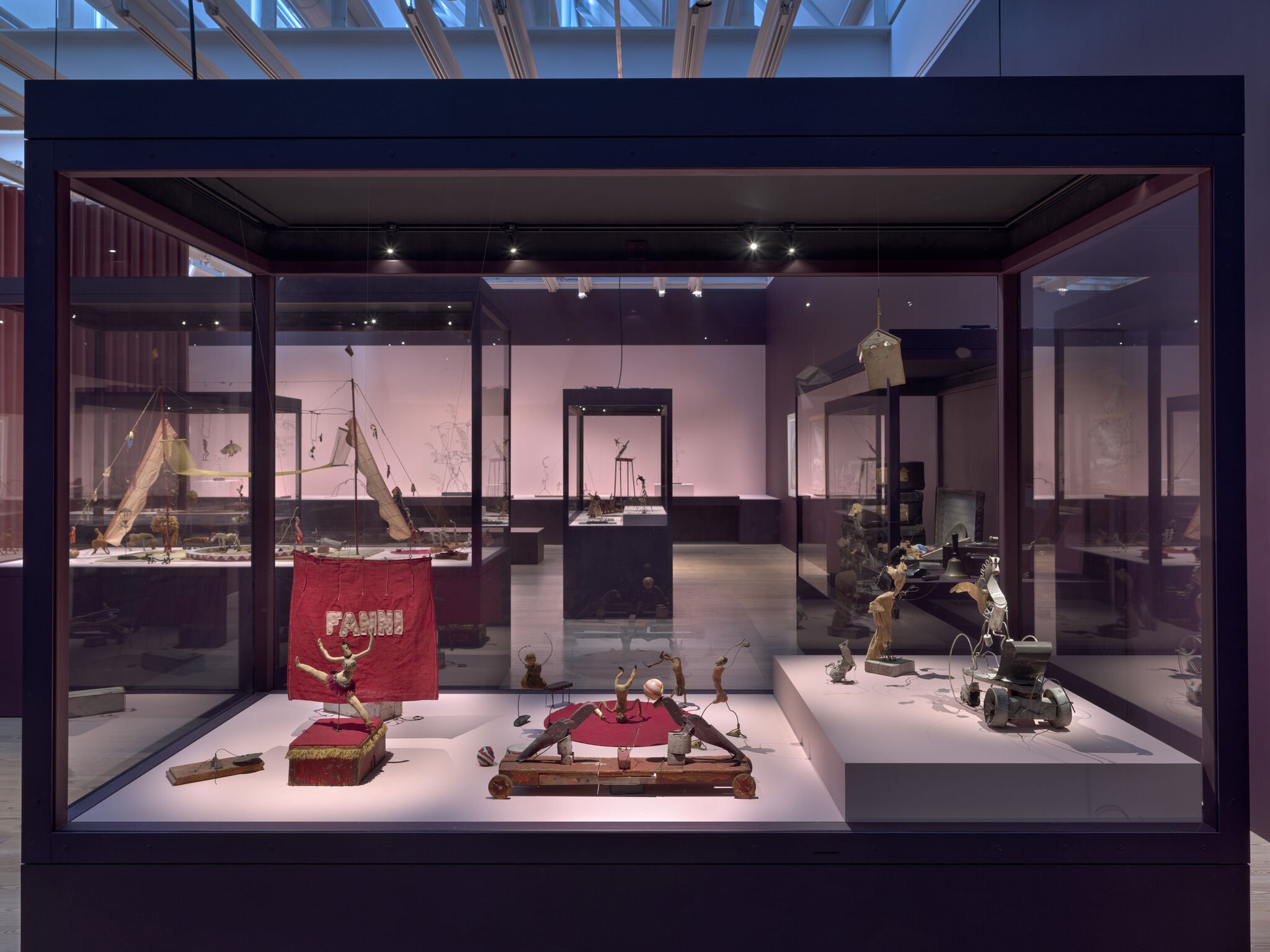
Installation view of High Wire: Calder’s Circus at 100 (Whitney Museum of American Art, New York, October 18, 2025–March 2026). In vitrines: Alexander Calder, Calder’s Circus, 1926–31. Back, from left to right: Alexander Calder, Wire Sculpture by Calder, 1928; Alexander Calder, Acrobats, 1929; Alexander Calder, The Brass Family, 1929; Alexander Calder, Circus Scene, 1929; Alexander Calder, Acrobats, c. 1927; Alexander Calder, Untitled (Circus scene; polo match), c. 1926; Alexander Calder, The Flying Trapeze, 1925. © 2026 Calder Foundation, New York / Artists Rights Society (ARS), New York. Photograph by Ron Amstutz
-
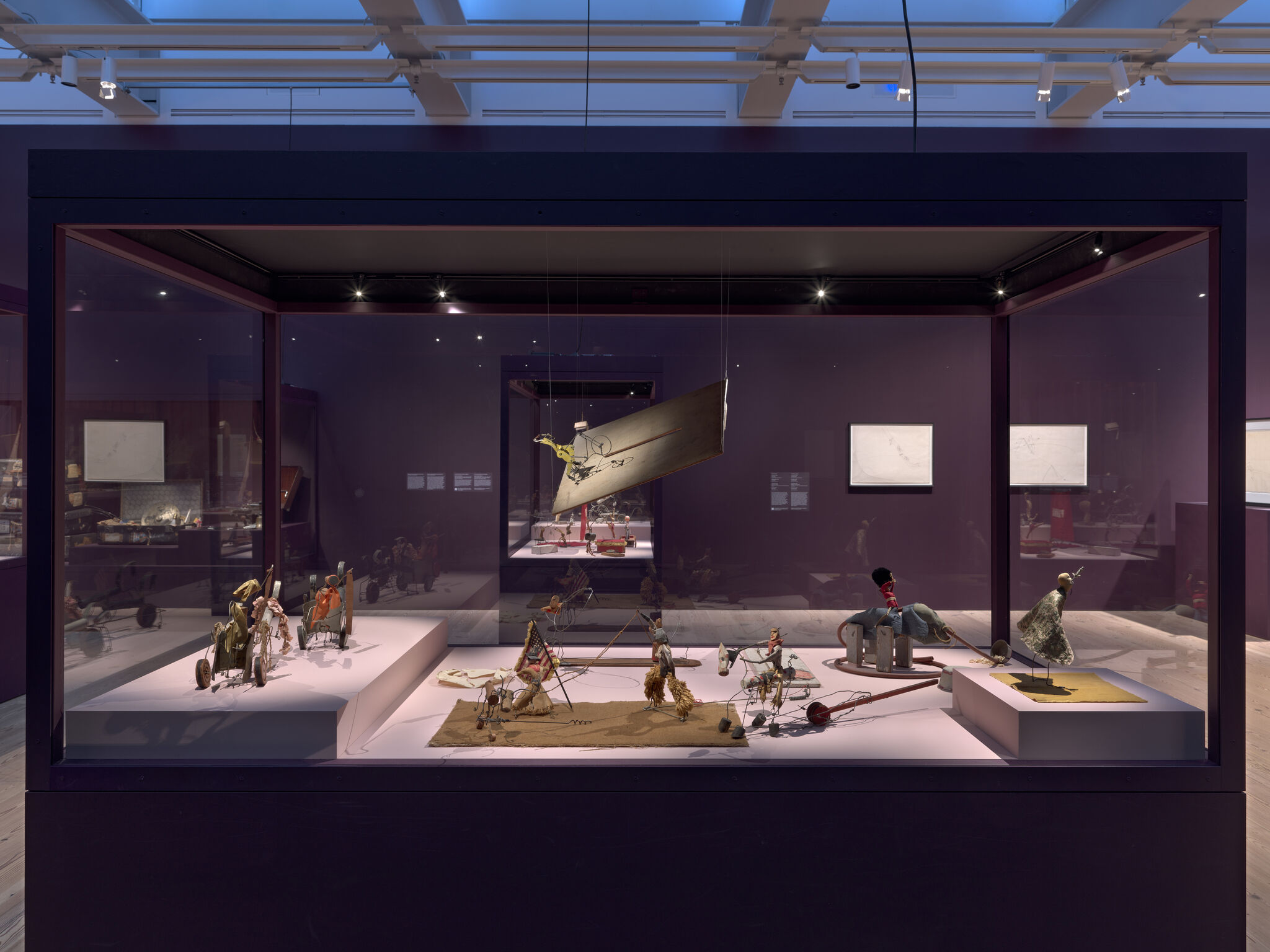
Installation view of High Wire: Calder’s Circus at 100 (Whitney Museum of American Art, New York, October 18, 2025–March 2026). In vitrine: Alexander Calder, Calder’s Circus, 1926–31. Back, from left to right: Alexander Calder, The Catch IV, 1932; Alexander Calder, Tightrope Walker, 1932; Alexander Calder, Two Acrobats, 1932. © 2026 Calder Foundation, New York / Artists Rights Society (ARS), New York. Photograph by Ron Amstutz
-
Installation view of High Wire: Calder’s Circus at 100 (Whitney Museum of American Art, New York, October 18, 2025–March 2026). From left to right: Alexander Calder, Wire Sculpture by Calder, 1928; Alexander Calder, Acrobats, 1929; Alexander Calder, The Brass Family, 1929. In vitrine, from left to right: Alexander Calder, Invitations to performance of Calder’s Circus/Cirque Calder (7 Villa Brune, Paris), 1930; Alexander Calder, Invitation to performance of Calder’s Circus/Cirque Calder (Chez Hawes-Harden, New York), 1929; Alexander Calder, Invitation to performance of Calder’s Circus/Cirque Calder (Chez Matter, New York), 1942; Alexander Calder, Invitation to performance of Calder’s Circus/Cirque Calder (7 Villa Brune, Paris), 1930; Alexander Calder, Invitations to performance of Calder’s Circus/Cirque Calder (14 rue de la Colonie, Paris), 1932; Alexander Calder, Invitation to performance Calder’s Circus/Cirque Calder (Fifty-Sixth Street Galleries, New York), 1929. © 2026 Calder Foundation, New York / Artists Rights Society (ARS), New York. Photograph by Ron Amstutz
-
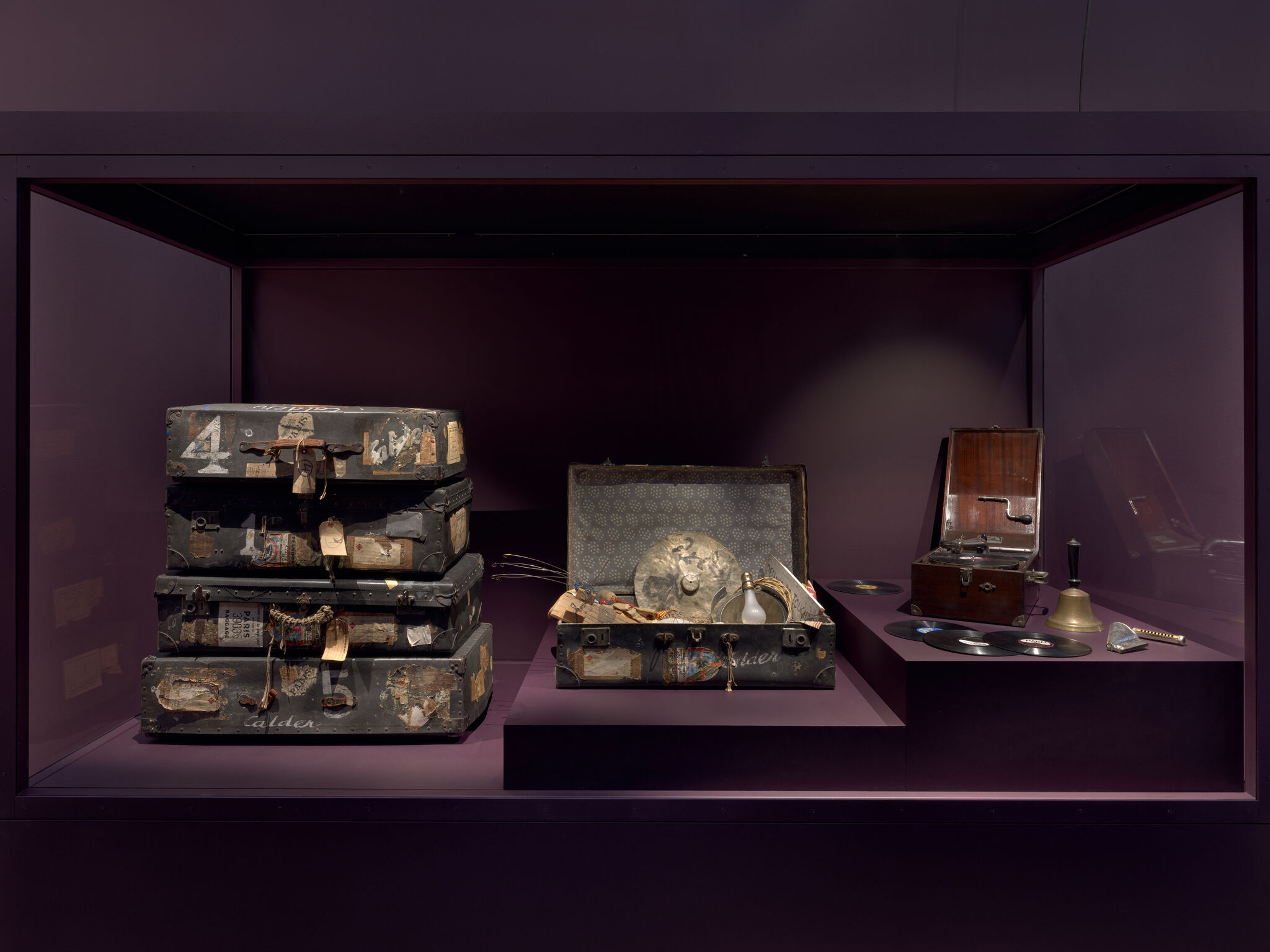
Installation view of High Wire: Calder’s Circus at 100 (Whitney Museum of American Art, New York, October 18, 2025-March 2026). In vitrine: Alexander Calder, Calder’s Circus, 1926-31. © 2026 Calder Foundation, New York / Artists Rights Society (ARS), New York. Photograph by Ron Amstutz
-
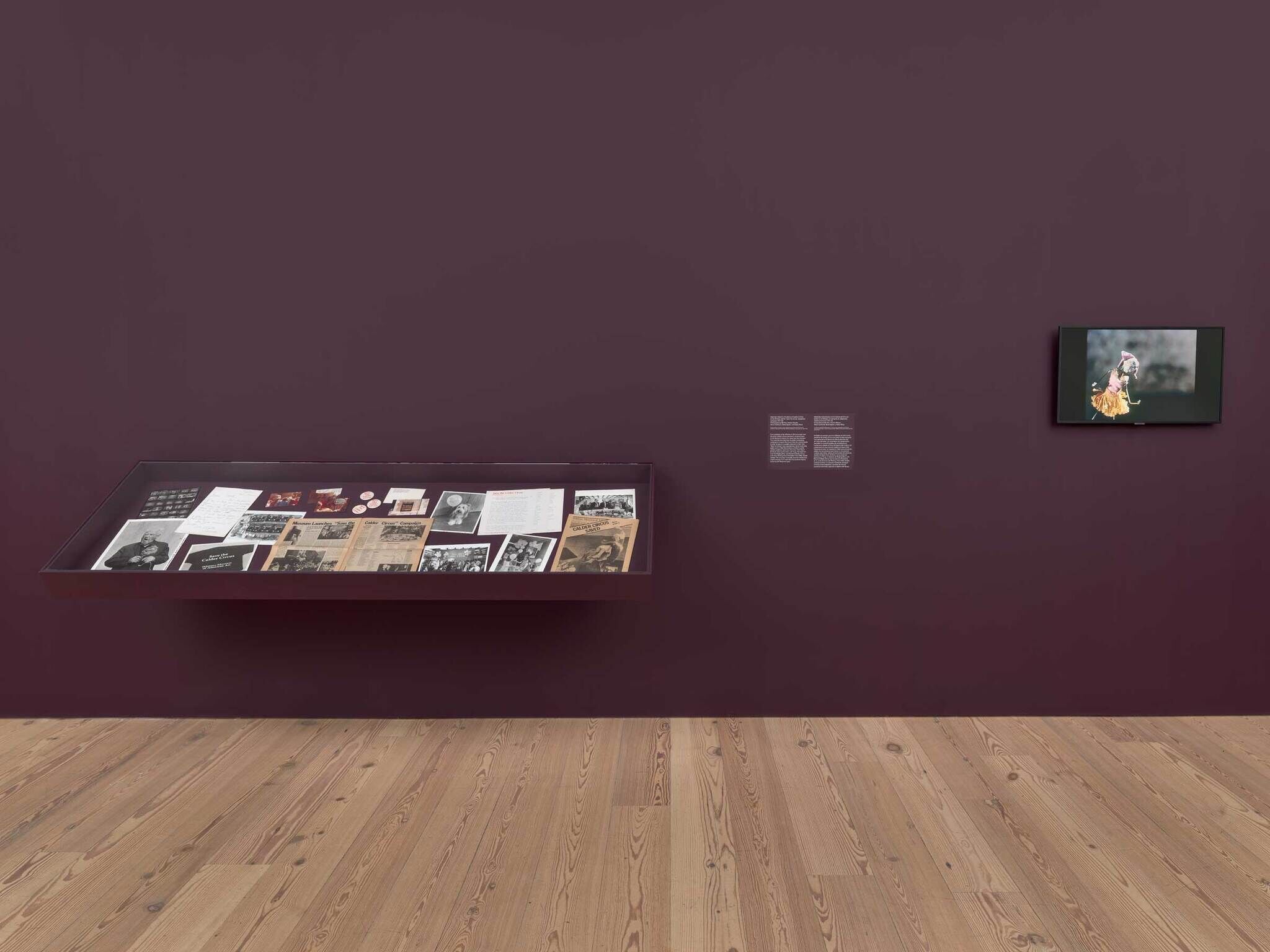
Installation view of High Wire: Calder’s Circus at 100 (Whitney Museum of American Art, New York, October 18, 2025–March 2026). In vitrine: Materials related to the history of Calder’s Circus at the Whitney and the “Save the Circus” acquisition campaign, 1971–82. On monitor: “Conserving Calder’s Circus”, 2012. © 2026 Calder Foundation, New York / Artists Rights Society (ARS), New York. Photograph by Ron Amstutz
-
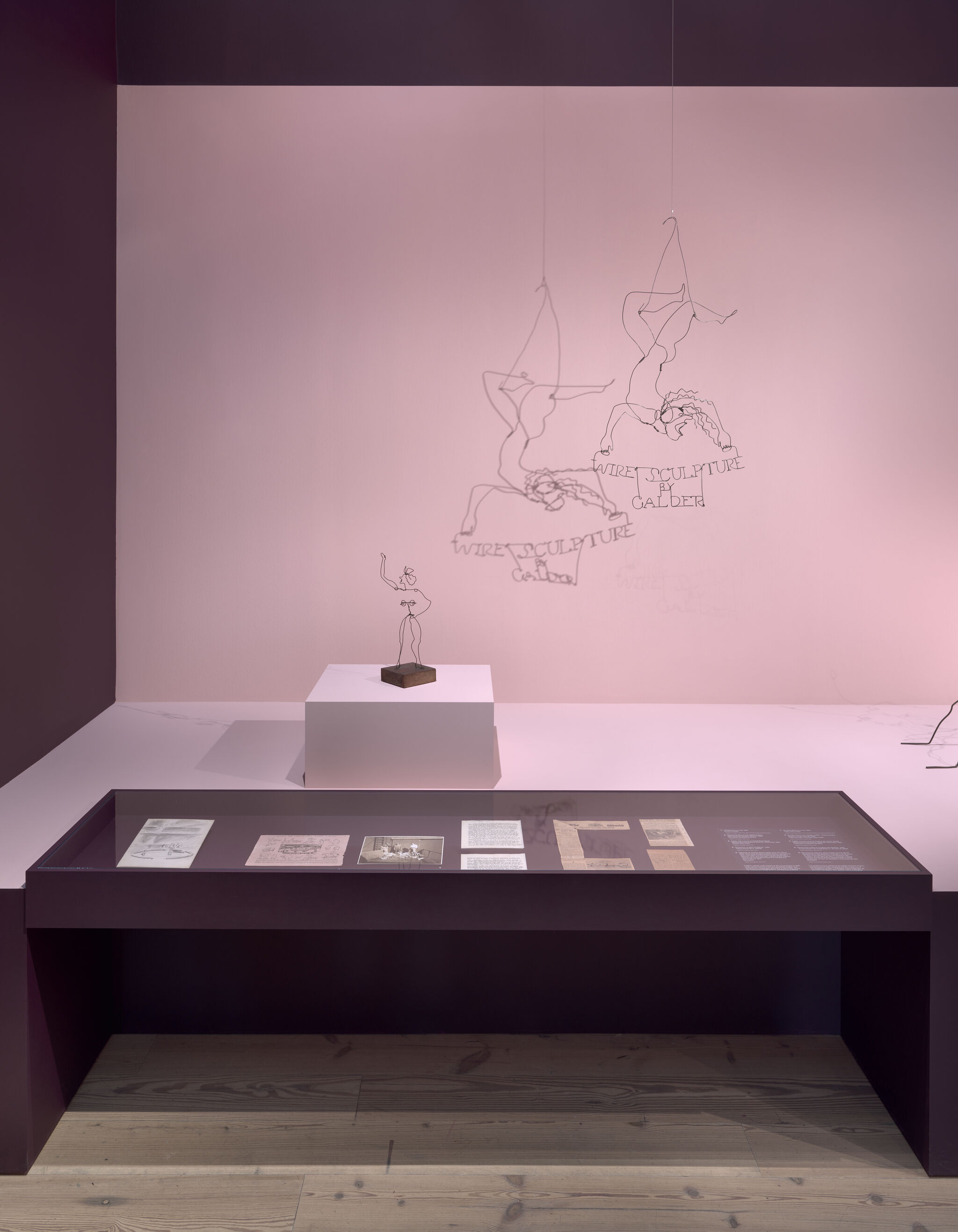
Installation view of High Wire: Calder’s Circus at 100 (Whitney Museum of American Art, New York, October 18, 2025–March 2026). From top to bottom: Alexander Calder, Wire Sculpture by Calder, 1928; Alexander Calder, Victorine (The Circus Queen), 1928; In vitrine, from left to right: Alexander Calder, Untitled (Circus ring), 1925; “Seeing the Circus with ‘Sandy’ Calder,” National Police Gazette, May 23, 1925; Calder with a series of Action Toys, Gould Manufacturing Company, Oshkosh, Wisconsin, 1929; “Statement on Wire Sculpture,” 1929; Clippings of articles about Calder from The World (New York) [“His Elephants Don’t Drink”], January 18, 1931; Paris-Midi [“Le Plus Petit Cirque du Monde”], April 23, 1931; and Chicago Tribune (Paris edition) [“American Artist Wins Praise For His Work In Wire”], May 2, 1931. © 2026 Calder Foundation, New York / Artists Rights Society (ARS), New York. Photograph by Ron Amstutz
-
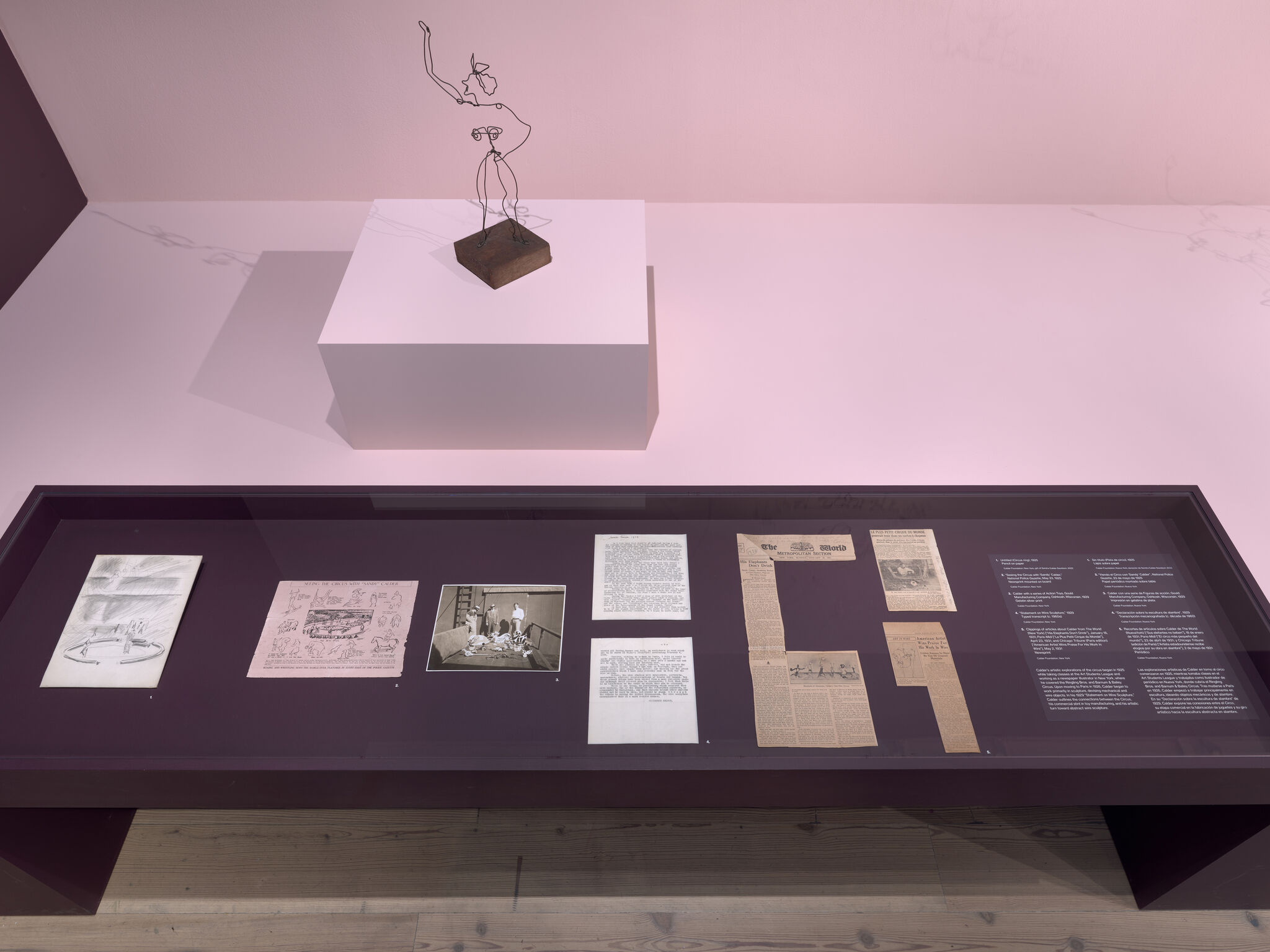
Installation view of High Wire: Calder’s Circus at 100 (Whitney Museum of American Art, New York, October 18, 2025–March 2026). From top to bottom: Alexander Calder, Victorine (The Circus Queen), 1928; In vitrine, from left to right: Alexander Calder, Untitled (Circus ring), 1925; “Seeing the Circus with ‘Sandy’ Calder,” National Police Gazette, May 23, 1925; Calder with a series of Action Toys, Gould Manufacturing Company, Oshkosh, Wisconsin, 1929; “Statement on Wire Sculpture,” 1929; Clippings of articles about Calder from The World (New York) [“His Elephants Don’t Drink”], January 18, 1931; Paris-Midi [“Le Plus Petit Cirque du Monde”], April 23, 1931; and Chicago Tribune (Paris edition) [“American Artist Wins Praise For His Work In Wire”], May 2, 1931. © 2026 Calder Foundation, New York / Artists Rights Society (ARS), New York. Photograph by Ron Amstutz
-
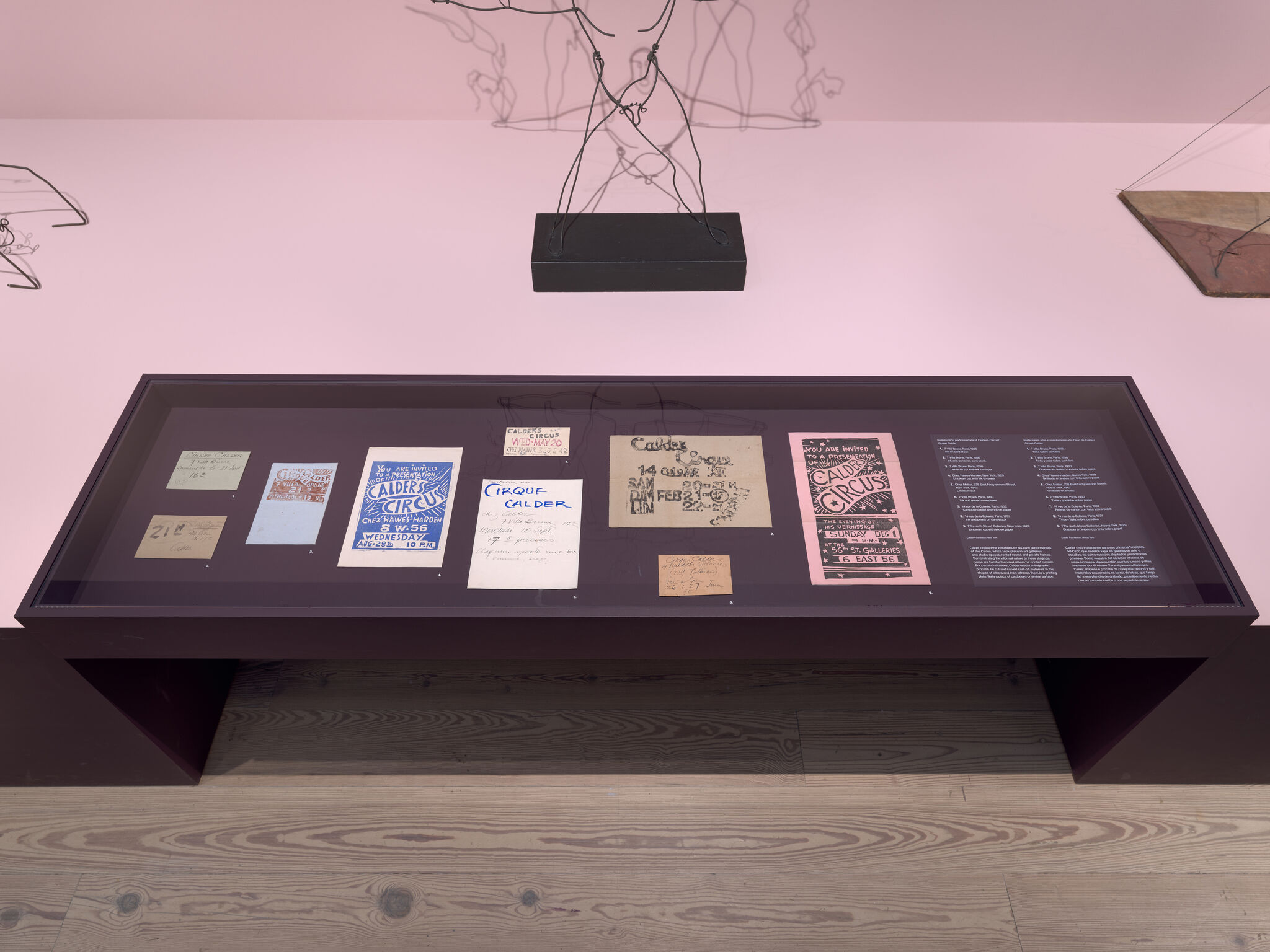
Installation view of High Wire: Calder’s Circus at 100 (Whitney Museum of American Art, New York, October 18, 2025–March 2026). From top to bottom: Alexander Calder, The Brass Family, 1929; In vitrine, from left to right: Alexander Calder, Invitations to performance of Calder’s Circus/Cirque Calder (7 Villa Brune, Paris), 1930; Alexander Calder, Invitation to performance of Calder’s Circus/Cirque Calder (Chez Hawes-Harden, New York), 1929; Alexander Calder, Invitation to performance of Calder’s Circus/Cirque Calder (Chez Matter, New York), 1942; Alexander Calder, Invitation to performance of Calder’s Circus/Cirque Calder (7 Villa Brune, Paris), 1930; Alexander Calder, Invitations to performance of Calder’s Circus/Cirque Calder (14 rue de la Colonie, Paris), 1932; Alexander Calder, Invitation to performance Calder’s Circus/Cirque Calder (Fifty-Sixth Street Galleries, New York), 1929. © 2026 Calder Foundation, New York / Artists Rights Society (ARS), New York. Photograph by Ron Amstutz
-
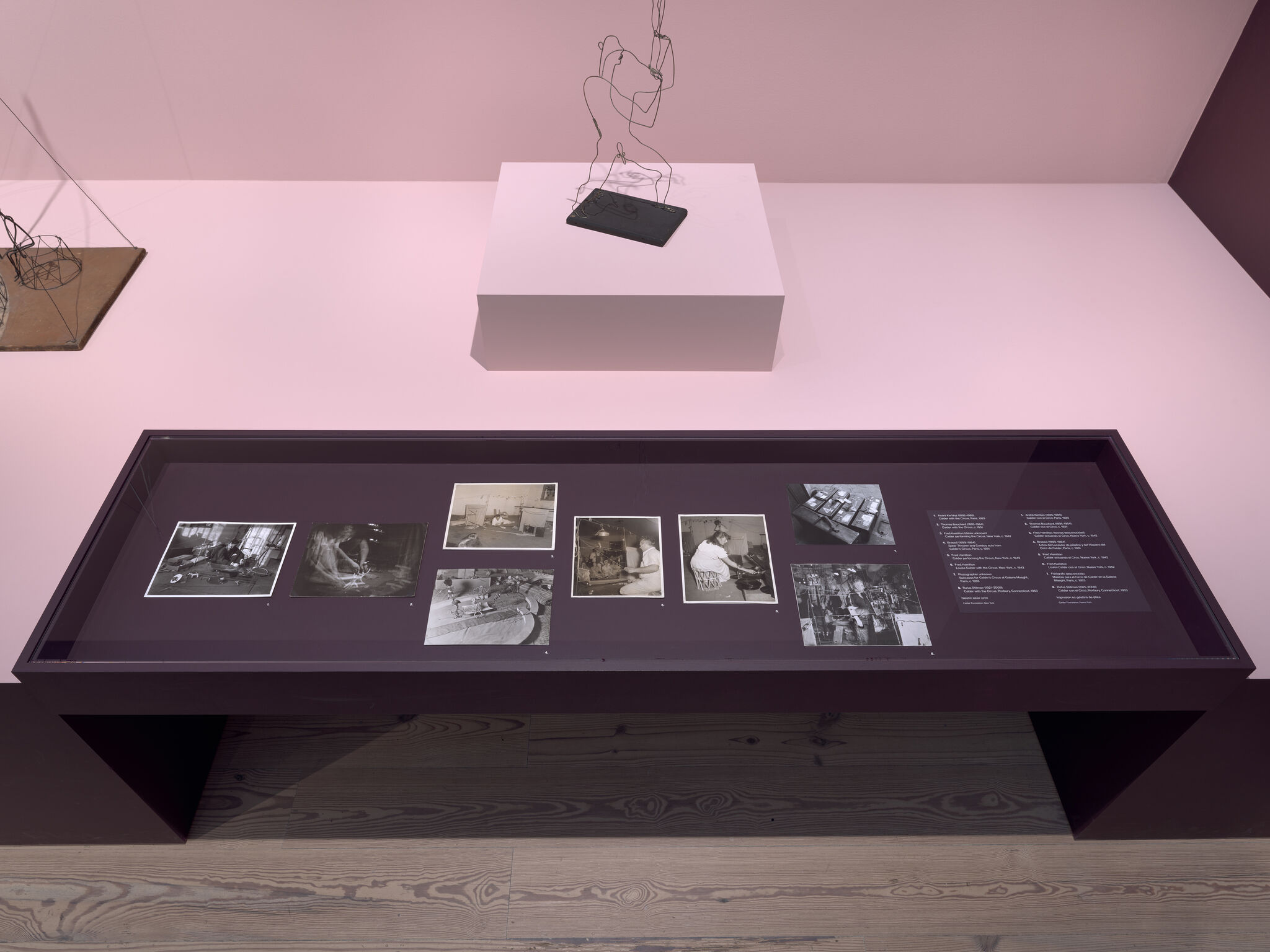
Installation view of High Wire: Calder’s Circus at 100 (Whitney Museum of American Art, New York, October 18, 2025–March 2026). From top to bottom: Alexander Calder, Acrobats, c. 1927; In vitrine, from left to right: André Kertész, Calder with the Circus, Paris, 1929; Thomas Bouchard, Calder with the Circus, c. 1931; Fred Hamilton, Calder performing the Circus, New York, c. 1942; Brassaï, Spear Thrower and Cowboy acts from Calder’s Circus, Paris, c. 1931; Fred Hamilton, Calder performing the Circus, New York, c. 1942; Fred Hamilton, Louisa Calder with the Circus, New York, c. 1942; Suitcases for Calder’s Circus at Galerie Maeght, Paris, c. 1953; Rufus Stillman, Calder with the Circus, Roxbury, Connecticut, 1953. © 2026 Calder Foundation, New York / Artists Rights Society (ARS), New York. Photograph by Ron Amstutz
-
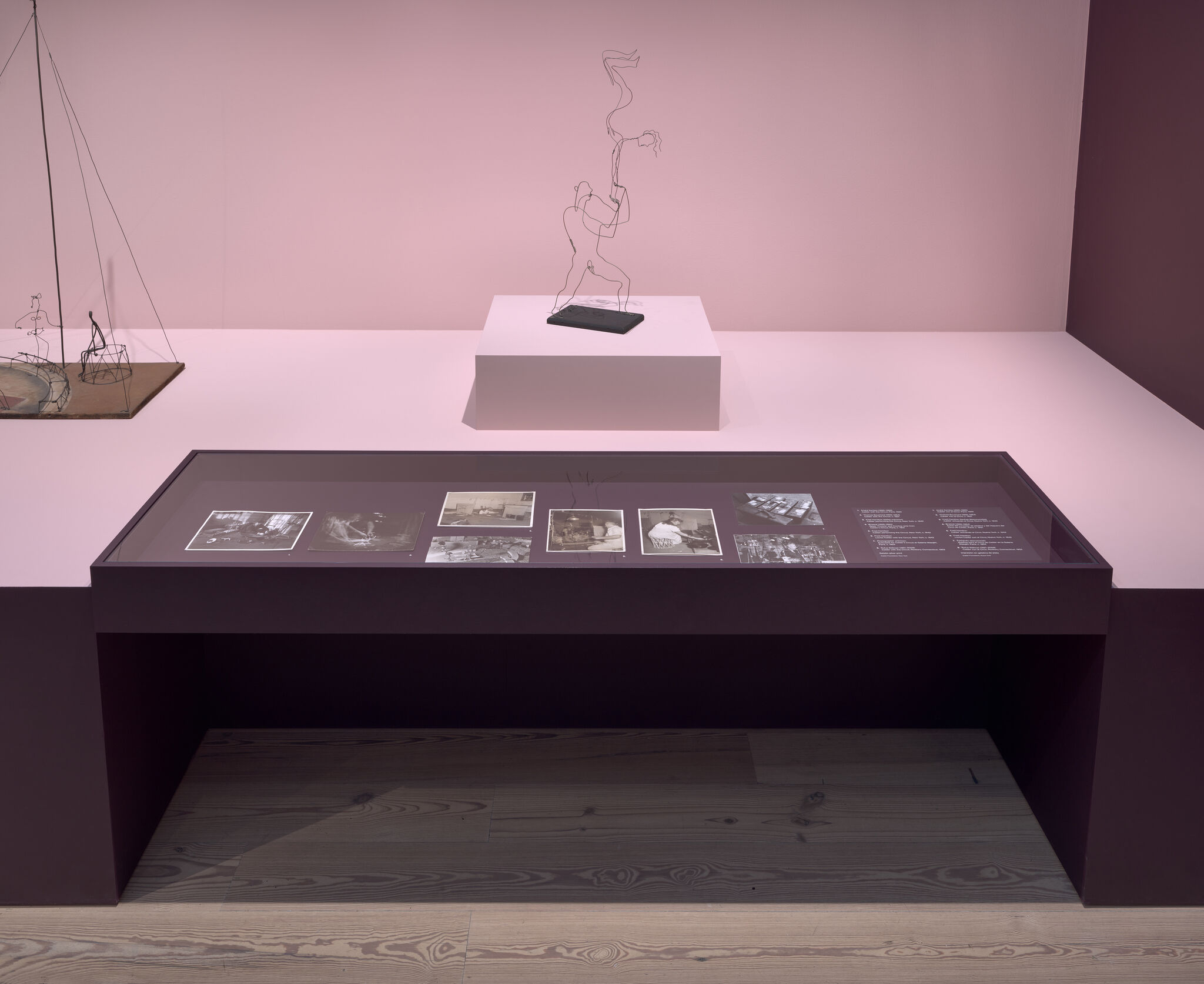
Installation view of High Wire: Calder’s Circus at 100 (Whitney Museum of American Art, New York, October 18, 2025–March 2026). From top to bottom: Alexander Calder, Acrobats, c. 1927; In vitrine, from left to right: André Kertész, Calder with the Circus, Paris, 1929; Thomas Bouchard, Calder with the Circus, c. 1931; Fred Hamilton, Calder performing the Circus, New York, c. 1942; Brassaï, Spear Thrower and Cowboy acts from Calder’s Circus, Paris, c. 1931; Fred Hamilton, Calder performing the Circus, New York, c. 1942; Fred Hamilton, Louisa Calder with the Circus, New York, c. 1942; Suitcases for Calder’s Circus at Galerie Maeght, Paris, c. 1953; Rufus Stillman, Calder with the Circus, Roxbury, Connecticut, 1953. © 2026 Calder Foundation, New York / Artists Rights Society (ARS), New York. Photograph by Ron Amstutz