Amy Sherald: American Sublime | Art & Artists

Apr 9–Aug 10, 2025


Exhibition works

5 total
2
Read more
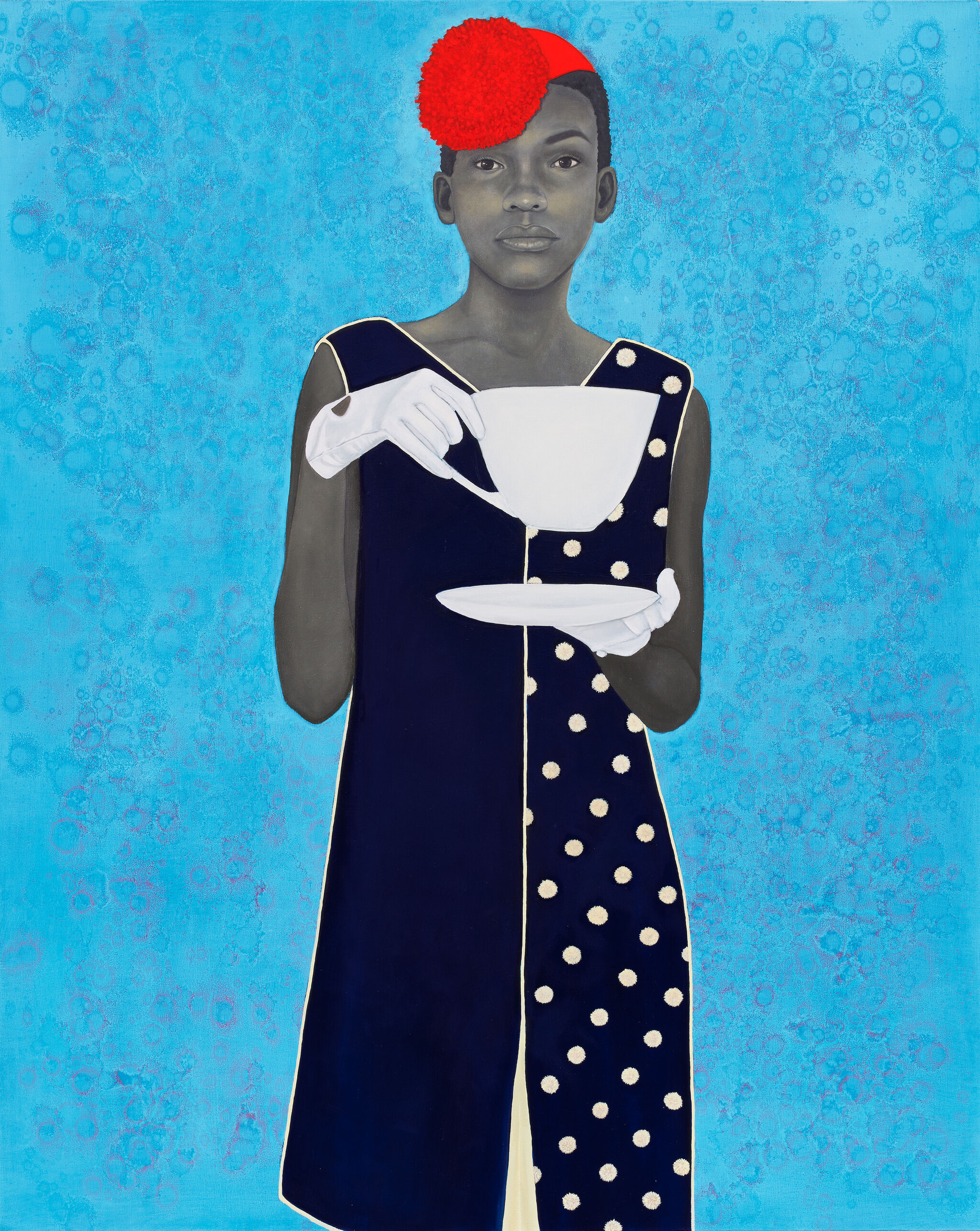
Person in a polka dot dress holds a large teacup and saucer. They wear a red hat and white gloves, set against a textured blue background.

Amy Sherald, Miss Everything (Unsuppressed Deliverance), 2014. Oil on canvas, 54 × 43 × 2 1/2 in. (137.16 × 109.22 × 6.35 cm). Private Collection. © Amy Sherald. Courtesy the artist and Hauser & Wirth. Photograph by Joseph Hyde

2

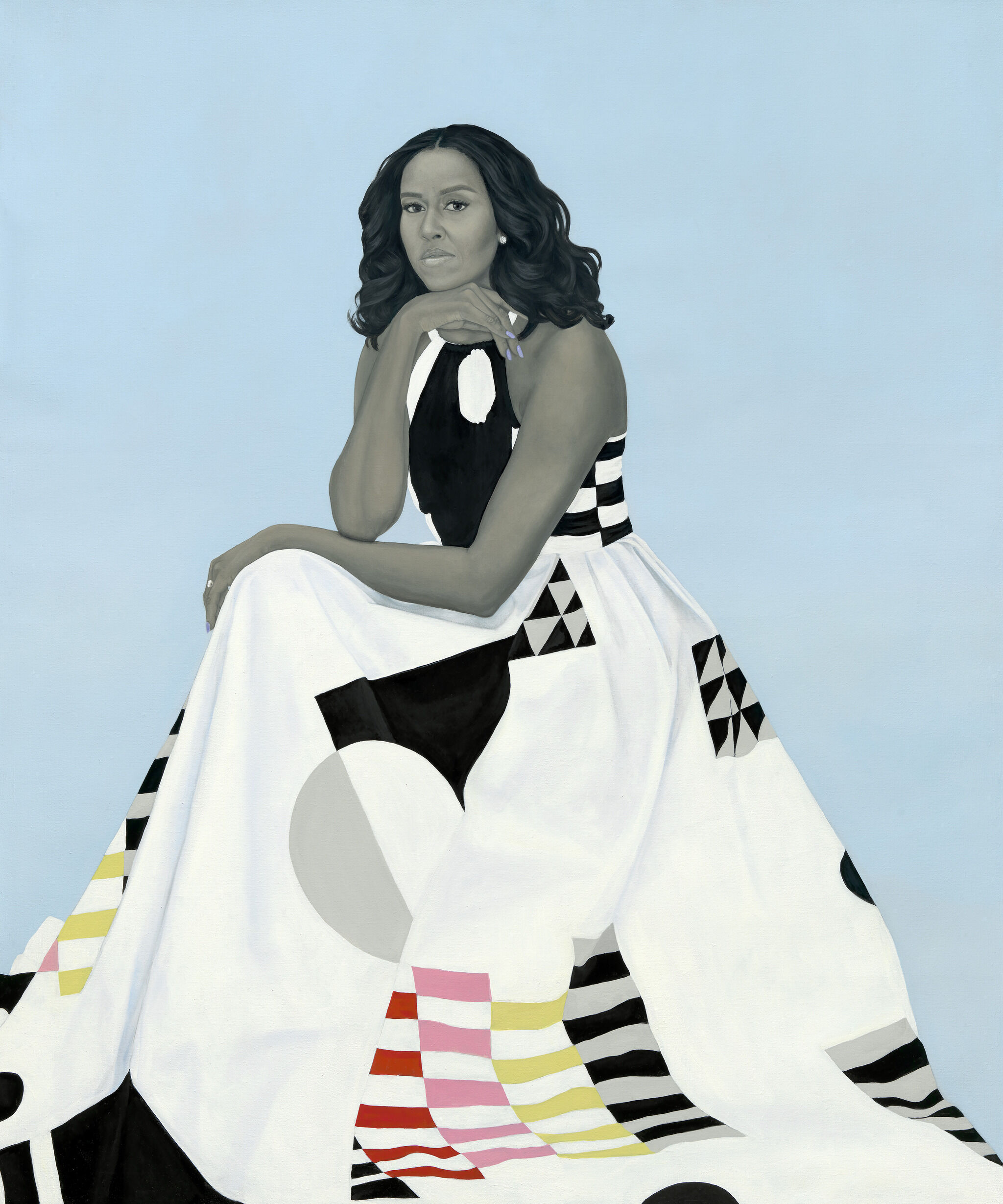
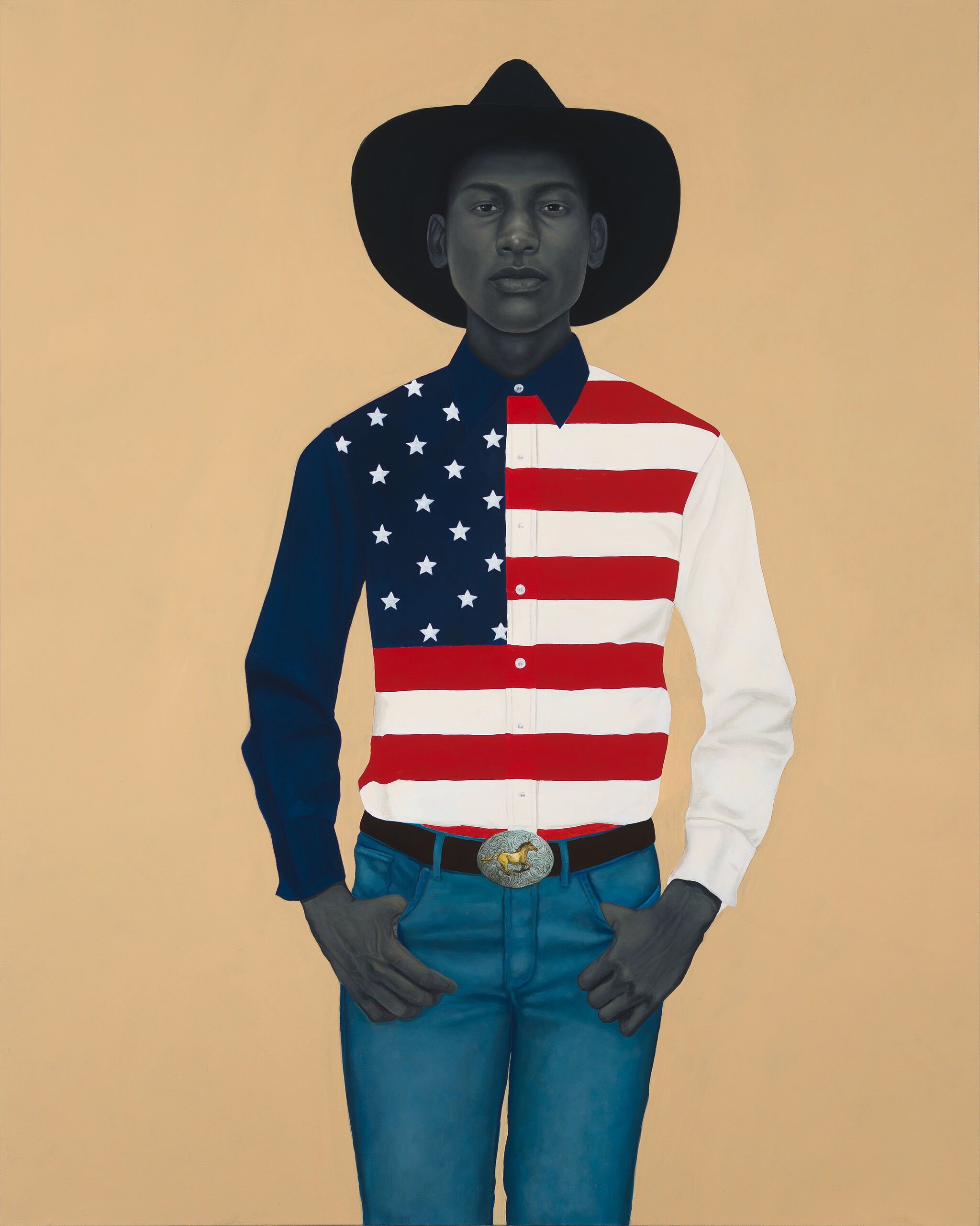
The split between a person’s inner life and the face they show to the world is a recurring theme throughout Sherald’s work. For some people, this separation might be an intentional choice made to express different aspects of their identities through clothes, attitude, or body language. For others, it might be an involuntary or self- protective response to cope with the biases or assumptions of others. Sherald strives to mend this split with her work, for others and for herself, by presenting figures who are liberated from the performance of race, gender, religion, or other preconceived identity markers; as she has said, “it is about letting go of looking at people looking at me.”

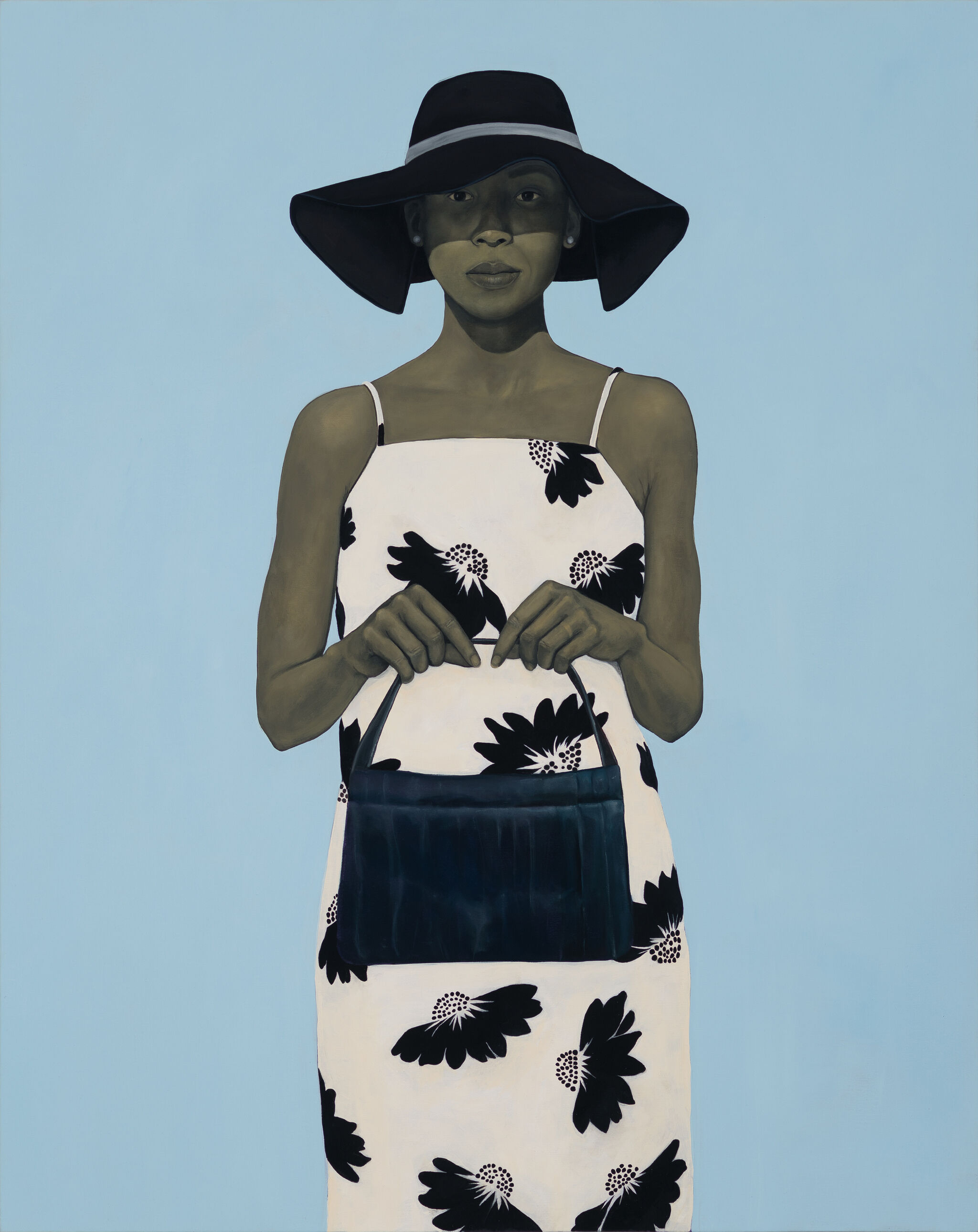
Sherald often uses quotes from literature as titles, as with Listen, you a wonder. You a city of a woman. You got a geography of your own (from Lucille Clifton’s 1980 poem “what the mirror said”). She takes inspiration from a wide range of authors—including Jane Austen, Octavia E. Butler, Emily Dickinson, Zora Neale Hurston, and Toni Morrison—whose work concerns the liberation of people oppressed in body, mind, or spirit.

The flash of red provided by this young girl’s hat draws attention to her inquiring gaze. She holds a playfully oversized cup—a nod to Lewis Carroll’s novel Alice’s Adventures in Wonderland (1865)—that gives the painting a slightly surreal feeling. With this work, after more than a decade of dedicating herself to painting, Sherald first gained national attention when she won the 2016 Outwin Boochever Portrait Competition at the National Portrait Gallery in Washington, DC. She was the first woman and the first African American to win the competition.

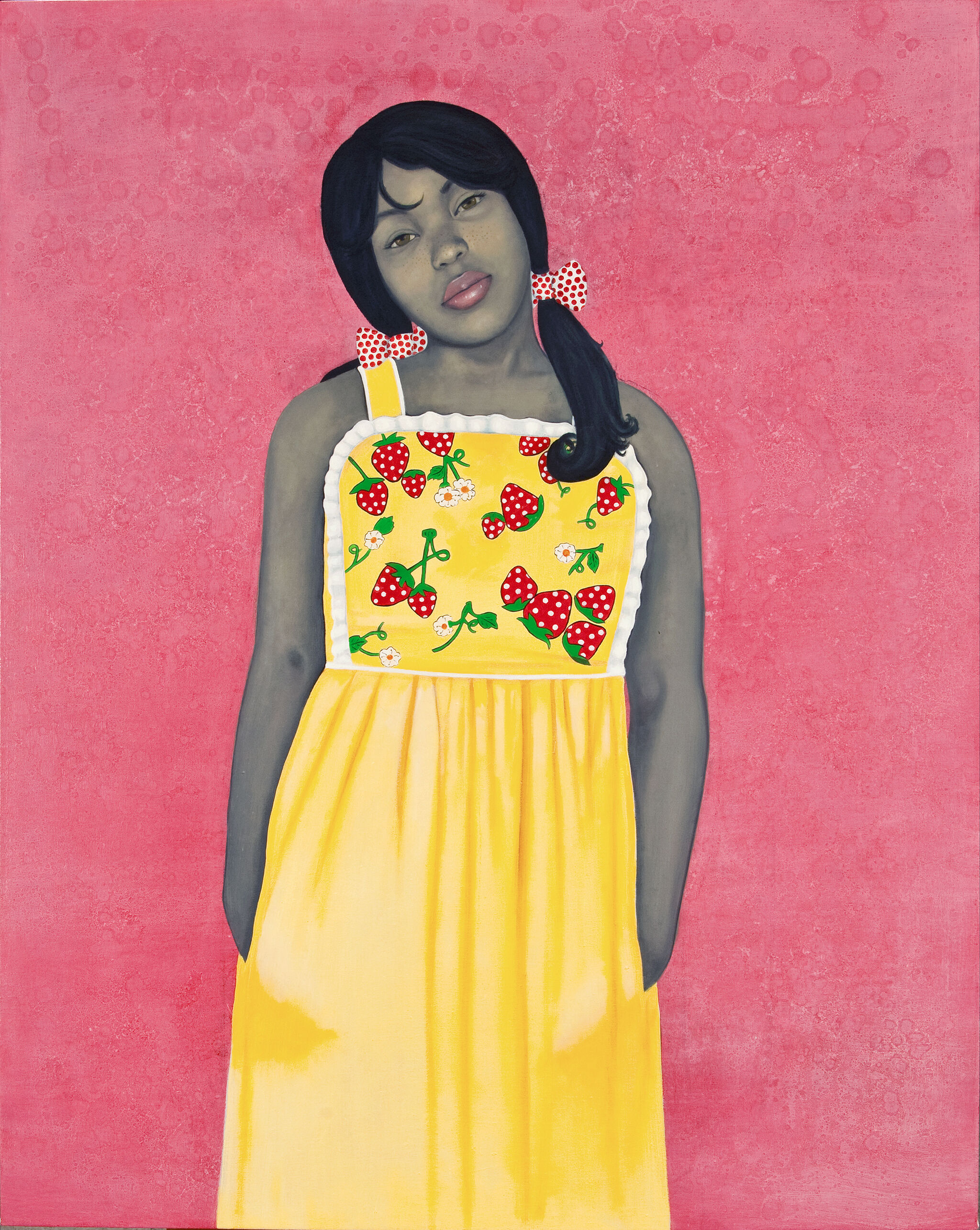
A girl in a yellow dress with strawberry patterns stands against a pink textured background, her hair in pigtails with polka dot bows.

Amy Sherald, They Call Me Redbone, but I'd Rather Be Strawberry Shortcake, 2009. Oil on canvas, 54 × 43 × 2 1/2 in. (137.16 × 109.22 × 6.35 cm). National Museum of Women in the Arts, Washington, DC, gift of Steven Scott, Baltimore, in honor of the artist and the 25th anniversary of National Museum of Women in the Arts. © Amy Sherald. Courtesy the artist and Hauser & Wirth. Photograph by Ryan Stevenson

They Call Me Redbone, but I'd Rather Be Strawberry Shortcake, 2009

National Museum of Women in the Arts, Washington, DC; gift of Steven Scott, Baltimore, in honor of the artist and the 25th anniversary of National Museum of Women in the Arts

With freckles and glossy pink lips, the young girl depicted here tilts her head with an air of questioning or curiosity. The term "redbone" in the title refers to lighter-skinned Black people, and the label can be used as an endearment or a pejorative, depending on context. Often called redbone in her youth, Sherald’s use of the term here calls attention to how such language can impose distance between a person and their own self-image. By contrasting Redbone with the popular children’s character Strawberry Shortcake, Sherald disputes the societal significance placed on skin color.

Woman in a floral dress and wide-brimmed hat holds a black handbag against a light blue background.

Amy Sherald, Listen, you a wonder. You a city of a woman. You got a geography of your own, 2016. Oil on canvas, 54 × 43 × 2 1/2 in. (137.16 × 109.22 × 6.35 cm). Collection of Rashid Johnson and Sheree Hovsepian. © Amy Sherald. Courtesy the artist and Hauser & Wirth. Photograph by Joseph Hyde

Listen, you a wonder. You a city of a woman. You got a geography of your own, 2016

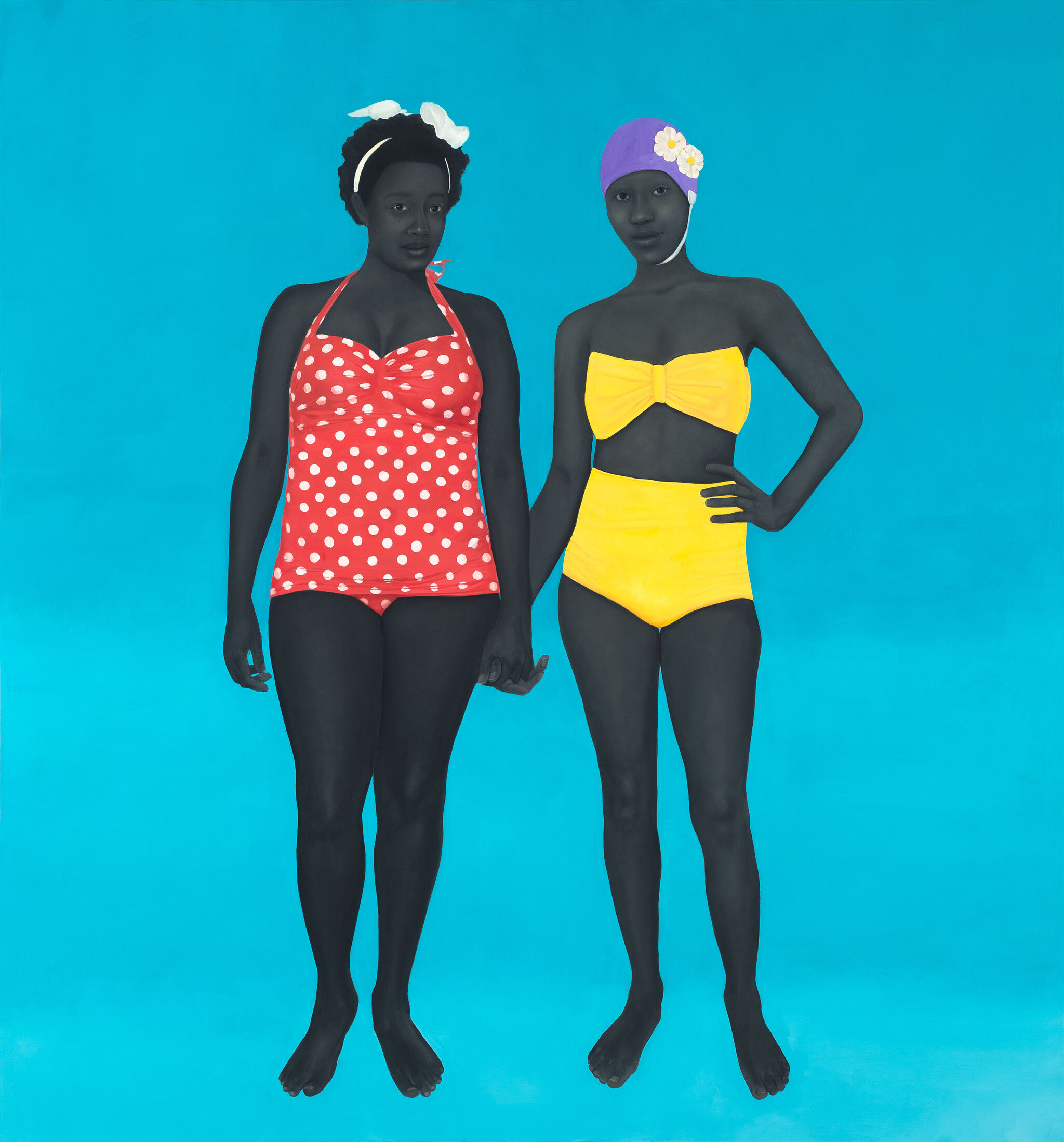
Two women in vintage swimsuits, one in red polka dots, the other in yellow, stand against a bright blue background, holding hands.

Amy Sherald, The Bathers, 2015. Oil on canvas, 72 1/8 × 67 × 2 1/2 in. (183.2 × 170.2 cm). Private Collection. © Amy Sherald. Courtesy the artist and Hauser & Wirth. Photograph by Joseph Hyde

The Bathers, 2015

These two young women hold hands as they confidently eye the viewer. Their relationship to one another is ambiguous; they could be sisters, lovers, or friends. Bathers have served as popular subjects in Western art for hundreds of years, particularly in late nineteenth- and early twentieth-century European painting. Artists such as Paul Cézanne, Georges Seurat, and Pierre-Auguste Renoir often depicted white subjects relaxing near rivers and pools. Sherald’s vision instead situates Black women as autonomous actors in their own narrative of leisure, joy, and ease.

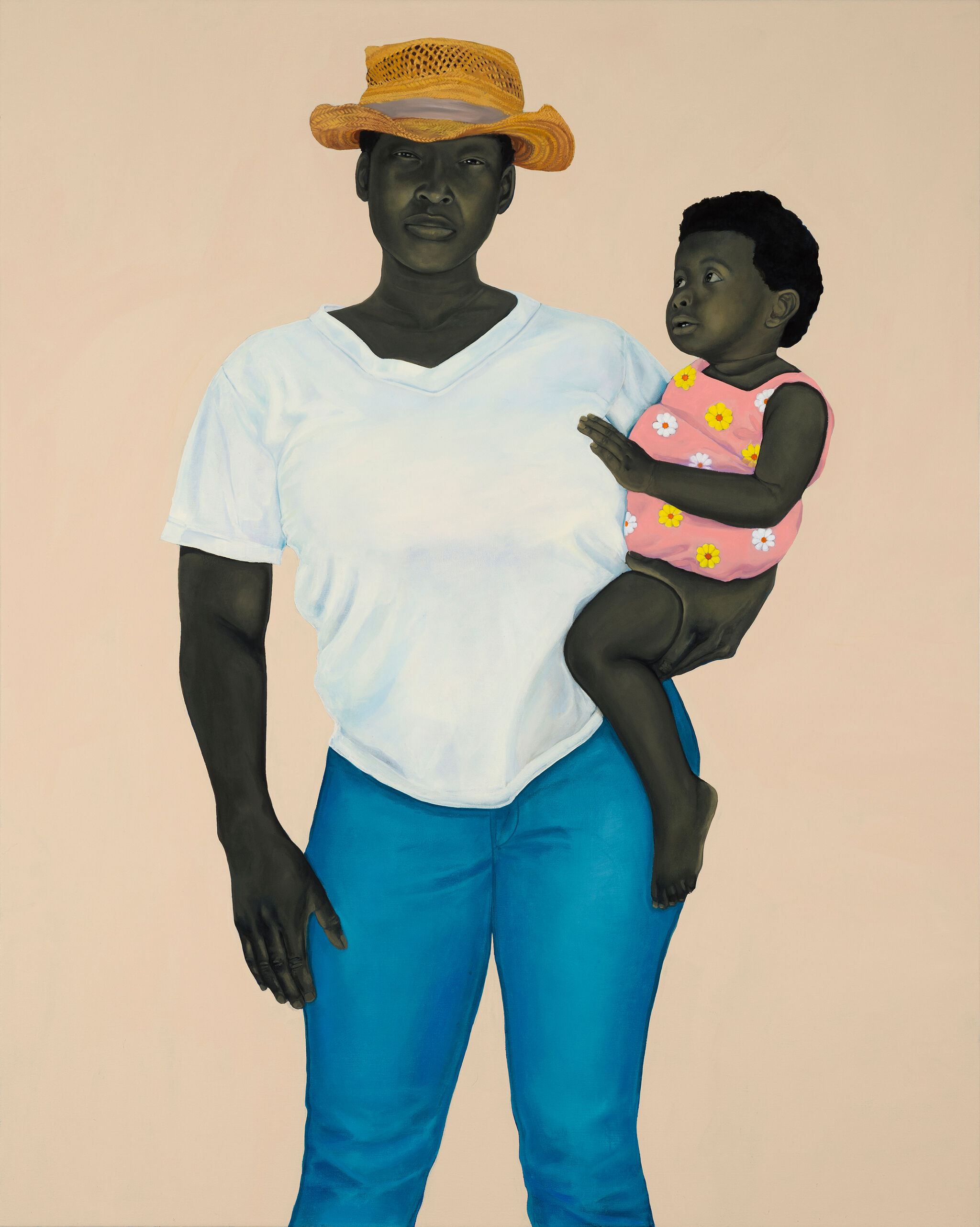
Person in a straw hat and white shirt holds a child in a pink floral outfit against a plain background.

Amy Sherald, Mother and Child, 2016 Oil on canvas, 54 × 43 × 2 1/2 in. (137.16 × 109.22 × 6.35 cm). Courtesy The Blanchard Nesbitt Family. © Amy Sherald. Courtesy the artist and Hauser & Wirth. Photograph by Joseph Hyde

Mother and Child, 2016


Explore works from this exhibition
in the Whitney's collection

View 1 work

On the Hour

A 30-second online art project:
Frank WANG Yefeng, The Levitating Perils #2

Learn more about this project

Learn more at whitney.org/artport

On the Hour projects can contain motion and sound. To respect your accessibility settings autoplay is disabled.